An Interview with Michael Carroll

MichaelCarroll

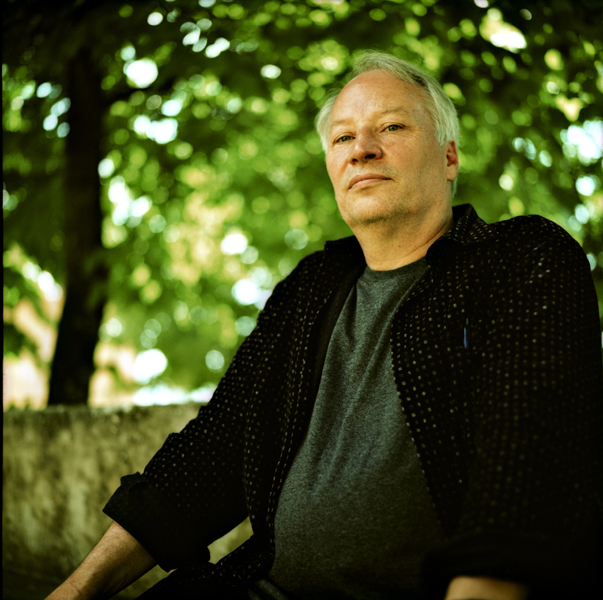
Michael Carroll has been a Peace Corps volunteer, a waiter, a janitor, a writer’s assistant and a college instructor. His work has appeared in Boulevard, Ontario Review, Southwest Review, The Yale Review, Open City, and Animal Shelter, as well as in such anthologies as The New Penguin Book of Gay Short Stories (edited by David Leavitt and Mark Mitchell). He collaborated with Edmund White on the suspense story Excavation for Joyce Carol Oates’ New Jersey Noir. His interviews with Ann Beattie and Wells Tower were included in the recently revamped Chattahoochee Review, where his first story was published, and where he is New York Editor. His first collection, Little Reef and Other Stories, is published by the University of Wisconsin Press.

What was it like growing up in northern Florida? What were you like as a child?

The first story in Little Reef is kind of an answer to this question. I’d been away from north Florida for years, actually a couple of decades nearly, when I got the idea of writing about my teenage years in Jacksonville, which I’d hated and felt smothered by. I’d written about that time before in earlier stories. But I began to write the newer story, “From the Desk of . . . Hunter B. Gwathmey,” a few days after my father’s lung cancer diagnosis. In the story I wanted to crowd in everything about that time but with more positive notes. I wanted it to ache with happiness; I wanted to read something to make me to ache with happiness, the way reading John Cheever can make you smile while reading about the most harrowing things. In “Gwathmey,” I just happened to leave out the painful drama, let it recede to the back and let the fun stuff, the pure longing and aspiring (the main character wants to be a writer and meet mentor types), seep to the fore. In my older stories my youthful alter ego is suffering and making no secret of it. God, how tired of that whining from myself I’d gotten by the time I was in my forties! And by then, I had been missing northern Florida, how unique the landscape is, how Southern it is, how friendly it can be.

How did you come to reside in New York? What do you love most about living there?

Running as far from Florida as I could, I’d joined the Peace Corps. I needed a living wage and health care. I was in for a couple years when I met my idol, who became my partner, who’s now my husband. Ed was living in Paris. He decided deep into his fifties to get a tenure-track job and began teaching at Princeton. When he was awarded tenure we happened upon an apartment in a neighborhood I had no idea was just about to stop being the chic gay neighborhood, Chelsea. It’s gotten more rich-people chi-chi, less gay, but I like it. I’m near Penn Station, we finally got new grocery stores and decent restaurants. We lost our fun coffee shops, I guess because those aren’t as profitable as nail salons, and the rents are high. I like my middle-age-gay-writer circle, who’ve given me a backdrop and camaraderie. I like meeting new people. It’s finally become the exciting center of hectic activity I always longed for and romanticized, growing up gay in the South and feeling lonely. Kids now don’t all have this conundrum of growing up gay and alone. I look at them coming to New York now quite confident without the same timidity in their eyes.

Did you enjoy your time in the Peace Corps? What did you learn from that whole experience?

I needed to get out and see some of the less-privileged world. The first country, Yemen, killed any last traces of religion I’d ever entertained deep into my twenties, but I enjoyed the so-called exoticness of it. I enjoyed meeting my university students and being treated well by them and their families not because I was an American but because I was a teacher. I got a privilege look into their lives, including the lives of my female students, who worked harder than the boys and wanted English language more ambitiously. And mostly their fathers wanted that, too. It was a different slice of the Muslim world than we’re coming to stereotype it as (this was all a few years before 9/11, but right before the first Trade Center attacks). The Czech Republic had its romance, there in the center of Europe. A sort of ideological burnt-over district, the Czech Republic just wanted to be a part of the contemporary acquisitive world like the rest of us. I had to deal with some student lassitude. I’d say to a student, “I haven’t seen you in a couple weeks, are you all right?” “Well,” they’d say, “I had a terrible cold.” In both countries I was aware that I was getting a unique view of humanity, for comparison and contrast purposes. Stuff I still haven’t written about, overall!

Do you ever miss teaching? What does it feel like to help others learn?

I do miss it. I hope to go back into it very soon. It was nauseating going into the class every day because I’m shy about audiences and groups I’m addressing, which is why I became a writer. But I have things to say about creative writing, and I have strategies and ideas to share. I can put the whole enterprise on a regular, everyday level that not only simplifies it but makes it seem like a worthy thing to spend time on. Creative writing, done right, is entertaining to the writer and helps us as reader and writer form ideas about human nature and the world. It comprises a special subaltern section in the department of psychology. Done right, it feels truer than everyday reality, because it forces you to look at everything differently, to slow down and take in everything in different quantities and doses. It makes the world new because it reshuffles what we already know and drops us off at unexpected places. Teaching writing is about teaching reading.

What led you to try your hand at writing?

I was held out from the first grade because I was too young to enter. My mother signed me up for book clubs and took me to the library. There was never a question about books for me. I fell into Dr. Seuss and so on while my mother watched her soaps and I got addicted to reading, which made me more advanced when I got into school but also isolated me, ironically. My teachers would send me to the library when I got done with a lesson or assignment, thus putting me on the road to more social estrangement! Writing only compounded the problem. To write you have to be alone, but I wanted to be alone, being a misfit. A big cycle, one phase feeding into the other. I never quite caught up socially, so I just kept writing, almost as a defense mechanism.

What did it feel like to see your first story published?

I was twenty-seven and had returned to Florida after grad school and suddenly there was this validation of my work on paper, in a journal. I sat down in a fast-food restaurant and wrote my parents a letter saying I was sticking with writing, because I’d been validated and the resulting text looked handsome.

What do you think it takes to make a truly good story?

Tension. The push and pull. Surprises with language and the banishment of the banal or the received language, the old tired ways of saying something. The most underrated talent or skill, if you will, is charm. Charm the reader with a fun, intriguing opening, decide what your greatest abilities are, and use those, whatever you can to pull the reader through and inspire him or her to wonder what is going to happen. Be surprising but don’t be like a chatty obnoxious guest who just won’t leave. Make them want you to keep talking to them, then get your ass out of there.

What do you love most about the act of writing?

I love not having to sweat over it, having learned that it’s an act of fun more than something as tricky as international diplomacy or the law. I like just cruising along then going back and back after finishing a piece and cleaning and straightening, like picking up the dust and scraps after carpentry and painting and making things flush and clean and fresh.

Are there any little known things about you that your readers might be surprised to learn?

That I miss the South, as much as I critique it. Even the bad guys can seem quaint, as long as I don’t turn on the news.

Do you have a dream project you’d most like to accomplish?

I’m doing it now. I’m transforming the world of my youth into a fictional place full of people I knew back then who serve often as exceptions to the rules of the social regime, the upright and correct and often hypocritical. I want to humanize that part of the world for my snobby and self-satisfied and cosmopolitan New York friends who know they have to hide their sneers from me. Some of the best writing was accomplished “back home” instead of in the capital. Thomas Hardy left London and William Faulkner spent very little time in New York.

What do you think is the key to a life well lived?

Seriously? Happiness, which comes from striving to make others happy, or feel secure or less alone. I have no spirituality left, but the best of all religions teaches service to others, which is the only source of true happiness. It relieves anxiety and guilt and proves you’re not alone.

Are you excited for the release of Little Reef and Other Stories?

Nervous, because now I’ll have to go out and read aloud from it. Wells Tower told me in an interview I conducted with him that he’d only read one review of his first book, and I’m going to try to follow this example. Unfortunately, I started to write as a loneliness strategy and defense mechanism against the sense of alienation from my peers, and now I’m stuck with the blowback, which is the desire to be loved by them.

What are you hoping your readers take away from this particular body of work?

My best intentions, my contentedness, my desire to meet them on some level and talk. Also, my lack of religion and my assertion that you can be a good person without believing in God.

What other projects are you working on at the moment?

I need to revise a novel I wrote and revised once. When I work I go through each draft without looking back. Then start over at the beginning and do it all again until I feel I’m done and all the elements are proportionate and fit. The novel is about intergenerational love relationships, the usual stuff like in the second half of Little Reef. A bartender friend told me yesterday over a butt break that he’d spied the theme of the generation gap in my work, and I guess it’s all through there like he said. And I guess I’m trying to spackle that gap in.

Anything you’d like to say before you go?

Only thank you––to you, Tina, and to your readers. And have a great summer! I certainly appreciate your taking the time to do this with me . . .
“Clouds” by Skip Fox

gallery_124634_11_293292


Clouds


East is all wall, predawn cloudbank elevating treeline’s

blackness ten degrees. Was that a real world or did

you just make it up yourself? Reading by lantern light

on the Olympic Peninsula over forty years ago by way of poem’s

opening. What would it mean to die joined at the head

with the ephemerata of such light, clouds and fog this side

of dawn’s bright opening onto a green that encompasses whatever I

find through its agency. Who am I this time? Cars on canted curve,

sun blasting through pickup cab, schoolbus windows, tiny heads

locked in sharpness shuttering past (as though I wouldn’t know her

anywhere, staccato silhouette, her passing presence, prone to such…

as though she lies in me, wakes as memory rises above the horizon

in the east. Who are the dead to talk? What might they say? Clouds

rubbed into treeline by fog, gray, then white, thinly drawn.


In 2012 University of New Orleans Press published the selected poems (Sheer Indefinite: Selected Poems 1991-2011, 200 pgs) in their Contemporary Poetry Series. Skip Fox has written four other books (126-272 pgs.) by presseslike Ahadada and Potes & Poets, as well as four chapbooks (two letterpress).

He has been published in such little magazines and e-magazines as o.blek: A Journal of Language Arts, Talisman, House Organ, Texture, New Orleans Review, Exquisite Corpse, Hambone, lower limit speech, Pavement Saw, Prosodia, Blackbox, eratio, Tarpaulin Sky, 88: A Journal of Contemporary American Poetry, Culture Vulture, There, EOACH, Little Red Leaves, etc.

Skip teaches modern and contemporary American poetry and creative writing at The University of Louisiana at Lafayette at both the undergraduate and graduate levels. He has also published a lengthy annotated secondary bibliography on Robert Creeley, Edward Dorn, and Robert Duncan with G.K. Hall.

“The Art of Insanity” by Krikor N. Der Hohannesian

The Art of Insanity

or vice versa, the question

awaits the first rays,

the shedding of light

on a slippery profundity

not obvious from night’s

whirligig of dreams,

a pastiche of insanity

trying to make sense

of the nonsensical.


Van Gogh had his brushes

and oils and still lopped

off an earlobe. Where

are my words? A voice whispers,

“look in the well”. But

the well is deep, dark,

sapped of water.


Ha! So this is how

they do it, the torturers!

Steal the familiar,

deprive the senses and

he’ll say anything, sell

his mother’s soul, talk

gibberish, maybe throw in

a state secret or two.


Now come two squirrels

caching acorns under hoary grass.

“My dear squirrels”, I ask,

is winter coming soon?”

A furtive glance, they

burrow the harder.


It is dead calm, I raise an eye

to the sun – low, piercing

a red sky. A puff of wind hushes

“red sky in the morning…”

What better than an artless chestnut

to revive one’s sanity?


!cid_E2ED27D1-7C62-45E2-B3B4-52162F1CBF12@home

Krikor N. Der Hohannesian’s poems have appeared in many literary journals including The Evansville Review, The South Carolina Review, Atlanta Review, Louisiana Literature, Connecticut Review, and Hawai’i Pacific Review. His first chapbook, Ghosts and Whispers (Finishing Line Press, 2010), was nominated for The Pen New England Award and Mass Book Award, which also selected it as a “must read” in their 2011 poetry category. A second chapbook, Refuge in the Shadows, was just released in June, 2013 (Cervena Barva Press). You might be interested to know that he was surrounded by art as a child, his father being a fairly well known painter of the abstract impressionist school and his mother a musician and artist as well.

“A Shorter Bridge to Heartache” by SB Stokes

lake

A Shorter Bridge to Heartache

at the bottom of a stagnant lake
lived a dead forest
black trunks standing
knuckle deep in muck
branches simply armature
for a fluttering array
of gray scarves
blowing in the watery wind
molds and aquatic plant life
growing quieter in near darkness
the forest laid down years ago
gave up the sun and the breezes
the same arguments from the same birds
slid back toward the sandy edge
then gradually leaned over
one after another they followed
under the forgiving cover
of progressively longer nights
a very slow migration
the stars really weren’t watching
eventual full immersion
nothing left uncovered
but the land around the lake
the gray water always present
became all any tree could remember
oxygenating the murk for a while
the contradictions grew
in place of leaves
instead of hopeful young twigs
stanchions indicating nothing
huddled together under the surface
standing sunken in an air more dense
a different kind of time passing
light arriving but
only in soft whispers

A fourth generation Californian, SB Stokes has lived and worked in the San Francisco Bay Area all of his life. He holds a Master of Fine Arts in Creative Writing from San Francisco State University and is a former poetry and art editor for Fourteen Hills: The SFSU Review. He is a founder, event producer, and art director for Oakland’s Beast Crawl and guest curated Quiet Lightning’s third anniversary show with poet and QL board member Meghan Thornton. His poems have been published in numerous publications both in print and online. Several of his readings can also be found by searching “SB Stokes” on YouTube. He has produced the blog MASS COMMUNICATIONS since 2004 and his first book of poetry is A History of Broken Love Things from Punk Hostage Press.

“Pete Suicide” by Ian Ayres

10253935_437989132970640_2169381304912944507_n


My revolver

So easy to get

Cocked in fist

On the way to the grave

Wide open for morning

Loaded and ready

Bullets to blast

My brains to the clay

Of Mother Nature’s womb

∞

Skull full of stars

People that cross

Lost in a garden

Of slab and dirt

Hands from graves

Reach out to shake

Me up so late

Embalmed hands

Amidst the wilt

∞

How I love the Dead

Putting down roots

Echoing whispers

By the time you get it together

You start to fall apart . . .

Skeletal, you know

A jaw drops

Moss will grow

With unknown approach

∞

Living to die, dying to live

Tombstones scream

Or winds grow shrill

Among final faces

Of resting places

My constant family

Who embraces chill

Beneath my feet

Tripping

∞

Naked

Among the Dead

Gone to bed

Sculptured tomb

Where I stretch

Smoking a joint

Like a Bowie tune

Near a baby’s

Grave

∞

A seedling

Alone

How I yearn

To hold you

Above

Your crumbling

New name

Eroded

Not even a weed

∞

So I sing

A lullaby

And reach out

To cradle you

In my arms

With your rattle

Of bones

Watching

Birds Fall

∞

Birds fall

From the trees

Dying

From disease

Wondering

Why

Death is

The rest of

Your life

∞

Some call me a necrophiliac

Who bones the boneyard

Others, a ghoul

Who haunts the Dead

Whatever tickles their tulips

Licking dew drops of lust . . .

Did you know divorce kills?

Divorce kills children

For the rest of their lives

∞

Under-aged children

Kicking the emptiness

Of a beer can

Can no longer feel

Superior over anything

Nothing but luck

Before granite claims

Years of avoidance

In unfulfilled hearts

∞

Finding a family

Like me

In the dead of night

To dance

Headlit

In moonlight

Celebrating

Every vertebra

Of our spines

∞

Bone

Is white dust

And soul lost

In dispersing

Atoms

Ready to be

Held

In a box

Planted

∞

To remain

Where

I can always

Be found

Underground

Knowing dark

Caresses

My mind

Listening

“Angels Dancing” by Julie A. Dickson

La-jeunesse-de-Bacchus-cherubs

Angels Dancing

In her eyes he saw angels dancing,
She was dreamlike in her motions
Her manner appeared carefree,
Yet he knew she was guarded
She had a heart, of that he was sure
But it lay crushed and broken
Among shards of glass and rubble
He could see pain in her eyes
And he longed to hold her,
To whisper reassuring words
He wanted her to smile and laugh
And for him to be the reason why
In her voice he heard music,
Melodies of hope and songs of love
Waiting to emerge from her lips
He wanted to share the music with her
To be the cause of her singing
He gazed into her eyes and
Saw angels dancing there


Julie A. Dickson has written poetry, prose, and stories for many years. Currently a member of the Poetry Society of New Hampshire and the Hyla Brook Poets of the Robert Frost Farm, her poems have appeared in Page & Spine, Avocet Nature Journal, GFWC Magazine, The Poet’s Touchstone and the Harvard Press. She has one volume of poetry titled Forest Nectars. Julie makes her home in New Hampshire. She has two grown children and an rescued black cat called Isis. She has long been a volunteer for animals shelters.

“Gone to Mexico” by Howie Good

Gone to Mexico

He vanished over the border. It’s been a hundred years and still no trace. I’m waiting outside the Starbucks in Buzzards Bay. I could be waiting for him to stroll up, a copy of The Devil’s Dictionary under his arm. A woman at one of the tables is talking on her cell about cutting everyone’s hours. She’s twenty-something and almost pretty. I watch the hellish heat rise in waves from the blacktop. “It is what it is,” the woman says. She glances at me and then away – not ashamed, just uninterested. Every day is a heart hooked up to a monitor, another cat shot with an arrow.

“Doves of Beirut” by Silva Zanoyan Merjanian

world

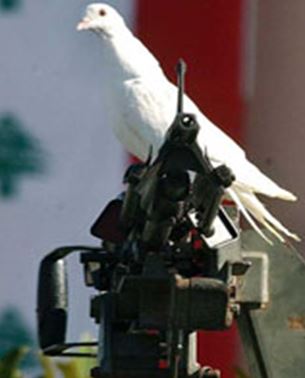
Doves of Beirut


Doves were arrogant in those days

feral, territorial of ledges

I hadn’t snapped their necks yet

through grind of metal

on bone, stone

through air sharpened on greed hones

no scream left in punctured lungs

fate duct taped to fetal nights

barricaded behind shadowed ribs

that hardly rose for a fight

underneath rubble of lord’s prayer and adhan


they pecked at concrete

heads bobbing, waiting

waiting

they knew I’d come

they knew I’d tire of walking

your curved dead -end streets


I knew those ledges well

gravel and loose feathers

wet with rain

stuck with white droppings

to my young toes curled on grit


but I knew your streets below better

lick of diesel on asphalt

grief’s iron reek in gutters rising

damp alleys breathing

breathing

the way the old do

those who’d seen the blade

cut through flesh

a sigh every third inhale

a pause before funneling

jasmine and mold laced gasps

into patched veins

tied to the stone

tied to throbbing ground

with historical claims

to the sea breeze

that couldn’t cool their burns

still rummaging for life

as they used to remember it


I walked on sweat of fig trees

on your sidewalks bleeding at cracks

when you had the pigeon for dinner

and I starving, gnawed on bones

where I’d tied my message

pleading for your unclutched claws

on my debt


I hear you like your whores younger these days

and you rather have your sons as killers

blind and foaming revenge at mouth

darbouka between their knees dropped for guns


streets mapped in bite marks

on time I served now dyed ash blond

I look away

the way the old do

eyes on the distance to your bleeding ledge


March 25, 2014

409165_545689135446760_546921029_n-1

Silva Zanoyan Merjanian is an internationally published poet residing in California. She released her first volume of poetry Uncoil a Night in 2013 with all proceeds helping civilian victims caught in war zones, she herself having been cast as collateral damage in a civil war in Lebanon for 8 years. She’s been featured in a variety of publications and anthologies, and was shortlisted for the Fermoy International Poetry Competition 2012. Silva was invited to Ireland in August 2013 to introduce her book.


An Interview with Joe Lansdale

Photo by Mauro Puccini at Labrena Photography

Photo by Mauro Puccini at Labrena Photography

It has been a busy year for Joe Lansdale. His book The Bottoms is set to make it to the big screen via actor/director Bill Paxton and Frailty screenwriter Brent Hanley. Also coming to the screen is Cold In July as adapted by Jim Mickle, featuring Sam Shepard, Don Johnson, and Michael C. Hall. In May DC Animated Original Movies is releasing The Son of Batman as well, the script of which was penned by Joe. Coming in September 2014, Subterranean Press will also be releasing the deluxe hardcover edition of Black Hat Jack, which focuses on the role of African-Americans in the Wild West.

What does it feel like seeing so many of your projects making it to the big screen? Is it sometimes a little strange to see how other creative types adapt your work to fit film?

It’s satisfying in one way and nerve wracking in another. You know your work can never be adapted as closely as you like, but you fear them moving away from it too much. I am very happy with Cold in July, and look forward to The Bottoms. I like the script by Brent Hanley and trust Bill Paxton as a director. I like both of them, so I’m very hopeful.

Are you excited that Bill Paxton and Brent Hanley who worked on Frailty are going to be adapting The Bottoms? Did you like that particular movie(Frailty)?

I loved Frailty. I am excited they’re working on it, and as I said before, I think it’s going to be really good. I truly believe that.

Cold in July is also getting a lot of early praise. Were you surprised by that?

No. I was kept in the loop and read several versions of the script. There were aspects of earlier scripts I preferred, but this is what they thought they could make work on the screen, and it did. I also liked some things they had to cut, but at some point you have to make decision based on length of the film. That’s just how it works. But, yeah. I liked it a lot.

Is there one project in the works at the moment that you are most looking forward to seeing finished and out to the public?

 There are several, but I can’t really talk about them at this point. We’ll see how it works out, but I will say there are a couple that are very exciting.

How do you like working for DC? I know you’ve been a fan of comics for most of your life and have worked on various projects in the past. Did you ever think you’d be doing that when you were a child lost in the comics yourself?

I always hoped to work in comics, especially for DC, and it came about through stories I had written. I was asked to write a couple Batman novellas for anthologies, and then I was asked to write a Batman novel. I did all these things, and that led to DC calling and asking if I wanted to write for the TV series. A friend of mine, Bob Wayne, worked in marketing, and he had a lot to do with introducing my work to them. This is the same way it happened in comics. They liked my stuff, they asked me to write for them. Warner does the DC stuff, but they are a different division, in that when I wrote the animated stuff I was actually working directly for them. Recently I wrote Son of Batman for them. Alan Burnett was the story editor, and he also helped on a number of things that made it a better script. He’s fantastic to work with. On the TV series I worked with Michael Reeves, and he was really good. I enjoyed the experience on both.

You have often said Batman would have to be your favorite superhero. Why do you think he in particular appeals to you most?

He wasn’t bitten by a radioactive spider. He didn’t come from a world where he is given powers by a yellow sun. He wasn’t given a ring by a dying alien, and he didn’t have an odd chemical mixture splash on him and give him super speed. He made himself what he is; he’s a self-made man. That always appealed to me, and in my own way I tried to follow that example. I can’t be Batman, but I did become a martial artist and read extensively on a variety of subjects.

Do you ever feel like a kid again when you are working on bringing the characters you loved back then to life in a new light?

I do. And that is one of its great benefits. For relaxation I read a lot of comics, but these days mostly archives, though some new stuff as well. Mostly DC, but not exclusively.

What was the most challenging thing about adapting the storyline that was wrote by Grant Morrison and illustrated by Andy Kubert(Son of Batman)?

It has the same problems all adaptations to screen have. It’s a game of beat the clock. You have so many minutes and you often have material that lends itself to so much more. And sometimes you think, well, it’s animation you can do anything. But you can’t. There are still routes you can take that can be too expensive to put on the screen, even with animation. That’s what a good editor does for you, says stuff like: Uh, we can’t have an army of millions. It cost to draw all those things. And thirty-five tentacles is a tentacle too far. Etc.

Do you think it would be fair to say that this particular type of work helps keep you young at heart?

I think it does, yes.

How has your life in general changed last since we last spoke?

It’s the same. I’m writing. I’m hanging with my family all I can. I’m having fun. Maybe recognition level has grown, but I’m still the same ole me.

What do you think is key to a life well lived?

Liking yourself, but seeing your faults as well. Having peace with yourself and who you are. You have to please yourself before you can please others, but that’s not meant as a selfish comment. Just reality. If you don’t like yourself, you can’t like anyone else. And no one can fix you but you.

The world recently lost another great soul and writer with the passing of Neal Barrett. Do you find you miss him terribly? What do you miss about him most if you don’t mind my asking?

I love Neal dearly. He was family. Last few years I’ve been so busy and traveling we didn’t spend as much time together as in the past, but we kept in touch, and we were sure to tell each other what we meant to one another. I miss his humor, his laugh, and his talent. He will be missed by me until I’m gone.

Do you think the new generation of writers coming up will be able to keep the closeness of the horror genre writers in tack?

I don’t know that all the writers in the genre are that close. I think there are different groups that came up at the same time, attending the same conventions, went through the same trials with the same editors and magazines and book companies that are close. That’s how that happens.Frankly, I never really give that kind of thing much thought. It is what it is.

In Black Hat Jack you get to delve back into the West which I know you love. Did it feel good to be doing that again? What is it about that period in time that you enjoy so much?

I grew up on Western stories from my dad. He was a great storyteller, and I loved Western films, and later came to love Western novels, and historical fiction about the West. In Black Hat Jack I’ve mixed historical with mythology of the West to make it bigger than life, but about a real event. I like the fact that the West is our own mythology, and I was greatly impressed growing up by mythology, especially that of the Greeks. A lot of people who wrote about the West grew up on mythology, and when they wrote about the West it seeped into their stories. I grew up on myth and legend and history of the West, and it was my intent to blend them. Also, Black Hat Jack, and the forthcoming novel, Paradise Sky, are about the role of blacks in the West, a mostly overlooked subject. I’ve been wanting to write Paradise Sky, which I called The True Life Adventures of Deadwood Dick, for ages. I finally got it done, after over thirty years of thinking about wanting to do it. Not thinking about the plot, just the main character and the basic idea. I had so much fun with that one.

Why do you think the role of African-Americans as well as other races during that time has been so rudely ignored?

Racism. It restricted the knowledge of their achievements, though it was there in history to see if you looked, and when it was there to see, it was ignored. That’s the long and the short of it.

What can your readers expect from Black Hat Jack?

Humor, excitement, myth, and history.

I know when you need a break from all the work you love to go to Italy. Why is that? What do you love most about it?

Well, it’s not always a break. My trips to Italy are often tied to book promotion, but I do love Italy. We have many friends there and my books do very well there.

Do you think it is important to remember to always take time to balance work and relaxation?

I do. I work on the average about three hours a day, and seldom more, though there are exceptions. I also like to do it in the mornings so I can move on with the rest of my day. If I write, the whole day goes well, then I have time for other things. This way I work and relax in the same day. Are there times when work is stressful, you bet, but I like the work I do, and when I take time off, I enjoy that time, be it a work day, or those rare times when I just take off for a few days or even longer now and then. Life is to be lived and loved, not stuffed with unnecessary exasperation. No one goes through life without stressful times, but learning to deal with that stress is important. It makes the work more fun.

Aside from travelling what do you when you get to feeling a little burnt out?

I practice martial arts, and when I’m feeling sort of burned down, I do more of it. I also read constantly. I find that relaxing. Comics are relaxing. I love movies, and I have a few TV shows I watch. I like to rent a season of a good TV show, and then take a day or two to watch it. That is often very helpful.

Other than the projects mentioned, what are you working on at the moment?

My son Keith and I are writing a screenplay, and my daughter Kasey and I are writing a novella, and I’m working on a couple of projects I can’t discuss right now.

Anything you’d like to say before you go?

Bye. Like yourself.