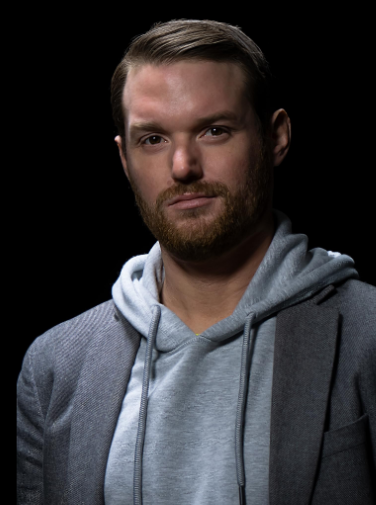
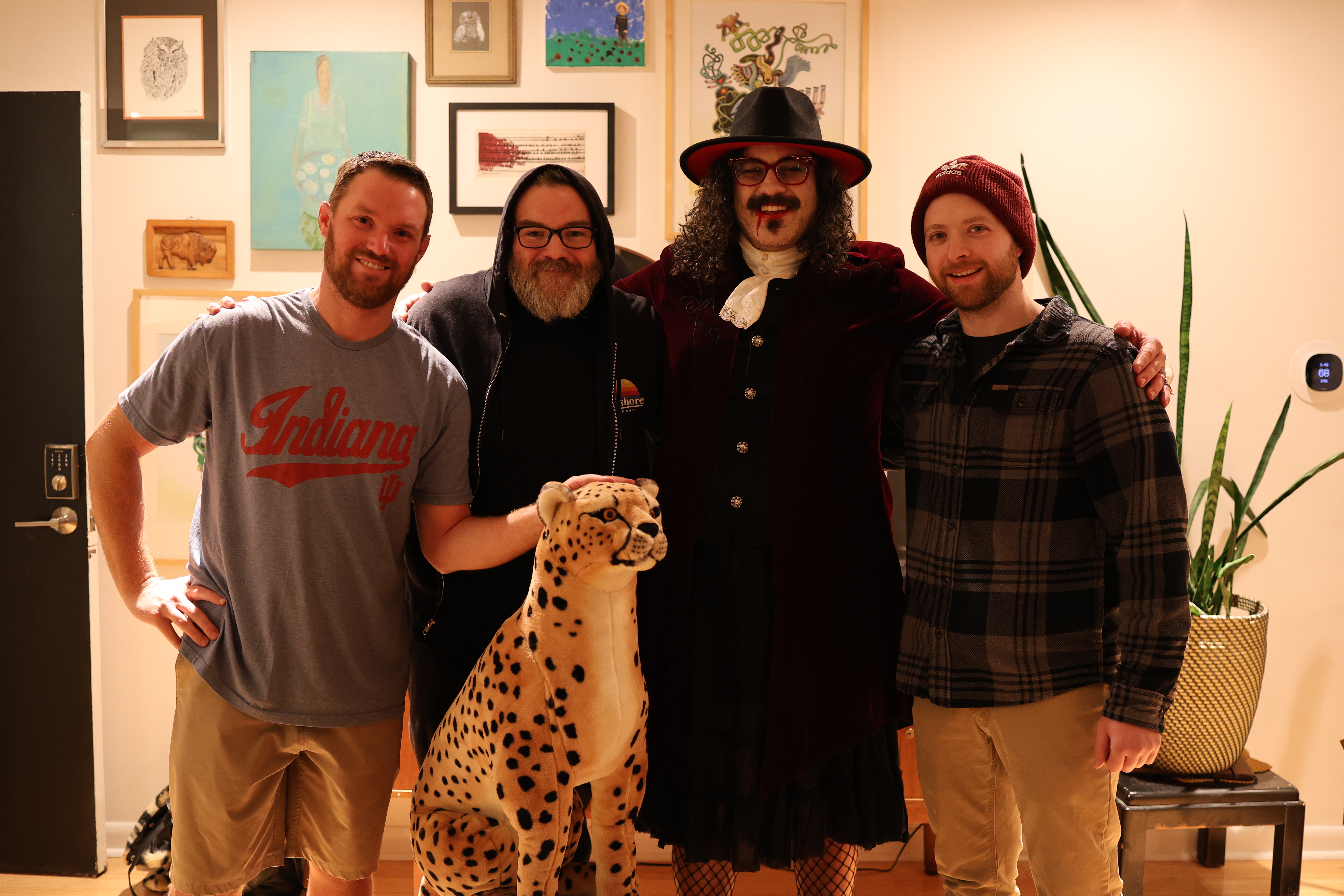
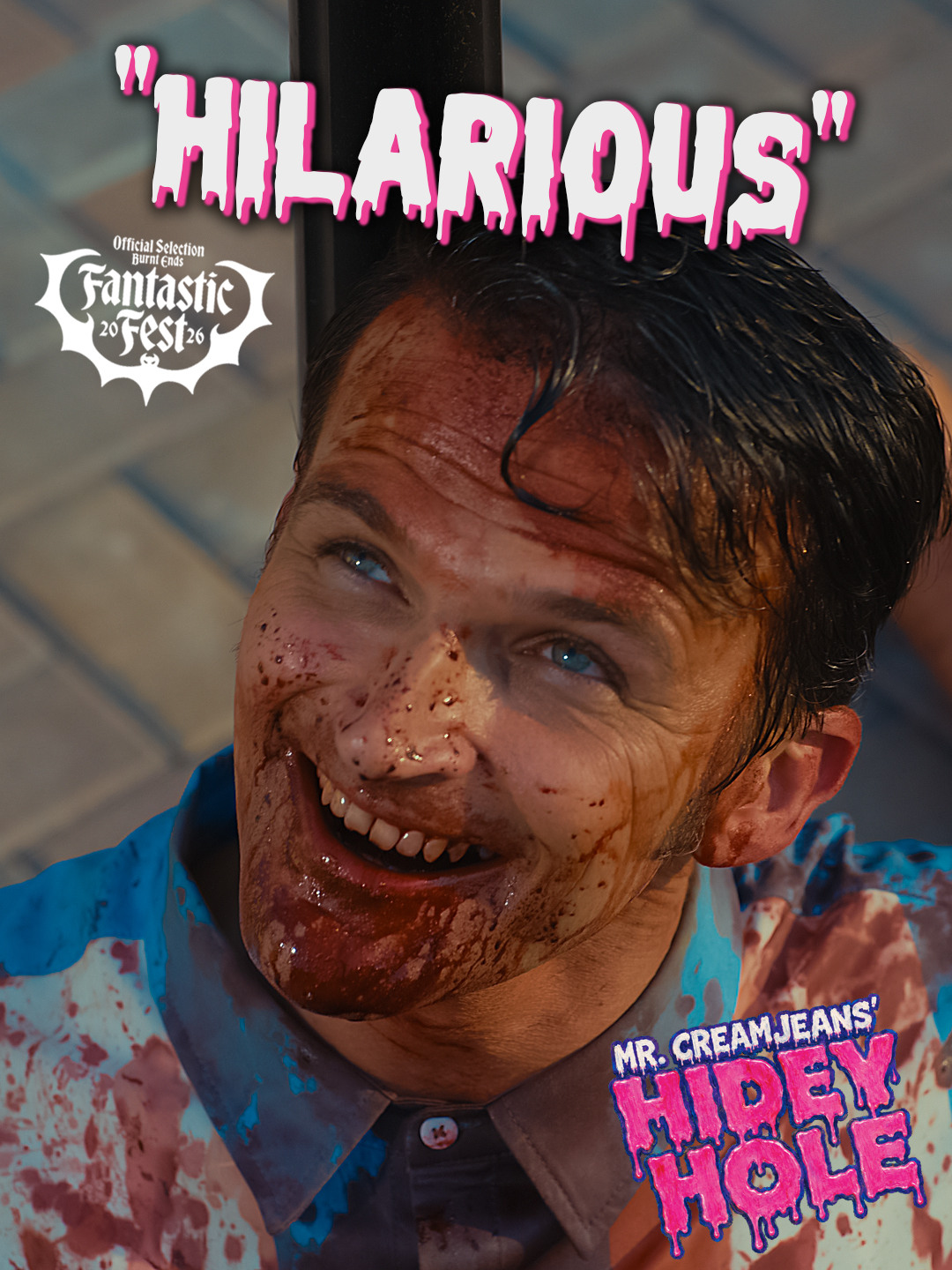
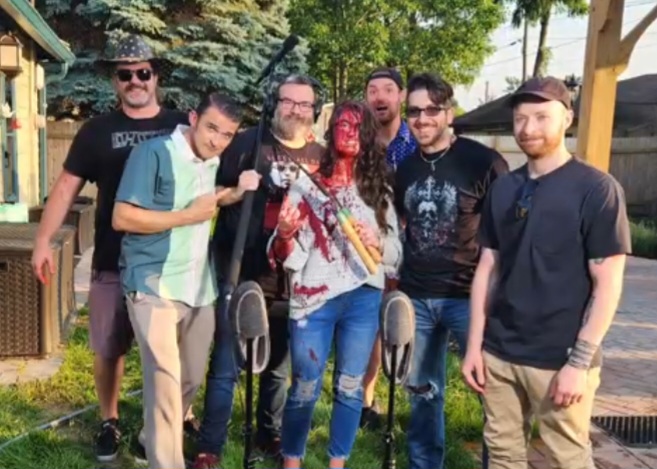
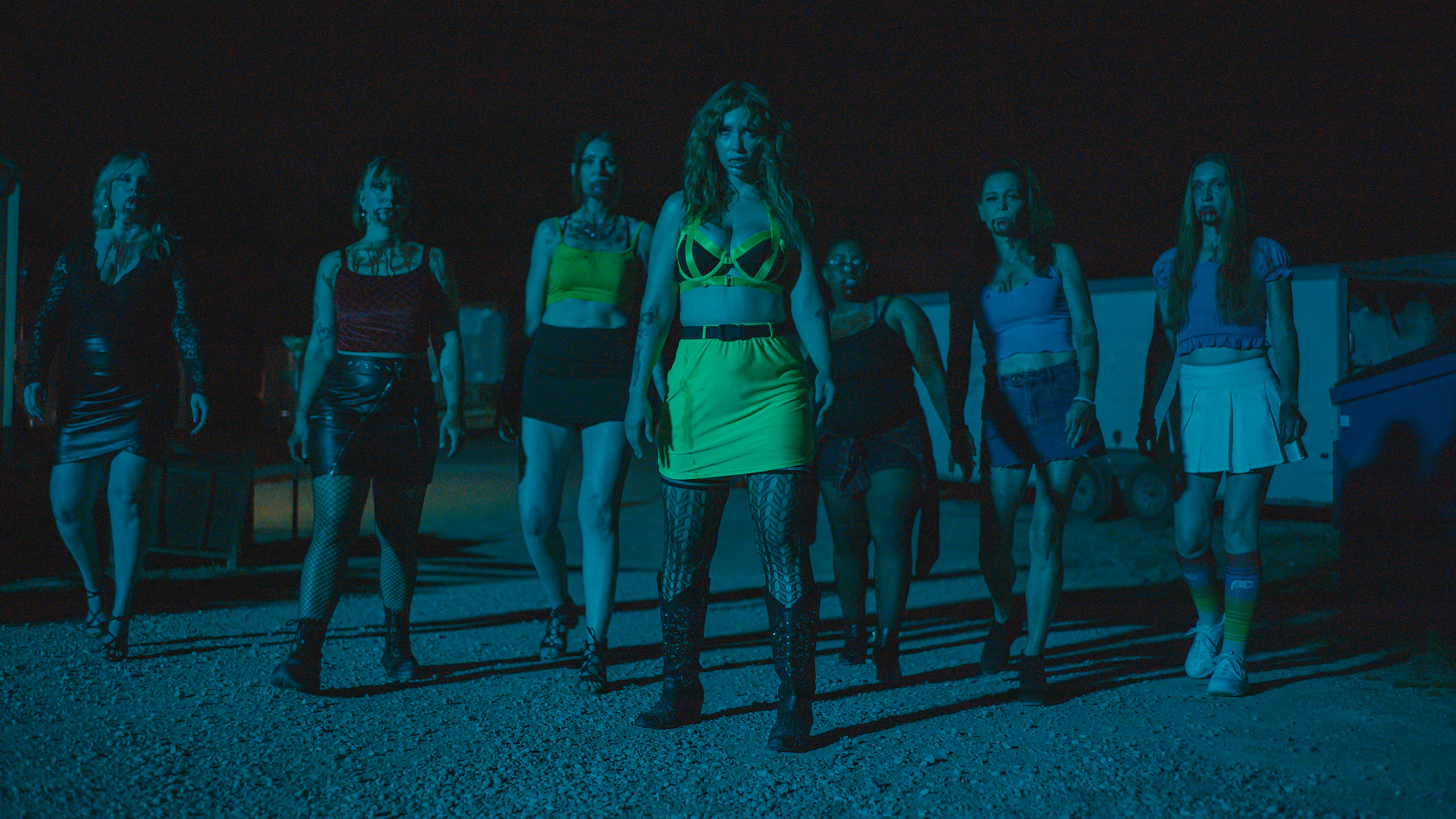
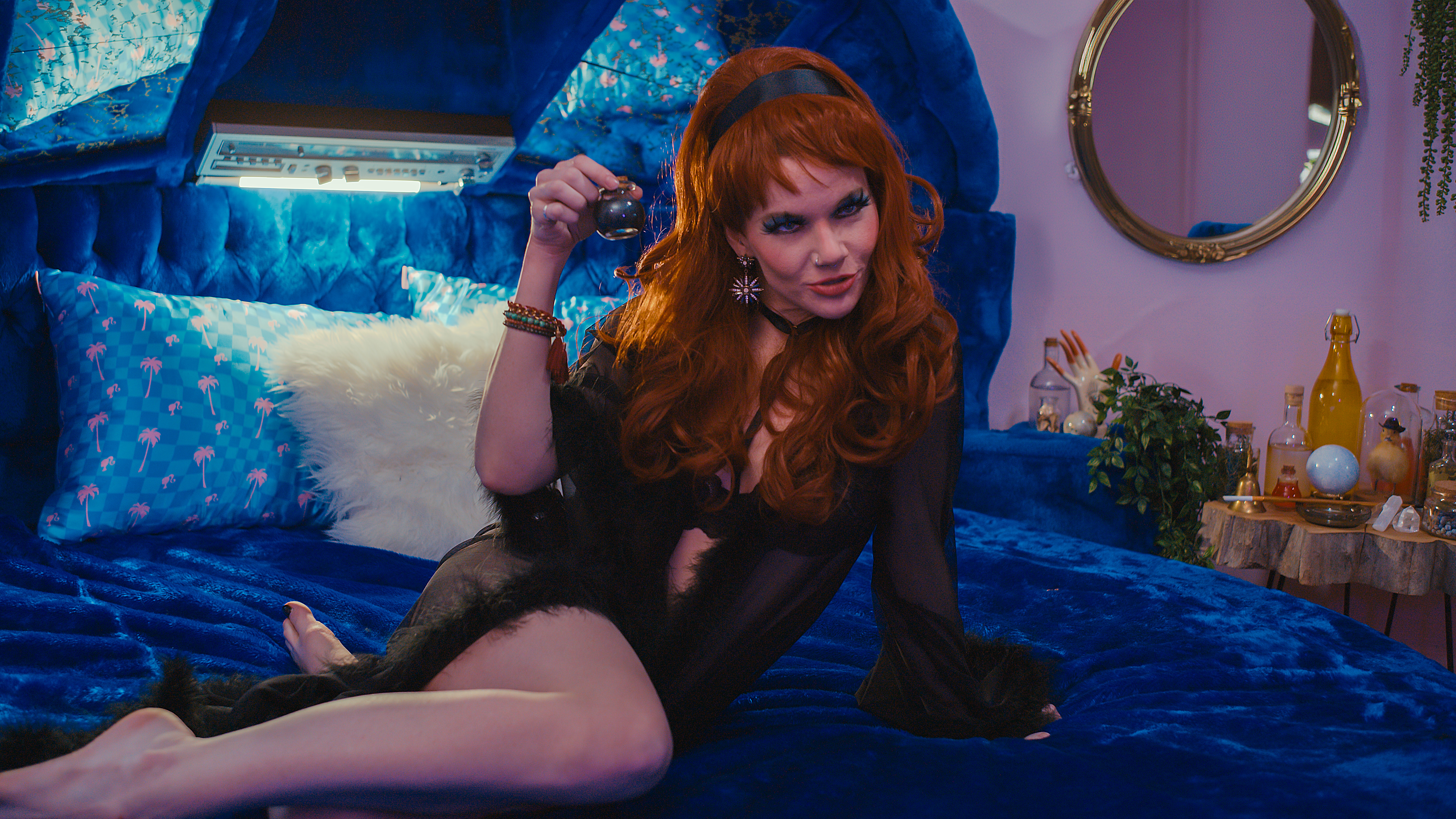
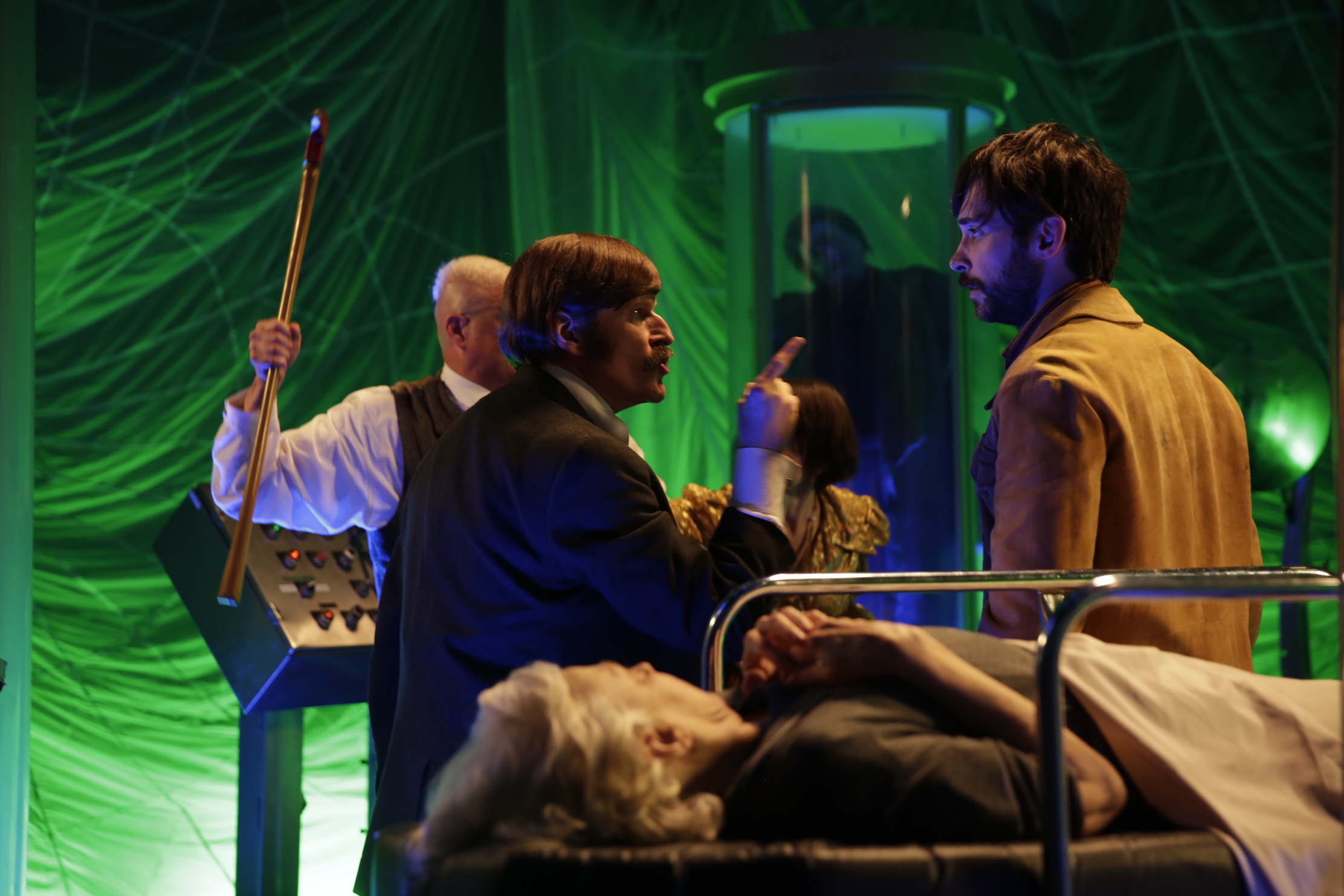
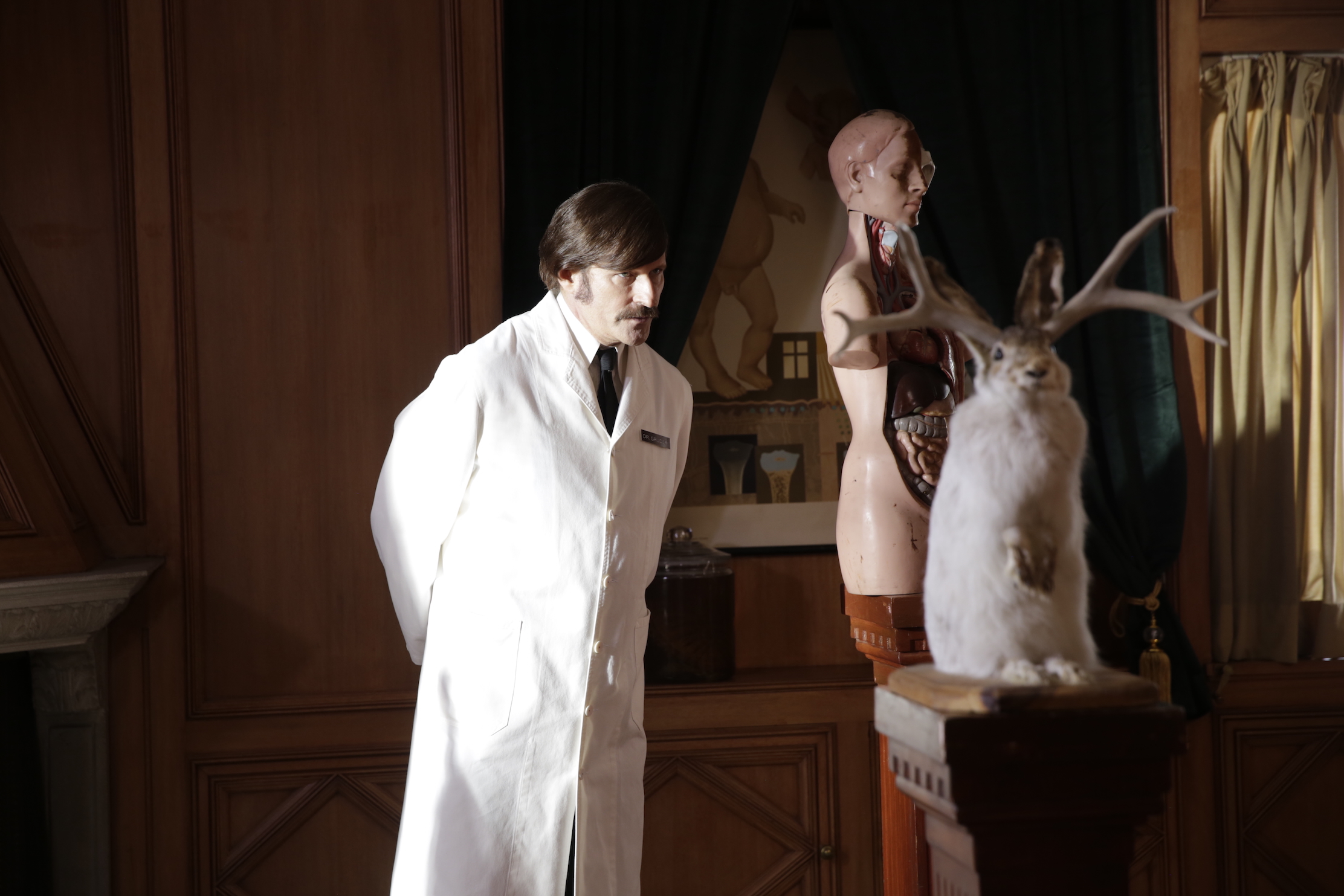
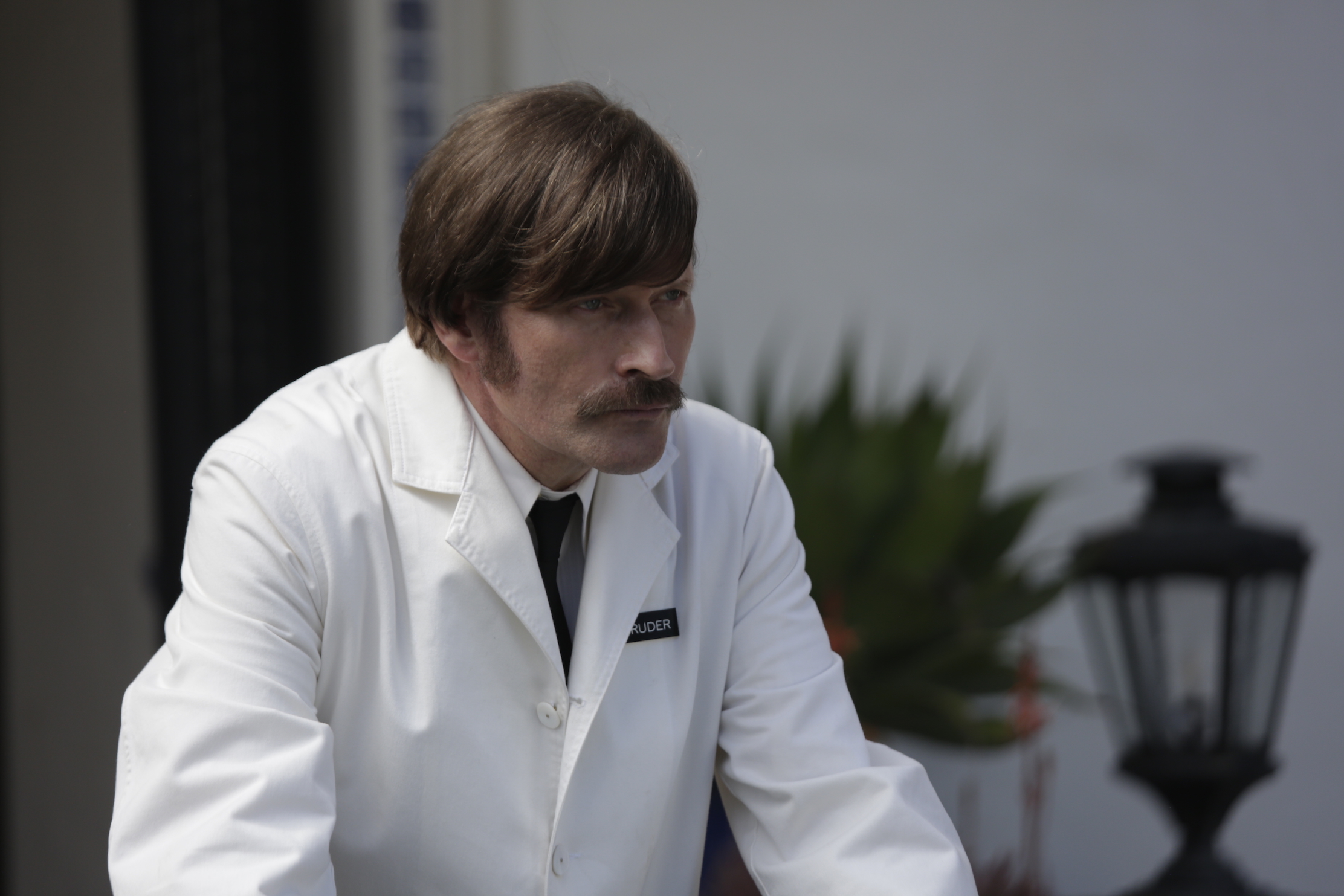
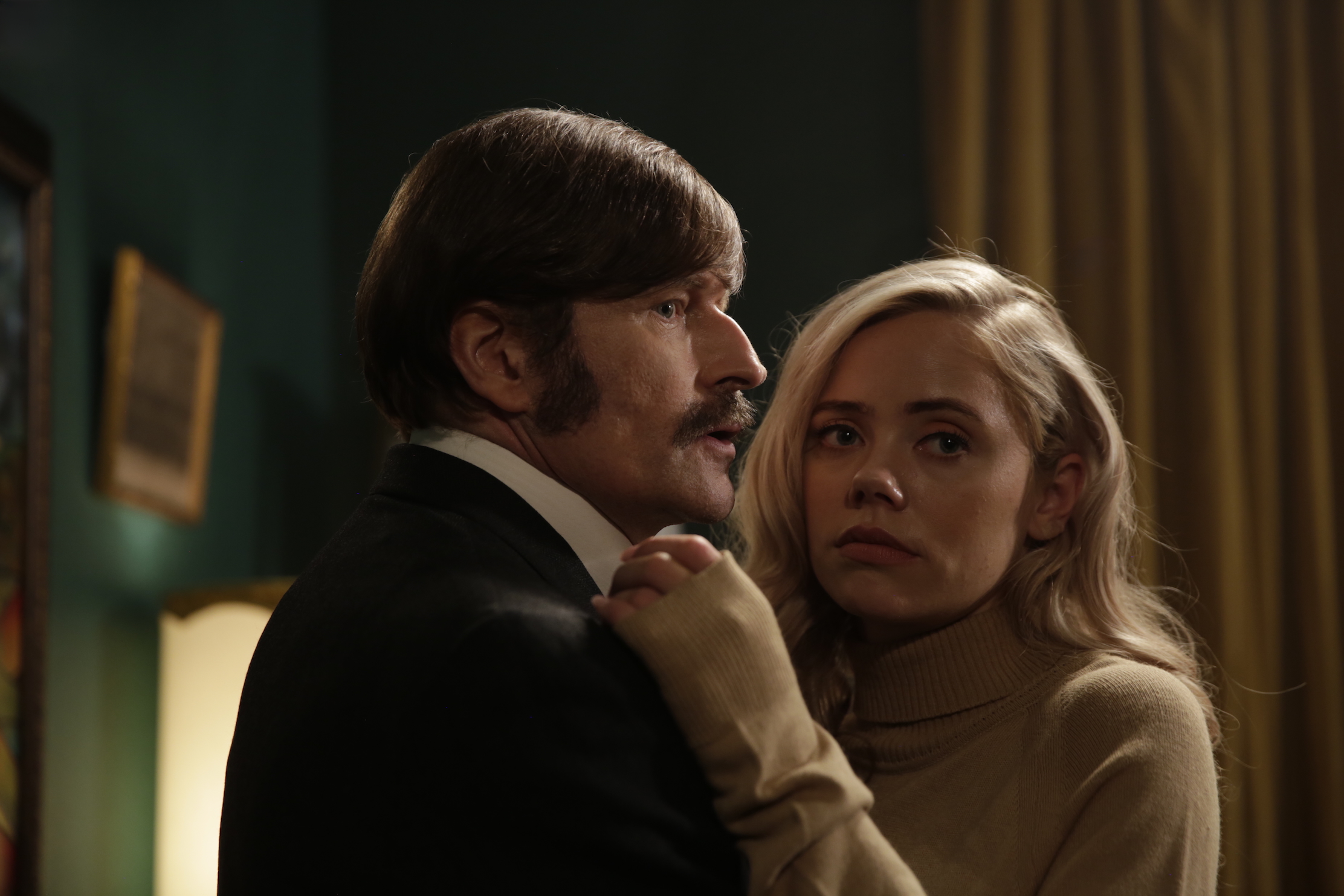
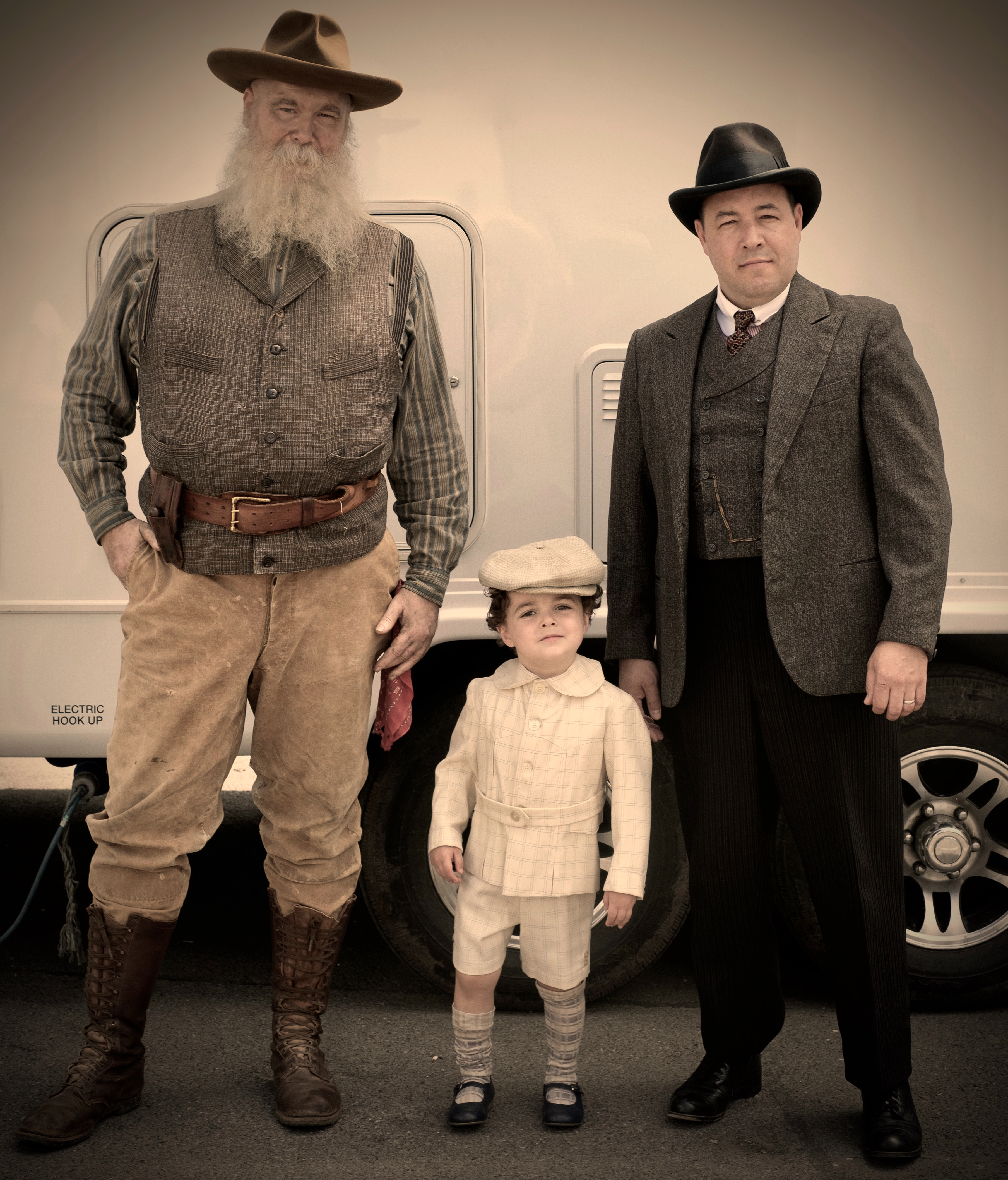
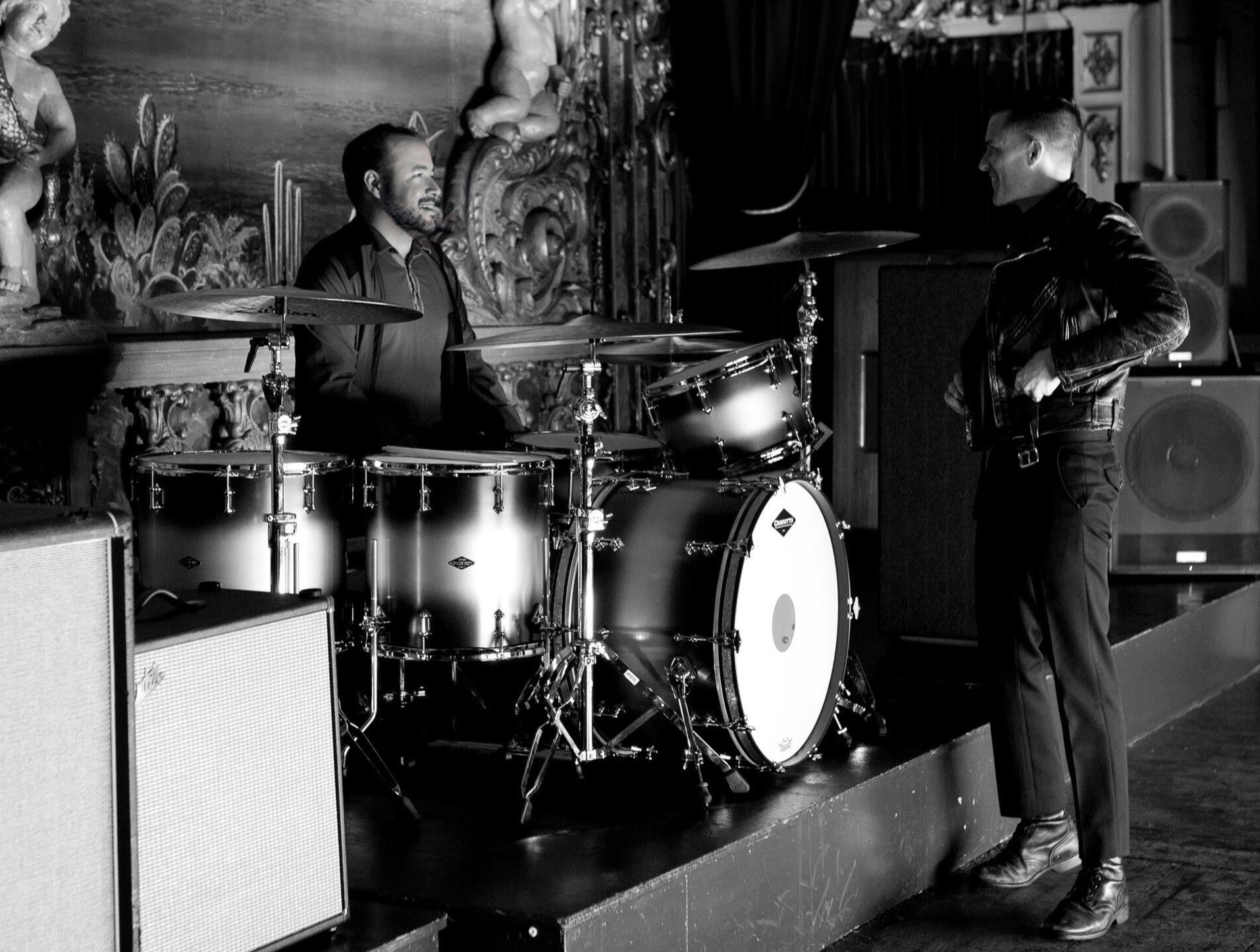
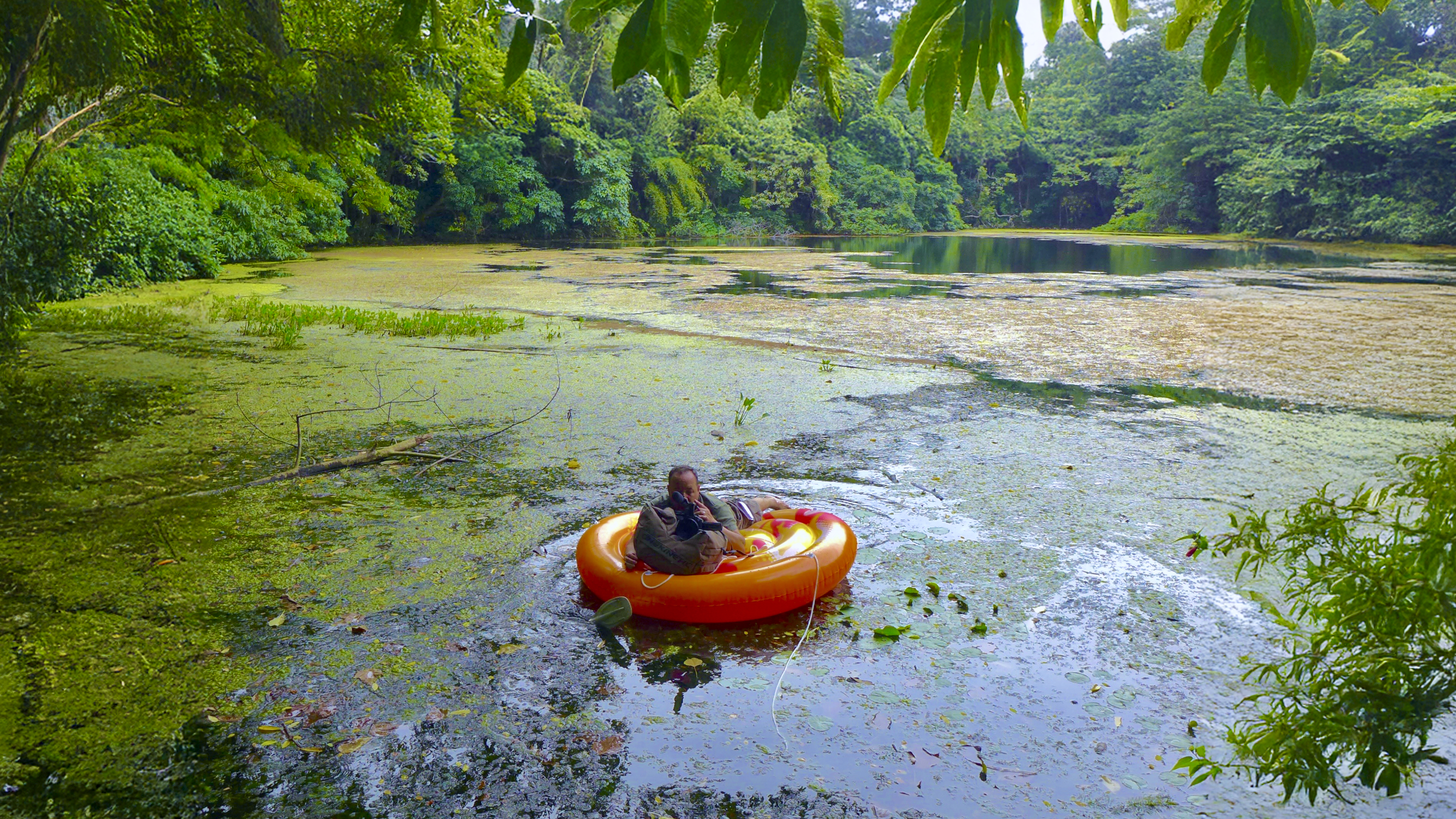
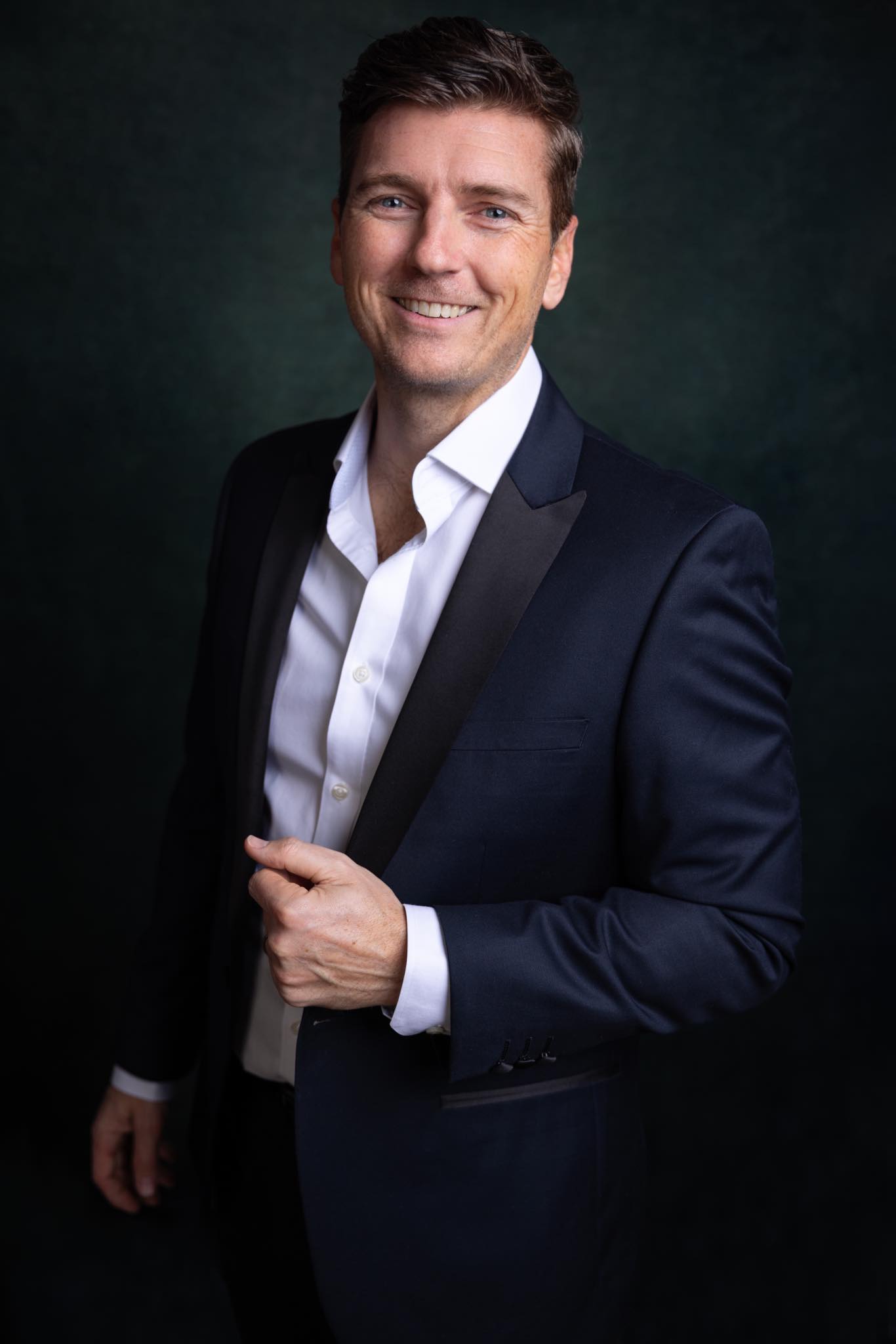
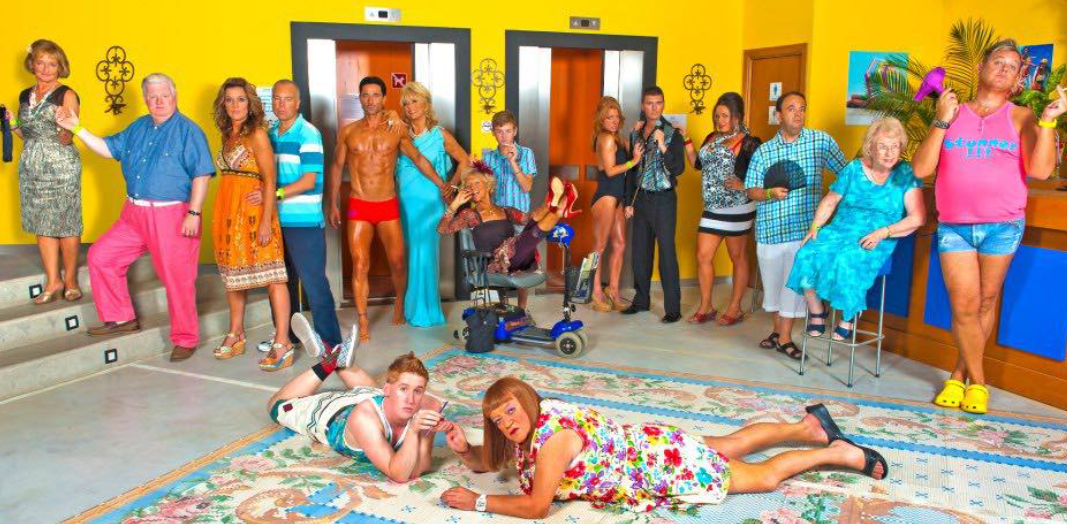
Heath Benefield is an independent filmmaker who has worked in comedy, documentary, and horror. From the seriously informative Emmy Award winning documentary “No One Is Safe From Son of Sam” to the comedic horror anthology film “Mr. Creamjeans’ Hidey Hole” the subject matter of his work varies greatly.
What was it like growing up in Indiana when you did? What are some of your most fond memories of that time?
I grew up in Gas City, IN – a small town as John Mellencamp (mostly) described it. Since I can remember, I always resented it because I wanted to be where the movies are made. Now, looking back, I see I had it pretty good. As it pertains to filmmaking, I was able to own “future director” as my identity there. I ran the school TV announcements and even created a variety show on Fridays, which teachers hated because it kept getting bigger and eating into class time. But the support was there and it gave me the confidence and encouragement to pursue filmmaking in college.
What was it about film that first captured your attention?
I think I was fascinated by the feeling of living in other peoples’ experiences. When you watch a movie, especially in an immersive theater, you get to simulate lives you wouldn’t otherwise live. You get to be people you otherwise couldn’t be. I could BE Batman, you know? I could hang out with Ace Ventura or Billy Madison for a couple hours at a time. Then, eventually, my fascination with film basically became my identity. I worked at the local video store, I made short films with friends, I wrote movie reviews for the school newspaper. Film is a way of life, believe it or not. And if you want to find success in filmmaking, I believe you have to fully commit yourself to it.
I understand you also used to work at the local Blockbuster there with an actor who you had to chance to direct in the film “Mr. Creamjeans’ Hidey Hole.” What was it like to direct someone you have known so long? How would you say you have changed most since those early days?
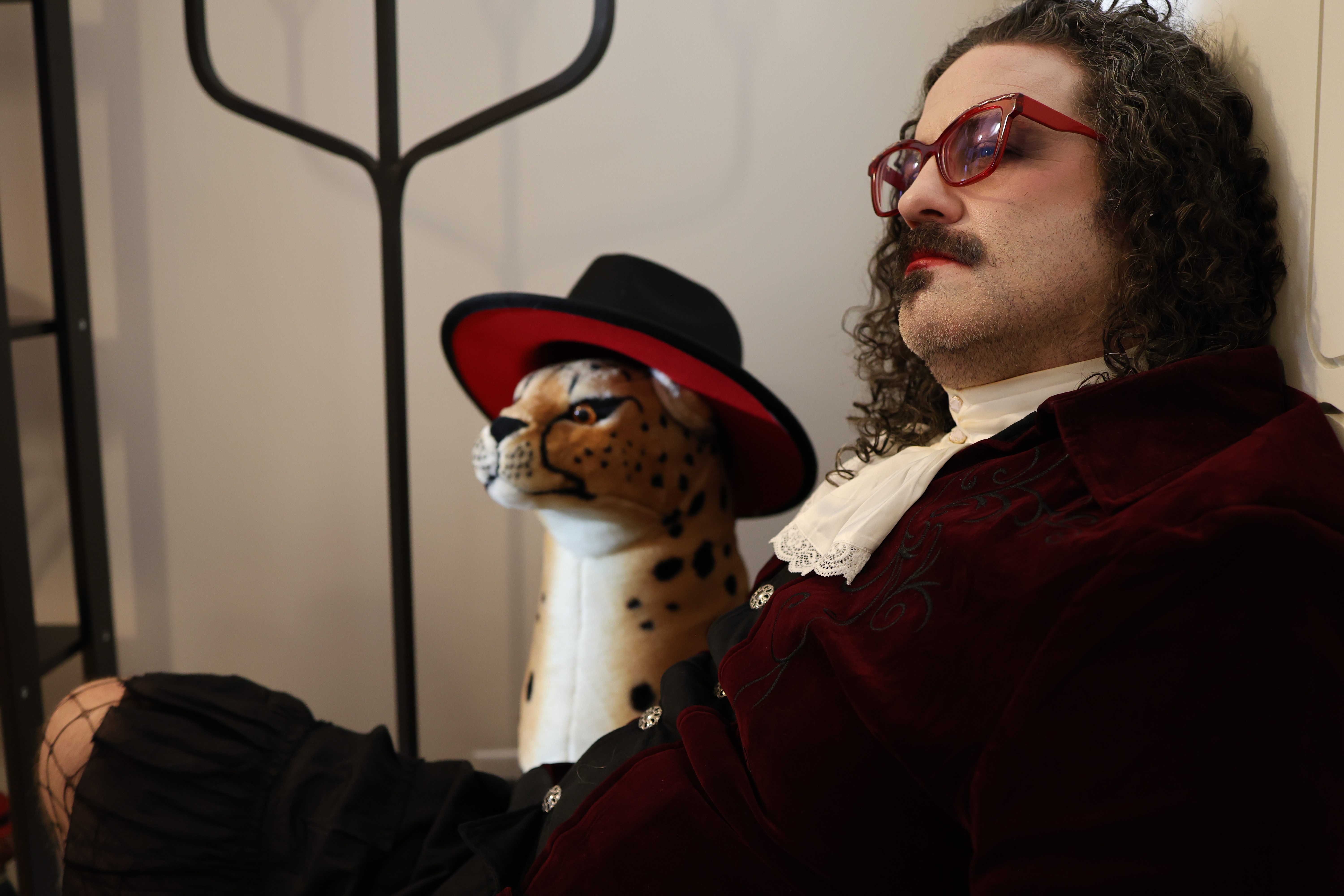
When I read the part of Laurence I immediately pictured Brandon Howard. He was a couple years ahead of me and attended a neighboring school, but we worked at the same video store and grew up attending the same church. His mother was my elementary school librarian. Lovely family. As we were developing the film, Brandon had been sharing his journey of becoming an actor in Germany. I believe many of those gigs were background acting jobs, so it wasn’t clear that he could step into a leading role, but I just knew he could do it. He’s a natural entertainer and a bright, beaming personality. The team thought I was crazy to fly him all the way from Germany for the part. We had no tape on him. We had an extremely tight budget. And if it didn’t work out, we wouldn’t have the ability to reshoot. It was a huge gamble. I’m proud to say it all panned out and Brandon gave us one of the very best performances in the whole film. He went all in – it was an absolute joy watching him spring to life on camera. He never shied away from anything we asked him to do. His energy is endlessly renewable. It was just the best time, and very satisfying to start the journey of the film with someone I knew when I was a kid.
For those not familiar with it, can you tell us how the film came about and what to expect from it?
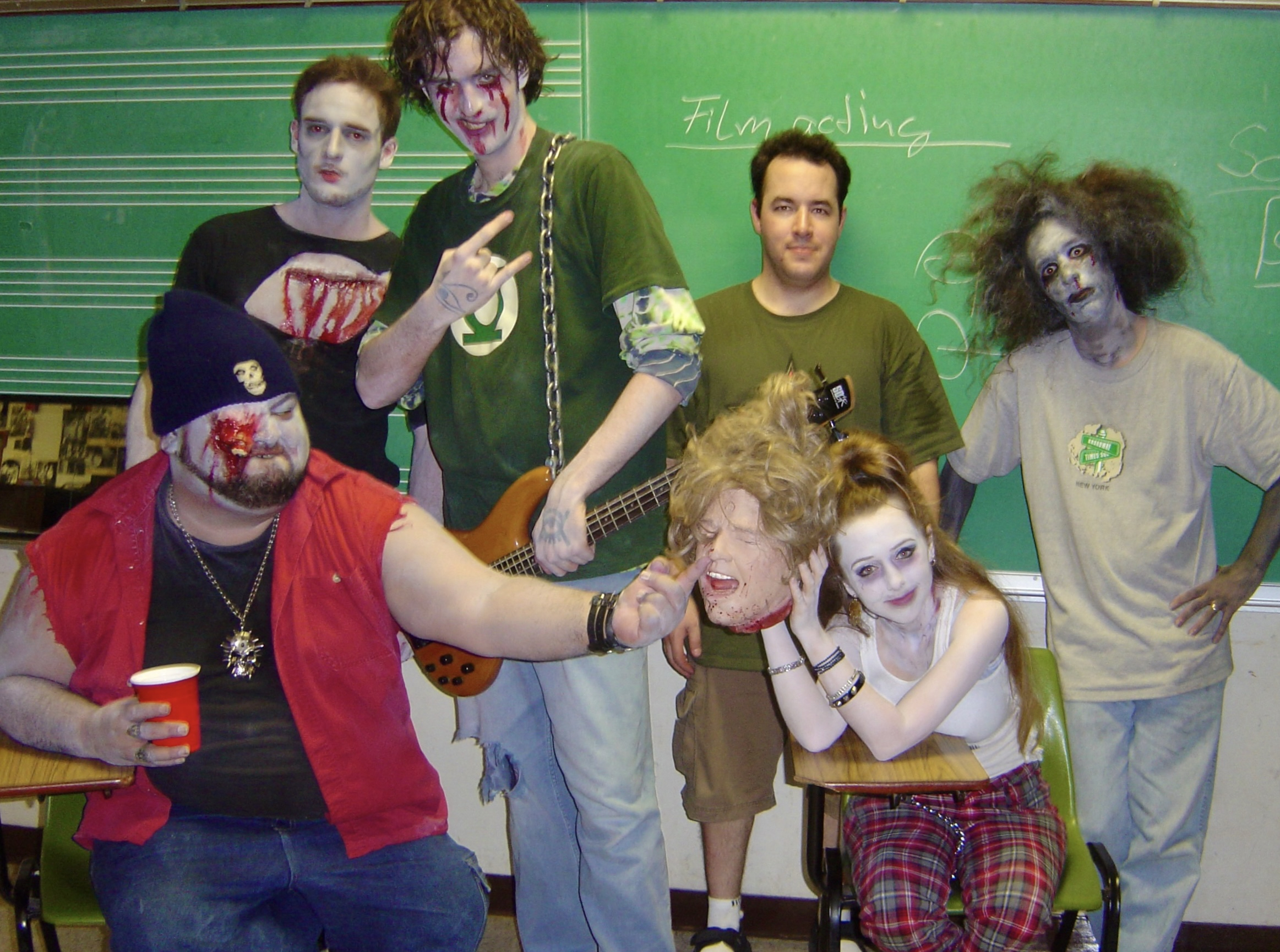
I’ve been told we’ve made a very naughty movie. Sure, that was a very conscious decision, but after living with it for three years now, it has become my new normal. Before we started showing it to audiences, the team and I worried it would come off too tame. We definitely haven’t received that criticism yet. It all mostly springs from the mind of my filmmaking partner Josh Griffey, who plays the titular Mr. Creamjeans. This is just his diseased brain. He’s perverted, inappropriate and absolutely hilarious. Also, a brilliant writer. When you get material as unique and shocking as this, how could anyone turn it down? We developed it for a long time and were primarily guided by what made us laugh the hardest. Griffey always says, when you make a movie you better have fun because the audience can tell if you didn’t – it shows up on the screen.
Are you surprised at how this particular film has been received by audiences so far?
I’m actually surprised it’s been received as well as it has! Audiences are having a great time with it because I think it’s been a long time since a shock-humor movie has come along. Was Borat the last one? Our movie can be described as crass, juvenile and gross, but it also has a lot of brains – credit to the writers. Of course, it’s not everyone’s cup of tea. The Downton Abby crowd might clutch their pearls. But I’ve been very surprised by how well the movie plays for all types of people.
Do you have any interesting stories from the set on this one?
So many. I wouldn’t even know where to start. However, I’m very proud that we never dealt with any major drama in the 2 years it took to shoot the movie. Everyone got along so well and really committed to bringing this thing to life. But yeah, there are tons of adventures and anecdotes that happened along the way. We are organizing a roadshow tour of the movie and we’ll start that in early ’27. If you come to a screening I’m sure you’ll be able to hear plenty of our war stories. Or buy the Blu-ray for all the behind-the-scenes and filmmaker commentary.
Do you have a dream project you’d most like to see into existence?
A couple, yeah. Griffey and his writing partner Jon have this brilliant script called “Muscle Mommy” that we are desperate to make if we ever get the resources. It’s VERY funny and a biting satire on the manosphere phenomenon. Additionally, I’ve always wanted to do a contained thriller in the mold of Fincher’s “Panic Room.” I’m obsessed with “Panic Room.” I watch it once a month at least. It’s one of the most brilliantly constructed films in my mind and I’d love to make a movie like that where characters are chasing each other around a house. I’m currently developing a couple films that could fit that bill.
What projects are you looking forward to working on next?
I’m working with some new collaborators on projects that will likely go into production next summer. One I’m directing, the other I’m producing. These things are hard to pin down, so we’ll see what ultimately shakes out. We are also developing a Mr. Creamjeans sequel. I would be very happy to be making Creamjeans movies for the next decade.
Is there anything you’d like to say in closing?
I just want to tell other aspiring filmmakers that it’s not about you and you can’t do this alone. Find a team and start talking about movies every day. Start a podcast if you have to justify it. Learn what you like and brainstorm about how you can feasibly make a movie. Work on it every day and don’t give up. Keep the team intact at all costs and you’ll all get there together.
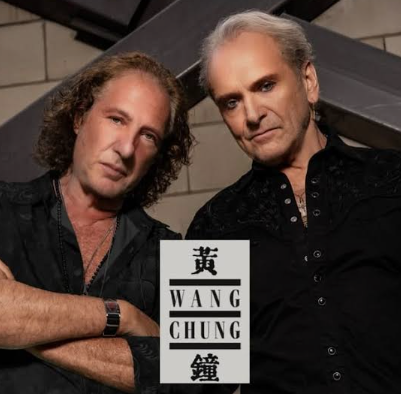
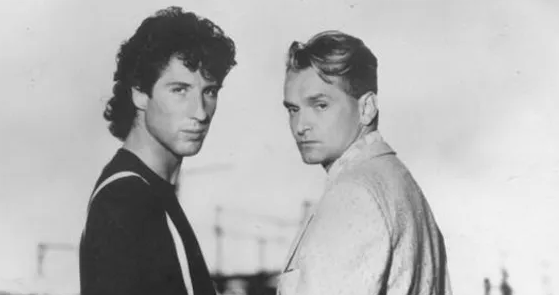
Best known for being the frontman for Wang Chung, Jack Hues has also worked with the bands, Strictly Inc., The Quartet and has three solo albums to his credit as well.
What was it like growing up in England when you did? What do you remember most fondly from that time?
I was born in Gillingham, Kent less than 10 years after the end of the Second World War. So England was still in the post war depression. We didn’t have much money, but even if we had there was nothing to spend it on!
In 1989 I went to Berlin immediately after the fall of the Berlin wall. I spent about five days there travelling to East Berlin from the West each day. You still needed a passport at the checkpoint but they didn’t always look at it. I went principally to see the State Opera in East Berlin which was still a repertory house, rather than the modern system of superstar singers jetting in to fill the leading roles. Anyway, during the day I would venture out into East Berlin.
One day I took the tram to the end of the line. It took me to a spacious park with a huge lake in the middle, a fountain shooting water into the air. On the lake shore was a café. I remember walking in and it really reminded me of Gillingham where I grew up, principally because there was virtually nothing in it, just a very bare minimum of food, sandwiches, tea. The few people inside didn’t look up even though I was clearly not from those parts! The silence, the oppressiveness, the sun-faded posters, the sense that nothing was happening – all reminded me of my childhood in Gillingham.
Do you happen to remember what your very first favorite song was? What did you love about it most?
My dad was a Saxophone player and had a collection of jazz LPs at home. I remember a Latin album. I think it was called “Viva!” Something like that. I later learned it was an English big band but the track I loved was a very cinematic dramatic piece, great rhythm and atmosphere like a spy movie score. I could’ve only been five or six but I really got it. I loved it.
Who were some of your earliest influences?
The Beatles. So many people have acknowledged that they changed everything. Not just music but society, the way people think, fashion. It was a change in consciousness comparable to the arrival of the Internet and I was swept up in that. I asked my parents for a guitar for Christmas, which they got for me, even though we had little money. I had guitar lessons every week the objective of which was to learn to play Beatles songs. I was about eight years old when I began to learn guitar. I liked other English bands like the Kinks and The Rolling Stones. I remember “You Really Got Me” was a favourite. Far more easy to play than “All My Loving” for example!
When did you first realize that music would be your life’s passion?
Because I was doing it, I didn’t really conceptualize the process. I was on the path and I wanted to learn, to find out how music worked, to quote David Byrne.
How do you think the music industry has changed most since you began your career?
Music has always been led by technology. Whether it’s the invention of the violin, grand piano or a tape recorder or MTV! Turning music into data and Social media changed how people consumed music, what they thought it was for… I guess the biggest change has really been how the eye has become dominant over the ear. Listening was so important when I was a kid. The eye is so much more full of expectation.
What advice would you offer the musicians of tomorrow?
Learn your instrument and Don’t give up!
What was it like to work in Wang Chung when you did?
Bands by their nature are mutually supportive of the members. Working with Nick and Darren in the early days was exciting and fun. Success brings more ego and competitiveness into the picture. When it came to making videos for example we had no training. None of us went to Stage school or had any idea of what we were doing! But that was the upside in many ways. We made it up as we went along. The 80’s were a good time to be a musician in a Rock band. The business was stabilized, record companies supported the bands generously in terms of budgets for recording and making videos. The business model worked for the most part.
What are some of your most fond memories looking back on your career so far?
After 45 years in this business there are so many memories! Most of them good! Last week we played the Ryman Auditorium in Nashville for the first time. it was one of the best gigs I’ve ever done in my life so we’re still hitting new peaks and the band is as good if not better than it’s ever been.
What was it like to teach songwriting at Christ Church University in Canterbury? What led you to take on the role of a teacher?
I moved to Canterbury at the end of the 90’s. Inevitably, I made connections with other musicians. I met a guy who was teaching music at Canterbury Christchurch university. He asked me if I would help out for a couple of hours a week teaching the students about recording. He left and a new person came in to head up the course. When he realized who I was, he asked me to write a three year undergraduate course in Songwriting, which I did.
I think I was pretty effective for the first few years. I had some great students who went on to do things in the industry. Higher education underwent big changes in the UK, basically around funding. Students paid much more for their courses by the end of my time teaching than they did at the beginning. I think this had a big effect in turning them into “customers” rather than students – a negative effect in my opinion.
But I enjoyed teaching. It was social and songwriting is very isolated usually. There’s an immediate feedback with teaching and that can be satisfying.
How have your feelings about music in general changed to most since you first discovered it? Do you still love performing as much as ever? How do you think you have evolved as a musician and as an individual?
When I was young I thought of music as something that I would “do.” The implication being that there were times when I would do something else. But I realized that you have to live music if you’re going to practice it. It is a 24/7 thing and once you accept that it’s great, but I think I struggled with that for a long time. Music has been my life really, since my teens and is more now than ever. Music has saved me at my most difficult times and it has helped me celebrate the best of times. Music can be a cruel mistress, but nobody said it would be easy.
Do you have a dream project you’d most like to create?
We did a show in Los Angeles at the end of last year where we played the entire soundtrack of “To Live and Die in LA!”with extracts from the movie. Created a whole immersive experience – that was a great project that I would like to repeat in 2027. I’ll be releasing a new solo album called “This Changes Everything” at the beginning of 2027. My solo albums are dream projects in a way. I am still obsessed with making albums, making something that people can listen to and be transported by, inspired or just amused.
What do you think is key to a life well lived? How do you hope to be remembered when your time comes?
As Joseph Campbell said, “Follow your Bliss” and as long as you follow it with kindness, humility and compassion the universe will help you in unexpected ways. I would like to be remembered as someone who crossed boundaries, social and artistic, who played life full out and tried to give back as much as was given to me.
Is there anything you’d like to say in closing?
Thank you for the questions and for the opportunity to think about my life in music.
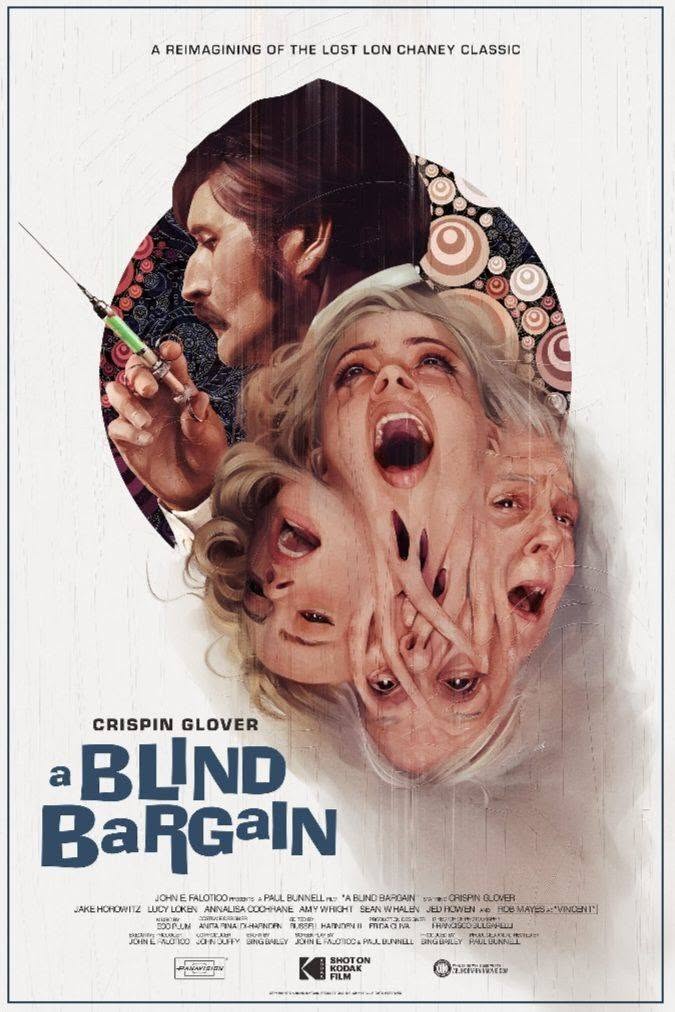
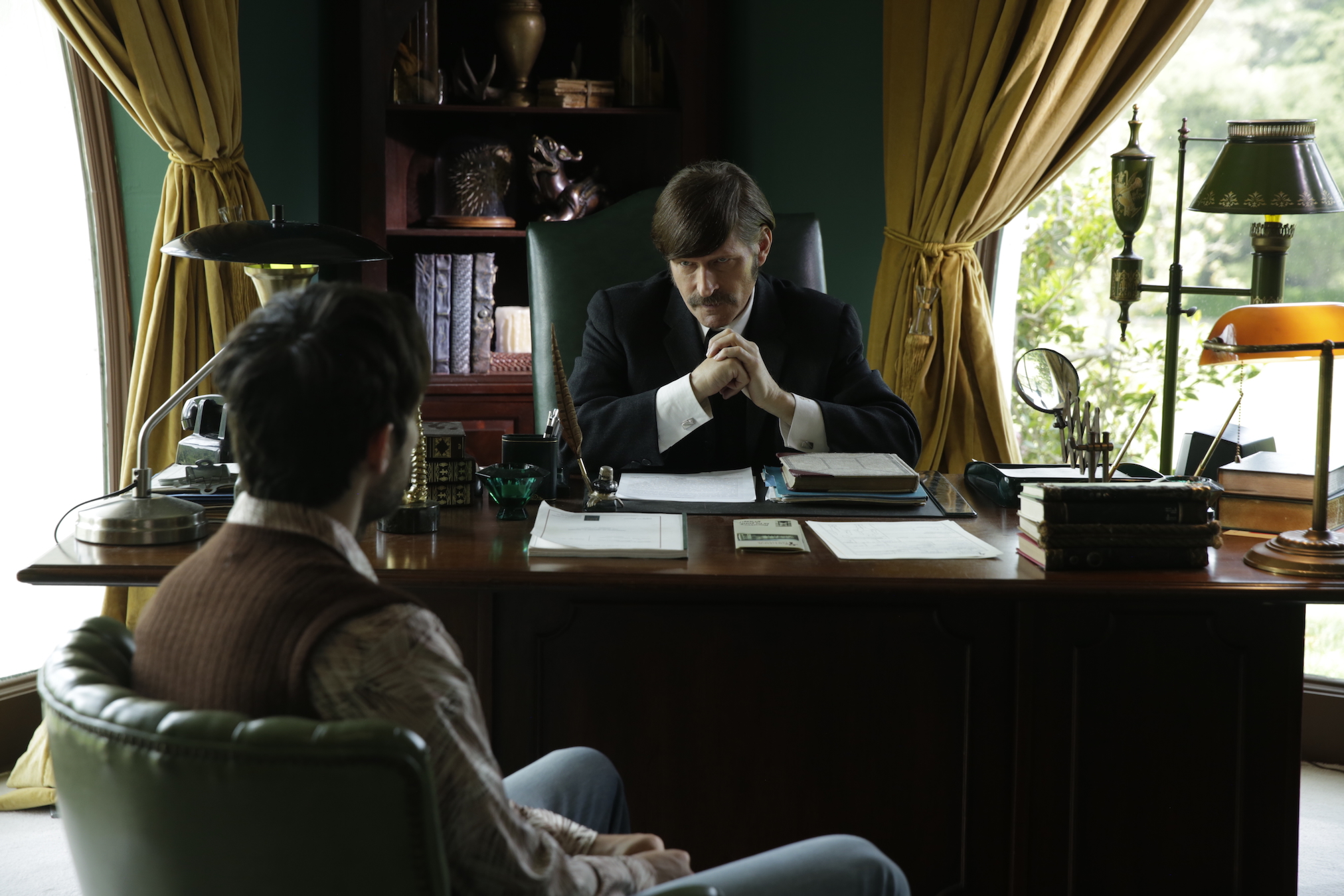
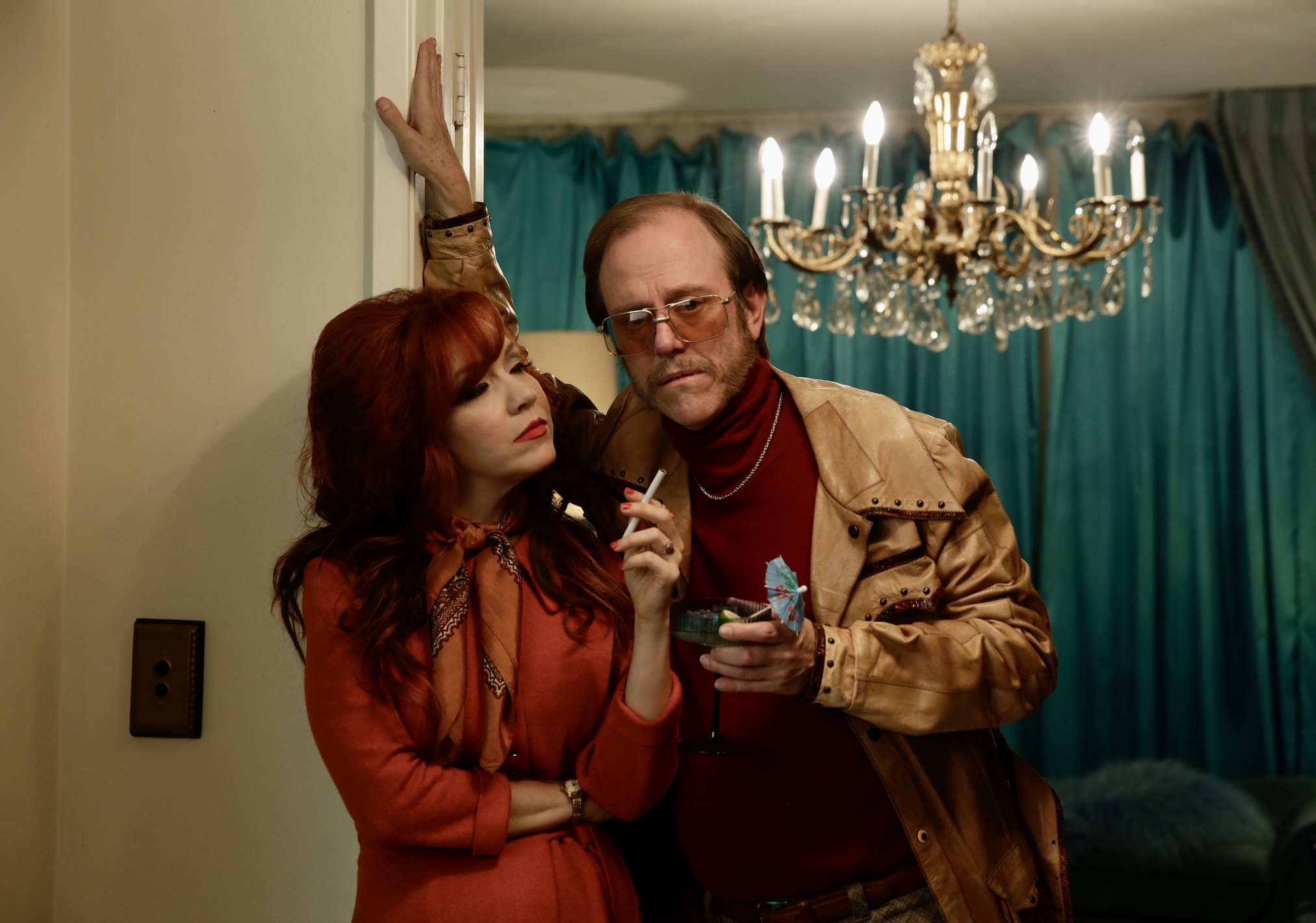
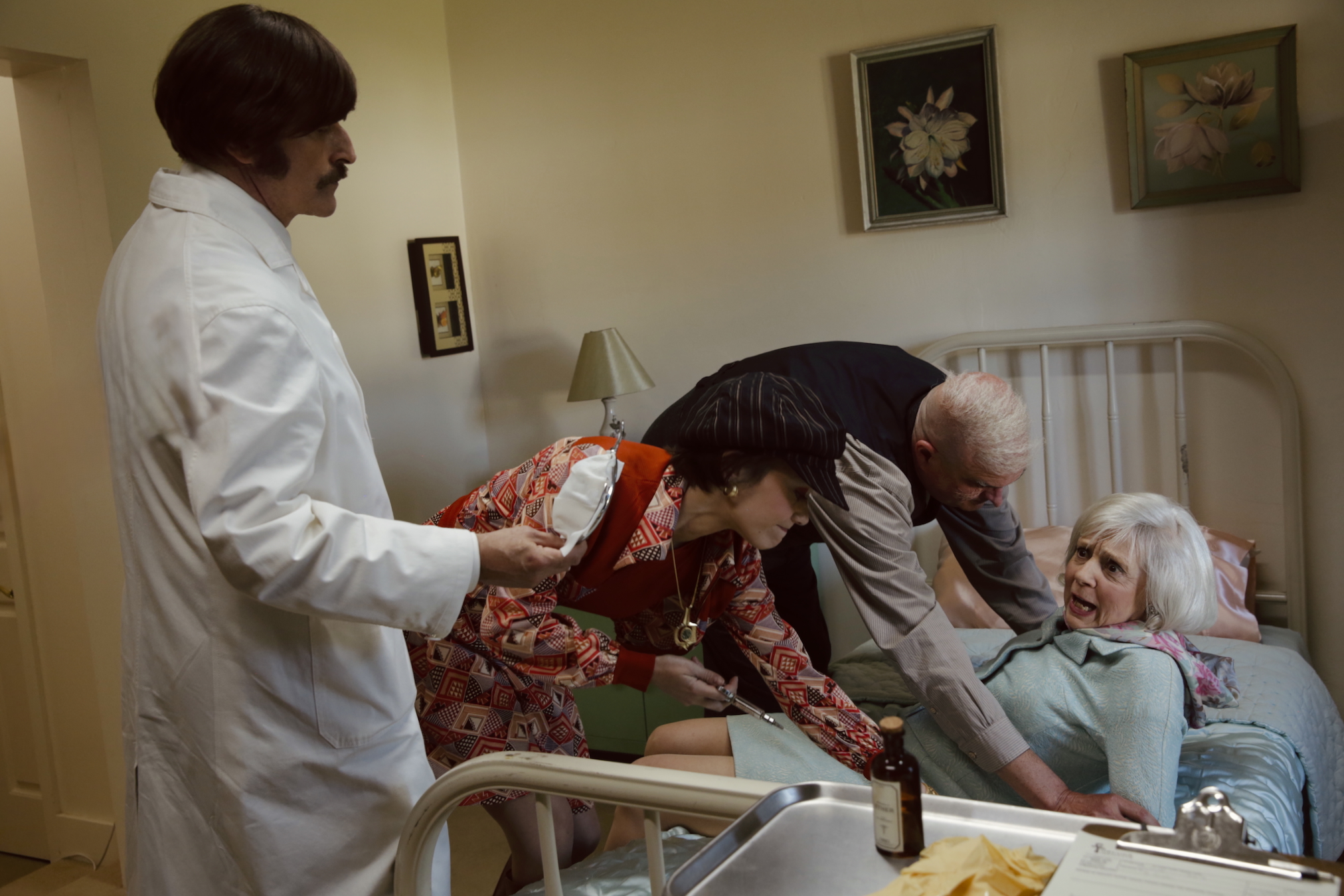
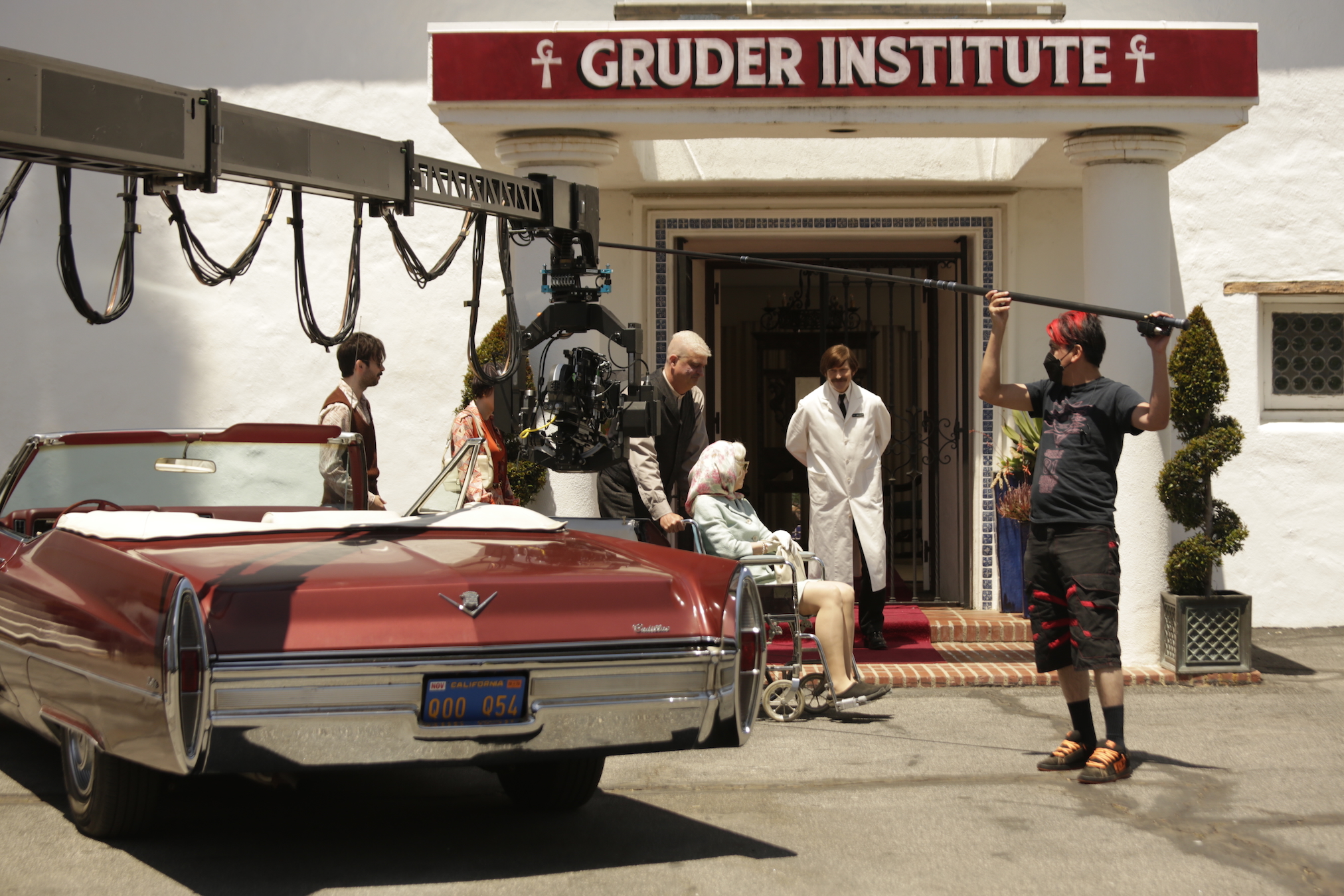
Paul Bunnell developed a love of film at an early age that led him to work as an actor, director, and writer on countless films. Best known for his work as a director of “The Ghastly Love of Johnny X,” “The Visitant,” and “That Little Monster,” he has most recently delighted audiences with his reimagining of the missing Lon Chaney silent film, “A Blind Bargain” starring Crispin Glover.
Do you happen to remember what your very first favorite movie was? What was it about the film medium that captured your admiration and attention?
The very first movie I saw was Walt Disney’s Snow White and the Seven Dwarfs back in 1967 at the El Portal Theatre in North Hollywood, California. I was quite young, but it was my first impression of cinema which was “magical.” After the movie ended and the curtains closed (yes, theatres had curtains back then) my eyes stayed fixated towards the screen as if in a trance. I have been in love with movies ever since. That nostalgic feeling has never left me.
Who were some of your earliest influences and what was it about their work that inspired you most?
My earliest influence was Walt Disney. Most of my films have maintained a basic innocence and classic entertainment value because of his work. While it’s always fun to delve into the darker side of storytelling from time to time, I prefer to keep my movies “family friendly” and never too ugly. I wouldn’t want to make a film I couldn’t show to my grandmother.
As someone who has worked both in front of and behind the camera do you enjoy one more than the other?
In my early years I wanted to be an actor along the lines of a Bob Hope type. I studied and went on auditions a lot in the 1980s. One day my agent noticed in the trades that I had won an award for a film I made. I was 19 at the time. She sat me down and offered me some great advice, that I should fully concentrate on either my acting career or my film making career, but not both. I eventually chose filmmaking over acting and haven’t looked back since. I’m thinking that decision should be paying off any time now.
What do you enjoy most about bringing ideas to life on screen?
I think it’s about creating a magical world removed from reality – a world where the audience can escape into a dream. It’s always fun to come up with stories that are a bit off kilter. When I want “reality” I watch the six o’clock news.
What was it about the missing Lon Chaney film, “A Blind Bargain” that made you want to reimagine it as you have? What were some of the most daunting challenges you faced in doing so?
The challenge was to come up with something that today’s audiences would find entertaining. By setting the story in 1970 I was able to create a world removed from today’s devices and just have fun with the language, costumes, and the settings. I knew audiences would find this interesting by taking a trip into the past. I didn’t want to stick with a carbon copy of the original film, but rather “reimagine” the story with a just pinch of dark humor. I think it works based on the overall audience response. I even put Lon Chaney’s image in the movie as a loving homage. See if you can find it.
Did you enjoy shooting this in 16mm? Do you think it would have the same feel if it had been shot otherwise?
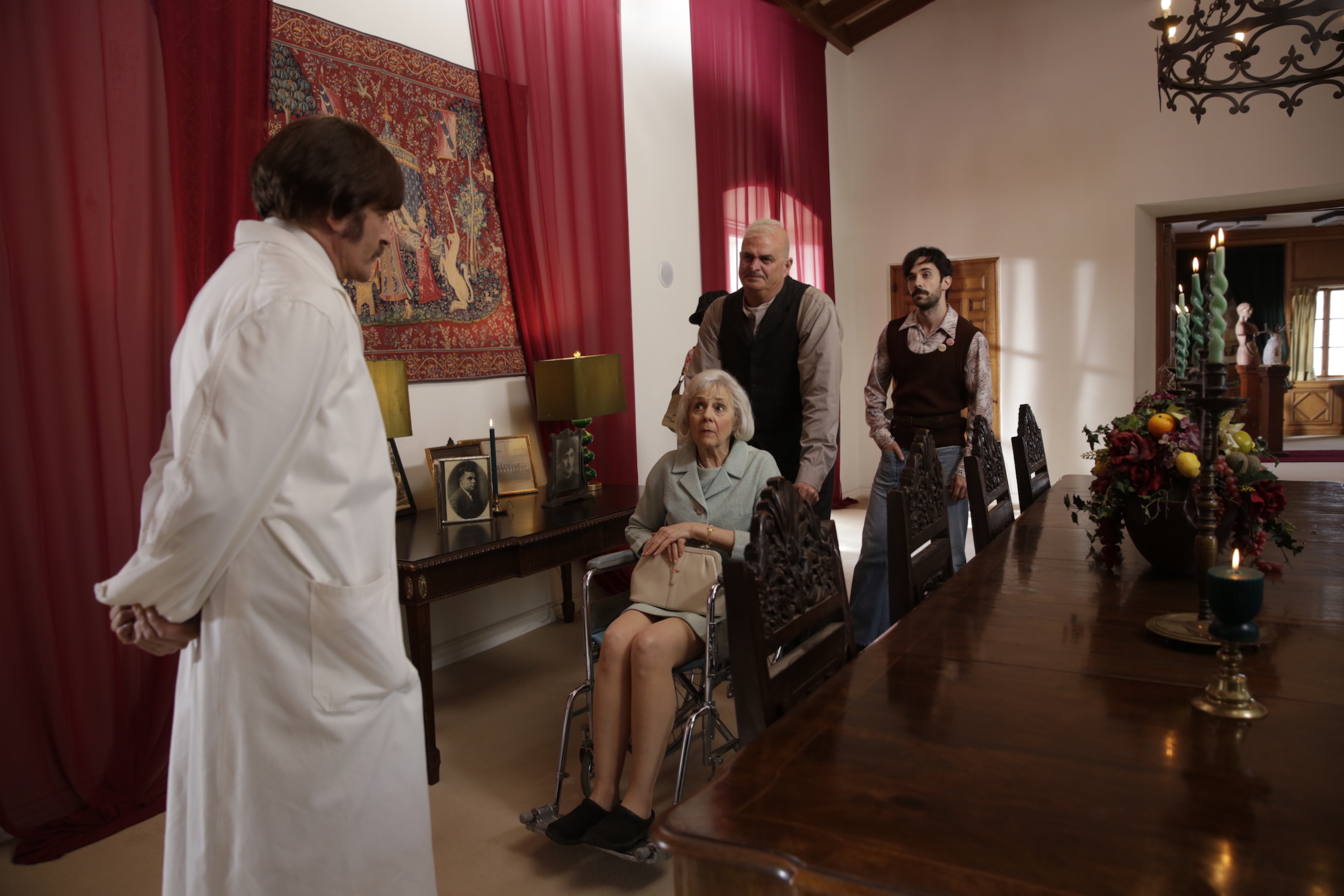
It was never a question of should I shoot on film or digital since I have always shot on film. The real debate was whether or not to shoot on 35mm or Super 16 (which is higher quality than standard 16mm). I ultimately chose Super 16 to give the final film a slightly grainy look and vintage feel. I was initially skeptical but I think the final result works quite nicely and gives it the 1970s TV show quality I was going for.
Why did you decide to set the movie in the 1970’s? What about that decade appeals to you most?
Setting the story in 1970 gave me some advantages. Not having cellphones and using antiquated lab equipment gives the story some suspension of disbelief and is more in alignment with 1922 when the original film took place. 1970 gives the film a fantasy edge and allowed me to incorporate some amazing costume and production design elements. Plus, it’s just plain fun!
What was it like working with Crispin Glover as Dr. Gruder? Are you a fan of his independent films and acting work?
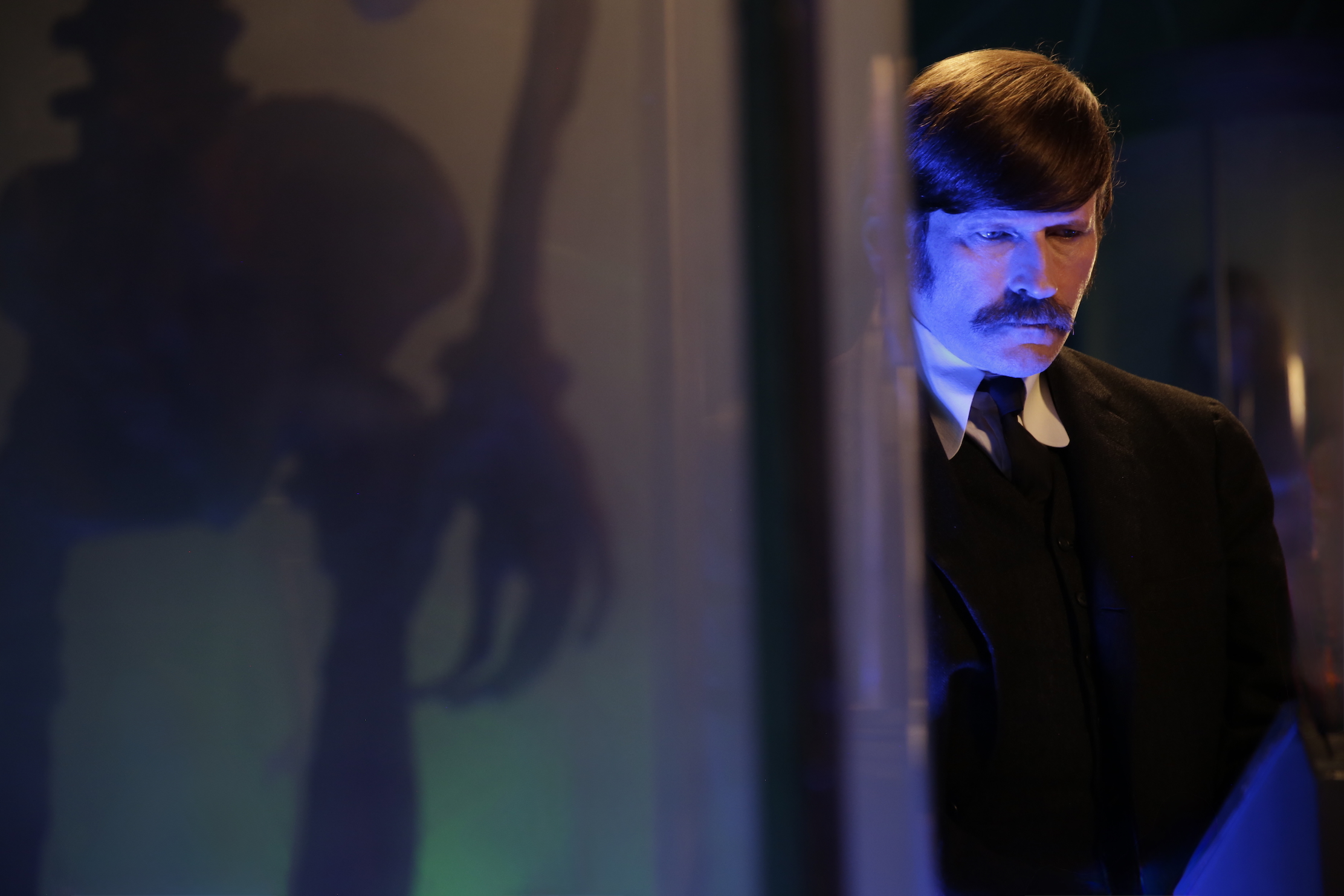
Crispin has been on my radar for years. I was actually on the set of BACK TO THE FUTURE and watched him film a scene with my friend Gary Riley. I had a project in development during the 1990s I had Crispin in mind for, but it never got made. After several lack luster attempts to cast the Gruder role in A BLIND BARGAIN it dawned on me that Crispin would be the ideal actor to play the part. I contacted him and he eventually said yes. Crispin comes to a project prepared and highly focused on every detail, much like myself. We got along splendidly! He adds the right amount of creepy to the Gruder role and compliments the other actors without stealing the scene. He’s a very generous actor.
Why do you think this film has often been labeled as a horror film when it isn’t? What are your feelings on that?
I’m okay with that as long as the audience comes away entertained. For the record, I never set out to make A Blind Bargain a horror film. I always saw it as a psychological drama – part mystery and part weird, with just a dash of humor – much like the old Night Gallery TV show. Ultimately, the audience will decide what it is and what it means to them. Everyone will take away something different, that’s the beauty of abstract cinema.
Were you surprised by how the film has been received so far?
Every audience is different. It really all depends on the energy in the theatre or the experience you have depending on where you watch it. It’s always best to eliminate distractions when watching any movie to have the maximum experience. A lot of folks watch films passively these days, due in part to distractions of electronic devices and such. I have found the best experience for watching a movie is to see it in a theatre. Whether alone or with a bunch of friends, the key thing is find a way to let the film come into your mind. Cinema can take you to fantastical places if you can give into it and let your psyche to the rest.
Are there plans to release this particular title to streaming platforms any time soon?
Yes. After recently completing our nationwide theatrical release in theatre chains like AMC and Alamo Drafthouse, we are finalizing talks with a distributor to bring the A BLIND BARGAIN to TVOD (TV On Demand) and other major streaming platforms, including a special edition Blu-ray release from Film Masters.
Do you have a dream project you’d most like to bring into existence?
I have a few projects ready to go like my TINY TIM bio-pic and a retro sci-fi project called ROCKET GIRL. It ultimately depends on finding the financing, which is always the challenge.
What projects can fans of your work look forward to next?
You never know what might come down the pike. A BLIND BARGAIN was not a movie I had planned to make, but the opportunity presented itself and I decided to go for it. For those interested in my magnum opus THE GHASTLY LOVE OF JOHNNY X, it will be coming out on a special limited edition Blu-ray from Film Masters on October 27th. It comes with a bonus soundtrack CD featuring Ego Plum’s beautiful score. In addition, my 1994 film THAT LITTLE MONSTER is coming to Blu-ray for the first time later this year from Bleeding Skull. Lots to see here in the coming year!
Is there anything you’d like to say in closing?
Movies are your best entertainment! Now go and enjoy the show!
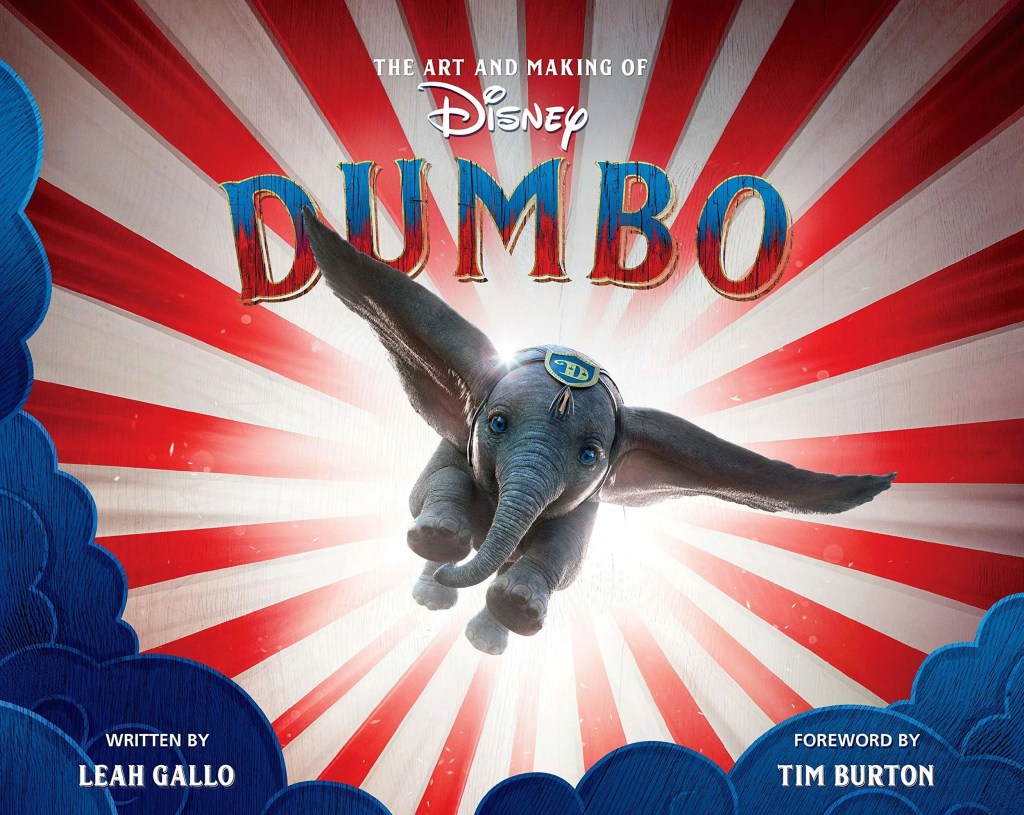
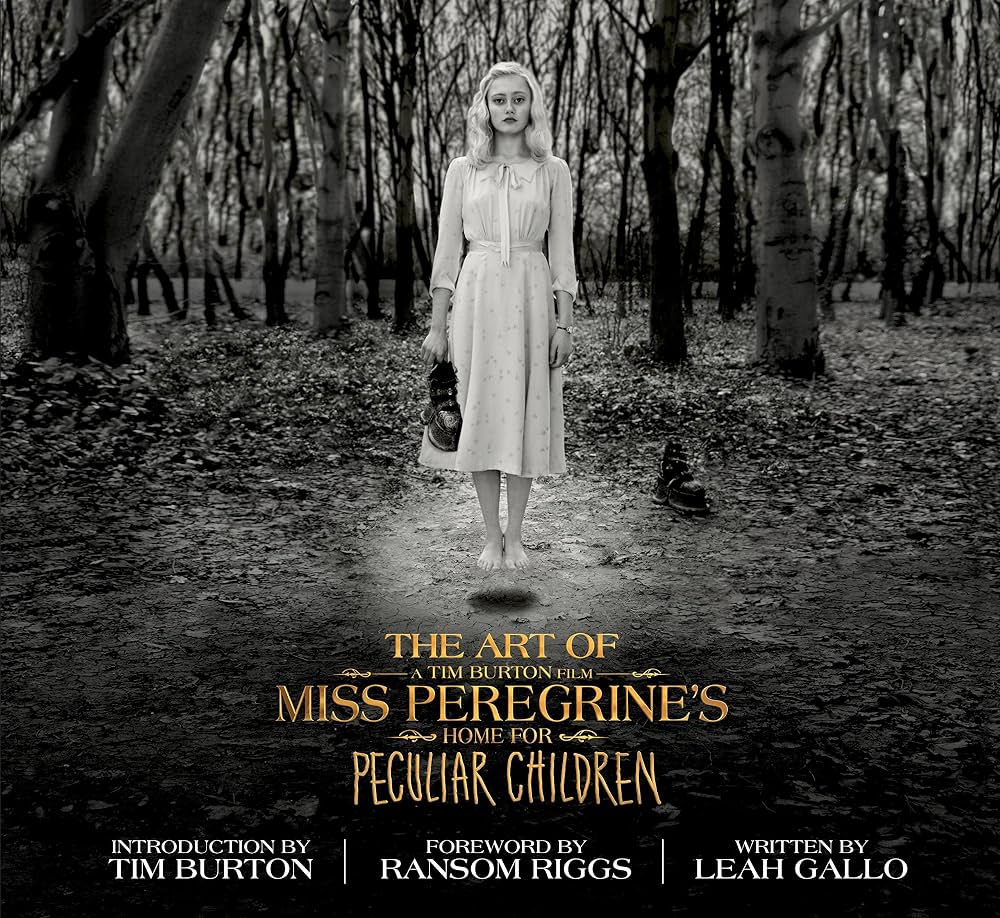
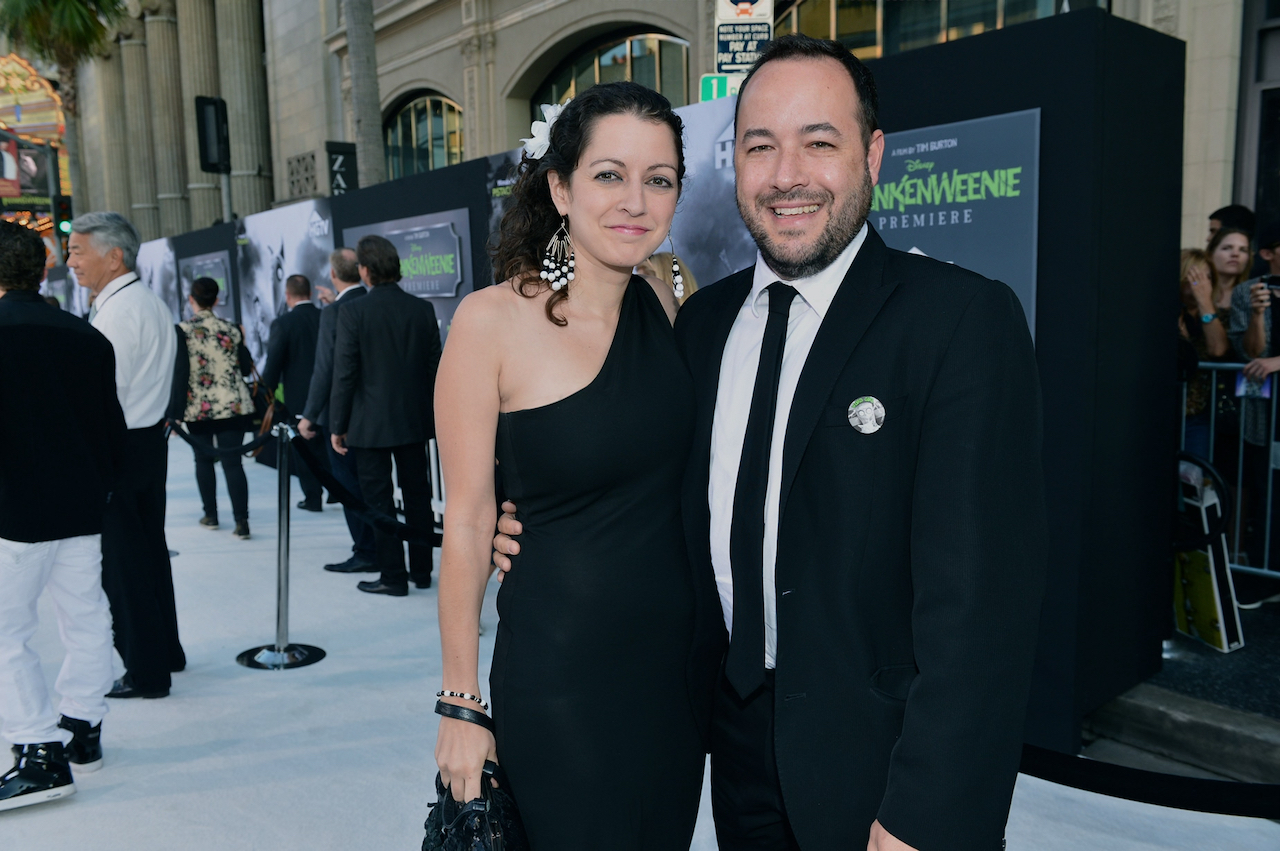
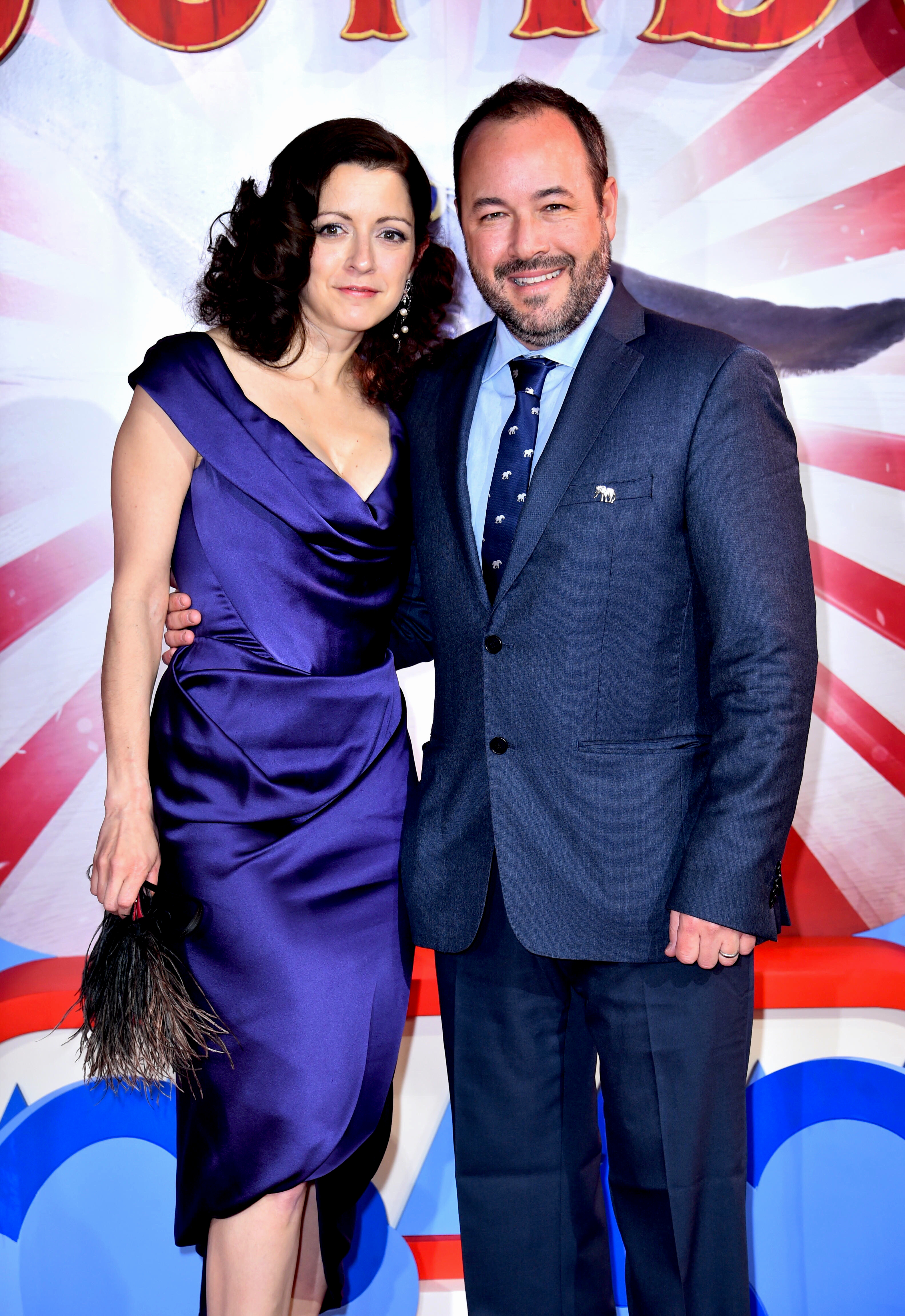
Derek Frey is an award winning filmmaker best known for his work as a producer alongside Tim Burton on such films as Miss Peregrine’s Home for Peculiar Children, Sweeney Todd: The Demon Barber of Fleet Street, Corpse Bride, Charlie and the Chocolate Factory, Frankenweenie, Big Eyes, Alice in Wonderland, and Dumbo to name a few.
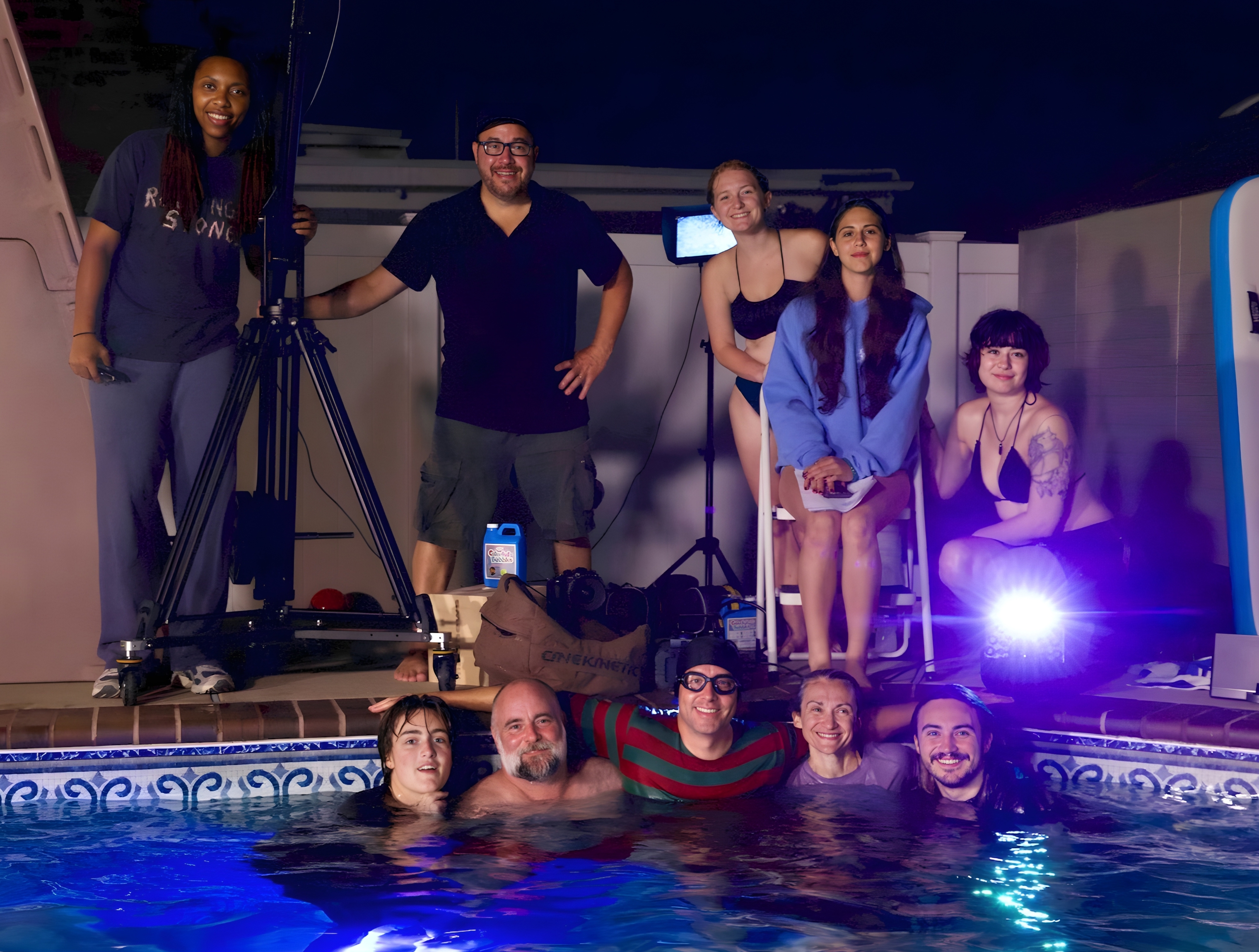
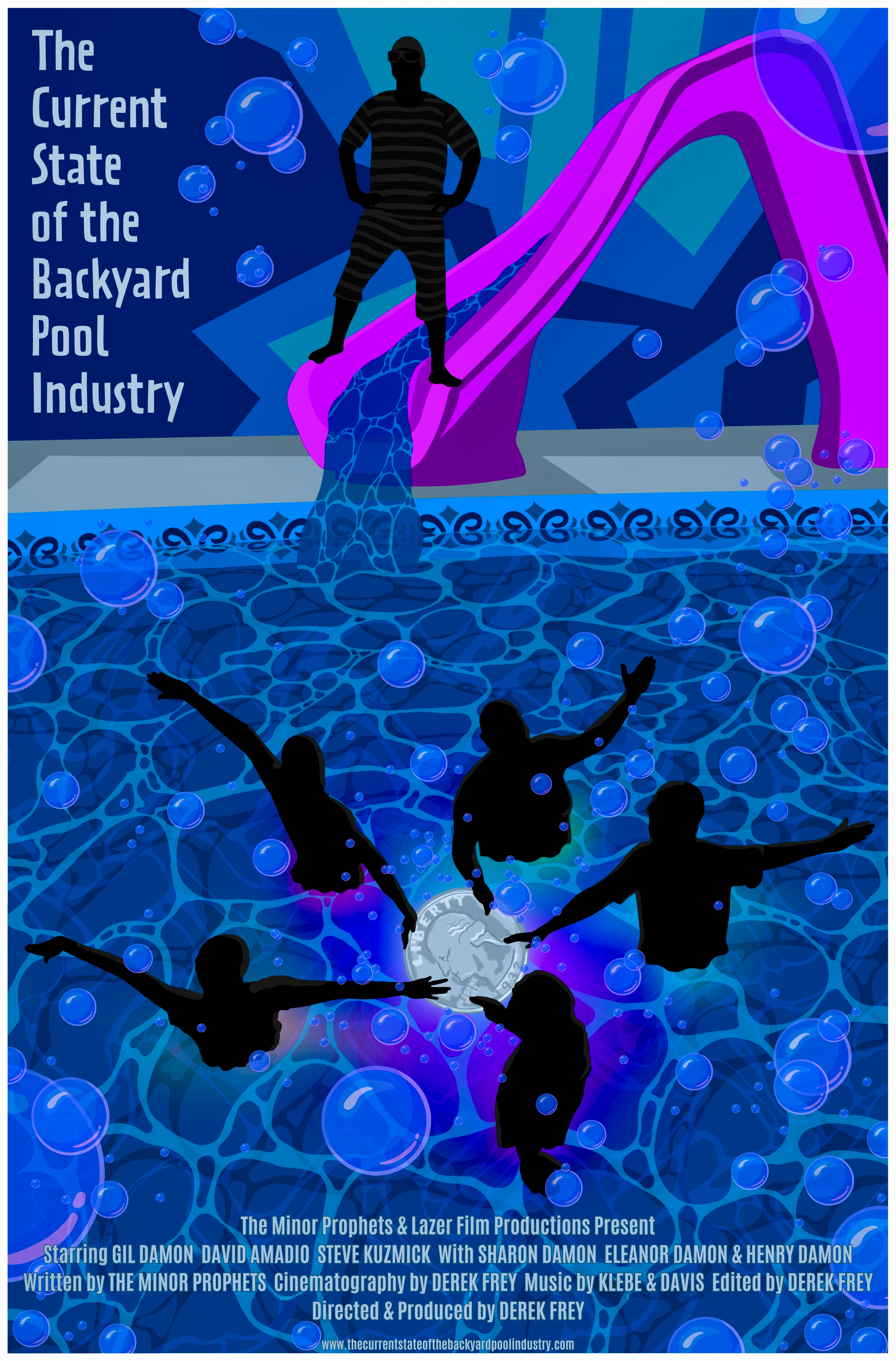
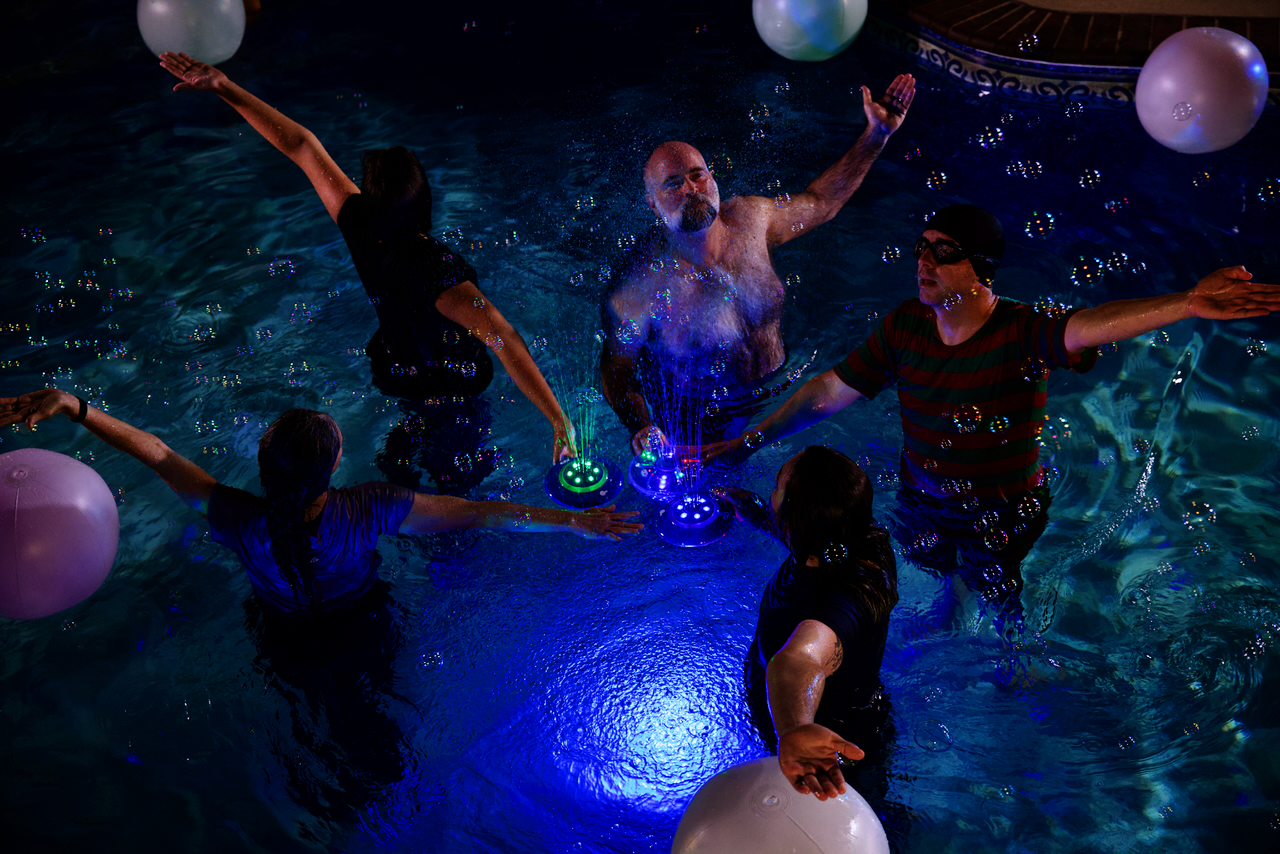
Can you tell us a little about your latest project, The Current State of the Backyard Pool Industry? What can viewers expect from it and how did it come about?
The Current State of the Backyard Pool Industry is a dramedy, but beneath the humor it’s really about friendship, aging, identity, and the search for connection. The pool becomes a kind of metaphor for a way of life that’s slowly disappearing. It’s about people trying to remain relevant in a world that seems to be moving on without them.
The film grew out of years of collaboration with The Minor Prophets and our shared fascination with the strange rituals and mythology surrounding American suburbia. We approached it with a lot of affection and humor, but also with an awareness that there was something surprisingly emotional underneath it all.
For me personally, the project also arrived at an interesting point creatively. My previous film with The Minor Prophets, Viaticum, explored mortality and the experience of confronting death. While it was wrapped in dark comedy, it spent a great deal of time contemplating final moments and the end of life’s journey. After living in that space, I found myself wanting to tell a story that felt like a deep breath in the opposite direction. A story about embracing life, friendship, community, and the beautiful absurdities that surround us every day.
In that sense, The Current State of the Backyard Pool Industry feels like a celebration of being alive, even as it reflects on the passage of time.
I think audiences can expect something funny, heartfelt, a little eccentric, and hopefully very human.
How does making intimate independent films differ creatively from working on large-scale studio productions?
Creatively, the biggest difference is scale and freedom.
My own directorial projects have always been an opportunity to explore more personal material that I’m drawn to and experiment with stories that might not fit neatly within a traditional studio model. There’s a tremendous creative freedom in independent filmmaking, and I enjoy the challenge of building something from the ground up with a small, passionate team.
Large-scale studio productions offer a different kind of creative reward. They are extraordinary collaborative efforts involving hundreds, sometimes thousands, of talented artists working toward a shared vision. Over the course of more than two decades collaborating with Tim Burton on films such as Sleepy Hollow, Charlie and the Chocolate Factory, Alice in Wonderland, Miss Peregrine’s Home for Peculiar Children Corpse Bride, and Big Eyes, I’ve had the opportunity to be part of assembling and collaborating with an array of talent, all in service of a singular creative vision.
Film is ultimately a team effort. Whether you’re working with a handful of collaborators or a massive production family, you’re creating something together that none of you could make alone.
I’ve been fortunate to work in both worlds, and each has influenced the way I approach the other. The independence and resourcefulness of smaller projects have made me a better collaborator on larger productions, while the lessons learned from major studio films continue to inform the way I develop and direct my own work.
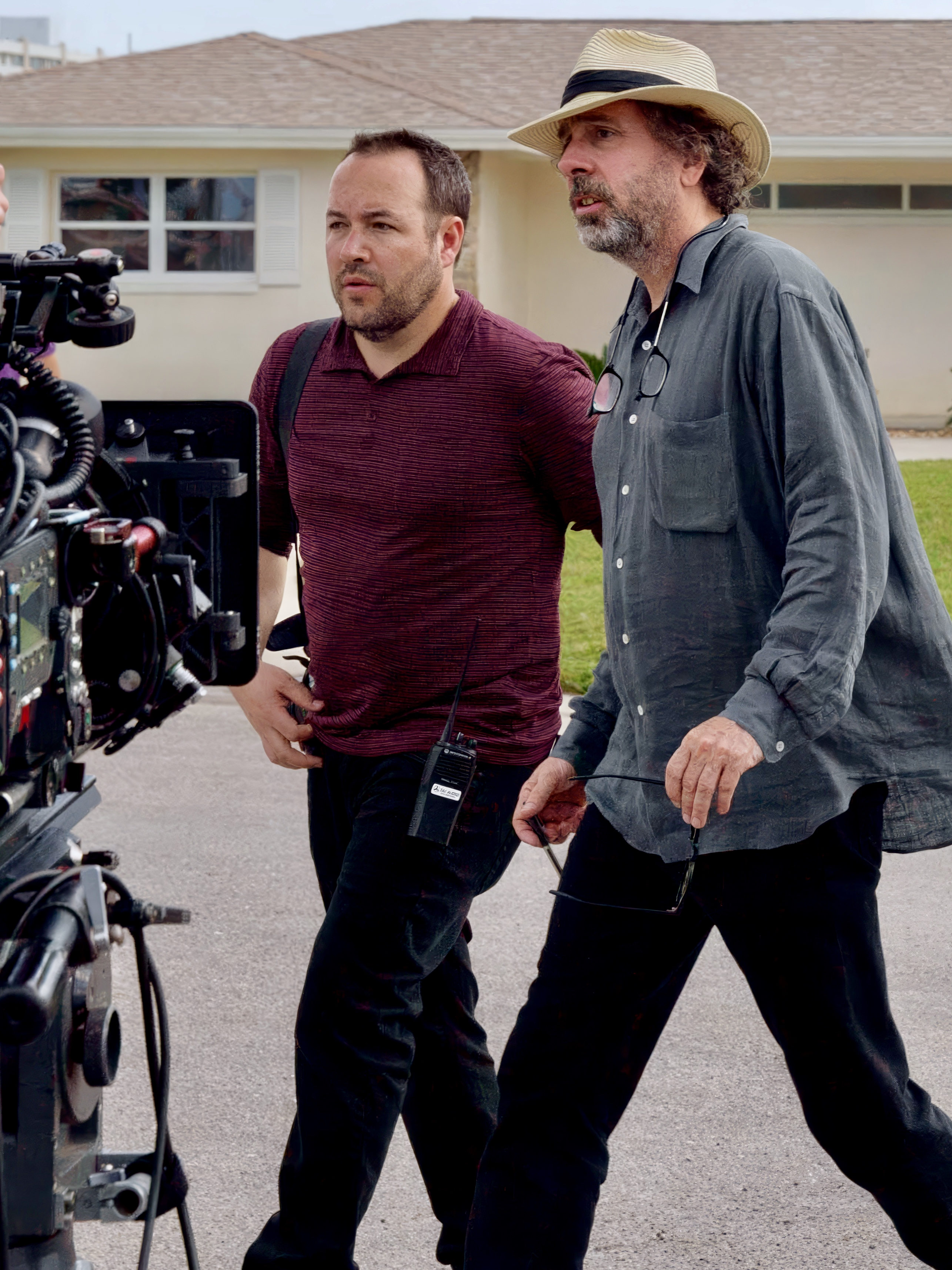
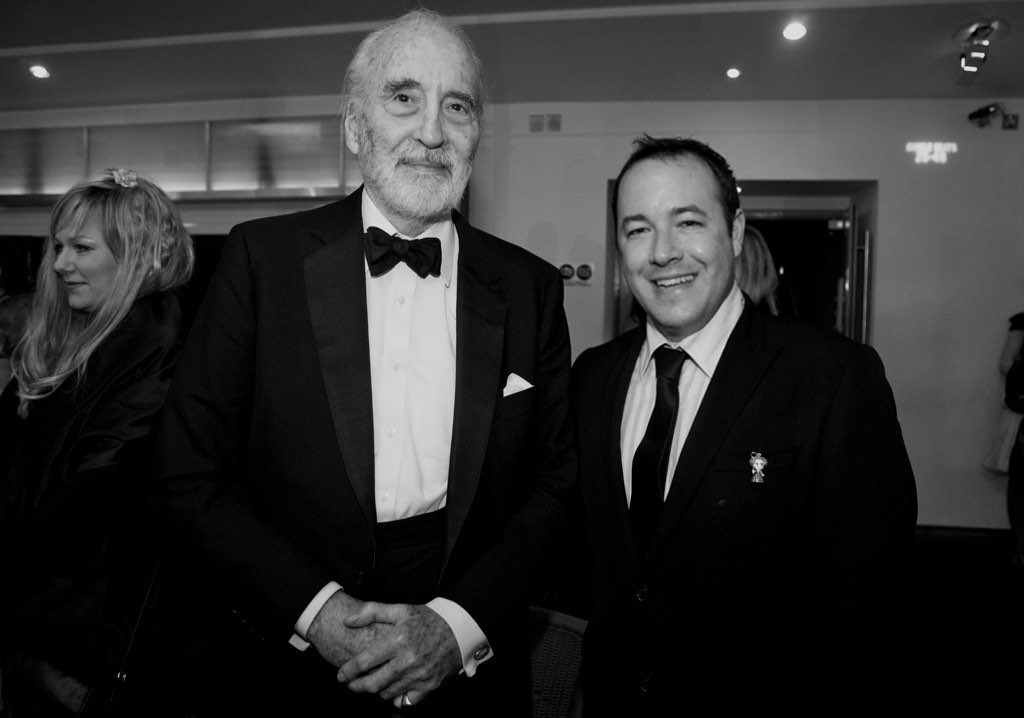
Derek Frey and Tim Burton at set on location in Florida for Miss Peregrine’s Home for Peculiar Children
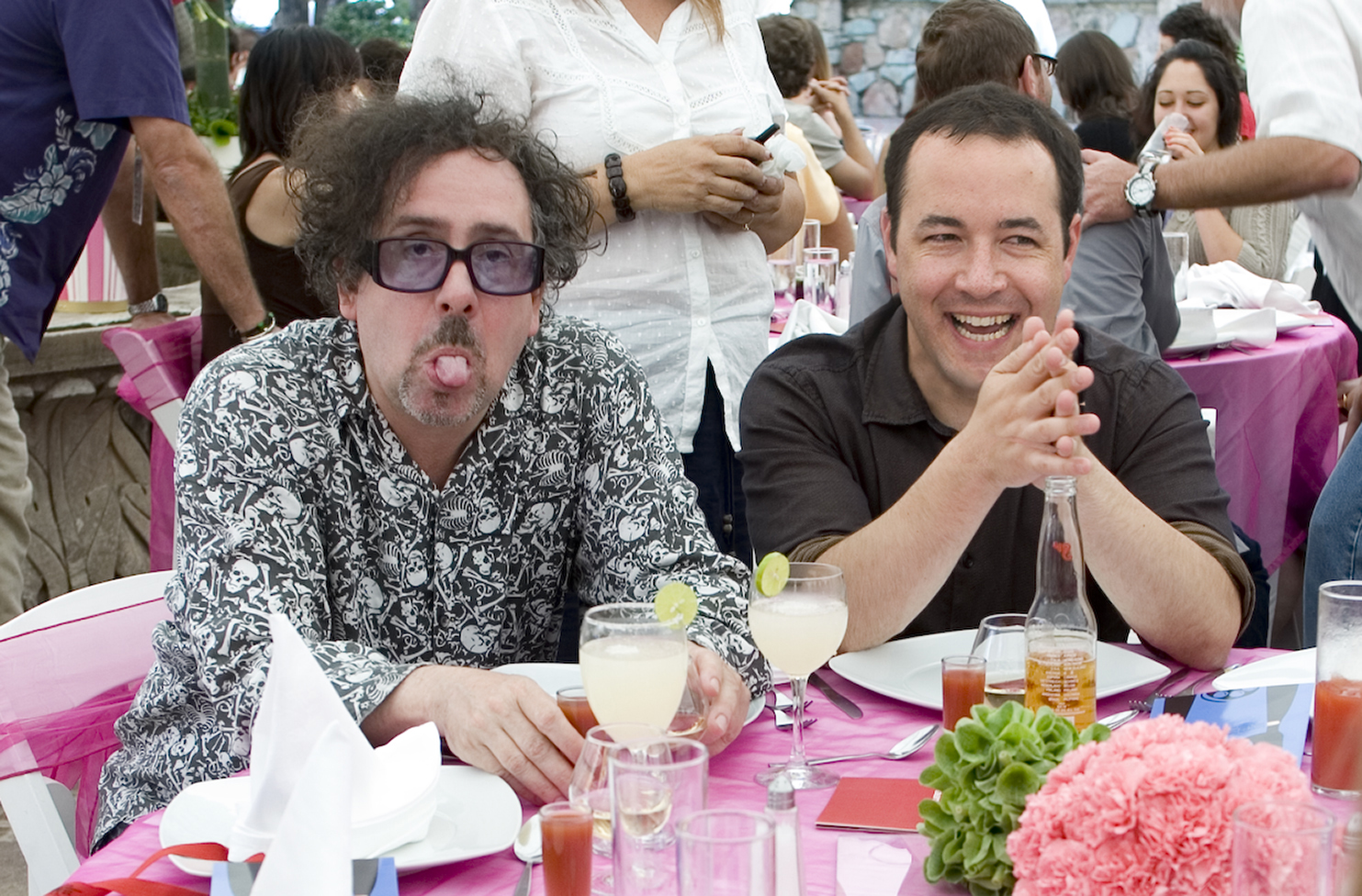
Tim Burton and Derek Frey in Guanajuato, Mexico for the Guanajuato International Film Festival “Expression en Corto Intention”
What types of stories or projects are currently inspiring you most as a filmmaker and producer?
I’ve always been fascinated by stories that exist just beyond the edge of what we know or understand. Whether they’re rooted in folklore, science fiction, horror, or the paranormal, I’m drawn to narratives that ignite the imagination and encourage us to question what might be possible.
It’s also an exciting time for genre storytelling. We’re seeing everything from inventive low-budget breakout hits to ambitious studio productions finding audiences around the world. The horror and genre space, in particular, feels remarkably healthy and creatively vibrant right now. Filmmakers are increasingly using these genres not only to entertain, but also to explore larger ideas about identity, culture, community, and the human experience.
I’m especially energized by recent work that demonstrates how bold, distinctive storytelling can still connect with a wide audience. Sinners is a film I found incredibly inspiring. It feels both epic and personal, delivering thrilling entertainment while exploring larger themes with confidence and intelligence. One Battle After Another exemplified the power of ambitious, filmmaker-driven storytelling at scale. In television, series such as Widow’s Bay showcase how long-form genre-bending storytelling can build rich worlds, compelling mysteries, and deeply layered comedic characters that keep audiences invested.
What excites me most is seeing filmmakers push boundaries while remaining accessible to audiences. Whether it’s horror, fantasy, science fiction or something that defies easy categorization, I’m inspired by stories that surprise, challenge expectations, and remind me why I fell in love with films in the first place.
Update readers on projects you’re developing?
I’m fortunate to be working on a diverse slate of projects across live-action and animation, many of them with collaborators I’ve admired for years.
One of the projects I’m most excited about is The Photographer’s Assistant, a gothic thriller written and directed by Tim Pope. Long before I entered the film industry, I was a huge fan of Tim’s work. Growing up, his music videos for The Cure were unlike anything else I had ever seen. Close to Me, Just Like Heaven, Lullaby, In Orange – they are imaginative, cinematic, funny, haunting, and instantly recognizable. Tim helped define the visual language of an entire era, and his collaborations with an array of musical talent remain some of the most iconic and influential works ever created.
What has been especially rewarding is discovering that the same creativity and artistic fearlessness that made me a fan of his work continues to drive him today. Tim has a singular voice as a filmmaker, and The Photographer’s Assistant is a project filled with the atmosphere, mystery, humanity, and visual imagination that have always distinguished his work. Collaborating with a kindred creative spirit, who inspired my own work, has been a genuine privilege.
I’m also thrilled to be working with Moonheart Entertainment on New Dog City, an animated supernatural mystery. Moonheart is building an exciting slate of original creator-driven worlds and franchises, and what I admire most is their commitment to developing bold, distinctive intellectual property at a time when audiences are hungry for fresh stories and new universes to explore. New Dog City combines mystery, adventure, supernatural elements, and humor in a way that feels both classic and completely original, and I’m excited to be part of that journey.
I’m also developing Meet the Sandman with filmmaker/writer Amira Dahan, a psychological horror feature set in a stylized 1950s world where the American dream slowly gives way to nightmare. Inspired by the centuries-old Sandman legend, the film reimagines the folklore through a terrifying lens, blending mystery, fantasy, and psychological horror while exploring the fears and secrets hidden beneath seemingly perfect lives.
Another project close to my heart is Pangea, an animated stop-motion science-fiction series being developed with the talented team at Inspira Animation in Spain, alongside producer Priscilla Smith and The Coven. The series combines environmental themes, social responsibility, and adventure within a richly imagined future world. Inspira has already completed an initial episode and it’s fantastic!
I’m continuing to collaborate with my friend and creative colleague Michael Greene on several projects, including the supernatural horror film Die in the Dark and the tech-thriller Project Eden. Michael is a tremendously talented and remarkably prolific writer whose imagination never seems to rest. We’ve previously collaborated on Evil Inspiration and Medication Dreams and share many of the same creative sensibilities.
We’re actively examining how emerging technologies may influence the way stories are created and experienced. In the case of Project Eden, those questions are woven directly into the narrative itself, creating an opportunity for the filmmaking process and the story’s themes to inform and challenge one another in fascinating ways. The film will be a warped head trip!
I’m also developing Operation Hoodwink, a limited series written by the talented Cara Salmeri, which explores a remarkable true story involving a covert post-World War II operation and the cultural influence of Superman in America. What first drew me to the project was its ability to illuminate a little-known chapter of history while speaking directly to issues that remain relevant today.
At its core, the story examines the power of media, storytelling, propaganda, and truth in shaping public perception. While the events took place decades ago, many of the questions the series raises feel strikingly contemporary. In an era where misinformation, polarization, and competing narratives increasingly shape our world, Operation Hoodwink offers a fascinating lens through which to examine the enduring importance of critical thinking, shared values, and the stories societies choose to tell about themselves.
I’ve also been fortunate to continue collaborating with Allison Abbate on a number of exciting projects spanning animation, hybrid and live-action genre storytelling. Allison is one of the most respected producers in the industry, with an extraordinary body of work that includes films such as The Iron Giant, Corpse Bride, Fantastic Mr. Fox, and Frankenweenie. Having worked alongside Allison over the years, I’ve long admired her ability to champion distinctive stories and bring together exceptional creative talent. We share a passion for projects that embody the spirit of Halloween, combining imagination, wonder, heart, and the unexpected.
Among those projects is The Ghost of Grania O’Malley, based on the beloved novel by Michael Morpurgo. The project is being developed alongside award-winning UK filmmakers Julia Ouston and Helen Blakeman of Title Page Films, whose passion for the material and commitment to authentic storytelling have been instrumental in shaping the project. It’s a story that beautifully blends history, folklore, family, and adventure, and we’re incredibly excited about its potential.
The project is especially meaningful to me because I previously spent several years developing Toto, based on Michael Morpurgo’s wonderful reimagining of The Wizard of Oz, for Warner Bros. Pictures Animation. While that project has been put on hold as the studio navigates the tremendous success and cultural impact of the Wicked films, it gave me a deep appreciation for Michael’s gift as a storyteller. His ability to blend adventure, heart, history, and humanity is truly special. In that sense, it feels like a wonderful full-circle moment to once again be exploring one of his worlds.
Together, our team is working to bring Grania’s story to a new generation of audiences while honoring the spirit, imagination, and emotional truth that have made Michael’s work resonate with readers around the world.
Beyond The Ghost of Grania O’Malley, Allison and I continue to explore several projects that occupy the genre space we both love and have spent much of our careers helping bring to audiences. Among them is a feature adaptation of a work by Ted Hughes, one of Britain’s most celebrated literary voices and the author of The Iron Man, which famously inspired The Iron Giant. Hughes possessed a remarkable ability to blend myth, wonder, darkness, humor, and profound emotional truth in ways that continue to resonate across generations.
And, of course, I know it’s just a matter of time before Hawaii calls me back for another melodic adventure with my musical friends and collaborators. (We’re overdue!) Lastly, I’m excited to see what comes next with The Minor Prophets. We’ve shared an incredible creative journey over the years and we’ve already begun exploring ideas for how to mark our 20th anniversary of collaborations as well as what may become our next meditation on life.
How has becoming a father changed your approach to your creative work?
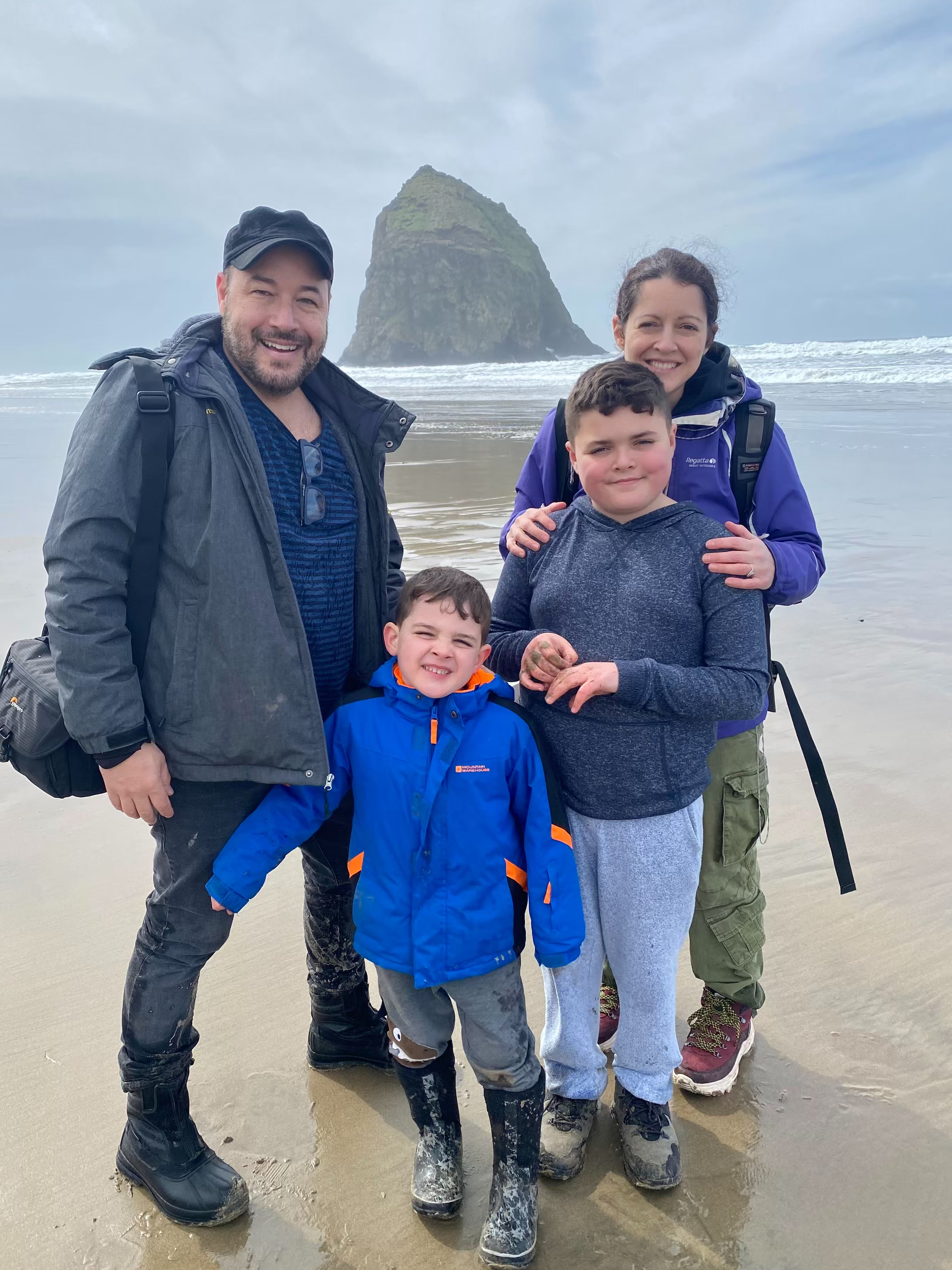
Becoming a father changed my perspective in ways I never could have anticipated.
It has made me much more aware of time and how precious it really is. When you’re younger, it can feel like there’s always another opportunity, another project, another year. Having children makes you realize just how quickly life moves and how important it is to spend your time on work that genuinely matters to you.
Parenthood has also deepened my connection to storytelling. Themes like family, sacrifice, responsibility, wonder, hope, and legacy resonate very differently now than they did twenty years ago. There are moments in scripts or films that affect me today in ways they simply wouldn’t have before becoming a parent.
It has also given me a front-row seat to a new generation of audiences. Through my children, I’m constantly exposed to the stories, characters, and worlds (Youtube, Youtube and more Youtube!) that capture their imagination. Seeing what excites them, what holds their attention, what makes them laugh, and what sparks meaningful conversations has become incredibly valuable to me as a filmmaker. It often leads me to ask whether the projects I’m developing will resonate with younger audiences and whether the themes at their core are truly timeless.
At the same time, one of the great joys of being a parent has been sharing the films, books, and stories that inspired me when I was growing up. There’s something incredibly special about introducing your children to a film you love and then watching it through their eyes for the first time. It’s especially rewarding when they embrace something that has meant so much to you. Those moments remind me that while technology, trends, and viewing habits continue to evolve, certain stories endure because they tap into something universal.
In many ways, becoming a father has reinforced my belief that the best stories are the ones that connect generations. Whether I’m developing a family adventure, an animated film, a fantasy, or even a genre project, I find myself thinking more about what makes stories last and what themes continue to resonate from one generation to the next.
More than anything, I think becoming a parent has made me a more empathetic filmmaker, a more thoughtful storyteller, and hopefully a better person.
What do you enjoy most about being a parent at this point in time? What do you hope your children learn from your example?
One of the greatest joys of being a parent is watching your children discover the world for themselves.
They ask questions adults have stopped asking. They notice things we overlook. Their imagination, curiosity, and sense of wonder can be incredibly inspiring.
If there’s anything I hope they learn from me, it’s to remain curious, creative, kind, and resilient. I hope they understand that it’s okay to follow an unconventional path if it leads them toward something meaningful.
Most of all, I hope they learn that success isn’t measured solely by achievement. A meaningful life is built through relationships, experiences, character, and staying true to who you are.
How has your wife Leah contributed to your success in life so far?
Leah has been my partner, collaborator, sounding board, and best friend through an extraordinary number of adventures over the years.
One of the things that makes our relationship special is that we’re both creative people. She understands the need I have to create because she feels that same pull herself. We both know what it’s like to become absorbed in a project, wrestle with ideas, chase inspiration, and keep working until something feels right. Because of that, we’ve always supported and encouraged one another’s creative pursuits.
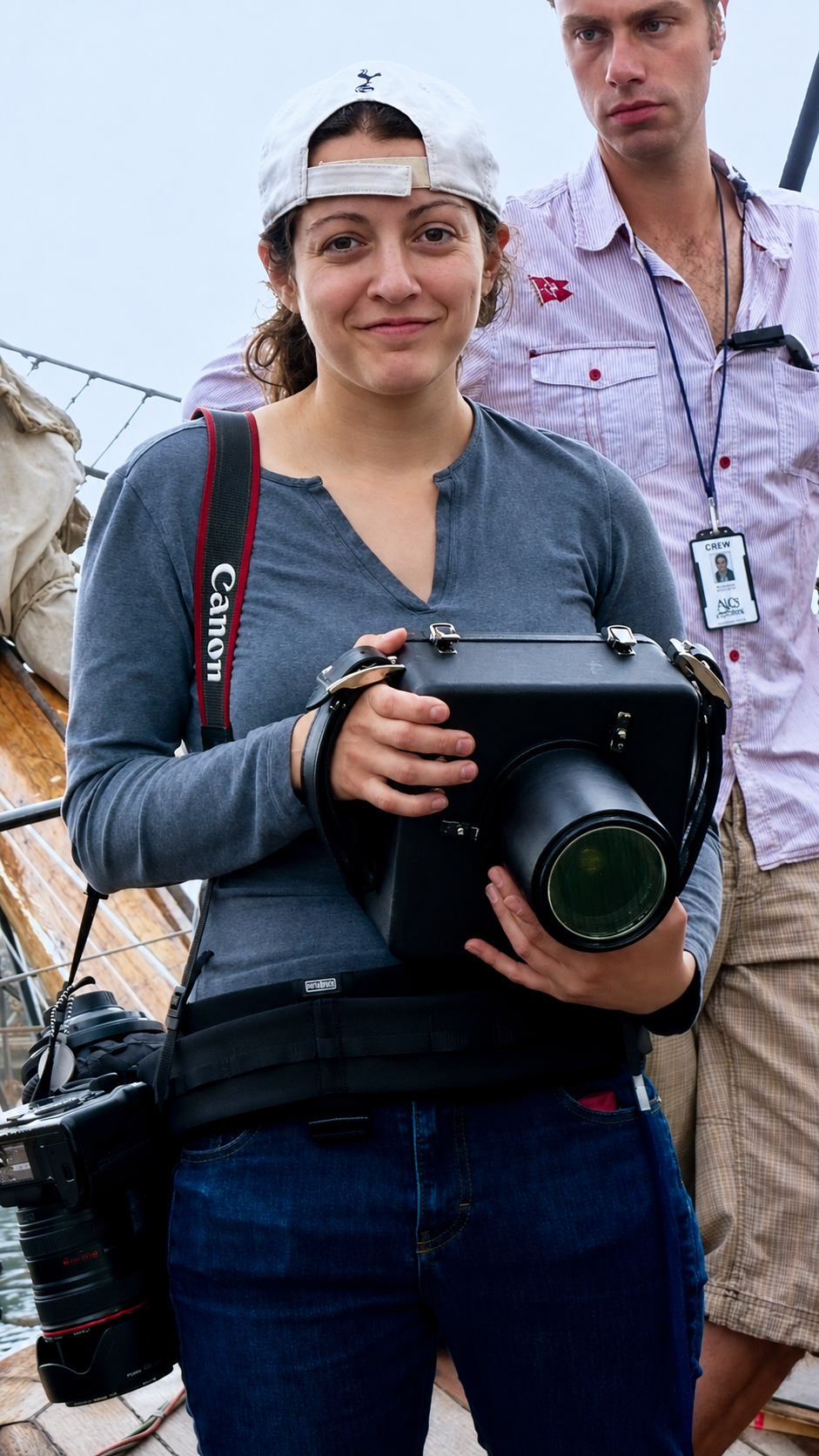
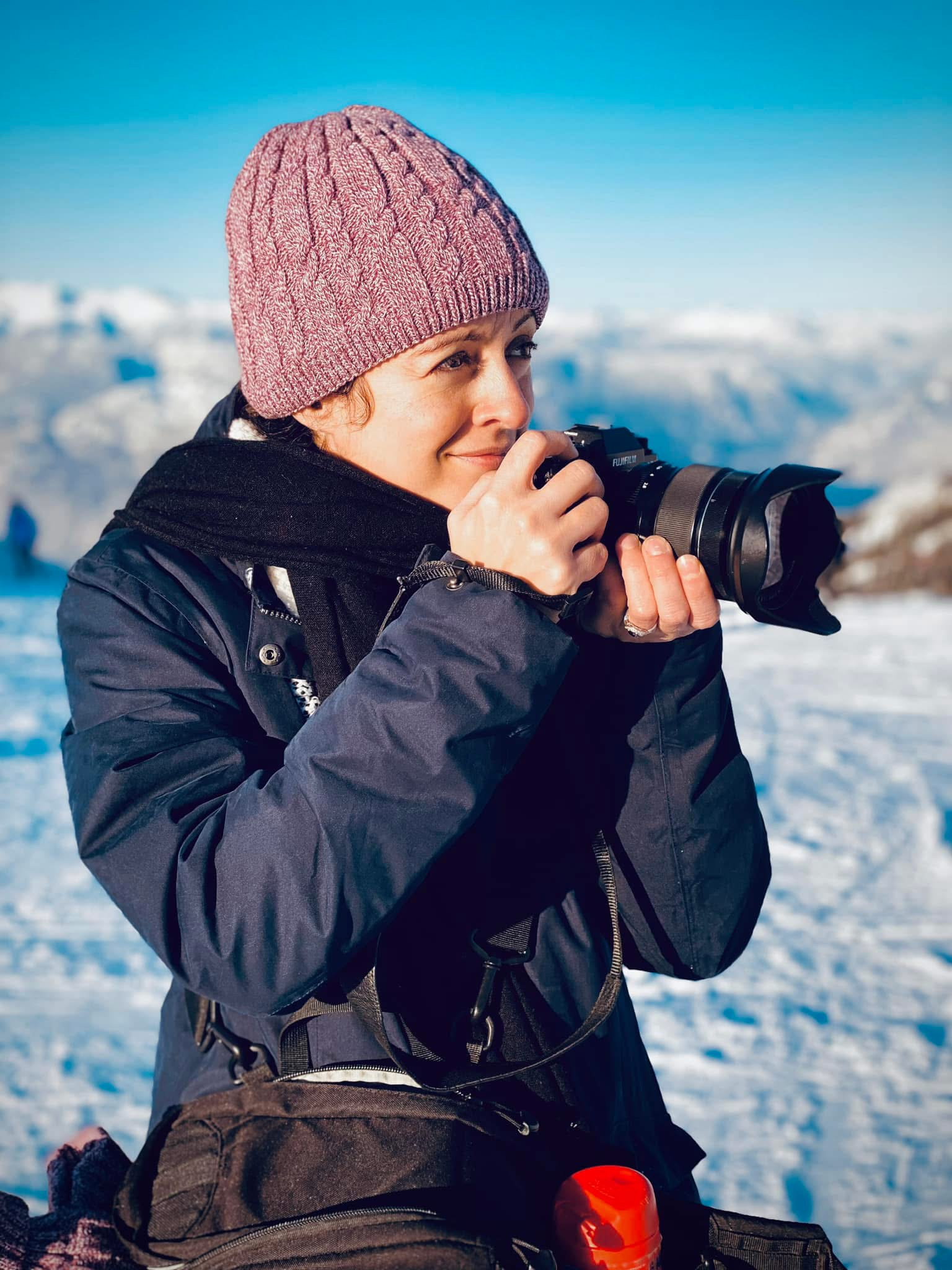
Leah is an exceptional writer and photographer, and it’s continually inspiring to watch the work she creates. Whether it’s the books and writing projects she’s involved with or her remarkable still photography, she approaches everything with thoughtfulness, artistry, and authenticity. I’ve loved seeing her recent work on projects such as Woman of the Hour, Tron: Ares, Eternity, and the upcoming The Social Reckoning.
We’re also collaborating on a feature-length werewolf project based on one of Leah’s original concepts. It blends folklore, family, transformation, and identity – all set in contemporary London. We hope to carve out some time to explore that further soon.
Leah is often able to see things clearly when I’m too close to a project to recognize what’s working and what isn’t. Beyond the work itself, she’s helped me maintain perspective throughout the inevitable highs and lows of a creative career. Having someone who understands the journey, challenges you when necessary, and reminds you what truly matters is invaluable.
If readers aren’t familiar with her work, I highly recommend visiting her website at www.leahgallo.com.
What would you say is the most important thing you have learned from all of your family members?
If there’s one lesson my family has taught me, it’s that life’s greatest value comes from the people we share it with.
I’ve been fortunate to have a career that’s taken me to incredible places and allowed me to work with some remarkably talented individuals, but the older I get, the more I realize that the moments I treasure most have very little to do with accomplishments or possessions. They’re the experiences, the memories, the conversations, the laughter, and the time spent with the people I love.
My family taught me that life isn’t really about reaching a particular destination. It’s about the journey. It’s about showing up for one another, creating memories together, and appreciating the moments that often seem ordinary at the time but become meaningful in hindsight.
That perspective has influenced every aspect of my life, including my creative work. Many of the stories I’m drawn to, regardless of genre, ultimately explore relationships, connection, and the experiences that shape who we become. Whether it’s friendship, family, love, loss, or discovery, those human connections are often what resonate most deeply with audiences because they’re what resonate most deeply with me.
Looking back, many of the lessons that have guided my career didn’t come from classrooms or movie sets. They came from everyday moments with family and friends. Those lessons tend to stay with you far longer, and I’ve come to appreciate just how valuable they really are.
Looking back over your career up until this point, are there any particular moments in time that you hold most dear?
That’s a difficult question to answer because I feel fortunate to have spent my life through countless experiences doing something I love. Looking back, it’s less about identifying a single moment and more about appreciating a collection of experiences that together make up an incredible journey.
Every project becomes a chapter in your life. Each one carries its own memories, friendships, challenges, discoveries, and adventures. From making films with friends in college to working on large-scale studio productions, to continuing to create independent projects with The Minor Prophets decades later, I’ve been fortunate to accumulate more meaningful experiences than I ever could have imagined when I first picked up a camera.
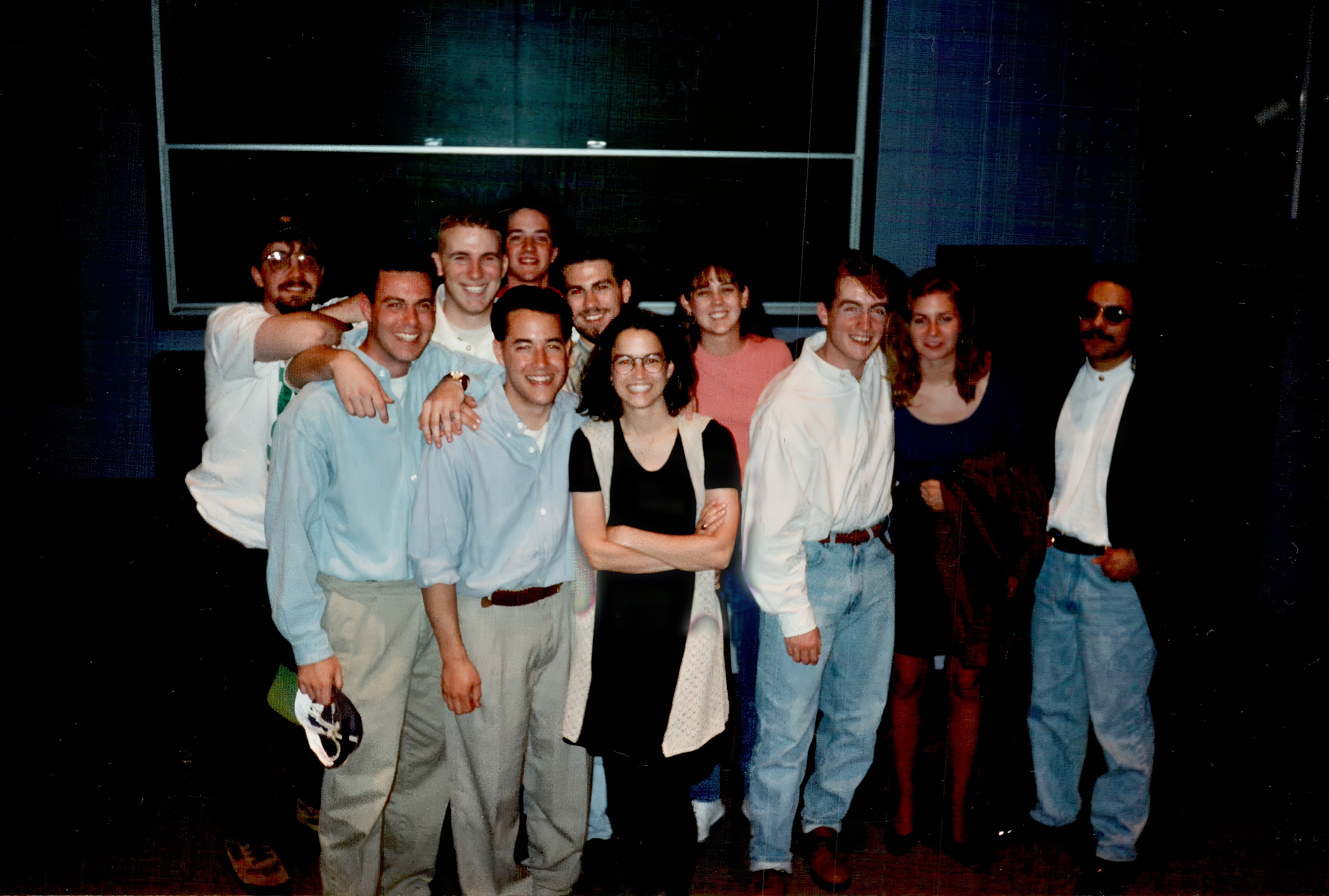
An initial career related memory I cherish is the premiere of my college horror film Verge of Darkness. The audience’s reaction was both exhilarating and deeply validating. Until that point, a career in filmmaking felt more like a dream than a plan. The response to that screening gave me the confidence to roll the dice, move to Los Angeles, and pursue filmmaking professionally. Looking back, it was one of the moments that set everything else in motion..
Beyond that walking onto a real film set for the first time on Mars Attacks! was unforgettable. It felt like stepping into another world and realizing that filmmaking wasn’t just a dream anymore. Just the cast list alone was jaw-dropping. So many of my celluloid heroes assembled on one film, including my favorite comedian, Martin Short, and my favorite actor, Jack Nicholson. I’m excited to celebrate the film’s 30th anniversary this December.
Another experience I’ll always cherish is helping organize, and attending, a White House Halloween celebration, for military children and their families, for the Obama administration. It was one of those surreal moments where you pause and realize just how unusual and unexpected this career can be.
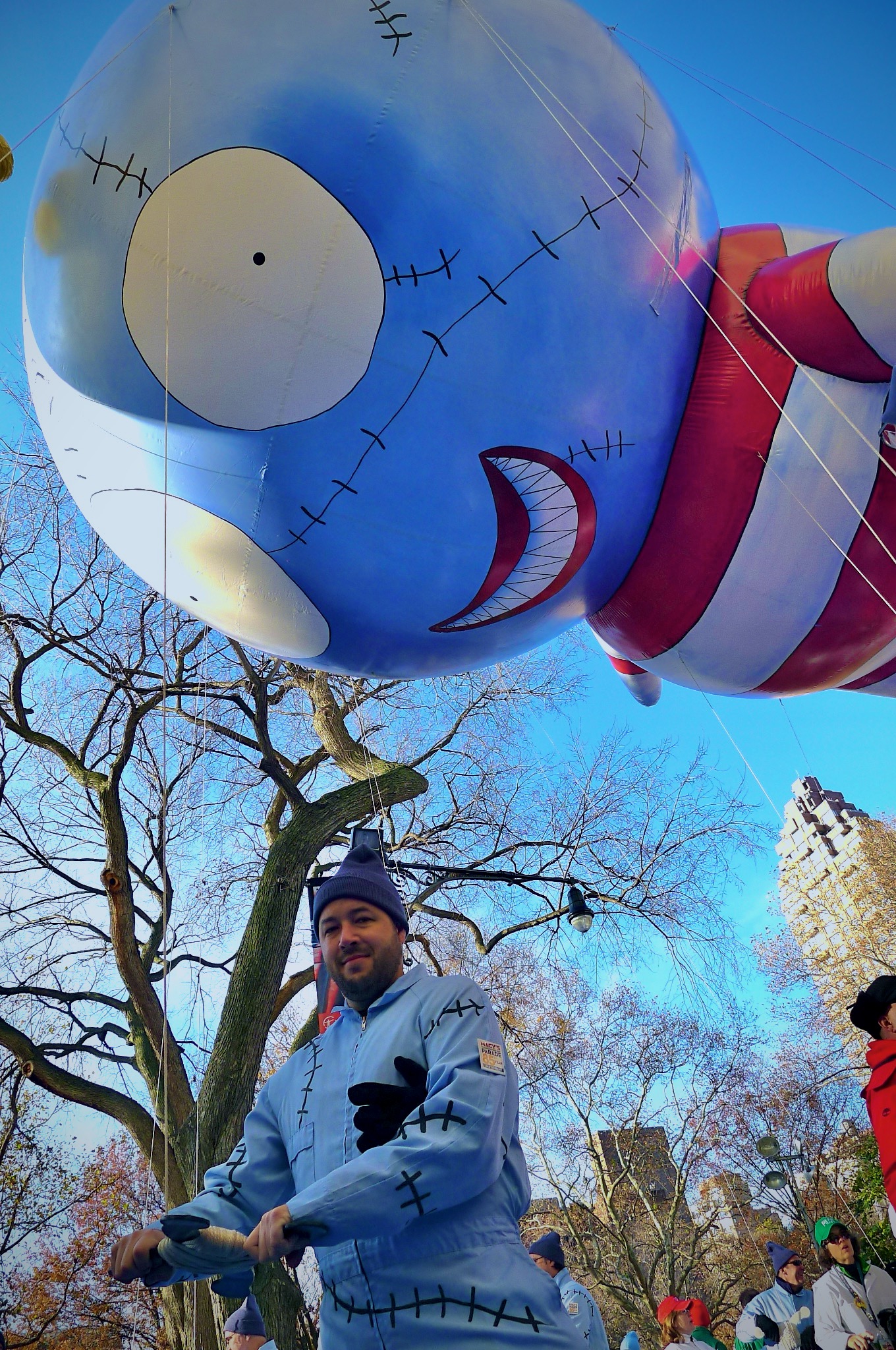
Right up there with that is serving as one of the balloon handlers for Tim Burton’s B. Boy in the Macy’s Thanksgiving Day Parade. It’s not every day you find yourself helping guide a giant Tim Burton character through the streets of Manhattan. It remains one of the more delightfully surreal entries on a list of experiences that often feels too strange to have actually happened.
I’ve also been fortunate to meet and work with many of my creative heroes over the years. One of the great joys has been discovering that so many of them lived up to, and often exceeded, the admiration I had for them from afar. Those experiences have been deeply inspiring.
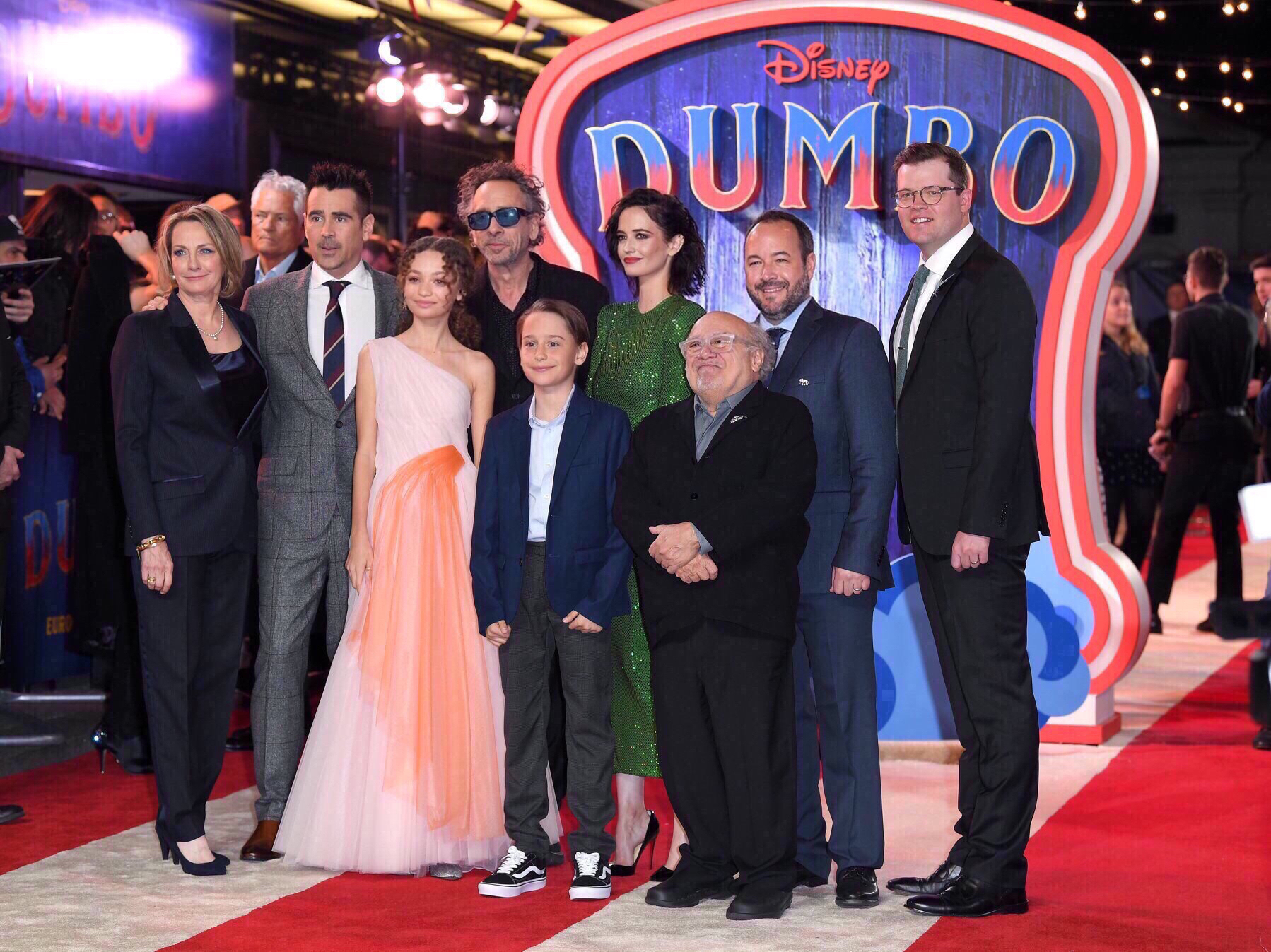
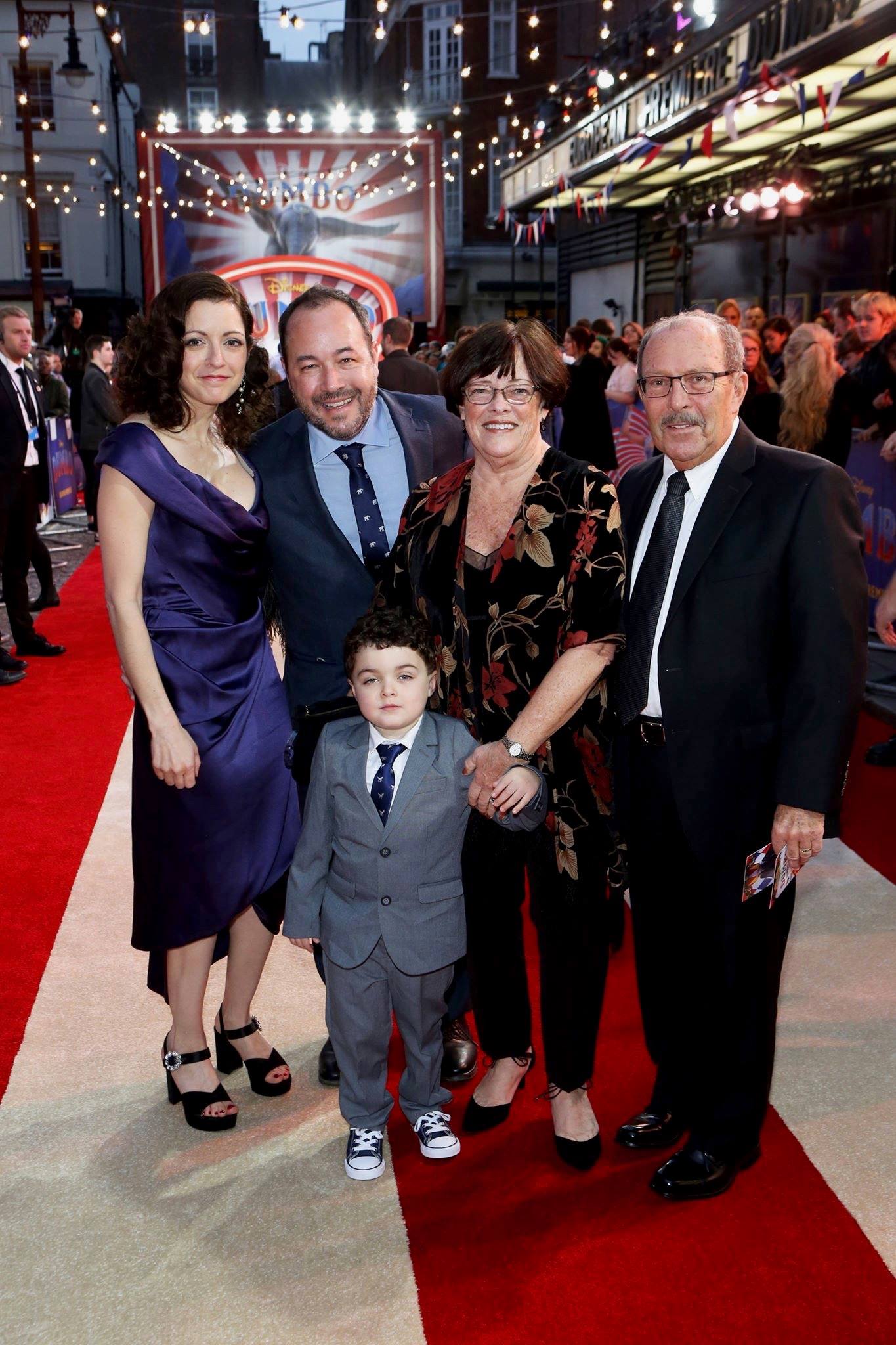
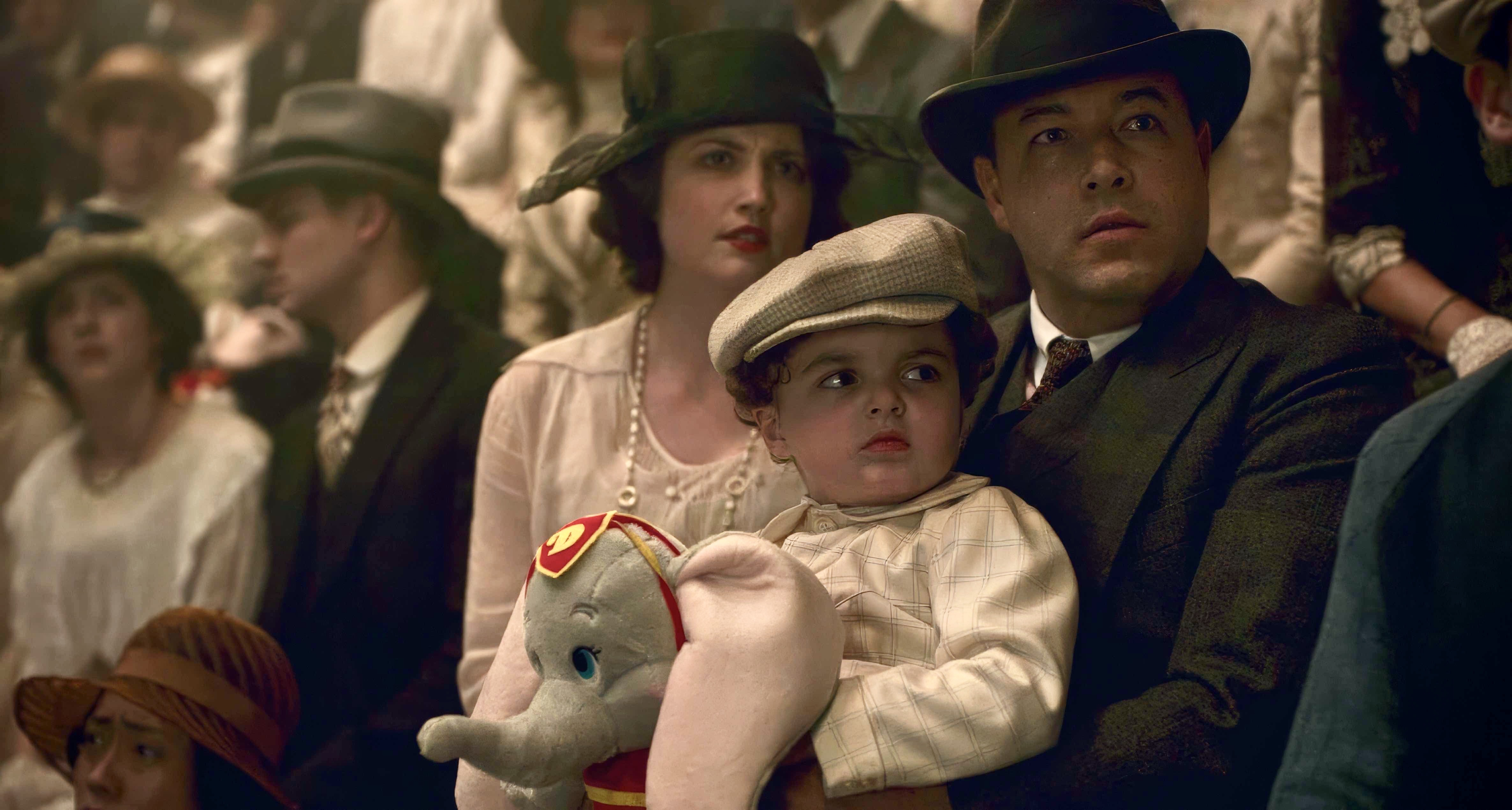
Much of my career has been intertwined with the extraordinary creative world of Tim Burton, and many of my favorite memories stem from the adventures we have shared over the years. The scale and ambition of Planet of the Apes. The warmth, heart, and imagination of Big Fish, including the surreal experience of stepping in front of the camera for a brief cameo. The meticulous artistry of Corpse Bride. The get your hands dirty approach to making the Here With Me music video for The Killers. Helping bring Tim Burton’s first major exhibition to the Museum of Modern Art. Watching Alice Cooper perform on the set of Dark Shadows. Attending the Academy Awards for the Oscar-nominated Frankenweenie. Appearing alongside my son in a small role in Dumbo.
Some of my most cherished memories come from spending time on the Big Island of Hawaii creating what I affectionately call “micro epics” like Green Lake, Mr. Quiet for Technical Difficulties, and Pangea for Trever Veilleux/Professor T and the East Side Shredders. Those projects brought together an incredible community of local artists, musicians, performers, and filmmakers, all creating simply for the love of it.
What I remember most are the friendships, the adventures, and the creative spirit that fueled those productions. Hawaii, together with my friends there, is my wellspring of creative renewal. Green Lake is especially meaningful because the film captured a remarkable place before it was completely wiped out by the 2018 Kilauea eruption. Looking back, there’s something bittersweet about realizing we preserved a small piece of a landscape that no longer exists in the same way today.
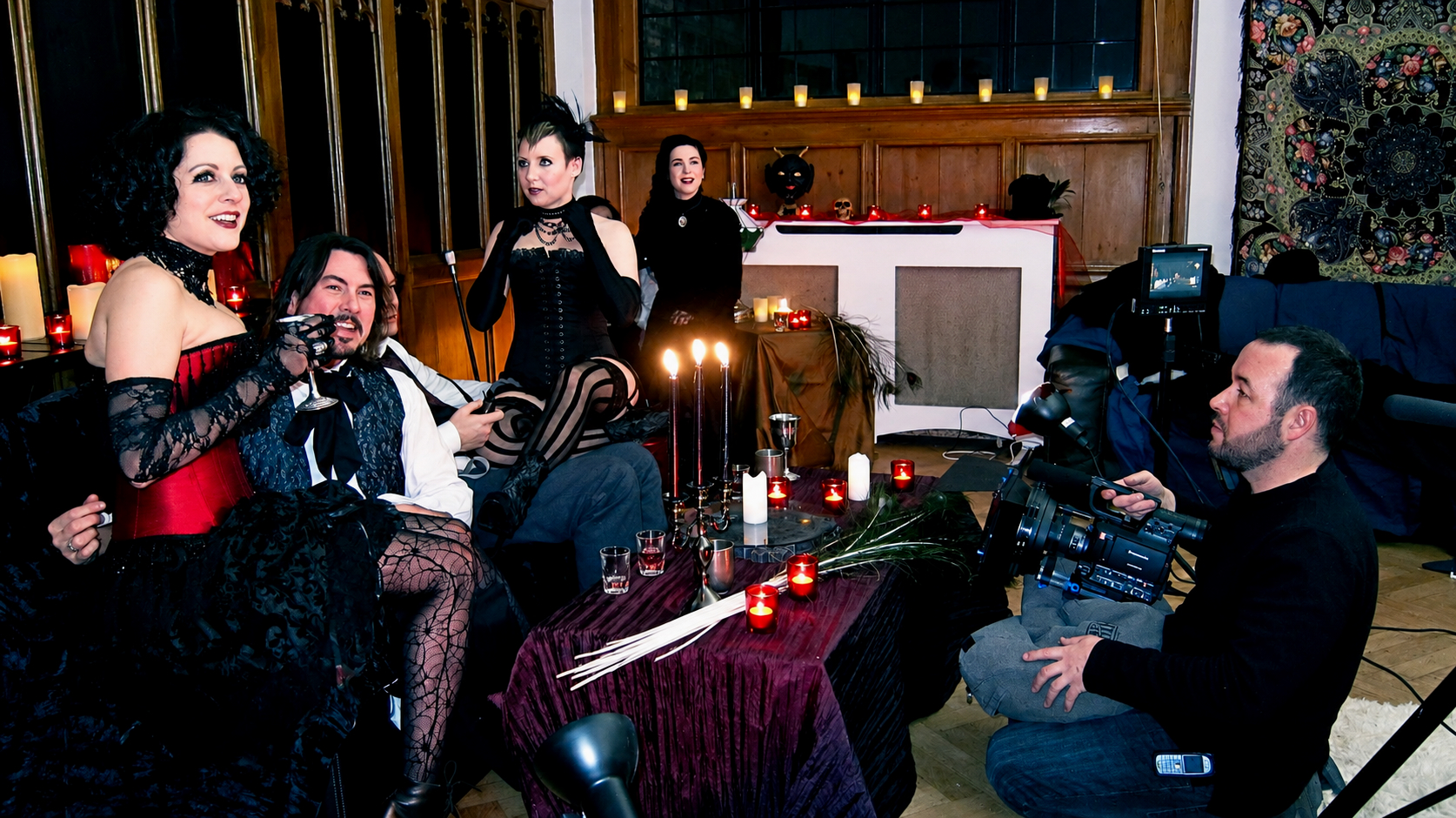
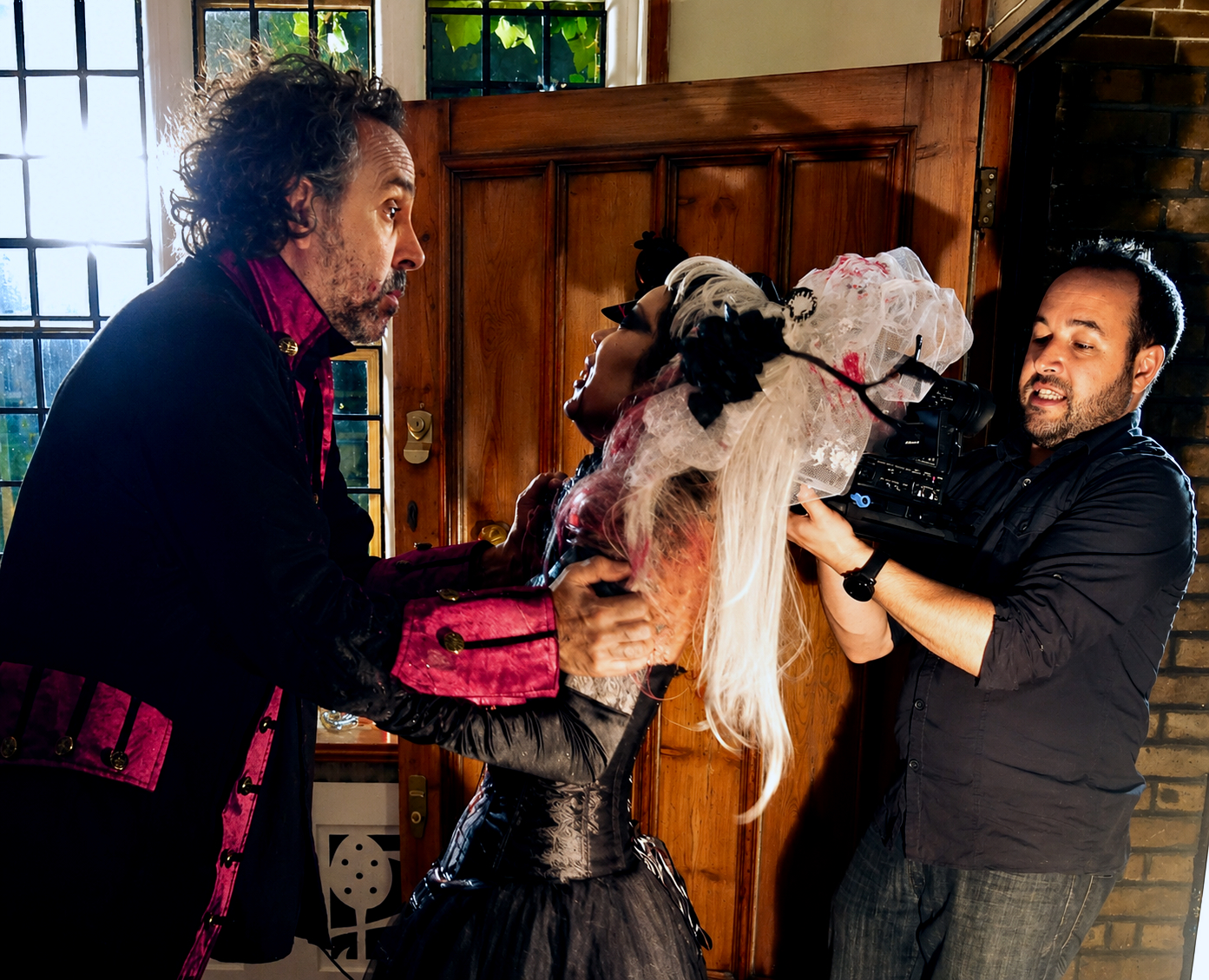
Along those same lines in London, another cherished memory is creating the Vampire’s Kiss and Blood Inside, music videos for The Witching Hour. It was my love letter to Hammer Horror, filmed inside the extraordinary gothic home built by (and still haunted by) legendary illustrator Arthur Rackham. The house seemed to breathe with history, mystery, and more than a few ghosts of imagination. Some might say it still does. Sharing that experience with friends and collaborators, while welcoming Tim Burton for a cameo as Van Helsing, made for one of the most delightfully eccentric adventures of my career. It was a complete blood-sucking blast.
What I’ve come to appreciate most is that none of these experiences exist in isolation. The films, the people, the places, the friendships, the long hours, the triumphs, the setbacks, and the unexpected adventures all become intertwined. When I look back I think of it as a collection of experiences shared with extraordinary people.
Fortunately, the story isn’t over yet!
What are your own personal feelings on the current state of the film industry? How do you think it has changed most since you first began your work in it?
The industry is going through one of the most significant transitions I’ve seen in my lifetime.
When I first started, filmmaking and distribution were controlled by a relatively small number of studios, networks, and gatekeepers. Today, technology has dramatically expanded access. More people than ever have the ability to create, produce, and share stories with audiences around the world.
At the same time, we’re experiencing enormous shifts in the way the business operates. Streaming has transformed viewing habits, globalization has expanded audiences, and the economics of production and distribution continue to evolve. We’ve also seen significant consolidation throughout the entertainment industry, with major studios, networks, and media companies merging into increasingly larger organizations.
One consequence of that consolidation is that there are often fewer buyers, fewer decision-makers, and fewer opportunities for unconventional voices to break through. While scale can create efficiencies, it can also make it more difficult for distinctive and original stories to find champions. I’ve always believed that a healthy industry depends on a diversity of voices, perspectives, and creative risks.
But, there are reasons for optimism. Younger audiences remain deeply engaged with storytelling, even if they consume it differently than previous generations. Whether through films, series, gaming, online creators, immersive experiences, or emerging forms of media, the appetite for compelling worlds, memorable characters, and meaningful stories remains incredibly strong. The platforms may change, but the desire to connect through stories appears as powerful as ever.
Despite the challenges, I’m optimistic. Storytelling has survived every technological and business disruption that’s come before it. The tools change, the platforms change, and the business models change, but audiences will always seek out compelling stories and meaningful, entertaining, human experiences.
What are your feelings on the emerging technological tools for visual storytelling? Are you excited to see how such things change the entertainment industry?
Absolutely.
Throughout the history of filmmaking, new tools have continually expanded what’s possible. Sound, color, digital cameras, computer-generated imagery, motion capture, virtual production, and countless other innovations have all opened doors for storytellers.
Recently, I attended the AI on the Lot conference at the Culver Studios. What struck me most was how many artists were using emerging technologies not to replace creativity, but to enhance it. I met filmmakers creating concepts, visual worlds, and prototypes that would have required enormous resources only a few years ago.
What excites me most is accessibility. We’re entering a period where independent creators and small teams may be able to realize ideas that previously required the support of large studios or substantial budgets. That’s incredibly empowering and has the potential to create opportunities for voices that might otherwise never be heard.
As someone who works across independent film, animation, and studio productions, I find that particularly exciting. Great ideas can come from anywhere. The more tools we place in the hands of creative people, the more opportunities we create for unexpected stories and new voices to emerge.
Of course, every technological leap comes with new challenges and questions, but I’m fascinated by the possibilities. As long as the technology remains in service of the story, I believe these tools can help unlock new forms of creativity and visual expression.
What are your personal feelings on the use of AI in creative works?
I view AI as a tool, not a replacement for creativity.
At AI on the Lot, I saw tremendous enthusiasm, but I also saw thoughtful conversations about ethics, authorship, intellectual property, employment, and artistic responsibility. Those conversations are important and necessary, and I believe the industry has an obligation to approach this technology thoughtfully.
What interests me most is how AI can help creators overcome technical barriers and spend more time focusing on storytelling. For independent filmmakers especially, these tools have the potential to open doors that simply didn’t exist before. They can help artists visualize ideas, experiment more freely, and bring ambitious concepts to life with fewer limitations.
That said, I don’t believe technology replaces human experience. Great stories come from observation, empathy, humor, heartbreak, curiosity, imagination, and the unique perspectives we develop throughout our lives. Those qualities remain fundamentally human.
We’re still very much in the Wild West phase of this technology. The tools are evolving rapidly, while the standards, regulations, and ethical frameworks are still catching up. I think it’s important that we take the time to build those frameworks responsibly, ensuring that innovation moves forward in a way that respects artists, creators, audiences, and the creative process itself.
The future isn’t humans versus AI. It’s humans using AI thoughtfully to create stories that remain fundamentally human.
How are you hoping to see the industry change and evolve in the years ahead?
I’d love to see greater support for originality, creative risk-taking, and diverse voices.
Some of my favorite films exist because someone took a chance on an unusual idea. Whether it’s an independent film, an animated feature, a genre project, or a story that doesn’t fit neatly into a predefined category, many of the most memorable works are the result of someone believing in a unique vision.
I’d also like to see a healthier ecosystem for independent filmmaking, animation, and mid-budget storytelling. Those spaces have historically produced some of the most innovative and influential work in the industry, yet they’re often the most vulnerable during periods of economic uncertainty and consolidation.
What’s particularly encouraging is that younger audiences seem increasingly open to discovering stories in many different forms. They’re embracing film, television, gaming, online creators, interactive experiences, and entirely new forms of storytelling that didn’t exist when I entered the industry. Rather than viewing that as a threat, I see it as an opportunity. The demand for imaginative worlds and compelling narratives remains strong.
I’m hopeful that emerging technologies will help democratize parts of the filmmaking process, allowing more creators to bring their ideas to life. At the same time’s it’s vital that innovation expands opportunities rather than narrowing them. The goal shouldn’t be to create fewer voices. It should be to empower more voices.
Ultimately, I’d like to see an industry that embraces the future while continuing to value the artists, craftspeople, and storytellers whose work gives these tools meaning. Technology will evolve, platforms will evolve, and audience habits will evolve, but the need for imagination, empathy, originality, and human connection will remain at the heart of great storytelling.
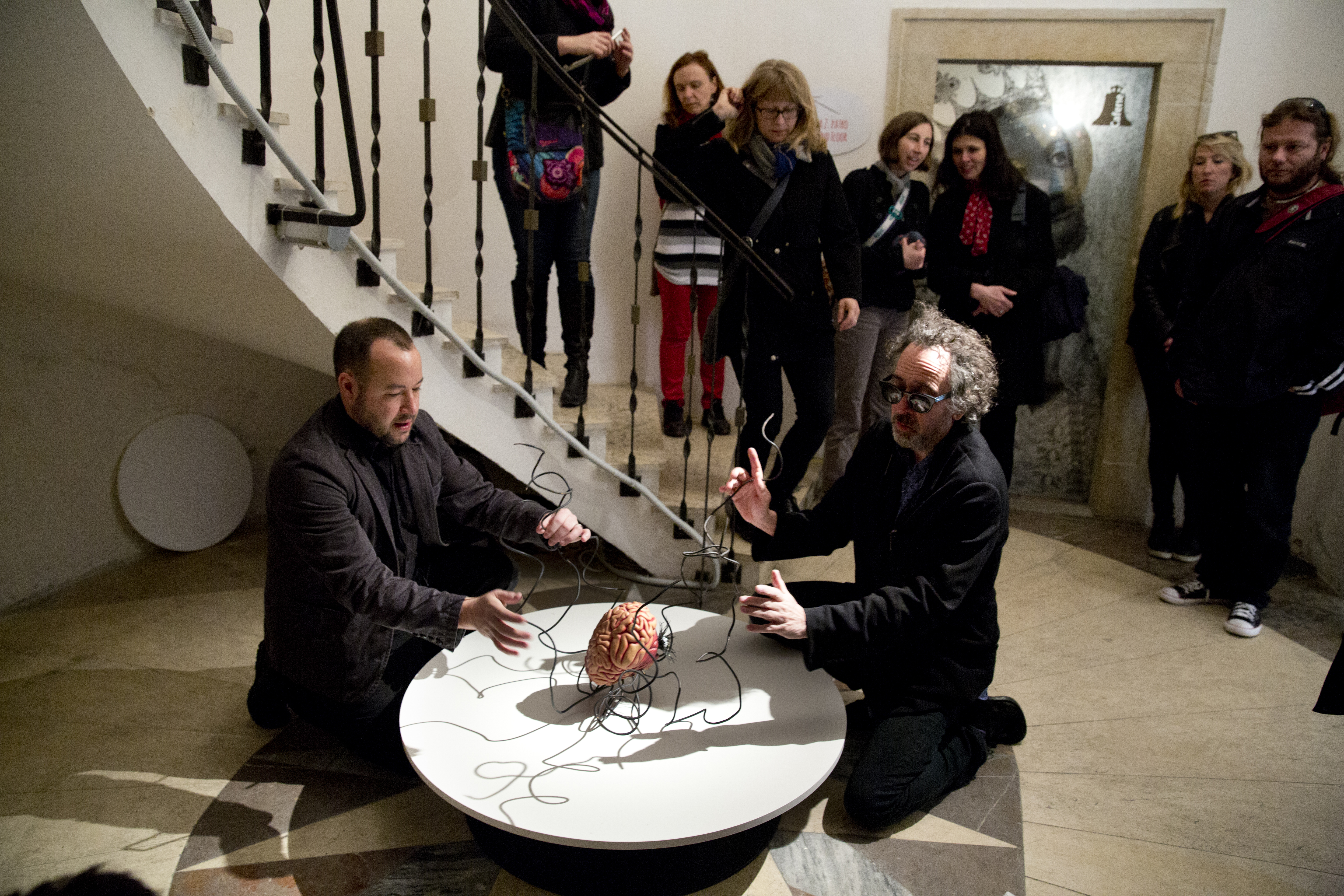
Tim Burton and Derek Frey in Prague at The World of Tim Burton art exhibition
How would you like to see the world in general change most before your time here is done?
I’d like to see a little more empathy and curiosity.
We live in an incredibly connected world, yet sometimes it feels as though we’re becoming less connected to one another as people. I think storytelling has always been one of the ways we learn to understand perspectives beyond our own.
I’d love to see a world that values creativity, education, thoughtful conversation, and compassion. The challenges we face are significant, but so is our capacity for imagination and cooperation.
If we can become a little kinder and a little more curious about one another, that would be a meaningful step forward.
Is there anything you’d like to say in closing?
First and foremost, thank you, Tina, for the opportunity. It’s been a pleasure to step away from the daily grind for a moment and reflect on the people, projects, adventures, and experiences that have shaped my life and career.
More than anything, this conversation has reminded me how fortunate I’ve been. I’ve had the opportunity to work with remarkable artists, collaborators, mentors, friends, and family members while doing something I genuinely love. Every project, whether large or small, has become a chapter filled with memories that I’ll carry with me for the rest of my life.
What excites me most is that there are still stories left to tell, new creative frontiers to explore, and hopefully many more adventures ahead. The tools may change. The industry may change. But the desire to tell stories and connect with people remains the same.
For that, and for the journey so far, I’m incredibly grateful.
New Jersey native Vincent Czyz is an author whose works inspire readers with mythological and religious elements. Best known for his short story collection “Adrift in a Vanishing City”, he has also penned two novels and many essays. His works have won him the William Faulkner-William Wisdom Prize for Short Fiction (1994), two fellowships and a 2026 prose finalist award from the NJ Council for the Arts, the Truman Capote Fellowship at Rutgers University (2011) and the Eric Hoffer Award for Best in Small Press (2016). His most recent collection of short stories, “Old Man Evil & Other Stories”, features an eclectic mix of 12 tales with an assortment of colorful characters brought vividly to life through the printed word.
What was it like growing up in New Jersey when you did? How do you think your early years helped shape who you are today?
My two brothers and I were born in Orange, but we moved to East Orange in 1967, just before I turned 4. Because our sister was wasn’t born until 1978, the four of us didn’t grow up together. I have a single memory of the Newark riots in the summer of ’67: sometime during the night, my father came into my room, lifted me out of bed, and took me to a back bedroom. My bedroom faced the street, and he was afraid I might be exposed to gunfire (shots were audible from our house). Twenty-six people were killed in the riots, so this was a time of racial tension in a place where violence wasn’t uncommon.
The three of us—I’m the middle child—went to Columbian School, which was upwards of 90% black. Most of the time we were treated like the other kids, but now and again someone would pick a fight with us because we were white. Whatever your color, East Orange was a hard place to grow up. Fights were such a part of life at our grammar school there was even a code: “Fight your own battles.” This meant that if two kids of the same age were fighting, no one, whether friend or relative, was allowed to “jump in.” I heard this rule voiced and obeyed without question numerous times. Once there was a clear winner, the fight was over, but no one would interfere until then.
When I was 9 we moved to Wanaque, New Jersey, a suburb surrounded by wooded hills. It was nothing like East Orange. There wasn’t a single black student in our new grammar school, which was probably a quarter the size of Columbian. We hated Wanaque. We didn’t like the way the kids talked, dressed, or what they talked about (hunting and fishing, mostly). We missed our friends and wanted to go back to East Orange. Being the new kids in town, the three of us fought a lot the first year or two. Despite our complaints, we stayed in Wanaque, made new friends, and eventually got used to it. I passed the written and practical tests for a hunting license and even went out a few times armed with a bow or a shotgun—because that’s what every 16-year-old boy in Wanaque did—but I didn’t have the heart to kill anything. I preferred hiking the wooded hills or fishing in one of the nearby ponds or lakes, a pastime I enjoyed until I started feeling sorry for the fish.
Getting a good dose of the urban and semi-rural, plus the camping trips with my brothers and father, gave me a deep appreciation for nature without a negative attitude toward the city. In fact, I have such affinities for both I’ve always been pulled between the two: Do I want to enjoy clean air and quiet mornings, the slowed-down pace and relaxed rural rhythms, or do I want the nightlife of the city, the lively pace, the variety of restaurants, shops, cafés, and the people who frequent them? For a while I seriously contemplated moving to Frontenac, a small town in Kansas that features prominently in my fiction. I wanted, as I wrote in my journal, to have time “to shine my own shoes; clean, paint, fix my own house; brush down the horses; work on my car or bicycle—all of which keeps me grounded, close to existence—that is to say, less distanced by Technology.”
But I never learned to disentangle my DNA from the capitalist-fast-food-hurry-up-New York City virus that infected it. My wife, Neslihan, and I currently live in Jersey City, just across the river from Manhattan, and while I’d like to move somewhere a little quieter and safer, our jobs keep us here. While my upbringing made me more comfortable with violence than I should’ve been, it also familiarized me with black culture. My brothers and I even sang “Aw, Beep Beep,” a Black Power song one of the older kids taught us. When we moved to Wanaque, we went to Paterson six days a week, where we trained as amateur boxers. Paterson was even rougher and more urban than East Orange, so we stayed in contact with our city roots.
What was it like growing up with your brother Bobby? Did his outlook influence you much?
For those who may not know, Bobby eventually won two world titles as a professional fighter. I often get asked about being “in his shadow,” but that wasn’t much of an issue for me because I gave up boxing when I was 14 and switched to wrestling, so we weren’t competing. I went on to pursue writing, still more different from his career path. Occasionally, a local newspaper would write an article on “the fighter and the writer.” Since he was on his way to being famous and I was working in near-total obscurity, I felt lucky they bothered to notice me.
That said, I very much enjoyed having an older brother, especially one like Bobby, who was outgoing and socially adept. I was a little shy, a little introverted, and had a tendency to spend too much time alone in my room. I was a bookworm from about the age of 10 and in many ways preferred books to reality (the way kids today prefer a screen of one sort or another to reality). Bobby forced me to get out of my room and spend more time with friends.
Also, I spent a lot of time in my head and sometimes blundered around in the real world, struggling with simple practicalities, whereas Bobby was at home in the world and, like my younger brother, had a way with motorcycles, cars, and the mechanical. Bobby got me to be more self-reliant and to take more of an interest in the nuts and bolts of things. I often followed his lead in things like music and clothes too, in learning how to act and how not to act. I’m grateful I wasn’t born first because I don’t think I’d have been a good older brother and I don’t think I’d be as sociable or as confident as I am now if it weren’t for Bobby. Geese famously fly in a V formation—the strongest flier among them breaks the wind for the weaker birds. Bobby was like that lead bird for me.
When did you first develop your love of storytelling and writing? Who were some of your earliest influences?
I developed a real love for reading by about fourth grade, which is when I discovered Greek mythology. I became smitten and this led me to read more. In sixth grade I tried to write a nonfiction book about Jupiter—I loved astronomy—so I had a real interest in writing by this time, but not so much in storytelling.
Then I read The Lord of the Rings. Middle Earth virtually replaced the real world, and I started writing a Tolkien-inspired fantasy novel. I filled three, 300-page, spiral-bound notebooks—carefully printing in pencil—with adventures set on the fabled continent of Atlantis. I even drew a detailed map. By senior year in high school, I was typing up a third draft and had finished 100 or so single-spaced pages when I got hooked on science fiction, went off to Rutgers, and lost interest in magic, chimerical races, and wars waged with medieval technology. I wrote a couple of SF stories and started a retelling of Heart of Darkness, which I’d read in high school, set in another solar system.
My two SF short stories were interesting experiments (I didn’t get very far with the novel), but by my sophomore year at Rutgers, I developed a taste for literary fiction and John Updike became a literary idol. I loved what he was able to call up within me through words. I loved the beauty of his sentences and their intimate detail. Samuel R. Delany became another favorite for similar reasons—he wrote about a fictional city so believably I sometimes felt I knew it better than the real cities I’d been in. (Much of what is involved is now called “world-building,” something Tolkien also excelled in.) William H. Gass and Paul West also became big influences. While both wrote stunningly lyrical prose and there’s a lot of brilliant exposition, they were less interested in setting a scene than in making sense of past events and actions. Delany excelled the moment-by-moment unfolding of a scene. I should also mention Millo Farnetti, whom I met in Frontenac. He’s not well-known as a writer, but he taught me a great deal about discarding the conventional sentence, compressing my writing, and establishing a rhythm—a practice notable among the Beats.
What would you say is your favorite story of all?
It’s hard to choose, but I think it’s probably “The Northwest Passage,” one of the stories in “Adrift in a Vanishing City.” I don’t know that’s it’s the best—“best” judgments always make me uncomfortable because there are so many factors to consider and because different readers look for different things in fiction—but that’s probably the one that most resonates with me. It has a pervasive nostalgia and melancholy to it but isn’t unrelentingly bleak. It also brings together most of the characters in the collection.
That said, “Old Man Evil,” the namesake in the collection, is more of a story and is completely self-contained. “The Northwest Passage” loses some of its luster when taken out the cycle of stories it belongs to. Certain connections can’t be made reading it as a stand-alone story,and the characters aren’t fully established.
“Old Man Evil” revolves around Vance, a thirtysomething with amnesia who’s fled a home in suburban New Jersey and a job in Jersey City and winds up in a shanty town in the hinterlands of New Mexico. He vacillates between these two poles, mirroring the tension I’ve always felt between the urban and the rural. The story questions the nature of evil—was the evil of Sodom and Gomorrah the practices of its denizens or God’s solution?—but there’s nothing extrinsic to the story. That is, there’s no narratorial philosophizing or digressing. One of thethings I like about “Old Man Evil” is that it came from a deep place. This is one of those fictions in which I couldn’t effectively communicate what I wanted to in expository prose; I needed to do it through the action of the story, myth, history, image, symbolism, dream. The dream sequence in the story, in fact, is based on an actual dream of mine that happened to fit in with what I was writing.
What was it like living in Turkey? What do you miss most about your time there?
At first it was frustrating not to be able to speak to anyone, not to understand what anyone was saying. The smallest interactions could be embarrassing. Once, for example, the cashier in a grocery store said something I didn’t understand. I looked at the numerals on the cash register and then at the bill I was holding out; it would more than cover the total, but she repeated, “Bozuk varmi?” I had no idea what she was saying. She got exasperated, disappeared for a few minutes, and came back with more cash for her drawer. I later learned she’d asked me a simple question—“Do you have change?”—but I’d stood there uncomprehending and feeling fantastically stupid.
After spending a couple of years in Istanbul and learning some of the language, I felt more comfortable. I also became enchanted by various aspects of Turkish culture—the music, the sprawling history, the art, the Mediterranean lifestyle. And there are parts of Istanbul where you’re surrounded by architecture that has survived, perfectly intact, for centuries. Even the so-called New Mosque is 363 years old. At night, especially when the moon rises over the city, you feel transported to another time, another world.
Beyond Istanbul there are mountains, deserts, miles and miles of beautiful coast, and astonishing ruins,the remains of upwards of 40 distinct cultures, including Ephesus, probably the world’s second-best-preserved ancient city after Pompeii (this is where Paul addressed the Ephesians). Once, while Neslihan and I were exploring Turkey’s southwest coast, we came upon the stone remnants of an ancient Greek town. It was beautifully preserved in the midst of dense forest, and there was no one else there, not even a guard or a ticket-seller. We wandered the ruins freely, marveling at its semi-circular amphitheater, which was small but in superb condition. If a similar ancient town existed in America, it would be unthinkable that you could have it to yourself—for free.
Another thing I miss is the light. There’s a quality to the light in the Mediterranean that I’ve never seen—or at least imagine I haven’t—anywhere else. I tried to describe it in my journal when we visited Karmylassos, a ghost town built of stone.
“Looking south from a terrace next to the church, there’s a slope about half a mile distant, and the light is so thick it’s a gold mist coming down on a hard slant. The edges of the houses are almost blurred, but the effect, maybe, is more like haloing—except there’s nothing round. Not a crown of light, more like an aura … borealis is north, this is the aura (not aurora) a la Mediterren. You can’t see the water, but you know the sea is there just beyond the hills.
Every house has a chimney and every chimney looks like a tiny tower with 8 windows (about big enough to frame a squirrel’s head) and a peaked cap like a roof on a cottage. Where plaster still smooths walls made of stone blocks, there are often the remnants of paint—red and blue are the only two colors we came across.
I watch the shadows of tall grass gone to seed sway on a wall. And we wait as though we can see evening falling.’
A variation of this description appears in “Pub Blues,” the first story in Old Man Evil. For a fuller account of our adventures on that trip, including they’re recounted in a letter I wrote to my favorite contemporary poet, Albert Goldbarth, and can be read here:
Turkey’s allure, though, isn’t just matter of ancient ruins and a celebrated past. I don’t think I’ve ever been happier than when I lived in Turkey. I had a job teaching English, which I enjoyed and which paid me well. I had enough free time to write. I had a close-knit group of friends, and in contrast to America, it didn’t take months of coordination for us to get together for barbecues, lunches, day trips, nights out, whatever. We sat in restaurants, bars, or meyhanes for long hours, eating and drinking or listening to live music. We had rambling, sometimes heated conversations about politics, literature, art, history—rarely sports—and the gatherings were international. Our circle included ex-patriots from Australia, England, America, Scotland, Ireland, Canada, as well as Turks. Istanbul was to me, I suppose, what Paris was to Henry Miller. Neslihan, a native of Turkey, and I are still thinking about retiring on Turkey’s southwest coast.
What do you enjoy the most about teaching? What do you hope that your students learn from you?
I enjoy reading new fiction from a new generation, and I enjoy helping shape a manuscript’s final form. When I was a wrestling coach and I saw one of my wrestlers score with a move I’d taught him, it was a great feeling. The feeling is similar when I see the students make improvements in their writing. What I most hope students learn is that there’s no single approach to writing fiction. Rather, there are numerous ways to succeed with a story or novel. Flannery O’Connor’s plain-spoken prose can work as well as Faulkner’s lush Southern Gothic or David Foster Wallace’s cerebral postmodernism. One author or technique isn’t necessarily “better” than another. Do we really think, for example, that Hemingway’s “Old Man and the Sea” would be a better book if it were an avant-garde experiment? Or that Joyce should’ve written “Ulysses” in the style of a Raymond Carver?
What are some of the most daunting aspects of being a writer?
The most daunting aspect of writing, at least for me, is the struggle to put into words what I want readers to see and feel, what I want readers to take away from a given scene or story. There are so many ways to screw it up—you can underwrite, overwrite, churn out banal writing, slip into cliché or come off as contrived or pretentious. You can lead the reader by the nose or be so subtle you leave readers bewildered. You can think you’ve done justice to your subject and conveyed what you’d hoped to only to have someone looking over an early draft tell you, no, that’s not what they got from these pages. Then you’re back at it.
Coming up with a structure, whether for a short story or a novel, can also be daunting. Do you tell the story chronologically or do you use the occasional flashback? Maybe you alternate evenly between past and present. And which point of view do you tell the story from: first person? Third-person? Omniscient? Limited omniscient (in which the only head you’re ever in is the protagonist’s)? Do you alternate between points of view? If so, how often? Or between past and present and multiple points of view? I’ve seen all of these variations and others put into practice—and work. They each have advantages and disadvantages, and you need to figure out the structure that’s going to work best for your story.
And where do you end the scene or story? How much do you give the reader? I try to avoid being prescriptive, by which I mean telling the reader what to think or feel. I do my best to imply what I want a reader will come away with. Still, stating overtly what you want the reader to understand or feel is an easy trap to fall into.
Those are probably the most daunting aspects of composing the work. Then comes launching the work into the world, which, if you want to land a major publisher, means first landing an agent. Even with an agent, the process can take years. My first novel, for example,took about 32 years and two agents to see it into print. I began writing “Sun Eye Moon Eye” in 1985, but it wasn’t published until 2024. For the whole tempestuous backstory, complete with many a “close but no cigar” situation, see my recent essay “Portrait of the Author in the Age of Conglomeration,”which also gives a summary of the last several decades of American publishing (www.clereviewofbooks.com/the-age-of-conglomeration/).
Can you tell us a little about your newest work, “Old Man Evil: & Other Stories”? Are there any particular stories in this one that you enjoyed writing the most?
There’s a simple organizing principle for the book: the first story is set in America, the second abroad, and so on. It’s an eclectic collection, diverging not only in location but in prose style, time period (two of the stories take place in the 19th century), and narrative form. Specific settings are also scattered across a broad spectrum: New York City, a shantytown in New Mexico (and the surrounding desert), Auschwitz during World War II, small-town Kansas, Serbia, urban and suburban New Jersey, Turkey (both city and country). The stories, nine of which were previously published in literary magazines, were written over decades, the earliest being a modified chapter of “Sun Eye Moon Eye”, while the most recent was finished in 2021.
“Old Man Evil,” as I mentioned above, is probably my single favorite story—and the one I most enjoyed writing—but I also enjoyed writing the second story, “Chele Kula,” which, translated from Serbo-Croatian, means “Tower of Skulls.” After the Battle of Chegar Hill in Nish, Serbia, in which the Turks won a pyrrhic victory in 1809, the commander of the Turkish army built a tower out of stones and the skulls of slain Serbian soldiers. It was a warning to other Serbians contemplating rebellion against the Ottoman Empire. The story is told from the points of view of a Serbian soldier living in the 19th century, a contemporary American tourist in Serbia, and the ghost of the Serbian soldier.
The story would never have been written if I hadn’t gotten stuck in Nish during a trip through what used to be Yugoslavia. There was one bus a day to Sarajevo, and I missed it. I decided to make the most of it and visited the Tower of Skulls. I spent a lot of time in the one-room, one item museum built around the tower, trying to imagine lives for the men whose skulls were still embedded in the tower’s walls (most had been reclaimed by family members). By the time I got back to Istanbul, where I was living at the time, I’d already started outlining “Chele Kula.”
There tends to be a story behind each of the stories in this collection. “Hamlet’s Ghost Sighted in Frontenac, KS,” for example, is based on a misadventure with a horse and a hallucinogenic night in Kansas that lasted until dawn. “Contrary Star” recounts a friend’s struggles with drug addiction so faithfully it approaches creative nonfiction. “The Moon Has Fallen into a Well” was inspired by the climax of a tragedy I happened upon in Istanbul. I was part of a writers’ group, and one night, after a meeting, several of us encountered two policemen pulling a sheet of plastic over a body at the foot of Galata Tower. Someone had climbed over the safety rail and jumped from the top. The image of the body lying on the cobblestones haunted me for days, and writing the story became a kind of exorcism. And so on.
What do you think it takes to make an interesting and lifelike character come to life through words?
Observing people closely, taking note of their tics, idiosyncrasies, speech patterns, and the way they interact with others. Listening to people when they talk—always listening—paying special attention to their thought processes, to their motivations, to their justifications for what they do. Also, though, taking the diving bell into yourself, honestly assessing your own desires, actions, and emotional exchanges.
A lot of contemporary writers tend to neglect character. Which is often problematic, sometimes highly problematic, since the emotions in a work of fiction are rooted in character: if readers don’t care about the characters, they’re not emotionally invested in the story. It’s a criticism that can be legitimately leveled against, for example, Thomas Pynchon, whose fiction tends to be populated by cartoonish caricatures rather than characters.
Do you have a dream project you’d most like to bring into existence? What can your readers look forward to next?
My dream project is “Nowhere Zen New Jersey”. A kind of lengthy sequel to “Old Man Evil,” it’s set primarily in the same New Mexican shantytown, but it has a different protagonist and focuses on a new set of characters. Told through several different narrative voices, the novel branches out into Mexican and Native American folklore, myth, and history. There are also letters, poems, and journal entries penned by various characters. Other texts—found objects so to speak—include song lyrics and brief excerpts from newspapers and books. Certain fictional elements, such as the Haunted Pueblo, are presented as historical. This reflects the way legend is often confused with history as well as my fondness for blurring borders, geographical and otherwise, including those between fiction and nonfiction. The novel, which casts doubt on the notion of linear time and emphasizes the importance of dreams, also suggests indigenous/non-Western ways of seeing the world. These are all things that interest me deeply, and I hope at some point to be able to devote a year or two to writing “Nowhere Zen New Jersey’. So far, I haven’t gotten much beyond the note-taking stage.
The next novel I expect to see published is “The Aeon of Forgetting”, a departure for me since it’s an urban fantasy. An ancient soul escapes from heaven and finds his way back to Earth,where he attaches himself to a New York City librarian—Charlotte—who tries to help Ari discover who he was in life while discouraging his romantic interest. The situation is complicated by Charlotte’s heroin-addicted brother and a pair of angels armed with 9mm automatics who’ve been sent to bring Ari back. In addition to dodging stray bullets, Charlotte has to contend with the dismantling of her Christian worldview, which doesn’t survive the answers the angels have for her questions. While there are key elements of genre fiction in “Aeon”, it’s a literary novel that explores art, existential mysteries, and the arresting beauty of the here and now.
“Aeon” was actually in the final stages of production and was due out in August of 2026 (the Amazon page is still up!), but the editor, who also happens to be the owner of the publishing house, kept trying to rewrite it. I kept gently reminding her that the editor isn’t supposed to rewrite the novel as though she were author but to make suggestions in keeping with the narrative voice and the vision the book presents. When she made a drastic change to the climax and gave me an ultimatum—accept the new scenario or walk away from the contract—I opted to keep the original climax. I’m currently looking for a new publisher.
Is there anything you’d like to say in closing?
I would urge readers to be more open to the books coming out of small, independent presses and pay less attention to what the New York mega-publishers—there are only five left—are peddling. The truth is, many accomplished literary authors who didn’t have spectacular sales were pushed to the indies and university presses. So books by these authors won’t, as a rule, get more than a smattering of reviews in barely read publications or much in the way of publicity since few indie presses have a publicist, let alone an entire marketing department, and few reviewing bodies care what comes out of the small presses. It also means sales will be even more dismal for a given literary novel than they would’ve been at one of the Big Five.
And when I mention small presses, I’m not talking about Milkweed or Graywolf or Coffee House, which receive donations from wealthy foundations and are wildly successful by small-press standards. I’m talking about small presses founded by idealistic editors and authors who want to promote literature for literature’s sake, presses such as McPherson & Co., Two Dollar Radio, Unnamed Press, Unbound Edition Press, Dzanc Books, City Lights Books, Turner Publishing, Small Beer Press, Sarabande Books, Etruscan Press, Baobab Press, Braddock Avenue Books, Counterpath Press, Counterpoint Press, Solid Objects (not to be confused with A Strange Object), Permanent Press, FC2, Outpost 19, Persea Books, Spuyten Duyvil, Rain Mountain Press, and Running Wild Press to name a handful, as well as a plethora of university presses.
Almost without fail fiction published by these presses is passed over for prizes. All of which “validates” the publishing choices the Big Five make and perpetuates the myth that, with rare exceptions, all the good writing comes from them. So it’s not just the editors who guard the gates; it’s also the media.
Proof of the impressive work coming out of small presses includes three Nobel Prize winners—Olga Tokarczuk, Jon Fosse, and Han Kang—who were first published in America (or in English) by a small press; in the case of Fosse, exclusively by small presses. But there are many, many other examples. For a fuller rundown, see the aforementioned essay on the author in the age of conglomeration—and don’t overlook the indie presses.
Brandon Elvis Howard is best known for his 30 year career as an Elvis impersonator hailing from the town of Fairmount, Indiana. With a flair for the dramatic and a drive to entertain the masses he is also now pursuing a career as an actor with an upcoming role on an episode of the series “Nine Perfect Strangers” due to air May, 2025.
What was it like growing up in Fairmount, Indiana? Do you think the slow and relaxed pace of life there encourages one to dream and to pursue those dreams?
I was very fortunate to have grown up in Grant County, Indiana. My first few school years, my family lived in Gas City and we moved to Fairmount when I was around eight years old. Both towns are very quiet, quaint little towns in which I was able to ride my bicycle or walk everywhere that I needed to go. I think I started to ride my bike into town when I was about nine because I finally got comfortable enough to do so. It was such a beautiful place to grow up. There was a nice little park, a record shop, a toy store, a general store, an adorable little gas station, and a family owned grocery store. I definitely learned early on that living in a tourist destination wasn’t necessarily always a good thing. There was always a divide between James Dean (and Jim Davis, respectively) fans and locals regarding how much James Dean and Garfield should be in the town. The local folks wanted to keep it as it was while the fans wanted to label everything, plaster Jimmy’s face everywhere, add bright lights to buildings to attract tourism, and basically turn our tiny town into a monument rather than the humble town that Jimmy (and Jim Davis) loved. Fairmount is now definitely much more of a tourist town than it was when I was a kid, but whether or not that’s a good thing is kind of up to the person who is experiencing it. To answer your question about fulfilling dreams, Grant County is small, so dreams are all that kids have. Fairmount is a small country town in which local sports are the most important subject on everyone’s lips (other than politics), so unfortunately, that means that if you play sports, that is your assigned destiny. Kids who excel in the arts, are typically not pushed to pursue those passions. I will gladly encourage any child who is passionate about music, art, or acting to follow those dreams (but to please think bigger than just Grant County). Adeline Nall encouraged Jimmy to pursue acting and told a young, asthmatic Jim Davis to keep drawing that fat, orange, cantankerous cat… and the rest is history.
For those that aren’t familiar with your work can you tell us a little about what led you to become an Elvis impersonator?
Sure! In short, it all started at a talent show when I was a freshman in high school. I wanted to be like my brother because he was always so confident singing in front of a crowd. I had just watched a wonderful film entitled “Blue Hawaii” and there was a scene in which Elvis opens a music box and this really beautiful song plays as he sings along. It was the song “Can’t Help Falling in Love.” Alone in my room, I sang along to a cassette tape and discovered that it was in my range. I bicycled up to the music store in Fairmount and discovered as fate would have it, they had the background music on a karaoke cassette tape, so I bought it and used it for the talent show. Are those wondering, I did not win…I got second place…Next to a clogger.
What do you find to be the most challenging aspect of that? Do you ever get tired of Elvis?
There have been a few times that I almost quit, but my grandfather, my father, Fairmount Historian Ann Warr (the founder of the Fairmount Historical Society) and Adeline Nall were all there to encourage me to continue to perform. I have never gotten tired of performing as Elvis, but since I started performing so young, I did have points in my life where I just wanted to be Brandon. Other than minor identity crises, the most difficult aspect of performing as Elvis has always been the die-hard fans who prefer to tear me down for not having the correct hairstyle, or the wrong shoes, or historically inaccurate onstage wardrobe choices (the “Elvis never wore that” crowd). That is why I always bring attention to the fact that I am an Elvis TRIBUTE artist, not an Elvis impersonator. When you come to my show, you get Brandon Elvis Howard paying tribute to Elvis, not an Elvis Presley wannabe.
How has your approach to that particular role changed to most since you first started out? Do you see it as an evolving role?
It has definitely been an evolving role due to the fact that public perception of Elvis has changed throughout the years. Obviously, when a new film about Elvis comes out, then public interest in Elvis grows, and suddenly I have a brand new audience. Another issue has been new tech technologies. When I first started out, my background music was on a set tape, then compact disc, then USB. That definitely affects which kind of equipment I need for each show.
How does work as a tribute artist different most from your work as an actor? Do you prefer one over the other?
When I perform as Elvis, I know that it is going to be about me and how I want to portray myself to the audience. If there is something going on with me mentally or if I’m going through something, it comes out in the music (I cannot tell you the last time that I sang “My Way” without crying). I’m really good at expressing myself on stage. On set, however, I am a character. I am able to channel my anger in certain characters, my sadness in certain characters, my silliness in certain characters, and that is what I love the most about acting. It is excellent therapy. If I had to quit one of them, though, I would have to say acting because I was always taught to “dance with the one that brought you”… and that would be Elvis.
Has acting been something you have always wanted to do? What do you enjoy most about the work of being an actor?
I have always really enjoyed acting. I think the one time that my love for acting and my love of Elvis came together was when I was a freshman in high school. I portrayed Conrad Birdie in our school’s production of the musical “Bye Bye Birdie.” For those unfamiliar with the musical, it is about a very Elvis-esque character leaving fame and begins to join the military and how his fans handle it. The really extraordinarily special thing about that play was that I got to wear my grandfather’s World War II United States Marines uniform. That was TRULY an honor.
As someone who has moved abroad, what are some of the most daunting challenges you face in being away from home?
Right now? Coming home. I do not feel like the United States is the same place that it was when I left. The biggest challenge I have faced other than that is missing my family, home sickness, and driving down those wonderful, lonely country roads at night.
From the set of “The Phoenician Scheme.”
Do you welcome the chance to learn from every other actor that you get to work with?
I have enjoyed every little nugget of information that I’ve been given from my fellow actors and directors. It was truly an honor to be directed by Wes Anderson (I love that he has a very “what if” style of directing and is always open to suggestions from the actors). The most memorable lesson that I’ve received which comes to mind was actually on the set of Wes Anderson’s upcoming film “The Phoenician Scheme.” My character smokes a cigarette while eating lunch and I apparently looked pretty awkward since I don’t smoke. Benicio Del Toro walked over to me in between takes and showed me how he believed that my character would smoke while eating. I was definitely more honored than offended.
Are you excited about the upcoming appearance on ”Nine Perfect Strangers?” What did you enjoy most about that experience? What did you learn from it?
I’m extremely excited about the new season! I really enjoyed season one, so I’m extremely proud to now be a tiny part of the 9PS Universe. I really enjoyed every moment on set and working so closely with the super talented Maisie Richardson-Sellers and King Princess. During filming, I think that I learned a lot about how a director can completely change a scene by adjusting something as small as an actor’s wardrobe. I can’t give away too much, but basically my character was originally in sweatpants and a robe, but it was changed to an outfit which will make it clear as to what season it is and to what the weather conditions are in the scene. My favorite moment was actually after our filming day was done. I had the great pleasure of walking through the studio lot with Maisie who is such a wonderful, beautiful human being. I will definitely treasure our after work conversation forever.
Do you have any interesting stories from the sets of your works so far?
So many! I think my biggest what the fuck moment came as we were about to take the car to the set of “The Phoenician Scheme.” A black car pulled up which I was supposed to get into, and just as I was about to open the door, it opened and out popped Bill Murray. He was much taller than I had ever expected while wearing his stupid Cubs hat. I, as a Guardians fan, told him that I’m a big fan of his, but that I hated his hat. He almost immediately said, “ I’m guessing that you are a Cleveland fan? Yeah. Thanks for the World Series”, smiled and walked away. Later in the day, we were on set, and he said “Hey your team is still the INDIANS!” (for those who don’t know, they changed their name from the Cleveland Indians to the Cleveland Guardians due to pushes for cultural appropriation, but it’s still strange to root for a team for thirty years then to have them change the name of the team). It was pretty cool to be able to bond with him over sports. However, as far as my favorite interactions with fellow actors, nothing will ever top Keanu Reeves sending me a Wyld Stallyns guitar (because “EVERY great Elvis needs a guitar!). The original idea for Bill and Ted Face The Music was to have the girls encounter Elvis instead of Jimi Hendrix. In the end, they went with Jimi, but even though I was hurt, I understood as the film needed a guitar PLAYER while Elvis was more of a strummer.
Do you have a dream role or project you’d most like to work on? Is there anyone you’d most love to work with in the future?
I think my dream role would probably be an acting role in a Tim Burton film. I’ve always loved his style, and I would certainly love to witness his style of directing first-hand. The folks whom I would most enjoy acting with would be Margot Robbie (because I have a massive crush on her), Nicolas Cage (because I’d love to talk some Elvis with him), and it is a toss-up for first place between Jim Carrey and Keanu. I can’t imagine the hijinks which would ensue if you were to get me and Jim together, and I would like to actually work with Keanu in person since the only time that I got to work with him was during Covid via Zoom.
What do you hope the people who see your work in both areas take away from your performances?
I would hope that they appreciate the performances, because I really do put my heart and soul into everything that I do. I hope that they walk away, knowing that I left it all on the stage or on the screen.
Is there anything you’d like to say in closing?
Sure, I would like to say that if you ever feel unloved, I know that you are loved by someone who may not say it or show it. If you feel unattractive, I can guarantee that someone has a crush on you, but you may never know it. If you feel worthless, I know that there is someone out there who thinks the world of you. If you ever feel like you’re completely alone, you’re not…I’m right here and I care.
Since his first appearance on television on the show “Stars In Their Eyes” where he appeared impersonating Bobby Vee performing “The Night Has A Thousand Eyes” Asa Elliott has appeared in countless cabaret venues in the UK as well as the Spanish resort town of Benidorm, where he went on to be featured as a recurring character on the cult classic sitcom of the same name as well as appearing in the live show in 2019. As an independent artist he continues to pursue his passion for music.
When did you first discover your love of music? What made you decide to pursue a career in the field?
One memory that sticks in my mind was the day that Freddie Mercury passed away. I was nine years old and asked my dad who this guy was all over the news. He gave me Queen‘s greatest hits on 12 inch vinyl and I played it on repeat after that. I knew every word within a few weeks. I think this was the first time I’d really paid any attention to music and after that you couldn’t keep me off the karaoke whenever we were on holiday.
I remember singing “Bohemian Rhapsody” on karaoke in a French campsite while we were away the following year and the reaction of the crowd stunned me. It must have been a real novelty hearing a young lad sing this tune in my adolescent high-pitched voice. I couldn’t walk anywhere without somebody stopping me around that campsite and congratulating me. That’s when I got the buzz and it’s the feeling I’ve been chasing ever since.
Were you nervous when you appeared on “Stars In Their Eyes?” Why did you decide to impersonate Bobby Vee? What did you learn from that experience?
I was very nervous. At the time, “Stars In Their Eyes’ was one of the most watched TV shows in the country and I knew so much was resting on that performance. I think the nerves spurred me on though and to this day, I’m still happy with that performance and I only have fun memories of it.
I actually applied as Ricky Nelson, but on the application you could put three songs on your cassette. When I got called in for the audition, they told me it was the other two songs on my cassette they were interested in. “Poetry In Motion” by Johnny Tillotson and “The Night Has 1000 Eyes” by Bobby Vee. I sang both songs and it was the production company who chose who they wanted me to be on the show. I’m so glad of this because I now realize how great Bobby Vee was and I even got to meet him twice after I appeared on the show. He was really inspiring to me when we had a chat backstage at Manchester’s Opera house. What a guy.
Do you think your work in cabaret prepared you for your later role in front of the camera on the series “Benidorm?”
100%. I’ve never done any professional acting before apart from at school and the writer of the show once told me how he’d seen me performing my cabaret act on stage and he knew from this that I could act. Cabaret is all about entertaining the crowd and taking them on a journey and I suppose this is all transferable qualities to on screen acting. Also in the show. I was playing a version of myself so it wasn’t difficult to prepare for what a cabaret in Benidorm would actually be like.
What was it like to perform in the town of Benidorm when you did? How do you think it has it changed most since those days?
When I first started performing in Benidorm, it was a very different town to what it is now. There wasn’t so much of the low cost airlines around and the daily flights so there were a lot more families and through the winter, the older generation there would love to come and sit down in a cabaret bar and watch a full night of entertainment. As the years went on and the holidays got cheaper for people, more stag and hen dos started to arrive and people who were there for a mad weekend.
I did notice how the crowds I performed to maybe weren’t as well-behaved or really listening as much. Shows around the town have changed a little now and are more towards parties.
What was it like when Derren Litten first approached you to be part of the series?
To hear Derren say the words,” I’d love you to be in my TV show.”, it was surreal to hear. I still at this point didn’t think anything would come of it and I hung onto those words for a long time. It was almost a year after we spoke that part was actually written for me in the Christmas special. I wouldn’t say I’d forgotten about it, but I didn’t know if it was actually going to happen. When a contract came through though and my flights were booked, that’s when I knew my career would be different forever. I’ve been given such a big chance and I had to make sure I did the best I could with it.
Do you have any favorite moments or memories from your time there that you might be at liberty to share with our readers?
I just remember how surreal it was on my first day filming. I was taken to the Benidorm Palace and invited to the Green room to wait for my call to set. There I was, sat with all of the biggest names from the “Benidorm” tv show. The people I had watched in the first three series and instantly recognized. I was so starstruck and nervous but had to act casual and make it seem like I’d always done this. Within a few hours they had gone from celebrities to just regular people and then friends. It was that day that broke the barrier down for me understanding how celebrities are actually just real people doing a job.
Why do you think that series has become such an iconic sitcom over the years?
So many reasons. Benidorm the place was already insanely popular and people would first watch it out of intrigue to see some of the locations that they may have visited themselves. Then they grew to love the characters and I think everybody can see a little bit of themselves in at least one of them. Of course the writing is classic british humour and it has stood the test of time. Now it is being categorized as one of those series like “Gavin and Stacey” and “Only Fools and Horses” that I think will be around forever. I love hearing how the younger, new generation find it and still love it as if it had just been released today.
How do you feel about being known as “That singer off Benidorm?”
I love it! When I was writing my first Instagram bio, I just put that sentence and it has kind of stuck. “Benidorm” is so recognizable and if I’m the person that people think of when just the word singer is mentioned, it makes me very happy.
If the series does happen to be picked back up at any time are you hoping to be part of it?
I’d love to be part of the “Benidorm” show in any capacity. Having been in the TV show, it’s touring stage show “Benidorm Live” and also the Benidorm convention Benicon, it’s such a massive part of my life and to carry that on would be a dream.
Do you prefer working live on stage or in front of the camera more? How do the two differ most?
Live on stage for sure. Filming TV is glamorous but there’s no reaction from a live audience and you don’t get that immediate feedback that makes your adrenaline flow like the power of a live audience and a full theatre. There’s a lot more pressure on you in a live performance also and I think this brings out the best of you. There’s no going back and doing it again or editing it so you have to really be on your game. I love this pressure.
What are some of the most challenging issues you have faced during your career in the industry?
The entertainment industry is a really difficult one to be in. It can be famine or feast in terms of work. Sometimes you’re turning work down left, right, and centre and other times, you can’t get a job for love nor money. That’s the most difficult part of it. There’s nothing owed to you and you’re always having to work your best to get your next job. The pandemic was especially difficult though. I just started working on cruise ships and returned from the Caribbean, also moved into a new house and become a father for the first time. Then the whole entertainment industry came to a grinding halt and after a little while, I wondered if it would ever restart. I know a lot of people in the entertainment industry who dropped out at this point and I still feel super grateful for every job I get in the industry after going through this.
What projects are you looking forward to bringing your fans next? Do you have a dream project you’d most like to bring into existence?
There’s a few irons in the fire and a few things I can’t speak about at the moment. There’s still a long time left in my career and lots of things I’d like to achieve. Doing more theatre and TV work and just being able to get on stage in front of thousands of people and enjoy that buzz.
Is there anything you’d like to say in closing?
When I started out in the entertainment industry, I just wanted to be on stage singing songs and making people happy. My career has taken many different twists and turns and I just like to remind people that at the end of the day, before I’m thought of as an actor, personality, that bloke off TikTok, I’m mostly a singer. I hope people listen to my songs and come to my shows and enjoy a shared experience.
Ben Tinsley and his son Jake, 57 and 29, are writing partners. They helm the Tinsley Boys Shared Universe, a line of comic books published by Jason Dube’s Scattered Comics.
The TBSU’s most notable titles are Night Owl, The Blonde Assassin, Genius, and Alternative Narratives.
They are currently running a Kickstarter campaign for the latest comic book installment of “Night Owl”(which gained mention on the Today show in 2009).
For those not familiar with your works, can you tell our readers a little about yourselves?
Ben: I’m a Fort Worth, Texas film actor, singer and former journalist who has teamed with my son Jake to write comic books since 2007 – when Jake was 12.
Jake: I’ve been writing comics since I was able to write, my dad and I started this comic company when I was in middle school and we’ve been rocking on ever since.
Jason: Wow … (reviewing list) that’s a lot of questions. …. I’m Jason Dube writer, artist and publisher.
When did you first develop an appreciation for comics?
Ben: From the beginning. Ever since I was old enough to read, I’ve had a comic book in my hand.
Jake: Very early, my father was always reading them and it didn’t take me long to become enraptured by the stories I would read with dad’s help and later without.
Jason: I’ve loved comics since childhood.
Do you happen to remember what your first favorite comic was?
Ben: It’s a tie between “Batman” and Detective Comics.”
Jake: It was ”Shazam”, back when he was called captain Marvel, my dad got me this massive book made for kids, it was my favorite for a very long time.
Jason: “Richie Rich.”
Who are some of your influences in the field?
Ben: Denny O’Neil, whose work I studied all my life and taught myself to write using his narrative structure. I even interviewed him by phone in 1995! Grant Morrison, Alan Moore, Neil Gaiman, and the late Rachel Pollack.
Before she died, Rachel worked on a story for Jake and me that we ran twice in a comic of ours known as “Genius”. I believe it was her last published comic book story.
Jake: My biggest comic influences are Stan Lee, Marv Wolfman, Geoff Johns and Joss Whedon, as they wrote some of the best stuff I’ve ever read.
Jason: Most of the original Image Comics founders, Art Adams, Ramos, and Chris Bachelo.
Why do you think comics have always had such an appeal? How did you come to find yourself involved in creating them yourself?
Ben: Ideally, the words and art of each comic book converge to project a story directly into the brain. All my life, all I’ve ever wanted to do is write comic books, film act, and sing professionally. (I’ve also always wanted to be Batman.)
When I was a teenager, I wrote and drew my own line of comic books. My art was horrible, and I think only two people actually purchased the comic books at the Fort Worth head shop whose manager agreed to sell it for me on consignment. But published is published!
I still consider those comics Canon and reference them occasionally in the stories Jake and I write for the Tinsley Boys Shared Universe of Jason Dube’s Scattered Comics.
Jake: Escapism, there will always be room in life for escapism and that’s why comics will always be popular. I spent my life since early childhood reading about superheroes and creating worlds and legions of characters to fill those worlds.
Jason: There is no limit to what you can do in comics. (But not in the real world.) I couldn’t afford to buy them, so I made my own.
Did either of you ever imagine you’d still be creating them 17 years later?
Ben: It’s been an incredible, unpredictable journey. I am very happy that Jake and I still work together after 17 years. We have a lot of comic book writing experience under our belts.
Jake grew up writing comics. It’s made him into a fantastic writer and gives him an incredible view of the profession.
Jake: To be honest we just wanted a good crack at it. We both hoped, but never really planned for any real success, we just wanted to put our art out there.
Jason: Yes.
For those not familiar with premise can you tell us a little about “Night Owl”?
Ben: “Night Owl” is our flagship character. We write his adventures in our comic books and also our one-page webcomics, which we offer online for free.
Night Owl is Zack Finley, a 12-year-old Earth Shaman who protects the balance of the universe. He’s the top magic guy in his universe. He’s latest in a long line of Shamen who have inherited this mantle. “Night Owl” is more a rank than a super hero name. You become Earth Shaman, your title is Night Owl.
Night Owl’s partner is his power animal Grandfather Owl, an immortal, magic-casting, talking owl who can occasionally assume human form. Grandfather Owl has worked with several of Night Owl’s many predecessors.
At 12, Zack Finley is the youngest shaman to ever inherit the mantle of Night Owl. He literally had to die to become Earth Shaman. Zack Finley’s immediate predecessor was his paternal grandfather Mack Finley, known to the world as the Silver Age Night Owl. Zack Finley became Night Owl after being shot to death in a surprise attack.
Mack Finley resurrected Zack by projecting all of his life energy and Shaman power into him. This brought Zack back to life and transformed him into Night Owl, the Earth Shaman. The effort of bringing his grandson back combined with the numerous bullet wounds he suffered during the attack claimed Mack Finley’s life. Night Owl’s mother and little brother also were murdered the same night.
Zack Finley constantly has to struggle with the PTSD and depression that comes from losing so many members of your family.
Night Owl’s sanctum sanatorium is The Treehouse, a special shamanic shelter connected to the World Tree outside of space and time. It is run by a race of Teddy Bears known as The War Bears. As it turns out, one of them, Cadbear, was Zack Finley’s nanny when he was a child.
For years afterward, Zack thought the Treehouse was a bedtime story he heard when younger. When his grandfather died, Zack was shocked to learn it was all real.
Meanwhile, Night Owl’s life has been complicated by a mysterious ally – a teleporting, forcefield-covered, blue adventurer known as Blue Blazer. Friend or foe? The answer might surprise you!
Night Owl’s only family member left is his father Ray Finley, an emotionally-distant journalist who seems equally affected by the deaths of the Finley family members.
Night Owl is a member of a super team of like-minded kid heroes named The Knights of Justice. There have been three incarnations of the KOJ, and a Night Owl has been on each one of them.
The Golden Age Night Owl was on the KOJ during World War 2, and Zack’s grandfather, the Silver Age Night Owl , served on the KOJ during the 1960s. Zack’s version of the KOJ is the only one with mostly kid heroes.
Fort Worth, Texas is the center of all magic and super science in the universe. Magic and super science can only be created within the boundaries of Texas. Said magic and super science can be taken elsewhere and used, but the ability to create or generate it can only take place in Texas.
Fort Worth, Texas is the epicenter of all that. Every Night Owl is charged with serving and protecting Fort Worth.
Jake: “Night Owl” is the story of a boy who has been through so much pain in his life, dedicating the rest of his existence to making sure nobody else will have to live with the same pain.
Jason: I describe him as a 12-year-old super hero.
What readers can expect from the most recent installment of “Night Owl”?
Ben: The first story is kind of a haunting mystery, introducing one new character and revisiting a couple of others. The second story probes into the tragic past of Night Owl and offers a terrifying look into what previously were thought to be silly villain characters.
My favorite quote comes from Love Machine 2.0: “Time to hypnotize … with my Freaky Spinning Eyes!”
Jake: What started in part 1 as a goofy slapstick grudge match is now unfolding into narrative depth as the story reveals the reason for the fights in balance 1.
Jason: Surreal stories, cool artwork, and epic battles.
What are some of the challenges you face in working together? What would you say is the most useful thing you have learned from the experience so far?
Ben: It’s been a huge learning curve for both of us, but I couldn’t ask for a better writing partner than Jake.
Jake: Most challenging thing? Finding where on paper to put all the overflowing ideas coming from every part of the creative team. Something useful I’ve learned is the art of organization, this field has me very organized and ready for stuff like leadership roles.
Jason: I never felt any challenges. I find it easy to translate their stories into artwork.
What do you hope your readers take away from your various works?
Ben: Jake and I adore everything we write. I hear a lot of complaints from readers who worry that too many of today’s writers care not about superheroes and comic books. Not so with The Tinsley Boys. We adore comic books and that drives our work.
Jake: I once said as a child that I wanted to make you laugh til you pooped your pants. In several ways I think nothing much has changed, but instead of just laugh, I wanna make you cry, think and “aw” as well.
Do you have a dream project you’d most like to bring into existence?
Ben: My dream is to successfully lobby the Texas Legislature to formally declare Night Owl “The Official Fictional Superhero of Texas.”
Jake and I have already written several comic book proposals for other companies, including ideas for Batman, John Constantine, and Daredevil. If we’re ever asked to share those ideas, we stand ready.
Jake: My big dream is to write and film an MCU style big budget movie series based on my comic universe, I’d have no issues with intellectual property, so all my characters could be present without any waiting for copyrights to expire.
Jason: Getting to draw comics is my dream project.
Is there anything you’d like to say in closing?
Ben: “Night Owl 2-n-1” is an incredible, oversized comic book on sale for a very low price on Kickstarter right now. It’s a powerful comic book journey written by Ben Tinsley and Jake Tinsley with art by our publisher and longtime artist Jason Dube.
It’s the character that landed Jake and me on The Today Show in 2009!
Check it out. You won’t be sorry!
Jake: Of fear and love, I fear not that I will die, but that the multiverse created by my own two hands will never find its target audience.
Jason: Thank you for the interview and check out Night Owl in its Kickstarter campaign.
Virginia native Norman Voss is best known as the bassist for The Bret Michaels Band and as vocalist and frontman for Stormin’ Norman Band.
For those who might not be familiar with you and your work, what would you like them to know about yourself?
I love to use music to connect to people and to connect people together. Especially people in need, such as those living in senior homes and those living in the woods. I love to sing in senior homes doing Sinatra, Dean Martin and Elvis and playing for the homeless. I now do that also on the road, as almost every BMB show has a section with disabled fans. It allows me to make them feel special, even if just for a couple of minutes.
Do you remember when you first discovered your love of music? What was that like? Do you happen to remember what your first favorite song was?
I have several distinct memories of discovering music. One is when my brother bought the Kiss “Alive II” album. First I just looked at the pictures and then I played it and pretended to then be in the band. I was about 12. Later I also became obsessed with Devo and the Vapors. “Turning Japanese” was probably my favorite song. Oh, the 80’s! By the way, I did start playing “Talk Dirty to Me” by Poison when I was 20 years old with my cover band.
When did you first know you wanted to be a musician?
Ever since I got my first guitar at 14 or 15 years old (around 1981) I wanted to play music. Ever since then I think I’ve always had a band, or played in a band, in some kind of way. Or at least played music in some kind of way (I’ve sang the crooners like Sinatra at over 500 weddings too).
Why do you think music holds such an appeal to the masses?
I believe music is God’s gift to man to bring us together. When you’re at a concert seeing a band that everyone there loves it is like you are there with your family, or your tribe. It can heal the soul and heal a nation. There is nothing else like it.
What is it like to get to now get to perform with fellow musicians that you have worked with for so long prior while providing the music for Bret Michaels?
I’ve known most members of BMB for about 20 years. So when I learned I was playing with Bret with only 3 days notice I wasn’t nervous at all, since it was with my friends. Bret was the only one in the band that I didn’t know. (laughs) We all have a BLAST together and get along great (hence knowing each other for so long), so it makes playing with Bret that much better.
What have you learned most from your time there so far?
I think what I’ve learned the most is to enjoy the amazing moments, which happens alot! From playing on an aircraft carrier, to also playing in front of 40,000 people at various festivals. Also though I’ve learned to treat everyone with respect. From the guy who opens the door for you at the arena to every crew member and opening band. It doesn’t matter who you are or what you do, everyone deserves respect. Especially the fans!
Do you ever miss your time at Stormin Norman while out on the road as a bassist?
Of course I miss not playing with my band, we always have tons of fun. But everyone’s cool with the situation and once BMB touring dies down I’m sure we’ll then sneak a few shows in of our own.
What is the most challenging issue you face while touring?
The most challenging issue while touring is dealing with the schedule. For example, we will play some amazing show and after the show we meet and hang out with everyone who came to the show. Then we finally get to our hotel room around midnight, to then have to be in the lobby of the hotel at 3:30am to then drive to the next airport, to fly to the next town, to then drive to the next venue. I shouldn’t complain, as at least the band gets a break before sound check, while the crew will go straight to the venue to set up the stage. Those guys are warriors!
What advice would you offer the musicians of tomorrow?
To have fun with music. If you treat it like a job it can then get you down. Don’t let this thing that is supposed to bring joy and make you happy bring you down. Or it isn’t worth doing. Play music to connect with people and to spread joy.
What would you say is the best advice anyone ever gave you?
I remember recently we were just about to go onstage and Bret is in the corner warming up. The band is talking about other bands we were with that night. We mentioned other guitarists who were awesome and drummers who were amazing and he just piped in “you know the only band I care about, this band right here.” It threw me for a second but I realized what he meant. What’s most important is right in front of our noses so just concentrate on that, not all the other things going on around you.
Is there anything you’d like to say in closing?
Since I joined BMB we had the privilege to be the backing band for Lou Gramm of Foreigner, Dee Snider of Twisted Sister, Mark McGrath of Sugar Ray, Rome of Sublime w/Rome, and Steve Augeri, formerly of Journey. We’ve also had countless other artists join us on stage. What an amazing gift to be able to play with the music legends and the artists I idolized as a kid. I don’t take it for granted and I’ll always appreciate all of the amazing opportunities that I have through music. Be it on stage with legit rockstars to playing to a 107 year old lady or a guy who lives in the woods. Each moment in music is amazing.
With the launch of the Triple Threat Media we find actor/show writer John Lehr (Quick Draw, 10 Items or Less, Jailbait, Jesse, and I’m a Celebrity Get Me Out of Here!) working on the creative aspect, alongside Emmy award winning producers Linda Morel (Key & Peele, A Black Lady Sketch Show or With Love, as well as countless shows for Nickelodeon, USA, Comedy Central, TV Land, Paramount TV, and NBC), and Mark Bracero ( Queer Eye, Real Housewives of Potomac, Real Housewives of Atlanta and Chasing Papi, as well as several shows in post production for VH1, Bravo, and Netflix) to produce content for broadcast, streaming, corporate social, and fashion brands.
How did Triple Threat Media come to be?
John:Linda and I have been working together for years. Linda worked on the pilot of my first show for TBS called “10 Items or Less” and I loved her immediately. We’ve done a ton of projects over the years and after shooting some corporate videos for a huge silicon valley company last summer, we decided to make it official. I have the creative show-running experience and she brings the physical production show-running experience. We knew we were a good team but needed someone with post production showrunning experience to close the circle. Fortunately Linda has an Emmy award-winning brother who EP’s on “Queer Eye” for Netflix! Thankfully the siblings adopted me and I became the gringo red-headed stepchild on the team. Now we are a very unique three-headed monster that can take a project from creative all the way through post in a truly integrated way. I don’t know of any company that does what we do.
It is mentioned that creation content and production is carried out with a holistic approach, can you elaborate on that aspect?
John:There is a LOT of crossover, but each of us specialize in different parts of the production conveyor belt. I come from the creative side: writing, acting, creative EP’ing and showrunning. Linda comes from the practical productions side: budgeting, scheduling, crew staffing, accounting, fire putter outer, and non-writing EP’ing and showrunning. Mark comes from the world of Post: post supervising, budgeting, project management, staffing, QC and non-writing EP’ing and showrunning. Both Linda and Mark have won Emmy’s doing what they do. I’ve created, starred and written shows for TBS, Hulu, Sony, etc. Together we cover every facet.
But the really interesting thing is that we’ve all worn each others’ hats as well. Mark is an amazing writer and creative developer. Linda brings her super-talented eye for great scripts and projects. I was the post production supervisor on my show “Quick Draw”! All of us enjoy “crossing over” to each others’ disciplines and we have great respect for each other.
How does it feel to be working more behind the scenes as opposed to in front of the camera?
John:I love them both. Initially I went into producing mainly to get my own projects made but as I have done more and more I have really enjoyed the art of producing. I remember entering as a showrunner EP for my first show “10 Items or Less” thinking this crew of 100 people were there to execute my “vision.” It was such a myopic POV. At some point everything completely flipped and I realized my job was actually to discover what each crewmember does best and to bend the creative to take advantage of their talents. This is a collaborative art form and if we are not taking advantage of all of this creative talent, we are dummies.
What do you hope to accomplish most with your work in the company?
John:I want to remain nimble and flexible as a production company. Variety is the spice of life and providing a wide array of creative projects while employing our talented crew and working with kick ass clients is the continuing journey I would like to see for Triple Threat.
What was it like to work as an International Artist Development Manager for Warner Brothers Records? What did you learn there that has also proved useful in your television work?
Linda:I had the time of my life! A big part of my job was organizing press for new album releases in foreign territories and then traveling with the bands to accompany them to do interviews and shows. I had to learn organization skills, personal relationship skills and how to hold it together under pressure. I was very young with a lot of responsibility. All of those skills translated in to being a good TV Producer.
What was it like to work on Black Lady Sketch show and Key and Peele?
Linda:My first producer credit was on a sketch comedy show called Culture Clash for Fox. Going back to do sketch comedy later in my career is such a joy. It’s like making 2 short films a day, most of the time in different genres. It’s a grind compared to shooting 8 pages a day on a regular scripted show but we usually laugh all day and have to be on our A game as it’s a fast paced process. Also, being able to work with such diverse cast and crew is a bonus!
What advice would you offer others wishing to work in today’s entertainment industry?
Linda:Don’t talk about it, be about it. I am always on the lookout for a “worker.” That person is someone who knows that what we get to do for a living is a privilege. Whether that is in front of the camera or behind the camera, there should be no task too small. The film industry is a bit of a paramilitary operation. You have your generals, lieutenants, captains and soldiers. Everyone is working towards a common goal and we are only as good as the sum of our parts. If you have great leadership and a great army, you cannot fail. I know film school degrees are important to a lot of people but to me, all I want to know is that you pay attention to details and you complete tasks.
Are you enjoying working with each other?
Linda: I’ve known John for quite a few years and we’ve worked on a few projects together. High budget, low budget, no budget…they are always a good time. John is one of the most creative and funny humans I’ve ever known. He brings out the absolute best in me and my work. To be able to be in partnership with him now is super exciting and I know that we will be producing some great stuff!
Mark and I have been working together since we were 5 and 7 years old. Oh, the hours and hours of television we would watch together and dream about making our own some day…we are brother and sister and this will be the 2nd time we will be collaborating professionally. In the mid oughts, we did a series of Spanglish shows for Mtv3. We had a blast. Now that we’ve both gone on separately to win Emmys and work on some pretty great shows, we are looking forward to collaborating again, with John, and bringing all of our experience and passion for what we do, to TTM.
Mark:I very much am! Throughout my career I’ve had the opportunity to work with like minded colleagues and people who have creative chemistry. I found those projects to be incredibly rewarding and in some cases harder to produce because you feel the bar being raised and you have to step up to the challenge. John and Linda definitely raise the bar. Our areas of expertise compliment each other so well and the challenges ahead are welcome because we make a great team.
John: Oh man these are two of the kindest, hardworking and talented people I have ever worked with. I’ve known Linda for years and have been impressed with her creative talents and unique ability to interface with her crew. EVERYONE loves to work for Linda. If I can’t find her on set I always know to look for her with transpo. And believe me, if the teamsters love you, you’re cool as shit. Mark is an avid storyteller and I am really enjoying a creative partnership. He’s uber talented and his knowledge of post permeates every stage of our work. I’ve always thought the best writers and directors know how to edit and Linda and I are determined to put director and writer hats on Mark. He’s special.
What upcoming projects are you most excited about?
Linda:Anything that comes from the brain of John Lehr! John has written a couple of shows that I can’t wait to dig in on. Mark also has a couple of projects that take place in the queer space that I’m excited about too. As a production company, we will be providing services for Revry, which is an LGBTQ + streamer, for some of their most popular shows in the fall. All of this excites me!
Mark:We are co-producing a Latin Drag competition series for Revry TV I’m really excited about. Not only is representation and exposure of the art form and lifestyle incredibly important – the world of drag and competition reality is evolving and it’s really exciting to be able to be a part of pushing the boundaries beyond what was once considered just female impersonation.
John: We have two docu series we are working on but of course I am particularly excited about two comedies we have in the pipeline. We have a deal with a studio on one and the other is at a network. We should know more soon and will announce. We also have an upcoming reality series that is so fun to work on.
What was it about the entertainment industry that first drew you in as a child? What do you still love most about the television industry?
Mark:Growing up in North East Los Angeles and as a teenager having the major networks and studio’s in my backyard I would regularly attend tapings of various television shows where I fell in love with the medium. Being exposed to the behind the scenes of this world intrigued me. When I would later see the finished product air on TV it felt like magic. I’ve always loved the art of storytelling in its various genres in TV and media and I love watching the evolution of it…but the one thing that has never changed; “story is paramount.”
As someone who has also worked in the music industry are there things you learned there that have served you well in your television work?
Mark:Being open to “evolution” – music, generes, styles, artists, influence on pop culture, the business, was/is constantly evolving and having been on the front lines watching the constant reinvention and always looking forward helped me understand change is fuel in any creative environment, it’s essential.
How does your work in reality television differ most from your other projects? What do you find most challenging about that?
Mark:I think what makes reality a different challenge than other projects is the unpredictability, which can be exciting and disappointing at times. Even if a show is formatted, whether it’s unstructured reality, competition or docu-series etc., you’re capturing real life happening in real time and you have to be ready to pivot at any second and ready for the content to take on a life of its own. This is particularly challenging in post-production due to the volume of content being captured and being charged with shapeshifting it all into a fantastic and entertaining story or event! It’s also my favorite part of the process.
Is there anything you’d like to say in closing?
Linda: We are doing what we love and what we are good at. Having all three of us bring our expertise to this company is a wonderful opportunity for us to put some great content into the universe!
Mark:Yes… don’t forget; story is paramount!
John:I’m so proud and happy to be working with great humans like Linda and Mark. And it’s not just because they are both Emmy winners. I swear! The truth is, we all love to make stuff and now we get to do that together.