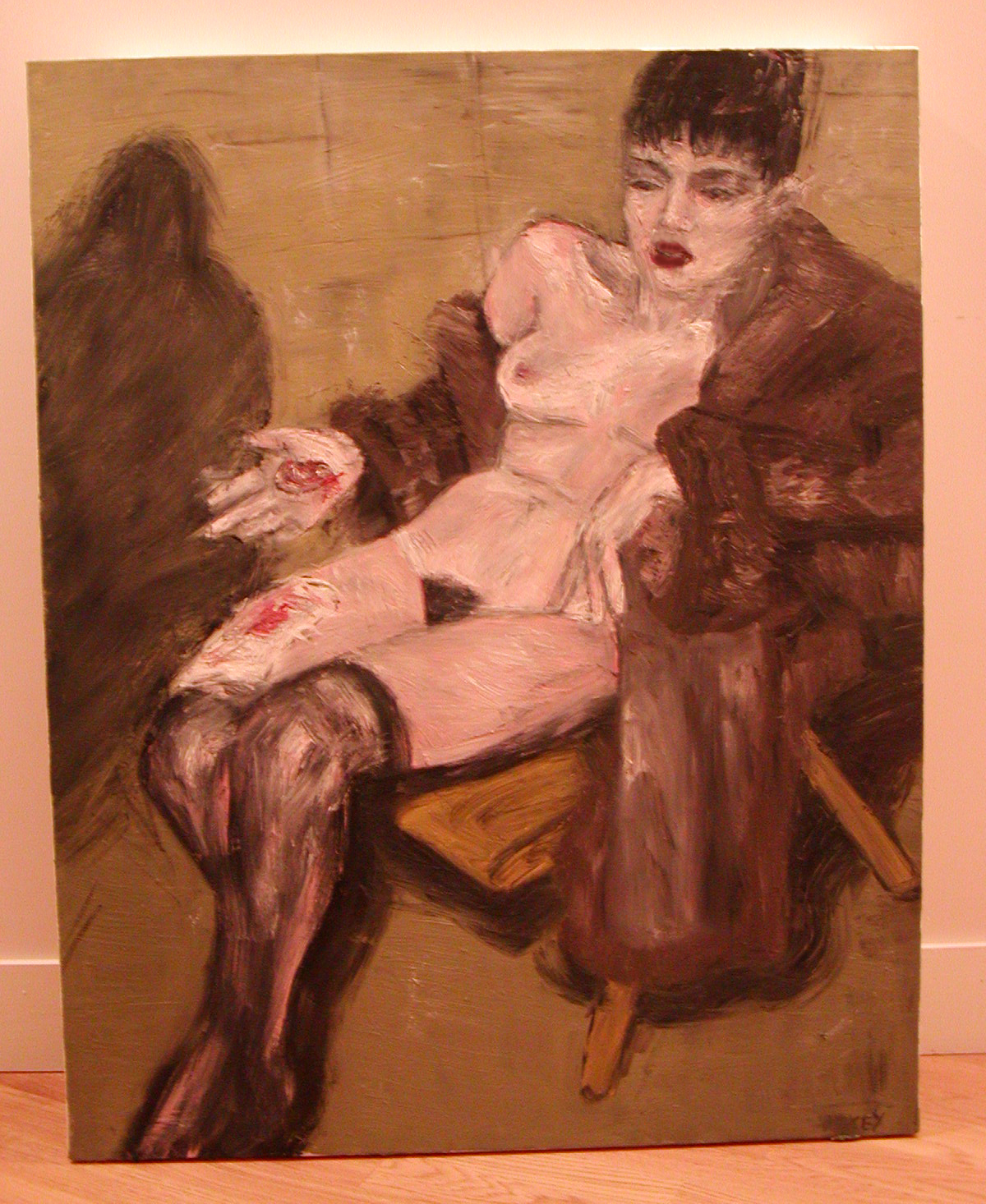
“It’s All In The Eyes” by Phillip Ward

Photo by Georgia Cruse

IT’S ALL IN THE EYES

it’s all in the eyes you know
that’s where language begins
all language begins there
you speak with your eyes
and then the rest follows
so does everything else
that’s where connection lies
it all begins within the eyes
speaking out with the words

Phillip Ward is a writer, poet, artist and photographer. Ward’s photographs and writings have appeared in an array of journals, magazines, books, and Internet, including The Purple Journal, Van Gogh’s Ear, The Chiron Review, The Onion, HX, Bent Voices, Priapus, and The Sentimentalist, and has participated in exhibits in New York City, London and Japan. Mr. Ward is the archivist and curator of the Crisperanto: The Quentin Crisp Archives (crisperanto.org) and executor of Quentin Crisp’s estate. Phillip Ward lives in Manhattan.

“In Praise of Surf” by Elizabeth Ayres

In Praise of Surf

At Point Lookout, Maryland, earth turns into a sharp needle, stitching St. Mary’s County into the Chesapeake Bay, and all along the beach, a snaky filament of white cotton surf tries to thread itself back into the needle’s eye.

These waves. Wind beating ocean’s drum skin thousands of miles away, wind switching on ocean’s lamplight, thousands of miles away, wind gifting itself to ocean’s embrace, thousands of miles away and precisely now, the energy that was wind, precisely and exactly here, the energy gifts itself onto the shore as waves of water, tumbling, surging. As waves of sound, crashing, dashing. As waves of light, throbbing, pulsing.

These waves. Even as they leave the bay for the beach, they depart the beach to return to the bay. The simultaneity of them. Not this coming then that going, but both together, coming and going, arrival and departure, the boundary between this and that, between then and now, blurring, in the swirling surf, blurring, in the watching woman, blurring, the waves and the woman, two tines of a tuning fork, struck, reverberating as one pure note. Call it eternity, or infinity, or forever.
Or call it love. On the way down to the beach, I passed a family out for a stroll. Mother, father, child. I asked the little girl, “Are you having a nice walk?” She replied, “I love my Daddy.” I thought, Out of the mouths of babes! Love is the answer to every question, a perpetuity of give and take, the child offering to me what she received from her father, the tumbling, surging surf offering to earth what it received from air, giving back to water what it’s taking from land. A triune transmutation of energy, endless in its duration, constant in its changeableness.

Yes, call it love, the surf, and hold fast to it through your days and nights. As you wake, with salty dream-fingers still clutching the pristine sand of your barely conscious mind. As you plod to the bathroom to brush your teeth, each footfall a transmutation of energy given to the floor from your body, from yesterday’s meals, last month’s crops and critters, last year’s sunshine, all of that now offered back to earth precisely and exactly here, in each shuffling footstep that echoes – doesn’t it? – the sibilant shuffling of waves on the shore.

In all your hours, hold fast to it. In the crashing, dashing cycles of grievance and forgiveness. In the throbbing, pulsing revolutions of mistake and rectification. In the comings and goings and arrivals and departures that crest, fold in on themselves, wash up onto your experience then wash back down into your memory, the boundary between this and that, blurring in the swirling surf, the boundary between then and now blurring, in the watching soul, the surf and the soul, two tines of a tuning fork, struck, reverberating as one pure note called eternity or infinity or forever or love, until all that surging, snaky filament threads itself back into the needle’s eye.

(Editors note: This poem originally appeared in Invitation To Wonder: A Journey Through The Seasons (2010 Veriditas Books)

Elizabeth Ayres, author of Invitation to Wonder, Know the Way, Writing the Wave and two Sounds True audio albums, is the founder of the Center for Creative Writing, now celebrating its 22nd anniversary.  Her award-winning newspaper column has been delighting Maryland readers for over four years. Elizabeth lives with two cats, and spends long hours pacing shell-strewn Chesapeake Bay beaches, plucking words from the soft salt breeze.  Her spiritual autobiography, Home After Exile, is forthcoming from Veriditas Books in 2013.

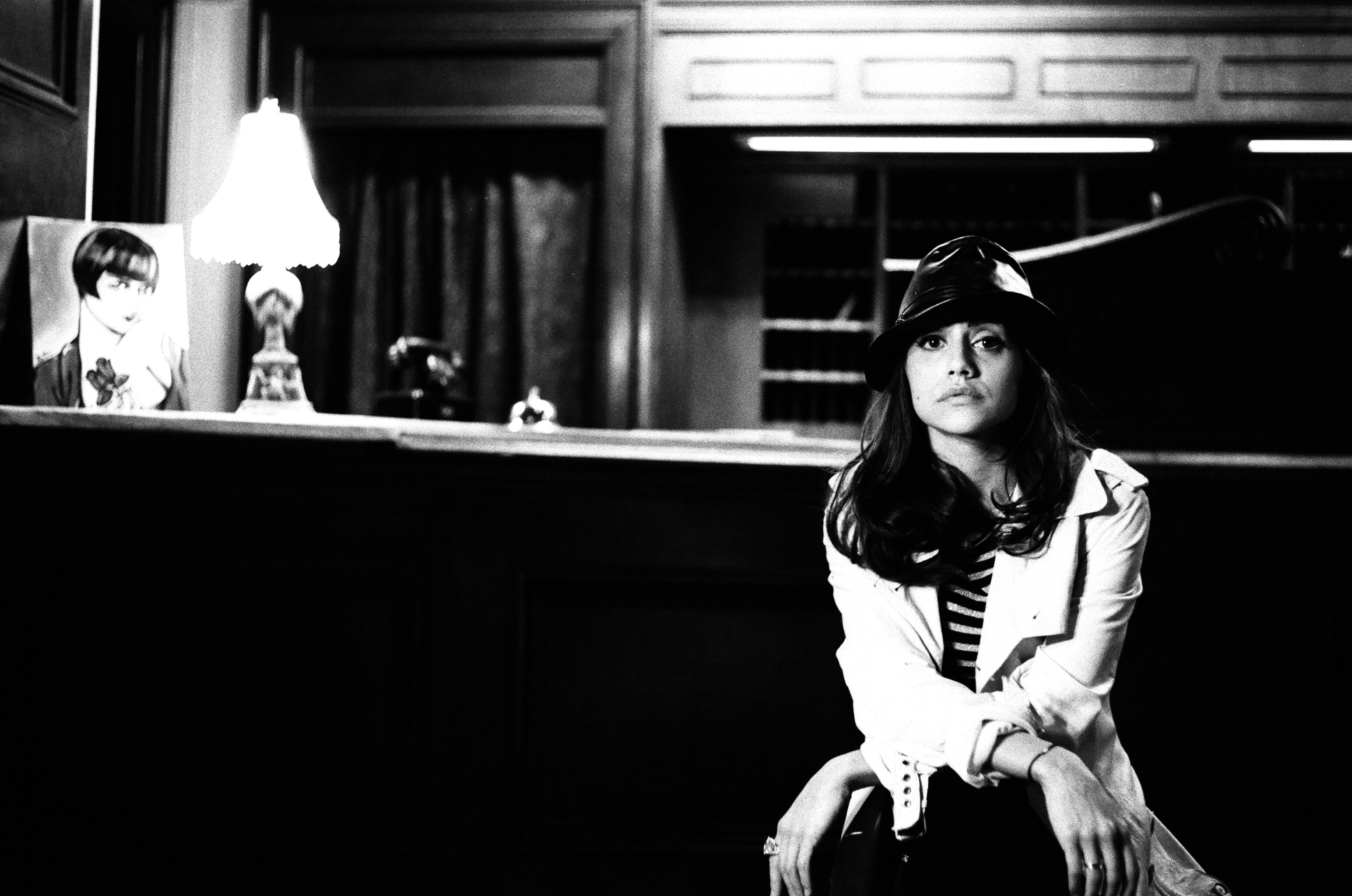
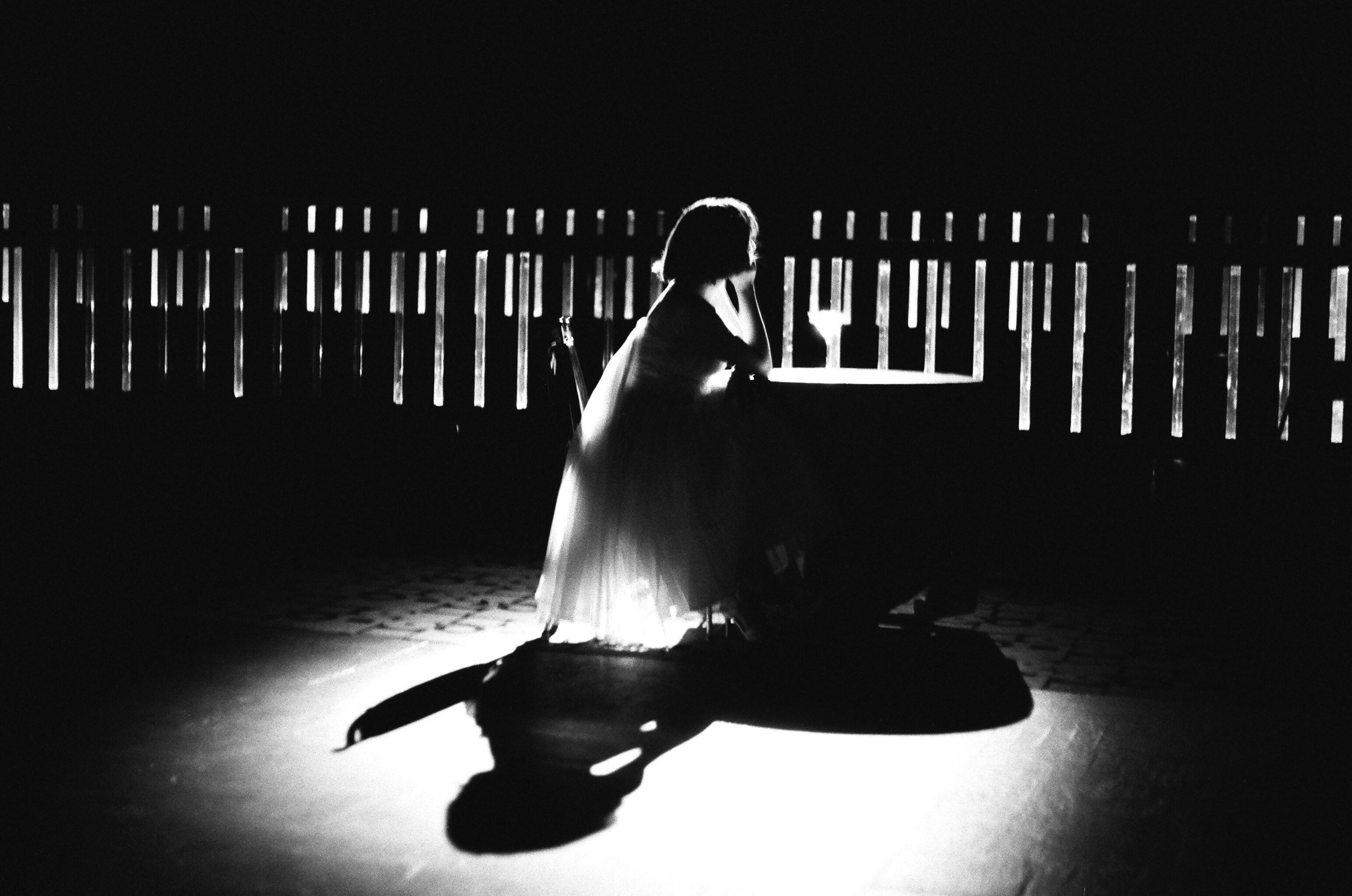
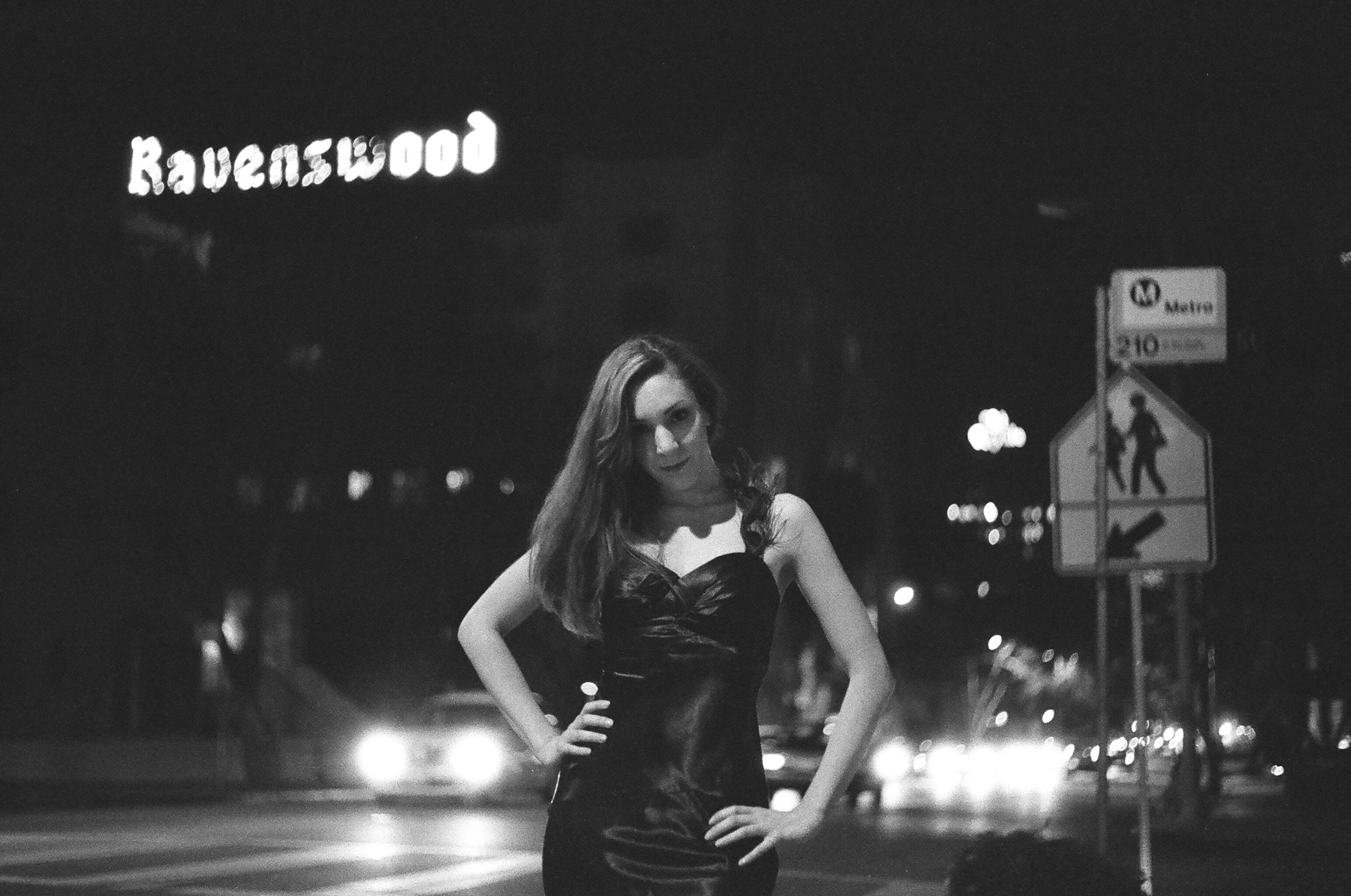
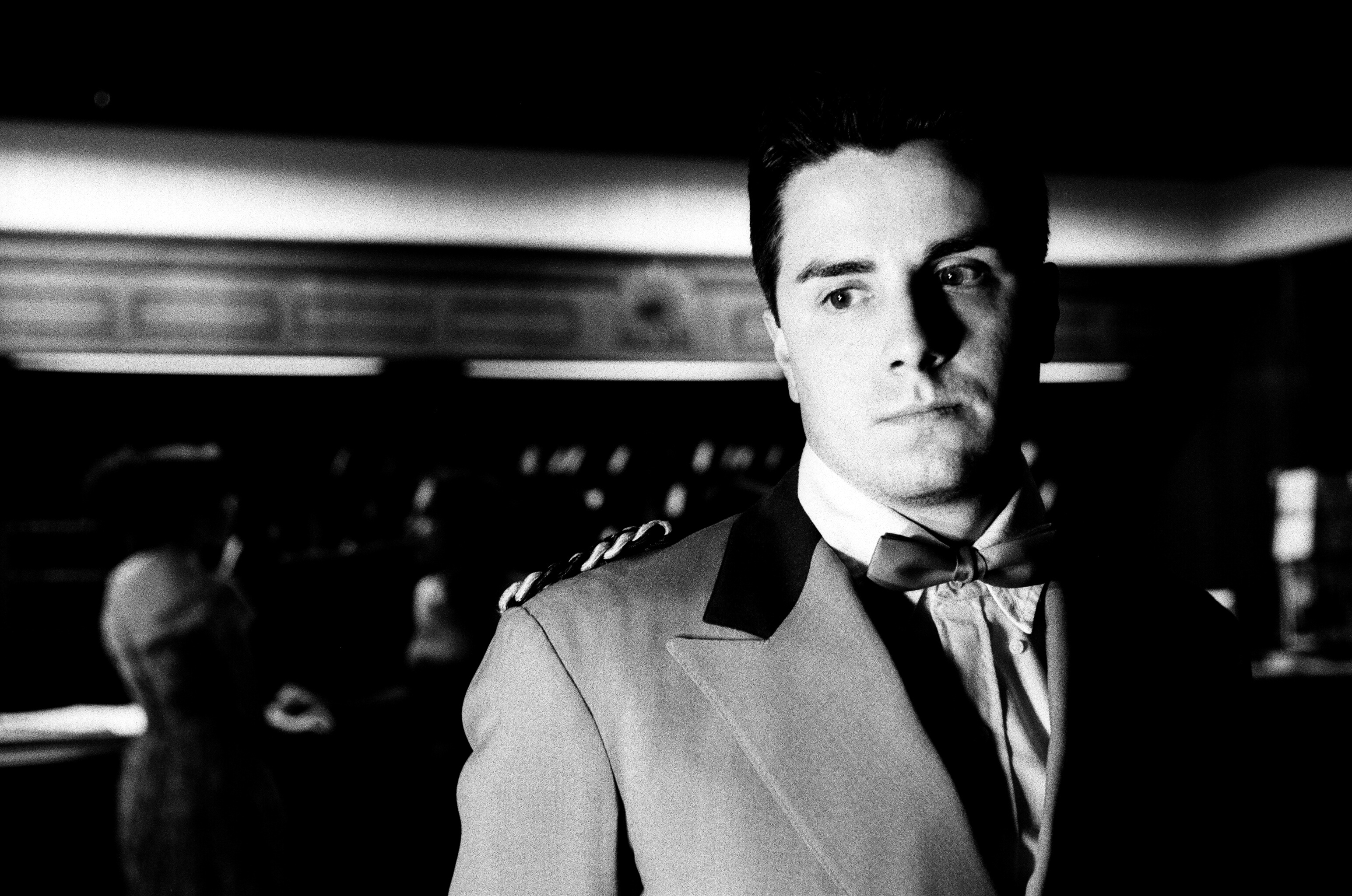
The photographs of Ray Ramos

Brittany Murphy

John Gilmore and Carolyn Blais on the set of Rosendo’s video Call Out To Me

The Phantom Lady of Coconut Grove

Rosedale Cemetery, Los Angeles

Vine Street, Hollywood

The Bellman, The Ambassador Hotel, Los Angeles

Ray Ramos is a native of Venice, California. He’s a writer, director and a photographer. He recently directed the, Call Out To Me, music video for Los Angeles singer-songwriter, Rosendo (featuring his friend, L.A. writer John Gilmore.) And will premier four of his original one act plays in a show called; To Love Somebody, in the fall of 2012 at The Raven Playhouse in North Hollywood, California. He still continues to lives in Venice and enjoys a cold beer (usually a Heineken) whenever possible.

http://www.thatmanray.blogspot.com/
 

Ray Ramos

“Dress Up” by Rae Armantrout

DRESS UP

To be “dressed”

is to emit

“virtual particles.”

The spirit of “renormalization” is that

an electron

all by itself

can have infinite

mass and charge,

but, when it’s “dressed”…

*

A toddler stares at us

till we look up.

“Flirtatious,” we call it.

She waits

until we get the joke

about being here,

being there.


Photo by Rosanne Olson

Rae Armantrout’s recent books are Money Shot and Versed, both from Wesleyan University Press. Versed won the 2010 Pulitzer Prize for Poetry. A new collection, Just Saying, is forthcoming from Wesleyan in Feb. 2013. Armantrout teaches writing at UC San Diego.

Portrait Artist Darrel Bevan

Self Portrait

Marilyn Monroe

The Joker, Jack Nicholson

Marlon Brando

Laurel and Hardy

I am a portrait and figure illustrator, specialising in pencils. Colourblind, I focus mainly on black and white images. In my portraits, I attempt to capture reality whilst retaining the freshness of my chosen medium. My figure drawings often explore the contrast of beauty and distortion, and I have a particular fascination with the organic form.

I’ve been drawing, and drawing people, since I was able to hold a pencil. Why? I think drawing was and is a way to control something in my environment, to have some measure of control in a world that is out of control. But why people? And why faces? Well, I’ve always been obsessed by why we are here, why I am here, how man evolved, how we fit into our world, the physical manifestation of personality, physiognomy and expression. I just see people and want to draw them. So I do.

I came out of higher education with a Btec Diploma and an honours Degree, but these were in Three Dimensional Design and Ceramic Sculpure respectively. Drawing is something I always did in my spare time. I have taught in various schools and colleges around the West Midlands and also in Cornwall, including the Eden Project.

https://www.facebook.com/DarrelBevan

Gollum

Clint Eastwood

Aborigine

Boris Karloff Frankenstein’s Monster


Lyn Lifshin’s “Allen Ginsberg Gives Me a Rose at Art Park, Just Buffalo, Schuper House, June 8, Near Buffalo”

ALLEN GINSBERG GIVES ME A ROSE AT ART PARK, JUST BUFFALO, SCHUPER HOUSE, JUNE 8, NEAR BUFFALO

it wasn’t the first time we met. I’d been

at his place in the East Village with another

writer who refused to believe it

wasn’t safe after dark, insisted we

stroll thru garbage strewn streets at

midnight, not call a cab. Another

time I wish I’d taken a camera or

kept notes, a diary on the places I

read, kept a photo in my head. Those

years it was as if I lived from suitcase to

suitcase, came home only to pack

again. I wrote Glad Day after that trip

or another one like it. I was happy

to be reading with Ginsberg tho I

hardly see myself in the line of the Beats,

never understand why others do. It

was probably a couple of years later,

reading outside in the park. For some

reason I remember standing around for

hours, driftwood colored bleachers.

None of this might be true. I remember

little about the reading: the size of the

audience. It must have been hot. I

know someone brought cold drinks

finally and we all ran toward him. More

than anything I remember Allen Ginsberg

gave me a rose, a beautiful red one,

or was it white? No, it must have been

red because when I carried it thru the air

port gingerly as if I was balancing a

rose of diamonds and glass, everyone

turned and said what a beautiful

and so sweet. Of course it wasn’t the

rose but the Tea Rose perfume I was

wearing. Since the rose came from

Allen Ginsberg I wanted to preserve

it, coated it with dripped candle wax

but it didn’t work so I put it in

plastic, pressed it into the heaviest book

in the house, a folio edition of Shakespeare,

all petals pressed into William’s words

(Editor’s Note: This poem originally appeared in Lyn Lifshin: All the Poets Who Have Touched Me/Desire
Edited by Paul Kareem Tayyar)
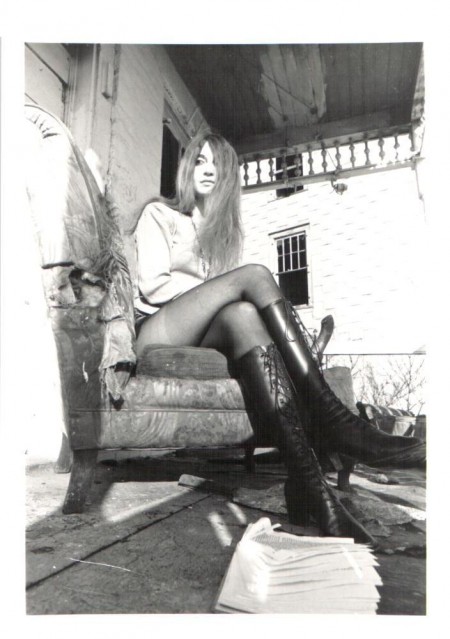
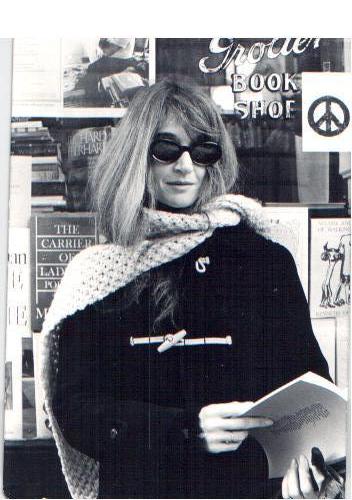
Lyn Lifshin’s prizewinning book (Paterson Poetry Award) Before It’s Light was published Winter 1999-2000 by Black Sparrow Press, following their publication of Cold Comfort in 1997. The Licorice Daughter was published in February 2006 and Another Woman who Looks Like Me was published by Black Sparrow-David Godine in October 2006. (order@godine.com) Also books include A New Film About a Woman in Love with the Dead, March Street Press, Marilyn MonroeWhen a Cat DiesAnother Woman’s Story,Barbie Poems, The Daughter I Don’t HaveWhat Matters Most, and Blue Tattoo. Lifshin has won awards for her non-fiction and edited four anthologies of women’s writing includingTangled VinesAriadne’s Thread and Lips Unsealed. Her poems have appeared in most literary and poetry magazines. Her poem “No More Apologizing” has been called “among the most impressive documents of the women’s poetry movement” by Alicia Ostriker. An update to her Gale Research Projects Autobiographical Series, “On the Outside, Lips, Blues, Blue Lace,” was published in Spring, 2003. Texas Review Press published her poems about the famous, short-lived, beautiful race horse, Ruffian: The Licorice Daughter: My Year with Ruffian. New books include MirrorsAugust WindNovemberly and just out spring 2008, 92 Rapple Drive and Desire. She is working on a collection about poets,Poets, (Mostly) Who Have Touched Me, Living and DeadAll True, Especially the Lies will be published by World Parade and Tsunami will come from Blue Heron Press. Other forthcoming books include a book about the courageous and riveting race horse, Barbaro: Beyond Brokenness from Texas Review Press, Nutley Pond from Goose River Press, Lost in the Fog from Finishing Line Press, Persephone from Red Hen. For interviews, more bio material, photographs, reviews, a contact, interviews and samples of her work, browse this website: www.lynlifshin.com.


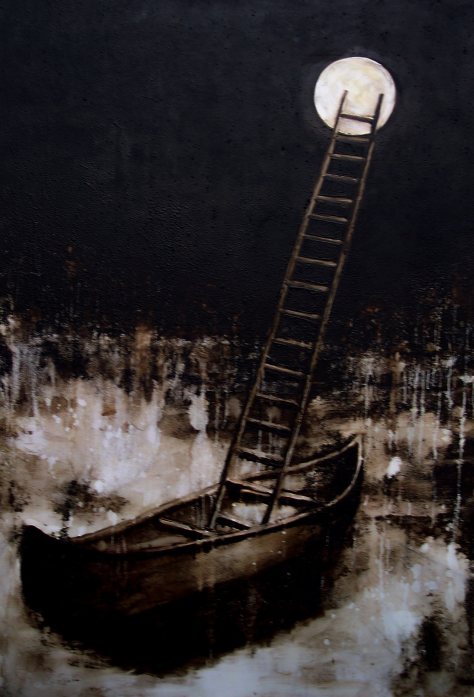
“Sisyphus Commemorates Labor Day” (Poem & Paintings by John Sokol)

Departure

SISYPHUS COMMEMORATES LABOR DAY

Today’s a holiday: not that I have it off,
or get time-and-a-half or anything,
but I do have a few minutes
to scribble some thoughts.

In the past, during times like this,
I’ve tried to get Ixion’s spin on the situation,
but he’s no help, nor is Tantalus,
who’s always grasping for straws.

I don’t even know why I confide in them.
They, too, are masters and slaves
of the same-old-same-old.

But I’ve been up this hill before. I know all the scars,
pits and protrusions of this pet rock I’m sitting on.
It’s my life. Up, I push. Down, it rolls.

And it’s all so pointless.
I’d rather be stamping out license plates,
or picking up trash on some highway to heaven.

All I ever get from Ixion and Tantalus
is “misery loves company.” When they put on their
woe-is-me faces and start to giggle, I yell over,
‘remember: “one man’s floor is another man’s
ceiling.”’ And they yell back, “it’s the other
way around, stupid.”

But I remember the day this whole place shut down.
It was the day Orpheus came down to fetch Eurydice.
He played his lyre for Pluto, and that old man
started crying like a baby. Persephone plied Orpheus
with pomegranate vodka and eau-de-Lethe chasers.
The birds went silent, and the rivers stood still.
No one spoke, and picket signs went up everywhere.

It didn’t last long, though. C’est la vie, et c’est l’enfer,
as everyone here likes to say.
Most days life seems pretty good. After all,
we’re most comfortable with what we know,
and what we know, is: things could always be worse.
Here, we’re just grunts for the absurd, proletariats of the futile.
And now, we have to get back to it,
because, somehow, there must be
a purpose to what we do.

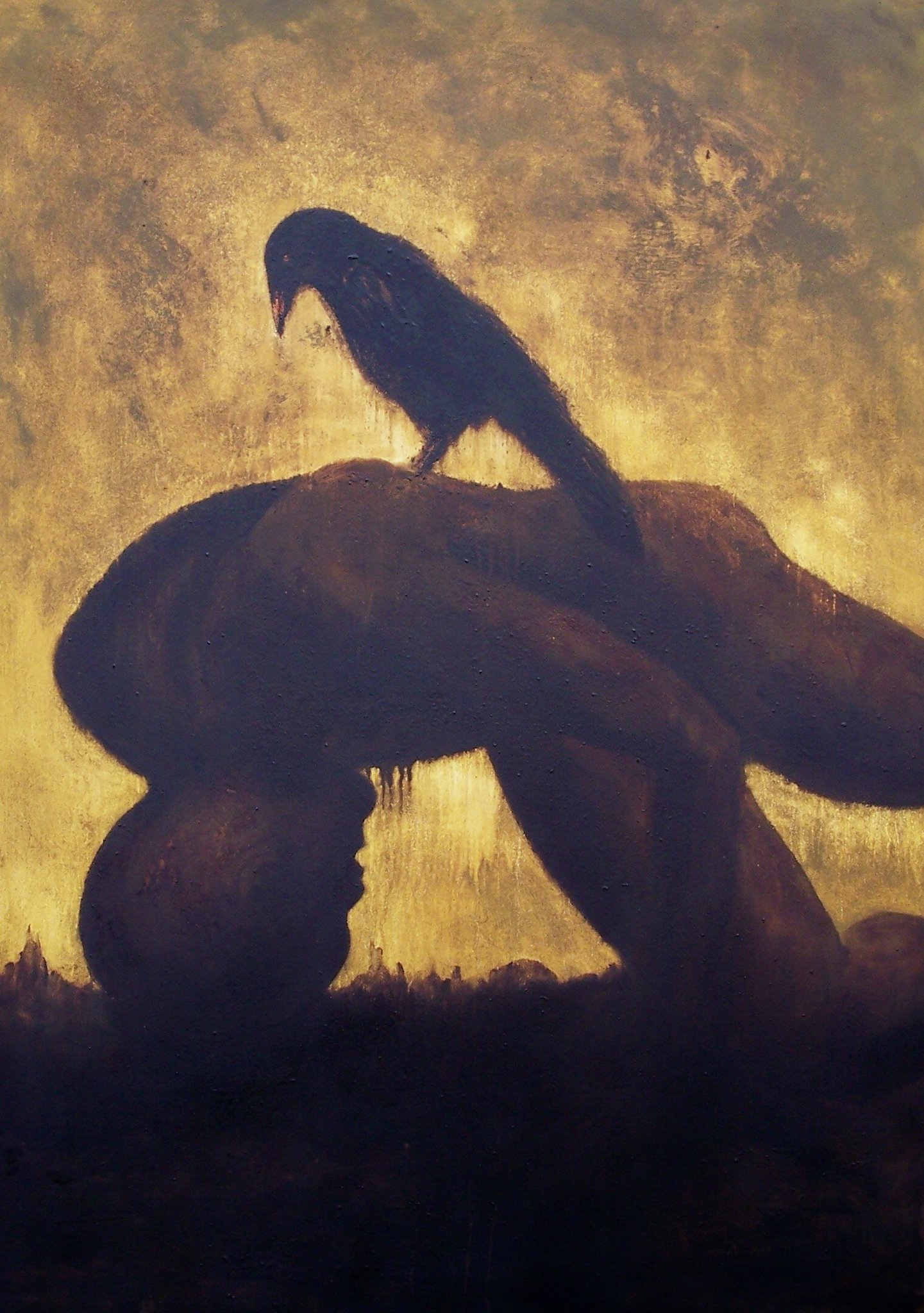
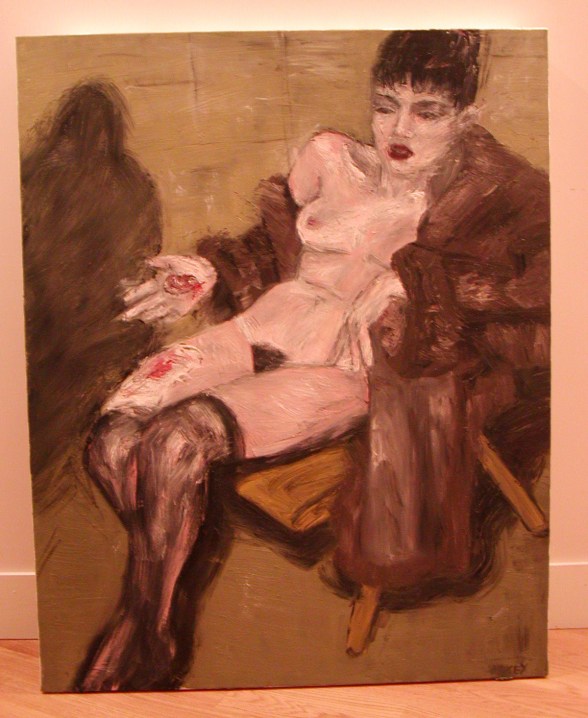
John Sokol writes and paints in Akron, OH. His paintings and drawings are included in many public and private collections, His poems have appeared in America, Antigonish Review, The Berkeley Poetry Review, Georgetown Review, New Millennium Writings, The New York Quarterly, and Quarterly West, among others. His short stories have appeared in Akros, Descant, Mindscapes, The Pittsburgh Quarterly and other journals. His chapbook, Kissing the Bees, won the 1999 Redgreene Press Chapbook Competition. In the Summer of Cancer, a full collection of his poetry, and The Problem with Relativity (short stories) are his latest books.

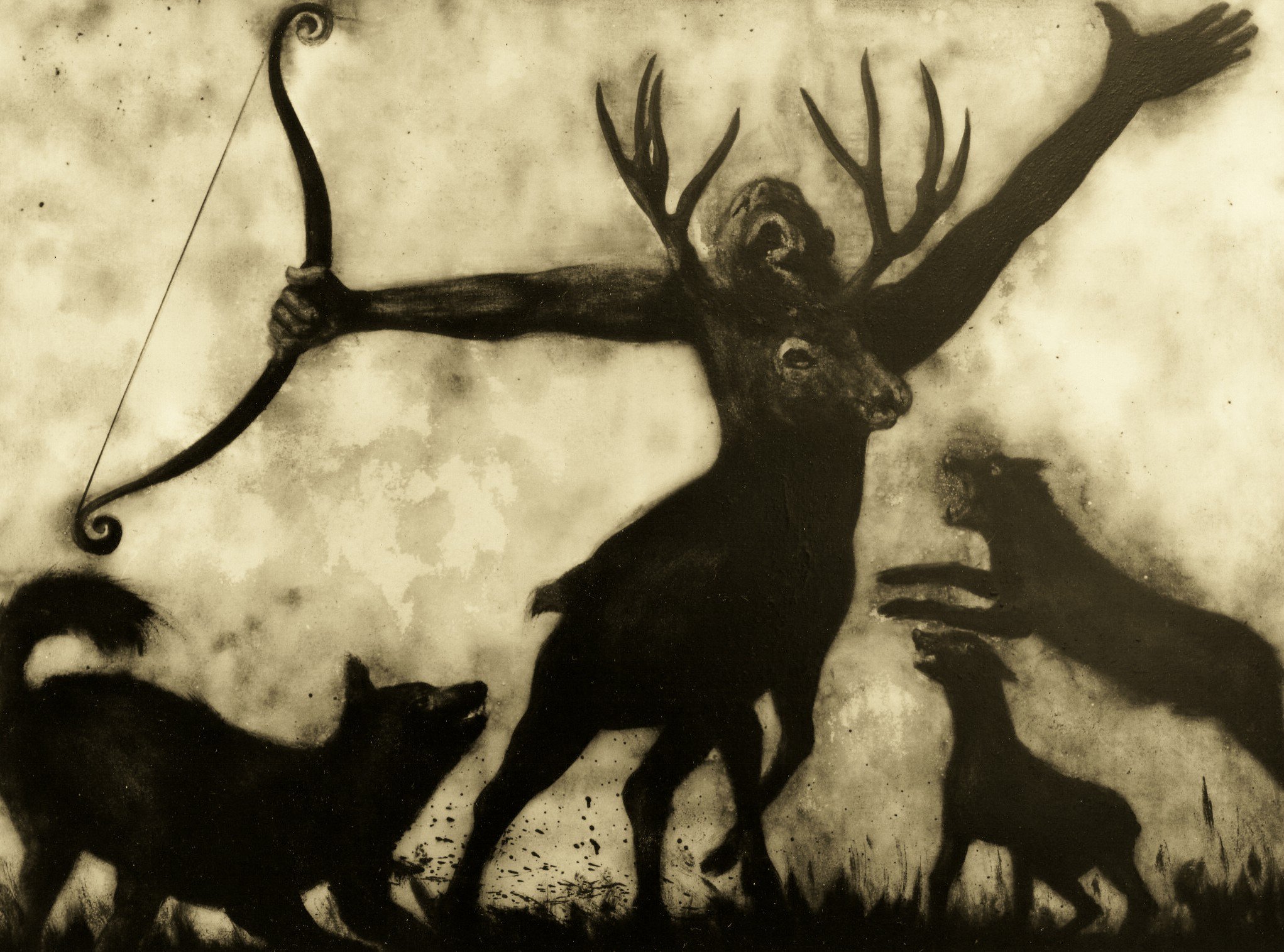
On the Road Perilous

Transformation of Actaeon into a Stag

Guardian

“Buckle Box” (Prose by Trent Zelazny)

BUCKLE BOX

Deacon sat in the waiting room pretending to read a magazine as the clock ticked and tocked on the wall overhead.  He looked at the words and looked at the pictures but none of them actually entered his mind.  His attention was on the door and the room that was behind it.  The door with the nameplate saying J.C. Braddock, the name of the man who owned the building and the company within it and who also owned Deacon, in a manner of speaking.

When Mike Dominguez found him twenty minutes earlier, he said that Braddock wanted to see him.  Deacon knew it couldn’t be good.  The boss hardly ever called him into the office.  The few times he had in the past, he had yelled and thrown things.  So Deacon wasn’t too keen on going inside.

He’d been sitting here fifteen minutes already.  Just long enough to wonder and worry and let his thoughts run away.  There were no windows in the waiting room, nor were there any pictures hung, and the clock on the wall was like no other clock.  Its ticks and its tocks were a mechanical pulse pumping perpetual pangs to his heart.

The door opened.  It was Dominguez.

“C’mon in, Deacon.”

Deacon folded the magazine and set it aside.  He got up and followed Mike into where J.C. Braddock, thin, sallow and balding, with a glass of brown liquid trembling in his hand, sat behind his desk, looking just like he always looked.

“Have a seat, Deacon.  Right there is fine.”

Deacon sat in one of the two puffy chairs.  Mike sat down in the other.  The office was much nicer than the waiting room.  There were colors in here, things on shelves and windows with sunlight.  It was nice to be here after being where he was, and Braddock’s ashen face showed no signs of yelling.

“How have things been?”  He sipped his brown liquid.

“Good as good can be.”

“That’s good, that’s good.”  He drank more liquid.  “You still like what you do?”

“Sure.”

“You’re not tired of Illusion Aerosol yet?”

“Not enough that anyone would notice.”

Braddock smiled.  His teeth were yellow.  The two had known each other since school days.  They’d never been friends and never cared to be.  At a high school party they’d had a drunken brawl and Deacon had won but suffered concussion.  He still had minor problems with movement at times, and occasionally his mind struggled.

J.C. had married into money.  His wife had inherited the family business.

Mopping floors was all Deacon knew how to do.

J.C. Braddock gave Deacon his job.

In a manner of speaking, Braddock owned Deacon.

Braddock pushed back from his desk just enough to give room, then bent and lowered and came back up and when he did he held a box and he placed it on his desk.

“Today’s a special day, Deacon.  Do you know what today is?”

“No, sir, I don’t.”

“It’s my tenth anniversary.”

“Congratulations.”

“Ten years today I’ve been married to my wife.  You were married once, weren’t you?”

“Yes, sir.”

“And what happened?”

“She died.”

“That’s right, yes, I’m sorry.”  He took another sip and looked at Mike Dominguez, who was sitting there quietly.  “Anyway, I’ve been planning things all week.  Different kinds of things to celebrate this day, you know?”  He pointed at the box he’d put on the desk.  “This is one of the things I’ve planned.  It’s a gift, one of many, but this one is extra special.”  He lifted a lid on a different box and took out a cigar and put it in his mouth.  He struggled with a match.  “You run errands for me from time to time, don’t you?”

“I have in the past.”

“That’s fine, just fine.”  He puffed up smoke and then changed the subject.  “Do you still sing?”

“I haven’t for a while.”

“I remember you having a great voice.”

“Thank you.”

“That was a long time ago, I know, I know.  You used to sing that old love song.  You remember the one?”

“‘How Deep is the Ocean’.”

“Yeah, that’s right.  That’s the one.  Man, you were as smooth as Sinatra.”

“Thank you.”

Braddock looked at Mike Dominguez again.  Dominguez sat with one leg crossed over the other.  Deacon kind of wondered why the guy was here at all.

Braddock puffed his cigar and then drank some drink.  He straightened up a little and smiled.

“I want you to run an errand for me, Deacon.  Can you do that?”

“Yes, sir.”

“It’s not a standard errand, mind you.  This one requires a little more instruction and a little… bravado.”

Deacon shifted his weight around in his chair.  “What would you like me to do?”

Braddock pointed to the box he’d placed on his desk.  “This box is a gift.  It’s a gift for my wife.  One of several anniversary gifts.”

“It’s a nice box.”

“Yes, the box is nice, but the gift is inside.”

“What is it?”

“I can’t tell you that.  I tell you what’s in it, you might let it slip.  Then it wouldn’t be a surprise, like I want it to be.  You see this here?”  He pointed to the box.  It was a small red leather box, about the size of a book; but what he pointed at was the feature on the box’s exterior.  A strap that crossed from the bottom to the top and on the top was a brass latch with a tiny keyhole.  “You can only open it if you have the key, but there’s a catch to the whole thing.  The box is useless, really.  The leather is fake and the wood underneath is mostly sawdust and wax.  I have the key right here in my pocket.  Thing is, the lock is set so it can only be opened once.  When the latch is undone, it’s broken forever.”

“You should take it back to wherever you got it.  Sounds like they gypped you.”

Braddock smiled at Deacon then smiled at Mike and then emptied the glass he’d been sipping at.  “No, I wasn’t gypped.  The box is made that way on purpose.”

“Seems a silly thing to make on purpose.”

Braddock kept on smiling and poured himself another drink.  Deacon didn’t see where the bottle had come from.  “All right, okay,” he said.  He drank and then crossed his arms and placed them on the desk.  “I’ll let you in on a bit of the secret.  Promise you won’t tell anyone?”

“I wouldn’t know anyone to tell.”

“Okay then.”  He leaned a bit closer.  “The box is sort of a gag gift, Deacon.  There’s a reason once it’s closed it can only open once.”

Deacon edged a bit closer and squinted at the box.

“You know those party poppers?  Those little plastic champagne bottles with confetti inside?”

“The kind where you pull the string and it shoots like a canon?”

“Exactly, yes.  This box here”—he nudged it a bit closer for Deacon’s benefit—“it’s a lot like one of those.  A little fancier, yeah, and instead of pulling a string you turn the key.  The bottom of the box stays in tact but the top explodes in a shower of flower petals and confetti.”  He slid the box across the desk.  “In the bottom part is a very special gift for my wife.”

“How’d you get it in there with all the confetti and stuff?”

“I had it specially made.”

Deacon moved closer and studied it.  It was impressive craftsmanship.

“It’s just about lunchtime,” Braddock continued.  “Would you like to make a hundred dollars on your break?”

“What, exactly, do you want me to do?”

“Just a simple errand.  My wife should be at home.  I thought it would be really romantic if you could deliver this box to her.”  He drank some more and put out his cigar.  “But I wonder if you could maybe do it sort of like, you know, a singing telegram.”

“Aren’t there places you can call that do that?  I don’t sing much no more.”

Braddock frowned.  “Well, sure, I could call someone, but I thought of you first.  Seems anytime I hear about you, you’re struggling.  I figured it could be a quick little side job to make some extra money.”

“Well then, thanks for thinking of me, I guess.”  Deacon had worked here fifteen years.  In that time he’d never gotten a raise unless the law required it.

“So how about it?  You can take off for lunch early.  Just go to my house and when my wife answers, you sing her that song you’re so good at singing…”

“‘How Deep is the Ocean’.”

“Yeah, you sing her that, and when her eyes are all teary and the song’s almost done, unlock the box and she’ll jump.  Then she’ll be showered in flowers and confetti and you can hand her the box so she can see her gift.”

“That’s really sweet,” Mike Dominguez said.

“Just remember when you give it to her,” Braddock went on, “tell her it’s a gift from her loving husband, and our special day has not even begun.  By the end she’ll be breathless.  Can you remember all that?”

Deacon repeated this last part and Braddock seemed satisfied.  Braddock reached into his pocket and took out a small key and a hundred-dollar bill.  He slid both across the desk, next to the box.

“Thanks, Deacon.  I knew I could count on you.  I can always count on you.”

Deacon stood up and put the key and the money in his pocket and picked up the box and made his way to the door.

“You can take a long lunch, if you like,” Braddock told him.  “Aw, hell, take the rest of the day off.  I really appreciate what you’re doing.”

“You’re welcome,” Deacon said.  “And thank you.”  He stepped out of the office and was back in the waiting room.  He could no longer hear the tick-tock of the clock.

Back inside the office Dominguez poured himself a drink while Braddock stared at the door.

“Asshole,” he said.

#

Outside the street was lined with other buildings.  People hurried this way and that, heading to lunch or on errands of their own.  Deacon moved among them with the box under his arm.  Cars, horns, footsteps and voices, all of it white noise at the highest decibel.

A hundred dollars.  That was real money.  He hadn’t made that much for doing so little ever in his whole life.  Cora would have been proud of him.  She would have smiled and kissed him and said what she always said.  She always told him he had the potential to be a polymath, if only he’d focus and worry less.  She always told him he could excel in anything if he’d just allow himself the chance to do it.  Like singing.  She always loved when he sang and he loved to sing, and people always told him how good he was.  When he had the nerve to do it.  He hoped he’d have the nerve today.  It wouldn’t be worth a hundred dollars to Braddock or anyone else if his worry grew up to fear and fluttered his heart and tremored his hands and rubbered legs.

But there was nothing to fear.  Braddock’s wife would be so surprised that she wouldn’t even be listening to him.  She’d know there was a song and that would be enough.  Her attention would really be on the fake red leather box that was tucked under his arm.  The box with the gag-gift lock on it.  The gag-gift buckle box.  He knew about the confetti and the flower petals, but wondered what the actual present was.

After ten minutes of walking the buildings thinned out.  Trees sprouted up and the sidewalks turned grass.  A dog barked from an enclosed yard, and Deacon stopped and put his hand in his pocket.  He double-checked that the key was still there.  It was, and so was the money Braddock had given him.  Satisfied, he continued walking.

A couple minutes later he arrived at the house.  He cleared his throat and tried to find the proper singing key and took out the box key and rang the doorbell.  He held the box out in both hands like an offering, then stood there, waiting.

No one came to the door.  After a time he rang the bell again.  He waited again, but nobody answered.  He sighed and tucked the box back under his arm.  The neighborhood was lovely and the day was stunning.  He rang the bell one more time and when no one answered, he walked to the street and thought what to do.  He didn’t want to let Braddock down.  If it wasn’t for Braddock he wouldn’t have a job.  Cora had been the moneymaker, but now she was gone and it was Braddock who helped him.  Maybe they never much got along, but Braddock could have let him rot.  He didn’t, though; he gave him a job, and when Cora died and he lost his home, Braddock gave him a home in the building’s basement.

Another waiting minute and he walked away.  The grass paved over and the trees shrank, and five minutes later the town was a town again.  All the time he walked he thought about things.  He remembered the man from years and years ago, who asked if he could record Deacon’s voice.  They stood in the man’s living room and the man played piano and Deacon sang along with it.  On a table between them had been a recorder, a little portable cassette player that picked up the piano and his voice, and played them both back as a song.

They didn’t much make tape recorders anymore.  On the other hand, it had been a long time since he’d bothered to look for one.  Around the next corner was a pharmacy and drugstore.  Deacon went in and found a few shelves of electronics.  To his surprise they carried a small black boom box with a CD player and cassette recorder.  They also had blank audiotapes.  Not very many, but he only needed one.  Both things together cost less than twenty dollars.  That was okay; he’d still made more than eighty for such a simple job.

He carried it all back to Braddock’s house and set everything down on the porch.  He rang the doorbell again and waited.  Just like before there was nobody home.  He put the buckle box aside and opened the recorder and opened one of the blank audiotapes.  There was a socket in the wall and he plugged the boom box in and then opened the cassette tray and put in the tape.  He looked around to make sure he was alone, then he pushed the button that began the recording.  He gave it a moment, counting in his head, and when the rhythm seemed right he began to sing.

It felt good to sing, and he sounded pretty good, at least to himself.  He closed his eyes and imagined he was singing to Cora.  He loved the way she looked, starry-eyed and smiling as he sang about love.  There was no fear for him then.  Only the music.  The soft gliding music.

When he came to the end he took a brief pause.  Then, keeping his voice in the tone of the music, he said the message Braddock told him to say.

He stopped the recorder and smiled.  He felt good about himself and what he’d just done.  When Braddock learned that his wife wasn’t home, he’d be impressed with the plan that Deacon had constructed.  He rewound the tape then set the stereo and the buckle box so Mr.s Braddock would see them but no one on the street could.  He put the little key on top of the buckle box, then gathered everything else and was about to walk away when Mrs. Braddock pulled into the driveway.

For a moment she seemed skeptical, but then she lit up like a low-watt bulb and said, “Is that you, Deacon?”

“Yes, ma’am.”

“How are you?  What brings you here?”

He looked at the stereo, the box and the key.  The recording was useless now but that was all right.  Now he could do what he’d been asked to do, and this way he could also take the boom box with him.

“I’m afraid our timing didn’t quite mesh.  I understand today is your anniversary.”

“Oh, you were sent by J.C.”

“Yes, ma’am.”

“Isn’t he the best, and aren’t you a peach?”

“Thank you.  I’m supposed to surprise you with a special delivery.”

“You are too much.”  She wrinkled her nose and smiled.  “Tell you what.  I’ll go inside and then you ring the bell.  We’ll forget this part of our meeting ever happened.”

“All right, sounds good.”

Mrs. Braddock went to the front door.  As she unlocked it, she saw the stereo and the buckle box.  Her eyebrows were question marks and she pointed and smiled.

Deacon nodded.

“Too much,” she said, then went inside.

Deacon cleared his throat and found his pitch.  Then he picked up the box, pinched the key between his fingers, and rang the doorbell.

A moment went by and she opened the door and the moment she did he began to sing.  Her face lit up again.  Tears filled her eyes.  She clasped her hands with joy in front of her.

Deacon watched her as he sang, and the more he watched her the more she looked like Cora.  He loved the way she looked, starry-eyed and smiling as he sang about love.  His dear wife, Dear Cora.  There was no fear for him.  There was only music.  With his Cora there was never anything but music.  The soft and gliding, passionate music.

She stepped back and he stepped in.  The distance between them closed.  They stood in the foyer and the door drifted shut.  The foyer was small but they both still had room.  He held up the box like a man holds a ring.  He held it as if he were proposing again, asking Mrs. Braddock, asking Cora to spend her life with him.

He slid the key in the slot and finished the song.  She was starry-eyed and smiling and he turned the key.  There was a pop, like opening champagne.  The top of the box exploded, just like Braddock said it would.  But there weren’t any flower petals.  There wasn’t confetti.  There was a bitter-almond smell that came fast and hard.  The sight of Mrs. Braddock gasping for air and collapsing in seizures.  His own heart and breathing and nerves went berserk.  Weak and confused and sick to his stomach, he fell down, too, twitching beside her.  And then he wasn’t breathing, and everything went black, and then he passed out.

#

J.C. Braddock was plenty drunk.  He usually was by this time of day.  For the past few hours he’d gone over his story again and again.  Drunk or sober, he could repeat it backwards.

He had sent Dominguez to the store for another bottle.  The one he had was nearly gone.  Now, at least, it should all be over.  That needy bitch should be gone from the earth.  Ten years to the day and now he could breathe.  And good riddance Deacon, half-wit bastard.  Two birds with one stone, in a manner of speaking.  He knew how they both acted and knew what they’d do.  She was a backer, he was a pacer, and the front door never stayed open on its own.  Just stick to the story and go through the motions, and then he could enjoy life once again.  And this time he could enjoy it with money not attached by strings.

Someone knocked at the door.  Dominguez with his bottle.

“Yeah, come in.”

But it wasn’t Dominguez.  It was three men who entered.  One wore a suit.  The others wore uniforms.

“Jason Carl Braddock?” the suited man asked.

Petals of ice opened up in his stomach.  “Yes?”

“Would you come with us, please?”

“Why?  What’s going on?”

One of the uniformed men walked around the desk with handcuffs.

“You’re being charged with the double murder of your wife and Deacon Jennings.”

“What?”  Never in a delirious nightmare had words sounded more savage.  This one direct statement contained more hell than the dark forms and faces that broke him apart each and every night at bedtime for the last ten years.  “Impossible.”  He looked back and forth at the expressionless faces.  “There’s some kind of mistake,” he said, metal clicking around his wrists.  “There’s gotta be a mistake.  This is nuts.  I’m sure whatever’s going on, there’s a simple explanation.”

“Agreed,” the suited man said.

When they put him in a squad car he saw Dominguez in another.  On the way to the station he rearranged his story to fit it with the unexpected turn, but the story fell apart before it even got started.  He was able to argue that anyone from the company could have obtained the hydrogen cyanide, and sure, Dominguez was the chief mechanical product engineer.  He could have certainly rigged up a box to trigger and release that amount of gas.  Yes, even at a concentration of 3500 PPM.  Anyone in the company could have done it.  Hell, Deacon could have done it.

“The janitor?”

“Well, you tell me.  He was there.”

“Yes, he was.”  The suited man nodded at the one-sided mirror.  Then the door opened and an officer came in carrying a black boom box.

“What’s all this?”

“A voice from beyond,” the suited man said, then nodded to the officer, who plugged in the stereo and pressed play on the tape deck.

There was the sound of a throat clearing, then a voice like an amateur Sinatra began to sing “How Deep is the Ocean,” and the room became full of watchful intentness.

Braddock sat, unmoved, for the entire length of the song, guilt shrieking out in the form of sweat.  With all eyes on him, all ears on the music, his heart rate increased and his hands started shaking, until, finally, the song came to an end.

“This is insane,” Braddock said.

“Wait,” the suited man told him.  “There’s more.”

A couple seconds of audio hiss slithered throughout the room, turning the stuffiness to a noxious gas.  Then, in a sweet and sonorous voice, Deacon spoke again from the past.

“Hello, Mrs. Braddock, this is Deacon Jennings.  I work for your husband, and he asked me to bring you this delivery of love.  Your not being here kind of spoils it a little, but he’d asked me to sing you that song, and to present you with this gift, which I will leave here with this stereo and recording.  I can get the stereo later, or you can keep it, I guess, if you want.  He said it’s a gift to you from your loving husband, and your special day has not yet even begun.  By the end, he hopes to leave you breathless.  Gosh, heh, I lost my wife.  You’re lucky, Mrs. Braddock.  You’re lucky to have someone love you so much.  This key here I’m leaving.  It goes to the little latch.  Be careful when you use it.  Your husband said the box could only be opened once.”

Braddock drew a breath and closed his eyes.

“Asshole,” he said to himself.

Trent Zelazny is the Nightmare Award-winning author of To Sleep Gently, Fractal Despondency, Shadowboxer, The Day the Leash Gave Way and Other Stories, Destination Unknown, A Crack in Melancholy Time, Butterfly Potion, and the soon to be released Too Late to Call Texas. He was born in Santa Fe, New Mexico, and has lived in California, Oregon, Arizona, and Florida. He is currently back in Santa Fe. He also loves NBA basketball.