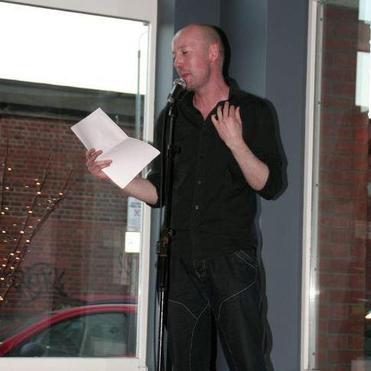
George Korolog is a poet living in Woodside, California. He works in the left hemisphere of the world with a right hemisphere brain. Somehow, he makes it work. His poetry, flash fiction and non-fiction have been widely published in over forty print and online journals such as Word Riot, Forge, Punchnels Magazine, Naugatuck River Review, Blue Fifth Review, Poets and Artists Magazine, Red River Review, Poetry Quarterly, Connotation Press, The Chaffey Review, Thin Air, Grey Sparrow Journal and many others. His poem, From Tending Sheep to Confusion on the Amtrak 10:50 was awarded second prize in the 2011 Tom Howard/John H. Reid Poetry Contest. He was a runner up for The 2012 Contemporary American Poetry Prize for his poem, Soul Stone. He has been nominated for the Pushcart Prize and is an active member of The Stanford Writers Studio. His first book of poetry, Collapsing Outside the Box, was published by Aldrich Press in November 2012. His second book, Raw String will be published by Finishing Line Press in 2013 and he is busy working on his third book, God’s Avenging Concubines.
Writer/Director/Producer Ian Ayres produces documentaries with an edgy honesty that is hard to beat. From The Jill & Tony Curtis Story, The Universe of Keith Haring, Five Roads to Freedom: From Apartheid to the World Cup and several others he has covered a wide array of subjects with clarity and taste. Most recently Ian directed Tony Curtis: Driven to Stardom. Featuring interviews with people who knew Curtis well (Mamie Van Doren, John Gilmore, Hugh Hefner, Harry Belafonte and others) along with film extracts, archive footage and rare photos that highlight his life and career, it gives fans a respectful glimpse into what made Tony Curtis a legend of the silver screen. This film premiered at the 7th Annual Jewish Film Festival in Los Angeles. It was an honor to sit down with Ian Ayres and talk about his body of work to date. Ian’s work can be found at French Connection Films.
Can you tell us a little about yourself? Where you’re from? What were you like as a child?
Born in Los Angeles, my life began in a traveling carnival where my father owned a shooting gallery with rifles that shot lead bullets. I had a terrible fear of being forgotten because my parents used to leave me locked up inside the cramped cabin of the shooting gallery truck. A few months after I turned four, my parents separated and divorced. Being on the move, though, never stopped. In the custody of our mother, my siblings and I spent our childhoods packing up boxes and unpacking them several times a year due to her crazy love life.
Always the new kid in school, I never learned how to make friends or socialize. I used to keep my hands in my pockets, head bowed and watch my shoes as I walked. My imagination became my refuge and, I believe, led to my writing poetry in houses of ill fame when I hit puberty. The brothels were called massage parlors and the prostitutes, masseuses. One of the parlor girls introduced me to expressing myself through words in a notebook. I think she wanted to distract me from my mother acting like she had the hots for men who smelled of mothballs. Mom did make a lot of cash that she’d have me smash into my pockets. So, while she turned tricks, I grew obsessed with words. The word thing started when I was seven. Mom used to have me rub lotion on her back and, using my finger, write words that she’d guess. That was the closest we ever got to each other. That’s the closest I got to anyone as a child.
Soon after my fifteenth birthday my mother introduced me to the world of drugs through what she called her “diet pills.” Wired on amphetamines I’d serve coffee to men waiting their turn to be with her up the winding staircase of our latest apartment. She had diverted clientele from where she worked in order to earn enough to open a massage parlor of her own.
A few months after our first parlor opened, I read a book about Marilyn Monroe and ran away to Hollywood to become a movie star. Discovered by a director who offered me the lead role in a movie called The Greek Connection, I got the hell out of Hollywood as soon as I learned it was some kind of sex film. My mother had reported me a runaway, though, so I explained to this cop that I only took a vacation. The cop laughed and reassured us that no matter what trouble I might get into, I’d get a clean record and fresh start on my eighteenth birthday. Now Mom took a new interest in me. We’d go shoplifting together. She’d pick out what she wanted, then let me know when to hide it under my coat and sneak it out to the car. Some of the most fun we had together was during our shoplifting adventures. And everything I ever stole was for her. I guess the same went for the poems I’d write. She wouldn’t listen to me except to give feedback on something I wrote.
Photo by William Higgins
I’ve always lived in my own realm of imagination. Never thought of it as being creative until I was 18 and going through all that I told to Paul Brickman, who combined my young pimping days with his conformist upbringing to create the movie Risky Business.
After my “masseuses” had stolen everything from a secret parlor I ran in Miami, Florida — my mother was standing trial over her chain of parlors in Fresno, California — I learned about James Dean from a white, lesbian, prostitute junkie. Her name was Pat Hamren. She’d fallen in love with a black woman, begun wearing her hair in an afro and acting like a black man; going as far as telling people she was an albino black. And we were like family. After all, Pat was the manager who hired my mom to work at her first parlor.
In between tricks — what we called a dry spell — Pat and I were smoking a joint in my mom’s Monte Carlo Sedan when I shared my fear of being forgotten after I died. I said I wanted to do something I’d be remembered for in this world. She coughed up some smoke with: “You want to be a legend like James Dean?” When I asked her who he was, she told me to go to the mall and buy a biography on him. All they had was David Dalton’s The Mutant King. Then I soon discovered what was to become my favorite Dean biography. It’s got a different title now but was then called The Real James Dean, by John Gilmore. Reading it put me in the skin of James Dean. Gilmore made Dean so human and real for me that I believed I, too, could conquer Manhattan. So Gilmore’s book transported me to a great many moments when James Dean breathed, and I could feel Jimmy’s breath as I experienced so fully what John had written. He made Jimmy come to life. Anyhow, one thing leads to another. Smoking that joint with my lesbian prostitute junkie friend when I was 18 led me to James Dean and James Dean, thanks to John Gilmore, got me hooked on a life of creativity.
Photo by Eric J. Klein
Are there any hidden things about you that you’d not mind sharing?
There are too many skeletons I’ve already let out of the closet in my memoir Private Parts. I wish I could destroy every single copy of that book. I regret having exposed so much. I’m not about to regret this interview, too.
Is it true you are a cousin of Barbara Eden? What is she like as a person? Do you think her influence on you has led to your work dealing with the glory days of Hollywood?
Barbara Eden is my cousin through screenwriter Katherine Fugate (Carolina, Valentine’s Day, New Year’s Eve, etc.). Katherine’s father is the son of my grandmother’s sister. He married Barbara’s first cousin, the mother of Katherine. Barbara spent much of her childhood with Katherine’s mother, so Katherine always considered her an aunt. Barbara is very proper and never had any influence on me. She doesn’t approve of my side of the family, which is presented in Katherine’s first movie: Carolina. Marilyn, the madam in the movie, is based on my mother who has the same name.
How did you first become involved in film? What do you think you’d be doing right now if not making documentaries?
Poetry mattered most to me. After I gave up on becoming the next James Dean, I wanted to devote my life to reading and writing poems. Then, in 1999, a filmmaker named Eric Ellena talked me into being a founder of French Connection Films with him. I didn’t mind the production side of things as long as it didn’t interfere with my poetry. Then I talked Eric into starting a press for a poetry anthology series I titled Van Gogh’s Ear. The anthology soon gained popularity and began including creative prose and artworks. I was overwhelmed with editing volume after volume when Eric suggested I direct a documentary. I decided to do one on poets and writers, which we did a lot of interviews for and is still in the making. Then came a request from a French channel for a documentary on the American Church of Paris. My work on A Glimpse of Heaven pleased other TV channels throughout the world but I swore I’d never do another film after I finished the one about poets and writers. Poetry was my passion. Next I got the idea for a celebrity edition of Van Gogh’s Ear and asked every celebrity I could to contribute. An assistant to the legendary Tony Curtis responded with a request that I telephone. After he said Tony would gladly contribute to this special edition of the anthology series, he suggested I do a documentary on Tony and his wife, Jill, because they saved horses from slaughter. Okay, worthy cause. I’d do one more film before finishing my film career with the one I set out to do. After that I’d never again lose time on being a poet. While in Henderson, Nevada, I did an intimate interview with Tony about his life and career. I figured it would make an interesting bonus for The Jill & Tony Curtis Story DVD. Deep down, however, I knew it might end up being another documentary. It did. Now I don’t know if I’ll ever escape filmmaking. My poetry’s been on hold ever since that second documentary.
Do you think you might ever like to do a fully scripted fictional movie?
The dreaded question. No, I will never do a fully scripted fictional movie. I’m a poet and that’s the life I choose. The only catch is I’ve already begun writing a script for a dark comedy. Chances are I might end up having to direct this one. Afterwards, though, never, ever again. I am not a filmmaker! I’m a poet that keeps getting tangled up in celluloid.
As a writer/producer/director is there any one element of the work you love more than others?
I love working with composers on the musical score and doing a song or two of my own for each film. Writing lyrics is similar to poetry. And I love music. Actually, it’s the chance to create more songs that keeps me doing films. The recording studio is my favorite place to be. I consider it my reward for all the work I’ve done. When I was a kid I used to sing along with hit songs on the radio and dream of someday having a hit of my own. If I had to choose between having a hit movie or a hit song, I’d choose a hit song. That would be totally awesome.
What was it like to see Tony Curtis: Driven to Stardom premiere at the Los Angeles Jewish Film Festival? Why did you choose to do this particular film?
I was in Martinique doing location shots for a documentary about Empress Josephine when Tony Curtis: Driven to Stardom had its red carpet event. If I’d been able to attend, I would have done it incognito. Working on Tony’s film was painful. He’d died and I didn’t have time to grieve. At Shiloh, their horse rescue, he gave me his white cap. It’s as if he knew I’d be doing this film on his life and career. During his last time in Paris I kept asking him to walk for the cameras because when we met he confided his desire for recognition from the Academy Awards, though feared he’d end up rolling onto the stage in a wheelchair to accept his Oscar. He told me that at the Luxor in Las Vegas the night before we left. Next time I saw him he was in a wheelchair after almost having died from the pneumonia he came down with the week following our first dinner together. The very last thing he said to me in Paris was due, I think, to my asking him to keep getting out of that wheelchair for his public appearances. He’s greatly loved in France and I wanted him to look his best. I’d even bought him an expensive French beret that he refused to wear. I’m not sure if he was angry or joking but, after an exhausting appearance among his paintings at an art gallery for news cameras, he got back in his wheelchair, looked up at me and asked, “What are you going to have me do next — porn?” Not knowing what to think, I said, “Yes. And you will be the star. You’re my favorite star.” Instead of a porno, I began interviewing people who knew Tony throughout his life. I’d begun making the film before he died. I wanted him to be at the premiere. Perhaps his death allowed me to be more objective. I don’t know. It was total fact-finding and gut instincts for getting truths across. Have no idea how it came together. Kind of like energies from beyond channeled through me.
Did you enjoy having the chance to talk to all the people you did while filming this one?
When we arrived for each interview, I swear my heart tried to break out of its ribcage. Fears of rejection are often unbearable for me. I’ve always been nervous about meeting anyone. Some people can be so cruel, especially serial killers. But everyone we interviewed turned out to be very sensitive and caring. So, yes, I definitely enjoyed each visit. They made us feel right at home. And I guess, since my goal is to create a sense of intimacy that’s felt by viewers, there’s a lot of opening up involved that goes deep, to the heart of things. In fact, I feel a great affection for everyone I’ve interviewed.
John Gilmore is in this one and I understand he recently did two very long interviews with you (one dealing, of course, with Marilyn Monroe). What was it like to hear him talk for hours? What is he like as a person?
John’s not the type to talk for hours. I had to keep asking him questions. He was most kind and patient with us during the interviews, especially the recent one about Marilyn Monroe. We lost a major part of the interview due to a technical problem and hoped John wouldn’t mind re-doing it. We were holding our breaths when we asked. And John proved to be very understanding. Not only did he repeat the entire lost section of the interview, he became even more detailed in his spontaneous eloquence. I felt as if Marilyn were right there with us, too. It’s one of the most outstanding interviews we have on her. John cares more about truth than impressing people. He’s not afraid to skinny dip in a pond of absinthe-green corpses to expose their rot hidden beneath a liquid mirror of sky and trees. I’m convinced John Gilmore is a genius. That being said, he’s also a pretty cool dude. Like William S. Burroughs, though, he keeps guns in the house. I’d advise prowlers and paparazzi to beware. Above his office doorway he has a sign saying: “I Don’t Give a Shit.” I wouldn’t want to disturb him when he’s writing. You could get shot!
What about the other piece he worked with you on? Can you tell us a little about that? When will they be available to the public do you think?
The first time I met John Gilmore was in the Hollywood Hills for a filmed interview about his career as a writer for the only documentary I’d ever really planned on making — the one about poets and writers. I had just gone out to get the sound equipment from the trunk of our rented car when John came driving down the sloping driveway in what I believe was a sports car. The timing surprised me. And I felt an instant connection with him — probably because I’d read more books by him than anyone else. My first impression of John Gilmore was: “Wow!” He has this “King of Cool” charisma combined with an aura of mystery that’s most intriguing. We interviewed him out on the balcony of the two-story apartment where writer Felice Picano was staying. We were lucky there weren’t many noises in the surrounding hills embraced by blue sky. I remember tripping on how that same blue sky seemed to be shining through John’s eyes. He fascinated me with his responses to my eager questions. I really wanted to learn all I could about the craft of writing from him. His insights fascinated me. One thing I don’t think I’ll ever be able to do, however, is to get up at five in the morning and write every day. When John said this was his ritual, I fell against the balcony railing. Not even the sun is up that early. What’s making this documentary an important one is that I’ve continued interviewing great poets and writers in-between interviews for the other films I’ve produced or directed. It’s going to be a feature film about creativity, imagination and the importance of poets and writers to society. I’ve also interviewed a psychologist who specializes in the psychology of creative people. Plus there’s an interview with a scientist who claims it’s a myth about one side of the brain being the creative side. I’m looking forward to completing this film after I finish the movie theater release on Marilyn. So this one on poets and writers will be released the following year. It’s going to be a work of art in itself.
I understand John Gilmore is one of your favorite authors. Why do you think his work is so appealing. Do you think his work deserves more recognition than it gets? Are you looking forward to the release of his latest work On the Run with Bonnie and Clyde as much as I am?
John Gilmore shares that certain something that James Dean had, something otherworldly and magical. He does more than write books, he creates experiences that bring you to the core of the human condition and grip every fiber of your being. As far as recognition goes, Gilmore is already considered one of our most fascinating writers. And all great writers gain more and more recognition as time goes on. I believe recognition for John Gilmore’s genius will grow. He’s already more important to readers than Edgar Allan Poe was when Poe died. It’s a time thing. Each book Gilmore writes is a seed that’s planted when it goes to press. It grows and branches out to the world. I know On the Run with Bonnie and Clyde will be more than a book — it’ll blow you away like a bullet through the head. Pull the trigger. I’m ready!
John Gilmore & Ian Ayres (Photo by Felice Picano)
I do think he is the most fascinating individual I have ever stumbled across. Do you think there is any chance you might ever do a documentary on the life and work of John Gilmore?
I’m hoping an autobiography or biography about John Gilmore is released before I do the documentary about his life and work. It would make it easier. But I am planning to do a John Gilmore documentary. I have a lot of fascinating interviews with him for starters. Such a documentary will also bring an incredible array of people into my life as I interview them regarding the writer and the man. For instance, I’d like to interview Holly Beavon and, of course, his son, Carson Gilmore, who happens to also be a great writer. The most extraordinary people have known John Gilmore. Think of Marilyn Monroe and James Dean. Oh, yes, his story will find its place on the silver screen.
Why do you think the Golden Age of Hollywood has always been as popular in pop culture as it has?
The popularity of the Golden Age of Hollywood has never crossed my mind. There are certain movie stars from Hollywood’s Golden Age that remind us of the glamour, excitement and magic created by the studio system and its myth-making ingenuity. The stars themselves had a lot to do with making what’s now called the Golden Age of Hollywood popular. I think it’s the continuous spell some of these stars hold over the masses that gives those white letters in the hills of HOLLYWOOD their Golden Age feel. Then, again, Peg Entwistle jumped from the “H” of the Hollywood sign (which then read “Hollywoodland”) into a ravine 100 feet below because she was so disillusioned with that Golden Age. Her dead body wasn’t found for two days. Then there’s murder victim Elizabeth Short, nicknamed “the Black Dahlia” by the press for her dyed black hair, love of black evening dresses, and for wearing a Dahlia flower in her hair. Her body was found naked, laid on its back, cut in half at the waist with her upper torso angled at a distance from her lower half, drained of all blood like a pallid white mannequin in a vacant lot of weeds. She, like Peg Entwistle and thousands more, came to Hollywoodland with breathtaking dreams because in those days movie stars were the equivalent of royalty in the U.S.A. And some stars who died young and at the peak of fame have since become modern day gods and goddesses. We keep them alive in memory in our constant battle against the inevitable that threatens us. We need to make them immortal to help us escape the raw reality of all mortality. But the fact remains that none of them would appeal to us if taken out of their coffins today and photographed for magazine covers. The hold of the Golden Age of Hollywood on the imaginations of many is pure nostalgia for a fantasy that’s no longer possible. It might be more accurate to call it the Age of Fool’s Gold in Tinseltown. But this is only my opinion at this point in time. Maybe after I’m in my coffin for half a century I’ll be ready for my close-up, Mr. DeMille.
Do you think the Hollywood of modern day will ever come close to being as spectacular as it was then? What do you think is missing in the Hollywood of today?
Nope. Modern day Hollywood will never come close to being as spectacular as it seemed during the studio system. We’ve paid too much attention to that mogul behind the curtain. We’ll never again believe there’s a wizard in Oz. What’s missing in today’s Hollywood is the naiveté and childlike innocence that once made the illusion believable. We know the carpet is red from the blood of dreamers who’ve been trampled amid blinding klieg lights.
Photo by Jeffrey M. Grossi
Do you enjoy having the chance to honor the work and memory of those that came before?
It means a lot to me to keep people alive in the memories of future generations because of my own fear of being forgotten. More important are the lessons we can learn from those who came before us. I do believe there’s much more to our existence than our limited perceptions can possibly conceive. The fact that we exist at all is proof enough.
Do you have any particular body of work that stands out most in your mind?
Not really. What most stands out in my obsessive mind is whatever I’m focused on in the now. I tend to lose track of everything else. Sometimes I start thinking of someone or something without knowing why and I’ll follow through in whatever way feels right. I just go with the flow. I do like comedies. I like to laugh. So, for movies and stars, I can say those involved with the best comedies come to mind when I need a break from work.
Can you tell us a little about French Connection Films?
French Connection Films is an international film company based in Paris. It was founded by Eric Ellena and myself in 1999. Because of the Van Gogh’s Ear anthology series we began French Connection Press. There’s also French Connection Music for all the music we’ve had composed for our films. We’re now getting ready to expand from feature length documentaries to actual movies. This was Eric’s original goal. I’m still scratching my scalp, asking myself how I wound up a filmmaker. Just going with the flow. It’s all teamwork in our company. We’re a group of artists who are very much into the creative process. Passionate about our work, we’re like a family.
Photo by Eric Ellena
Is there any one subject you have yet to cover that you would most like to bring into being?
Each project offers a chance to gain deeper insights into this journey we call life. Deeper insight is the goal. For instance, the Tony Curtis film is a actually about fame. Through Tony we experience the complete cycle of fame, beginning with how the need for recognition gets ignited, drives one to stardom, and leads up to the limelight slipping into the shadows where we learn what matters most. All is ephemeral. Love is the only thing that makes sense.
What projects are you currently working on?
During interviews for the Tony Curtis film, people kept sharing unknown things about Marilyn Monroe. So I decided to make a bonus called All About Marilyn but found the most insightful stuff could only be cut down to 33 minutes. Then I realized Marilyn offers too much about life to be a mere bonus. So now I’m in the process of making the cinema documentary on her that I’d always hoped someone would make. It’s a respectful, loving one that’s feature length (104 minutes)! There is so much more to Marilyn Monroe than any documentary has ever brought to the screen. She is more than a movie star. That’s why the film is titled, with good reason, What Ever Happened to Norma Jeane?. And from the interviews we already have, I’m convinced this will be the ultimate Marilyn Monroe documentary. Marilyn Monroe was a great artist. Through her we can gain a greater understanding of creative genius. Many consider her a creative genius who, through this film, will finally be shown the respect she definitely deserves. She has my respect. That’s for sure!
Is there anything you’d like to say in closing?
Yes. Please don’t cremate me. I’m not a smoker. And do warn John that if he doesn’t want a documentary done on him after he goes, then he’s just going to have to stay.
Ian Ayres listening to Marilyn Monroe sing “I Wanna Be Loved By You”
If you were Summer,
born so rich
your medians are filled
with four kinds of wildflowers:
blue sailors, Queen Anne’s lace,
purple clover, yellow toadflax
(wild snapdragons also called Butter & Eggs),
then would you need
a tattoo? Cut and bleed
to heal in this humid heat?
Born so rich
no one to impress,
how you dress the cynosure
of all seasons. The others
are either putting on or taking off,
Winter’s poverty naked for all to see.
L.S. Bassen is a 2011 finalist for Flannery O’Connor Short Fiction Award. She is also Fiction Editor for Prick of the Spindle, a(Poetry & Fiction) reviewer for Horse Less Press, Small Beer Press and winner of several awards. Over two decades her work has been published/prize-winning (poetry/fiction) in many literary magazines and zines (Kenyon Review, American Scholar, Minnetonka, Persimmontree, etc.).
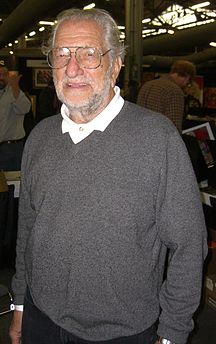
Born in Poland in 1926, Joe Kubert( September 18, 1926 – August 12, 2012) has been a force in the world of graphic art for over 60 years. He has worked as a comic book illustrator for DC and Marvel, as a publisher, and as a teacher over the course of his career. Joe’s work has appeared in classics like Superman, Tarzan, Thor, Batman, Flash, and Hawkman. He formed The Joe Kubert School of Cartoon and Graphic Art, Inc. along with his wife Muriel in 1976. Kubert has won numerous awards in his field. His sons Adam and Andy are also artists and their abilities have been recognized and acclaimed. http://www.kubertschool.edu/
What where you like as a kid?
Like any other kid who grew up in Brooklyn’s East New York in the mid-’20s.
Do you think you career would have been possible if your parents had not been so encouraging?
I think I would have continued to draw if my parents didn’t encourage me. But I’m sure glad they did.
What was it like to get your first job in comics making $5.00 a page when you were so young? Your parents must have been very proud?
I was 13 or so when I sold my first work. The money was less of a thrill than the fact my drawings were going to be published. Yes, my parents were very proud.
What was it like to grow up in Brooklyn in those days?
Drawing probably saved my life, because it kept me out of trouble.
Were you always a fan of comics yourself?
I always loved cartooning from the time I saw my first comic strip in the newspapers (before there were any comic books). And I loved comic books, and I still do.
As this is a magazine that caters to horror/sci fi/dark fiction, are you a fan of any of that?
I enjoy all genres, but horror and dark fiction are my favorites.
Were you a fan of the original horror monsters of film?
I remember Dracula, Frankenstein and King Kong as a kid (1939). They scared the hell out of me and I loved them.
What is the earliest scary memory you can recall?
Probably Frankenstein (with Karloff).
You formed the Kubert School of Art with your wife Muriel in 1976. What led you to do that?
I thought it was a good idea, so long as it didn’t impinge on my own work and career, and my wife, Muriel, was willing to run the business end of the business.
Do you feel it is a blessing to be able to pass what you have learned onto the artists of tomorrow?
I don’t think in those terms. The blessing is that I’m able to get up, sit at a drawing table and draw (which I love), and people pay me for it.
Andy and Adam are also artists. What was it like to see them follow in your footsteps?
I thought it was a miracle. I still do.
I think comics are a form of dark fiction. Why do you think the struggle between good vs. evil has always made such interesting comic tales?
I think the struggle between good and evil is the basis for 95% of all literature.
What one subject have you yet to cover that you would most like to?
I revisit many subjects, hoping to bring new perspectives.
What is the best advice anyone has ever given you? Who was it?
Harry A Chesler. “Keep at it, kid,” he told me.
What projects are you looking forward to bringing your fans next?
Several. Too soon to speak about them.
Anything you’d like to say to your fans?
Just to thank them for their interest.
(Authors note: This interview originally appeared elsewhere and as that site is now lost, I didn’t want this interview to go down the same. I am offering here in hopes that all of you will enjoy reading it as much as I enjoyed doing it. Thank you kindly. ~Tina)
Hawthorn blossoms
pearled the hedgerows
as birds rejoiced,
chiming the air
with heartbeat rhythms,
a leafy green spring
as baby buds peeped in.
I carried you,
felt you
but never got to hold you.
Another year has passed
and I am still lost
in the black cold of winter,
remembering the day
you left me.
It has been so long
and we never said goodbye.
My tears,
frozen in time.
Echoes of songs
that never were,
dreams that can never be.
Fog blankets the fields.
The sky expresses what I cannot.
I hear the parting clouds,
I speak to the sunrise
of my love for you,
your movement, your sound.
I would speak of anything
to bring you back,
but there is only frost
and winter dwells in my heart.
I see the spring,
but know
I will never feel your warmth.
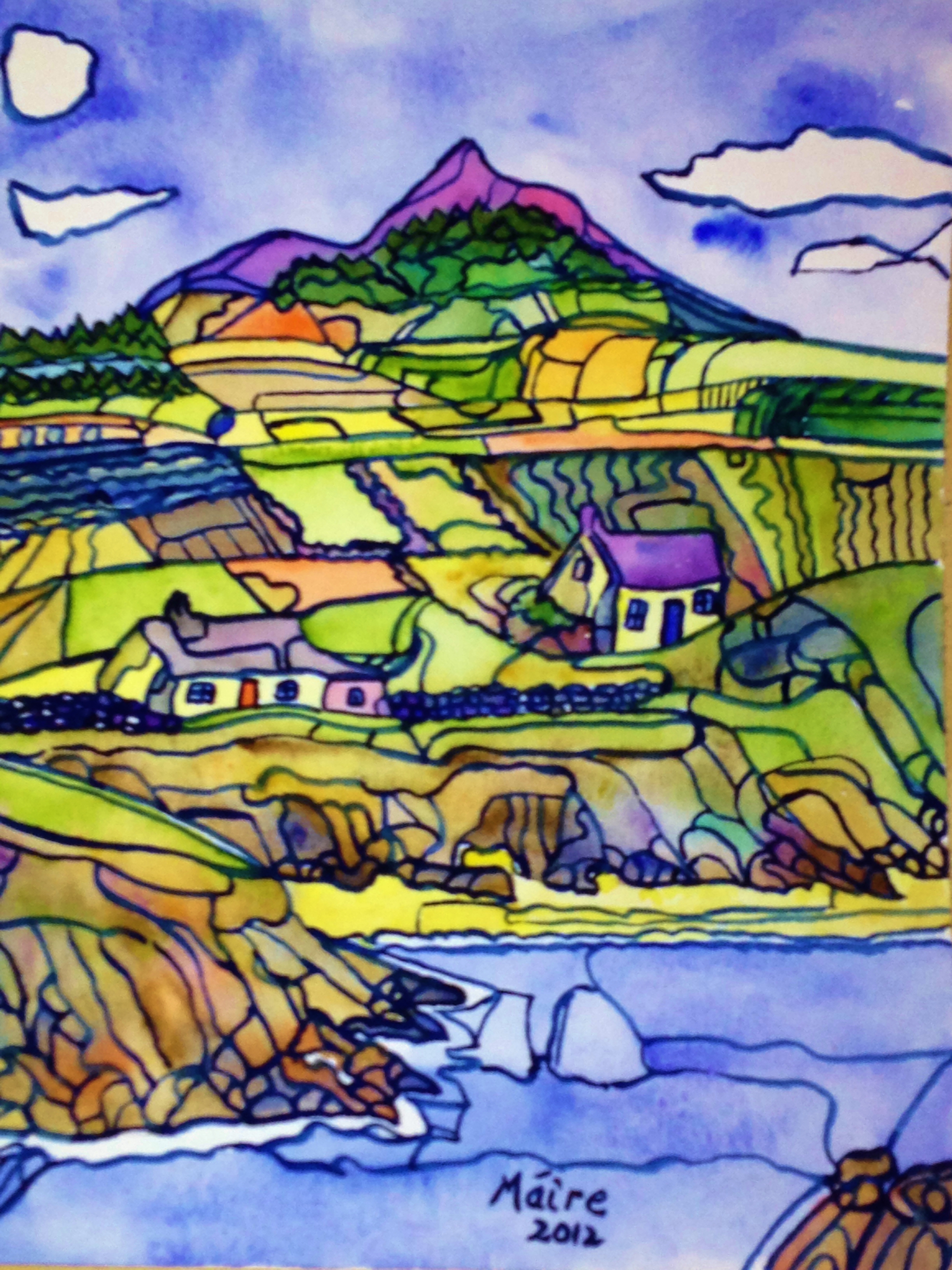
Sugarloaf Mountain
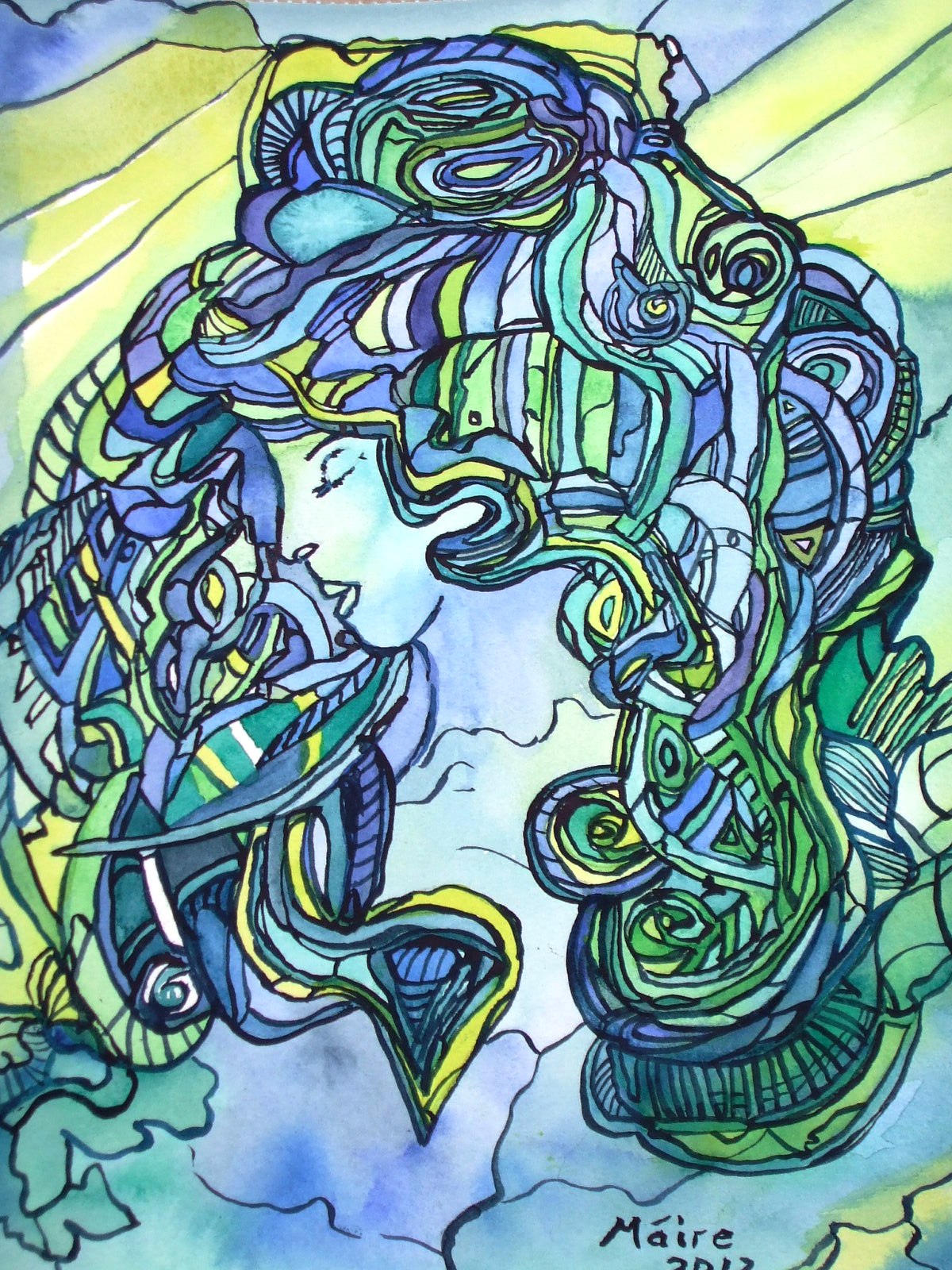
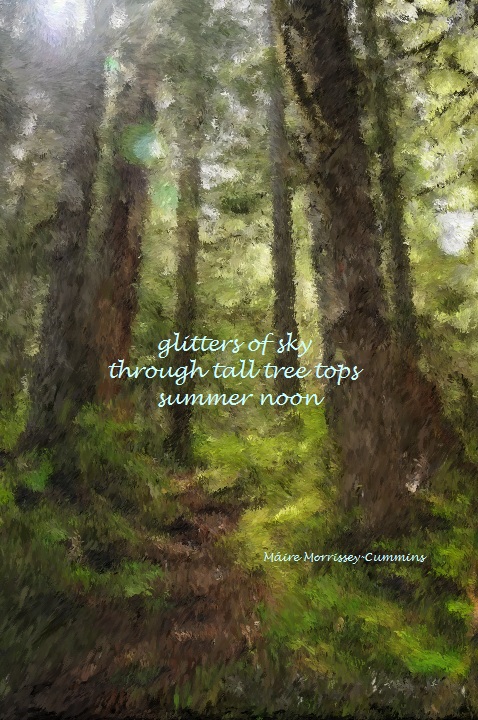
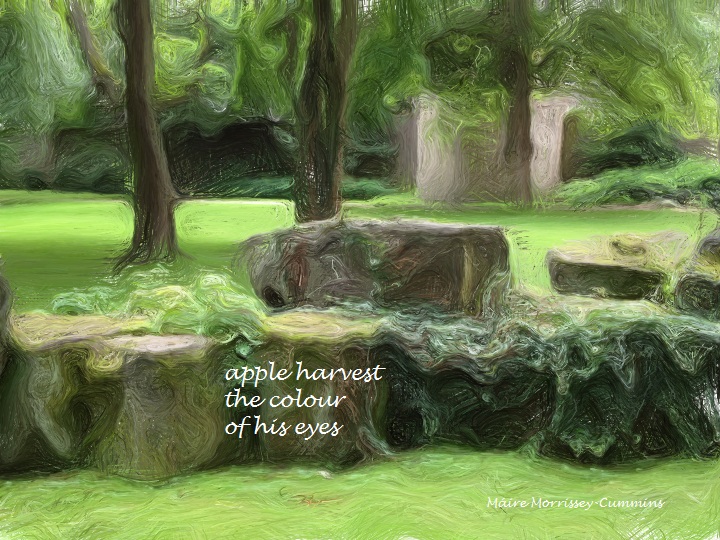
The following are Haikus and artwork by Máire Morrissey-Cummins
Glitters of Sky
Apple Harvest
Máire Morrissey-Cummins ia Irish, married with adult children and since taking early retirement from the Financial Sector, has found the beauty of poetry and art and is enjoying life to the full. Máire has lived abroad for many years, in Holland and presently lives between Ireland and Germany. Morrissey-Cummins is well known in haiku circles and was recently named in the top 100 haiku writers in Europe.
I
never apologised
never explained
take me
or
leave me
I said
my head thrown back
arms outstretched
spotlight haze
haloing me
in
cigarette smoke
and bawdy
lecherous
laughter
many of them
took me
of course
they did
I
was
a
beautiful
sexual
charismatic
free
human
animal
and
I liberated them
momentarily
from their shit
joyless
lives.
I
sang
on the stage
of the
Kit Kat Club
Koepenicker Strasse
gave blowjobs
for cash
in the alley
behind it
don’t judge me
times were hard
men were hard
I did
what
I had
to do
until you’re
starving
you don’t know
what you’ll eat
I watched
small betrayals
become
big betrayals
fear
and
hatred
coalesced
in to
those
dark siblings
concensus
and
well known
fact
It’s the jews
they said
it’s the reds
they said
the foreigners
they said
the trade unionists
they said
the handicapped
they said
the gypsies
they said
the queers
they said
and I knew
I was fucked
They came for me
the morning after Kristallnacht
pasty
pale
aryans
grinning
like hyenas
hunting
through
the glittering glass
beat me bloody
pinned
a pink star
to my breast
sent me
to the camp
planned by architects
designed by engineers
built by tradesmen
staffed
by
ordinary
decent
people
I saw all that men are capable of
I watched horror become
A mundane
Daily thing
Coated grey
In human ash
Organised
Institutionalised
Condoned
Official
I
am a survivor
I
survived
The Americans freed me
my spirit barely attached
to what was left
of my body
but
I
was
still
human
and
I
did
not
die
I.Did.Not.Die
I
went to live
in the land
of the well fed
and nearly free
I never sang again
the music left me
and did not return
but
one evening
I wandered
into
seedy Soho
and watched
a beautiful
young man
sing
arms outstretched
head thrown back
haloed
in cigarette smoke
and spotlight haze
the basement room
thick
with beery
lecherous
laughter
I sat
in the darkness
at my solitary table
and sobbed
quietly
for life
and loss
Life
Goes
On
I lived
until
the day
I died
stretched flat
on the spring grass
my heart
dark blossoming
in my chest
as the light dimmed
I saw
silhouetted against the evening sky
a kite
ragged
beautiful
solitary
free.
Mick Corrigan has been writing for several years and has been published in a range of periodicals, magazines and on-line journals. He is in his fifties (at least he thinks they’re his fifties, they could be someone else’s), and lives in County Kildare, Ireland with Trish his lifer, Molly the talking wonder dog, Ben the ever so cool collie and Bandit the gin drinking dowager cat. He likes a well-made porkpie hat and regularly has ideas above his station.
Kanchan Chatterjee is a 44 year old male executive, working in the ministry of finance, government of India. Although he does not have any literary background, he loves poetry and writes as and when he feels the urge. Some of his works have been
published in various online and print journals e.g. Mad House, Decanto, Mad Swirl, Eclectic eel, Jellyfish whisperer, Bare Hands Poetry etc. He is one of the nominees of this year’s Pushcart Award.
Some yellow tapes fence our houses.
You can perceive the same thing as a tragedy
or as a treasure.
Again the knives flew in the air today.
Agreed,
in future we should use words only on the vegetables.
Now I hold a compass on my salty palm.
The softness of four directions
baffle its pointer.
And I walk round and round the house,
stumble on the stones and dead squirrels.
How do you enter inside a building wearing a straight jacket?
A native of Kolkata, India, Kushal Poddar writes poetry, fiction and scripts for television mini-series and is published worldwide. He is the author of All Our Fictional Dreams and has been published in Poor Poet’s Pantry: Collaborative Poems. His forthcoming books are Surviving Cyber Life and Five Rivers.
There’s a reunion of the flesh, a handshake,
re-entry, a comfortable extension of eye contact
between two stations, both tuned into the same beat,
broadcasting solely to each other. Blindfold off,
headphones on; surrounded by sound,
marooned together in an old fashion, happy to repeat.
We don’t want this song to end, adding codas,
sitting down to craft new verses to a melody
easily hummed; taking a pact to forever
bell out the choruses. May every chorus surge
and resurge the blood as our calling
to revel in the days we own together.
for we can never own time, but we can possess
the echoes of energy spent passing time in union.
Colin Dardis resides in Northern Ireland, where he currently edits the poetry journal FourXFour, and is the host of Purely Poetry, a monthly open mic poetry night in the Crescent Arts Centre, Belfast. He is also a member of the performance group,Voica Versa.
Previously, Colin has been a co-ordinator of open mic night Make Yourself Heard, editor of Speech Therapy zine, and has worked as a Poet In Motion for the New Belfast Community Arts Initiative. His poetry has been published extensively in
journals, anthologies and website throughout the UK, Ireland and the US. Check out Colin’s website at: http://lowlightsforlowlifes.weebly.com
It is Friday and Dylan is standing in front of the rows of caffeine pills displayed in the gray CVS down the busy street from his apartment, thinking of Sareh’s long, lithe legs, her smooth, throaty voice and dark, bobbed hair, which smells of juniper and almond shampoo – all of which are an hour and a half away at the university where her paintings got her into a master’s program, in the same little town where he lived with her for eight months, jobless, before moving here. Those eight unproductive months seemed the most miserable of his life – but, he tells himself, they were the best, because he will never again have a chance to do nothing but dote on Sareh all day, or cook her favorite foods for no particular reason, or pose ’til dawn so she can finish a painting for class – the most miserable months, that is, until he moved here, when he couldn’t sleep on the very first night without her breath and those sleepy, blinking eyes on the soft pillow beside his.
As he hears the automatic doors whirr open behind him, he realizes all his mind’s images of Sareh’s exotic hazel eyes are tied to thoughts of his insomnia – how he never sleeps on weeknights anymore except for the half-hours when he nods into a doze between six and seven in the morning, always just before his alarm goes off – and how Sareh hates it every Friday, as soon as Dylan sees her, when his shoulders relax – that almost painful stretch of muscle – and he gets drowsy, slipping off to sleep as soon as they sit down for a movie or a meal, or tumble into bed for some “I’ve been waiting all week” sex.
He is so tired now that his eyes are sore and trailing images of everything he sees; his arms have never felt so heavy, like lead is pumping through them rather than blood, weighing down on his back and pulling at the sides of his neck; and his knees go to jelly every five minutes or so, making him flex his calves and thighs to catch himself before the ugly, coarse blue carpet jumps up to cradle his cheek. But he knows he wouldn’t be able to sleep even if he did fall to the floor, despite his aching tiredness. Tonight, he tells himself, this weekend, I must stay awake. He must, he knows, or she will soon not want him around anymore, which will not allow him to sleep – he fears – at all, or maybe ever again.
Dylan looks over the small, neatly-placed boxes before him as an employee, a man about thirty-five with a scraggly rat-tail hanging down over his collar, shuffles behind him, dragging the smell of damp, dirty storerooms down the aisle. Dylan swallows back the flame of bile in his throat and reaches out for one of the boxes, the one with the brightest colors, the one his eyes refuse to ignore, despite the extreme side-effects and warnings posted on the front label. But when he looks down at his hand hovering by the NoDoze, it is trembling terribly and he can feel the strained effort his body is putting out just to send blood through his wavering veins, so he turns to the row of cash registers by the door before his fingers can clasp the thin, waxed cardboard. His foot refuses to move for a moment and Dylan stumbles before straightening back up, Sareh’s smile echoing in his mind, his shoulders beginning to loosen before he can even get out to the parking lot.
Austin Eichelberger completed his MA in Fiction at Longwood University in May 2009. Since then, he has taught various English and writing writing courses at a university level. While these stories have yet to be published, he has been invited to read at several conferences, including the Southern Humanities Council Conference and the Robert and Susan H. May Conference, and his work has appeared in numerous online and print literary journals and anthologies, including the University of Chester’s Flash Magazine, Diverse Voices Quarterly, and Eclectic Flash, among others.
 George Korolog is a poet living in Woodside, California. He works in the left hemisphere of the world with a right hemisphere brain. Somehow, he makes it work. His poetry, flash fiction and non-fiction have been widely published in over forty print and online journals such as Word Riot, Forge, Punchnels Magazine, Naugatuck River Review, Blue Fifth Review, Poets and Artists Magazine, Red River Review, Poetry Quarterly, Connotation Press, The Chaffey Review, Thin Air, Grey Sparrow Journal and many others. His poem, From Tending Sheep to Confusion on the Amtrak 10:50 was awarded second prize in the 2011 Tom Howard/John H. Reid Poetry Contest. He was a runner up for The 2012 Contemporary American Poetry Prize for his poem, Soul Stone. He has been nominated for the Pushcart Prize and is an active member of The Stanford Writers Studio. His first book of poetry, Collapsing Outside the Box, was published by Aldrich Press in November 2012. His second book, Raw String will be published by Finishing Line Press in 2013 and he is busy working on his third book, God’s Avenging Concubines.