“SCISSORS TO WIDOW’S WEEDS: Yoko Ono’s Cut Piece 2003” by Ian Ayres

SCISSORS TO WIDOW’S WEEDS:
Yoko Ono’s Cut Piece 2003

By Ian Ayres

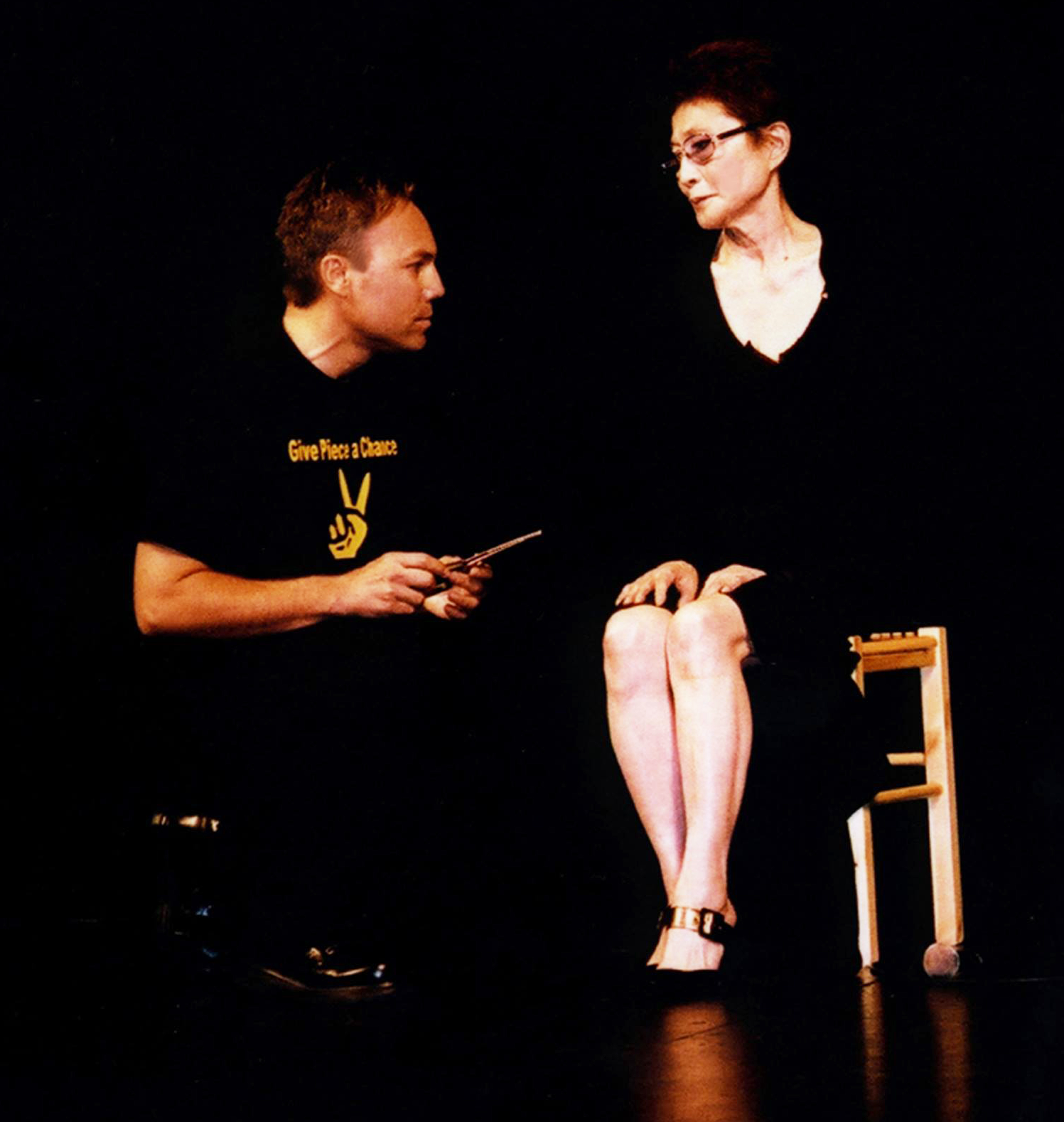
Ian Ayres & Yoko Ono (Cut Piece 2003) Paris

Ian Ayres & Yoko Ono (Cut Piece 2003) Paris

“I see life as the playground of our minds.”
                                                                               ~ Yoko Ono

“CROWD CUTS YOKO ONO’S CLOTHING OFF!” and “YOKO ONO DOES STRIPTEASE FOR PEACE!” and “FRENCH FIGHT SHY OF YOKO’S STRIP!” sensationalized the headlines. None of the media even hinted at the deeper meaning of Yoko Ono—in the name of world peace (and perhaps a new love of life)—having allowed the crowd to cut off her widow’s weeds. Even more symbolic was the fact that Yoko Ono performed this finalé of her legendary Cut Piece in Paris, the fashion capital of the world. Instead of a dress being paraded for potential buyers, a dress was being cut to shreds! This struck me as more than a demonstration for peace, world peace, but a statement against capitalism; a cry for the return to nature that would save our planet, our species. What impresses me most, however, is the courage Yoko displayed—considering the murder of John Lennon with her literally at his side, and the innumerable death threats she’s received ever since—in daring to repeat a performance that would not only expose her throat to a potential assassin but put into the assassin’s hand a deadly weapon: a pair of well-sharpened scissors.

The jagged steel of those scissors she carried glistened against the blackness of her long, layered, silk-chiffon skirt and tight, black, long-sleeved top when she gingerly stepped, as if walking on thin ice, onto the stage of Paris’ intimate Théâtre du Ranelagh. Applause temporarily relieved the foreboding I felt during that Monday evening of September 15, 2003. Here was Yoko Ono: A slender, cool, 70-year-young avant-garde icon; one of the art world’s leaders of conceptual and performance art; in the flesh. My angst over a possible, bloody murder metamorphosed into fascination.

With whispered thanks to my absent friend Phillip Ward—coeditor of Van Gogh’s Ear: Volume 3 (www.frenchcx.com) that I edited here in Paris—for having told me about this top secret event in time to get on the guest list, I applauded long and loud enough for the both of us. Applause filled the theatre as the memory of Phillip’s 5th of September telephone call from New York City rang in my ears. The second he was sure I was me, he’d said, “Are you sitting down?” Something in his sonorous voice told me the news was too thrilling to send in an email. Earlier in the week, Phillip had asked Yoko Ono’s studio and production assistant, Robert Young, if he’d ask Yoko about contributing some work to our upcoming edition of Van Gogh’s Ear. It wasn’t long before Robert contacted Phillip to echo Yoko’s answer, her famous, “Yes.” Not only would she contribute several poems—but a few of her Franklin Summer drawings, too! This news hit me like a shot of some euphoric drug. Little did we suspect, when we began our small non-profit enterprise, that we’d be entrusted with the works of such great talents as Yoko Ono, Norman Mailer and Thich Nhat Hanh. My enthusiasm led to Phillip informing me more about Yoko Ono’s art and music, and to her mind-altering “Fluxus.”

I knew that John Lennon once said Yoko Ono was the world’s “most famous unknown artist. Everybody knows her name, but nobody knows what she does.” When Phillip mentioned Yoko being one of the founding members of Fluxus, I said, “What’s Fluxus?”

“Fluxus,” he offered, “began as a group of writers, musicians and artists organized by George Maciunas, whose 1963 Fluxus manifesto incites artists to—Here, I’ve got it right here: ‘purge the world of bourgeois sickness, intellectual, professional and commercialized culture…dead art, imitation, artificial art, abstract art, illusionistic art…to promote a revolutionary flood and tide in art, to promote living art, anti-art…non-art reality to be grasped by all peoples, not only critics, dilettantes and professionals.’ So they created an art form that was anti-elitist, anti-commercial. Utilizing readymade materials and experimenting with various art forms, they created something that was part Dada, part Bauhaus and part Zen.”

Phillip explained that over the last 40 years, Fluxus artists produced interesting installations and limited edition publications, teasing the mind in cartoon fashion, yet in a minimalist and philosophical manner, while encouraging thought and dissection. In her association with Fluxus, Yoko Ono staged performances in Japan, England, and the United States. She hosted art and music Happenings in her SoHo loft. While at the same time making films, composing music, and creating paintings and books. Even today, Yoko continues to execute Fluxus concepts and philosophies behind her art form.

“Her inventive sometime provocative game-like concepts and instructions encourage us to step over the boundaries of art’s constraints to construct art inside ourselves,” Phillip continued. “She brings to the mind a challenging concept: Trust. This is demonstrated clearly in her chess piece, titled Play it by Trust. All the pieces, including the checkered grid, are painted white. According to Yoko, white is the most conceptual color. Being a metaphor for light and transcendence, it doesn’t interfere with your thoughts.

“Yoko’s works are to be performed by a viewer or an audience member. Many to be performed only in the participant’s mind. These concepts also compliment Marcel Duchamp’s belief that art is only partly created by the artist and is completed by the spectator. Incidentally, Dada artist and philosopher Duchamp was himself an active Fluxus contributor and participant in many Fluxus ‘Happenings.’”

Phillip—saying that Yoko Ono is one of the most pioneering avant-garde artists of our time—then encouraged me to go experience her Women’s Room exhibit, on view at Paris’ Musée d’Art Moderne. He mentioned how, with patience and imagination, “Yoko’s art is as rewarding as it is demanding,” then added an idea that now fascinates me: “Transforming art into thought.”

On the Mètro to Musée d’Art Moderne I got to thinking, “Women’s Room. Men’s Room. Public restroom. Hmm….” However, instead of hearing toilets flushing when I entered Women’s Room, I heard a looped recording of Yoko’s occasional soft coughing punctuated by the gentle clicking of what appear to be claves. From one of the exhibit’s leaflets I learned that the recording was titled Cough Piece. Phillip later informed me that Cough Piece was a 32-1/2-minute sound work originally recorded in Japan in 1963. The exhibit’s leaflet only offered that “Poetic irony is evident in the sound work, Cough Piece, composed out of the repetitive rhythm of coughing.”

Arresting my visuals was a large olive tree Ono had transformed into Wish Tree. Countless wishes of peace and love hung on small white tags with thick string from every inch of every branch, fresh as fallen snow. Yes, I thought, Yoko’s fans are Love fans, my kind of fans, the best fans to be. The leaflet said that “Wish Tree gathers together the dreams and wishes of each visitor.” Wishing they’d said more, I turned over the page and discovered an introduction for the exhibit by the artist herself. “Women’s Room,” wrote Yoko Ono, “presents the life of a woman through four different media…. In Wish Tree, a pathway is offered to the “garden” of our vision. It is in unity, we find our way to make our dream come true…. A dream you dream alone is only a dream. A dream you dream together is reality.” Thus inspired I went over to a podium next to the olive tree where blank white tags and a pen had been placed. I pondered over how Yoko encouraged love, and no limits on love, then wrote: To kiss Yoko. With patience, I managed to find a place on one of the tag-crowded branches to hang my wish. Little did I suspect my wish would soon come true.

Ian Ayres with Yoko Ono's Wish Tree

Ian Ayres with Yoko Ono’s Wish Tree

While securing the wish onto the olive tree, I noticed the sound of snipping scissors echoing from beyond a small, wall-partition. Someone getting a haircut? Paragraph four of Ono’s introduction to the exhibit soon made it clear that whatever it was wasn’t live. “As for the films,” she’d written, “each film is repeated on two, three or four walls, depending on the set up. Each projection is being made 10 seconds later from the other—like a musical ring, in the same way as I perceive my life, going over the experience as I experience it.” The flipside of the leaflet clarified: “Women’s Room makes reference to political engagement and personal memory. The four films presented here: FreedomFlyRape; and Cut Piece (a film of Yoko Ono’s performance Cut Piece 1964) evoke the social role of women and their emancipation.”

Behind the wall-partition was a large, doorless room with six screens—three on each side of the room—and a wall-petition in the middle permitting you to wander round. The 10-second differences in time of the film on the different screens scattered my sense of time. My mind seemed to fragment into past, present, and future all at once. I was in a vacuum, a whirl of “snip, snip, snip”! Surrounded in the room’s blackness, by the black-and-white film, my eyes darted from screen to screen of the young Yoko Ono kneeling onstage in a black dress with her white slip being more and more exposed as people continued cutting and taking away pieces of the dress. Like vultures, I thought, all taking a piece of her.

The audience’s aggressive violation of Ono’s body, shredding her clothes, stripping her naked, absolutely disturbed me. But throughout most of the performance she sat completely still, training an icy stare on the audience. Then one young man in the film distracts Ono from reversing the audience’s voyeurism when he symbolically rapes her with the scissors. The guy smirked vengeance and rather violently snipped the exposed slip from the area of her breasts. Yoko made a soft frightened sound, raised her hand to stop the victimization then, as if realizing it would go against the Zen-like purpose of Cut Piece, lowered her hand in sad resignation. I felt fear for Yoko. The guy contentedly laughed to himself and continued to cut away until her white bra was completely exposed. When he stepped behind her and snipped both bra straps, Ono modestly folded her arms across her breasts.

In showing the best moments of this performance of Cut Piece in a continuous, echoing loop, the film seemed to be a “cut piece” in itself. Truly remarkable, and unnerving. After witnessing the various cuttings, along with the scissors’ rape, several times, I pulled myself away to interact with more of Yoko’s exhibit. I explored Blue Room, which opened my eyes to the fact that language, by itself on a gallery wall, is a justifiable form of art. With 14 hand-written sentences on the walls, ceiling, and floor—the meaning of which is in total contradiction to the emptiness—the viewer is “instructed” as to what to construct inside their mind. For instance, to remain in the room until it turns blue. The room is painted white.

Next I experienced Vertical Memory, which, on the leaflet, Yoko explained “was created putting together photographs of my father, my husband, and my son. I selected photographs of them facing the same direction, overlapped them and morphed it. Every photo represents the man who was looking over me in a precise moment when I went through an important situation of my life.” Her words then drew my eyes toward the next art piece, Sky TV. “The Sky TV projects the sky of my childhood. The sky I saw was a little girl which was there for me, always, without change; while I kept walking through many years, many countries, many lives. The experience is parallel to that of Vertical Memory: one as the memory of earth, and the other, as that of the sky.”

That’s when I noticed a TV placed on the wooden floor. When I saw a black-and-white sky, I checked the flipside of the exhibit’s leaflet, where they’d briefly noted, “Sky TV shows an image of the sky taken by a camera placed on a roof.” Figuring color video hadn’t been possible in 1966 when Sky TV was first made, I went over, laid down on my back, and gazed up at the screen of clear gray sky…wisps of white cloud gently moving overhead. It took me a moment to realize the sky I was watching inside was the actual sky outside!

On the Métro back to my apartment I found myself surrounded by foreigners speaking in unfamiliar tongues, which irritated me. So, in an effort to block out their existence, I opened my newly acquired Spare Room—Yoko Ono’s artist’s book specially made for her Paris exhibit of Women’s Room. The passage I happened to open to made me think coincidence happens far too often to be a coincidence. “Next time you meet a ‘foreigner,’” came Yoko’s words, “remember it’s only like a window with a little different shape to it and the person who’s sitting inside is you.” These words of hers totally transformed my annoyance into compassion for these strangers on the train. And I was forced to realize that being an American living in France made me also a foreigner.

As soon as I got home I surfed the web for information on Cut Piece. In a 1992 interview, Yoko Ono tells Ina Blom that “Cut Piece is about freeing yourself from yourself. Like all artists, I have the tendency to give what I want to give. And I am defying that, in that piece. And it is a frightening piece to perform. Very tense. And because it was such an incredibly important piece for me, I took care of the details. In those days clothes were very important to me because I had so few. But when I performed Cut Piece I always made sure to wear my best suit. It was the total offering, you know, so that you wanted to wear your best suit for it. I lost my best suit every time I performed the piece.”

I surfed on to learn about Yoko Ono’s most innovative early works, which include her Instructions for Paintings. In these pieces she uses language—the words themselves—instead of a traditional art object, to provoke interactivity with viewers. The viewer must perform the instructions in order for the work to exist. Her instructions have the form of brief poems, uniquely her own. They are the thought they convey. The question is how the instructions are received and what the reader of them does to make them true: The instructions must be followed for the work really to exist.

Experiencing some of Yoko’s instruction paintings, which were shared on the web, inspired me to create an instruction painting of my own (for paper):

                              POINT PIECE
                               

                              Cut here > (———).
                              Put your hand under (or behind).

                              Stick your finger through.
                              Point at yourself.
                              Point at the sky (or ceiling).
                              Imagine no gravity.

While riding the keyboard like a surfer on waves, catching lots of great sites, I wiped out when the phone rang…and the quick download I’d tried for blocked. To my disbelief it was Phillip Ward. “You’re not going to believe this,” he said. “Yoko’s going to perform Cut Piece in Paris on the 15th.”

Phillip gave me the information needed to get on the guest list to participate in this hush-hush event. He said nothing would be announced until the last minute. Thanks to Phillip, chances were strong I would, after all, be one of those lucky people to witness and to participate in Yoko’s reprise of Cut Piece; which she hadn’t performed in nearly forty years, and in Paris. The wish tag I had hung on her Wish Tree dangled before my memory: To kiss Yoko.

A week later, there I was at the Théâtre du Ranelagh, watching Yoko’s 27-year-old son Sean Lennon and his girlfriend Bijou Phillips in the front row, just two rows ahead of me. People kept coming up and talking to Sean. He was quite amiable.

 Sean Lennon talks with people in the audience. Photo © 2003 by Eric Elléna

Sean Lennon talks with participants.
Photo © 2003 by Eric Elléna

Then someone let Sean know it was time. He stood up, faced the audience, and introduced his mother. Everyone loudly applauded Yoko as she walked onto the wooden stage, over to a microphone placed on a simple, wooden stool, and gave a sweet smile. She picked up the microphone and, sitting down, spoke to us in perfect French.

“Imagine love,” Yoko said. “Imagine the sea.”

And I did. I saw us all as raindrops in a sea of raindrops.

“Imagine peace. Peace for you and me and all the world. Never forget love. I love you.” She paused, as if looking into the very essence of each of us. Finally, prepared to trust her life in our hands, she held out the scissors. “Allons-y!” she said (for “Let’s go!”). Setting the microphone to the left of where she sat, she placed the scissors in front of her—much like the action of a determined noble Samurai preparing for the deadly deed.

It alarmed me when several men jumped up from their seats and rushed over to the stage steps. Yoko was completely vulnerable in the middle of that bare stage. Fortunately a gentleman, standing near the steps, stopped them. Stationed directly across, at the steps leading down from the stage, was Yoko’s studio assistant exhibitions manager and curator, Jon Hendricks, who has worked with Yoko Ono for many years and is the author of the acclaimed book Fluxus Codex.

When Mr. Hendricks nodded an “all systems go,” the gentleman whose job it was to play gatekeeper allowed the first cutter to mount the steps to the stage. This first cutter, a middle-aged man, wasted no time in going for a piece of Yoko’s top, cutting a large fragment of material away from just above her breasts. The cutting of Yoko’s clothes off of her must’ve made the man nervous for, as soon as he had the piece in his hands, he dropped the scissors. A number of us 200 audience members gasped as the scissors hit Yoko’s knee, then bounced off to hit her foot.

Sean Lennon and his girlfriend Bijou Phillips were, of course, among the cutters. When Sean went up, he said something to his mother that made her smile, nod in agreement, and take off her black suede shoes. This seemed wise, since each shoe was secured to the foot by a single strap and most likely the only shoes she had in which to leave the theatre. She wouldn’t want anyone cutting them! Sean then, in a loving spirit of peace, cut a hole into the sleeve of his mother’s black top.

The routine rhythm of cutters “snip-snip-snipping” broke cadence when Yoko was obliged to stop a young woman who picked up one of Yoko’s shoes and began hacking away at its leather strap. By the time Yoko realized what the woman was doing, and said something to her, it was too late. The strap was hanging in two.

Watching the specific actions of various audience members, as I stood in line inching toward the stage, my mind wandered to what that guy had done to Yoko with the scissors in 1964. That action needed to be softened and made positive, I thought. But, presently, one woman hacked away rather brutally with the scissors, and another almost violently ripped her piece—as did a man who followed. It seemed they weren’t aware of the reasons for this performance. Why were they here demonstrating hostile actions in a demonstration for peace? I wondered. It’s about peace, not destruction.

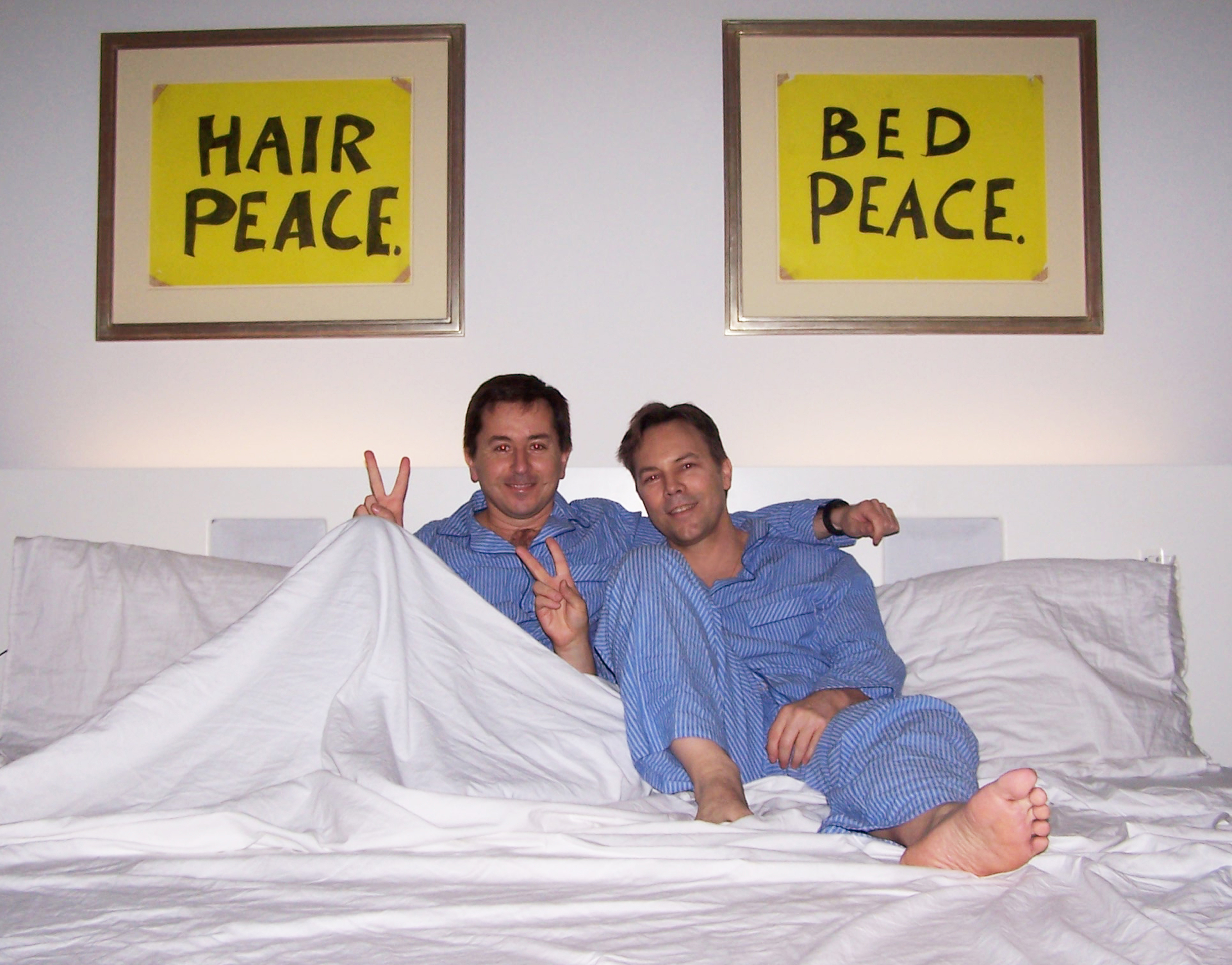
They seemed oblivious to Ono and Lennon’s 1960s and 1970s offbeat peace protests, including the Bed-In For Peace against the Vietnam War. They didn’t seem to know about Yoko’s billboard in London’s Piccadilly Circus, which read: “Imagine all the people living life in peace,” a line from Lennon’s famous song Imagine. Maybe they didn’t even care that Yoko took out full-page advertisements in papers around the world on the eve of the war in Iraq earlier this year, saying: “Imagine Peace…Spring 2003.”

Yet Yoko remained loving (though understandably nervous) and dignified as some of these strangers, like cannibals, hacked away at her clothes. She merely sat on stage while audience members, one at a time, approached and picked up the pair of scissors lying next to her feet to cut off a piece of her black clothing. This was done fairly silently; the only thing to be heard was the occasional cough and the footsteps advancing and retreating.

Not long before it was my turn to go on, however, I became concerned about a man who approached her with doubled fists. He grabbed the scissors from the floor and hacked brutally at her skirt, tearing off a long enough piece to strangle her with. I doubt I’m the only one who became alarmed. He dropped the scissors, letting them loudly hit the stage, and stretched the piece tight in both hands. He stood over her, menacingly, pulling the piece tight then, lowering it toward her neck, suddenly turned away and walked off the stage. There was a sigh of relief in the crowd. He could’ve done it, you know. Yoko’s bodyguards, which no one saw, but I’m sure were nearby, weren’t close enough to stop him—unless they had guns, of course. Maybe that crossed his mind.

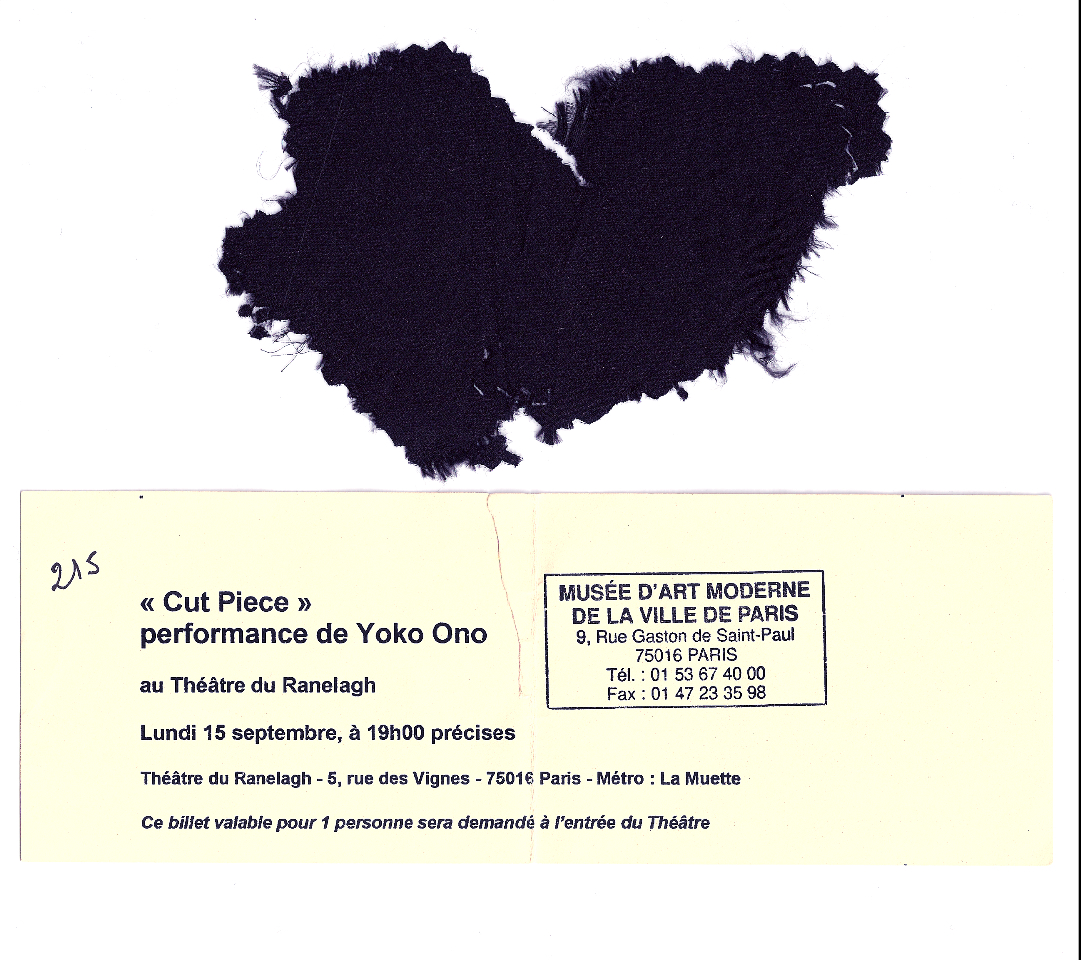
Eric Elléna, my publisher at French Connection Press*, eased the tension when he came on next and cut a piece from her skirt. At first I felt impatient with his taking longer than most to get a snippet of material…until he stood and displayed his cutting to the audience. He’d cut his piece in the shape of a heart, which lightened the heavy doom in the air and brought a laugh. From then on, the rest of the cutting off of Yoko’s dress went without a stitch.

At long last my turn came to be stopped by the “gatekeeper.” The two young women before me apparently had been in cahoots. The first went up and cut a piece of her own jacket—making a big show of this for the audience—then placed the piece on Yoko’s lap. Then her friend went on and held up a red Band-Aid for all to see. She made a show of picking up her friend’s piece of jacket from Yoko’s tattered lap, and band-aided the piece to the exposed area of Yoko’s heart (Yoko’s sexy black bra by this time fully exposed). I wasn’t sure how I felt about the dark piece of material stuck with the red Band-Aid to Yoko’s chest. It did look kind of avant-garde, the Band-Aid being red and all. But Jon Hendricks hurried onstage and yanked the Band-Aid off of Yoko to loud applause.

The “gatekeeper” wouldn’t let me pass until Mr. Hendricks was safely down the opposite steps, where he’d remain to make sure no one fell. When I was finally allowed to go up onstage, I couldn’t help smiling. There was Yoko Ono, sitting demurely on the wooden stool, her black lace bra exposed and her black silk-chiffon skirt a little gnawed at its ruffled edges. I felt such a tremendous love for peace radiating from her being. As I slowly approached her, I didn’t feel awe or goose bumps or anything but love. Love exudes from her energy. And I admired her for giving of herself so freely to the world…and for peace. In true Lennon-Ono fashion, in this world full of anger and violence, she spoke through her actions, saying, “Let’s give peace a chance through our active and visible demonstrations of love.”

I kissed her on her cheek, then knelt to cut a large enough piece to share with Phillip, as I’d promised. I chose part of a ruffle, which held another layer of ruffle beneath, thus making it difficult and prolonging the cutting. More than anything I wondered at the coincidence of it all. My wish on her Wish Tree had come true.

Ian Ayres cuts a piece of Yoko Ono's black dress.Photo © 2003 by Eric Elléna

Ian Ayres cuts a piece of Yoko Ono’s black dress.
Photo © 2003 by Eric Elléna

Back in my seat I was pleased to see other people go up and kiss Yoko. One gentleman kissed her hand. And then a tender moment came when a young man and young woman went up together. She cut a piece, then presented it to him. (The “instruction” was to cut a piece and send it to a loved one.) He then cut it in half. They each kept one half, then kissed before leaving the stage. I felt they clearly understood the meaning of Cut Piece. Yoko’s message is that although we each possess the scissors that make killing possible, we have a choice. We can choose love. We can put down the scissors. She says embrace each other. Don’t cut each other to pieces.

Of course the mood quickly changed as Yoko looked straight ahead and barely moved while a man dressed in a suit hacked a major piece off her skirt to reveal a large part of her thigh. A few minutes later one brazen young man sliced through the waistband, shearing off her skirt completely, taking nothing as he left. She sat there in her matching black lace panties and brassière, with the remains of her skirt draped over the stool beneath her.

There weren’t many of the 200 audience members who, by this time, hadn’t already had their chance to cut. The last ones of the line contented themselves with cutting pieces from what was left of her black silk skirt hanging on the stool. Well, someone was bound to cut her bra strap. This time, instead of a man practically raping her with the scissors, it was a woman who was nice about it. She only snipped one strap, as if what wouldCut Piece be without a cut bra strap?

For Yoko’s panties and bra to be cut off her, in the spirit of earlier Cut Piece performances, it would’ve been necessary for someone who’d already been up, to go up onstage again. They would’ve made a fool of themselves. Especially with Yoko’s son and his girlfriend sitting in the front row. And so it was in perfect taste and timing that Paul Jenkins (of Yoko’s Studio One) gallantly brought her a pink kimono. Yoko took her bows to a standing ovation, then retreated into the wings.

I couldn’t help thinking how Yoko Ono is the only celebrity of such magnitude who would ever have the courage to allow the public to come up and cut pieces of their clothes off. Not even for the sake of world peace would they do it. Yeah, Yoko’s a cool chick, baby. And as Eric Elléna and I left the theatre, I rubbed the black silk-chiffon of my piece of Yoko’s widow’s weeds and imagined all the peace contained in each piece of fabric cut that evening from her body.

Once more in front of the theatre, we looked up at her words on the huge posters, in French and English, displayed to inspire the world. On the posters Yoko Ono’s words read: “Following the political changes through the year after 9/11, I felt terribly vulnerable—like the most delicate wind could bring me tears. Cut Piece is my hope for world peace.” By allowing strangers to approach her with scissors, Yoko said she hoped to show that this is “a time where we need to trust each other.”
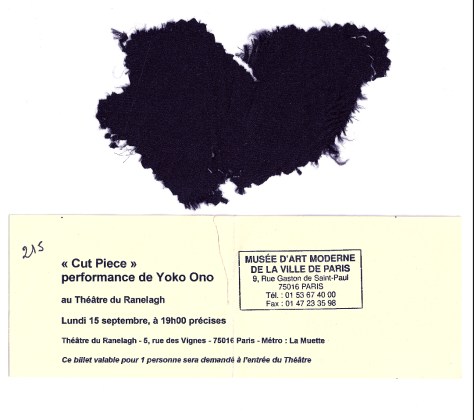
Yoko Ono's Cut Piece 2003 (Ticket & Piece courtesy of Ian Ayres)

Yoko Ono’s Cut Piece 2003 (Ticket & Piece courtesy of Ian Ayres)


Van Gogh's Ear (2004) with Yoko Ono

*Van Gogh’s Ear is published by French Connection Press (www.frenchcx.com)
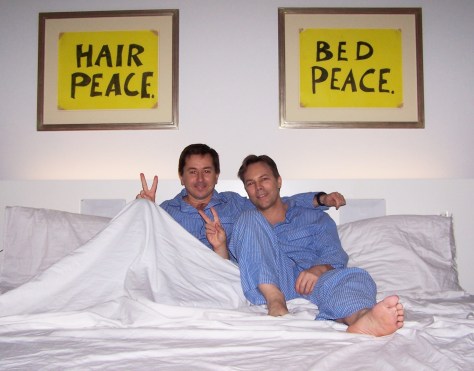
Eric Ellena & Ian Ayres (Imagine Peace) Montreal Museum

Eric Ellena & Ian Ayres (Imagine Peace) Montreal Museum

An Interview with John Alan Schwartz

167093_10150090250227758_5271120_n

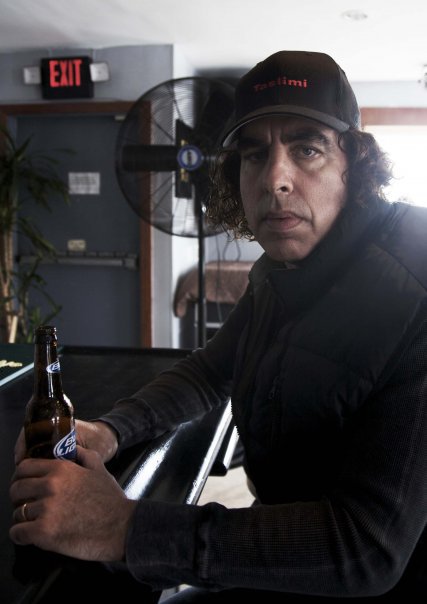
John Alan Schwartz has been called “ The Godfather of Reality Television” for his work as a writer, producer, and director. John has worked on over 250 magazine stories, prime time specials, and syndicated shows. His cult classic Faces of Death shocked the masses when all of the scenes were thought to be real. Schwartz’s most recent project Two Jews on Film is available now at youtube.com/twojewsonfilm It is an honor to have the chance to bring our readers a glimpse at the man behind the media.

To read more please see: John Alan Schwartz

“Chief Seattle’s 1854 Oration”

Version 1 (below) appeared in the Seattle Sunday Star on Oct. 29, 1887, in a column by Dr. Henry A. Smith.

“CHIEF SEATTLE’S 1854 ORATION” – ver. 1

AUTHENTIC TEXT OF CHIEF SEATTLE’S TREATY ORATION 1854

 Yonder sky that has wept tears of compassion upon my people for centuries untold, and which to us appears changeless and eternal, may change. Today is fair. Tomorrow it may be overcast with clouds. My words are like the stars that never change. Whatever Seattle says, the great chief at Washington can rely upon with as much certainty as he can upon the return of the sun or the seasons. The white chief says that Big Chief at Washington sends us greetings of friendship and goodwill. This is kind of him for we know he has little need of our friendship in return. His people are many. They are like the grass that covers vast prairies. My people are few. They resemble the scattering trees of a storm-swept plain. The great, and I presume — good, White Chief sends us word that he wishes to buy our land but is willing to allow us enough to live comfortably. This indeed appears just, even generous, for the Red Man no longer has rights that he need respect, and the offer may be wise, also, as we are no longer in need of an extensive country.

 There was a time when our people covered the land as the waves of a wind-ruffled sea cover its shell-paved floor, but that time long since passed away with the greatness of tribes that are now but a mournful memory. I will not dwell on, nor mourn over, our untimely decay, nor reproach my paleface brothers with hastening it, as we too may have been somewhat to blame.

 Youth is impulsive. When our young men grow angry at some real or imaginary wrong, and disfigure their faces with black paint, it denotes that their hearts are black, and that they are often cruel and relentless, and our old men and old women are unable to restrain them. Thus it has ever been. Thus it was when the white man began to push our forefathers ever westward. But let us hope that the hostilities between us may never return. We would have everything to lose and nothing to gain. Revenge by young men is considered gain, even at the cost of their own lives, but old men who stay at home in times of war, and mothers who have sons to lose, know better.

Our good father in Washington–for I presume he is now our father as well as yours, since King George has moved his boundaries further north–our great and good father, I say, sends us word that if we do as he desires he will protect us. His brave warriors will be to us a bristling wall of strength, and his wonderful ships of war will fill our harbors, so that our ancient enemies far to the northward — the Haidas and Tsimshians — will cease to frighten our women, children, and old men. Then in reality he will be our father and we his children. But can that ever be? Your God is not our God! Your God loves your people and hates mine! He folds his strong protecting arms lovingly about the paleface and leads him by the hand as a father leads an infant son. But, He has forsaken His Red children, if they really are His. Our God, the Great Spirit, seems also to have forsaken us. Your God makes your people wax stronger every day. Soon they will fill all the land. Our people are ebbing away like a rapidly receding tide that will never return. The white man’s God cannot love our people or He would protect them. They seem to be orphans who can look nowhere for help. How then can we be brothers? How can your God become our God and renew our prosperity and awaken in us dreams of returning greatness? If we have a common Heavenly Father He must be partial, for He came to His paleface children. We never saw Him. He gave you laws but had no word for His red children whose teeming multitudes once filled this vast continent as stars fill the firmament. No; we are two distinct races with separate origins and separate destinies. There is little in common between us.

 To us the ashes of our ancestors are sacred and their resting place is hallowed ground. You wander far from the graves of your ancestors and seemingly without regret. Your religion was written upon tablets of stone by the iron finger of your God so that you could not forget. The Red Man could never comprehend or remember it. Our religion is the traditions of our ancestors — the dreams of our old men, given them in solemn hours of the night by the Great Spirit; and the visions of our sachems, and is written in the hearts of our people.

 Your dead cease to love you and the land of their nativity as soon as they pass the portals of the tomb and wander away beyond the stars. They are soon forgotten and never return. Our dead never forget this beautiful world that gave them being. They still love its verdant valleys, its murmuring rivers, its magnificent mountains, sequestered vales and verdant lined lakes and bays, and ever yearn in tender fond affection over the lonely hearted living, and often return from the happy hunting ground to visit, guide, console, and comfort them.

 Day and night cannot dwell together. The Red Man has ever fled the approach of the White Man, as the morning mist flees before the morning sun. However, your proposition seems fair and I think that my people will accept it and will retire to the reservation you offer them. Then we will dwell apart in peace, for the words of the Great White Chief seem to be the words of nature speaking to my people out of dense darkness.

 It matters little where we pass the remnant of our days. They will not be many. The Indian’s night promises to be dark. Not a single star of hope hovers above his horizon. Sad-voiced winds moan in the distance. Grim fate seems to be on the Red Man’s trail, and wherever he will hear the approaching footsteps of his fell destroyer and prepare stolidly to meet his doom, as does the wounded doe that hears the approaching footsteps of the hunter.

 A few more moons, a few more winters, and not one of the descendants of the mighty hosts that once moved over this broad land or lived in happy homes, protected by the Great Spirit, will remain to mourn over the graves of a people once more powerful and hopeful than yours. But why should I mourn at the untimely fate of my people? Tribe follows tribe, and nation follows nation, like the waves of the sea. It is the order of nature, and regret is useless. Your time of decay may be distant, but it will surely come, for even the White Man whose God walked and talked with him as friend to friend, cannot be exempt from the common destiny. We may be brothers after all. We will see.

 We will ponder your proposition and when we decide we will let you know. But should we accept it, I here and now make this condition that we will not be denied the privilege without molestation of visiting at any time the tombs of our ancestors, friends, and children. Every part of this soil is sacred in the estimation of my people. Every hillside, every valley, every plain and grove, has been hallowed by some sad or happy event in days long vanished. Even the rocks, which seem to be dumb and dead as the swelter in the sun along the silent shore, thrill with memories of stirring events connected with the lives of my people, and the very dust upon which you now stand responds more lovingly to their footsteps than yours, because it is rich with the blood of our ancestors, and our bare feet are conscious of the sympathetic touch. Our departed braves, fond mothers, glad, happy hearted maidens, and even the little children who lived here and rejoiced here for a brief season, will love these somber solitudes and at eventide they greet shadowy returning spirits. And when the last Red Man shall have perished, and the memory of my tribe shall have become a myth among the White Men, these shores will swarm with the invisible dead of my tribe, and when your children’s children think themselves alone in the field, the store, the shop, upon the highway, or in the silence of the pathless woods, they will not be alone. In all the earth there is no place dedicated to solitude. At night when the streets of your cities and villages are silent and you think them deserted, they will throng with the returning hosts that once filled them and still love this beautiful land. The White Man will never be alone.

 Let him be just and deal kindly with my people, for the dead are not powerless. Dead, did I say? There is no death, only a change of worlds.

Chief Seattle (1864)

The only known photograph of Chief Seattle, taken 1864

Chief Seattle or Sealth (Lushootseed: siʔaɬ) (c. 1786 – June 7, 1866) was a leader of the Suquamish and Duwamish Native American tribes in what is now Washington state. A prominent figure among his people, he pursued a path of accommodation to white settlers, forming a personal relationship with David Swinson “Doc” Maynard. Maynard was an advocate of Native American rights whose friendship with Chief Seattle was important in the formation of the city of Seattle. When the first plats for the village were filed on May 23, 1853, due to Maynard’s prompting, it was for the “Town of Seattle.”

While known as “Chief Seattle,” there were in fact no hereditary chiefs among the Puget Sound tribes. From time to time leaders arose who distinguished themselves by their actions or particular skills, and were respected and followed. There were fishing leaders, peacetime leaders, and leaders in times of crisis.

Beyond leadership skills and the gift of oratory, Chief Seattle had the desire for the two vastly different cultures to coexist in peace. He both observed and played a part in the birth of a small village named after him, that has since grown into a large metropolis known for its innovation, openness, diversity and love for creation. It is a remarkable legacy for a remarkable man.

An interview with Richard Connor on “Severed”

photo

Producer Richard Connor is currently slated to write and produce the film Severed. Based on the murder of The Black Dahlia, it is set to bring the world a look at Elizabeth Short in a way only Connor could do.

Some of his earliest works include the cult film Doin Time on Planet Earth (written by Darren Star, who created Beverly Hills 90210, Melrose Place, and Sex in the City). He worked alongside Charles Matthau and later formed The Matthau Company, which focused on finding projects for Charles and his father the legendary Walter Matthau to work on together. Some of the works they released were The Incident, Mrs. Lambert, The Grass Harp, and The Marriage Fool.

Richard has also worked as a producer for America’s Funniest Home Videos and currently resides in Los Angeles. It was my pleasure to sit down with him to learn more about the Severed project.

Can you tell us a little about your background? What were you like as a child? What memories to you treasure most from your early days?

First off, thank you for inviting me today, it’s a pleasure to be with you.

I was born in Illinois, the youngest of 5 kids, the baby of the family. We moved out to Southern California when I was 4, so I’m basically a Los Angeles native. I was a very active kid, into sports all of that stuff, played Little League baseball, everything. As a kid, I thought I’d become a baseball star. I idolized Willie Mays. Didn’t quite work out for me, though!

Anyway, it was pretty much an idyllic early childhood, I really had no idea how good we had it—we lived in a new house with a big swimming pool, great neighborhood, etc. A few years later, dark realities like unemployment and divorce hit our family and shook things up significantly. By the time I was in high school, it was just me and my mom, and we were living basically at a poverty level. It was almost the reverse of the American dream: start off in a big two-story house, and 10 years later, end up living in a cruddy apartment overlooking the boulevard. It toughened us up, I think. My mom really held us together.

Did you always have a love of film and television?

Absolutely. We were one of those families that used to sit around and watch TV together at night, 7 people gathered in the family room enjoying Star Trek or Mission: Impossible or whatever movie was on. I had quite the imagination and would really let those shows transport me. I must have been influenced by them in some way, because when I was about 8, I attempted to write a novel. All I remember about it was the title: The House of Fear. I think I bailed after 2 pages. I guess that was my first introduction to writer’s block.

Another factor was, my uncle was Edward Ansara, an actor who appeared in lots of television stuff, and I saw him star as Dracula in a play in Hollywood when I was probably 10. That had a huge impact on me, the immediacy of the theater, the audience kind of reacting and participating in this story that was being told a few feet away from us. It gave me the chills. I think perhaps the entertainment “bug” got me right then.

What led you to pursue a career in the industry?

It kind of happened on a lark. I wasn’t sure what I was going to study in college. I was a good writer for a high school kid, I would win every conceivable contest or competition that they would throw at us, I even won a Best Actor award for a play my senior year, but I never realistically thought I’d end up in the film business. It just seemed like a bleak proposition; everyone wanted to do that and almost all of them failed. So there I am, halfway through my senior year in high school, and a couple of my best friends suggested I apply to USC, which interested me because I knew they had a fantastic Cinema School, but it was very expensive and I knew there was no way I could go. They convinced me that scholarships and financial aid and student loans would cover the tuition costs.

So I applied… and sure enough, I got in. The next hurdle was getting into the Cinema School itself, which was the equivalent of getting into Harvard Law or Georgetown Medical—it was that much of a longshot. It basically came down to: I’m going to either get into the Cinema School and try to get into the movie business, or I’m NOT going to get in and I’m going to be an accountant, or something like that. The direction of my life literally hinged on whether I got that acceptance letter.

Halfway through my sophomore year, I got the call… I was in. And thus began my journey.

How do you think the industry has changed most since you first started working in it? How would you like to see it change next?

The industry has changed a ton. It used to be that if you wanted a good entry point in the business, going to a film school was a must. Now, that’s not even necessary; kids today have high-def cameras and know how to edit and mix movies on their computers, plus they have all of these outlets like YouTube to show off their wares. The Internet has really ignited a worldwide film community; everyone is making short films or doing performance videos and some of them generate a significant following.

The flip side to this, of course, is that we have a short-attention-span audience out there now, as they’re growing up on these quick, visual, sonic pieces that the Web has given birth to. Real storytelling has taken a back seat in many ways because people want things loud and brash and spectacular, or else they get bored. You need only look at the success of all of these comic book movies to see that. More intimate stories about real people are now the territory of cable TV or indie films, not movie studios, but I’m hoping they make a comeback and become part of the mainstream again. Perhaps films like The Descendents will swing things back around.

What do you love most about being a producer?

There are different types of producers. Some are the deal-making types, others are good with finances and budgets, and still others are more the “creative-producer” types. I’ve got a little bit of category #1 in me, but basically I’m category #3. I am very interested in making the script work, first and foremost; I don’t think a film should go before the cameras unless the screenplay is as good as it can be. As someone who writes, I love that process.

Hiring the right director and cast is obviously huge, as well, because a mistake in those areas can undo even the best of scripts. So it’s all about meeting those people and making sure they’re on the same wavelength and can help produce the vision you have of the movie, and even surpass that vision with their own ideas. I love working with people, especially creative people, so this is one of the joys of the business to me.

Finally, going all the way back to USC, I am an editor at my core. Editing, in many ways, is writing the movie a second time… what if this scene works more effectively following this scene now, even though it’s different from the script? Which of the shots from this angle allows us to best capture our actor’s intent? And so on.

In short, I love all three phases of the filmmaking process: pre-production, production, and post-production. Some producers dislike one of those categories, but not me.

What was it like to work with Charles and Walter Matthau?

Charlie is one of my best friends in the world; we met at USC and he has been like a brother ever since. He is a director through and through, a perfectionist, he doesn’t miss a thing. He is also welcome to ideas and input, which makes him a joy to work with.

Walter was exactly as you would expect him to be from watching him in movies: brilliantly funny, self-effacing, and just humble as can be. I can say this about very few people in this business, but he was completely unchanged by his fame. He was the same guy as a movie star as he was when he was a starving actor struggling to make a living in New York City. I consider it a blessing that I got to work with him.

What do you think you’d be doing right now if you hadn’t of became a producer?

I’d probably be a film editor. I came very, very close to going in that direction graduating from USC, but other job offers sent me in a different direction.

photo (2)

Are there any little known facts about yourself you’d not mind sharing with our readers?

If anyone here has ever watched an episode of America’s Funniest Home Videos, and is familiar with that show’s well-known musical montages… well, those are mine. They are a complete kick. You haven’t lived until you’ve cut a montage of people wiping out to a Katy Perry tune.

Author John Gilmore and detail from his painting ,"REDEMPTION", dealing with the post-death lives of Bonnie & Clyde.

Author John Gilmore and detail from his painting ,”REDEMPTION”, dealing with the post-death lives of Bonnie & Clyde. Photo by Don Goodman.

I was sent to you by the iconic noir author John Gilmore. Have you known him long? Why do you think his work is so iconic? Do you find him as fascinating as I do?

I reached out to Mr. Gilmore around June of this year. I had been a fan of SEVERED since it came out, and felt like enough time had passed since Brian DePalma’s film THE BLACK DAHLIA was released where I could revisit the idea of making a movie in this town about Elizabeth Short. And Gilmore’s book, to me, was the only one that made sense. So I contacted him and asked him if the book was currently under option. He said no, so we met, and I pitched him exactly how I saw the movie being realized. We agreed to terms and have since become good friends.

Mr. Gilmore is indeed iconic, because he was born in Los Angeles and really has this town’s seedy underbelly ingrained. He has seen all of the horrible things going on beyond L.A.’s shiny veneers and he writes about them in an almost detached, matter-of-fact way that just chills you. “Fascinating” doesn’t even begin to describe Gilmore. Here’s a former actor who was dear friends with James Dean and Marilyn Monroe back in the day but also sat down with Charles Manson face to face literally hours after the latter’s arrest. He is a fearless, brilliant man.

EarlCarroll

Elizabeth Short in Hollywood

What influenced you to produce the film based on the murder of Elizabeth Short?

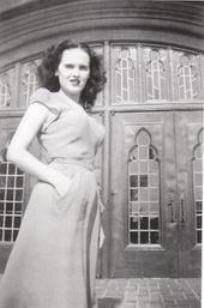
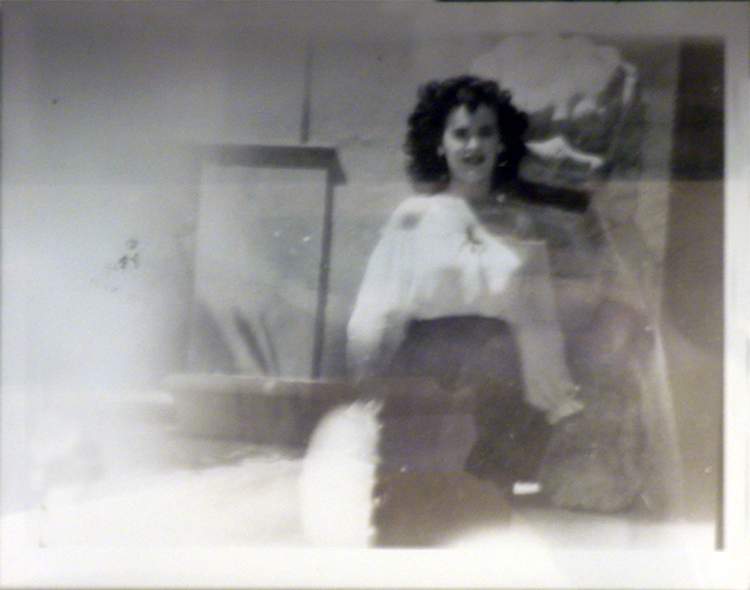
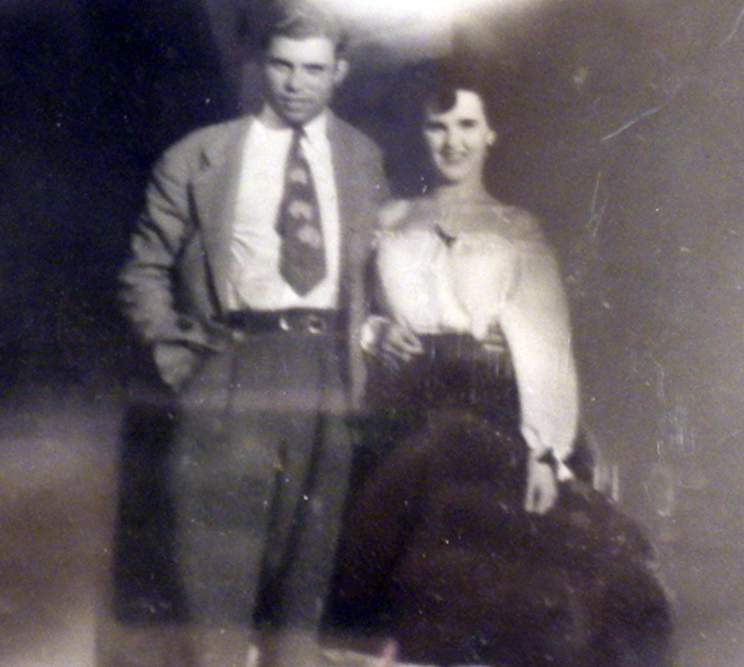
Like so many people, I have always been fascinated by the true story of “The Black Dahlia”. It’s probably the greatest “open” unsolved murder in Los Angeles history. It involves a classic scenario of a beautiful girl coming to Hollywood to find fame, and within a matter of months, she is dead, brutally murdered, in senseless fashion. The fact that she DID became famous, but in death, is a heartbreaking irony. So first and foremost, I believe there was a great story to tell here. Secondly, it hadn’t been told yet—not properly, anyway. So I decided to acquire the rights to SEVERED, because that was the best book on the subject as far as I was concerned. It had everything I needed, Gilmore had done all of the hard work for me. He had done the research, he had interviewed every conceivable person connected to the crime or to Beth’s life. I felt he captured the gravitas of the event better than anyone ever did… the tragedy of it, the sense of loss, the futility of those trying to solve it or even make sense of it. More importantly, I feel like Gilmore found and met the actual killer. I know this is a major point of contention with Dahlia aficionados, but I truly believe that Jack Anderson Wilson murdered Beth Short. I wouldn’t endeavor to make this film if I didn’t believe that.

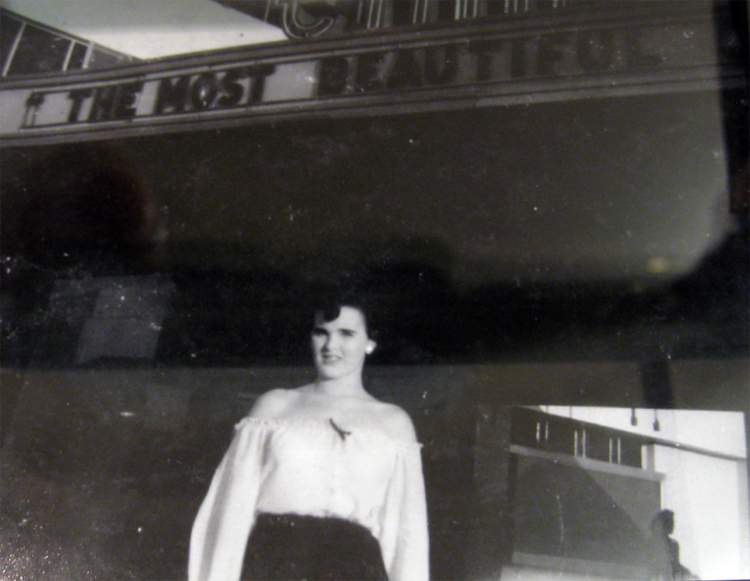
Elizabeth Short

Elizabeth Short

Will this piece show more of her as living individual as opposed to just focusing on her being a victim?

I would say about half of the film will involve Beth as a living person occupying the story. The rest will be the investigation—not just the police investigation initially, but Gilmore’s private and very personal investigation many years later. Structuring all of this is tricky, because it covers decades and people remembering things and differing points of view, etc. It is very challenging to write, but I love it.

Why do you think the world is still so taken with the story of her demise?

Several reasons. The fact that it is unsolved. The fact that somebody got away with it. The fact that it was such a brutal murder—“the worst ever committed upon a woman”, the coroner said. The fact that Beth Short’s whereabouts for the week prior to her body being discovered is mostly a mystery. And finally, it all goes back to what I said earlier: a young starlet shows up in Hollywood to become a star, fails… but then, tragically, becomes famous in death. That connects with people, because that’s the American Dream turned upside-down and shaken.

ES%20GCT

What can our readers expect from the film? Do you know who will be starring in it yet?

I have no idea who will be starring in it. I plan on completing the script before the year is over and then pursuing every great actor I can find to occupy key roles, because I think “packaging” is a big key in getting any movie made. Movie studios like it when you have a major star attached to your project; it gives them a good reason to say “yes”. I will say that I doubt very much the role of Elizabeth Short will be played by a “name” actress. I prefer she is a complete unknown, because I don’t want the audience to associate a famous actress’s previous work at all with Ms. Short.

What people can expect from this film is that it will be a serious, high-quality piece of work which treats Elizabeth Short and the events surrounding her murder with respect. It will not be without its share of thrills, chills, and intense drama. I consider David Fincher’s ZODIAC the gold standard for rendering a true-crime saga onto the big screen. Whether you agreed with John Graysmith’s “take” on that story or not, you have to appreciate the way that film was put together in terms of the production, the acting, the authenticity, everything. I can only hope that this project achieves that level.

What do you hope to accomplish with your portrayal of Ms. Short?

To me, that’s the biggest challenge of this film: capturing the true Beth Short. Because this was a complex, charming, sad young woman. She carried stress and pain around with her and yet she lit up rooms when she entered them. She was naïve but also canny. I don’t agree with (Detective) Harry Hansen’s characterization of Beth as being “a tramp”, but I also don’t think she was an “innocent”. People tend to romanticize tragic real-life figures; Marilyn Monroe is a classic example. Elizabeth Short was a girl who possessed a great many shadings. There was nothing black and white about her… well, except for her photographs.

Robertson

What other projects are you looking forward to bringing the world next?

I’ll be preoccupied with SEVERED for awhile, but I am very interested in bringing other high-profile true crime stories to the big screen. For instance, I can’t believe that the best production we’ve ever seen on the Charles Manson/Sharon Tate murders was a TV movie, HELTER SKELTER, way back in 1976. Surely there is room for that to be a feature film someday… not an exploitative one but a quality, big-budget one. So I am looking into that as well as other projects of that ilk for the not-too-distant future.

Anything you’d like to say in closing?

Just to keep an eye out for news on SEVERED in the upcoming months! I hope I can make Black Dahlia devotees everywhere proud by finally giving this story the thoughtful treatment that it deserves. And thank you again for having me!

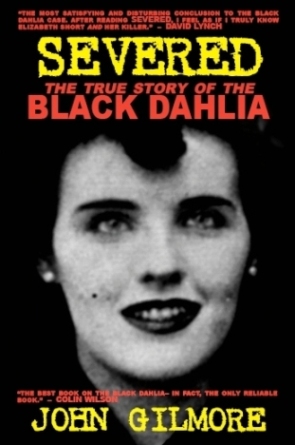
John Gilmore's "Severed: The True Story of the Black Dahlia"

John Gilmore’s “Severed: The True Story of the Black Dahlia

Severed on Amazon

(Also on our site see SHE A Memory of Marilyn by John Gilmore)

“The Total Eclipse of a Life Too Toxic to Look Directly Into” by Meg Tuite

The Total Eclipse of a Life Too Toxic to Look Directly Into

What had happened to that crashing wave that rose up to penetrate
the sand my feet felt to be true, slippery the way my eyes discarded you.
My feet dangled from between metal stirrups as I stuttered through my galaxy of anxiety, never planned to sing hymns to the prescription you wrote for me.

What if something happened to you? I clutched the paper
you gave me that promised three months of a world
that whispered you were breathing.

What if you decided to move to Nebraska
or raked yourself over with Oxycodone, Oxycontin, morphine,
had to go to rehab or Disneyland?

Maybe my life was in the hands of someone who mutilated more than me.
I never noticed your eyes. You were drunk on words that straddled poles around each form that paid homage to your pen.

I folded your prescription into a tiny square that fit itself into a sunless place in my wallet. It was my vacation itinerary.

What if I took each pill, a prayer on my tongue
and nothing changed?
A slot machine of side effects
Today, headache, nausea, shortness of breath
Tomorrow, cramping, weight gain, libido sucked dry
and every atom continued to become denser than the one
before it?

What if my life was a placebo?
mom on her knees
scrubbing the bottom of the refrigerator
with a toothbrush
while dad picked up
hitchhikers
that looked like sister
and did them
in hotel rooms
adjacent to mine

nightmare of foul toilets overflowing
because I couldn’t take a shit
without terror of someone
walking in

a voice that abandoned me
when I bled in his car
and smelled of decay
and mothers
or sex
I never knew

or the richest of blurs
that saturated
my mouth, my lips,
my body
into one holiday of a spectacle
that kept me
full of booze, coke, angel dust,
full of myself
finally,
for once.

tumblr_m40safQb2O1qambk3

Meg Tuite’s writing has appeared in numerous journals including Berkeley Fiction Review, MadHatter’s Review, Epiphany, JMWW, One, the Journal, Monkeybicycle and Boston Literary Magazine. She has been nominated several times for the Pushcart Prize. She is fiction editor of Santa Fe Literary Review and Connotation Press, author of Domestic Apparition (2011) San Francisco Bay Press, Disparate Pathos (2012) Monkey Puzzle Press, Reverberations (2012) Deadly Chaps Press, Implosion and other stories (2013) Sententia Books and has edited & co-authored The Exquisite
 Quartet Anthology-2011 and 2012 from her monthly column, Exquisite Quartet published in Used Furniture Review. Her blog: http://megtuite.wordpress.com.

An Interview with Katarzyna Wieczorek

198356_433998793331399_701020350_n

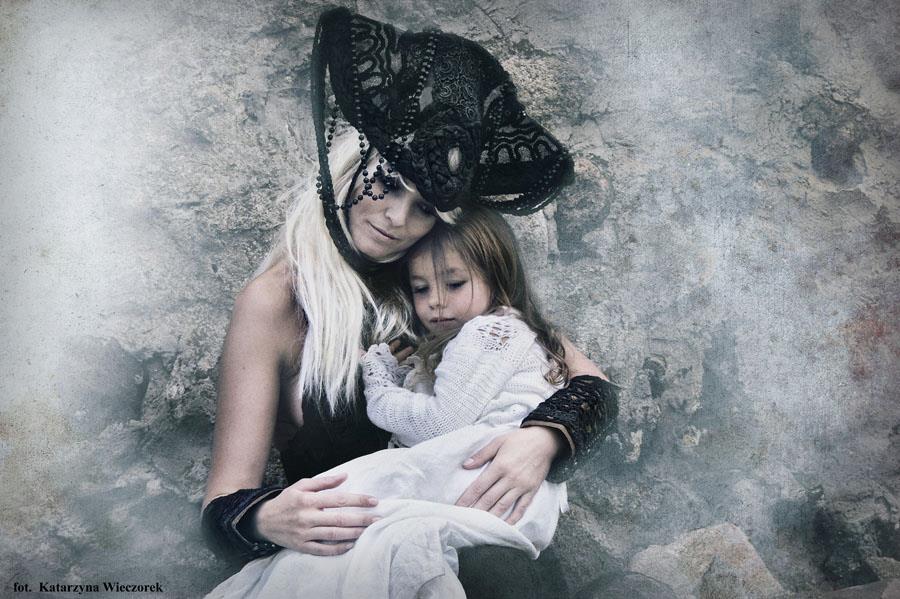
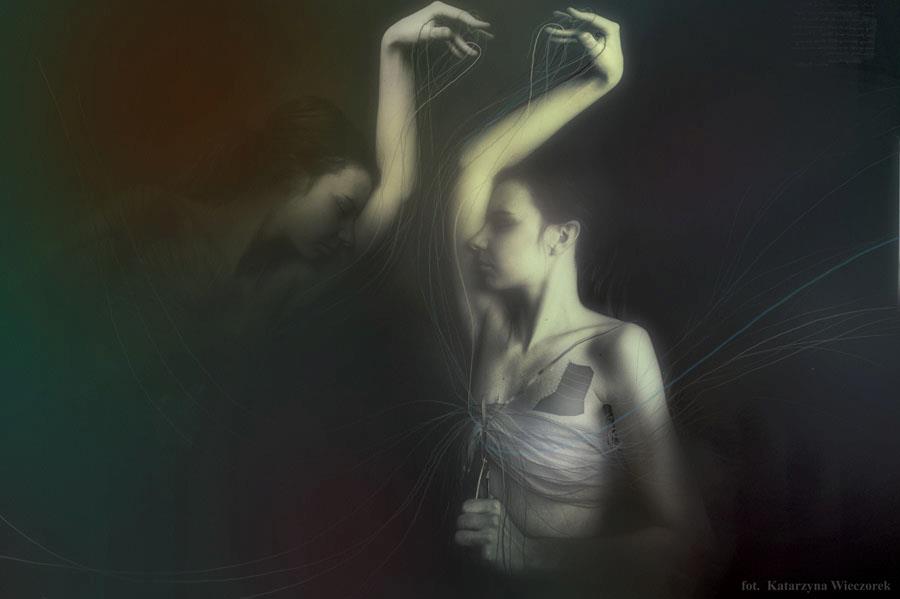
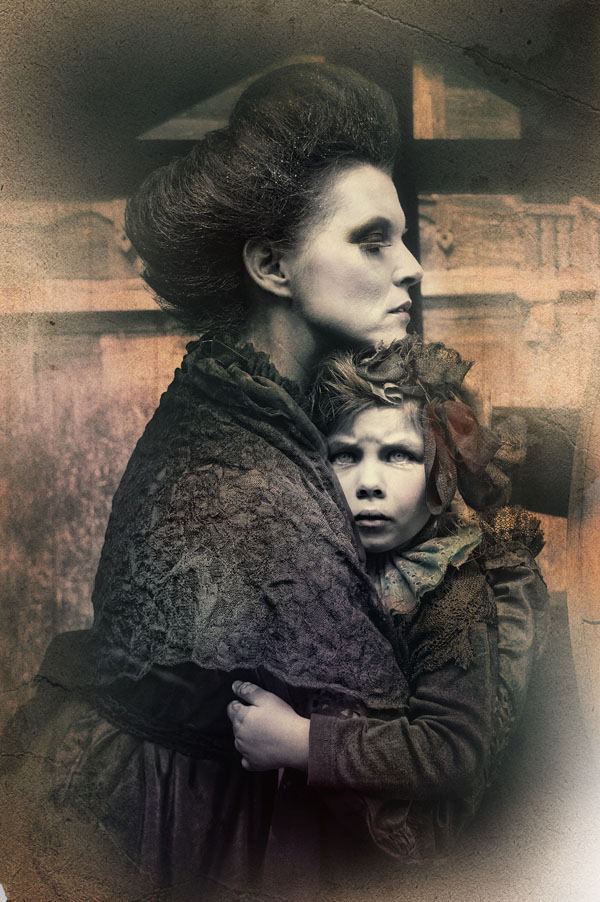
Katarzyna Wieczorek is an artist from Poland. She loves creating surrealistic, magical worlds infiltrated with charm. The mood of her photos affects the senses in a way a good movie or an amazing theatrical play does. Katarzyna likes to direct stories full of passion, ambience and secret.

What did you love most about growing up in Poland? What are some of your fondest memories from that time?

I remember spending the summer with my grandmother in the country. I was just a little girl at that time. All day I used to play with animals. I would run, jump, climb trees and I was very happy then. In Poland, where I grew up, there are peculiar customs and mentality. Religion and religious ceremonies are very important. I have soaked up with this culture and in my art there are many Slavic references, with rural and magical influences.In my country there are beautiful mountains. I would love to do my future shoots there. They give me the feeling of utter freedom.
3814_458288590902419_1676730709_n

Did you have a love for fantastically creative things from an early age?

Yes, I’ve had an extremely creative imagination since my childhood days. I used to like the fairy tales of Andersen and Grimm. Later on, I liked watching David Lynch’s TV series Twin Peaks . It made me tremble but I just couldn’t stop watching. I have always been pulled towards magic and fantasy. When I was a student at primary school I used to like walking in the cemetery without anyone around. It may sound strange but I liked it. As for music, I’ve liked heavy music since my childhood. Yes it is true, I sometimes think I am out of this world.

When did you first realize you wanted to be a photographer?

I’ve always liked looking at photos and then I’d cut out photos of stars, actors, musicians, and models from newspapers and hang them on the walls in my room.
Ever since I can remember I’ve always loved painting images and taking photos. I started with black and white film and darkroom techniques. Later, I started creating graphic manipulations and connecting them with painting.

71540_456561851075093_994597080_n

304692_396321083765837_1854453_n
Who are some of your influences?

I love the paintings of Zdzislaw Beksinski. His visions are unusual and full of symbolism. He had an ethereal style. In his art he established death as the theme and created masterpieces.I generally like surrealists. Their visions were often grotesque, from the borders of reality, dream, fantasy, and hallucination, while dismissing rationalism. It is a riot against classicism, realism, and rationalism in the conventions of art. I like that.

What is the first thing you need to learn if you want to be a professional photographer?

Photographers have many faces. Some want to take wedding photos or become a reporter. I build my visions with painting and graphics. I think that a professional photographer should have an original style and use photographic equipment and software with ease.Those are important but the essential thing is imagination and talent. Without them professionalism will not help much. Oh…and let’s not forget luck.

557061_415938765137402_1492515174_n

How do you like to operate when you are working on your trade?

I love listening to music. It inspires me to see visions of magic and surrealistic worlds. When I create my art, it feels like seeing myself from a bird’s-eye perspective and this gives me a better overview.

Do you find an active imagination comes in handy in your line of work?

I never stop imagining. I have creative ideas all the time, but when I’m on a photo shoot, I work according to a plan. Sometimes, I just come up with new concepts while working.

554329_363699400361339_1890814312_n

You work with your daughter Laura quite often. Does she enjoy getting to take part in your projects?

Laura is a very courageous young lady. She loves to partake in my projects. She behaves like a professional model. Laura has a vast spectrum of facial expressions and in my photos you can see her natural-born acting abilities. She is very photogenic and I have included her in many different roles. People love to work with her and she loves working with her mum.

How did becoming a mother change your outlook on life in general?

Surely I am not like most other mothers because I like creating art more than for example…cooking. When I came to be a mother I had to become more responsible but inside I am still the same girl, who loves freedom, art and summer.

398836_365980760133203_1131461648_n

As a mother yourself what do you think is the most important thing a could tell her child in regards to self esteem and such?

A mother should develop self-esteem in her children and be their friend. She should talk to them sincerely and never lie. She should also be a positive person herself, because a happy mother makes for happy children. She should try to set a good example and behave well, because children learn life in their family household first.Balance is the most important…balance between home and passions or career.

Can you tell us a little about how you work alongside your models?

Various well-known artists often get in touch with me saying they want to appear in my photos. Sometimes, I ask a person to work with me if I believe they are the most suitable for my vision of the shoot. I am lucky enough to work with people full of passion and willingness. My models are always treated with full professionalism. I work alongside make-up artists, hair stylists and fashion designers.

291992_216569358407678_1686655098_n

What one thing is a must when taking a flattering photo regardless of the subject?
My photos are meant to be expressive, not attractive or flattering. They are attractive in my own way.

Your work is full of fantasy with a hint of darkness to it. Why do you think the world has always been interested in those sorts of things?

I believe there will always be people who love darkness and fantasy. These themes run deep and have masses of interpretations. Those who fall in love with those sort of things know that it is eternal.

217654_457443164320295_1796973291_n

Can you tell us a little about Model Society? How did you come to be involved in that?

I got involved in Model Society via David Bollt. He wrote to me in an email and said I have a wonderful gift that deserves to be seen. He wanted to support me and my remarkable talent in building a global audience. I decided to join Model Society. I am happy that he welcomed me there and that I will find a home for me in Model Society where he is the administrator.

Were you surprised to learn that David Bollt himself was a fan of your work?

Yes, David is a fan of my work – when I learned that I felt very happy because he is such a talented person! It is amazing that my work got appreciated by such remarkable artists.

149782_443621775702434_1225987780_n

Are there any little known things about you that the world might be surprised to know?

I love movies and in the future I look forward to directing a thriller. It’s important to have dreams.

Do you have a dream project, a project you’d most like to accomplish in your career?

I have a lot of dream projects. Every day I see many visions in my mind and I never forget them. I’d like to mark my presence in the world of arts, who knows? I’d also wish to work in film – writing film scripts and working with David Lynch in his next project… but that is just a dream.

300064_440323876032224_1295643462_n

What projects are you most excited to show off next?

I’m thinking of creating a series of photos strongly relating to Zdzislaw Beksinski’s paintings.

Anything else you’d like to say?

Thank you for inviting me to do your interview Tina. You are a very kind and responsive person.

530138_405975089467103_45224229_n

“I Wanted To Say” by Mamta Madhavan

I wanted to say

This morning
watching the sea
reminded me
of your eyes

those glints
arresting the
sun’s vitality
on a May morning.

But I felt doleful
to see rising waves
leave trails on
the sand
swallowing footsteps.

320090_187807004633421_371408661_n

Mamta Madhavan has been writing poetry in English, her second language, from the age of 13. Her poems have been published in various literary journals and zines all over. She also pens
childrens poems. She is a curator on staff at gotpoetry.com.

“SHE” A Memory of Marilyn by John Gilmore

 SHE

A Memory of Marilyn by John Gilmore


mmshe


Born, breast-fed and bred by Hollywood is like being a small tentacle growing out of an omnipotent octopus. We’re sharing Alice in Wonderland’s looking glass—gazing at who we are while what is reflected has a way of commandeering the reality of our lives. Marilyn Monroe and myself, both born in L.A.’s General Hospital (Marilyn in the older unit, torn down to build the Dec monolith, both of us at different times, nursed on the Hollywood turf, and could’ve testified to lives lived different from any other. Here we exist in a glass dome like hothouse bulbs, the outside surface showing only what the industry wants the public to know—that which can spur sales. Inside the dome, we often find that if the mirror is tipped askew there is no reflection at all.  Some say God help us. We’re an isolated breed feeding on fame and recognition, and sometimes one another. Practicality and love struggle somewhere down the ladder—second or third rung business; to be addressed tomorrow, or maybe soon as the picture’s in the can.

My late, good friend of many years, filmmaker Curtis Harrington, passed away the spring of 2007. I spoke at his Memorial in the Mary Pickford Center, and gained the feeling that a fusion of all the positive energy in that packed theatre could possibly leak into some ethereal sense and somehow be transmitted beyond earthly reaches. I don’t know. A friend for half a century, we met on the Fox lot in 1957. We last met a week before he died, and were talking about Marilyn, remembering her. Curtis made his mark in experimental film, later was an associate to Jerry Wald, who produced Clash by Night, and another movie with Marilyn, Let’s Make Love. His next project with Marilyn would have been A Woman of Summer, based upon William Inge’s play, A Loss of Roses. Inge had written the play specifically for Marilyn. He told me in New York, “Every word the character speaks, I’ve composed as coming from Marilyn’s lips.”

John Gilmore in a film with Susan Oliver, 1959

John Gilmore in a film with Susan Oliver, 1959

Curtis, Marilyn, and I, once lunched in the Fox commissary, talking about the project. George Masters joined us, and told a joke that had Marilyn laughing—a brief reprieve from her nightmare on Something’s Got to Give. I’d played the lead in the L.A. theatrical production of A Loss of Roses, and it seemed that Marilyn and I would work together in the movie version.  What this meant for me as an actor was scaling Mt. Everest. It also meant reaching a summit in my every-so-often friendship shared with Marilyn since 1953, when introduced to her by my mentor, actor John Hodiak.

I can remember her now, how she blinked her eyes, the eyelids opening and closing; such a sad cast to those side-streets in her personality, then the brightness that could come in a flash, like a rush of spontaneous enthusiasm—more than one could contain. All of her in her very own world.

mmshe6


The initial script of A Woman of Summer had Marilyn “bubbling with ideas and juices…” she said. (The title would change to The Stripper, after scenes she’d so bubbled over were cut, along with meaningful dramatic scenes like the stripper’s try at suicide—slitting her wrists with broken glass. Marilyn loved the intensity of that scene.)

Later that day at Fox, Curtis gave me a copy of the changes, confiding, “Please do not let Marilyn see the ‘improvements’,” as he was instructed to call them, until the “approved” version was placed into Jerry Wald’s hands. The latest version Curtis handed to me contained none of Marilyn’s suggestions which would have made a far better picture. The big shots were saying, “She doesn’t have script approval—she’s not a writer.” The head big shot told Curtis, “She’s barely a competent actress.” How bloody wrong they were. That chaotic summer was fading fast—choices made that had nothing to do with Marilyn’s choosing. In their view, like John Henry of Sixteen Tons, she owed her soul to the company store.

I’d made no promise to Curtis that I’d keep secret from Marilyn anything about the Jerry Wald project. Nor did I promise my agent, Lester Salkow, or fellow clients Raymond Burr, Vincent Price, or Mr. Claude Raines, all supporting the prospect of my co-starring with Marilyn. Mr. Raines told me with a wink, “It could be a bit of alchemy, bringing you and Marilyn together romantically on the screen…”

mmshe2


While Fox was designing the costumes for the picture, the front office offered the co-lead—the role I was up for—to Pat Boone, who turned it down. “I’ve got a lot of teenage fans,” he said, “and they would be upset if I played a person who has an affair with an older woman. I can’t do that.”

I had no such qualms. Marilyn was gorgeous and hot as dynamite. I was an up-and-coming actor of 26, even one year younger than Boone. I was ready.

I wasn’t even off the lot when I called Marilyn and told her I had the script. That late afternoon she came to my place in West Hollywood, anxious to see the script inserts—the scenes she’d raved about. She was breathing hard from just walking up the driveway. A black scarf was over her head, under her chin and covering her throat. No makeup. Her eyebrows looked bleached. She wore something like tan army pants, two shirts and a sweater, and no socks; huaraches with her toes peeking out. Her purse was on a shoulder strap, and she was carrying a big purse, along with a thermos bottle like one I’d toted in the fifth grade.

I apologized that my place was small. She said, “This is bigger than so many places I’ve lived in. I can’t even think of all of them. This is very comfortable, and you can walk to the Tail o’ the Cock and drink margaritas all afternoon. That’s where the drink was invented, you know.” She sat on the raised brick hearth of the fire place, loosening her scarf, and then rattled through the insert pages. I watched her face for the inevitable. It didn’t take long. Minutes later, with a look of one shortchanged big-time, she stared at me and said, “This is terrible!  Don’t you think this is terrible?”

I said, “It isn’t exactly what Mr. Inge had in mind—”

“It isn’t exactly like anything!” she said, and in a swift, defiant gesture, she tore the pages in half and threw them into the fireplace. She nodded to herself.  “You can use it to heat this little house and make it very cheerful.”

Her hands were shaking. She asked for water, so I rinsed and filled a glass as she dug in that big purse. Out came a pill box full of capsules. She said she had a headache behind her eyes—reading too much. I asked if she wanted an Aspirin. She shook her head. “I’m on medication,” she said and drank the water, chasing two capsules. “My vision gets irritated and it’s very troublesome…” She stood up, stretching to one side. “I’ve pulled a muscle—twisted the wrong way rehearsing a number. Ralph says I damaged a ligament. You know Ralph Roberts?” I said I’d met him. “He always helps me,” she said. “I don’t know if I can get through all this without help. These jerks won’t help me. You’ve helped me—showing me the changes that weren’t there. That was the only reason I wanted to do the picture. I don’t see how I can do it…I know it’s anxiety because I’m not well…”

jg


She needed to eat. She said she’d had nothing that day. “I want bacon and asparagus,” she said.  “I’ve been thinking about it all day, even seeing it on a plate—in my mind.” I had neither bacon nor asparagus, but suggested Ernie’s Restaurant on LaCienega.

She used my cramped bathroom and I don’t recall how long she was in there. I listened to the water going on and off, and heard her repeatedly place the glass on the sink counter. When she came out, the black scarf was covering your hair, and big dark sunglasses hid her eyes. She asked, “Do I look all right?”

We drove to Ernie’s, and even half-hidden, the waiter sensed who she was. His hands shook as he set the plates on the table. Canadian bacon and asparagus stalks Marilyn then smothered with pepper.

She set the shaker down, and showed me a blister on her thumb. “I just sprinkled pepper on my sore,” she said. “I got this from planting an astonishing bromeliad…” I said she’d once told me bromeliads were her favorite flower. She asked, “When did I say that?” I said in New York, at John Stix’s dinner party. “He had a book on bromeliads—a big Spanish publication—”

“Yes!” she said. “A wonderful book. So many flowers—so exotic. So enriching for one’s spirit.  They can be found in the renderings of ancient Mayan civilizations. You cannot water some as you would other plants. You must put the water into them like you are feeding thirsty little mouths…”

She cut the bacon, speared each with a hunk of asparagus and drank only water. For desert she swallowed another capsule, saying, “These are actually vitamin Cs.”

I nodded, then asked, “Are we going to do the movie?”

She sighed. She tapped her fingertips against her upper lip. “Who the fuck knows?”

We drove back to my place and she said she wanted to read two scenes from the first version of the script. “This is why I wanted to do the picture,” she said. “The sad love scene between Lila and the boy, and then when she tries to end her life. God, I don’t know what they’ve done to this script, it’s so awful. I don’t understand why they can’t leave it alone…why they have to get their greedy hands into everything!” She almost cried. I gave her a wad of Kleenex. “Why won’t they even pretend to have an adventurous spirit? Or at least some kind of meaningful intelligence?” She blew her nose. She wanted to do the picture the way it had been presented, “the way it was orchestrated—written by this wonderful author.”

I said, “The original concept with solely you—Marilyn—in his mind. That’s what he told me in New York. He said every word out of Lila’s mouth, he was thinking of you–seeing you saying everything he was thinking.”

marilyn-monroe


She stared at me—that same odd sort of recognition we’d experienced before. Then, sort of erratically, using a match from the box on the fireplace, she lit the rest of the so-called revised script on fire and we watched it burn. I said, “We should toast the barbeque. I’ve got some vodka?”

She had to confess there were only the remains of a margarita in her thermos. She removed the lid and peered down into the mirrored interior. “I’ve had this for two days or I don’t know how long it has been, but the salt will preserve it—don’t you think?”

We mixed what was left in her thermos into the vodka. I took a taste and said, “You’re right. The salt’s preserved the margarita.” She slumped back on the Hollywood studio bed, saying my phonograph was like the one she’d had before, and asked what I was listening to. I turned it on, let the arm lower to the red LP record, and we sat, listening to the music and the voice. Moments later she said she knew what it was. I said, “It’s Amelia Rodriguez. Fado—the Portuguese word means fate.”

“It’s about tragedy,” she said.

“Not only tragedy,” I said. “Also about joy and love and all that.”

“But it ends in tragedy,” she said. “Emotional and stirring but always ends in tragedy.” She hadn’t said that in a disturbed way, simply as a matter of fact. I agreed, but asked if it made her sad.

“No,” she said.

I told her the record was given to me as a birthday present in New York. “Almost two years ago.”

“A girl friend?” she asked. I laughed and said no. She asked, “Why do you laugh?”

I didn’t know. “People laugh,” I said.

She said, “Don’t you have a girlfriend?” I said yeah, maybe I did. I just wasn’t thinking about it.

“People are hard to think about,” she said as we listened to the record. “Especially people who are telling you how you should be thinking.”

mmshe3


I was slumped in the canvas desk chair, my feet up on the coffee table, watching her as she removed the huaraches and was flexing her toes. She asked if I knew the Chinese method of massaging feet. I said that was something I did not know. She raised her leg, stretched it towards me and put her bare foot against the sole of my shoe. She said, “Your feet are small for someone as tall as you—” then quickly got her purse from the floor. She dug into it and came up with the pillbox. Arching her back for a moment, she put another pill in her mouth and chased it with the drink. After she carefully lifted two more pills from the box, she reached across to me saying, “These are good for you if you need to relax. It makes me so relaxed, I can just close my eyes and I start dreaming…” I took the pills but worried what they were until I excused myself and got rid of them in the bathroom.

Walking her to her car, I thought she looked frail. It wasn’t cold but even with those two shirts and the sweater she appeared to be shivering. I wasn’t sure what to do. Now, it seems like yesterday, her sitting behind the wheel, of her car, turning the key, the engine starting. The headlights went on. I remember bending down and saying, “Good night, Marilyn… you sure you’re all right?”

Her eyes were half lit in the yellow glow of the dash lights. She nodded, then raised her hand and gave a little backward wave. “Ciao…” she said, and drove away from the curb. Her red brake lights brightened at the corner, and then she turned west and disappeared into the night.

She could tell no one how ill she was, though I’d know later how ill she’d been, treading a tightrope between that miserable life at her back to one ahead she couldn’t be sure would prove less miserable than where she’d been. She was being drawn and quartered by a relentless commerce. Two weeks earlier, Curtis Harrington told me, “They’re eating poor Marilyn alive.  She’s trying to hide, but she can’t find a place to hide.”

Almost every hand she reached for was turning her down.  She wanted trust—someone you could trust who would not prove traitorous. There was really no one, was there?

They failed to acknowledge her priorities, and worse, her health, bent only on her luminous career being terminated. As a result, she was fired—the idiots having set her up to take the fall for their own unrelated extravaganzas. “You are through,” they said. “All washed up. She’ll never work again in this town. Marilyn Monroe will be forgotten…”

Wrong and wrong again. She showed them what guts was all about. That front office was a speck on a beach compared to Marilyn’s popularity; compared to the unflinching commitment and admiration world-wide, how fast the scales tipped, and mouths so full of dictatorial admonitions turned to Cheshire smiles as they welcomed her back.


But our movie, which Mr. Claude Raines had prophesized as an act of alchemy, rolled sadly without ether Marilyn or myself. Joanne Woodward took Marilyn’s place, and told me, “I did it as homage to Marilyn. I even recorded the song Something’s Gotta Give. I did it all for Marilyn.”

Jerry Wald suffered a fatal heart attack during production. He was only 51. Curtis Harrington took up the production reins, harried, stressed; doing the best he could under the circumstances.  Less than a month after Wald’s exit from the world, Marilyn followed, just a breeze past her 36th birthday.

mmshe4


Decades have passed. Half a century since that night I walked Marilyn to her car, yet it could have been yesterday.

I never saw her again. Too late the truth hit that I had failed to honor the little parcel of trust she bestowed—that small, shining jewel, too brief, too fast; all events roaring with an immediacy that stunned, and then she was gone.

I hid my sadness behind a hundred guises—something I could never talk about except to those touched by her. I locked a door to a space in my life that stayed nailed shut. Was it fate? Was it written all over her face and I failed to see it because I would’ve had to ask myself, “What can I possibly do?” This is Hollywood, isn’t it?

In dreams I begged her forgiveness for my having failed at being more than another hand turning her down. I fought against accepting that as a fact, and as unreasonable as it seems to alter what was, I did feel sorry—but all the clowns that could be have never erased the regret I’ve carried for when I saw her falling, and like everyone else, I stepped aside. Hollywood, right?

I’ve cherished each moment of her company, infrequent as it may have seemed, each single second I caught her eye. These are holy relics housed inside my soul. So yes, Ciao, dear Marilyn.

mmshe5


This 50th Memorial at Westwood will equate to my having lived more than two her lifetimes, the second one empty of that person—a sad, frail Marilyn, gone, but now everywhere—a whole other world of her and more and more worlds of people touched, made joyous, made enriched by the iconic, continuing Goddess life of Marilyn that will never be gone…

Fans rejoice that her beaming spirit so divinely captured through the magic screen has filled the years immeasurably. The wonder of her sparkling achievements lives with us, the Marilyn the world knows and loves, and carries in their hearts; not as a lost soul careening in the constellations, but like the spirit of Mozart seizing us through his music, or Van Gogh pulling us into his dazzling, pulsing paint, right to the other side of the mirror. No magician on earth can weave a more spectacular spell than what Marilyn bestowed of her radiance, her gentleness, and a profound, vibrant humanity. She never has to hide again. She is everywhere in the world.

Beyond all shadow and haze and uncertainty, she is an angel that walked upon the earth, and that angel is yet with us; and will live eternally, everlastingly, through all time and into infinity.


An Interview with Jack Ketchum

Photo by Steve Thornton for www.theamericani.com

Photo by Steve Thornton for http://www.theamericani.com

Author Jack Ketchum  has worked as everything from a soda jerk, lumber salesman, teacher, singer, and an actor. He claims that Elvis, dinosaurs, and horror probably saved his life. Most readers who are familiar with his work, are likely well aware of a piece in Entertainment Weekly in which Stephen King, when asked who was the scariest man in America, was quoted as saying, “probably Jack  Ketchum”. No small praise, though well earned, it is without a doubt one of the highest compliments anyone could receive in his field. In 2011 he earned The World Horror Convention Grand Master Award for outstanding contributions to the horror genre.

A knack for creating stories and a love of written word from a young age led up to what was to become a lifelong career. He was mentored by Robert Bloch (author of Psycho,) who in turn had been mentored by H.P. Lovecraft during his early days as a writer, and who remained a friend and supporter of Jack’s until his death in 1994. In the earlier days of his career, Ketchum sold a rather impressive amount of articles and short fiction under his original pen name, Jerzy Livingston, which he later changed to Jack Ketchum when he began writing novels.  He recently worked with director Lucky McKee on the novel and the movie version of The Woman and the book I’m Not Sam.

How exactly do you think Elvis, dinosaurs, and horror have saved your life? What first sparked your interest in horror.

I was what they call a troubled kid. Parents at war, me in the middle, that kind of thing. Elvis gave me my first taste of rock ’n’ roll rebellion and a sense of identity, he got out and I wanted out, I wanted to be just like him. Dinosaurs gave me a rich fantasy life and a sense of the unknowable past and unfathomable future. I never believed they’d gone extinct, by the way. Turned out I was right! T-Rex was my first monster. Scared the shit out of me and chased me through my dreams. Probably Christianity gave me my first true sense of horror. Some guys nailed some other guys to a cross, on purpose! What a world, huh? Give me T-Rex any day.

You also credit Elvis with giving you your first taste of the freedom of rebellion and a sense of identity. How did the idea that if he could get out you could too influence your life from that point on? Do you remember what you thought the very first time you discovered his music?

I’ll quote Bob Dylan here. “When I first heard Elvis’ voice I just knew that I wasn’t going to work for anybody, and nobody was going to be my boss. Hearing him was like busting out of jail.”  I felt exactly the same.

What do you think you’d be doing right now if you hadn’t become a writer?

I’d be in jail for murdering my boss.

Stephen King has called you the scariest man in America. What did it feel like to learn that? Do you agree with him? Are you a fan of his work?

Big fan. Steve’s the real deal, a natural storyteller with heart, soul and an endlessly crafty mind. When I learned he called me that in Entertainment Weekly I was all smiles, naturally. But that was during the GW Bush administration. I e-mailed him and told him thanks, but that I thought the scariest man in America lived across the Potomac.

What was the first story you ever remember writing?

It was a first-person narrative about Hector being dragged around the walls of Troy by Achilles’ chariot. From Hector’s point of view. Artistic license. Hey, I was just a kid.

What was it like to be befriended by Robert Bloch? Do you think you would have accomplished all you have without his support? What was the most important thing you learned from you friendship with him?

Many things. To apply my ass to a chair. To keep your sense of humor intact at all costs. To try to be generous to young writers. That loving books doesn’t make you a wuss…all kinds of stuff. Bob was a wonderful man.  I wrote to him in high school at the behest of my English teacher, a class assignment to write to authors we liked, and he wrote me back. That began a long correspondence that lasted until he died. “Nice” is putting it mildly. It was intoxicating at first, for a teenage kid, and later, invaluable to have that feedback. His work stands because he was unique—the first pulp writer to inject both humor and realism into his stories. And most of them hold up to this day.

What one question that never gets asked do you most wish would be posed to you in an interview?

If you’re so damn smart, why ain’t you rich?

What is one little known thing about you that even those closest to you don’t know?

Exactly how much scar-tissue I have around my heart.

jack2

Do you think it is important for people to help each along through this life whenever possible?

Whenever possible, yes. And not just people, but animals too. You’ve got to pick your battles, though, or else you risk wearing yourself too thin, both financially and emotionally. As Stephen King said in his story The Reach, “I believe it is better to plow deep than wide.”

As someone who is truly kind do you think kindness is a highly overlooked virtue in today’s world?

There are people who would argue my kindness but I try. I don’t think it’s an overlooked virtue. I think it’s one of the few that we still hold dear. I’m an old hippie. I still believe, as many people do, that it’s important to spread a little sunshine.

You are also very fond of animals I understand. Is that a long-standing trait?

Sure. When has an animal ever made fun of you? Bullied you? Made you feel unwanted? Ripped you off? Give me a cat or dog over most people any day. They’re a safe, reliable, giving repository for love.

You have worked with Lucky in the past. What is it like to work with him? Why do you enjoy it so much?

Lucky and I are always on the same page. It’s very unusual, I think–especially because he’s young enough to be my kid. Plus he’s just a lot of fun to work with and be around.  We share a kind of black sense of humor and a very real love of books and movies. You don’t want to ruin a friendship with disagreements over work, so you have to pick your partners carefully, and both of you have to be okay with the possibility of it not working out. But when it does, as with Lucky and me, you find this kind of rapid-fire inspiration going on, each of you picking the other’s brain for ideas, some ridiculous and some perfect, so that it’s a lot of fun. The product that you get is not quite yours and not quite the other guy’s either, but belongs to some third “writer” that you both invented together.

For those not familiar with the story, can you tell us a little about The Woman? What does it feel like to see your ideas take come to life on film?

The Woman picks up where the film version of Offspring leaves off. She’s the sole survivor of her tribe, badly wounded, and a very strange guy out hunting trips over her one day and decides to bring her home to the wife and family. It’s a major kick to see a bunch of talented people applying their skills and insight to a template you’ve provided with your own imagination. When it succeeds, as I believe The Woman does, it’s thrilling. And even when it only partially succeeds it’s delightful. I’d guess that when it fails utterly it’s distressing as hell. Don’t know. Luckily, I’ve never been there.

The scene at the beginning of The Woman with the wolf and the baby is one of the most comforting scenes I’ve seen. How was that accomplished?

It was a real baby, real time. No CGI at all. Trick was…they “grew up” together. The wolf met the baby first thing, since he belonged to the trainers. A little red sugar water and voila!

You are working with Lucky again on I’m Not Sam. Is there anything you can tell us about that? Any thought yet as to who is going to be in the film version? Is there any chance you might use Sean Spillane again on the soundtrack seeing as he nailed it on The Woman?

At this point I’m Not Sam is two linked novellas, a very twisted love story, to be published by Cemetery Dance this year. We’re still working on the screenplay so it’s too early to say who’ll be involved with it, though Sean certainly nailed the music for The Woman in our estimation. We have a producer interested, but nothing firm yet.

What do you think you would like your famous last words to be if you had one final thing to say to the world?

Ne pas sto kalo. That’s Greek for “go with the good.”

Photo by Steve Thornton for www.theamericani.com

Photo by Steve Thornton for http://www.theamericani.com


“Late Winter Still Life, 1960” by George Korolog

Late Winter Still Life, 1960


There is this moment in space that I

continue to bend back over

myself, one that I had mentally marked,

saying, “I will remember

this moment.” Today I’m flipping time in

on itself, connecting two

points into a single moment again,

folding forty years of distance,

even though I cannot explain the point of

either. Points are elusive.

It was late winter. There was no snow.

My face was stung red.

I was positioned solemnly in the street

in front of my house

leaning into the hard strokes of wind

with a confidence that has

disappeared with age. I don’t

remember arriving or leaving,

just being there. Gunmetal grey sky

slashed with deep cuts

like rips in a coal vein that has

been there forever, waiting to

be discovered. I distinctly recall

thinking how much I mattered,

not how little. My clothes were tinged

with late afternoon frost,

my plaid red jacket hooked and closed

with clasps that clipped

together with a magic trick, my frozen

right shoelace undone,

worn grey corduroy pants with an

ironed on patch over the knee,

rising tide above the ankles. It was

a distinct thought. “Remember

this moment”. Mark it. Tell yourself that

you will never forget.

“Remember this moment”.

Imbed it so that

it would remain, for

If I lived long enough, I would

to be able to say that I thought

this thought. Did I make a pact

with God and promise that I would

never forget. Had the final errant

bird on the high voltage wire,

whose perfect stillness had caught my

attention make everything perfectly clear?

I do recall that the air was frozen and

that the angels could not fly.

One-300x200George Korolog is a poet living in Woodside, California. He works in the left hemisphere of the world with a right hemisphere brain. Somehow, he makes it work. His poetry, flash fiction and non-fiction have been widely published in over forty print and online journals such as Word Riot, Forge, Punchnels Magazine, Naugatuck River Review, Blue Fifth Review, Poets and Artists Magazine, Red River Review, Poetry Quarterly, Connotation Press, The Chaffey Review, Thin Air, Grey Sparrow Journal and many others. His poem, From Tending Sheep to Confusion on the Amtrak 10:50 was awarded second prize in the 2011 Tom Howard/John H. Reid Poetry Contest. He was a runner up for The 2012 Contemporary American Poetry Prize for his poem, Soul Stone. He has been nominated for the Pushcart Prize and is an active member of The Stanford Writers Studio. His first book of poetry, Collapsing Outside the Box, was published by Aldrich Press in November 2012. His second book, Raw String will be published by Finishing Line Press in 2013 and he is busy working on his third book, God’s Avenging Concubines.