An interview with Dino Valls

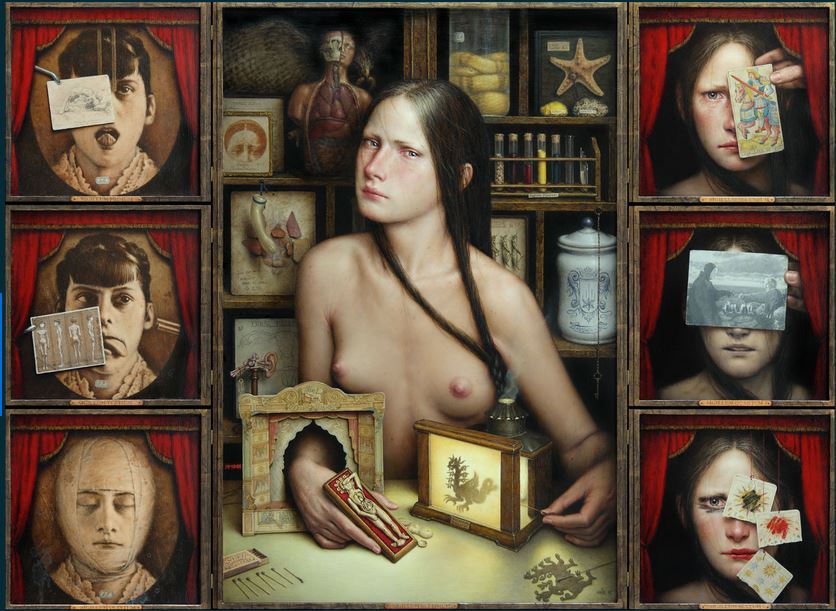
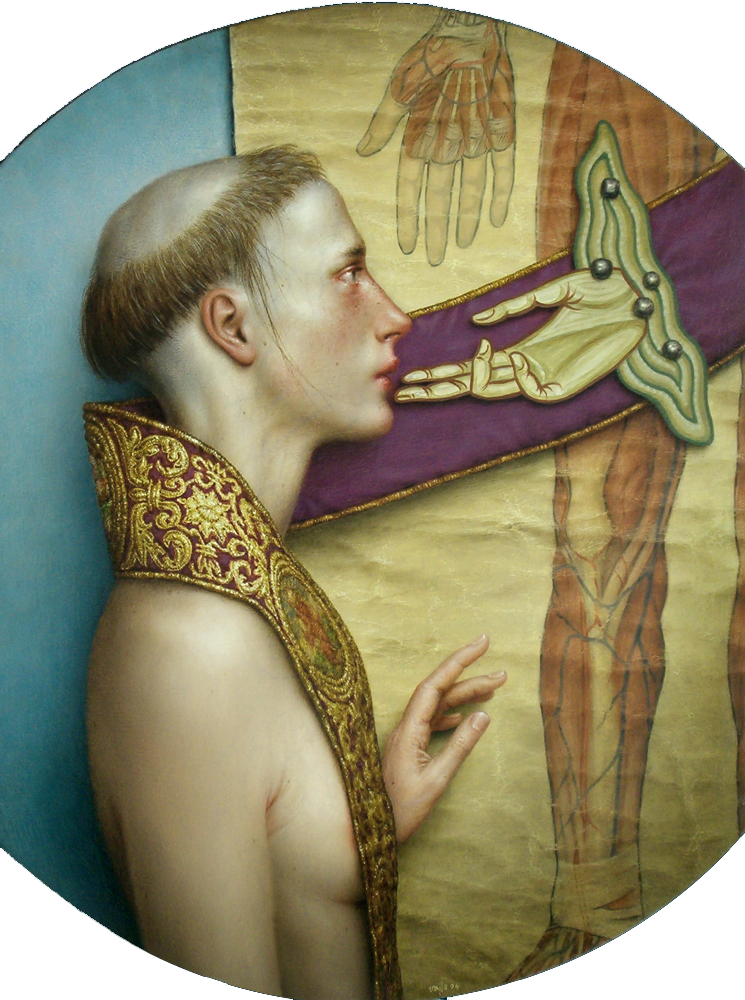
"DRAMATIS PERSONAE" Egg tempera, oil and gold leaf / wood 170 x 122 cm. 1996

“DRAMATIS PERSONAE”
Egg tempera, oil and gold leaf / wood
170 x 122 cm.
1996


What was it like growing up in Spain? When did you first begin to notice your love of drawing? Do you happen to remember what you used to draw most often back then?

 My youth passed in an interesting period of the history of Spain, with a strong boost in a feeling of freedom, very stimulating for creativity, although in arts, the dominant informalism wasn’t the best climate to develop my personal interests in painting.

I always liked to draw, maybe because my father also liked it. Pencil, color pens, ink, watercolor, charcoal, pastels… different techniques to draw anything, sometimes copying plates of old painters, or inventions.

What was your earliest influence?

 I started to visit exhibitions and museums in my city, to see art books… I had no direct teacher to learn, so my reference has been the whole History of Art, extracting what is the common essence of the artistic expression all along the history of mankind. And regarding the conceptual content of my work, the depth psychology, and the Jungian analytical psychology.

What led you to first try your hand with oils?

 There was a certain prevention to my start with oils, my father knew my passion for drawing, but he feared that a premature beginning into oil painting, a technique more difficult, could produce discouragement and distancing from my hobby, so he advised me to wait until I improved my drawing skills. But my learning and development were fast and surprisingly easy to me. Even so, I did painted a lot, getting more and more ability. I have to recognize that I had a strong liking for painting but never thought to professionally be an artist, in fact I started my studies of Medicine the same year that I started to paint with oils.

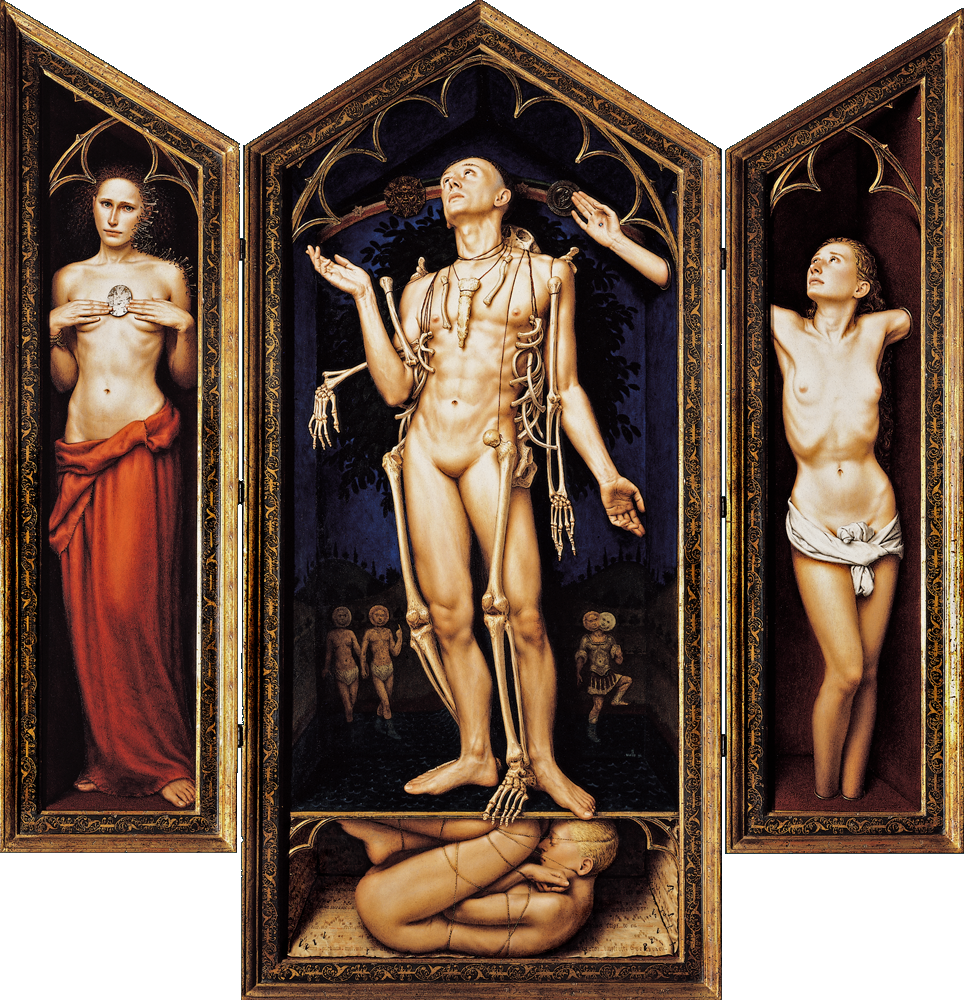
"DIES IRAE" Oil / wood Polyptych 7 pieces: 74 x 100 cm. 2012

“DIES IRAE”
Oil / wood
Polyptych 7 pieces: 74 x 100 cm.
2012

What did you find most challenging when you first started learning to  work with those?

 To learn to work in sessions, to be patient, and always thinking that what you are painting is the previous layer to the following other(s).

What advice would you offer others who wish to learn on their own?

It’s very hard, you need a lot of self-discipline, and to be very critical. And be convinced that anyone is “self-taught”, it’s absolutely necessary to learn how other masters did, and in this way until the moment in which you feel you have a complete control of the technique, so that allows you to adapt or modify your knowledge to your own way of working, or develop new ones. The only advantage that I see is avoiding the strong and persuasive influence of one only teacher, in a moment in which oneself still hasn’t formed your own artistic personality.

You also have a degree in Medicine and Surgery. Does that training and the knowledge of anatomy in particular come in handy in your painting work?

 Of course the knowledge of the deep structure of the human body is very useful for my painting, but I think that there are other elements in the studies of Medicine more important for my work, especially in the creative or conceptual contents.

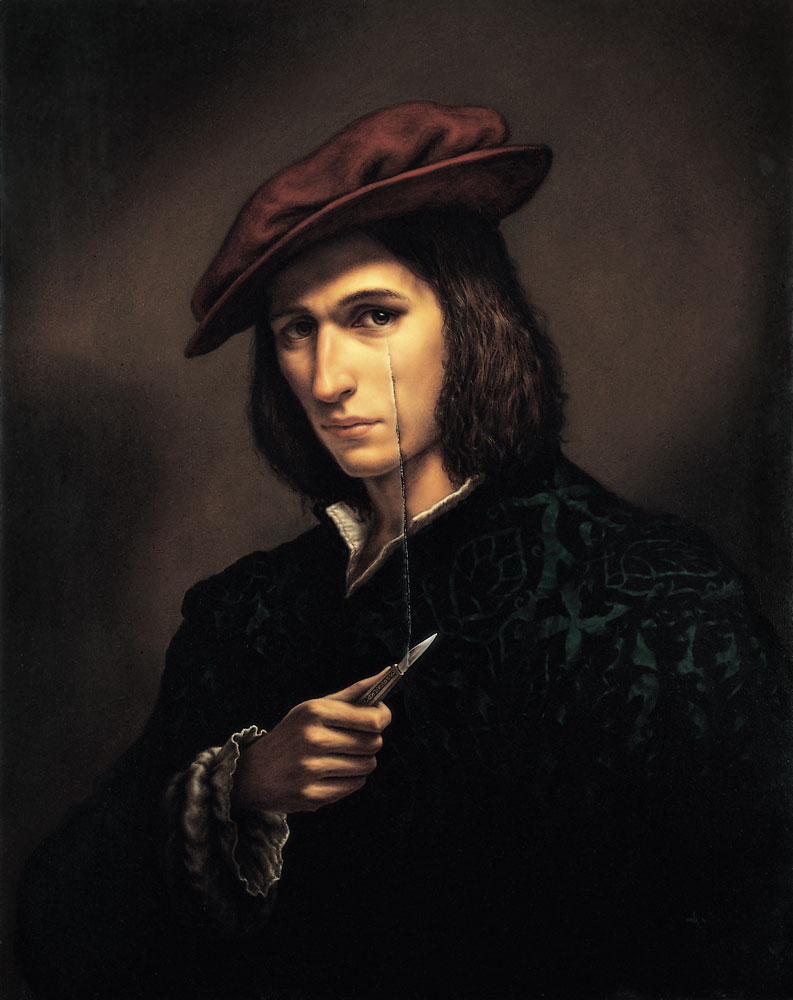
"TENEBRAE LESSONS" Oil / wood 78 x 94 cm. 1993

“TENEBRAE LESSONS”
Oil / wood
78 x 94 cm.
1993

What did people around you think of your decision to be an artist as opposed to the medical field?

 During my career, I also painted a lot, and started to show my works in some collective exhibitions, receiving a very good response, wining some awards, and called by galleries of Madrid to prepare individual exhibitions. Even so, I wished to finish my studies and only after getting my licentiate degree, I decided to work only as a painter and not as a doctor. My family and friends trusted in me and supported my decision, helped by these first successes and knowing my sensible character and prudent determination, although always thinking that Medicine did lose a dedicated surgeon…

What do you love most about painting?

It’s a pleasant way to go deeply into the dark basements of the mind, to explore the collective unconscious. It’s a lonely mystic work of self-knowledge.

Some of your works seem to feature the same model. Why do you enjoy working with that particular subject?

The characters that I paint are imagined and idealized persons which embody some archetypes of the unconscious. All of them have a similitude because they are invented and follow that ideal expression and features. I never use real models. My ability to achieve an adequate verisimilitude, of course has been increasing during the years of work, but my early decision not to use real models, not for persons nor settings, allowed me to create more easily imaginary worlds, and project more directly an inner deep content. Which is much more difficult if you have to look for and find real models and settings.

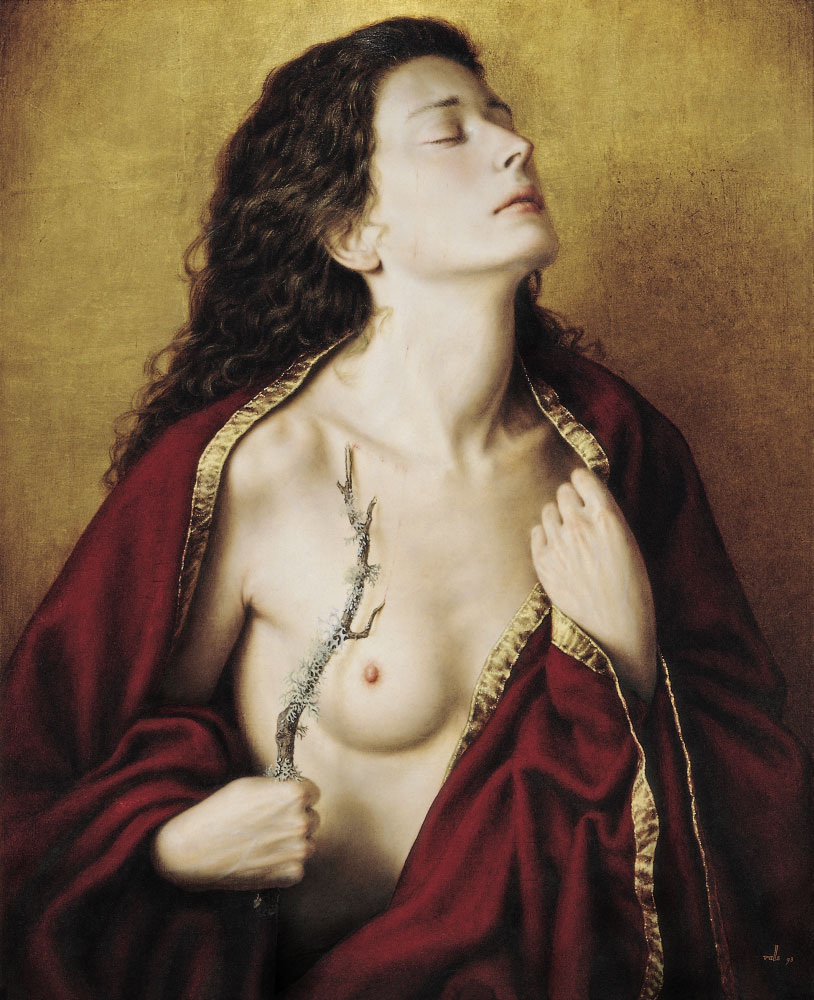
"DE PROFUNDIS" Oil / canvas 92 x 73 cm. 1989

“DE PROFUNDIS”
Oil / canvas
92 x 73 cm.
1989


Why did you decide to work with tempera? How does it differ most from the work you had done previously?

In the early nineties, I studied the ancient techniques of oil glazes on tempera, and then started to use them because of the fast drying of the first layers, its brightness, and the inimitable colors that this technique achieves when you work after with the glazes of oil. Progressively, I’ve developed my personal way, by adapting this one to my preferences, seldom using the laborious preparation of the egg or casein tempera base.

What do you like to do when you aren’t working?

 I don’t believe in these moments. You are always working, even when you aren’t in front of a painting. I love music -but I always paint listening to it-, When I’m not painting I read and study…

Any little known things about yourself you’d not mind sharing with our readers?

I already do: look at my paintings.

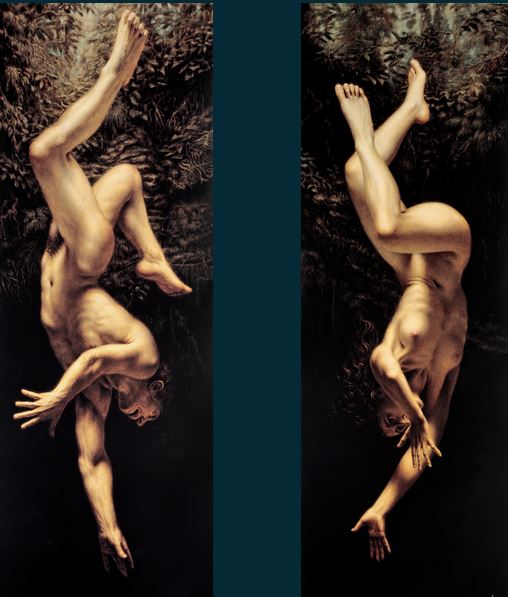
"THE CREATION OF TZADE (צ) THE CREATION OF AYIN (ע)" Egg tempera and oil / wood Dyptych: (2x) 140 x 49 cm. 1992

“THE CREATION OF TZADE (צ) THE CREATION OF AYIN (ע)”
Egg tempera and oil / wood
Dyptych: (2x) 140 x 49 cm.
1992

Do you have a dream project you’d most like to see completed?

To live many other lives to develop many other forms of art I’d like to make. As this isn’t a project, I hope to see one day all my works together in an exhibition.

Anything you’d like to say before you go?

Gaze at my paintings with your nape, with the eyes closed…

"COLLECTIO" Oil / wood 35 x 35 cm. 2011

“COLLECTIO”
Oil / wood
35 x 35 cm.
2011

For more information on Dino Valls please see: http://www.dinovalls.com/  You can also see our piece with more examples of his work at: https://theoriginalvangoghsearanthology.com/2013/05/19/the-art-of-dino-valls/


“Vulture like Blackbirds” by J.J Hastain

blackbirds


Vulture like Blackbirds


You know that you have become an integral middle of concealed yet sacred geometry when, rather than explaining by address or driving directions, you begin to tell your friends to just move toward the endless blackbirds circling above your cave. The birds are there day in and day out, gyrating, ascertaining uncertain floods in your pelvic floor, so why not invite your friends in by way of that fact? Blackbirds can whirl like vultures, obsessively enfolding a spot below them, keeping that spot forever in their stare. There are organic forms of portals and channels and those forms of organic are dark.

Because it is possible to bow to places that have not yet been reached, the work is to sense many different pressures as pleasurable. In my cave, where neural ducts spread like bramble, I engaged in a regular practice of making diodes and doilies. I worked to turn any first sun into subliminal (not secondary) strength. The dark birds remained above me like clockwork. Was I their most chthonic temptation? A cock-bearing clock tower, frothing as it turns its back on time?

Bio6J.J Hastain is the author of several cross-genre books including the trans-genre book Libertine Monk (Scrambler Press), Anti-memoir a Vigorous (Black Coffee Press/ Eight Ball Press) and The Xyr Trilogy: a Metaphysical Romance. J.J’s writing has most recently appeared in Caketrain, Trickhouse, The Collagist, Housefire, Bombay Gin, Aufgabe and Tarpaulin Sky. J.J has been a guest lecturer at Naropa University, University of Colorado and University of Denver.

“Commemoration” by Lisa Dordal

Commemoration


I. CHRISTMAS PAGEANT


At twelve, I played Mary

in a community Christmas pageant.

I saw you at the service, people said.

I saw you with your baby,

riding your donkey. A real donkey,

led by some boy. Older boy.

Fourteen at least. I don’t remember

his name or if I even knew it

at the time. Just that I couldn’t look at him.

Couldn’t look straight at him without

blushing and lowering my eyes.

Everyone said I made a great Mary.

That I did a great job being

the one God descended upon. No,

not descended upon. Entered.

That I did a great job being the one

God entered. And who

afterwards called it holy.


II .CHRISTMAS PAGEANT REVISITED


The boy is important, the visiting poet said.

Immensely important. The center of the poem,

he said. Her desire for him is the center of the poem,

the dramatic center. Her desire for him is

what this poem is about. This much is clear: She desires him.

The girl riding a donkey desires him,

the boy, the dramatic center. You need to build him up more,

he continued. Give him a name, good looks, maybe a touch of acne.

Help us to see him, to see the real center of this poem.

To see into the center; to see inside her

desire. Help us to get inside –

inside the blushing and the lowering.

Tell us how blue his eyes are, how dark his hair,

how straight and perfect his

nose. We need to see him. The center of her desire.

Unless, of course, you are striving

(striving!) to create an aura of mystery – an illusion of mystery –

like you would if you were talking about, say, God.


Unless, of course, you want the boy to be mysterious

in the same way a deity is. Maybe even the girl.

He said this last part parenthetically. (Really, he did.)

Unless of course….


Unless of course you, you, just don’t get it.

That there is nothing mysterious here. Nothing of the

element of religious deity in the story of

a god who descended upon, entered, a woman, a girl,

and with this, the world. Entered and created a world filled

with immensely important boys

who would grow up to be immensely important men,

who would grow up to be the dramatic center of every girl’s life,

grow up to be the desire of every girl who would become every woman,

who would become, be becoming to, every man,

who would become, yes, become, come, come not out of choice,

not out of desire, but fear. Fear and trembling.


Unless, of course, you call that love.


 (This poem first appeared in the Journal of Feminist Studies in Religion, p. 121, V. 26, N. 1, Spring, 2010.)

Lisa Dordal headshot


Lisa Dordal holds a Master of Divinity and a Master of Fine Arts in poetry, both from Vanderbilt University, and currently teaches part-time in the English Department at Vanderbilt. Dordal’s poetry has appeared in a variety of journals and anthologies, and her chapbook, Commemoration, is currently available from Finishing Line Press. She lives in Nashville, Tennessee with her partner, Laurie. For more information, please visit her website at http://lisadordal.com.


The Art of Dino Valls

" ARS MAGNA" Oil and gold leaf / table 184 x 122 cm. 2010

” ARS MAGNA”
Oil and gold leaf / table
184 x 122 cm.
2010

"Nigredo" Oil and gold leaf / table 62.5 x 48 cm. 2010

“Nigredo”
Oil and gold leaf / table
62.5 x 48 cm.
2010

"ACU PICTA" Oil and gold leaf / table Polyptych 6 pieces: 150 x 120 cm. 2004

“ACU PICTA”
Oil and gold leaf / table
Polyptych 6 pieces: 150 x 120 cm.
2004

"PANGE LINGUA" Óleo / tabla 53 x 40 cm. 2004

“PANGE LINGUA”
Óleo / tabla
53 x 40 cm.
2004

" Arbor Vitae" Oil / board Triptych: 160 x 126 cm 1994

” Arbor Vitae”
Oil / board
Triptych: 160 x 126 cm
1994


"Necessitas" Oil, gold leaf and silver / table 130 x 100 cm. 2009

“Necessitas”
Oil, gold leaf and silver / table
130 x 100 cm.
2009

"PASSIO" Egg tempera and oil / wood 72 x 58 cm. 1993

“PASSIO”
Egg tempera and oil / wood
72 x 58 cm.
1993


"SOLVE ET COAGULA" Temple de huevo y óleo / lienzo / tabla 165 x 122 cm. 1992

“SOLVE ET COAGULA”
Temple de huevo y óleo / lienzo / tabla
165 x 122 cm.
1992

For more information on Dino Valls please see: http://www.dinovalls.com/


“Earth Day” by Kari Wergeland

Earth Day

I face the line on Earth Day,

my forty-seventh birthday,

and mourn for the athlete’s body, the dancer,

the woman who could hop from rock to rock

without losing her balance;

who once thought about becoming a figure model

for a group of Impressionists looking for curves,

long lines, shiny hair, and smooth skin;

who ran in the sun, the rain, and the wind,

in the Truffle Trot and the Butte to Butte;

who never stopped to consider

how it would have to end

when she was forced to look for gentler ways:

Reuse the Past, Recycle the Present, Save the Future.


Now this line irritates her like a sliver.

She limps along next to it, fretting

over how some throw in the towel

when they reach the other side.

A mysterious landslide

just comes tumbling down

and smothers the green shoots that once bloomed each year.

She wonders if the earth will crack open right here,

releasing hot friction between two giant plates

like the sore places in her ankles.


That’s when she decides to stand on the line.

Step on a crack. Break your mother’s back.

She paws at it forcefully.

She flashes her red cape,

listening closely as the crowd cheers—

as the moment balances in the air.

Inhale…exhale…inhale…exhale…inhale…

She exhales right over it,

trying to learn how far she can walk in a day,

singing again after all these years.


Previously published in The Ballad of the New Carissa and Other Poems.

kari2web

Kari Wergeland is the author of Voice Break, as well as The Ballad of the New Carissa and Other Poems. In addition, she wrote a children’s book review column for The Seattle Times, which ran monthly for 11 years. Wergeland recently earned an MFA in Creative Writing from Pacific University. She works as a librarian for Cuyamaca College in El Cajon, CA, and lives part-time on the Oregon Coast. For more information, please refer to her website: kariwergeland.wordpress.com.

An interview with Charlie Matthau

253244_390535360983034_1803964672_n

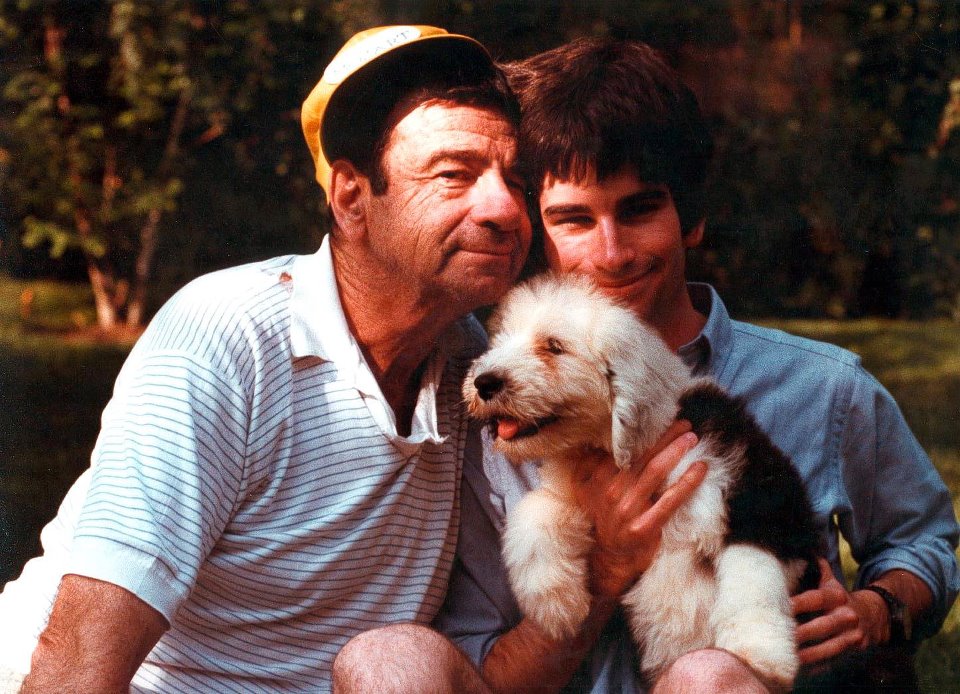
Charlie Matthau began his career in 1973, appearing alongside his father Walter Matthau in such films as Charley Varrick, The Bad News Bears, and House Calls. Charlie made his directorial debut in the film Doin Time on Planet Earth. He also directed The Grass Harp,  Her Minor Thing, Baby-O, and most recently Freaky Deaky, as well as several network movies of the week. A man of multiple talents, over the course his career he has worked as an actor, director, producer, and writer. He currently runs The Matthau Company ( http://matthau.com/ ).

What were you like as a child? Did you always have a love for things…creative?

I always loved storytelling.

What was it like growing up Matthau so to speak?

I was very lucky because I had very loving parents. they were a little older when they had me, and thus more mature.

What was your father like as an individual?

The best dad you can imagine. My best friend. We did everything together!

574841_372954959407741_2099710034_n


What was the best advice he ever gave you? What would you say is the most important thing you learned from him?

So many things! probably not to take yourself that seriously.

Did you enjoy being a child actor? What was it like to work with your father at that time?

I never really liked acting. I’m too shy. My father made it fun though. he always said “acting is about listening.”

What made you decide to try your hand at directing?

My father made a film in the early 70’s with a director named Don Seigal. He was a lovely man and liked kids. I followed him around all summer and wanted to be just like him. Then I started playing around with a super 8 movie camera.

485782_376795515690352_1399827239_n


As someone who has worked as an actor, producer, director, and writer is there one you prefer over the others?

Directing, then writing, then producing.

How do you think the industry has changed most since you became part of it?

The studios make less films and the marketing budgets have soured so that less interesting films are being made. In the 1970’s films were more director driven. Now they are 200 million dollar comic books with merchandizing and sequels, and geared towards 13 year olds. I like those films also, but there used to be more variety.

Do you have any interesting stories over the course of your career that you’d not mind sharing with our readers?

I’ve a  lot but I’d need a topic.

Are there any little know facts about yourself that the world might be surprised to learn?

 I was a duck in a past life.

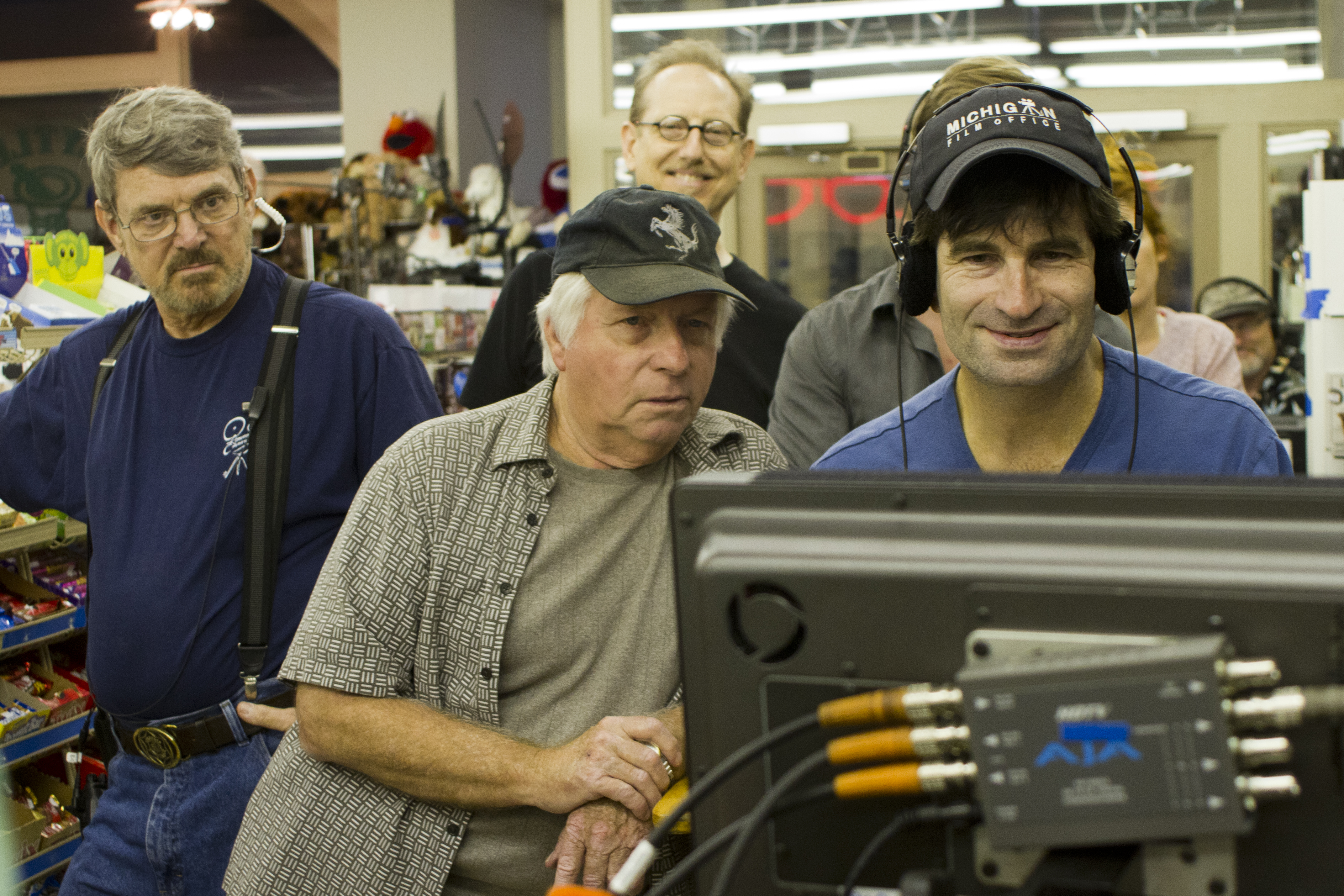
On the set of "Freaky Deaky"

On the set of “Freaky Deaky”

Are you still on the board of sponsors for the Action on Smoking and Health? Why do you think it is so important to sponsor such causes?

Because smoking kills one in three smokers. We need a national tobacco tax with the money going to cancer research.

 What projects are you currently working on?

The Sugar Shack, which is a very silly but fun comedy that is basically “anchorman” set in a male strip club. Also an amazing, original, charming coming of age story called Huge which is Little Miss Sunshine meets My Girl. It’s based on a book by James Feurst. We also have several tv series that we are developing including Mexican High based on the book by Lisa Monroy.

How do you hope to be remembered when your time comes?

By being remembered.

Is there anything you’d like to say in closing?

It has been an honor being interviewed by you and I also appreciate anyone who has taken the time to read it.

charlie2


” A Beautiful Disease” by Miles Chaney

A beautiful disease. Left here to abandon. Dumb, deaf and blind. The only thing is beauty. The beauty of the sun, the stars and the pale gloom of the moon. The damned walk with us only because we are us. Happiness is an entity long out lived. A mystical creature that rarely shows its face. Put here to torment. Put here to smile with false comings. Never the less, we are born to believe. Born to pursue. Set up for failure with our first breath. Only to open our eyes to deceit. Death will follow. But like everything, it can only be longed for when you need it the most.

Life isn’t about being happy. There is an important lesson that only the so called “happy” ones have paved. Life is about being proud of what you have accomplished through you own blood, sweat and tears. Life is no fairy tale. If you let it, it will take hold and watch you sink to the very depths of your own apathy.

“And Flight will be Normal as Walking” by Alex S. Johnson

And Flight will be Normal as Walking

the blood that shoots forth
shower of angels in a blast of gold
opening the seal of sobriety

a bottle of black stallions
ink jet gods whistling soul music
the numb struts fall apart

laughter jets from the careful chamber
where teas are a solemn symphony
the rites of spring impaled on hot steel
boundaries snagged in balloon of sky

the spirit is a spiral beast
magnified the eyes of the ordained
kole smudges, dress of vapors
armada of burning souls

chanting for more
than stacks of biblical death

dressed for desire not your
mystery funeral of the flesh

outside in the ruins
angels assemble
their permanent wings

and flight will be normal as walking.

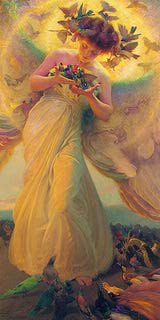
Dvorak_angel

Alex S. Johnson resides in Northern California, where he teaches college composition. His books include The Death Jazz, Black Tongues of the Illuminati, Doctor Flesh, and The Doom Hippies. He also publishes and edits The Shwibly magazine.

An interview with Crispin Hellion Glover

WhatIsIt-Poster-small

Crispin Hellion Glover is a man of many talents. He has worked as an actor, screenwriter, director, author, publisher, and recording artist. His best known roles such as George McFly in Back to the Future, the Thin Man in both Charlie’s Angels flicks, Willard Stiles in the remake of Willard, Grendel in Beowulf, The Knave of Hearts in Tim Burton’s Alice in Wonderland, and Phil in Hot Tub Time Machine make him one of the most recognizable faces in film.

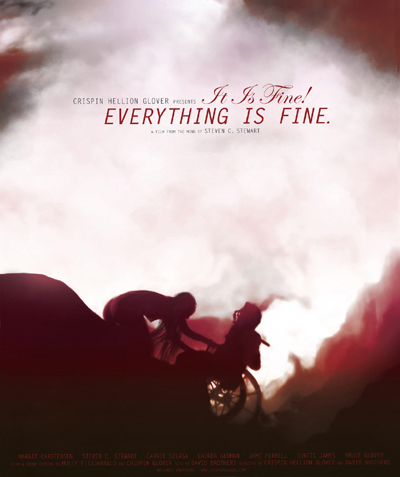
His own company Volcanic Eruptions publishes his lavishly illustrated books and delightfully twisted films. Currently he is set to tour in select cities( Paducah, KY, Duluth, MN, Minneapolis, MN, New York City, Kansas City, MO, and Littleton, CO. For exact dates and more information please see: http://www.crispinglover.com/slideshow.htm) to promote Crispin Hellion Glover’s Big Slide Show with showings of his films It is fine.EVERYTHING IS FINE! & What is it?

Can you tell us a little about yourself? What were you like as a kid? How do you think you early years influenced you to be who you are now?

I went to a small private school called Mirman School for Gifted Children. It was an excellent school that was academically oriented. The school was an influence to let me understand that questioning things was very good.

What first led you try your hand at acting and when did you know if was what you had to pursue as a career? Do you think your parents being actors themselves was a positive influence on you to follow your dreams?

I was in school plays and such, but having watched my father’s career I understood, to a certain extent, how the business worked. I decided it would be something I could do at around age 11. I got an agent at age 13. My parents did not push me into the business. It was something I decided to do by my own volition, but my parents were supportive.

Do people find it hard to believe that Hellion in your middle name? It is a very cool name to carry, are you glad to have it?

My father Bruce Glover is an actor as I’ve said. In fact he is in Part two of the trilogy It is fine! EVERYTHING IS FINE! People may know him from such films as Diamonds are Forever, Chinatown and the original Walking Tall series. His middle name is Herbert. He never liked his middle name Herbert. So as a young struggling actor in New York he would say to himself “I am Bruce H. Glover, Bruce Hellion Glover. I am a hellion, a troublemaker.” And that would make him feel good. He told my mother this was his real middle name. When they were married she saw him writing on the marriage certificate Bruce Herbert Glover and she thought “Who am I marrying?” They gave Hellion to me as my real middle name. I had always written and drawn as a child and I would always sign my drawing and writing with my whole name Crispin Hellion Glover. When I started acting professionally at 13 which was something I had decided on my own I could do as a profession at a relatively young age it became apparent that I had to choose a professional acting name for SAG. I thought my whole name was too long for acting and just used my first and last name. When I started publishing my books I simply continued using the name I had always used for writing and drawing. This is also why I use my whole name for my films.

You have played rather strange characters throughout your career. Why do you think that is? Which characters have you enjoyed most and why? Which do people seem to recognize you for most?

I was drawn to unusual characters from at least when I was first professionally studying acting at age 15. But probably younger than that as well. When people approach me it is usually because they recognize me from a number of films.

I don’t know that I have a favorite character, but I feel like the films that I that I quite like as a whole that I have been in are River’s Edge, Orkly Kid and What is it? Other characters I like I have played that I like are Cousin Dell in Wild at Heart, The Thin Man in Charlie’s Angels, Willard in Willard, Bartleby in Bartleby, Grendel in Beowulf. I had a great time working in Alice in Wonderland with Tim Burton and everyone involved.

Did you enjoy your role in Friday the 13th: The Final Chapter? Have you always been a fan of horror? Why do you think people are drawn to such things?

I am glad that I was in the film. I knew while filming it that some day there would be something humorous about appearing in that film. I am not really that much of a follower of horror. That being said there are certain films considered to be in the horror genre that a truly great films. I think people can be drawn to horror for the concept that it let’s one feel they have survived something brought to them from the darker side of life. That can be invigorating.
willard-sized

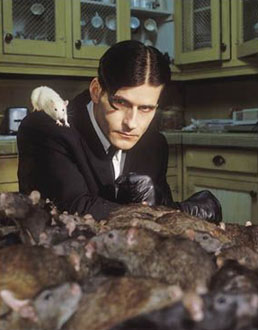
Was it fun to play Willard? What is your opinion of rodents and such?

I very much enjoyed playing Willard. I am proud of the emotional work that I concentrated on very hard while making that film. The rodents that I worked with were exceedingly well trained and never made a mistake on a single take, which was great because a lot of the scenes I had with them were emotional scenes that would have been hard to get to again if cuts had to be made because of the rats. But they were truly perfected every time and ultimately great acting partners.

What was it like to work on a Tim Burton film? What did you learn from the experience?

I loved working with Tim Burton and everyone involved. It is apparent that Tim Burton has been in situations where his art was being questioned and he knows that he does not want to do that to people he is working with, but wants them to be able to explore for themselves what is happening for their work. That makes people feel good about what they are doing. It is a good thing to know when working as a filmmaker.

You have also delved in music. Do you think that is something you might return to at some point?

I have a second album that has been nearly finished for more than 10 years and has been put aside while my feature films have taken precedent. I will get back to that project hopefully soon.

Are there any little known facts about you that people might be surprised to learn?

My interests artistically may be called eccentric and there is a truth in that, but I am also a very centric business person.
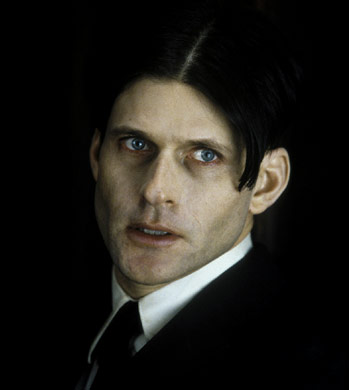
600full-crispin-glover

Can you tell us about the upcoming tour? What can fans expect from the show? What led you to form Volcanic Eruptions? The first two films you directed feature people with Down Syndrome and Cerebral Palsy. Why did you decide to do that?

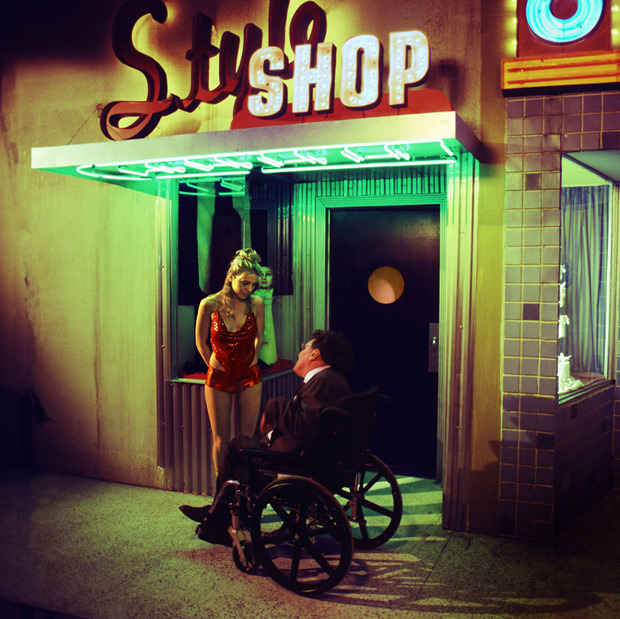
I would like people to think for their selves. Steven C. Stewart wrote and is the main actor in part two of the trilogy titled It is fine! EVERYTHING IS FINE. I put Steve in to the cast of What is it? because he had written this screenplay which I read in 1987. When I turned What is it? from a short film in to a feature I realized there were certain thematic elements in the film that related to what Steven C. Stewart’s screenplay dealt with. Steve had been locked in a nursing home for about ten years when his mother died. He had been born with a severe case of cerebral palsy and he was very difficult to understand. People that were caring for him in the nursing home would derisively call him an “M.R.” short for “Mental Retard”. This is not a nice thing to say to anyone, but Steve was of normal intelligence.

When he did get out he wrote his screenplay. Although it is written in the genre of a murder detective thriller truths of his own existence come through much more clearly than if he had written it as a standard autobiography. As I have stated, I put Steven C. Stewart in to What is it? When I turned What is it? into a feature film. Originally What is it? was going to be a short film to promote the concept to corporate film funding entities that working with a cast wherein most characters are played by actors with Down’s Syndrome. Steve had written his screenplay in in the late 1970’s. I read it in 1987 and as soon as I had read it I knew I had to produce the film. Steven C. Stewart died within a month after we finished shooting the film. Cerebral palsy is not generative but Steve was 62 when we shot the film. One of Steve’s lungs had collapsed because he had started choking on his own saliva and he got pneumonia.

I specifically started funding my own films with the money I make from the films I act in when Steven C. Stewart’s lung collapsed in the year 2000 this was around the same time that the first Charlie’s Angels film was coming to me. I realized with the money I made from that film I could put straight in to the Steven C. Stewart film. That is exactly what happened. I finished acting in Charlie’s Angels and then went to Salt Lake City where Steven C. Stewart lived. I met with Steve and David Brothers with whom I co-directed the film. I went back to LA and acted in an lower budget film for about five weeks and David Brothers started building the sets. Then I went straight back to Salt Lake and we completed shooting the film within about six months in three separate smaller productions. Then Steve died within a month after we finished shooting. I am relieved to have gotten this film finally completed because ever since I read the screenplay in 1987 I knew I had to produce the film and also produce it correctly. I would not have felt right about myself if I had not gotten Steve’s film made, I would have felt that I had done something wrong and that I had actually done a bad thing if I had not gotten it made. So I am greatly relieved to have completed it especially since I am very pleased with how well the film has turned out.

We shot It is fine! EVERYTHING IS FINE. while I was still completing What is it? And this is partly why What is it? took a long time to complete. I am very proud of the film as I am of What is it? I feel It is fine! EVERYTHING IS FINE. will probably be the best film I will have anything to do with in my entire career. People who are interested in when I will be back should join up on the e mail list at CrispinGlover.com as they will be emailed with information as to where I will be where with whatever film I tour with. It is by far the best way to know how to see the films.

tumblr_lo18alUQ2S1qhsddz

After Charlie’s Angels came out it did very well financially and was good for my acting career. I started getting better roles that also paid better and I could continue using that money to finance my films that I am so truly passionate about. I have been able to divorce myself from the content of the films that I act in and look at acting as a craft that I am helping other filmmakers to accomplish what it is that they want to do. Usually filmmakers have hired me because there is something they have felt would be interesting to accomplish with using me in their film and usually I can try to do something interesting as an actor. If for some reason the director is not truly interested in doing something that I personally find interesting with the character then I can console myself that with the money I am making to be in their production I can help to fund my own films that I am so truly passionate about. Usually though I feel as though I am able to get something across as an actor that I feel good about. It has worked out well!

The live aspect of the shows are not to be underestimated. This is a large part of how I bring audiences in to the theater and a majority of how I recoup is by what is charged for the live show and what I make from selling the books after the shows. For Crispin Hellion Glover’s Big Slide Show I perform a one hour dramatic narration of eight different books I have made over the years. The books are taken from old books from the 1800’s that have been changed in to different books from what they originally were. They are heavily illustrated with original drawings and reworked images and photographs.

I started making my books in 1983 for my own enjoyment without the concept of publishing them. I had always written and drawn and the books came as an accidental outgrowth of that. I was in an acting class in 1982 and down the block was an art gallery that had a book store upstairs. In the book store there was a book for sale that was an old binding taken from the 1800’s and someone had put their art work inside the binding. I thought this was a good idea and set out to do the same thing. I worked a lot with India ink at the time and was using the India ink on the original pages to make various art. I had always liked words in art and left some of the words on one of the pages. I did this again a few pages later and then when I turned the pages I noticed that a story started to naturally form and so I continued with this. When I was finished with the book I was pleased with the results and kept making more of them. I made most of the books in the 80’s and very early 90’s. Some of the books utilize text from the biding it was taken from and some of them are basically completely original text. Sometimes I would find images that I was inspired to create stories for or sometimes it was the binding or sometimes it was portions of the texts that were interesting.

Altogether, I made about twenty of them. When I was editing my first feature film What is it? There was a reminiscent quality to the way I worked with the books because as I was expanding the film in to a feature from what was originally going to be a short, I was taking film material that I had shot for a different purpose originally and re-purposed it for a different idea and I was writing and shooting and ultimately editing at the same time. Somehow I was comfortable with this because of similar experiences with making my books.

When I first started publishing the books in 1988 people said I should have book readings. But the book are so heavily illustrated and they way the illustrations are used within the books they help to tell the story so the only way for the books to make sense was to have visual representations of the images. This is why I knew a slide show was necessary. It took a while but in 1992 I started performing what I used to call Crispin Hellion Glover’s Big Side Show. People get confused as to what that is so now I always let it be known that it is a one hour dramatic narration of eight different profusely illustrated books that I have made over the years. The illustrations from the books are projected behind me as I perform the show. There is a second slide show now that has 7 books and it performed if I have a show with Part 1 of the IT trilogy and then on the subsequent night I will perform the second slide show and Part 2 of the IT trilogy.

The fact that I tour with the film helps the distribution element. I consider what I am doing to be following in the steps of vaudeville performers. Vaudeville was the main form of entertainment for most of the history of the US. It has only relatively recently stopped being the main source of entertainment, but that does not mean this live element mixed with other media is no longer viable. In fact it is apparent that it is sorely missed.

I definitely have been aware of the element of utilizing the fact that I am known from work in the corporate media I have done in the last 25 years or so. This is something I rely on for when I go on tour with my films. It lets me go to various places and have the local media cover the fact that I will be performing a one hour live dramatic narration of eight different books which are profusely illustrated and projected as I go through them, then show the film either What is it? Being 72 minutes or It is fine! EVERYTHING IS FINE being 74 minutes. Then having a Q and A and then a book signing. As I funded the films I knew that this is how I would recoup my investment even if it a slow process.

Volcanic Eruptions was a business I started in Los Angeles in 1988 as Crispin Hellion Glover doing business as Volcanic Eruptions. It was a name to use for my book publishing company. About a year later I had a record/CD come out with a corporation called Restless Records. About when I had sold the same amount of books as CD/records had sold it was very clear to me that because I had published my own books that I had a far greater profit margin. It made me very suspicious of working with corporations as a business model. Financing/Producing my own films is based on the basic business model of my own publishing company. There are benefits and drawbacks about self distributing my own films. In this economy it seems like a touring with the live show and showing the films with a book signing is a very good basic safety net for recouping the monies I have invested in the films. There are other beneficial aspects of touring with the shows other than monetary elements.

There are benefits that I am in control of the distribution and personally supervise the monetary intake of the films that I am touring with. I also control piracy in this way because digital copy of this film is stolen material and highly prosecutable. It is enjoyable to travel and visit places, meet people, perform the shows and have interaction with the audiences and discussions about the films afterwards. The forum after the show is also not to under-estimated as a very important part of the show for for the audience. This also makes me much more personally grateful to the individuals who come to my shows as there is no corporate intermediary. The drawbacks are that a significant amount of time and energy to promote and travel and perform the shows. Also the amount of people seeing the films is much smaller than if I were to distribute the films in a more traditional sense.

The way I distribute my films is certainly not traditional in the contemporary sense of film distribution but perhaps is very traditional when looking further back at vaudeville era film distribution. If there are any filmmakers that are able to utilize aspects of what I am doing then that is good. It has taken many years to organically develop what I am doing now as far as my distribution goes.

From "It is Fine. EVERYTHING IS FINE!"

From “It is Fine! EVERYTHING IS FINE.”

Do you think society in general underestimates the so-called disabled? Do you think there is any such thing as a truly disabled person?

There certainly can be underestimations of people who are called disabled. A truly disabled person is someone who thinks of themselves as disabled.

When is the last film in the trilogy expected to be done?

I should not go in to detail for IT IS MINE. yet and I will not shoot that next. There are other projects outside of the trilogy that I will shoot next. The Czech Republic is another culture and another language and I need to build up to complex productions like What is it? and the existing sequel It is fine! EVERYTHING IS FINE. IT IS MINE. Is an even more complex project than those two films were so it will be a while yet for that production. I will step outside of the trilogy for a number of films that deal with different thematic elements. I am in the process of building sets for a screenplay I have been developing for a long time for myself and my father to act in together. He is also an actor and that will be the next film I make as a director/producer. This will be the first role I write for myself to act in that will be written as an acting role as opposed to a role that was written for the character I play to merely serve the structure. But even still on some level I am writing the screenplay to be something that I can afford to make. There is another project that I may make before that I am currently working on the screenplay that may be even more affordable. yet still cinematically pleasing.

Do you enjoy working behind the camera as much as you do in front of it? How do the two differ most?

Yes I probably enjoy working behind the camera more than in front of the camera, but that has more to do with the content in corporately funded and distributed cinema that I can find somewhat stifling. Because I fund my own films I can get in to territory that corporately funded and distributed film can not.

What was the craziest thing you have ever done?

Drive a car in traffic.

1328636006-crispinglover

An interview with Tim Minear

Photo by Nathan Fillion

Photo by Nathan Fillion

Tim Minear is a screenwriter/director who started out as a production assistant on the movie Platoon. Over the years he has written episodes for such iconic television series as X-Files and Lois and Clark. He also wrote, executive produced, and directed episodes for Angel, Strangeworld, Firefly, Wonderfalls, and The Inside. Tim has worked tirelessly to entertain the masses with his delightfully dark style of writing. Most recently he brought the world the critically acclaimed television series American Horror Story.

Can you tell us a little about your background? Where are you from and how did your earliest days influence who you are today?

I was born in New York City, but grew up in Whittier, California. I was one of those kids who made movies with his friends. As I look back now I realize most of our super 8 films were really episodes of TV. Star Trek films, The Six Million Dollar Man, stuff like that. Maybe I was a TV writer/producer from the start.

Did you love horror and science fiction tales as a child?

Loved. Read hard SF as well as comics. And was going to SF conventions by the time I was 12.

Did you have any favorite monsters growing up?

Had a special love for the old Universal monsters — the classics, Dracula, Frankenstein, the Wolfman.

Who do you consider to be the best in those fields today?

As far film and TV — I’d have to say Joss, of course and J.J. Abrams. His Star Trek re-boot almost makes me forget the original, which is a kind of miracle.

What first led you to become involved in the entertainment industry?

As I mentioned, from the time I could pick up a movie camera I never seriously considered doing anything else.

When you were working in craft services did you ever think your career would have taken you as far as it has?

I assumed I’d be further. I thought I would be directing big feature films. TV wasn’t really a thought then. Then I discovered that if you are a writer/producer in television you have the optimal creative control.

Your work has a rather dark element to it, why do you think that is?

Well, you could argue that nearly everything I’ve done has a big element of comedy. Angel, Lois and Clark, Terriers, certainly Wonderfalls — all of these hour “dramas” might have more humor and a more room for different kinds of humor than your average hour television drama. But I’m attracted to the darker stuff for sure. In my case, it may be less about darkness and more about BIG. I like the BIG emotion, the epic story, the melodrama. That might just translate into darkness in some elements of storytelling.

What was it like to work as production assistant on Platoon? How did you get the job? What did you learn from that experience?

I was working with the Los Angeles co-ordinator. So I met the cast and also Oliver Stone and Bob Richardson when I get them to the airport to go on location. So I learned how to navigate the San Fernando Valley. That was about it.

What was it like to produce Angel?

Just awesome. Working with Joss has been a constant hi-light — but Angel will always have a special place for me. It was the first place I was really allowed to have to have the ball and run the court.


Photo by Nathan Fillion

Photo by Nathan Fillion


What is your opinion on vampires? Do you feel the recent vampire tales have made them less appealing due to over popularity and overdone romantic plots?

For me, vampire stories are great for the, as I say, BIG and the EPIC. It’s a wonderful vehicle to do things that are heightened. I have no opinion about the recent vamp crazes. I haven’t kept up to be honest.

You also worked on Alien Nation. What are you personal feelings on extraterrestrial beings?

First off, my version of Alien Nation died on the vine. I have no personal feelings about ETs, as I tend to not believe in them. But it’s fun to think about that stuff. Like telling a scary story around a camp fire.

Of all the series you have worked on, which did you enjoy the most? Why?

You can’t make me choose. I’d have to say Angel/Firefly and Terriers. For the same reasons — the quality of the shows, the stories we got the tell and the people I got to work with.

Any interesting stories you could share with our readers from your work over the years?

When I was just starting out I jumped Alec Baldwin at UCLA once after he did a talk. I put a script in his hand. He was very gracious  about it. I mean, I literally ran at him with the thing.

I got it back in the mail with a note from his manager saying Mr. Baldwin was a bad boy to accept it. Huh. Not that great a story, huh?

How do you think the entertainment industry has changed most since you first began your career?

Reality TV. But that came in not long after I did. I mean, I didn’t exactly start in the silent era.

What advice would you give others wishing to follow in your steps?

I would advise them to get out of my steps. Those are my steps. Why are they in my step?  Actually, if you want to write and produce TV, you need to have a great sample script. If you want to be a writer — then write!

What do you consider to be the defining moment of your career?

I’ll let you know when I get there.

What are some of your hobbies?

I read a lot.

Any little know things about yourself that your fans might be surprised to learn?

Nothing that wouldn’t frighten them beyond the telling of it.

What projects are you currently working on?

I’ve been helping out over at Terra Nova for a few weeks. But it’s not officially “my” show — so if it gets canceled, I don’t want to see any of the usual finger pointing!

Anything you would like to say in closing?

I’ve already said too much.

timminear2

(Editors note: This interview appears in The Damned Book of Interviews as well and is used with permission from Tim, simply because I do think he belongs at Van Gogh’s Ear)