An Interview with Ann Walker

LGBoaHZ

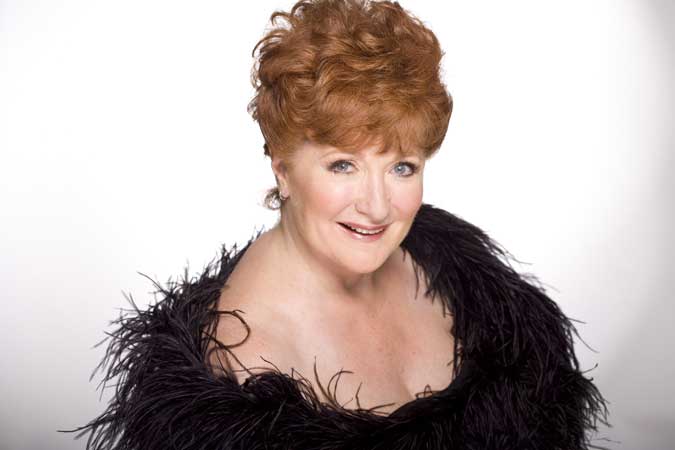
Ann Walker has been entertaining the world with her work in film, television, and theater since 1974. She has graced the stage in such productions as Ballad, Rain, Best Wishes, How the Other Half Loves, Hysterical Blindness, Opera Comique, Steel Magnolias, The Glass Menagerie, Daughters of the Lone Star State, Sordid Lives and Southern Baptist Sissies. She is likely best known for her role as the delightful LaVonda Dupree from the Sordid Lives play, series, and film. She also appeared in such films as Big Gay Love, Southern Baptist Sissies, Father of the Bride II, The Fanatics, Soul Man, It Takes Two, and Jagged Edge, as well as on such television shows as Passions, Arliss, and MadTv, to name a few. Ann can also be found hosting The Ann Walker Show Wednesday nights at 6 p.m. Pacific on the Universal Broadcasting Network.

What was it like growing up in Texas? What are some of your most fond memories from those days? How have your early days there most left a lasting impact on who you are today?

I grew up in the 50’s and 60’s so life was pretty easy for me. I spent summers with my grandmother in a very rural place called Old Waverly, Texas then the other 9 months with my mom and dad in Houston. I was very isolated with my grandma, we had no indoor plumbing, my grandmother, boiled our clothes in a big, black cauldron, I helped her in the ½ acre garden, we gathered eggs and I would create elaborate pretend scenarios. We listened to the soap operas on the radio during the day and I think that was my first taste of storytelling and the power it had over people. It was just a feeling starting to build. It really was a Mayberry kind of existence. But in Houston there was my brother and sister and school. I loved learning new things.

The most lasting impact left on me from growing up was working hard and perseverance. I never wanted for anything but I always thought there must be more to life than living like that. I was soon to see from the movies that, indeed, there was a whole world that I wanted to explore and be a part of.

When did you first discover your love of acting?

On Saturday mornings my mother would drop my siblings and me off at the Granada Theater at 10 am with food and money to buy drinks and we’d be there until 5:00pm. All that time watching serials, cartoons and two movies. I thought it was heaven. That’s where I first fell in love with movies. On Sunday we’d go to church and when my dad closed our grocery store we’d pile in the car and head downtown to one of the beautiful old opera houses that had been converted to movie palaces with names like the Metropolitan, Majestic and Lowes State. There were no ratings for movies back then so we watched everything! Susan Hayward was one of my favorites and anything Clark Gable was starring in. My father liked war movies, my mother, the romantic ones. I didn’t care what we saw, I just loved watching the actors. I guess I was about 8 or 9 when I (in my own mind) decided that’s what I wanted to do. I certainly didn’t understand HOW to go about it and I sure didn’t talk to anyone about it. I just wanted to do what they were doing.

What were some of your earliest favorites in film and television?

I loved musicals so Gene Kelly, Debbie Reynolds, Judy Garland, (Also, secretly, I thought I would be a terrific singer and dancer) unfortunately that part didn’t happen but I sure pursued it for a while. As a teenager, James Dean, Marlon Brando, Elvis Presley, oh my God, did I love Elvis Presley, still do! In junior high I got into the variety shows and took part in anything theatrical that was going on in school. High school drama and scholastic league contests became a big part of my life. As graduation approached I told my family that I wanted to go to NYC and study acting and become a professional actress. Then came the first disappointment, they didn’t share my dream so I attended University of Houston as a psychology major, that lasted all of one semester. Then came cosmetology school, I became a hairdresser. Got my license and worked at that for 3 weeks. Had a succession of customer service jobs: power company, oil company and telephone company. In the meantime, I was engaged to my high school sweetheart and we got married. He always believed in me and we are still very close to this day.

What was it like when you realized you wanted to be a professional actress yourself?

In 1967 I enrolled in acting classes at the Alley Theatre in Houston. That simple act started a lifetime of joy and fulfillment. I became obsessed with becoming an actress and the feedback from my acting coach only spurred me on. I spent the next 7 years doing community theatre in Houston. During that time I went to NYC and studied at the American Academy of Dramatic Arts. I performed in 5 musicals back in Houston with Frank Young’s Theatre Under the Stars. (fulfilling my lifelong love of musicals) Movie companies had started coming to Houston on location. I was already getting restless about becoming a professional actress and when SAG & AFTRA (our unions) came to Houston to open up the unions, I joined! Best decision I ever made. In 1974 my husband transferred with his company to Los Angeles for me to finally pursue acting on a professional level. A year after arriving, I had twin daughters. That slowed me down for a little while but when they were about 10 months old I was back on stage in a musical and I haven’t stopped since.

What do you love most about being an actress?

I love everything about acting when I’m acting. The hard part is the rejection when you don’t get a part that you wanted. In the beginning, I thought it had everything to do with me personally but after a while I figured out that I couldn’t take the rejection personally. The more you audition, the more chances you have to book a job. There are so many people vying for every job. You just have to go in and do what you do as best you can and then forget about it. That discipline takes a while to develop.

How does your work in theater differ most from your work in film and television? Do you prefer one more than the other or do you love them all equally?

I love working in the theatre the most because the play is in your hands when the curtain rises on each performance. You and your co-stars. You create the play from the beginning to the end eight times a week. The theatre gives you the immediate feedback from the audience. You get to live that character at each performance and the audience becomes a player as well. In television and film, there is much more suspension of belief for the actor since it’s starting and stopping so much. But the best part of film and television is the lovely paycheck. I often say I love whatever I’ve been asked to do. It’s a wonderful career and I am most grateful that I’ve had a chance to work for many years in all three mediums and have my pension and health insurance and a body of work that I am proud of.

How do you think the entertainment industry has changed most since you first started your career?

The entertainment industry has changed most dramatically in the fact that the studios are now run by 6 very large conglomerates. The film and television studios have to have a blockbuster of large proportions to keep all the stockholders happy on each project. The theatre is getting almost as bad. Large theatres must hire big names so they can fill the seats. I’m glad I had so many of my big successes before this happened. Thank heaven for the independent film makers. They seem to have rescued the great stories and tell them on a low budget and short shooting schedule.

Are there any little known things about you that your fans might be surprised to learn?

I’m such an open book I think anyone who’s ever met me or come to a Q & A after one of my films has heard every deep dark secret I have. Now that I’ve got a radio show every week, they know even more about me!

Are there any moments from your career that stand out most in your memory?

Every opening night in a play, just as you are standing back stage, the house lights go down the stage lights go up and you begin your journey with that character in that play! Right through to the curtain call. The time I have spent on the stage have been the best moments of my career! There are many more but those in particular have been the best.

What can your listeners expect from The Ann Walker Show? Do you enjoy working in radio?

As my acting career has slowed down, I thought, what can I do for fun and enjoyment. Enter Internet Radio. I started my show 5 years ago and 2 ½ years ago I helped co-found Universal Broadcasting network. www.ubnradio.com, when I thought about what kind of show I would do, I took stock of what areas of life that interested me and came up with politics and being an advocate for the LGBT community. We have a fun and interesting show with lots of guests. It’s 1 ½ hours of discussion about hot topics that are on my mind, that are bothering me, so I am sure they must be bothering other people too. I do tackle many other topics that I find interesting. We are streaming live with video and a chat room which makes it interactive with the audience. A lot of our listeners who can’t tune in live will go to the website and listen to the archive shows there. I love working in radio, you feel very connected to the audiences and we have listeners all over the world.

tumblr_mawrliP50b1qza5nio1_1280

What does it feel like to bring the world LaVonda Dupree? Did your being Southern yourself come in handy when doing that?

It’s true, LaVonda is my favorite character that I’ve played. I feel very lucky that Del Shores wrote that part for me. There’s a lot of Ann in LaVonda. It’s sort of like Ann if she never left Houston, Texas. Of course, being from Texas and having a family with every one of those characters in it, did come in handy. Looking back, my family was pretty funny but while I was there, it didn’t seem too funny. That’s why it is so important to play these characters straight, they’ll be funny to the audience, but if we try to be funny then they will become stereotypes.

Are you looking forward to bringing her back in the new Sordid Lives film? When can we expect to see that? What is it like to work with Del Shores?

Yes, yes, yes, this is the best news any of us have heard in a long time. We will be coming back hopefully as planned for May. We’ll be shooting in Dallas and I do look forward to the “Black Eyed Pea” restaurant!!The movie is planned to be released before the end of the year. Working with Del Shores and the rest of this extraordinary cast is like working with your family. We all love each other and respect the talent of each person. Del knows how to work with each of us to get the best performance we can give. It’s a dream come true!

What do you love most about being Southern? Do you think the stereotypes have cast us all in a rather unfair light?

You see, dear reader, I couldn’t wait to get out of that place. Now that’s probably something you didn’t know about me. I’m glad I was raised there because every person was a character study. But, when I left in my late twenties, Texas was a Democrat state and now, it’s hard for me to go back and see how bigoted, racist and hate-filled Texas has become. What has happened to women’s rights, civil rights, protecting a person’s right to vote, education? I’m sorry to say I don’t think most of the people are being cast in an unfair light. I know there are still many people who would like to change the current state of affairs and I sure hope they can.

What advice would you offer women in regards to being comfortable with what God gave them in today’s society?

We will never look like the women in the fashion magazines! For a long time I thought I must strive for that. I had low self-esteem about my looks because I just couldn’t make that come true. I finally figured out that this goal was not attainable and I must find my beauty and acceptance in myself. Once I did that, I calmed down and appreciated that I was happy, healthy and could make people laugh and had friends and loved ones who became my mirror of myself. It’s a hard lesson to learn but as I got older, I’m glad I figured it out because it saved me a lot of heartache.

What was the best advice anyone ever gave you? Who was it?

  1. Readers Digest Magazine had an article How to Be Lucky which I read before leaving Houston and the first thing was Go to as many functions where people in your field will be. Keep going and get to know as many as possible. 2. Character actor/past president of AFTRA, Marvin Kaplan told me many years ago “Never turn down work”. Now, that doesn’t mean if offered a part in porn or some part that goes against your personal morals, it just means never turn down a legitimate job because the part is too small or you have to look plain or you have to play a homeless person and not the upscale woman. Just do the job to the best of your ability and don’t complain. Especially not to hair and makeup because it will get back to people who can hire you again. Always be courteous and on-time and don’t talk too much.

What projects are you working on at the moment?

As of December 31, 2014 I sold my share of UBN Radio so that I can enjoy my life with my children and grandchildren. I’m now free to go on more auditions and take parts that require travel. I’m planning a trip to Italy this year in September. I’ve got the movie to do in May. I’m still doing The Ann Walker Show every week which I hope people will tune into. Fingers crossed, there’ll be more TV, movies, and plays on my horizon.

What do you think is key to a life well lived?

A life well-lived means living life to the fullest every day, every year. Living mindfully which includes thinking how we fit into the world around us, doing what we can to preserve our planet. Having compassion for our fellow man. My motto, live and let live! Be kind to one another!

If you don’t mind my asking how do you hope to be remembered when your time comes?

Hopefully, all the things I mentioned above, I can accomplish and be remembered as a great mother, grandmother, and loyal friend! Oh, and a terrific actress!

Anything you’d like to say in closing?

I’d just like to say THANK YOU to the thousands of people who have supported my dreams and appreciated my work over the last 35 years and I look forward to bringing more laughs their way in the future!

“Art Isn’t Dead-It’s Still Dying” by Antonia Alexandra Klimenko

Art Isn’t Dead-It’s Still Dying


                                       “like Dali’s melting clocks”

                                                          ~Steffen Hortsman


How you plan to kill time
means nothing to me
as your troops invade my body

Outside
the city falls to its knees
I hold it crying in my arms
as I fall in love with strangers

Come, my friend
let us crucify the hour—
minute-hands nailed to the cross
our faces slowly turning
like Dali’s melting clocks
to and from the horizon

Please, let us hurry! We must go!
There is no arguing
the yes and no of night and day

But first
let me murder the piano
one by one and in every key—
lifting and lowering each tone
into its ebony grave its ivory tower—
raising even the dead
in living color
as only an Impressionist can
who draws pictures and no conclusions—
my blood spilling onto
the human canvas
stretched beyond all measure—
lamp-shades of skin and ash

(How beautiful the light
that bears the weight
of its own unbearable absence)

See how the undying wave to you, now
from the unframed corners of my mouth
(that other gas oven)
in muted screams of crimson and orange
bewildered yellow…muffled brown…acoustic blue
How sudden inspiration Dada!!! Mama!!!“
can explode
like shooting stars or automatic fire
into the tone-deaf illusion of pitch-black Nothingness

Come
let me recreate
the fluorescence of your smile
let me reinvent myself
as I, on display
walk these random streets
freshly garbed in widows weeds
Paris,1942

Even, now, as I speak
I am painting my screams green
I am dying my hair red
(as only the color blind can)
I am changing my name to Violette
and I am returning to that other country
I, a Russian da-da refugee
as cumbersome as obscure as open
as any French Door by Marcel Duchamp—
my windowpanes—translucemt, fragile cities of light—
my memory polished beyond recognition
my nose pressed to your shattered glass—
Paris, my mirror

O Paris
How often I have wandered your truth—
looking for me in search of you
And where is God when I need Her now
to find my way back in the dark?

Please, let us hurry! Let’s go home!
Let us marry the bed
Let us marry the mirror
Let us marry this moment—
my fingers kneeling before yours in prayer
folding the blessings of faceless angels
into the corners of my mouth

Only this There is no other moment
Only this
crossing the threshold of Dream
passing through our veil of tears
crossing myself
as you enter me
through
the window of my reflection
transcendent, decoded
Holy, Yessssss

Shhhhhhhhhhh


10603779_10203445222506219_3972914975498444032_n

Antonia Alexandra Klimenko trained as an actress at the American Conservatory Theater in San Francisco. She was first introduced on the BBC and to the literary world by the legendary Tambimutttu of Poetry London–publisher of T.S. Eliot, Dylan Thomas, Allen Ginsberg, and Bob Dylan, to name a few. After his death, it was his friend, the late great Kathleen Raine, who took an interest in her writing and encouraged her to publish. Although her manuscript was orphaned upon ‘Tambi’s passing, her poems and correspondence are included in his Special Collections at Northwestern University. The former San Francisco Poetry Slam Champion and devotee of Spoken Word has performed at various venues such as the renowned Purple Onion and The Intersection for the Arts–the oldest alternative art space in the City by the Bay. Her one-woman-show, Where the Blue Begins was presented in conjunction with Sonoma’s performing art series Women on the Edge. Most recently, she participated in Three Room Press’ presentation of Dada a la Carte at the Mona Bismarck American Center for Art and Culture. Klimenko’s work has appeared or is forthcoming in CounterPunch, The Original Van Gogh’s Ear Anthology, Iodine Poetry Journal, The Seventh Quarry, Howl: San Francisco Poetry News, Boheme Verite, The Bastille, Paris Lit Up, Strangers in Paris–New Writing Inspired by the City of Light, The Last Clean Dirty Shirt Anthology, Voyeur, The Indian River Review, Blook, Sweat and Tears, Quail Bell, Southeast Review, The Best of Mad Swirl, Knot Magazine, Vox Populi, Levure Litteraire, The Criterion International Literary Journal, Occupy Wall Street Anthology (in which she is distinguished as an American Poet) and Maintenant: Journal of Contemporary Dada Writing and Art archived at the Smithsonian Institute in Washington, D.C. and New York’s Museum of Modern Art. She lives in Paris.

An Interview with Robert Parigi

rpmain

Robert Parigi is best known as the writer and director of award-winning cult horror film Love Object. As a producer, his diverse credits include animation (King of the Hill, Beavis and Butthead), genre series Tales from the Crypt, Profiler, and most recently, Agents of S.H.I.E.L.D. Hunter S. Thompson once said, “When the going gets weird, the weird turn pro.” It is my pleasure to bring our readers a more intimate look at a monster kid who has turned his passion for the weird into his career.

As someone who used to make gelatin scars as a child, what is it about the horror genre that gained your affection as such a young age?

H.P. Lovecraft speculated that a “sensitive few” are by nature drawn to the weird. I suppose that is my case, since my earliest memories are of odd and strange things. The Weird has always been with me, and has never faded, despite a few misguided attempts to escape. Thankfully, It is always there.

But now, Lovecraft’s sensitive few aren’t so few. With shows like The Walking Dead attracting larger audiences than major league sports, and fans who call themselves “Little Monsters” cheering Lady Gaga as she celebrates being Born This Way, the few now seem much more like the mainstream.

Consequently, I think the biggest challenges and opportunities facing those of us with a passion for the Weird is to learn how to navigate this new-found acceptance to become better creators and more conscious audiences.

Why do you think society has always been so drawn to such things?

One measure of the profound nature of our attraction to Horror is how long people have been asking that very question!  In Aristotle’s POETICS, he suggested the appeal might be explained by mimesis and catharsis.

Mimesis is the imitation of nature. Aristotle noticed that we seem to take the most delight in seeing the most horrible things imitated, even if we would be disgusted to see the same things in real life. This certainly seems to apply to Horror, especially in the mode of splatter. Perhaps the awareness of artifice gives us a vicarious power over or immunity to the horrors presented? In the enjoyment of simulated horrors, we become artificial gods.

Catharsis is the discharge of negative emotions. Aristotle thought that by experiencing violent emotions while watching a play, those emotions were purged from the audience. Thus spent, they could return to their real lives more calm. Some Horror functions this way; we can all think of movies or books that have left us feeling exhausted. But this seems incomplete. Certainly some Horror is exhilarating rather than exhausting. Rather than allowing us to return to the normal world, it makes that world forever strange and suspect. It is about challenging the normal world, rather than making us accept it.

Of course, enemies of the imagination in general and Horror in particular take exactly the opposite view of catharsis! They claim that watching simulated horrors desensitizes the viewer, causing them to commit real-life violence. Censors always use this to justify their crimes: the Hayes Code, the Comics Code, PMRC warning labels on music, Video Nasty legislation in the U.K., TV Content Ratings and the V-Chip, attempts to ban or regulate video games, and the varieties of politically correct oppression currently so fashionable. Despite more than 2000 years of research on this question, no causal link between Horror and real violence has ever been found. So moral hygienists who make these claims are either deeply ignorant, or deeply dishonest. Either way, they need to be kept as far as possible away from actual politics and legislation.

I think the appeal of Horror is that it speaks the truth. In order for sanity and civilization to exist, we need to pretend that existence is orderly, has a meaning, and is basically just. Deep down, we know all of that is a lie. Horror is the one mode of art where we see this ultimate truth. Even the most lowly horror movie speaks a truth that the most powerful people in the world will never admit. This is why the powerful, or those who seek power, so often attempt to censor Horror.

In your work you have said you like to share a glimpse of the weird. Why is that?

The Weird defines the Real. Think of it in terms of geometry. The center of a square is the same as the center of a circle. So if you are only looking at the center, the space inside the shape, there is no difference between a square and a circle.

It is the extremities, the borders, the fringe that defines the shape. Speaking metaphorically, is the world (or Life, or Experience, or Meaning) a circle, a square, a trapezoid, a polyhedron? You will never know if you restrict your gaze to the inside of the shape. You have to look at the fringe.

The Weird exits on the limits of the Real, so ultimately it is what defines what kind of world we live in.

rp2

Do you think a little weird goes a long way in a world such as this?

I don’t think it is so much a quantitative question of the proportion of weird to normal, so much as a qualitative question of the kind of weird. The most truly, profoundly Weird challenges our most basic assumptions about the world and ourselves. This is very different from mere spectacle.

Although Lady Gaga appropriates weird terms like “monster” and weird signifiers, there is nothing particularly weird about her music itself. So it is surface-weird. Or rather, the weirdness is in the non-musical aspect of her performance. Marilyn Manson is a more unified presentation of weirdness in music and in performance.

Hopefully, pop-cultural presentations of surface become a gateway weirdness that encourages the audience to pursue those same features in other aspects of experience. The glamorous presentation of surface-weird spectacle is a good place to start. But there is so much more.

What was it like hopping a plane from NY to L.A?

I didn’t even think about it. It was something I had to do. I have always been guided by the Weird.

The college I attended cancelled their film program the semester I started, so while killing time to transfer I happened to discover what I call the Weird was also very present in academic philosophy. I became so intrigued, I changed my major from Film (which no longer existed at the school) to Philosophy, and then started graduate work for a Ph.D.

After a year into graduate school, I happened to see a double feature of RE-ANIMATOR and EVIL DEAD 2. I was suddenly overwhelmed by my neglected passion for horror movies. I had a kind of panic attack: I had to get out of academia as soon as possible and get back to horror movies! It was an existential crisis. Or maybe indigestion.

In any case, I had no choice. I wrapped up my M.A., flew to L.A., and slept on a friend’s sofa until I got my first job as a set P.A.

What was it like in those earliest days when you were still looking for work?

I was too busy working, or looking for work to worry about it!

The most important thing I learned was to do every job you are assigned as if it is the most import job you in the world. No one will listen to your ideas for cool movies if you can’t even do the crappy job they are paying you to do. I was thinking about this on one of my first jobs, spending the entire day throwing rocks at peacocks to keep them away from a scene we were shooting on the Disney Ranch so they would not spoil the sound with their shrieking.

What advice would you offer those who wish to pursue a similar career?

First: do it now. Don’t wait. There is never a good time to do something this foolish. So you might as well do it now.

Second: Consider why you want to do this, because that will determine where you will do this. The situation is very different now than when I started. Back then, the only place that had the equipment necessary to make movies was Los Angeles, so you had to come here. Now, with digital cameras, desktop editing, sound, and visual effects, you can make a movie anywhere, with money you save from a “real job.”

If your primary goal is to make your own movies, the tools are available everywhere. If you live someplace with great locations, and you can find a few good actors, you might be able to make a great movie right there. You can outsource visual effects and music online, and have access to talent from all over the world. Imagine what Lovecraft might have done with a digital camera on the streets of Providence!

If your primary goal is to make movies as a career, Los Angeles is still the only city that matters. There are film scenes everywhere, but in terms of earning a living in the rackets, L.A. is still your best bet. And even then there are no guarantees. Dreamworks Animation just laid off half their staff, and visual effects house Rhythm and Hues went out of business the same year they won an Academy Award for LIFE OF PI. So prepare for the worst, and hope for the best.

rp1

What do you think about the current state of the horror industry?

There are more great horror films being made now than ever before.  Sadly, few of them are made in Hollywood, and even fewer ever get a theatrical release. The reasons for this would take up a whole article on its own.

Thanks to the internet, we can see good films from all over the world (such as THE BABADOOK) to make up the difference. The trick is finding them among all the garbage. So you need to find sources for good reviews to lead you to the better films.

How would you most like to see it change?

I would love to see the return of the mid-range movie business model. By that I mean, a business model that would make movies with budgets in the $1million – $5million rage profitable again.

The old model for this size budget has been destroyed by digital piracy. That has particularly hurt horror films, because that is the budget range best suited for horror: large enough to buy the stylized production values essential for horror, but small enough to tell an intimate story. NIGHT OF THE LIVING DEAD is a horror film; WORLD WAR Z is an action movie.

The proliferation of streaming services could be the new source for this scale project. So far, no one has decided to focus on horror. But it will happen sooner or later. Hopefully, sooner. I don’t know how many more found footage movies I can watch.

What do you think the industry of today could learn from the masters of yesteryear?

Film making today is far too polite, formulaic, and literal. Horror films work best when they are risky, dangerous, and bizarre. The original TEXAS CHAINSAW MASSACRE went for the throat, with no apologies.

The fact that I even have to say “the original” is part of the problem. Horror movies need to take risks to create new stories, reveal new visions.

How did you get the job at Tales from the Crypt?

My first job as a production assistant was shooting in a warehouse in North Hollywood. Many warehouses in this neighborhood had been repurposed for indie film shoots, and the one next door was preparing to shoot the Freddy’s Nightmares t.v. series. So I dropped off a resume, and continued to pester them whenever I had a chance. Eventually, they hired me.

A few years later, the line producers from Freddy’s Nightmares took over Tales from the Crypt. Since I had already worked for them on Freddy’s Nightmares, a similar project, they hired me for Tales from the Crypt.

That’s why it is so important to live in Los Angeles if you want to work in the Industry. These are the kinds of accidents that lead to jobs.

What are some of your most fond memories from that time?

The executive producers on Tales from the Crypt were Hollywood royalty. It was amazing and enlightening working with so many talented directors, composers, and actors.

Walter Hill is a true gentleman, scholar, and film maker. I had a Don Post Studios Tor Johnson mask in my office, and happened to be reading Goethe’s FAUST. Mr. Hill is the only person I’ve ever met who could identify Tor Johnson, and quote FAUST from memory. A true renaissance man. The Man Who Was Death is a masterpiece.

It was especially great working with William Malone, who directed Only Skin Deep. I met Bill on Freddy’s Nightmares, and instantly became friends when I discovered that he had sculpted all my favorite Don Post Studios masks, and our shared fascination with Universal horrors. Oddly enough, Don Post Studios’ factory at the time was in another one of those warehouses I mentioned, behind the Freddy’s Nightmares and Tales from the Crypt stages! We’ve been friends ever since, and I’ve been lucky to post produce some of Bill’s t.v. work. I hope to produce a feature with him soon; he has several great projects.

rp

What was the most challenging thing you faced while working on that particular series?

The biggest challenge on Tales from the Crypt was delivering feature-film quality production values on a television budget and schedule. Most of our directors came from features, so they would not accept anything that would compromise the episode.

I loved working with them, as it was an opportunity to learn a whole new level of film making. During the pre-production meeting for Robert Zemeckis’ You, Murderer episode he gave an entire course in rear-screen projection for driving scenes. And Academy-Award winning visual effects supervisor Ken Ralston and the ILM crew were a master class in vfx.

What would you consider to be some of the best horror films ever made? Why?

I hate this question, because there are so many! I have many lists of favorites, for different aspects of Horror. Here is one list, in approximately chronological order…

  1. Cabinet of Dr. Caligari / Nosferatu
    2. The Unknown / Freaks
    3.  Frankenstein / Island of Lost Souls
    4.  The Black Cat / Mad Love
    5.  Cat People / Invasion of the Body Snatchers
    6.  Night of the Living Dead / Eraserhead
    7.  Rosemary’s Baby / The Tenant
    8.  John Carpenter’s The Thing / Videodrome / Re-Animator
    9.  Dead Ringers / Candyman
    10. Ringu / Blair Witch Project
    11. Martyrs
  2. Do you ever get tired of doing what you do for a living?

No.  Every life has ups and downs: at least I’m doing what I love. So even when I’m miserable, I’m miserable in Hollywood. The most horrible thing I can imagine is what life would have been like if I had not followed my passion for Horror.

How did Vincent Price come to inspire your love of art?

I’ve always been a bit dislocated in time. When everyone was into slasher movies, I loved the classic Universal horrors. Unfortunately, all of those actors and artists were dead. Except for Vincent Price; he was the last living link to the classical horror tradition I loved. So I was always fascinated by him.

My father is a university professor, so he took to see Vincent Price when he appeared on a lecture tour. During the lecture, Mr. Price described his many interests outside of horror, especially art. That was all I needed to pursue a life-long interest in art and its history. Growing up Catholic also helped,  since so much of the Western Art tradition is informed by Catholicism.

During the Q&A after the lecture, I got to ask Mr. Price a question about filming the visibility scene in THE INVISIBLE MAN RETURNS.  And in the crowd afterwards, I was lucky to get his autograph on Famous Monster of Filmland #94, which included his picture in the You Axed for It column. I still have that issue, and I still love exploring art. The best art always seems to be touched by the Weird.

Recently, I’ve started hosting art tours to local museums and galleries in L.A. Our first tour was to the Vincent Price Art Museum at East Los Angeles Community College, and every tour is named after a Vincent Price film (such as, The Abominable Art Tour Rises Again). Once you start looking for the Weird, it is strange where you will find it. Our latest art tour was to the Hello Kitty retrospective at the Japan America National Museum!

rp v

Why do you think art and horror seem to blend so well?

Both explore the limits of possibility. As Pinhead says, “We are voyagers, on the outer boundaries of experience.”

Do you have dream project you’d most like to bring into being?

CHROME GOTHIC is my dream project. It’s my favorite script and has everything I love in one movie:  mutants, romance, love, perversion, hot-rods, and extravagant gore.

Anything you’d like to say in closing?

Explore your Horror heritage to the fullest. Horror is more than slashers and zombies. Horror is a legacy that extends from the earliest origins of consciousness through all of painting, sculpture, architecture, music, literature, theatre, fashion, all of human culture. Seek it out not just in current pop cultural products, but in the great books and art of history. It’s there, and it is waiting for you.

An Interview with Charles Mack

1487428_609071972519810_1438257007_n

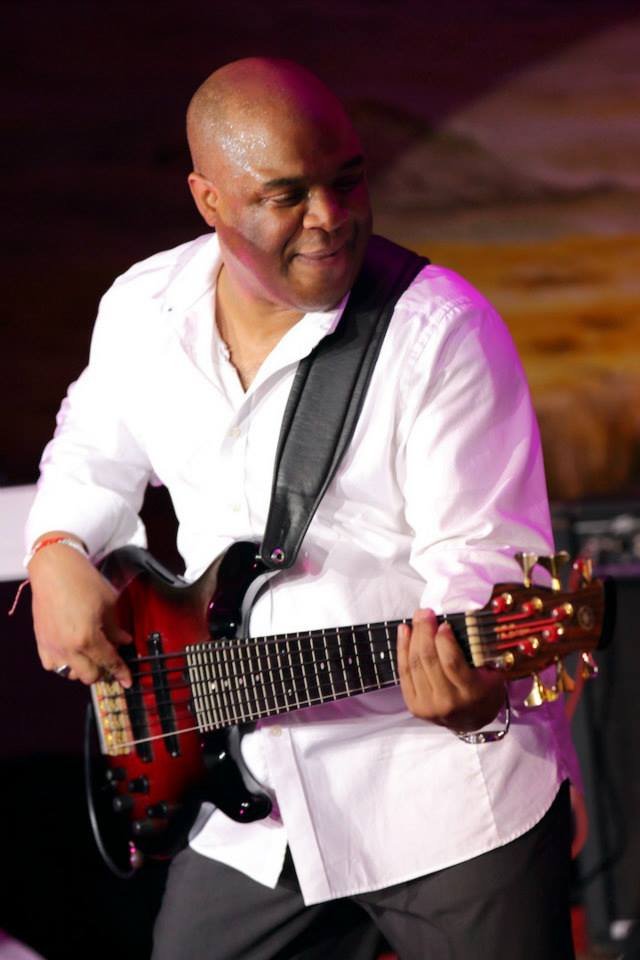
Charles Mack is the former bassist for Grammy Award winner James Cotton and Lucky Peterson. His work has spanned a wide array for genres. He has shared the stage with such acts as Inflatable Soule, Cypress Hill, Koko Taylor, Buddy Guy, Johnny Winter, Jimmy Johnson, and Kenny Neal, just to name a few. The can currently be found performing with Charles Mack Band featuring Eric Robert(Keyboard), Joel Tipke(Guitar), and Jarvis Oliver(drums)

At what age did you first discover your love of music? Can you remember what the exact moment was like when you first realized how powerful music can be?

As a child, I would listen to my family play blues, I had no idea what they were doing, I just knew the notes, along with their singing relaxed me. I was around 5 years old when I first noticed it, even though I heard it when I was younger, I just didn’t know what it was until age 5. Music has a way of making changes in the spirit. I used to cry a lot, but my mother would play jazz and I would immediately stop crying and fall asleep. The feeling I had when I was 5, from what I remember, music was like a warm blanket on a cold night, wrapped tightly, embracing every element of your being. I had a feeling of pure happiness, enjoyment, and fulfillment.

What are some of your very first memories pertaining to music?

The very first memories pertaining to music were of being around family, a room filled with guitarists and singers. When I was younger, my father, aunt and uncle would get together and play music, playing blues. I was amazed at how happy it made them feel. I had never seen my dad smile so much. My aunt played slide guitar, my dad and uncle were straight blues, finger pickin’ (rhythm and solo). The happiness that would come out of my family from playing music was incredible! The feeling that they were getting, I wanted to feel. This is by far, the best experience I have had as a child regarding an incredible feeling/experience pertaining to music.

Who were some of your earliest influences? Do you happen to remember what your very first favorite song was?

My earliest influences were, Bach, Miles Davis, Coltrane, BB King, Muddy Waters, The Supremes, The Dells, Earth Wind and Fire, Ron Carter, Charlie Parker, R Vaughn Williams, Copeland and Big Momma Thorton. I was a weird kid and I listened to everything. My first song I ever heard was a Luis Jordan song, my mother would play his music quite often around the house. Run Joe, 5 Guys named Moe ; the list goes on and on.

What was it like to get your first bass? Is that a memory that is etched in your mind?

If you could only see me now (smiling). My first bass was actually a broken acoustic guitar with 4 strings on it. That’s how I learned how to play. I had no idea what I was doing but I would play what I heard. My first real bass guitar, took me 6 months to buy, I purchased it from a pawnshop in Chicago. $150 was the cost and it took me 6 months to save up money from doing odd jobs; collecting scrap to take to the junk yard, picking up cans from garbage cans around the city, newspapers, etc… I appreciated having this bass, I had it with me for over 20 years until I got desperate for money and sold it for $250 to a music store that ended up selling it for $2,500.

How did your first break in the industry come about?

Well, I had been playing music for years. Playing tuba as a child (12 years old) for professional brass ensembles. When I lived in Seattle, I had the pleasure of performing with the rock band, Inflatable Soule. It was a great experience. We performed at many venues, and that was exciting. We performed at Jacks’s Sugarshack, the Viper Room and the list goes on. I was able to meet some great artists, Chris Cornell, members from Alice in Chains, Krist Novoselic and so many others. After Navy band and being in Seattle, when I was in my 20’s, I moved back to Chicago. I played a little but just wanted to party mostly. One night, I was playing bass guitar for a blues artist (Charlie Love) and in walks Lucky Peterson. At first, I thought it was some kind of joke. He was asking musicians about me then finally, he came up to talk to me. I was a little nervous because I had played a lot of his music when I was a younger. He asked me if I would like to go on tour with him, at first, I thought, I am not good enough but then I said to myself, nothing ventured, nothing gained. His agency called me, asked for my personal info along what I will be making. Wow! Our first show was to about 10,000 people, on a big stage where we had a tech for everything. I said to myself, this is where I need to be! It was an incredible feeling!

What does your touring gear consist of?

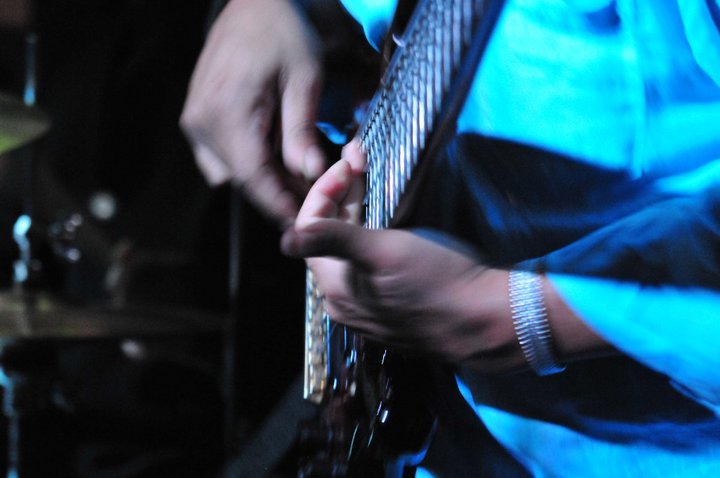
My gear is very basic. I don’t use pedals or extra outboard gear. Just a Hartke set up (Head and cab). I have my 6 string bass, Yamaha TRB-6p and that’s it. I follow the Jaco concept; your playing comes from your fingers (smiles).

What do you love most about being a musician?

The thing I love about being a musician/artist is the ability to be able to inspire, to be able to touch someone through your creation. Before I do a show, I would always pray and ask God to let me touch at least one soul, to let me help someone through something they are going through. After each show, I would always get someone that would come up to me and say thank you, they would tell me their story and tell me how my music helped them. It may not be through the lyrics, it may just be how the musicians performed together. I thank God every day for this blessing; I wouldn’t trade it for anything in the world.

As someone who has worked in so many genres over the years, is there any one genre you hold more dear than others?

The closest and the most dear to me is classical, it’s what I listened to the most when I was growing up and venturing out.

184646_195669247129851_3741742_n (1)

What does it take to make a truly great song?

It takes life experience. It takes trueness, honesty, compassion, understanding, and the ability to know that you are not the only person in this world. It takes an understanding and compassion of your fellow man. It takes love. It takes having the ability to think, feel, believe, and become more than the average. No restrictions, no laws to musical structure.

What was it like to play alongside Johnny Winter and Buddy Guy? What did you learn from them?

It was amazing! Knowing that these guys are legends and learning on the same stage from them. Johnny Winter was a very quiet person, very nice guy! The history he has and where he has been, it was an honor sharing the stage with him. Mr. Guy, Buddy Guy, the real deal. Very nice guy, he had a way to make you give him what he wanted on stage musically! A show I did at his club, he did a song with us. I remember it was a packed house and Buddy silenced the band, we played very quiet. He said, “Ladies and Gentlemen, I want you to give these guys a round of applause”, he said, “They are the next generation of the blues”. Appreciate these artists now, you may only be paying $5 to see them now, but soon, you will be paying over $50 to get in to see them. Buddy has a respect for artists, especially artists that started as supporting artists. He’s a great person and I have much respect for him.

Are there moments in your career that stand out more in your mind than others?

There are moments in my career where I wish I had done things differently but the only thing I can do now is learn from it and keep it moving. The first time I met James Brown, I would have taken more time to talk and learn than looking for the food and wine. The first time I recorded with Koko Taylor I would have spent more time talking and learning from her than arguing with my ex about picking up groceries on the phone.

Do you have any interesting stories from over the years that you would be at liberty to share with our readers?

There are so many stories, the artists I have met, the opportunities that could have been. I will be releasing a book in 2 years about being a musician, it will be in there. I had a chance to meet some incredible artists, history makers and trend setters. Sometimes I wonder, if I had done this a certain way, where would I be. I learned valuable lessons from some of the heavies in the industry and now, I am starting to apply what I have learned.

What was the best advice anyone ever gave you in regards to the music business? And to life in general?

There was one thing that stuck out the most in my musical career. I was touring with an artist and he said “Charles, I want to tell you the secret to success as a musician” He said, “I am not the greatest musician, nor am I the greatest singer” He said, “There is only one thing that is truth to how to make it. “ He leaned in, and he said, “a great publicist!”I thank him to this day because it is the truth. Getting your name out there and keeping it out there.

Can you tell us a little about the Charles Mack Band? What is it like to work with the guys in the band?

Well, I am happy to have the musicians that I currently have working with me. Eric Robert is an incredible keyboardist that sings as well. He also performs with Vicci Martinez and several other well-known musicians. Eric Rocks! Joel Tipke is by far, the best guitarist I have worked with, and I have known Joel for over 20 years. We started playing together with Peter Cornell with Inflatable Soule. One of the most incredible bands I have had the pleasure of performing with (Peter, Katie and Susie Cornell, Dave Hill, Joel and myself), Jarvis Oliver, a young and incredible drummer! With this combination, we bring the most incredible sound. It’s a mixture of blues, rock, funk and soul. Kind of a mixture of Hendrix, Ben Harper, Seal and John Mayer (x10).

What are you all looking forward to bringing to the world in 2015?

In 2015, we are looking forward to releasing a new album and touring. We are currently working on Asia, Europe and the states for doing concerts.

Anything you’d like to say before you go?

I would like to say that with music, it can take you wherever you want to go. It can take you on adventures and give you some wonderful experiences. Stay true to your craft; never give up, no matter how many tell you to give up. Inner strength and belief is important. Not everyone will see the world the way an artist does. Steadfast to you and your art.


The Art of Chie Yoshii

Bacchus

Bacchus

Siren

Siren

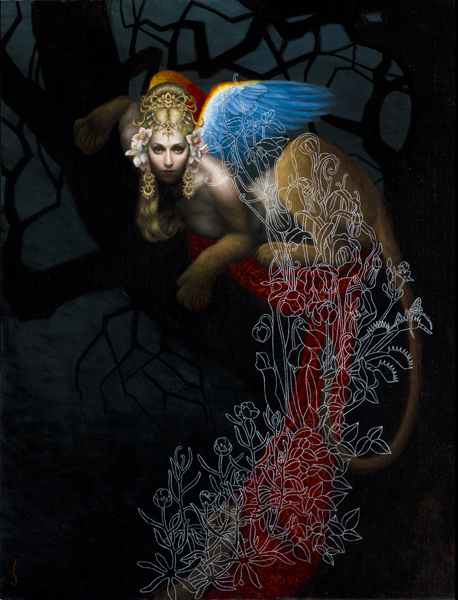
Sphinx

Sphinx

Amor Fati

Amor Fati

Transience

Transience

Guardian

Guardian

Emancipation

Emancipation

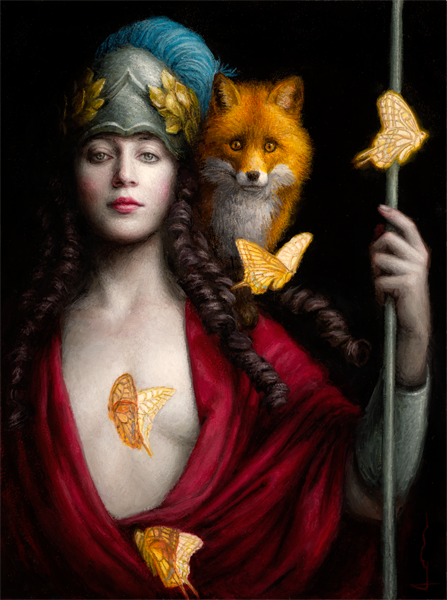
Japanese by birth, Chie Yoshii moved to the US, where she completed BFA at Massachusetts College of Art in 2000 and studied with Adrian Gottlieb from 2002 to 2008. Much of her work is inspired by the analogy between mythological tales and the human psychology. She currently lives and works in Los Angeles.

For more information on her work please see: http://www.chieyoshii.com/

An Interview with Erick Thomas

13472_375602239227543_457152942_n

Erick Thomas is the founder of and lead guitarist for Harlen Simple. The four piece band out of Virginia also features Travis Williams (vocals), Kenny Morrow (bass), and Ricky Coleman (drums). Their album Pay Up Charlie from Potomac Records mixes rock, funk, blues, and soul in delightfully eclectic fashion.

Since there isn’t a lot known of you yet, can you tell us a little about yourself?

I’m a pretty laid back guy, or at least I think so. I’m a big music junky so my nights off from playing are spent checking out friends of mine who play and sitting in if they’ll have me. When I’m not doing that, I’m in my backyard with friends smoking racks of ribs, arguing about sports and talking about music while my dogs run around.

I’m also pretty sure I’ve got the world’s most patient wife, Aimee, who puts up with all of the craziness that comes with being married to a guy in a band. It’s late nights, crazy schedules and the general drama that comes with the music business. It’s not the go to Ikea and the farmers market on Saturday’s kind of lifestyle. It’s the “let’s go get tattoos and go run with bulls or something” kind of life.

I’ve also got an amazingly smart and beautiful daughter who has the music bug already. Her name is Jasmine and she’s playing drums now. I told her to pick an instrument where she doesn’t have to lug so much gear around but her heart was set, kind of like mine. Aimee is also pregnant with our son. The little butterball will be out in the world in a few months.

What did you enjoy most about growing up in Virginia?

I’m actually a Maryland boy. I was born in Takoma Park and lived in Langley Park and Silver Spring before moving to Virginia when I was a teenager. At first I wasn’t a big fan, Manassas was one of those towns where you took the bus to school and your mom drove you to the mall. It was WAY different from hopping on the bus or taking the metro somewhere with your friends. Those teenage years are tough for anybody. Throw in moving away from everything you know and you get a kid that can be a little “rambunctious.” My mom was a saint! Eventually, I made a couple friends. One of the first ones was Travis (Williams). Now Virginia is home though. I can’t see myself leaving. I’ve got my little family and home life Aimee and I are building here. It’s somewhere you absolutely have to get back to no matter where you are in the world. That’s home to me.

Is it more difficult to get your music out there when you are based out of there as opposed to some of the more densely populated areas out there?

The bigger cities are definitely easier to get yourself heard by more people just because there are more people. But, there are a lot of ways to get yourself heard if you’re willing to put in the work. You have to talk to everyone you know, post and use social media, and most of all, play out. You have to get out there if you want to get heard by new ears. It’s much easier to promote gigs now. The world is a much smaller place. When we play, the day after we always see the follows and likes on the Facebook (www.facebook.com/harlensimpleband), Twitter(www.twitter.com/harlensimple). Instagram (@harlensimple) and Reverbnation (www.reverbnation.com/harlensimple). I wouldn’t have gotten a sponsorship with Steve Clayton (www.steveclayton.com) if it wasn’t for the internet. I doubt they would’ve been hanging out in Virginia and said, “we need to get that guy some picks and slide pieces!”

How is the local music scene faring in your particular area?

From where we stand it seems to be doing all right. There’s a ton of support out there in our little corner of the world. We’ve been pretty blessed with the fact that we’ve built a good rapport over the years with quite a few people in a lot of places. We don’t ever really have a shortage of gigs. The shows are out there. Sometimes you just have to work a little harder to find them. Our manager, Tom Downey, is the man when it comes to that. He’s magic, as far as I’m concerned, when it comes to booking. We say we’d like to do something and it shows up on the schedule. I’m not even sure how he does it, and I stopped asking a couple years ago.

Who are some of your influences?

I’m kind of a musical mutt. I’m big on people with soul in the sense that you can hear and feel what they meant when you listen to that song. Otis Redding is a mainstay in my playlists. His voice can tear your heart out and put it back during a single song. Social Distortion is another big one. Mike Ness says what he means and he means what he says. They also happen to be amazing live. I love the Drive by Truckers too. They have written some of the most incredible story-telling songs of the last 20-30 years. Now Jason Isbell is solo he’s turning out some fantastic music too.

Bill Withers is another big one. Anyone who doesn’t own his Live at Carnegie Hall album is missing out. Who could forget Mr. Warren Haynes of Gov’t Mule, Allman Brothers, Phil and Friends and the Warren Haynes Band? I learned a lot from the mixing of different styles that Brad Nowell and Sublime loved to share. I remember hiding the Black Crowes Amorica album under my bed because of the original cover. What was on the inside was a thousand times better than what my mom didn’t like on the outside. Blind Melon might be one of the most underrated bands ever. Anyone who hasn’t gone deeper than the one song you know is doing yourself a major disservice. I’m all over the place, like I said, I’m a musical mutt.

What’s great I still find new bands I like – bands like Uncle Luscious and Lucero are two everyone should take a look at if they haven’t already. One of my favorite things about music is that it’s a thing that is constantly evolving. It has to. If it didn’t we would’ve already written all of the songs there were to write. If you ask me this question in 6 months the list would probably have a bunch of different names on it.

What first led you to pursue a life of music?

I have loved music since I was a kid. I always said I wanted to learn to play. I wanted to so much I talked my parents into getting me a white JB Player with a black pick guard for my 16th birthday. When I was 20, I had the aforementioned JB Player and an old Yamaha nylon string guitar sitting in my college apartment. One day I looked at them and decided it was time to figure them out. I ran to the computer lab and printed every music lesson I could find online and stuffed them in my backpack. I went home and played until my fingers bled every day.

It wasn’t one thing in particular. It was anything I could figure out. It could be a snippet of a Hendrix song, the solo on What I Got by Sublime, or the chord structure to The Man in Me by Bob Dylan. My poor roommates – I even got them playing guitar, I would teach them whatever random snippet I could teach them so they would play too. That way I didn’t have to stop playing so they could watch TV. It was off to the races after that and I haven’t put it down since. It consumed me. I’ve learned over the years you never figure it out. You’re always chasing a sound, trying to find that something missing, racking your brain about what you need to learn or do to fix what doesn’t sound right.

Side note: I need to thank Doug and Brinkman, my roommates. I’m not sure if you have any idea what a guitar sounds like that hasn’t been tuned and propped up in a corner for 4 years. If you do they deserve more than a thank you.

Where do you think you’d be today if you hadn’t discovered the power of music?

If it all stopped now I’d probably open up a catering business or a restaurant with the wife. I love to barbeque and Aimee is an amazing cook too! That’s why I’m a lot skinnier in old pictures of myself. I would definitely go fishing a lot more than I do now. I used to go out on the Chesapeake Bay with my dad a couple times a year for rockfish, croaker, red drum, crabs, sea trout and blue fish. If I could get it into the boat I was going to get it into my belly. The Bay is such a peaceful place, one of those “Zen type” places for me. Music is the only thing in my life other than my family that I know though. If I were catering or out on a boat, that old blue guitar of mine wouldn’t ever be too far away.

10882331_821198851251697_3139429568808235879_n

How did Harlen Simple come about? Can you tell us a little more about that?

Harlen Simple was conceived in a living room, grew up in a garage and cut its teeth in every smoky bar in Northern Virginia. Travis and I were sitting in my living room one day as I was trying to figure out the intro to “Rivers Of Babylon.” Something about the timing or the pattern that day was giving me fits. I had only been playing for about a year at this point and getting stuff like that down would make me crazy. He was ready to go somewhere, and we weren’t leaving until I got the song down. As the muddled notes continued he decided it was time to help. I was playing it “right-ish” but I wasn’t following it enough. Then he started singing…he didn’t just sing, he belted it out. I think I said something like, “Well, it looks like we’re starting a band,” and so it began…

We spent the next 2 years playing anywhere that would have us. It was a lot of open mics, playing at 11 am for all day charity events, playing for free in pizza places or any other place that would have us. We weren’t very good. Actually, we weren’t any good. But we had some potential and we weren’t going to go away. I spent a lot of time at those open mics asking other players how they got their tone, how they played certain songs and what can I do to get better? Travis spent time getting pointers from our friend Brian Barr. He was the lead singer in a band with Kenny at the time – The Truth Hurts Band. Brian would also helped me write some of Harlen Simple’s most popular songs such as I’ll Shine.

Right around that two-year mark things started making sense. We started getting paying gigs and we were getting better. At the same time Kenny became available. The Truth Hurts had broken up, his other band wasn’t playing as much as he’d like and he wanted to get out and play. Josh Marsh, a high school friend started us off and then our second bass player, Dave Garcia had to bow out. We ran into Kenny and he said he needed something. We spent the next couple years screwing with the lineup. Dustin Nadeau played saxophone for us, Mike Wagner was drumming, Ian Maynard played guitar too. We started traveling. We made a couple of road trips to New Hampshire, New York City, Pittsburg, and then it took a little downturn. Ian left to start his own project, Mo (Dustin) and Mike tendered their resignation shortly after. We had to go find a new drummer. Eventually we found John Peterson, and we grew even more. John was there the first time we played the world famous 9:30 Club.

John left when he had to take care of some family stuff. We were left with a full schedule and no drummer. We had 2 days to find a drummer to play a gig up in West Virginia and then film a TV performance the following day somewhere in Maryland. Kenny and I were just about to cancel the shows when we remembered a drummer we had played with back in the open mic days. Enter Ricky Coleman. He agreed to do the gigs, we burned a couple of CD’s and let him listen to them in the car on the way to the gig in West Virginia.

14 years, 3 trucks, 1 bus, and I couldn’t even fathom a guess at how many shows later, here we are.

What do you hope fans take away from your work?

The stuff we write is our heart and soul coming out. These songs are written about someone, something that happened, something we lived through, or something that just got stuck in our craw and the only way to get it out is a song. I just hope that people can relate. Life happens to everyone – sometimes it’s good sometimes it’s bad. Sometimes it’s funny. It’ll make you insane. But it’s ALL emotion. If something we’ve written can get someone through a tough time or be the song people are sitting around singing at a cookout loud and out of tune having a blast, then we’ve done our job.

What can they expect from your album Pay Up Charlie?

This one is pretty unique. It was recorded in 3 different studios over some time and it runs the gauntlet for us. They’re all tunes different from one another. Codeine & Cognac is about being a stuck in a rut with chaos all around you and trying to figure it all out, all the while knowing you’re screwing up but not really changing anything about it. In Your Shoes was about a guy I used to work with that was just a general pain in the ass. Everything he did was the greatest thing ever done in the history of the world at a menial job. The song is kind of tongue and cheek – “If I was as good as you were at everything I might be able to fill your shoes.” The music came about because Kenny had been playing this reggae lick in D minor in practice. I started to toy with it. The bass line had an awesome amount of space I could fit that lick inside. It also helps we recorded it at Golden Sound Studios up in Kensington, MD. Scot (Harlan) is a hell of a producer.

Oh Me we did down at Studio 77 outside of Fredericksburg, VA with our buddy Yarley. He’s got this really cool studio at his house with a big open room downstairs. We were able to record in the same room together, so there’s a feeling of unity complete with imperfections that give it tons of personality. It was old school recording – no digital, no Pro-Tools. What you hear is what you get.

Then there’s Naked Stephen. Travis and our friend Jesse Guay recorded it with my father-in-law, Scot Lienke, up in the mountains at his cabin near Front Royal, VA. A few years ago I was at the beach where we rented a house with my little brother and his friends in Topsail, NC. One night after a few too many grown up drinks clouding the judgment of our grown up choices, we took a walk on the beach. At some point in the walk, our friend Stephen decided streaking was a good idea. The problem was his drunk-ass forgot where the beach house was and he took off in a full sprint. He lost us in less than 5 minutes. We eventually found him the next day hiding in a bush in the marshland, all chewed up by mosquitoes and whatever other critters live in the marsh on the backside of the island. The lyrics tell the story in chronological order.

Who do you consider to be some of the best living guitarist of our time?

I’m not sure what you would consider “our time.” I love guys that have an identifiable sound. Warren Haynes is one of my all-time favorites – his Les Paul coming through that Soldano amp – is instantly identifiable. Billy Gibbons is way up there as well. I love how he phrases what he plays. The turn around on “Waiting for the Bus” has power like a hot rod shifting gears. It levels off and then goes right back into a verse lick that is so fun to play. I can spot a Mike Ness Song in two seconds or less. Dropped tuning with the capo on the second fret gives his tunes such a great tone.

I love how well Patterson Hood and Mike Cooley play off of each other; they’re a two headed monster. Anders Osborne is a madman. He does some stuff I catch myself replaying 20 seconds of one of his songs over and over again asking myself “How in the hell did he do that?” Rich Robinson of The Black Crowes has done incredible work. I don’t know how many times I’ve tried to play along with him and failed miserably. There are so many. Gary Clark Jr. is a new guy but an old soul. I can’t wait to hear what he’s going to come out with next.

Are there any little known things about you that our readers might be surprised to learn?

I still can’t read music and I can’t remember the last time we wrote a set list. Instead we talk to each other while we play. If a song ends in E and we’re feeling a groove we roll into the next song to keep it moving. I wouldn’t call myself and adrenaline junky, but I’ve been known to go skydiving, bungee jumping, the aforementioned running with bulls, etc. I’m a big fan of life I guess, and there’s no better way to feel like you’re alive than doing something that might kill you and living through it.

Where do you hope to see your career in music led you next?

I’m not banking on anything, after doing it for this long I know that expecting anything is a recipe for disaster. I would love to get a chance to play with some guys that have influenced me. I would love the opportunity to open up for some guys who have paved the way for guys like me, or at least buy them a beer.

What projects are you working on at the moment?

Right now I’m writing for a new Harlen Simple album. I’m one of those guys that can’t write until I live a little. I need to have something to talk about or to get off my chest. I’ve been tinkering with other instruments as well – keyboards, bass, lap steel, etc. Different instruments enable you to say things another way. I’ve toyed with the idea of finding a band to play bass with on the side, bass players have a cool vibe about them, maybe I’ll go get a little gig doing my best Aston Barrett or Fred Thomas impersonation and people will think I have that cool vibe too.

“You” by Mamta Madhavan

Bamboo_Forest-Sichuan

You

(to J)


I watched the burnt morning sun
struggle through the mist as it
chased the dew down the hills.

In my room, I tried putting down
your laughter on paper.
I looked outside to see a blue sky;
bluer than ever, that led me to search for
more blue hiding in the fescue grass.

Up there your giggles tailored the clouds
with curves and shapes as a handful of stars
coyly hid behind the brightness of the sun. As I
write this, your smile got stuck between the bamboo reeds.

Today I want to put down your laughter on paper
And I can’t. They just evade me like how they
find their way out of the bamboo shoots.


Mamta Madhavan’s oeuvre includes web content writing, book reviews, interviews, articles, and poetry. Her works have been published in various reputed journals and magazines worldwide. Much of the latter may be found at her blog www.gravidmoon@wordpress.com and her upcoming poetry collection Connecting the Dots. She incorporates vivid imagery into her writings influenced by nature, mysticism and spirituality. Her style of writing is mainly free verse.

An Interview with Kazuhiro Tsuji

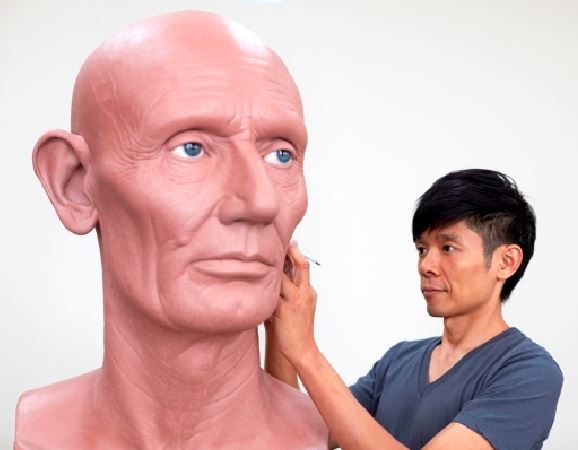
Lincoln_Kazu2

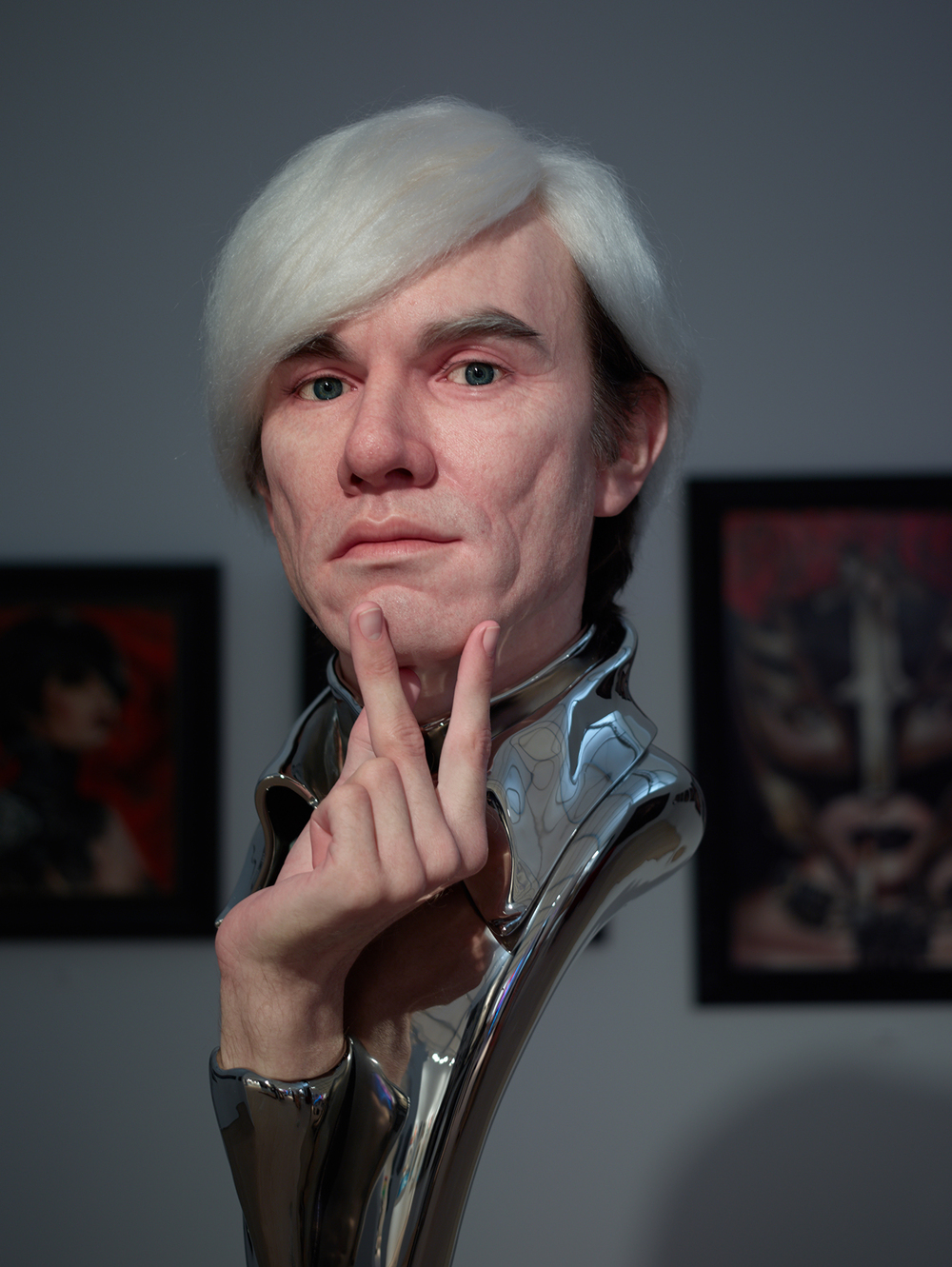
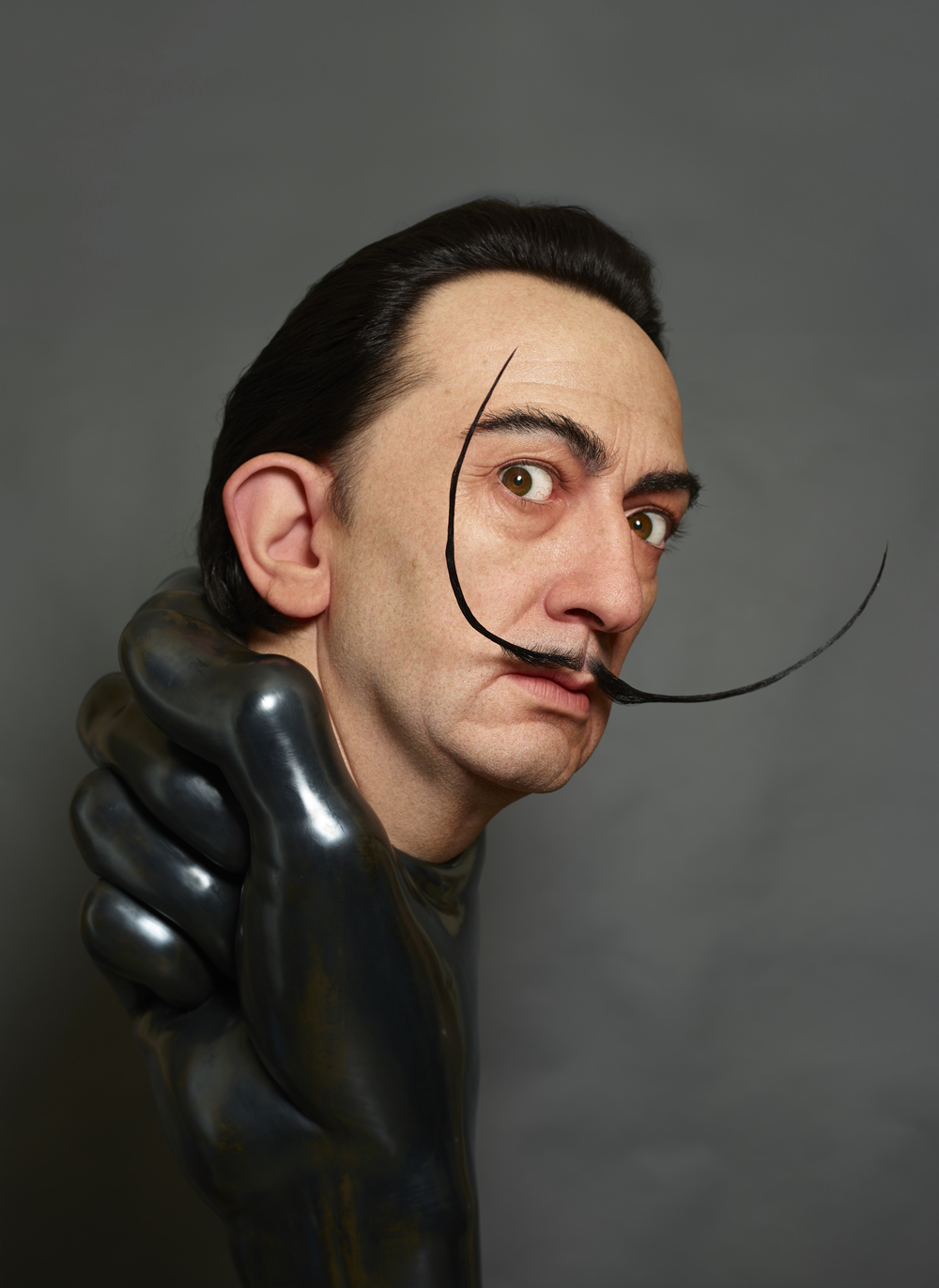
Kazuhiro Tsuji is an award winning makeup artist and fine art sculptor. His work has appeared in several exhibits and such films as How The Grinch Stole Christmas, Planet of the Apes, Click, and The Curious Case of Benjamin Button, to name a few. His hyper realistic technique brings characters to life in a way that astounds the eye and delights the senses.

What were you like as a child? What are some of your most fond memories from your early days?

I had some hard times in my childhood. So I used to spend time alone, riding my bicycle, making something, drawing. Sometimes I went to junkyard and took things apart. I played with insects and animals. Visited traditional craft stores and watched people make something. Those were my escape and most fond memories.

When did you first know that you were an artist?

I think everyone is an artist, it depends on if they express or not. I liked to make something since I was very small.

KazuWarhol

What do you love most about creating of your various works?

I love all process from thinking about what to create, when it’s all coming together, and watching people watching my work.

Is there any one project that has been more dear to you than the others or do you love them all equally?

All projects have good and bad, I love them all.

KazuWarhol2

What was it like to have the chance to learn from Dick Smith? Do you think his encouragement was instrumental in your becoming the artist you are today? What was the most important thing you learned from him?

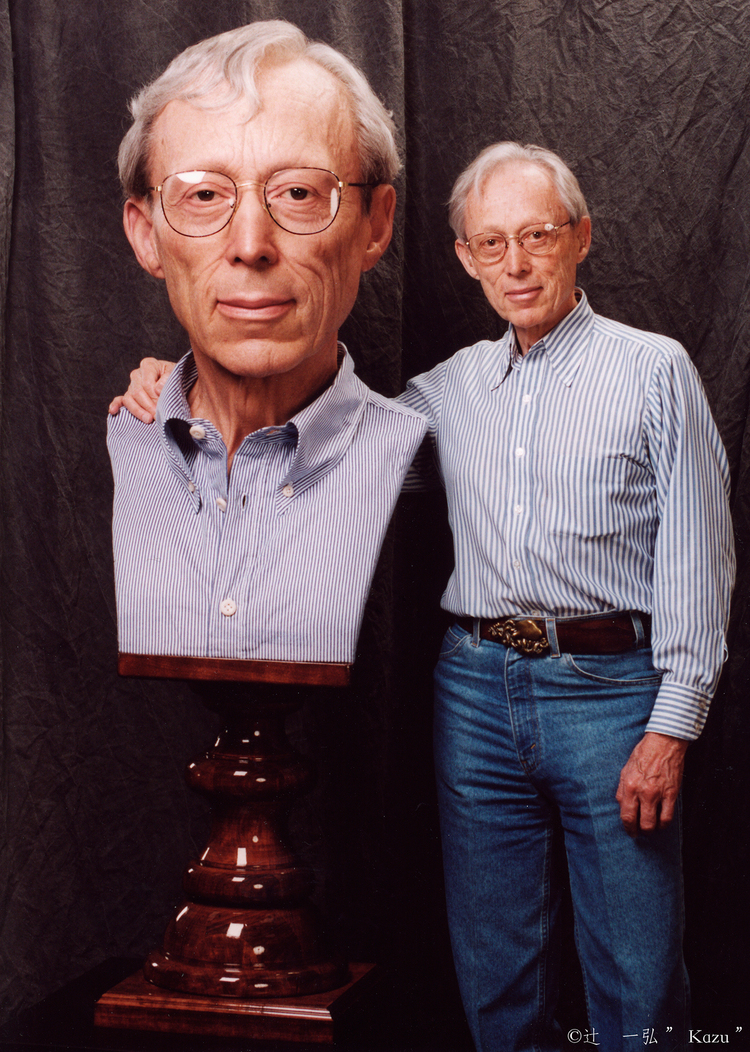
I learned from him a lot of things. Actually I only had a chance to work with him on a film project a few weeks in Japan. After that , he visited to Japan every year for school where we taught, and after he retired to Los Angeles. We talked about life often more than make up.

I learned a lot from his life. When I made his portrait it was actually a gift from him. I made that for his 80th birthday. And it ended up the biggest gift from him that helped me to realize what I really love to do.

The most important thing I learned from him was how to live before I die. As I spent time with him last few years until he passed. That helped me a lot to leave the film industry to move into the art world.

KazuDickSmith

What is the most important thing to remember when trying to convey spirit to a sculpted piece?

Connect with the spirit of the subject even if that person is deceased. I think compassion is very important.

Do you have a dream project that you would most like to accomplish?

I like to keep creating and I have a lot of goals, one of them is to do a museum show with my portrait pieces. First may be with 10 pieces. I realized how powerful that will be after I showed my Dali and Warhol piece together at an LA art show, they gathered constant crowds. I loved watching how people enjoyed them and engaged with them.

KazuDali

Are there any little known things about you that your fans might be surprised to learn?

I’m not sure.

Do you feel it is a privilege to be able to bring beauty to the world through the works of your hands?

It is an honor, if I am doing that. I think all human beings should bring beauty, love, compassion, and care.

What projects are you working on at the moment?

I am planning and designing for the next piece.

KazuhiroTsuji

For more examples of his work and more information on upcoming pieces please see: Kazu Studios.

An Interview with Ralph Stanley

1

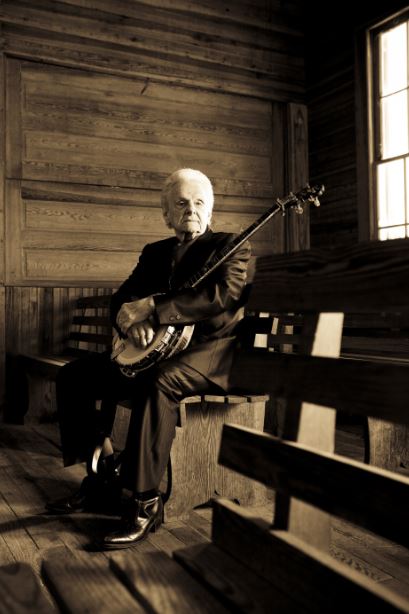
Ralph Stanley has been entertaining the masses with his distinctive voice and banjo playing since 1946. Influenced by the traditional music of rural Appalachia he formed the Clinch Mountain Boys, and later The Stanley Brothers, with his brother Carter.The rest became history. As a banjo player he developed the unique “Stanley Style” recognized fast, continuous forward rolls followed by the index finger. In 2002 Stanley won a Grammy Award for Best Male Country Vocal Performance for his version of O’ Death, produced by T-Bone Burnett for the for the film O’ Brother, Where Art Thou?.

What was it like growing up in Southwest Virginia? How were times most different back then? Do you ever miss those days?

Growing up in the hills of southwest, Virginia was a wonderful place to be born and raised. Of course we faced hard times, but the good outweighed the bad.

What do you love most about living in such a rural place as Dickenson County? Do people ever ask you why you decided to stay in the area you were raised?

I always wanted to stay home in Southwest, VA. A lot of folks ask me why I never moved to Nashville. I love the hills and I wouldn’t live anywhere else.

What did it feel like when you got your very first banjo from your aunt all those years ago? Do you remember was running through you mind when you first got it?

I was very excited. My mother gave me a choice to pick from a hog or a banjo. A lot of folks don’t know this but I always dreamed of being a veterinarian in my younger days. I Was interested in animals very much. But my mother could only afford one. Both were $5.00. So I picked the banjo. I’m glad I did.

What was the music industry like in your earliest days there? Any fond memories that stand out most in your mind from that time in your life?

Me and Carter (my brother) started out playing at family picnics and for a lot of our neighbors. They really seemed to enjoy what they heard. So we thought that we could make a living doing that. Once we got started, things moved fast. We had a lot of good success.

How do you think the music industry has changed most since you first began your career over 60 years ago?

Well the music industry has changed quite a bit, but I haven’t. I’m still the same ole mountain singer that sings a song the way I feel it. I don’t try to copy anybody else. I think that’s one of the reasons I have lasted 69 years on the road.

rs2

What was it like to record O Death for T-Bone Burnett? Did you enjoy seeing it in the film?

Oh Brother Where Art Thou really helped old time music. I started seeing a lot of younger folks come to my shows and the crowds doubled. It really did wonders for bluegrass music. T Bone Burnett was a fine producer to work with. As soon as I started singing “Oh Death” A capella in the studio, he said “that’s it.”

Does it take a certain amount of love and dedication to continue a career for 6 decades? Do you still enjoy it every bit as much as you did when you performed your first song?

Yea it does. Music has always been my life. I’ve never known anything else. It’s not a life for everyone though. I don’t know what I would do if I ever retired.

As someone who has been married for over 50 years, what do you think is the key to having such a lasting relationship?

I have a very supportive wife who I love very much. She is a wonderful mother to our children and a wonderful grandmother to our grandchildren. She has always stood behind me.I guess she has been my rock.

What do you think is key to a life well lived?

The most important thing is to keep God first. Obey his commandments and thank him every day for giving you the gift of life. Always be honest and treat people the way you would want to be treated.

Does it feel good to be back in the studio working on your latest album? What can your fans expect from this one?

I’m very proud of this album. All of the guest singers did a fine job. It thrills me that Cracker Barrel and Red River wanted to do this project. I appreciate them so much. I hope my fans will enjoy it.

Do you have anything you’d like to say before you go?

I want to thank my fans for their support and outpouring of love throughout my whole career. I have no plans of retirement. I still love to travel and get on that stage every night. I’ll continue to do that just as long as the good Lord will allow me to do so.

rs3