An Interview with A.D. Winans

Haight Ashubury, San Francisco, year unknown.

Haight Ashubury, San Francisco, year unknown.

A.D. Winans has worked as a poet, publisher, essayist, and short story writer. After returning from the service in Panama in 1958, he went on to become an active member in the Beat and post-Beat Era. He has written more than 60 books of poetry and prose and has appeared in over 1,500 anthologies and magazines. His archives are housed at Brown University.

What was it like being born and raised in San Francisco when you were growing up? What are some of your most fond memories from that time?

San Francisco has changed considerably since I was a child. I grew up in the Haight Ashbury when it was a blue-collar working class neighborhood, with a sizable Russian population. The Fillmore was largely a black neighborhood with many jazz clubs in a consolidated area that many referred to as “Bop City.” The blacks were squeezed out when the neighborhood underwent redevelopment, and the jazz clubs went with them. The Geary Street, Richmond district, had a large Russian population, many of whom moved to Burlingame.  Today it is largely Asian. The Mission district was an Irish neighborhood, but is now home to a large Latin population. Only the outer Sunset district, which was made up of largely middle class whites, has remained the same. My high school (Polytechnic) was torn down long ago and replaced with Condos.

Among my fondest memories is Play Land at the Beach. It was a smaller Coney Island-like amusement park, and a favorite hang-out for sailors and their young women admirers. I spent a great deal of my time as a teenager there. The original (a new one was built after a fire destroyed it) Cliff House was (and remains) a popular eating-place. They had a penny arcade as part of a bigger complex, which included the Sutro Baths with magnificent swimming pools. It was a marvelous indoor swimming facility (my sister used to swim there) with six saltwater pools and one fresh water pool that included seven slides and one springboard. Farther down was the now closed Fleishhacker pool, at the South West corner of San Francisco near the San Francisco Zoo. It was the world’s largest swimming pool in its day. 4,500 feet long with separate bathhouse wings for men, women, and children, and a large restaurant upstairs overlooking the ocean. It was closed in 1971 (although the foundation remains) after the main pipelines were destroyed during a severe storm. There was also an adjacent ice skating rink.

The San Francisco Seals Triple A Coast League Team were my father’s pride and joy, and he passed this passion on to me. Lefty O’ Doul was the Manager and had played the outfield in the big leagues. He would later manage the San Diego Padres to the championship in 1954, the same year I enlisted in the military. Joe Sprinz, the coach, formed two teams of kids and slow-pitched for both teams. I was one of the better hitters. Poetry and writing couldn’t have been further from my mind. I spent hours bouncing tennis balls off the walls of apartment complexes outside our flat on Page Street, living and breathing baseball, always looking for a pickup game. There were two baseball fields in Golden Gate Park, and you could always find a weekend game being played by semi-pro teams like Lucky Lager Beer, Moffit Manteca (a meat packing plant), or Horsetrader Ed’s (used car dealer), and others. The San Francisco Seals were the premier team in the old Coast League, and at one time all three Di Maggio brothers played in the outfield at the same time.

A memory that will always stick with me was an exhibition game between the Cleveland Indians of the American League and the Seals. Bob Feller, who later was elected to the Baseball Hall of Fame, pitched the first three innings. Before the game they held a raffle, my name was pulled from a fish bowl, and I was called down to the field to have my photo taken with two others kids whose names were also drawn. We were all given a baseball glove autographed by Feller and had out pitcher taken with him that appeared the next day in the evening edition of the News Call Bulletin.

I talk about all this in great detail, in my memoir, The Holy Grail, Charles Bukowski, and the Second Coming Anthology.

There is so much more I could talk about, but it would take up the entire interview. Here is a poem of mine that was published in the San Francisco Chronicle.

I have walked these San Francisco streets
Like a crime photographer walks his beat
My eyes taking in her every movement
My brain recording images real and imagined
In seventy-plus years
Her changes have not eluded me
She is older now
More wrinkled and cranky
Much like me
But the two of us manage to get along
Like business partners looking after
The other’s interest

Market Street once a fashionable socialite
Now a gaudy whore
Mission Street once the home of the Irish
Now glossed over tough looking youths
With dagger stares

The city is like a cup of strong coffee
Stir her long enough
And the flavor floats to the top

I have walked these streets all my life
In good condition
And run down physique
Knowing there is no other city
In the world like her
She is like a pair of empty shoes
Sitting under the bed
With no feet big enough to fill them

She is like a squirrel running between
The live wires of a utility pole
She is like the last bullet
In the executioner’s gun
She is like a room full of poets
Crazed with their own conversation
She is like the face of God
All forgiving in her insatiable
Lust for life

Do you happen to remember what your very first favorite story was?

It was a series of them, the Earnest Hemingway “Nick Adams,” stories. Early on I wanted to be a novelist and short story writer, and submitted stories to magazines like Harpers and the Atlantic. They were returned with the standard rejection slip, which I pasted on the wall of my one room apartment in the Fillmore District of San Francisco. I turned to the Evergreen Review and Avant Garde Magazine. The latter commented, “Your style reminds us a lot of Vonnegut, and he’s no slouch, but it isn’t what we are looking for.” I decided to concentrate on poetry, which has always come easier to me than fiction that
I find I need to constantly revise.

Did you always have a love of words or is it something you developed along the way?

No, I wanted to be a baseball player for the longest period of time. It wasn’t until I discovered Ginsberg, Kaufman, and others in 1958 that I became fascinated with the written word.

I was discharged from the military in 1958 and returned home to find West Coast Beat mania thriving in North Beach, which was referred to as “Little Italy.” I found a part-time job working at the post office and enrolled at City College of San Francisco. I began reading the works of Steinbeck, Hesse, and Camus, and discovered the poetry of Ginsberg, Ferlinghetti, Brautigan, and others. It was while attending CCSF, and after getting off of work at night, that I began spending hours at North Beach, browsing the basement at City Lights Bookstore, devouring underground magazines and reading both known and little known poets. It was there that I discovered Ferlinghetti’s Coney Island of the Mind, Ginsberg’s Howl, Patchen’s Love Poems, and Corso’s Gasoline.
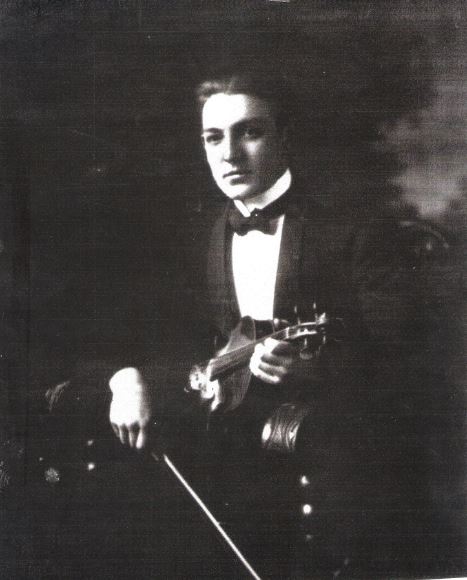
A.D's father who played first violin in the Denver Symphony.

A.D’s father who played first violin in the Denver Symphony.

What led you to serve in the military? What did you learn from your time there and in Panama?

I didn’t have any job skills when I graduated from high school, and a friend talked me into joining the Air Force with him. My military days are not something I like to look back on. The day I arrived at Boot Camp, I was taken to the processing center and asked what religion I was. I replied Protestant. I was asked what denomination I was, and again I answered Protestant. I had no idea what “denomination” meant. To me there were only Catholics, Protestants, and Jews.

The sergeant felt I was being a wiseass and kept asking me the same question, and I replied in the same manner. I was taken to the barracks and told to strip down to my shorts, and made to sit on a straight back chair in the middle of the room, where the sergeant and a corporal used me for batting practice. When they tired of the game, the sergeant told me, “We’ll put you down as Agnostic, why didn’t you just  say so and save us all the trouble.” Of course today this kind of thing is prohibited.

After completing boot camp, I was assigned to Albrook Air Force Base in Panama, where I played on the baseball team until I injured my leg and was assigned to the Air Police Unit, mostly standing guard at remote jungle posts of no strategic value.

My first year in Panama, the President was assassinated at the racetrack. There were three classes in Panama: The rich hung out at the gambling casino at the Hilton Hotel, the middle class was comprised in large part of Chinese immigrants who owned small shops and restaurants. The majority of the people belonged to the lower class, which lived in squalor and poverty in the rural areas and in downtown Panama.

It was while serving in Panama that I became disillusioned with the American system. The U.S. leased a section of Panama called the Canal Zone, which had all-white schools, a white Governor, and an all-white police force. The Panamanian flag was not allowed to fly next to the U.S. flag. Panamanians were only allowed there to work on the canal, and it was off limits to the military for fear we would contaminate the daughters of the civilians there. It may as well have been Selma, Alabama.

MEMORIES

Panama City
Could have been
Any slum city in America
Run by corrupt police
And politicians
But when you add
The American troops
Sent to safeguard
The people
It was worse than
Any slum you might imagine
Young boys selling their sisters
Taxi drivers taking you
To a donkey show
Or to the homes of young whores
While less than ten miles away
In the American Canal Zone
It’s home town, U.S.A.
The Governor’s Ball
U.S. Civilian police
White-skinned women
Sipping coffee and tea
Living the American dream.

(This poem is from This Land Is Not My land that won a PEN National Josephine Miles Award for excellence in literature.)

When did you first know that you were a writer? What do you love most about the act of writing?

I never gave this much thought. As for being a poet, I can’t tell you what makes a person a poet. I write because of these strange voices inside my head. I’m like a caretaker who writes down what they dictate. I share the same philosophy as the late Beat poet Jack Spicer that “verse does not originate from within the poet’s expressive will as a spontaneous gesture unmediated by formal constraints, but is a foreign agent, a parasite that invades the poet’s language and expresses what it wants to say.” I have been both blessed and cursed by the inner voices (demons) that possess me.

What was life like during the Beat era? What stands out most in your mind from that time? How has the world changed most since those days?

The difference is like night and day. Back then the San Francisco North Beach Beat scene was like Alice in Wonderland. It was an exciting period of time. I drank at Gino and Carlo’s Bar, where poets and writers like Richard Brautigan and Jack Spicer hung out, and frequented the Vesuvio Bar and the Coffee Gallery, on Grant Avenue, where I was the first feature reader, being paid $5 and all the beer I could drink. Mike’s Pool Hall was another favorite hangout that Ferlinghetti frequented. One of my favorite bars was The Place that Jack Spicer presided over. They had a weekly “Blabbermouth” night, an occasion where poets and philosophers could get up and espouse on any topic that came to their minds.

Another popular place was The Co-existence Bagel Shop, the private domain of Bob Kaufman. People came there in the hope of seeing him read his work. He would jump up on one of the tables and recite his poems and the poems of the Masters. He became a target for the San Francisco Police and frequently was taken to the old downtown Hall of Justice and subjected to beatings.

I ate at Woy Loy Goys, a downstairs Chinese restaurant that served low cost meals; however, my favorite restaurant was Sam Woo’s whose waiter Edsel Ford had the sharpest tongue in town. You had to pass through a butcher shop with cooks wielding meat cleavers to get to the upstairs restaurant where the food was brought up on a dumbwaiter.

And then there was Eric Nord’s Pad, in the old Warehouse District. Eric self-appointed himself as the “King of the Beats,” and wild all-night parties were held until sunrise. Some people think the sexual revolution began in thee Sixties, but it began before the Hippies, where on the rooftop of Eric’s Pad, you would find a string of mattresses strung out with couples fornicating in open view.

On my first 1958 visit to North Beach, on my return home from Panama, I wound up at a bar and restaurant run by an elderly French couple, who also owned the upstairs hotel. I was half drunk out of my mind when I made my way through the crowd to the bar and ordered a beer, when suddenly I felt some one tapping on my back shoulder. I turned and saw an attractive young woman who asked me point blank, “Do you want to fuck?” She had a room at the hotel and we spent a couple of hours in heated passion until she took me to a party and later for my first visit to Eric’s Pad.
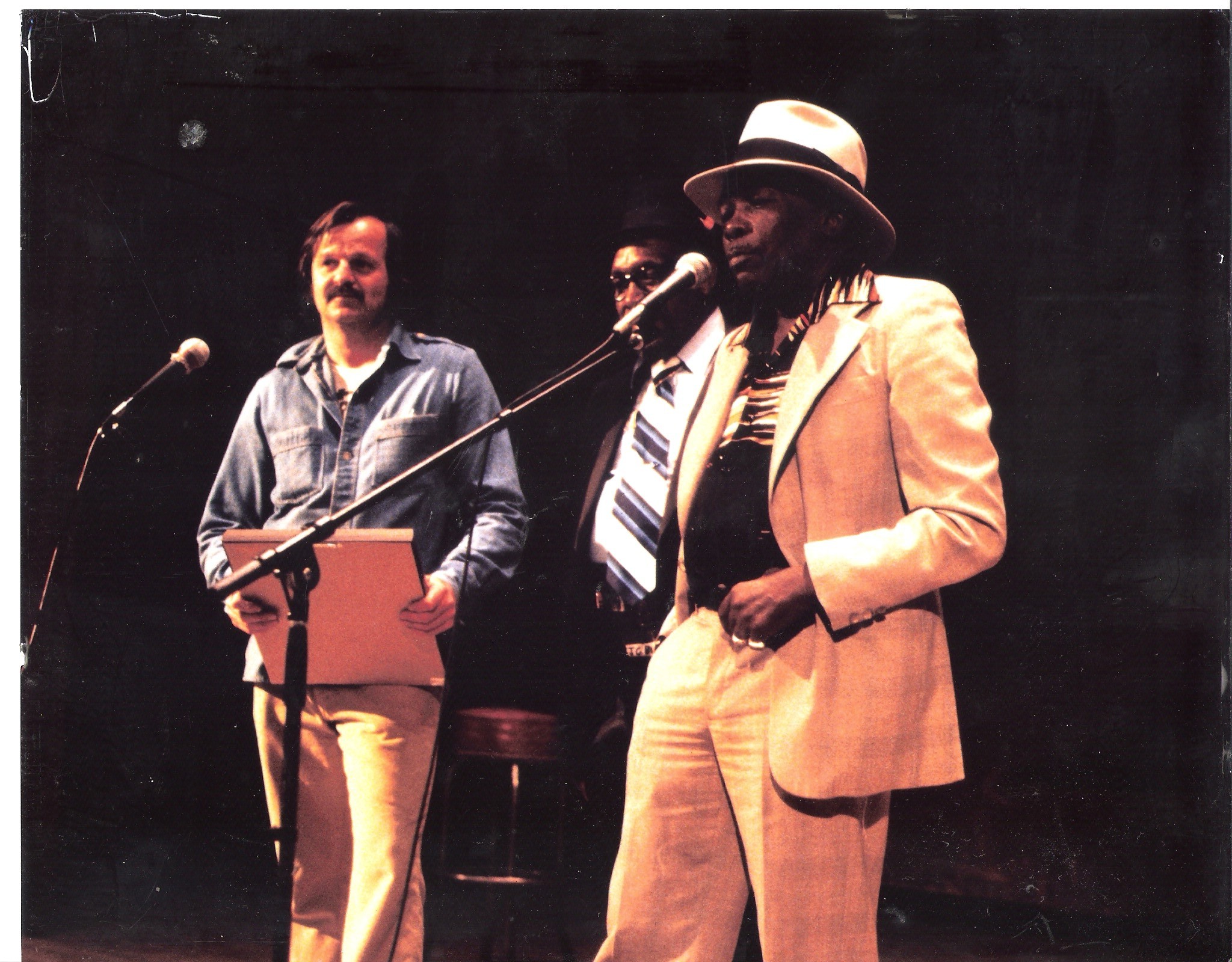
A.D. and Blues Icon John Lee Hooker.  California Hall. San Francisco. 2000.

A.D. and Blues Icon John Lee Hooker. California Hall. San Francisco. 2000.

What moments from over the course of your career so far do you hold most dear?

First of all, I don’t consider poetry a career. Those who do either teach or live in a fool’s world. And then there is a second group of poets who do see it as a career, but I find most of them fall into the category of “political poets,” not committed to the art of writing, but on how they can personally benefit from it, how they can milk the system and the grant structure, and they are very good at it.

The dearest moments to me? That would be meeting and becoming friends with poets and writers like Alvah Bessie, Jack Micheline, Bob Kaufman, and Harold Norse. Meeting musicians like John Lee Hooker and Charles Musslewhite. Publishing Second Coming Press for 17 years. Shooting pool at Gino and Carlo’s Bar with Janis Joplin and her friend Sunshine. Organizing the 7 day, 3 county 1980 Poets and Music Festival, honoring the poet Josephine Miles, Blues Legend John Lee Hooker, and poet, community activist Roberto Vargas.

What was the best advice anyone ever gave you?

Be yourself. Don’t be afraid to take risks. Don’t play it safe. I have always said the only thing a poet has is his or her integrity, sell it out, and you have literally sold your soul to the devil.

What advice would you give to the writers of tomorrow?

The same advice that was given to me, to become politically involved, not by writing “ranting” political poems, but by doing something active in your community, something that helps others. Walk the streets and talk to the people. They are the ones who know what life is really about. And above all else, remember that poetry is not holy; it is only holy when it forgets its holiness.
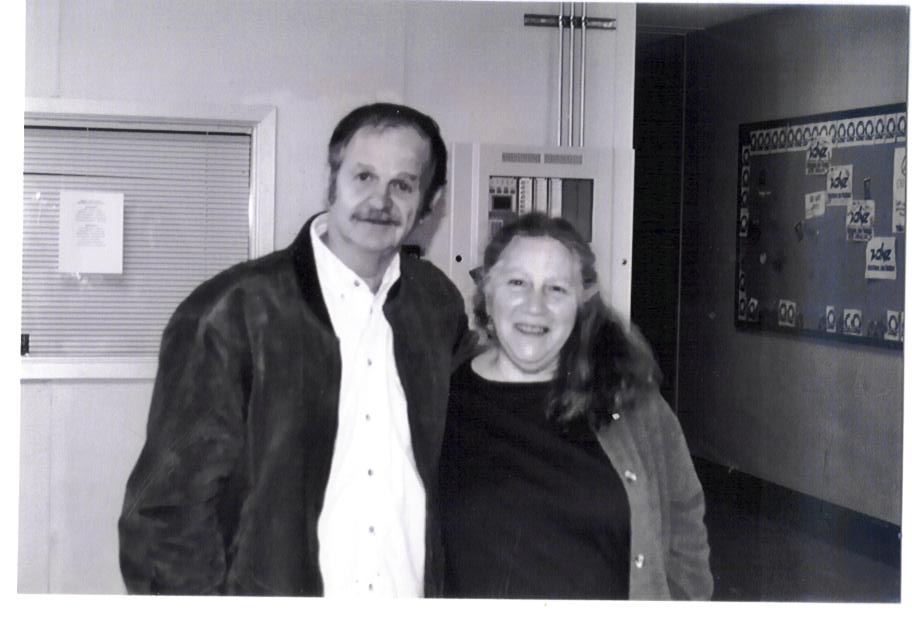
A.D. and Beat poet Diane Di Prime.

A.D. and Beat poet Diane Di Prime.


How do you think you have changed most as an individual?

Well I’m pretty much the same person as I have always been, with the same compassion for the Down & Out and dispossessed, the same mistrust of government, but one mellows as he grows older. I try to hold back the inner anger except in the form of poems. Negative energy is bad karma that comes back at you with health issues.

Are there any little known things that your readers might be surprised to learn?

We all have skeletons in our closet, and I see no purpose in revealing them here. As for my life as a poet and writer, I think it’s all been laid out there. If you have read the body of my work, you know where I’m coming from. My poetry and my life are one and the same. They can’t be separated. But I’m sure most people are not aware of my 1973 arrest for alleged Felony Auto Theft, where I took a parked Yellow Cab (while under the influence of Jack Daniels and LSD) and led the police on a wild chase through the streets of San Francisco. I was not aware of the LSD that had been slipped into a wine punch bowl that led to this incident. This is actually a funny story revealed in full detail in my book, The Holy Grail: Charles Bukowski, and The Second Coming Revolution, a memoir of my days back in the Beat and post-Beat days, so there are things revealed in the book that a large majority of people are not aware of.

What are you own personal feelings on life and death and the things in between?

You begin the dying process the moment you are born and take your first breath. In between is life. We are all a product of our experiences along the road to finality. What you learn from those experiences and how you play them out ultimately defines who you are.
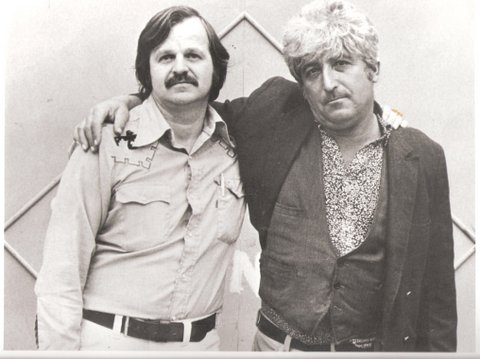
A.D. and late Beat poet Jack Micheline.  1976.

A.D. and late Beat poet Jack Micheline. 1976.

What do you think is key to a life well lived?

That’s not for me to say. I’m no guru, shaman, or prophet. Each individual must discover this for himself or herself.

How do you hope to be remembered when your time comes?

I’d like to be remembered as a person who played it honest, as someone who cared for the down and out, as someone who valued integrity over monetary success or status in the literary hierarchy. As someone who valued friendship over the almighty dollar.

Do you have a dream project you’d most like to accomplish?

Writing wise I have pretty much accomplished everything I want to accomplish. I want to see my grandniece graduate from college and hope her dream of becoming a marine biologist becomes a reality.
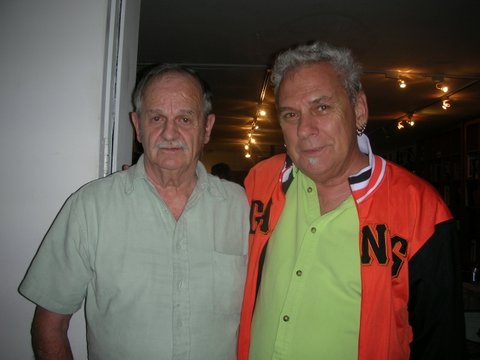
 A.D. and Sacramento poet D.R. Wagner. Sacramento, CA 2014.

A.D. and Sacramento poet D.R. Wagner. Sacramento, CA 2014.

What projects are you working on at the moment?

I had three books published last year. Some of the best poems I have written were written in 2014. I want to put a book together of these poems and find a publisher with a decent distribution to publish it.

Anything you’d like to say before you go?

Just be happy. A smile brings fewer wrinkles than a frown. Live each day like it may be your last because you never know if it might be. I recently turned 79 and consider each year a “free Pass.”


IT’S HOW YOU LOOK AT IT

Sitting here alone as
I’ve grown accustomed
Listening to Billie Holiday
As I pound the keyboard
Try to make a little magic
Jack Daniels racing through
My veins
Having just returned home
From a book party celebrating
the life of Bob Kaufman
Gone like so many others
An army of poets sitting
On my bookshelf
T.S. Eliot playing the banker
William Carlos Williams
Suturing wounds
Micheline walking the streets
Of New York with Mingus
Kaufman riding the subway
Getting off at 58th Street forever
Blake rolling dice with God
Lorca playing Russian roulette
Gary Snyder building word bridges
And suddenly I’m not alone anymore
The words falling like
Hard rain.
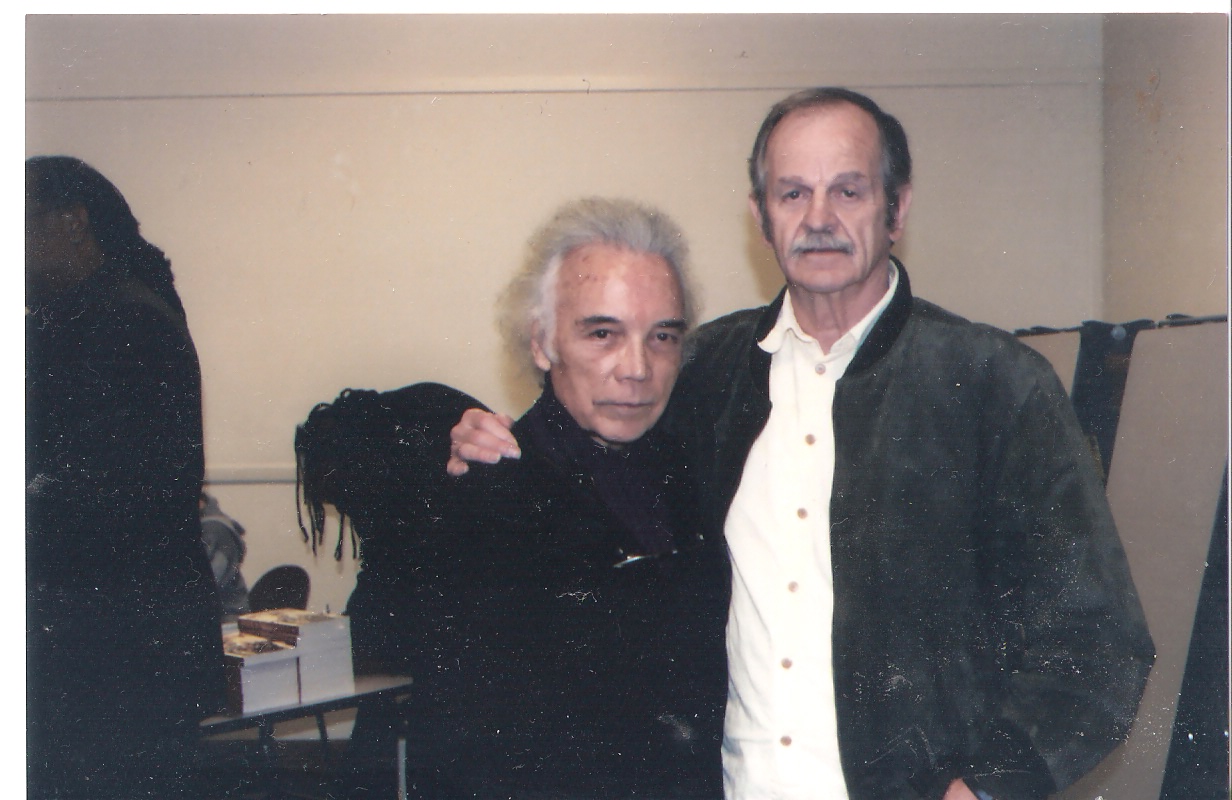
  Novelist Floyd Salas and A.D.  at presentation of PEN Oakland awarding A.D. Lifetime Achievement Award.  Oakland, Ca 2009.

Novelist Floyd Salas and A.D. at presentation of PEN Oakland awarding A.D. Lifetime Achievement Award. Oakland, Ca 2009.
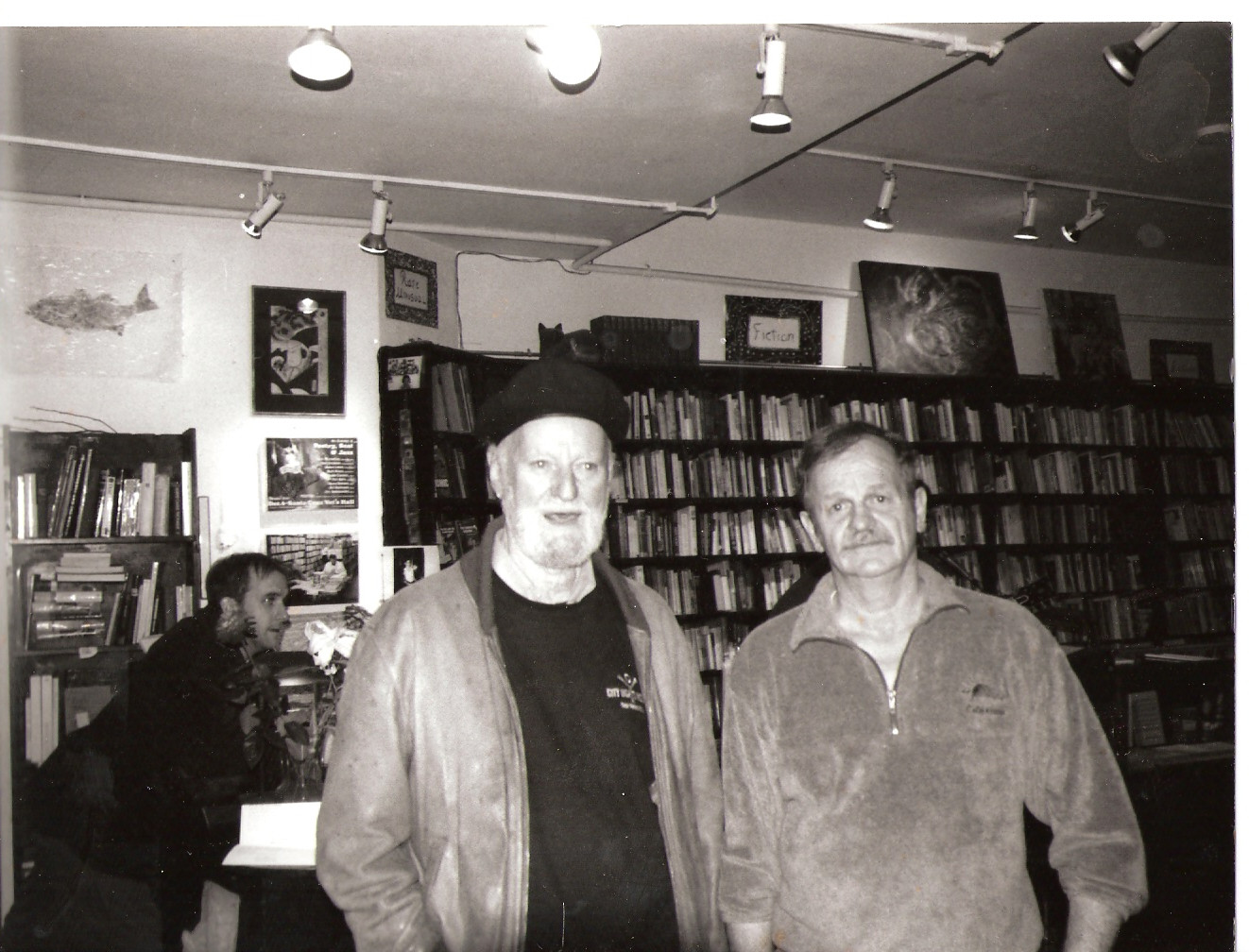
Beat poet Lawrence Ferlinghetti. Abandoned Planet Bookstore SF. year unknown.
Beat poet Lawrence Ferlinghetti. Abandoned Planet Bookstore SF. year unknown.

"Dead Lions" available from Punk Hostage Press on Amazon.

“Dead Lions” available from Punk Hostage Press on Amazon.

“The Vanishing Point of Departure” by Linda Lerner

The Vanishing Point of Departure


when a plane vanishes with over 200 people
when there’s no proof of mechanical failure or a terrorist hijacking
when every lead leads into a black hole
it drives people crazy: they trek to the edge of that better place
to another planet, anywhere to locate them even accuse Martians
whose existence they’ve always doubted
of an alien abduction because
people can’t just vanish

but they have and the plane is still missing as is the husband who vanished
while his wife, the writer, fixing drinks in the other room
was still talking to him

I use third person backing off from myself
but sometime before he knew, said that when someone dies
it’s like a light that goes out, we throw away the bulb
I am still forcing that bulb to shine
doing it right now, forcing out
some light by which to bring him back, save him
and all those others who are waiting to be rescued
on an obscure island where the plane must have crashed
where everyone is waiting for someone to
bring them home…


Linda Lerner’s next collection, Yes, the Ducks Were Real, will be published by NYQ Books in 2015 as was her previous full length collection, Takes Guts and Years Sometimes. A chapbook of poems inspired by nursery rhymes, illustrated by Donna Kerness, Ding Dong the Bell Pussy in the Well was published in Feb. 2014 by Lummox Press. She’s been nominated twice for a Pushcart Prize. In 1995 she and Andrew Gettler began Poets(http://www.echony.com/~poets) the first poetry anthology on the Net for which she received two grants. She can be heard reading on http://www.poetryvlog.com

Van Gogh’s Ear – Volume 9 [Kindle Edition] Tina Faye Ayres (Editor)

Ian Ayres's avatarVoyeur

Van Gogh's Ear - Volume 9 (The Original Van Gogh's Ear) [Kindle Edition] Tina Faye Ayres (Editor) Van Gogh’s Ear – Volume 9 (The Original Van Gogh’s Ear) [Kindle Edition]
Tina Faye Ayres (Editor)

Book Description

 January 15, 2015
Founded by Ian Ayres, Van Gogh’s Ear: Best World Poetry, Prose & Art is an annual anthology series devoted to publishing powerful works by major voices and innovative new talents from around the globe. The goal of Van Gogh’s Ear is to make each volume a real eye-opener that stirs people’s emotions and ignites their imaginations. Experimental work is warmly embraced. Taboos extremely encouraged. In this volume you will find:POETRY BY : Joel Allegretti, Frances Ayres, Ian Ayres, Lytton Bell, Brenton Booth, Tim J. Brennan, Boots Bryant, Helene Cardona, Dane Cervine, Miles Chaney, Sue Clennell, Virginie Colline, Cassandra allett, Olivier Deprez & Miles O’Shea, Lisa Dordal, John Fitzgerald, A Flick of the Grail – Mark Fleury, Karen Foster, Howie Good, Tyler Knott Gregson, Mary Ann…

View original post 260 more words

An Interview with Angela V. Shelton and Frances Callier of Frangela

frangela

Frangela is comedic duo formed from the genius of Frances Callier and Angela V. Shelton. They have appeared on such television shows as I’m A Celebrity Get Me Out of Here, VH1’s Best Week Ever, The Today Show, Dateline, and CNN’s Showbiz Tonight, among others. They have appeared on the film He’s Just Not That Into You and the Hulu exclusive improv series Quick Draw.

Frances has appeared solo on such shows as Hannah Montana, Curb Your Enthusiam,  The Cleveland Show, and 2 Broke Girls to name a few. While Angela has hosted the regional Emmy award winning PBS series The Cheap Show, and appeared on Grounded for Life, The Suite Life of Zack and Cody, Girls Behaving Badly, and many other television shows. She has provided voice roles on videogames such as Spider Man 2, Ultimate Spider Man, Superman, and Reservoir Dogs. As well as appearing in the films Strange Wilderness, Mardi Gras, House Bunny, and voicing a role on Cloudy with a Chance of Meatballs.

The pair tour the United States performing their stand-up act. They were recently nominated “Best Female Performers” by NACA.


What was it like growing up where you did? What were you like as a child? What are some of your most fond memories from those days?

Angela: I grew up in Detroit, MI in a really cool neighborhood called Rosedale Park. We had block parties and my babysitter named Julie lived across the street. There was Cathy’s cheesecakes – still the best cheesecake I’ve ever had – and we used to walk to Dairy Queen in the summer. It really was a great time and neighborhood and I think not what people think of when they think of Detroit.

As to what I was like as a child, no one has ever asked me that before and I find it an oddly startling question to try to answer; it feels self-absorbed or something. I was a dork, went to very small hippieish private schools where we called the teachers by their first names, made our own rules, and we were encouraged to “design” our educational days. My happiest memories are again, not the memories I bet that most people would assign to a Black girl in Detroit. My stepfather’s family owns a cottage on Martha’s Vineyard and we went there in the summer. It was heaven. Martha’s Vineyard is like this magical place without racism where you could pick up hitchhikers and be gone all day as a kid without anyone being concerned. We still go now. And I loved sledding. My stepdad and I would try to hit people with our super cool orange space engineered toboggan, it was glorious; those were the days.

Frances: I grew up on the West Side of Chicago. I was EXTREMELY curious and couldn’t wait to go to new places and try new things. I remember seeing someone use a wok on tv to cook when I was nine. I MADE my mother order me one and the second I got it I read all I could on Asian food and started cooking. I read everything I could get my hands on. My parents couldn’t effectively punish me because going to my room to read was a TREAT!

How did the two of you first meet? Did you take an instant liking to one another or have you grown on each other over time?

Angela: We met at Second City in Chicago when we both worked there. The first time we hung out we went to a movie and that was that – we’ve been best friends ever since and people always think we’ve known each other since we were kids or that we’re related.

Frances: Angela had just moved into my building after relocating from Detroit and Toronto Second City to the Chicago Second City. We bumped into each other on the stairs and she asked if I wanted to catch a movie sometime and I said yes. We laughed so hard and it was so effortless and we’ve been best friends ever since.

What do you think are the key ingredients to a lasting friendship?

Angela: Laughter and appreciating every part of your friend and yourself, even all those annoying little habits, love ‘em and make fun of them as often as possible.

Frances: Humor, Respect, Love, and a little willingness to be crazy together. Neither one of us is looking to change the other person.

Are there any little known things about you that your fans might be surprised to learn

Angela: We don’t always agree. We constantly twin speak in an eerie way, but in fact, we don’t agree about a lot of things. We respect each other and we somehow enjoy disagreeing as much as we do our natural harmony. Also, people think they should be afraid of me, it’s that little one you should watch, I know.

Frances: That Angela is nine inches taller than Frances. Frances’ first name is Eleanor. We improvise a lot of our material in the moment.

When did you first become interested in comedy?

Angela: I’d always loved Saturday Night Live and in Detroit we got Canadian TV so I loved SCTV but I never thought I’d be an actor or go into comedy. When they opened a Second City in Detroit I decided to audition, just decided to right then – that was the first time I thought about being an actor. It was in the year after I graduated from college and I didn’t know what I wanted to do yet so I auditioned at Second City, applied to graduate school for history and to the Peace Corps. I got accepted into all 3 on the same day and chose Second City.

Frances: In high school my English teacher Mr. Oates would let me do a tight 10 before class every day. He directed all the school plays and started picking comedic ones that he could cast me in. We finally did a comedy show and he turned to me one night and said, “You should go to Second City and take classes.” So I did and it changed my life.

When did you know it was something you wanted to pursue as a career?

Angela: When I saw the advertisement in the Detroit paper for the open call auditions. I had never dreamed of it before. My mother always thought I should be an actor and she wanted me to major in theater in college. I thought that it would be a waste of her money to study acting so I made a much more solid economical choice: Haitian history.

Frances: When I saw Whoopi Goldberg’s one woman show on TV. I said to myself, ” I want to do that. I want to make people feel something incredible when I perform.”

How did it feel when The Cheap Show won an Emmy? Did you ever imagine that would happen?

It was a regional Emmy, but it still counts(smiles). I didn’t even consider the possibility. It was a show that was literally made because they had left over budget for one season. It was a lot of fun and great experience. I didn’t even know it was eligible for any awards until we got it.

Did you enjoy having the chance to voice Evelyn “Cookie” Brown on The Cleveland Show?

Frances: I LOVED it! Mike Henry (Cleveland) was an ABSOLUTE joy to work with. The table reads were always hilarious and I never minded waiting a bit on record days because I would get the chance to meet and chat with people like Will.I.AM. and Carl Reiner.

You both also work from time to time providing voice overs. How does that differ most from your usual work?

Angela: I LOVED doing our cartoon Hey Monie together because we wrote those characters and the stories, then we got to improvise too playing best friends. Voice over is great because there is no hair and makeup or spanks involved, unless you’re just into that and do it anyway. I love the video games – I got to say “I would have gotten away with it to if it hadn’t been for you darn kids” or whatever the phrase was for Scooby Doo, what’s not to love?

Frances: We still improvise and write on our feet. It’s fun and different comedy muscle.

What do you love most about working in the field of comedy?

Angela: The best feeling in the world for me is when I can make someone laugh at a moment when they didn’t think they could at all. When you can literally turn a bad day into a great laugh? It seriously feels like magic.

Frances: I love that audience is our boss at work and we get a moment to moment review of work based on their reaction.

What was it like to work on Quick Draw? Any stories from the set you might be at liberty to share with our readers? Is there any word on if there will be a season 3 yet?

Angela: I don’t know about upcoming seasons, but for the record, best set I’ve ever worked on! Nancy Hower and John Lehr are the coolest, smartest, funniest, best producers ever! They are so open and fun and they create the best environment for improvising and having a blast while you’re allegedly working. They are also masters at getting us to say yes to things without giving us all of the information. They actually got me on a horse. A big, terrifying, allergen with huge death dealing legs. And they recently got us on a boat, and one of us, I won’t say who (it’s Frances) is not a “boat person.” They are so cool they’re like the kind of people that make sitting on a dung covered hill on a freezing morning seem like a vacation and I can’t wait to work with them again and again and again!

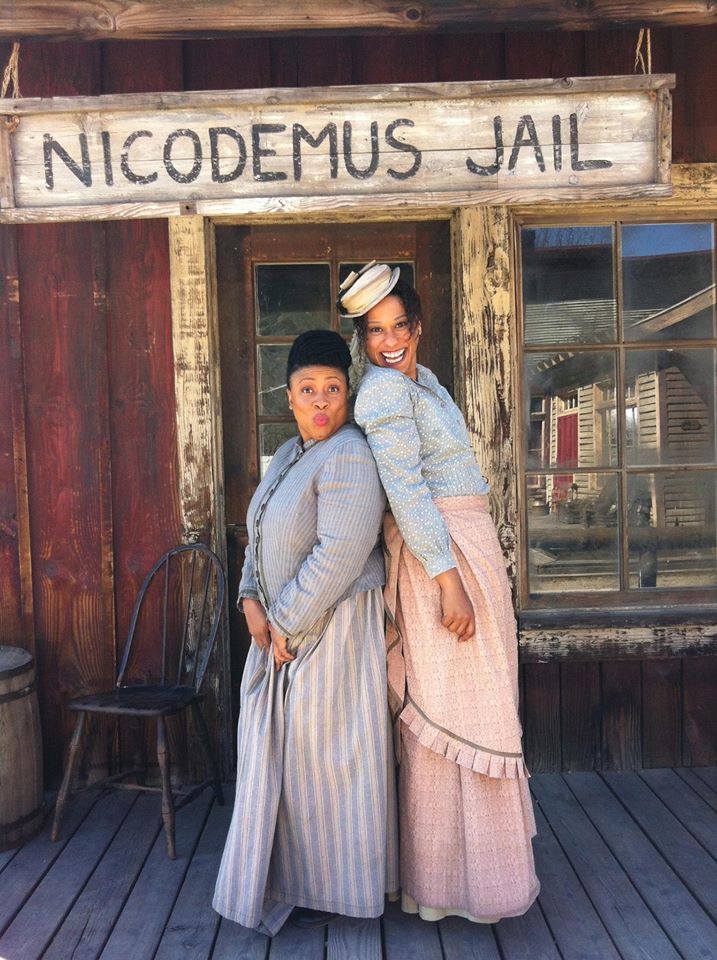
Frances: Quick Draw is a great show to work on because the producers have created this great playground of the a wild west and we get to dress up and go for it in this bygone world.

What do you think is key to a life well lived?

Angela: This will not shock you – laughter and the courage to fail, screw up, succeed, get lost, get found, win or lose.

Frances: Laughing. The ability to laugh when times are good and bad. The ability to laugh at yourself and with others.

As someone who deals with Lupus on a daily basis, have you found that work and friendships go a long way in helping you cope with the issues that come with chronic illness in general? What advice would you offer to other dealing with similar things in their own lives?

Angela: It is really important to have people to advocate for you in life, and I think in situations that involve your health it is of paramount importance. It can be hard for me to ask for what I need sometimes and Frances always steps in and does it when I’m feeling concerned about being difficult because I can’t wear the makeup person’s makeup or I’ll have a reaction etc. I’m pretty new to this illness and I’m more in the need advice place than give it, but so far I can say for me I just have to remind myself that there’s a reason I’m hurting, or tired and fighting it won’t work, it will only make it worse. I haven’t gotten to a place where I am managing my symptoms as effectively as I would like, but I know I will one day and until then I’m trying to not put so much pressure on myself to push through something I just can’t push through.

What do you love most about working together?

Angela: Working together (smiles). We talk all day and it makes it so much easier to do that when we were both at the same place, it’s just more convenient.

Frances: Most best friends have to wait until they get home to call each other to gossip about their day. Mine is right there on stage with me (smiles).

What projects are your working on at the moment?

Angela: Waiting on a movie we did last summer to come out, doing a college standup tour, a pilot, and writing and pitching, just being in that actor/writer hustle. We’ve been back on The Stephanie Miller show fairly regularly recently which is great because they are amazing and we missed it. We really miss our little tiny radio show that could. Saturday and Sunday afternoons and we actually got ratings! And it was political news talk radio – which I miss having in my work life.

Frances: Right now we are writing a film script, touring colleges like crazy and keeping up on all our favorite pop culture.

Do you have a dream project you’d most like to bring into existence before your time is done?

Angela: Oh yes…a few. I will share one – a series of action/horror/thrillers called Frances and Angela Save Frances and Angela. For example, Frances and Angela Save Frances and Angela in…(fill in the blank with like space/under the sea/ in Florida)

Frances: To have films produced starring us.

What are your feelings on life and death and what comes after? How do you hope to be remembered when your own time comes?

Angela: That’s huge! Love life, not a fan of death at all and frankly I’m not convinced it’s necessary. I’d like to be remembered with people laughing, like even if they’re crying, they are also laughing, and as a good friend.

Frances: I have seen a lot of people die in my life, I know it’s coming, so I don’t worry about it. I really try to live and love in the moment by making sure that the people that I love know it always. I also try do the things that me happy. I want to be remembered as great mom, wife, and friend (also, if people said, “Damn! That bitch was funny!” that wouldn’t hurt either).

What advice would you offer the women of today and of tomorrow in regards to living life to the fullest?

Angela: If possible, leave things (people, places, everything) better than you found them. When you don’t take care with people it’s incredibly hard to shake the guilt, it’s like an albatross around your neck.

It’s never too late to turn, there’s gotta be a way to do whatever you want to do, just keep coming up with options until you find what works. Most importantly, never let anyone else determine what you’re capable of,how you’re going to behave, or feel about yourself.

Frances: There are no invitations to your life. It’s yours, you just have to claim it.

Is there anything you’d like to say before you go?

Angela: Even the coolest jobs are work and take time, energy, effort, sacrifice, focus, and a lot of support. Never get too big for your britches and find a way to laugh as often as possible.

Frances: Thanks!


An Interview with Bart Harris

image1 (3)

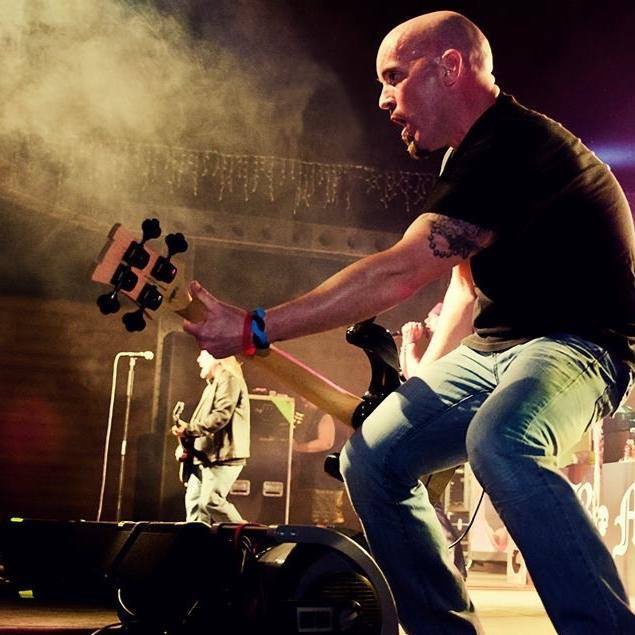
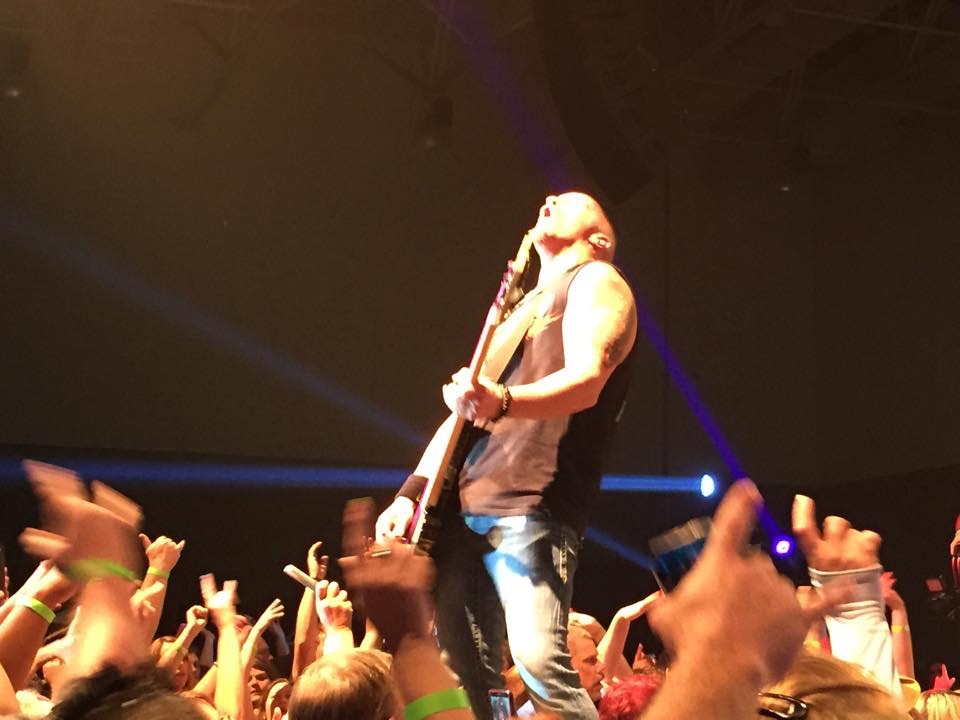
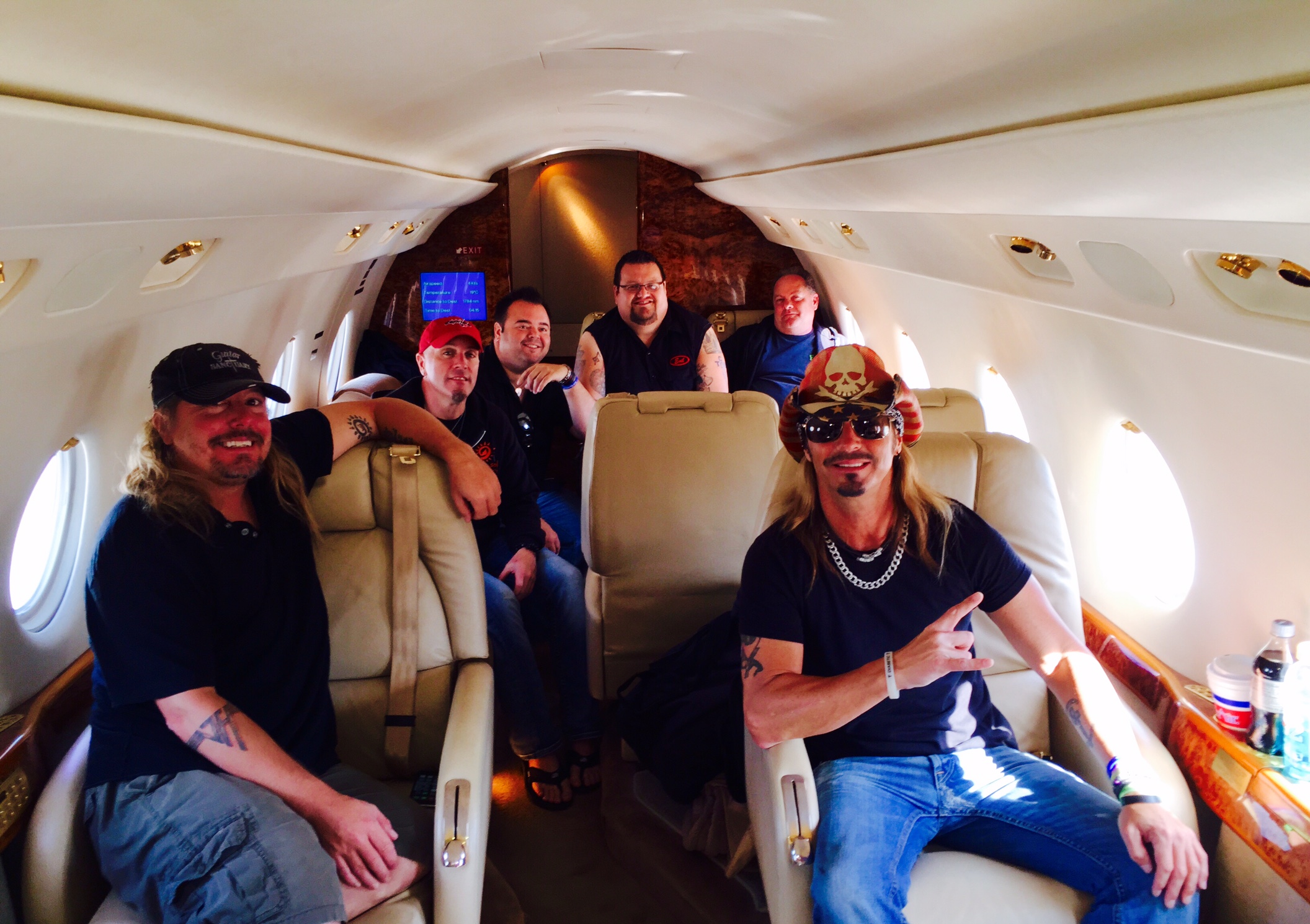
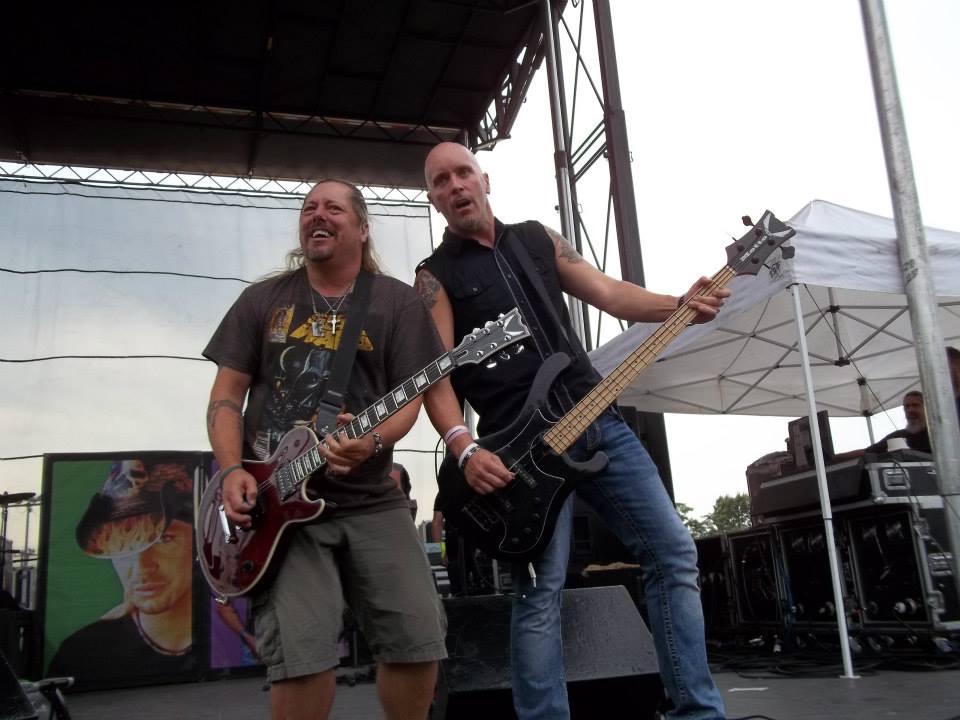
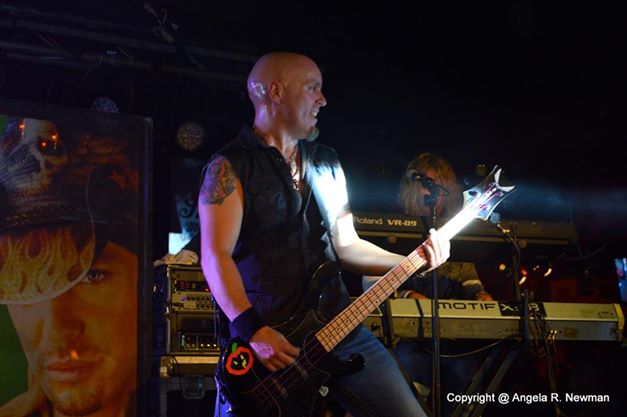
Bart Harris is the singer/guitarist for the band JunkFood which features Dan Anderson (Lead Guitar) and Van Swanson (Bass). He can also be found providing the bass for the Bret Michaels Band alongside Pete Evick (Lead Guitar), Mike Bailey (Drums), and Rob Jozwiak (Keyboard). Bart endorses Aurora Strings. It was a pleasure to sit down with him and find out a little more about the man who helps bring the music.

Where are you from? What was it like growing up there?

I was born and raised in Northern Virginia. I have a lot of family here and my family owns a business as well (Shannon Auto Sales). It used to be a small town where pretty much everybody knew everyone. It’s a little different now but it’s still home to me.

Do you remember what the moment was like when you first discovered the power of music?

I’m not sure if this is the single moment but my parents took me to see the Bee Gees live when I was about 6 or 7. I’d never been inside of an arena and I was overwhelmed by the energy. Then they had pyro which just completely sent me over the top. From that moment live music has had an effect on me.

What was your very first favorite song?

I’m not sure I can accurately answer that but I’m sure it was Elvis or the Beatles. In my house you either loved them or you found a new place to live. I also remember I Love Rock n Roll having a pretty big impact on me.

image2

When did you first take up guitar? Do you remember what it was like to get your very first one?

My very first guitar was a Kent Les Paul copy. I was about 13. I really didn’t start to take it serious until I was probably 18. At that point I knew I had to be in a band.

Do you have a dream model you’d most like to own?

I don’t really have a single guitar that I feel like I have to have. I am one of those players that picks up a guitar and it either feels right or it doesn’t. You can’t force it.

What does your touring gear consist of?

I play a Dean Motto live. Dean has been good to me and I enjoy playing their gear.

Is it challenging to divide your time between two bands?

It is pretty challenging to juggle the time between the two. I’m very lucky to have the support of my band at home to welcome me back after being gone. We still gig when I’m home and we are always looking to the future.

For those not familiar with it already, can you tell us a little about what to expect from JunkFood?

JunkFood is a band that brings a serious party and loves to escape the real world. It is not a lot different than the BMB vibe. There is no political message…it is absolutely about checking your troubles at the door and coming to have a good time. JunkFood has 3 full length original albums available on iTunes and is in the process of recording new material. A new single called Windows will be released very soon!

How does your work with the Bret Michaels Band differ most from your work in Junk Food?

Being a singer/frontman in some ways in more demanding than just playing bass. The main difference in what I do for each band is somewhat obvious. I play Guitar and sing lead in JunkFood and I play bass and sing back ground vocals in BMB.

What have you learned in regards to the business of music from your time with Bret?

I’ve been in the business for 25 years so most things I’ve known and have just been verified or solidified with Bret. One thing about Bret is his commitment and work ethic. He is inspiring in that regards. He brings the A game EVERY single night.

image4

What is he like as a person?

Bret is caring and dedicated to his legion of fans. Very passionate and driven.

How is it to work with Pete, Mike, and Rob?

I’ve played in bands with Mikey and Petey for 20 years. We understand each other better now than we ever did. I also think that we get the need to have space and let situations breathe. Robi is awesome. Very laid back and a killer musician. It has been an absolute blast to be with them.

As someone who sings and plays guitar and bass do you prefer one more than the others or do you love them all equally?

I really love them for different reasons. I love the power of the bass. It’s over looked a lot of the time but take it away and everything is wrong. I also love the feeling of being the “driver” for the party bus. There is something very gratifying and humbling to have a club or venue be completely at your mercy. I’m a lucky to have both of these situations.

image3

What do you like to do with what little free time you have?

I love getting home to hang with my kids and family. Being gone and in the craziness is incredible but there is nothing better than getting home and just chillin’ with my kids.

Are there any little known things that your fans might be surprised to learn?

I’m a certified scuba diver and I love sharks and the ocean. I also love photography. I wish I had more time and a better understanding of it.

What do you think it is that separates the professional musician from the weekend ones?

The main difference is commitment and professionalism. If you expect to be taken serious then you have to present yourself and your project from a pro angle. Be passionate or get out and find what you are passionate about.

10486053_10202240969060330_1615370612972830886_n

What projects are you working on at the moment?

I’m a songwriter and I’m always writing and recording. There will be new JunkFood material soon and who knows what else. I’m open to whatever makes sense.

Anything you’d like to say before you go?

Thank you for your time and for being a part of me living my dream. I’m an incredibly lucky guy to get to play music for a living and I treat every day like it is the last. Without support from family, friends & fans, all of this is impossible.


An Interview with Mike Bailey

mike.press1


Mike Bailey is the drummer for the Bret Michaels Band. A man of many talents he is also the President and Artist Relations Director for Potomac Records. The D.C. native studied TV and Radio Production at Columbia School of Broadcasting.

What were you like as a kid? What are some of your most fond memories from those days?

I’m the youngest of 3, with 2 sisters that never lacked pranks on their baby brother. We were raised in a northern Virginia suburb (Chantilly) outside Washington DC. At 7 years old, several of the neighborhood friends, ala The Sand Lot style upbringing with street sports, and music, would rock out to KISS with tennis rackets, jump on top of couches and chairs, playing the roles of our favorite KISS member. I was always Peter Criss of course. In the 4th grade, neighborhood friends Jeff Pringle, Bobby Sparks, Duane Sibole, and I performed (pantomime) KISS’ I Was Made for Loving You in full costume and make-up at the Brookfield Elementary School Gong Show; dried ice, strobe lights, blood capsules, the works. Unfortunately, to a lot of adults at the time, KISS was also known as Knights in Satan’s Service, being one of them, music teacher Ms. Mayo gonged us. And of course the kid playing Elvis, won. Go figure. In retrospect, this was my very first experience in front of a crowd, playing in a rock n roll band, even if only lasted 2.5 minutes (laughs) it’s a memory I’ll never forget.

Did you discover your love of music at an early age? Who were some of your influences? Do you happen to remember you very first favorite song?

It’s the typical story of banging on pots and pans, and anything else that made noise, at a very young age. But my first real introduction to the drums was when my Aunt (Libby) in Alabama shipped me a Toys R Us drum kit for Christmas when I was 5. After destroying and replacing a few more Toys R Us kits, my Dad bought my first real drum kit when I was 9. It was a standard 5 piece kit, and remember him telling me if there’s anything else I want to add to the kit, I would have to work for it and buy it with my own money. I was so excited to finally have a real drum set, getting a new cymbal stand and cymbal, or hi hat stand, was something I was happy to work for, and in turn instilled a good work ethic at a very young age.

Elvis Presley ruled our household. Although I don’t recall my first favorite song, I’m sure it was an Elvis, Dolly Parton, Chubby Checker, Buddy Holly, or a Creedence Clearwater song. I am thankful for my parent’s diverse genres of music they listened to. The first live concerts I went to were The Beach Boys, Dolly Parton, Chicago, and Alabama. I’m proud to say I was able to see some of the 80’s best rock bands at the height of their success. Big influences were Motley Crue, Ratt, Bon Jovi, Tesla, Poison, and Savatage. Tommy Lee was my first true inspiration. The sheer power, and passion he plays with is an amazing combination that separated him from the rest.

How would you say you have changed most since then?

I’m not sure how much I’ve changed, other than growing as a human being and trying my best to be patient and kind to others. One thing that has never changed, is the excitement I feel when sitting down on my throne, and playing my drums. As a kid, a teenager, and young adult, the end goal was always to play my drums for a living. And I’m grateful to Bret, and my lifelong brother in music Pete Evick, for the opportunity to fulfill that goal. Life is good!

What do you love most about being a musician?

I believe men in general thrive on being a part of a team, regardless of age. Working together to achieve a common goal. Whether it be a local motorcycle chapter, a bowling league, coaching local sports, etc… I’ve been playing in a band since 14, with very few breaks in between then and now. I’ve been fortunate to play with some unbelievable musicians, and learned the roles each play in order for the operation to run smoothly. Of course not all were smooth sailing ships, but those experiences are necessary when learning how this business works.

ptomacrecords

What would you say is the most valuable thing you learned in your training in TV and Radio Production? What led you to study that?

Although I worked for a limited time in the broadcasting field (Engineer – WTOP Radio Washington DC), the education and experience helped me understand pre and post show production, and what goes in to putting together a radio or television show. As well as understanding the sales side with radio and television marketing, and the importance of the show content and advertising to the correct demographic / audience.

Can you tell us a little about Potomac Records?

Potomac Records was established with one primary goal in mind, to utilize our experience in the music industry to introduce the rest of the world to the amazing talent in and around the Washington DC, Maryland, and Northern Virginia area music scene. By leveraging digital technologies currently available; including the world’s largest digital distribution network, digital download gift cards, custom USBs, and professional services to assist the artists career. Potomac Records artists’ music is available on 100+ Digital Media Outlets (Worldwide).

We have also been fortunate to participate in various local (VA/DC) fundraising and charity events the past 3 years. And I’m proud to say Potomac Records has raised a substantial amount of money for several amazing charities. I believe in karma, and believe it’s not only right to get involved and help the community I was raised, but it’s also a way to get the community together to enjoy great music while giving back to a great cause.

Scott McLean, Vice-President and Events Director is in charge of all of all Potomac Records Charity and Artist Showcase events. As a lifelong drummer, and Captain with the Prince William Country (Va) Fire department, Scott’s skill sets and experience is perfect to handle, develop, and grow the Potomac Records Entertainment Group. I feel blessed to have a great core group of people around me, which is essential to the success of the Label.

Mike Bailey – CEO, President, Artist Relations
Scott McLean – COO, Vice President, Events Director
Jeff Brasfield – CFO, Songwriter & Producer
Mary Shaw – Public Relations, Media

What is it like to work with Bret Michaels? What would you say the most important thing you have learned from him would be? What is he like as a person?

That’s easy… work hard, every day. Bret’s consistent work ethic is inspiring. If you lay down and relax, you can’t expect the world to stop spinning and wait for you to wake up.

What about the rest of the Bret Michaels Band, what is it like being a part of that?

Although cliché to say the guys in the band are my brothers, but our roads leading to BMB came from the same music scene and same town, Manassas Virginia. I’ve been in bands with Pete Evick and Bart Harris since High School, we signed a minor deal in our mid 20’s (1996 – Sol 3 Records). The band, Some Odd Reason released To Whom It May Concern and supported the release with 3 years of solid gigging around the United States. Together we drove across the country in a frequently broken down RV, playing anywhere and everywhere we could get a gig. We have a lot of history together, the dynamic we have performing together is natural, and proud to share the stage such talented players, and friends of mine.

mike.press4

What do you enjoy most about performing live?

For me, performing is the easy part. It’s getting all of the components together to be able to get on a stage and perform that can be difficult. There’s not many things as powerful as performing in front of a crowd, the energy between the band and the audience is something I wish every person could experience, it’s an amazing experience.

Are there any little known things about you that your fans might be surprised to learn?

I was constantly in and out of the emergency room as a kid. I was pushed through a 1 story window at age 3, hit in the eye by a belt buckle at 4 (blood everywhere…thanks Sis!), hit by a car when I was 8 and was blind for 24 hours (swelling / concussion)… to name a few. I was all boy, and in to everything!

What advice would you offer to anyone wishing to work in the music industry of today?

Good advice would be to learn as much as possible from your peers, and keep up, because the industry is constantly changing. How music gets to the listener is always changing. There will always be great music being made, it’s utilizing current technologies, managing your band like a business, and building relationships that will get the artist to the next level.

How do you think the industry has changed most since you first started working in it yourself?

I worked at the Sam Goody Record store in Manassas Mall (VA) all through High School, and glad to have had that experience. I’m all for technology and the evolution of the music industry. My label’s business model reflects the new music business. Potomac Records releases are exclusively digital, to every digital media outlet available (worldwide). Artists can utilize technology to build a support base outside their home base/town, which wasn’t easily achieved a decade ago. What’s important, just like in any sales job, is the follow up. You can get someone in another state to listen to your music, but it’s even more important to bring your band/music to the listener. Which will lead to selling your bands T-shirt and other various merchandise.

mike.press2

What was the best advice anyone ever gave you? Who was it?

The best advice given to me was by my father, to always “think before you speak Michael”. It’s remembering this and trying my best to apply it in all areas of my life.

What projects are you working on at the moment?

BMB is currently tracking new material, all of us are very excited and motivated to have an amazing year in 2015! For my label, Potomac Records have several new releases in early 2015; including NobyuS (Hip Hop / Rap), Alex Anders (Country), and Kara Davis (Pop/Rock), as well as 2 upcoming Charity Events raising money and awareness for a fallen Firefighter, an Animal Rescue, and Adoption benefit. There’s a lot going on with both Potomac Records and the Bret Michaels Band, and can get a little crazy at times having so much on my plate, but when it’s something you love, and passionate about, it’s not work.

mike.press3

For more information on Potomac Records please see Potomac Records and/or Facebook. And for the latest on the happenings in the Bret Michaels Band, BretMichaels.com.

“Sad Wisps of Empty Smoke” by Mike Allen

person-spirit-2560x1600


Sad Wisps of Empty Smoke


Every time I split your lip I leave a ghost.
Dark stairs spiral down your throat, each step built
the day I crushed you to the wall,
fresh planks hammered down with each new blow
until you begged and I punched harder
while your mother cheered.

Shutters latched behind your eyelids
rattle loose each night.
Wind howls through your broken nose.
X-rays will show
even once your candles gutter out,
this house is haunted.

Funny —
in my husk years,
as tumors suck my innards out,
when your noises roust me and I scurry
to your boot, bite through to flesh,
each time your heel hovers
above my wheezing carapace,
your guilt stays the killing thud,
at most you
nudge me with a scrape of sole on tile
until I scuttle back beneath the floor.

Then I hear the specters,
the ones with open ribs like jaws,
resume their tearing at your eyes.

I dry to cinder in the crawlspace,
eclipsed by the wraiths I’ve left you.


Mike Allen edits the digital journal Mythic Delirium and the Clockwork Phoenix anthology series. His first collection of horror stories, Unseaming, debuted in October to starred reviews from Publishers Weekly and Library Journal. He’s also released a new poetry collection, Hungry Constellations, the title poem of which was a 2014 Rhysling Award honoree. By day he’s the arts columnist for the daily newspaper in Roanoke, Virginia, where he lives with his wife and co-conspirator Anita, as well as two diabolical cats and a goofy dog.