An Interview with Pam Crawford of the James Dean Remembered Fan Club

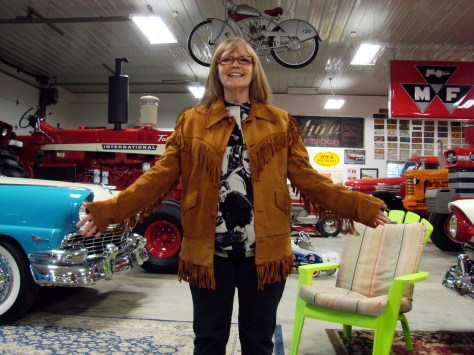
Pam in James Deans fringed jacket.jpg

Pam in James Dean’s fringed jacket, Fairmount, Indiana. 

Pamela Crawford is the President of The James Dean Remembered Fan Club as well as editor of the DeanZine publication. I recently sat down with her to discuss her work there and her fascination for one of the world’s most talented actors.

For those not familiar with the story can you tell us a little about how you came to be such an admirer of James Dean?

My James Dean journey was kind of a process of osmosis. I turned seven years old exactly one month before Jimmy died in the car crash. At the time of his death, I’d never seen him in anything. I was still into Disney. But my teenaged cousin and babysitter had both seen him in East of Eden and went wild for him. My cousin wallpapered her walls and ceiling with magazine photos of him. It was quite impressive! But then, before Rebel even came out, he was dead. Gone at first blush. They were like widowed war brides –it was over before it really began. There is something especially tragic about the loss of someone so talented before their true potential is fully realized. It was hard to believe it was true. Various rumors began to circulate that Jimmy hadn’t really died in the crash. The theory that our teen girls grabbed on to was that Jimmy was angry with the director of Giant and had fled Hollywood on a cross-country road trip. At that time, my family lived on Highway 65 — a busy, pre-freeway, main artery between smaller Arkansas towns and the state capital in Little Rock. So those two love-struck teens came up with the crazy idea that if James Dean was traveling cross-country then he would just naturally have to come down the busy highway where our family lived. So they put my sister and me up to sitting on the side of the road waiting for James Dean to drive by. Our mission was to get him to stop at our house. Then we were to stall him until they could get there. They made signs for us to hold with edicts like “JAMES DEAN –STOP HERE.” My sister was only a year older than me so we had no idea how impossibly unrealistic the idea was! They described his car and gave us a photo of him so we’d recognize him. We were thrilled that we were entrusted with such an important job by the older girls! It was very exciting because he was a movie star and he drove a convertible. The two of us sat there day after day after school and looked at those photos and watched the road. Naïve as we were, it never occurred to us that we might have missed him while we were at school! We simply had a child’s faith that he would come down that road and stop when he saw our signs. While we waited, we both become infatuated with the young, handsome movie star, Jimmy Dean. We wanted him to come down that highway so bad. We sat out there every day until our mother finally broke down and told us that this beautiful young boy really was dead. She cried when she told us, and of course, we cried, too. Our hearts were broken. All these years later it still pains me to think about his death. It was my first brush with tragedy.

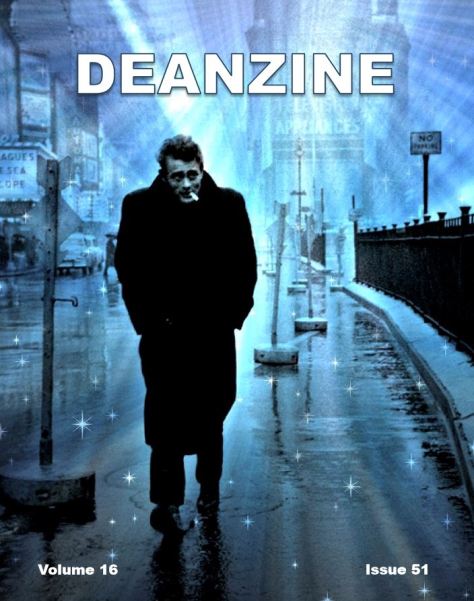
Cover for Deanzine Vol 16 Issue 51

Do you think the death of someone at such a young age affected you deeply because you were such a young person yourself at the time?

Absolutely. It was probably the first time I experienced a twinge of the devastating pain that accompanies loss – as much as such a young kid can absorb that. I’m not sure that I realized then just how permanent death is. I remember wondering if that meant that he would be gone forever, not even being sure how long forever was. Even though I’d never met James Dean, or even seen him in a movie at the time, it felt like I had come to know him. Sitting out there by the road focusing on him, believing with all my heart that we could flag him down, I think I fell hard for Jimmy Dean. At 7, I guess you could say that he was my first love. Being so young and impressionable, it had a huge effect on me. I dreamed about him and that car crash for years after that. In my dreams I was always trying to save him. Years later, when I went to Fairmount to visit his grave for the first time, my dad jokingly teased that after all those years I was still sitting on the side of the road waiting on James Dean to come by. He was right; that experience stuck with me. Maybe by going to Fairmount, I was seeking some kind of closure.

How do you think that whole experience affected who are you today?

I think it triggered a fear of losing people I love. I absolutely cherish my family and friends. I wrap my arms tight around them and would do just about anything to protect them. I am determined to be there for them, to be with them through thick and thin, and above all, to keep them from harm. It is hard for me to let go. Some of that probably comes from that early realization that people can vanish from the earth in a second. So you better cherish them while they are here.

On the upside, I came to realize that you have to live your life to the fullest each day because tomorrow is never guaranteed. Jimmy did that. He made the most of the time he had. It still seems cruel that someone as young, talented and hard-working as Jimmy would be cut off at the cusp of his career. There was so much that he had accomplished in his short life but so much more that he had to give. His future was short-changed but he definitely lived life to the hilt while he walked this earth. It is a lesson for all of us. I try to live my life in the moment, maybe not as extraordinarily as Jimmy, but definitely present.

Jimmy made an impact on me from the beginning – but through the years, I learned more about Jimmy and his philosophy of life. His embracement of new ideas and of people of all walks of life and all cultures – his openness and tolerance and probing spirit — has inspired my whole life.

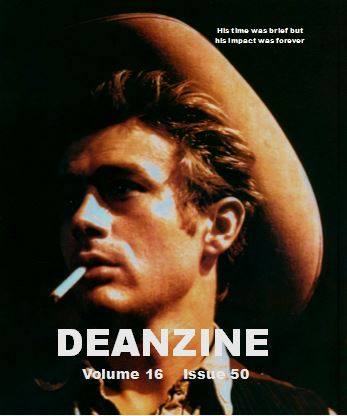
cover of Deanzine Vol16 Issue 50

What are some of your most fond memories of growing up as you did?

Probably my earliest, fondest memories are of playing with my cousins on the bayou where my grandparents lived. I adored my grandparents. I had a great childhood with wonderful parents and siblings and a big and loving extended family. Also, I treasure memories like watching my babysitter and her boyfriend rock ‘n’ roll like maniacs – totally oblivious to the rest of the world — to vinyl records back in the 50s. Kids back then had so much fun! And naturally, sitting by the side of the road waiting on Jimmy Dean to come by is always with me.  Elvis … The Beatles … JFK … the sixties … the moon landing… backpacking through Europe — all are tucked inside my heart and mind. I kept diaries of everything. I’ve been fortunate to live through some astounding times and events. It’s been a full, eventful life. I’m grateful for that.

What is it like running the James Dean Remembered Fan Club? How can our readers find out more about that if they’d like?

It is an honor.  I have made wonderful friends all over the world through this club. It is always growing. James Dean was an iconic actor who had that unique ability to make everyone feel that he was speaking to them personally and his legend has grown, not abated, through the years. To have a part in paying tribute to his memory is a special privilege. The fan club is a place where Dean Fans can connect with each other and share their experiences, Dean memorabilia, memories and feelings. In addition to paying homage to the incredible man who inspired the club, it is a club that is very much focused on the people who are in it. We are the only James Dean fan club that is sanctioned by the James Dean Estate. You can find us on Facebook under James Dean Remembered Fan Club. We also have a full-color brochure that describes JDR and our goals. And as you know, we publish a full-color, glossy, tribute magazine called the Deanzine three times a year for our members.

You are also the editor of DeanZine, is it challenging coming up with the content for each issue?

Actually, not at all. When I was first approached about becoming the editor of the Deanzine, I was concerned about how I would come up with interesting content to fill up issues year after year. But I worried needlessly. I’ve been publishing it around 17 years and lack of content has never been a problem. Dean Fans send me ideas and content from all over the world. When you think about it, it is absolutely amazing that 62 years after his death, James Dean is still inspiring people. He is still featured regularly in magazines and newspaper articles, TV, film, art, fashion, songs, poems, etc. His name is brought up somewhere every single day. The sheer number of other actors who were – and still are – inspired by him is mind-boggling. The biggest problem I have is wheedling down all the content to fit in a 32 to 36 page publication!

What would you say are some of the most interesting things you have learned about Jimmy through your work?

My initial attraction as a child was likely to Jimmy’s iconic image of youthful beauty and teen angst. That searching, seeking face with its penetrating blue eyes — all wrapped up in such an appealingly shy, enigmatic persona — is a natural hook for the young. But my interest has evolved over the years into a deeper respect for the man as a human being. I still appreciate the former but absolutely adore the latter! The most interesting and amazing things I’ve learned about him is his full-on embracement of life and total commitment to his art. I also admire his unfettered willingness to grow and learn. As a fellow human being, the most inspiring thing for me has always been his openness to new ideas, people and possibilities. He was an enthusiastic student of life – always pulling and probing and seeking the truth so he could embody his characters fully. I love that he embraced real people with no distinctions regarding color of skin, social class, money, circumstances, or employment. He was not blinded by inane prejudices. He was from a very small town but he openly cultivated a worldlier viewpoint. I love his openness and appreciation for unique ideas and individuality. He was a doer and a learner, always aiming higher.

Is everyone looking forward to this year’s festival and the dedication of the high school stage? Will there be more about all of that in an upcoming issue?

Oh yes. The James Dean Festival is always an exciting event for Dean Fans. Fans come from all over the world to attend the Festival and James Dean Run Car Show. There’s extra excitement this year over the restoration and relocation of the former FHS Stage to Playacres Park in Fairmount. It was a terrible shame that the high school could not be saved but we are all thankful to the Fairmount Lion’s Club for rescuing the stage. That stage is where James Dean first honed his acting skills – it is an intricate part of his history. Naturally the next issue of the Deanzine will be full of photos and articles about Festival activities. My personal favorite event is the James Dean Memorial Service coming up on September 30th. The Memorial Service (1pm) and accompanying Candlelight Vigil that evening are always genuine, moving tributes to Jimmy’s memory.

What are the typical festival days like up there?

Busy, busy, busy. The Fairmount Historical Museum has a full line-up of activities over a 4-day period, September 21, 2017 – September 24, 2017. There’s live music, an old-fashioned hometown parade, a 50’s dance contest, a Dean-inspired rock lasso contest, pet parade, carnival rides, vendors of all kinds, great food, a world-class antique car show (The James Dean Run) and World-famous James Dean Lookalike Contest. There’s so much going on that I’m sure I’ve forgotten something! It’s a fun-filled, exciting time for the whole family.

JDR T shirts for fan club

2017 Tshirt design for the Fan Club, designed by Mark Kinnaman.

Why do you think it is important to honor the memory of those who are no longer with us?

Because they are intrinsically connected to the people we become. They inspire us and help us determine core values and traits that define our character as we develop into adults. The examples set by the people who came before us help us navigate through life ourselves. What we learn from their struggles prepares us for being the best of our human selves. We learn from their good deeds and traits and also their foibles. By honoring the good in them we bring honor upon ourselves. They are our blueprint for character development.

Is there anything else you’d like to say in closing?

Just that I am thankful for James Dean and how his inquisitive, full-throttle approach to life has enriched my own life. He is more than a movie icon to me; he’s a role model. I have been especially blessed to be part of James Dean Remembered and the whole Dean family. We are truly a great big, wonderful family made up of many different personalities from all walks of life and all parts of the world. Like his multidimensional characters, we are alike yet different and somehow we meld together like magic. James Dean fans are truly the best, most interesting people in the world! My life is richer because of them.

Deanzine Cover for Issue 50


An Interview with Bob & Jake Roth on the Dedication of the Fairmount High School Stage

stagepic

The stage from the recently demolished Fairmount High School is set to be restored with a dedication ceremony this September 23, 2017 at Playacres Park in Fairmount during this year’s James Dean festival, with guest speakers Marcus Winslow Jr. and David Nall (better known as the son of Adeline Nall, who worked tirelessly to encourage the growth of knowledge and creativity of her students during her time there as the Drama and Speech teacher and beyond). The stage on which Dean and countless other locals performed during their high school years will be a long standing memorial in honor of the past as well as a future venue for Fairmount’s Concerts in the Park. It was an honor to sit down with Lion’s Club member Jake Roth who spearheaded the project and his brother Bob, who was a classmate of Jimmy to learn a little more about why this project is so dear to their hearts.

Bob & Jake Roth:  What was it like growing up in Fairmount when you did? What are some of your most fond memories from those days?

It was a small town and we both knew everybody. Some our most fond memories are of playing basketball with our friends & neighbors.

(Both) How do you think things have changed most since then for better and for worse?

Back in the days we knew all our neighbors and friends. There were no worries like there is today.

(Both) What was it like to attend Fairmount High School? What do you think made it a unique learning institution during its time?

It was wonderful. It was a small school and a small town. We intermixed.

(Both) What would you say is the most important thing you learned during your time there?

To be able to get along with people.

(Both)What was Adeline like as a teacher? What do you think it was about her that made her so good at what she did?

She was a real sweet lady. She had a great personality and was a likeable person. She could see the good in the hearts of her students and she was dedicated to them.

(Bob) I understand from David Nall that you were a classmate of his? What was he like back then? Are you looking forward to his speaking during this year’s festival?

Yes! He was a nice kid. I think it is great!

(Bob)The two of you, as I’ve been told, were Sophomore’s when Jimmy was a Senior and you were on the basketball team with Jimmy as well? Do you remember what he (Jimmy) was like when you first met? What was he like on the court?

Yes. We played basketball and I guarded him at practice. He was just regular kid. A good ball player.

(Bob) What was he like as an individual? Do you have any memories of him that stand out most in your mind to this day?

I wasn’t around him that much. He played Frankenstein in his class play.

stagepic1

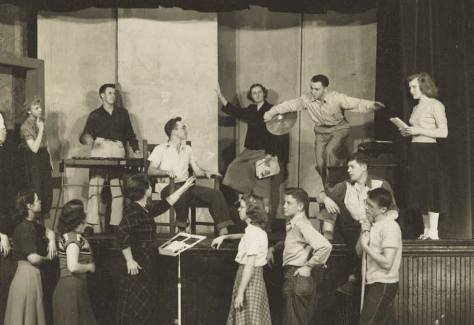
The play, Goon With the Wind, and Frankenstein made their appearance October 29 at the annual Hallowe’en Carnival held at the high school. Characters in the play were: Joan Jones, Jim Dean, and David Nall. Jim Dean, as Frankenstein, grotesquely “scared the wits” out of the Audience.

11800244_1172167499476234_2632802473229836186_n

(Bob) Do you think that who he was as a person is often lost in the iconic celebrity status he worked so hard to cultivate?

He worked hard at that time. He wanted to be a movie star.

(Both)Marcus Winslow Jr. will be speaking at the dedication as well. Do you enjoy having the chance to hear him speak at various events? What do you think of how all the Winslow’s have worked so hard to keep Jimmy’s memory alive? 

Yes. It is great!

(Jake)What first inspired you to pursue this project? Why do you think it is so important to preserve this piece of history for generations yet to come?

The Stage was all intact while sitting there in the Old School. It was just waiting for someone like…me to notice it. It still had its Life in it. What a great piece of history this town has for many James Dean Fans from all over the World, who have come to our Small Town in USA to visit and for the former classmates from FHS who at one time or another acted in class plays under the direction of Adeline Nall. This was the last place James Dean acted in his class plays while in High School. It is a really nice Stage that can be used for plays and Concerts in the Park next Summer.

(Both) Are you excited to see the stage restored to its former glory?

Yes!

(Both) What is Fairmount like during Festival Days? What do you think Jimmy would have thought of it all?

There are a lot of friendly people. He would enjoy it!

(Both)Why do you think the town of Fairmount should be restored and preserved? What steps need to be taken to see that accomplished?

To keep bringing people in to our small, quiet town. The town as received a grant of $500,000 starting the beginning of 2018.

(Both) Is there anything you’d like to say in closing? 

We have had the new stage re-build and are having a Dedication Saturday, September, 23rd, 2017 at 12:00 NOON  inside the Playacres Park by the Car Registration Booth. Thank You for the Interview.

jdonstage

stagepic2

stagepic

(All black and white photos used with permission from CMG Worldwide, others with permission from Jake Roth. )

“From the Day of the Dead to Madison, Wisconsin” by John Grey

908f4d500409ad5d77952e890641ac49--day-of-dead-day-of-the-dead-couple-art

FROM THE DAY OF THE DEAD TO MADISON, WISCONSIN

The tourist stands at the edge of the sidewalk
to contemplate flamboyant coffins being toted through
the streets of Vera Cruz during Holy Week.
He draws nourishment, emotionally and intellectually,
from the integration of death into his life.

Studying the procession as it passes,
he sees the interconnectedness
of smiling Catrina skulls
and wondering when his own passing will come.

Contemplating the decay, the end,
had always sent a shudder through his heart.
But now along comes a dancing, toothy skeleton
and, as with the children around him,
his spirits soar.

He nibbles on a candy cadaver
purchased from a roadside stall.
He explores the treasures
of feeling himself in a body
and imagining himself without.

He’s not afraid of death again
until he returns to the States
to witness his mother in a panic
as she awaits the results of a biopsy
and hears how a cousin was just killed in a car crash.

The man stands at the edge of the lives of others
wondering what they ever did to deserve their fate.
Along comes a parade of coughers and complainers,
worriers and weaklings,
and those who could, even now,
be unknowingly in harm’s way.
There is nothing there for him to draw on.

John Grey is an Australian poet, US resident. Recently published in Sheepshead Review, Studio One, and Columbia Review with work upcoming in Louisiana Review, Poem and Spoon River Poetry Review.  


“To the Earlobe” by Robert Wooten

05c62ba1814f93e2aec3121517616ba4cf0c7437

To the Ear Lobe

Like the rising sun
coming through waters
of open life, I hear
the dancers drawing near
and feel their inner strife.
Open books that lean and fall
open narrow doors, leave rootless
the sprouted man.
A simple thought, driven to climax,
takes a simple minute,
reclines to relax
and resolves the nicer cut.

Robert Wooten’s second chapbook, Famous Last Words, was a finalist for the Bright Hill Press Poetry Chapbook Prize.  He is a graduate of the MFA program at the University of Alabama (1998) and of the MA program at North Carolina State University (1994).  His poems have appeared in ‘Tis the Season: an anthology of Christmas poetryThe Southern Poetry AnthologyCommon Ground ReviewThe Pedestal Magazine,  Strong Verse, and others.

An Interview with Jim Davis

jimdavis

The following interview was conducted, years ago on a now defunct website The Damned Interviews, as it can no longer be found online except on The Damned Book of Interviews on Amazon, I figured I would offer it & selected others from the book here at Van Gogh’s Ear. Thank you for taking the time to read.

Who among us doesn’t admire Jim Davis for his hard work and creativity? His career in illustration began in 1969 and has made him one of the most prolific cartoonists there are. As the creator of Garfield, he created one of the most widely recognizable characters of modern day and that is no small feat. He also wrote or co- wrote on all of the Garfield TV Specials. Davis produced the animated series Garfield & Friends which originally aired from 1988-1995. Most recently he created the new CGI TV series The Garfield Show (of which he is also an executive producer) and works as a writer/producer for the Direct to Video CGI Garfield films. He also founded The Professor Garfield Foundation to promote Children’s Literacy. Jim continues to produce the Garfield strip.

Is it true when you grew up you had 25 cats? What was that like? Do you think that is why you chose to make Garfield a cat instead of a dog or some other animal?

Yes, it’s true we had at least 25 cats. They were all barn cats with a mission to keep mice at bay. I used to hang out in the barn and would observe that they all had distinct personalities. Some were aloof, some loved attention, some were playful, others wouldn’t budge unless the barn was on fire. I remember as a kid thinking that cats were kind of cool in their own way. They didn’t answer to anyone.

I actually started my cartooning career with a strip called Gnorm Gnat. My hunch was that nonhuman characters could be placed in many more interesting situations with greater flexibility that human characters. In that strip, Gnorm was the straight man (or gnat) surrounded by a bunch of weird characters:  Cecil Slug, Freddy the Fly, Dr. Rosenwurm. I submitted the strip to all the syndicates and finally one comics editor came back to me with some good advice. He said, “Your art is good, the jokes are funny, but bugs? Who can relate to a bug?” That’s when I started thinking about a new approach. I took a good look at the comics pages and realized there were lots of dog strips: Snoopy, Marmaduke, Belvedere…but no cats.  That was my EUREKA moment.

What would you say is your favorite memory from back then?

Summer days and nights that seemed endless. Starry skies. Fishing with my brother Doc.

Did you also love to draw as a child?

Not at first. I was pretty terrible. I was asthmatic as a child and was forced inside and in bed for days at a time. My mom would encourage me to keep myself busy; she’d shove a pencil and paper in my hands and tell me to entertain myself. My drawings were so bad I had to label everything so you could tell what it was. Eventually, I developed a habit and couldn’t stop drawing. I remember sitting under the kitchen table and making little drawings on the bottom of the table. I’m pretty sure I drew on some walls, too.

When you first created Garfield did you ever dream he would have become such a huge character as he has? Why do you think so many people love him?

When I received the phone call saying Garfield would be picked up by the syndicate, it was the best day of my life. Everything since then has just been gravy. I think Garfield resonated with people for a couple reasons — Number one, I tried to keep the gags broad and the humor general and applicable to everyone. Most of the gags were about eating and sleeping. Everyone could relate. And then, I think people liked Garfield because it was the Jane Fonda era — everyone was being told to exercise and eat less. Garfield was saying, “Take a nap.” “Have a donut.”  He rebelled against the fitness trend and a lot of people needed that to relieve their guilt for being couch potatoes.

jimdavis1

What do you think you’d be doing now if not for that?

Without a doubt, I’d be a farmer.

What was it like to see the specials based on your work be nominated for and in some cases win an Emmy? Was that a little surreal?

I’ll never forget the first show, “Here Comes Garfield.” It was 1981 and I was in a studio in California struggling with how to make Garfield stand up and dance. My all-time hero, Charles Schulz (Peanuts), happened to be working on a project in the same studio. He came by and I explained my problem. Sparky (as he was known to friends) provided me with the solution on the spot. He started drawing over my drawing, saying, “The problem is, you’ve made Garfield’s feet too small. Little tiny cat feet.” So he got Garfield, like Snoopy, up off all fours and Garfield’s been walking upright ever since. Talk about surreal.

Aside from Garfield which of your other characters did you enjoy creating most?

I really love Odie. He’s stupid but sweet, and for a character that doesn’t talk, he’s very expressive. It’s also fun to do strips with Jon Arbuckle’s parents and brother because they’re based on my own family. It’s fun to tease the people you love in such a public format.

How have things in the world of comics changed most since you first started your work in the field?

Comics editors are trying to squeeze a ton of strips onto the comics page so they’re all pretty small when they end up in the newspaper. I’ve had to learn to be a good editor — minimize the number of words and include lots of sight gags.

Can you tell our readers a little about The Professor Garfield Foundation? What led you to form that?

When I was on book tour, people would come up to me all the time and tell me that Garfield helped their child learn to read. The simple combination of pictures and words sparked their interest. After hearing this over and over, I thought there had to be something to it. I started talking to educators and they confirmed that comic strips were a powerful tool in teaching reading. My alma mater, Ball State University, happens to be a few miles away from the studio — they have one of the top Teacher’s Colleges in the country. We formed a partnership and the Foundation was born. Our mission is to provide a fun, interactive, online environment where children can safely explore, learn and creatively express themselves.

Do you enjoy creating works that appeal to children as well as adults?

Absolutely. My wife tells me I’m just a big kid, so it comes naturally. I have four grandchildren now, too, so they are giving me a great education.

Do you find that being a cartoonist helps you stay young at heart? Do you think that is an important thing do?

I make a living drawing a cat. How mature is that? I hope I never completely grow up — that would be very bad for Garfield.

Can you tell us about Paws, Inc.? Do you feel lucky to have the chance to employ and work with so many fellow artists?

Paws, Inc. is the licensing and creative studio that supports everything Garfield is involved in (TV, movies, licensing, publishing). The other artists inspire and challenge me. I feel incredibly lucky to be around so many creative people every day.

Is there any one interview question that no one has ever asked, that you wish they would?

Can’t think of anything…

What is one little-known thing about you?

I’m a decent bridge player.

What projects are you working on next?

There are a couple of projects on the table, but I’m not at liberty to talk about them just yet. Let’s just say, Garfield will be busy for a long time to come.

Is there anything you’d like to say to your fans/readers in closing?

Thank you for allowing a 66-year-old man to behave like a 12-year-old. I’m forever in your debt.

jimdavis2

(Photos used with permission from Paws, Inc.)

“Yet Another Birthday” by Bibhu Padhi

sibilla.jpg

YET ANOTHER BIRTHDAY

I know someone is dying
this moment into me,
choosing to give away
to this body his unknown,
unpredicted slices of life, as if
each moment was a further life.

Generous breaths pause
on each cell on this body,
as if they looked for
a habitat that they would find
their very own, something
that was long overdue.

I wonder if this body deserves
the gifts that arrive every moment,
without its asking, from places
that might have hardly known
what it needs, affectionate extensions.

Today I know how bodies, distanced by
unseen hands, are indeed together,
at one place, through all time,
defying differences that fate
so skillfully invents but doesn’t know
their private wishes that float on
to all time, one place.

I am here and know how friendships
about to close, are quietly renewed.


An Interview with & the Art of Lou Rusconi

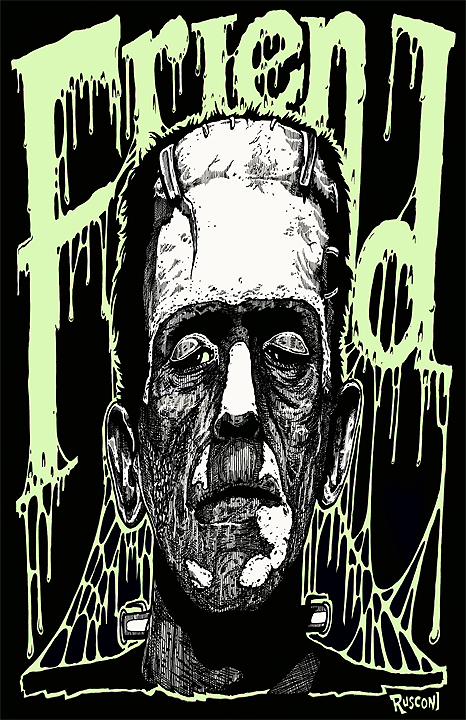
lourusconi_friend

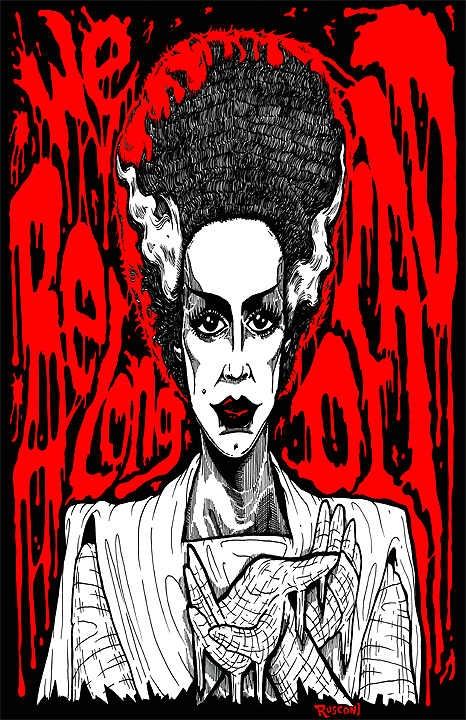
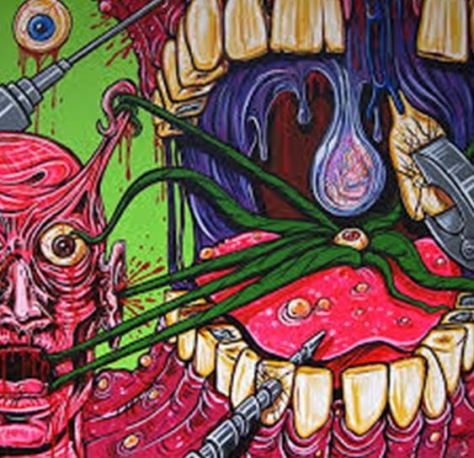
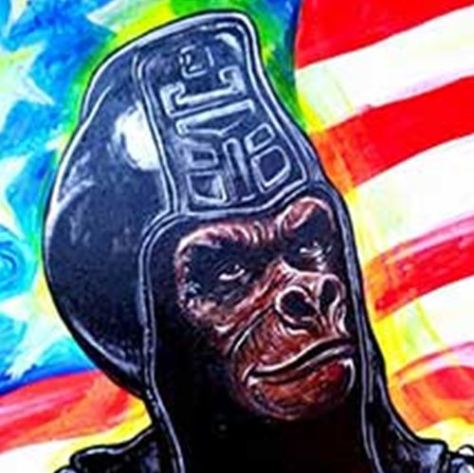
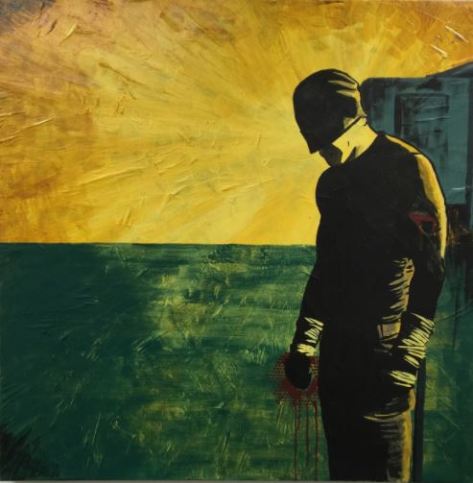
Lou Rusconi is an underground artist with an artistic bent for the macabre. His imaginative graphic renderings of vividly colorful gore have graced various galleries, album covers, and prints.

Can you tell us a little about yourself? What from your earliest days influenced you to create as you do today?

I currently work in the medical field for my day job. I have done a lot of different things over my life; fast food, retail, construction work, and production art. Nothing satisfies as much as helping people. I have always loved unconventional and challenging artwork. Underground comics from the 70’s rocked my life and changed my style forever. Seeing that there was a place for people like me and an audience who wants this is amazing.

lourusconi_webelongdead

Who are some of your own favorite artists?

My lifelong favorite artists are in no particular order: Dali, Bosch, Robt. Williams, Frazetta and H.R. Giger. My contemporary favorites are Sergio Zuniga, Mike Diana, Danny Hellman, Mike Stoneroad, Frank Russo, Martina Secundo Russo, Terry Bizarro, The Fabulous B.S., Ryan “Humanburger” Jones, Reuben Fulci, Jose Angeles and so, so many more.

What are some of the very first things you remember liking to draw most as a child?

I wanted to be a cop or fireman, picture that, I drew a lot of cops and cars. BUT, my main joy came from drawing MONSTERS, from movies and imagination. Monsters have always intrigued me and still do to this day.

lou

When did you first know you wanted to be an artist?

As a kid I watched my Old Man paint and I wanted to be like him. I think I took to it easier and more naturally than him though and he stopped painting earlier in my life while I continued. My parents were very supportive of me creatively.

Why do your works feature such vivid color while depicting such dark things?

I get lumped in a lot of times with Dark Art and I’m cool with that, only I use bright colors and fluorescents in my dark art. I fucking hate rules and will always bend or break them. Fuck rules. Give it a name, ya know?


lr

Do you find colors can be therapeutic?

They work for me, I stopped self-medicating at 33 and take no maintenance medicine yet. There is a feeling I get from the bright colors both exciting and calming.

Your work has often faced censorship. What are your personal feelings on censorship in general?

I fucking despise censorship. A drawn penis or vagina has never harmed anyone. Drawn violence hurts no one either. These perceived Politically Correct Monitors are stifling art and it is sad that artists feel the need to create what they think others want or what will sell. I always figured one day, the Dream Police will come for me in the middle of the night and take me away (too much Kafka, I think). I will create what I want, when I want and if it offends you, that is a feeling and reaction and that is what good art does, stimulates, repulses, inspires, etc. If censorship is there to protect children that is bullshit, I bought Underground Comics at age 10, I stole and bought porno at age 12. If kids want something and it is verboten, they will find a way to it! If I had the goddamn internet as a kid….holy shit!! People who are easily offended need to get a fucking life and do something worthwhile.

lourusconi_frankensheen

What advice would you offer other artists in regards to creating things that appeal to their own individuality?

Do what YOU think is right, don’t follow trends. Go with your heart and do your own style, keep exploring and find your individuality. Being creative does not always mean you will be successful, don’t expect it. Keep working, this is a lifelong experiment and no one gets out.

Do you think the business side of art often clashes with the creative side of it?

Absolutely. The glut of artwork in LA seems to follow trends. While there is money to be made, I don’t feel that what is being made is always “artwork”, especially if you anticipate what your market wants. That is dumbing down the audience unfortunately. I respect my friends and fans too much to offer them the same SHIT over and over again.

Lou Rusconi2

Are there any little known things about you that your fans might be surprised to know?

 I sometimes MC Burlesque show which is amazing because I am kind of a quiet guy. It is fun, when I get the chance and freedom to express myself verbally and visually. I’m typically a shy guy, so this is how I challenge myself to think outside of my comfort zones. Free ID and Super Ego! Let them run wild and see what happens.

Another fun fact is I do not drink or do drugs. I stopped over 20 years ago and my health and life are better for it. As young artists we are geared up to think we need to be self destructive, but that is bullshit and a crutch. It is more challenging to not be a fuck up and work harder every day. I do not preach or push my ideas on anyone though. I think that is bullshit too. One more fun fact, I’m vegetarian, this is for health and compassion. Again, I do not preach to others about this.

Is there anything else you’d like to say in closing?

I would like to thank all of my friends and fans, but I really want to thank Bill Shafer of Burbank’s Hyaena Gallery (www.hyaenagallery.com) and Frank and Martina Russo of Brooklyn’s MF Gallery (www.mfgallery.net), both galleries have been so kind and encouraging to me over the years and they are both fabulous galleries for artists such as myself. The art world is very large, but to find a place that allows you to be you and express what you want with no censorship or fuckery is amazing. I salute both of these galleries and everyone should seek them out and support them.

Thank you so much for you time and platform, I appreciate it very much!

Please go to my facebook page for more art and up to date notices http://www.facebook.com/lou.rusconi?success=1#!/lou.rusconi Check out the new website being worked on!! : WWW.RUSCONIART.COM

The Art of & an Interview with Dan Litzinger

danl5

Can you tell us a little bit about your early days? What are your most fond memories from those days?

I grew up mostly around Atlanta, Georgia as the youngest of three brothers. I wanted to be like them obviously, so that’s how I got into comics and developed most of my taste for pop culture was through them. We had an early VHS camera and made a lot of home movies, with plots and characters and everything. They were very funny, I think a lot of it still holds up, but maybe just for me!

What were some of your favorite things from back then?

I loved everything G.I. Joe and I was always drawing from a very early age. It was a big deal when our neighborhood got wired for cable, and I loved all the original Comedy Central and SyFy channel shows. I was definitely into Monty Python, Mystery Science Theater 3000 and Kids in the Hall and all that absurdist comedy stuff from when I was around 8 years old. I loved Star Wars and all the movies my brothers would watch, which I would put on while I was drawing – like I still do today!

danl6

Do you remember what you liked to draw most often as a child?

My dream was to be a syndicated newspaper cartoonist, like my hero Bill Amend. I used to study Foxtrot comics like it was my homework. I wrote letters to Bill Watterson. I drew cartoon strips with a character named Dapper Dan who was a bit of a klutz! I also drew an action/adventure series called Tex & Laser, who were basically G.I. Joe surrogates. My friends and I would use that old dot matrix printer paper to design scrolling video game worlds. I think every child of the 80’s did that. I continued drawing comics for my high school paper and several times I sent out submission packages to syndicates.

What was it that first sparked your interest in art?

Art was easily my favorite subject in school and I strongly believe in the absolute necessity of arts education. My mother especially cultivated that and put me in summer art programs. She also took me to the local library often and I would always check out books on how to draw. As she likes to say, “We’re library people!”

danl4

Who are some of your favorite artists?

I am constantly inspired by working artists around me, especially those who left the safety of their day job to pursue their artistic vision. Zachary “Speczacular” Friedberg is a fantastic local pop artist whose work I admire. Photographer/director/fashion designer Ama Lea also springs to mind. She’s the genius behind the popular Year of Fear calendar and one of the hardest working independent artists I know. But the biggest influences on my formative years were probably Frank Miller, Mike Allred, and Roy Lichtenstein.

danl2

How does it feel to have your works compared to Roy Lichtenstein?

S’great! There’s the old saying, “If you’re going to steal, steal from the best.” I think Roy did that and I think I’m doing that now.

Why do you think society has always been so fascinated with the dark and weird?

We hope nothing bad is going to happen to us or to our loved ones, so we try not to think about it. But then curiosity of the unknown is overwhelming.

danl3

As someone who works as an artist as well as in film and television, do you love one more than the other? How do both of them compliment each other?

Well, it’s all storytelling! I don’t have any general preference between film and painting, but I do have mood changes from day to day. Some days I’m in the edit zone and I forget to eat or drink anything, other days I’m painting from sun up to sundown, and some days are in between. I try to follow my muse and just jam on whatever it is I’m excited about at the moment. That way nothing is ever forced but I’m always making progress. I feel very lucky to have multiple creative passions.

What do you love most about the act of creation in its various forms?

When I was in college, I was very into Malevich and this idea that creation is way to feel closer to a higher power, and I think there is still some of that meditative feeling in it for me. Hence, large compositions with a million little dots that take forever – something that I could easily do on a computer today if I were just trying to crank out images. As for film editing, I love bringing my unique vision to sometimes challenging footage. I consider the edit bay a magical place where anything can happen. I think that besides a director, the editor perhaps has the deepest fingerprints on a film.

danl1

Do you have a dream project you’d most like to bring into being?

I want to create paintings on a much larger scale. Especially since I mainly paint movie icons, the larger size is more evocative of the movie theater experience. I would love to do a series of large, sequential paintings, like every shot from a full scene in one movie rather than just one shot for each movie. Someday I hope to have some public art and add to the fabric of this city that I love so much. And as an editor, I would love to cut a feature horror film.

Is there anything you’d like to say in closing?

Support living artists – the dead ones don’t need it! I’ll be at Gallery 1988 in Los Angeles on July 21 with the largest piece I’ve ever painted. Starting September 1, I’ll have some prints at the “Nasty Women: Boston” exhibition at Laconia Gallery, with 100% proceeds benefitting Color of Change and Planned Parenthood. Also in September I’m very excited to be part of the Slashback Video installation at The Bearded Lady’s Mystic Museum in Burbank. And hopefully next year my second documentary feature Keep On Running will be on the film festival circuit.

danl7

An Interview with Edward Lee


White Trash Gothic sd.jpg

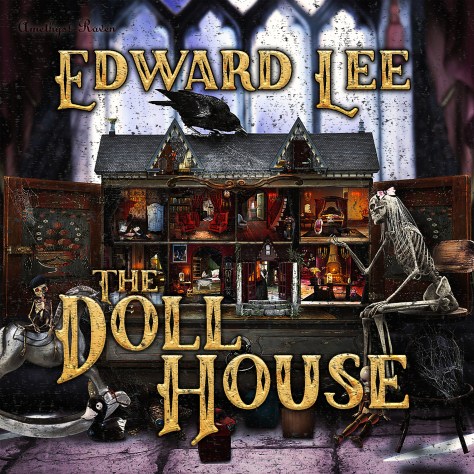
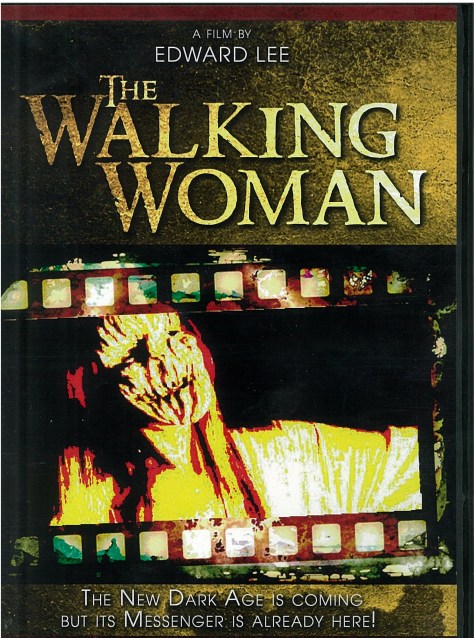
Edward Lee has been delivering extreme horror at its best since about 1988. His various works appear in countries worldwide with many of his small-press/limited edition hardcover releases becoming collector’s items. His latest work White Trash Gothic (Deadite Press) tells the tale of a writer suffering trauma induced memory loss and his quest to find it. Fans of his work can also find the movie The Walking Woman and a homage to Dali/Bunuel’s Andalusian Dog from 1928 the short film Andalusian Tadpole now both featured On Demand from Vimeo. He is currently working on a spoof on ABC’s of Death tentatively titled The ABC’s of Nude Horror.

What do you think it is about the macabre that drew your interest from an early age?

EL: I suspect its something innate because as a kid it seemed natural for me to steer towards horror. A baby-sitter took me to Psycho at a drive-in and I was tickled pink. I was more fascinated by the Tales From The Crypt comics than the super heroes. All I cared about on TV were Outer Limits, Twilight Zone, and The Invaders when everyone else my age was watching Mr. Ed and Leave It To Beaver. On Fridays and Saturday’s I’d stay awake waiting for my parents to go to bed, then I’d sneak out and watch Creature Feature on Channel 20 with Count Gore Dival (by the way, I still see the Count every year or two at conventions, and he still looks the same!) In other words, I don’t think anything in my childhood environment led me to the macabre. I think it was always in me.

How have you changed most since then?

EL: That’s the wonderful thing, I haven’t. What’s changed is media-technology and the overall market. The macabre-element in our entertainment pie has grown and grown along with the technology. One of the many great things about America is that there’s something for everyone, and public interest in the horror field seems to excel where as not so much in other fields and genres. Cool.

Do you think the horror genre has suffered during the transition from the its early day to what it is at this point in time? What do you think it is about the classic works that give them such timeless appeal?

EL: No, the opposite. The genre hasn’t suffered over time, it’s evolved, it’s been nourished, it’s exploded. It started roughly in the 1800’s as something nearly non-existent (Washington Irving, Hawthorne, Edward Bulwar-Lytton), then to something gaining steam and attracting more readers (Poe) until it matured into a bona fide “genre” (Lovecraft, Weird Tales, Ambrose Bierce, Seabury Quinn, etc.) World War Two put an understandable damper on the genre (who needs horror when you have the Imperial Japanese Army and the Waffen SS?) but after we handed them their asses in 1945, things got rolling again, and I think for an interesting reason. True, the first half of the 20th Century was a veritable exercise in horror via the two World Wars, but after it was all done people needed entertainment again and I think that supernatural horror became the next big thing, because it was the kind of horror that really didn’t mirror the real horrors of the world; instead, it was a fascinating, macabre fantasyscape, unlike anything the printed page has ever offered before. And by then, of course, Arkam House formed to exhume Lovecraft’s genius from obscurity and August Derleth hustled paperback deals for all those stories and books. This was the Big Bang of Horror. Then came another Big Bang, in the early ‘70s: Stephen King. His magnificent (and incredibly accessible) work–seemingly right out of the blue–CREATED the horror market as we know it today. By 1980, because of King, the Horror Octopus was released like Liam Neeson’s Kraken: a genre with multiple tentacles (sub-genres): something for everybody. King raised the public awareness of horror bigly (to quote the President), and this created a demand that swingin’ dicks like me were allowed to step into and fill. Lovecraft’s influence caused me to be a writer. But it was King’s contribution that let me and everyone else in this bizz today have a career.

DH.cover_CS

What does it take to make a truly good story?

EL: A main character who’s interesting and a sequence of unusual events that makes the reader want to keep reading. Nothing more than that.

Why do you think your work is often classified as extreme horror? How do you suppose that differs from the usual horror genre?

EL: the only difference is purely gray area, a matter of interpretation. It’s the same difference between cakes at the bakery. It’s all in the icing. You want a boring, mainstream cake, buy the fuckin’ pound cake. But if you want an EXTREME cake, buy the one with the most icing! Gross stuff happens in my books because that’s part of the icing. My books have head-humping, trans-vaginal evisceration, hock-parties, and cunt-kicking contests. There’s none of that in Lovecraft but look closely at, say, Shadow Over Innsmouth, and Charles Dexter Ward, and you’ll find things much nastier than my stuff

Why do you think people are drawn to horror?

EL: Probably something in our genetic code has always made us fascinated with the prospect of heaven and hell, ghosts, monsters, etc. The first stories ever written were HORROR stories written on the walls of caves, depicting all of these. The Windingo, the Fire Spirit, the Man in the Mountain, the Berserker, the Incubus. As cave men and women we hypothesized about these things. Where did we come from? And where might we be going next? Presto! Fifty thousand years later we have the same things going on but instead of cave walls they’re in books and on our Kindles.

DOC0100

Can you tell us a little more about Andalusian Tadpole? What inspired you to make that particular piece of work?

EL: Because I like weird shit. In 1928 Salvadore Dali and Luis Bunuel made a 14 minute movie called Andalusian Dog. (Bunuel’s mom paid for it.) There was no dog in it, and it wasn’t filmed in Andalusia. The point? After World War One came the Da Da art movement, followed by the movement of Irrationalism. It was the Art World giving a great big middle finger to humanity. The progression of mankind with all its intellect, all its genius and initiative, and all its promise have given us what? World War One: 18 million dead, 20 million crippled. The Spanish Flu Pandemic: 50 million dead. (That’s right, FIFTY, and all between 1918 and 1919.) Ah, and then the sequent Global Depression. Hence, the attitude of the Art World became thus: “If that’s the best it can do, FUCK mankind.” From this derived art movements that were brazenly anti-establishment. Dali, a surrealist, was also very interested in Irrationalism. So he and his buddy Luis Bunuel (who would be named and continues to be named year after year by critics as the 14th greatest film maker of all time) decided to make a short film wherein no single event or image in the movie has any rational correspondence to another–hence, Irrationalism. Myriad critics (such as Roger Ebert) rank Andalusian Dog as the most important short film ever made. Most of you have seen it and don’t realize it: it’s the one where the guy slices a woman’s eyeball in half in the first 30 seconds. I’ve recently become obsessed with videography and I wanted to make a homage to Andalusian Dog. (And I’m sure that it will NEVER be ranked as the greatest short film of all time!) I’ll continue to do such homages to mirror my love of abstract film.  (Eraserhead, Begotten, Seventh Seal.) Plus it’s a great excuse to film actresses with no clothes on! The kick in the ass is I gotta pay them $100 an hour. Check out https://vimeo.com/user22091649 if you’d like to investigate my wee efforts.

White Trash Gothic deals with trauma induced memory loss. Do you think sometimes in life the loss of memories can be a useful coping mechanism to have?

EL: I’ve never thought about it that deeply but I’m sure that some kinds of memory loss are deliberate defense mechanisms, instigated by our brains, and part of our genetics. But in White Trash Gothic, I needed my recurring character known as “The Writer” to have a reason to go back to Luntville, West Virginia, and a major case of memory loss seemed the most interesting way to implement this. He’s lost his memory due to the outrageous, traumatic shenanigans he witnessed 20 years ago in my novel Minotauress. This book heralds the return of my most notorious monster, The Bighead, and though White Trash Gothic is pretty much a full-length novel, it will continue as a series of novellas, so readers don’t have to wait too long for each next installment. The book is a hoot and, yes, it has a good ole redneck cunt-kicking contest in it.

How has the literary world changed most since you first became part of it?

EL: It’s changed hugely and it’s changed not at all. Hugely in that more and more people are reading now than ever, and more and more genres are exploding–a wonderful thing. Not to mention the explosion of new writers whose work is now accessible due to Kindle. But not at all, too, simply because just as some people are natural born basketball players, or mathematicians, or carpenters, some people are natural born story-tellers. And everyone likes a good story, right? It’s human nature, and it’s been this way for time immemorial.

Do you think you will ever give up being an author or is writing something that helps you keep going?

EL: It doesn’t help me keep going; it’s a privilege that’s been given to me for whatever reason; therefore I have an obligation to keep busting my ass. I’ll write till I’m dead, dead as a doornail like Jacob Marley. I’ll write till God on High drops my dick in the dirt. I’ll write till the moment that the Golden Bowl ceases to vibrate. I’m getting old now, I’m 60, and I write slower…but I ain’t done yet.

lee.JPG

An Interview with and the Art of Nicolas Caesar

nicolascaesardrunkghost

Nicolas Caesar is a self-taught artist hailing from Northern CA. Founder of the Scary Art Collective, his artwork brings forth a whimsical creepy landscape populated by beings both sinister and sardonic. You will see glimpses of Sideshow madness within his paintings mixed with a healthy dose of 50’s B-Movie charm. The raw feel of his work twists the familiar yet remains strikingly original. Nicolas’ horrific characters with their permanent, toothy grins reveal a playful quality to his art that challenges you to keep from smiling along no matter what atrocity they are currently plotting for your future.

Nicolas Caesar’s work is in private collections in France, the Netherlands, Kenya, Japan, the United Kingdom, South Africa, Canada, and throughout the United States. Nicolas’ web comic Mosquito and Spider was accepted into the Cartoon Art Museum in San Francisco. He and his works have been features on Late Night with Conan O’Brien, KVIE PBS Sacramento, Sacramento’s Livewire, The Bay Area’s KOFY Tv20 – Creepy KOFY Movie Time, and Cleveland’s The Ghoul show.

Nicolas Caesar was the curator and one of the artists for Scream 4. His webcomic Mosquito and Spider was a selection for the Cartoon Art Museum in San Francisco. His work is collected internationally.

Bio by Bill Shafer @ Hyaena Gallery.

What were you like as a child? Did you always have a fascination for the weirder side of things?

I used to be obsessed with insects, dinosaurs and monsters. I had asthma so I spent most of my time indoors going through picture books and reading comics. I think monsters always fascinated me because they were my initiation to mutating, mixing and matching, and thinking outside the box. I think I was always weird.

ridingthepredisone

What is the very first thing you remember drawing? And what do you remember drawing the most from an early age?

I drew these stick figurish dinosaurs, I was always building worlds and scenes, it was my escape. As I got older I tried drawing Garfield, Dungeons and Dragons monsters, robots from The Black Hole. I knew I was terrible but it didn’t stop me, I loved drawing.

What do you think it is exactly about 50’s B-Movies that make them so timeless in their appeal?

I grew up watching a show called Creature Features with Bob Wilkins. I was always excited by monsters I had never seen before – every Friday and Saturday it was Godzilla, Mushroom People, Crab Monsters or the deadly worms in Squirm. I think it’s tied to the unknown, knowing that there could be thousands of creatures out there undiscovered. On top of that it taught philosophy. Whenever they’d defeat whatever giant monster of the week – they questioned humanity’s role in the universe and with nature. Most scripts were written by beatniks so you had giant puppet monsters mixed with parables. Now, I think MST3K reinvented the party movie, they’re fun to rip on for their outdated slang or bad dialogue – but as a kid they were early models to adulthood and bravery.

forbiddentransmission

Who were some of your biggest influences?

Comics like Mystery, Weird War, Mad Magazine, b-movies, Big Daddy Roth, Max Fleischer, John K, Jim Smith, Basquait, Gerald Scarfe, Ralph Steadman, Alex Toth, Hanna Barbera, Gahan Wilson, Charles Addams, Max Ernst, Edward Gorey, Screamin’ Mad George, Johnny Rotten, Basil Gogos, Bob Clampet, Duck Ewing, the list goes on and on, I’m a sponge and a blender.

What have you found to be the most difficult thing to learn as a self taught artist?

The business side of art, when I first started it was trial and error. Art, how it’s perceived, is always out of your control but selling it takes a lot of experimentation. You’re always working to tip the supply and demand scale closer to demand and a lot of that is breaking your own rules and exploring alternate avenues. The best way I can describe is is like playing several hands of poker and learning from your losses and wins, at the same time always making sure there’s gas in the tank.

booriver

What advice would you offer others looking to do the same?

Art is an uphill battle, don’t beat yourself up because you’re not where you imagined you’d be. Success and failures are irrelevant. The journey is the destination. You’re selling yourself and your art is your journal. If people want to be rich they should flip houses, art isn’t an animal of the square world, its pulled out of imagination and experimentation. Never give your power to jealousy, envy, or delusions of fame and fortune – just do your thing and keep doing it. The quickest road to ruin is trying to please everyone. Your success in a nutshell is being able to flawlessly execute your imagination to materials. Also don’t be a jerk.

weirdonaut

How does it feel to have your works collected worldwide?

In the beginning it felt like the game of Risk, I wanted my work in every country, every city, now that I’ve matured I can really appreciate how the internet leveled the playing field when it comes to art.

Do you think you will pursue more work in the comic field in the future?

Of course, I’m the girl who can’t say no, if there’s an invitation I’m there!

scarocel

What feelings do you hope to convey with your works?

To not take life or the art world so seriously, to ground yourself and have fun. My art in a sense is punk rock balancing out the serious 17 page artist statements. I used to hate when people called my work “Fun”, it always sounded so condescending but now I see its importance. It is the plaid to balance out the grey.

Do you think nostalgia plays a heavy role in your creations?

Definitely. They say write about what you know and I paint my brain. I make my art out of the things I loved as a kid, part of it’s nostalgia and other parts are able to express emotions in a cute comical way.

shakeitout

Are there any future projects you are looking forward to?

I’m producing a TV show called Mosquito and Spider based off of my web comic, I have a Troma movie themed art show coming up at Hyaena Gallery and my friend Jeremy Cross and I just launched our 99cent themed art show up on eBay.

Anything you’d like to say in closing?

I think for all artists it’s important to make work they’re proud of before you start listening to any armchair art critic. Even the most successful artists wrestle with their confidence. Be happy with what you do and those who support you, Never waste your time on educating people who don’t get it. Embrace you’re from outer space in their eyes. (smiles)