“Irresistible Wine of Love” by Elvira Lobo

Irresistible Wine of Love

Come closer and pull on these transparent covers,
And let the sensuous thoughts flock our minds over.

My body satiates for more with your passionate love and caress,
And your every touch heals me of all sorrows I must confess.

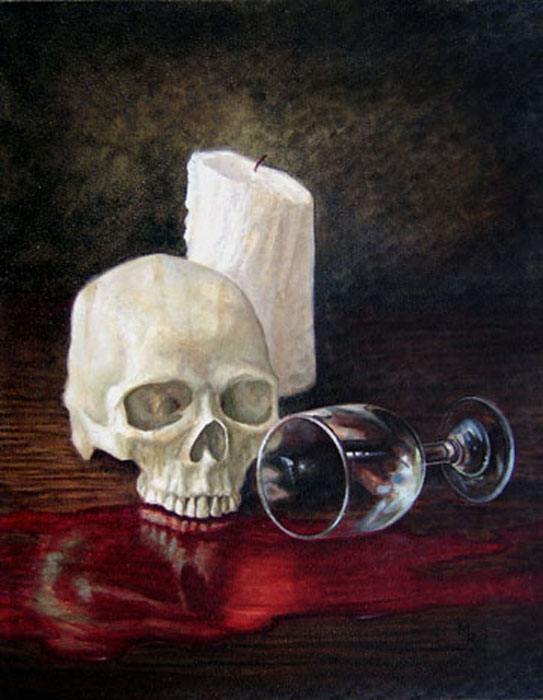
Sipping from your glass, a drop of red wine slides down my tender lips,
The taste beautifies our love so pure in this lovely relationship.

How intoxicating is the wine or is that your eyes drooling over me,
Making me love you even more and losing my sanity.

Your arousing kisses stir up the fire inside me,
Dipped in your romantic syrupy wine so irresistible which has soaked me completely.

Oh My Love, this thirst for you still lingers on and will continue to be,
Just like this red wine melts down my throat slowly and hungers for more with greed.

Copyright ©2012 by Elvira Lobo, Its My Life
(All rights reserved; unauthorized use prohibited)

elobo

Elvira is a Fun-loving person, Avid Bollywood fan, Blog-Writer and dedicated towards cause for Thalessemia. Born in Mumbai, having an MBA finance degree , she is currently working in a corporate bank. She is a keen enthusiast and loves to play the guitar, dance, reading books etc. and creative to make innovative handicrafts at leisure.

As she quotes, “Writing poems has been my passion since young and now have an blog Its My Life to emote my feelings and thoughts with friends. Poems on love, life, relations, abstracts, nature etc”. A budding poet, Elvira has her works (25 poems) published both at the national and international level in different anthologies.

“Adam & Eve Weren’t Married?” by Mark Caine

Adam & Eve (by Adriaen van der Werff)

Adam & Eve (Painting by Adriaen van der Werff)

How old is the institution of marriage?
The best available evidence suggests that it’s about 4,350 years old. For thousands of years before that, most anthropologists believe, families consisted of loosely organized groups of as many as 30 people, with several male leaders, multiple women shared by them, and children. As hunter-gatherers settled down into agrarian civilizations, society had a need for more stable arrangements. The first recorded evidence of marriage ceremonies uniting one woman and one man dates from about 2350 B.C., in Mesopotamia. Over the next several hundred years, marriage evolved into a widespread institution embraced by the ancient Hebrews, Greeks, and Romans. But back then, marriage had little to do with love or with religion.

What was marriage about, then?
Marriage’s primary purpose was to bind women to men, and thus guarantee that a man’s children were truly his biological heirs. Through marriage, a woman became a man’s property. In the betrothal ceremony of ancient Greece, a father would hand over his daughter with these words: “I pledge my daughter for the purpose of producing legitimate offspring.” Among the ancient Hebrews, men were free to take several wives; married Greeks and Romans were free to satisfy their sexual urges with concubines, prostitutes, and even teenage male lovers, while their wives were required to stay home and tend to the household. If wives failed to produce offspring, their husbands could give them back and marry someone else.

When did religion become involved with marriage?
As the Roman Catholic Church became a powerful institution in Europe, the blessings of a priest became a necessary step for a marriage to be legally recognized. By the eighth century, marriage was widely accepted in the Catholic church as a sacrament, or a ceremony to bestow God’s grace. At the Council of Trent in 1563, the sacramental nature of marriage was written into canon law.

Did religion change the nature of marriage?
Church blessings did improve the lot of wives. Men were taught to show greater respect for their wives, and forbidden from divorcing them. Christian doctrine declared that “the twain shall be one flesh,” giving husband and wife exclusive access to each other’s body. This put new pressure on men to remain sexually faithful. But the church still held that men were the head of families, with their wives deferring to their wishes.

When did love enter marriage?
Later than you might think. For much of human history, couples were brought together for practical reasons, not because they fell in love. In time, of course, many marriage partners came to feel deep mutual love and devotion. But the idea of romantic love, as a motivating force for marriage, only goes as far back as the Middle Ages. Naturally, many scholars believe the concept was “invented” by the French. Its model was the knight who felt intense love for someone else’s wife, as in the case of Sir Lancelot and King Arthur’s wife, Queen Guinevere. Twelfth-century advice literature told men to woo the object of their desire by praising her eyes, hair, and lips. In the 13th century, Richard de Fournival, physician to the king of France, wrote “Advice on Love,” in which he suggested that a woman cast her love flirtatious glances — “anything but a frank and open entreaty.”

Did love change marriage?
It sure did. Marilyn Yalom, a Stanford historian and author of A History of the Wife, credits the concept of romantic love with giving women greater leverage in what had been a largely pragmatic transaction. Wives no longer existed solely to serve men. The romantic prince, in fact, sought to serve the woman he loved. Still, the notion that the husband “owned” the wife continued to hold sway for centuries. When colonists first came to America — at a time when polygamy was still accepted in most parts of the world — the husband’s dominance was officially recognized under a legal doctrine called “coverture,” under which the new bride’s identity was absorbed into his. The bride gave up her name to symbolize the surrendering of her identity, and the husband suddenly became more important, as the official public representative of two people, not one. The rules were so strict that any American woman who married a foreigner immediately lost her citizenship.

How did the tradition of marriage change?
Women won the right to vote. When that happened, in 1920, the institution of marriage began a dramatic transformation. Suddenly, each union consisted of two full citizens, although tradition dictated that the husband still ruled the home. By the late 1960s, state laws forbidding interracial marriage had been thrown out, and the last states had dropped laws against the use of birth control. By the 1970s, the law finally recognized the concept of marital rape, which up to that point was inconceivable, as the husband “owned” his wife’s sexuality. “The idea that marriage is a private relationship for the fulfillment of two individuals is really very new,” said historian Stephanie Coontz, author of The Way We Never Were: American Families and the Nostalgia Trap. “Within the past 40 years, marriage has changed more than in the last 5,000.”

Adam and Eve weren’t married?
No — if the earliest writings of man are true — Adam and Eve never married. Therefore, we’re all descendants of illegitimate children.

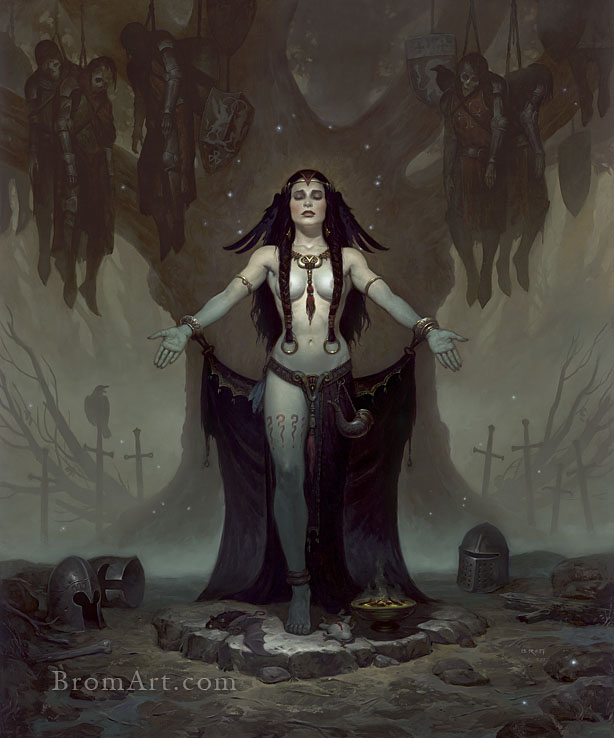
An interview with Gerald Brom

554479_2793584082699_735519890_n

Born in the deep dark south in the mid-sixties. Brom, an army brat, spent his entire youth on the move and unabashedly blames living in such places as Japan, Hawaii, Germany, and Alabama for all his afflictions. From his earliest memories Brom has been obsessed with the creation of the weird, the monstrous, and the beautiful.

At age twenty, Brom began working full-time as a commercial illustrator in Atlanta, Georgia. Three years later he entered the field of fantastic art he’d loved his whole life, making his mark developing and illustrating for TSR’s best selling role-playing worlds.

He has since gone on to lend his distinctive vision to all facets of the creative industries, from novels and games, to comics and film. Most recently he’s created a series of award winning horror novels that he both writes and illustrates: The Plucker, an adult children’s book, The Devil’s Rose, a modern western set in Hell, The Child Thief, a gritty, nightmarish retelling of the Peter Pan myth, and his latest concoction, Krampus, the Yule Lord, a tale of revenge between Krampus and Santa set in rural West Virginia.

Brom is currently kept in a dank cellar somewhere in the drizzly Northwest.There he subsists on poison spiders, centipedes, and bad kung-fu flicks.When not eating bugs, he is ever writing, painting, and trying to reach a happy sing-a-long with the many demons dancing about in his head.

Lost Note

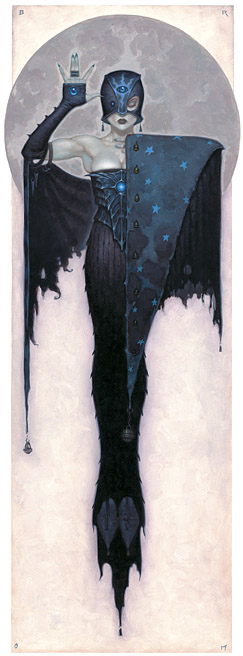
Lost Note

I know you were born in Georgia, being the child of an enlisted did you get to spend much time growing up in the South?

Sure did. About half my life in such places as Georgia, Texas, and Alabama. My grandparents lived a very self-sufficient rural lifestyle. It’s very sad to see their way of life fading away.

What was it like to live in various places all over the world? Do you  think the culture of other lands fed your artistic visions?

Most certainly. Experiencing other cultures opens your mind up and feeds your imagination.

What were you like a kid? What did you draw most back then? I know you’ve said you where always an artist. Why do you think art has always beckoned you?

I was a handful. Always into mischief. Some things never change. When I wasn’t getting into trouble I was drawing and writing, making books with magic markers, notebook paper and staplers. Same darnn thing I’m, doing now, but with a computer and oil paints.

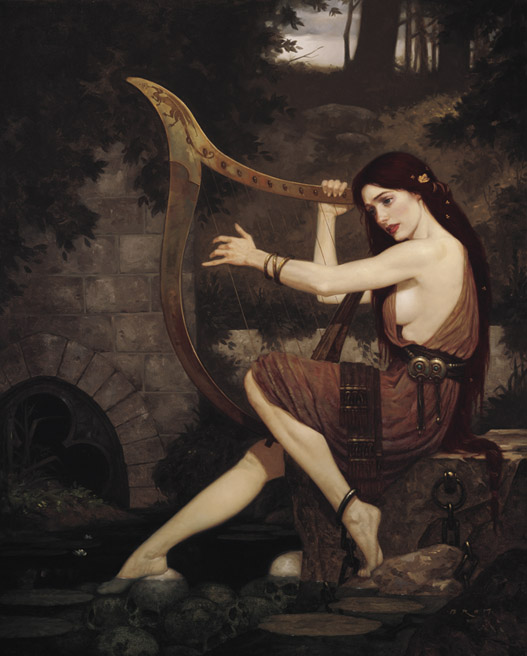
Moonlight

Moonlight

When did you first know you had to be a professional artist?

Always knew art was my calling. The reality that I might be able to be paid to do it didn’t really set in until my late teens.

Your work is rather…dark. Why do you think that is?

It is simply the aesthetic I am drawn to. All the inherent drama is interesting and so very seductive.

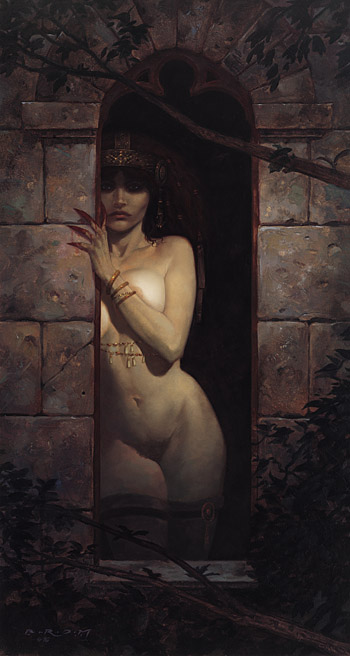
Nostalgia

Nostalgia

On your site you mention a happy sing-a-long with the many demons dancing about in your head. Do you find the idea of demons and the whole good/evil thing appealing? Why do you think people have always been fascinated by such things?

We are fascinated by the things that scare us. My muses come in many guises. I have demons, and angels, and impish goblins singing in my head. Sometimes in chorus, but most often in chaos. Keeps things interesting.

What does it feel like to see your work featured at some of the top companies in the world? Did you ever imagine as a child you’d be doing that?

It’s always a thrill. No, as a child I never imagined I would get to paint professionally, yet at the same time I never imaged doing anything else.

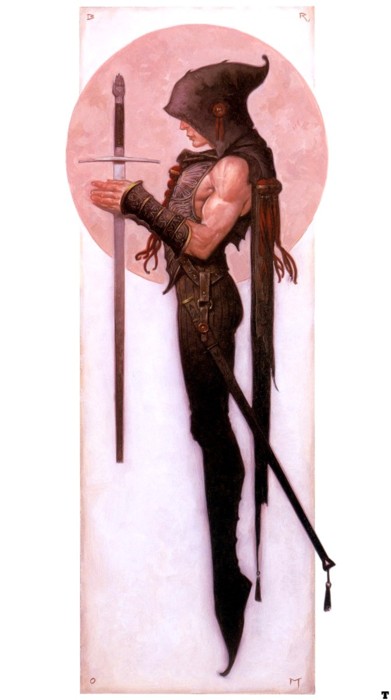
Radiance

Radiance

What does it feel like to make a living doing what you love?

It cuts both ways. I am very fortunate to be doing work I love for a living, but also, it can sometimes make you despise the thing you love as you often have to work under such pressure, or compromise your vision to fit someone or something else’s.

What led you try your hand at illustrated novels?

I’ve always consider myself as a story teller, with pictures or with words, so it seems natural two combine the two.

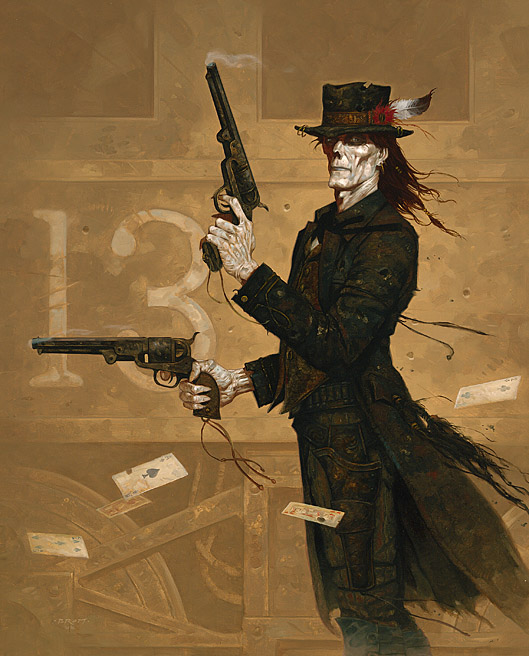
Gunslinger

Gunslinger

How has your outlook on things changed most do you think since you have became a parent yourself? Do your children admire your talent? Do you enjoy drawing with the kids?

Children make it very hard for me to be the selfish, self centered, ego-centric artist that I want to be. My children both seem to appreciate what I do for a living. As kids they spent many an afternoon drawing with me in the studio. Now they are both in creative fields making their own art, one with game design, the other with music. Their mother is an artist as well, and I feel the creative gene is often passed along.

How do artists make the transition of images in pencil/ink to paint? I’ve always been enthralled by that entire process. How does it…come about?

Every artist has their medium. For me paint comes easy, ink on the other hand is a struggle.

Shade Blue

Shade Blue

I know you have said you’d like to work more in horror. Who are some of your favorite authors in the horror genre?

Stephen King, Clive Barker, Cormac McCarthy, Anne Rice.

Did you have any favorite horror films or character early on?

Vampires have always struck a vein with me.

Miss Muffet

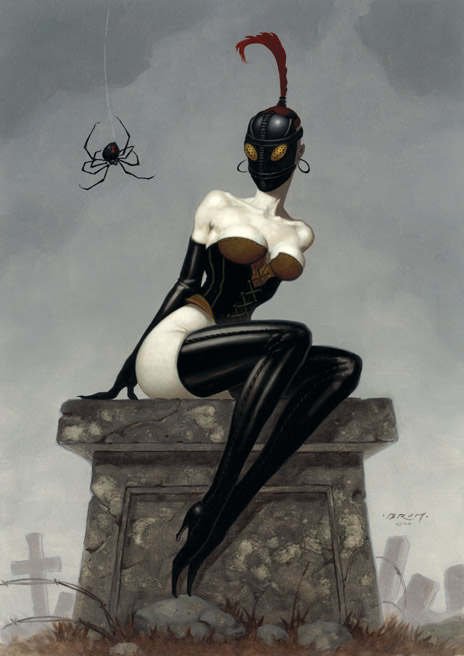
Miss Muffet

What is the scariest memory you hold?

Being impaled through the heart with a wooden stake. Fortunately I managed to turn into a bat and fly away just in the nick of time.

What projects are you working on at the moment?

My latest novel is Krampus, the Yule Lord, about an ancient pagan demon coming to reclaim his holiday from Santa Clause. Also, just finishing up a new art book. You can find all the details on my website: www.bromart.com

Krampus

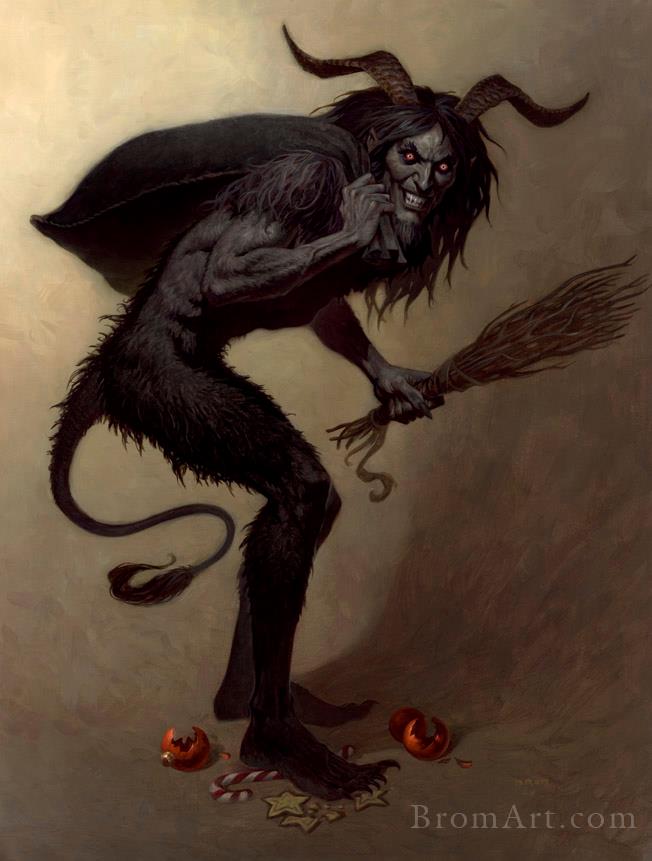
Krampus

Red Wing

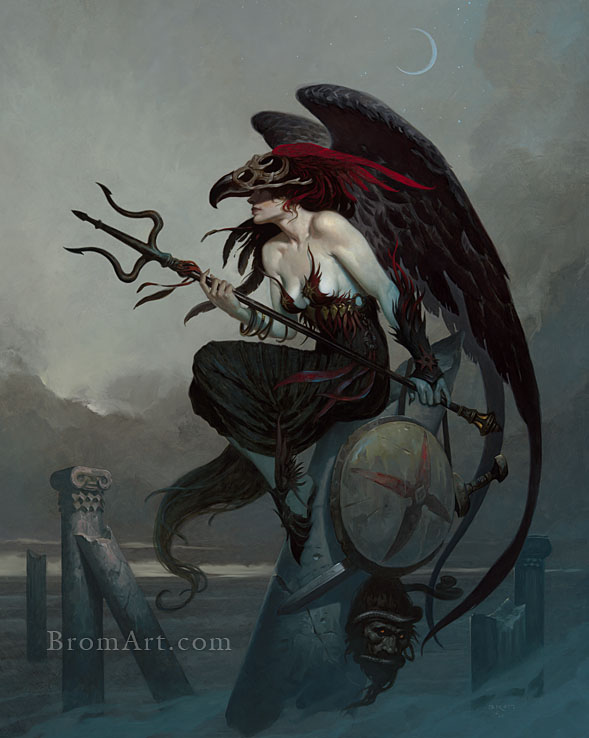
Red Wing

Morgan Le Fay

Morgan Le Fay

An interview with the late Rick Hautala

Yesterday the world lost not one of it’s most talented writers but one it’s most kind and compassionate souls with the passing of Rick Hautala. With the permission of his wife Holly I am reposting this interview as my way of paying of respects. My hearts goes out to his friends, family, and loved ones during this very trying time.  I would also like to take this time to invite his peers to leave a comment or memory if they should wish in our comments section. ~Tina
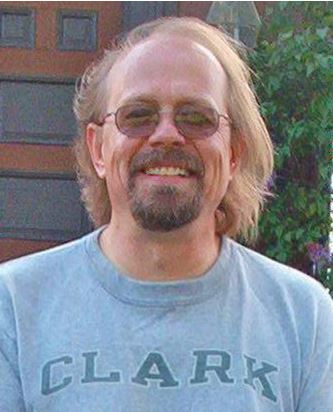
All photos by Holly Newstein-Hautala

All photos by Holly Newstein-Hautala

Rick Hautala is without a doubt one of the best known names in the horror and speculative fiction genres. He has written over 30 novels and numerous short stories (with some of the stories appearing under the name A.J. Matthews). He graduated from the University of Maine with a Master’s degree in art in English literature. Rick is also a screenwriter. He was also a trustee and vice president of the Horror Writer’s Association. The book Occasional Demons, out now from CD Publications, features a collection of his short stories, enhanced by the artwork of Glenn Chadbourne.

You chose writing as way to vent your artistic cravings for art. Do you ever think you might try your hand as an artist? Why do you think you enjoy the work of N.C Wyeth as much as you do? What others artists appeal to you?

I like to make a distinction between being an “illustrator” or an “artist” the same way I distinguish between being a “writer” or an “author.” Writers and illustrators are the blue collar types who treat their art like a job.  They don’t wait for inspiration. They don’t like having written (or painted).They roll up their sleeves and get to work, assuming that when inspiration comes, it won’t do them any good if they’re not at the keyboard or easel.

So I have always been drawn to illustrators like Wyeth and Frazetta and Krenkel and so many others artists who tell a story in their painting or drawing, who have life and energy and flow. Sure, a still life or something surrealistic can be interesting and attractive, but I look for story everywhere. And I started writing when I realized that I could do with words what I struggled to do with paints.

I dabble in art from time to time, but I don’t see myself painting or drawing seriously in the near future. Sure. If someone pays a million dollars for a screenplay or something, I might take some time to paint, but until then, I’m more than satisfied working in the medium of words.

What was it like to write the screenplay for The Ugly File which was based on a short story by Ed Gorman? Are you a fan of his work?

I’ve known Ed for going on thirty years, now, and consider him one of my best friends in or out of the writing business. And yes, I’m a huge fan of his work. He’s a versatile writer who can slide smoothly between genres or mix genres without mucking things up. Anyone who hasn’t discovered his work is missing out on some of the best writing being done today. When Mark optioned the story The Ugly File, I was at first intimidated. I didn’t want to screw with Ed’s work, but the demands of screenplay writing were such that I had to change things around some. I was (understandably) nervous about Ed’s reaction, but Ed’s a pro and understands that book and script are two different media, and they have their own demands. He was totally accepting of the changes I made to the story, and I’m proud to have my name associated with him.

You also write short stories. Is there any one of them that stands out most in your mind? Would you rather write those or novels?

Given a choice, I would rather write screenplays. I don’t know what it is about them, but they seem to roll out of my mind a lot easier than a short story or novel. All writing takes effort. Don’t misunderstand. But we’re also “playing” when we write. If it isn’t fun, don’t do it. If you don’t have fun writing, how can you expect your readers to have fun reading your work?

When ideas come, it’s usually because I’ve been thinking, Okay, now I have to come up with a new idea for a book or story or movie. I use short stories to exercise my voice and style (whatever that means!). I take more chances in short stories first, so then maybe I can use what I learned in a novel. Does that make sense?

I’ll always write stories, novels, and scripts. It’s what I thrive on.

Why do you think you do most of your writing in the horror and speculative fiction genres?

My mind tends toward the dark side of things. I’m not sure why. Just the way I am, I guess. Some people regard me as cynical and depressed, but I don’t see myself that way. I honestly don’t. I think, if anything, I’m a frustrated romantic who really does want to see the best of life, the positive aspects of people, but the world and nighttime prove me wrong all the time.

The light casts shadows, and I’ve always been drawn to the shadows, the things at the edges of our awareness.

Did you have a favorite scary tale as a child?

I used to scare myself silly, reading stories and seeing movies I probably shouldn’t have seen. One movie that scared the be-jezus out of me was Darby O’Gill and the Little People. Don’t laugh until you see it as an adult. The whole banshee thing, and the ride in the Death Coach were too intense for me, and I loved it! Of course, now that I write it’s like a magician who can see how another magician is doing the tricks. It takes a lot of skill to draw me into a story so much I shut off my critical thinking. I get frustrated that I read like a writer now, analyzing story and character and style as I go. It’s sad, to me, that I don’t get lost in the story the way I did as a child. I haven’t lost my sense of wonder, but it takes a helluva writer, like James Lee Burke or Harry Shannon, to make me forget I’m holding a book and reading. I love slipping into someone else’s world, but more often than not, I’m busy creating my own worlds for readers to slip into.

All photos by Holly Newstein-Hautala

You have said when you finished writing Over the Top and read it you cried because it made you feel and remember. Can you elaborate on that? What is it like to write a story that just gets to you?

Well, after I had written Over the Top, I knew it was a cool enough story, but it took a friend of mine, Chris Golden, to read it and tell me it was clearly about my empty nest feelings when Matti, my youngest, first went off to college. The story deals with having to let go of the thing you love the most, knowing it will never be the same when (and if!) it comes back to you. When it comes to raising kids, there’s a point where you have to let go. And that’s hard. You spend your adult life, trying to protect and nurture your kids, and then they grow up and you can’t do that anymore. You can be there for them, but you can’t protect them from this son-of-a-bitch of a world. So Over the Top dealt with that in, I hope, an effective way, but when I wrote it, I honestly didn’t know what I was writing about. I thought I was just telling a story.

What made you decide to use a holographic cover for Night Stone? Was it nice at the time to have one of the first holographic covers grace your work?

The hologram wasn’t my idea. It was marketing at the publishing house that decided to do that. It was nice, in the sense that the gimmick sold a ton of books, over a million copies. (I wish I had those numbers with my other books!) So yeah, it was cool, but my publisher began to treat Night Stone like it was only the cover that was important, that people were buying the book because of the cover, not my story. So (like all of life to me) the experience was bittersweet. When Little Brothers, the follow-up book without a hologram, didn’t sell anywhere near as well, the publisher lost interest in promoting my work, and things started going downhill after that.

Where does your inspiration come from do you think?

Inspiration comes from everywhere, but the key is asking the old chestnut question “What if?” Of course, I pay attention to my dreams, and I spitball all the time, tossing ideas around in my head and talking  to people, but ideas aren’t so hard to get. They’re everywhere. It’s developing them enough and letting them grow so you know you will have enough for a story or a novel or a screenplay that’s the trick. I read a lot, too, of course. All writers and aspiring writers should. But I’ve been told that I have a wild imagination. I don’t see it. I feel creatively inferior to writers like Chris Golden and Matt Costello and Stephen King and so many others. I consider myself someone who’s simply plodding (plotting) along.

Do you ever suffer from writer’s block? If so, how do you deal with that?

I used to joke that I couldn’t afford to suffer from writer’s block. That’s what authors do. Writers say to hell with writer’s block and write! That’s what I try to do, too. Sure, there are days when the words don’t flow, but I stay with the computer (I work on a lap desk with a laptop in a Morris chair in the living room) until I get my quota (2,000 words) for the day. If it takes two hours, cool. I can go outside and smoke a cigar and read. If it takes eight hours, that’s fine, too. That’s what I’m there for, to do my damned job.

Also, I have so many ideas cooking at various stages of development that it usually becomes a simple matter of deciding what to do next and diving in.

Simple truth: Writers write. I can’t stand writers who hate writing but like having written. I enjoy the process. If anything, I suffer some postpartum depression after I finish a book or scripts.

What can your readers expect from the book Occasional Demons? Why did you decide to feature the artwork of Glenn Chadbourne in that?

Glenn’s the best artist going, and it wouldn’t be a story collection or novella from me if it didn’t have Glenn’s artwork. I joke with Glenn that my stories are included simply so there’s something separating the illustrations because no one could handle the intensity of seeing that much amazing artwork all at once. I gave Glenn his start with CD Publications when he illustrated Bedbugs, and I’m sticking with him. Don’t misunderstand. I think there are plenty of great artists working today. Cortney Skinner, Alan Clark, Keith Minnion, so many others, but Glenn seem to capture an essence of my stories that I dig seeing, so I’m sticking with him.

The book is a collection of stories ranging from my second published story to the most recent as of the delivery date. There’s a wide range of subjects and styles. Mostly, it’s me playing with idea and words.

Where did you come up with the idea for that title? Do you believe in Demons in any form?

I stole the title from the Jethro Tull song of the same title. The verse goes, “All kinds of animals come in here, occasional demons, too.” I like it because it hints at something subtle and sinister.

Do I believe in demons? No. Not literally. But I think there are psychological demons haunting us all. We’re equally devils and angels, each one of us. And my hope is, as a species, we listen to the angels more than the demons. I’m doing this interview a few days after the terrible shootings in Tucson, so well, you can imagine that my hopes for us are at a high point.

You have worked with or met a lot of great authors. What is the best advice any of them ever gave you? And who was it from?

There are so many things I’ve learned from so many people I hate to start listing them because 1) I’ll probably forget key ones and 2) this interview will turn into a book (if it hasn’t already, I gab so). Here are a few, but while I’ll attribute the author but paraphrase:

Kurt Vonnegut: Start as close to the end of the story as you possibly can

F. Paul Wilson: Have a terrific beginning and a great ending, and have them as close together as possible.

Harlan Ellison: Becoming a writer is easy. It’s staying a writer that’s hard.

William Relling: Always have your characters disagree, and have them answer a question with another question to keep the tension high.

Henry David Thoreau: Simplify, simplify, simplify.

Is that enough? Everyone has to find their own way with their writing. There is a lot of great advice out there, but there is a lot of harmful advice, too. Some writers, especially after they achieve success doing things their way, then treat their way of writing as the only way to write. There are as many ways to write as there are writers. Do what works for you and gets the story finished and into readers’ hands.

What advice would you offer aspiring writers in today’s tough market?

I’d give the same advice I gave when I was interviewed after my first novel was published. Work to develop a thick skin and sense of humor because you will need both. Learn basic vocabulary. If you don’t know the seven rules of comma usage, learn them; understand them. It amazes me that some writers don’t know what the four basic sentence types are and don’t know how to write and punctuate correctly. We have grammar for a reason, folks, to communicate.

See? There, I did it. I may have given some advice that may be as harmful as it is helpful, but bottom line, don’t be ignorant. Stupid can’t be helped. Ignorant can!

Ultimately, I’d like to write a ghost story where the ghost doesn’t appear, like The Haunting of Hill House, a story where the “haunting” is all inside the character’s head, or is it?

What do you like to do in your spare time?

I like to smoke a good cigar on my deck in the afternoon (yes, even in February if the sun’s out). I like to drink a good, hand-crafted beer (no more than one with supper). I enjoy making bread. I love drinking rum under a palm tree in the Caribbean (when can I retire to St. Kitts?). And I enjoy board and video games, but mostly I enjoy reading. I could read a book a day and not read everything I want to read. Fiction and non-fiction alike sweep me into other worlds, and I love it.

What one thing would most people be surprised to learn about you?

Wow! That’s a helluva question. Probably that I am a lot more sentimental than I appear. I cry or at least mist up easily. I think it’s from raising children and hoping they fare well in this nasty/beautiful world of ours. I cried when Lassie came home. I cried when Old Yeller had to be shot. I cried when Bambi’s mother was shot, at the end of Cujo and when I finished Beth Massie’s book Sineater. And I cry whenever there’s news about innocent people being killed or exploited by the vicious, evil people in the world. Yeah , I’m a romantic, sentimental (with emphasis on the mental) kind of guy.

You have a lot of projects on your plate right now. Which of them would you most like to tell your readers about at this time?

Mark Steensland and I were hired by Paradox entertainment to write a script of the Robert E. Howard story Pigeons from Hell. (Yeah, the guy who created Conan the Barbarian.) We’ve delivered the second draft, and I have fingers and toes crossed that this film will actually go into production. I think it would be a hit. Seriously. So if anyone has any influence on the production company, come on. Let’s make it happen.

For books, I have a mainstream novel titled The Cove which has not found a home after two years of circulating. It’s not genre. As I told my agent, it’s just a novel. People who read it say ten years ago, there would have been a bidding war for it, but now, all people want are James Patterson novels or franchise books. A lot of my memories of growing up in a small seacoast town went into the book, and it pains me no end that it hasn’t found a publisher. I’m not the most objective person when it comes to this book, but I think it would gather a large readership, given publication and the right kind of push, we’ll see.

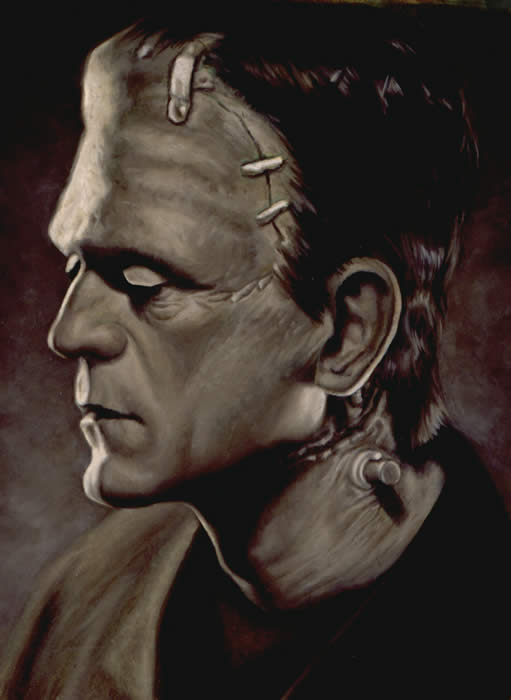
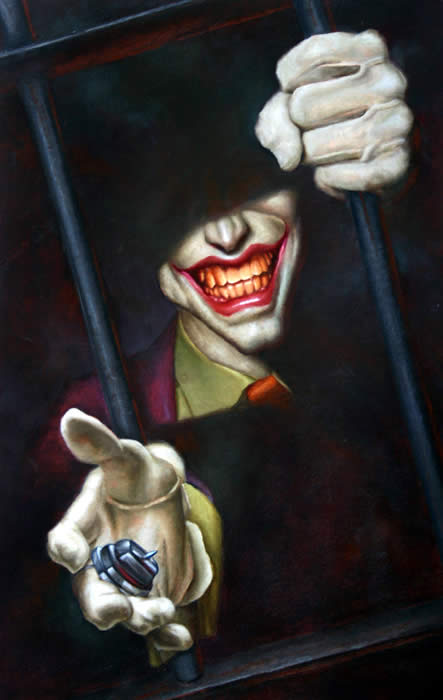
An interview with Mark Romanoski

Frankenstein

Frankenstein

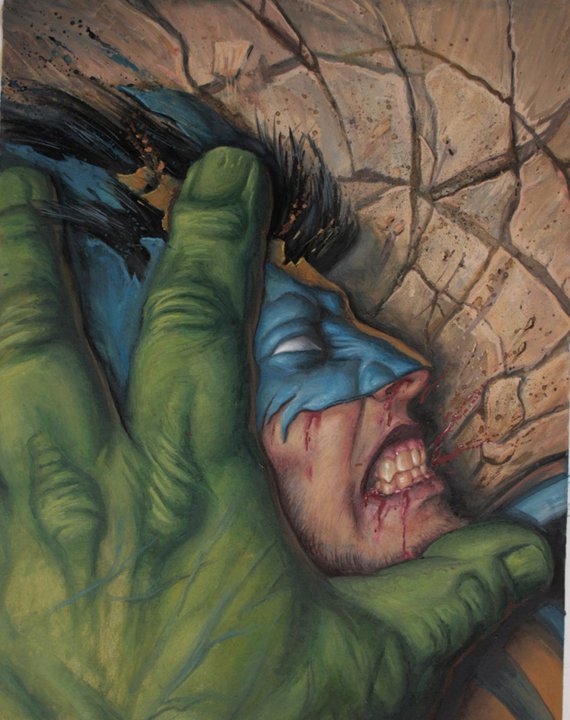
Mark Romanoski has created works of art featuring some of the most iconic characters of our time from Batman, The Joker, The Incredible Hulk, Spiderman, to his lavish renderings of the classic movie monsters. His work has appeared on Magic the Gathering, World of Warcraft, Harry Potter, and at W.W.F. His oringinal works appear in the offices of Warner Brother Studios as well as the W.W.F Corporate Headquarters. He recently he designed an altar piece for the Church of Saint Joseph depicting the death of Joseph. Mark also released his own line of Novelty Tees called Pick Up Your Dead featuring zombies with pickup lines. He creates worlds of fantasy and horror that offer fans of his work some much needed escapism.

http://www.mark-romanoski.com/

Years Ago

Years Ago

What was it like growing up in New Jersey?

I’m a Jersey guy. I love New Jersey.

As a child were you always drawn towards fantastical things?

As far back as I can remember I loved fantastical things, dragons, superheroes, etc. Before they were called actions figures(Laughs). I had all the Marvel toys growing up. They were crude held together with rubber bands but they were great. It allowed my imagination to create the rest of the world I lived and played in. I wished I still had them, they would be worth a small fortune now.

Captain America

Captain America

Why do you think people have always embraced such things? Do you enjoy having the chance to offer people some much needed escapism?

I think you nailed it on the head. Escapism is probably the main thing . As we get older I think seeing these things, in a piece of art, a comic book, or a movie on some level, automatically brings people back to their childhood when things were just a little simpler and more optimistic.

Are there any little known facts about yourself that most people aren’t aware of?

I’m a Led Zeppelin freak. I mean like geek level knowledge. Still have all my posters, tee-shirts, and all of that.

Lets Shake On It

Lets Shake On It

You have been mentored by such great artists as the Hildebrandt Brothers, Peter Caras, and Joe DeVito. What did you learn from each of them? Did you ever imagine as a child you would have had the chance to do all of that?

I’ll answer the first half of the question first. Did I think I would ever have the chance to do all that. Absolutely no. If you had magic glasses you could put on and watch me at my easel you would still just see a 10 year old kid who is just trying to color within the lines just trying to get it right.

I’ve always told people if you were to cut me open artistically four people would fall out. Joe , Peter and Tim and Greg

Joe DeVito taught me 85 percent of the knowledge of what I know. After leaving Joe I had all this knowledge of drawing and painting , Peter Caras sat me down and one by one little by little helped me develop the hand eye mechanics and to make sense of it all. Tim and Greg taught me how to apply and use it in a professional career. What an honor to be taught by one let alone all four. That’s probably why I teach. I realize how fortunate and grateful I am for the opportunities that have been presented to me. I also have to name a fifth Jean Scrocco. A dear friend and former business agent. Jean is one of the best in the business. She’s Greg’s wife and has managed his career for most of his life. Agents are the people you hardly see or hear about. Jean was tremendously instrumental in launching my career and has taught me many lessons on the “Business of Art”. They all started out as Mentors and have become friends almost family like. I told them all the best way I can pay them back is to use what they have taught me and I’m still just trying to get it right.

167251_197043343644874_6326136_n

Do you enjoy having the chance to portray characters that appeal to all ages?

Yeah I love what I do. I’m turning 44 next month but at heart I’m still just a big kid who’s just trying to get it right. It may be life, art or whatever. The important thing is to approach it with a childlike optimism and notice I said childlike not childish. There’s a big difference.

Altar piece at St. Joseph's

Altar piece at St. Joseph’s

What was it like to create the Altar piece for St. Joseph?

Creating the Piece for Saint Joseph’s was great. I love religious iconography. The painting was done in memory of my father who past away several years ago. It bears a plaque “In Memory of Joseph Stephen Romanoski” under the painting. It truly was an honor.

Do you consider yourself religious?

My immediate answer would be yes. As I get older I find myself being more and more drawn to religion and Spirituality. I have had too much stuff happen in my life to not believe in something beyond my five senses.

69673_611907032158501_2004801511_n

How have things changed most for you since we spoke last?

I had taken some time off and didn’t work for about a year. I would not recommend it for everybody but for me it was a good thing. Currently I’m more inspired and doing some of my best painting.

What advice would you offer others who may be struggling with life for whatever reason?

Just keep the faith that this too shall pass.

mromanoski1

Are there any of your works you consider your favorite?

I’ve learned a lot from Greg Hildebrandt and he and I have very similar personalities and philosophies. He used to always say that his favorite piece is what is in front of him at that moment. That is what has full attention at the moment. Then it’s done and on to the next one that has all attention. I ‘d have to say the same thing of the one on my easel right now.

Joker

stilllife_000

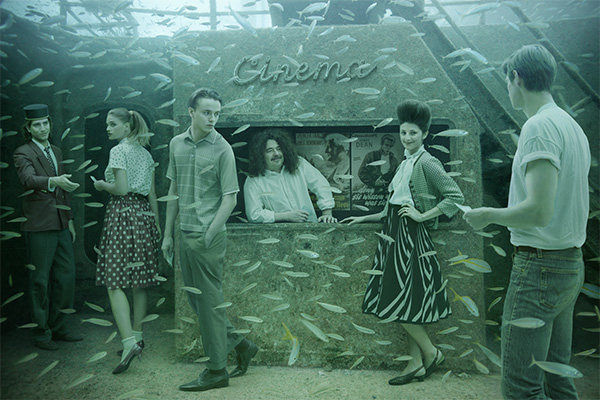
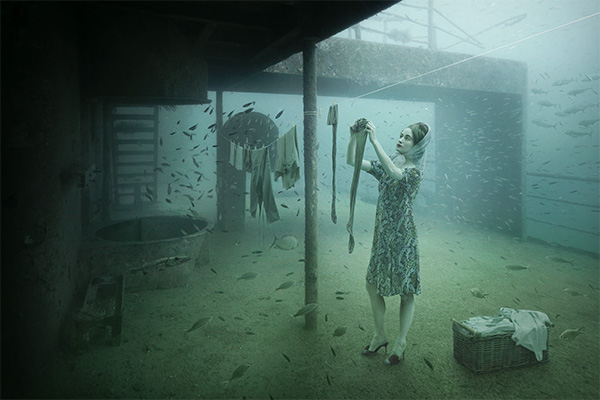
The photography of Andreas Franke

slide_03

Andreas Franke is in the business for more than twenty years. For Luerzer’s Archive he is among the “200 Best Photographers.” He’s worked for great brands like Ben & Jerry’s, Coca-Cola, Ford, General Electric, Gillette, Heineken, Nike, Visa or Wrigley’s. His still lifes and his surreal effects are famous.

In his pictures every little detail is planned precisely. There is no space left for fortuity.

Andreas Franke is a traveler. He travels through the world and between the worlds. His job frequently leads him to several countries on several continents. So does his passion the scuba diving. In his pictures Franke crosses the borderlines between fantasy and real life.

For more information on his work please see: http://www.thesinkingworld.com/

slide_11

slide_08 (1)

slide_01

slide_05

slide_02

slide_02 (1)
slide_06
slide_08

“The Glass Is Half Drained” by JB Mulligan


The Glass Is Half Drained

air   objects   landscape  lightscape
all thicken   viscous tightenings
serpents of the lost and urgent things
encircle    no way or wish to escape
as blood slows and clots in mudclusters
so magmatic once   steam and bubble
skymansions fallen to piled rubble
that a stifled sneeze might disperse
the dreams are all now memories
of what didn’t happen   but what did
is enough    through the clean and well-lit time
to begrudge a smile to    a nodded
respect that nightshadows screech at as they climb
up into roomcorners   chatter like monkeys

4-1-00 2'05'17 PM

JB Mulligan has had poems and stories in several hundred magazines, including recently, Angle, The Kerf, Loch Raven Review, Turbulence, and Shot Glass Journal, has had two chapbooks published: The Stations of the Cross & THIS WAY TO THE EGRESS, and has appeared in multiple volumes of the anthology, Reflections on a Blue Planet as well as the anthology, Inside/Out: A Gathering Of Poets.

An interview with Del Shores

delshores

Photo by Rosemary Alexander

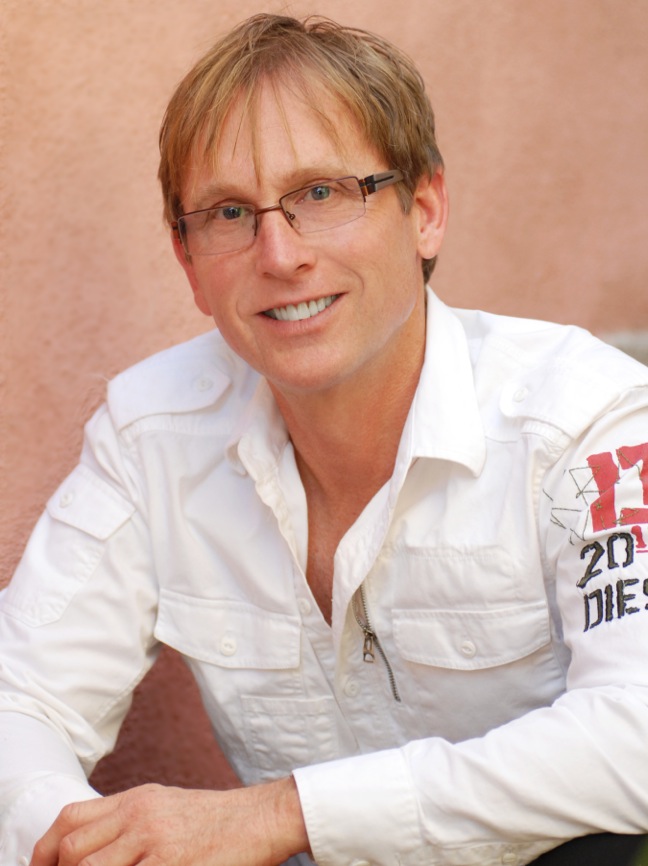
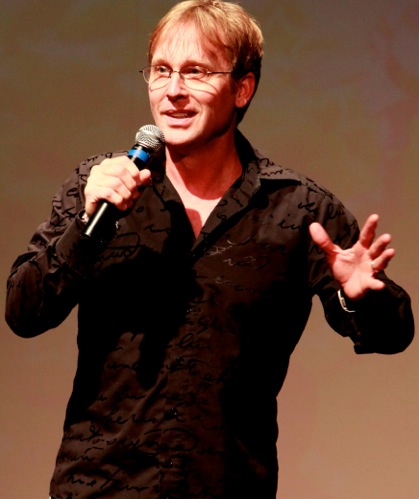
Texas native Del Shores has worked as an actor, playwright, as well as a producer and writer of television and film. He has brought the public such shows as Sordid Lives, Dharma & Greg, Queer as Folk, Ned and Stacy, Touched by an Angel, and Maximum Bob. His work as a playwright has won him countless awards. His films Daddy’s Dyin: Who’s Got the Will? and Sordid Lives offer up a delightful look at life in the South. Shores work on Sordid Lives offers up a glimpse at the lesbian, gay, bisexual, and transgender society in a way few could. It was my honor to have the chance to offer up this interview and show the man behind the work.

What was it like growing up in Texas?

I had a great childhood, crazy, fun relatives, raised in the church and theatre. Dad was a Southern Baptist preacher, Mom was the high school drama teacher.

Do you think the early influences of your life from there have played a major role in who you are today?

Of course!

What were you like as a child?

 I was a big fat liar. Harmless ones. My mother encouraged me to tell “stories”. Wild tales. I think that’s why I became a writer.

What first inspired you to become an actor?

The influence of my Mom, I suppose. She had me reading plays, watching her rehearsals from the time I was six. I was hooked!

Del Shores Credit Alan Mercer 06

photo by Alan Mercer

Do you find your life in the South came in handy when writing Daddy’s Dyin and Sordid Lives?

I couldn’t have written them without growing up in Texas. Daddy’s Dyin’ was loosely based on my mother’s family and Sordid Lives was of course my coming out story – Ty and Latrelle, me and my mom.

Both shows seem to feature rather close families. Do you think family is an important thing to have?

Yes, of course. They are our foundation and reflect our “sum” in so many ways.

When doing Sordid Lives did you enjoy offering viewers a much more open minded view of the lesbian, gay, bisexual, and transgender communities?

Yes

Do you think society as a whole has become more open minded in regards to such things?

Yes, people coming out, putting a face on gay has had a huge positive reaction. The haters will die out and the new generation will take care of the damage that we’ve seen.

Why do you think there has been such a stigma on that?

Mainly, frankly, because of the church. The Bible has been used as a tool to justify hate and homophobia.

del shores (Gay Press) Credit Alan Mercer

Image for Del Shores: Naked. Sordid. Reality. Photo by Alan Mercer (Gay Press)

How does you work as a writer differ most from television to film?

TV is more controlled by the networks, by the buyers – at least in my career, because I have had more independent films. So, my stories are more “mine” in film and theatre.

Do you prefer one over the other?

No, they all have their benefits. I certainly prefer the money in TV, but enjoy the freedom and control of my storytelling in film and theatre.

Is there any one television show you have enjoyed working on more than the others? If so why?

I loved working on Queer As Folk and Sordid Lives: The Series the most. QAF was just fun, fun, fun and a great team of writers. Sordid was mine and LOGO allowed me the control I like.

You have also won countless awards for your work as a playwright. What does it feel like to have your work acknowledged in such a way?

I’m always stunned and appreciative!

photo by Alan Mercer

photo by Alan Mercer

Did you ever imagine you would be doing what you are career wise as successful as you are?

I never planned for failure, so I’ve enjoyed the journey and am grateful!

How do you think becoming a father changed your outlook on life most?

Huge! You are responsible for the livelihood of amazing children and must grow up! I’ll never be a conventional father, but the influence in my work, my life and how I have lived has been massive.

Are there any little known facts about you that you’d not mind sharing with our readers?

I can tell you who sang almost any song and how it charted from around 1972 to 1985.

photo by Bryan Putnam

photo by Bryan Putnam

What was the best advice anyone ever gave you and who was it?

Be honest with yourself and don’t let anybody tell you that you are less than. I’ve told my children this and so many other young people – especially gay kids struggling with family and the church.

What do you think is the most important thing to remember on the journey called life?

Oh that’s too broad. There would have to be a list!

What projects are you currently working on?

I’m enjoying my tour Del Shores: Naked. Sordid. Reality. and I’m in preproduction on a film version of the play Southern Baptist Sissies. Also, a mockumentary called The Happy Holloways, about a gospel music singing family.

Anything you’d like to say before you go?

Life is good these days! It’s been hard after the divorce, but it does get better.

http://delshores.net/

“Stopover in Rome on the Way to Buenos Aires” by Arturo Desimone

Stopover in Rome on the way to Buenos Aires

Today Rome, proud and ugly and vulgar Minerva,
first feminist woman of power, upon her back I step
Rome was some scenery
made of grub and robbery

my father had been a Roman arena-master once when he had mobster balls
and paid no bills, a prince wearing ivory keys from pianoforte with force
but Rome was some scenery
and I was an Arab Israelite, I was a son stolen by Lot’s wife
a son of hitchhiker Hajar a son who looked back.
Rome under my foot soles, two crying-child feet
bent and crumpled into the shape of beans, 18 hours

Rome was some scenery
its ancient temples where augurs stood
reading the fates and gourd like St Helen of Troy
in the intestines of the birds, origin of
seeing the future in starch-foods, practiced
by cabals of old bald women, jazz musicians and pimps
cleaned off ancient bridges and streets

Rome was some scenery and
I need to pull birds finally down from
grapefruit trees,
rooftops, from hands of children
and off the heads of old fools and madwomen
who want to tell me their failures provided wisdom
and advise me on politics, life, economy of prose and wine-wet crumbs
and I need to crack open the bodies of the birds
before the police arrest me, rushing over the body of beggars
to arrest me.

shoe-crushing over the peanuts in the bellies of the beggars and hobos
to stop my hands of cruelty and oppressive love
I split apart a bird-husk NOT as a child splits radios to seek
the origin of song of songs for I know it is neither in organs nor
to be found in deadness,
I crack its hyperbole-electric song-husk apart, as the tourists eat at terrace,
to force myself to look to the future

my mother was the idiot, the nameless wife of Lot,
weak woman who fed me her salt of regret
and of looking back

from her breast marked with a golden David Star
my father did not know he the groom was supposed to
break this jewel hex-star of girl on their wedding night,
a non-jew, a half-Indian bumpkin dressed in a cosmopolite suit
Paraguayan bumpkin didn’t know what a man does with a woman until
he saw forbidden movies in the 1970s Buenos Aires underground cinema

howl bodies vapor-mourn with police tear gas/ the usher Don Altermann screams like a cantor
at hearing police prayers:
Somos la policia, para! / Haga patria Mata un judio*
*(“we are the police, halt! Make fatherland, kill jews” junta era street-orison)

I must rip the doves from the hands of Italian nuns
who stoop to horn-faced still-extant lepers and beggars
proud race that survived the teeth of progress and Western medicine
on the bridge of trastevere, and tear open birds
to open up my eyes to Lucia future,
for I had too many regrets already at ages 11, 12 and 15

as parents snored heavy with whiskey in the airco dark, with la-vida-es-un-sueno-y-los-suenos-suenos-son
the red electricity-genie of alcoholism, playmate, only friend at night lighting up my room with stories
jumped in through window with verse and gifts smuggled on crying

Arturo sea 2

Arturo Desimone was born (1984) and raised on Aruba, to parents of immigrant origins foreign to the island. He emigrated to the Netherlands at the age of 19, and decided to leave Amsterdam after some years. Since then he has lived on the road, between Poland, (post)revolutionary Tunisia, and Greece, an arrangement better enabling writing and drawing. At the moment he is based in Buenos Aires, Argentina, his grandparents’ hometown. His poems and stories have been in Horror Sleaze Trash, Unlikely Stories, at the blog A Tunisian Girl and are forthcoming in Hinchas de Poesia. His drawings have been exhibited in Krakow, Paris, Trinidad and Tobago Erotic Art-week and Amsterdam and on the cover of the Journal of Deleuze Studies.


“I Have a Dream” by Martin Luther King, Jr.

Martin Luther King Jr

I Have a Dream
Martin Luther King, Jr.    August 28, 1963

I am happy to join with you today in what will go down in history as the greatest demonstration for freedom in the history of our nation.

Five score years ago, a great American, in whose symbolic shadow we stand, signed the Emancipation Proclamation. This momentous decree came as a great beacon light of hope to millions of Negro slaves, who had been seared in the flames of withering injustice. It came as a joyous daybreak to end the long night of captivity. But one hundred years later, we must face the tragic fact that the Negro is still not free. One hundred years later, the life of the Negro is still sadly crippled by the manacles of segregation and the chains of discrimination.

One hundred years later, the Negro lives on a lonely island of poverty in the midst of a vast ocean of material prosperity. One hundred years later, the Negro is still languishing in the corners of American society and finds himself an exile in his own land. So we have come here today to dramatize an appalling condition.

In a sense we have come to our nation’s Capital to cash a check. When the architects of our republic wrote the magnificent words of the Constitution and the Declaration of Independence, they were signing a promissory note to which every American was to fall heir.

This note was a promise that all men would be guaranteed the inalienable rights of life, liberty, and the pursuit of happiness.

It is obvious today that America has defaulted on this promissory note insofar as her citizens of color are concerned. Instead of honoring this sacred obligation, America has given the Negro a bad check, a check which has come back marked “insufficient funds.”

But we refuse to believe that the bank of justice is bankrupt. We refuse to believe that there are insufficient funds in the great vaults of opportunity of this nation. So we have come to cash this check, a check that will give us upon demand the riches of freedom and the security of justice.

We have also come to this hallowed spot to remind America of the fierce urgency of Now. This is no time to engage in the luxury of cooling off or to take the tranquilizing drug of gradualism.

Now is the time to make real the promises of democracy.

Now is the time to rise from the dark and desolate valley of segregation to the sunlit path of racial justice.

Now is the time to open the doors of opportunity to all God’s children.

Now is the time to lift our nation from the quicksands of racial injustice to the solid rock of brotherhood.

It would be fatal for the nation to overlook the urgency of the moment and to underestimate the determination of the Negro. This sweltering summer of the Negro’s legitimate discontent will not pass until there is an invigorating autumn of freedom and equality. Nineteen sixty-three is not an end but a beginning. Those who hope that the Negro needed to blow off steam and will now be content will have a rude awakening if the nation returns to business as usual.

There will be neither rest nor tranquility in America until the Negro is granted his citizenship rights. The whirlwinds of revolt will continue to shake the foundations of our nation until the bright day of justice emerges.

But there is something that I must say to my people who stand on the warm threshold which leads into the palace of justice. In the process of gaining our rightful place, we must not be guilty of wrong deeds. Let us not seek to satisfy our thirst for freedom by drinking from the cup of bitterness and hatred. We must forever conduct our struggle on the high plane of dignity and discipline. We must not allow our creative protest to degenerate into physical violence. Again and again we must rise to the majestic heights of meeting physical force with soul force. The marvelous new militancy which has engulfed the Negro community must not lead us to a distrust of all white people, for many of our white brothers, as evidenced by their presence here today, have come to realize that their destiny is tied up with our destiny and their freedom is inextricably bound to our freedom. We cannot walk alone.

And as we walk, we must make the pledge that we shall march ahead. We cannot turn back. There are those who are asking the devotees of civil rights, “When will you be satisfied?” We can never be satisfied as long as the Negro is the victim of the unspeakable horrors of police brutality. We can never be satisfied as long as our bodies, heavy with the fatigue of travel, cannot gain lodging in the motels of the highways and the hotels of the cities.

We cannot be satisfied as long as the Negro’s basic mobility is from a smaller ghetto to a larger one.

We cannot be satisfied as long as a Negro in Mississippi cannot vote, and a Negro in New York believes he has nothing for which to vote.

No, no we are not satisfied and we will not be satisfied until justice rolls down like waters and righteousness like a mighty stream.

I am not unmindful that some of you have come here out of great trials and tribulations. Some of you have come fresh from narrow jail cells. Some of you have come from areas where your quest for freedom left you battered by storms of persecutions and staggered by the winds of police brutality. You have been the veterans of creative suffering. Continue to work with the faith that unearned suffering is redemptive.

Go back to Mississippi, go back to Alabama, go back to South Carolina, go back to Georgia, go back to Louisiana, go back to the slums and ghettos of our modern cities, knowing that somehow this situation can and will be changed.

Let us not wallow in the valley of despair. I say to you today, my friends, that in spite of the difficulties and frustrations of the moment, I still have a dream.

It is a dream deeply rooted in the American dream.

I have a dream that one day this nation will rise up and live out the true meaning of its creed. “We hold these truths to be self-evident that all men are created equal.”

I have a dream that one day out on the red hills of Georgia the sons of former slaves and the sons of former slaveowners will be able to sit down together at the table of brotherhood.

I have a dream that one day even the state of Mississippi, a desert state sweltering with the heat and injustice of oppression, will be transformed into an oasis of freedom and justice.

I have a dream that my four little children will one day live in a nation where they will not be judged by the color of their skin but by the content of their character.

I have a dream today.

I have a dream that one day the state of Alabama, whose governor’s lips are presently dripping with the words of interposition and nullification, will be transformed into a situation where little black boys and black girls will be able to join hands with little white boys and white girls and walk together as sisters and brothers.

I have a dream today.

I have a dream that one day every valley shall be exalted, every hill and mountain shall be made low, the rough places will be made plains and the crooked places will be made straight and the glory of the Lord shall be revealed and all flesh shall see it together.

This is our hope. This is the faith with which I return to the South. With this faith we will be able to hew out of the mountain of despair a stone of hope.

With this faith we will be able to transform the jangling discords of our nation into a beautiful symphony of brotherhood.

With this faith we will be able to work together, to pray together, to struggle together, to go to jail together, to stand up for freedom together, knowing that we will be free one day.

This will be the day when all of God’s children will be able to sing with new meaning “My country ’tis of thee, sweet land of liberty, of thee I sing. Land where my fathers died, land of the Pilgrim’s pride, from every mountainside, let freedom ring!”

And if America is to be a great nation, this must become true. So let freedom ring from the prodigious hilltops of New Hampshire. Let freedom ring from the mighty mountains of New York.

Let freedom ring from the heightening Alleghenies of Pennsylvania.

Let freedom ring from the snow-capped Rockies of Colorado.

Let freedom ring from the curvaceous peaks of California.

But not only that, let freedom, ring from Stone Mountain of Georgia.

Let freedom ring from Lookout Mountain of Tennessee.
Let freedom ring from every hill and molehill of Mississippi. From every mountainside, let freedom ring.

When we let freedom ring, when we let it ring from every village and every hamlet, from every state and every city, we will be able to speed up that day when all of God’s children, black men and white men, Jews and Gentiles, Protestants and Catholics, will be able to join hands and sing in the words of the old Negro spiritual, “Free at last, free at last. Thank God Almighty, we are free at last.”