“YERSINIA-Z” by Brian Bowyer

YERSINIA-Z

In the passenger’s seat of their stolen motorhome, Sally coughed. She retrieved a tissue from the glove box and blew her nose. She wadded the tissue up and tossed it out the window.

Steve, behind the steering wheel, took a drink of whiskey and then handed the bottle to Sally. “Yersinia-Z?”

She took a drink. “No. My bronchitis is acting up.” She screwed the cap back on the bottle and placed it between her feet.

“Good,” he said. “I don’t know what I’d do if I lost you.”

She lit a cigarette. “Same to you.”

Yersinia-Z struck the planet six weeks ago. It was far more destructive than the Black Death that killed millions of Europeans in the middle ages. Yersinia-Z was a new breed of pneumonic plague that swiftly claimed the lives of billions worldwide. No one knew what caused it. It spread too quickly for anyone to pinpoint its origin. It was a global catastrophe, wiping out the majority of citizens on all continents equally.

At the plague’s onset, before the TV screens went blank, most of the newscasters had denied reports of chemical and biological terrorism. A few of them indicated that perhaps Yersinia-Z began in Africa. They had spoken of AIDS victims raping babies to cure their illness in some filthy village that worshipped gorillas.

On conservative radio stations, religious broadcasters had preached about how this pestilence had been prophesized two thousand years previously.

Ever since Yersinia-Z struck the planet six weeks ago, Sally and Steve (both nineteen) had been living like kings amongst the deceased. The dead of Greater Los Angeles were everywhere: in the streets and drainage ditches, decomposing; rotting in clusters of thousands in shopping malls; wasting away atop the palisades in ultramodern mansions.

They pillaged the city relentlessly, Sally and Steve, filling their stolen motorhome with firearms and ammunition looted from abandoned pawn shops, alcohol lifted from empty liquor stores, and a fortune in currency swiped from cash registers, ATM and bank-teller machines, and the purses, wallets, and pockets of foul corpses crowding the rotten metropolis.

The new rule was lawlessness, all men, women, and children for themselves, but chaos rarely ensued. There were too few people left living in Los Angeles for competitive warfare to bloom.

Curious was the fact that most survivors—like themselves—happened to be chronic alcoholics.

Sally grabbed the bottle from the floorboard. She unscrewed the cap and took a drink of whiskey. “Where are we going?” She handed the bottle to Steve.

He took a drink and screwed the cap back on the bottle. “To the beach at Santa Monica.”

She relieved him of the bottle. “Do you promise to blow my brains out if I contract Yersinia-Z?”

He stared straight ahead at the road. “Of course. But I believe we’re immune to the disease. I’ve a sneaking suspicion that we’ll be fine so long as we keep guzzling this whiskey.”
*
Justin had always known that nature—like himself—was a serial killer, for all things born are only born to die. But now that nature had lost its patience and unleashed this plague upon the planet, there were precious few creatures left to slaughter.

Yersinia-Z didn’t merely exterminate humans exclusively. The horde of feline and canine carcasses in the streets was voluminous, and the dead birds outnumbered the multitude of human corpses decomposing in Los Angeles enormously. Justin had never realized how many birds existed until they started dying and dropping from the sky in feathery swarms. He now scarcely noticed when their hollow skeletons crunched beneath the tread of his feet.

Even the rats were succumbing to Yersinia-Z, emerging from sewers with red whiskers to asphyxiate on the misplaced blood oozing out of their snouts.

Justin did, however, encounter a few humans occasionally, all of whom were—like him—chronic alcoholics.

He murdered these people, of course, these survivors of the new pneumonic plague, and consumed them, because he didn’t much wish to eat infected meat.

Sometimes he cooked the flesh and sometimes he didn’t.

But he always chased his meals with a fifth of whiskey.
*
Steve turned west off Pacific Coast Highway and parked the motorhome behind Santa Monica Visitor Center. The streetlamps were still glowing six weeks after the end of civilization, and though the chance was minimal that anyone would attempt to steal their belongings, Steve nevertheless locked the doors and engaged the alarm system when he and Sally exited the motorhome.

Human and animal corpses in varying stages of decay were literally everywhere, but with the sun’s absence and the night wind and the salty scent of the sea, the stench wasn’t quite as putrid as it was during the day.

Sally took a drink of bourbon and handed the bottle to Steve, then lit a cigarette and looked up at the cloudless and moonless sky. All the stars of the firmament were on display, like diamonds on a vast black satin cloth. Tears welled in her eyes at the lack of airplanes passing by, which was ludicrous, of course, for she had seen no aircraft flying in quite some time. She shivered, though not from cold, while puffing on her cigarette.

Steve took a drink. “This is eerie.”

“Yes,” Sally agreed. “Would you like to take a walk up to the pier?”

“Sure.” Steve handed the bottle back to Sally.

They traversed the bicycle path to the stone-walled sandbox at the foot of the pier. The corpses of four children decomposed in the sandbox, recognizable as three boys and a little girl by their clothing and their hair.

They ascended a wooden staircase to the pier. Hundreds of dead bodies littered the promenade, the arcades, the souvenir shops and the carousel still turning round and round. Other than a few blown bulbs here and there, all of the bright multicolored lights and beeping video games remained functioning. The dried blood covering the white plastic horses of the carousel was abundant, a shockingly mute reminder that these people had been living lives before the new pneumonic plague had forced them to bleed to death from their lungs, nostrils, and mouths.

To their right was Pacific Park, still lit up like a Christmas tree, with its tall unmoving Ferris wheel and high motionless roller coaster that jutted out over the ocean.

“People used to fish here,” Sally said. “Just six weeks ago and even over a hundred years previously people used to fish from this old pier.”

“I know,” Steve said. “And they watched these same waves, and danced beneath those same shining stars.”

“They shopped for souvenirs,” Sally said. “They played volleyball down there on the beach.” She drank and handed the bottle to Steve.

He drank. “They dined in all these ocean-view restaurants.” He gave the bottle back to Sally.

“I can’t take much more of this.” She swilled deeply from the bottle. “Let’s walk down to the shore. I need to hear the indifference of the sea.”

They finished their whiskey on the coastline, with the surf caressing their bare feet whenever the waves languidly licked the sand.

They made love beneath the stars. Afterward, they reminisced about how things used to be.

They passed out holding hands. The tide—dragged by an unseen moon—provided a soft soundtrack for their dreams.
*
Justin drove around the sprawling urban jungle of Los Angeles, guzzling bourbon from a bottle behind the steering wheel, searching for a survivor to murder and consume. He was hungry, and not just any food would do. He was in the mood for human flesh.

Justin had been a serial killer and a cannibal since his teens, and now that he was pushing forty—and despite the fact that he was a heavy smoker and drinker—he could easily pass for a man ten years younger. His thick dark hair wasn’t graying or receding in the least. His face was still fresh and utterly devoid of lines. He had retained his lean physique with only minimal exercise, and in his heart he had lost nary a bit of his boyish capacity for astonishment and wonder.

None of this surprised him. The key to extended youth wasn’t a mystery, for when he killed someone and ate them he absorbed their very essence, their vitality, their life force.

But Yersinia-Z had certainly reduced the smorgasbord of humanity to limited morsels….

Tonight, however, he happened upon a club in East L. A., off the Santa Ana Freeway, in which six Mexican male survivors had gathered. Three sat at a table, engaged in a game of cards. Two were playing eight ball on the pool table. One stood behind the bar. Their Spanish chatter ceased when Justin walked in with a machine gun slung over his shoulder. He strolled up to the bar, tossed a fifty on the counter, and said, “Give me a glass of whiskey.”

The bartender had thick tattooed forearms and a broad chest and black eyes and a sullen scowl on his bearded face. “You got the fucking plague, man?”

Justin smirked. “Do I look like I’m dying to you?”

“Why the fuck are you bringing that gun in here?”

“It’s a new world out there,” Justin said. “I carry a gun everywhere I go. So, unless you have something against white, Anglo-Saxon heterosexual males, I would greatly appreciate that glass of whiskey.”

The bartender smiled, and Justin shot him eight or nine times in the chest, neck and face before spinning around and introducing the five remaining patrons to instant annihilation with a casual spray of automatic gunfire.

He then crossed the club and locked the door.

He feasted.
*
Before the plague, Polly Crawford—twenty-two years of age—had been an aspiring writer working on her first novel while battling her addiction to alcohol. But now that Yersinia-Z had wiped out most of the planet’s population, she saw little logic in stopping drinking anytime soon. Besides, according to the broadcasters on the few radio programs transmitted during the lonely hours of night, the only people still alive were chronic alcoholics.

How ironic was that?

The booze that she had feared would be the death of her was perhaps the one thing keeping her alive.

She was, however, still writing that first novel, despite the fact that there were now no agents or publishers to accept it, no audience to receive it, no one left alive on Earth to even read it. But finishing her book was all she cared about these days, for there was something inside her that needed to get out, and that something was the story’s conclusion. And when you cut to the heart of the endeavor, isn’t that what genuine art’s truly about anyway? If the artist is honestly pleased with the final product, what could possibly matter more than the satisfaction of accomplishment?

Nothing.

Or at least that’s what Polly told herself this morning while drinking whiskey and stepping over corpses on the shore of the beach at Santa Monica.

The sun was a low yellow orb in the eastern skies when she happened upon two people who appeared to be still alive but merely sleeping, half-naked, holding hands on the straw-colored sand, a male and a female no older than twenty or twenty-one if not teenagers. An empty liquor bottle rested at their feet, and a pair of semiautomatic pistols lay within their reach.

Because she had no desire to be shot, Polly pulled her own 9mm pistol and clicked the safety off. She wanted to wake them up, but she didn’t know what to say, so she fired a bullet into the ocean.

That did the trick.

Both of them opened their eyes immediately.

“Good morning my fellow survivors,” Polly said. “I was beginning to think there was no one around here left alive but the homeless drunks wandering downtown. I believe their brains are so fried they don’t realize everyone’s dead and they can now move into their choice of a thousand mansions.”

She introduced herself. Sally and Steve followed suit.

Polly put her gun away. “I apologize for waking you. I’m obviously smashed and starving for conversation.”

“All will be forgiven,” Sally said, “so long as you strip out of those clothes and share your whiskey.”

Steve was sitting cross-legged on the shore, and his big stiff penis was pointing straight up at the sky. “We hope you’re into threesomes. Sally likes to lick pussy almost as much as I love to fuck.”
Polly smiled. She handed the bottle to Sally and got naked.
*
Justin abandoned the car he was driving when it ran out of gas on Sunset Boulevard, and though his metabolism, as always, was racing on the stored life energies of all the people he had killed and eaten over the years, it was simply too hot and early in the day to travel very far on foot. Besides, there were numerous stranded vehicles on the road from which to choose.

He selected a late-model Ford Expedition because (1) he liked SUVs, (2) the keys were in the ignition, (3) the fuel tank was almost full, and (4) there were no corpses within stinking up the interior.
The engine started without remonstrance.

He drove south down Harbor Freeway toward Central Los Angeles, searching for a survivor amongst the dead. Looking for breakfast.
*
When they finished making love on the beach at Santa Monica, Sally and Steve offered Polly—who’d been up all night drinking—a place to sleep in the back of their motorhome.

Polly accepted their invitation. How could she refuse? They were the only appealing people she’d encountered in six weeks, since Yersinia-Z.

But the fact that she’d drunkenly fucked them didn’t mean she trusted them completely, and though two doors and a long hallway between the lounge area and the bathroom separated the motorhome’s cockpit from the back bedroom, Polly was wise enough to click her pistol’s safety off before locking the door and lying down on the bed.

She heard the engine start and the brakes release, and she stared at that door.

A child could kick it in.

Polly was pleasantly smashed, on the verge of passing out, but consciousness wouldn’t surrender just yet. It forced her to crawl beneath the bed and hide with her finger on the trigger before falling asleep.
*
Up front in the cockpit, Sally poured shots of whiskey for them both in the passenger’s seat while Steve drove the motorhome eastward. The morning star was so bright through the windshield that they had to keep their eyes squinted perpetually despite the dark lenses of the sunglasses they wore.

Sally muted the stereo. “I’m glad we met Polly.”

Steve nodded. “So am I. Not only is she beautiful, but she’s cool.”

“I think she likes us.”

“Well,” Steve said, their threesome still vivid in his memory, “if she doesn’t, she’s one hell of an actress.”

“She wasn’t faking those orgasms,” Sally said. “She came all over my face at least five times. And I’ve been thinking, for the past half hour or so, that perhaps the three of us should start a family.”

“Start a family? You mean, like stay together?”

“No, silly,” Sally said. “I mean that maybe you should get me and Polly pregnant. We could be like Adam and Eve in the Garden of Eden, only with three of us we could multiply more quickly.”

Steve smiled. He tried his best to keep even a trace of condescension from his voice. “Honey, this is post-apocalyptic Los Angeles, and we’re a long way removed from the Garden of Eden.”

Sally lit a cigarette. “It was just a thought. But someone has to begin the process of repopulating this planet eventually. Why not us?”

“Okay,” Steve said. “Suppose we do create babies. What are we going to do once they’re born? Feed the babies vitamins and whiskey to keep them from contracting Yersinia-Z? Their developing livers couldn’t process the alcohol. They’d be dead of cirrhosis before they learned to walk.”

“You’re right,” Sally said. “It was a horrible idea. I apologize for even suggesting it.”

Steve patted her leg. “At least we have each other.”

“For now,” Sally said, and frowned.

It was then that a Ford Expedition pulled up beside them at an intersection.

Steve rolled down his window when a man wearing a trench coat exited the SUV and approached the motorhome.

“Good morning,” the man said. “I didn’t think there was anyone left in this city alive. Name’s Justin. Mind if I climb aboard for a brief discussion?”

“Not at all,” Steve said. Moments later the three of them were swilling shots of whiskey in the lounge area.

Justin, taking visual inventory of their horde of firearms, ammunition and currency, said, “It’s best to be prepared, I suppose. For danger has a way of appearing when you least expect it.” He then retrieved a Colt .45 revolver from the small of his back and shot Steve once in the face at pointblank range. The heavy-caliber bullet all but decapitated Steve, and he crashed into the built-in sofa, instantly dead, before sliding off onto the motorhome’s carpeted steel floor.

“You son of a bitch,” Sally said, and then she lunged at Steve’s killer with her bare hands to claw his eyes out because there was no time to reach for a weapon.

Justin easily overpowered her. He knocked her out by slamming his gun’s barrel twice against her temple, then taped her mouth shut and bound her hands and feet with rope he’d been carrying in a pocket of his trench coat.

Next, he searched the bathroom, the closet, and kicked in the locked door of the back bedroom.

There was no one else onboard.

Justin drove the motorhome off the boulevard, parked behind a shopping mall, and then settled down to feast on human flesh.
*
Lying on her stomach beneath the bed, sleeping the dreamless sleep of alcohol, Polly nevertheless awakened instantly at the sound of gunfire. The single shot was followed by Sally calling someone a son of a bitch, and, after a brief ensuing struggle, she heard footsteps approaching out in the hallway.

Polly had been sleeping with her feet toward the headboard, and she was therefore facing the bedroom door when, moments later, it was kicked in. She saw a man’s black sneakers and the rumpled ends of his blue jeans straight ahead. She aimed her pistol at his shins, held her breath, and hoped he didn’t peer beneath the bed. She would shoot him in the face if he exposed it, of course, but, uncertain of the number of intruders, she didn’t want to draw attention to herself in this vulnerable position if he wasn’t acting alone.

Curiously, the man didn’t search beneath the bed. Polly watched his feet turn around and walk away. Was he that stupid? Why would the bedroom door have been locked in the first place if no one occupied this chamber? Perhaps he’d smelled the whiskey vapors seeping from her pores and he was toying with her, teasing her like a cat playing with a cornered mouse, creating an illusion of escape when there was none.

She waited, listening, but heard him speak to no one, and when, moments later, the motorhome began to move, Polly crawled out from underneath the bed.

Her bladder felt on the verge of bursting, and her mouth literally burned with thirst. Pistol thrust out before her, she risked a glance into the hallway. It was deserted. Only two steps were necessary to transfer from the bedroom to the bathroom.

Once inside, she sat down on the commode and relieved herself. When finished, she wiped dry with toilet paper, then stood and pulled her pants up immediately.

Suddenly the motorhome was no longer in motion.

She parted the curtains to peek out the lone bathroom window when the engine stopped, and discovered that whoever was driving had parked behind a shopping mall.

At least a thousand rotting corpses decomposed on the asphalt in the blind blazing glare of the morning sun.

Polly waited, listening, the internal pounding of her heart like a ticking clock, and she’d never needed a shot of whiskey this badly in her life.

Eventually, she could wait no longer. She stepped out of the bathroom, tiptoed down the hallway, and stood at the threshold of the lounge area.

Sally was roped across the surface of the coffee table, naked, bleeding from a gash on her temple, mouth taped shut but still very much alive, with bright wide-open eyes.

The intruder was also naked, on the floor before the sofa, eating Steve’s raw flesh with a butcher’s knife and bare bloody hands. When he saw Polly standing there pointing her pistol at him, she could tell by his expression that he was baffled by her unforeseen arrival. He tossed aside a piece of dripping meat, and then stood with an erection. His stiff penis was far thicker and perhaps two inches longer than his blade. He smiled. “You must have been hiding beneath the bed.”

“Did you hear that, Sally?” Polly said. “We’re dealing with a regular Einstein here.”

“For all of his genius,” Justin said, “Einstein died in 1955. He discovered that energy equals mass times the speed of light squared, but he couldn’t unlock the secret to everlasting life. I, however, am immortal. The flesh, the blood, the very souls I absorb from my victims shall sustain me through all eternity.”

“You’re a psychopathic cannibal with delusions of grandeur,” Polly said. “And nothing more.”

Justin clutched his erection with the hand not holding the butcher’s knife. “You mistake my enlightenment for insanity. It’s a common blunder that’s occurred repeatedly throughout history.”

Polly cocked her head. “Do you believe in God?”

“No,” Justin said. “Of course not.”

“Well I do. And I also believe in Satan. And when you get to Hell, I want you to tell the devil that a female sent you there.” She then emptied her clip into the nude intruder, filling his chest, neck and face with eighteen rounds of 9mm ammunition, exposing Justin’s claim of immortality for what it was: a sham; a fraud; a self-deception.

Polly removed the tape from Sally’s mouth and unbound her from the coffee table.

Sally sprang to her feet. “That crazy hateful son of a bitch killed Steve and fucking ate him.”

“I know,” Polly said. “But you’ll see Steve soon enough again. As surely as the sun will explode in a few billion years, all souls that once loved will reunite afresh in the great beyond.”

“How can you be so certain?”

“With faith,” Polly said. “Without faith, we’re as lifeless as the masses that have perished in the wake of Yersinia-Z.”

Sally got dressed. “I wish I shared your optimistic outlook.”

“It could be worse,” Polly said. “At least we have each other.”

“For now,” Sally said, and frowned.

In the meantime, there was little else to do but guzzle whiskey.

420920_356370967720776_1731578347_n

Brian Bowyer has been writing stories and music for most of his life. He has lived all over the East Coast. He has worked as a musician, a banker, a bartender, a bouncer, and a bomb maker for a coal-testing laboratory. He currently lives and
writes in the mountains of West Virginia, although this may change at any moment.
“Unattended Fields” by John Frazee

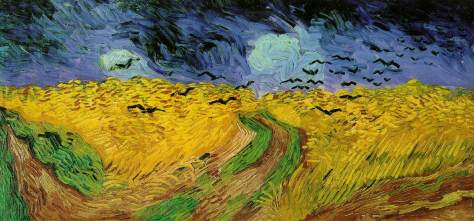
"Wheat Field Under Threatening Skies", Vincent Van Gogh  (1890)

“Wheat Field Under Threatening Skies”, Vincent Van Gogh (1890)

Unattended Fields

With their hands in the soil, they lived well off the land
Psalms flowed from their church, as bells rang in their steeple
They prayed for the sun and for the rain when needed
The salt of the earth, and true god fearing people

They were so very young and so innocent
On returning they confirmed many a myth
They were bigger, stronger, braver and wiser
But none came back bearing the smile he left with

The horrors will take a lifetime to erase
This war has raged on oblivious to time
It makes men do things that should never be done
This is so much more then a sin, it’s a crime

After coming back from deaths very doorstep
Putting aside arrows, armor, spears and shields
Grasping to their hearts their women and their kin
They come to restore long unattended fields

100_0941 copy

John Frazee resides in Boynton Beach, FL, USA (temporarily) He also resides under the impression, that like the infinite number of monkeys at the infinite number of type-writers someday he will accidentally create something worthwhile. He relies on you humans to evaluate the results of this experiment. Published in Skyline magazine, OMNI magazine, The Horror Zine, Twice the Terror and What Fears Become, The Horror Zine Anthology, Death Head Grin Anthology, My Word Wizard, Aphelion, StoryMania and The Horrroe Zine Magazine

“Across the Sky” by Teresa Ann Frazee

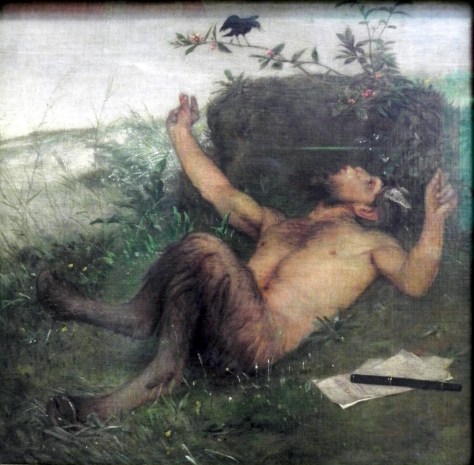
"Pan Whistling at a Blackbird" by Arnold Böcklin (1863)

“Pan Whistling at a Blackbird” by Arnold Böcklin (1863)

Across the Sky

Blackbirds vanish into the ocherous mist

Exactly as they had done for thousands of years

They turn back to remember the past as it was

Before a limitless infinity appears


Stray shadows flee across roofs in ghostly rhythm

Wakening trapped gods, their breath hushed in compromise

Broke out of bounds, unloosening the hold of time

And as the sun set they snatched the shrouds from their eyes


All tomorrows bleed into the edge of perception

Under an ineffable light that bore an ancient heat

Reborn beneath a hurtling flame across the sky

Where their immortal bones are no longer obsolete

100_2560

Teresa Frazee is a published poet, including Skyline Magazine, Literary House Review, Poetry Shelter, The Horror Zine and Twice The Terror: The Horror Zine Anthology, Death Head Grin and E Book Anthology, Aphelion, What Fears Become: The Horror Zine Anthology, My Word Wizard, 100 Thousand Poets for Change at World & Eye, The Horror Zine Magazine, short story published in Storymania,  Founder & Host Poetry Reading series “Art & Literature”, Boca Raton Museum of Art, Artists’ Guild and Author of “New City” Souls, A Poetry Cabaret.

The Art of Fred Larucci

charlie_chaplin__the_adventurer_by_thenightgallery-d5o1kg6 (1)

Charlie Chaplin, “The Adventurer”


Carole Lombard "The Racketeer"

Carole Lombard, “The Racketeer”

Elvis

Elvis

Fred Larucci is a self taught free-lance illustrator and the creator of the site The Night Gallery(which has nothing to do with the iconic series). In the words of Fred himself, “I draw because it gives me a purpose, keeps me busy focusing on good things….to be constructive and Positive and maybe to brighten or inspire someone else to do the same. Too much hate in a world filled with negatives, I want and choose to be Positive.” More of his work can be found at: Facebook and DeviantArt.

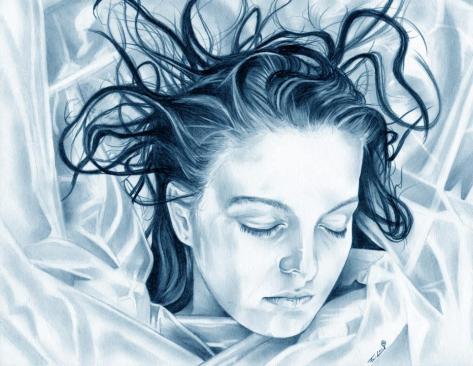
Forget me Not "Laura Palmer" Twin Peaks

Forget me Not “Laura Palmer” Twin Peaks

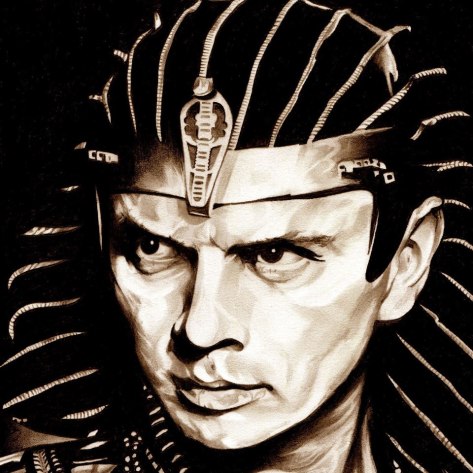
 Bad to the Bone "Ramses II", AKA "Yul Brynner" From the Motion Picture, "The Ten Commandments"

Bad to the Bone “Ramses II”, AKA “Yul Brynner” From the Motion Picture, “The Ten Commandments”

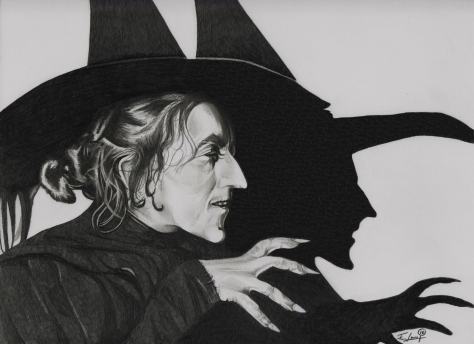
Wicked Witch of the West "The Wizard of Oz" aka – Margaret Hamilton

Wicked Witch of the West “The Wizard of Oz” aka – Margaret Hamilton

“Tina Ayres Owns Van Gogh’s Ear” by Ian Ayres

Tina Ayres Owns Van Gogh’s Ear

Tina Faye Ayres, the editor-in-chief, administrator, owner and creator of the continued Van Gogh’s Ear Anthology Series

Dear family of great talent, let us welcome Tina Ayres as the editor-in-chief, administrator, owner and creator of Van Gogh’s Ear. She controls this site she created. It is all her doing. And I am proud of her for proving to be quite innovative. Being in charge of Van Gogh’s Ear means never once letting anyone down. Tina Ayres understands this. She will continue the tradition of always showing every contributor the utmost respect and follow through on the promises she makes to those who contribute their work. These are among the reasons that Van Gogh’s Ear was given entirely to Tina Ayres and shall remain under her complete control. May the amazingly imaginative family of Van Gogh’s Ear welcome her, reassure her and embrace her. She is a sensitive soul. So let’s all bring her joy. For she’s the one who began this site, seeking out original works, conducting fascinating interviews and bringing people from all walks of life, everywhere in the world, together for the creation of more and more new volumes of this momentous anthology series. And she is very serious about her responsibilities as the editor-in-chief. Thank you, Tina Ayres, from poets, artists, writers, and new talents everywhere, for keeping Van Gogh’s Ear alive! Our love for you will grow with each moment of your time devoted to giving us more extraordinary realms to explore through Van Gogh’s Ear.

“New York Apocalypse” by Thom Nickels

New York Apocalypse

The Apocalypse

I remember a lightning flash blinking in the sky after three days of darkness. After that things dropped over after something fell from the sky. There was a great noise and screams and then crumbling buildings but at the same time it was clean.

While I experienced only slightly more than a sunburn Julius suffered third degree burns and had to rob an abandoned drugstore for medication. Soon I joined him going into places. At first we ate ourselves silly in empty restaurants. Naturally there was a chance the food was contaminated, but we had to live. I won’t describe the horror that greeted us all around. In many ways, however, it wasn’t really horror. There were no tortured looks on the faces of the dead. People seemed to be sleeping. As we stepped over the bodies, I said to Julius, “I don’t feel anything. The lightning flash must have done something to me – taken away a part of my soul.”

Julius wept as he turned on the soda spout in a store where we’d gone to get supplies. The soda was cold, and I put my mouth to the spout and drank heavily, a part of me feeling like a rat because I wasn’t mourning the dead who were all around me on the floor.

In my apartment, we ate what we could from the things we brought back with us. We had to eat fast because there was no refrigeration and everything good would soon spoil. Then there’d be nothing except the canned goods and the cereals in the supermarkets, so we filled up on submarines, cold Swiss cheese and beer.

We looked out over the city. There was not much movement and we could see ruins everywhere. I told him how quiet everything was, and how we were lucky to have each other. “I wonder how many others are alive,” I said.

Julius said there had to be other survivors.

“We will find them in time,” I said. After all, while it seemed that the worst was over, I still felt scared, especially at night when we could hear strange sounds in the city. Perhaps some parked cars or a home gas range suddenly and for no apparent reason exploded. But more than anything, I feared a return of the lightning flash. I knew I was lucky to be alive, even if it appeared that only Julius and I had survived. We weren’t Adam and Eve, or even Adam and Steve, but at least we were company for each other. And who, after all, would want to bring children into a world such as this?

Often I went around to television appliance shops and searched to see if I could find a live signal. I never even got static. With all communication snuffed out, I felt the severity of the situation even more.

The entire country may be like this,” I told Julius. “Even the world….What are we going to do, live in New York until we die?”

One night Julius was weeping again into his pillow. I didn’t say anything but sat at the kitchen table and buried my own head in my arms. I said a prayer to Saint Mark – I had an icon of him on my desk. Looking at the icon now, in light of the setting sun, I could feel it trying to speak to me. But attempting to discern the message of the saint was confusing and unclear. It seemed only to communicate a general faith that things would be okay – different, but okay. Julius wanted to leave New York in order to find other survivors; he was convinced there were none here, otherwise someone would have answered our daily round of whistle blowing. Julius wanted to go into an Old Navy store, get two knapsacks, fill them up with necessities then take off to see the rest of the country. We argued about this every night. My arguments were the same. We are safe here, so why move out? God knows what awaited us out there. “Since the towers fell, I vowed I would never leave New York like a scared rabbit,” I told him. But Julius said he’d been having this recurring dream about another lightning flash.

“If there’s another one, I know we won’t be so lucky,” he said. I finally listened to him.

So Julius and I went into a store and found two knapsacks, sleeping bags, and other equipment we felt we might need. Then we found two bicycles. It wasn’t possible to take an automobile from the street. Something about the flash had rendered them inoperable. The bicycles seemed the best bet.
We rode back to the apartment through midtown Manhattan. We had to swerve our bicycles around the cadavers. We were both shocked when we saw the corpses of Anderson Cooper, Madonna and Lady Gaga all within a block of one another. Mayor Bloomberg was slumped down inside a NYPD patrol car. Cardinal Timothy Dolan was laying face down on the steps of Saint Patrick’s cathedral.

It was all I could do to keep pedaling. I no sooner thought “Who’s next?” when we saw all the employees of Goldman-Sachs melded together like a Jacques Lipchitz sculpture; something apparently had struck them in a such a way that their bodies joined and formed a twisted, discombobulated blob that seemed to reach for the stars.

Sometimes we got off our bikes and stooped down to examine their faces. A couple of times I had to fight a compulsion to touch them about the forehead and smooth their hair back with my hand. Julius had no such reservation, however. He would touch a cheek or stroke a chin and say, “Look at this beautiful person!”

It was truly sad and, on the night we packed, we didn’t say much to one another. I placed the icon of Saint Mark inside my knapsack. Tomorrow we would be off.

We rode across midtown Manhattan and then came to the freeway. I hadn’t expected to see a line of stopped automobiles and trucks stretching into the horizon. Most of the vehicles were on top of one another and many were scattered over embankments and whatnot as a result of the flash.

An overturned Greyhound bus really got to Julius. I thanked my lucky stars I wasn’t in a car when it happened. My hope is that everybody died instantly. It was difficult to steer a course through the sea of automobiles. In some areas they blocked the highway and Julius and I had to walk our bikes way around them.

We both stopped dead in our tracks when we saw what looked to be Sarah Jessica Parker atop a flagpole. Perhaps Ms. Parker was thrown from one of the thousands of cars trying to leave the city. We then saw a just a face on an embankment with hair that looked like Donald Trump’s. We had gone only about a mile out of New York when Julius turned to me and said, “We’re going to die if we go on like this. I say we go back and forget the whole thing.”
Once I’m on the road going somewhere, I cannot turn back.

I said, “Julius, that wouldn’t be sensible. You said yourself another flash was imminent.”

I stood beside my bike and surveyed the landscape. Not far ahead of us was a family-style restaurant next to a farm. Behind it were fields that looked like they might house cattle or horses.

“Come on, Julius, we might be lucky and find a wagon and then we can hitch up a horse.”

Julius looked at me like I was mad. “Next you’ll be saying we’ll find saddlebags.”

We walked our bicycles over a field and, as we approached the restaurant, I said how amazing it was that a place like this was so close to the city. It was startling because you could still see the skyline and here we were in what looked like open country. By the time we walked on the property, we saw that there was one horse left alive, an old thing with pink spots, walking backwards over the trough. It looked kind of crazed. All the other horses were dead; there was no sign of people although they had probably died inside the buildings.
Julius studied the horse. “I think we should pull it!”

“I’ll just look in the shed to see if there’s a wagon or something, and you can lasso that horse for us.”

I found a flat wagon in the back of the shed, the kind farmers use to transport bales of hay. With a little work we could have fashioned it into a Conestoga wagon.

Julius was having trouble with the horse. It was kicking something fierce. The flash had driven it crazy. But he kept at it, shouting at it and using his arm to drive it toward the flat car. We finally got it hitched. “I don’t like this one bit. We don’t know where we’re going, and this horse is half dead,” Julius said.

All I could think of was the great covered wagon Mormon pioneer trek to Salt Lake City. “Haven’t you ever wanted to be a pioneer? There’s destruction all around so we really have no choice. It’s up to us to explore, settle, and pick up people, whatever. Life must go on at any cost.”

“Why? Life is futile and without meaning. The dead are the lucky ones.” Julius was very unhappy although I knew he really didn’t want to go back to New York. He was sick of Manhattan every bit as much as I was.

“You know,” I said, “it won’t be so bad. We have each other, and we have this horse. We don’t need other people. Everybody else is dead anyway. Our love is all we need. “

I really didn’t feel that exuberant. I was trying to sound more positive so Julius would get a move on. He was starting to bite his nails and take on that faraway look that meant he would soon hang his head and sink into a complete depression. If past behavior was an accurate barometer, he’d stop eating, keep insisting that life was futile and useless, and mention suicide as a possible out. Then he would suffer an anger streak that would inevitably draw us into ugly arguments.

Finally we were ready to see if the horse could pull the wagon. I was doing the driving. I moved the reins and shouted to the horse. It started moving, not very fast, but it did move. When we were a little way off from the farm, I asked Julius what he wanted to call the horse, and he said “The End.”
“Now that,” I said to him, “is a perfect example of your pessimism; why not The Beginning?”

We ended up calling the horse Flash.

That night, we were sitting around a campfire next to a housing development. Flash was tied to a telephone pole while we cooked some eggs. Julius was pretty upset because he had to step over this pretty girl lying nude on the floor in order to go into the kitchen. He was really depressed, thinking he had fallen in love with her and wishing he could bring her back to life.

When Julius was drinking his coffee, I went into the house to take a look at her. She looked like she was taking a nap. “I see what you mean,” I told him, “but she’s dead.”

Julius looked away. As much as we loved each other, he needed a woman.

When I got up in the middle of the night, I saw that Julius wasn’t in his sleeping bag. I called out his name, and then thought of that poor girl lying in the kitchen. I thought, oh no, not necrophilia!

(From the two novellas, Walking on Water & After All This, which will be published in paperback form in early 2013 by Starbooks Press, currently an e-book).

id 049

Thom Nickels is a Philadelphia-based author/journalist, the author of nine published books, including: The Cliffs of Aries (1988), The Boy on the Bicycle (1991-1994), Manayunk (1997), Gay and Lesbian Philadelphia (2000), Tropic of Libra (2002), Out in History and Philadelphia Architecture (2005). In 1990, Mr. Nickels was nominated for a Lambda Literary Award and a Hugo Award for his book, Two Novellas. He was awarded the Philadelphia AIA Lewis Mumford Architecture Journalism Award in 2005 for his book Philadelphia Architecture and his weekly architectural columns in Philadelphia Metro. He has written for The Philadelphia Inquirer, The Philadelphia Daily News, the Philadelphia Bulletin, City Paper, The Broad Street Review and the Huff Post and The New Oxford Review. His travel essays have appeared in Passport Magazine. His column, Different Strokes in the Philadelphia Welcomat in the early 1980s, was one of the first out lgbt columns in a mainstream newspaper. He’s currently the City Beat Editor for ICON Magazine (New Hope, PA), a contributing editor at Philadelphia’s Weekly Press, and a weekly columnist for Philadelphia’s SPIRIT Community Newspapers. Mr. Nickels also writes for the Broad Street Review. His novel SPORE was published in July 2010. His novella Walking Water & After All This  (1989)– is currently available on Amazon and will be published in paperback in early 2013. He is listed in Who’s Who in America, 2003-2012.

“At 40 His Wife Begins to Write Poems” by John Guzlowski

At 40 His Wife Begins to Write Poems

Each night, they come to her in dreams,
and when she can’t listen anymore,
she wakes and writes in darkness,
the shadows from the street falling
through the blinds and onto the paper,
like whispers.

She feels her husband beside her,
sleeping in a world without dreams,
or horizons, a beached whale, all breath
and cold flesh. When she reads her poems
to him in the morning kitchen, he’s puzzled,
frightened. Don’t worry, she says, I love you
more than anything.

She dreams one night she is driving
in the desert, wind moving through the air
like lean snakes. Hungry, she stops
near a gray shed. Sees the bones
of three angels lying on a table,
and urinates into a tub
filled with photos. In the corner
her mother stands in red stockings,
her feet swollen like salmon,
her tongue adrift in a dark sea,
her lips shaping sighs, maybe questions,
each one as different as blue
and yellow.

When she wakes, the lines are scrimshaw,
circles flattening under the weight
of triangles, gashes, red birds in trees.
Her husband puts down his coffee,
searches her eyes. She knows
what all of it means.

Digital StillCamera

John Guzlowski’s writing has appeared in Garrison Keillor’s Writers’ Almanac, The Ontario Review, Chattahoochie Review, Exquisite Corpse, Modern Fiction Studies and other journals both here and abroad–many of which are now defunct. His poems about his parents’ experiences in Nazi concentration camps appear in his book Lightning and Ashes. He blogs about his parents and their experiences at http://lightning-and-ashes.blogspot.com/

“Murmuration at Six O’ Clock” by Nessa O’ Mahony

Murmuration at Six O’Clock

Seurat could have captured this,
the swarm and pulse
of a thousand starlings
over St. Peter’s Basilica
as the light dips and the rain-tipped
Roman sky stains mulberry.
As far as the eye scans, birds rise
in ventricled waves
of fibonacci spirals,
gulls joining in, crows,
the parakeets from the Borghese,
till the air fills and bells
in each campanile sound
for every vespered swerve.

IMG_0028

Nessa O’Mahony was born in Dublin and lives in Rathfarnham where she works as a freelance teacher and writer. She was awarded an Arts Council of Ireland literature bursary in 2004 and 2011, a Simba Gill Fellowship in 2005 and an artists’ bursary from South Dublin County Council in 2007. She has published three books – her first collection, Bar Talk, appeared in 1999. Her second, Trapping a Ghost, was published in 2005. A verse novel, In Sight of Home, was published by Salmon in 2009 and a third collection of poetry will be published in 2013/14.

“Inescapeable” by Pansy Maurer-Alvarez

Inescapeable

I have selected this edgeland because it is lucid still, despite its troubles, its singing down of the human heart. Antony & Cleopatra and all that. Here a design seducer oversteps souls, voluptuous lips, eels and irises, dismisses the overriding assessment of light bare feet. The horizontal manners of the ribcage are self-induced and dependent on the weight of attributes (such as a fiery color) to cure the opposite heart-shaped lily. Fierce hairy leaves are aimed at masculine positions of age and dress; the whole tumbling jungle gets thrown. A damaging Spanish gardenia materializes and, for personal reasons, a curtsey flitters open your kiss.

The west wind turns delicate, elsewhere emotion intervenes with its immobile grip and we face the intrusion with confidence and feudal abruptness.

What rhythmic splendor we borrowed from the cramped space of the infuriated opera, its breath a perpetual restringing of untied phrases. We rubbed the cherished prolific with serious insight. Our static experience, veined and polished, now comes stuttering from hips and nerves; meanwhile Venus, pliant, clothes antiquity with insouciance.

picture-5

Pansy Maurer-Alvarez was born in Puerto Rico, grew up in Pennsylvania and has lived in Europe since 1973. Her poems have appeared in several anthologies and many magazines throughout Europe and the States, including Van Gogh’s Ear: Volume 2. Her collections are: Dolores: The Alpine Years and When the Body Says It’s Leaving(both from Hanging Loose Press, Brooklyn); Lovers Eternally Nearing (from Editions Thomas Howeg, Zurich) and Ant Small and Amorous (from corrupt press,Paris).

“The Train to Viareggio, an ode” by Joe Zeppetello

The Train to Viareggio, an ode

The train to Viareggio was crowded. This particular train went on to La Spezia. A bunch of kids got in near Pisa, heading for the beaches in Cinque Terra, where the water is bright blue and there’s a nude beach. They sat on the floor of the train blocking the aisle, so the conductor couldn’t get through if he tried. They had an hour to go because they would have to switch trains at La Spezia. There’d been a strike the day before, and the 90-degree heat sent the pent-up demand to the beaches of the Italian Rivera. We were going to Viareggio because we could rent an umbrella and chairs, and the food was cheap. The overloaded train was noticeably slower as we moved along. The landscape had slowly changed, and now we looked at salt marshes where the smell of the sea was strong. We stopped at a commercial port, and then stopped at Viareggio Centrale. When we stood up, a couple got up from the floor and took our seats; we gently stepped around the people sitting in the aisle as we headed for the door.

“We don’t get out here. We have a few stops to go,” a man with an Australian accent said to some people as they were starting to get up. They sat down, a little disgusted. Air conditioning is not Italy’s strong suit, and there was almost none on the train.

We stretched our legs. The trip from Florence had been longer than we’d expected. The kiosks had not been working at Florence SMN, and it took some time to get our tickets. We walked down the avenue to the beach, past oleander-lined streets, and across a busy coastal road, stopping at the Supermercato Conad to buy some bottled water and snacks.

The path to the bright yellow umbrella was hot and burned our feet. We sat in the chaise lounges, under the umbrella that had cost us twenty euros, and looked out over the sea from one of the oldest resorts in Europe, the place where Czars spent the long Russian winter, and where Shelley was cremated after he and his friends drowned when their sailboat sank in a sudden summer storm.

Naked children ran down the beach, not seeming to mind the hot sands. The blue water was full of people, many of them with water toys, and as we walked along the beach we could see that the marble-capped mountains were covered in a fine haze. That’s when the body washed up on the shore directly in front of us.

Fully clothed, right down to fine leather boots, the unfortunate sailor had recently drowned. There were no signs of life, no need for heroic CPR, nothing would help him now; several people had their cell phones out and were calling the police. Others scrambled to get their little kids away from the dead man. We helped the life guard pull him by his arms, so the waves wouldn’t drag him back out to sea, and then we sat on our towels waiting for the authorities. He was white, so we knew he was probably not an illegal immigrant from North Africa; he was very pale white, and had a pretty face.

Two paramedics, both with large sweat rings under their armpits, carried their gurney through the broiling beach sand. They checked the body, and then waited. The coroner would have to release the body to them; he was on his way. A small, skinny man with a thick moustache came to the beach. He and the two paramedics were the only ones there who were fully-dressed. They asked the life guard a bunch of questions, and the skinny guy filled out a form.

The two paramedics strapped the body to the gurney and carried him off the beach. There was a depression in the sand shaped like the back of a dolphin where the body had lain. We looked at the depression, and then carefully went in the water. People were talking about him. My Italian is bad, but I could understand bits and pieces, like a bad recording that fades in and out. Someone said he was English, that they knew him, or had seen him. He had a sailboat. There’d been a bad storm last night. Maybe he had been caught out in it. He had a young wife up in Genoa. She must know something is wrong by now.

We decided to go in for a swim. There was nothing more we could do. The water was cold at first, but that was because we were so hot from being on the beach in the sun. I went in up to my neck, and stood looking at the dome on top of the hotel Excelsior and the mountains in the background. The sun was getting more intense. I got out of the water first, showered on the beach, and dried off under the umbrella. She swam for another hour. She likes the water a lot more than I do. After she settled in, I asked if she was hungry

“No. Too hot to eat right now.”

“True.”

“That was very strange,” she said.

“You mean the man on the beach?”

“Yes.”

“That was very sad. I wonder what happened.”

“People mentioned a storm. He had a sailboat”

“Yeah. I could make out a little of what they said. Sailboats are bad in storms.”

“It probably took him by surprise.”

“He must have had a lifeboat,” I said.

“Maybe it was a small sailboat. Too small for a lifeboat.”

“I haven’t seen a small boat since we got here. This is the yacht club set if I ever saw one.”

“Maybe he wasn’t so rich?”

“Maybe he shouldn’t have gone out in a storm?”

“I saw a reporter talking to some of the people on the beach. We can get a paper tomorrow.”

“It’ll be on the news.”

Later we ate sandwiches at one of the tables in front of the small snack bar, and then went swimming again until the sun started to set and the sky began to change color. The late train back to Florence was crowded, and we got to the apartment after dark. The next morning there was a blurb in the paper. The man had been English, and his wife was in Genoa at their summer home. He disappeared the day before yesterday, the night of the bad storm. His boat was found washed up on shore. It had sunk with the lifeboat still attached. His widow wanted to cremate his body on the public beach, but the authorities said no. They insisted that he be cremated in a licensed crematorium. She planned on throwing his ashes into the sea from the spot where he had washed up on shore.

“We’re going.” She said, not a question.

“Of course.”

We took the train back to Viareggio. The weather had turned cool, so the train wasn’t crowded. Heavy clouds and light rain turned the water grey, and hid the mountains. We walked out on the beach. A pale woman in a white wedding gown opened a Grecian brass urn and cast beautiful ashes into the gentle surf. They sat on the surface of the blue-grey water for a moment, and then sunk into the Tyrrhenian Sea.

DSC_0523a

Joseph Zeppetello Lives in the Hudson Valley, and has published short works of fiction in Iron Horse, The Little Magazine, and Copper Nickel. His novel, Daring to Eat a Peach, was published by Atticus Books. He is currently working on another novel, and is interested in writing stories that explore character, and has been experimenting with short works that incorporate a touch of the magical or the absurd.