“James Dean: On the Road to Salinas,” an interview with Lee Raskin

JD SALINAS COVER FINAL

Author Lee Raskin is a Porsche historian and author of James Dean At Speed. He is a leading authority on the passion for racing possessed by James Dean. His latest offering James Dean: On the Road to Salinas seeks to respectfully enlighten the reader to the truth of his death. The book also features the photos of Sanford Roth. The release is set to coincide with the 60th Anniversary of Dean’s passing and is available for pre-order now at stanceandspeed.com.

Can you tell us a little about yourself? Where are you from? What were you like as a child? What are some of your most fond automotive memories growing up?

During my formative years, I grew up in the middle of America — Omaha, Nebraska. My mother’s family owned a replacement auto parts and accessory business — Wolfson Auto Parts. I was always the curious type, particularly about mechanical parts. I liked to modify and ‘hot rod’ bicycles as a pre-teen. Affixing baseball cards onto the front bicycle fender supports to make a motorcycle sound seemed like a natural thing to do — until I owned a real motor bike.

Did you develop your love of cars early on?

Living in Omaha, I had the opportunity to see stock car and sports car racing at Playland Park Speedway and at the nearby Offutt AFB, where Gen. Curtis LeMay was the Commanding Officer who supported sports car racing in the mid-1950.

Attending sports car racing events with my Dad got me more interested in foreign cars during the 1950’s. While Chevrolet and Ford made two American sports cars, I was more interested in reading about the European sports cars that were found on the pages of Road & Track, and Sports Car Illustrated magazines. I would spend my entire allowance buying motorports magazines every month off the news stand at the local drug store.

At thirteen, I convinced my father to let me buy a fourth-hand 1948 Hiawatha “doodlebug” motor scooter which I could drive legally on the Omaha streets. Later, I traded up for a Yamaha motorbike at age 16 and like James Dean, drove it to high school every day, (except for snow) fifteen miles each way.

Are there any little known things about yourself that your readers might be surprised to learn?

My interest in James Dean started when he died in September, 1955. My older sister, Layni created a shrine in her bedroom – with hundreds of photos of Jimmy cut from the movie magazines and news articles. Her shrine was always inviting and I spent hours looking at all the articles and photos. Two photos in particular caught my interest. One was of Jimmy resting against his white 356 Porsche Speedster at a sports car race. The other showed him driving a new Porsche 550 Spyder, which he named, “Little Bastard.” Those two photos inspired me to become involved, eventually owning and racing 356 Porsches during my life.

Why do you think the love of cars and the love of speed so to speak have always held such appeal to so many?

Americans have always been drawn to motor vehicles. America’s fascination with auto racing is as old as the car itself. The first “race” likely took place when two drivers met on a dirt road to see how fast they could go and who had the fastest car. The new automobile industry soon discovered that racing was the most effective means for proving and promoting their product by advertising it in the newspaper or magazine. The automobile became more than just a vehicle for transportation. Owning a car also became part of a new found hobby — maintaining it, showing it off, and racing it as well.

Does it take a lot of dedication to become a Porsche historian? What is it about Porsche that made you want to become such?

I believe motorsports historians, generally are a curious group interested in learning about all the details. I always admired the styling of automobiles – how manufacturers changed their models with new designs from year to year. Porsche’s design concept has maintained the same unique presence since Professor Porsche introduced his first 356 model in 1948. I have owned 356 Porsches since 1960 and continued not only to own and drive one regularly, but to race Porsches competitively for over 40 years. Having been attached to this marque, I found it natural to be able to talk and write about various models…including the 356 Porsche Speedster and 550 Porsche Spyder that James Dean also owned and raced. The Porsche has always been an enduring sports car which survived where others did not. Being a Porsche historian has to do with having some longevity. I have luckily survived many of my Porsche mentors and predecessors.
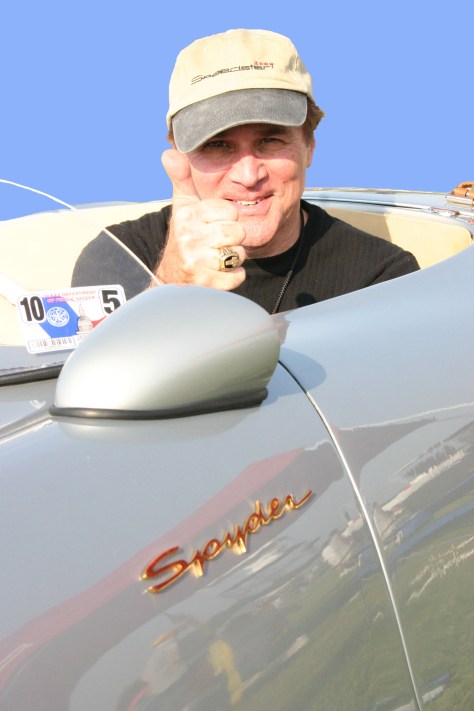
ContactPicLee

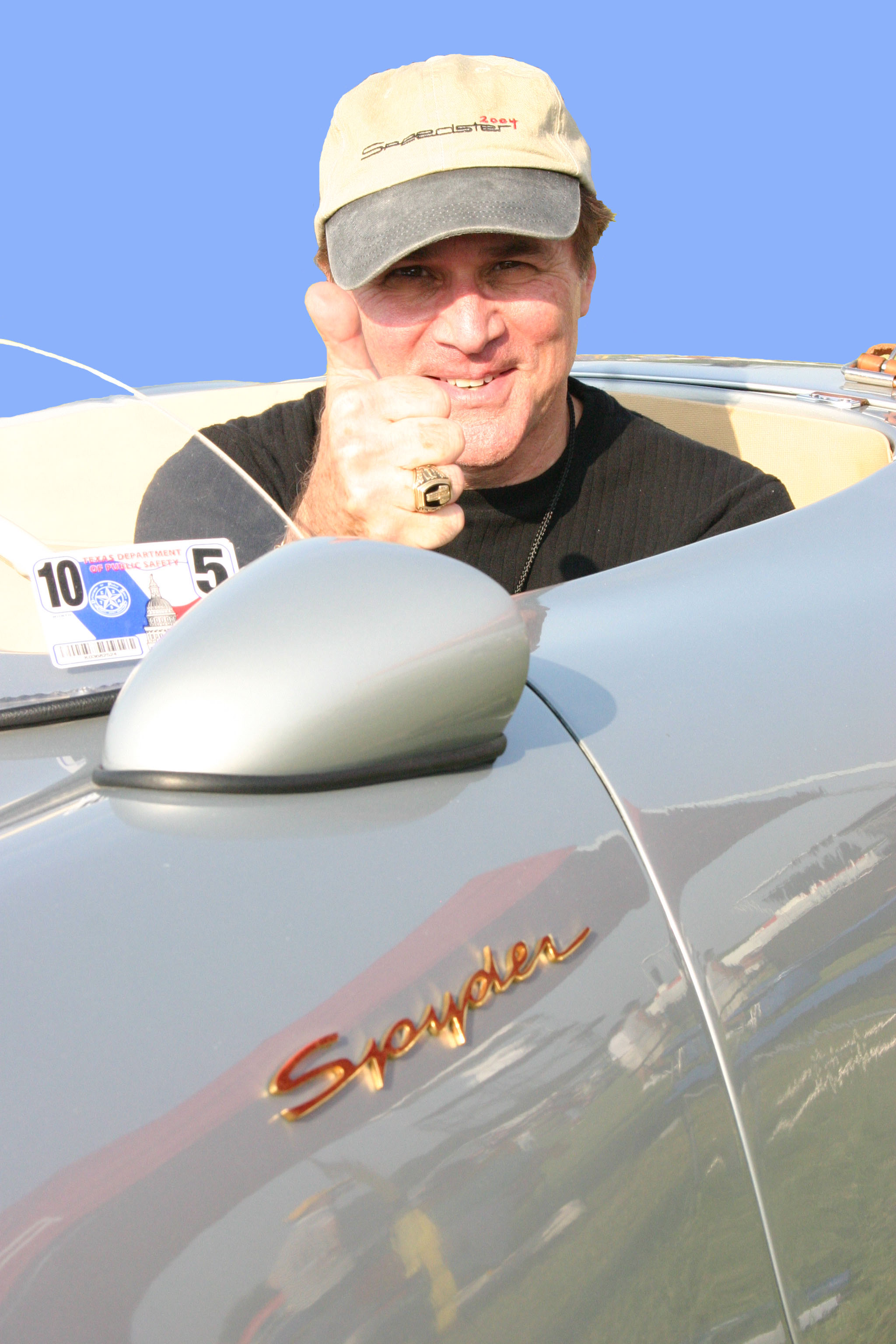
Lee Raskin and a Porsche 550 Spyder

What was it like being interviewed by Jay Leno for Jay Leno’s Garage? Do you enjoy having the chance work alongside other like-minded auto enthusiasts?

I was in Los Angeles at the annual Porsche Toy and Memorabilia Show, and at Autobooks in Burbank doing a James Dean book talk. Jay Leno stopped by and invited me to his car ‘museum’ and restoration shop also located in Burbank. Carroll Shelby had been formally invited and he was the real guest of the day. I got to watch Carroll and Jay being filmed as they talked about some of Shelby’s Cobras and Mustangs which Jay owned. Afterwards, Jay Leno interviewed/filmed me about my James Dean At Speed book which he had purchased previously.

Talking about motorsports with Jay Leno is always easy.  He’s a great guy who appreciates the history and the mechanics of automobiles and motorcycles.  His one of a kind motorsports collection is extensive and hand-selected. The interview lasted for about 15 minutes as Jay and I talked about James Dean‘s passion for speed and the legacy he left for future generations, particularly surrounding his Porsches – the 356 Speedster and 550 Spyder.

What was it about James Dean, aside from the obvious love of racing that made you take an interest in his life as an individual?

It wasn’t until I began more extensive research during 2003-2004 for my 50th Anniversary book, James Dean At Speed, when I realized James Dean’s family life, as mine, paralleled in so many ways while we both were growing up. I discovered that we were both nine years old when our mothers died. James Dean’s death occurred one year and one month after my mother and grandmother were killed in a commercial airplane crash near Mason City, Iowa. Like Jimmy, I was always smaller than most of my friends. I wore glasses to correct my near-sighted vision just as Jimmy. I was shy and lacked confidence, but came out of my shell through competitive sports in high school. We both were at ease while telling stories and we had the same exact passion for motorsports.

Do you think the world has always focused too much on the fame aspect of his life and not enough on who he was as a person?

The media certainly has focused on his fame as a young actor, but not so much beyond that scenario. After 60 years, James Dean still reigns supreme as a real American icon. It has always been difficult to get a real take on James Dean’s personality. Interestingly, Jimmy wasn’t in one geographical location long enough to develop a long term relationship with his new found friends. Lew Bracker was perhaps the closest friend that Jimmy had during the eighteen months he lived in Southern California. The media has never really understood who the true James Dean actually was. He was often portrayed as a ‘Rebel’ wearing the famous red jacket. Actually, he never wore that red jacket off the set of Rebel Without a Cause. It was just a prop for Jim Stark to wear, but the media still loved to insert that red windbreaker into their stories about James Dean.

What would you say are some of the most fascinating things you have learned about him over the course of your career?

Beyond reading other authors’ “spin “on James Dean, I learned a lot from listening to Marcus Winslow, Jr, Jimmy’s younger cousin, who shared some of his personal stories when they both grew up living on the farm in Fairmount. Mark Winslow was kind enough to share his stories in both my books, while writing the Foreword to each. Jimmy was superstitious about numbers. His Fairmount High basketball and baseball number was “3.” Later Jimmy had to select ‘provisional’ California Sports Car Club and Sports Car Club of America race numbers for the Palm Springs (#23), Bakersfield (#123), Santa Barbara (#33 and #233) , and Salinas (#130) sports car race — they all contained his lucky number “3.” In 2004, I was standing in the Fairmount Historical Museum looking over some FHS photos of Jimmy’s athletic endeavors when I saw the “3” jumping out at me. No other writer or author had ever figured out the origin of that mystery.

I understand you have maintained a close relationship to the Winslow family over the years. What do you love most about them as people? Do you admire how hard they work to keep the memory of James Dean alive?

Sometime during the mid-1980’s I received a telephone call one night from Mark Winslow, who introduced himself as a cousin to James Dean. Of course I knew the name and the relationship, but had never met him or been at Fairmount for a James Dean Festival before. Mark wanted to ask me about Jimmy’s Porsche Speedster and Spyder. He had read some magazine articles I wrote about Jimmy’s Porsches. Ever since, we have been good friends and speak often about Jimmy and his motorsports endeavors.

Mark Winslow is the supreme torch bearer for James Dean…not just around Fairmount, but universally. Both Mark and his spouse, Marylou are undoubtedly the kindest folks when it comes to extending themselves to the thousands of strangers who knock on their farm house door seeking information about James Dean. Mark Winslow has also been instrumental in trying to preserve the remnants of the Fairmount High School stage where Jimmy performed.

Yes, I admire everyone who participates in preserving James Dean’s legend. David Loehr, a renowned James Dean archivist who maintains the James Dean Gallery in Fairmount, has recently taken the lead for creating and developing the new James Dean Birth Site Memorial in nearby Marion which will debut on September 30th. Others throughout the world also maintain dozens of social media sites promoting James Dean’s name and his legacy.
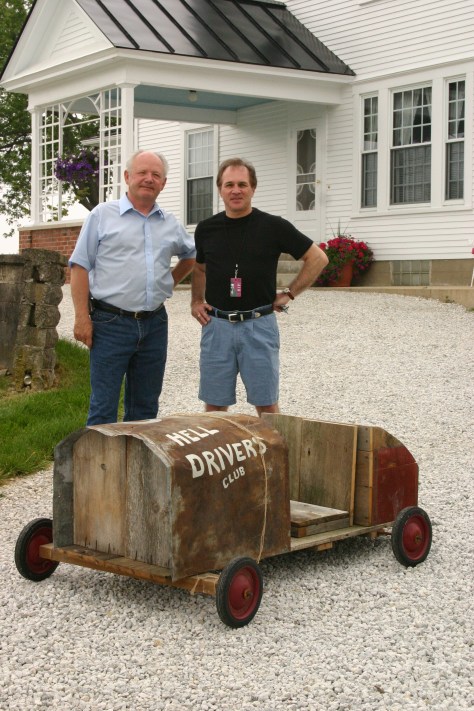
MWHellDriverCar2005

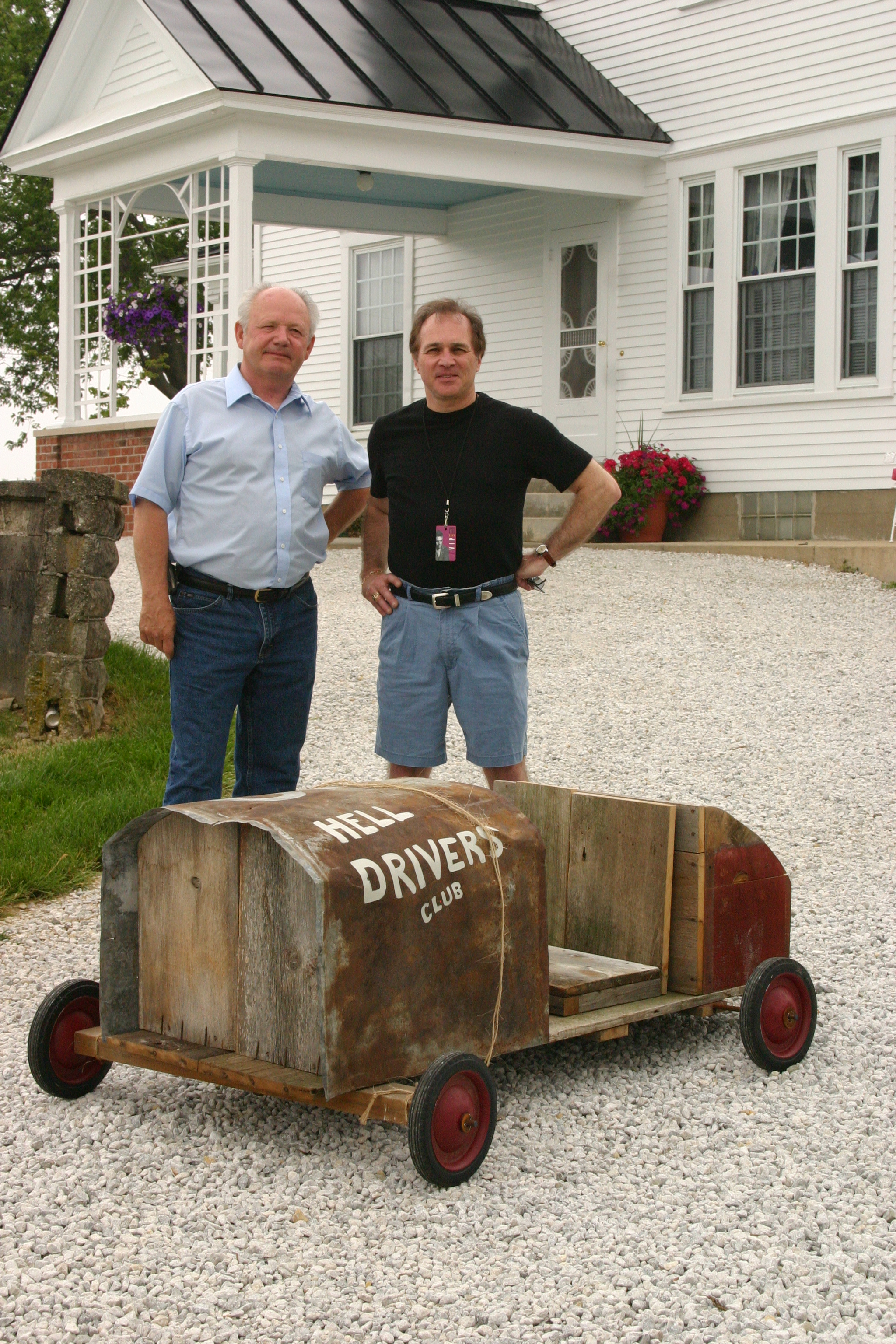
Marcus Winslow, Jr. and Lee Raskin at the Winslow Farm with the Hell Driver’s Club replica-car, 50th Anniversary Festival, 2005 in Fairmount, Indiana

What are your feelings on the uniquely charming town of Fairmount, Indiana?

You can read all you want about James Dean growing up in Fairmount, but once you really get to spend some time in the community, you can see how it is truly unique. The town with one main street has just one traffic signal at Main and Washington. Fairmount has barely changed over the decades. The town folks are all so proud of their two favorite sons, James Dean and Jim Davis, who is the creator of Garfield the cat. Dean, of course has always remained the coolest guy around town.

Time isn’t as important when you are visiting Fairmount…there isn’t a sense of being rushed to be anywhere at any particular time for most things. Interestingly, Fairmount was named after the magnificent Fairmount Park and Zoo in Philadelphia. A group of dedicated Quakers with a kind spirit for helping others actually settled in Indiana during the mid-1800’s to establish the community. It thrived economically especially after 1900 with the discovery of gas and became part of that Indiana boom. Fairmount’s name sake and spirit remains just as true today.

Are you honored to be a guest speaker at this year’s events?

I am truly honored to be an invited speaker for the September 30th Memorial Service. After being involved as a historian and now as a ‘double’ James Dean author…I think my time has arrived to speak to a gathering of faithful ‘Deaners.’ I have many thoughts in mind, but I will focus on just one major theme – keeping the torch bright and alive for James Dean while heading into the future with a younger generation of devotees.

Can you tell us a little about James Dean: On the Road to Salinas? What led you to create this particular work? What do you hope to accomplish with this piece?

In 2005, I published my first hard-bound James Dean book….with a different twist from all the other 150 Dean publications. This one, a photo-narrative was about Jimmy–his growing up, becoming an actor, making three big screen movies…but it also included a detailed narrative wrapped around 200 images which for the first time, focused on his true passion for racing sports cars. James Dean At Speed ended with the fatal crash at Cholame on 9-30-55, but also included an amazing 50 year Epilogue to 2005.

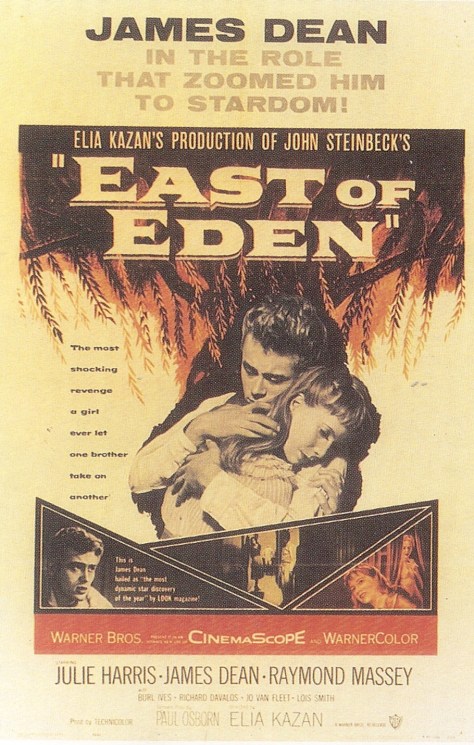
For 2015, to commemorate the 60th Anniversary of James Dean’s death, I wrote a sequel to At Speed, which picks up Jimmy’s story in 1954 when he left New York City for Southern California to make East of Eden. Writing James Dean: On The Road To Salinas has been a labor of love for the past seven years. Finally the 60th Anniversary is upon us — the new book will debut at Fairmount for the 40th Annual James Dean Festival. I plan to be hosting book talks, signings, and trivia quizzes during the entire festival weekend at both the James Dean Historical Museum, and the James Dean Gallery.

James Dean: On The Road To Salinas will become the definitive biography on James Dean’s life during 1955…including day by day and hour by hour details on his trip to Salinas during 9-30-55. Beyond that fateful day, the book will also detail the ‘botched’ California Inquest following his death, the real story about what happened to James Dean’s Porsche Spyder — the “Little Bastard,” along with a complete debunking of all the myths, rumors, factoids, and death curses that other writers and authors have embellished over the past 60 years. There is also a tribute to photographer, Sanford Roth with dozens of his rare and legendary photos of Jimmy, including the last day of his journey as well as other images that have never been published previously.

James Dean: On The Road To Salinas will debut on Sept. 25th and will be available during the entire James Dean Festival at a substantial discount from the retail price…including an inscription and signature by the author…and a selfie as well. Peter Bodensteiner of Stance and Speed is the publisher. The book size is 9”x 9”; it contains 160 pages, 225 images/photos (with 70 color images). The publisher’s web site is www.stanceandspeed.com

What do you think is key to a life well lived?

I believe that the key to a life well lived may be quite different for each of us depending upon our own opportunities, aspirations, and goals which we set and achieve along the way.

Certainly James Dean’s life was very brief at only twenty-four years, but I believe that he certainly lived life to the fullest.

James Dean’s most quoted thought certainly comes to mind:

        “Dream as if you’ll live forever. Live as if you’ll die today.”

Is there anything you’d like to say in closing?

Thank you for this opportunity to express my heart-felt thoughts with respect to James Dean, the community of Fairmount in Grant County, Indiana, and for the success of the upcoming 40th James Dean Festival — commemorating the legend and legacy of Jimmy.

Lee Raskin, JD
Brooklandville, MD
scan0185

The Art of Iris

iris3

iris2

iris4

iris9

iris10

iris8

iris5

iris7

iris1

iris

iris6

irisphoto

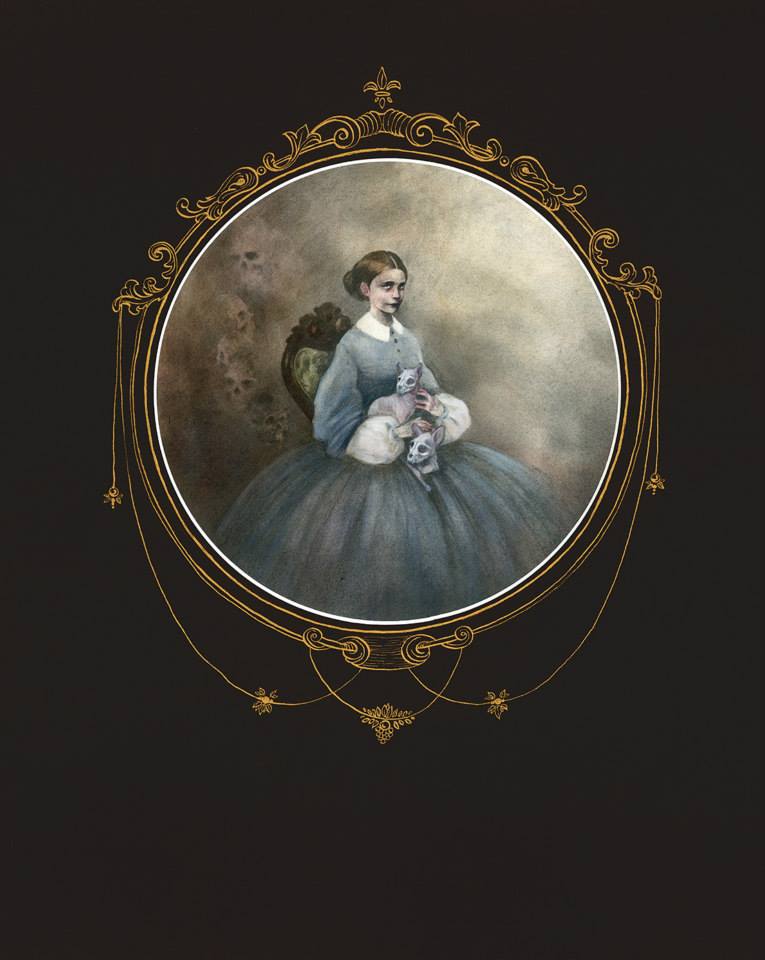
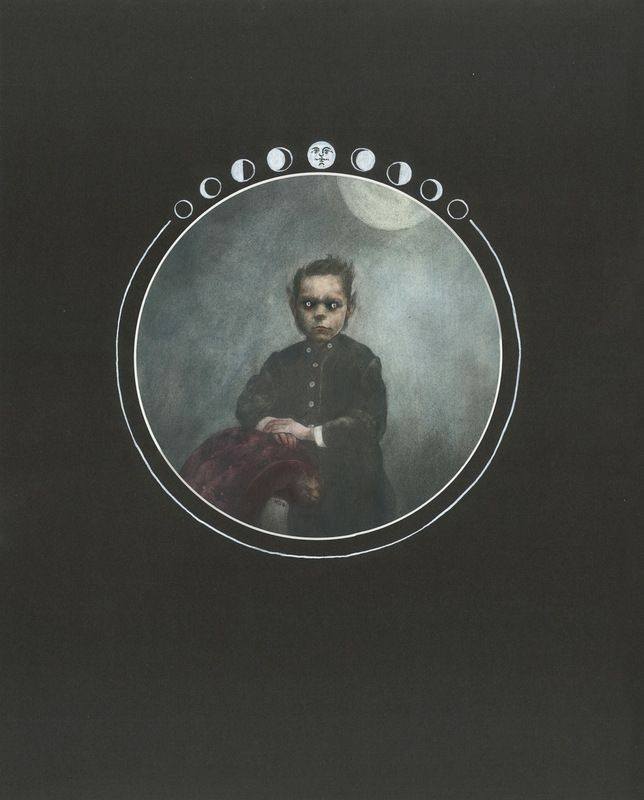
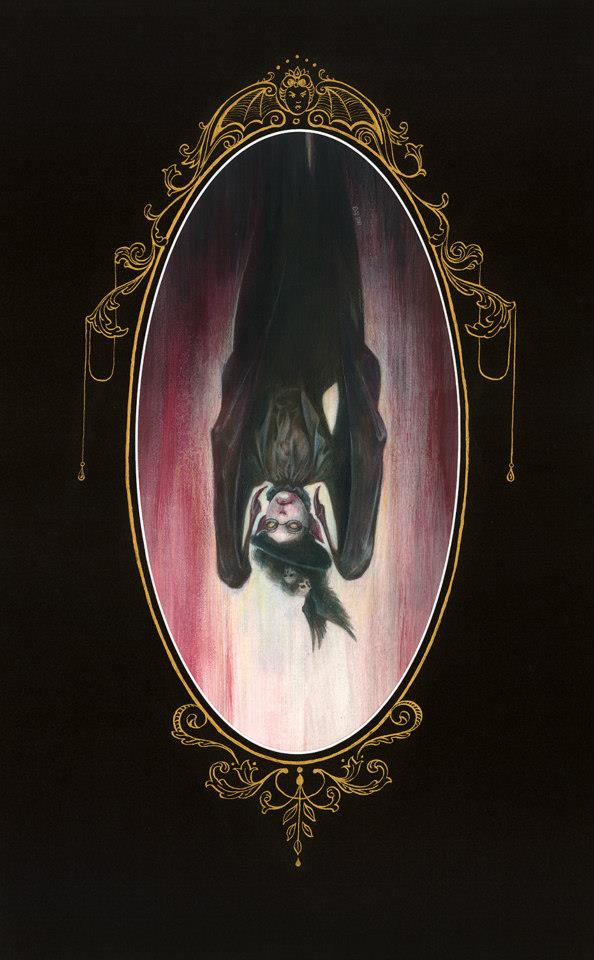
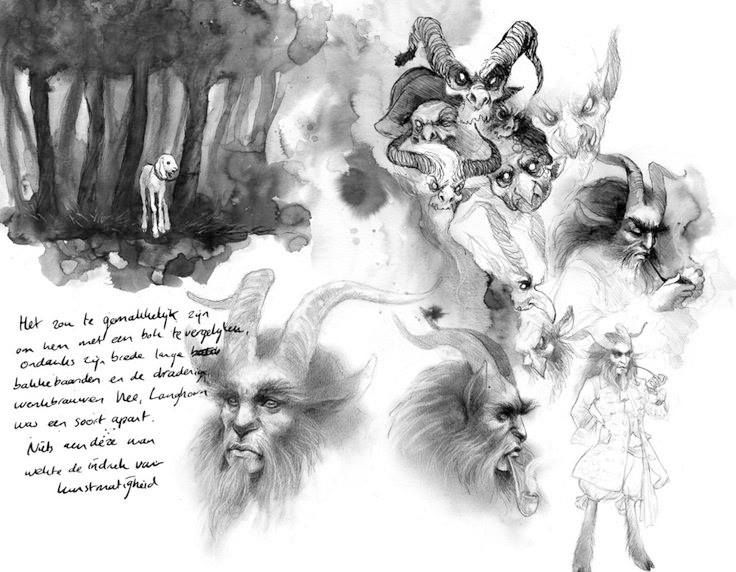
Telling stories has always been important to Iris, she sees herself as a visual storyteller and has been working as a freelance illustrator for many different clients in Europe, among them is bestselling author Michael Peinkofer. She designs characters and concept-art for animations, illustrates book covers, illuminates books and stories of many different authors and is even working on her own children’s book about weird witches and not so scary monsters. The medium she works with depends on the project, she loves the traditional feel of watercolour, oil, acrylics, gouache, and just plain old graphite pencils, but has also mastered the use of digital media to enhance her skills. Always eager to learn and grow in her profession she grabs every opportunity with both hands and dives into the exciting projects that are offered to her, giving it the Eyeris treatment.

More information on her work can be found at http://www.eyeris.eu/

“We Drank In The Moon” by Jimmi Langemo

John Atkinson Grimshaw 1882

We Drank In The Moon

The workday was done.
We sat with our feet dangling
O’er the loading dock.

I had brought a beer
For each of us. “Nothing too
Hoppy,” He had said.

We sipped suds as the
Full moon rose high and bright, all
Chubby cheeks and smiles.

“Anything new to
Share?” my Friend asked with a grin,
Followed by a swig.

“I have something new –
A poem of sorts,” I said.
“Let’s hear it,” said He.

I set down my beer
And began to recite the
Lines I had written:

“It is nearly correct to say
I have nothing to gain,
But everything to lose.
It is almost spot-on to say
I have nothing to lose,
Because nothing is mine.
It is close to the Truth to say,
Even though I have nothing,
I need nothing to know Truth.
So beware anyone
Who tries to sell something.
Who sells? Who buys?
What’s bought? What’s sold?
Traps and snares at every turn,
And yet,
Freedom,
Freedom
Everywhere.”

“Not bad,” said my Friend
When I had finished. “Try it
Again with no words.”

I set down my beer,
Pulled Him close and together
We drank in the moon.

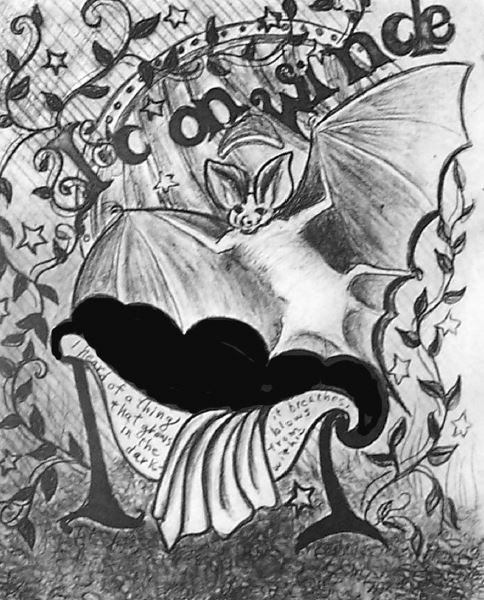
“Riddle 45” as translated by Bertha Rogers

berthabread

RIDDLE 45 – BREAD DOUGH

Anglo-Saxon

Ic on wi ncle gefrægn     weaxan nathwæt,
þindan ond þunian,     þecene hebban;
on þæt banlease     bryd grapode,
hygewlonc hondum,    hrægle þeahte
þrindende þing     þeodnes dohtor.

RIDDLE 45 – BREAD DOUGH – Bertha Rogers Translation

I heard of a thing     that grows in the dark—
it breathes, blows from within,     lifts up its hat.
There was a bride-girl     who boldly lay hold
of that body without bones.     She cradled it,
handled it.     That daughter of a prince blanketed
the wheezing creature     with her own coat.

~

There are 95 of the Anglo-Saxon Riddle Poems from the Exeter Book, which are about 1,000 years old. The above appears translated and illustrated courtesy of Bertha Rogers.

Bertha Rogers’ poems have been published in literary magazines and journals and in several collections. Her latest collection, Heart Turned Back, was published by Salmon Poetry Publishing, Ireland. Her translation of the Anglo-Saxon epic, Beowulf, was published in 2000 by Birch Brook Press; her translation of the Anglo-Saxon riddle poems from the Exeter Book, Uncommon Creatures, Singing Things, is out now.

“Outside Looking In” by Scott Harrison

1024px-g-_caillebotte_-_jeune_homme_c3a0_la_fenc3aatre-1

Outside Looking In

As I stand on the outside looking in
At a man having nothing to lose
Spending his days recalling his past
Leaving him totally confused

Thinking of a time when life was great
Having money, love, and fame
The sudden drop of a dime
These things all faded away

Recalling a time he had no worries
His days spent just having fun
His days now spent worried about family
Missing his precious son

You see this man made some choices
Now Regretting them every day
Because these choices he made
Have now taken his freedom away

When on the outside looking in
Things are always much easier to see
But to me they’re so hard to accept

For this man which I speak of is me

An Interview with Scott Wade

Freda

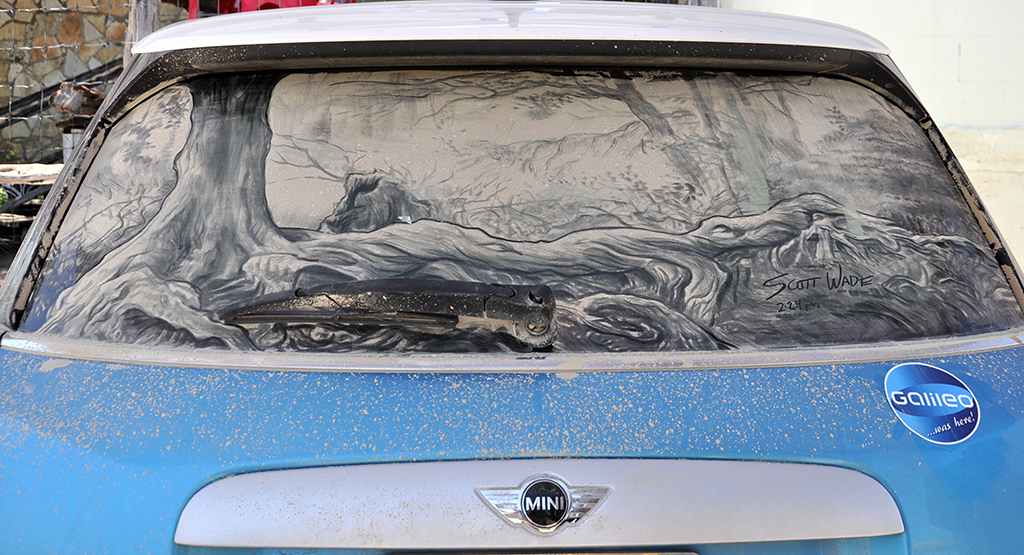
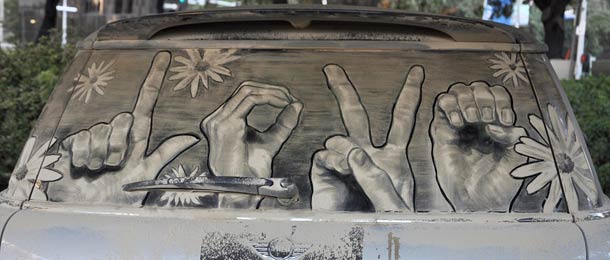
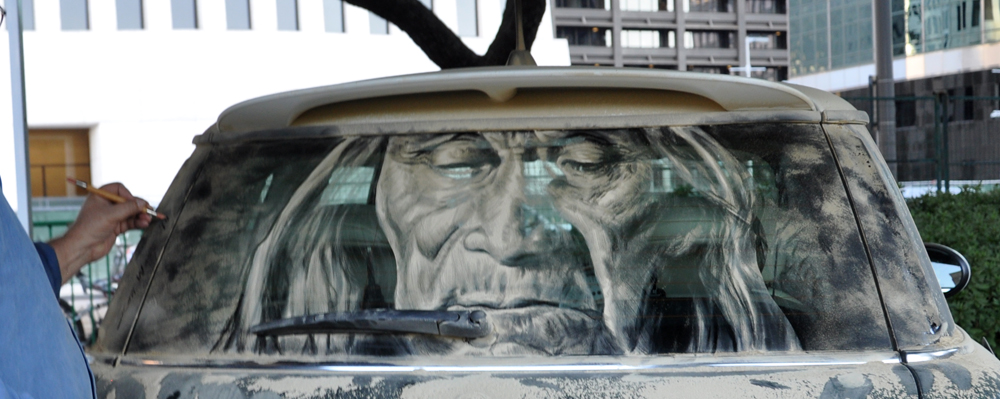
Texas native Scott Wade produces his unique images formed in dust in a way that few could. With his love of art being linked to his father being a cartoonist, and his curiosity to create imagery from the dust of his hometown he has developed a style all his own.

What was it like growing up in Texas? What did you love most about that?

I’m an Air Force brat, and moved a few times when I was very young, but was lucky enough to be at the Air Force Academy from age 5 – 13. That was a real treat, living in the foothills of the rampart range of the Rockies, camping, backpacking, skiing, climbing. I moved to Texas at age 13 in June, and thought I’d moved to Hell. But it wasn’t long before I fell in love with the amazing Texas Hill Country, which I’ve called home ever since.

LoneStarDust_2

Do you think your father being a cartoonist himself encouraged you to pursue what you do? What would you say is the most important thing you learned from him?

My dad was definitely an influence, but despite our mutual love of cartooning, as an artist, I’m very different. My dad had this beautiful, flowing hand. His penmanship was a work of art, and his drawing was effortless. I’ve tried to develop that, but have never come close. I’ve had more training and been exposed to more fine art technique, but I still envy my dad his incredible gift.

Desert

Who are some of your influences?

I’ve had so many influences it’s hard to name. I’m continually influenced by everything I see. I love many of the impressionists, a lot of indigenous art, many Renaissance artists- Rembrandt, Michelangelo, Leonardo, Romantics, like Waterhouse. I’m a huge Andy Goldsworthy fan. I try to appreciate everything- I fail sometimes. Not generally a big fan of purely conceptual art; I want art to affect me viscerally, and while intellectual stimulation is fine, it’s just not enough for me. Art speaks in its own language, so if it can really be said in an essay, maybe it should just be said in an essay.

full1_sm

Is it easier to work with the dust of your native area than in other places? Which dust seems to work best?

I love the dust that comes from the dirt roads in the Hill Country. It is known as road base, or caliche, as the locals sometimes call it. Crushed limestone gravel and clay; it makes a fine dust that billows up behind vehicles on dry days that coat the rear windows with fine layers that make a wonderful “canvas.” I lived for 20 years on a mile and a half of the stuff, and the cars were always dirty. nowadays, I generally prep vehicles for events with a light coating of oil to make the dust stick, then blow a finely powdered mineral (usually a clay or other mineral purchased at a ceramic supply) with a blow dryer to simulate the “natural canvas.” One can’t always count on dry roads and dirty cars…

amazing_cool_weird_crazy_offbeat_Dirty_Car_Art_03_2009072322391811643

When did you first get the idea to start creating such complicated pieces of art?

I had often drawn funny faces with my fingers on our constantly dirty car windows. Over time, I became curious about trying to get some variation in the line and possible some shading. I began to use sticks I’d pick up off the ground, and brush lightly with the pads of my fingers for shading. The ah ha moment came when I had a chewed up popsicle stick in my mouth and pulled it out, looked at it, and tried using it like a brush. It was very cool. I went into my studio, grabbed my brushes, and started experimenting. This was about 2005. The first piece I did was “Mona Lisa/Starry night,” which proved to me that this was a medium with great possibility.

hylasnymphs1

Did it take a while to get the hang of the brushes? What actually goes into creating one of your pieces?

It did take a lot of experimenting with the brushes and other tools to gain some mastery. You’re removing the light dust to reveal the dark shadow inside the car. It takes a very light touch to achieve some of the lighter values, and a lot of control for gradients. My process is usually to “pencil in” the basic layout with a sharpened stick. I typically work top to bottom, since the dust falls downward. I use a selection of fan brushes, but often start with a light, 2” – 3” brush for “blocking in” the basic darker areas. I sometimes use a big, soft stipple brush for skies, when there’s a landscape in the image. As the piece is nearing completion, I’m refining the shadows. Dust is filling in the previously worked areas as work is continuing, so that gives me a chance near the end to refine lines, deepen shadows, and basically achieve more value range, and more or less fine-tune the image.

dirty-car-art-por-Scott Wade-07

Is there any particular way to preserve your work?

No. On the cars I prefer to keep the work impermanent and let the rain wash the image away. I have done a few pieces that are more permanent, a couple on glass with another piece of glass in front, inside a frame, and one on a car door we got from the junk yard, for a gallery piece to support the Texas Breastfeeding Coalition. But the transience of this art form has helped me to understand how to appreciate and let go, to see life as an ever-changing journey. And that the length of time an artwork exists, doesn’t have anything to do with it’s quality.

dirty-car-art-by-scott-wade-3

Do you enjoy seeing people’s reactions to what you do?

Oh yes very much! Of course, my wife, Robin, gets to see most of those, as I’m usually focused on the work. But It is very fun to talk with folks about the work whenever I’m creating the pieces in public, and the reactions are almost always very positive. With the exceptions of a handful of grumpy older folks, it is all smiles.

Dirty-Car-Art-Scott-Wade-13

How does it feel to be doing something you love?

Personally, I hate it. Just kidding, who doesn’t like to do what turns you on? There are things about doing the work commercially or in public that can be stressful or just not fun, but mostly, it’s a blast.

171158nktgw54i153f1ftx

Which pieces have been your favorites so far?

The next one. Always my answer to this question (thanks, Frank Lloyd Wright). But there are some I’ve done that I really like. Laurel and Hardy, Hylas and the Nymphs, The Marx Brothers, Desert Dust, Steven and Albert, Food…those are some of my favorites.

Dirty-Car-Art-Scott-Wade-12

Do you have any dream projects you’d most like to create?

Yes; I want to do this on an office building, or some building with huge amounts of glass. Like a 40 stories tall dirt drawing. That would be very cool. And maybe a scene from a new movie on the limousine that’s dropping of the stars at the premiere?

maxresdefault

Are there any little known things about you that your fans might be surprised to learn?

I know some folks think this is my main gig, and have seen many comments for years, to the effect that I must have too much time on my hands to be doing this. Actually, I have a full time job as the Senior GUI Designer at a company in San Antonio; I play a few times a month in various bands- been a bar band drummer for 40 years; and I design sets for my local community theatre. I have 2 cats, a dog, a wife, and a 21 year old daughter. So there (smiles).

scottwade

What would say is key to a life well lived?

Love as much as you can. Do what you’re inspired to do. Have fun, but be aware of others. Do your best.

Caddo

Is there anything you’d like to say before you go?

Thanks for your interest and support. All the best to you and your readers!

albert-einstein_679370n

For more on the works of Scott Wade please see: Scott Wade’s Dirty Car Art: Dirt Is Beautiful.

An excerpt from “Beyond Elsewhere” by Gabriel-Arnou Laujeac, translated from the French by Hélène Cardona

“Canto d’amore” by Leonardo Bistolfi

The first love wards off the specter of a world inhabited by rusty winged adults with collapsed dreams, whose automated arms open before you but no longer close. It takes the place of worldly theater, of a societal lie, of a future with deserted temples and a wrinkled forehead. Curtain. Give way to the sun. To all the rising suns.

The light is here, with her.

She reveals herself to my gaze naturally, the way spring unveils the blueness of sky or the gold of your skin. She slowly removes makeup, masks and ornaments, and gives me a vision of herself bewitched, of herself bewitching: she adores me and I unlock her.

Sprung raw from a virginal flame, passion takes us whole under its animal breath: the sun sparks impale our bodies galloping in a crash of oceans.

We reign in this world where the beloved becomes everything, the only face of what is faceless, this shoreless elsewhere suddenly offering itself bare: we reign as servants of the first heartbreak given over to the fervor and dictatorship of our eighteen years.

From Beyond Elsewhere by Gabriel Arnou-Laujeac (White Pine Press, 2016), translated from the French by Hélène Cardona

~

Le premier amour

Le premier amour conjure le spectre d’un monde d’adultes aux ailes rouillées, aux rêves effondrés, aux bras d’automates qui s’ouvrent devant vous mais ne se referment plus. Il prend la place du théâtre mondain, du mensonge citoyen et d’un devenir aux temples déserts, au front ridé. Rideau. Place au soleil. À tous les soleils levants.

La lumière est ici, avec elle.

Elle se révèle à mon regard naturellement, comme le printemps dévoile le bleu du ciel ou l’or de votre peau. Elle retire lentement fards, masques et parures et m’offre la vision d’une elle-même ensorcelée, d’une elle-même ensorcelante : une elle-m’aime et moi aussi.

Jaillie à vif d’une flamme virginale, la passion nous prend tout entiers dans son souffle animal : les étincelles du soleil parcourent nos corps au galop dans un fracas d’océans.

Jaillie à vif d’une flamme virginale, la passion nous prend tout entiers dans son souffle animal : les étincelles du soleil parcourent nos corps au galop dans un fracas d’océans.

Nous régnons en ce monde où l’être aimé devient tout, l’unique visage de ce qui n’a pas de visage, cet ailleurs sans rivage qui soudain s’offre à nu : nous régnons en serviteurs de la première brûlure, livrés à la ferveur et à la dictature de nos dix-huit ans.

Excerpt from Plus loin qu’ailleurs by Gabriel Arnou-Laujeac (Éditions du Cygne, 2013)

~

Gabriel Arnou-Laujeac is the author of the acclaimed Beyond Elsewhere (Éditions du Cygne, 2013). He has been published in numerous anthologies of short stories and poetry, including Petite anthologie de la jeune poésie française (Éditions Géhess, 2009), Le livre de la prière (Éditions de l’Inférieur, 2013), and literary and philosophical journals, notably Les Citadelles, Poésie Directe, Littérales, Polyglotte, Recours au Poème, Testament, 3è Millénaire and L’Opinion indépendante. He contributed to the book Irak, la faute, with Alain Michel and Fabien Voyer (Éditions du Cerf, 2000). He graduated from Sciences Po and holds a Master’s degree (Fondements des Droits de l’Homme). He also studied philosophy and Eastern poetry.

Hélène Cardona is an award-winning poet and actor, author of Dreaming My Animal Selves (Salmon Poetry), Life in Suspension (Salmon Poetry, 2016), Ce que nous portons (Éditions du Cygne, 2014), her translation of Dorianne Laux, Beyond Elsewhere (White Pine Press, 2016), her translation of Gabriel Arnou-Laujeac, and The Astonished Universe (Red Hen Press). She holds a Master’s in American Literature from the Sorbonne, taught at Hamilton College and LMU, and received fellowships from the Goethe-Institut & Universidad Internacional de Andalucía. She co-edits Dublin Poetry Review and Fulcrum: An Anthology of Poetry and Aesthetics. Publications include Washington Square, World Literature Today, Poetry International, The Warwick Review, Plume, Irish Literary Times, Los Angeles Review & more.

“Abraham Lincoln” by Robert Nazarene

al

Abraham Lincoln

He was an orator of ear-erecting stature. A human cycopede, if you will, and never prone to babblement. As is often the case, his achievements fell into regard only after-wise. His detractors, a doggle-tailed scruff of scoundrels and fopdoodles. Hugger-muggers, bent upon, we would soon learn, the annihilation of The Great One. And so practiced in the art of sheep-biting and illaqueation that they might be regarded as real men only in a nuncupatory sense of the word—with consciences, collectively, thin as packthread. Decidedly, unworthy of a single quadrin. Destined only to muffle and fail. The Great One loved to obequiate—or obambulate amongst his loyalists—whatever the situation might require. And yet, his enemies were anything but jackpuddings. They were odious. Gastril-oquists, mocking him from the wrong side of history.

Robert Nazarene founded Margie/The American Journal of Poetry and Intuit House Poetry Series where he was the recipient of a publishers’ National Book Critics Award in poetry. His first book of poems is CHURCH (2006). A second volume of poetry,Puzzle Factory, is new in 2015. His work has appeared inBeloit Poetry Journal, Crazyhorse The Iowa Review, The Journal of the American Medical Association, The Literary Review, The Oxford American, Ploughshares, Prairie Schooner, Salmagundi,  Stand and elsewhere. He was educated at the McDonough School of Business at Georgetown University.

An Interview with Debra Christofferson

DC079_3

Debra Christofferson has appeared on shows such as NYPD Blue, The X-Files, Grey’s Anatomy, and American Horror Story to name a few. She is likely best known for her role as Lila on HBO’s hit show Carnivale. She can currently be seen on the Nickelodeon series 100 Things to Do Before High School as well as in the television film, A Deadly Adoption, and will soon appear on the Sundance Channel series Rectify.

As someone who was raised in a small town in the Midwest and had the chance to enjoy life on the farm, how do you think your early beginnings there have influenced you to be who you are today?

Actually, we lived in town; my grandma lived on the family farm and my dad farmed the land and raised cattle until recently. He has worked from dawn till dusk nearly every day of his life, which set the example of good, honest, hard work. When I see my dad’s passion for the land, I see the same passion in myself for acting, and the same work ethic. I give 110 percent to anything I do, and once I set my mind to a task, I work very hard to accomplish it to the best of my abilities.

What was it like to appear on American Horror Story when you did? Why do you think that show has such mass appeal?

American Horror Story was a terrific experience. I was so fortunate to work opposite the extraordinary Jessica Lange and with the wonderful Bryan Rasmussen, who played my husband. The scene that we did was rich with emotion, and to observe Jessica work, and interact with her was a delight. The appeal of the show comes from the fact that people just love to be scared, and the show capitalizes on that. Many of my friends are huge AHS fans, and were thrilled that I was going to be on the show, wildly speculating as to the horrors my character might commit. I rather enjoyed the fact that my storyline was normal, comparatively.

IMG_2513_2

Can you tell us a little about 100 Things To Do Before High School? Is that a role you enjoy?

100 Things is a very well-written half-hour comedy about three middle-school kids checking off their bucket list of things to do before they move on to high school. Everyone is incredibly talented, and we have a blast working together — really and truly, that’s not just “Hollywood-speak.” My character, Lunch Lady Natasha Villavovodovich, is a formidable, dour, no-nonsense Russian with a thick accent, and I adore playing her! When I first auditioned, it was for one episode, but on my second day of shooting the creator of the show, Scott Fellows, pulled me aside to tell me about a scene in an upcoming episode he was writing for my character. Talk about “welcome to the show!” I ended up doing five episodes in Season One, and it looks like the Lunch Lady will be back for Season Two. I can’t wait!

How does it feel to be able to portray a different character with every role? Do you enjoy getting to be such varied types of people?

I love being a character actor; the more varied, the better I like it. I relish the opportunity to bring life to a completely different type of person than I’ve played before. And the highest compliment I can get is that someone didn’t recognize me in the role. Then I’ve really done my job in creating something that is believable enough to have its own existence, apart from me, and yet me.

IMG_2651_2

What about A Deadly Adoption? What was it like to work with the cast in that film?

It was all very “hush, hush” initially, and I had to sign a confidentiality agreement as soon as I was cast, so I wasn’t allowed to talk about it at all until the official publicity came out. Someone actually leaked some info about it before everything was in place, and there were faux denials issued. Will (Ferrell), Kristin (Wiig) and Jessica (Lowndes) were all very personable and a treat to work with. The first scene I shot was with Kristin and Jessica, and we three immediately fell into an easy camaraderie. When Will came on set for the second and third scenes, I half-expected some silliness, but he was the consummate professional. We were on a tight shooting schedule, so there were no high jinx or messing around, we just did our jobs. They couldn’t have been nicer, and even took a few pictures with me, although personal cameras were banned from the set for confidentiality reasons.

Do you prefer working in light hearted roles or the darker ones?

Even though I’m probably best known for dramatic roles, I prefer comedy. It’s so rewarding to make people laugh, to forget their troubles, if only for a short time. I love working with the timing of things, the physicality, and the precise wording and inflection to get the biggest laugh. And, it makes me feel good. However, I also prefer complex characters, and generally the darker the role, the more complex. Truthfully, though, I’m an actor who loves to work. Make me an offer!

IMG_2384

Do you ever miss the stage? Any plans to work in theatre in the future?

I do miss being on stage. There’s nothing like a live audience to keep you on your toes, to encourage you, to let you know immediately if you’re not being honest. I had a chance to do a play this summer, but unfortunately my schedule didn’t allow me to do so. Hopefully I’ll get another opportunity soon.

How does it feel to see the film 1915 get such notice? For those who haven’t seen it can you tell us more about it?

I’m extremely pleased that “1915” is doing so well — it’s being seen all over the world. There is so much passion behind it, and everyone worked so very hard to get it out there. 1915 is a psychological thriller about denial — personal denial by each of the characters, and in the bigger picture, the denial of the Armenian Genocide by Turkey. The plot revolves around a theatre director staging a play to commemorate the 100th anniversary of the Genocide, and the cast and crew of the play exorcising their own demons and denial in the process. I play Lillian, an American actress who suffered an onstage breakdown on Broadway as a young star, left the theatre and hasn’t been on stage in years, but comes out of retirement to play an Armenian mother. I know, who’d have believed I’d get cast as that? I shot for three weeks at the Los Angeles Theater in downtown L.A., a beautiful old movie theater that opened in 1931 with the premiere of Chaplin’s City Lights. She was the last opulent movie theater built downtown, and though fallen into some disrepair, is still a magnificent structure. It was an honor to perform on her stage.

1915_day8-103 copy

What can you tell us about your upcoming appearance on Rectify?

Ah, yet another confidentiality agreement was signed, so I’m afraid I can’t say much. However, I can tell you that Rectify is a brilliant character study about a man who was wrongly convicted of a tragic crime as a teenager and spent the next 20 years on death row. When new evidence comes to light, he is released and returns to his small home town. The series deals with how his family, friends and the townspeople react and relate to him coming back as a free man. It is fascinating, with exceptional acting and writing, and it was a real privilege to guest star on the show. My episode is currently slated to air August 6th on the Sundance Channel.

What do you like to do in your spare time when you aren’t working? Do you ever do much sword fighting still?

Unfortunately, I haven’t had a good sword fight in a while. Not for lack of trying — people in my neighborhood just don’t have the skills…or the equipment! I spend a lot of time in my garden and yard, some of which I recently tore out to be more water efficient. I’m now finding creative ways to reinvent my English garden to be drought tolerant. I do love a challenge!

1915_day17-82 copy_2

Do you think society today places too much emphasis on the superficial and neglects the things that matter most?

Absolutely. Living in Hollywood it’s in your face every day. But tv, film, newspapers, magazines, the internet, Facebook, Twitter, etc. sends that out across the planet daily, too. Part of the problem is that so many people have their noses buried in their phones/iPads/laptops, whatever, that they don’t participate in the world around them. However, using those same devices, especially through social media and the internet, there are individuals and groups that are working on bringing about a shift in that focus, but it will take time and a great deal of effort, and a planet full of people who are actually willing to make that change.

What advice would you offer the women of tomorrow and of today in regards to self image?

There’s a commercial running right now where a woman comments, “2.4 million people in this city and only one me.” I think that says it all. You are unique in the Universe. Only you can give what you have to offer, so be the best you that you can be. Every facet, every strength, every flaw, every bit that is you. Bring it!

More on Debra can also be seen in her previous interview with Van gogh’s Ear at: https://theoriginalvangoghsearanthology.com/2014/11/07/an-interview-with-debra-christofferson/