An Interview with Denn Pietro

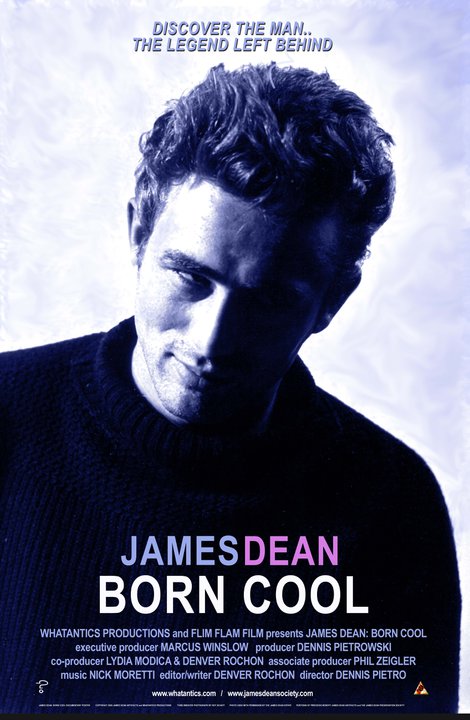
James Dean Born Cool

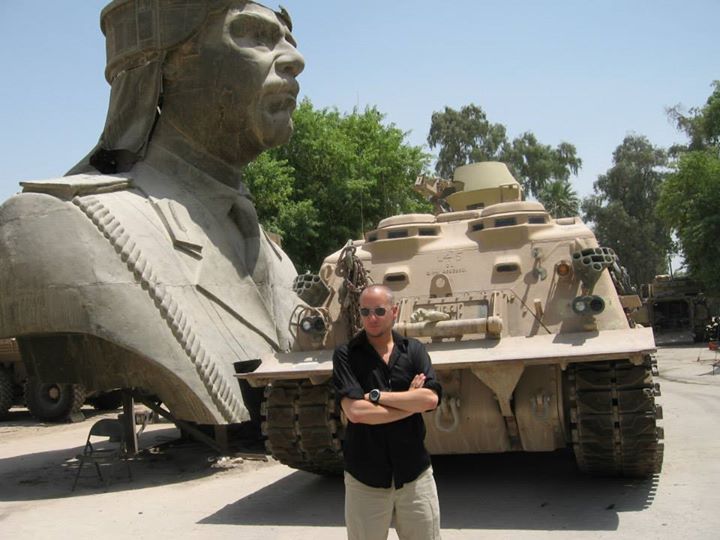
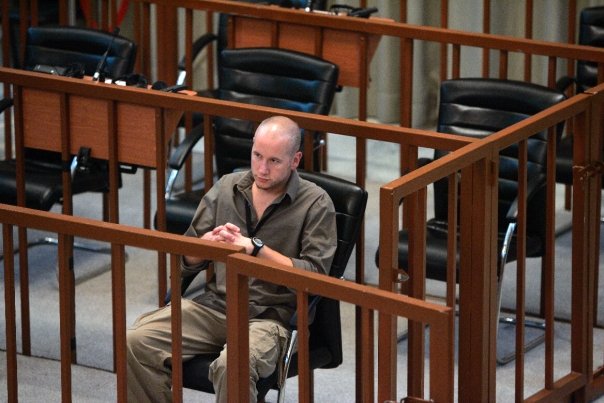
Owner of Whatantics Entertainment, Denn Pietro has worked as a TV field producer and/or director on such projects as ABC Good Morning America, World News Tonight, Nightline, and countless other shows including trials on Court TV/Tru TV trials. He was a director and camera operator for the world record and media feed of Saddam Hussein’s War Crimes Trial in Baghdad in 2006-2007 while working for the U.S. Regime Crimes Liason’s Office in conjunction with the Iraqi High Tribunal.

In 2000 Denn Pietro set out to bring the world an intimate look into the world of James Dean with his documentary James Dean: Born Cool. Granted exclusive access to whatever was needed to honor the memory and life of Dean by Executive Producer Marcus Winslow Jr. Pietro managed to create one of the most enduring documentaries to date. It was an honor to be able to bring our readers a deeper look into the project with this interview.

Can you tell us a little about yourself? Where are you from? How do you think your early upbringing influenced you most to be who you are today?

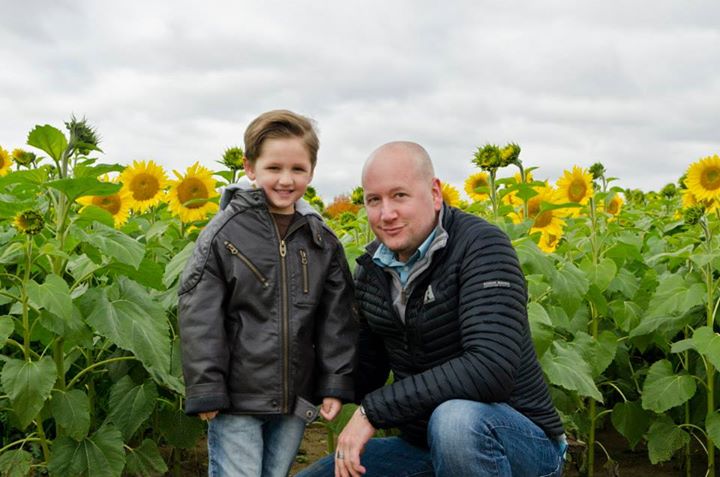
I have a seven year old son named Canyon (I may have an obsession with the Grand Canyon) that I adore and other than that, I sometimes mow my grass and watch Survivor Wednesdays on TV.

I live South of Detroit, Michigan in an area known as “Downriver” which I love, but the rest of the Detroit area likes to make fun of for reasons I don’t think they even know, but mostly because some cheesy radio DJs can’t think up better jokes. It’s a blue collar area with hard working people. I grew up in Inkster which was a predominately black community before moving to Taylor which was predominately, well, the butt of Downriver jokes. It was a happy place where playing army in the woods, jumping dirt hills on our bikes, and playing with our Star Wars action figures kept us sane… when we weren’t watching TV.
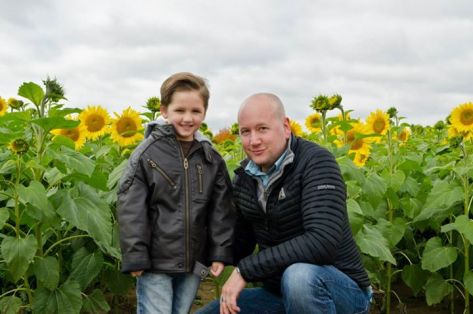
Denn and son Canyon

Did you develop a love of television and film early on?

I grew up on a dirt road that was kind of rural. Movies and TV were a gateway into an imagination filled with travel, adventure, laughter, love, heroics. I loved shows like Happy Days, Mork & Mindy, Dukes of Hazzard, Three’s Company and Ripley’s Believe It or Not. I cried during E.T., wanted a Gremlin and wished I had found a treasure map and became a Goonie.

When did you first know you wanted to pursue a career in the industry? What advice would you offer others wishing to do the same?

I used to want to be on Saturday Night Live at a time when a friend got an old VHS video camera as a present and wanted to start making movies and he needed actors. Since his options on that rural dirt road were kind of bleak, I was plopped in front of the camera starring in short films inspired by Miami Vice and Night of the Living Dead. They were terrible. I was terrible. I wanted to run the camera and the rare times I was allowed to shoot a quick shot, my friend would look at it and then announce, “Okay, we gotta reshoot that one!”

I think that rejection propelled me to pursue this life.

My advice is, even if you don’t know how to make a film, documentary or TV show… fake it! Look at the best stuff out there and mimic the quality with the intention of having your project look and feel as close to that one as possible. My second advice, because this is the part I fail at, is learn how to sell yourself and be a showman for you and your work like PT Barnum or Robert L. Ripley to help ensure that people see your work.
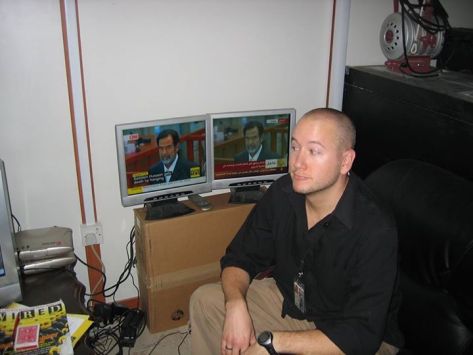
Denn Baghdad - 30 min delay - Saddam Verdict

What do you love most about your particular line of work? What do find most challenging?

I love the challenge of trying to tell a story and having to adapt as a filmmaker to all the hurdles that come up along the way and still, in the end, being able to finish project that you can be mostly proud of. One challenge in particular that comes to mind was trying to do a documentary about Dan Robbins, the creator of Paint-By-Numbers. In talking to him, I discovered that he was embarrassed by his involvement with PBN and felt that, in some ways, it ruined his career and life. I remember him showing a painting with regret and saying this was the last time he truly felt like an artist – it was art he made in high school before his involvement with PBN.

Through the telling of his story, I wanted to not only convince the art world that PBN and Dan were important and deserved to be in the Museum of Modern Art, but to also convince Dan of the same thing. Unfortunately due to his health set-backs, by the time we were ready to start shooting, all of our talks about how great he and PBN was began to resonate and by the time of the interview, his answers were much different. In the end, I convinced him how great he and PBN was, but sadly, I couldn’t tell the story I originally intended.
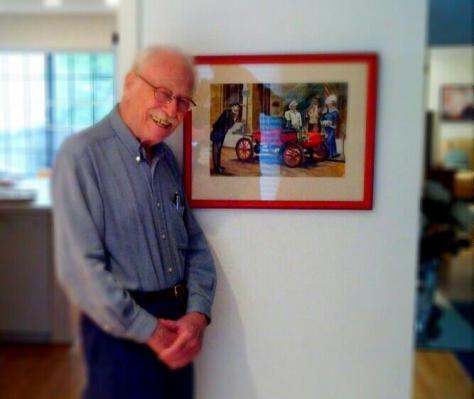
Dan Robbins Paint By Numbers

How did you come to work on the Saddam Hussein War Crimes Trial? What was that experience like?

I did a lot of work for Court TV and I guess I was unique in being a field director and a robotic camera operator for live court trials in the Midwest and East Coast. There was a production company out in the West Coast that also did the same thing for Court TV and the guy who owned that company bid for the government contract and got it. There was a lot of talk about the people brave or dumb enough to go risk their lives covering that trial and I was asked a few times before I finally said yes.

We worked for the Regime Crimes Liaison’s Office, which was part of the Department of Justice, and the RCLO worked with the Iraqi High Tribunal. I was in Baghdad for 15 months and decided to go because, as a writer, I felt I needed to experience war and its affects, but on my terms. I wasn’t brave or strong enough to ever be in the military, though I worked for a couple years filming for the Marine Corps when I was young enough to be a recruit myself.

For me, being in Baghdad was surreal. I lived at the US Embassy and though we had to dodge rockets and mortars, we didn’t live in the same kind of assault the Coalition Forces had to endure. I felt like I was doing my part for the country without having to make a choice to kill someone, though as a director, there were many court participants like some judges, attorneys, and guards that we couldn’t show on TV because they would be killed if known of their participation in the trial. Plus, I would be at risk of going to some sort of Iraqi jail for such an incident, so the trial was on a 30 minute delay just in case somebody walked into camera view, the editor would have time to cut them out before the footage is fed to the world press.

One of the other directors and robo cam operators, Dennis Lynch, just released a book about his experience covering the Saddam Hussein Trial called Shooting Saddam. He has an incredible point of view and sense of humor as he endlessly pursued finding a good cup of coffee over there. I definitely recommend his book!
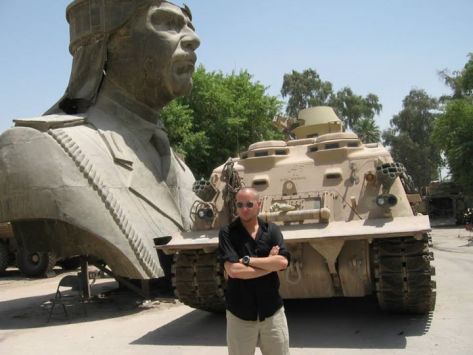
Denn Baghdad

Is there any one project that you hold more dear than the others? What is it and why?

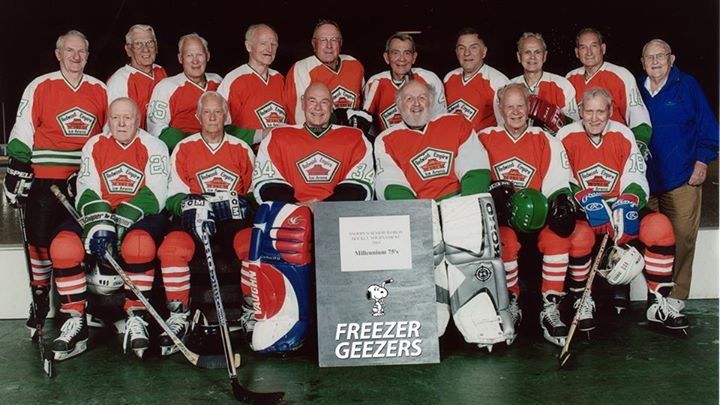
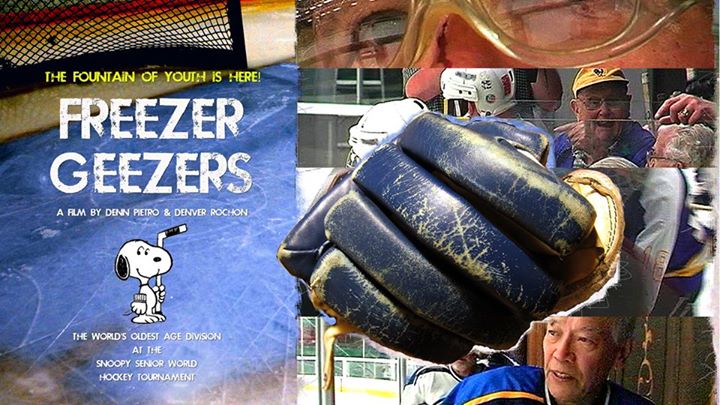
Freezer Geezers. hands down. Not a day goes by that I don’t think about them. Freezer Geezers, my documentary, with Denver Rochon, follows 83 year old coach Ray Tuller and his team – Millenium 75’s – from Springfield, MA, as they challenge three other teams from all around the world competing in the world’s oldest age division, 75 and over at the Snoopy Senior World Hockey Tournament created by beloved Peanuts artist Charles Schulz at the ice rink he built in Santa Rosa, CA.

I don’t fear growing old, they taught me to lighten up, stay active and have fun. Pepe, an 89 year old player, was still walking his dog a couple miles every day rain or shine in Massachusetts and let me tell you, that dog was so big he’d knock you down. In fact, out of the group I was closest to, Pepe, the oldest, who lived the longest.

Whenever I’m feeling tired or sore, I think of them. They’ve had hip replacements, cataracts, triple bypasses and they’re all still playing hockey and most of them are in their eighties! I think in finding this story, I may have discovered the fountain of youth!

Freezer Geezers

When did you first take an interest in James Dean?

I remember vividly sitting on my dad’s lap in a doctor’s office flipping through a People or US magazine and, because I was a huge fan of Fonzie from Happy Days, my dad pointed to this geeky-looking photo of a young James Dean wearing glasses standing in a basketball pose for his team photo for the yearbook. My dad said, “That’s James Dean, he’s Fonzie’s hero!” That was enough for me, if he was cool enough for Fonzie, he must be the coolest guy on the planet! After that, Jimmy became the epitome of cool.
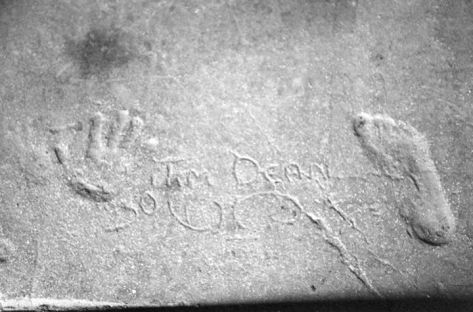
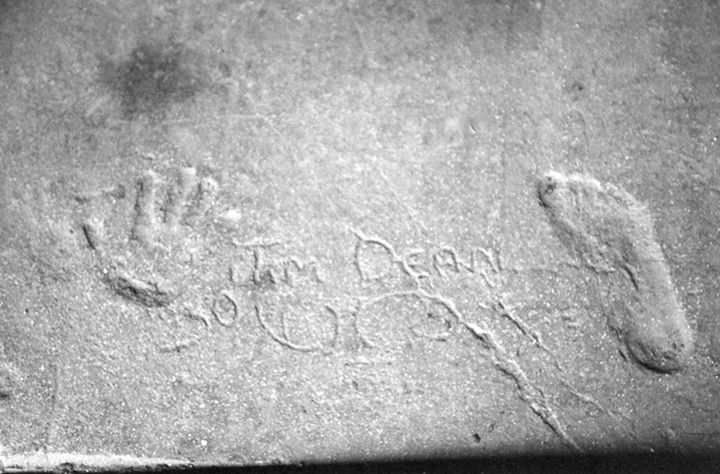
Denn at James Dean Footprints

Why do you think he has left such an impact on the world so many years after leaving it?

James Dean left an impact because his role in Rebel Without a Cause came out in a defining age where the culture and idea of being a teenager was changing and I think Rebel was a movie that really spoke to the masses without being over the top or preachy. The characters were relatable and ordinary, just good kids putting themselves in bad situations that can happen to any of us.

James Dean was a star on screen. You couldn’t not watch him, he pulled you in and didn’t let go until he was out of a scene which is a testament to his acting. I think pop culture has helped carry on his legacy and I’ll even throw it back to Fonzie in Happy Days. I think having a photo of James Dean in Fonizie’s locker helped solidify Jimmy’s place as a symbol of cool and rebellion because that’s what the Fonzie brought to that generation that was then learning about Jimmy.

Today, James Dean can be many things to many people. In Jimmy, people found a bit of themselves – a loner, a rebel, someone who wanted to fit in or someone wanting to fight. Girls wanted to date him, guys wanted to be him. He came across as vulnerable, temperamental, unpredictable, funny… so many things.

I bet most people who can recognize James Dean haven’t even watched one of his three movies, but they know him as a rebel or as cool because that’s how he lives on today in the images we wear on shirts or the posters on our wall. As long as pop culture still continues to value his image as a prop on television and film, he will never be forgotten.

What do you think his feelings might have been on the subject?

I think Jimmy would laugh off the attention he gets and would want people to remember him for his work on screen. What fascinates me about him is how much he deeply loved and respected acting. Do you remember the jock in school who would draw out plays on a napkin? Well, that’s what Jimmy would do. I loved finding the notes on napkins on display at the James Dean Historical Museum or reading his letters about acting. He seemed to think a lot about such things and was always writing notes on how to be better. He planned to be a director and kept notebooks with notes he picked up shadowing the directors he worked with – Elia Kazan, Nicholas Ray and George Stevens. Sadly, those notebooks were probably thrown out after his death.
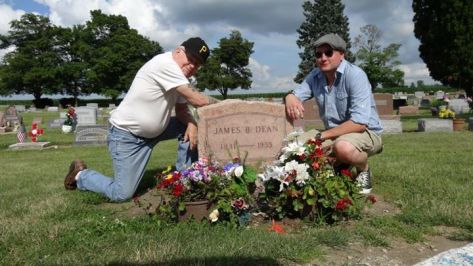
Denn and Phil - James Dean Born Cool

What one thing do you admire about him most as an individual?

James Dean was talented. That’s what I admire most. He was so damn good in his three movies and it is such a loss to film that he died far too young which is also what makes his life so remarkable and his legacy so mystifying.

Do you think there is far too much focus on the fame aspect of his life and not enough on who he was as an individual?

Although others sometimes disagree, I think fame is what brings us all to James Dean and I love the fact that people decide to say, “Hey, who is this guy, I’m gonna to check out his movies” or they get so interested in him that buy a poster or wear a shirt. I love that some fans take it a step further and watch a documentary (you know, say… mine!?) about James Dean or visit his hometown in Fairmount, Indiana. Fame is what brings all of his fans together to celebrate his movies and his life.

How did the idea for James Dean: Born Cool come about?

I’ve been a fan of James Dean since I was probably 8 and when I learned his hometown was only four hours away, I was certain I was going to drive and visit Fairmount, IN as soon as I got my license. Sadly, I didn’t make it until I was 24 – the same age James Dean was when he died.

I gathered a pretty eclectic group of friends for a road trip to see a concert at Wabash College and visit James Dean’s hometown which was on the way. We went there and I kind of rushed the visit because I didn’t want my friends to wait around too long as I looked around the James Dean Gallery. After we left, one of my friends finally in the car was reading a brochure that showed where the tombstone was and the Winslow Farm where he grew up. We apparently also missed the other museum in town – the Fairmount Historical Museum.

The next day, we went back to Fairmount and we visited the Historical Museum. I raced through that museum because I didn’t want to hold my friends up from getting home and when I was finished, my three friends were all sitting around talking to the people volunteering at the museum so I just kind of let them know I was done and sat down with them. My friends fell in love with Darlene Campbell and Phil Zeigler! Darlene went to high school with Jimmy and Phil was a fan who fell in love with Fairmount and moved there after he retired. There were so many stories that she had about Jimmy and her and Phil recounted endless stories that the people in town shared with them that also knew Jimmy. Five hours later, we were still there talking and the museum was closing!

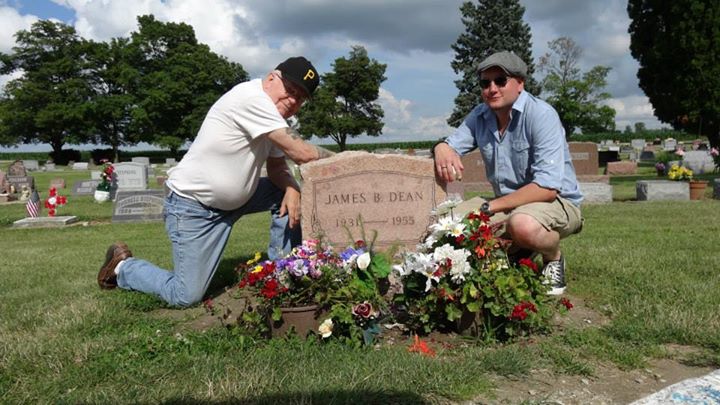
Phil told us how to get to the cemetery so we left and went there and to the farm just down the road. While outside the barn, a car pulls up towards us. It’s a new best friend Phil! He gave us a great tour of the farm and next thing I know, we’re back at Phil’s house for the next three hours before the four hour drive back home forces us to end our visit.

On the way home, when everyone was asleep I kept thinking about all the stories and how great it would be if someone records them and documents them before the people are gone and the stories with them. I kept thinking that until all of a sudden, I sprang up in my seat and thought, “Why not me!?” So the next day I called my favorite Fairmount Ambassador Phil Zeigler and asked him if such as documentary was ever made and if Marcus Winslow and the James Dean estate ever granted full access to their archives. The answers were no but Phil thought I should be the one to do it so he helped me set up a meeting with Marc and the rest is history!
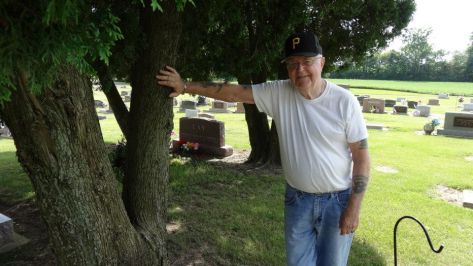
Phil Zeigler - James Dean Born Cool

Were you nervous when you first approached Marcus Winslow Jr.? What was it like to work with him and Phil Zeigler up in Fairmount? What are they like as people?

I wasn’t nervous to approach Marc because I thought the worst thing he would say is no and at least I made the meeting a nice road trip with a girl I liked at the time. He was very supportive and said yes to everything that I wanted to do in making the documentary in terms of access.

In making Born Cool, Phil allowed me to stay in his extra room in a house that Jimmy’s father lived in late in life which is next door to the Farm. I would look out my window and see the farm and would wake up to the sound of cows “mooing”. It was great. I couldn’t have made the film with Marc or Phil. They were absolutely instrumental in talking to the normally reclusive friends and family into participating in my documentary. There are always people coming in and out of there trying to make a buck of Jimmy and then wasting everyone’s time or angling the story so they wished they hadn’t been a part of those projects. Mine was different because Marc and Phil trusted me for some reason.

Was there anything you were surprised to learn about Jimmy during your filming of the piece?

The thing that surprised me most about James Dean is how funny everyone said he was. Some thought he would’ve become a comedian rather than the serious, brooding star he became.

What was the most challenging issue you faced in bringing that film into existence?

The biggest challenge in making the film was time. I shot almost all of the interviews, but I worked full-time and had to travel four hours and really wasn’t an editor. I had just completed a short film with my friend Denver Rochon and his wife Lydia called Whippersnapper and I thought working with them was so much fun so I asked them to eventually join me on Born Cool as producers and Denver as an editor. Having them with me during the road trips and all-nights while scanning photos at Phil’s was so much fun. The energy really came alive with all of us working together.

Do you have any stories from behind the scenes of the project you might be a liberty to share with our readers?

Phil set me up with an interview with Hugh Caughill, a former teacher of Jimmy. Hugh was in a nursing home and had some memory issues. He thought I had a car similar to another guy from California who was working on a book who, he claims, stole a picture of Jimmy, and believed me to be him. After the interview, Hugh began calling people in town telling them to look out for this shyster in town – which was me! Needless to say, news travels fast in a small town and I probably would’ve had more interviews if it weren’t for mistaken identity. Marc WInslow had to make a number of calls to assure people I wasn’t that person and he supports me.
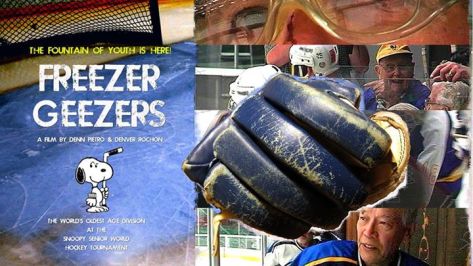
Freezer Geezers 2

Do you have a dream project you’d most like to bring the world before your time is up?

My dream project is to direct and sell my script inspired by my documentary Freezer Geezers. I am working on it and would love to make that a reality! I’ve been so fortunate to accomplish and exceed my dreams, this is the last for me to accomplish, but I still have a little time!

What do you think is key to a life well lived?

Do you know what the secret of life is? One thing. Just one thing. You stick to that and everything else don’t mean shit. What’s the one thing? That’s what you gotta figure out.

I couldn’t resist. I love City Slickers and that scene where Jack Palance is telling Billy Crystal what the secret of life is. For me, I’m learning that you just gotta laugh lots.

Is there anything you’d like to say in closing?

I hope people maybe go to whatantics.com and learn a little bit more about the projects because so many talented people helped to make them a reality and I’m a horrible salesman! Thank you again!!

http://www.whatantics.com/
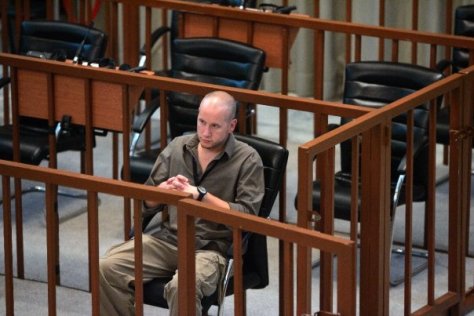
Denn in Saddam's seat at Trial in Baghdad

An Interview with Jim Hayes

11745705_1532434713667762_893328590604740694_n

Jim Hayes is best known as a community leader for the www.MainstreetFairmount.org project to preserve the streets of Fairmount, Indiana. He is also a distant cousin of James Dean.

What was it like growing up in Indiana as you did?

I grew up during the 1940’s and 50’s when the country was at its zenith; good jobs were plentiful and the future bright. What kid wouldn’t want to grow up where the four seasons are spring, summer, fall and basketball? In my early years there were trees to climb, woods and fields to explore, western movies on Saturday morning with popcorn, coke and a Hershey bar. Carrying a pocket-knife to school was acceptable and every boy had one. As a teenager it was girls, drive-in movies, cool cars, drag racing and basketball. What’s not to like?

Why did you feel compelled to go into civic work as you have?

 I guess the main reasons are Community pride and my interest in the preservation of historic places. Fairmount is unique among all cities and towns in Indiana and possibly the entire country. The thing that makes it unique is the high percentage of the population that has been listed in the Who’s Who in America. An article about Fairmount published in the Indianapolis Star on July 30, 1950, credited Fairmount with populating the Who’s Who at a rate that was 14 times the national average. At that time there were no less than 27 Fairmount natives listed, including best-selling authors, three college presidents, scientists, artists, business people, etc. And, there were 4 more in the pipeline; James Dean was still unknown, Jim Davis, the creator of the Garfield comic strip was 5 or 6, Phil Jones who was to become a CBS national television newsman and his classmate, Bob Sheets, destined to become director of the National Hurricane Center, were about to enter 9th grade.

Why do you think it is important to preserve Main Street in Fairmount? How did that project come about?

It’s both a matter of civic pride and the fact that Fairmount is an international destination for the millions of James Dean fans worldwide. Fortunately, there has never been an effort to turn the town into a James Dean theme park because the fans who come here seem to be looking for an authentic experience. They want to experience the town the way Jimmy did. I believe few if any are ever disappointed just based on the numbers of fans that return on an annual basis. Some even move here. I think the preservation movement began in earnest when a group of concerned citizens first established a Main Street organization a few years back.

Can you tell our readers a little about your relation to James Dean?

Jimmy and I shared the same great-great grandparents on his mother’s side (Wilson’s) of the family so we are distant cousins.

johnnywilson

Johnny Wilson, center.

Did you know his grandfather Johnny on his mother’s side yourself? What was he like?

Yes. Johnny was a janitor at Evans school, which is the grade school that I attended in Marion; all the kids knew Johnny; He was quiet and seemed a little shy. Jimmy had his grandfather’s looks. My mother worked at the school too so I have several pictures of Johnny with the school staff.

Did your family ever speak much of Jimmy or Mildred, what they were like as people?

Not that I recall other than when Jimmy began to appear on television shows. I think we saw all of them.

What do you personally admire most, from what you know, about the man who was James Dean, all fame aside?

I would have to say his drive and dedication to achieve his dream. But beyond even that, is how he connects in a powerful way with young people from all over the world. It’s beyond understanding.

What are your thoughts on the cultural fascination with him still?

I find it fascinating that after 60 years young people are still obsessed with Jimmy. He cuts through barriers such as generational, racial, language, national, cultural, and religious like a razor and captivates the young. I can only think that he expressed so well the frustrations and confusion that all young people feel that they recognize him as someone who understands them at their deepest levels, and yet it ultimately remains an impossible to articulate mystery. All I know is that he connects with a vast audience in a powerful way. Jimmy’s fans from differing cultures, traditions, language groups and religions seemingly have a unique culture all their own.

“Equals” by Carl Miller Daniels

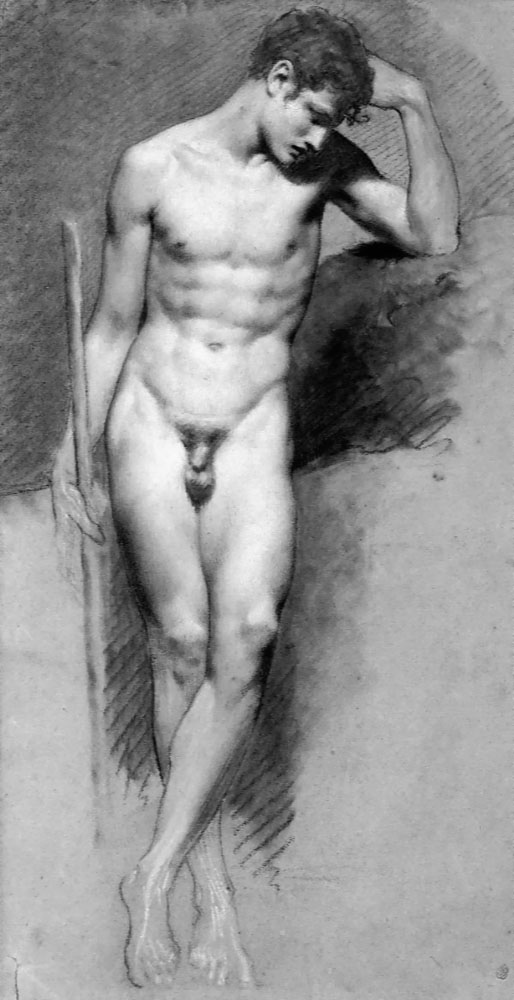
academic-male-nude-2

Equals

wild men often have a few good years, then burn
out like a flare.
and who’s to say the goal should be longevity?
who’s to say that quantity trumps quality?
maybe the wild men only ever wanted a few good
years, and that was enough for them.
everything else was just a bother, nothing
to be looked forward to.
yep, a few good years, and then
well, if not death, then
something like it.
just drifting in a haze,
coping with what’s left.
those few good years, though, wow!
wild men wouldn’t trade ’em for anything.
not even a signet ring with superman embedded
in the clear lacquered stone.

This poem was first published in FUCK!, Vol. 11, No. 9, September 2008. It also appeared in Zygote in My Coffee, print issue #6,Winter 2009. And it appears in the book from the poet, Gorilla Architecture (Interior Noise Press, 2011).

An Interview with Brandon Kralik

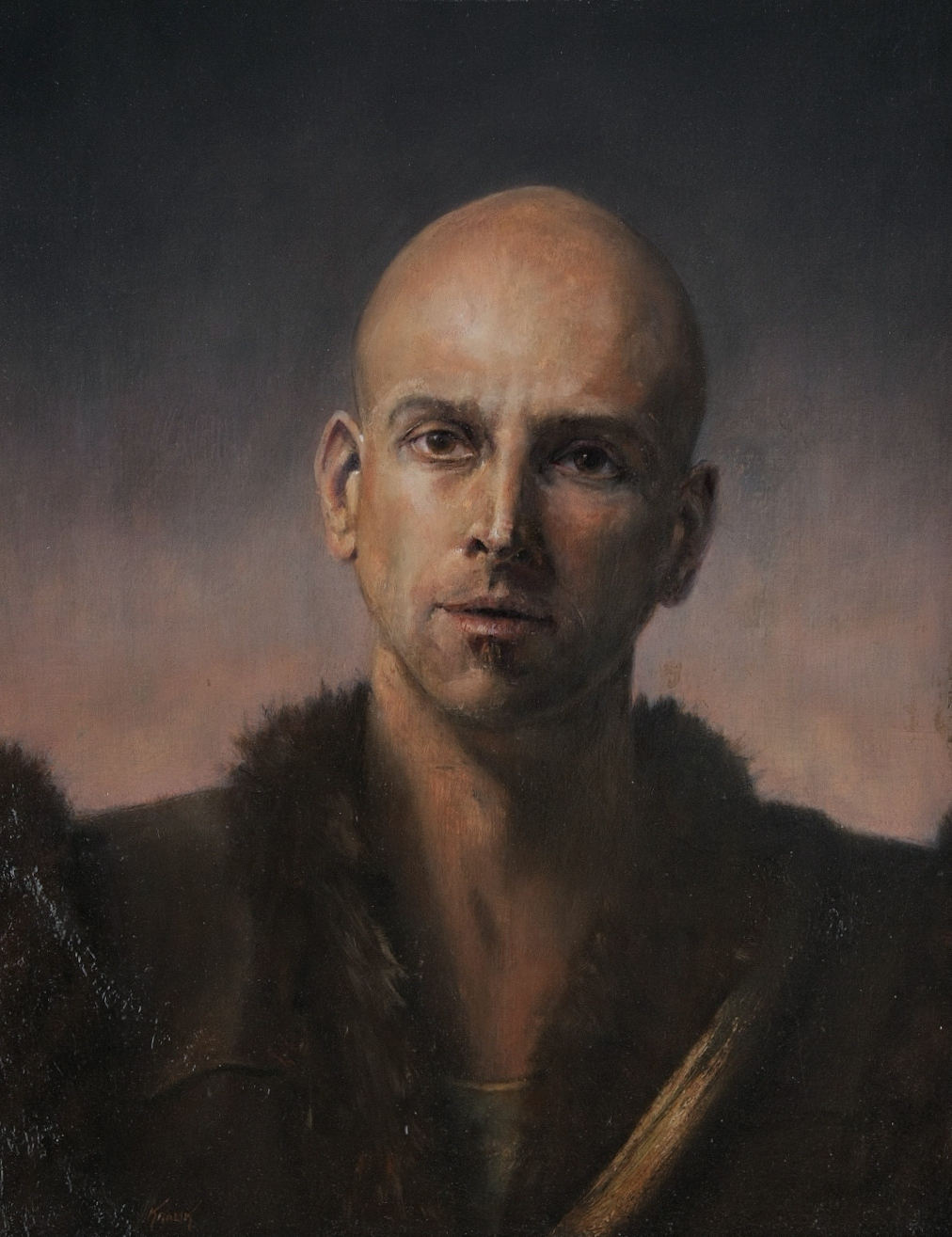
Kralik_theWonderer_61x46cm_oilonpanel_

Post Contemporary artist Brandon Kralik worked for three years in the studio of the figurative Odd Nerdrum. A major in Fine Art, he has also studied Art History, photography, and film at CUNY. He has written an arts blog for Huffington Post as well as several other publications both online and in print. His paintings graces the collections of Steven Tyler, The Crown Princess of Sweden, Matthew Barzun, who leads the financial campaign for President Obama’s re-election, and Carlos Santana, to name a few.

Can you tell us a little about your childhood? Did you always have a love of art early on?

I have always been interested in visual images and have drawn my entire life. My Mom drew, her sister and brother in law were both artists and I remember visiting their studios when I was very small.

Komstad_Lanthandel

What is the very thing that you remember liking to draw most often?

I drew all sorts of things but people have always been most interesting for me. Some of my earliest drawings that I remember were of people, real simple, in landscapes. I liked to tell stories with my drawings.

What do you love most about being a painter?

 Being a painter allows me a certain amount of freedom to do with my day as I wish which has always been what I wanted. I love the freedom I have to create, to be at home or to travel as I want. Freedom.

Priestess_Kralik_July_2015_wm_fb

Is there one subject you love to create above others or do you like to always be expanding in your work?

People are still my favorite subject but I hope that I can expand on that. I mean, it is one thing to paint a portrait but what I really want more than to achieve likenesses or to copy nature is to convey a sense of otherworldliness, to delve into the great mystery and explore the ancient myths and how they apply to us now. I am interested in eternal values and what we all have in common as human beings.

How did you come to work with Odd Nerdrum? What did you learn from that experience?

 I came to know Odd through a series of pleasant coincidences. I told the story last year at the Representational Art Conference in Ventura, California (TRAC) and there is a video of it on youtube but to make a long story short, I was working in a gallery in Hawaii when a man came in who knew Odd Nerdrum, was his neighbor in Norway and said that if I came to Norway he would introduce us, and so I did. Odd ended up inviting me to paint with him so I did that for 3 years.

I learned that it was possible to paint grand paintings in our time. I learned that the secrets of the old masters were not lost but that they just fell by the wayside in the wake of Modernism and Post Modernism. I learned that I was not alone in wanting to create masterpieces. I also learned  lots of small technical things about pigments, preparing canvas and paint but Odd is a wealth of information about philosophy and Art history and I find all of that super interesting.

Summit_bigcartel_1200

What led you to Sweden? Do you ever miss the States?

 While I was in Norway at Nerdrum’s I fell in love with a woman from Sweden eventually moved there and opened my own studio, which I still have. I miss people, my family but I go back to the States pretty often. I love to travel. I spend most of last year just north of New York City but earlier this year I moved back to Sweden and have been living in Stockholm.

Are there any little known things about you that our readers might be surprised to learn?

I am sure there are! One thing that people are often surprised to learn is that I lived in Alaska for three years on a boat. I have spent a lot of time exploring the fringes of society. Alaska was pretty far out and the years I spent there led to some pretty good stories!

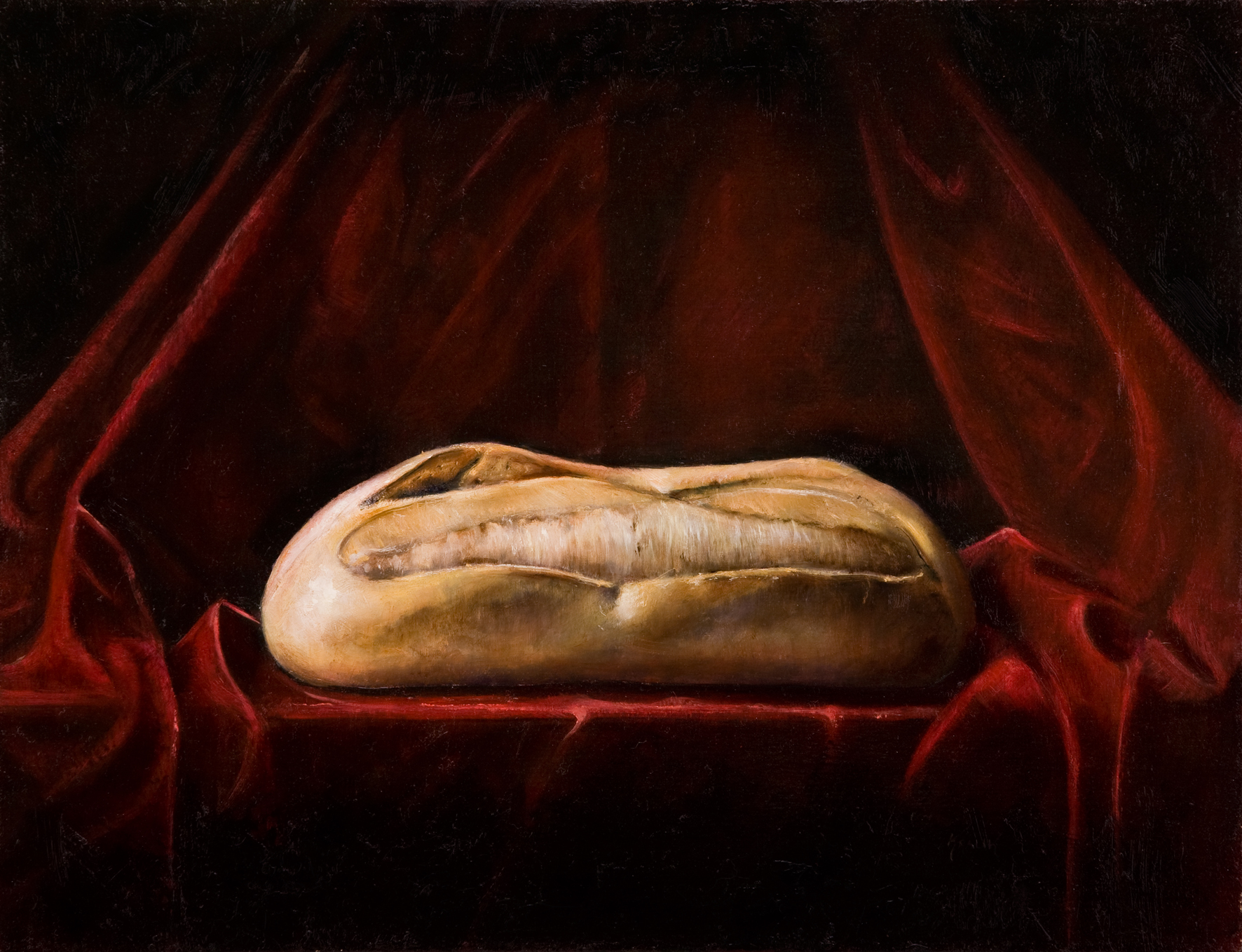
Kralik_Bread

Do you have a dream project you’d most like to bring into being?

 Interesting that you should ask. I have recently begun a video series that focuses on interviews with prominent people within the representational or Post Contemporary community. It is called Elephant and can be found on youtube and my Patreon page. I review ateliers, talk with painters, gallery owners and other professionals to help educate the public and collectors about 21st Century painting. It is something I have wanted to do for a while, to be able to share my experiences with a larger audience. It is an extension of the blog that I write for the Huffington Post, but in video format. People can support the project by becoming patrons and by donating a few dollars a month they can see all the videos and receive other bonuses such as sketches, paintings and eventually I will publish a book of my travels and experiences. I hope to do that later next year. My big plan is to next year, for my 50th birthday, to travel around the world and meet with painters and share that with my social network. The book will be based on that.

What do you hope people take away from viewing your works of art?

 I want people to understand that it is possible for them to own beautiful works of art. I do work on commissions but when it comes to my own work, what I want to say, I hope that mywork gives people a sense of balance, of inspiration and hope. I want this to come through in the imagery, the symbolism, but also from the craftsmanship. There is something very special about being able to live with well crafted oil paintings.

AlmondyTarta__2

What advice would you give those wishing to improve their skills as an artist?

 Draw. All the time. Every day. There are a number of ateliers now where one can go to learn the skills and I will be reviewing these ateliers and talking with the teachers there in the video series, Elephant.

What would you say is the best advice anyone ever gave you on life in general?

 My father told me that the second hardest thing in life is to live up to your potential. The hardest thing would be to get to the end of it and realize that you did not try.

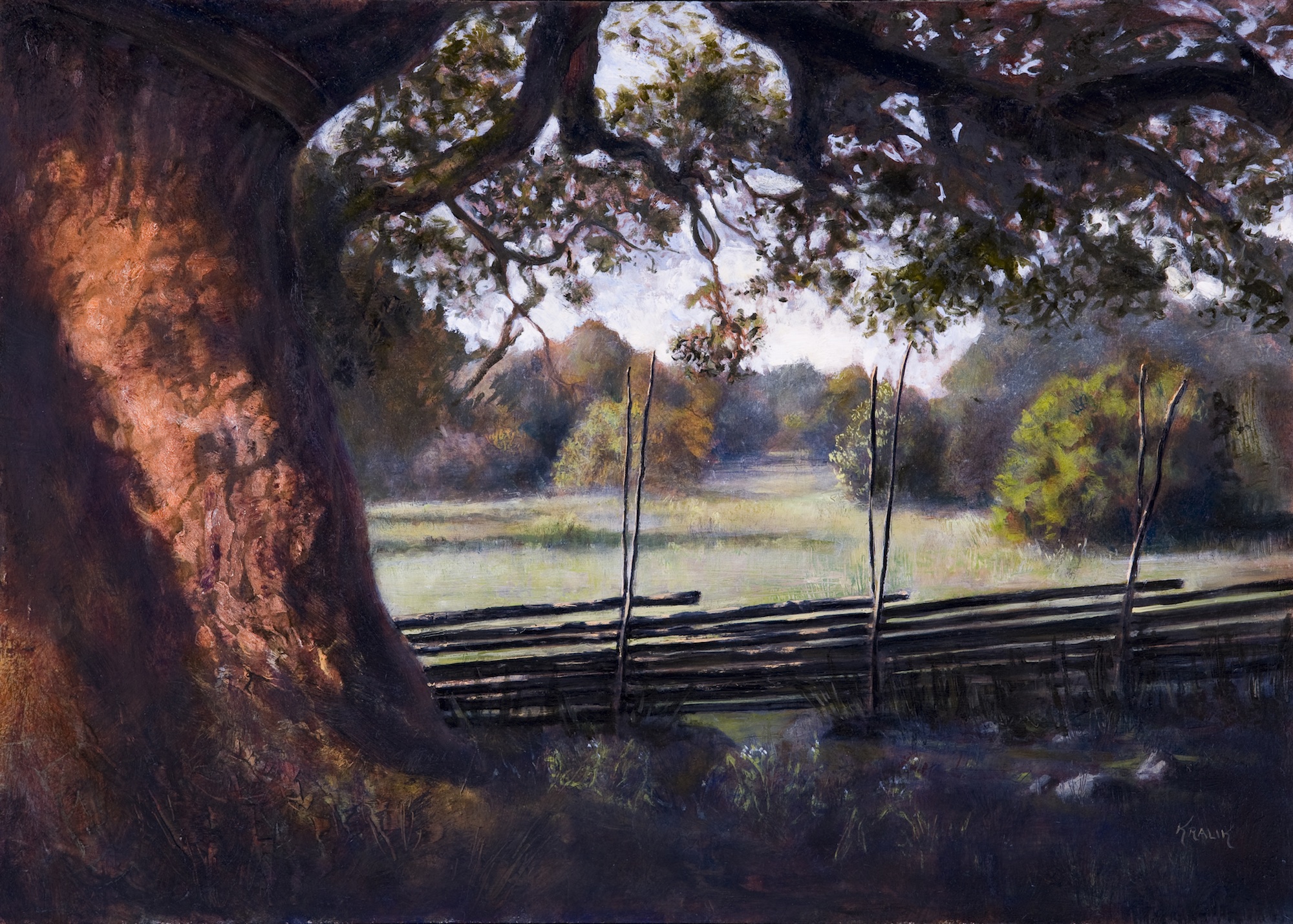
Rumskullaeken

What do you think is key to a life well lived?

 Happiness. To have my time, for that is the most valuable, irreplaceable resource, and to be able to spend it creating, and to once I have that, to enjoy it, do my best, and to benefit others with what I can do.  If I can add up spiritual victory after spiritual victory, day after day, then my life will have been well lived.

Anything you’d like to say in closing?

 I love to connect with new people and learn about life from their perspective, learn about how they live and am always happy to share what I know with people who are interested so, I am easy to find. I am on a lot of social media sites and of course people will find more information on my website. www.brandonkralik.com Feel free to connect with me! I also want to thank you for reaching out and offering to do this interview. I appreciate it.

SophiaKyrkan_largest

A poem for those who need it by Becket

path

The narrow
way
chooses to love
when
I feel like hating.
The narrow way is the choice to trust
despite
natural temptations
to fight to survive.
How narrow
this way of hope seems.
It is a supernatural
path to catch as my worries and fears
like untamable monsters
that whisper from the dark about death.
Believing
more life
lives after
this life is an unnatural
disposition
yet still I wear it like
old shoes.

This poem originally appeared in Pi Poems: for the one who needs them.

Becket is the assistant to New York Times bestselling author Anne Rice, with whom he co-created The Blood Vivicanti serial. He is also the author of four other books, as well as an instrumental music album. This is his first book of poems. Becket’s music and books can be found here:  www.becket.me.

An Interview with Enric Torres-Prat

Otros 1 (1)

Enric Torres Prat is known for his lushly illustrated works of art. His work at Warren Publications has featured Vampirella, Tarzan, King Kong, Star Wars, and Star Trek just to name a few. His work has graced covers of various publications worldwide and spanned fantasy, science fiction, gothic horror, romance, and westerns.

Did you grow up in Barcelona? What do you love most about Spain? What was your childhood like?

Yes I was born and I actually live in Barcelona. I love my country, Spain, I like the color, the smell and the taste of it

Did you develop your love of art at an early age?

Yes, I guess ever since I can remember.

Enric_Frankenstein

When did you first know you wanted to be painter?

I do not know the age, but I guess that happened as I got older.

What do you love most about creating on canvas?

Drawing the human figure, and most specially the female figure.

Enric_Vampirella_Horde_of_Chaos

Why did the works of Rembrandt leave such a lasting impression on you?

The art of Rembrandt did not really leave any specific impression on me, or not a different one from the one left by the art of Velazquez or many others. In fact, this quote about the art of Rembrandt that is attributed to me comes out of a confusion, but it is not now the right time to talk about the confusion.

Is there a dream project you’d most like to bring into existence?

Yes indeed, I have projects ongoing, but I’d rather be discrete for the time being.

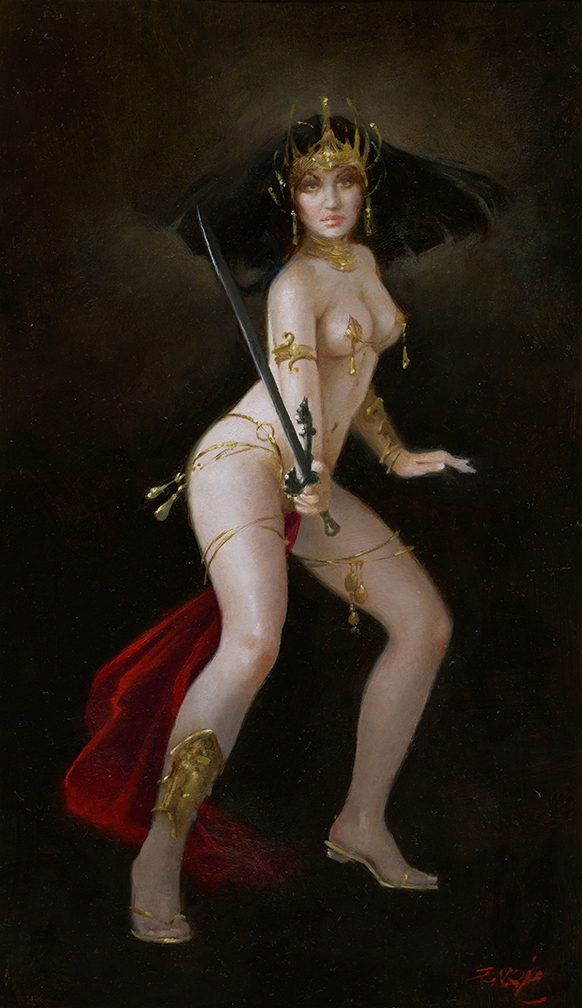
Enric_Dejah_Thoris_A_Princess_of_Mars

Do you have any one character you enjoy painting more than others or do you love them all equally?

Not in particular, my preferences are not related to the character itself but rather the environment, the composition, the color, the light, etc.

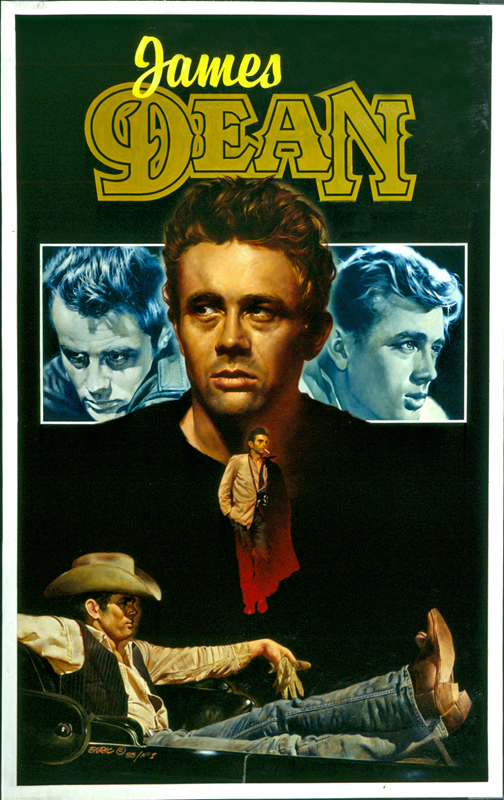
What led you to create your piece on James Dean? Are you a fan of his work?

On each of the trips to the United States I use to make, I always tried to bring with me some pieces of art to show it to the art directors of the companies I was visiting. For that particular occasion, I showed the piece to Leonar Leone, Art Director and VP of Bantam Books, and that was indeed a good choice. I’m not exactly a fan of James Dean, although I must admit he was a talented actor with an intriguing personality. Really interesting.

Enric_Illustrated_Book_Cover

What is about the human body that makes it such a great subject to cover in art ?

Absolutely everything. I find everything about it really interesting.

What do you hope people take away from viewing your works?

I love that people like what I do. I hope and I wish that people that invest their time in my art can feel rewarded by it.

Enric_Red_Sonja_I_Know_Not_Defeat

How have you changed most over the course of your lifetime?

There is no doubt that my art has changed over the years (I hope for good), as well as my lifestyle and the way I think. These things are strongly related, so they evolve together over time.

What do you think is key to a life well lived?

I wish I knew, in any case, trying to be a better person is at least a good vehicle to get there.

Enric_Fine_Art_Painting

How do you hope to be remembered when your time comes?

As a good person, I mean, like my grandson calls me, “Avi ets un bon home,” which means, “Grandpa, you are a good man.”

Is there anything you’d like to say in closing?

Yes, I want to apologize, for my lack of smartness while trying to answer these questions.

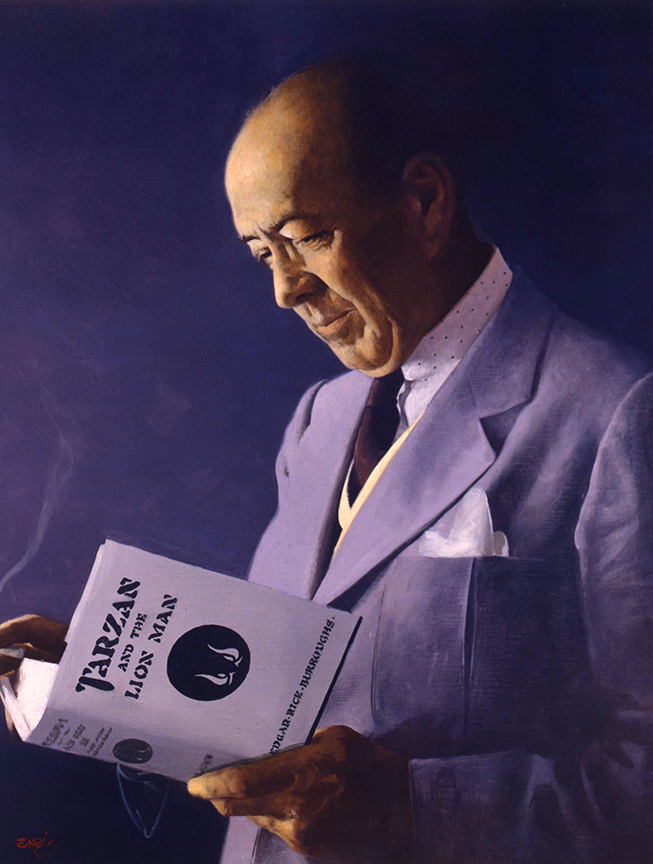
Enric_A_Portrait_of_Edgar_Rice_Burroughs

OLYMPUS DIGITAL CAMERA

An Interview with Lew Bracker

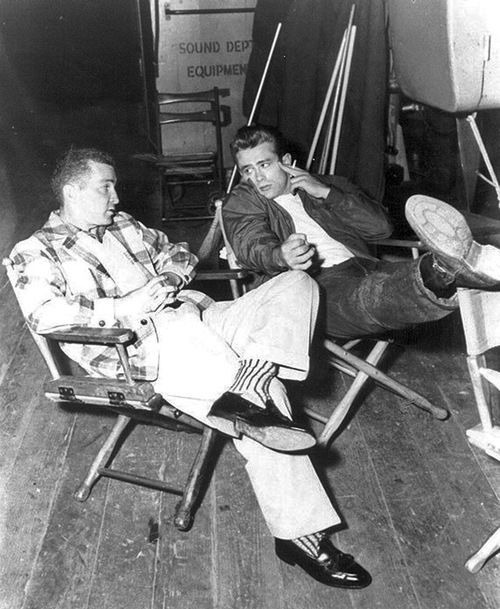
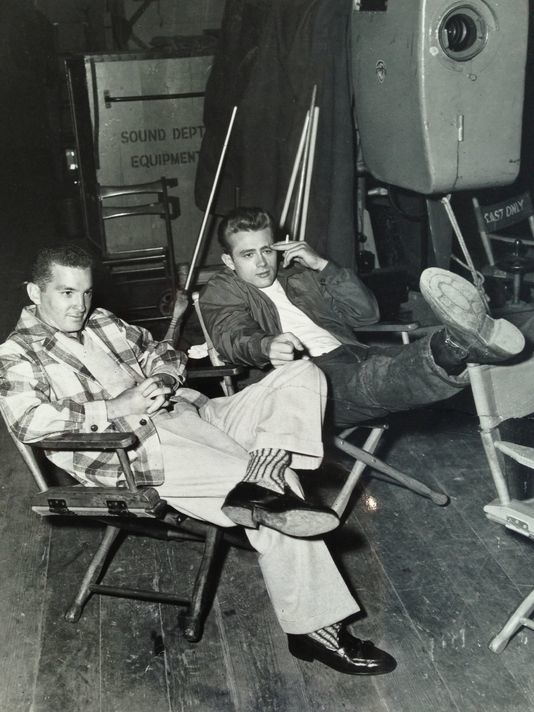
Lew Bracker & James Dean

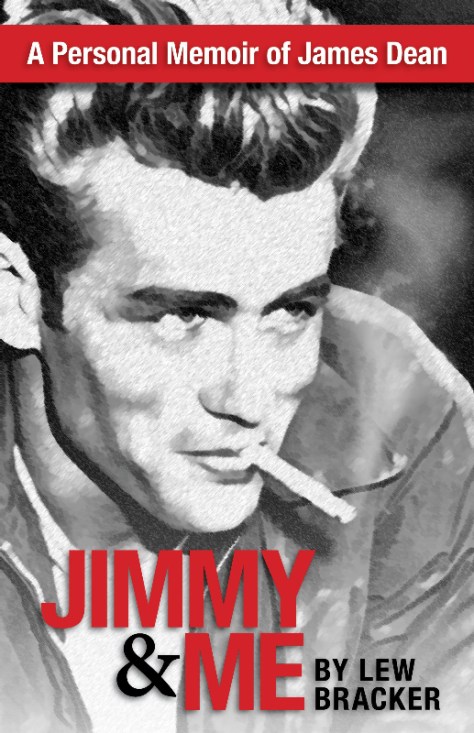
Of the more than 200 books written on the subject of James Dean, few actually had the honor of being close to the man behind the myth. In his latest work Jimmy & Me: A Personal Memoir of James Dean  Lew Bracker offers up his memories of one of the most dedicated actors of all time.

What were you like as a child? What are some of your most fond memories of that time? How have you changed most since then?

I have never really thought about how I was as a child. I grew up among a very large extended family in a small town, so I felt very secure with so many aunts and uncles and cousins around me. I do think it had a lasting effect on me in many ways. For one thing, family meant so much to me.

Did Jimmy ever talk much about his childhood? Did he ever speak of Mildred?

Jimmy never mentioned his childhood to me. Don’t forget, I only knew him the last 16 months of his life, and we were just getting started learning about each other. We both felt very secure in our friendship and in our mutual trust, but we were learning what we were really all about. Jimmy never mentioned his mother, or even Fairmount, for that matter. We just hadn’t got there yet.

Do you think it is fair to say that they both did remarkable things with the short time given them?

I can’t speak for his mother, but of course Jimmy had already accomplished remarkable things, beside his three movies, he had done quite a bit of TV and was on Broadway in plays.

What was it like to meet Jimmy via Leonard Rosenman?

Meeting Jimmy was not special. That was not why I was there. He was just a guy. I had never heard of him or knew what he did.

Aside from the love of cars what was it that first drew you to him?

The drawing together of Jimmy and me was our second meeting, also by chance. I was babysitting Lenny and Adele’s daughters one night when Jimmy dropped by. This was about a week or so after our initial meeting. We ended up talking the whole evening. Mostly about his and my girl troubles.

What was it about him that made him so easy to talk to on that second encounter? Did he have a way about him that made people feel safe around him do you think, made them trust him more than they would others?

No. Jimmy was actually shy, and he was very guarded when meeting or being exposed to strangers. And he compartmentalized his life quite a bit.

Jimmy seemed to always have a lot of questions. Did you ever get tired of those? Do you think his uniquely individual way of looking at the world with a sort of wonder was one thing that made him seem different from most?

Jimmy had a great curiosity and was always picking peoples brains by asking questions.

Did Jimmy have a hard time trusting people well enough to let them close? Do you feel honored to have been one of them?

Jimmy had trouble trusting anyone. Probably because his father put him on the train to Indiana with his mother’s coffin. But Jimmy trusted me and my family and was beginning to be more open.

You mention Jimmy having a Victorian moral streak. Do you think that is something that most of the world might be surprised to know? Did you admire how he stuck to his beliefs whatever they might be?

His Victorian streak was really a Quaker streak. He came from Quakers and was brought up by Quakers. Fairmount was founded by Quakers.

Is it true he used to talk of wanting to marry and having both of your children grow up as friends themselves? Did he seem to have a deep respect for children and the institution of family?

Yes, it is true that Jimmy and I had those conversations about someday, we would be married, our wives would be best friends and our children would play together. A little idyllic but it showed that Jimmy was planning for the future and wanted a family. He certainly adopted my family and our house as a family member.

Do you think if he had lived long enough he would made that comedy he had in mind? Was Jimmy good at making people laugh and lightening the mood?

When speaking of making movies, Jimmy wanted to make his own Western and his own Comedy, by that I mean directing. He was already going to make someone else’s Western, The Left Handed Gun for MGM.

brackerdeanrebel1cropped (1)

Did Jimmy seem to enjoy improvisation? What was it like getting to watch him do that?

Jimmy loved acting. Improvs were a great exercise and a challenge. He was always trying to perfect his craft.

What was it like to hear Jimmy talk about something he loved? Did he get excited when talking about the races?

Yes, Jimmy got excited talking about racing and cars. But we talked about other things as well. Jimmy loved to discuss things.

What was it like to have Jimmy mother you along on your first race? Do you appreciate having had the chance to have him there?

Jimmy being by my side at my lst Race weekend just seemed natural. I wasn’t surprised or made any special note of it. I suppose I even expected it.

What would you say is the most valuable thing you have learned from your own friendship with him?

While Jimmy was alive, Jimmy probably learned more from me than I did from him. Jimmy even said that he thought he was getting more out of our friendship than he could give. I never measured. I just took each day as it came and never viewed Jimmy as anyone other than my friend. Now, 60 years later, I have much more insight and have a much better understanding of everything and everyone involved during that time.

Are the any particular moments from your time with him that you hold most dear?

Most dear? Not one specific thing. Just the entire relationship and the memories.

Do you yourself still have premonitions as much as you ever did or have they tapered off? Have you found it useful to listen to them?

Yes, I have always had premonitions at certain times.

Why do you feel that even with so many years since his passing you and Jimmy still remain the closest of friends? Do you think it is fair to say you will carry him with you always as such?

Jimmy and I bonded as friends. Call it chemistry. Why do any two people just simply bond? As for considering our friendship transcends all these years it is simply the way I feel about it. To me, our friendship goes on and I think about him all the time. When I was racing, I felt he was there in the car with me.

Do you take some comfort in knowing that before he died Jimmy was happier than he had been since Mildred’s death?

I believe Jimmy was about as happy as he had ever been after his mother died. I know he was beginning to open up to people, I called it, he was beginning to blossom.

What was the most challenging thing you faced in writing Jimmy & Me: A Personal Memoir of James Dean? Was it painful at times to relive the moments captured therein?

Yes, I did not want to write the book. I had put that entire part of my life in to a private place in my memory bank and locked it up. I did not want to revisit it. But I did, finally, and while it was some tough going, it also acted as a catharsis, and I am glad I wrote the book. At times, I had to leave the computer and come back to it later, as I became emotional. But I knew that would happen and was a main reason for avoiding revisiting that part of my life.

What do you hope the readers learn from this particular body of work?

Readers may learn a little from this interview, but as readers all over the world have told me, they learned more from my book, about Jimmy, than in all the other books put together. And my book was all true. I wrote every word, and only about what I experienced firsthand.

Jimmy & Me (by Lew Bracker)

An Interview with Nick Holmes

IMG_2571

Born in Dodge City, Kansas Nick Holmes is a poet/photographer/actor who has appeared on television series such as Gilmore Girls and the Hulu exclusive Quick Draw. He has also graced the silver screen in such films as Super, The Giant Mechanical Man, and Guardians of the Galaxy.

Did you grow up in Dodge City or did you move from there before having the chance? What are some of your most fond memories from your childhood?

I lived in Dodge City until I was seventeen and it was a great place to grow up. The best memories I have of it include the landscape, the carefree feeling that only a child in a small community can know, and the burgeoning Mexican culture.

Do you think your being from there came in handy while playing Frank James on Quick Draw? What is it like to work on an improvised Western comedy? Is improv something you would like to pursue further?

Quick Draw is set in Great Bend, Kansas – which is a real place that’s only about eighty miles from my home town. It was cool to be on set and see things like directional signs with “Dodge City” on them. Being in a western is about the most fun you can have as an actor; you get to dress up, say cool things, ride horses, carry a gun – it’s a playground. Add the element of improv to that, especially alongside John Lehr (also a Kansan) and Nancy Hower, and you have an environment that is such a delightful fantasy that it never felt like work. Since the end of Quick Draw – I’ve done another project for John and Nancy that just got picked up by HBO. So hopefully they don’t screw that up for me…because I love them.

Do you happen to remember what you very first favorite movie was?

My first film was a campy vampire flick called The Thirst – the film’s distributor later changed the title to Blood Wars and made a poster for it with three mercenaries carrying sniper rifles…even though it was a comedy set on a college campus and there’s not a single gun (or mercenary) in the film. It was a lot of fun to do and quite an education. I still have my vampire teeth somewhere.

When did you know you wanted to be an actor?

A level of disdain washes over me when I hear actors say “I always wanted to be an actor for as long as I can remember.” But the more I think about it as I get older, it’s absolutely true for me. Anything else I wanted to do along the way was just another path that I thought might give me the same attention fix.

What is the most challenging aspect of being an actor? What do you love most about it?

The hardest part for me, specifically being a film/tv actor, is enduring the downtime. There are often long periods between jobs with little to encourage or satisfy the desire to participate in the acting experience. But that does make the days at work all the sweeter and that is my favorite part – to be on set.

Do you think the general public tends to underestimate how much dedication goes into learning the trade?

In America, yes. Even American actors underestimate how much dedication is required to learn the trade. Los Angeles is full of charismatic good looking people who have no idea what they’re doing. You can meet them at expensive coffee shops any hour of the day.

Who do you consider to be some of the greatest actors to ever live?

My favorite film actors are a mixed bunch of the charismatic and the poetic; Peter O’Toole, Gene Hackman, Sidney Poitier, Vanessa Redgrave, Newman, Connery, Freeman, Streep, Katharine Hepburn…I could go on and on.

What led you to write poetry? Do you think world could use more poets in days such as these?

It’s something I rediscovered about myself in a long period between the end of a marriage and the beginning of a love affair. The world probably doesn’t need any more poets – it needs to notice the good ones again. I read a lot of beautiful poetry on platforms like tumblr and even more bad poetry – there’s little commercial market for it anymore. It’s a terrific art form when it’s done well. The great rise above the good at the point that the idea being expressed is so eloquently distilled that you want them to dance on the notion a little longer than they do – leaving you with the feeling that you’ve been personally understood, or, even better, that you understand yourself a little better.

You are also a photographer. Are the photos you caption on your website all your photos?

I am a portrait photographer which is quite a different subject matter than my blog.

My tumblr blog, “Nick Holmes Is The Most Attractive Man I Have Ever Slept With”, is an agglomeration of stuff I find on The Internet. I originally started it as something completely different, lots of short films that inspired me and scientific things I thought were cool…then it morphed into what it is now – a lot of cat photos (that I didn’t take).

IMG_2572

There do seem to be a lot of cats on said site, why do you think felines have such mass appeal when it comes to the internet?

Because cats don’t care.

As someone who has worked in both television and film do you prefer one more than the other? How do the two differ most?

The main difference between television and film, from the point of view of an actor who has never worked more than a couple weeks at a time on a series, is the efficiency of the production. Television is a moving machine and there’s not time to second guess things. Film is a slower more deliberate process. I couldn’t pick a favorite – they’re both gratifying in different ways.

What was it like to work on Guardians of the Galaxy? Did any of you know going in that it would be as popular as it is?

It’s better to be lucky than to be anything else. I was very lucky that my good friend James Gunn, who wrote and directed the film, found a place for me in the movie. Knowing James and his wonderfully empathetic writing style as well as his lifelong love of comic books, I was certain that Guardians would be a great film that people would respond to…and they certainly did.

Are there any little known things about you that your fans might be surprised to learn?

I taught a squirrel, that I’m pretty sure was Abe Lincoln reincarnated, how to ride a bicycle. It was very rewarding.

What would you say is the best advice anyone ever gave you? (who was it)

Every time I hear this question I can only think of song lyrics.

At the risk of sounding (even more) trite – a girl named Jordan, who had a crush on me when we were kids, suggested I get contact lenses. That ridiculous little change effected my life drastically because it gave me confidence. I make a lot of mistakes – but I do so confidently. Thanks Jordan.

Do you have a dream project you’d most like to bring into being?

There’s no screenplay sitting in my head that I haven’t birthed…but I daydream often about being a Bond villain, my first gallery show, and making out with Grace Jones.

What do you think is key to a life well lived?

The ability to be relaxed and really al dente spaghetti.

What are you working on at the moment?

I just finished a film called The Little Migration that I hope will make it out into the world next year. My book of poetry Time Spent Falling is nearly finished and will probably live it’s life on Amazon and as an ebook. There’s been a lot of encouragement toward having a gallery show of my portrait work – but I haven’t given that a voice yet.

Anything you’d like to say in closing?

Follow me on instagram. I’m obsessed with it.   @narcissusholmes

IMG_2574

“These Stones Still Breathing” by Simon Perchik

painted-graveyard-emily-j-photography

These Stones Still Breathing

These stones still breathing
chill your mouth too, sealed
in whatever is started –you kneel

at each construction site :this grave
centered so the light inside
helps you find the frostline

and in time the building
no longer moves though you inhale
side to side the way mourners

root each wall arm in arm
and no more air –what’s left
you breathe out as small broken bits

that even in winter come by
to talk, bring you lips
a number, a street, a place.

~

Simon Perchik is an attorney whose poems have appeared in Partisan Review, The Nation, Poetry, Osiris, The New Yorker, and elsewhere. His most recent collection, Almost Rain, is published by River Otter Press (2013). For more information, including free e-books, his essay titled Magic, Illusion and Other Realities please visit his website at: www.simonperchik.com.

An Interview with Felino A. Soriano

10012584_10207367930455111_8711537447509211756_n

Felino A. Soriano is a poet whose work is inspired by the sounds of jazz. His work has appeared in over 550 print and online journals and 68 poetry collections. His most recent collections are Forms, Migrating, Of Isolated Limning, Mathematics, Espials, Watching What Invents Perception, and Of These Voices. His forthcoming collection Quintet Dialogues: translating introspection will also feature the art of David Allen Reed. He is also editor of the Poetry Journal Of/with.

Can you tell us a little about yourself? What was your childhood like? Did you have a love of words early on or is that something you picked up later on?

I’ve lived my entire life on the central coast of California. I’ve one younger brother. I’ve been shy and introverted since childhood, but was much more social as a youngster than I am now. Growing up, although I enjoyed reading, and partook in the typical drawing/coloring associated with childhood, I didn’t have an interest in art or writing until my 20’s. I’ve enjoyed music, however since I was very young, and an early influence musically for me, was my dad. He sang in a band that performed covers of artists/groups such as Kool and the Gang, Al Green, The Commodores, Smokey Robinson, and others. Although Jazz is my favorite genre of music, I still often listen to soul and R&B, and my dad’s early influence is what keeps me interested in these genres as well.

When did you first know you were a poet? What is it like to realize that you have to write?

I wrote poetry sporadically in high school (early 1990’s) for then-girlfriends. It wasn’t good. On 1/1/2000, I was at home and very strong desire pushed me to sit down and write a poem. Again, it wasn’t good, however, the feeling to write became so overwhelming, it added the dimension of studying poetry to configure a realization that expressing language differently was what I wanted to do. I began reading many books of poetry, and the first two I read were gifts: Octavio Paz’s A Draft of Shadows and Other Poems, and The Selected Poems of Li Po. 15 years later, writing is still a very insatiable activity, one that occurs very naturally, and one that I’m devoted to continuing to etch into my identity.

Do you consider yourself lucky to be able to express yourself in words as you do?

Lucky? No. What I do find is responsibility in the need to express myself through poetic language. I’m often asked why I write so often, and the easiest answer is always because of the elation poetry brings me. Of course, there are nuanced and aggregated functions as to why I write so often, including the deep desire to create a dissimilar poetic language. I write to create an understanding of my environment; and, I write to uncover/unconceal angles that are unseen and create a language to describe such discoveries. The following quote from Rainer Maria Rilke hangs above my writing table, and it exhibits the responsibility so very well:

If your everyday life seems poor, don’t blame it; blame yourself; admit to yourself that you are not enough of a poet to call forth its riches; because for the creator there is no poverty, and no indifferent place.”

Who are some of your favorite poets, past and present?

A truncated list includes Duane Locke, Pablo Neruda, Heller Levinson, Alan Britt, Octavio Paz, Li Po, Matina Stamatakis, Sheila E. Murphy, Emily Dickinson, Ed Pavlić, William Alexandar, Eric Baus, Michael Palmer, Langston Hughes, Silvia Scheibli, and many others.

When did you first take an interest in jazz? How do you think music and words have influenced one another throughout the ages?

Sometime in 2000 I saw an advertisement for Ken Burns’ documentary Jazz, which I found quite interesting. A short time later I asked a coworker about his interest in jazz, as he had an extensive catalogue of music in many genres. He recommended I purchase Miles Davis’ Kind of Blue and John Coltrane’s A Love Supreme. A few days later I bought the CD’s and became elated with what I was hearing. Subsequent to that, I watched each episode of Burns’ documentary and then realized jazz was going to be an imperative part of my experiences.

Since 2006, an active part of my writing routine consists of listening to jazz while writing. The perceptual alterations brought forth from the music assists me in configuring my brand of poetic language, in addition to the musical components within the language.

Poetry is a musical endeavor. The poetry I most enjoy includes a paralleling paradigm of interesting images collocated with music brought forth from attributes such as alliteration.

Do you have a dream project you’d most like accomplish?

As jazz is such an imperative part of my daily life, —not only through the interactive aspect of drawing sound for my writing, but contextual to listening as often as I can, I would really enjoy collaborating with a favorite jazz musician to create a dialogue of interpretation. In 2010 I wrote several hundred poems interpreting various jazz recordings I called Approbations. If I were able to collaborate with a musician, I’d very much enjoy working with Jason Moran or Robert Glasper. Both of these pianists are with Blue Note Records and are brilliant at redefining and obscuring the slim labels and delineations given to jazz music and the musicians.

I’d also very much enjoy doing an ekphrastic project, interpreting various pieces by artist, Gerhard Richter.  His art genuinely transfers me into writing, particularly his abstract work.

Can you tell us a little more about Quintet Dialogues: translating introspection? What can your reader expect from that? Why did you decide to include the artwork of David Allen Reed?

Quintet Dialogues: translating introspection is a collection of poetry I wrote in 2013. The original premise was to catechize the traditional jazz quintet paradigm, and use an introverted and interior motivation to communicate from the perspectives of musicians playing bass, drums, piano, saxophone, and trumpet. A foundational part of my language is the belief of connectivity between objects and people, and that at a very basic level, understanding how an object functions is key to analyzing the structural aspects of what makes the interaction unique. I often use of in my poems as a way to illustrate the connectivity about which I speak. Therefore, within the collection I use Of piano, for example, to burgeon the introspection posited by the musician to bring understanding to the reader through the language of each section. There are five sections consisting of 20 poems each.

The publisher and editor of the book, Michael Annis, brought a different perspective to the book and had a brilliant idea about laying out the book completely different from my original manuscript. This includes bringing in David Allen Reed, whom is a brilliant multimedia artist; the premise here was to take the dialogical ideals of the book and continue those into the presentation (Michael), art (David) and my writings. Therefore, the book will contain several more poems than what was originally included, as well as beautiful art from David.

What led you to create Of/with?

In February, 2009 I founded Counterexample Poetics.  After having my own poetry published regularly for about three years, I wanted to try and produce my own online journal. Originally, I intended to only publish poetry, hence the journal’s name, but like many intentions, they only last until a better influence arrives, and I began to publish interviews, book reviews, and art. In 2013 I was approached by Jamez Chang, whom I published in the journal, about publishing flash fiction; he asked if he could take on the role of publishing/editing the flash fiction content, and I immediately agreed. Although I’ve taken a step back from publishing poetry, art, reviews, and interviews on the site, Jamez is still taking and publishing submissions for flash fiction.

In early 2014, I got the yen to again publish others’ artistic endeavors. I then created Of/with: journal of immanent renditions. Whereas I published work at Counterexample Poetics on a rolling basis, I’m publishing Of/with in full, electronic issues, biannually. I’ve received very positive feedback on the issues thus far, which is great.

Do you find it challenging to find the time to write your own works while being poetry editor there and working as a director of supported and independent living programs for adults with developmental disabilities?

My life purposely benefits from habitual behavior, predicated on routine, predictability, and desire to interact with people, responsibilities and passions that will bring me great joy. I attempt to balance family, work, and finding time daily to write, read submissions, and study (and of course, listen to jazz). I have a three year old daughter at home with whom I spend much time; our interactions brings such happiness. Since her birth, my writing has slowed down a bit; for many years I was writing between 700 and 1,000 poems each year, but after her birth, I write between 400 and 600. Something I’ve had to learn to do well is compartmentalize the various aspects of my life, and find a schedule that works well for me. Contextual to my writing—during the work week, I find time in the evening, while during the weekends I awaken quite early and find time then to write.

Do you personally feel that those with developmental disabilities are often underestimated in terms of their individual talents and abilities?

Absolutely. Language used to describe people with disabilities is very, very antiquated, and labels that are used create a very deliberate, but also, subconscious segregation between folks with and without disabilities. I subscribe to what is called People First Language which simply asks to look at a person with a disability as a person first, and not a person with a disability first. Societal definitions of disability are often myopic in the sense of creating a desensitized understanding of people and ability.

I’m honored to be associated with an agency that provides services and supports to children and adults with developmental disabilities. My role consists directing supported living and independent living programs for adults; I also teach several trainings to our employees. I attempt to look for ways to erase damaging labels and assist with providing the folks we support in obtaining as much positive control over their lives as possible. Autonomy over one’s life directly ties into identity and how one views their existence; I truly believe when people understand and build their value from a very personal perspective and architecture, the exterior, negative constructs of how others view them begin to lose significance.

What do you think is key to a life well lived?

I’ve come into the realization that blessings, contextual to how one finds fulfillment in what is experienced, will lead to understanding in how to practice compassion for others. Caring for others leads to an interior devotion to wanting to replicate the function of how it makes a person feel.

Are there any little known things about yourself that your readers might be surprised to learn?

Some people know this already, but I studied martial arts from the ages of five to 22, and I received my black belt in Tae Kwon Do at age 15. I realized subsequently, that martial arts started my interest in philosophy and critical thinking.

Do you have anything else you’d like to say in closing?

Tina, thank you very much for this wonderful opportunity. I really appreciate it.