“Beethoven’s Last Words” by Wanda VanHoy Smith

Beethoven’s Last Words

Ludwig Van Beethoven’s final words are said
to be, “I shall hear in Heaven.”
I envy the famous composer his faith
I hope Heaven resounds with the famous musicians
great works and we all hear his symphonies clearly.
Not merely the loudest notes.
Beethoven’s hearing was failing at the time
he composed his third, fifth and ninth symphony.
His gradual loss of some tones must have been so
frustrating and frightening he felt like drinking a fifth.
I know it does me.
Words and sounds make life worth living for writers.
The roar of the ocean in a conch shell, rain on the roof,
voice of a lover, purr of a cat, can only be heard not seen.
Musicians and poets will die for a good hearing device.
A small bud in the ear, comfortable, affordable and
up to date as cell phones that do everything except cook.
So far no hearing device has been created by man
that is a Miracle Ear.
No matter what bureaucrats say the FDA is not God.
I long to hear Ludwig whisper in my ear,
“You’re in Heaven, you can hear.”

Wanda VanHoy Smith started her long journey in Portland Oregon, Took her passion for literature with her to California and picked up a sailor on the way to L.A. A son and daughter climb on board with them. Wanda walks a path paved with words and stories that fill her brain and come out her finger tips. She passes her children along the way. She doesn’t know what to answer when they ask“Are we there yet?” She pulls up weed words and picks poetry along the trail. Some land in round files in editor’s. offices. Her poetry dives into anthologies like Poeticdiversity, Valley Contemporary poets, San Gabriel VPQ, and several others. Recently her poems are included in RKVS an e-book in Canada…She is featured in venues like Beyond Baroque, the San Pedro library, and The Alibi cafe. She is a member of Redondo poets who host a weekly reading at Coffee Cartel. Her out of print book for young readers published by Scribners is a collector’s item offered on Amazon.

“Dolphin” by Rebecca Foust

Dolphin

deep in the cove moves the curve
of a dolphin,

her calf by her side somewhere
in time

you and I moved like that

what matter that you my son then
my daughter

now on the beach the bony beak
and basket

of a rib cage that could belong

equally to a teenage boy or girl
ends in a fluke

all that remains these remains and
soon after the high tide

even these will be gone

Rebecca Foust was born in Blair County Pennsylvania, known for both its pristine alpine beauty and that beauty’s despoiling by the strip mining, railroad and fabric mill industries. After practicing criminal law and working as an advocate for children with autism, Foust earned her MFA in poetry from Warren Wilson College. God, Seed won the 2011 Foreword Book of the Year Award. And All That Gorgeous Pitiless Song won the Many Mountains Moving Book Prize and was a finalist for the 2012 Poet’s and Paterson Prizes. Recent poems are in Hudson Review, JAMA, Notre Dame Review, Sewanee Review, Woman’s Review of Books and elsewhere.

http://www.rebeccafoust.com/

“Nightbeat” by Neal Barrett Jr.

The wakechimes touched me with the sound of cinnamon. I stretched, turned over, and watched the clockroach play time games against the wall.  It marked the spidery minutes in fine script and left crystal duntracks behind.

It was half-past blue, and a lemon moon spilled color into the room. Its light burnished Bethellen’s hair to silver and brushed her flesh with coffee shadow.

She stirred once, and I slid quietly away, padded to the shower cage and let cool spicewater bring me awake. There were cocoacubes where Bethellen had left them, but I passed them by and trotted back to the nightroom. My Copsuit sprang from its hollow with a dew-fresh scent, and I let it take me in.

I would have liked to look at myself. A small vanity, but mine own. I take pride in the uniform. It’s a Copsuit in the classical cut—basic whipcord in umber and vermilion, sepia pullover, and fringe-leather vest. The jackboots, gloves and chainbelt are traditional indigo. The Marshal’s Star of David is cadmium-gold, and the Peacemaker by my side is finest quartz and ivory.

Set. Ready to go, and a last look at Bethellen. She had turned in her sleep to catch the moonwaves. Citron limbs bared to an ocher sea. By morning, I’d taste lemon on her lips.

Outside, the prowlbug hummed to electric life. The moon was high now and a second had joined it—a small saffron tagalong. Lime shadows colored the streetways. The dashglow winked me into service, and I switched the roadlighs and moved along.

The street ribboned over soft hills furred with bonebrake, and through dark groves of churnmoss. Raven blossoms hung from high branches nearly to the ground. I swung the prowlbug into Bluewing, whispered through Speaklow, and coasted down the steep circle to Singhill.

There were people all about. If I listened, I could feel the sound of their sleeping. From Tellbridge I watched the lonelights far away. Not everyone slumbered, then, but all were snug in their homeshells till the day. None would stir before Amberlight polished the world. For that is how it is—the day belongs to us, but not the night.

I have often stopped the prowlbug and dimmed the lights and watched the darklife. In moments, the night fills with chitter-hums and thrashes. A beetlebear stops to sniff the air, pins me with frosty muzzle and razor eyes. For a while there is pink carnage in her heart; then she scutters by clanging husky armor. Jac-Jacs and Grievers wing the dark hollows. A Bloodgroper scatters his kill. There is much to darklife, and few have seen it as it is.

A quarter till yellow. The dashglow hemorrhages, coughs up a number. The prowlbug jerks into motion, whines up the speedscale. Sirens whoopa-whoopa-whoopa through the night, and I switch on the traditional lilac, plum and scarlet flashers overhead.

There are no strollers to pause and wonder. No other bugs abroad to give me way. Still, there are customs to keep alive, bonds with the past.

. . .

The address was nearby. Prowlbug skittered up the snakepath around Henbake. Pressed me tight against the driveseat. Pink lights to port. A homeshell high on Stagperch, minutes away.

Around a corner, and green sparkeyes clustered ahead—nightmates and shadlings hunkered in the streetway. The prowlbug whoopa-ed a warning, and they scattered like windleaves.

They were waiting for me, portal open. A big man with worry lines scribbled on paper features. His handstrobe stitched my path with lightcraters to shoo stray nightlings. The woman was small and pretty. Hands like frightened birds. I moved through them up turnstairs past buffwalls to the boy’s room.

I’d been there before, but they didn’t remember. No-face in a uniform.

. . .

A child in Dreamspasm is not a pretty sight. I punched his record on the bedscreen, scanned it quickly. Twelve and a half. Fifth Dream. Two-year sequence. No complications. I gripped one bony arm and plunged Blue-Seven in his veins. The spasms slowed to a quiver. I touched him, wiped foamspittle from his cheeks. His skin was cold, frogdank. Waterblue eyes looked up at nothing. The small mouth sucked air.

“He’s all right,” I said. The man and the woman huddled behind. “Take him in in the morning. Don’t think he did internal damage, but it won’t hurt to check.”

I laid a vial beside the bed.  “One if he wakes. I don’t think he will.”

“Thank you,” said the man. “We’re grateful.” The woman nodded his words.

“No problem.” I stopped in the hall and faced them again. “You know he could Secondary.”

They looked startled, as if they didn’t.

“If he does, stay with him.”

They frowned questions, and I shook my head. “Punch in if you like, but there’s nothing I can do. He can’t have Seven again. And a strong Secondary’s a good sign.” I sent them a Copgrin. “He’s old enough. You could be out of the woods.”

They gave each other smiles and said things I didn’t hear. The prowlbug was turning all my buttons red and shrieking in the night. I bounded down turnstairs and tore out the portal. No time for strobes and such. If nightlings got underfoot, they’d get a jackboot for their trouble.

The prowlbug scattered gravel, skit-tailed into the streetway. It was wound up and highwhining and I held on and let it have its way. Stagperch faded, and the snakepath dizzied by in black patches. I prayed against sleepy megapedes bunked in on the road ahead. A tin medal for Bethellen. Early insurance.

The dashglow spat data, but I already knew. Bad. Category A and climbing. Name of Lenine Capral and long overdue. First Dream and Fifteen.

. . .

The Rules say punch before you practice. No way with Lenine Capral. No record, no time, no need. The Dream had her in night-talons. Down on the dark bottom, and nothing for it. Lost, lost Lenine.

I drew the Peacemaker, pressed the muzzle between her eyes. Her body arched near double, limbs spread-eagled. I pulled back lids and looked. Milkpools. Silverdeath darting about. The little shiverteeth nibbling away.

I tossed my jacket aside. Grabbed a handful of hair and pinned her neck where I wanted it. Put the muzzle low behind the ear and up. This time, shock jerked a small arm and snapped it like crackwood. But nothing snapped Lenine.

I couldn’t shoot her again. More would burn her skull bone-dry. And nothing in the little glass tubes. Blue Seven was fine for the boy—about as good as mouse pee for Lenine.

Okay. One deep breath and down to dirty fighting. I ripped the sheet away. Stripped her bare. She was slim and fragile, too close to womantime. I spread her wide, and the motherperson made little sounds.

“Out.”

The man understood and moved her.

Dreamspasm is a thing of the mind. But that door’s closed for helpers. The physical road is the only way. Blue Seven. Redwing. And after that: physical stimuli to build mental bridges back home. Countershock for young minds. For Lenine Capral, therapeutic rape. Thumb the Peacemaker to lowbuzz and hope this one’s led a sheltered life.

Hurt her good.

Whisper uglies in her ear.

Slap and touch and tear. No gentle Peacemakers funsies. Only the bad parts. A child’s garden of horrors. Everything Mother said would happen if the bad man gets his hands on you.

Orange.

Red-thirty.

Coming up violet. Cream-colored dawn on the windows.

And finally the sound you want. Lenine the wide-eyed screamer. The violated child awake and fighting. Afraid of real things now. Scared out of Dreamspasm One.

Quickly out and past the hoverfaces. No gushy gratitude here. Mother doesn’t thank the Coprapist.

. . .

Outside, dawnbreeze turns the sweat clammy cold. A medbug has braved the nightlings all the way from Fryhope. Lenine will get proper patching.

The prowlbug has a homepath in mind, as well it might. Only I am not ready for Bethellen and breakfast. Both are out of temper with the night’s affairs. Instead, I brave the prowlbug’s rumblings, move past Slowrush, and wind down to Hollow. The road ends, and prowlbug will duly record that I have violated Safecode and am afoot before the dawn. The nightlings don’t concern me. They’ve fed before Firstlight and bear me no ill. At the stream I hear their thrums and splashings as they cross back over to find hugburrows for the day.

The stream is swift and shallow and no wider than a childstep. It makes pleasant rillsongs and winds beneath the green chumtrees. It has no name. It is simply the stream that divides the world. Dark from light. Night from day.

There is still nightshadow on the other side. The groves are thick and heavy. I watch, wait, and listen to the stream music.

Timebug says half-past violet. While I wait, I polish dunglasses. Put them on. They help me see what is, and temper what isn’t at all.

Wait.

Watch the waterlights.

A blink, a breath and he’s there. As if he’d been there all along.

For a moment my stomach does its tightness. But it’s not so bad for me. They make teetiny headchanges in policemen. Little slicecuts that go with the Copsuit. But there is still a childmind to remember. Dreamspasms in dark nightrooms.

Through the dunglasses I can see bristly no-color. Hear his restless flickersounds. See him move with the shape of frostfur. Hear him breathe hot darkness. Sense his crush-heavy limbs. Only, I cannot see or hear these things at all.

I wonder if he watches, and what he sees of me. I have to look away. And when I look again, he is gone. Nothing has changed in the thickness over there.

. . .

Back to the prowlbug. Ten till Indigo. Amberlight dares the high ridges. Sucks away the darkness.

I imagine him. Thromping and shifting. Dark fengroves away. Safe against the sunstar. All the young darklings purged of manfear. Only fright thoughts now—fading daydemons named Lenine.

What would I say to him if I could? Whatever could be said is what he knows. That the stream divides the world. That there are pinchfew places left to be. That mostly there is nothing left at all. That we have to make do, now, with what there is to share…
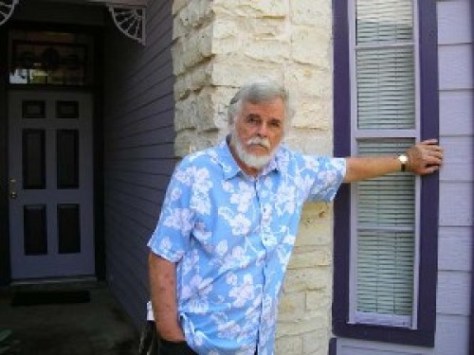
 

Neal Barrett, Jr. is a writer of fantasy, science fiction, mystery/suspense, and historical fiction. His story Ginny Sweethips’ Flying Circus was nominated for both the 1988 Nebula Award for Best Novelette” and the 1989 Hugo Award for Best Novelette. Barrett was born in San Antonio, Texas but grew up in Oklahoma City,after his family relocated there when he was 1 year old. In 1997, he was the Toastmaster at the 55th World Science Fiction Convention held in San Antonio. In 2010, he was named Author Emeritus by the Science Fiction and Fantasy Writers of America. His 500-page “Best of Neal Barrett, Jr, OTHER SEASONS, has just been released by Subterranean Press.
 

The art and poetry of Dorothea Tanning

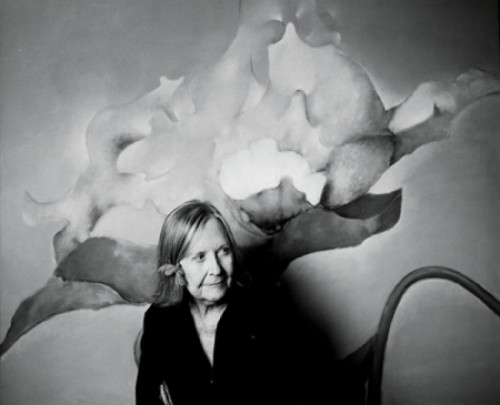
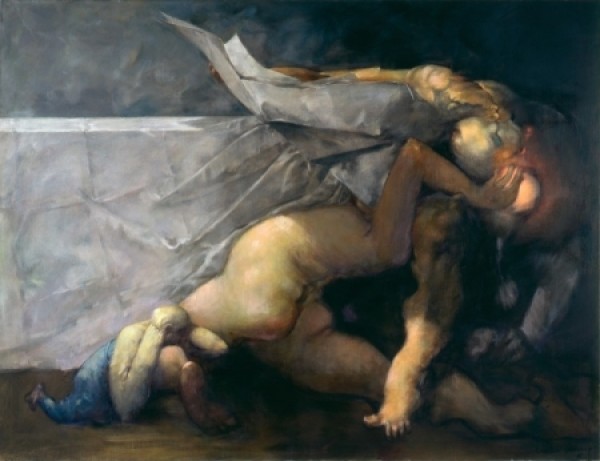
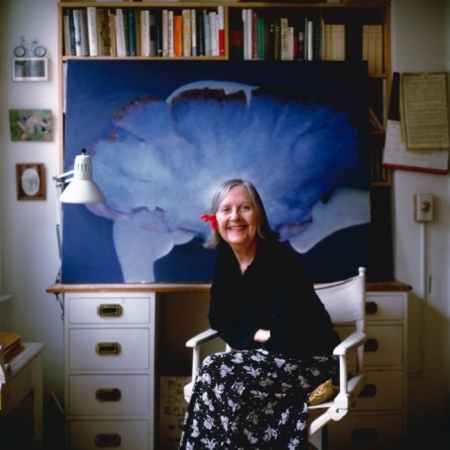
On January 31, 2012 Dorothea Tanning passed away at home at the age of 101. Dorothea was a woman of many talents. She worked as an author, sculptor, and painter, as well as a set designer and costumer for theatre and ballet. Tanning’s second book of poetry was released by Graywolf Press in 2011. She most widely known for her work in Surrealism. More examples of Tanning’s work can be found at  http://www.dorotheatanning.org/, the site maintained by the Dorothea Tanning Foundation to honor her work as well as her life.

Notes for an Apocalypse

Waiting

Back then, with time on my hands
and in our back yard, I waited for the future.
The Future. For me as for everyone else,
the very words had a whiff of promise.
If things were not going too well at present

they would surely delight us in the future.
Long in coming, the future, it never came
to the back yard, front yard, palace yard,
church yard, prison yard, and especially
the junk yard that prefers the past.

Later I understood that waiting is an art
and the best place to practice it is in waiting
rooms where you can wait for hours on end
for the train you’ve already missed, for the
sky to fall, the doctor, for hell to freeze over.

The sky hangs higher than ever and
at night is studded with stars
“The Doctor had an emergency.
He’ll be here tomorrow.”
And hell? Nobody goes there anymore.

Still later, when I was more in touch with
the world, they told me, “You have a future.”
I thought that over. Even if I believed them,
what did my little future, whatever that was,
have to do with the real thing, whatever that is?

Surely this everywhere present is real
enough and eager, yet unable, to tell me
what I am waiting for now.

For a further example of Dorothea’s work as an author please see the short story Legend from 1949. All material provided by The Dorothea Tanning Foundation.

photo by Peter Ross

And in her own words :

“Dorothea Tanning was born in 1910 in Galesburg, Illinois and attended Knox College in her hometown before studying painting in Chicago (haunting the Art Institute where she learned what painting was.) In 1941, now in New York, she met the art dealer, Julien Levy, and his surrealist friends, refugees from Nazi occupied France. Late in 1942 Max Ernst visited her studio, saw a painting, (Birthday), and stayed to play chess. They would have 34 years together, at first in Sedona, Arizona (a mere outpost at the time). Here she would continue to paint her enigmatic versions of life on the inside, looking out: The Guest Room, The Truth About Comets, Eine Kleine Nachtmusik, Interior with Sudden Joy, Insomnias, Palaestra, Tamerlane, Far From. By 1956 Max and Dorothea had chosen to live and work thenceforth in France. Though Paris was headquarters, they preferred the country quiet lure in Touraine and Provence. These years included, for Dorothea Tanning, an intense five‐year adventure in soft sculpture: Cousins, Don Juan’s Breakfast, Fetish, Rainy Day Canapé, Tragic Table, Verb, Xmas, Emma, Revelation or the End of the Month, Hôtel du Pavot Room 202.

Max Ernst died on April 1, 1976 and Dorothea faced a solitary future. “Go home,” said the paint tubes, the canvases, the brushes. Returning to the United States in the late 1970s, and still painting, Tango Lives, Woman Artist, On Avalon, Door 84, Still in the Studio, Blue Mom, Dionysos S.O.S., she gave full rein to her long felt compulsion to write. Words, poetry. Written, read, heard. Would she join these voices even then? Her poems have since appeared in a number of literary reviews and magazines, such as The Yale Review, Poetry, The Paris Review, The New Yorker, The Boston Review, The Southwest Review, Parnassus, and in Best Poems of 2002 and 2005. Her published works include two memoirs, Birthday and Between Lives, a collection of poems, A Table of Content, and a novel, Chasm.

At present Dorothea Tanning lives in New York City, breathes words, as well as air, and looks at her paintings with amazement. It is 2009.”

“Time Is a Two-Way Equation” by Lea C. Deschenes

Time Is a Two-Way Equation

I. Tomorrow and tomorrow and tomorrow

All will be washed downstream
in time’s wake: our teeth,
my calloused heels, the curve
of your laughter hung in the air.
Our names will fizzle like wet squibs
and then poof! Out like a candle!

But here is today’s newspaper crossword,
so definite in its smudged ink. An old friend
remarks upon a small kindness, an act
you can’t remember. The kiss we shared
as you left on your way to work wraps a satin bow
around my mouth all day and tomatoes in the garden
have just begun to ripen.

Look at time like a farmer appraising river silt
after the flood: all this dirt awaiting seed.

Let it flow. Leave mourning’s sound and fury
to its place, which is not now.

II. Après-moi le deluge

Every little emperor wants to believe
their end is the end of everything.

Louis XV shook a sceptered fist
full of dire predictions for the future while
Mme. de Pompadour smiled behind her fan.

Courtiers thought her impossibly common –
a lamprey latched tight to the sweep of a shark.
Her smile never wavered.

So I come from fish guts and fat merchants:
I am not any yesterday’s prisoner.

My tongue’s a subtle soldier
on sheets stretched wide as a general’s map,
one ankle each in Spain and Austria.
This is how I conquer on my back.

Ajourd’hui, l’État, c’est moi.
Demain…C’est une autre nation.

IV. Time flies like an arrow. Fruit flies like a banana.

There’s an old man who busks on the corner,
sings oh baby, baby, I got blues like you don’t know
every day like the emperor of love gone wrong—runs
that sad song through its abacus and ticks each bead —but today
his dedication to heartbreak plays off-key, a hurdy-gurdy
ringed with dancing monkeys. He smiles
when they throw silver in his cup.

Tomorrow is another country
full of strange language whose phonemes
stretch the tongue to form new syntax.

When the flood comes,
don’t pile the shore with sandbags
all around your sorrow—

let time take it, if it will.

V. Valediction Forbidding Mourning

When feet are set to floorboards, their imprint
is fleeting. Even bootmarks on the moon
fill one dust mote at a time, which makes it no less
amazing to have walked there.

There will be more embraces until there aren’t.
They are no less warm for that. Without
the closing door, how could we forget
everything for one frangible kiss?

Fuck funerals. Throw my corpse a party.
When else is merry-making needed more?
Laugh until your cheeks are white with salt.
I will know nothing of what you do, so do it
for yourself.

This is how to conquer the flood:
today and today and today, floating
on your back without struggle.

When the waters recede, get off your ass
and whistle while you build into new space,
grace sprouted from hard toil and fertile muck.

Off to work, now. If you return
and I’m still here, we’ll welcome
each other home like no tomorrow.


Lea C. Deschenes lives in Worcester, MA and holds an MFA in poetry from New England College. Her poetry has appeared online, on stage and in print. A former member of four National Poetry Slam teams and a coach to two more, she has received a Jacob Knight Award, been nominated for two Pushcart Prizes and represented Worcester in the 2005 Individual World Poetry Slam. Her first full-length collection, The Constant Velocity of Trains, is available through Write Bloody Publishing, as is the anthology she co-edited with Lisa Sisler, Knocking at the Door. She once found a five-leaf clover during a solar eclipse.

http://www.quantumredhead.com/

“Van Gogh” by Ellyn Maybe

Van Gogh

There’s a man who looks like Van Gogh cartwheeling through the sky again.
I said what brings you here.
He said I get bored in heaven sometimes.
Everything is taken care of.
All the chocolates, all the paints,
all the books, nothing on TV of course.
I want to come closer to all the scurrying people.
Rushing quickly as though they could outrun death.
I used to take all day to feel what the peasants felt.
What the crows were cawing at.
Life was simpler then but still so hard.
I knew someday I’d make a living but I didn’t live to see that day.
If you knew Vincent, why?
Knowing and actually seeing for your own eyes,
Its such a chasm.
No it’s more than that.
I was lonely. The colors I made.
red yellow blue
became orange green purple
I could make one color disappear into another.
It was seamless.
I thought my loneliness was like that.
Some other feeling would mix with it and I’d have serenity.
But my palette was a little short.
I don’t know. It goes sometimes like that.
I made good use of my time.
I’ve had a long time in Heaven.
Vincent, are you saying this to make me feel better?
Well, yes and no.
I wanted to know the Earth more.
So I come down on the biggest playground slide God ever made and look at life each week.
Once a week I feel everything on Earth as thought I were still human, more than spirit.
I used to come down every night. Now once a week is all I can take.
The 20th Century was more than I could bare.
We look at you from Heaven.
You’re living in Guernica. Picasso agrees.
We thought you’d learn from the Inquisition, the many Joan of Arcs we don’t know about.
We thought you’d become peaceful.
When I say you I mean your species.
He spat the word and I knew exactly what he meant.
World War Two
We were dead so we went to the camps to say prayers for our breathren.
There are people who refused to go back to Heaven for a few years after seeing what went on there.
They painted shrouds.
They painted landscapes inside their eyelids.
Many went crazy.
Heaven is not just cotton candy clouds, harps and angels.
We watch you.
Yep, you are our movie of the week.
We don’t want you more than once a week.
Even the dead need peace now and then.
I said Vincent, did you ever find love?
There was this day the print in my favorite book began to dance with me. I took it for love.
There was this day I heard the music the birds sang and I became a bird but more I became music.
There were many days.
Yes that love I found.
Suddenly I said Vincent
Are you my guardian artist?
He said yes.
He said all I needed to know.

(From the chapbook Praha and the Poet (2006)

Ellyn Maybe has performed her poetry all over the country, including Bumbershoot,the Poetry Project, the New School, Taos Poetry Circus, South by Southwest, Lollapalooza, Albuquerque Poetry Festival and Seattle Poetry Festival. She has also read in Europe at the Bristol Poetry Festival, on the BBC, and in poetry slams and readings in Munich, Frankfurt, Hamburg and Stuttgart. She opened the MTV Spoken Wurd Tour in Los Angeles. In addition, she has also read at USC, UCLA, CSUN and Cal State Fullerton, among other colleges. Writer’s Digest named her one of ten poets to watch in the new millennium. Her work has been included in many anthologies, including Word Warriors: 35 Women Leaders in the Spoken Word Revolution, Poetry Slam, Another City: Writing From Los Angeles, Poetry Nation, The Outlaw Bible of American Poetry and American Poetry: The Next Generation. She was on the 1998 and 1999 Venice Beach Slam teams. She was seen reading her work in Michael Radford’s (Il Postino) film Dancing at the Blue Iguana.

http://ellynmaybe.com/

” A Poet In Your Age” by Mark Chandos

A Poet in your Age

What secret do you hide where others touch,
what part of me do you grant at all hours,
how much am I the flower in your flesh?

What could I give or take without your gift,
how much of you is given when I touch,
or hands that touched before how much?

Away from me what hands can touch,
who enters now with arms or hands,
what space in you is still untouched?

Cry up tensions teased from flesh,
guard for me nothing that can’t be kept,
give to me nothing but what I show,

summon meaning with your effort,
tell me nothing I have heard but know.

Mark Chandos has spent his life in contemplation of poetry. His present work is a result of a profound dissatisfaction with current poetic trend. There is no market for modern poetry and there are no poets known to the man on the street. There are no legitimate, authoritative personalities in the Poetry of our time. Poetry, in effect is invisible in the modern world.

Mark Chandos has found the source of our alienation of language. Modern men live under the shadow of a secret and superior language in our culture: the secret language of occult science. By exposure of this subversive language he discovers a means to overcome its debilitating influence on the modern vernacular English. Further, Chandos has identified that story is no longer a means to translate our highest human concepts. The specialized Western sciences do not contain human stories, they contain only specialized words that chase their own tail. Consequently, he has written a philosophy to correct the defective nature of modern Western perception: Story Theory. Story Theory has identified all the alien themes of Western literature – seldom recognized by Western society. The philosophy, though a separate achievement, introduces each of his books of poems. He has written a severe epic poem to unite all his concepts in a story of value and importance, that once again, poses the question: What is man?

http://www.markchandos.com/

“Ballets” by Richard Kostelanetz

Ballets

An artist admiring intently, for days without sleep, a painting of the Holy Family eventually identifies himself with Christ on the cross.

In one of his opium dreams, the sleeping choreographer meets an angel who introduces him to other dancers already resident in ballet heaven.To initiate him into their different world, the other dancers imitate poorly his signature moves.

Two children of quarreling farmers meet at school and fall in love, necessarily leaving their homes, though underage. They secretly board a barge heading downstream, hiding beneath sacks of grain harvested from their families’ farms. When it sinks, they die.

The spook of a murdered woman returns to dance with her husband, who, in honor of the occasion, suddenly appears twenty years younger.

When a pilot who dies in an ocean crash returns to his fiancee as a ghost, she agrees to follow him to his submarine cave, where they are wed. Consummation becomes impossible, given their inhabiting different realms, until she too becomes a ghost and an infant is born.

Thanks to effects possible with videotape, we see on the small screen a man, obviously exhausted, continually climbing upwards to heaven and repeatedly passing a sign marked only with an infinity symbol.

Individual entries on Richard Kostelanetz’s work in several fields appear in various editions of Readers Guide to Twentieth-Century Writers, Merriam-Webster Encyclopedia of Literature, Contemporary Poets, Contemporary Novelists, Postmodern Fiction, Webster’s Dictionary of American Writers, The HarperCollins Reader’s Encyclopedia of American Literature, Baker’s Biographical Dictionary of Musicians, Directory of American Scholars, Who’s Who in America, Who’s Who in the World, Who’s Who in American Art, NNDB.com, Wikipedia.com, and Britannica.com, among other distinguished directories. Otherwise, he survives in New York, where he was born, unemployed and thus overworked.

http://www.richardkostelanetz.com/

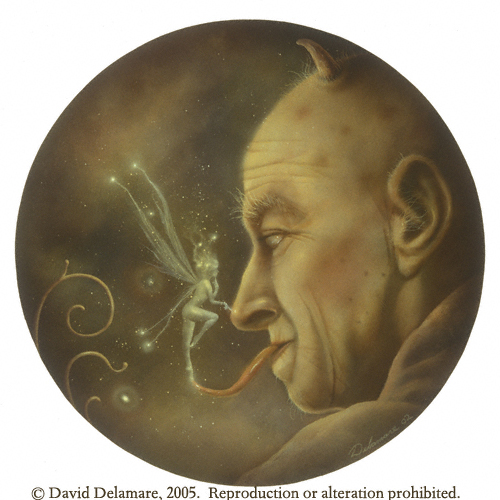
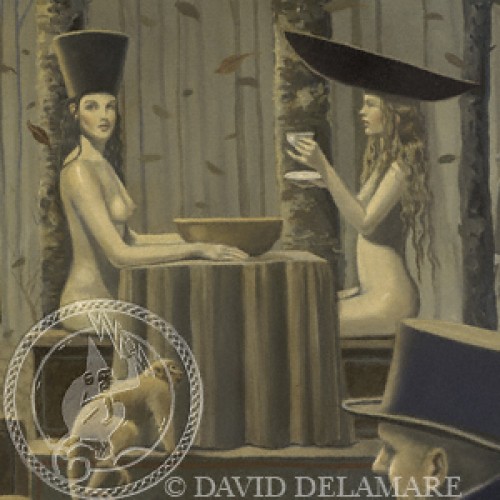
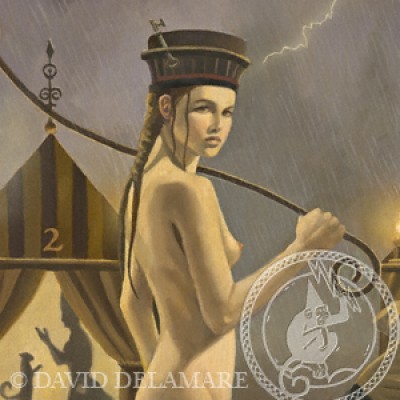
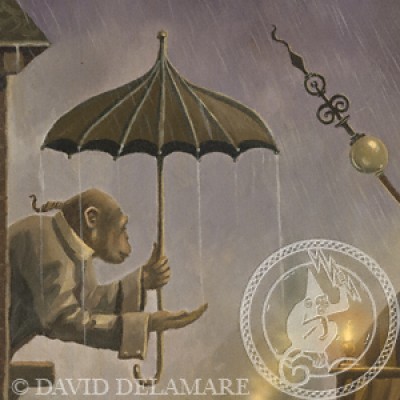
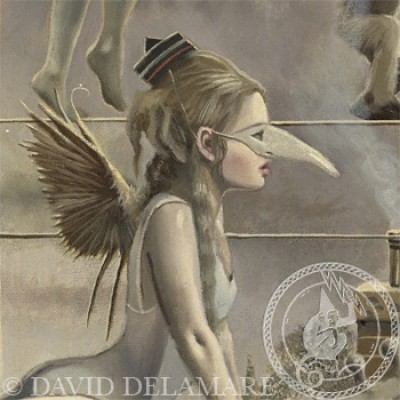
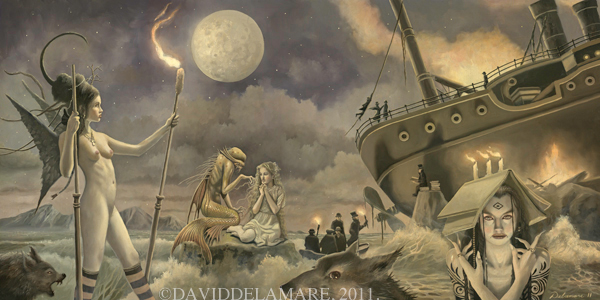
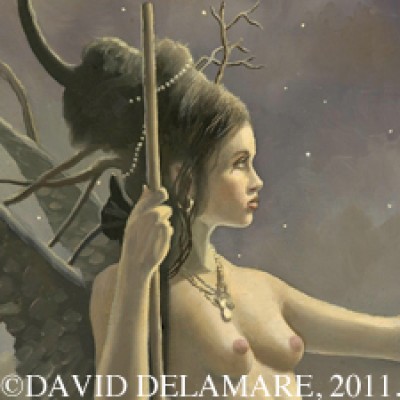
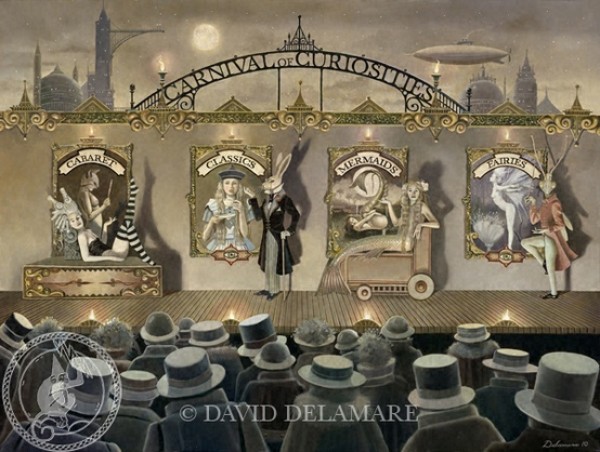
The Art of David Delamare

Rabbit Punch

All three following images from Rabbit Punch

The History of Lightning

details from The History of Lightning

Details from The History of Lightning continued

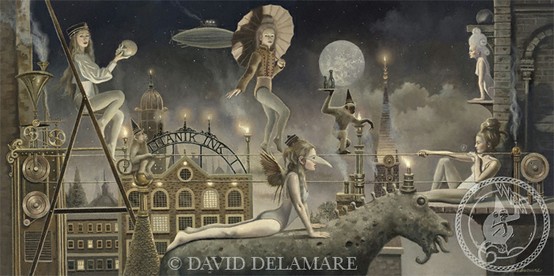
Titanik Ink

Titanik Details

Titanik continued

The Tempest

Tempest Details

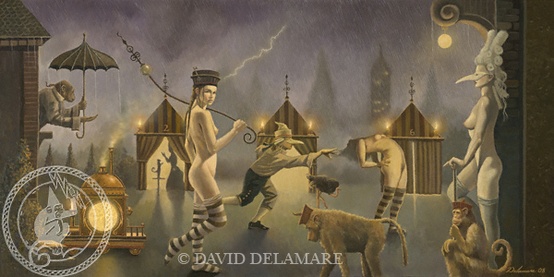
Carnival of Curiosities

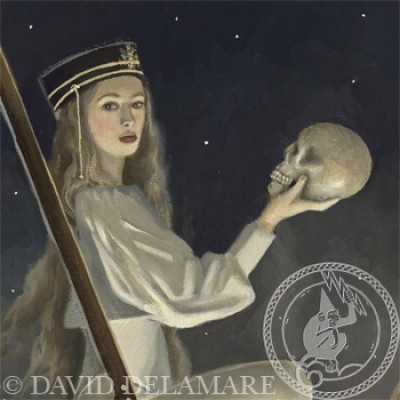
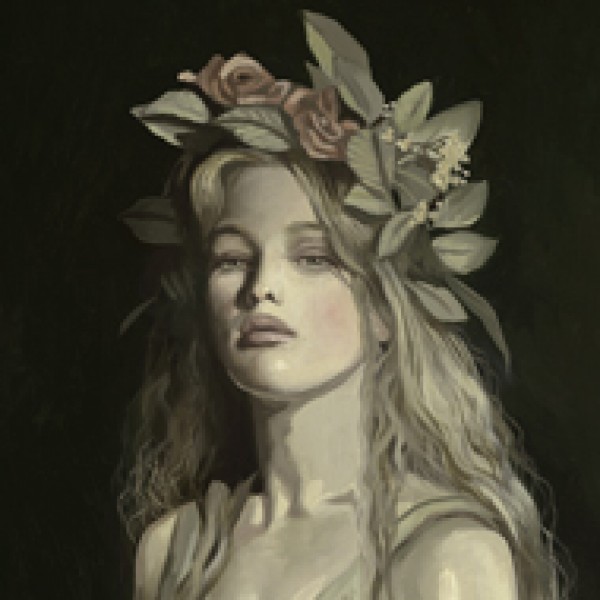
Ophelia

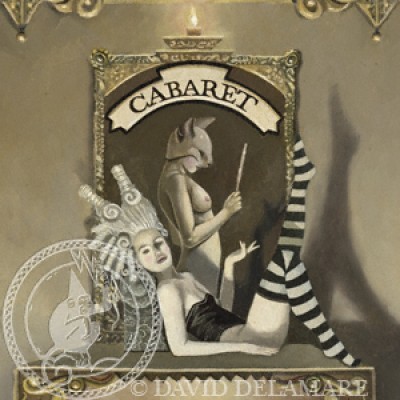
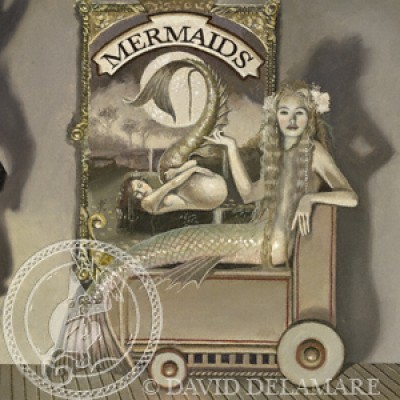
David Delamare was born in Leicester, UK but lives in the U.S. His paintings have appeared on numerous book and album covers, in television programs and in films. He produced concept work for Warner Bros. Animated Features and Francis Ford Coppola, and designed sets for the American premier of Trevor Nunn’s Peter Pan.

Delamare paintings have been purchased by museums and appear regularly in the prestigious juried annual Spectrum: The Best in Contemporary Fantastic Art.

Delamare has illustrated ten books: a retrospective, eight children’s titles (one a collaboration with singer Carly Simon) and an adult alphabet book. As a writer, he adapted one fairy tale, produced two original children’s books, and co-wrote Animerotics: A Forbidden Cabaret in 26 Acts.

His artwork decorates the walls of a dessert parlor in Singapore and a beachfront restaurant in the Hamptons.

Currently David Delamare is working on four new illustrated books, including a unique version of Alice in Wonderland. He is also composing music, and working with his publisher and partner Wendy Ice to produce his first music videos.

For more information on his work please see: http://www.daviddelamare.com

The Art of Clive Barker

The Arsonist

Christopher Carrion Rising

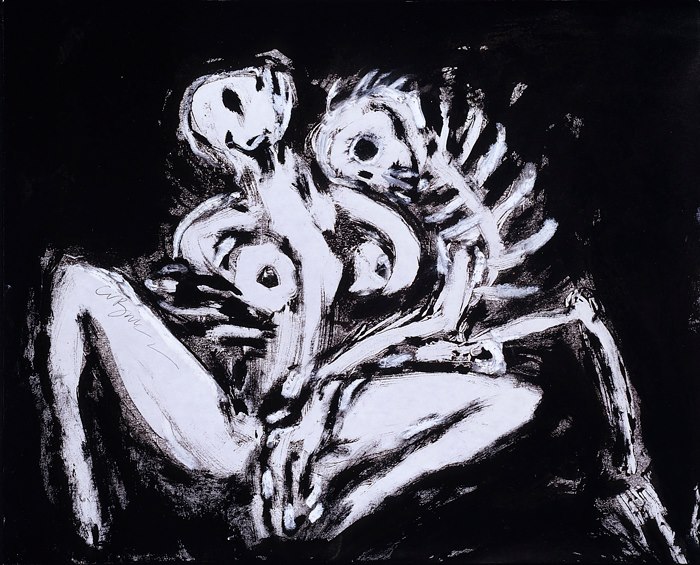
Clive Barker best known for bringing the world Hellraiser and Candyman has gained acclaim for his work as an author and director. His work dealing largely with fantasy and horror has delighted fans for years. Barker’s creations as a visual artist are every bit as delightfully dark as his writings. These and other examples of his artistic renderings can be found at http://clivebarker.deviantart.com/.

http://www.clivebarker.info/