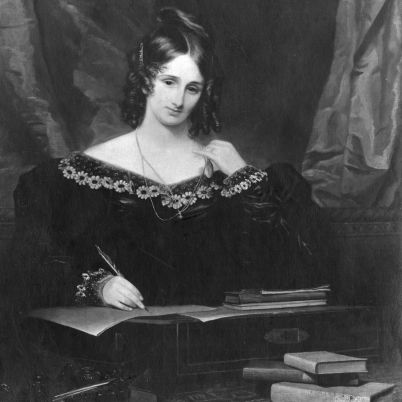
“Poem for Mary Shelley” by Joel Allegretti

Poem For Mary Shelley

(Victor Frankenstein assembled his creature from pieces of corpses. This poem is made up of pieces of works written before 1818, the year Mary Shelley published Frankenstein. The cento is meant to reflect her title character’s point of view.)

Speak, hands, for me!
The awful shadow of some unseen Power
Floats though unseen among us.
I had a dream, which was not all a dream.
Man is all symmetry,
Full of proportions, one limb to another,
A brain of feathers, and a heart of lead.

O misery of hell!
A little learning is a dangerous thing.
Fire answers fire.
No man chooses evil because it is evil,
He only mistakes it for happiness.
Science without conscience is
But the ruin of the soul.

….

Lines taken from:

William Shakespeare, “Julius Caesar,” Act III, Scene 1
Percy Bysshe Shelley, “Hymn to Intellectual Beauty”
George Gordon, Lord Byron, “Darkness”
George Herbert, “Man”
Alexander Pope, “The Dunciad,” Book II
John Keats, “Endymion”
Alexander Pope, “A Little Learning Is a Dangerous Thing”
William Shakespeare, “Henry V,” Act IV, Prologue
Mary Wollstonecraft, “A Vindication of the Rights of Men”
François Rabelais, “Gargantua and Pantagruel,” translated into English 1653-1694 by Sir Thomas Urquhart of Cromarty and Peter Anthony Motteux
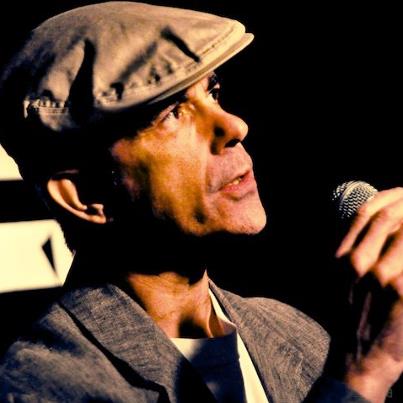
Joel Allegretti is the author of four collections, most recently, Europa/Nippon/New York: Poems/Not-Poems (Poets Wear Prada, 2012). His second book, Father Silicon (The Poet’s Press), was selected by The Kansas City Star as one of 100 Noteworthy Books of 2006. Allegretti’s poetry has appeared in many national journals, including Smartish Pace, The New York Quarterly, Fulcrum and PANK. He wrote the texts for three song cycles by Frank Ezra Levy, whose work is released on Naxos American Classics. Allegretti is a member of the Academy of American Poets and ASCAP.


“Lines To Restore Van Gogh’s Ear” by James Bertolino

Lines to Restore Van Gogh’s Ear

Somewhere near, a fruit bat is
grooming its flared
downy ear, while all the ears of corn in Iowa
are boosting their silky tufts skyward.

Hearing thunder
on a sunny afternoon, an insect
resembling a large ant, with orange fur
covering its abdomen and thorax,
makes a dash for the ditch
across the asphalt.

Late at night, after their owners
are asleep, all the earrings
in La Honda, California dream
of Grizzly Ryder, who lost part of an ear
when thirst drew him down
to Bear Gulch Creek.

Like a tireless ear, the blue
canyon funnels a whistling gust
of wind, and again the old desert nods.

In a sea of information, the sporting
dolphins may be thinking that a human ear,
like a small pink leaf, might make
a loving keepsake,
or pet.

Tucked under the brains
of all living bipeds, there are
tiny paired drums, drumming,
drumming.

Amongst the touch-tone
phones in France, there persists
a rumor that one of their ancestors
touched the ear
of Vincent Van Gogh.

(Originally published in Snail River: Poems, 1985-1993, Quarterly Review of Literature Award Series, Copyright 1995 by Quarterly Review of Literature. Reprinted by permission of the author.)

James Bertolino’s poetry has received recognition through the Discovery Award, a National Endowment for the Arts fellowship, two Quarterly Review of Literature book publication awards and, in 2007, the Jeanne Lohmann Poetry Prize for Washington State Poets. His 24 poetry collections have been published by 18 presses in nine states, and Every Wound Has A Rhythm is his eleventh full volume. He has taught creative writing at Cornell University, University of Cincinnati, Western Washington University, the North Cascades Institute and, in 2006, retired from a position as Writer-in-Residence at Willamette University in Oregon. 2012 is the fourth year he has served as poetry judge for the American Book Awards, sponsored by the Before Columbus Foundation in Berkeley. He lives on five rural acres near Bellingham, Washington with his talented wife Anita, a horse, a dog and two cats.

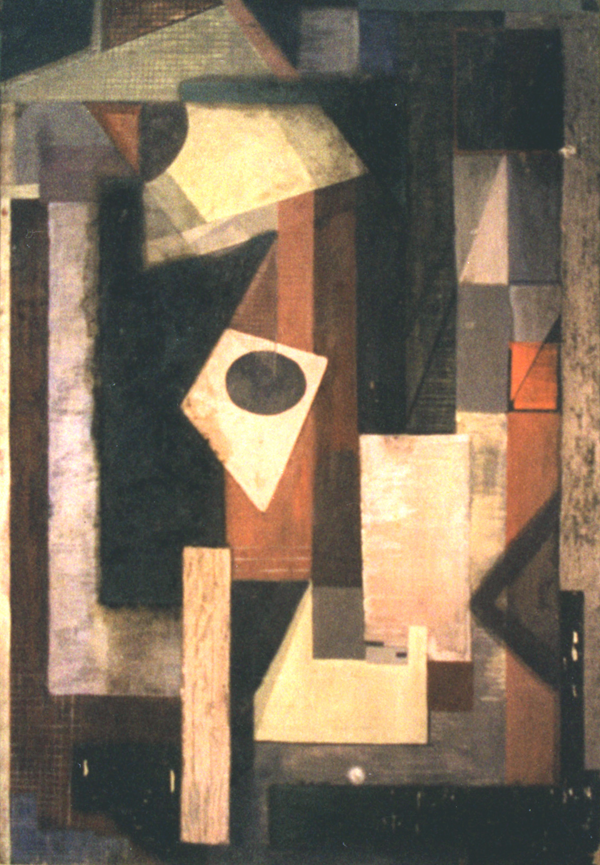
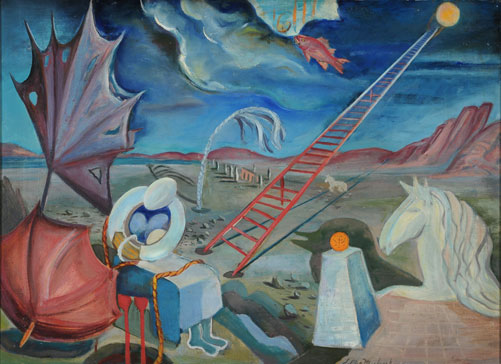
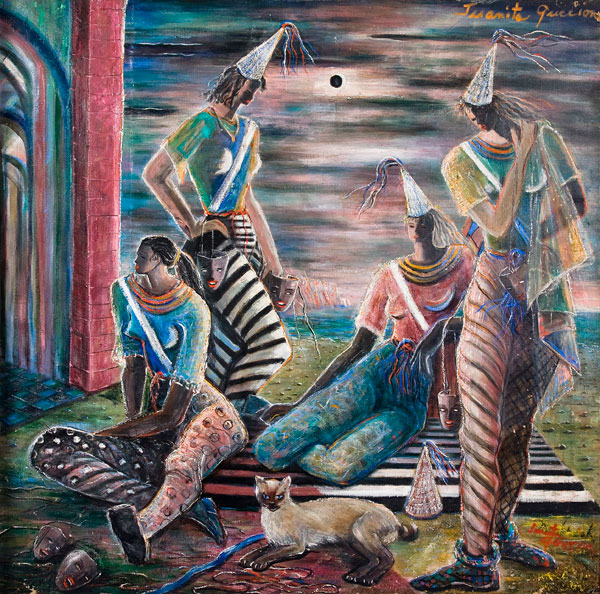
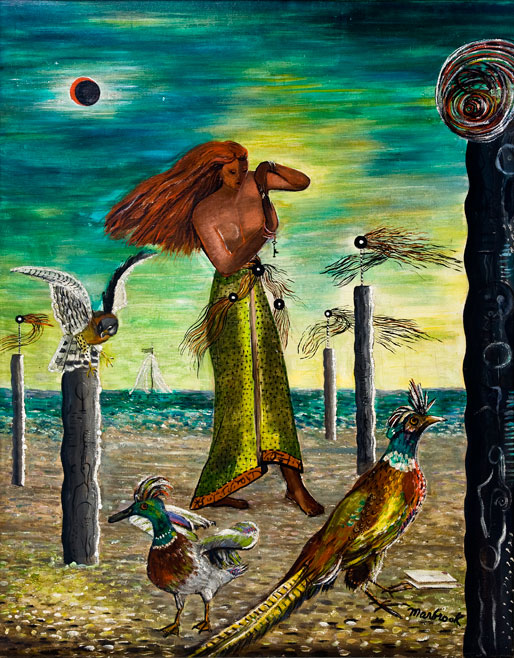
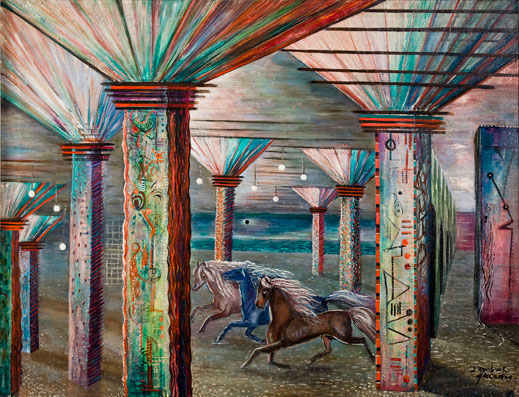
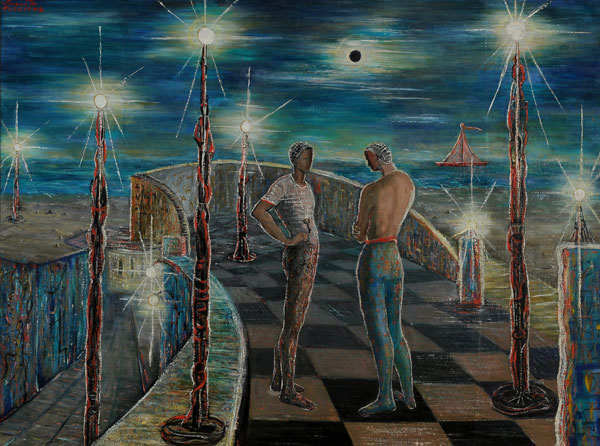
The Art of Juanita Guccione

Bedouin Brother and Sister


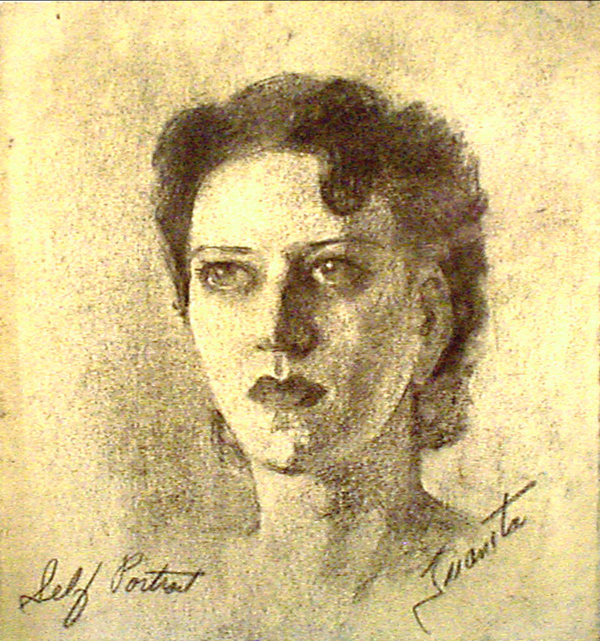
Self Portrait

Shapeshifting


The Way the Wind Blows


Spirit of Manhattan(Cubist)


Man Playing Khyter


Memories of an Elephant


A Hole in Time


Masquerade


Dancer by the Sea


The Race


Conversation by Lamplight


Juanita Guccione’s life (June 20, 1904- December 18, 1999) spanned all but four years of the 20th Century. Cubist, realist, surrealist, automatist and abstract strains are all to be found in her work, but by 1970 she was painting electrifying works in watercolor and acrylic that elude the most considered categorization. For the better part of her career she had been impercipiently referred to as a surrealist, but her later work abandoned the human figure and juxtaposition of the observed world. This work, lyrical and astral, reflected a painterly independence hinted at earlier in her career.

In the spring of 2004 the People’s Democratic Republic of Algeria acquired 174 works she had painted in Algeria in the early 1930s. These paintings will reside in a special museum wing. It is believed that she is the first American woman artist to be so singularly honored by a Muslim nation. Guccione, then painting as Nita Rice, lived for four years among the Ouled Nail Bedouin tribe in eastern Algeria. Her paintings from this period are devoid of the flamboyant romanticism of the Orientalist painters. She painted the Bedouin as friends and neighbors, reflecting the anti-colonialist attitude of her native land. These paintings were shown in The Brooklyn Museum in 1935, receiving a good deal of press attention.

When she returned from Algeria in 1935 the United States was in economic free fall. After the Brooklyn Museum exhibit, this work was then shut away as she immersed herself in an avant-garde then fomenting revolutionary artistic changes.

Guccione began painting as Anita Rice, then changed her name to Juanita Rice, then Juanita Marbrook, and finally to Juanita Guccione after marrying in the mid-1940s.

The French writer and poet Anais Nin, whose portrait Juanita painted several times, said of Juanita, “Our dreams are often diffuse and fragmented. Juanita makes them cohesive and clear, as clear as the daily world. Few people can paint the world of our dreams with as much magic, precision, and clarity. It makes the myths by which we live as vivid and dramatic as our diurnal life.”

(All images used by permission of Juanita’s son Djelloul Marbrook. Bio in part from her site at: http://juanitaguccione.com/)

Self Portrait circa 1936


“Exquisite Walking Corpse” by Terry McCarty

Exquisite Walking Corpse

Bob Dylan once wrote:
How does it feel
to be all alone,
like a complete unknown,
like a rolling stone?
I know how that feels.
Friends who run away.
Companions in name only
who major in wanting and taking.
Kind words sprinkled
with the broth of condescension.
No fingers lifted to catch me when I fall.
Instead, people stay hushhush
and want to see the leper
tinkle his medium-sized bell
and cry Unclean, Unclean!
Lots of free time
for unwanted thoughts
to multiply inside my brain.
Gordon Sumner wrote:
Be yourself, no matter what they say.
I know how that feels too.
But being myself
is what caused me
to be thrown out of a car
near a dry lake bed,
being told to find my way home
as the vehicle drives off
and I hear laughter before it disappears.

Terry McCarty was born on July 31, 1959 in Electra, Texas. He moved to Southern California in 1988. Terry began writing poetry in the summer of 1997. From 1998 to 1999, he was a member of the Midnight Special Bookstore poetry workshop in Santa Monica. He has been a featured poet in several Southern California venues. Terry has also featured at readings in Las Vegas, NV, San Francisco, CA, Santa Cruz, CA, Berkeley, CA and Seattle, WA.

Terry has also appeared in Lynda and Lisa LaRose’s THE POETRY SPIRAL at Luna Sol Café (Los Angeles), Roni Walter’s BAKSTREEET COMETRI at the Comedy Store (West Hollywood) and last July’s SPARRING WITH BEATNIK GHOSTS reading at The Last Bookstore(Los Angeles).

Published in these anthologies:

BEYOND THE VALLEY OF THE CONTEMPORARY POETS
(VCP Press 2001 edition)
SO LUMINOUS THE WILDFLOWERS (Tebot Bach)
THE LONG WAY HOME: THE BEST OF THE LITTLE RED BOOKS SERIES 1998-2008
(Lummox Press)

Other books include:
I SAW IT ON TV (Lummox Press)
20 GREATEST HITS: POEMS 1997-2004 (e-book available on iTunes and Amazon Kindle)
IMPERFECTIONIST (Meridien PressWorks)
INTERLOPER (self-published chapbook)

“We Are All Van Gogh” by Djelloul Marbrook

We are all Van Gogh

I am the hairshirt you refuse to wear,
where did you put my left ear?

I don’t really need to know. Truth is
we all have an asymmetrical face.

You’re all those visits from icy mummies
I vainly waited for on Sunday afternoon.

Has it turned to amber in a jewel box?
Which of your lovers will throw it out

or will it be the maid who ripped you off
and lived it up back in Puerto Rico?

Here all the one-earred mutants pretend
some important person heard them,

so why then do they slosh in bloody shoes
to party with wary strangers, and why

inquire endlessly about that sinister ear
knowing how little we want to hear?

This is the world of bandaged Van Goghs
running out of sunflowers and starry nights.

Djelloul Marbrook is the author of two poetry books, Far from Algiers(2008, Kent State University Press, winner of the 2007 Stan and Tom Wick Poetry Prize and the 2010 International Book Award in poetry) and Brushstrokes and Glances (2010, Deerbrook Editions); and four books of fiction: Guest Boy(2012, Mira Publishing House CLC, Leeds, UK), Saraceno (2012, Bliss Plot Press), Artemisia’s Wolf (2011, Prakash Books, India), and Alice Miller’s Room (1999, OnlineOriginals.com, UK). His poems have been published by American Poetry Review, Barrow Street, Orbis (UK), From the Fishouse, Oberon, The Same, Reed, Fledgling Rag, Daylight Burglary, among others. His fiction publishers include Orbis (UK) and Potomac Review. He maintains a lively blog and facebook presence. A retired newspaper editor and Navy veteran, he lives in New York’s mid-Hudson Valley with his wife Marilyn.

” A Lonely Sea Of Memories” by Juan Manuel Perez

A Lonely Sea Of Memories

fighting a genetic history of mental disease

Fear, my omnipotent ocean
Beautiful dark blue vastness
Of all the soon to be forgotten
Turned to non-cohesive, memories
To remember like a cool ice drink of
Water under the hot Texas summer
Refreshing, restoring, rebooting
My past, when I was younger
Diligently working the south Texas fields
With my Mexican parents, my brothers
My father, rewarding us with a cold, water something
For a job well sweated, loads of fresh onions
To be delivered to the sea of food markets
As my secret unveils, losing mental capacities
As everyone with family history knew it would happen
Learning to accept it like my mother, my grandmother
I shall clutch Don Quixote cast upon a lonely sea
Hoping at best to be enjoyed, maybe even understood
As a man on his last voyage from that which eludes him

Juan Manuel Perez is the author of Another Menudo Sunday (2007), O’ Dark Heaven: A Response To Suzette Haden Elgin’s Definition Of Horror (2009), WUI: Written Under The Influence Of Trinidad Sanchez, Jr. (2011), and six poetry chapbooks. Juan is the 2011-2012 Poet Laureate for the San Antonio Poets’ Association. He has also been a featured reader at many poetry venues around the state of Texas and beyond. His work has appeared in descant, Elegant Rage, San Antonio Express-News, Arts United San Antonio Magazine, La Bloga, New Texas, Concho River Review, The Langdon Review Of The Arts In Texas, The Rhysling Anthology, The Mayo Review, many other publications.

“Swimming From Under My Father” by Michael O’Keefe

Due to the length of the piece please click Here to read Swimming Under My Father.

Michael O’Keefe is an actor,as well as an author. Perhaps best known for his role as Fred on Roseanne, he has also appeared on such iconic television shows as Alfred Hitchcock Presents, Outer Limits, The Waltons, M*A*S*H, Law & Order and countless others. Michael has also appeared in several films including Caddyshack, Ghosts of Mississippi, The Hot Chick, and Michael Clayton to name a few. O’Keefe holds a MFA in Creative Writing from Bennington College. His book also titled Swimming From Under My Father is available now. For more information please see http://www.michaelokeefe.com/

“Abraham and Mary Host a Party, February 5, 1862” by Sparrow

White House East Room, February 5, 1862 Ball (Source: Library of Congress).


Abraham and Mary Host a Party, February 5, 1862

The President, in a new swallowtail
coat, and Mary, wearing a white silk dress
inscribed with hundreds of black flowers, hailed
their invited guests: diplomats, judges,
Senators, Cabinet members — ushered
along by attendants in mulberry
-colored outfits, which matched the crockery
(Solferino). In the background was heard
the United States Marine Band: its new
piece, “The Mary Lincoln Polka.” Midnight
came, and the doors to the dining room flew
open, revealing a weird, dreamlike sight:
piles of duck, ham, turkey — in the center,
a model of Fort Sumter made of sugar.

Sparrow lives in a doublewide trailer in Phoenicia, New York with his wife Violet Snow and a few quiet mice. His most recent palindrome is Snack computer ebb beret up mock cans.

(Editor’s note for more on February 5, 1862 please see: http://thecivilwarproject.com/2012/02/05/150-years-ago-wednesday-february-5-1862/

“Let’s Get Lost” by Michael Brownstein

Let’s Get Lost

Global Positioning System says
We always know your coordinates
But better than that
We have no need to know where you are
Because you do the job for us
Inner surveillance
Self-tracking mechanism
Fail-safe and worry-free

But I say
Let’s get lost
Drop our personas and disappear
For the longest lost weekend on record
Lasting the rest of our lives
Let’s say goodbye
To those tired old eyes in the mirror
Like a clueless guest
They’ve overstayed their welcome
Let’s say goodbye
To hustling back and forth
Between point A and point B
Believing we don’t deserve better
Let’s say goodbye
To same-as-yesterday jobs
Airtight families
Trance-inducing television
To the news we’ve all heard
A thousand times before
Let’s say goodbye
To cascading boredom

Boredom which guarantees
That even if we get rowdy
Even if we get loaded
Even if we get high
And leap out of rockets
Onto the far side of the moon
Even if we change our names
And re-enter the game
Plastic surgery
A fake passport
It’s never enough

Instead, the best medicine
In fact, the only medicine
Drop the whole thing
Don’t look back
We’ll drown our wristwatches
Enter a virginal landscape
No idea what time it is
No idea where we’re headed
Cruising the blissful unknown
Safe in each other’s company
Not caring who we are
Like grown-up versions
Of the children we once were
The children who were stolen from us

Michael Brownstein is the author of three novels, Country Cousins, Self-Reliance, and The Touch,as well as nine volumes of poetry. His most recent book is World on Fire, a take-down of corporate globalization and impassioned call for consciousness change.

“City of Angels” by Marie Lecrivain

City of Angels

In the distance, the L.A. skyline is a cluster-fuck of high-rise building; an industrial Goliath that obscures my need for a slice of blue heaven.
Whenever I walk her dystopian streets, it’s impossible to believe that angels reside within the hollow halls of greed, and more improbable to
imagine a host of winged seraphs rubbing elbows and offering solace to poor unfortunate souls trapped in meat cages, concealed beneath bridges and within the shadows of door frames, desperate for a sign of light, a moment of grace.

copyright 2012 Marie Lecrivain

Marie Lecrivain is a writer, editor, and photographer who resides in Los Angeles. She is the editor/publisher of poeticdiversity: the litzine of
Los Angeles. Her work has appeared in various online/print journals, including Haibun Today, Heavy Hands Ink, Illumen, The Los Angeles Review, Poetry Salzburg Review, and others. Her short story collection, Bitchess (copyright 2011 Sybaritic Press), is available through Amazon.com and smashwords.com.