“Trip to Pollardstown” by Pete Mullineaux

Trip to Pollardstown
 

In a rare meadow

there is music and dancing still,

each species at the crossroads

strumming and drumming

for all they are worth,

beating out life’s pulse;

the grasshopper’s

percussion of wings

against legs scoured

with microscopic pegs

sets a rhythm

to beat the band –

while along the wetlands

on and below the surface,

water boatmen

lonesome perhaps

stridulate

their moog swings,

whirligigs spin revolutions –

beetles and bugs

of all persuasions:

making diminutive

voices heard,

relative to size

the loudest animals on Earth.


These secret raves can go on for hours

lifetimes, aeons –

Gatecrash the party?

keep your nose to the wind

and ear to the ground.

C Pete Mullineaux – Sept. 2012

Pete Mullineaux lives in Galway, Ireland. He has published three collections: Zen Traffic Lights, (Lapwing 2005) A Father’s Day (Salmon Poetry 2008) and Session (Salmon 2011.) He has been anthologised widely in Ireland, UK and the US including the prestigious Poetry Daily website and about.com/poetry.

“Mountain Medicine” by Sinead McAteer

mountain medicine

on the road again
through the mountain pass,
I have travelled
in this wild landscape
a thousand times.

so many questions distil into one
– how do I belong?

a familiar sinking feeling
invites me
to meet it
and I do.

inside its empty centre
a presence is pulsing,

– stay quiet
mountains are speaking
of their silent power,
dignified in solitude
belonging wholly to themselves.

Sinéad McAteer is a Registered Polarity Therapist and the author of ‘Firesong‘, a collection of poetry available at: http://firesong.mwipublishing.com/.
To read some of her articles on Polarity Therapy, visit: http://www.siomha.com/articles/index.html. Sinéad works with people in the spirit of compassion and humour to restore a natural state of harmony and power.

“Rise, Awake, and Sing” by Rachel Heimowitz

Rise, Awake and Sing

“Your dead shall live, their corpses shall rise; awake and sing, you who lie in the dust”
(Isaiah 26:19)

A medieval town where nothing stands straight,
where Kafka sat, slept, ate. Where time
reads backwards on a Hebrew clock and a Golem
waits in an attic for the electric shock of life.
Eight hundred years, a thriving ghetto:
yellow hats, yellow circles, yellow stars;
a child’s cut-out of betrayal.

My G-d the soul you have placed in me is pure.

A shul, a great gravestone, vacant,
unused; the winter sun reflects
off the ceiling’s vault. The wall’s hue
up close becomes something new,
letters, black and red: names:
in Moravia, listed by town,
in Bohemia, by province,
dates of birth and death, a wallpaper
tattoo, back to back, names stacked—
a ladder of names—
eighty thousand dead.

You created it; you have formed it; you have breathed it into me.

On the eastern wall:
Emil (b. 1868-d.1942) straightens
his tie. Berta (b.1874-d.1942) turns,
lights the flame, knowing
warmth fills the house night and day.

On the west:
Hedvika (b. 1914-d.1942) steps
into her pumps, sets her hat,
makes her way to the train.

On the southern wall
with the sun’s glance upon them:
Karolina (b. 1932-d.1942) skipping rope.
Oskar (b. 1930-d.1943), a stick, an old wheel,
a downward slope—

You preserve it within me; You will take it from me,

Trying to be Hapsburgs; German impeccable.
Heads high past the guard, one thousand
at a time, boarding trains with favorite dolls,
candlesticks, a bedroll. Delivered
to Terezin, where no one was allowed
to outgrow their shoes. Through
the Schleuse. On the other side
everything removed but a ration card.

Later, on Auschwitz trains, their prayer
is for a bite of bread when they arrive.
Instead stripped, shaved, showers
of foul air. No survivors–only ashes
at the bottom of the Vistula River.

and restore it to me in the hereafter….

You, who line these walls, you are the dry bones,
the flesh formed around the original egg,
the porous souls,
the pure water poured that swept us home,

the bridge between the grave
and the land, ashes fused into rocky
soil, hills that ascend
like milkfat breasts. Your arms, the towns

that hold us; your smiles the rivers
that spring forth, spill over, fall with laughter.
You are the kibbutz fence at night;
your hearts the iron that guards us.

Karolina, Oskar, you fill the schools and parks
while Hedvika sips coffee at the café.

Emil is on his way to shul, as thousands
of Bertas cover their hair at the siren’s sound,

strike the match, draw in the holy
flame and bless the Shabbat candles.

Blessed are You, O Hashem, who restores the souls of the dead.
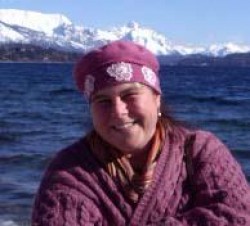
Rachel Heimowitz is an emerging poet living in Israel. Her poems have appeared in Silent Revelations, Bare Hands Poetry, Shot Glass Journal and Poetica and soon in Poetry Quarterly. Rachel will begin her MFA studies at Pacific University in January 2013.
“Natural Love” by Mary Lou Newmark

Natural Love

Natural Love does not ask you to be perfect
Natural Love asks you only to look on another with kindness
To look through the eyes of an osprey catching fish, or a bear in sleepy preparation for hibernation, or to wait with the lodge-pole pine for fifty years for a fire hot enough to release its seeds to the earth

Natural Love does not ask you to be right
Natural Love asks only that you release your clutching hands around the throat of your life and open your fingers to let go of regret and disappointment
To smile like the wolves of your dreams running across the desert past the skeletons of worry and not good enough

Natural Love does not ask you to win
Natural Love asks you only to see with your heart, softly,
with the moonlight in your hair and dandelions at your feet

© Mary Lou Newmark 2011

Mary Lou Newmark is an electric violinist, composer, and poet living in Los Angeles, California. As an artist of both music and words, Ms. Newmark continues to expand her creativity to include works for theater that combine the performing arts to explore social issues. Although a published poet, Mary Lou’s poems are most often experienced aurally as part of her music compositions and theater works. She has also collaborated with other musicians as a lyricist and spoken word artist. The Los Angeles Times described her as “Laurie Anderson on a good hair day, but aiming more at emotions than intellect.”
For more information, videos, poetry and music visit her website: http://www.greenangelmusic.com

“Muse” by Sanford Fraser

Muse,

so beautiful without trying
all women resemble you

and no woman does.

You jog by and my tight words
can’t hold you.

Have mercy : stop.

Fill this silent page:
run in the sound of my voice

2012

Muse,

si belle, sans chercher à l’être
toutes les femmes te ressemblent

et aucune femme ne t’égale.

Tu fais du jogging et mes paroles étroites
ne savent pas te retenir.

Aie pitié: arrête.

Remplis cette page vierge:
cours au long de ma voix.

2012: Traduction: Françoise Parouty


Sanford Fraser was born in Boston in 1932 and began writing poetry at the age of fifty in New York City where he now lives. He has a been a student of painting in Paris and a social worker in New York. He has an A.B. degree in literature from Wesleyan University and a Ph.D. degree in art education from New York University. His book of poems, “Tourist”, was published by New York Quarterly Books in 2009, and his bilingual book of poems, “Among Strangers I’ve Known All My Life/ Parmi les Étrangers Que J’ai Connus Toute Ma Vie”, was published by Tarabuste Editions in France in 2007. Numerous magazines here and in France publish his poems.
………………………………

Sanford Fraser est né à Boston en 1932 et il a commencé à écrire des poèmes à l’âge de cinquante ans à New York où il vit actuellement. Il a passé un été à Paris à l’époque où il faisait des études de peinture. Par la suite, il a travaillé dans les services sociaux de la ville de New York. Il est titulaire d’une licence en littérature de l’Université Wesleyan et d’un doctorat en éducation artistique de l’Université de New York. Son livre de poèmes intitulé “Touriste” a été publié par New York Quarterly Books en 2009. “Parmi les Étrangers Que J’ai Connus Toute Ma Vie”, son premier livre de poèmes, a été publié en France par les Éditions Tarabuste en 2007 dans une édition bilingue. De nombreux magazines ont publié ses poèmes aux Etats-Unis et en
France.

http://www.sanfordfraser.com/

“Poem for Mary Shelley” by Joel Allegretti

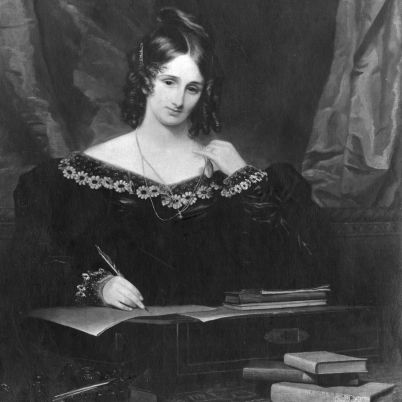
Poem For Mary Shelley

(Victor Frankenstein assembled his creature from pieces of corpses. This poem is made up of pieces of works written before 1818, the year Mary Shelley published Frankenstein. The cento is meant to reflect her title character’s point of view.)

Speak, hands, for me!
The awful shadow of some unseen Power
Floats though unseen among us.
I had a dream, which was not all a dream.
Man is all symmetry,
Full of proportions, one limb to another,
A brain of feathers, and a heart of lead.

O misery of hell!
A little learning is a dangerous thing.
Fire answers fire.
No man chooses evil because it is evil,
He only mistakes it for happiness.
Science without conscience is
But the ruin of the soul.

….

Lines taken from:

William Shakespeare, “Julius Caesar,” Act III, Scene 1
Percy Bysshe Shelley, “Hymn to Intellectual Beauty”
George Gordon, Lord Byron, “Darkness”
George Herbert, “Man”
Alexander Pope, “The Dunciad,” Book II
John Keats, “Endymion”
Alexander Pope, “A Little Learning Is a Dangerous Thing”
William Shakespeare, “Henry V,” Act IV, Prologue
Mary Wollstonecraft, “A Vindication of the Rights of Men”
François Rabelais, “Gargantua and Pantagruel,” translated into English 1653-1694 by Sir Thomas Urquhart of Cromarty and Peter Anthony Motteux

Joel Allegretti is the author of four collections, most recently, Europa/Nippon/New York: Poems/Not-Poems (Poets Wear Prada, 2012). His second book, Father Silicon (The Poet’s Press), was selected by The Kansas City Star as one of 100 Noteworthy Books of 2006. Allegretti’s poetry has appeared in many national journals, including Smartish Pace, The New York Quarterly, Fulcrum and PANK. He wrote the texts for three song cycles by Frank Ezra Levy, whose work is released on Naxos American Classics. Allegretti is a member of the Academy of American Poets and ASCAP.

“Lines To Restore Van Gogh’s Ear” by James Bertolino

Lines to Restore Van Gogh’s Ear

Somewhere near, a fruit bat is
grooming its flared
downy ear, while all the ears of corn in Iowa
are boosting their silky tufts skyward.

Hearing thunder
on a sunny afternoon, an insect
resembling a large ant, with orange fur
covering its abdomen and thorax,
makes a dash for the ditch
across the asphalt.

Late at night, after their owners
are asleep, all the earrings
in La Honda, California dream
of Grizzly Ryder, who lost part of an ear
when thirst drew him down
to Bear Gulch Creek.

Like a tireless ear, the blue
canyon funnels a whistling gust
of wind, and again the old desert nods.

In a sea of information, the sporting
dolphins may be thinking that a human ear,
like a small pink leaf, might make
a loving keepsake,
or pet.

Tucked under the brains
of all living bipeds, there are
tiny paired drums, drumming,
drumming.

Amongst the touch-tone
phones in France, there persists
a rumor that one of their ancestors
touched the ear
of Vincent Van Gogh.

(Originally published in Snail River: Poems, 1985-1993, Quarterly Review of Literature Award Series, Copyright 1995 by Quarterly Review of Literature. Reprinted by permission of the author.)

James Bertolino’s poetry has received recognition through the Discovery Award, a National Endowment for the Arts fellowship, two Quarterly Review of Literature book publication awards and, in 2007, the Jeanne Lohmann Poetry Prize for Washington State Poets. His 24 poetry collections have been published by 18 presses in nine states, and Every Wound Has A Rhythm is his eleventh full volume. He has taught creative writing at Cornell University, University of Cincinnati, Western Washington University, the North Cascades Institute and, in 2006, retired from a position as Writer-in-Residence at Willamette University in Oregon. 2012 is the fourth year he has served as poetry judge for the American Book Awards, sponsored by the Before Columbus Foundation in Berkeley. He lives on five rural acres near Bellingham, Washington with his talented wife Anita, a horse, a dog and two cats.

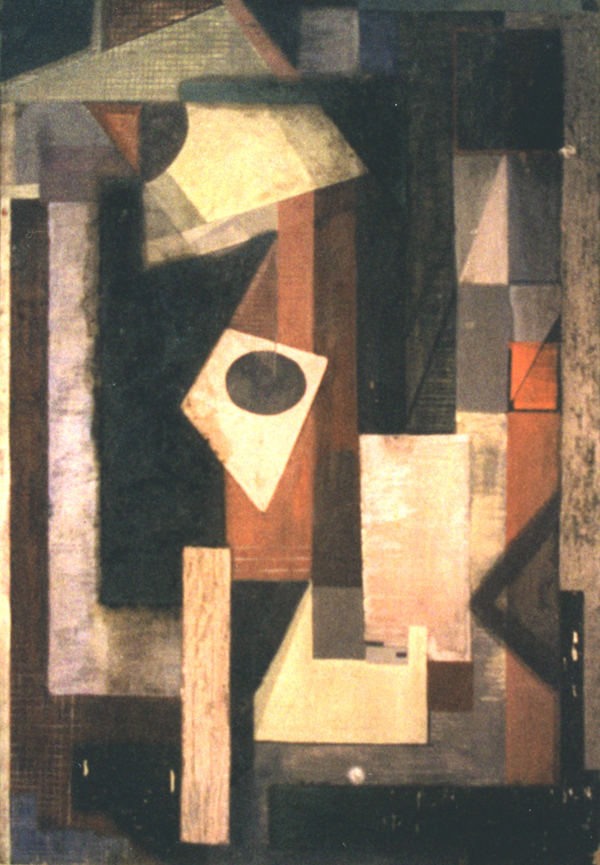
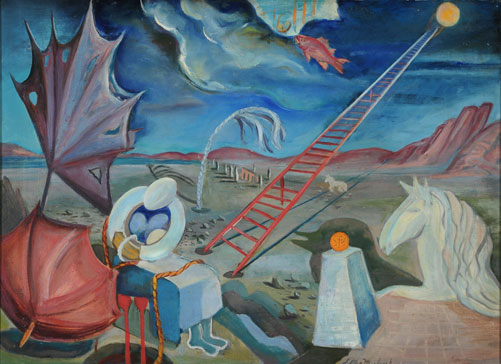
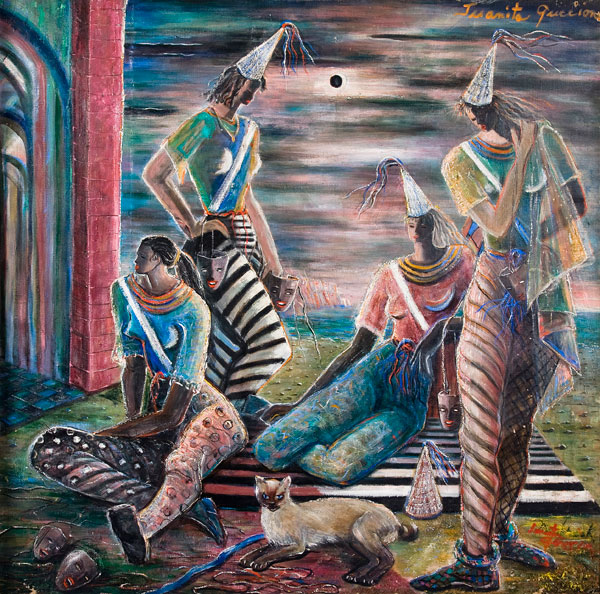
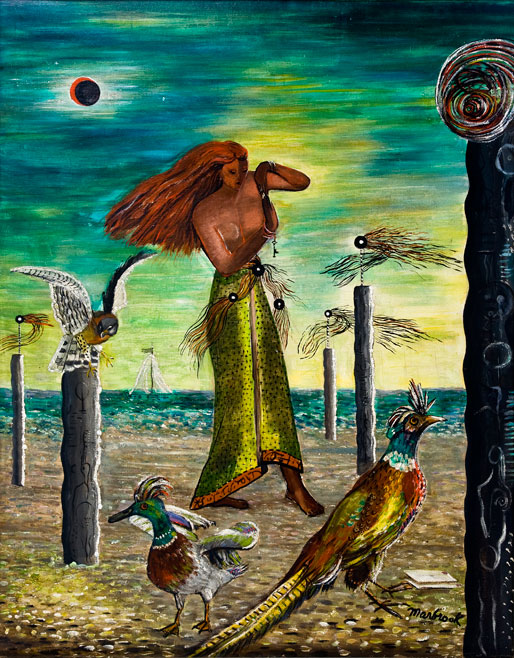
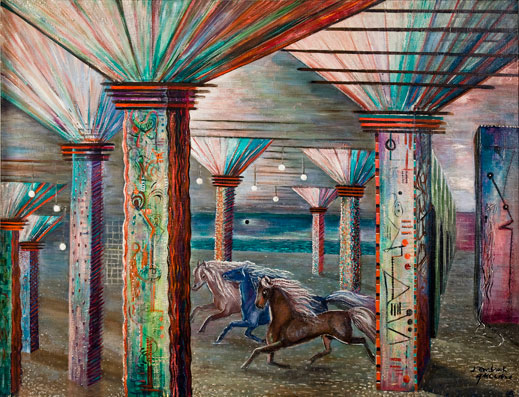
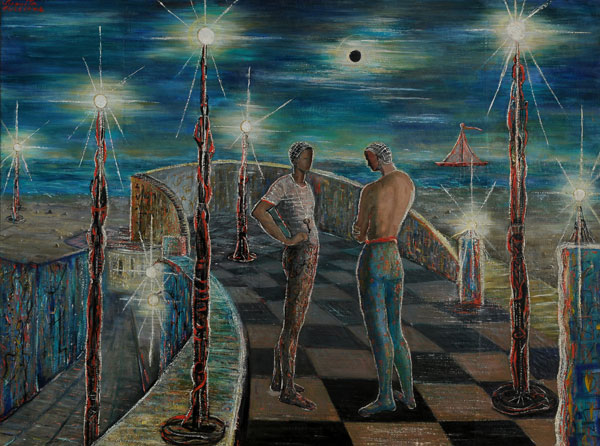
The Art of Juanita Guccione

Bedouin Brother and Sister


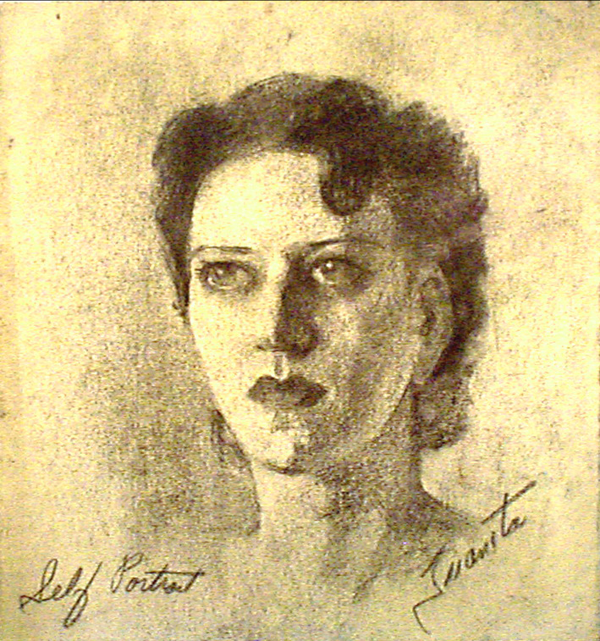
Self Portrait

Shapeshifting


The Way the Wind Blows


Spirit of Manhattan(Cubist)


Man Playing Khyter


Memories of an Elephant


A Hole in Time


Masquerade


Dancer by the Sea


The Race


Conversation by Lamplight


Juanita Guccione’s life (June 20, 1904- December 18, 1999) spanned all but four years of the 20th Century. Cubist, realist, surrealist, automatist and abstract strains are all to be found in her work, but by 1970 she was painting electrifying works in watercolor and acrylic that elude the most considered categorization. For the better part of her career she had been impercipiently referred to as a surrealist, but her later work abandoned the human figure and juxtaposition of the observed world. This work, lyrical and astral, reflected a painterly independence hinted at earlier in her career.

In the spring of 2004 the People’s Democratic Republic of Algeria acquired 174 works she had painted in Algeria in the early 1930s. These paintings will reside in a special museum wing. It is believed that she is the first American woman artist to be so singularly honored by a Muslim nation. Guccione, then painting as Nita Rice, lived for four years among the Ouled Nail Bedouin tribe in eastern Algeria. Her paintings from this period are devoid of the flamboyant romanticism of the Orientalist painters. She painted the Bedouin as friends and neighbors, reflecting the anti-colonialist attitude of her native land. These paintings were shown in The Brooklyn Museum in 1935, receiving a good deal of press attention.

When she returned from Algeria in 1935 the United States was in economic free fall. After the Brooklyn Museum exhibit, this work was then shut away as she immersed herself in an avant-garde then fomenting revolutionary artistic changes.

Guccione began painting as Anita Rice, then changed her name to Juanita Rice, then Juanita Marbrook, and finally to Juanita Guccione after marrying in the mid-1940s.

The French writer and poet Anais Nin, whose portrait Juanita painted several times, said of Juanita, “Our dreams are often diffuse and fragmented. Juanita makes them cohesive and clear, as clear as the daily world. Few people can paint the world of our dreams with as much magic, precision, and clarity. It makes the myths by which we live as vivid and dramatic as our diurnal life.”

(All images used by permission of Juanita’s son Djelloul Marbrook. Bio in part from her site at: http://juanitaguccione.com/)

Self Portrait circa 1936


“Exquisite Walking Corpse” by Terry McCarty

Exquisite Walking Corpse

Bob Dylan once wrote:
How does it feel
to be all alone,
like a complete unknown,
like a rolling stone?
I know how that feels.
Friends who run away.
Companions in name only
who major in wanting and taking.
Kind words sprinkled
with the broth of condescension.
No fingers lifted to catch me when I fall.
Instead, people stay hushhush
and want to see the leper
tinkle his medium-sized bell
and cry Unclean, Unclean!
Lots of free time
for unwanted thoughts
to multiply inside my brain.
Gordon Sumner wrote:
Be yourself, no matter what they say.
I know how that feels too.
But being myself
is what caused me
to be thrown out of a car
near a dry lake bed,
being told to find my way home
as the vehicle drives off
and I hear laughter before it disappears.

Terry McCarty was born on July 31, 1959 in Electra, Texas. He moved to Southern California in 1988. Terry began writing poetry in the summer of 1997. From 1998 to 1999, he was a member of the Midnight Special Bookstore poetry workshop in Santa Monica. He has been a featured poet in several Southern California venues. Terry has also featured at readings in Las Vegas, NV, San Francisco, CA, Santa Cruz, CA, Berkeley, CA and Seattle, WA.

Terry has also appeared in Lynda and Lisa LaRose’s THE POETRY SPIRAL at Luna Sol Café (Los Angeles), Roni Walter’s BAKSTREEET COMETRI at the Comedy Store (West Hollywood) and last July’s SPARRING WITH BEATNIK GHOSTS reading at The Last Bookstore(Los Angeles).

Published in these anthologies:

BEYOND THE VALLEY OF THE CONTEMPORARY POETS
(VCP Press 2001 edition)
SO LUMINOUS THE WILDFLOWERS (Tebot Bach)
THE LONG WAY HOME: THE BEST OF THE LITTLE RED BOOKS SERIES 1998-2008
(Lummox Press)

Other books include:
I SAW IT ON TV (Lummox Press)
20 GREATEST HITS: POEMS 1997-2004 (e-book available on iTunes and Amazon Kindle)
IMPERFECTIONIST (Meridien PressWorks)
INTERLOPER (self-published chapbook)