An interview with Dale Corvino

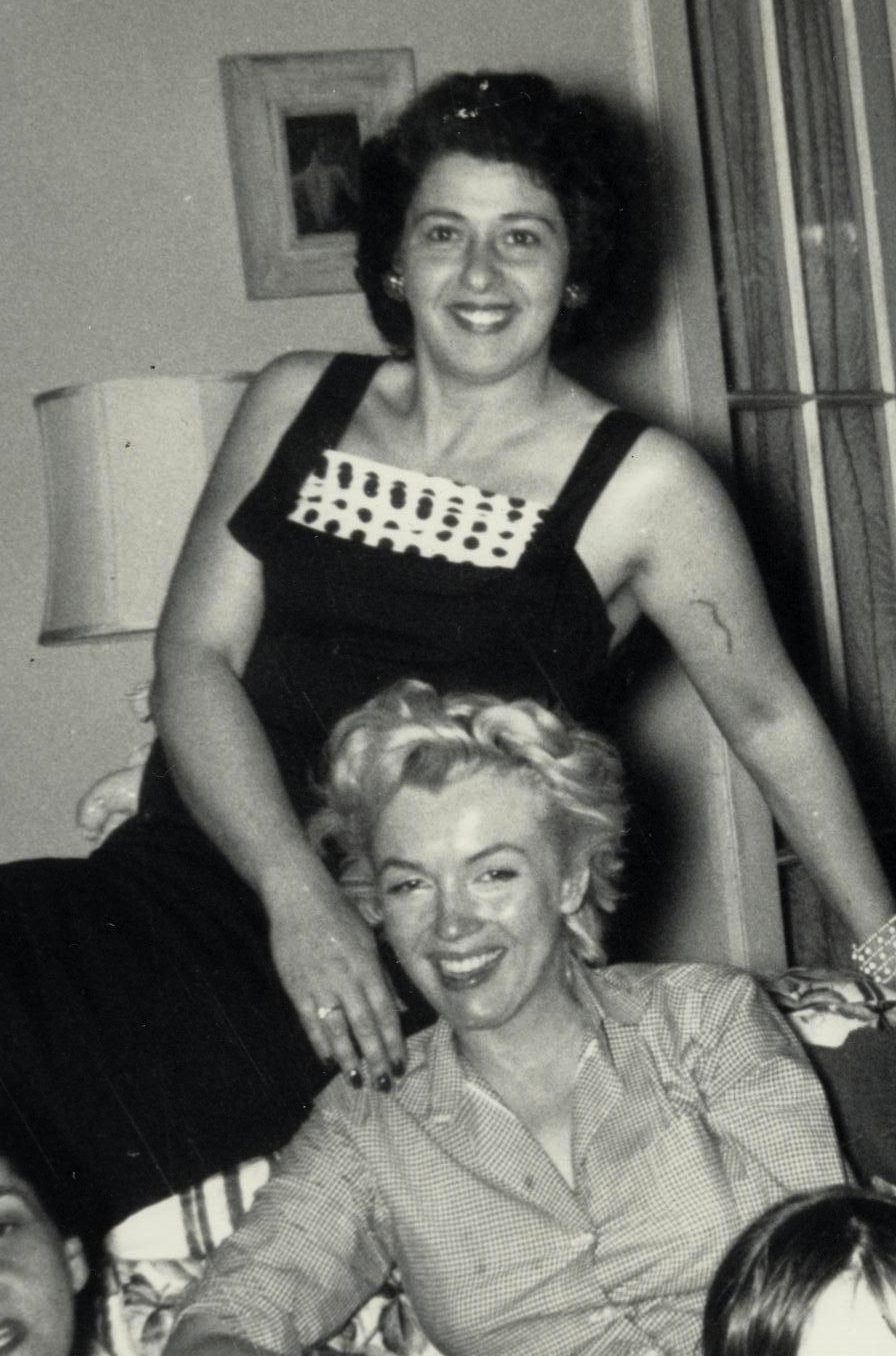
Helen  Rizzo & Marilyn Monroe

Helen Rizzo & Marilyn Monroe

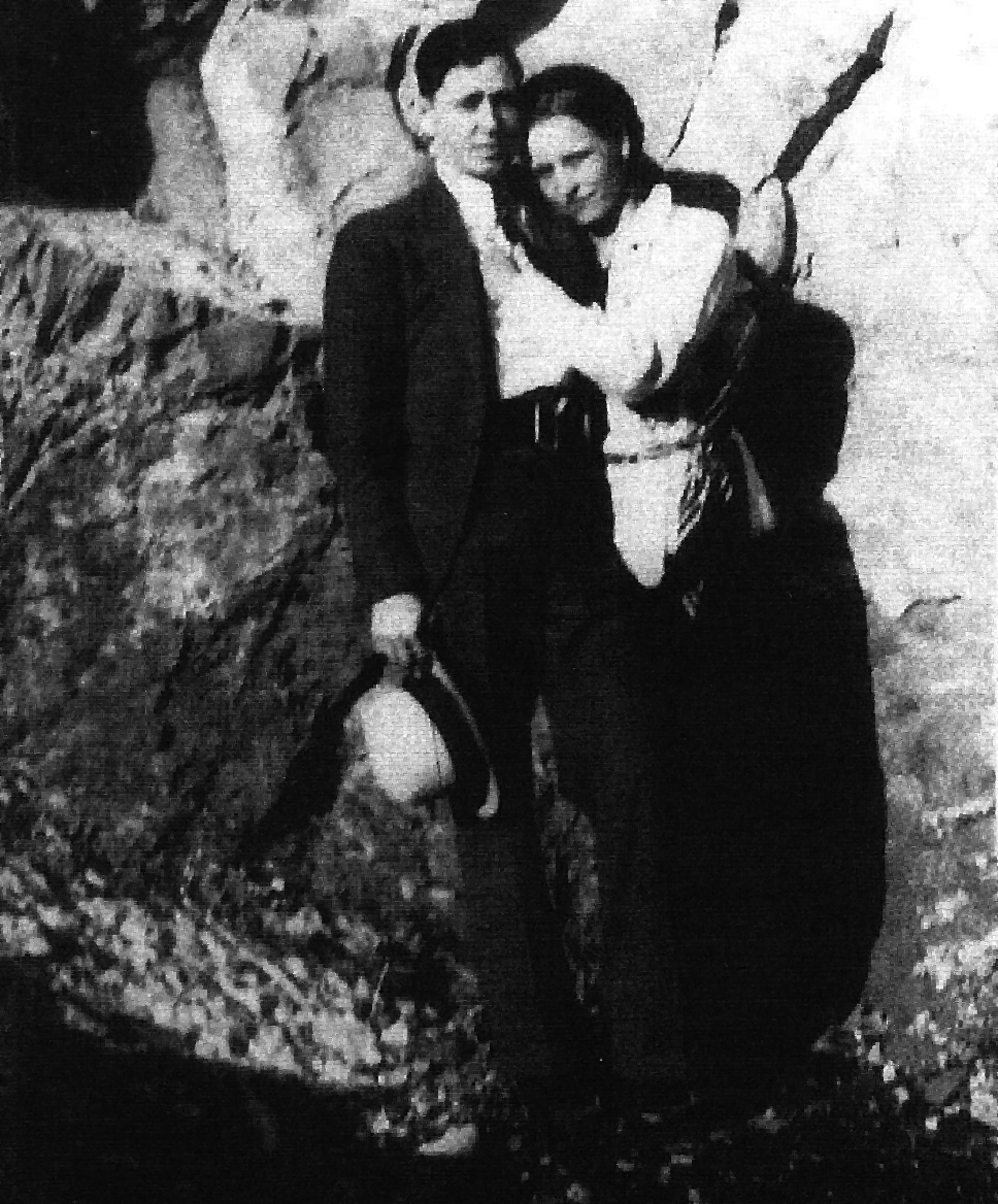
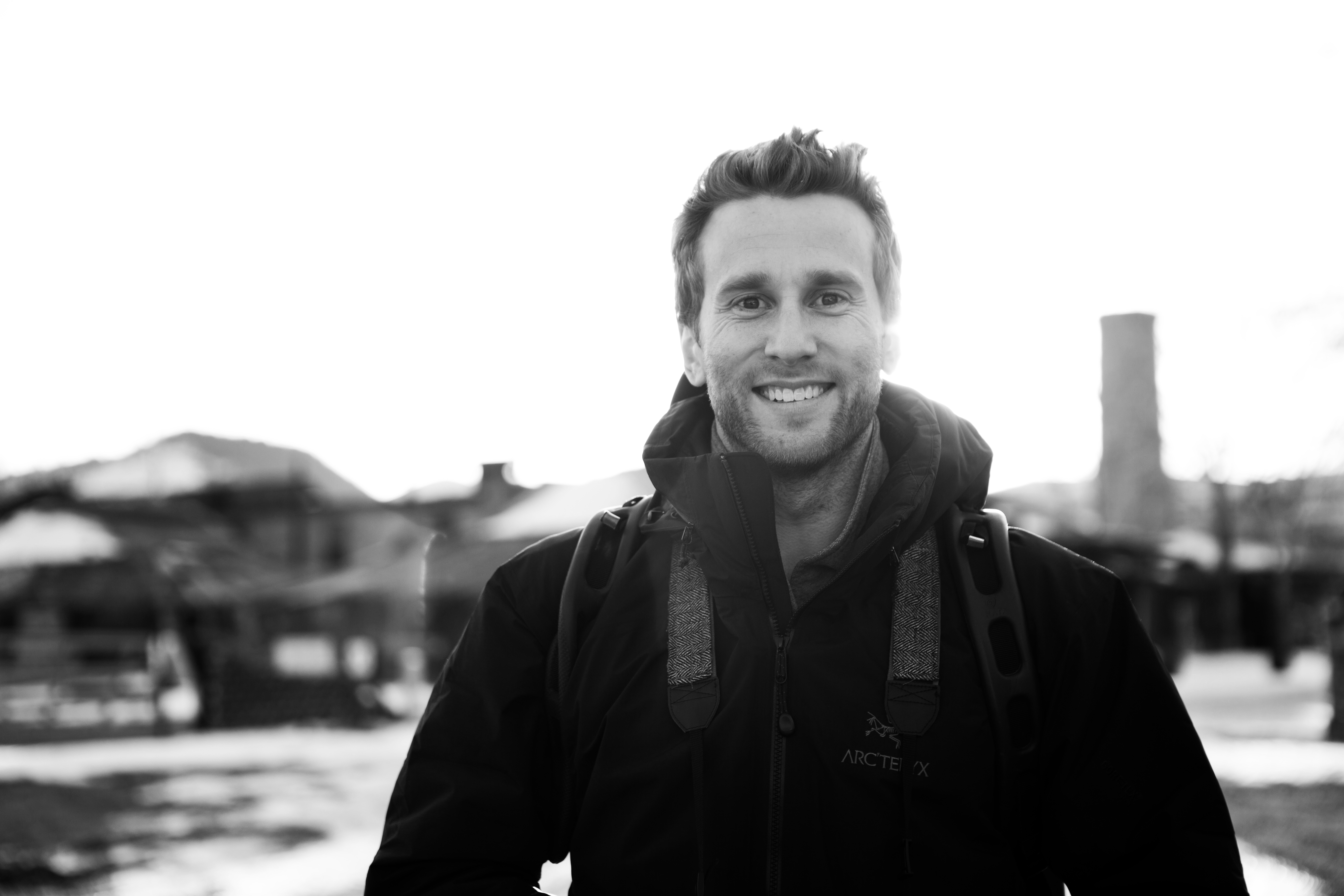
Dale Corvino recently wrote the personal essay Marilyn Monroe, Baby Sitter which highlights his grandmother Helen Rizzo’s relationship with Marilyn and Joe DiMaggio for Salon.com. Dale operated a photo studio in DUMBO and worked for some of New York City’s largest real estate interests. For more on the article you’ll enjoy: http://www.salon.com/2013/09/26/marilyn_monroe_baby_sitter/

What was it like growing up in Brooklyn when you did?

I was born in Brooklyn only because my mom was very attached to her doctor, who had delivered her, was her pediatrician and obstetrician. They’d moved out to Long Island before I was born. I grew up in a postwar suburb, equally split between white collar and blue collar, Jews and Italians, living in tract developments built on reclaimed marshland. I felt alienated and out of place there from jump-start. It developed amidst the social upheavals and racial unrest of the late Sixties — a “White flight” enclave. I’ve come to see that this unrecognized dynamic, of self-segregating denial, was part of what alienated me.

What are some of your fondest memories of growing up in an Italian family? What would you say is the most important thing you learned from your family through the years?

Food. My grandmother ruled the kitchen, and taught me how to cook, but more importantly, she taught me to honor and respect the bounties of nature. The house I grew up in was on a creek. There was a mussel bed on one end, and a spit of beach on the other, where I’d rake clams. We caught crabs off the dock, too. My grandfather kept a kitchen garden in the yard. My grandmother prepared whole meals out of what we caught in the creek and what we grew in the garden.

Are there any little known things about you that you’d not mind sharing with our readers?

I’ve been writing and publishing under a pseudonym for a decade. Stay tuned for the reveal.

What do you love most about New York?

I challenge those who profess their love of New York to love her with their feet. Love her completely, too — not just the southern half of Manhattan Island. Walk across the Brooklyn Bridge to Weeksville. Hike up Broadway to Dyckman Street. Check out P.S. 1, then have dinner in Astoria.

What inspired you to write the Marilyn article for Salon? Are you surprised at the response it has gotten so far?

I wanted to share my family’s experience with Marilyn Monroe with the wider world, and add some nuance to her biography. I’m surprised at how overwhelmingly positive the response has been. Marilyn is an icon, and her fans are very protective of her. When I first floated this story, I had skeptics claim the photo is a fraud. I’ve had fact checkers calling me out for false claims. I did my research though, stuck to what I knew, and sought to verify my family’s recollections against the public record.

Do you think the day at the Amusement park you speak of in the piece offered Marilyn a much needed moment free from fame?

Yes, my grandmother gave me the impression that Marilyn’s dream of a life with Joe was a reaction to her growing fame. She wanted to raise children.

Did your grandmother Helen speak of Marilyn often? Did she ever mention what she was like as a person opposed to the star she became?

Sometimes at Sunday family dinners. When she told it to a crowd, it was just an entertaining story, one of many. We had a lot of storytellers in the family. When I’d ask her about it and it was just the two of us, her tone was different. There was true affection, a bright spark in her eyes, and grief for her lost friend. She couldn’t even talk about Marilyn’s death. She’d just choke up. She blamed Peter Lawford, to some extent.

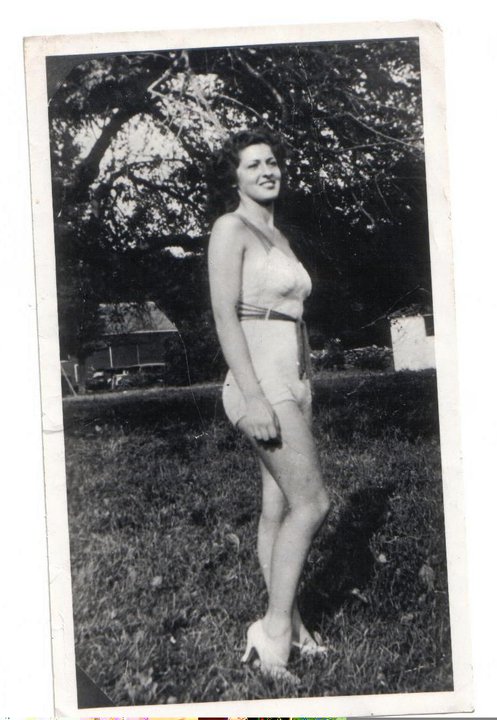
Helen Rizzo

Helen Rizzo

Did your mother ever mention what it was she liked about Marilyn so much as a child?

My mother was six at the time, and doesn’t remember too much about the event. She remembers that she definitely liked Marilyn, and was fascinated with her hair. She remembers the scary experience of being mobbed by the crowds and rushed out of the park.

As an author what do you love most about the act of writing?

I need the solitude and the quieting catharsis of writing. As I find an audience, I love the interactivity. Writing being read results in silent, almost telepathic communication between reader and writer. Readers are in a solemn state, picking up the writer’s inaudible pitch.

What led you to write the remembrance of society decorator Stuart Green? What did you admire most about the man and his work?

I spent my twenties as his assistant, his draftsman, his companion, and his romantic obsession. I didn’t know his full story until after his death; he was brought up on keeping secrets. He created interiors for high profile New Yorkers — Ralph and Ricky Lauren, Anne Cox Chambers, Saul and Gayfryd Steinberg. He was unwittingly embroiled in the murder of John Lennon. His story is one that illuminates the cultural dynamics of American society. He had an impeccable eye for color, and a love of the sublime in nature.

What it is like to run a photo studio at DUMBO?

I had a loft for photo shoots and events in an industrial building at the foot of the Brooklyn Bridge, with views of the bridge, New York Harbor, Lady Liberty — and the World Trade Center. From those windows, I stared at the smoke trails from the WTC for that tracked over Brooklyn for days after the attack. Production companies stopped shooting in NYC after 9/11, so we turned to events, especially weddings. Hundreds of New Yorkers held their receptions in the space. It was healing, and incidentally saved my business. I’m still in touch with some of those couples.

Why do you think the imagery found in photography is often such a powerfully emotional experience for so many people? What do you personally love most about photographs?

Photography has been embraced by our culture so intimately. It’s enmeshed in tradition, ritual, and family history. A photo like the one at the center of this piece diagrams a moment in time, and colors it with light and dark. All these decades later, the photo invites me to imagine the scene in that photo booth — the emotions, the charge, the smells. However my imaginings may fail, they are rooted in a document of time.

Do you have a dream project you’d most like to accomplish?

 I’m on the second draft of a memoir. It’s back-burnered right now, since I’m facing deadlines and assignments for shorter pieces. It’s all one body of work, but the memoir is a big dream.

Anything you’d like to say before you go?

In tribute to Ginsberg’s holy rant, I hereby vow to not let my work become “the cowardly robot ravings of a depraved mentality.”

“The Anthropology of Memory” by Dane Cervine

The Anthropology of Memory

Death swallows all. The existentialists, particularly the French, understand. Still, there are the small rebellions. There is memory. Digging for the forgotten. Holding fragments in hand, lifting them into light.

So after Paris, I buy a used book cheap to remember the French existentialist Henri Michaux, who in turn remembers an Ecuadorian poet named Gangotena who was possessed of genius and ill luck—who died young, along with his poems, most of them unpublished, burnt up in a plane crash.

 No internet search will find them. No Library of Congress hold them. Even then, the great library at Alexandria burned, and some future viral plague may yet take every word now saved in the world’s great memory banks with it into oblivion. Of course, there’s always our own Sun’s eventual solar demise, against which all human arrogance, and every poem, will fail. Unless that beautiful arrogance find us, somehow, a home on another world, a younger world, where Henri and I may yet reside side by side in gold or titanium memory chips, or even subtler clouds of data. But the Ecuadorian poet’s poems are, despite all arrogance, despite love, forever lost. Except his name, Gangotena.

That he was a genius. That he had bad luck. That someone remembers.


Dane Cervine’s new book is entitled How Therapists Dance, from Plain View Press (2013), which also published his previous book The Jeweled Net of Indra. His poems have been chosen by Adrienne Rich, Tony Hoagland, The Atlanta Review and Caesura for acknowledgement and have appeared in a wide variety of journals including The SUN Magazine, The Hudson Review, Catamaran, Red Wheelbarrow, anthologies, newspapers, video & animation. Visit his website at: www.DaneCervine.typepad.com Dane is a local therapist, and serves as Chief of Children’s Mental Health for Santa Cruz County in California.


An interview with Richard Hescox

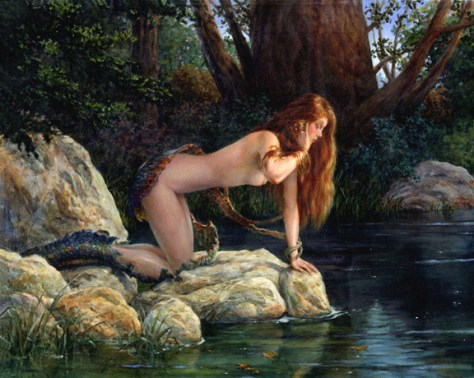
Lamia

Lamia


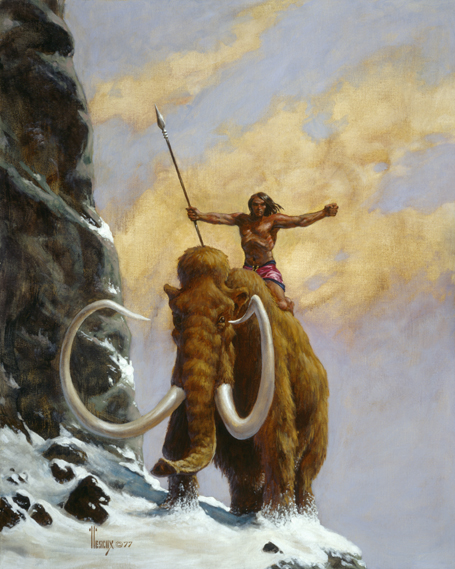
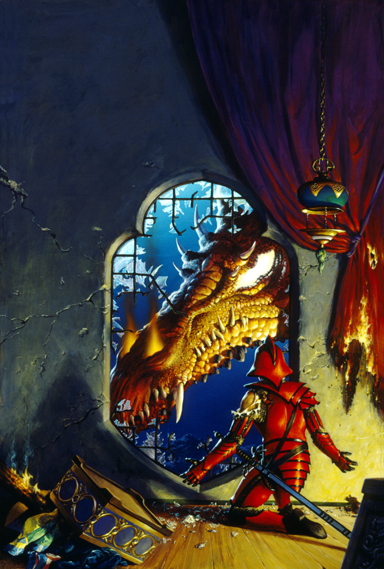
Richard Hescox offers up truly spectacular renderings of vintage and modern Science Fiction and Fantasy art. Richard has worked as a cover artist, background designer for animated films, advertising illustrator, conceptual designer, and art director. He has provided imagery for some of the most iconic characters of our time such as E.T., Halloween, The Dark Crystal, The Never-Ending Story, The Time Bandits, and Swamp Thing among many others. His paintings have graced the walls of the Society of Illustrators in New York, the Delaware Art Museum and the Canton Museum of Art. Fans of his work can look forward to his rich illustrations in the limited editions of George R. R. Martin’s Clash of Kings sometime in 2014.

Can you tell us a little about yourself? What were you like as a child? Did you develop a love of art early on?

I did. Of course my older brother wouldn’t let me draw in his coloring books because he said I scribbled and wouldn’t stay inside the lines.

I always enjoyed the art related classes in school. Fairly early I began to notice that (at least in my opinion) my drawing and imagery was better that the rest of the students. This was confirmed on rainy days when instead of outdoor recess we had to stay inside and draw. I would almost always draw dinosaurs, (my mania at that time) and often other kids would ask me to do a dinosaur for them because they could see that mine were better drawn. Getting recognition was very intoxicating to a shy boy.

Do you happen to remember the first things you used to draw most as a kid?

As I said, Dinosaurs. I wanted to be a paleontologist for many years but art finally won out. The earliest piece of my artwork I still have is a brick into which I carved a Woolly Rhinoceros in the style of cave art. My mother kept it for many years and it finally came back to me.
Kioga of the Unknown Land

Kioga of the Unknown Land

How did you first come to work in Science Fiction and Fantasy genres? What was it about them that appealed to you most?

These were the books I grew up reading. The pure and unfettered imagination made them fascinating and I remember developing clear visual images in my mind for each scene. I imagined those images and would think “If I ever became an illustrator for this book, that would be the image I would paint”.

When I realized that I could pursue my education as an artist and went to The Art Center College of Design, I settled down and did the type of illustrations that were being taught and I assumed I would illustrate the usual type of images after graduation. I had always loved and collected the science fiction and fantasy pictures by the great artists in that genre. One day an art student friend (who later became an animator at Disney) asked why I didn’t try to go in that direction myself? It suddenly occurred to me that it was a real option. When I started building my portfolio pieces I naturally tended in that direction and then began to apply to those publishers with Science fiction lines of books.

Do you enjoy creating images that offer society some much needed escapism and stimulation of the senses?

Magic and fantasy were much more real and connected to people in earlier times. Important life lessons were taught to the young through Fairy tales and even earlier by myths and legends. These lessons were introduced into the subconscious of the listener more deeply and effectively that way. In the modern age with scientific advancement and skepticism people seem to be missing this rich cultural education.

Science fiction and fantasy literature along with the associated artwork help keep this avenue to enlightenment open. To see its effectiveness just look at fans of Tolkien or even Trekkies.

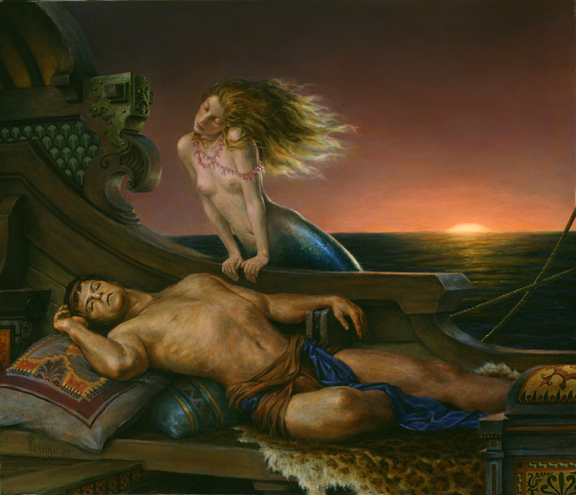
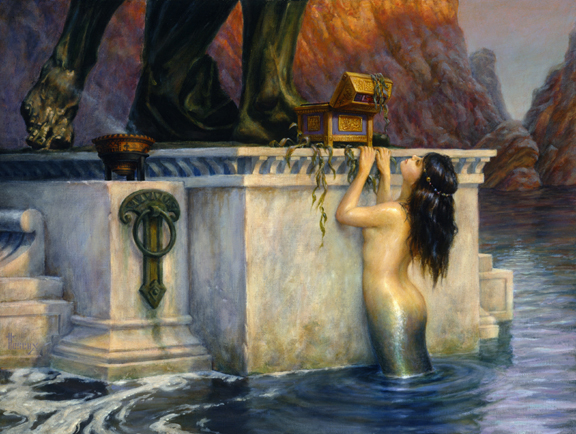
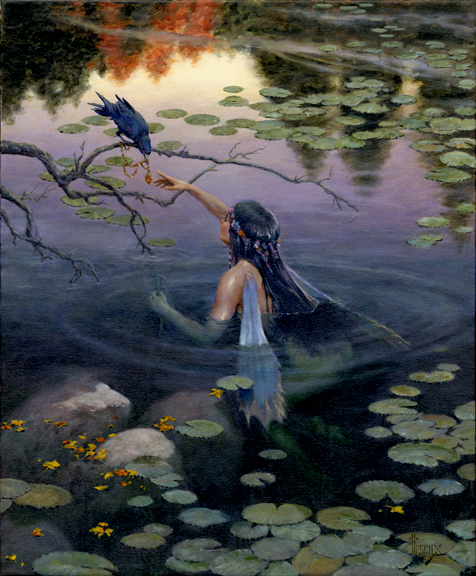
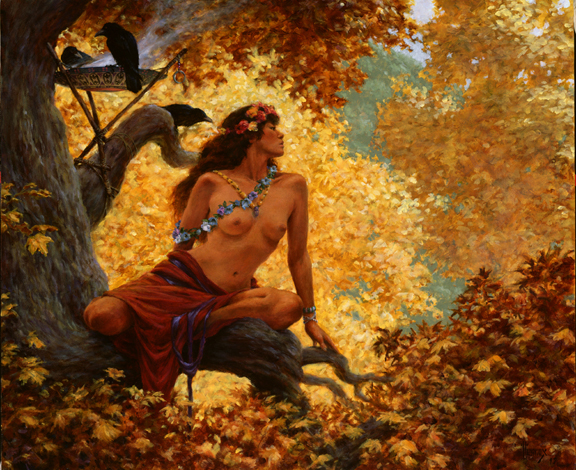
In my more recent “Fine Art” paintings I especially try to touch this deep need in people for wonder and ethereal beauty.  I try to picture a world where the wide sweep of fantasy is expected to exist and to be marveled at. I avoid the more grandiose themes and concentrate on subtle scenes of mythical entities doing their, to us, mysterious activities.
Dragon Lord

Dragon Lord

Why do you think art has always been such a powerful force?

I like to think of art (all branches: literature, poetry, song, drama, music, sculpture, painting, etc…) as Hyper communication. Talking is basic communication. But make those words a poem and the concept embeds itself far more effectively in the listener. Graphic arts do the same. A talented artist can communicate a concept more subtly, and at the same time more powerfully to the viewer. The mark of good art is the amount and quality of communication that it effects (a test that too much modern art fails at).

What does it feel like to earn a living doing what you love?

It is a double edged sword. Yes, you wouldn’t want to do anything else, but at the same time you are so invested in your creations that when they don’t meet with the client’s or the public’s approval the hurt and disappointment is profound. It can even happen when you don’t meet your own expectations with a piece that just didn’t work out like you envisioned.
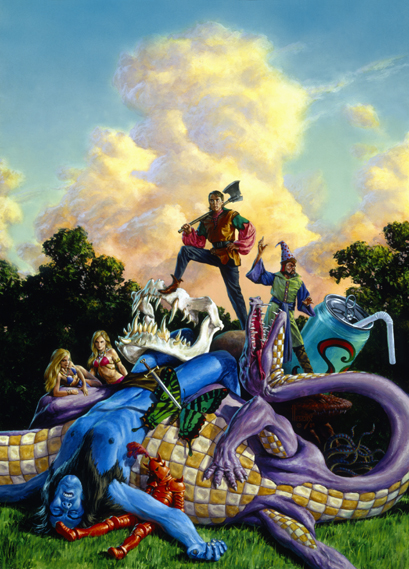
Jason Cosmo

Jason Cosmo

How did it feel when you first got paid for your work?

Just like when the other kids asked me for a drawing. Recognition that I had a talent that others could see.

What advice would you offer the artists of tomorrow?

Learn to draw accurately and well. Don’t shun the artists of the past because they really knew some things that are unfortunately ignored in much of today’s art teaching.

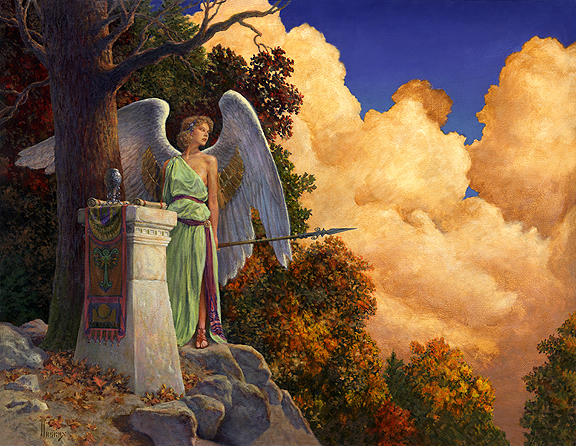
Guardian of the Horizon

Guardian of the Horizon

You have worked some with the characters for E.T., Halloween, Swamp Thing, The Never-Ending Story, and The Dark Crystal. At the time did you know they would become as iconic as they have? How does it feel to have worked on characters that are so beloved?

An unfortunate side effect of working on books or films is that you have to be so analytical as you read them or watch unfinished film segments that you can’t really appreciate the work as a whole. I am sometimes so intent on looking for the best image idea and recording useful visual details that I can’t see the flow of the story

Because of this I had no idea which projects would be hits with the public.

Do you ever miss having time to create projects that you personally want to create while having to work on commercial pieces?

The solution is to try to make each assignment look the way you would want it to, but the powers that be usually won’t let you. They are paying for it after all.

I have found time to do some of the paintings I really want to do and love. These are my “Fine Art” paintings. I enjoy doing them so much that I often use any spare time I have working on them.
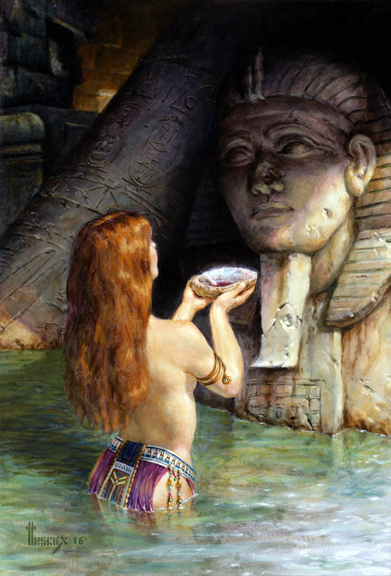
Ancient Memories

Ancient Memories

What does it feel like to see your work on exhibit? Do you ever get nervous about that sort of thing?

Again, a double edged sword.  I feel proud, but then I hang around to hear any comments directed at the work. Most artists have some insecurity because their efforts are right out in the open (in a show or on a publication) and they know they are always being judged.

Who are some of you favorite living artists?

As I mentally go through the usual list of artists I answer that question with, I realized that all of them have just died in the last 5 or 6 years.
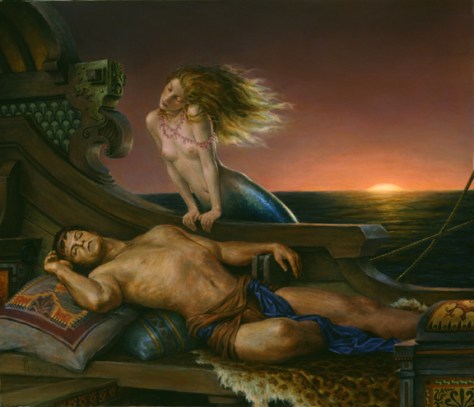
The Dreaming Sea

The Dreaming Sea

Do you have any one subject you like to cover more than others?

Beautiful and mysterious mythological women. That’s what most of my fine art paintings are of.

Do you have a dream project that you would most like to complete before your time is up?

Not really. I try to paint the images I most want to paint each time I start. I have been fortunate in being happily surprised with many of my completed pieces. At least the personal ones.
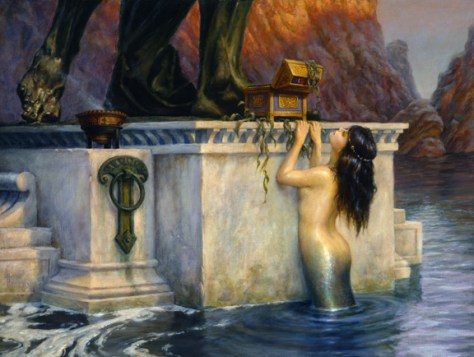
The Offering

The Offering

What are you feelings on death and such?

I try not to dwell on that subject except to figure how to put it off for as long as possible.

What was it like to be asked to illustrate George R. R. Martin’s upcoming Clash of Kings?

It was very flattering. George has the right to personally select artists for the Subterranean Press editions. For him to seek me out to ask was an honor and I have tried to justify his choice by doing the best illustrations I could. He had to approve every image himself so I feel I did a good job of matching his mental images. I spent more than a year on the project with over 70 images created.
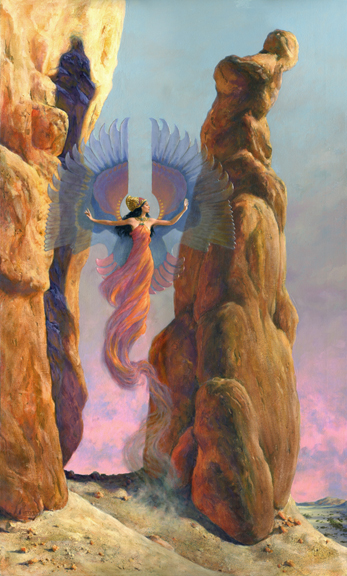
Mirage

Mirage

Are there any little known things about you that your fans might be surprised to learn?

Aside from my birth on the planet Krypton, I really can’t think of anything mysterious about me.

What projects are you most excited to bring the world next?

I feel the most pleasure when I find that a painting I have done, and which I feel a huge aesthetic charge from, has also touched others in unexpected ways. The communication I strive for has to be felt by viewers of my paintings on a deeper than literal level. Therefore I am most excited about creating the next painting that achieves that.
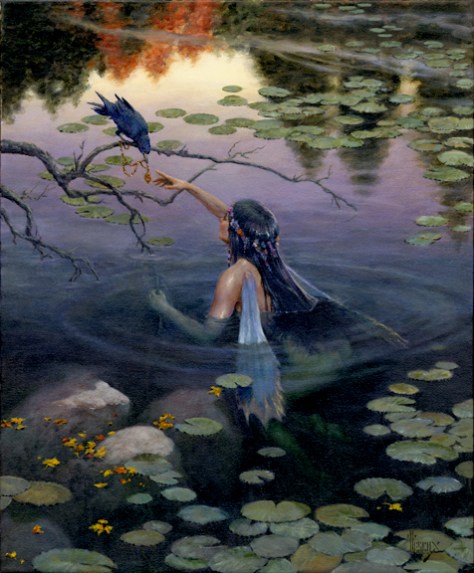
 

The Token
The Token

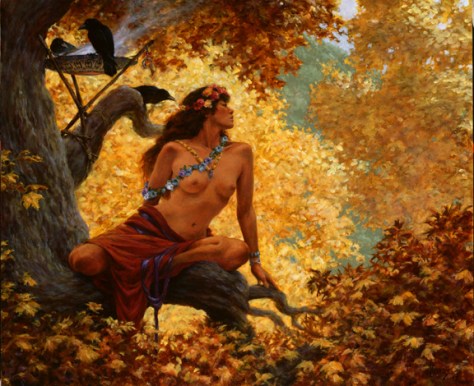
Throne of Gold

Throne of Gold


“The New Play” by Matthew Wilson

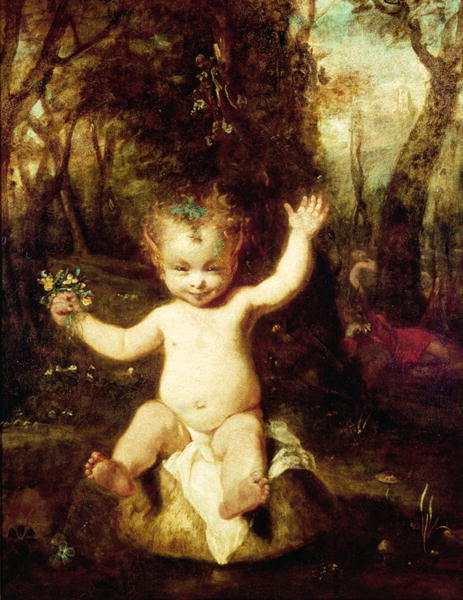
Joshua Reynolds, "The Puck"

Joshua Reynolds, “The Puck”

The New Play

Have you heard what they say?

How Shakespeares new play will start today.

I am quite excited about his last, his great,


the witches, the madness, the crush at the gate.

The mind of the man I am sure’s quite replete

of madmen and demons you find on the street.


What a collection of fools and villains he has in his head,

the greater number for the good of man are surely dead.

History shall call him the maker of monsters and whores


but an afternoon at the globe is better than chores

of which I’ve grown bored, so give me a play

Shakespeare and you shall have my penny. A slave for the day.


Matthew Wilson, 30, is a UK resident who has been writing since small. Recently these stories have appeared in Horror Zine, Star*Line and Sorcerers Signal. He is currently editing his first novel.

“Old Ladies” By Pam Riley

"Old Woman Dozing" by Nicolaes Maes

“Old Woman Dozing” by Nicolaes Maes

Old Ladies


No one knows the truth

about little old ladies –
the wrinkled squints

of blue and brown

behind wire rims

as they peer over

their fans of cards and cry “Gin”.

No one knows what they

are really thinking

as they sip sherry and spin

a fury of purple thread

between their fingers,

making magic for their grandchildren.


Do they speak of the dapper men

in suits

who brought them asters

and took them out

for lemonade?

Do they speak to each other

of old lovers,
nights of romance

when the stars went missing

and left them barely breathing

in the backs of cars?


Or do they huddle in tea rooms

and theatres

showing black and white

photos, and old sounds

colliding with their chairs?

Do they pretend that

yesterday has lost

its sting and that

tomorrow will come unannounced

too early to be even noticed

and too late

for their hands

to carry?


Pam Riley is a native New Yorker, who still misses the Big Apple. She likes to spend her free time going to the theatre, museums and traveling. She has been writing for years and enjoys working in both poetry and prose. The little quirks and imperfections of life are her inspiration.

An interview with Hank Williams, Jr.

Hank Williams, Jr. (publicity photo)

Hank Williams, Jr. needs no introduction. As the son of the late great Hank Williams, he was surrounded by great music at an early age. First taking the stage at the age of 8 to perform his father’s songs, his early career was guided by his mother Audry Williams who is also said to been a driving force in the success of his father’s career. Since then he has become a legend in country music blending southern rock and blues elements in unmistakable fashion. Not only a gifted singer/songwriter he can also play a host of instruments including guitar, bass, steel guitar, banjo, dobro, piano, harmonica, fiddle, and drums. It was a pleasure to have the chance to bring our readers a little glimpse of the man behind the music.

You were only 3 when your father passed. What is the fondest memory of  him you have?

Well, I didn’t know Daddy, so I really don’t have any memories. I know what people have told me about him taking me to the Grand Ole Opry and leaving me in his guitar case on the side of the stage. The best thing we ever did was record the duet for There’s A Tear In My Beer and we even won a Grammy for it.

You were exposed to great music at an early age. What was it like having such amazing artists stopping by the family home? Which of them stick out most in your mind?

Well, Little Richard, Jerry Lee Lewis, and Fats Domino were at the house a lot and that’s where I learned to boogie woogie on that piano. Earl Scruggs would come over, as would Johnny and June Carter Cash. By the way, June Carter Cash was my godmother.

What was it like to perform at the age of 8? What was running through your mind the first time you took the stage?

Momma put me on the stage at 8 years old and the people were expecting me to be just like daddy. So I went out and performed daddy’s songs and the crowds loved it.

Do you get time to go to Paris, TN often? Why do you think small towns are so appealing?

I actually live in Paris, Tennessee. I love West Tennessee and Kentucky Lake. My family sometimes wants to live in a big city, but they also love the country life. I have places in Montana, Florida, and Alabama, so we are always on the move.

2012_HWJR_publicity-image2

What is the most important thing you have learned in all your years so far?

Be true to who you are. Don’t change because you think it’s cool to change.

Do you think with the passing of so many iconic country legends that the genre will suffer?

I think country music evolves. We have lost so many great artists over the last few years and it is sad, but we have some great new acts that are out there making music. Country music will be around forever!

 Anything you’d like to say in closing?

I have not been to Maine in a long time, I think 20 years or so, so it will be good to be back, who knows I might stick around and go bear hunting.

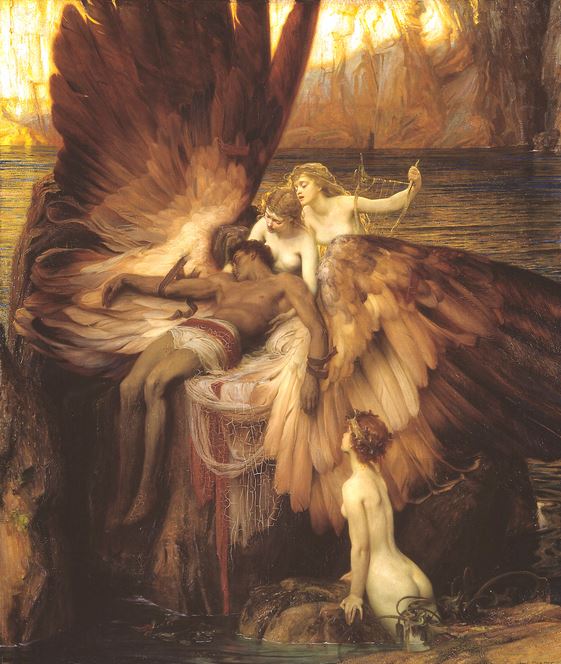
“Icarus 21st Century”, I Saw It Happen” by David Mac

icarus new


Icarus 21st Century, I Saw It Happen


Ancient wings burnt by sun

bird shape sizzle

landed in the landscape

somewhere

terror as everything

falls simple every day statues

stones cry   weep shudder

evil and non evil

perspectives

points of view

eyes seen so much now

seen it all:

black and white

no grey

life and death and

balancing

somewhere

in between

can be hard as

hell

An interview with Laurie Lee Brom

lauriebrom


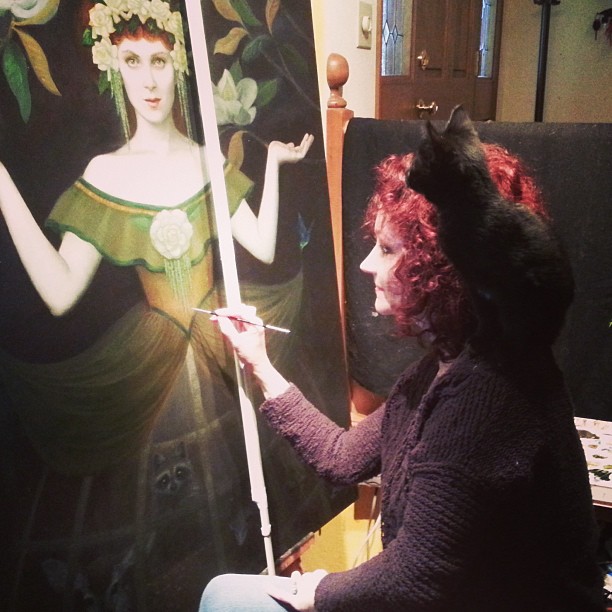
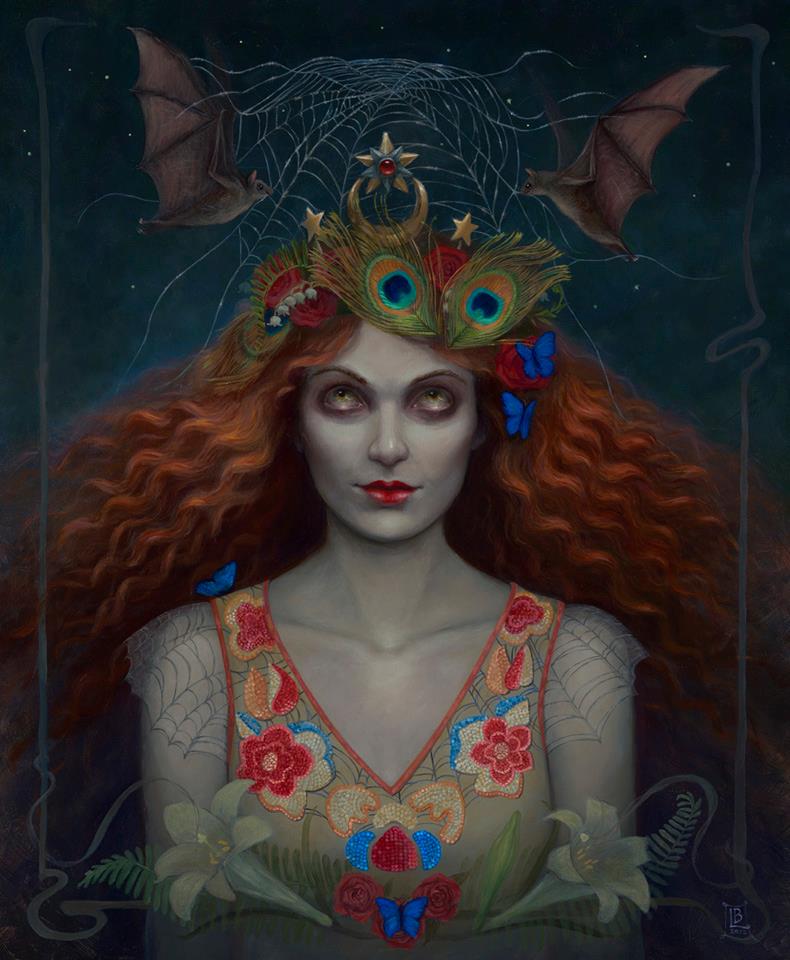
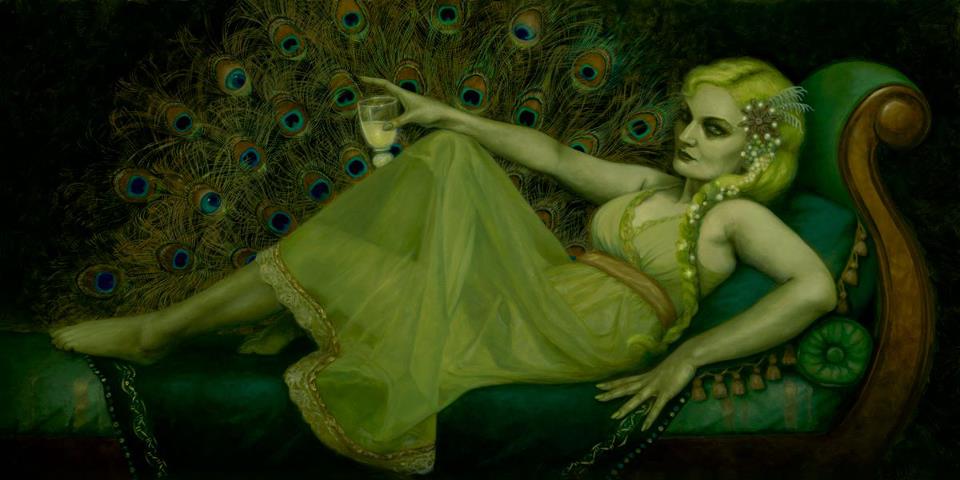
Laurie Lee Brom is perhaps best known as the wife of Gerald Brom. An artist in her own right she produces stunning images of fantasy. She has an upcoming show at Roq La Rue Gallery in October 2013.

http://www.laurieleebrom.com/

What was it like growing up in Charleston? How do you think coming from there has influenced you most to be as you are today?

I think we’re all deeply influenced by our early years. When I was growing up in Charleston I have to say, I felt like a space alien most of the time. It was a deeply provincial place then. I couldn’t wait to leave and find what was out there. I hated the heat, and it lead to me staying inside a lot,drawing and making up my own little worlds. From a really young age, like 5 or 6, I was obsessed with pop culture – music, fashion, tv, movies -basically anything new and less conventional. And now, of course, I long for Charleston! I miss the history and beauty, the moss and smell of pluffmud. I have such a love of history from growing up there. As an adult I’m now always drawn to things with a past rather than new stuff. And my earliest memories of art came from the fabulous Gibbs art museum there. They have this one room full of miniature portraits from the 18th and 19th centuries that I’d stare at for ages making up stories about who the subjects were and create my own when I’d come home from there. Charleston  is the kind of place that makes you sure ghosts are real and are probably just around the corner. It seemed like everyone had a ghost story to tell. Even my super level-headed father had stories from his work (in Atlantic Coast life insurance) located at the time inside the Wentworth Mansion.

What were you like as a child?

I was a classic weird, awkward artistic kid! I’m sure I’d be labeled ADD now. I’d daydream when I should have been listening in class and would have no idea what my homework was because I was off in space. Then I’d hyper focus on art and music. I became vegetarian at 12, which went over really well in SC in the 70’s!(laughs)

I grew up on James Island, overlooking Charleston harbor. From my backyard you could see where the first shots of the civil war were fired. I had a deep love of animals that I still have, and enjoyed all the wildlife that came with the marsh.

I can’t remember not drawing or making things or playing with my lite brite or spirograph. My older brother and I used to draw monsters and witches and such when I was really little and my Mom is a terrific portrait painter.

absinthefairy


When did you first meet Gerald? When did you know he was the one?

We met in a program in Atlanta for high school art students. I had a wonderful art teacher in high school who encouraged me to go to it. Brom and I clicked immediately. We all called him Brom even then. Growing up on bases as he did it wasn’t uncommon to be known by your last name. When my parents came to pick me up he told them he was going to marry me. We wrote letters to each other for years. Mine from New York and Charleston and his from Germany where his parents were stationed. I knew we were soul mates even when we were still just friends.

What is it like being married to an artist?

I can’t imagine being married to someone who isn’t at least in a creative field. It’s pretty all consuming for both of us, and I think it really helps to have someone who understands that.

7806102236_771b5d0b19_o

Do you think his being an artist influenced you to be more creative?

In some ways. We visit lots of museums together and certainly going to all the art conventions has exposed me to some great artists. But before I really got going in painting it was quite intimidating creatively living with someone who has such success and endless creativity. I really had to separate my approach from his and just acknowledge that I’m not him. It was very important to me to get his valuable opinion but to find my own way of painting.

When did you first start creating your own works?

Before having kids I painted in watercolors mostly strictly observing and learning to draw. I painted people and cats (largely because they were willing living subjects) for the most part. I had a long break from art while raising the kids. For many years that creative voice in my head was just gone. But once our youngest got in middle school I slowly got back into art. I knew I would eventually try to make a go of it and feel super lucky to have come along now as opposed to thirty years ago when there was no real interest in this kind of art. I think one benefit to starting this late is that I know exactly who I am and what my point of view is. I certainly didn’t have that in my art when I was much younger.

1377537_10202176504839198_333656954_n


Is there any one subject you like to cover most?

I’ve always painted people. That’s what has always interested me. I’ve always been drawn to spooky or dramatic storytelling or a sense of mystery, wanting to know the back story. There are tons of themes I want to explore. I feel like I’ve just started this career and I’m really excited to explore those directions, but there will almost certainly be living, organic elements in my work.

Who do you consider to be some of the best living artists of our time?

Oh I’d be hard pressed to name names. There’s such a great resurgence in art and illustration right now I couldn’t pick just a few. It’s a really exciting time in art between the talent in the illustration field and the gallery scene and the merging of the two I couldn’t pick.

557610_514368018590505_500135259_n

Your works tends to deal with fantastical themed imagery. Why do you think you are drawn to such things?

It probably stems from an over-active imagination as a kid. I’ve always loved the idea of spirits and magic as well as themes in the natural world. Though I think it’s super important to learn to draw and paint from life models and still lifes, I just love illustrating characters and scenarios.

Do you enjoy offering up a bit of escapism through the images you create?

Absolutely. I hope people get that from my work.

1174875_10202024909009397_899973439_n

Why do you think art has been so important throughout the ages?

I think overall it’s because art is sort of a mirror of human existence. All of our emotions, dreams and experiences are reflected in art through the ages. Without necessarily thinking in these terms while creating it, the art we create is a record of our lives.

Do you ever get nervous showing your work at galleries?

Well this is my first solo show and I feel like I’m jumping off a cliff! You never know if what you’re working on appeals to anyone but you.

625532_10201051937165709_914372422_n

Was it difficult balancing art and family when you were raising your family?

It was absolutely impossible for me. That little voice in my head that used to have its own thoughts and ideas grew completely quiet and was replaced with “Mom” thoughts- constantly trying to make sure the kids were where they needed to be, getting all the homework done, friends over, food bought, laundry done, meals cooked, volunteering as art docent in both kids’ classes. I just couldn’t make the switch to trying to get creative for little bits of time in between. However, I wouldn’t trade being a mother for anything in the world. It was the best, most rewarding thing I’ve ever done. We have two fantastically creative sons, and I feel so incredibly lucky to have my family and to now to be able to have a career in art.

Do you have a dream project?

This is as far as I’ve plotted! I feel so fortunate that this early in my career I get to show at my favorite gallery, Roq la Rue here in Seattle. I haven’t even thought beyond it to what I want to do next month. I guess start on the next series and explore some new themes.

laurie-art-couch


“Cave Dwellers” by Lytton Bell

cave


Cave Dwellers

Give it all to me:
white light, intense fear of whatever slumbers in the dark
Give me the wet cavern of your flooded mouth
opening always to places much bigger, darker, wetter, and less tame

We are inhabited by unseen
forms of life that squeal and squirm and leave
trails of slime behind them as they move
Here, hidden deep within the bowels of earth

Moan for me, your satisfaction
lifting like bats to fly — startled,
majestic, blind — deep into the soul
of a hollow, abandoned poet

Cum my love, chalky minerals drip
from tips of stalactite syllables
Crystallizing here, in the echo
and footprints and tufts of fur — our hibernation

Plunging me into the near future
I am waking up; give it to me
Give it all to me: hunger, claws, teeth
Meeting me here will be the only truth you will ever need

Not every lost has a found

lytton bell


Lytton Bell has published five books: A Path before Winter (1998), The Book of Chaps (2002), Nectar (2011) Poetica Erotica, Volume One (2012) and Body Image (2013), won seven poetry contests and has been the featured reader at many California literary venues.  Her work has appeared in over three dozen publications. She is a founding member of the poetry performance troupe Poetica Erotica. As a teenager, Lytton won a scholarship to the Pennsylvania Governor’s School for the Arts, where she studied with Deb Burnham of the American Poetry Review and the late Len Roberts, author of The Silent Singer.  Lytton graduated magna cum laude from Bryn Mawr College. She is a civil servant by day.