“Perfect Painting” by Chris Castle

The Perfect Painting

Yellow was always important to me. Yellow was the colour Madeleine wore when I first kissed her and yellow was the colour of Dan’s favourite T-shirt. I’ve always painted. When I began my paintings were full of red. Very red and very angry. I was always angry about something. After I met Madeleine and Dan, I turned around. My paintings started to have a lot more yellow after that.

When I look at a painting, especially one I’d worked on for months, I always noticed something different in it, each time I looked. Dan’s face is like a painting; his face shifts from one tone to another so easily. He’s usually clowning and laughing, but sometimes when he looked at my paintings, his whole face tightens, really concentrating on the colours.

I remember one time, I caught him looking at a piece and his eyes were so focused, I hardly recognised them. He always thought if he stopped messing around people would leave him. So he never stopped. Bit I appreciated him most when he was just being himself; his hazel eyes caught up in the picture, the colours animating his looks, with a thin smile of satisfaction at the brush work and the composition. I could tell the quality of a painting by how it moulded his face. When he caught me staring he just threw his head up, a smile flickering over his mouth and he would just say, “Hanging’s too good for it.” That always made me laugh. He could make me laugh at just about anything. It was only after he left I found the picture was one I sketched of Madeleine.

The three of us would often go out, with one of Dan’s many girlfriends and we would laugh so much, Dan always being the centre of attention; but once in a while I’d see him watching Madeleine and I knew. I knew he loved her almost as much as I did and sometimes, as much as I loved Madeleine, I wished Dan could be with her and love her.

One time we had a portrait of the three of us. It caught Madeleine so perfectly, with the hair just past the shoulders, those clear green eyes perfectly. I often looked into her eyes for hours at a time and I’d always find something new in them, every time.

The colour of a painting is important to me. Sometimes Dan would look like a painting, a human painting; I could always find a new aspect to him, behind that big brash yellow shirt, noticing those big, thoughtful, sad eyes, I used to wonder how he would turn out.

I was adding red to my latest when the letter came though. I hated that letter; I hated it because as much as I’d refuse, Dan would accept. I was scared of being forced to go and kill and be killed, but I was scared more for my friend who would willingly face it all.

He came round. There was no real point in me arguing with him. We just accepted it. He looked up from the painting and said, “How could you agree with it? You’re a painter.”

I laughed out loud when he said it, but I quickly subdued it. I could feel my eyes sting as we smiled. There was silence as I whispered it;

“Don’t.” Even then he smiled.

“Sorry. I have to.”

“You don’t have to do anything.”

“I’m going.”

I stopped talking after that and just looked over to him. Through all the red I saw, Dan stood out in-front of it all.

The following week we destroyed almost a whole city saying good-bye. One night Dan hit someone, about the war. I felt it was wrong. I didn’t like him when he was like violent. He was going to have to be like that a lot when he was out there.

As we said goodbye, Dan looked back at the two of us and we both knew that if he left now he would lose Madeleine to me to me forever and he still left, glancing back just that one time. It was the saddest moment of my whole damn life. Dan was now a soldier. I was a draft dodger. Dan would have landed at almost the same time as I crossed the border.

I hoped he had survived out there. I hoped h would come back and settle down. I hoped all these things. I prayed every night that he would live. My paintings became black and incomprehensible to everyone but me, because I knew how it was to leave a best friend behind.

As his letters arrived my guilt increased, as he told me he sat in the mud with a loaded weapon hoping to die and not have to kill. I stood for hours on the mountains, staring out to the forest, clutching the letters he had written.

The words were so cold and so terrible it felt like it wasn’t him. War had changed him. I longed for the letters to arrive and I hoped to god they would stop. I hated myself. I hated Dan for suffering and I hated the war and I hated Madeleine for loving me when I was so full of shame. The images I painted were sharp and full of black and red. So much red.

Still the letters came, and still the pain. The blood and suffering continued. It was constant. Then one day a different letter came, telling me Daniel Gallagher was arriving in my home town, in two weeks’ time. I didn’t even wonder why. I was so happy. It was only as the page unfolded that I read Dan had lost both his legs in a mine explosion. It was only then that I started to cry.

As I drove to the hospital, I began to hate him for what had occurred. I started to hate myself for letting it happen. As I moved up the corridor, my palms itched, sweat forming on my forehead. As I reached the door I faltered, breathed deeply and opened the door.

Everything was so white and cold. I saw my best friend stretched out over the cold, white sheets. His face had changed. It had changed so much. His eyes, when they opened, were vague and distant. I whispered his name. I don’t remember moving closer to him, but I started to put my arms around him and I screamed.

I never asked. I could never comprehend how much he had suffered and he never asked me to. I had seen him suffer pain that I could not and would not endure.

Dan became more mobile over the following months. He started socialising with friends, going to parties and exhibitions. We always had some time alone just to talk. One day we went to a forest. It was beautiful. All the flowers, the grass, the whole scene was so tranquil. A deer moved out in front of us. Dan was shaking and I put his hand on his shoulder. He reached out and put his hand in mine. It was then I realised how scared he was.

“My body’s broken. I know that. But that’s not what keeps me awake. Can’t escape memories.”

“Danny-“

“Do you think I haven’t hated you? I swear to Christ I have. I would have prayed to Jesus to turn us around. You have everything and I have nothing.” His voice was low pitched, as distant as he was angry. His eyes turned red, teeth gritted, spittle shooting out, his veins throbbing. His face was pulsing.

The deer moved on into the woods. I looked over and saw his arms over his face. It was such a beautiful day. He kept crying as the sun broke through and wrapped us in a blinding, burning light.

It was some time before I spoke to him again. I wanted to speak to him so many times but I just couldn’t find the words. A year past. When he turned up on my doorstep I nearly fell backwards in shock.

His face hadn’t changed noticeably, except for his hair had grown, he wore a beard. But his eyes had turned back to the hazel I remembered. I didn’t really notice what he was holding until he handed it to me. I didn’t hear his words or my reply, I simply tugged at the paper ad stared, I couldn’t describe what it depicted, what the images were. But the colours, the vivid, lucid colours, were so powerful, the scene so beautiful, so still and peaceful. I noticed how well the red and yellow went together. It was the best painting I had seen in a long time. I nearly forgot to look back to Dan, but when I did peer over the top of the frame, I saw his face and I saw his smile. I was going to say something, to tell him how I felt, but instead I laughed so much I nearly cried.

After that day we saw each to her regularly. We didn’t pretend that things hadn’t changed but we both accepted it and moved on. We spent the time we had talking and laughing all over again.

I encouraged him to paint, to get about more, while he simply told me things which put my life in perspective. He provided me with ideas for paintings, some funny, some sad, but always interesting. Like Daniel Gallagher.

This brings me to where I am now. Standing nervously by his side. I had remembered all this while waiting to act out my part; waiting for the sun to come through. Spring is here and the daffodils are out. Then, with almost perfect timing as I step over to him, to hand him the ring, the sun beams down on us all. Dan flashes another smile to me and I return it. As always. As he sips the ring on her finger, Daniel Gallagher, without realising it, has just, again, provided me with the inspiration for my next work. My perfect painting.

Support The Original Van Gogh’s Ear Anthology with a Donation Get a Book or Two…

While it is not expected, donations to support our site and Volume 11 are greatly appreciated. For donations of $10 get your choice of one title, $15 gets you two, $20 gets three, and $25 gets you all four. Should you have any questions on our new policy please do not hesitate to ask. We are pleased to now offer you the following gifts from French Connection (http://www.frenchcx.com/press/):

Van Gogh’s Ear Volume One

http://www.frenchcx.com/press/van-goghs-ear-volume-1/

Van Gogh’s Ear Volume Two

http://www.frenchcx.com/press/van-goghs-ear-volume-2/

Van Gogh’s Ear Volume Four

http://www.frenchcx.com/press/van-goghs-ear-volume-4/

(all edited by our very own and very dear Ian Ayres)

and

Tales: From a Distant Planet by Felice Picano

http://www.frenchcx.com/press/tales-from-a-distant-planet/

“Judgement Day” by Angela Cain

Judgment Day

The Sun beamed rays of fire
As every man on earth was deemed a liar.
The sins in the world had become too much
As the Earth began to lose its soft, loving touch.

Everything that was safe became a danger
As if Jesus had just been stolen from his manger;
And all the terrifying, taunting spirits arose,
Taking their prisoners to hell as the story goes.

Then Angels came down bursting through the flames
Looking for heavenly souls they might claim.
They found few, but took all they could find
Back up to heaven where it was safe, beautiful, and divine.

The Angels didn’t linger long for the fire grew and grew
As Judgment Day was upon us as we now knew;
And the world vanished in one great blast
As the Maker looked down and said, “The sins of Earth are gone at last.”

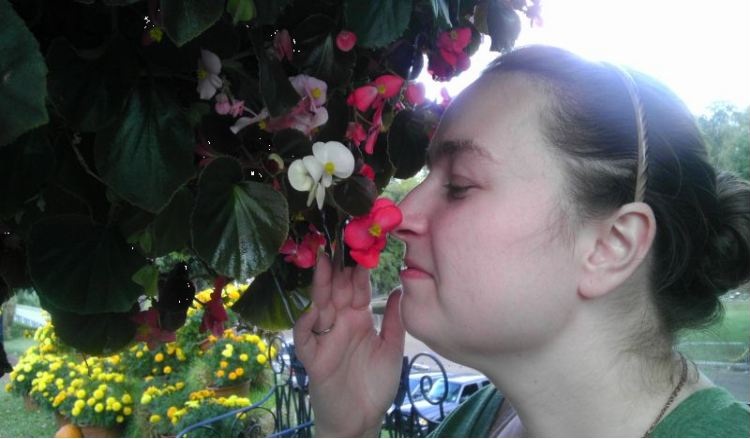
Angela Cain is a graduate student at Stephen F Austin State University majoring in English. She enjoys smelling the flowers as she quietly walks down the side walk at your nearest park while observing nature’s beautiful creations. These walks in the park give her the muse to write poetry and fiction. In her downtime she likes to play with her dogs, Molly and Shadow.

“La Tristesse Durera Toujours (the sadness will last forever)” by Benjamin Blake

La Tristesse Durera Toujours (the sadness will last forever)

Lost in the swirls of a starry night
Blurring the edges of olive groves and cypresses
The yellow moon hangs like a condemned criminal
Spirit lamp illuminating this virgin canvas

Pipe smoke clouds in the air
Foul smelling liquid poured over sugar cubes and through silver spoons
Paint smears these tired hands
Dear Theo, I’m afraid it is getting worse…

Stumble out into the field
Revolver clutched tight in pallid hand
Pull the hammer back and raise to hollow chest
A new portrait done in blood spatter

This bed is where a last breath will be sighed
Sheets stained and pulled over this lifeless face
Hand feels warm and vague
Brother, let me speak these last fatal words

Benjamin Blake was born in the July of 1985, and leads a relatively reclusive life in the New Zealand countryside. His fiction and poetry has been published online, and in print in Australia, the UK, and the States. He is a contributor to the 2012 Horror Zine anthology – A Feast of Frights (introduced by Ramsey Campbell). You can read more of his work (and view his photography) at www.benjaminblake.com

“Medea” by Joel Solonche

Medea

The sculptor has made
her princess of Colchis.
Her eyes are closed.

She is young, small,
frail as a flower.
Her lips begin a smile

for the stranger
come for the fleece
in her father’s city.

She holds a bowl
in one hand laden
with petals and leaves.

Her other is at
her breast where
it weaves the future

from a heart on fire,
a soul that begs: Forget
this story, refute

somehow all you know,
that such a face
conceive of crimes

the graceful innocence
of such a one could execute.
If not, oh, oh, a memory

that understands the cool,
white marble floor,
the pools of blood.

Four-time Pushcart Prize nominee as well as Best of the Net nominee, J.R. Solonche has been publishing poetry in magazines, journals, and anthologies since the early 70’s. He lives in the Hudson Valley and teaches at SUNY Orange.

“No One Could Ever Take Your Place” by Boris Jonathan Novak

No One Could Ever Take Your Place

Today I woke up with you heavy on my mind — it’s nothing new. I thought of the first time we’d kissed, and how the entire world suddenly had meaning. I thought of the precious, flowing fountain of wonder you awoke in me; the way you made me feel; the way you placed me on a pedestal and loved me unconditionally like you did. I think of you today, my body quivering, because no matter when, no matter where, no matter how, no matter what… no one — and I mean no one — could ever take your place.

Today I walked alone. I went to our special place to think of you — it’s nothing new. I felt a warm breeze brush against my face as I sat staring at everything and nothing. I closed my eyes and imagined your gentle hand — not the breeze — caressing me, wiping away the crystalline tears that flowed like miniature rivulets down my cheek. Your ephemeral silhouette comforted me, and I reminded you that no matter when, no matter where, no matter how, no matter what… no one — and I mean no one — could ever take your place.

Today I watched a movie, not on the television, but on a blank wall — it’s nothing new. The projector in my mind played out our story: the love we gave, the love we took, the times we hurt, the way we trembled, and the way we shook; the hopes we had, the dreams we shared; the promises we made, the vows we swore — the way we cared. And inside, my heart beat that familiar pulse — no matter when, no matter where, no matter how, no matter what… no one — and I mean no one — could ever take your place.

Tonight I had dinner alone. No, I didn’t eat a single bite — it’s nothing new. I stared solemnly upon the empty chair across from me. How futile again of me trying in vain to wish you there. But I can close my eyes and wish as I always do, can’t I? I can replay from my memory those delicate words you spoke when you said, “I’ll love you always and forever.” And I’d reply softly into your ear, “no matter when, no matter where, no matter how, no matter what… no one — and I mean no one — could ever take your place.”

Tonight I’ll sleep alone. My soul will cry for you, and my essence will bleed of your memory — it’s nothing new. I’ll remember your angelic arms around me, the warmth of your breath against my neck as we’d cradle each other, surrendering to the deepest of tranquil serenity. I’ll reminisce of how we’d loved and what we’d said, and perhaps in your heart — I’d like to think — you’d felt that no matter when, no matter where, no matter how, no matter what… no one — and I mean no one — could ever take my place.

Boris Novak dabbles in film production, as well as its many other facets. He is also owner and CEO of DARK HATTER FILMS, an eclectic production company, and author of many short stories and poetical works.

“Greek Woman, Corfu” by Geraldine Green

Greek Woman, Corfu

Today I swam with a woman
who sang to the seagulls

she sang of midnight
she sang of poverty
she sang of fear
she sang to the sea.

Today I swam with a woman who sang of the broken.

She sang to the sparrows
and she sang to me.

She sang of winter, of hunger and starving.
She sang of sorrow, she sang of greed.
She sang of hope, the fallen, the dying.

Today she sang her song to me.

She sang of the spring that lives in her island
she sang of its wars, its people, its famines.

She sang of Athens, soup kitchens, hunger
of people queuing for food from Crete —
onions tomatoes bread and water.
She sang to the seagulls she sang to me.

She sang her song of cleaners and soldiers
she sang of the sailors, the driven, the hopeless
she sang of her sisters and brothers and poets
mothers of children whose lives hold no future.

She sang her song of the sea to me.

She sang of workers unpaid for their labour
she sang of shipyards, of builders and teachers
whose spirits were crushed, whose lives lay in pieces
she sang of her country she sang of the free.

UK poet Dr. Geraldine Green is a freelance creative writing tutor, mentor and visiting lecturer at The University of Cumbria.

Her collections are: The Skin and Passio Flarestack Pubications, Poems of a Mole Catcher’s Daughter under the pseudonym of Katie A Coyle, Palores Publications and The Other Side of the Bridge by Indigo Dreams. This latest collection formed part of her PhD in Creative Writing: An Exploration of Identity and Environment through Poetry. Her next collection Salt Road will be published summer 2013, also by Indigo Dreams. www.indigodreamsbookshop.com/#/geraldine-green/4565286878

Her poetry has been widely anthologised in the UK, US and Italy and translated into German and Romanian. Geraldine frequently performs her poetry in the US. She’s an Associate Editor of Poetry Bay www.poetrybay.com

“Oblong Gallows” by Paul Uriaz

Oblong gallows

The hangmans rope shadows
Criss cross in the despotic

Wooden frame of the lurching
Crawling platform

Its floor is tarnished with the
Blood bedeviled raw spots of
Human spoilage

The oblong tilt of the gallows
Frame creaks and moans

The shriek of its wood and coffin
Wood nails, belch out ,

A morbid pitch, that shatters the silence of comfort

As the dangling rope shadows
Fly into the gloom and dance

The old weary woe strickened
Structure will bend in angles
Of death

“Perennial” by Joan I. Siegel

Perennial

While we slept last night,
late October frost passed
over the garden like the angel
of death, shriveling
the purple heads of cone flowers.
Already the smell of snow.
Tightening in the ribs.
Little by little
afternoons shrink around us
in the darkening rooms. Inexorable,
the earth’s engines drive headlong.
Deer huddle in their yards.
Black bears sleep. Tree frogs
suspend. All
abide.
Elsewhere, someone
is opening a door,
stepping out in the garden
where the first crocus pushes up
like the fingers of Persephone
eager for light.
Here, we tap in the dark, call
to each other.
—-from Hyacinth for the Soul

Joan I. Siegel, author of Hyacinth for the Soul (Deerbrook Editions), Light at Point Reyes (Shabda Press) and co-author of Peach Girl: Poems for a Chinese Daughter (Grayson Books), received The New Letters Poetry Prize and the Anna Davidson Rosenberg Poetry Award. She lives in New York’s Hudson Valley.

“Lilly, PA” by Marilyn McCabe

Lilly, PA

The layered deaths of small things
made black the heart of these hills,
and the streams, washed gullies, the great river
carry the dead’s murmur
to roar, drowned now
by the chunk chunk of machine,
rake and clang of cargo cars,
the squeak as they pull away,
rust feathered, driven.

Shadows come early in the hollows,
ice lies late. The crooked railroad
ties them all here
in the wrinkled palm of this off-god’s hand.
Fathers wasted want on lack,
the fabric of cheesecloth
brought home to the women for cranberries,
bought in half-yards from bolts
at the dusty back of the 5&10
with coins from pockets
lined with the lint of the realm, rich
with reinforced seams,Wrangler rivets,
the yellow w’s of their leaving.

The war was a gift:
young men, fresh-shaved and willing
to tie honor on like a wool scarf,
wear it to the field,
my father to sea.
Waves like the Appalachian ranges,
gray meeting gray,
boredom and torpedoes a heady mix, oh,
“how do you keep them down on the farm
after they’ve seen Paree?”

The topography of those ranges:
the ropy muscles of my father’s arms,
the taut veins on his temples
that looped across his balding head
to disappear somewhere up there
and seep down to dark:
what lay behind his eyes,
what caught his throat.

Time stumbles in the gnarled valleys
where anthracite and bitumen
elbow bones, and men
wore down their teeth
on hard wind and miner’s wages,
and children stole away on slow flapping wings
like the odd heron on the flyway,
one eye on the Connemaugh,
one on the next ridge.

Blair, Huntingdon, Mifflin, Juniata,
leviathan ribs of mountain force the roads to follow:
No way but down,
or up the arc to Jersey.
Cambria, Somerset, Indiana, Clearfield:
roads circle back on themselves here.
No way for a sober man
to get to Nanty Glo.

Marilyn McCabe’s book of poems Perpetual Motion, chosen by judge Gray Jacobik for the Hilary Tham Capital Collection, was published by The Word Works in 2012. Her poem On Hearing the Call to Prayer Over the Marcellus Shale on Easter Morning was awarded the Orlando Prize by A Room of Her Own Foundation in 2012 and will appear shortly in the Los Angeles Review. Marilyn’s poems have been published in print and online in such magazines as Nimrod, Beloit Poetry Journal, and the Cortland Review.