“The Day Before Thanksgiving” by Jed Myers

The Day Before Thanksgiving


I remember not

wanting to wander outside


the lines of

the full-page cartoon turkey


I colored in

with the available browns,


reds, golds,

and yellows the Crayola


box between

Irvin Snyder and me


offered up

while Mrs. Gregory watched


over all of

us, her high-necked solid-green


dress over two

great breasts, belly


and hips also mountainous, calves and ankles


thick as church

columns in their flesh-


colored

stockings. She cruised the aisles


between our

rows of desks, clopping


close then

away in her fat-heeled shoes,


her white hair

cinched in a bun, a patriot


goddess of

George Washington’s Revolution.


Irvin was

fast. In his hand the wax flared


out past the

black demarcations. His turkey looked


jittery, as if

it shook in its dread


anticipation

of being blasted


or having its

head chopped off any moment,


as if it were

radiating already


with oven

heat, crayon feathers and all,


Irvin swiftly

giving it life


on its final

Wednesday, haphazardly


fattening it

by a half-inch outside


its outlines.

It was furry with streaks


of those

sunset and earth tones he slap-dashed


over the

fictional meat.


I proceeded


with care.

Mrs. Gregory’s eyes,


like orbiting

satellites or atomic


electrons, could

be anywhere. She glared


right through

the back of my head, the righteous


witness for

all America, telepathic


reporter to

Congress, the President, God,


and my mom and

dad. My fingers were locked


in meticulous

progress, the tip of my implement


far too fat

for the exactness


I felt was

expected. I squinted


and bent

close. I approached the limits


of each

distinct patch of the image


of our

sacrifice with a selected shade,


keeping my

surgical acts inside


those sacred

edges. My turkey was neat.


But it would

never be ready to eat.


Mrs. Gregory

marched by and leaned,


her right

breast, the very flesh of our manifest


destiny, next

to my pounding temple,


lifted my

sheet, and with an imperious


grunt,

straightened herself and strode on


to the next,

my Thanksgiving bird to remain


mostly white,

its lower reaches and feet


like the map

of a region of nameless provinces


none of us

knew much about. Our nation


and all its

hungry beliefs would race


through the

coming sunset and into the next


mass ritual of

it self-confirmation


without that

perfect portrayal of thanks


I would not

complete. So I wept


at my desk,

over my failed operation,


the golden

autumn afternoon light


like beams of

mysterious glory slanting


in on Ms.

Liberty’s powdered neck.

DrMyers2


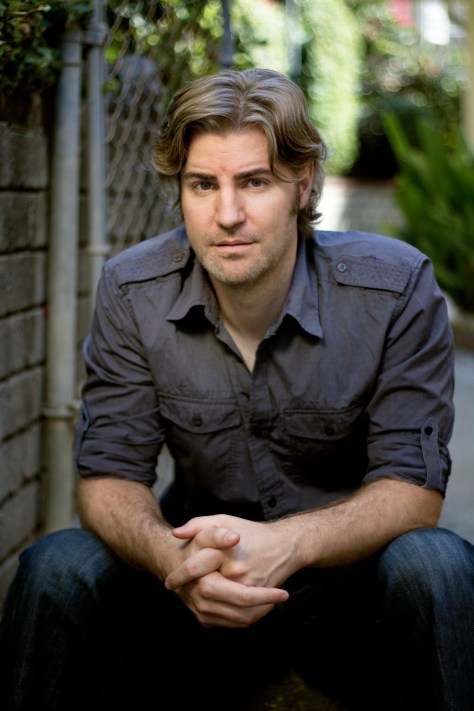
Jed Myers is a Philadelphian living in Seattle. His poems have appeared in Prairie Schooner, Nimrod International Journal, Golden Handcuffs Review, qarrtsiluni, Atlanta Review, Quiddity, The Monarch Review, Palooka, Fugue, the Journal of the American Medical Association, the Rose Alley Press anthology Many Trails to the Summit, and elsewhere. By day he is a psychiatrist with a therapy practice and teaches at the University of Washington. By night he hosts the long-running open-mic cabaret NorthEndForum. He likes to weave poetry and music together, and sometimes does so with the ensemble Band of Poets.


An Interview with Cole Haddon

_MG_7821_C (1)


Cole Haddon is best known as the creator and co-executive producer of NBC’s hit series Dracula. The show which offers up the iconic Prince of Darkness in a new light gives fans a more sophisticated from of vampire. Haddon is also author of the graphic novels The Strange Case of Mr. Hyde and Space Gladiator.

Can you tell us a little about your earliest days? What were you like as a child?

I grew up in Michigan in a blue-collar community, nothing particularly special about it. I think I found it intellectually stifling, though, and that’s probably why I retreated into film, books, and comic books. STAR WARS, Indiana Jones, and monsters were all I thought about.

Do you happen to recall what your very first favorite story was?

My first favorite story would be Raiders of the Lost Ark, which is also, maybe not coincidentally, the first film I remember seeing. I was only five years old. My parents were either not very good at censoring what their children watched, or very perceptive about what I, in particular, needed.

As a fan of classic horror what do you think is it about the first films of the genre that make them so timeless in their appeal? Does the fact that seem somewhat human in their varied and flawed ways of suffering through this world have something to do with that?

I think classic horror, the stuff that sprung from the 19th Century and very early years of the 20th Century, continues to be popular today because the ideas and themes explored in so many of them are every bit as topical as they were when the books were first published. The human characters in them continue to resonate, too, because we’re still them. We’re still arrogant and self-destructive, still crippled by antiquated ideas of good and evil, and so much more. When human culture evolves more dramatically, when we transcend the ideas in these books, we’ll collectively start thinking of them as antiquated, charming relics of a past. But somehow I doubt that’s going to occur anytime soon.

Did you have a favorite movie monster growing?

Movie monster? Probably Frankenstein’s Monster, though King Kong is way up there.

What have you enjoyed most about putting a new spin on Dracula?

Dracula had been abused by pop culture for years. There are a few exceptions, but overwhelmingly he had become a punch line. This, by the way, is why I also tackled Mr. Hyde in my graphic novel The Strange Case of Mr. Hyde. I loved these characters as a kid, and I didn’t like where they had wound up in the public consciousness. And so, to answer your question, I most enjoyed trying to find a way to make Dracula feel vital again. Alive, which I get is an odd word to use in association with a vampire. I wanted to remind audiences that the Victorian monster still had some life left to him, in other words.

What did you find most challenging in bringing the story to network television?

In the novel, Dracula is a villain. He has a beginning and a very necessary end. More, there’s no reason to root for him. That does not make a very interesting television character, and so I had to find a way for audiences to get behind him. He needed a reason to exist other than to feed and ultimately be stopped by the familiar coterie of heroes. I and the other writers tried to give that to him in a new origin that tied the character more literally to Vlad Tepes, the Romanian prince who inspired the fictional Dracula. We gave him a backstory, a human backstory, one that humanized him in a way and provided, most importantly, a mission. A reason to follow him, so to say.

Was it nice to have the chance to offer viewers a more sophisticated form of vampire?

Hell yes. There are no mopey, sparkly vampires anywhere near our “Dracula”.

What is like to get work on this series with Daniel Knauf? He seems quite taken with your work on the show. Are you a fan of his work?

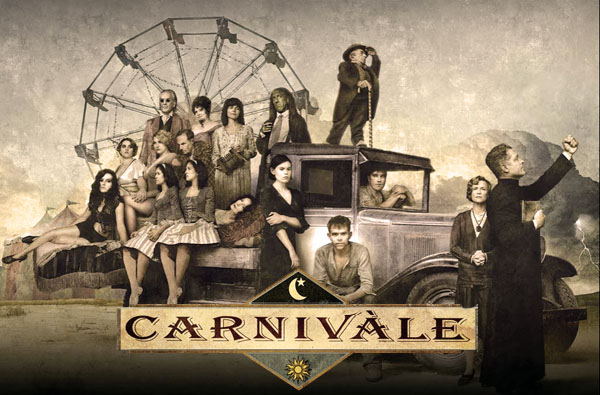
I’m not sure if many show runners would have allowed another creator’s vision to be so fully realized, but Dan was in my corner from the beginning. He had my back, and for that I’m eternally grateful. He’s got a wonderful sense of the macabre and ghoulish. He loves monsters and weird shit. In that regard, we’ve got a lot in common. And so in short, yes, I’m a fan of his work. Both on Carnivale—which was a wonderful series—and on Dracula.

What about Jonathan Rhys Meyers? You have said he carries an intensity that is hard to find? Can you elaborate on that? Would you say he is also intense as an individual? Do think that is an inborn trait or something one has to learn? Do you think intensity is a trait we should all carry?

Jonathan Rhys Meyers has an innate quality about him, an intensity, yes, that radiates out of his eyes. His whole body. He crackles with it. I’m not sure where it comes from and, quite honestly, I don’t know him enough to guess. But it’s part of him, yes, and without it his Dracula would be a limp character. We didn’t cast JRM for his angelic looks or abs. We cast him because he was one of the few actors we believed had the necessary qualities to play our take on Dracula.

Have you been surprised by how well the series has been received so far?

I think everything in the world of television is a surprise. There’s nothing one can predict with any accuracy. And so, yes, the show’s reception has been a surprise. I couldn’t be more grateful to the fans.

What do you love most about the act of writing? Why do you think words have always been such powerful things?

I wish I could give you an intelligent answer, but the truth is it’s just something I’ve always done. I was drawn to it, I think, or, rather, storytelling. Maybe I saw too many films and read to many books as a kid. Maybe it rewrote some pathways in my brain. The truth is, I don’t know what else I’d do if I wasn’t a storyteller. As for why words have always been such powerful things…I think that’s because they carry ideas and ideas, more than anything, are powerful.

Can you tell us a little about your graphic novels The Strange Case of Mr. Hyde and Space Gladiator? How do those differ most from your work for television?

The Strange Case of Mr. Hyde is set five years after the events of Robert Louis Stevenson’s novel, and sees a young Scotland Yard inspector team up with an imprisoned Hyde to identify and stop Jack the Ripper – whom they’re both convinced is using a version of Hyde’s serum to fuel his murderous rampage.

Space Gladiator is a sort of Douglas Adams-esque graphic novel about the last human being in existence, an exhibit in an alien zoo, and how this unassuming kid who just wants to play video games winds up an intergalactic gladiator who inspires a rebellion.

Strange Case is pretty damn similar to Dracula in terms of tone and world, though I think it’s probably a bit more fun or, rather, funnier than our series. Space Gladiator is a satire start to finish, very British, an homage to Flash Gordon, Buck Rogers, and similar characters – so it couldn’t be more different than my television work to date.

What are your feelings on death and such?

Terrified of it. Hope to avoid it at all costs.

Anything you’d like to say before you go?

I’m hugely appreciative of the fans of Dracula. They can always find me on Twitter. My handle is @colehaddon. Say hello sometime.

For more information on the titles mentioned please see:

1790538-the_strange_case_of_mr._hyde__1___page_1

The Strange Case of Mr. Hyde on Amazon.

images (7)


 Space Gladiator on Amazon (also available in ebook format)

“And You Will Find Me” by Michael Xavier

3294014001_ae96d0f77b


And You Will Find Me


And you will find me

When you can’t speak

When your heart fails

When your soul is weak

Drunk. Blind. Wet and heaving-

The world will throw you at my door.


Here’s the thing; you know that even if you don’t knock

I will always answer

Then you will lay your trouble down

And all the times I said I loved you

will mean nothing more than

there will be a safe bearable silence


so you may cry honest tears

silent and

deep.

999292_681016535266425_1681213104_n


Michael Xavier is an underground writer based out of Los Angeles, who tends to let his words speak for themselves.

An Interview with Ronnie King

1472266_630036213709970_514189738_n

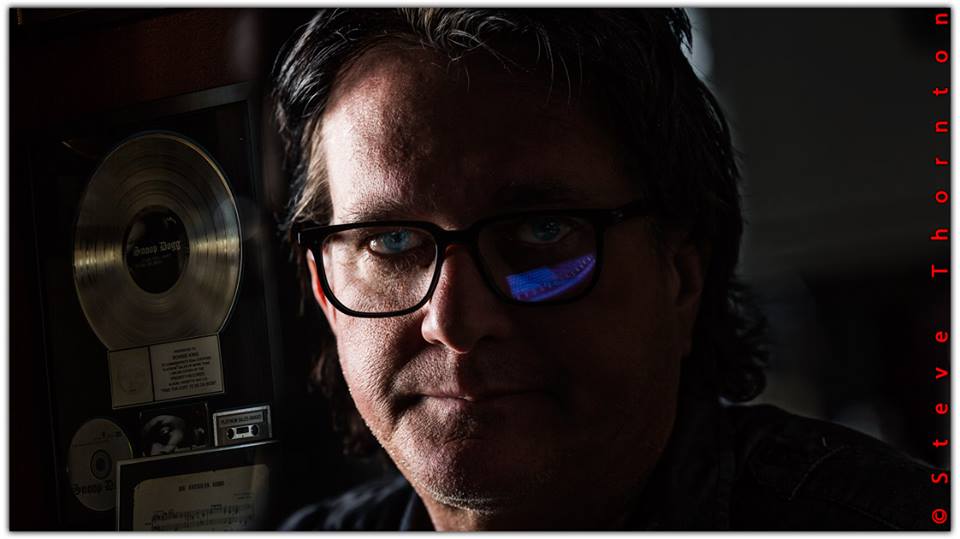
Ronnie King is best known for his work producing Tupac Shakur. He has produced such iconic artists as Snoop Dogg, Coolio, Mariah Carey, The Offspring, Kottonmouth Kings, Pepper, and countless others. He can also be found touring with Rancid from time to time. It was my pleasure to sit down with him and learn a little about the man behind the music that is so well loved.

Can you tell us a little about your early days? What were you like as a kid?

As a kid I was always playing music. I came from a musical family of 7 kids my older brothers and sisters where always making music. Then I started studying at 5 years of age and didn’t stop until 2 years into college.

What was it that first sparked your interest in music?

My brother Chuck’s friend John Buccino, who is a great piano player.

What was your very first favorite song?

Mandy by Barry Manilow.

 What do you think it takes to make a great song?

Great vision and acting skills.

Why do you think music has always been so well loved throughout the ages?

Everything else loses power in the translation. Music you just sit back and enjoy.

You are well known for your work on the analog Moog keyboard and Hammond organ. What it is about those instruments that you love most?

 The Moog was the first electronic keyboard and the organ was big but sounded great.

How do you think the music industry has changed since you first started you career? How do you think it needs to change most at this time?

It’s Great. If you put out great music you will sell. If it is not enjoyable it won’t. There are only two kinds of music in the business, The kind that sells or doesn’t sell. Real talk.

What was it like to to work with Tupac Shakur? What was he like as an individual?

Amazing! We used to write 8 songs a day. He was a nice guy to me.

71753_571274499586142_240749172_n

You have worked with countless musicians over the course of your career. Are there any that you hold most dear? Any that helped you grow most as a professional?

It has all been a great time. From Joykiller , 2 Pac or the Pointer Sisters all of it has been amazing. I’ve no real favorite.

Do you have any interesting stories from your time in the field that you might be a liberty to share with our readers?

All the good stories are happening now. I’ll keep you posted.

What advice would you offer the musicians of tomorrow?

Study.

What do you look for in an artist when you are deciding if you want to produce them?

Reality of where they’re at. Not in a dream world.

 
Are there any little known things about you that your fans might be surprised to learn?

I’m white. (smiles).

What do you like to do when you aren’t working?

I travel the World. I love Costa Rica and sailing around the ocean.

What projects have you been working on recently?

Pepper and The Offspring.

Do you have a dream project you’d most like to accomplish before your time is up?

I’ll wait and see.

What are your personal feelings on life and death? How do you hope to be remembered when you go?

I’d like to just be remembered as a nice person.

What projects are you looking forward to bringing the world next?

The Costa Rican artist I am working with.

Anything you’d like to say before you go?

I’ll see everyone in Costa Rica or Mexico down south to Buenos Aires on a wave.

“Naked Chardonnay” by Alexandra Isacson

Naked Chardonnay

Before she slips off her silk

kimono, with paint- stained hands

he holds a wintered Russian sable

brush & slowly strokes her cheek

down to her throat.


Her body tenses & softens into

a winged opera of evening light.

His touch was like the supple brush

of a mink a lover had warmed her

with during a snow flurried walk

from The Lincoln Center to catch

a cab for dinner, drinks, & a hotel.


Now, sharing chardonnay,

she kisses his mouth & dark

stippled face. Casting off herself,

she disappears into canvases

charcoaled & crayoned in winter’s

dusk & other subdued nudes.

Naked Chardonnay was published in deconstructed forms & under the titles of No. 4: (The Elixir of Balance) in New World Writing (formerly The Mississippi Review) edited by Frederick Barthelme & Manhattan in Blink-Ink edited by Doug Mattewson.

Alexandra Isacson is an Arizona State graduate who lives and teaches in the Phoenix area. She is the author of the poetry chapbook written to honor the visual arts & humanities, Poetic Anthropologies, (Medulla Publishing, 2011). She is a Pushcart (2012, 2010) & Best of the Net Anthology (2009) nominee. Please Visit her at alexandraisacson.com

An Interview with Daniel Knauf


Photo by Maddie Holliday Von Stark

Photo by Maddie Holliday Von Stark

Daniel Knauf has worked as a comic book writer, screenwriter, director, and producer. Along with his son Charles, Daniel has written several issues of Iron Man for Marvel and volume #2 of The Eternals. Daniel has also written episodes of Phantom, Supernatural, Spartacus: Blood and Sand, and the NBC series Dracula. He is also responsible for the iconic HBO series Carnivale.

What were you like as a child? What are some of your fondest memories from that time?

 I was a very quiet child who delighted in illusion, whether shadows on walls or replicating monster movie makeup techniques. I was a geek. My fondest memories were going deep-sea fishing with my Dad. I still do that whenever I can (too seldom).

What was your father like as an individual? Do you think he taught you to have a deep respect for the differences of others?

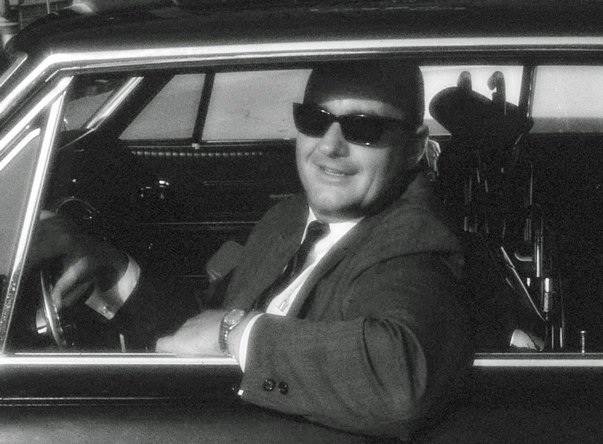
My Dad was a very typical example of the post-war suburban version. Not terribly demonstrative, loving or even “present” compared to Dads today. He was, however, very funny, charismatic and masculine. Cool, even. A helluva salesman! The big difference was that my dad was disabled and confined to a wheelchair. Though he demonstrated tremendous courage and grace, simply bulldozing his way through any hurtles society threw up, his unwillingness to emotionally accept his disability took a major toll on the family. I have two older brothers and a younger sister, and each of us is a little fucked up in our own way. But we adore one another. I think my father’s legacy for all of us was that you are who you are–good or bad–no matter what shape the package is in.

Mr. Knauf

Mr. Knauf

Is it true you have always had a love of carnivals and so-called freaks?What you find most endearing about those things in particular?

I’ve always loved carnivals–the seedier the better. These days, I see the whole world as a carnival. Hucksters make the world go around, and as a mass-media artist, I work the bally just like everyone else. In fact, I relish it. Everyone is a freak. Everyone feels like they’re on the outside looking in. Everyone harbors hidden desires and passions. Everyone has a story worth listening to. The older I get, the more I love people. I am fascinated and curious about others. Women, especially. They’re inner landscape is much more complex and nuanced than a man’s–like another planet! All that said, I believe in good and evil, and that some people default to one or the other. Though assholes are a dime-a-dozen, really evil people are fairly rare. I’ve met a few. They’re not nearly as interesting as the rest of us because they’re invariably narcissistic. Narcissists bore me. They’re empty and repetitive, like two mirrors facing one another.

How did it feel to finally see Carnivale come to life on HBO so many years after you first created it?

It was really astonishing. Of all the scripts I’d written, it was the one I loved the most and thought least likely to ever see air. Add to that the amazing luck to have it picked up by HBO at the peak of their creative game and granted the authority to shepherd my vision into reality. The ridiculous thing about it was that I was too inexperienced at the time to fully comprehend how insanely lucky I was. I though it was “business as usual.” I have since learned that it was everything but.

carnivale

What did you love most about making that show and working with its cast?

My favorite days were when we would publish fresh white pages and the cast and crew would be given the first shooting script for the next episode. On most shows, you see them dispassionately marking them up with highlighters, paying attention only to the sections that relate to their departments. On Carnivále, they would be engrossed–I mean really READING the fuckers! They weren’t just examining them as job-related documents, but totally engrossed in what happens next. There was always a feeling on that set–from the Executives down to the P.A.s–that we were making something very special, something we’d be proud of for the rest of our lives. Everybody brought their A+ game to Carnivále.

What does it feel like to be able to support yourself by doing what you love? Is there a certain freedom in that?

For me, getting paid to write is like getting paid to breathe. The fact that we give ourselves awards on top of that strikes me as absurd and insufferably ungracious. It’s like going to In-n-Out burger, enjoying the shit out of a Double-Double, then being granted a big golden hamburger trophy for how well you ate it to great pomp and circumstance. Crazy. But that’s show biz…

What was it like to work alongside Charles? Does it feel more rewarding to work with family?

After Carnivale, Marvel approached me to do a graphic novel version. HBO wouldn’t release the rights. They then asked if I wanted to take a shot at one of their characters. I asked if Iron Man was available and it turned out he was. Garth Ennis had just rebooted the character, and they needed someone to take over after his arc. I didn’t know enough about the superhero genre to make anything but a well-written mess of it, so I insisted I work with Charlie, who had an encyclopedic knowledge of all things comics. It was nice. We’d break the story together. Charlie would write the first draft, then we worked side by side on the revised draft. I taught him scene-work, he taught me how to write for stills in two dimensions. Plus we grew closer than we’d ever been and he, of all my kids, has a better understanding of just what Dad does and how bloody hard it is.

Do you enjoying writing for the screen or for comics more, or do you love both equally?

Screen, absolutely. Writing comic has its up-sides, but for sheer impact and getting your work in front of people, film and television generates eyeballs in the order of 10,000X even a successful comic. Plus, comics are like haikus—very unforgiving forms. They’re shorter, so they’re easier to write, but they are extraordinarily difficult to write well. I am absolutely astonished by the work of masters like Garth and Allan Moore.

Dracula-NBC-2013-promotional-wallpaper-dracula-nbc-34550041-1023-768

Can you tell us anything about the series Dracula? What can viewers expect from this series?

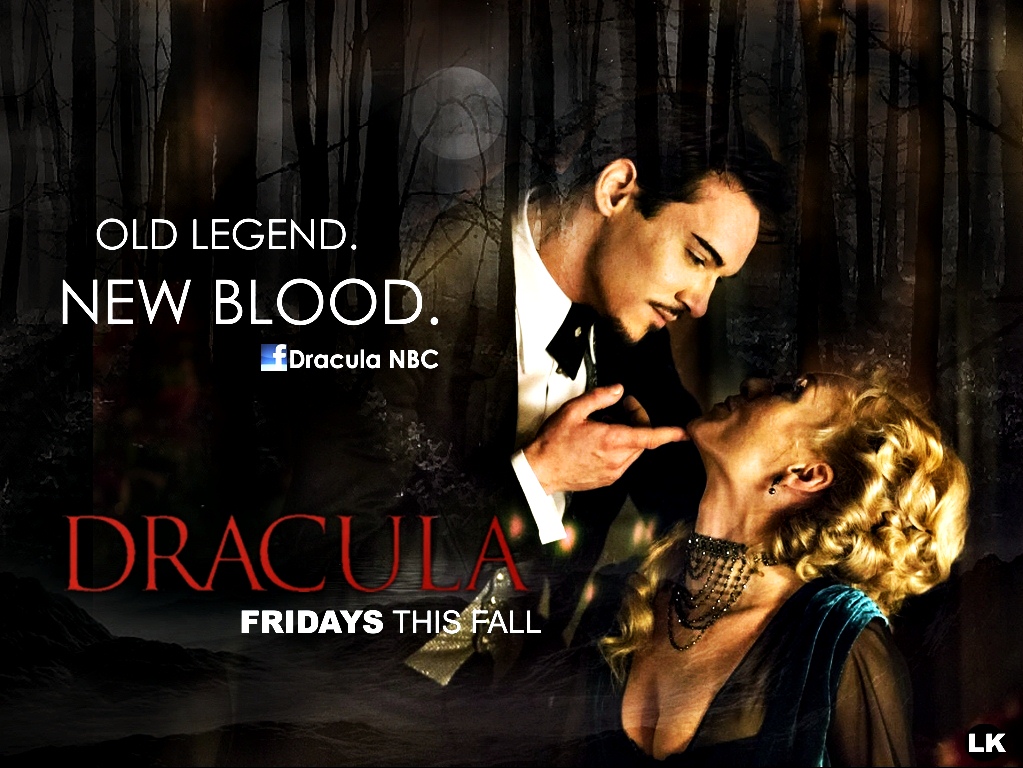
 Cole Haddon created an entirely new scenario featuring the characters we’re all familiar with from Stoker’s novel. It’s sort of like fan-fiction, only with a massive budget and a first rate cast. Lots of chills and blood and sex. A genuine romp. I think people will have a good time watching it.

 What other projects are you working on at the moment?

As they say, if I told you, I’d have to kill you. Suffice it to say, two are genre based and one is historical. Plus there is my transmedia project, BXX: MARS, in the background featuring a non-linear format I invented. We shoot a 72 hour drama in real time, covering it with dozens of HD cameras. Very challenging.

An Interview with Tyler Knott Gregson

395729_696964056563_781334488_n


Tyler Knott Gregson has made quite a name for himself on the internet with his various poems and haikus. He is also a photographer and lover of all things creative. Since there isn’t much more known of him than that it was an honor to sit down with him and learn a little more about the man behind the mysterious persona he has crafted. For more information on his work please see: http://tylerknott.com/

https://theoriginalvangoghsearanthology.com/2013/10/05/typewriter-series-544-by-tyler-knott-gregson/

Where are you from? What are some of your fondest memories from there?

 I was actually born in Newport News, Virginia, but I grew up all over the United States as my dad has been in professional baseball my whole life. My fondest memories actually are of just that, traveling this amazing country and seeing everything from the richest of the rich to the poorest of the poor and everything in between. We live in a country filled with stories, and my childhood let me see so many of them.

Did you always have an active imagination?

 Always, always always.  I started writing so very young, but even before that it ran rampant. Creativity has always trumped logic to me, always.

Is it fair to say you do love words? When did you first discover your love of words?

I love words more than any other art form. I think it’s the fact that everyone is given the same 26 letters (in English at least) and has the same choices to make. That all creativity comes from putting them together in different ways, forming them together in ways that feel beautiful or feel ugly or feel however you are trying to portray them feeling. I think I began writing poetry at 12, but loved writing from the moment I knew how.

Do you find there is a certain freedom to be found in writing?

So much freedom. As I said, we’re given 26 letters and it’s up to us how we put them together. The choices we make dictate the outcome of every single thing we write, and it’s completely up to us. I love that.

A lot of your work deals with love. What are your personal feelings on love? Do you think it is imperative to living a life well lived?

I think, and always have thought, that love is the reason we’re here. I think it’s the answer to the question as to why we are what we are. All kinds of love, romantic, platonic, familial, whatever, to give out love without any regard on getting it back…it’s the reason. The reason.

There isn’t much about you out there, though your work is everywhere on the internet. Do you enjoy being a little mysterious or are you just shy?

Hmmm. I think the most surprising and enjoyable thing I’ve found in how people are relating to my poetry, is how many different Ways they are relating to it. Everything from relating it to their significant other, to their parents or lost relatives, to their pets. People are finding love in so many different ways in my words, and I do not wish to ever take that away from anyone by offering up what I meant in the poems I wrote.

Are there any little known things about yourself that you’d not mind sharing?

I have been struck by lightning.  I’ve almost died a few times. I have no fear of death. I started following Buddhism when I was 12. I am odd, I am sure.

What do you hope people take away from your work?

Great question. Honestly, I hope they take what they Need from it. I get a lot of criticism online for only writing a certain kind of poem about a certain kind of subject, love, but I think people who say those things are missing a great deal of what I write of. So MUCH of what I write of is about loss, Not having what you need, missing out on things that feel desperately crucial. I write about hurting as much as loving, and I think. I just hope people take away a feeling of hope. That no matter how dark things can get, there will be light again.

You are also a photographer. Do you have any on subject you like to capture most?

I love capturing people, the real sides of people. I love nature, and I love photographing animals and landscapes. I Just love trying to make big things seem small and small things seeming big and everything in between.

As a writer do you have a dream project you’d most like to accomplish before you die?

 It will never happen, but I would love to be Poet Laureate. I’ve always dreamed of that honor.

What are your feelings on death and such?

 I briefly touched on it above, but I have no fear of death. To Buddhists, death is just a continuation. The last light we see in this body is the first we see in the next. There is nothing to fear.

Are you surprised at how well received your work has been so far?

Shocked. I write for myself and to get things out of my head and to be completely honest, I never expected anyone, anywhere, to relate. I am blown away by the response, and the kindness I’ve received.

What projects are you working on at the moment?

Right now, I am putting everything together for the book that will be released through Penguin Books and their imprint, Perigee. Fall of 2014 is the scheduled release date and I’m hoping people love it.

Is there anything you’d like to say before you go?

Just thank you. There are a lot of misconceptions about me on the internet, so it’s fun to clear a few up. And so everyone knows, the “titles” in my Bio line on my website, are not self proclaimed, they are all things I have been called by meaningful people in my life. I’m not that egotistical (smiles).

Namasté

“It Didn’t Happen” by Ian Ayres

Carnie Dad of Ian Ayres

Carnie Dad of Ian Ayres

Never happened
No, the ones you love
Stay forever
Yes, love is
Forever
Even when you hide
Even when you forget
How much you love
Someone
You believe
They’ll stay
Forever
Then they’re gone
No, it didn’t happen
Yes, you are
Forever
Because love is
Forever
And you visit
So vivid
In dreams
Where we try
To say
It didn’t happen
You didn’t
Die
Because we didn’t
Know
How much we
Love you
We love you
We miss you
We want you
To stay
To be
Yet
In dreams
You visit
And I know
Words
You spoke
Words
You wrote
Words
So alive
In my mind
Unable
To awake
To your wake
To your —
Gone
No
Wait for me
Missing
You
I believe
You’ll be there
Waiting
I didn’t know
How much
I love you
Now
It’s a struggle
Doing time
Until
The until
Beyond
Our limited
Perceptions