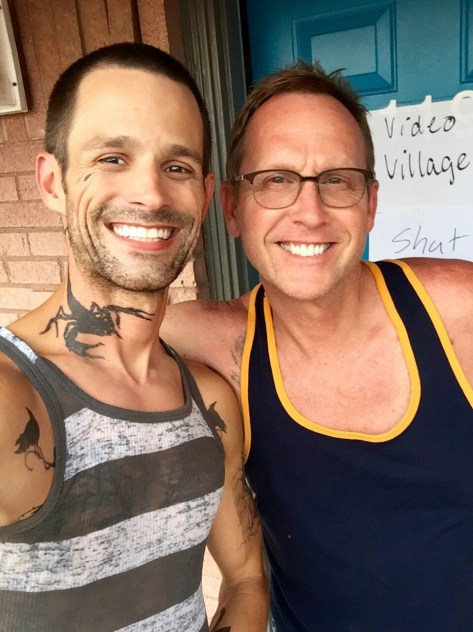
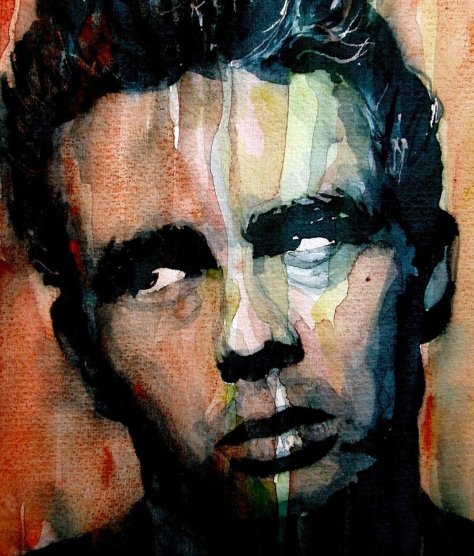
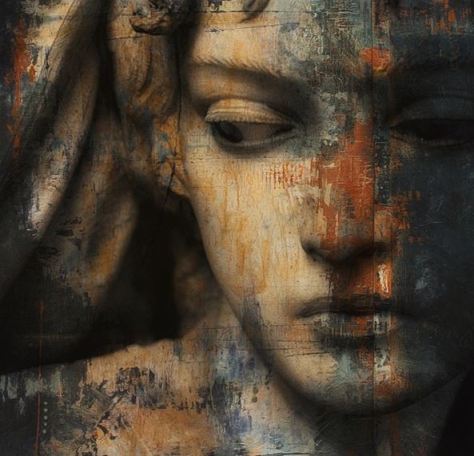
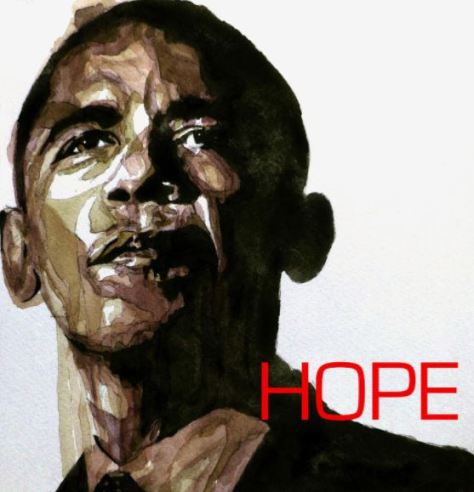
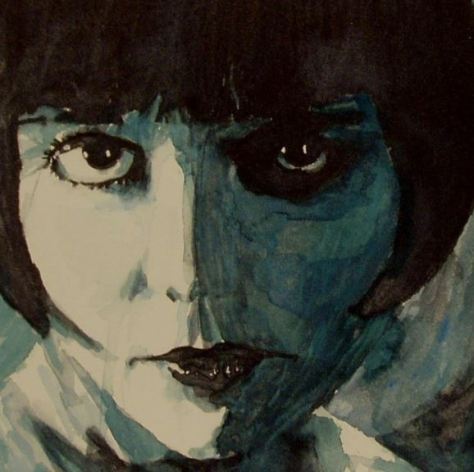
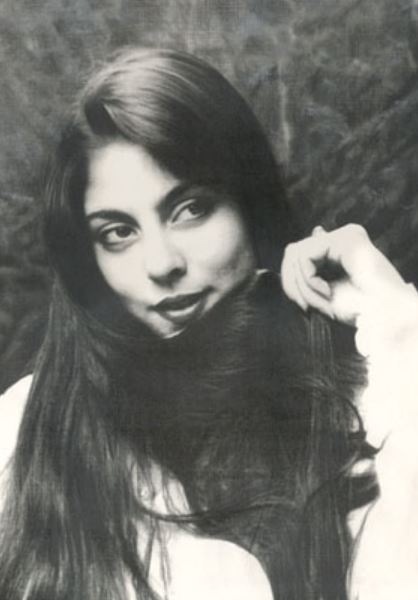
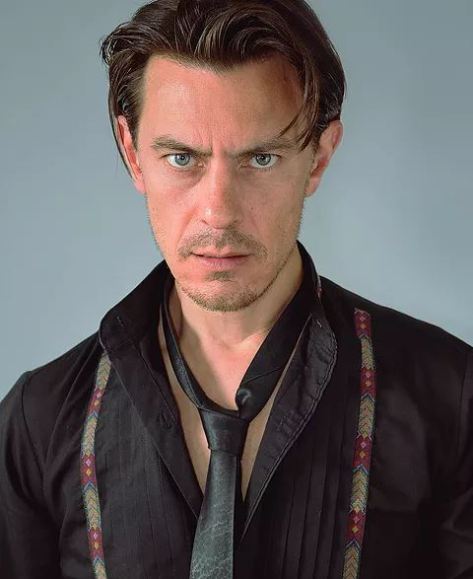
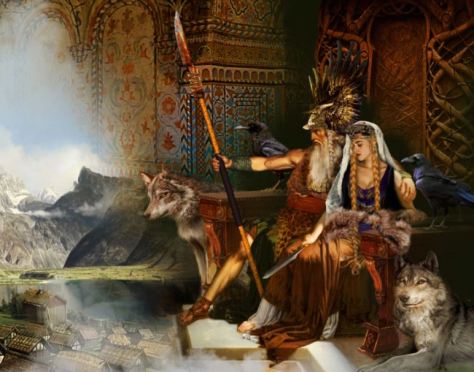
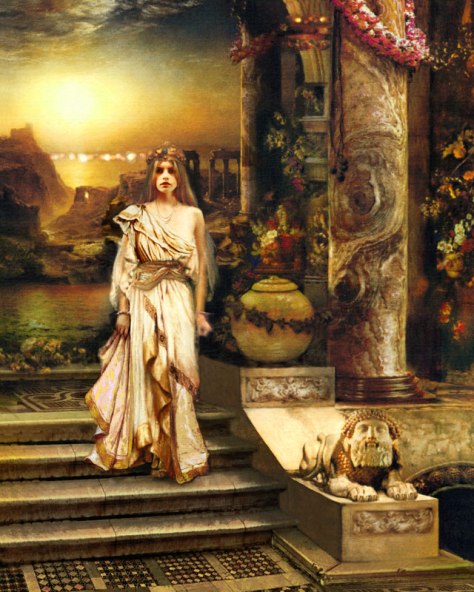
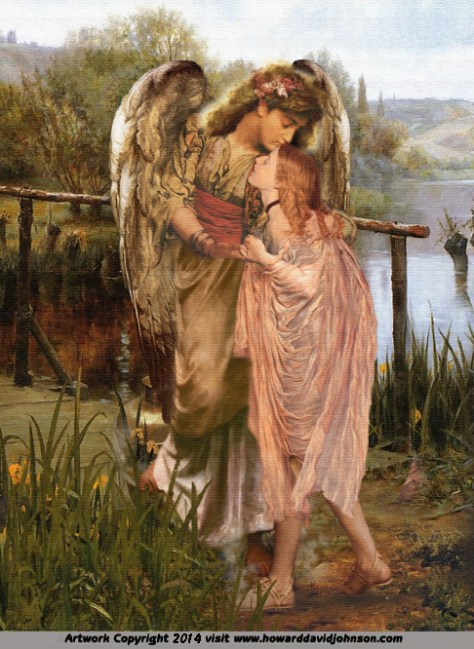
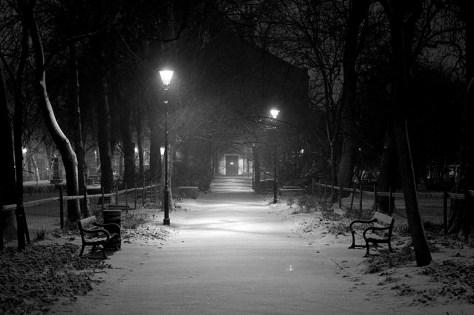
” A Tiny Pure Spark of Light” by Leon van Waas

light2

A Tiny Pure Spark of Light

When I was born I was struck by life,
meant to stay.
Later on I realized it brought me my very own way to play.
Being on the run I became best friends with the devil and danger, all over the place.
And in this bad dream I got a message: It would be over in about a five thousand days

Only the nights were all cold and I almost froze to death.
But right on time God sent you to rescue me,
with the warmth of your breath.
I couldn’t hardly believe such an angel was standing in front of me.
And she took away all my questions, sweetly saying, “This is meant to be.”

This was the truth.
And I did no longer believe in my friends lies, because now I could see for the first time in my life,
with these new given eyes

The next day we made the longest walk along the shore, talking and laughing for hours,
until we couldn’t walk anymore.
And I said to her, “You are the finest one I have ever seen.”
Inspiring all along.
That’s why I wrote you this poem.
The next one will be a song …


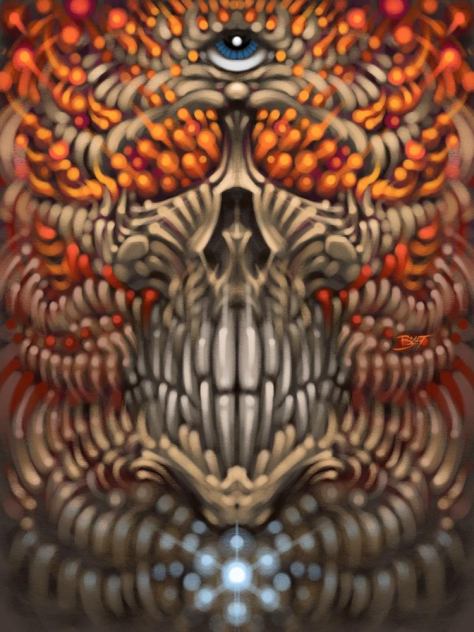
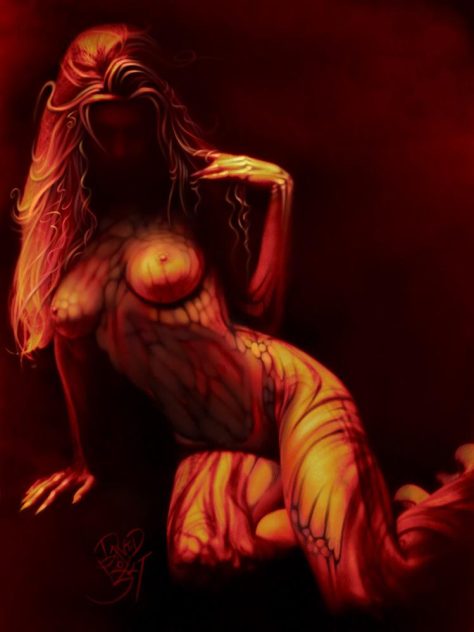
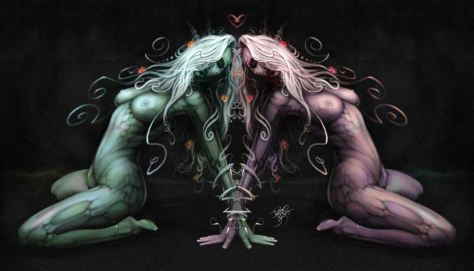
An Interview with & the Art of David Bollt

db.jpg

David Bollt has been creating works of art the remind one to appreciate the beauty in all things since the age of 7 and working professionally since his teens. Considered a master of the trade in the field of tattooing his works are vast and varied.

To learn more about David Bollt and to see more of his art and projects check out:

Do you think being a quiet child gave you more time to nourish your imagination? What are some of the benefits you found in silence?

As a child it seemed as if I was in the audience, while people around me were caught up in an elaborate drama. I kind of sat back and took in the show. Actions and reactions sometimes seemed exaggerated and didn’t make much sense. So it was hard to engage and keep up. Drawing was a quiet space where creativity and imagination could flow in a world that was all mine. There was no dissonance from others. It felt safe. But not only safe, it was also empowering and fun. My inner world was full of characters and places. In some ways they were symbolic of the drama around me in my real life, but in my imagination I had control and could make sense of things. Through fantasy I somehow came to better understand what was going on in the real world.

db1.jpg

Do think in a world as hectic paced as this that quiet places are needed more than ever?

That’s an interesting question … I think silence, stillness and quiet – in many ways – are a reflection of how we relate to noise and chaos. It can be really helpful to shut out the world sometimes and make some space to just be with ourselves. But often people find that the loudest place in the world is in our minds. Several years ago I did a 10 day Vipassana Meditation retreat that required I spend 12 hours a day on a meditation cushion. I thought this would be a serene vacation from a chaotic world, but I was wrong. Without any distractions, I was assaulted by my own thoughts. Inside my head I was arguing with people and struggling to find solutions to everything. I suffered for several days until I discovered that silence is a skill, one that requires practice. A few days later I found a stillness and quiet that I had not known since I was that quiet child. When my thoughts finally stopped, the world became beautiful and clear again. Since then I’ve come to relate to silence as something we have access to on the inside. We can fill our heads with painful noise even when we are alone. We can experience serenity and silence when we are surrounded by chaos and noise.

db2.jpg

You have mentioned you were attracted to the idea of monsters early on. Why do you think that is? Did you have any favorite monsters growing up?

Horror really scared me when I was a kid. My dad took me to see the Amityville Horror and I had nightmares for months. Drawing was a way for me to manage my fear. The monsters I came to love were the ones I created in my imagination. They were a part of me. I could relate with them and make peace with them. They came into the world through me. Even when they seemed real, I was no longer afraid of them. They could not exist without me.

Later in life I’ve realized how much all my fears are my own creation. Everything I’ve ever been scared of was the result of the pictures I painted with my thoughts. It was so obvious when I was drawing, but it’s taken some time for me to see how fear in my life is the same as the fear I had of horror when I was a child.

Why do you think things often considered weird seem to have had such a timeless appeal?

When something is unique or strange it just seems to stand out. It’s so easy to miss that every day – and every experience – is unique. Our days can be a routine that seems monotonous, so we don’t realize how much variety there really is. When something is exceptionally strange or weird, it almost shocks our sensibilities and gives us a little reminder that the world can feel fresh and new again.

Watching the snow fall it’s easy to just see a bunch of white flakes that all the look the same. And it can be a life changing revelation to realize that no two snowflakes – that have ever fallen – have been exactly the same. Things that are weird invite us to see the world in new ways.

db3.jpg

What is it about the human figure that makes it so appealing in your line of work?

The human body is the vehicle for human consciousness. We open our eyes and behold the world with our bodies as the engine for this miraculous gift of being. I like to think I’m intelligent, but I can’t fathom the intelligence that beats my heart, breathes for me and divides my cells. The body is an elegant organic machine that gives rise to the human experience.

The natural urge for us as living things to procreate and bring new life into the world ensures that there is nothing that we would find more fascinating and beautiful than other people. When we look at a body we’re seeing far more than an object, we’re looking at the creative intelligence of the universe … and it’s looking right back at us through someone else’s eyes.

It’s a cliche to say the body’s a temple. But it’s also one of the most profound and beautiful things that we can possibly consider. To regard this body that we all inhabit as a temple, is to realize ourselves as an expression of the divine. To realize myself – and everyone else – as an expression of universal creative intelligence, is to embrace myself as beautiful. I was born this way.

db4.jpg

Have you always considered people to be beautiful or is that something you developed along the way? How do the unseen characteristics of a person play into that?

Growing up, my own insecurities had me judge myself as well as other people. Like everyone I was exposed to messages that said “some people are beautiful and others are not”. I was exposed to messages that taught me to see myself and others as flawed.

A profound shift happened for me in art school when I was drawing the human figure from life. I would draw figure models of all shapes and sizes. I might regard a particular model as odd or unattractive. But no matter what a model looked like, drawing the figure was hard for me. I’d try to make a beautiful drawing and so I started to see the figure in all new ways. I was forced to look at the body without judgment and simply commit to truly seeing it. Every gesture and subtlety of a pose became something that I was chasing and trying to capture. To make a beautiful drawing I had to go deeper and deeper into my experience of the body before me. In the quest to create something beautiful I realized the beauty that was already there. In trying to accurately portray anatomy, personality and expression. I discovered the miracle of anatomy, personality and expression before me.

Soon there was no trace of judgment. Every model was a new opportunity to discover and explore. Every unique human body offered itself as an opportunity. After all … the muscles and structures that I was working so hard to render on paper, were already there in front of me perfectly formed and alive. No drawing has since ever come close to capturing the depth of that realization, but the quest is endlessly rewarding.

db5


Do you still work on the Model Society project?

Yes. Model Society is a great source of inspiration for me. In a world that often regards the nude human form to be obscene, it’s an honor to support a community of models, photographers and artists who put humanity on a pedestal as a true work of art. The fear of naked humanity that runs rampant in culture is a sickness. I see Model Society as part of the cure. We can’t hate, judge or be cruel to that we hold as beautiful. I created Model Society as an opportunity for the world to see humanity through the eyes of artists.

Do you think a respect for nature has helped you learn to find beauty in all places?

For sure. Nature (life itself) is the ultimate creative artist. Plants, insects, animals, and natural forms (like landscapes and clouds) are evolving and changing all around us. The variety and beauty of living things is truly staggering. Look closely at the most humble insect and you’ll see an incredible elegance and balance of design. Cloud forms shape shift all day long and interact with the setting sun to paint a spectrum of color across the sky.

All of life and all the world is an endless exploration of form and color. As an artist I always wanted to test the limits of what I’m capable of. In that same way life itself seems to be on a quest to explore and realize the depths of its own creative capacity.

db6.jpg

As someone who creates art in the traditional form as well as digitally and in tattoo form do you enjoy one form more than others? How do the various forms differ most? Which do you find the most challenging?

Some tools have certain advantages and are better suited to professional projects or certain goals. Sometimes the final product needs to have particular characteristics that will determine what tool is needed. But on a deeper level, for me it’s all one thing. A crayon on a paper table cloth at iHop is just as potent a creative tool as an iPad or a brush loaded with oil paint. The art is in the intention. The tool – no matter what it is – is simply the vehicle through which this intention is expressed. Vision can flow with equal potency through any tool.

db8

How do you think your work has evolved most over the years?

When I was a kid, making art was innocent. It was fun and I was simply fascinated by it. As I got older and graduated art school I had to enter the world as an adult. I needed to make a living. Somehow, in my mind, my art became a measure of my value. Without realizing it my career was like a referendum on my worth. Success and failure in my career meant success and failure as a person. My identity and self esteem got all tied up in it.

I was very successful and in some ways I thought that validated me. But the more successful I became, the more lost I felt. I was chasing a sense of value and meaning as a person through my work, but no matter how far that seemed to take me, it wasn’t real. Eventually I felt like all the success became a “good valuable person” costume that I was wearing.

At some point I quit and left my career as an artist behind and went on a kind of quest to realize who I really was and to – hopefully – come into contact with a deeper and more permanent sense of value. Thankfully, I found it. I found a sense of self that transcends success or failure. The most important evolution in my art is that I’ve come back home to where I started as a child. My art is once again innocent. It’s fun and I’m simply fascinated by it.

db9.jpg

What do you hope your fans take away from your work?

I’m always gratified when people are inspired. Although I may have all kinds of philosophical ideas and symbols woven into the art, the one thing I really want is for people to simply pause and have an experience of awe. Like “wow … that’s really cool”. All I really want is for people to have an experience of wonder.

db10.jpg

What advice would you give other artists in regards to creation?

The thing I want most for artists, is for them to enjoy the process of making art. So many artists suffer and judge themselves and their work. I want artists to emulate nature and express themselves without judgment.

Often the term “follow your bliss” is associated with our careers and life goals. But I’d say that you can follow your bliss in each and every moment. When there’s a pencil or paintbrush in your hand … follow your bliss. Tap into that subtle feeling of satisfaction and follow it without judgment wherever it may take you. Take pleasure in the process and let the final product be the result of an adventure into the unknown.

db11


Is there anything else you’d like to say?

Simply … thank you! I really appreciate the interest in my work. It’s a pleasure to take the conversation a little deeper and share some of my personal experience. You’ve asked some wonderful questions. I learned a little more about myself in the process.


An Interview with & the Art of Paul Lovering

Paul Lovering(-LoveringArts)-カイ-17

Independent artist and designer Paul Lovering creates vividly stunning works of art featuring some of the modern world’s most beloved faces.


What is it like living in Edinburgh? Did you grow up in Scotland? What are some of your most fond memories from those days?

Edinburgh is a beautiful city with lots of history. What I like most is being able to walk into town, which takes about 20 minutes and make a visit to one of the museums or art galleries, then have a quick drink and something to eat and a taxi home.

The down side of Edinburgh is the cold. I was brought up in Devon (and for a couple of years in Australia) and despite living here for over 30 years have never really got used to it.

We have not always lived in Edinburgh. I have fond memories of living near Pitlochry (small hamlet called Auld Clune). I used to run every day with my dog and we had two rescue cats (long gone now but much loved).

lovering1

Who were some of your earliest influences?

Earliest influences for me was the impact of music, listening to Dylan, Bowie, The Beatles and the Stones, their lyrics painted pictures.

I also had a ring of school friends who were superb artists, we all seemed to be drawing and painting album cover art inspired compositions, I guess what with no internet, creating was as near as we could get to maybe being discovered in those halcyon days. None of us, especially including myself, were able to even think about going to art college. Back then (early 1970s) money was tight and working class parents guided you towards a “proper” job.

lovering2

When did you first discover your love of art?

I had two really good art teachers at school. But, I was a bit of a rebel and really did not apply myself back then. I was more interested in sport, socialising and music. Instead of doing my homework I hung around with my friends and we played the albums we had all saved to buy. These were a big influence, as I loved the artwork on the album covers. So people like, Claus Voormann  (Revolver), Peter Blake (Sergeant Pepper), Philip Travers (Moody Blues) were great influences… I was really disappointed when CDs replaced albums and we lost all that great artwork.

lovering

What are some of the most challenging things you face in working with watercolors?

The biggest challenge is controlling the paint having spent ages on my original sketch. But, I’m not too precious about it. If it doesn’t go the way I want, I go with it and if it doesn’t work it goes in my other gallery my bin. Another challenge is getting a commission. Normally I will paint away aiming to be as loose and flowing as I can. The minute I get a commission, especially a portrait, I get nervous which means the painting can get too tight. And, I never know when to finish it. I often want to do more but am afraid to spoil what I have already created.

lovering3

What do you enjoy most about the art of creation?

Producing new and original images of iconic people that stand out is what excites me. Friends are always making suggestions of more contemporary people who will be more commercial. But, I enjoy painting my heroes for other people that feel the same way as I do. It probably makes me sound like an old but I can’t get excited about painting the latest rap artist (usually spelt with a silent “c”).

Why do you like recreating the human figure and faces in particular?

The human face and the eyes are the most important to me, I’m not looking for my work to be controversial or serious. I just want people to be grabbed by it as a reminder of something in the past, like a song or a concert.  I want to keep it simple and positive.

lovering7

How do you decide which images you are going to recreate?

It can be something as day to day as hearing a song, reading a news article or watching a film as long as it is someone that I am interested in.

Do you think the world needs more creative outlets in these modern times?

Absolutely. I want to celebrate all the arts in a positive way. I try to avoid the negatives even though I know that less money is going to the arts due to government cuts.

lovering4

What do you think is key to a life well lived?

Health, Love and Happiness, and having your Dreams.

Is there a dream project you’d most like to bring into being?

Yes. I am planning to move from watercolor into large scale oil canvas portraits. If I can create something good that people like then I will hopefully make a few sales. I have several customers who have been asking me for years to produce big canvases.

lovering5

Is there anything you’d like to say before you go?

You are never too old. I took up painting when I was 50 years old, so my dream came true.

Enjoy your art be bold and expressive.

And thank you Tina for your great work and the opportunity to answer your questions.

lovering6


An Interview with Artist Howard David Johnson

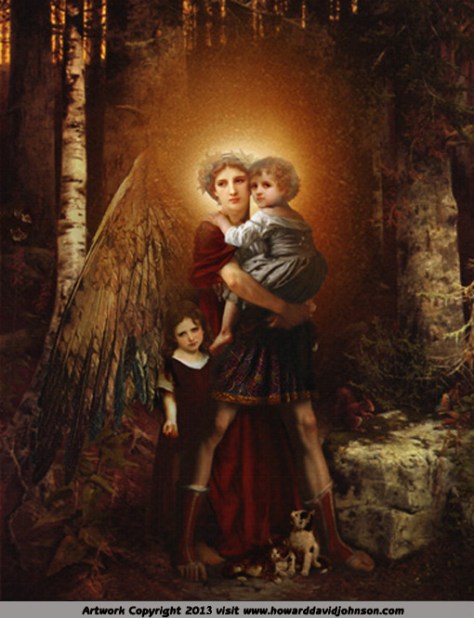
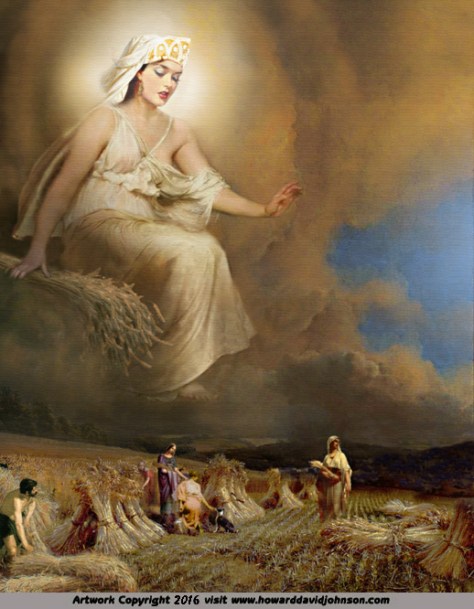
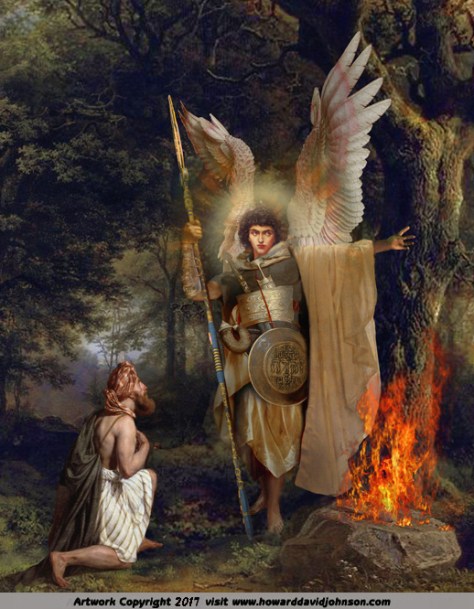
HDJi4The_Guardian_Angel_copy (2)

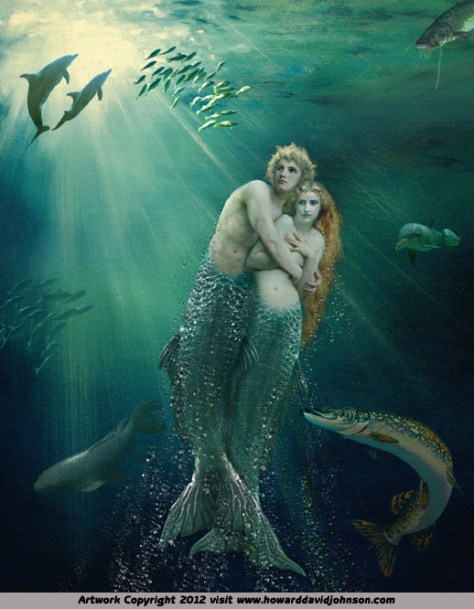
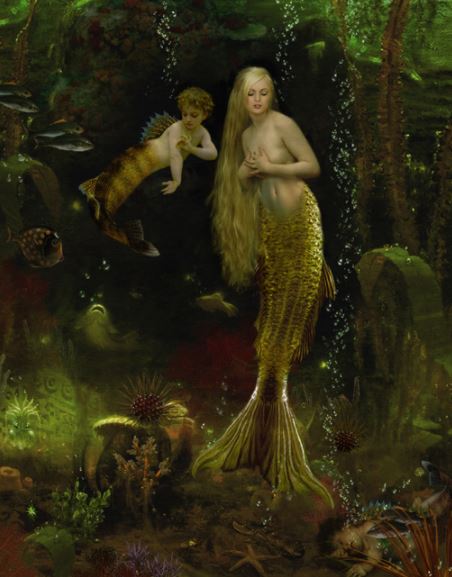
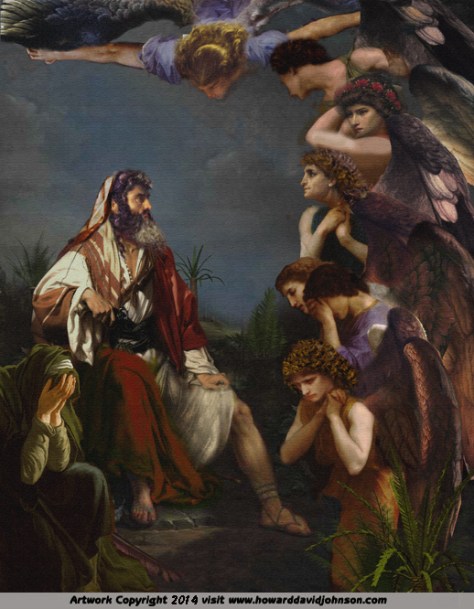
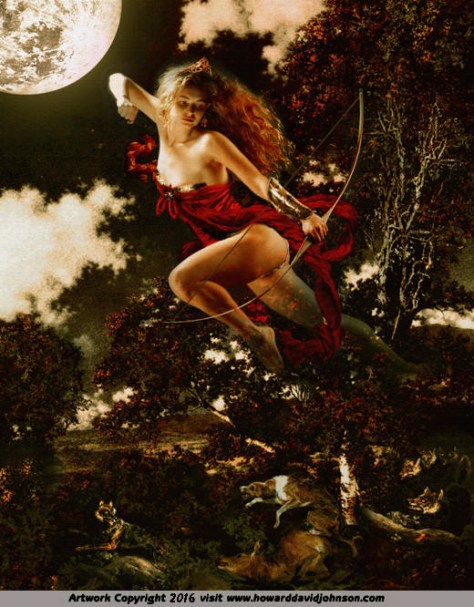
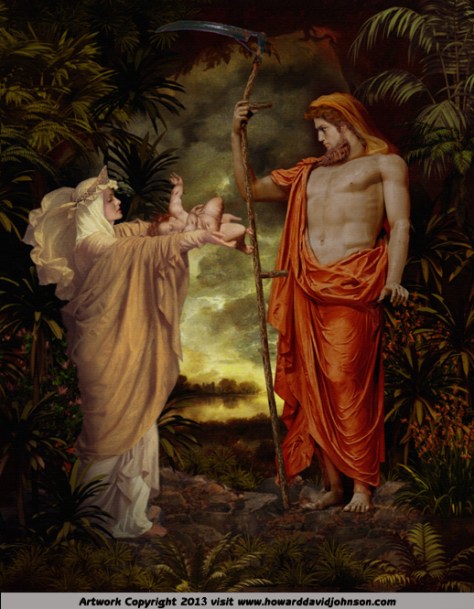
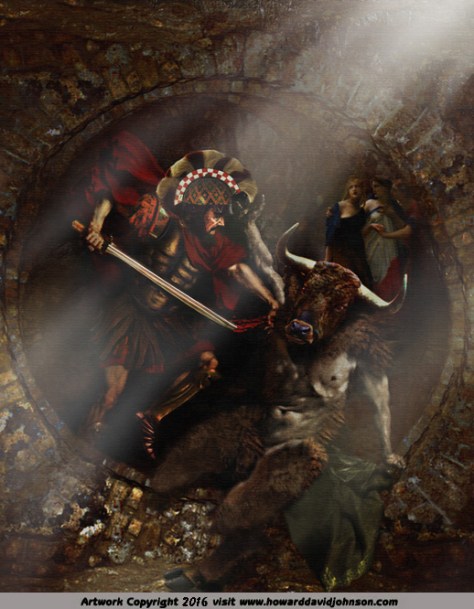
With a background in natural sciences contemporary American artist Howard David Johnson creates stunning works of art using a vast array of mediums. His work has appeared globally with such clients as Cambridge, Oxford, The University of Texas, Warner Brothers, The National Geographic Society, ABC/Disney, and The Australian Mint to name a few. For more information on his various works please see: http://www.howarddavidjohnson.com/

What were you like as a child? Did you discover your ability to see the beauty in all things at an early age or is that something you developed as you went?

My Mom and Dad said I “painted little murals” in my baby crib with “available materials” from my diaper. My Dad said: ”Looks like we got us a little artist”. I moved on to creating murals around the house with my big brother’s Crayola crayons. My mother tired quickly of cleaning the walls and began providing me with typing paper and my own deluxe set of color crayons. I drew happily and stayed out of trouble for years. By age six I was creating little picture books on subjects like the heroes of American History and informed my parents that I had decided to dedicate my life to art. Once I started school, I drew diligently every day with pencils. I always finished my assignments early and some teachers were outraged that I would quietly draw while waiting on the rest of the class and punished me but others approved whole heartedly.  In art classes in elementary school I got a hold of pastels and paints for the first time. All those years as a boy while I was developing my anatomy and composition in pencil people told me that it was not a valid medium for artistic expression. I could only afford watercolors and pastels so I worked with what I could get my hands on, but still everyone said I needed to be doing oil paintings and dismissed my work as invalid. Mixed media started because of lack of finance, but became a delight. My mother was among them but couldn’t buy me any oils of my own because of my father’s intense disapproval.

Do you think in the hectic pace of today’s world people often forget to appreciate the beauty that is around them?

All too often, that seems true. In ancient times people had hours to wind down, usually gazing at a fire instead of fighting traffic. Modern folks nerves and sensibilities are under constant barrage of negativism from the media. It takes a conscious effort to put it all down and take time to “smell the roses.”

HDJi6

Do you enjoy having the chance to remind people that there is beauty in all things?

To tell the truth, I never think about that on a conscious level, it just comes out in my work.

What did you love most as a child?

God, family, nature and adventure. My parents tell me as a pre-schooler I would worry them sick disappearing nearly every morning before they got up piling barstools and boxes to unlock doors and go to the woods returning with stories of having been walking and talking with God.

I notice on your website one of the pages is dedicated to your parents. How did they influence you become who you are today?

I could write a book on that one. I devoted my life to art at the age of six in spite of stubborn opposition from my father. This dynamic conflict shaped my life and forged my driving motivation. I found buying art supplies for my kids and lavishing them with praise and encouragement did not work. Conflict was essential I later realized. My father feared I would end up like my great uncle Howard who fought in nearly every island combat against the Japanese in the Pacific War. Howard came home a war hero and his heart’s desire was to be an illustrator and when he found a tough job market instead, took his own life. My father never told me the real reason for his violent opposition to an art career until later in life, and upon hearing this, I began using my full name, Howard David Johnson. My Mother was a talented artist herself, always encouraged me and never missed an opportunity to take me along to a site or a museum to acquaint me with my Old World Traditional spiritual and cultural heritage along the way. While being evacuated from Libya during the Six Day War, my father pulled strings to get me sent back to my birthplace in Germany. The forests and charming villages with their winding cobblestone streets and picturesque mountains crowned with castles mingled with the Roman ruins I played on the African coast and set my imagination on fire with the romance of my heritage. It was there and then that the seeds my mother planted took root and I had an epiphany about my mission as an artist that has shaped my life to this day. One train trip to Paris stands out as I recall dozens of artists copying the Mona Lisa. I asked, is this Ok? The guide said, “As long as it is not the same size, it is just study”. He then showed me many masters completely and then partially copying other’s paintings to learn deeper secrets. This practice is frowned on today by uneducated internet trolls. I see these pieces as like into the three notches of Arne Sachnusem in Journey to the Center of the Earth, an 1864 science fiction novel by Jules Verne. He wanted those who came after him to be able to follow his path. I WANT people to know I studied the hell out of J. W. Waterhouse.

HDJi7

What led you to pursue the Natural Sciences? How did those studies help you in regards to your career as an artist?

When I went to the University of Texas at Austin School of Fine Arts they gave me a squirt gun and told me to squirt the canvas with paint. I wanted to study the old masters but they wanted me to imitate monkeys. Threatened with failing the class for drawing in the back row, I brought a fish skeleton and slapped it into the huge canvas with its build up of thick oil paints. They declared me the next Jackson Pollack with my organic textures and I thought, …”Oh, Brother…” and went to my Science class where the professor did not mind my doodling. He was going off about a dinosaur dig and I started sketching his dinosaur site. He walked around and said; ” The head is too big and the horn is too short”. When he came back around I had modified it and he said, “OK! Now the Cycadeoides { fern like plants} are too close to the water. The next trip around the classroom he said: “Do you want a job? Our so called illustrator cries like a baby and throws a temper tantrum every time I point out his mistakes.” He took me under his wing and taught me things no art class ever could and the travel was wonderful. Later my art class mates who told me I was not a real artist because I eschewed abstract art had towels on their arms waiting tables and I was writing Artist on my IRS form. I have a gallery of Dinosaur art up now…

HDJi

What are some of the most daunting obstacles you faced when you were first learning your trade?

My hand was torn apart in a hydraulic lift and reconstructed in1964 and I taped my pencil to the brace but it was mostly the beatings from my father. He would drag me away from my drawings and when he saw me using a kitchen timer to time gesture drawings of a human figure he was sure I’d flipped my lid and took me to the Air Force base psychiatrist. I practiced 4-12 hours a day to be a comic book artist and they had to be fast as well as good. I was hired by DC comics in a nationwide talent search and he tore up the check, beat me with a yellow pine 2×4 and said, “You’re not goin’ to NEW YORK ~ you’re goin’ to VEET nam. Ah, good times…

What advice would you offer the artists of tomorrow?

Learn to dodge? Seriously? Practice, Practice, Practice, and learn to keep savings against lean times and or get a significant other with a steady job.

HDJi1

Who are some of your favorite artists?

Some of the artists and writers that have influenced me the most; William Bouguereau, John William Waterhouse, Ivan Ivanovich Shishkin, Edmund Blair Leighton, Howard Pyle, Arthur Rackham, Arthur Hughes, Dante Gabriel Rosetti, Viktor Vasnetsov, Jean Auguste Ingres, Anthony Van Dyke, Lawrence Alma-Tadema, Wallace Wood, Jack Kirby, Frank Frazetta, Ray Harryhausen, H.G. Wells, Gustave Moreau, William Morris, Henry David Thoreau, Will Durant, The Pre- Raphaelites, The Symbolists, et al.

How does it feel to see your work so well received worldwide?

Deeply rewarding and fulfilling. My statistics show my website is visited by every country on Earth, every day. My Dad often used to say, “The world is not going to beat a path to your door”. Well, he did not foresee the internet. That being said, I do not consider myself famous by today’s standards, but then, most people outside the industry can’t name three living artists.

HDJi2

How has your artist style evolved most over the years?

I started with all traditional mediums like pencil and oils and added digital media, I began as a comic book illustrator, strove toward photo-realism and when attaining it found it upset people so much I evolved into a more traditional looking style blending old masters and modern illustration.

Is there one subject you enjoy covering more than most?

Women.

HDJi3

Are there any little known things about you that our readers might be surprised to know?

I have been the pastor of a small non-denominational Christian church without any form of pay for 30 years. I was a Boy Scout leader in the inner city in Austin, Texas for 12 years. I am called “Der ferret herder” in Deutschland and have eight ferrets. In Europe there is also a drinking game involving naming my references and sources that show in my illustrations.

HDJi5

You also work in photography. What do you think is required to take a truly stunning photograph?

Good subject material. Good equipment. Nikon is the best.

What do you think is key to a life well lived?

I’ve heard it said you can be a success at everything and fail as a father and be a failure at everything and that you can succeed as a father and fail at everything else and be a complete success. That being said, the world crowns success, GOD honors faithfulness.

HDJi8

Is there a certain satisfaction in knowing that when you leave this world with any luck you will leave behind so many pieces that were the work of your own hands?

My mission as an artist is to help preserve our Western heritage. I have done so. When I saw the works of great artists were being removed from schools and libraries because of mild nudity I realized we needed an Aesop of images to gather, edit and reinvent a body of work teaching about our cultural heritage for future generations.

What are you feelings on life and death and such?

The LORD still speaks to me often and I am visited by angels. I will be reunited with an army of ferrets in heaven who are currently waiting for me to join them. As Joshua said, I say today: “And if it seem evil unto you to serve the Lord, choose you this day whom ye will serve; whether the gods which your fathers served that were on the other side of the flood, or the gods of the Amorites, in whose land ye dwell: but as for me and my house, we will serve the Lord.”

HDJi9

How do you hope to be remembered when your time comes?

I hope to be on a list of illustrators like Arthur Rackham or Howard Pyle and also in a way like the Brothers Grimm and Aesop for gathering and reworking images as they re-worked stories for preservation for future generations.

Do you have a dream project you’d most like to bring into existence?

The Book of Revelation and The Book of Enoch… I am working on them now.

Is there anything you’d like to say before you go?

My illustrations take their inspiration from the realistic paintings of the old masters just as the film West Side Story came from Shakespeare’s play Romeo and Juliet, who in turn copied it from Pyramus and Thisbe, from Ovid’s Metamorphoses. Our shared cultural heritage, great works of art, literature, music and drama, cinema, folk tales and fairy tales are all drawn upon again and again by the creators of new works.

These works in the public domain are both a catalyst and a wellspring for creativity and innovation. Where would Walt Disney be without the Brothers Grimm, Hans Christian Anderson, or Victor Hugo? Where would Aaron Copeland have been without American folk music? Or Thomas Nast’s Santa Claus without traditional images of Father Christmas? Pablo Picasso without aboriginal African art? Public domain appropriators, one and all. It was only in the Romantic era that total originality ceased to be considered vulgar and offensive. Today there are even some folk who consider traditional ideas about art to be immoral. I don’t think the medium is the message or that art MUST be offensive or vulgar. I disagree with the modernists. I love beauty. When America was formed, copyright law was created to promote the public creativity and had 14 year terms to reward the creators, but now with 100 plus year terms very little is currently allowed to enter into the public domain and its preservation is of the utmost urgency to our future cultural well-being.

In keeping with art tradition and etiquette following the exhibit , I mention some of the artists and writers that have influenced me the most; William Bouguereau, John William Waterhouse, Ivan Ivanovich Shishkin, Edmund Blair Leighton, Howard Pyle, Arthur Rackham, Arthur Hughes, Dante Gabriel Rosetti, Viktor Vasnetsov, Jean Auguste Ingres, Anthony Van Dyke, Lawrence Alma-Tadema, Wallace Wood, Jack Kirby, Frank Frazetta, Ray Harryhausen, H.G. Wells, Gustave Moreau, William Morris, Henry David Thoreau, Will Durant, The Pre- Raphaelites, The Symbolists, et al.

HDJi10.JPG

The American Interview with Amsterdam Actor Leon van Waas

leon6

Leon van Waas discovered a love of reading at an early age which led him ultimately to become an actor. He has worked alongside Dakota Fanning, Guy Pearce, and Paul Anderson on the film Brimstone, which smashed all records last September 2017, at the Netherlands Film Festival by winning 6 Golden Calf Awards,(the Dutch version of the Oscars) an occurrence which had never happened before. He has also played the role of a Deputy Director of the Central Intelligence Agency (DD/CIA) in the feature film Art of Deception. Leon is also an avid James Dean enthusiast. For more information on his various works see: LeonVanWaas.com

What was it like growing up in a small town in the North of Holland? What did it feel like to discover the worlds held in books? Aside from your love of reading what are some of your most fond memories of your early days?

My most fond memories besides reading, are playing outside in the meadows and cornfields. To go fishing and climb in the trees, to listen to the beautiful silence of my village, especially in the summer and to be in my own world. To discover new places beyond my comfort zone while growing up and to enjoy and to love the animals and nature. Also I remember that when I read books, or watched movies, sometimes I cried because it felt and seemed so real, as if I were into these worlds myself…

What led you to try your hand at working as an actor?

When I walked by this tarot card magician around 2000, named Duco Hünd in The Hague, he foresaw that I could become an actor and that I needed to take acting lessons, which I did after having serious doubts for a long time. I was not that sure of becoming an actor because I hadn’t the slightest clue how to become one.

leon11

I understand you are also a James Dean enthusiast? How did you first discover him?

In the early days, I had a poster of James Dean in my bedroom, it was an advertisement from a jeans brand and it was only later, when I watched his outstanding work, that I reflected myself as a same kinda authentic rebel, doing my own thing and going my own way.

Did seeing his work on screen and television influence you to take your craft more seriously? Why do you think his work in the field is so timeless?

Yes, his work influenced me very much and he was one of the great inspirators that took me seriously into the world of acting, to grow and to learn from my mistakes and insecurities. I think his work is just brilliant and his personality is timeless, because it is about the youth against the established order and that is going on for such a long time now, I think it’s a universal thing. Also his tragic death, with only 3 films, makes him a Legend.

leon

What was it like to work on the film Brimstone, what did you learn from that experience?

It was a dream come true! Actually, I did know the director Martin Koolhoven just then and when I coincidentally crossed his path in 2012, we talked about film and later on when I read the news in the media about Brimstone, I contacted him again with the question if I could do an audition. So I did and I got the role. I was invited to stay for a couple of days, twice, in between the shooting in a great Berlin hotel and everything was like a trip, to work on this professional set, to discover my character and to explore my international way of working with Martin, Dakota, Guy and Paul and party together, it was super Awesome!

leon13

How does the industry in the Netherlands differ most from the movie industry here in the States?

I think in Holland, I will never be acknowledged in my craft as an actor, that’s why I believe more in International possibilities

In your recent Los Angeles red carpet screening, in Art of Deception, you got to play a Deputy Director of the Central Intelligence Agency (DD/CIA) what was that like?

It was like another dream came true, because I always wanted to play a real American character in a real action thriller, Hollywood feature film. Oh and Richard Ryan, the filmmaker, told the audience, at the Q&A right after the red carpet screening at Sony Pictures Studios, that when he first watched my videos back in 2011, that I reminded him of James Dean, now, that’s the biggest compliment! Therefore my long time motto is: Dream Reality.

leon1

Can you tell us a little more about that project?

Yeah sure, I invited the filmmaker, Richard Ryan in 2011 on Facebook and chatted a couple of times about film making and then later on, he asked me to come on over for 3 months in California to play this spectacular part in his film project, so I took a deep dive into the uncertainty and packed my bags to go overseas, destination unknown, for the first time in my life.

What are you hoping to work on next?

I just hope to work on other challenges, to play parts that are hidden within my soul and not yet discovered, to perform better and better, each and every time, to become the character, like a chameleon.

leon4

As an actor how do you personally deal with rejection and self doubt? Do you think those are things everyone in the industry must learn to cope with?

I think that is a very important aspect involved with the process of acting. If you can’t cope with rejection, or if you are reaching the end of your breath too fast, I think it will be a short way to run… you gotta have faith in yourself and in your skills. The ultimate instrument is our body and our brain and I think you have to make a 10,000 Miles journey, to master the craft properly.

What is the most challenging thing you face in your line of work?

The most challenging thing I face in my line of my work is to find work I can express myself at the very best I can, it’s not that I got offered a lot of work, you know. So I have to search for auditions and create a way to show my work around.

leon3

What was the best advice anyone ever gave you?

Never give up, don’t be afraid, act in a stage play, or make your own film. Invest!

Do you have a dream role or project you’d most like to bring into being?

Yes, that will be my own written autobiographical novel, ultimately my own written script and feature film, directed by myself!

leon2

Is there anything you’d like to say in closing?

First of all, thank you so much for your time! I hope that you enjoyed this interview as much as I did, and let’s take care of each other more and not forget about the fauna and flora (the Animal Kingdom and the vegetation) because it’s incredible scary to see how we treat each other, the animals and our Mother Nature. We are part of nature and I think everything and everyone is connected and there is only one Planet Earth: our only Home.

leon12

“Why Won’t We Be Together for Christmas This Year” by Alexandra Greiner


snow1

WHY WON’T WE BE TOGETHER FOR CHRISTMAS THIS YEAR…


“Because it’s awkward”

As if I’m not intimate with the ripping of that word
As if I don’t know what lies beneath
The rough edges and how they cut
How the cracks creep
When there’s weight of dead space
And the brutality of what was

This pain in my throat
Devouring my dignity
Feeding uncertainty

Every holiday
Every birthday
Every gathering stuck sitting

It won’t go away
And I’m drowning in the quiet
Dying in the silence
Between the bones of all the words I should say.

An Interview with Heath Brougher

heath

Poet Heath Brougher has recently released his fourth book, About Consciousness ( Alien Budda Press ). Written from a Pantheistic point of view, the book deals with varied stages of the conscious.

What was it like growing up in York, PA? What is it like there?

Growing up was horrible as I went to a school known as Snob Hill and the stuck up, snobby scumbags who also attended the school put me through a daily grind of ridicule and humiliation because I would not conform and follow their trends. However, now that I’m 37 years old and away from those snobby conformist assholes, I’m really enjoying it. I’ve just started to make some good friends in the literary scene here and we are trying to build it up as much as possible.

How do you think your early beginnings have influenced you to become a poet?

I’ve been writing pretty much ever since I leaned how so it must have been something necessary for me. I know writing was very cathartic during the six years of torture I had to endure at that piece of shit middle/high school I attended.

What do you think you would be doing if you hadn’t became a writer?

I have no idea. I bounced around from job to job after attending Temple University. I’ve known I wanted to be a writer/philosopher as far back as fourth grade. It’s the only thing I’ve ever wanted to do with my life.

What do you find most challenging when it comes to putting thoughts and feelings to paper?

Reading my terrible handwriting when typing up the uncountable number of  20 years worth of notebooks as well as the 61 entire books I’ve written over the past 20 years.

Why do you think man has always felt the need to express themselves through words ?

As I said before, it’s very cathartic. Also, it was important for human beings to pass down information to the oncoming generations.

Why do you think it is so important for one to be aware of their own self , their surroundings, and others?

I think it is of utmost importance for one to be aware of one’s Self as it will determine how they perceive their surroundings as well as others.

What are you most aware of in regards to your own self?

I spent twelve years living like a total hermit so I could mirror only my own thoughts so I got to know my Self very well during that time. I think what I’m most aware of is how insane society is and how much it can shackle a person to what I call :the Mainstream Thought.”

What brought about the book About Consciousness?

My first three books all dealt with Consciousness to at least some degree, so a book like this was pretty much inevitable for me to eventually write. Much thanks to Alien Buddha Press for publishing it and to Red Focks for supplying all the amazing artwork within its pages. It can be purchased at Amazon as well as at the Alien Budda Press website.

What do you hope the reader takes away from this particular work?

I just hope it stirs up new thoughts in their heads and gets them to start looking at the world in a bit of a different way than they previously had. Basically I hope it sparks some new thoughts in the minds of any given reader…

What are your feelings on the current state of the literary field in general? What are some of the encouraging elements you have encountered? What do you find most daunting about it?

I could go on a long tangent about this but I won’t. I think the current state of the literary world is ripe with corruption and cronyism. The playing field is not even because a lot of these journals judge a submission by a person’s bio and not the actual work itself. That’s why I’ve read blind for everything I’ve ever read as an editor. Reading blind is the way to go. That’s what we do at Into the Void Magazine, where I am currently the co-poetry editor, and we won the 2017 Saboteur Award for Best Magazine after only four issues. That’s an amazing feat for a journal, and we did it by picking the best poems instead of our friends’ poems like most of the “big time” journals. I think the sky is the limit for Into the Void and we’ll be joining these “big time” journals soon to show them how it’s really done.

What would you say is the best advice anyone has ever given you about the important things in life?

I’d definitely have to say my dad. I may have never even begun cultivating my intellect if it was not for him constantly teaching me about life and history. I think he’s the person who originally got my brain revved up

What do you think is key to a life well lived?

I think the key is living it however you want to and not worrying about what others think of it. I believe everyone should live their lives on their own terms.

What projects are you looking forward to bringing into being next?

There’s a specific “style” of writing which I’ve been developing as far back as age 17. I recently put the first book of Spiralism together and am shopping it around to various publishers.

Is there anything else you’d like to say?

I’d like to thank you for asking me to do this interview and to Alien Buddha Press for publishing my newest book.

“Deadheading” by David Bankson

f94bcb2b46cce84158fd1f9e7fdbe38c

Deadheading

removes the faded face
from the flowers:
a mask for a cycle.

You say unworn skulls are defective,
but I tell you, they smile even in death.
The maw gapes

for meal or murder, sigh or scream.
Necessity is the mother
of stop signs and duskfall.

At the cliff peak, all change is decline.
The snow is muted in hue,
faded in shade. We cross streams
to pluck flowers for graves.

“Kings of the Afternoon” by Lewis Shiner

cholame

The following story was inspired by the death of James Dean on this day was written on the 21st Anniversary of his passing some 41 years ago.

~

From somewhere beyond the ragged palm trees came the screaming of sea birds. He lay with his head in Kristen’s lap, watching the lines around her mouth. Her voice, with its rounded European vowels, seemed to mingle with the hissing of the sea.

“…I had crawled to the top of the hill,” she said, “and the water was close behind me. All I could smell was the burning of the bodies, and I knew that all of Califor­nia was finished. They found me there, not conscious, and I was in a dream.”rom somewhere beyond the ragged palm trees came the screaming of sea birds. He lay with his head in Kristen’s lap, watching the lines around her mouth. Her voice, with its rounded European vowels, seemed to mingle with the hissing of the sea.

Landon closed his eyes.

“In the dream I was sleeping,” she said, “and I was wrapped in a sort of blanket, soft, silver colored. From a distance I seemed to be watching and the sun was up but making no shadows and nothing seemed to be lighted, you know, but sort of glowed. Someone was carrying me, I could feel the hands, and they took me to the edge of a water. I remember the dark of it, and a mountain out in the middle. There was waiting a boat, and other hands reaching up for me. The hands, you know, were not human, but like fingers made out of rocks, and the body too was rough and lumpy. I had not then even seen the men inside the saucers, but I knew what they looked like.

“A big sail the boat had, black and stretching, but there was no wind. The hands took me and the boat moved away from the land.

“The sea was thick and clinging and full of odd lights.”

Landon stirred. A seagull stumbled across the beach toward them, its body coated with dark, glistening oil. The bird rattled its wings with a noise like gunfire. Landon sat up, watched the bird stagger and fall into the sand, one dark, empty eye fixed on him. Landon pulled his Colt and fired. The impact flung the bird into a ditch beside the highway.

He lit a cigarette, the match trembling in his hand. The smoke hurt his lungs and he coughed as he stood up.

“Let’s go,” he said.


Along the sides of the highway abandoned cars lay rusting in the sun. The sky was free of saucers and the wind carried the smells of the sea.

Landon drifted into a doze, waking as Kristen pulled into a weathered cafe beside the road. The big Pontiac convertible skidded on the gravel and jerked to a stop between two plastic execucars.

“Where are we?” he asked through a yawn. The heat had glued his black sport jacket to his shoulders.

Kristen shrugged. “Here.” A hand-painted sign over the door read don’s california style diner and a card in the window added “Yes We’re open.”

The smells of grease and cigarettes drifted through the screen door. Landon opened it and stood for a moment framed by the doorway, leaving his sunglasses on, mak­ing no effort to hide the holstered Colt at his side.

A few executives lingered in back, sketching on their napkins. Kristen led the way to a booth and Landon sat down, his sweat-damp trousers squealing against the red vinyl. A boy in a soiled apron took their order, then went back to a row of beer mugs on the bar.

“Your eyes,” Kristen said, “they still hurt…?”

He nodded. A close call with a saucer the day be­fore had nearly blinded him, the road melting into a steaming gash in front of him. He had fought the car off the road, tears streaming his face, as the saucer whipped away, leaving a mile-wide path of fire behind it.

Kristen, sitting with her legs stretched out on the seat, touched his arm. She pointed toward the kid at the bar, who had started to juggle the glasses he was supposed to be polishing. Landon took off his sunglasses. The kid was no more than five-eight, wearing boots, a T-shirt, and dirty jeans. His hair was shaggy and stood up like a brush on top, tapering into long sideburns. Light flashed off tortoise shell glasses that hid his eyes. A cigarette hung from his mouth.

The act was meant to be casual, but Landon sensed a desperation behind it, a hunger for attention and for something else as well. The executives had gone quiet, and there was a thump as one of the glasses hit the table on its way back up. Kristen suddenly caught her breath and then Landon saw it too, fragments of the shattered glass hanging above the kid’s head.

The kid stepped aside, catching the other two glasses, and the fragments pinged harmlessly on the linoleum. The kid casually dried his hands and reached for a broom to sweep up the mess. Landon noticed the red stain on the towel, the trembling in the kid’s fingers, the odd sensuality of his gestures.

The kid brought their hamburgers, puncturing the beer cans with sharp, graceful stabs of the opener. Landon couldn’t help but notice the way Kristen watched the kid. He put his sunglasses back on.

“Bring one for yourself if you like,” Kristen said. The boy nodded. He was older than Landon had thought at first, maybe early twenties.

“You have a name?” Landon asked.

“Byron,” the kid said. He ate a potato chip off Landon’s plate, then spun away.

“Hey,” one of the executives said as he passed. “Bring me a beer, will you?”

Byron smiled at him. “Fuck off,” he said casually. He brought a beer back to Landon’s table as the executives lined up meekly at the counter, perspiring in their dark grey suits. A small man with sores on his face came out of the kitchen and accepted their plastic cards with a conciliatory smile.

“Assholes never tip anyway,” Byron said. He turned a chair around and sat with his head resting on his folded arms. The executives filed out and Landon caught the odor of hot plastic as they started their electric cars.

“So,” Byron said. “You cats are like…outlaws?” He kept looking back at Kristen’s face, again and again. He rubbed the back of his thumb under his nose and said, “I seen your car.”

“That’s right,” Landon said.

“I mean,” the boy said, a sudden urgency screwing up his face, “it’s like…if I…I mean…” Then he spun out of the chair and out the front door.

“He’s insane,” Landon said.

“He is beautiful. Can we keep him?”

Landon shrugged and finished his beer. “If you want him badly enough.”

As they started for the door the man with the sores said, “Ain’t y’all planning to pay for that food?”

Landon turned so the light from the doorway glinted on his Colt. “Just put it on our bill.”

“I never seen you before,” the man whined. “I got to make a living too. I’m on your side.”

“Tell it to Robin Hood,” Landon said. “I’m only in it for the money.”

They found Byron leaning against the front of the building, one foot planted into the wall. He’d taken off his apron and had a red zip jacket over one shoulder. He lit a cigarette and said, “Where you headed?”

Landon pointed north. “New Elay.”

The kid took the cigarette out of his mouth and said something to it, too quietly for Landon to hear.

“What?”

“Take me with you.”

Landon didn’t like the edge of hysteria in the kid’s voice. Before he could say anything, Kristen stepped in front of him and got behind the wheel. “Get in,” she said to both of them.


The land was gutted and torn for miles in all direc­tions, rolling down to the oily Arizona coastline. Stucco crumbled from the walls of the shattered building, and vines tore the red tiles from the roof.

Behind a growth of acacias lay a burned-out neon sign that read motel california. Landon leaned against the sign, watching Byron. The kid walked in circles around the parking lot, sniffing the dusty air and squint­ing up at the sky. He squatted at the edge of the moss-­filled swimming pool and tossed pebbles into the murky green water. The boy had been with them for two days now and hardly said a word.

“Come on,” Landon said. “Let’s see if we can find you a room.”

They worked down the row of cabins until they found one with most of the furniture still intact. Landon kicked idly at a pile of rat droppings and poked into the corners with a broken chair leg. The air held the tang of mold, urine, sour linen. He wound a window open and let in the gritty ocean breeze. A cough gently shook his chest.

Byron stretched out across the bare mattress and locked his hands behind his head. A smile stretched his cheek muscles into tight cords. “Now what?” he asked.

On the horizon were the executive office towers, massive, opaque, impenetrable. They’d passed the resi­dence blocks on their way into New Elay, equally forti­fied and remote. The buildings in between, Landon saw, had taken their share of punishment from the saucers. Shattered glass and collapsed walls littered the sidewalks; glittering trenches of fused concrete cut the streets.

Kristen drove at high speed, weaving through the lines of plastic cars and fuming executives. Pedestrians, most of them in rags, stared at Landon with blank acceptance. A pack of children chased a dog with a mixture of mal­ice and desperation. An old woman squatted to urinate outside an abandoned storefront.

Landon took a Peacemaker in a worn leather holster out of the glove compartment. Turning sideways in the car seat he showed Byron how to load and fire it. The kid wound his fingers slowly around the grip, his eye­brows contorted in an agony of concentration. Landon watched as the gun seemed to be absorbed into the boy’s hand.

Byron stood up on the back seat of the convertible and took aim at one of the execucars. The driver turned pale and swerved across the road, glancing off the cars on either side of him. Byron rolled his head back and laughed at the sky.

They pulled up in front of a heavily barred store window. A pair of steer’s horns were mounted above it. “A meat market?” Byron asked.

“Lots of cash, pal,” Landon said. “The liquor stores are too dangerous anymore.” He got out and looked back at the kid. Byron had taken his glasses off and was care­fully putting them into the pocket of his red windbreaker. Without the glasses, the kid’s moist, deepset eyes gave him an unearthly beauty. He vaulted over the side of the car, holding the pistol as if he’d been born with it.

“Just stay out of the way,” Landon said. “No grand­standing. Point the gun but don’t shoot it, all right?”

Kristen led the way in, carrying a Luger and a cloth sack. Standing in the doorway, Landon kept his own gun in casual view. He could smell the raw meat, his stom­ach reacting with reluctant hunger. The customers shifted quietly out of the way as Kristen emptied the cash box. Byron stood in the center of the room, radiating quiet menace.

Kristen signaled, and Landon went back out to the car. The crowd had more than doubled in size in the minute or so they’d been there. Up and down the block Landon saw people moving toward him. He started the car and began inching forward. Kristen pushed through the crowd and got in the passenger seat, holding the sack of coins in her left hand. Then she looked back and shouted, “Hurry up! What are you doing?”

Byron was halfway up the metal grille that covered the front window. “He’s taking his trophy,” Landon said. The kid swung onto a metal bracket and began to tug at the huge pair of horns.

“Son of a bitch!” he yelled, the horns giving way under him. He dropped ten feet to the sidewalk, landing in a crouch, one hand slapping the cement. The other still held the horns.

He vaulted into the back of the car, holding the horns over his head. Landon was astonished to see a few smiles and raised arms in the crowd. He leaned on the car horn, pumping the clutch, moving forward a foot at a time. The crowd stared at Byron.

Just as he began to make some headway a frail blonde teenager stepped directly in front of the car. She looked hypnotized. Landon swerved, brushing her aside with the hood of the Pontiac. “Idiots,” he said. “It’s their money we just stole.”

He could see Byron, framed in the rear view mirror, holding the horns over his head.


From the door of the cabin Landon could see Byron slumped in a corner, mumbling and nodding rapidly. A bottle of pills was open by his foot, and his hands played nervously over a pair of bongos. A girl was stretched out on the mattress, writhing slowly with some internal pain or pleasure. The sight of her soft breasts and rumpled brassiere, her long legs tangled in the sheets, gave Lan­don a pang of formless longing.

“So fucking high, man,” Byron mumbled, eyes swol­len nearly shut. “This shit, this shit…so goddamned high…” His fingers twitched and fluttered over the sur­face of the drums, coaxing out a shallow, frantic rhythm. “Spinning…falling…crashing…saucers crashing, and like…”

Landon turned away. “Where is she?” the kid screamed. Landon walked to the beach, the hot sand working in between his toes, foam spattering his black coat and trousers. Behind him he could still hear Byron railing against the saucers and screaming for his mother.

The day was clear enough that Landon could see shadowy mountains across Mojave Bay. Among the lit­ter of plastic and rubber on the beach he found a bleached skull and the bones of a single grasping hand. A fit of coughing took him and he crouched in the sand until it passed.

From the distance came a low vibration, like pedal notes on an organ. The flat disk of a saucer dipped into the horizon and disappeared.


The motel driveway was crisscrossed with tire tracks. The smell of gasoline hung in the air. Byron’s motorcycle was gone and Landon had a sense of foreboding as he pulled up in front of Kristen’s room.

“Where is he?” he asked, not getting out of the car.

She looked worn, the lines of her face all pointing downward. “Gone,” she said. “With four, five others. On motorbikes. They are after the saucer, I think.”

“What saucer?”

“On the radio, it was. They say one low along the coast was flying, maybe in trouble.”

“Christ,” Landon said.

The tracks turned south along the coast road. Lan­don swung the Pontiac around after them. Unless they stayed on the highway there was no chance of catching them. Landon let the landscape on either side of the road melt into a yellow blur.

Eventually he realized that he’d been hearing a low screaming noise for some time. It seemed to be coming from ahead of him. Finally he saw a faint glow off to the east and pulled over. He got out and slammed the door, the noise inaudible over the throbbing whine.

The source of light lay over the next dune. Landon put on his sunglasses and drew his Colt. The sound carried a pulsing resonance that he could feel in his belly. He went over the top of the dune, his left hand pressed against the side of his head.

A saucer perched on narrow stilts over the sand. Landon had never been so close to one before. Its sheer size was overwhelming, at least a hundred feet in diame­ter. The entire surface glowed with a milky light.

Five men on motorcycles circled the saucer. They wore long hair and sleeveless denim jackets, their faces sunburned and expressionless. As Landon watched they wrestled their machines over the same rutted circles in the sand, again and again.

The riders ignored Landon as he walked toward the single abandoned motorcycle parked under the edge of the saucer. He climbed a flight of stairs into the under­side of the ship, holding his gun like a talisman in front of him. The ladder opened into a small corridor, and Landon found himself in a curving passageway that fol­lowed the outside wall. The roar of the motorcycles and the high-pitched whine had both faded once he was inside and now he could hear the muffled tones of a human voice.

The luminous wall to his left suddenly gave out and Landon looked into the control room of the saucer. The walls were covered with cryptic designs and the air smelled like mushrooms. In the center of the floor was a raised platform; two figures were struggling behind it. Landon ran around the platform and pulled Byron off the alien creature, pinning his arms behind his back. Byron fought him for a full two minutes, the power of his an­ger seemingly endless. At last his strength gave out and Landon tied the kid’s arms with his own jacket.

The gnarled alien watched the process with black, expressionless eyes. Landon caught himself staring at the creature, reminded of a crumbling sandstone sculpture. He forced himself to look away and wrestled Byron out of the saucer.

The other riders were still circling. The pitch of the saucer’s whine climbed threateningly and Landon sensed it was about to explode. Byron struggled free, shrugged out of the jacket, and ran for his motorcycle.

“Leave it,” Landon shouted, unable even to hear himself. It was hopeless. He ran for the shelter of the nearest dune. He got over it and slid down the far side on hands and knees. He burrowed into the loose sand and faced away from the saucer, coughing and gasping for air. In the last moment before the explosion he saw Byron’s motorcycle silhouetted against the sky. It shot over the crest of the dune and tumbled gently into the sand at Landon’s feet, throwing the kid harmlessly to one side.

Another motorcycle followed, and was caught in mid­air by the full force of the blast. There was an instant of total light, then absolute darkness. When Landon was able to open his eyes again, there was no trace of the machine or the rider.

He pulled Byron into a fireman’s carry, wondering if they had been hopelessly irradiated. It made little dif­ference. The boy made a few weak gestures of resistance, then collapsed across Landon’s shoulders.


“Why?” byron shouted, slamming a beer bottle into the wall. “What’s stopping me? Who makes these rules that I’m breaking? The saucer men, that can’t even talk? The police, that are too scared shitless to do anything? The fucking executives in their little toy cars? Tell me!”

The kid’s anger seemed to have been building over the months, steadily, inexorably, since they’d first found him in the decaying cafe.

Three sullen girls sat on the floor near him, paying no attention to Landon at all. One chewed gum, another patiently put her hair in a high pony tail. “It’s me,” Landon said. “You’re putting my life on the line when you push things so hard. Mine and Kristen’s both.”

“If you can’t take the pressure,” Byron said, his voice suddenly quiet, “maybe you’re just too old.”


Landon got up from the bed and pulled on his trou­sers. Kristen dozed in a narrow band of sunlight, relaxed now, an arm behind her head, displaying the muscles of her ribcage.

Landon slipped on his stained white shirt, combed through his thinning hair with water from a pan in the bathroom. Then, almost as an afterthought, he buckled on his holstered gun.

The fading sunlight drew him outside. A mosquito sang past his ear and he idly waved it away. He took a pint of whiskey out of the car and stretched out on a lounge chair by the pool. Strange columnar mosses grew in the dark water, the beginnings of a new evolutionary cycle. Landon drank, shifting as one of the frayed vinyl straps gave way under his weight. The warmth of the whiskey met the heat of the sun somewhere in his ab­domen and radiated away into space. A single bird whistled in the distance.

Gradually he became aware of a new sound, close to the scream of a saucer, but more prolonged. It grew into a siren, and Landon turned his head to see a police car moving toward him from the north.

He capped the bottle of whiskey and sat up, think­ing of Kristen, vulnerable in the motel room. As he got to his feet he saw Byron leaning against the door to his cabin. He wore a black T-shirt, leather jacket, and jeans, his glasses hanging from one hand. A huge reefer dangled from his lips. He wore the Peacemaker strapped low on his leg, and his eyes were wary and exhausted.

Landon felt the pull of destiny, a movement of forces in planes perpendicular to his own. The approaching car, the tense, expectant figure of Byron, the murky pool at his feet, all seemed part of a ritual, a tension in the uni­verse that had to be worked out.

The lower limb of the sun touched the ocean and the world turned red. Light from the police car streaked the evening as two men got out, carrying lever action rifles. Their khaki uniforms glowed ruddy gold in the dying sunlight.

Finally one of the cops said, “Put your guns in the dirt.” Landon held himself perfectly still.

Suddenly one of Byron’s girls walked out the motel room. The contours of her body were clearly visible through her sweatshirt, contemptuous of the law, threat­ening civilization.

“Hold it,” one of the cops said.

The girl knelt by the pool, dipping one hand in the fecund water. “Fuck you,” she said, not looking up.

The cop raised his rifle, working the lever in short, nervous spasms. “Halt, I said!” His anguished voice reminded Landon of Byron. The girl ignored him, watch­ing the spreading ripples.

The bullet took her in the head, scattering fragments of her skull and whitish brain tissue over the pool. Landon, only a few feet away, stared at her gushing blood in horrid fascination. He pulled out his pistol in a kind of daze and turned to see Byron with his Peacemaker already out. The kid opened up, cocking the pistol with the flat of his left hand as fast as he fired. The two cops seemed to wait for the shots to tear into them, spinning with the heavy impacts, dust splashing up over them as they hit the ground.

Kristen stood in the open door of her room, wearing a threadbare white cotton shift, still unbuttoned. Her lips formed an unspoken question, then she went back in­side. Landon heard the sound of drawers opening and shutting, the rustle of clothes.

Byron spat the stub of his reefer into the dirt and picked up his glasses from where he’d let them fall. He turned the collar of his jacket up, rolling his shoulders in a protective gesture. As he got into his sports car he held Landon’s eyes for a long moment. Then he roared off onto the highway, his tires grazing the head of one of the dead policemen.

Landon left the girl’s body by the pool and began loading his things into the Pontiac.


A few days later, swinging south toward Yuma, they passed by the old motel. Hundreds of people, most in their early teens, wandered through the ruins, their faces full of confusion and the gathering darkness.


On the last day of September Landon rode into town with Kristen for supplies. He waited in the car as the daylight faded, his feet propped up on the dashboard. Coughing gently, he closed his eyes and listened to the crickets and the evening breeze in the palms. The crunch of gravel startled him and he looked up to see what must have been fifty grey-suited executives surrounding him.

The fear that finally came over him was the result of the failure of his imagination. It had not begun to pre­pare him for what he saw. The men stood with easy authority, their meekness and submission gone without a trace. They carried heavy weapons that Landon had never seen before, intricate masses of tubing and plastic that conjured death and burning.

One of them stepped forward. He was empty handed, authoritative. “Where’s the kid?” he said.

Landon shrugged. “We haven’t seen him for a week.” Kristen came out onto the sidewalk and Landon watched the fear and puzzlement spread over her face.

Another gray-suited figure pushed his way through the crowd and addressed the empty-handed man. “We’ve searched the town, J.L. He’s not here,”

J.L. nodded and looked at Landon. “Where would he have gone?”

“Anywhere,” Landon said, struggling for equilibrium. “No place.”

The man turned to Kristen, still standing in the door­way. “What about you?”

Kristen stared back, wordless, hostile.

Another man pushed through. “They’ve located him, J.L. He’s driving a sports car up the coast, towards New Elay. Some foreign job, silver, with numbers on the side.”

“Green’s outfit is up there. Have them take him be­fore he gets to town. It shouldn’t be hard, in this light. And tell him to make it look like an accident. It’ll save trouble in the long run.”

“The saucers,” Landon said.

“What?” J.L. said.

Landon pointed to the weapons, the communicators. “You made a deal. You sold out the rest of the human race so you could keep on going the way you were. That’s why your buildings and your cars never get hit by the saucers. Because you sold the rest of us out and now they let you run things. What did you give them? Women and young boys? Gasoline? Grey flannel suits?”

One of the junior executives reached over and slapped Landon across the mouth. J.L. shook his head and the man stepped back. “Get out of here,” J.L. said. “We’re through with you.”

Kristen said, “You’re letting us go?”

“Do you think,” J.L. said, “that we couldn’t have taken you any time we wanted? That if we want you again we won’t be able to find you? We don’t care about you. It’s the kid that’s dangerous. You’re just a part of the scen­ery. Just part of California.”

“California’s gone,” Landon said, tasting blood. “It’s on the bottom of the ocean.”

For the first time Landon saw a hint of emotion in the man. “No,” he said. “Not as long as we have a use for it. As long as there’s a coast, there’ll be a California.”

“The king is dead,” Landon said. “Long live the king.”

He was talking to the sunset. The men were gone and Kristen sat on the hood of the car, smoking and looking out to sea.

From somewhere beyond the ragged palm trees came the screaming of sea birds.

~

© 1980 by Flight Unlimited, Inc. First published in Shayol, Winter 1980. Some rights reserved. This work is licensed under the Creative Commons Attribution-NonCommercial-NoDerivs 3.0 License. To view a copy of this license, visit http://creativecommons.org/licenses/by-nc-nd/3.0/ or send a letter to Creative Commons, 171 Second Street, Suite 300, San Francisco, California, 94105, usa.

~

Lewis Shiner is the author of Black & White, Frontera, and the World-Fantasy Award-winning Glimpses, among other novels. He’s also published four short story collections, journalism, and comics. Virtually all of his work is available for free download at www.fictionliberationfront.net.