An interview with Chad Crawford Kinkle

chad


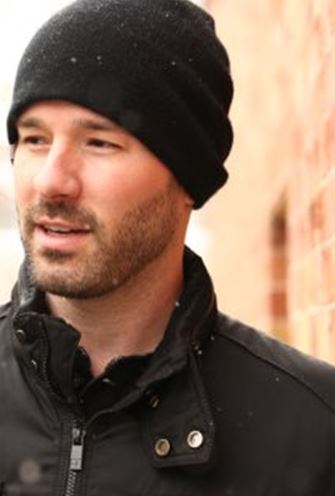
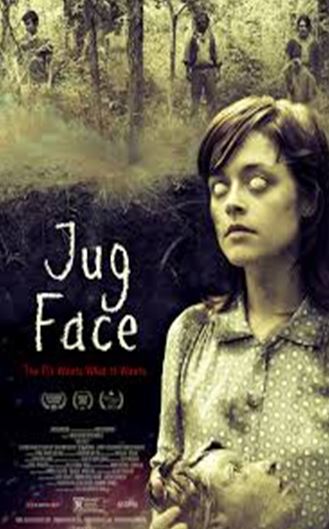
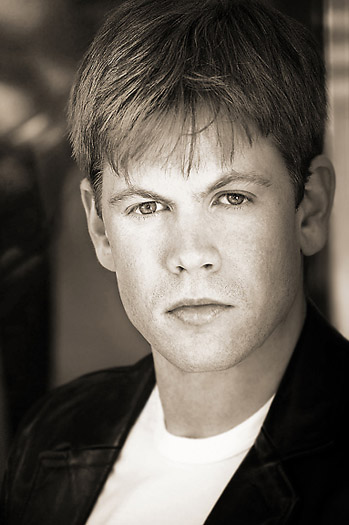
Chad Crawford Kinkle is best known for his work writing and directing the horror flick Jug Face. The film set in the backwoods, was filmed in Nashville, TN. The story line focuses on a girl who is pregnant with her brother’s child that is forced to sacrifice herself to a creature in a pit.

Can you tell us a little about yourself? What was it like growing up in Fayetteville? Did you develop a love of film early on?

Fayetteville is a small southern town with a population of about thirty thousand in the entire county. I tell people it’s still too small for a Wendy’s to open. But growing up there was great. We had one movie theatre and I went every weekend. This is also pre-internet so my friends and I had to be creative to come up with things to do. That’s one of the reasons I think my imagination is strong. And also why I ended up using my parents VHS camcorder to make movies on the weekends.

I was a horror buff early on. I stayed up at night watching HBO hoping for two things. A horror movie and nudity. During the 80’s those went together. But Halloween was always my favorite time of year because of all of the horror movies that would be on TV. Plus, I loved pranks like “rolling” my friend’s houses with toilet paper.

What led you to start writing?

I didn’t until college. Actually, I hid from writing all the way through school because I couldn’t spell to save my life. I even failed 9th grade English. In second grade, I remember developing a sloppy handwriting style to cover up my spelling. The literature part was a breeze and I loved it. But probably my fondest memory of grade school was something I wrote. In fourth grade, we had a writing assignment to create a story about a picnic where a couple’s food was stolen by a bear. I wrote the story from the bear’s perspective and the teacher pulled me aside to tell me what a good job I had done.

Then nothing really happened to spark me until I wrote my first screenplay assignment in college. It was a one page scene. I found it to be somewhat easy and surprisingly a pleasurable experience. I was more of a visual artist, but transforming what I saw in my mind to words ended up suiting me the best.

How did the story for Jug Face come about? Where did you get your inspiration for this one from?

I was visiting my wife’s aunt and uncle in north Georgia. They wanted us to go to a newly built pottery museum. It was there that I saw my first face jug. They blew me away. So grotesque. I had to have one(now I have more than twenty). As I walked around the exhibit, I watched a video about the process of making a face jug and came up with the idea for Jug Face on the spot.

What was the most challenging thing about bringing this story to life on film?

The dread. That’s what I was most concerned with. All the other elements are interchangeable to a certain degree, but the tone took consistent attention.

Why do you think so many tales of terror seem to take place in various backwoods locations? Do you think so-called backwoods people are often underestimated or judged unfairly for coming from where they do?

I lived in New York City for a time and it was actually the safest place I’ve ever lived. There aren’t too many places where bad things can happen that another person won’t hear or see. But in the country, it’s a whole different story. You are truly alone and anything can happen. That fear translates into the way people view someone who lives in the backwoods.

What do you love most about living in Tennessee?

The rolling hills. They are imprinted in my brain from growing up here.

jugface

This film features the acting talents of Lauren Ashley Carter, Sean Bridgers, Sean Young, Larry Fessenden, and Daniel Manche. Do you consider yourself lucky to have had the chance to direct them? What do you think each one of them brought to this picture?

For my first feature, I was blown away by the actors that signed on. I was expecting to be using mostly unknown actors with lesser talent.

Lauren was the anchor of the entire film so it all started with her. Sean Bridgers brought the levity that the story definitely needed. Sean Young was the guiding mother figure on and off the set. Larry was such a cool person and also brought the humanity to the family. And Daniel was a jerk. Kidding. But he did play the perfect prick brother.

Did Daniel’s role in The Girl Next Door and Lauren and Sean’s roles in The Woman have anything to do with you deciding to use them in this movie?

Sure. I watched all of those movies before casting them. But it wasn’t what they did in those movies that sold me. It was that I could envision them in the world of Jug Face.

Do you have any interesting stories from the set that you are at liberty to share with our readers?

On the last day of shooting, a massive storm was coming. But somehow it actually bent around us and didn’t delay the shoot one bit. We were already scheduled for a 16 hour day.

How does this film differ most from other horror flicks?

In a way, I don’t think it does at all. People generally have low expectations for horror films so I think they get surprised when one actually has well rounded characters. But if you look at the best horror films, they generally do.

Why did you decide to work with Sean Spillane on the soundtrack? Are you a fan of his work?

Sean was recommended to me by my producer Andrew van den Houten. We hit it off the first time we met and I felt that he had a good idea for what music this type of story needed.

Are you surprised at how well received this movie has been so far?

Yes and no. I’ve always thought it was a good idea or I wouldn’t have written or made the film. But I’m really more surprised by how it splits people. The ones that hate it, really hate it.

Are there any little known things about you that the public might be surprised to learn?

None that I will divulge. (smiles)

What do you love most about bringing a story to life on film?

A screenplay is only a “plan” for the movie. It always has an unfinished feeling about it. But by completing the film, I get closure.

Do you have a dream project you’d most like to accomplish over the course of your career?

I must make something written by Stephen King. I’m so paranoid that he will stop writing and all of his stories will be taken.

What are you planning to work on next?

I have another southern gothic story. But this one is set in an urban environment in a current modern city.

Anything you’d like to say before you go?

Thanks for doing this! If anyone hasn’t seen Jug Face, please check it out!

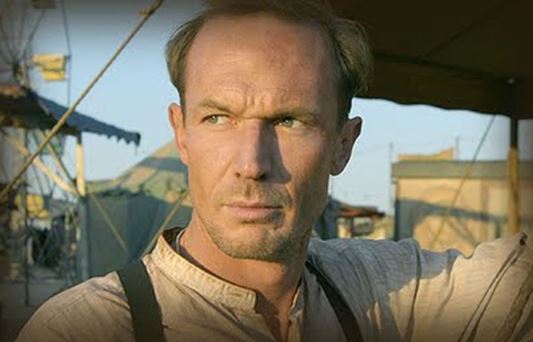
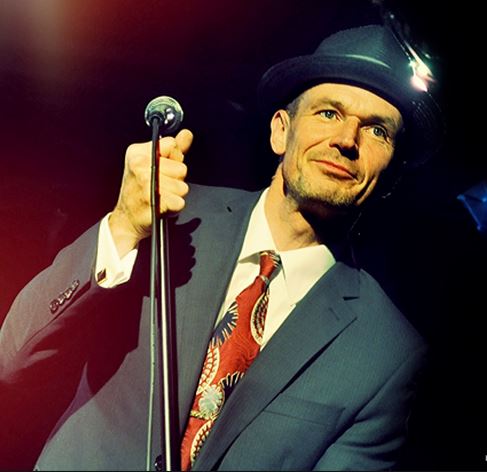
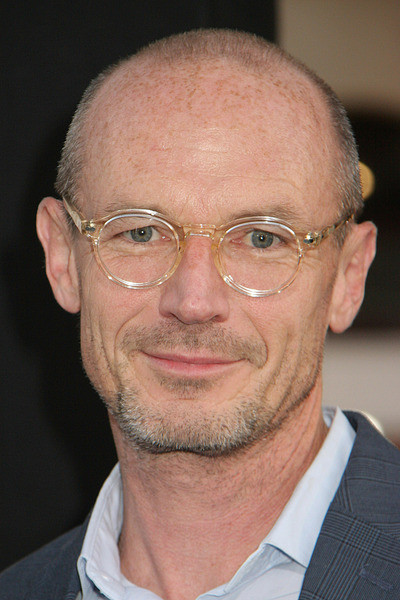
An interview with Toby Huss

toby-huss-285149l

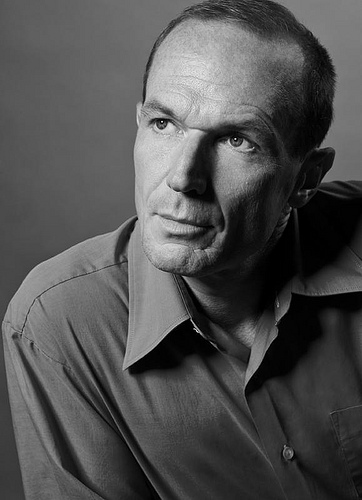
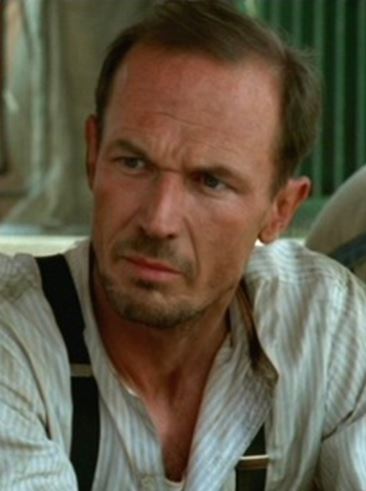
Toby Huss has portrayed many characters since he began his career in 1987. He is perhaps best known for his roles as Cotton Hill and Kohng Koy Kahn Souphanousinphone on King of the Hill and Felix “Stumpy” Dreifuss on the HBO series Carnivàle. He has appeared on countless films and television shows such as Down Periscope, Jerry Maguire, Beavis and Butthead Do America, Seinfeld, Vegas Vacation, The Mod Squad, Nikki, Reno 911!, 30 Rock, Cowboys & Aliens, CSI: Crime Scene Investigation, and Enough Said to name a few. His parodies of Frank Sinatra in the films Vegas Vacation and Down Periscope led to his forming the character Rudy Casoni. Toby also did several promo spots from MTV during the early 90’s wherein he covered tracks by Snoop Dogg, Dr. Dre., Cypress Hill, and Pearl Jam among others. He is also a bit of an artist in his own right.

What was it like growing up in Marshalltown, Iowa? Can you tell us a little about the place? 

It’s a place where meat is steamed.

Did you experience any culture shock when you first moved to Los Angeles? What do you like most about living there?

Los Angeles usually fries or grills their meats. Or there’s a nice Mexican flat steak marinade they do. Still, jarringly NOT steamed.

What did you do before you became an actor? In the back of your mind was acting something you always wanted to do?

I worked for a Jamaican construction crew in NYC.

toby-huss-3-sized

You have also done quite a lot voice over work. Do you enjoy that as much as acting? How do the two differ most? Do you find you are less self conscious when providing voices?

Voice over work is for pussies.

What was it like to provide the voices for Cotton Hill and Kahn Souphanousinphone on King of the Hill? Was it strange to be portraying two very different characters?

Cotton could kick Kahn’s ass.

What was it like to with Daniel Knauf and the cast of Carnivàle? What are some of your fondest memories from your time there?

Dan Knauf is a big, cuddly, American porch of a fellow. He’s sitable when he’s shaded.

Toby_Huss-1

What do you love most about acting?

All the free candy!

How did Rudy Casoni come into being? Can you tell us a little about him? Have you always been a Sinatra fan?

I liked Sinatra more when I’d get drunk and smoke around women I’d hit.

You are a bit of an artist and photographer as well. Do you find there is a certain freedom that comes from the act of creation, regardless of what form it comes in?

I make a lot of things that no one needs to see. And some that a lot of people see. Some things I make are only seen by certain people. It’s all a racket, this finding love.

tobyhuss

What do you like to do when you aren’t working?

I have a paper route and a tortoise.

Are there any little known things about yourself that your fans might be surprised to know?

That I’m reluctant to delude myself into a collective form of intimacy with them. That, and my turn-offs are: sloth, envy, greed and girls who “think” they’re “all that.”

You have covered a wide array of characters over the course of your career, are there any that you love more than others? Which you would say was closest to your own self?

I’ve always liked my portrayal of Franklin D. Roosevelt in American Shitfister.

What are you personal feelings on the state of the entertainment industry today? How would you most like to see it change in the future?

I hope entertainment will one day come in pill form. Or fudge form. I’d like to eat a chocolate Kristen Wiig film next week.

What is the best advice anyone ever gave you?

Stoke on it.

What projects are you currently working on?

Just trying to get my shoes on over the horrible swelling like everyone else.

Toby Huss-IHA-014094

“Vincent” by Sue Clennell

Vincent Van Gogh

Vincent Van Gogh

Vincent


Vincent had the yellows,

pulled sunflowers from

behind his ears.

A storm in a dyke,

Vincent scooped the sky out

with teaspoons,

had a policy of stun and run.

Star stuck,                he

put his hand in Jesus’ wound

to see how sweet pain was,

plummeted to earth with wax wings.


Previously published in Poetry NZ.

"Prayer" by Vincent Van Gogh

“Prayer” by Vincent Van Gogh

cottonmouth

Sue Clennell is an Australian poet who has also been published in New Zealand & the US. Her short play The Unknown was performed in Sydney’s Short & Sweet Summer Festival 2012. She currently has a poetry CD out The Van Gogh Cafe – 2 poems from which may be viewed on YouTube.


An interview with Christopher Rice

christopherrice

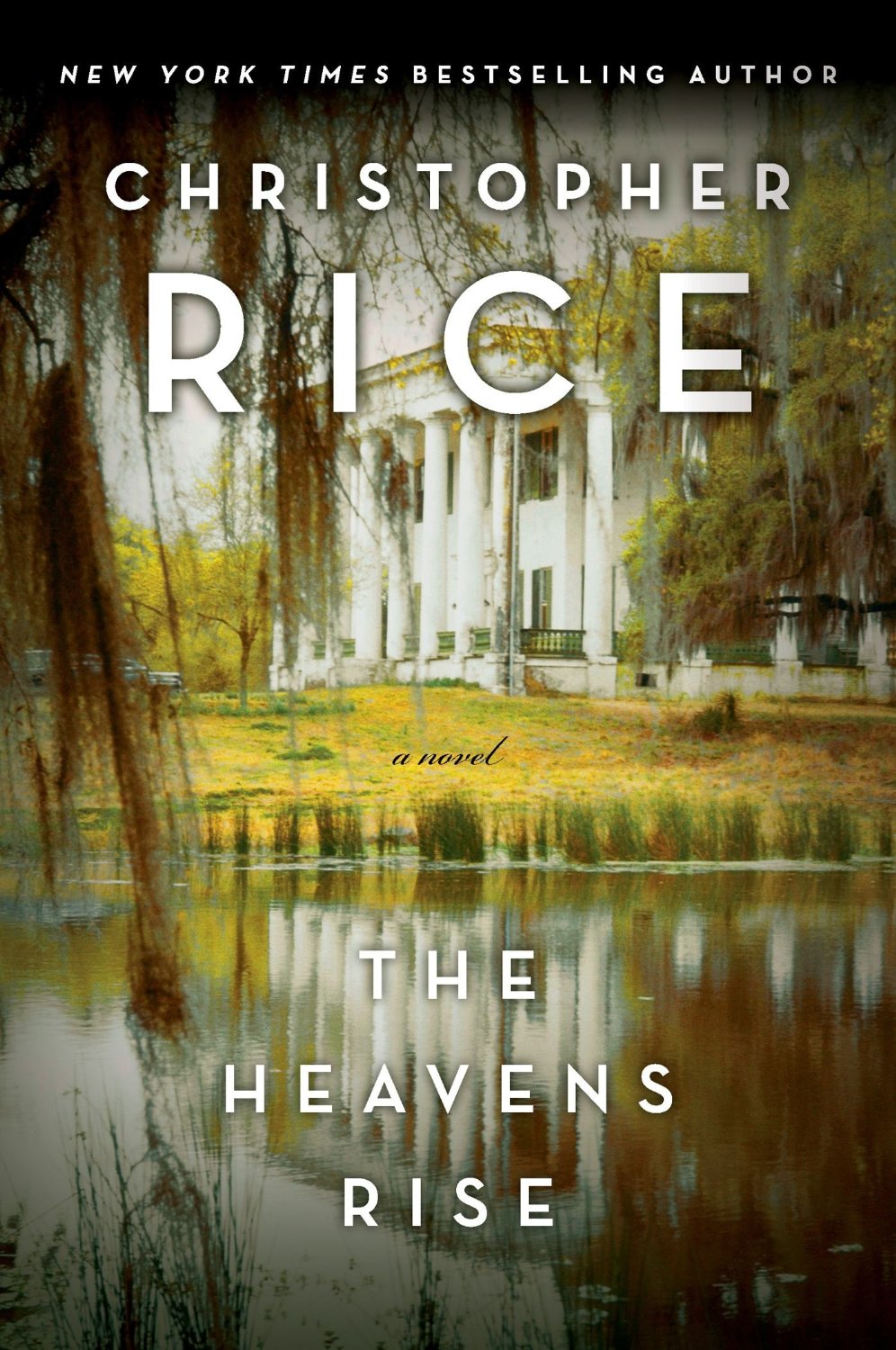
Christopher Rice is the New York Times bestselling author of six novels. Christopher has also written Coastal Disturbances for The Advocate and now hosts The Dinner Party Show. His upcoming thriller The Heavens Rise, which takes readers to the bayous of Louisiana where three friends face an ancient evil in the form of a parasite, is due out October 15.

What was your childhood like? What are some of your most fond memories from that time?

My childhood was divided in two by my mother’s success. We lived in San Francisco until I was ten years old, and then, after The Vampire Lestat was such a big hit, we could live pretty much anywhere we wanted and Mom decided it was time for a homecoming. I missed San Francisco very much during the first few years after the move. We lived in the Castro and it was the 1980’s so there was the shadow of illness across the community, but I still have wonderful memories of walking from our grey Victorian on the corner of 17th and Noe to see movies at the Castro Theater. We would always sit in the front row and when the organist would rise up out of the pit to play the overture before each film, everything would seem magical and perfect for a moment. The first few years in New Orleans were very challenging for me. I didn’t fit in. I was a wacky skater-adjacent kind of kid with a rat tail and big baggy T-shits with crazy horror movie imagery on them. But today I consider New Orleans to be my true hometown because most of the real life lessons, most of the real development, happened there.

 Do you feel privileged to have been raised in such a creative household?

Absolutely. But you have to leave such a household and go out on your own to realize how privileged you truly were.

What would you say are the most important things you have learned from your mother and father?

Write the book you want to read. Not the book that you think will get the most attention, or the most critical acclaim, or the most literary awards. The book that you want to sit down with and get lost in. Also, as artists they were incredibly disciplined, and as parents, they were incredibly tolerant and accepting and generous.

What was you very first favorite story?

When I was a little boy, it was a children’s book called Star Baby about a little baby who fell out of the stars and ended up in a fisherman’s net before he was raised by the fisherman and his wife. I can still remember it’s simple, pen-drawn illustrations.

Are you glad you chose writing over acting? What do you love most about the act of writing?

Well, I feel like I’m acting again now that I’ve launched The Dinner Party Show with Christopher Rice & Eric Shaw Quinn, my new Internet radio show. Eric and I play various characters and over the course of our 2-hour live show, we play about 45 minutes worth of pre-recorded sketches broke up into five and ten minute segments. Eric’s sister described the show as “a fairy home companion”. But at heart, I’m a writer, and most of the work we do for the show is about writing.

Are you enjoying hosting The Dinner Party Show? Can you tell our readers a little more about that? How did that first start?

Eric and I have been best friends for years. I always wanted a radio show. I always thought Eric should be on the radio. When the Internet radio thing became so easy for people to do on their own, people all around me were trying new and interesting things with it. Eric had talked about doing a one-man show, Tracey Ullman style where he played all these different characters, a sort of cross-section of American life. I asked him if we would merge into this show idea I had for the two of us and we basically took it from there. It’s been alot of work. We built our own studio. We hired all our own staff, bought all of our equipment. This is an entirely independent operation which is both joyous and nerve-wracking. It’s been an incredible experience so far. We’ve had great guests like Dan Savage, Patricia Nell Warren – my mother, of course – Chaz Bono, the list goes on and on!

How do you think you have evolved most as a writer since your early days?

I’ve worked very hard to try to establish a distinct narrative voice for each book, even when the book is in the third-person. There’s a cadence and a syntax to my later books that just wasn’t present in the first two, as popular as they both are. And I believe you learn to do by doing. That was actually the motto of my high school in New Orleans.

 How did it feel when you first had a book labeled a New York Times Bestseller?

I was overjoyed, but I was also very young, so the full importance of it really dawned on me over time. Coming from such a privileged background, it wasn’t clear to me yet in 2000, when A Density of Souls was first published,  how hard most people have to work to get their foot in the door.

Are you excited for the release of The Heavens Rise? Do you still get nervous before your works are released to the public?

I’m very excited, but I’m also very nervous. It’s a new genre for me and I’ve worked very hard on this one. I spent two years on the manuscript before my agent saw it. Right now I’m focused almost exclusively on marketing the book, trying to drive up pre-orders and planning the tour with my mother. I’m doing a special pre-order giveaway where if you order the book – any edition from any retailer, in any country- and e-mail your receipt to theheavensrise@gmail.com, you’ll receive a copy of an individually signed manuscript page featuring author notes

81cYDKuBTKL._SL1500_

 Why do you think Louisiana and various other Southern places make for such good story locations?

Louisiana is a place where the present meets the past, and it’s not truly an American city. It’s a European-Caribbean city that feeds the rest of the country with its distinctive flavor and magic. There’s a sense of rules being suspended when you’re in Louisiana, on a lot of levels, so your story opportunities seem to increase ten-fold once you cross the state line.

How did you come up with the idea of a microscopic parasite that wreaks havoc on the world for this one?

Well, I reigned in a bit. It doesn’t wreak havoc on the world so much as it does the individual who is exposed to it, and the powers it gives them are both terrifying and magical. I like supernatural concepts that sit right on the dividing line between Science Fiction and the spirit world and I love it when writers try to explore a quantum or biological basis for supernatural phenomena. Not in order to disprove, but to give the fantastic a toe-hold in our everyday world.

Are there any little known facts about yourself that you’d not mind sharing with our readers?

In the age of social media, I don’t think there’s anything left that people don’t know about me. I’ve tweeted or posted all of it on Facebook at one time or another.

What was the best advice anyone ever gave you?

Sometimes we can’t wait to get in the mood to do what’s best for ourselves. Sometimes we have to take the actions that will benefit us and have faith that improved feelings and self esteem will follow.

 In your opinion what elements does it take to craft a really great story?

It all comes down to characters. Even if it’s a monster story, if I don’t care about the characters, I don’t care. Period. A good story is a collision of a compelling, complex character and an environmental conflict.

What projects are you working on at the moment?

I’m about 1/3 of the way through another supernatural horror novel set in the deep south, and right now, we’re taking a bit of a hiatus from The Dinner Party Show so that I can focus on getting ready for my book tour.

To pre-order The Heavens Rise in Hardback or Kindle formats please see: http://www.amazon.com/The-Heavens-Rise-Christopher-Rice/dp/1476716080/


An interview with John Fleck

fleck

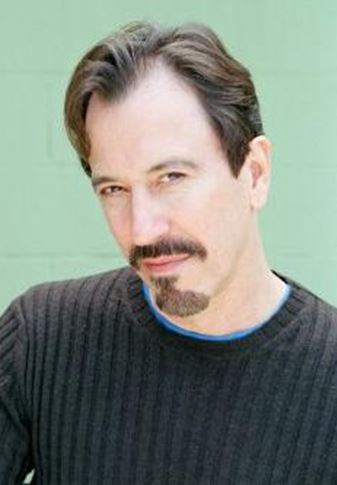
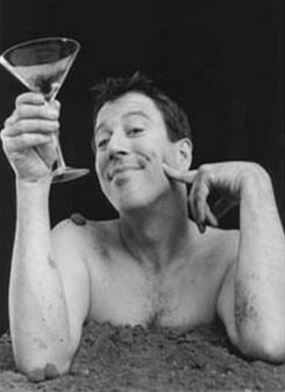
John Fleck is an actor and performance artist who has appeared in some of television’s most iconic shows. He has appeared on Seinfeld, Star Trek (Enterprise, Deep Space Nine), Babylon 5, Carnivale, The Gathering, Murder One, Weeds, and True Blood, just to name a few. He also appears in the films Howard the Duck and Waterworld, and ZZ Top’s classic music video Legs.

Fleck has won countless grants and awards. He can be found working hard in for various theaters around the U.S. and often works as a performer in world-renowned video artist, Bill Viola’s pieces. He was recently featured in Mr. Viola pieces at The Getty Center (LA), The Guggenheim (NY & Berlin), The Tate Museum (London) the Venice Biennalle and at the National Art Gallery (London).


What were you like as a child? Did you have an active imagination from an early age?

I was very sweet (according to my mother who died in 2000). I think my sweetness was an attempt to correct some of the volatility between Mother & Father. We moved a lot . I went to about 13 different schools growing up so I never had solid ground under my feet or any best friends (and Father was very critical of me)– so yes, I did develop an active imagination that allowed me to escape the reality of where I was.

What was it like to grow up catholic? Do you think religion is unintentionally often more harmful than good?

My family was never devout even though we kids along with Mom (never Father) went to Mass on all the high Holy Days. I was an altar boy for about 2 years . At one point my Father moved the family down to Southern Ohio (across from Kentucky). He was a traveling salesman (at that time) so we never saw him and I loved it . I went to Holy Redeemer Elementary school and I joined the choir and became a very devout Altar boy. I loved the pageantry of the Mass and the ritual of it all. But it became very obsessive where I had to do every genuflection & prayer 9 times. 3 is the trinity. 3 x 3 = 9 (which to me was the holiest of numbers). Interestingly enough, after we moved (when I was in 6th grade) I never went to Church again (except again on Christmas & Easter). But my imagination was definitely fed by the spectacle of the Mass & and Heaven / Hell concept. My first solo works were very operatic, all about the extremism of Heaven / Hell. Good / Bad. Woman / Man. And all my work has had a ‘spiritual’ intent (framed within an often shocking extreme exterior) of breaking out of the shackles of shame (inflicted by religion or culture) that bind me – and discovering the TRUTH of who I really am.

When did you first discover theater? Do you happen to remember what was running through your mind when you first saw a play performed live?

My family did not go to theater, just movies. The first theater experience that had a profound impact was a touring production of Hair in Cleveland, Ohio. My brother in law had an extra ticket and he took me when I was 16 years old. That was radical at the time, people taking their clothes off on stage . Funny how all my early ‘solo’ shows had me getting naked sometime in the show… What can I say? I was a punk rocker performance artist .

Why do you think theater has always had such a timeless appeal?

I believe the Greeks coined the word Katharsis: to cleanse, purge, from katharos, the process of releasing, and thereby providing relief from, strong or repressed emotions. Isn’t that what great theater or performance art does for us? Better to see dark, dangerous behavior acted out on stage than to act it out in our personal lives . Ah, catharsis. And what about the lighter colors of human behavior. It’s nice to see a validating reflection of our beliefs & morals up on that stage as well.

What was your very first acting role?

I do remember in 3rd Grade being cast as the lead in The Ugly Duckling. Yes, I was the Ugly Duckling. I still remember my first lyrics & melody, “I swim round & around like a merry go-round’. That’s all I remember but I loved the attention and I was perfectly cast. I had no intention of being an actor. I majored in business . But after flunking trigonometry 3 times at Cleveland State University, I decided (with a friend) to audition to be in the chorus of Gypsy at a community theater and got it. And then I did chorus work in Sweet Charity in another Cleveland community Theater . And then I drove cross country to audition for the American Academy of Dramatic Arts in Pasadena (at the time). I got in. God only knows I needed to study a lot more after AADA. I took everything (voice, dance, improv, etc).

What is the most challenging aspect of bringing your self-scripted solo work to life on stage?

Confidence is the key for me. If I allow self-doubt and self-criticism to take over, I’m done for. DISCIPLINE is important to get to the finish line. Keep on trucking’ is all I can say. Also, don’t be afraid to ask for help. Also, book yourself somewhere. If it weren’t for ‘deadline fever’ I never would’ve created anything. But once it’s booked somewhere, you’ve got to bring something to the table. Sometimes it can be intimidating having to bite off a BIG piece all at once. I love to develop original material in small chunks, such as a group show where I have to create a 5 or 10 minute piece. If it works, I will then expand it to 20 minutes at another gig until I get an hour full length piece.

What do you love most about acting?

I still take an acting class in LA . It’s important for me to keep my chops up (is that the expression)? With TV or film work you’re lucky if you have a 3 page scene to dig into . So I find a good workshop and an occasional play gives me characters that have more of an arc and more meat to chew on. Irregardless of 3 TV pages (or) a full length play, I love the engagement with other actors. Since I come from a ‘solo performer’ world as well, I get a real kick working with other actors. What do I love about acting? I love it when I’m focused and know what I want in a scene and me and another actor are listening to each other and don’t have any idea what’s coming next because we’re so in the moment. It’s the closest thrill I get next to parachuting out of a plane (not that I’ve ever done that but I can only imagine)

Do you ever get nervous about how your work will be received by the public?

Whenever I go out on stage I get butterflies. I psych myself out saying it’s ‘excitement’ rather than ‘fear’. As I said, it’s like parachuting for me. Is my chute going to open or am I going to go SPLAT on the stage ? In regards to my self scripted work, I often work with a director (and some other 3rd eyes) so that gives me confidence and other points of view . And hey, not everyone is going to like you. I’ve had people walk out of my earlier shows, usually enraged . My work used to be very cutting edge & shocking. But all in all, I’ve tended to get a lot of good press and response. But every now & then there’s a critic who just hates what you do. But if you can’t take the heat, stay out of the kitchen as they say.

Are there any little known things about yourself that your fans might be surprised to learn?

I’m of two minds. I’m a people person with lots of friends & social activities – but I’m also somewhat reclusive preferring to stay in and watch a nice sunset or a good movie on DVR. I really don’t go in for the whole Hollywood glitz and red carpet events. They bore me. Too much ego for me.

johnfleck

What do you like to do when you’re not working?

I’m one of those guys who’s always defined myself by what I’m doing creatively. I tend to get restless & irritable when I don’t have a creative project to work on or auditions to go on. But one of the great lessons I’m learning is that maybe where I am right now is exactly where I’m supposed to be so CHILL OUT DUDE and enjoy the moment. I’ll tell ya, I’m much more content with that attitude.

Do you have Star Trek fans recognize you often? What was it like to work on those shows? Were you a fan of the franchise?

Since I wore so much make-up, I don’t have people recognize me too much. I have had people recognize my voice interestingly enough. I still get lots of requests from all over the world for signed pictures. I have done some Star Trek Conventions which are a real trip. I actually had a bit of a stalking situation with a woman I met at one of the conventions. She found out all my contact info and kept calling & emailing me. Kinda creepy. I’m glad I’m not real famous. I loved the S.T. Franchise. It was quite the gravy train for me and I’m still very thankful for the residuals that come in (even though they’re getting smaller & smaller over time) . But mostly, I miss acting on Star Trek. I got to play so many characters and honestly, it was the closest thing on TV to doing Shakespeare. The language often was very demanding and articulation was very important.

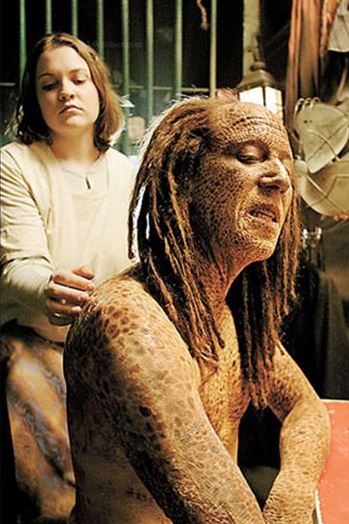
I love Carnivale. Did you have fun playing Gecko? What kind of condition was it that ailed him? Was it ever named on the show? What did you enjoy most about your time there?

It was quite the spectacle, wasn’t it? And I love being a ‘series regular’. I felt like part of a family of Freaks (well, that’s what we were). Everyone was so nice & excited to be working on a high quality HBO show. Regarding the skin condition Gecko had, I imagined it was a very bad dose of Ichthyosis or fish scale disease which is a skin condition resulting in scaly skin, especially on the arms and legs. What else did I enjoy about Carnivale? I especially enjoyed the series regular pay check as well.

Was the makeup for that character a bitch to have applied? What did it feel like?

The makeup was grueling. 5 hours just to get it on (for a full body make up day) and then at least 1-1/2 hours to remove it. After a few hours of having it on I began to feel as if I were being tortured . Your skin can’t breathe. You can’t move very much. If they applied it to my legs or arms, you’d want to scream when the hair started to be pulled out from its roots. Yeah, it’s not for the faint of heart. But it was great for my meditation. When I’d start to panic after 12 hours of being encased in it, I’d just have to close my eyes & breathe in and breathe out & SURRENDER.

What was it like to play Dr. Overlark on True Blood? Why do you think vampires are so popular in modern times?

Dr. Overlark was a hoot. My sister says I’m such a nice guy but I often play such nasty creeps. Thank God I have a way of channeling that dark side (on TV) and not doing it in real life. Why are we so fascinated with Vampires? Maybe our consumer culture has something to do with it. We’re all scared of getting old & dying . Maybe selling your soul to the dark side is an ok price to stay young & beautiful? I wonder why don’t they do a TV show about old, ugly vampires? Because it wouldn’t sell, that’s why.

Do you have one character you have enjoyed portraying more than others?

I like any part with meat on it. Something that allows me to show some versatility, depth & nuance. Actually some of my Star Trek roles allowed that. However, it’s mostly theater (and my own solo work) that allows me to plumb the depths.

What is it like to work with Bill Viola?

Bill Viola and his wife Kira are two of the sweetest people on the planet. Maybe it’s his Buddhist leanings. Not only is Bill deep and completely immersed in his artistic vision, but he’s FUN. I always laugh a lot when I work with him.

Do you have a dream project you’d most like to bring into being?

I can’t say that I do at the moment – and that’s OK. I’ve always been one to panic when I don’t have one of my own big performance pieces in the works, but sometimes the field needs to lie fallow in order to restore nutrition to the soil (or soul) . .

What projects are you looking forward to working on next?

Perhaps not ‘dream’ projects, but I do have lots of things I’m working on now. My first Art show which I’m creating 10 pieces for atCoagula in Chinatown on Nov 9th. I’m scared because I’m not really a visual artist but hey, it’s good to shake up the apple tree and try another creative direction. At the moment, I’m adapting a speech from Moby Dick for a Moby Dick Gala directed by my old director pal David Schweizer at the Broad Playhouse in LA on Oct 5th. Crazy, huh? I’m floating out in a bathtub with a shower curtain as a sail and doing the infamous ‘sperm speech’ from Moby Dick . It’s actually quite beautiful. I transform into an angel at the end and sing a hauntingly beautiful falsetto Aria. Did I mention I have a 3 & 1/2 octave voice? – I think I was a castrati in a previous life.

Anything to say in closing?

A couple of my own cliches: Unto thine own self, be true. Comparisons are violent. Keep it simple. How important is it? Maybe Steve Jobs said it best when he said, “Here’s to the crazy ones. The misfits. The rebels. The troublemakers. The round pegs in the square holes. The ones who see things differently. They’re not fond of rules. And they have no respect for the status quo. You can quote them, disagree with them, glorify or vilify them. About the only thing you can’t do is ignore them. Because they change things. They push the human race forward. And while some may see them as the crazy ones, we see genius. Because the people who are crazy enough to think they can change the world, are the ones who do.”

gecko

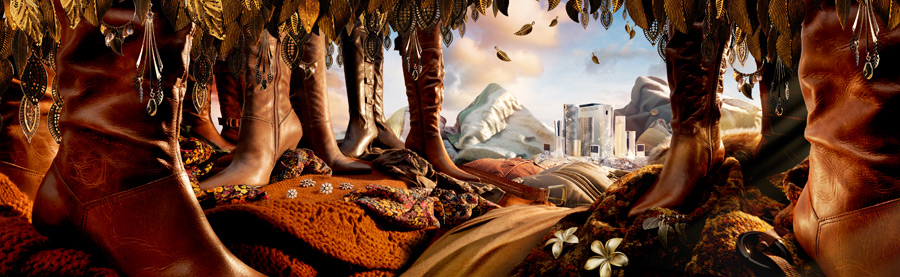
The Artscapes of Carl Warner

The Cave of Abdo-men

The Cave of Abdo-men


Valley of the Reclining Woman

Valley of the Reclining Woman


Shoulder Hill Valley

Shoulder Hill Valley


Shin Knee Valley

Shin Knee Valley


Autumn Boots

Autumn Boots


Winterscape

Winterscape

The ‘Foodscapes’  and ‘Otherscapes’ are created in Carl’s London studio where they are built on top of a large purpose built triangular table top. The scenes are photographed in layers from foreground to background and sky as the process is very time consuming and so the food quickly wilts under the lights. Each element is then put together in post production to achieve the final image.

These images can take up to two or three days to build and photograph and then a couple of days retouching and fine tuning the images to blend all the elements together. Carl spends a lot of time planning each image before shooting in order to choose the best ingredients to replicate larger scale shapes and forms within nature, so he spends a lot of time staring at vegetables in supermarkets which makes him seem a little odd! However, he is careful to point out that finding the right shaped broccoli to use as a tree is an all important task.

“Although there is a fair amount of waste, there is a lot of food left over which is always shared out with the team, though most of the food used in the sets have either been super glued or pinned and none of this makes for good eating!”

http://www.carlwarner.com/

Carl-on-Lettuce-Seascape-Set-SmallWeb


Paris Day

Paris Day


Candy Cottage

Candy Cottage


The Rialto Bridge

The Rialto Bridge


Lettuce Seascape

Lettuce Seascape


“Subliminal Self” by Mamta Madhavan

sunset

Subliminal Self

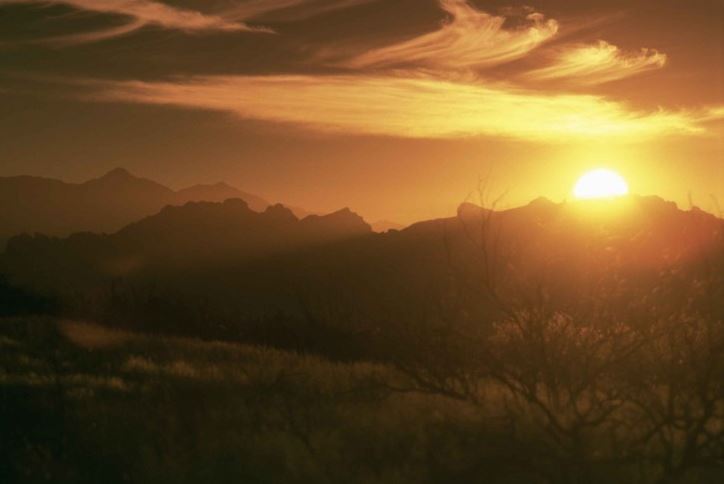
Desert sunset. Moonbows. Cobbled pathway
lined with zinnias. Tall, slender. Colors of the sun –
running into passion. Caught on desert marigold. Ocean.
Seagulls and sailboats. I roam collecting cowries.
Barefoot on sand, grass. Seasons. Free spirit.
Zen. Zazen. Existentialism. The moment.
Lanterns burning. Shadows. Puppet. Dream catchers. They
exist between the spun threads, feathers, beads. Amethyst.
Vast expanses. Stretches and stretches. Sand dunes. Your laughter.
Gurgling sound of stream. Sound. You. Your laughter.
It awakens me. Sunrise. Moon lingers in the sky. Still.

320090_187807004633421_371408661_n

Mamta Madhavan has been writing poetry in English, her second language, from the age of 13. Her poems have been published in various literary journals and zines all over. She also pens childrens poems. She is a curator on staff at gotpoetry.com.

An interview with Emerson Collins and Del Shores

Emerson Collins

Emerson Collins

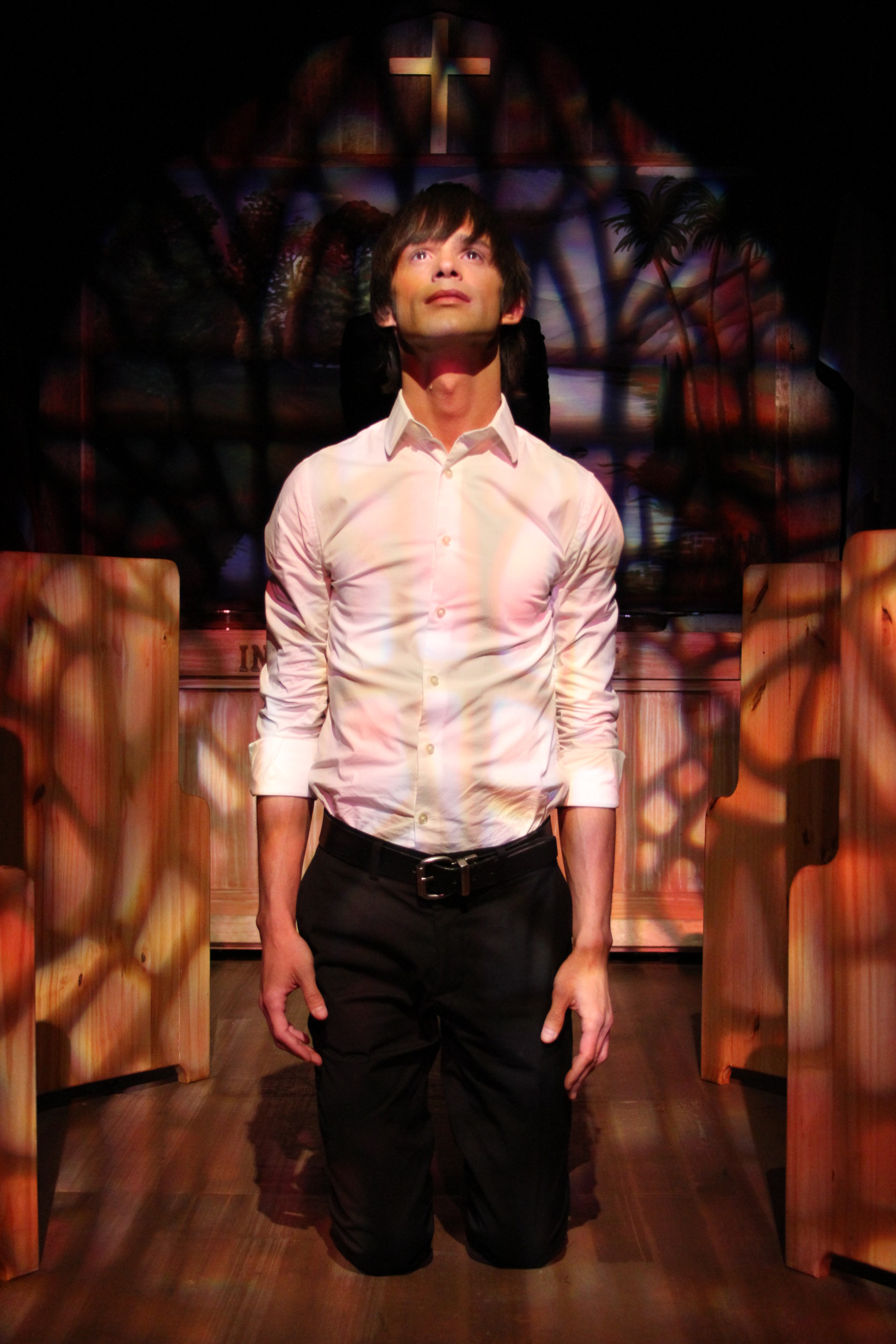
Southern Baptist Sissies is a film based on the play of the same name by the ever talented Del Shores (Daddy’s Dyin’: Who’s Got the Will?, Sordid Lives). The film features Emerson Collins, William Belli, Matthew Scott Montgomery, Luke Stratte-McClure, Newell Alexander, Rosemary Alexander, Bobbie Eakes, Ann Walker, Joe Patrick Ward, with Dale Dickey and Leslie Jordan.

The film, which is not an adaptation of the play, but a recording of it, deals with four gay boys growing up in the church. It follows the struggles of all four characters to embrace their true self while struggling with ideals taught from an early age. The story takes the viewer through a range of emotion and opens up the mind to acceptance for people of all walks of life. Recently it was awarded the Audience Award at NCGLFF.

You are both originally from Texas. What did you love most about growing up…Texan?

Del: The food! The people. Well, most of them.

Emerson: There is a special pride Texans take in being “Texan” and I was definitely raised with that. My father used to say that because we were the only state that used to be its own country, many folks felt it was alright to act like it. The “everything is bigger in Texas” applies to everything – hair, food, wide open spaces and personalities of course!

Your father was a Baptist preacher. For those that might now know what is it like growing up Baptist? Was he was one of those fire and brimstone types that get all out of breath?

Del: Conflicting. The people (mostly) meant well, but so much self-hate generated because of the anti-gay scriptures. So much fear instilled in me. Later, rage was a result of all the damage. But I still love the hymns and there are so many good memories.

My Dad wasn’t as bad as the stereotype. But he believed that way. He was a good man though and helped so many in need. He was an amazing pastor to his churches.

Was it difficult to come out to him?

Del: Extremely. I had been married to a woman and had two young daughters, two and five. It was one of the hardest things I’ve ever done.

Do you think religion in general often teaches judgement and strays from the message of tolerance?

Del: I don’t actually like the word tolerance. I don’t want to be tolerated, I want acceptance and equality. Christ actually taught the opposite of judgment – Matthew 7:1 “Judge not lest you be judged.” Unfortunately, many Christians ignore that scripture as they cherry-pick others. So many stray from the message of love.

Emerson: I don’t personally believe that “religion” teaches anything – people do. And just as there are so many types of people in the world, there are so many types of religious people in the world. In that, there are many religious people who focus on the personal aspect and journey of their religion, be they Christian, Muslim, Buddhist or Hindu and so forth. However, each religion has it’s ideologues and fundamentalists who seem to spend a great deal of time focusing on judging the behavior of others according to their religious doctrine. Unfortunately, these voices often tend to be louder and given more attention as they misrepresent their own faith. Those who live according to their religion and focus on love and compassion are just as great in number, they just don’t receive the same attention and coverage as those who seem to spew judgment and hate.

Why do you think the most important message of love is often so widely overlooked in religious circles.

Del: That’s a tough one. I believe it’s mainly because that many religions and their leaders teach hate, not love. I also believe that many justify their own hatreds… homophobia, racism, you name it by justifying with scriptures. Hell, if you wanted to hate overweight people, there are many scriptures you could quote.

When did you first get the idea to write Southern Baptist Sissies? What compelled you to get it out there to the world?

Del: The death of Matthew Shepard. I was reading an article in Newsweek about the murderers and there was a picture that haunted me. It was a picture of Jesus in one of the killer’s homes. I wondered if they had been taught to hate in pews. Then all the damage was unleashed and anger fueled my play. I had to tell my story.

You have worked with Del quite often now. What have you learned from the experience?

Emerson: My journey with Del has been fascinating. I met him while I was performing in a production of Southern Baptist Sissies in Dallas. He flew in to see it and later asked me to come be in his own Sissies revival in Los Angeles. I moved to LA to join the cast and began working backstage on the other shows. I quickly joined the team as an associate producer for those shows and doing some assistant work for Del on the side. When we did the national tour of Sissies and Sordid Lives, I was onstage in Sissies but because of my experience with large scale theatre I helped produce the tour as well. When we did Sordid Lives: The Series, he wrote a role for me and brought me on as a co-producer. We have continued producing together since to where we now work as equal partners. The experience has been amazing and inspiring on so many levels. He is incredibly respectful of my work as an actor, while teaching me so much about the nature of the entertainment industry and then providing me the opportunity to grow as a producer. Most importantly of all of it, he has become one of my closest friends through the process.

Why did you choose Emerson for the lead ?

Del: He is the perfect Mark. I love his work, I love him as a person and he understood every part of Mark. He was able to embody and capture this complex character beyond anything on the page. In my opinion, his performance is perfection! He grew up Baptist, is Texan, went to Baylor, is so smart and a bit of a smart-ass – and Emerson has a kindred spirit with the character.

When did you first know you wanted to be an actor? Who were some of your largest influences?

Emerson: It took a while for me to decide firmly that I wanted to be an actor. I started as a child in the Christmas pageant at church, then I was in plays and musicals in high school. When I started college, I was not sure the route of an actor was the best option as I was being challenged by many to “put my intelligence to better use.” I also was not sure what my motivation was. Did I want attention? Was I doing it for the applause? In forty years if I was still doing community theatre, would I be happy and satisfied with that? Frankly, I did not want to be an actor seeking approval or fame, because then your life’s happiness is dependent on success. My sophomore year in college I finally came to the realization that my answer was finally yes – I would be happy if I had spent my life doing community theatre (and I have worked for amazing community theatres) because I truly knew I wanted to spend my life performing – and the success would be in doing the work, not in the money or the applause. That left me free to pour all of my attention into truly beginning the journey of being an actor. Influence is a strange thing, because the answer is everything really. All of the experiences of my life and personal journey contribute to my ability as an actor. Both of my parents sing, and we sang as a family growing up. I come from the theatre and love it more than anything. The experience of sharing live art with an audience that responds in the moment is like nothing else. As I venture into film I’m finding new and challenging way to communicate with the audience through the intimacy of the camera and it’s exciting in a different way.

A scene from "Southern Baptist Sissies".

A scene from “Southern Baptist Sissies”.

Can you tell us a little about your favorite scene from this project?

Del: My favorite scene is the breakup scene with Mark (Emerson) and T.J. (Luke Stratte-McClure). It is simply staggering and devastating. It may be my favorite scene of my career.

Emerson: I’ll answer this two ways. My favorite scene in the film is more of a moment than a scene. After spending the entire film laughing with Peanut and Odette as they tell their hilariously tragic stories, when the moment arrives where Dale Dickey as Odette finally puts down the façade and tells her true story of why she goes to the bars – that sequence all the way through Peanut’s discussion with Andrew – watching these comic characters bare their souls in the hands of two truly genius actors is stunning as an audience and a master class as an actor.

My favorite scene to perform was the breakup scene in the loft between Mark and TJ. It’s one of the most challenging scenes I’ve had the opportunity to say and being given the lines, “Well then I think that God’s wrong because I know how I feel, and I know I can’t help it and I love you…” that is the core of so many religious gay men’s problems with church judgment was amazing. Luke Stratte-McClure and I spent a great deal of time really working on that scene and the incredible turmoil these boys were experiencing between what they were taught and what they were feeling to make sure we got it right.

Why did you decide to do this one as a play and not as an adaptation?

Del: Cost. Budget. We were able to tell this story by filming the play for a fraction of what an adaptation would cost. Sissies would have never been made otherwise and I am thrilled with the results.

You often work as a producer. Was it nice to change things up and be in front of the camera for awhile? Do you enjoy one more than the other or do you love both equally?

Emerson: I am first and foremost an actor, and they say the best way to make sure you work is to create your own work. I’ve been fortunate to do that with Del. I like producing; I have a skill set that suits it well, but my true passion is being the actor. I will always want to produce work I feel strongly about, but it is an enormous amount of work, so I won’t ever be a producer for hire. So yes, it was amazing to do all of the production work necessary to make the film happen, and then set all of that down and step in front of the camera to do my work as the actor.

Any interesting stories from the set that you could share with our readers?

Del: My favorite funny moment was after a very sensitive scene where Leslie Jordan actually dropped a tear, I asked him how he did it. He said, “I thought of Florence Ballard’s funeral. You know, the forgotten Supreme. They fired her! Then she died broke. And Diana Ross showed up in a mink coat! I just imagined Diana walkin’ into Florence Ballard’s funeral in that mink and the tear fell!” Leslie Jordan is a mess!

Emerson: Well, it was a hurricane process to rehearse the play to get it ready to shoot. Then we shot four live shows in two days, which is incredibly draining for the actors, and then shot 8 days of film coverage. The entire film was done in 10 days. I guess an amusing story is that I accidentally allowed someone to throw away a pair of Willam Belli’s Christian Louboutin shoes. With our tiny budget, I did not want to replace them, so there I was, the producer and lead of the film, taking of my shirt and climbing into a dumpster the day of the first live performance trying to find his shoes. It’s a glamorous life!

What do you hope audiences learn from this particular body of work?

Del: That we are all created perfectly just the way we are. I hope that it reaches those who need healing from the damage they’ve incurred because of the churches – and that it also reaches those who need a change of heart.

What were the most challenging issues you faced while filming this project?

Del: We are still working on getting all the money! We borrowed 50K to finish the film which has been financed through crowd funding. Please share our latest campaign. We are passionate about this film and want to reach as many as possible. The entire movie was made for $185K.

http://www.indiegogo.com/projects/southern-baptist-sissies-finishing-funds

Emerson: The speed of the project was a challenge, but with the incredible talents of the actors and the incredible crew who gave their time for far less than we would usually make, it was doable. The real challenge, as it always is, was ensuring we got all of the equipment and crew we needed to ensure the final film was beautiful and operate within the budget we raised from our funding campaign.

How do you like to spend your time when you’re not working?

Del: I spin daily, love reality shows and my dogs.I enjoy watching films and engaging with fans and friends via facebook. Feel free to like me at http://www.facebook.com/delshoresfanclub.

Emerson: When aren’t we working?( smiles)There aren’t really “days off” and we have to remind ourselves that some things can wait till tomorrow. I’m fortunate to have friends that pull me away from work time to be silly and downtime for me tends to be an afternoon trip to the beach where I leave my phone in the car, or pool time or a book!

Are you pleased with how the public is receiving Southern Baptist Sissies so far? Have you had to deal with any angry Southern Baptists (there do seem to be so many of them)?

Del: BEYOND!

Oh yes! They come to my facebook page and do exactly what I’ve written about in Sissies spewing hate in the name of the Lord. But I know the scriptures too, so bring it on!

Anything you’d like to say before you go?

Del: Thank you for the interview. This has been fun!

Emerson: We’re excited to be sharing this piece. The universal nature of Del’s message applies far beyond the gay community regarding universal acceptance. The film provides healing for those who experienced this growing up, it provides insight for those who may not have understood the kind of damage the church can inflict when the message is presented in judgment, and we hope it gives an opportunity for members of the religious community to realize that their words and message have an enormous impact. Above all of these, this film is for gay youth, adolescents and young adults growing up in the church who will be able to find the DVD or rent it on Netflix or iTunes by themselves and realize that, though it may feel that way in their conservative family, community or church, they are not alone, they are loved and they are perfect exactly the way they are. There is no reason any kid should ever end up like Andrew again.

For more on Del Shores please also see: An interview with Del Shores

The Sculptures of Marco Cianfanelli

_MG_2892

_MG_2890

_MG_2740

_MG_2622

SPI 26

SPI 19

Marco Cianfanelli is an artist who works across the public and private realms, engaging the world in terms of systems rather than discrete objects or fenced off territories. He is constantly looking to realise art where one doesn’t expect to find it and testing the possibilities for artistic intervention in the public realm. In so doing, he has been involved in a wide range of projects involving art, architecture and public space.

Cianfanelli was born in Johannesburg in 1970 and graduated, with a distinction in Fine Art, from the University of the Witwatersrand in 1992. He has had seven solo exhibitions – the most recent being data: process, documented here > exhibitiondata:process < – and has won numerous awards, including the ABSA L’Atelier and Ampersand Fellowship. He is a member the design team for The Freedom Park, South Africa’s national monument to freedom, situated in Pretoria. And his monumental fragmented portrait sculpture, Capture, has recently been inaugurated to symbolically mark the 50th anniversary of Nelson Mandela’s capture at the site in the KwaZulu Natal Midlands. Cianfanelli’s work can be found in public and private collections in South Africa, Europe and the United States.

http://marcocianfanelli.com/

IMG_0375

_MG_1945

cianfanelli_09_058

_DSC0476

IMG_0500high6002012

mandela21

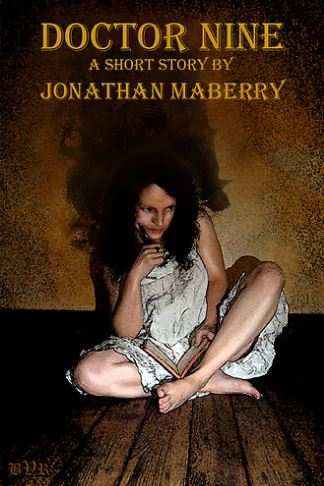
” Doctor Nine” by Jonathan Maberry

Dr. Nine

Doctor Nine

They blew into town on a Halloween wind.

The Mulatto drove the big roadster, and the Sage sat beside him, snickering into his yellow beard. Telephone poles whipped by, one after the other, and Zasha made a joke about their looking like crosses waiting for saviors. They all laughed and laughed, except for Doctor Nine who always smiled but never, ever laughed.

The car tore through the veils of shadow that draped like sackcloth between the distant lampposts. The night was in no way larger than the car, though it tried—and failed—to loom around the vehicle. The car was really the darkness of that night; it was far more a part of the night than the shadows. You couldn’t imagine what that car would look like in daylight. It wasn’t that kind of car.

Flocks of shapeless nightbirds flew on before the car and whenever the roadster would stop the birds would wheel and circle beneath the hungry stars. Against the fierce glow of the sneering moon the birds were tatters of feather and bone. Their call was more mocking than plaintive. The birds were always there; as long as Doctor Nine was there, they were there. It was in the manner of things and both the birds and Doctor Nine accepted the arrangement. It suited them all.

The Mulatto never spoke when he drove. He never spoke at all. He could, but he chose not to, and his throat had gone dry and dusty over the years. When he laughed it was the whisper of rat feet over old floorboards. Knuckly hands clutched the wheel and his bare feet pressed gas and brakes and sometimes clawed the carpeted floor. Around his neck he wore a medicine pouch, which he’d taken from a Navajo crystal gazer, and some parts of the crystal gazer were in there, too. He wore jeans and a faded Dead Kennedys t-shirt, a stolen wristwatch, and seven wedding rings, one on almost every finger. He was working on a complete set. Little sparks of light flickered from his hands as he wheeled hand-over-hand around bends in the highway.

Beside him, the Sage ate chicken from a metal bucket. The bucket was smeared with chicken blood, and feathers drifted lazily to the floor. He offered a wing to Zasha, who declined with a wicked smile, but Spike bent forward from the back seat and plucked the wing out of the Sage’s fingers. In the brief exchange their hands were contrasted in a display-counter spill of light from a passing streetlamp: the yellow, faintly reptilian mottling on the Sage’s fingers, the thin webbing which had begun to grow between his thumb and index finger; and the overly-long, startlingly delicate fingers of Spike, dusted now with a haze of brown hairs, nails as long as a fashion model’s though much sharper. The wing vanished into the back and Spike bent forward to eat it. He shot a quick, inquiring glance at Doctor Nine, who nodded permission and looked away out into the night. Spike ate with as little noise as he could manage, the bones crunching softly between his serrated teeth.

Doctor Nine looked dreamily at the passing cars, imagining lives and hearts and souls contained within those fragile metal shells like tins of caviar. In the hum of the car’s engine he could hear the hum of life itself, the palpable field of human energy. As subtle as chi, as definite as arterial pumping. In the whisk of cars passing one another he heard gasps and soft cries, the stuff of nighttime encounters, expected and unexpected.

“Take the next exit,” he said to the Mulatto and the big roadster followed a line of cars angling toward a big city that glowed like embers under a cloud of carbon smutch.

Doctor Nine smiled and smiled, knowing that something wonderful was about to happen.

Bethy sat awake nearly all night watching Millie die. She thought it was quite beautiful. In the way spiders are beautiful. The way a mantis is beautiful when it mates, and feeds. If her sister thought it was something else . . . well, so what? Bethy and Millie had never seen eye-to-eye, not once unless Bethy was lying about it. Bethy was a very good liar. All it took was practice. It was a game they had started playing just a couple of hours after they all got home from camping. Mom and Dad were already asleep in their room, and Bethy had convinced Millie that it would be fun to stay up and pretend that they were still camping, still lost in the big, dark woods.

Millie thought that would be fun, too. Millie was easy to lead, though she truly had a completely different sense of what was fun.

Millie thought Pokémon was fun. Millie liked her Barbies unscarred and her Ken dolls unmelted. Millie liked live puppies. Millie was blind to the sound of blood, the song of blood.

Bethy said that they could pretend that Doctor Nine was going to come and tell them spooky campfire stories. Dad’s big flashlight was their campfire.

Millie, sweet and pretty in her flannel robe with the cornflower pattern, her fuzzy slippers, agreed to the game even though she thought that Doctor Nine was a dumb name for an imaginary friend. Well, to be fair, she truly did think that Doctor Nine was imaginary, and that Bethy had no actual friends.

The clock on the wall was a big black cartoon cat with eyes that moved back and forth and a tail that swished in time. Millie loved that, too. She called it Mr. Whiskers and would tell time according to what the cat said. “Mr. Whiskers says it’s half-past six!”

Mr. Whiskers was counting out the remaining minutes of Millie’s life, and wasn’t that fun, too.

Bethy looked at the clock and saw that nearly an hour had gone by since Millie had drunk her warm milk. Plenty of time for the Vicodin to enter her bloodstream through the lining of her stomach wall. If Millie was going to get sick and throw them up it would have happened already, but . . . nothing, and that was good. It kept this tidy. Getting her to take the pills had been so easy. Once mashed with a hammer from the cellar the powder was easy to dissolve. It was no matter if it made the milk a little lumpy, as Bethy had brought big cookies upstairs as well. Cookies to dunk in the warm milk. Just perfect. Millie had swallowed all of it.  Bethy only pretended to drink hers.

Now it was time to watch and learn. Bethy took out her diary and her pen and sat cross-legged on the floor, and watched.

Doctor Nine smiled as the car whisked down the ramp and entered the city. He stretched out with his senses, with perceptions grown old and precise and indefatigable with long, good use. Hearts pumped for him alone, of all the creatures on the window—black streets; minds thought for him, stomachs ached and rumbled with hunger for him, hands groped with lust for him. Eyes searched the shadows for delicious glimpses of him. Tongues tasted waiting lips and flesh ached to be touched. All by him, for him, with him. He knew that; just as he knew that these hearts and minds were few—fewer than in years before, but still there. Still strong and waiting and wanting.

Doctor Nine knew all of this, knew it without the dizzying rush of ego that might taint another creature of less cultured understanding. He licked his lips with a pink tongue-tip.

An SUV came abreast of their car and Doctor Nine turned in his seat to examine it. The Mulatto sensed his desire and shifted lanes occasionally so that Doctor Nine could see each passenger in turn. It was a family car burdened with a roof rack heavy with suitcases and camping tents. Each window of the car was like a picture frame that contained a separate portrait. One showed a wife, a pale creature defined by that label. Just wife. If there had ever been a more definite and individual personality it had either been leeched out of her along with the color of her skin, or she had put it away in some forgotten closet, perhaps with some thought that a life spent in sacrifice and servitude was a life well spent. Doctor Nine fought the urge to yawn.

The driver’s window framed the father. Haggard, bored, distracted, and bitter. A jock-type with a soft jaw and receding hairline. Of no interest at all to Doctor Nine. This one wouldn’t even have fantasies dark enough to be interesting.

The window behind the driver showed the profile of a pretty little girl with pigtails and pink cheeks who was bent over the piss-colored glow of a Game Boy screen, her face screwed up in concentration and her mind distressingly empty.

But then, as the Mulatto slowed the car just a little, Doctor Nine came abreast with the rear window, back where the luggage was usually stored, and there, with her face and hands pressed against the smoked glass, was a pale figure that stirred something old and deep in the Doctor’s heart. She was the same age as the other girl, perhaps nine; but as unlike her twin as two creatures can be, born in same spill of shared blood. Dark unkempt hair and luminous brown eyes, large in the small, pale mask of her face.

Doctor Nine looked at her, totally aware of her. He could feel the intensity of her mind, the sharpness of it, the need of it. Just as he could feel the ache and the pain as she rode through the night surrounded by these meat sacks that pretended to love her and pretended to care for her when in reality they probably feared her.

As they should. He smiled at the thought and tested his senses against the razor sharpness of her need, knowing that she could and would cut, given the chance, given some direction.

Doctor Nine moved his consciousness deeper into the young mind and found that, though young in years, the hunger he encountered was every bit as old as that which coiled and waited within his own soul. Her darkness was too lovely, too profound to be trapped in the cage of meaningless flesh which contained it. Her soul was a screaming thing, locked by circumstance in the fragile shell of the human form. It shrieked for release.

Doctor Nine felt her fear and her need, and measured them against each other. He would not come to her to relieve her fears; nor would he come to satisfy her needs. He might come, however, if her need was strongest of all, stronger than all of the other splintered and badly formed emotions, because to him, need was the only true emotion.

He exerted a fraction more of his will and the little girl lifted her sad eyes toward his window. He made her see him through the dark glass, and as she turned toward him she saw him and she knew him.

From dreams she knew him. From dreams that her parents and her sister would have called nightmares; dreams that, had she been unlucky enough to share them, would have sent them shuddering and screeching into the nearest patch of light. As if light could protect them. He knew—could feel and sense and taste—that this little girl had dreamed of him, that she knew his name as well as she knew her own pain. As well as she knew her own need. Doctor Nine looked into her mind and knew that there were no gods in her dreaming world, just as there were none in her waking hell. When she looked into darkness, whether behind closed eyes or under the bed or into the moonless sky she saw only him. He was always there for her kind. Always.

Doctor Nine smiled at her.

The little girl looked at him for a long time with her owl-brown eyes. When she finally smiled it was a real smile. A smile as hot as blood and as sweet as pain. Her small mouth opened and she spoke a single, silent word, shaping it with her need and her love for him.

“Please.”

The SUV veered suddenly and turned onto a boulevard and headed south toward the smutch and gloom that was clamped down around the heart of this city. It vanished from sight in a moment and the Mulatto rolled to a slow stop at the next corner. Everyone in the car stopped and quietly turned toward Doctor Nine.

Above them the nightbirds wheeled in the sky. Then one by one they peeled off and followed the SUV down the boulevard. Soon only the big roadster was left, alone and waiting.

Without haste Doctor Nine reached forward and touched the Mulatto’s shoulder.

“Follow,” he murmured.

The Mulatto nodded and turned the car around and then turned again to enter the boulevard. Spike and Zasha exchanged a glance.

“Something. . . ?” Zasha asked casually, hiding the interest that brightened her eyes.

Doctor Nine nodded.

“What?” Spike asked. “That car we just passed?”

Another nod.

“Too late, Boss,” muttered the Sage. “We’ll never find it again.”

Zasha jabbed his shoulder with a long fingernail. “Of course we will,” she said, looking to Doctor Nine for approval.

They all looked at Doctor Nine, and he endured their stares mildly. After a long while he said, “We’ve been invited to a coming-out party.”

He smiled at them.

Soon, all of the others laughed.

The night followed them like a pack of dogs.

Bethy wondered how it felt for Millie to die. It was something she tended to think about, even when she was killing a cat, or a dog. Poison sometimes hurt and so she stopped using it. Not because she wanted to spare pain—that was just a silly thought—no, it was because pain was such a distraction. Medicine was so much easier. No pain, just a fuzziness and a sleepy feeling that was warm and a little fluttery, like moth wings in the head. Bethy knew because she had tried the pills herself. First one of them, then two. The most she’d ever taken at once was six.

According to the Internet four was supposed to be fatal. She tried six just to confirm a theory . . . a suspicion, or a hope. The moths had fluttered around in her head for a deliciously long time, during which Bethy had so many strange thoughts. Almost feelings, but not quite. Close enough so that she guessed that anyone else taking the drug would have had true feelings. It gave her perspective on what Millie’s reaction might be.

Millie was probably having such feelings now. And thoughts, too—Millie wasn’t completely incapable, Bethy had to remind herself of that and to be fair to her sister. Millie’s expression kept changing as if she’d had a sudden idea but when she spoke, which was less and less often now, her words were a junk-drawer jumble of nonsense, half-sentences and wrong word choices. Bethy found it interesting and she wished she could read minds. She bet that a mind-reader could make sense of what Millie was trying to say. Mind-readers didn’t need actual language, she was sure of that. Then she wondered if a mind-reader could read an animal’s mind, and if so, could they translate the thoughts into human words? Would an animal’s thoughts change as they died, especially if they realized that they were dying? She hoped she would find out one day.

Maybe she could ask Doctor Nine. She was sure that he was coming tonight. She was sure that she had seen him out there, driving in a big car that was the color of night. When she looked at the window she could see that there were dark birds lined up on the sill and on the power lines across the street. The birds belonged to him, she had no doubts.

“B . . . Bethy. . . ?”

Hearing Millie speak now—very clearly except for a purely understandable hitch—broke Bethy’s reverie.

“Yes?” Bethy asked, utterly fascinated by anything Millie would say at this point. She pulled her diary onto her lap and picked up her pen.

“I don’t feel . . .” Millie lapsed back into silence, her eyelids flittered closed.

Hm. What did that mean? I don’t feel. Feel what? Bethy wondered. Was Millie losing her emotions? Did they die first before the rest of the body?

No, she didn’t think so. She’d read about dying confessions, which was guilt; and about dying people saying nice things to comfort the people sitting around a death bed, which was compassion. Weird, but there it was.

Then she got it. Millie was trying to say that she didn’t feel good. Or maybe that she didn’t feel quite right. How . . . ordinary.

“It’s okay, Mils,” Bethy said. “It’s just the medicine.”

Millie’s eyelids trembled, opened. There was a spark of something there. Confusion? Bethy could recognize emotions even if she didn’t have any. Or, at least she could recognize emotions that she didn’t share. She saw fear there, and though she didn’t understand it she enjoyed seeing it.

“I’m . . . not sick.” With a furrow of her brows, Millie whispered, “Am I?”

“Sick?” Bethy replied with a comforting laugh. “Oh no, honey! You’re not sick.” She patted her hand the way Aunt Annie sometimes did. “No need to worry.”

She saw relief in Millie’s eyes and Bethy took a taste of it.

“Not . . . sick. . . ?”

“No, sweetie . . . you’re just dying,” Bethy said, and wondered if teasing this way was being greedy, and . . . was that okay?

Millie’s eyes snapped wide and she tried to move. Bethy estimated that it took every ounce of her strength to move as much as she did, but all she could manage was a flap of one hand and a slight arch of her body. Then she collapsed back onto the pillows they’d brought down from the bed.

Bethy wrote a quick description of it in her diary.

The clock ticked, Mr. Whiskers’ eyes flicking one way, his tail swishing the other. Bethy counted seconds. She got to one-hundred and sixteen before Millie’s eyes opened again.

“Why?”

Just the one word, and it was clear that it cost her to get it out. Bethy wondered how many words Bethy had left to spend.

“Because, Mils. It’s for me. And for him.”

Millie looked confused. Her lips formed the word ‘who,’ but she could not afford the breath to say it aloud.

“For him. For Doctor Nine.”

There was another flare of expression—mingled confusion and fear. Nice. Again Bethy wished she could read minds, though she was pretty sure she knew what Millie was thinking, how she would be sorting it out. Doctor Nine was the boogeyman. Bethy’s imaginary friend. Something she and everyone else laughed about behind her back. A dream, a nothing.

Even before Bethy had started experimenting with Aunt Annie’s pills she had wanted to kill Millie for that—though strangely, and appropriately, that’s not why she was killing her now. It wasn’t revenge because revenge was soft. Revenge would disappoint Doctor Nine the same way rage would. There was no beauty in a lack of control.

Besides, this was not about punishment . . . it was about rewards.

Bethy thought about that as Millie’s eyes focused and unfocused over and over again. ‘Rewards’ wasn’t exactly the right word either. She chewed her lip and thought about it as her sister died, bit by bit.

There was a sound and then blades of light cut into the room between the half-closed blinds, and Bethy got up, excited, knowing who was outside. She started to run to the window and then in the space of two steps slowed to a walk and then stopped, still yards away. Running was silly. Running to check if he was out there was bad. It wouldn’t show faith, like that Bible story about Moses tapping the rock and then not being allowed into the Promised Land. After everything he did right, he was reminded that everything had to be done right, and so Bethy turned around and sat back down, picked up her diary and pen, and continued making notes until Millie stopped breathing. It took nearly forty minutes, and she would have been lying if she didn’t feel the tug of that window and the image she would see through the blinds. But feeling a thing and becoming its slave were different. Doctor Nine had told her that in her dreams.

When Mr. Whiskers said that it was two-thirty in the morning, Bethy put down her diary, set her pen neatly on top of it, and took a couple of slow breaths just to make sure she was calm. She reached over and touched Millie’s cheek. The skin was still soft but it was already cooling. Bethy sat back, leaning on both palms, and watched for a little while longer. There had been no more words from her sister. No additional emotions had crossed Millie’s face. After that last outburst she had simply gone to sleep, and in sleeping had settled down into a deeper rest. Her body had not visibly changed except that her chest no longer rose and fell. While she watched now, though, Millie seemed to shrink in on herself, to become less solid, and it took Bethy a while before she realized that it was just the blood draining from Millie’s flesh and veins to the lowest possible point in her body. She’d read about that on the Internet, too.

When she had surfed the Net, Millie had read a lot about killing. About the laws of it, the history of it. The art of it. There were so many killers that she felt happy that she would always have new brothers and sisters. Some of them even killed in the name of God, which was a funny thing. She’d have to ask Doctor Nine about that, but she already knew what he would probably say—the essence of it, at least. If God is All then God is killing, too. And really, God kills everything, from microscopic life forms to whole worlds. Maybe that was why so many have worked so hard to make killing a ritual and an art: it was their only way to try and connect with God. Even at nine Bethy understood that. If God made man in His image then man reflects the killing nature of God. To kill is to be godlike. That should be obvious to everyone.

And yet they didn’t call killers ‘gods’ or even ‘godlike.’ They called them monsters.

Bethy got up and walked away from Millie and stood in front of the mirror that hung on the door of their shared wardrobe. She still wasn’t letting herself look out of the window. Instead she looked at the monster in the mirror.

It still looked like her. The her she had always seen.

“Monster . . .” she murmured. Not for the first time she wondered if every one of the godlike monsters she’d read about on the Net had stood in their rooms, just as she now stood, and looked at themselves and announced who and what they were.

She hoped so. It felt like a family thing to do.

Finally Bethy turned away from the mirror and walked past the cooling meat. Millie was gone now; the body was nothing to her. She paused for just a moment, bending to pick up her diary and trying not to feel disappointed. Millie had been her first, but she hadn’t learned as much from her as Bethy had hoped. Maybe next time she would use less of the Vicodin. Or maybe she’d re-visit pain. Perhaps she’d been too hasty in deciding that it had no place in the process.

Doctor Nine would be able to advise. Bethy was sure he would have something interesting to say about that.

Bethy changed into jeans and a t-shirt, put on her sneakers and brushed her hair. She put her diary and a change of clothes into her backpack.

When she was ready she took her pen and tested its point against the ball of her thumb. It seemed sharp enough. She held out her left arm and held the pen tightly in her right fist. She wasn’t afraid of pain and so there was no hesitation at all as she abruptly jammed the point into the soft flesh of her inner forearm. The pen bit deep as she knew it would and blood—so rich that it looked more black than red—welled out of the puncture. Bethy licked the pen clean and put it in her bag and then she walked around the room and dribbled blood here and there. Then she put a Band-Aid over the puncture and put the wrapper in her pocket. Then she picked up a pair of bedroom slippers and used the sole of one to scuff some of the blood, drawing the line in the direction of the window. She left the slipper lying on the floor by the wall, just where the hem of the long sheers would brush against it. She put the other slipper in her backpack. The effect was pretty good.

Satisfied, Bethy finally stood in front of the window. She grasped the cord and pulled the blinds all the way up. The line of nightbirds scattered from the sill, their caws sounding old and rusty as they flew to join their brothers on the power line. The window was already raised a few inches and she raised it the rest of the way and for a moment she looked out and down at the street.

The big black roadster was there, idling quietly, parked across the street in the glow of the sodium vapor lamp. Just as she always knew it would be. There was almost no traffic, not this late. No pedestrians. And just for a moment—for a single jagged second Bethy stared at the roadster and saw that it cast no reflection, that the fall of lamplight did not paint its shadow on the street. Doubt flickered like a candle in her heart.

What if it wasn’t real?

That voice—sounding more like Millie than Bethy—whispered in her ear. What if Doctor Nine wasn’t down there at all? What if Doctor Nine was never down there?

Millie’s voice seemed to chuckle in her mind.

What if. . . .

What if Doctor Nine was not real?

“But I’m a monster,” Bethy said aloud. Millie’s voice laughed, mocking her.

Then the roadster pulled away from the curb . . . very slowly . . . and moved into the center of the boulevard on which they lived. Bethy watched, suddenly terrified. Was Doctor Nine a ghost of her mind? Was he leaving now that she had started to believe that he was only part of whatever made her a monster?

Bethy’s stomach started to churn.

“No!” she said firmly. “No . . . he’s here for me.”

Another car came down the street and Bethy realized that it would have to either veer around the roadster or pass through it. If it was real, the car would veer. If Doctor Nine lived only in her head the oncoming car would just pass through it, reality passing through fantasy.

“No,” she said again. She felt that her feet were riveted to the floor, held fast by nails of doubt driven through her flesh and bone. All she had to do was wait there, to see the car and how it reacted, or didn’t react. Just five more seconds and then she would know whether she was a godlike monster or a mad little girl.

“Doctor Nine . . .” she breathed.

The car was almost there. Moses doubted, he tapped the rock.

The cartoon cat on the wall mocked her with its swishing tail.

“No,” she said once more.

And Bethy turned away from the window before the car reached the roadster. Her decision was made. Without proof either way. She picked up her backpack, slung it over one shoulder, and left the bedroom. Left Millie and the blood and the fiction that she had constructed. She left her room and her parents and her Aunt Annie. She left her life.

She never looked back.

In the end she did not need to look to see if the car veered or drove straight through. She walked quietly down the stairs, placing her feet where she knew there were no squeaks and headed to the front door, flitting out into the night.

To the roadster. And to Doctor Nine, and to the other monsters he had collected along the way.

She knew they would be there.

She had no doubts at all.


(This story originally appeared in KILLERS.)
 

maberry

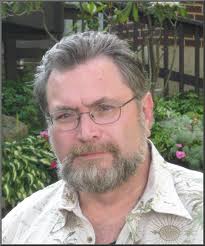
Jonathan Maberry is author of more than 900 articles, sixteen nonfiction books, three novels, numerous short stories, poetry, song lyrics, video scripts, and two plays. For more information please see: http://www.jonathanmaberry.com/