” Frank James” an excerpt by Michael Xavier

Frank James

Frank James had the same dream every night. He tossed and turned between his 800 thread count sheets and dreamed he was someone else.

Someone that possessed certain special powers; someone who had the innate ability to bring people back.

He dreamed that his words and deeds had no consequence. And if they did, he would flip a switch inside his special head, and flash a beam of light from his special eyes, and anyone who went away would come back to him.

Tumbling in reverse until they were back to the moment they stepped away.

Frank liked the way they fell in line, poised to hear his next few words. And what his next few words were always going to be were . . .

I’m sorry.

Finally repairing the damage of right vs. happy. He had learned this lesson the hard way, after the very last person he let himself love went away.

So now he sleeps, bringing them back. All of them.

But the thing is, Frankie cannot sleep. And when he does, it doesn’t last.

So he spends most days at the bus stop, putting himself into other bodies. Using the special beam of light to make himself into someone else so he can sit next to strangers. Getting as close to them as he can without scaring them away.

Feeling them breathe and swell with emotions he once felt.

He sits and he remembers.

It lasts as long as it takes the next bus to arrive, and then they are gone—off to the places where people go.

Sometimes he uses his special powers to leave first. He gathers himself and walks to the next bench, to soak up the human vibrations that others take for granted. And then he leaves when his body is full.

Frank never knows when he is dreaming. He only knows that he must bring them back . . .

All of them.

So he starts with “her”. She was the last- the greatest- the name he still whispers in the thinnest part of the night, while the rest of the world sleeps.

He brings her back and she sits at the bus stop, not quite knowing why she is there. Bound to the bench and waiting.

Frank sits next to her, the beam of light in his eyes fades as he begins to unwind the memories of them. He does this by touching his thumb to the tip of his pinky finger, then his ring finger- his middle, his pointer, then back to his pinky.

He does this while he thinks.

He considers for a moment, why he is still alone.

He sits and he tells her all that he remembers;

She lived across the street from Disneyland, and every night the fireworks from the castle would light up her room-

Throwing color across her walls in tidal waves of red, white, and indigo. Finally fading back, shrinking to the blackened hush of her life, returning to the distant cheers of the crowd inside the magic kingdom.

He remembers she told him these things in the slick quiet moments after they threw their desperate naked limbs together.

He tells her he remembers dismissing these facts as trivial- as having no consequence to the quality of life whatsoever. It is only in this moment, telling her, that he suddenly remembers her face when she used to kiss him hello. And how the small of her back tightened like a flower at dusk when they made love.

It is also then, that he wonders where it all went wrong.

He tells her this as she sits there beside him in a body he safely dreamed of her having, a body old and worn.

Safe.

A body that he could tell that he was afraid.

Afraid like a boy in the dark after the lights went out, and all was quiet.

Too quiet.

So he tells her these things; all of them….

That his leaving was cowardly, that the life he saved was his own.

His own and no one else’s.

-MICHAELXAVIER

More information on Michael Xavier and his work can also be found on Van Gogh’s Ear at the following links: And You Will Find Me and An Interview with Michael Xavier.


An Interview with Jonathan Maberry

Jonathan_Maberry_author_photo_June_2010

New York Times bestselling author Jonathan Maberry has been a working writer since 1978. Before switching to fiction in 2004, he sold over 12 articles, two plays, greeting cards, and 28 nonfiction books. His first novel, Ghost Road Blues, was published in 2006 and he is currently writing his 22nd novel. He’s also sold fifty short stories and writes comics for Marvel, Dark Horse and IDW. Two of his books, Dead of Night and Rot & Ruin, are in development for film.

Can you tell us a little about yourself? Did you always have an active imagination as a child? What were you like back then?

I’m pretty sure I was telling stories within a half an hour of being born. I’ve always wanted to write. It’s what defines me. Although I worked several oddball jobs on the way to becoming a full-time writer. I was a bodyguard in the entertainment industry, a bouncer at a sleazy strip club, a martial arts instructor, and a graphic artist and actor in regional theater.

As a kid I was shy and very much in my own head. I grew up hard, though. Bad neighborhood, bad home life. Poor as dirt. But books were my escape route. I read, I learned, and I got the hell out.

Do you happen to remember what you very first favorite story was?

My first story was something I saw rather than read, but it hit me pretty hard. It was a two-part episode of the original The Outer Limits, called The Inheritors. A brilliant, subtle, and surprisingly moving story. I saw it when I was about nine or ten, and from that point on I connected good storytelling with real human emotion.

My first favorite book was also the first book I ever read outside of school. Conan the Wanderer. I bought it brand new on my tenth birthday in 1968.

Did you enjoy comics early on? Why do you think they have had such a mass appeal? How did it feel to get to write for Marvel?

I fell in love with comics even before I fell in love with novels. My first comic was Fantastic Four #68, which was published in November 1967. I’d never really paid much attention to comics before. I was obsessed from about page three. From then on I was a Marvel Comics kid. Some D.C., a lot of Warren and old E.C., but mostly Marvel.

How does writing comics differ from writing stories and novels etc.?

Novels and short stories are a solitary process. It’s you and the story. With comics it’s far more of a collaborative process. You pitch a story to an editor, you write an outline and review notes on it, then you do the script, and after that you interact with the artist as he goes from rough sketches to inks. Then there’s the colorist and letter. Plus, you have to script comics so that the visuals tell much more of the story than do the word balloons. You have to allow the artist to participate in that storytelling process, and you have to trust that he can do just that.

What led you to first try your hand at writing?

I began writing for school papers in the fourth grade. By junior high I was writing for the yearbook. I wrote short stories for English class assignments, and I even put together some stories in photocopied/stapled form to give to friends. Writing was always something I wanted to do. However in high school my focus was on nonfiction. I wanted to be an investigative political journalist. I went to college to study journalism, but while there I shifted focus again, this time to magazine feature writing, which I did for twenty-five years. While I was a teacher at Temple University I began writing textbooks, for my class and others. I didn’t get the bug for fiction again until 2004.

How has the publishing industry changed most since you first started your career?

When I started, editors and writers were faceless people. There were no computers and the Internet wasn’t even a dream. I wrote hundreds of articles on typewriters. My first nonfiction books were written on a Commodore-64. The publishing industry, as I knew it then, was magazines and textbooks. The fiction aspect of it wasn’t even on my radar, and I knew very little about it.

In 2005, when I sold my first novel, Ghost Road Blues, digital publishing was in its infancy and the economic crash hadn’t happened. Everything changes after 2009. Now digital is a fact of publishing life, social media has become as important as writing talent, the economy necessitated that writers become far more involved in the process of self-branding and in marketing their works. It’s all changed and it keeps changing.

I’m totally cool with that evolution. I keep in touch, I stay up to date, and I play those changes like hands of cards. It’s a fun game if you look at it the right way.

What exactly is Shinowara-ryu Jujutsu? Can you tell us a little more about that?

Shinowara is a lesser-known old Samurai family fighting system. About a thousand years old, but dying out here in the 21st Century. It’s very old-school in that it focuses on deep understanding of physics, physiology, anatomy, the law, psychology, and a technical philosophy particular to its practitioners. It isn’t pretty. It works, but it’s not for the casual practitioner. It’s not easy to get promotion. As a result, it’s fading like most of the other good fighting arts.

Did your own martial arts training come in handy when writing your books on the subject? 

I draw on my nearly fifty years of martial arts training quite heavily, and on the years I worked as a bodyguard and bouncer. Sadly, I’ve been in a lot of violent confrontations. I know how fights work. I don’t like fancy-schmancy nonsense. When I write a fight scene, everything that happens is actually possible. And nobody does any silly jump-spinning ninja death kicks.

Had I not been involved in the martial arts as deeply or for as long, I doubt I would be writing the same kind of action stories.

How did it feel to be inducted into the Martial Arts Hall of Fame?

It was a wonderful honor, and totally unexpected. My extensive writings on martial arts, including several textbooks for university classes, was a significant factor in that honor.

Do you enjoy writing fiction more than nonfiction? How to the two of those differ most?

I feel like I’ve ‘done’ nonfiction. I did it exclusively from 1978 through 2004, and I continued to write nonfic books and articles up to 2012. I loved the process –the research, the interviews, the construction of feature pieces, the planning of booklength works. It was a great mindscape to wander around in, and I still do extensive research and even some interviews, but now it’s in support of my novels. It’s time to put the nonfic away for a bit. Besides, I’m totally in love with fiction. I’m writing three to four novels per year, as well as two monthly comics and scads of short stories. Right now, it’s more fun to make everything up.

What led you to depart from nonfiction to write works dealing with folklore and the paranormal?

Nonfiction was my bridge. After doing a bunch of books on the martial arts, sports and related themes, I decided to do one in honor of my grandmother. She was an amateur folklorist and amateur anthropologist. She loved studying the beliefs of cultures all over the world, and she had a bias toward legends of the occult and supernatural. I’m pretty sure she believed in everything. Absolutely everything. Kind of like a Luna Lovegood as an old lady. So, to honor that, I wrote a nonfiction book about the folklore of vampires –The Vampire Slayer’s Field Quide to the Undead, published under the one-time-only pen name of Shane MacDougall.

Writing that book renewed my interest in horror movies and novels. And diving into the genre fiction gave me the idea to try my hand at it. After all, I’ve tried a lot of other kinds of writing. I’d already published articles, how-to books, greeting cards, plays, reviews, textbooks, song lyrics, poetry. So, in 2004 I wrote my first novel, Ghost Road Blues, which draws heavily on the research I did for the Slayer’s Guide. I fell in love with fiction during the writing of that book, and I am even more deeply in love with it now.

Why do you think society has always been so fascinated with things they can’t explain? 

Although many people take pride in being ‘realists’ and ‘skeptics’, most of us want to believe that there’s more to the universe than this weary old world. And not just other planets or galaxies –but other kinds of worlds. Other dimensions. Other beings. Other aspects of the world and of ourselves. We like to believe that magic, in some form or another, exists. Even skeptics will pick up a heads-up penny and hesitate before taking one that’s heads-down. I have total nonbeliever friends who read their horoscope in the paper –just on the off chance that one day it will be right.

We are an inquisitive species. We are always cracking open the rock to see the crystal, peeking through the brush to see the unknown species, chasing the flitting thing through the forest in the hopes that it’s something rarer than a butterfly.

Do you have any one body of work that you consider to be your favorite? If so why is that?

I’m fickle about my own work. I love the Rot & Ruin series for different reasons than I love the Joe Ledger novels or the Pine Deep Trilogy. I love all my children.

How does it feel to be labeled a New York Times Bestselling Author? Did you even dream you’d have that added to your resume?

I never really thought it was in the cards for me. I still get a jolt out of it. It’s moderately surreal. Ditto for having won a Scribe Award and four Bram Stoker Awards. That sort of thing happens to other people. So…I’m still in the ‘wow’ phase.

Are there any little known things about you that your readers might be surprised to learn?

I used to be a singer/actor in regional theater. I loved performing in musicals, and I did that all through high school and well into my early thirties. I played Tevye in Fiddler on the Roof, Arthur in Camelot, Caiaphas in Jesus Christ Superstar, and a whole slew of other roles. I loved it.

What are you working on at the moment?

I’m in the middle of what I call ‘hell year’. It’s fun, but it is crazy. I have four and a half novels to write this year. I just finished The Nightsiders, the first in a new series of SF/horror/fantasy mash-up novels for Middle Grade readers, which will be released at the end of this year by Simon & Schuster. I’m currently writing Predator One, the seventh Joe Ledger weird-science thriller. Then I write Deadlands: Ghostwalkers, a novel inspired by the classic RPG; then Watch Over Me, a mystery-thriller for older teens. I’m also writing two new monthly comics for IDW: V-WARS, based on my shared-world anthology series, and Rot & Ruin, based on my teen post-apocalyptic zombie books. I’m editing two anthologies, V-WARS: Blood and Fire and Out of Tune.

And I have a new novel in stores, Code Zero, the 6th Joe Ledger thriller (from St. Martin’s Griffin), and a collection of stories due out next month, Joe Ledger: Special Ops. My limited-series horror comic, Bad Blood, wraps in two months from Dark Horse. JournalStone will release a hardcover special edition of Ghost Road Blues. Griffin will release my new zombie novel, Fall of Night, in September. And I have a few other projects on the fire about which I can’t yet spill details…but they’re extremely cool.

Anything you’d like to say in closing?

Yeah…if you haven’t read my stuff before, come and take a bite. You might have some fun. If you have, then thanks for sharing the ride. Hope you dig the scenery.

You can find me online at www.jonathanmaberry.com, on Twitter at @jonathanmaberry, on GoodReads, and on Facebook at www.facebook.com/jonathanmaberry.

Editors Note: Readers of Van Gogh’s Ear can also find his story Doctor Nine on site at:  https://theoriginalvangoghsearanthology.com/2013/08/28/doctor-nine-by-jonathan-maberry/

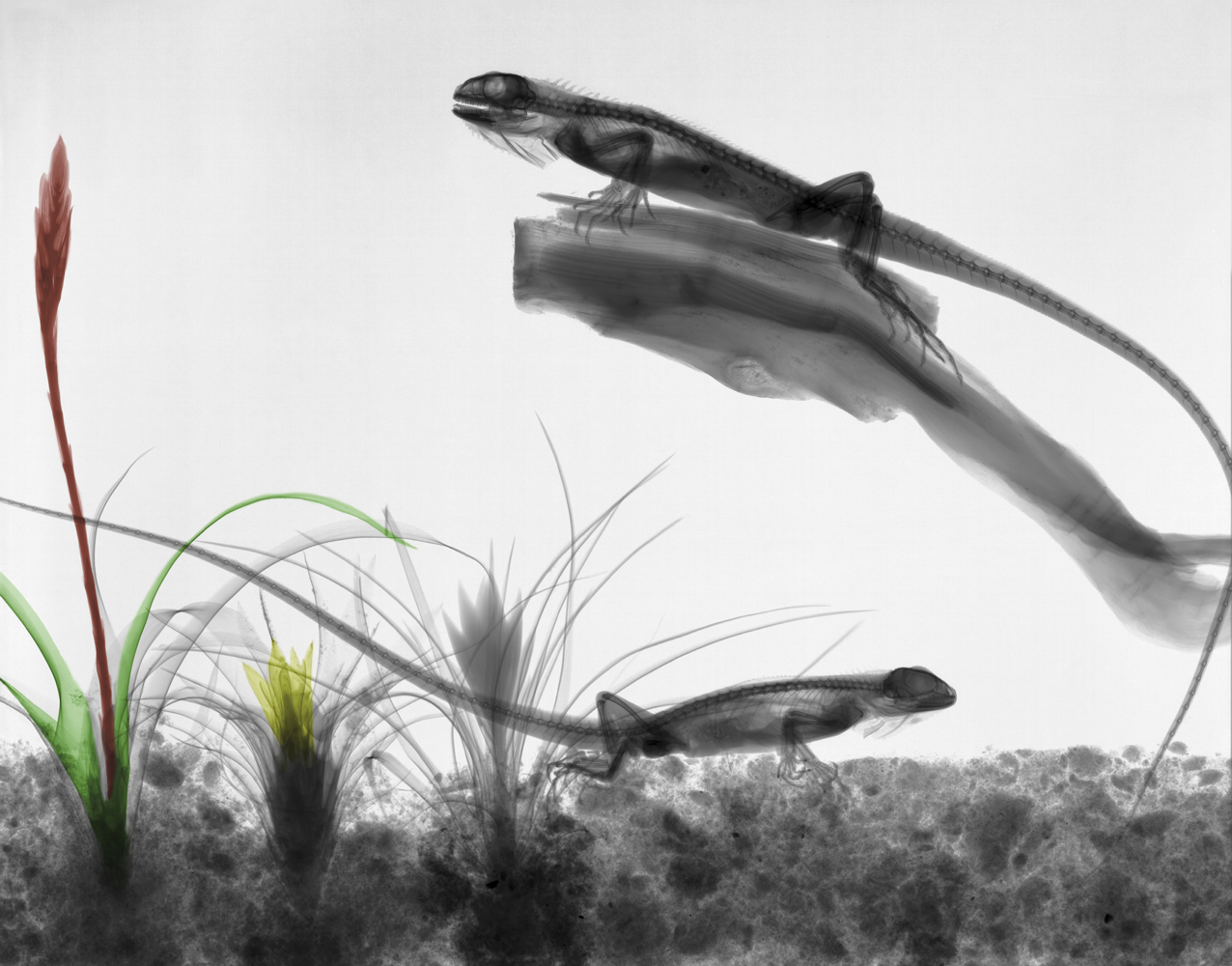
The X-Ray Art of Arie van’t Riet

Turtles, wagnerianus, azalea

Turtles, wagnerianus, azalea

Monkey (mummificated)

Monkey (mummificated)

Helianthus tuberosus

Helianthus tuberosus

Chameleon, hanging begonia

Chameleon, hanging begonia

Arie van’t Riet is a medical physicist from the Netherlands. His x-ray photographs are available in limited edition prints. More information on those and more examples of his work can be found at http://www.xrart.nl/.

Iguanas,bromelia, tillandsia

Iguanas,bromelia, tillandsia

Along the road side

Along the road side

Chicken

Chicken

Caduseus dutch

Caduseus dutch

Turtles, wagnerianus, azalea

Turtles, wagnerianus, azalea

Dragonfly, Wild Roses

Dragonfly, Wild Roses


“Tony Curtis: Driven to Stardom” Available on VOD

"Tony Curtis: Driven To Stardom" (by Ian Ayres)

Today marks the digital release of Tony Curtis: Driven to Stardom, the definitive film about one of the silver screen’s most fascinating stars!

From his difficult childhood in the Bronx to his rise to international fame, Tony Curtis gives his most honest and intimate interview of all in a film that’s not only a biographical account of the legendary actor and his six-decade film career, but also an exploration into the universal concept of fame and its impact on Hollywood stars. Combining personal interviews from family, friends and co-stars (including Hugh Hefner, Theresa Russell, Harry Belafonte, Debbie Reynolds, Mamie Van Doren, John Gilmore, Sally Kellerman, Nicolas Roeg and Jill Curtis), filmmaker Ian Ayres forms some incredible material into a revealing portrait of one of Hollywood’s greatest legends.

This feature-length film is now available in North America on the following platforms: iTunes, Amazon Instant Video, Google Play, YouTube (TVOD), Vudu, XBox and Sony Entertainment Network (Playstation).

Available on Vudu at http://www.vudu.com/movies/#!content/512966

To rent or own from Amazon please see here.

An Interview with Tommy Emmanuel

tommy_emmanuel_03

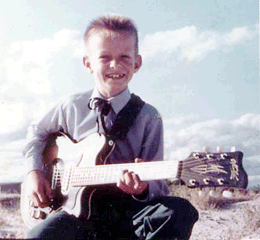
Tommy Emmanuel is an acoustic guitar virtuoso who has delighted fans with his complicated fingerstyle technique. He has been playing Maton guitars for most of his career. A long standing fan of Chet Atkins he recorded the album The Day Finger Pickers Took Over The World with Atkins, the album also turned out the be the last Atkins ever recorded. Tommy still performs at the Chet Atkins Appreciation Society every July in Nashville. He recently wrapped a tour alongside Martin Taylor.

What was it like being taught to accompany your mother on steel guitar when you were only 4? Do you think looking back those are some of your most fond memories? What do you think is the most important thing you learned from her?

It was so long ago, it’s hard to remember everything. I recall it was exciting to play music with my mother – everyday I looked forward to hearing the school bell, knowing that I would run across the road to our home and my mum would be waiting to play. She showed me some songs that were simple and easy to remember. She taught me how a song is constructed, to know the difference between the verse and the chorus and the bridge, and to look out for key changes. I think I learned the importance of melody against chords through learning all these songs.

Do you remember what it was like to work as musician at the age of 6? Did you ever get stage fright when you first started playing to crowds?

I was never afraid of going on stage – in fact, the opposite is true; I couldn’t wait to get out there. I’m just the same today.

TEyoung

I read somewhere that you vividly remember the first time you heard Chet Atkins on the radio, can you tell us a little about what that moment was like for you back then?

I heard Chet on the radio and it sounded better than anything I’d ever heard. There was a power and great tone in his playing, and at the same time, it was very commercial-sounding for its day. Everybody was attracted to Chet’s records. I recall thinking, “I want to do that.” He sounded better than everyone else.

What was Chet Atkins like? Aside from his playing what did you love most about him?

He was a guy who loved life and loved people and was fascinated by human achievement. He taught me to appreciate the cleverness of some people and to not forget the simpler things of life. His positive attitude and humble approach with me and everybody else around him, made life seem like it was full of possibilities.

What do you love most about playing the guitar?

The fun it brings to people to hear and watch it. It is a weapon of mass construction!

Why do you prefer to use Maton guitars?

I like everything about them. They feel great, they sound good and when you plug them in, no other guitar comes close. I like many brands of guitars, but for me, the Maton is the complete package.

What was it like to perform with your brother Phil at the closing ceremony of the Summer Olympics in Sydney in 2000?

Two words: exhilarating and unforgettable. We played lived using inner-ear monitors and Line 6 pods. We played to a backing track but we were live. It was such a big event that the rehearsals went for two weeks. It was an amazing achievement and I was so proud of my country for hosting this amazing event.

Do you think certain talents such as musical ability are inherited to a certain extent?

I think a person’s desires and abilities are definitely handed on through the generations, but those who do well with their abilities are the ones who are willing to put in the work and be dedicated, and who are willing to sacrifice for its fruition.

Why do you think music has been such a powerful force throughout the ages?

Music goes back to the dawn of civilization. There’s a principle here: sing to that which is unproductive and it will be productive. Nature will always answer your call. In the same way that native Americans would sing to their crops to make a good harvest, I play to the people to try to make their lives better.

 Do you ever wonder where your life would be now if not for the music?

I cannot imagine one day without music – it would be sad!

 im_conc06Emmanuel

Do you still enjoying touring as much as you did early in your career?

I enjoy touring more than ever because I’m not just a player in a band. These are my concerts and I have a greater obligation to the audience to give more of myself.

Is it true you don’t use set lists? Why is that?

I only use a set list if I’m working with a band or orchestra so that people know what’s coming next. When I work on my own, I don’t need a set list – I decide what I’m playing on the fly based on being in the moment.

I read somewhere that Steve Vai considers you one of the most inspired acoustic guitar players he has ever seen. What are your feelings on that? How does it feel to have guitarist from all various skill levels admire your work?

I’m just one of millions of guitar players around the world. We are like a brotherhood and sisterhood and we are all different. Steve has been a good friend to me and his words are always encouraging. The funny thing is, we are all so busy that sometimes we have to communicate with each other through interviews like this!

What advice would you offer the beginning guitarist?

Learn some good songs. Keep it simple and give yourself lots of time.

Is there any one moment that you consider to be the highlight of your career?

No…every day above ground is a good one for me. What’s next is what’s intriguing to me. A life in music is filled with endless possibilities.

What projects are you currently working on?

I’m always hoping to write more songs, but I’ve been practicing some Jerry Reed songs recently to play them better. I have a new solo album in the works and also an album of love song covers with John Knowles as well. We are busy boys!

What do you think is the key to a life well lived?

Everything in moderation. Keep things simple, don’t get greedy and be generous.

If you don’t mind my asking what are your personal feelings on death and what comes after? How do you hope to be remembered when your time comes?

Death does not sadden me, it’s just part of life. I have never cried at a funeral. I don’t worry about being remembered, I just do the best I can while I’m here. I certainly don’t know what will happen to me after I die, nobody does!

Anything you’d like to say before you go?

Music is one of the best ways to communicate feelings and ideas, so use it wisely.


“Existence, Example and Eccentricities” by Jen Karetnick

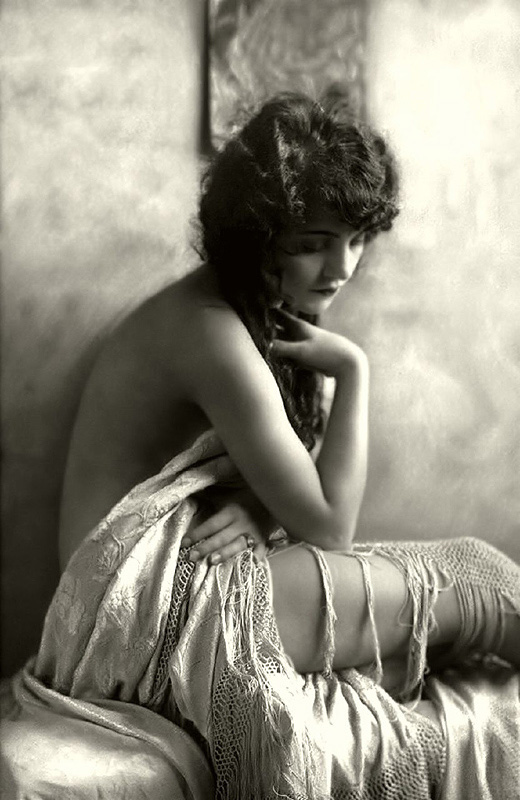
Ziegfeld-Follies-Girls-1920-Broadway-21


Existence, Example and Eccentricities


Two floors down

and one wing over,

a maid, in snow-white

armor and mild-

tempered faith—

a muffled trouble—

reduced large portions

of men to size

with little application.

Not-so-good ensued.

It wasn’t the girl’s

fault. This isn’t the press.

An ancient state of mind

must be forgiven.


Note: This is a found poem from the Pulitzer Prize-winning work, Advise and Consent, originally created for the “Pulitzer Remix” National Poetry Month challenge website. The poem was only available for viewing for April, 2013.

Jen Karetnick is the author of three poetry chapbooks, the latest of which is Landscaping for Wildlife (BigWonderful Press, December 2012). Her work has appeared widely in print and online in Barrow Street, Blood Lotus, Cimarron Review, Cleaver Magazine, Georgetown Review, Gravel Mag, North American Review, and River Styx, among others. She works as the Creative Writing Director for Miami Arts Charter School and a freelance food-travel writer and critic for several national and regional publications, including MIAMI Magazine, Relish, 10Best/USA Today, and Vegas Player.


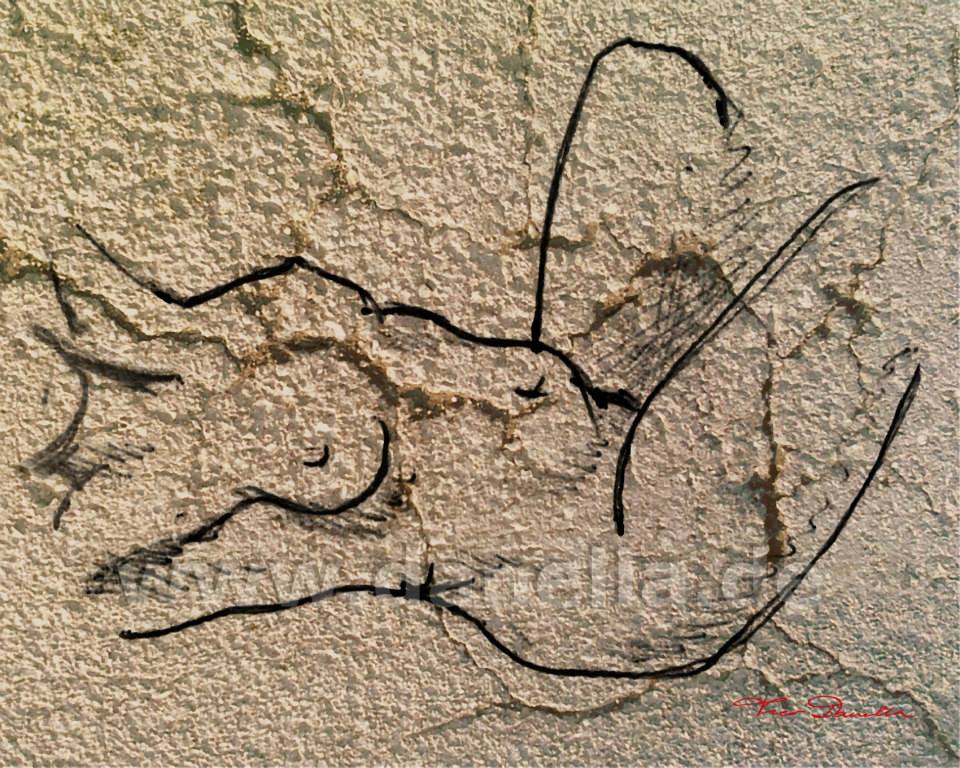
The Art of Theo Danella


1002065_511918352197304_1058869658_n


931313_511918275530645_1611085460_n


45518_570069143048891_1863906843_n

62375_612971042092034_312448309_n

1621897_612971078758697_1539957409_n


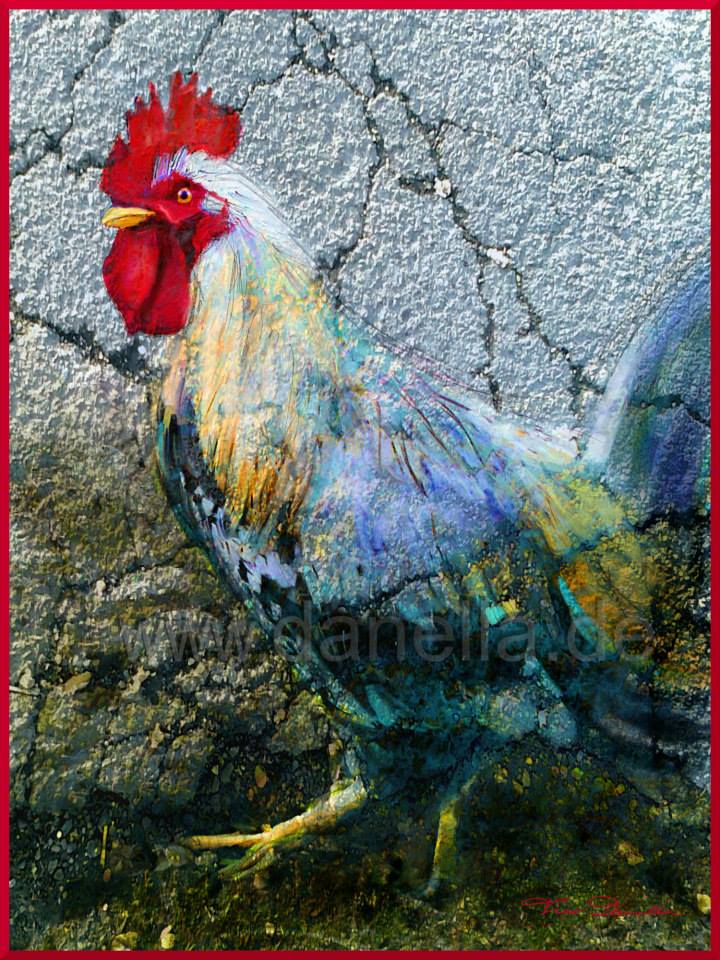
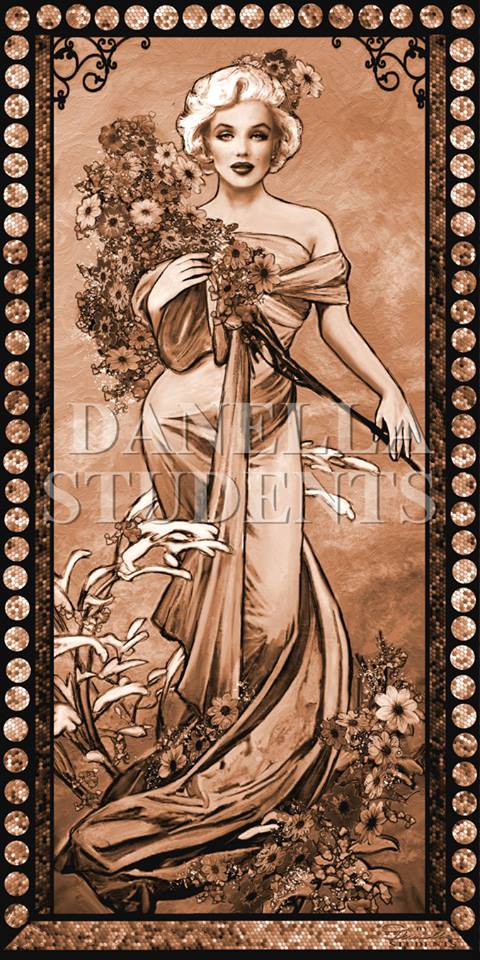
Among the European artists, the works of Theo Danella stand out by their lightness. An aesthetic that no longer is commonplace in our time: Winning and friendly, sometimes even funny. Here, with dignified restraint. Sometimes, loud, but not shrill.

The style of Theo Danella’s work is partly by hand, but this is by no means technology-abstinent. On the contrary! Despite references to the traditional painting contemporary aids, the world of color sometimes from the Flemish early Baroque, the grain here and there reminiscent of Gulbransson, show how the artist tries to be transported into the present. There are also scanned drawings in mimeographed ornamental arrangement in addition to digital sketches, and “mixed-media” and digital “computer painting” (the painting board under the “mouse-pen”) square. Painted beauties photographed before – “mounted” – garden fence. Collagen own drawings, integrated with vector-like graphics or images in the ink style.

For more information on his work please see: http://theo-danella.com/ and
http://www.danella.de/


1003069_612973655425106_1282989353_n

1898101_617875051601633_2137139184_n


6315_511918245530648_1862860301_n


1620433_612971018758703_1594664652_n


480113_506774372711702_1518948713_n


db_landscape-1l--klein-1


“Backward, Turn Backward” by Stanley Noah

Backward, Turn Backward

Quiet in this square, stained wallpaper room, haunting low-toned mirror and slow moving music dancing out the short ban radio. My mind seems easily to walk backwards the steps of years. Then profoundly reality is repeating my personal history with so many persons. I lived through their faces, voices, events like a movie. I do not need to meet them as they are today as some memories are sacred like fresh linen folded and put away like rivers to the sea like beach bone-dried sea shells waiting for generations to be collected. Remembered for what they were, and went like stamps on letters, traveled. Just to be put away in glass jars like red sweet jam held to sun light. You wonder beyond yourself and with those who knew you as they are constantly on edges, disappearing, again and again, taking a little of you with them as if until now you had never been here, hardly lived, even known by others today. Then fate like gravity soon  has its way of placing you alone in this room somewhere in this hour. And the mirror you look into is like an abstract image you cannot fix. Becoming more invisible  each time you take a peek. You hate to cut the lights off. Fearing next morning the mirror can no longer hold you. Its the quietness, isn’t it, that makes you think of these types of thoughts.


Stanley Noah has a BGS degree from the University of Texas at Dallas. He has been published in Verse Wisconsin, B.O.D.Y.,  Main Street Rag, South Carolina Review, Poetry Nottingham, and other  publications in the U.S.A., Britain, Canada, and New Zealand.


“Lost Girl” by Neila Mezynski

Lost Girl

The front door flung open. Big blonde Jim, his toothy grin and short round Mrs. Standler. Expectant.

“You must be Nelly. Come along. I’ll show you your room, it was just painted”, she said.

Sunlight flooded the narrow hall. The dark Victorian house. At the top of the stairs a yellow cream room. A view of the city and an especially good view of the apartment house across the way. Visible a family on their patio. Close. Nelly felt safe. The room like an attic with its octagonal shape and low ceiling.  Jim’s room next to hers crammed full of books.

“I’m studying for the bar, my third try,” confessed wide-open Jim.

Nelly immediately liked him, his broad smile.

She was in a hurry for success. No patience, peace, schooling or game plan. She started an array of odd jobs: disco dancing, hostessing, escort services, waiting tables. Nelly met many people in a hurry like herself. At the end of the day she related her adventures to long-suffering Jim and woebegone Nina , an alcoholic blonde on the 3rd floor. Show and tell. Entertaining Nelly. She continually noticed the family in the apartment across the street playing games, standing close. She yearned, shrugged off empty and kept on with busy.

One night Nelly didn’t come home, nor the next, nor the next. The weeks and months passed and no word . Jim passed the bar and Nina stopped drinking. Wide eyed Jim and woebegone Nina grew inseparable. They got married. They moved into Nelly’s room, it was larger. She hoped they would.

Too ashamed to tell Jim and Nina she couldn’t pay the rent, she left.  Sleeping and eating were not daily events. Nelly made trouble. She wouldn’t go topless, perform sex acts, she mixed up customers’ drinks. Hunger pangs distracted her. She developed a food fixation and found that booze dulled the pangs. She was lost. There was a little church. Sometimes she sat on the steps for comfort. She never went inside. One night she did. Go inside. She wandered into the small church. She started going often for the calm, to see the pastor’s eyes. The see through pastor talked to Nelly softly. Like her mother when she read stories to her, a little girl. The pastor offered her a place. In return general housekeeping, cooking and eating. He suggested school, college, direction. Nelly got on track and figured out responsibility. New feelings came along with safe. Pride was one. She felt warm enough to think. Think about what she wanted. Wrapped in new possibilities, Nelly.


Originally published in Nashville Review and Shine Journal.


Neila Mezynski is author of Glimpses and A Story (2013) from Scrambler Books; pamphlets from Greying Ghost Press; echapbooks from Radioactive Moat Press and Patasola Press; chapbooks from Folded Word Press, Men Who Understand Girls (2012), Nap Chapbook, Floaters (2012); Deadly Chaps Press, Dancers On Rock (2011), Warriors (2013), Mondo Bummer, Meticulous Man (2012), Mud Luscious Press, and At The Beach (2011).

“Ambien” by Claire Ibarra

Ambien

If you had a car, you would drive to 7-Eleven and eat burritos with a construction worker named José. Instead you take another pill and drink a bottle of wine. Slip, sliding away to Paul Simon. Shave your head, just the sideburns. Then you let your wife find the razor and the empty bottle and the pink elephants dancing in tutus around the room singing, “After Midnight” to Clapton’s electric guitar. Light white candles and pray “Hail Mary” on your knees, slip sliding away and cursing your wife for an imagined infidelity. Face paint, hair clogging the bathroom sink, paella dumped on the kitchen floor, a cut that needs stitches, long distance calls, ants marching through cracks in the walls. Your wife calls the doctor to send for help, you dream that they haul you off to the loony bin.

Here you find peace, here you find redemption, here you find God.  Here you see your father who died, your brother who died, your sister who died, and they speak to you in tongues and you understand the meaning. Here is where you are, here is where you are lost, here is where you disconnect from your physical self and become an empty self, who no one understands, as if you’re speaking in tongues, the language of death, the language of a very deep sleep.


Claire’s poetry and photography have appeared in numerous journals and magazines. You can find her poetry in Thrush Poetry Journal, Blue Fifth Review, and Poetic Pinup Revue. Her photos can be found in Blue Print Review, Microw, Pirene’s Fountain, and Thumbnail Magazine, among others. She is also a contributor to the poetry anthology Point Mass by Kind of a Hurricane Press and the forthcoming Lummox 2.