An Interview with Jack Ketchum

jk

Photo by Steve Thornton.

Available November 8, 2016 The Secret Life of Souls: A Novel offers up a psychological suspense story of a family’s fall as seen, in part, through the eyes of their loyally protective dog Caity. Written by Jack Ketchum and Lucky McKee, it promises to be a uniquely intriguing read. It was an honor to catch up with Jack to learn more on the subject.

Do you and Lucky ever get tired of working with one another? What is it like to find someone you can work so well with?

Working with Lucky is a little like putting on a play with a group of utterly like-minded actors, all of whom are working in service of the idea, the words, sans ego, who just love what they’re doing.

How does collaborating with others differ most from working solo?

You relinquish some element of control, and writers tend to be control freaks, but that’s countered by the pleasure of having someone you know who can inspire you in ways that tend to surprise you, things you haven’t thought of, nuances generated by their own experiences, their own insights, their own sense of humor.

Do you ever get nervous about how your work will be received upon its release?

 Sure.  Flop-sweat’s an old friend of mine.

How did the idea for The Secret Life of Souls: A Novel come about?

Lucky had the idea that he wanted to do something about telepathy. We messed around with it on e-mail and then instant mail over a period of a couple months and came up with the characters, themes and story.

What do you hope the reader takes away from this particular body of work?

A sense of connection. That we’re all in this together. And not just us humans, but the wider world as well.

What is the most challenging thing about writing from an animal’s point of view?

Avoiding Lassie and Rin Tin Tin.

Did you enjoy being able to do that?

I did indeed. The research was particularly enjoyable. How animals perceive their world, their senses, how they relate to us and to one another. Lots and lots of rich food for thought there. And then transferring your own interpretation of all this to the page.  Making it sing!

jknb2

Do you think in today’s society the importance of animals is often overlooked?

By far too many, yes — but not by those who learn to love them. And I have to admit, I don’t quite trust anybody who can’t give over their heart and empathy to another creature.

Do you think it is fair to say that animals are often more accepting and loyal than most people?

Depends on the animal. Depends on the human. Kick me or kick my cat, we’ll both despise you for life. That much I know.

Did you ever have a pet growing up that left an impression on you?

 I grew up with dogs and a single cat. Never met one I didn’t like.

What do you like to do when you aren’t writing?

 Reading, movies. Cats.

How do you think your work as an author has evolved and changed most over the years?

I’ve mellowed I guess. I’m less interested in in-your-face physical violence and more interested in the subtler kinds. And less interested in violence in general. I’d rather talk about connections, the ties that bind. But I suppose I still mostly get at those things by discussing what breaks those connections. So there’s that damn violence again.

If you could give anyone advice for dealing with thing called life in the best way possible what would it be?

Have the courage to love and be loved. I guess that’s it. Best I can do.

Is there anything you’d like to say before you go?

Spay and neuter. Give to no-kill shelters. Protect wildlife. Be good to the animals.

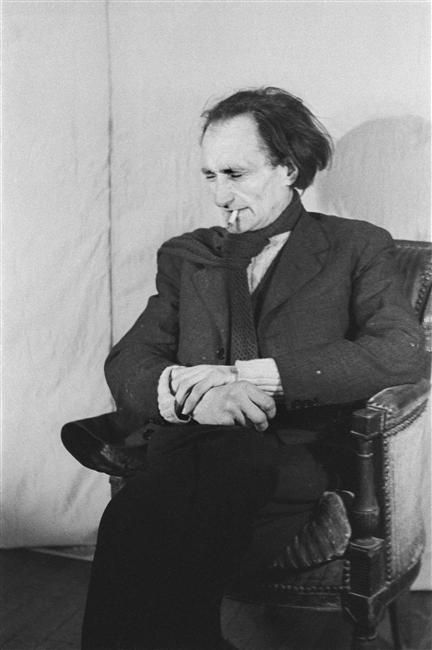
“Portrait of Antonin Artaud. 1947.” by Jeremy Valentine

jv

Photograph by Denise Colomb, 1947.


Portrait of Antonin Artaud. 1947.


Dear Antonin,

I have come searching for you, brother & savior,
To this old city, this mausoleum, this carnal & mellifluous father of merde
Searching for you I hear the clatter & scarled wings of the mob,
The wet red flowers eating at the teeth of the poor. I encounter
Fascist monuments & revolutions of bread;

“Let them eat cake!” your theaters of torture proclaim.

The dead streets speak your
Name & mounting the long steps to the milky breast
Of Sacré Coeur your ghosts double me,
Unholy doppelgangers! & in the dying city’s wet red
Machinery, in God’s orgiastic womb,
I witness your portrait being destroyed
By flaming cherubim of an
Unknown & trivial pantheon.

On the streets of Paris, in it’s wretched, putrescent
Cemeteries, the dead nobility of a thousand spawning
Take the shape of birds & trash.
Your works insinuate themselves into everything:
Graffiti on the Metro’s stained
Quicksilver torso, the scars of demons &
Tourists decorating the
Louvre with your blood & piss—
Your eyes in the eyes of small children
Carried so decorously in their pink prams along the Seine.

I want you in me,
The skies herald in the screeching of white-noise
Concerts that only I & the fetal children of uncertain parentage
Can hear. You know that I will never
Find you. That the plane will
Steal me away, lock me back within the prisons of
North America & the cages of English
Will hold my intestines as a loom that only you,
You my lover, can possibly play.
Je t’adore, mon amant,
Mon traître!

Jeremy Valentine Freeman Ganem hails originally from Kansas and is presently completing his doctorate in fin-de-siècle poetics and aesthetics at Concordia University in Montreal, where he resides.  He is assistant editor of RaVoN  (Romanticism and Victorianism on the Net), his poetry has appeared in Boston Review, and his critical work has appeared in a variety of academic journals. In addition to a series of lyric works based on the interaction between aesthetics and ideology he is working on a long poem that re-works and deconstructs the Orpheus myth and an experimental post-pop novel centered in Kansas City at the millennium entitled The Golden Apocalypse of Yves Antichrist. He devotes his days to reading ornate books, living in dead centuries, looking at obscure art and walking in Montreal.


An Interview with Jason Kennedy and Jennifer Jean Miller

109207455_o

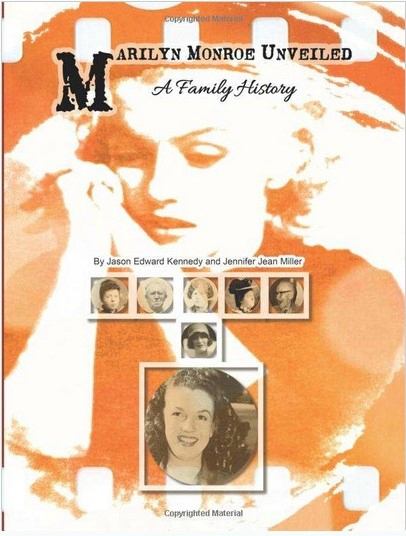
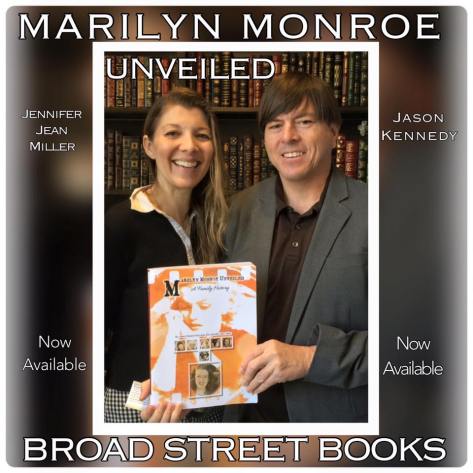
Written by Jason Kennedy, a second cousin of Marilyn Monroe’s and his wife Jennifer Jean Miller who also wrote Marilyn Monroe & Joe DiMaggio: Love in Japan, Korea, and Beyondthe book Marilyn Monroe Unveiled: A Family History promises to give fans an intimate look at the star as she really was. The 382 page book strives to unravel the myths behind one of America’s most beloved icons.


Did you know you were related to Marilyn growing up?

Jason: Yes, I knew that some family relationship existed growing up according to my father. Due to a divorce and other issues, I was separated from my mother from an early age. In 2011, I found my mother and grandmother, and they explained the exact connection.

Did your grandmother ever speak much of Gladys?

Jason: Yes, my grandmother remembered going over to Gladys’s house and Gladys and Norma Jeane coming over to their house as children and young adults in Los Angeles. There are even some memories of having had contact in Portland Oregon as well.

From the best of your knowledge what was Gladys like as a person?

Jason: Both Gladys Monroe and Grace McKee Goddard (who was her best friend for many years) have been somewhat described by relatives as sort of “Thelma and Louise” type of characters. This isn’t to say that they both weren’t responsible adults. We have much evidence to the contrary that demonstrates they both were responsible in many aspects of their lives. Nonetheless, they were both independent woman who certainly carved their own paths in life. I think, as a result of the publishing of our book, Marilyn Monroe Unveiled: A Family History, we may find more information becoming available that may offer some early insight into Gladys’s personality and the events that happened in Los Angeles when she became ill.

What was it about Marilyn that first drew you to her?

Jason: I never had that much interest in “movie” stars or performers in general, although I do like Harrison Ford and most anything Science Fiction. Nonetheless, it was kind of out character for me to be interested in cousin Marilyn Monroe. But after doing some intense research into her life, I knew something was very wrong. It was a feeling that consumed me and literally changed the direction of my life. Her story and her family story needed to be told.

Jennifer: I picked up a book about Marilyn one weekend when I was visiting my father’s apartment (my parents divorced when I was very young), when I was about eight-years-old. It was Norman Mailer’s book, which is chock full of amazing photos. I had seen Marilyn many times before in pop culture, especially since I was born in New York (actually in the same hospital complex where she had been wrongly incarcerated at Payne Whitney), and spent time there frequently even after my family moved from the city. She seemed so alive in her photos, and I began to cry when I learned that she had died. I couldn’t believe that someone so beautiful and angelic could have died. From there, my interest in her grew. My father also worked with Hal Berg, when both were photography professors at FIT, and I was able to get to know Hal as a child. I learned from my father that Hal had photographed Marilyn and was totally amazed. It was something that just a year or two ago we discussed on Facebook and former students of Hal’s were thrilled to learn, as it was something they didn’t know about him, as he only shared this with colleagues. But Hal’s photos of Marilyn were exquisite and ones I’ve always liked of her.In addition to being married to Jason and her second cousin removed by marriage, and someone really into genealogy (I’ve always been interested in tracing family history, but have been formally doing so for about 20 years, online and pursuing it in genealogy libraries), we learned that I am distantly related to Marilyn too through my maternal grandfather’s maternal grandfather (if that makes sense, lol…my second great-grandfather). He was a distant relative of Marilyn’s grandmother Della Hogan. I learned this in 2012, before Jason and I met in person and while I was exploring some family roots on my side. Though the connection is distant, it was wild still and has brought my admiration of her even more full circle, as I realize there is a reason I’ve been on this path. I’ve always protected Marilyn, even as a young girl when even an adult would insult her, I would defend her memory. I realized something very special about her even then and didn’t know at that time the connection was beyond someone I related to…there’s a genealogical bond that connects us both now by our distant relation and now through marriage (not uncommon in the U.S. by the way or for that matter likely anywhere in the world…in 2011, Harvard Scholar Henry Louis Gates, Jr. shared that Kevin Bacon and Kyra Sedgwick are distant cousins themselves, 10th cousins. Kyra is also related to Marilyn reportedly, and I know from genealogy tracings I’ve done, Kevin is related to Marilyn too. My distance to Marilyn is currently tracked further apart than Kyra’s and Kevin’s to one another and my relation to Jason is even more distant).

What do you admire about her most?

Jason: The obvious is her on screen personality and unique and classy appearance. Under the surface, Norma Jeane really wanted to be good at her profession and I admire her fortitude to want to be better, but unfortunately that drive took her to a very evil place.

Jennifer: For me, there are so many things that I admire about Marilyn, it would be hard to pick. What I do love is her sweet demeanor. When I’ve talked to those who knew her, that’s one of the first things they would tell me. I was blessed to speak to a lady who was one of Marilyn’s neighbors in New York. The two used to enjoy tea and conversation together, and did so before Marilyn married Arthur Miller, and then after that, their tea times ceased. Marilyn was known to remain very low-key, even as a celebrity, and could walk unnoticed through the city. Additionally, when neighbors did notice her, especially up in Sutton Park (which for those unfamiliar with the city it is the lovely park overlooking the Queensboro Bridge, by Marilyn’s two former residences on Sutton Place and East 57th Street), they tended to allow her that anonymity to relax in the park. For those who knew her, the most remarkable quality was innate sweetness. The woman who I talked to, in fact was shocked, when we discussed all of the sordid things that have been written about Marilyn over the years. “Who could say anything like that about such a sweet person?” she asked me. Marilyn’s lovely spirit is evident in the photos and film footage that exists of her personal character. She is shown embracing people and would touch someone’s face in such a way that it shows how affectionate and kind she was. That I would say is one of the things I love the most about her. She radiates love.

Why do you think society seems so intent on creating myths around various celebrities and others that are no longer in the world of the living?

Jason: We all can relate to fairy tales. And movies and myths help take us to other worlds. It’s natural, but in Marilyn’s case it is important to separate the myth from reality because she was seriously taken advantage of and hurt; the myths have helped cover-up a crime.

Jennifer: It is easy for someone who is no longer living to be defamed in books and in the media. Marilyn’s myths began even before her death. Her biographies from the studios, as well as her interviews reflect these exaggerations. They’ve become runaway tales. These were also myths that became a part of Marilyn Monroe’s story, not Norma Jeane Mortenson’s. The studios wanted to focus on something interesting. For example, that was Marilyn’s stay in an orphanage while guardianship was transferred to Marilyn’s mother’s best friend Grace, after Gladys was hospitalized. Granted, that was not a pleasant experience for a child to be in transition, however the truth is that it was greatly supervised through the courts, as well as Grace. The orphanage was necessary protocol in switches of guardianship, no matter who would have become Marilyn’s/Norma Jeane’s guardian. But it became a tale that Marilyn was abandoned, that there were over a dozen nameless and faceless foster parents, that her father died in a motorcycle accident in 1929 (which was untrue and the man who was legally listed as her father, who mother Gladys was technically still married to at the time of Marilyn’s birth, outlived Marilyn until 1981) and much more. The truths are strikes against the myths. But now nearly 50 years after her death, the myths are still readily regurgitated. That is problem number one. Problem number two are the so-called “friends” and other sycophants who have come out with their own stories, which most of them are just fabrications. To many, the myths are much more interesting and colorful that some prefer them, and they don’t want to believe the truth when it comes out. I don’t understand that, and maybe since my job as an investigative reporter is about seeking truths, and debunking myths, it is natural for me to wish to learn the accurate account, as well as to retell it to readers so they are learning something new and factual. The truth to me is freeing and no matter the narrative given, the records don’t lie.

How did this book come about?

Jason: In an unusual sort of way, we knew the story we just needed to find the facts to support it. That was the most difficult and time-consuming process. It literally took about four years, since 2012, to bring this book into fruition. But while we knew the outcome of what we would find; it was always surprising and shocking to find the documents and newspaper clippings that supported what we already knew to be true.

Jennifer: Jason and I are sick of the defamation that we’ve seen go on, especially when it comes to Marilyn’s lineage. Around April 2015, we started countering these myths, and began writing something about Marilyn’s mother, Gladys. Gladys has been written terribly about over the years, and those who knew her, would comment what a beautiful soul she was. I am not denying Gladys was ill, but she became ill after becoming incarcerated in mental institutions, not before. Gladys was struggling with some heavy circumstances all at once that would have driven any strong person to an emotional collapse, which is what she was originally hospitalized for. Her mother had died in 1927 from the effects of malaria. Gladys continued to make payments for funeral expenses for her mother. In the meanwhile, her maternal grandmother Virginia died. Gladys endured her second divorce in 1928 from Marilyn’s legal father, Martin Edward Mortensen (Marilyn was born in 1926). Gladys was a working mother, who juggled her child when she was off-duty at her job as a film cutter, and had the Bolenders in Hawthorne take care of her (in spite of the rumor Marilyn was abandoned there, Gladys and Marilyn lived with the Bolenders). She had two children from her first marriage, who were stolen from her when they were toddlers by her first husband and taken to Kentucky. Her son from that first marriage had just died. Gladys’s grandfather, Tilford Marion Hogan passed away too in 1933. Gladys knew both of her grandparents and Tilford, who was almost 80 and struggling with health issues, died by hanging (which has often been one of the myths that he had mental issues…our research shows that Tilford in fact was a very grounded man, involved in his community). I told Jason I was sick of the attacks against Gladys that I was reading. She was given medications and treatments for schizophrenia in the hospitals, when she was not schizophrenic originally and her condition worsened. The mental health system was feeble back then, with a “poke and hope” approach in care. Think of Rosemary Kennedy who endured a lobotomy, from doctors who had no clue what they were doing, and a vibrant life was destroyed. Human beings were ruined in some cases by the mental health system. Marilyn’s “doctors” are proof of that as well, and the motivating factor for them was garnering Marilyn’s estate at the end of it all. All of our research shows that the myths of mental illness, poverty, and horrible circumstances have persisted in Marilyn’s lineage, and are untrue. That was the motivator, and starting with Gladys’s story, the book grew from there.
12801449_567794693374975_9193353613421854767_n

How did you go about separating the myth from fact?

Jason: It may seem odd, but that was easy part. I sort of always knew what I was looking for that countered the myths.

Jennifer: As I stated earlier, the records don’t lie. It’s important to start from there. And that’s what we did.

What was the most challenging issue you faced when bringing this book into existence?

Jason: The program we used to write it in…it shall remain unnamed…hopefully that company works out the bugs. They might then have a great product.

Jennifer: I agree with what Jason said above. That was frustrating and delayed some of our work. A good challenge was that more evidence continued to come our way to support our story. The more we searched the more we found. When we thought we were “done,” something else popped up.

How did you first come to work with Jason?

Jennifer: Jason and I met on Facebook in 2012. I saw a post on a page from a page called “Marilyn Monroe Family” and followed it. I have debunked some who have claimed to be Marilyn’s family and children, so I wondered if this was the same. Being a genealogist, and analyzing the data that Jason posted about his connection to Marilyn, I realized the page was legitimate. I became a page fan and then Jason sent me a friend request. Our friendship blossomed online, because of our mutual understanding of what happened to Marilyn. I was always a proponent that Lee Strasberg, for example, was never genuine about his affiliation with Marilyn and other theories. Jason was on the same avenue in terms of his research and we intersected at the same place in our findings. We began having these mammoth conversations online about Marilyn and other subjects until the sun would rise beginning after Easter 2012 and two time zones, and grew close, though we hadn’t met then. Speaking daily online became our routine after that and checking in with each other. We finally had the chance to speak on the phone and spoke for about an hour the first time and four the next. And our work and lives took off from there. We met in person in Los Angeles at the end of July 2012.

Do you feel this book in some way, gives you a chance to protect the memory of Marilyn as she was as a person?

Jason: Yes, I feel that this book has given Norma Jeane her own voice back. Now Authentic Brands Group and the Strasbergs, and the Anna Freud Foundation can’t hide behind the lies anymore.

Jennifer: Absolutely, because it’s not the usual regurgitated rehash. This is truth that will set the myths free that have chained Marilyn’s legacy down since before her death in 1962.

What do you hope the reader takes away from this particular body of work?

Jason: That Norma Jeane (aka Marilyn Monroe) was extorted and murdered by a group of individuals who did everything in their power to steal and own her legacy. Lee Strasberg, Milton Greene, Arthur Miller, The Rostens, Dr. Ralph Greenson, Dr. Marianne Kris, Dr. Margaret Hohenberg, and Anna Freud are all co-conspirators in that agenda.

Jennifer: Knowledge of the truth and Marilyn’s real story.

Do you think the world tends to overlook the person inside the celebrity in favor of fame over individuality?

Jason: Yes, especially with Norma Jeane. People do not want to believe she exaggerated her story.

Jennifer: People view Marilyn as the character she created, which was this larger-than-life onscreen personality. That part transcended into her private life in photos of her glammed up at events. The woman one sees dripping with fur stoles and baubles, her hair set and sparkling and her face painted like the beautiful work of art that she was, was not the real person inside. Marilyn Monroe, aka Norma Jeane Mortenson, was a beautiful and shy individual. She preferred reading to going out. She favored her comfortable clothes to evening gowns. She typically walked around without makeup, and her hair tussled when she wasn’t in front of the camera. Marilyn the private woman was way different than the image that was created to sell her star.

What is it like to have the chance to work with someone you are married to?

Jason: Since we both care about Norma Jeane it was good working with my wife Jennifer. It was always good to have another perspective.

Jennifer: Working with Jason is something that I’ve done all along. Though we have different working styles. I am very deadline-oriented and though I’m creative and have that laid back side too, I’m more intense than he is when it comes to how I work. He’s got more of the California approach to life that I need in order to not get so stressed out. He needs the “push” personality that I have too. I think we balance each other out. And Jason’s more versed in design (though I’m pretty good too!), while I’m more versed in writing and editing. So it’s a nice blend. We’ll be working together again, lol. And we are already on our companion guide to the book, which is additional information and for those who love facts.

When you first met did you ever imagine you’d end up married to each other?

Jason: Yes. It was love at first chat.

Jennifer: I felt Jason was “the one” when I met him. We have a lot in common besides Marilyn, including a lot of situations in our childhoods, as well as things as simple our love of 80s music, and everything in between. Not to say that we didn’t have some obstacles, because we did. We had a very rough patch in our relationship over a year ago where things went tested because of a range of circumstances. It was a difficult time that we both had to sift through. And once some of the dust settled with the passage of time, we both came back to the table. There was a humility that had to accompany that and by God’s grace, we worked through it all. To me, that’s real love, when a person can push through something, admit the wrongs and make those wrongs right. I am a faith-filled person and to me that work is only done through God, prayer and forgiveness. We have to let Him fix our mistakes (and as humans, we all mess up a lot, or the actions of others we can’t control, and/or sometimes we invite in mess things up for us). We have to learn and grow from it. And we have grown from it. And continue to grow. In July 2015, we married in a heartfelt ceremony overlooking the ocean, with just a few witnesses and our wonderful pastor. I had a flare of ulcerative colitis/Crohn’s (which Marilyn also had colitis by the way) less than a month and a half prior, and was hospitalized for three days, requiring intravenous medications to recover. To me it sitting in a hospital bed on Memorial Day 2015 was all a turning point, and I realized we hadn’t come this far for nothing, that Jason and my children are the people on this earth that God put in my life as people who can count on each other, and it took the miracle one Facebook post and a 3,000-mile distance, to bring Jason and I together. What seemed ruined was restored…true love wins and withstands many tests.

Over the years what would you say is the most enduring thing you have learned about Marilyn?

Jason: She wanted to be brought back to life. We hope our book Marilyn Monroe Unveiled: A Family History does that for her.

Jennifer: That Marilyn endures period. She intrigued people when she walked the earth. She is fascinating to people more than 5o years after her death. I feel Marilyn Monroe Unveiled: A Family History will help to cement her legend even further because it unlocks some exciting truths about her that have been suppressed for so long and waiting to be unveiled Truths about her ancestry that reveal truths about Marilyn.

Is there anything you’d like to say in closing?

Jason: What you do in this life matters.

Jennifer: Yes! Marilyn was a real person, not just a myth. Our books share that. Check out our books, Marilyn Monroe Unveiled: A Family History on Amazon, Createspace, Barnes & Noble, The Book Depository and others. It’s also available through bookstores. Blondels.com is the only place where you can purchase it signed and personalized by us. Be on the lookout for the companion guide. And also my book, Marilyn Monroe & Joe DiMaggio – Love In Japan, Korea & Beyond, has some minor updates to it. God bless and thanks for reading!
 

An Interview with Marsha Onderstijn

Comp 3_05130

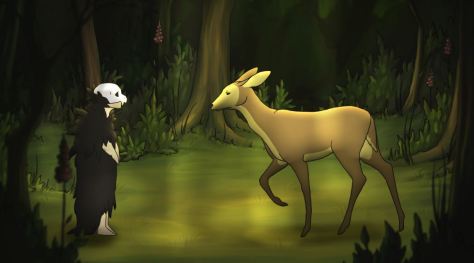
Marsha Onderstijn works as a freelance animator and storyboard artist. She has recently brought to life the deeply moving and emotionally intense short film The Life of Death featuring the music of Ramon de Wilde.

Can you tell us about your earliest days? What are you most fond memories of that time?

I grew up in a house full of art, music, movies and books. My parents loved those things and they did a great job of passing that love onto me. I don’t have a particular memory that I’m fond of, but I do remember the sense of just having all the time in world; how me, my younger sisters and my parents could just spend hours and hours listening to music, crafting, drawing, reading books and watching movies.

Did you develop your love of animation at an early age?

I think my love of animation developed from my love of drawing. I spent years just drawing before the idea of making those drawing become alive captured me.

I do remember my father explaining to me about how stop-motion animations were made after watching Wallace & Gromit. I must have been about 10 years old and I made my first experimental animations with a bit of clay and a camcorder, hitting the record and stop button super quick to make the frames for the animation.

Do you remember the first animated films you loved as a child? What do you think it was about them that captured your attention most?

The first films I watched were classics like The Lion King, Robin Hood, Toy Story and The Snowman. What I loved about animation even then is that anything is possible. You can bring life to any creature and any object, giving them emotions and stories that can be more relatable than any life-action movie.

Can you remember what the very first you enjoyed drawing most was?

I’ve always loved drawing animals and fantasy creatures and those are the first things I remember drawing from an early age.

What was it like to attend St. Joost Kunstacademie in Breda? What was the most important thing you learned there?

I loved attending art school. It is amazing to meet like-minded people who have the same passions. I got to explore and experiment with different animation techniques, learn about storytelling and storybuilding as well as being introduced to other forms of art. The most important thing for me was having the freedom and space to do that.

What advice would you offer others wishing to pursue a career in animation?

Practice, practice, practice. Animate a lot. Watch a lot of animations. Go to movies and animation festivals. Meet like-minded people and be inspired.

What are some of the most challenging issues you face as a freelance artist?

I think the most challenging thing is always having the uncertainty of not knowing whether you are going to have a next job or not.

Comp 2_03140

Do you have a dream project you’d most like to bring into being?

Not really! For now I want to gain some more experience in animation. But maybe one day I would like to make my own animated series or animated feature.

Do you think traditional animation has suffered greatly due to the use of CGI?

I think traditional animation has been pushed to the background because of the rapid development of CGI, but it’s not gone. People will always appreciate the unique character of traditional animation.

What led you to create The Life of Death?

The Life of Death was my graduation film. A graduation film is like a business card and I wanted mine to be something special. So I chose a big theme; Life and Death. I used my own view on this theme and wrapped it all up in a small story.

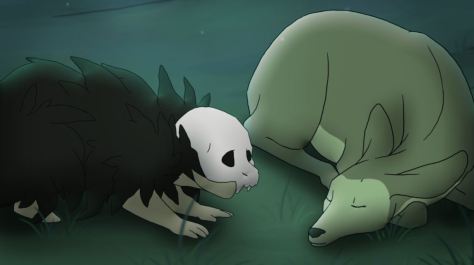
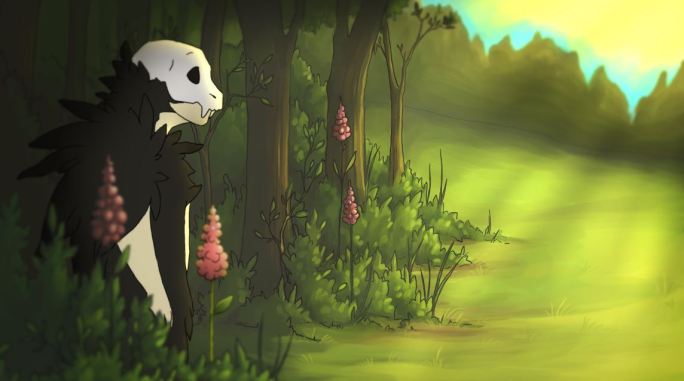
I have never viewed Death as something dark or evil, and I wanted to explore that in my animation. So Death became the protagonist of my story. I wanted to make him a character that an audience could relate to and sympathize with. What would it be like to be Death? To always have to end lives and to remain behind, alone. Maybe Death is a creature with feelings and emotions? What if Death fell in Love with Life?

The Doe is my visualization of Life. She isn’t afraid of Death and builds a friendship with him throughout her life. And when her time has come, she embraces Death like the friend he has become.

Did it feel good to be able to show death in such a different way?

Because I have always viewed death this way, it isn’t all that ‘different’ to me. But I do understand that not everyone sees life and death this way, and I enjoy sharing this perspective with other people.

Why do you think it seems to have touched so many people from all walks of life in differed ways?

I am honestly overwhelmed by the amount of reactions and I never expected to touch so many people with my animation. But Life and Death are things everyone has to deal with at some point in their life, and I guess this perspective on Death may have made the subject more approachable or comforting to people.

What are your own personal feelings on life and death?

I have never been afraid of death, and I think it is simply part of life.

What do you think is key to a life well lived?

Having the freedom to pursue your passion.

Comp 1_02397

The short film can be viewed at the following link: https://vimeo.com/154739710

An Interview with Gary Lucas & Jann Klose

jannandgary

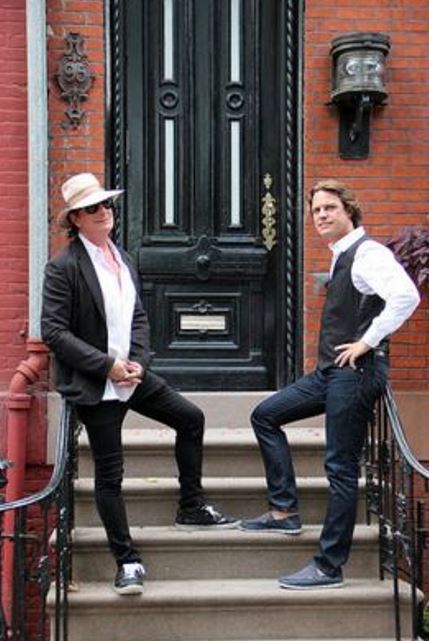
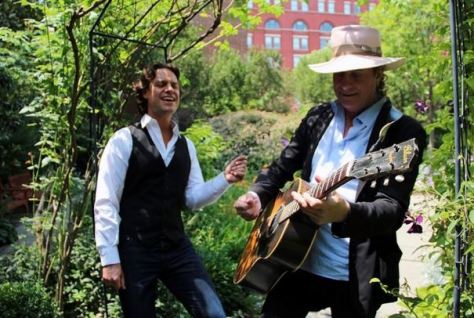
Songwriter/guitarist Gary Lucas(who has co-written hits with artists Joan Osborne on Spider Web and Jeff Buckley for the songs Grace and Mojo Pin) has teamed up with singer/songwriter Jann Klose to bring you the new album Stereopticon. Jann is also collaborating with Ann Hampton Callaway, Renaissance’s Annie Haslam, John Oates of Hall & Oates, as well as The Yardbirds’ Jim McCarty. Gary is writing with Chris Shinn (Live), Steve Kilbey (The Church). Gary and Jann both worked on the film GREETINGS FROM TIM BUCKLEY (Tribeca Film/Focus/Universal); Gary consulted and played guitar (Tony Award winner Frank Wood portrays Gary) and Jann is the singing voice of Tim in the movie.


Can you tell us a little about your earliest days? How do you think they influenced you to be who you are today?

Gary: I grew up in a house full of music–on the radio, the hi-fi, later the stereo and color TV. I think hearing all this great music—classical, pop, soundtracks, Broadway shows, early rock, folk, blues and jazz— all went into the mix of molding my sensibilities. To me, music was sacred, and when properly done it still is.

Jann:  I had a cassette player and recorder when I was a boy and would tape songs off the radio, make mix tapes and then play those over and over again. I don’t come from a musical home and never had support from my family when I wanted to learn a musical instrument unfortunately. When I came to the States as an exchange student I received the kind of support I was looking for from my host family.

When did you first discover you love of music? 

Gary: Hearing Thurston Harris’ Little Bitty Pretty One on the AM radio with my mother on the way to the Snowflake Bakery in Syracuse to pick up some half-moon (black and white) cookies. It just sent me! I wanted to hear more music of that rocking ilk.

Jann: Probably watching the South African musical The Warrior in Johannesburg when I was a boy.

When did you know it was what you wanted to do with your life? Did you ever want to do anything else?

Gary: When I first put together a band—actually a “combo” is what we called them then, in the 6th grade when I was 12 years old—to play the school assembly. Stuff like Java by Al Hirt and Acker Bilk’s Midnight in Moscow. Yes, I wanted to do other things of course—at various points in my life—I wanted to become a vampire, a rabbi, a magician, a film maker, and a novelist. When I started to work for CBS Records in 1977 as a copywriter though I became resigned to my fate to working in “the music business.”

Jann: I can remember wanting to be a singer when I was about 2 or 3 years old. I don’t know why, I just always loved to sing.

How did you come to work together? What have you learned from each other along the way?

Gary: Jann approached me to sing at a tribute to Jeff Buckley I was curating in NYC three years ago. We hit it off, liked each other as people, and thought we’d try collaborating—and voila!

Jann: What Gary said.

How does collaborating with other artists differ most from working solo?

Gary: I think when a collaboration is really successful the end result can often take on larger dimensions and have more impact than the efforts of the individuals on their own.

Jann: Also what Gary said.

What does it take to write a solid tune?

Gary: An innate knowledge of hooks, hooks and hooks—both in the music and the lyrics. The music and the lyrics have to work together as one so the end result appears inevitable, compelling and seamless.

Jann: The only thing I would add to that is “emotional response.” Not everything I love will be loved by others. One never knows. It’s important to just put to out there and find out what people think and feel about a tune.

What do you love most about making music? 

Gary: The feedback from listeners. When someone comes and tells you your song changed their life, that is the best feeling on earth. It makes the whole thing worthwhile.

Jann: Yes, same here. That moment when you can tell you’ve made someone’s day a little brighter.

jannandgary2

How does it feel to have Rolling Stone call you, “One of the best and most original guitarists in America…a modern guitar miracle.”?

Gary: I was totally honored and humbled that they would say that in print like that, what can I say? I try and always do my best to live up to it.

How would you say you have grown as a musician since we spoke last? 

Jann: Not sure when we spoke last but I do know that there have been some major changes and growth in my career. Collaborating with other artists like Gary, Annie Haslam and Ann Hampton Callaway, among others, has really opened up the way I write.

How did the album Stereopticon come about? 

 Gary: Jann and I went ahead and started writing and loved the results. I sat in at a solo show of his soon after attended by Dan Beck, who was one of the nicest guys I knew back in the day when I worked at CBS Records writing ad copy. I knew he had also written songs with Dion and other artists, and thought Jann and I should invite him in on our writing sessions, as I suspected he would contribute a fresh lyrical input.  He also helped us get the project off the ground business-wise due to his skills honed marketing artists like Michael Jackson back in the day. He didn’t let us down, and is very committed to helping shepherd the project forward, which is a big comfort.

Jann: Yes, without Dan’s contributions it would not have been possible. I’m grateful he got involved. It’s been a really fun and exciting process to watch it all unfold!

How do you think the music industry has changed most since it’s early days? How would you like to see it evolve in the future? 

Gary: It’s presently so driven by the metrics that it seems to throttle creativity in the cradle. In an earlier era, A&R guys and major labels in general were not so driven by accountants and “bottom line” bottom feeders making creative decisions as to who got signed, how much money to invest in the marketing and promotion of the act, etc. Maverick visionary record men used to sign artists by a gut feelings, by the seat of their pants, by instinct alone—whether or not the artist had previously sold a ton of records. They were given a certain amount of time to nurture and develop the artist for a much longer haul than presently, where it’s get in/get out and hopefully make a lot of money in a short time frame. The advent of digitization has theoretically leveled the playing field for indie artists but again mainly it is mainly the artists or their financiers with the deepest pockets who can generate the most noise for them through publicity and promotion who seem to garner attention and the most market share out of the box.

So despite more folks putting their work out digitally which is theoretically more democratic than a major label having a stranglehold on the marketplace, there is less opportunity for folks to find that work because of the overwhelming amount of sheer volume out there—a wilderness of work, most of it not all that worthy of your time–that no one has the time to winnow through it all and find the real treasures. I for one would prefer it to go back to the older limited distribution model but that is just wishful thinking of course, because the genie is out of the bottle. I don’t see a way forward really, the market is only going to become more cluttered, unfortunately.

Jann: I agree with everything that Gary is saying here. What I would add is this: I came up in the biz in the early 2000’s when it had already begun this change. While I would love for the business to recover some of its early functions I realize I’ve had to make the best of it the way it was and is. I do think it has changed a lot but I still believe there is a lot of opportunity. Artists just have to do a lot of the work themselves now. I don’t think there’s anything wrong with that. In fact, in some ways I think it has afforded us as artists the ability to have more direct control over out careers. I do believe that the market IS in fact more cluttered and that it’s harder to discover new music. A lot can get lost in the cracks. The cream can still rise to the top if you have the time and money and an understanding of social media, modern and old school marketing and are willing and able to tour. I’ll tell you what hasn’t changed: The creative spirit. Nothing will ever stop that!

Do you have a dream project you’d most like to bring into being?

Gary: Playing  and recording with Van Morrison.

Jann: Scoring a feature film beginning to end! I just scored my first short film which is being screened at the Pasadena International Film Festival in March 2016. It’s called The Beauty of Disaster.

What projects are you looking forward to bringing to life next? 

Gary: Creating a new film score and more collaborations with a variety of artists.

Jann: My next solo album!

What do you think is key to a life well lived?

Gary: Doing what you most enjoy for a living– and getting paid for it.

Jann: Working hard and being kind.

Is there anything you’d like to say before you go? 

Jann: Check out our album STEREOPTICON, it will grow on you!

Gary:  Stay warm.

Van Gogh’s Ear Volume 10: The James Dean Tribute Edition (Edited by Tina Faye Ayres)

Tina Faye Ayres (Wood Nymph Press)

The James Dean Tribute Edition

NOW AVAILABLE ON AMAZON!

Published by Wood Nymph Press 

Van Gogh's Ear 10 (by Tina Ayres)

Cover art by Fred Larucci

Founded by Ian Ayres and inspired by Allen Ginsberg, Van Gogh’s Ear: Best World Poetry, Prose & Art is an annual anthology series devoted to publishing powerful works by major voices and innovative new talents from around the globe. The goal of Van Gogh’s Ear is to make each volume a real eye-opener that stirs people’s emotions and ignites their imaginations. Experimental work is warmly embraced. The tenth volume of the series, in honor of the 60th Anniversary of his death and his 85th birthday on February 8, 2016, also humbly offers up a section dedicated with the sincerest of admiration and gratitude to James Dean. The section features interviews with Lew Bracker, Brenda Hayes, Jim Hayes, Val Holley, Mark Kinnaman, Cody Mullins, David Nall, Roy “Oily” Phillips, Denn Pietro, Lee Raskin, Steve Rowland, Grant County’s own local filmmaker Michael Mathias, and Charles Paul Waters, as well as artworks from Demetrie Kabbaz,Chris Burns, John Gilmore, Fred Larucci, Paul Lovering, Matt Pecson, Enric Torres-Prat, Andrew Read, and Brian Tones. Featuring a poem by A.D Winans as well as a note from the editor and a foreword from filmmaker/creator of Van Gogh’s Ear, Ian Ayres.

In this volume you will find:

POETRY BY : Linda D. Addison, Mike Allen, Ian Ayres, Kimberly Biggers, Heath Brougher, Stephen Byrne, Michael Ceraolo, Daulton Dickey, Julie A. Dickson, Laura Eklund, Jennifer Firestone, Skip Fox, Howie Good, John Grey, Krikor N. Der Hohannesian, A.J. Huffman, Kit Kennedy, Antonia Alexandra Klimenko, Linda Lerner, Thomas Ligotti, Mamta Madhavan, Maria Masington, Elizabeth Massie, Kevin McLellan, Richard King Perkins II, Judith Skillman, Peter Stahl, Paul Tristram, Phillip Ward, A.D. Winans, Michael Xavier, Ali Znaidi

ART AND PHOTOGRAPHY: Tom Bagshaw, Frederick Cooper, Teresa Elliott, Luke Hillestad, Fabio Interra, Fred Larucci, Scott Murphy, Kazuhiro Tsuji, Chie Yoshii

INTERVIEWS FEATURING: Mike Adkins, Mike Bailey, Becket, Courtney Bingham, Frances Callier & Angela V. Shelton, Debra Christofferson, Peter Cornell, Richard Fortus, Derek Frey, Toby Froud, Wendy Froud, Sean Gunn, Tracii Guns, Bart Harris, Ronnie King & Jack Grisham, Fred Larucci, David Lloyd, Jonathan Maberry, Michael O’Keefe, Robert Parigi, Anne Rice, Scott Schwartz, Ralph Stanley, Alice Stuart, Jeremy Sumpter, Kazuhiro Tsuji, Ann Walker

FEATURING THE QUICK DRAW CHARACTER INTERVIEWS: Eli Brocius (Nick Brown), Livinia Webb Dunlop Doe (Tasha Ames), John Henry Hoyle (John Lehr), Vernon Shank (Bob Clendenin), Pearl Starr (Alexia Dox), Clay Tidwell (David Hoffman), Wanda (Kate Frisbee), Ephraim Younger (Michael Anastasia)

Now available on Amazon!

Product Details

  • File Size: 8102 KB
  • Print Length: 396 pages
  • Simultaneous Device Usage: Unlimited
  • Publisher: Wood Nymph Press
  • Publication Date: February 8, 2016
  • Sold by: Amazon Digital Services LLC
  • Language: English
  • ASIN: B01BL5QWUY

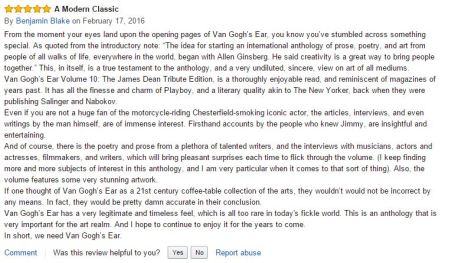
VGE 10 (James Dean Tribute) review by Benjamin Blake

http://www.amazon.com/gp/product/B01BL5QWUY?redirect=true&ref_=kinw_myk_ro_title

“Lively Decadence” by Joe Randazzo


ritual

Lively Decadence

You’ll never feel the buzzards pluck your eyes and for this, you must live wild.
Live decadent.
Live free.
Have the lord above shudder.
Force creativity from your parents and have them lie about the life you’ve demolished to the neighbors.
All doctors but one, Doctor Raul Duke, will tell you this method is unhealthy but just know Doctor Duke’s prescription is the only suitable formula.
Anyone telling you otherwise will waste your time the way they’ve grown to waste theirs.
Say no to condoms.
Run from sobriety.
The only escape from this life is burning it all down.
That’s passion.
Be so lively when it comes time to rest your body on the ground for good, have your eyes be poison to the buzzards.
Those birds look to eat you regardless so give em’ something sick to cap it all off.


“The Sparkle of Extinct Stars” by Ian Ayres

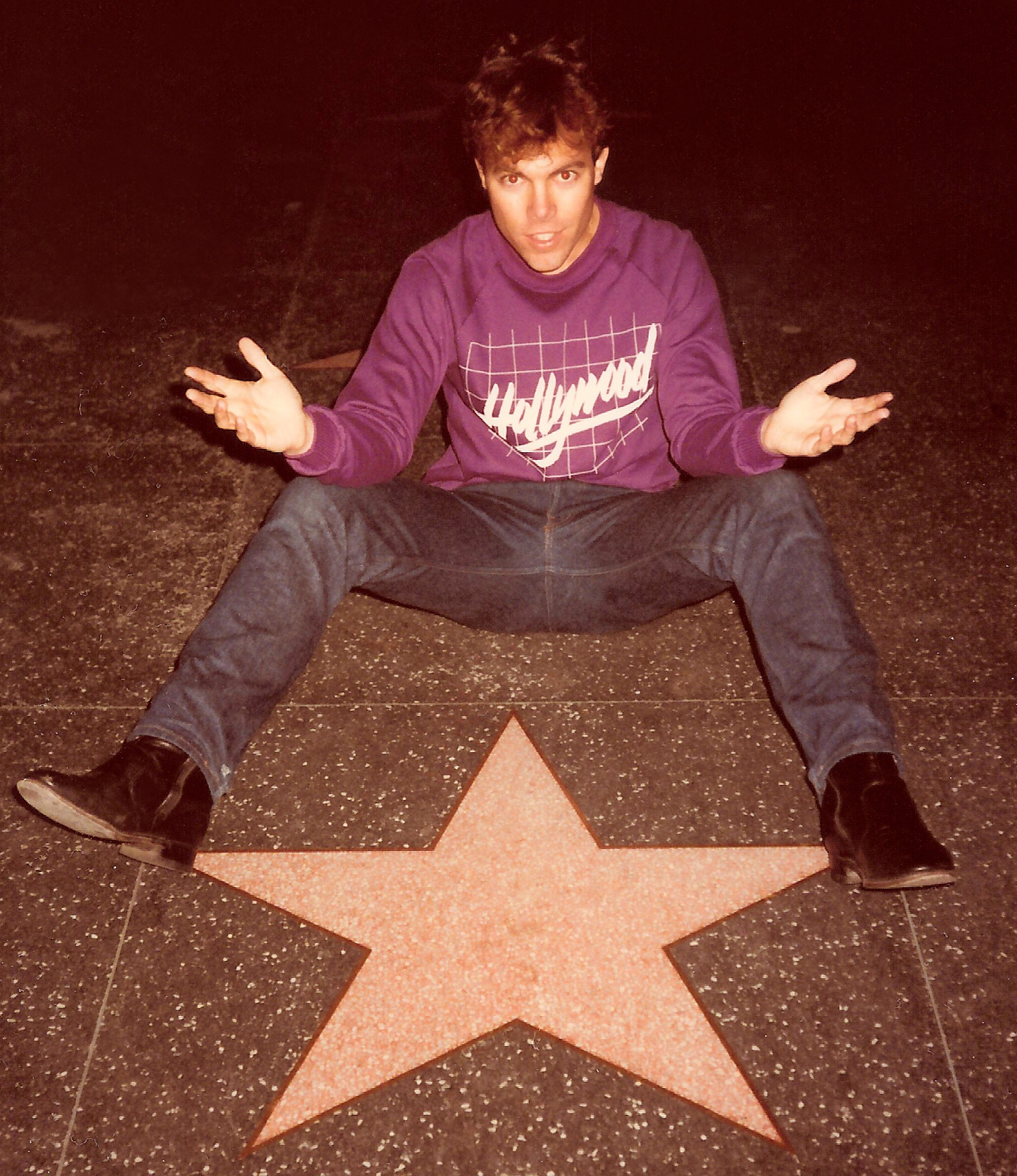
Ian Ayres (Walk of Fame) Hollywood Star

Dying TV sucks stars into a deep green void

& I’m reflected there, on my knees for nothing

nothing but this audience in my head

these front-row critics telling me I don’t matter

this gun to my left temple

cocked, with tense black finger ready to squeeze

the trigger, the trigger

& my brains will explode out my skull

grayish-orange on graffiti wall

as I stare into dilated, cracked eyes

bugging out of his wet, street-stricken face

sweating poison, hate & fear

telling me white boy ain’t got no business

in a black junkies’ ghetto

cold barrel pressed to my temple’s throb

a simple flex of his finger &

Oh, God, help me!

till something inside me clicks

& I know I’ll be forgotten

by my mother in prison, blocking out truth

tuning in to comedy

change the channel & it’s just the news

showing an 18-year-old white male corpse

under a sheet in a condemned building

forgotten the second commercials begin

& I promised God, if that trigger wasn’t pulled

I’d become so famous I’d live on in the minds

of every generation to come

“Fame, fame, fame” blasted from my stereo

as I lived to record my existence: Forever

so when I’m stardust in a box I’ll be

communing with fans flowering my grave: Forever

till 20 years later

my friend Allen made it clear not even our planet’s

Forever

& he aimed the bloodstained tip

of his diabetes test-strip

at the candle & its pulsing flame

at the door in its light-seeping frame

at my arm, down its rising blue vein

& called it all the same shimmering energy

for day is stardom engulfed in night

clinging

to different layers of light

like when I was 8

& my eyes were camera shutters

that caught each passing freeway lamp

me, looking up, alone in the backseat

while our drunk father drives

his fingers into my little sister’s crying “no”

my eyes catching each bright light

zooming in, zooming above

flashing like camera-bulbs

taking pictures of the future me

just a quick shut of my eyes

“no” my sister scoots away

but he orders her to sit close, as usual

& more pictures are taken of the greatest dreamer

the world has ever seen

because of the alarms screaming

because our ship is sinking

because I’m trapped in air

mesmerized by the sparkle of extinct stars

& breathe in the illusion

that Fame can last Forever

though I gasp when she gasps, drowning

yet hang on to dreams of going down

in a history that’s going down

as I climb to the heights of stardom

where my eyes will widen, with one final tear

& my mouth will open

in disbelief

not knowing what to do at death

except pretend?

pretend I’m a success?

filled with fear

doubts that linger

of not having loved enough

not having saved her

An Interview with Brenda Hayes

jds1

Brenda Hayes is best known as the wife of Jim Hayes who works to preserve the MainStreetFairmount.org project to restore the classically iconic main street of Fairmount, Indiana. Brenda was also in attendance at the Sweetheart Dance in 1955, where she was seated next to James Dean. The event has come to be immortalized through the photographs of Dennis Stock.


What was Fairmount like back when you growing up? What did you love most about the area?

I grew up during the 1940’s and 50’s which was a great time to be young. It was the era of drive-in restaurants and theaters. The entire country was booming and Fairmount was a thriving little community with a wide variety of businesses. It’s the kind of place where you always felt safe. High school sports, especially basketball, played a huge role in the town. On Friday nights the gym was packed with raucous fans of all ages. During my high school years, the shelter house at our local park, which featured a juke box and dancing, was a favorite destination for high school aged kids from all over the area.

How did you first meet James Dean? What do you remember about it most?

I met Jimmy at the Fairmount High School Sweetheart Ball in February 1955. I had the good fortune to be seated at the table next to where he was playing the bongo drum. During the evening, he asked me if I would like to play the drum, but I was shy and so declined his invitation.

From what you knew of him, what was he like as a person?

He was 9 years older than me, so I didn’t know all that much about him although everyone said he was a fun guy to be around.

What do you remember most about the Sweetheart Dance of 1955? Did you get to meet Dennis Stock at the time?

I was 14 years old and The Sweetheart Ball was my first car date and formal dance. That was a really big deal, and I was just excited to be there with my friends.

Was the whole town excited about of their visit?

We had no idea that Jimmy was in town until he showed up at the dance.

What was it like to be seated next to Jimmy at the dance?

It was exciting. Here it’s my first car date and I wind up seated next to a famous movie star. How many girls can say that?

Did he seem to mind people asking for autographs and such? I mean did he ever seem to get tired of it?

No, not at all, he was very friendly and engaging.

What sort of mood was he in that night?

Jimmy seemed to be enjoying himself immensely. He was at home, relaxed, talking to everyone, just having a good time.

How did it feel to see a memory in time brought to life on the big screen in the film LIFE?

The movie brought back a lot of memories, especially the scenes from the Sweetheart Ball. The producers did their home-work. The gym in the movie was decorated almost exactly like our gym in 1955.

Why do you think people are still trying capture the brief moments that he got to live and keep them alive for future generations?

Jimmy has always had a magnetic appeal for young people world-wide. I think he speaks to the timeless struggles, insecurities, rebelliousness that all young people experience.

Do think trying to keep his memory alive is a fitting way for people the world over to show love and respect for who he was an actor and for the man he was?

Jimmy is relevant to the youth of today. Although, Jimmy passed away 60 years ago, he represents the present, not the past.

Is there anything you’d like to say in closing?

It’s been exciting to have shared an evening with Jimmy before he became a legend and it’s certainly been a great conversation starter over the years.