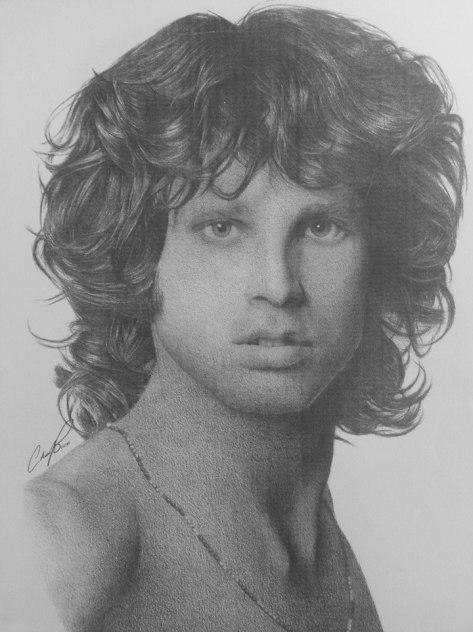
“The Sparkle of Extinct Stars” by Ian Ayres

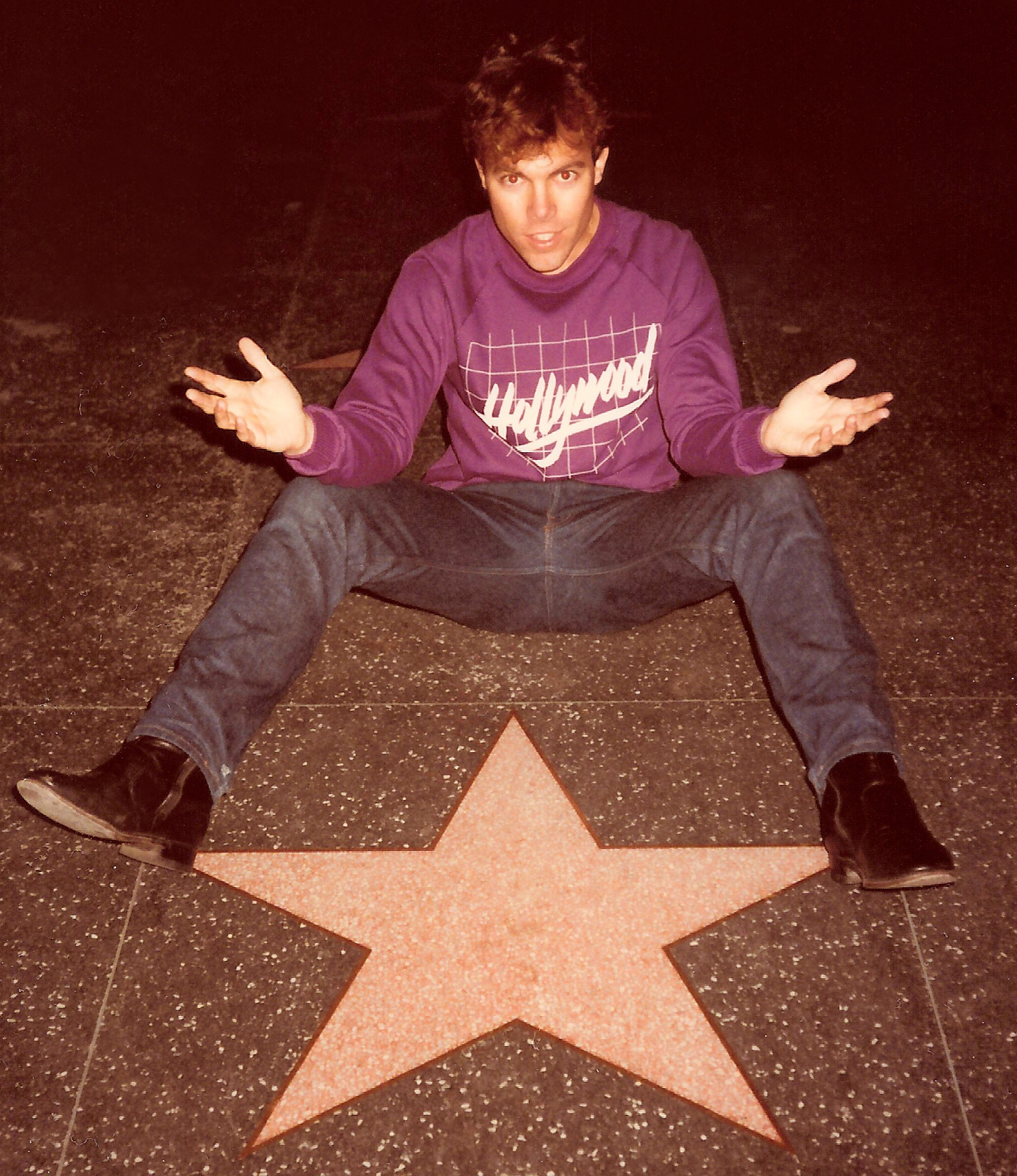
Ian Ayres (Walk of Fame) Hollywood Star

Dying TV sucks stars into a deep green void

& I’m reflected there, on my knees for nothing

nothing but this audience in my head

these front-row critics telling me I don’t matter

this gun to my left temple

cocked, with tense black finger ready to squeeze

the trigger, the trigger

& my brains will explode out my skull

grayish-orange on graffiti wall

as I stare into dilated, cracked eyes

bugging out of his wet, street-stricken face

sweating poison, hate & fear

telling me white boy ain’t got no business

in a black junkies’ ghetto

cold barrel pressed to my temple’s throb

a simple flex of his finger &

Oh, God, help me!

till something inside me clicks

& I know I’ll be forgotten

by my mother in prison, blocking out truth

tuning in to comedy

change the channel & it’s just the news

showing an 18-year-old white male corpse

under a sheet in a condemned building

forgotten the second commercials begin

& I promised God, if that trigger wasn’t pulled

I’d become so famous I’d live on in the minds

of every generation to come

“Fame, fame, fame” blasted from my stereo

as I lived to record my existence: Forever

so when I’m stardust in a box I’ll be

communing with fans flowering my grave: Forever

till 20 years later

my friend Allen made it clear not even our planet’s

Forever

& he aimed the bloodstained tip

of his diabetes test-strip

at the candle & its pulsing flame

at the door in its light-seeping frame

at my arm, down its rising blue vein

& called it all the same shimmering energy

for day is stardom engulfed in night

clinging

to different layers of light

like when I was 8

& my eyes were camera shutters

that caught each passing freeway lamp

me, looking up, alone in the backseat

while our drunk father drives

his fingers into my little sister’s crying “no”

my eyes catching each bright light

zooming in, zooming above

flashing like camera-bulbs

taking pictures of the future me

just a quick shut of my eyes

“no” my sister scoots away

but he orders her to sit close, as usual

& more pictures are taken of the greatest dreamer

the world has ever seen

because of the alarms screaming

because our ship is sinking

because I’m trapped in air

mesmerized by the sparkle of extinct stars

& breathe in the illusion

that Fame can last Forever

though I gasp when she gasps, drowning

yet hang on to dreams of going down

in a history that’s going down

as I climb to the heights of stardom

where my eyes will widen, with one final tear

& my mouth will open

in disbelief

not knowing what to do at death

except pretend?

pretend I’m a success?

filled with fear

doubts that linger

of not having loved enough

not having saved her

An Interview with Brenda Hayes

jds1

Brenda Hayes is best known as the wife of Jim Hayes who works to preserve the MainStreetFairmount.org project to restore the classically iconic main street of Fairmount, Indiana. Brenda was also in attendance at the Sweetheart Dance in 1955, where she was seated next to James Dean. The event has come to be immortalized through the photographs of Dennis Stock.


What was Fairmount like back when you growing up? What did you love most about the area?

I grew up during the 1940’s and 50’s which was a great time to be young. It was the era of drive-in restaurants and theaters. The entire country was booming and Fairmount was a thriving little community with a wide variety of businesses. It’s the kind of place where you always felt safe. High school sports, especially basketball, played a huge role in the town. On Friday nights the gym was packed with raucous fans of all ages. During my high school years, the shelter house at our local park, which featured a juke box and dancing, was a favorite destination for high school aged kids from all over the area.

How did you first meet James Dean? What do you remember about it most?

I met Jimmy at the Fairmount High School Sweetheart Ball in February 1955. I had the good fortune to be seated at the table next to where he was playing the bongo drum. During the evening, he asked me if I would like to play the drum, but I was shy and so declined his invitation.

From what you knew of him, what was he like as a person?

He was 9 years older than me, so I didn’t know all that much about him although everyone said he was a fun guy to be around.

What do you remember most about the Sweetheart Dance of 1955? Did you get to meet Dennis Stock at the time?

I was 14 years old and The Sweetheart Ball was my first car date and formal dance. That was a really big deal, and I was just excited to be there with my friends.

Was the whole town excited about of their visit?

We had no idea that Jimmy was in town until he showed up at the dance.

What was it like to be seated next to Jimmy at the dance?

It was exciting. Here it’s my first car date and I wind up seated next to a famous movie star. How many girls can say that?

Did he seem to mind people asking for autographs and such? I mean did he ever seem to get tired of it?

No, not at all, he was very friendly and engaging.

What sort of mood was he in that night?

Jimmy seemed to be enjoying himself immensely. He was at home, relaxed, talking to everyone, just having a good time.

How did it feel to see a memory in time brought to life on the big screen in the film LIFE?

The movie brought back a lot of memories, especially the scenes from the Sweetheart Ball. The producers did their home-work. The gym in the movie was decorated almost exactly like our gym in 1955.

Why do you think people are still trying capture the brief moments that he got to live and keep them alive for future generations?

Jimmy has always had a magnetic appeal for young people world-wide. I think he speaks to the timeless struggles, insecurities, rebelliousness that all young people experience.

Do think trying to keep his memory alive is a fitting way for people the world over to show love and respect for who he was an actor and for the man he was?

Jimmy is relevant to the youth of today. Although, Jimmy passed away 60 years ago, he represents the present, not the past.

Is there anything you’d like to say in closing?

It’s been exciting to have shared an evening with Jimmy before he became a legend and it’s certainly been a great conversation starter over the years.

“A Modest Man” by Lew Bracker

A Modest Man

There are poems about trees
And poems about seas
Poems of flowers and skies
A talking Raven has a poem
But so do common house flies

There are poems about ships
And poems about lips
Even an ode to a Urn
A day in June is so rare
Did I mention a verse to a fern?

There are poems about places
And Clown’s funny faces
Poems of all kinds of things
They run the proverbial gauntlet
From Cabbages right up to Kings

Yet there’s a serious omission
Yes, a revolting position
As you will readily agree
A poem that remains unwritten
I speak of a poem about me

A quatrain might do
Or a couplet or two
Published, of course, if you can
I might allow just a lymerick
For I am a modest man

Do not praise me too much
All my talents, and such
And the beauty that lays in my soul
Omit, if you please, my halo
Let humbleness be your goal

But write it you must
It would be only just
Tell all the world about me
But only as humble as you can
For I am a modest man

Now, a poem about me
It is easy to see
Is very hard to compose
Rhyme limits adulation
Perhaps, you ought to use prose

Poets, present and past
Would relax at long last
A wrong is to be undone
As with “Lenore” and “Hiawatha”
You’ll give me my place in the Sun

As you might surmise
I am thoughtful and wise
And not one to brag or to boast
I remain as silent as the lamb
For I am a modest man

LB 1/17/16

Lew Bracker is author of Jimmy & Me, dealing with his friendship with James Dean. An interview with Mr. Bracker is also available on Van Gogh’s Ear at: https://theoriginalvangoghsearanthology.com/2015/09/15/an-interview-with-lew-bracker/


“The House of Me” by Al Rocheleau

The-Patio-della-Reina---The-Alcazar-Sevilla-by-Ernst-Carl-Eugen-Koerner

THE HOUSE OF ME


This mansion of myself, come of bricks,
a portico, pick-up sticks, heavy misfortunes,
carpeted up-and-down stairwells of hope,
coats of blather and intrigue, intricate dormers
pointed to heaven, to the sullen hawk’s relief
(the eyed carrion or soon-to-be), windows
clear as birth-light, of oncoming calamity
and shuttered for such storms as can be seen
touched, felt like muslin or stiff canvas
on a hammock tree, divided from a world
by exterior glacial stones, Norse runes
Indian epitaphs, wind-chime’s leeward lean
leading to the open door, a sometime life’s
wiped-foot anteroom, its portraited halls.

In one wing a nursery, emptied of importances,
the tears of pneumonia, the bruised eloquence
of late, encumbered appearance on a mother,
the darlingness of sister who painted the child
a lipsticked gypsy girl for his first Hallow’een,
and a room tiered with bars for rolling sleep,
to stop the monster of a bed’s underneath—
the packages, packs of soldiers fighting wars
across a floor of silence, struck with points
appended to issues swabbed of alcohol,
the ice-daggers in their melting madness
sweated to the awful drone of Friday nights,
the older ones fleeing to their head-lights,
ballroom chandelier swinging like a gallows.

I grew into it, and additions were startling;
the conservatory filled with Lydian modes
and scales, rock and ragas, blues, Basie;
in basement den I’d countenance Thomas Wolfe
and plan my sojourn on the road of crazies,
wrapped the road round me only to return
like unopened mail, to the bed of no roses,
womb of worst hurts, carved daisies,
a mailbox number on a less traveled road,
waiting to escort you on my run of luck
into this domain, mistress of it and of me,
salve in the broad bath of a redeeming,
beauty that expounds its quiet grace,
the sorrow of a battered face, leaving.

Years of children sculpt into softest marble—
relief is everywhere, sheen on the railings,
song in the garden of asters, symmetry of slate,
walks of ever-afters in our reverie,
the years of a refurbishing cast from image
to a real, live estate this breathing building,
this generation assured of its corrections,
drywall’s fall that frees all buried-alive
to love, to sleep among the brass and blooms
in bedroom of our dawns, delivering decades,
patrician and deliberate days released
like sighs into screens of a summer veranda,
the swinging lilt of permanence all but assured
and then, comes calling, the collector’s answer.

The address accounts to forlorn corridors
where emanates the Department of Lost Chances.
Children, older, file down the driveway;
you surrender, and I close off the sanctuary
of our adoration, the finest of all rooms
within my heart and perfect as a tomb
sealed with wax and wisteria, and move
the metaphor to a place on another street,
where vendors hawk and smoke of card games flows
from upstairs windows, where the evening paper
folds to that column-inch of arrived future:
House for Sale, choice location, spacious
and priced for acquisition, fine for such
as know their craft’s ambition— call for details.


The origins of “James Dean: A Beautiful Soul,” an interview with Cody Mullins

C__Data_Users_DefApps_AppData_INTERNETEXPLORER_Temp_Saved Images_MV5BMTUwNTcyNDI5Ml5BMl5BanBnXkFtZTgwMDcwMTUxNjE@__V1_SY720_SX486_AL_

Cody Mullins has worked as an actor, director, writer, and producer. He filled all four roles in the video Kelly and the upcoming feature film James Dean: A Beautiful Soul. As an actor he has appeared in those projects as well as the short film The Lost Samurai and the television series in development, Absolutely A List. In his latest effort James Dean: A Beautiful Soul he attempts to bring to light some of the deeper, often ignored, traits and qualities of the man often viewed through fame alone.


Since there isn’t a lot known about you, can you tell us a little about yourself? Where are you from? What were you like as a child?

I am originally from the east coast. I came out here to California in 2009…San Diego to be exact. I came out here to make a change in my life as I saw my life steadily going nowhere fast in my hometown. I didn’t come out here for acting or to be in the industry originally. I just wanted to move to a place where I could find peace of mind and start over. It was a five day vacation with me and my mother and on the second day I told her I wanted to stay. She was very surprised but she helped me to find an apartment, car and a job before she would fly back. We were very lucky to find all three in such a short span of time. She has always supported me in anything I have I wanted to do in life. I mean, be it that it is not too crazy or dangerous. She is a wonderful lady.

As a child I had a pretty good imagination as I was never one to have a lot of friends. I would pretend to be characters from movies when I would play outside. The first character that I pretended to be which, looking back really shaped my personality at a young age was “John Connor” from the film “Terminator 2”. I was only seven years old when I watched the film for the first time.  Seeing this older boy riding around Los Angeles on a motorcycle doing whatever he wanted just seemed to click with me. I was fascinated by him. I was fascinated by the way he wore his clothes, the way he had his hair, the way he spoke and that he was independent in his mind set at such a young age. He was what I wanted to be. I dressed like him, wore my hair like him and tried to speak just like him. I annoyed my mother to get me a motorcycle even though I didn’t know how to ride one. I just had to have one because he had one and he looked damn cool riding one. She spoke with my father and he bought me a little 50cc orange motorcycle that I learned to ride and loved it. That is what got me hooked on motorcycles. I still own a motorcycle to this day. Not to mention the song that is in the film entitled, “You Could Be Mine” by the band Guns N’ Roses is still my favorite song. The strange part about it, now looking back was I pretended to be that kid for two years. It is not like I would go outside and pretend to be him and then come back inside and be Cody again. I was him for 24 months straight. I guess I was always an actor and I didn’t know it.

When did you first take an interest in acting?

Oh boy, you opened Pandora’s Box with this question. The first time I really wondered what acting would be like was when I was in college and I saw that they offered a class called “Acting 101”. I thought that maybe it would be fun to act out scenes and to interact with other people in that sense. The class turned out to be a pantomime class which I hated. I didn’t like it and no one in the class would talk to me. I wanted human vocal interaction. I wanted to act out angry and upsetting scenes. I wanted to vent. I had a deep urge to spit out my emotions for some reason. I wanted to try to be good at acting but this class was not what I wanted. I found it boring at the time although, now being a little more experienced as an actor I have respect for all forms of acting, art and even pantomime.

At the beginning of the semester the teacher told us, “If you miss every class and come in on the last day and pass your final, which will be a pantomime exercise then you pass for the whole semester.” I thought that was great. I didn’t want to be in a class where no one would pair up with me to do the exercises or talk to me so I skipped every class and would go skateboarding. I was sponsored for skateboarding at the time by a company in Colorado called “Krown Skateboards”. I had just signed a contract to be on what they called “flow” for the company so I really wanted to work my way up and become a professional. It was the only thing I was good at. I wasn’t good with people or books so I figured skateboarding was my only option.

So needless to say the last day came and it was time for me to take my pantomime final exam. As soon as I entered the room everyone was wondering who I was because I had not been there in months. Anyway, the only props we were allowed to use were a chair and a foot stool. All the students were miming out all these “nice” things for their final, like baking cakes, cookies, washing their clothes etc. I found it once again boring to say the least. Then my name came up, “Cody Mullins you are up.” As I walked down to the stage area I kept asking myself in my head, What the hell am I going to do? I don’t even want to be here.  Ah hell, might as well try something and attempt to pass the class at least. Then I looked up at these people. These people that clearly didn’t really like me and I just felt an urge to scare them.  I mimed out a business man who came home from work and as he was watching television he received a call that was upsetting to him. I really tried to show in my face that I was clearly upset. I wanted to show the transition from happy to upset but in a very subtle realistic way. Then he reached down and got his briefcase and took out a gun (a mimed gun mind you lol) and commited suicide. I was the only person that no one clapped for. They were all looking at me with this surprised look on their faces. I liked the fact that I had their attention at that moment. I think everyone thought I was crazy. I just wanted to jazz things up a bit that’s all. Once I got back to my seat this really big muscular guy who was seated behind me put his huge hand on my shoulder and I got nervous. He leaned up to me and whispered, “Hey that was awesome man.” I told him thank you. I passed the class.

I didn’t really try out acting again until I moved to San Diego. I had lost my sponsorship with “Krown skateboards” due to my location in my hometown and the fact that the skate shop had closed down. That was how I was suppose to get my free boards and shirts was to go to the skate shop and pick them up there. They informed me that there was not a skate shop within 500 miles of my hometown that carried Krown skateboard merchandise and they could not mail company product to my house as only professionals have that privilege. So I was sponsored no more.

I figured being in California I could try to get sponsored again but age and old injuries flaring up just really got me thinking that maybe this was just not going to happen. Skating helped to take away some of my tension but skateboarding is a quiet art form. So when a person does a particular maneuver one does not talk. It took away the tension in my teenage years and early twenties but it wasn’t really doing it anymore and I didn’t know why. I needed to vocalize something. My emotions were erupting out of me for some reason. I couldn’t make the tension in my chest go away anymore so I thought maybe acting might make it go away. I went to an acting school in San Diego and begged the teacher to let me act there because I was broke and couldn’t afford the price of his classes. He let me attend the classes for free as long as I would advertise for his acting school by taking fliers to coffee shops and leaving them for people to obtain. I appreciated that so much and still do.

There came a day where we had to act out monologues and just like in the pantomime class all the people were acting out all these sweet, nice monologues. I wanted something with an edge. I picked a monologue from the movie American Psycho. My monologue was very gruesome in detail. I embraced the piece and acted it out without any restraints and just like in the pantomime class no one clapped and they all looked shocked once it was over. I had gotten into the part so much that my hands were shaking and at long last….the tension… was gone from my chest. I walked back to my seat and I whispered to myself as I looked at my hands, “I am going to have to do this for the rest of my life.” I was hooked on acting. It was my emotional outlet and I have been addicted to it ever since. I moved to Los Angeles a few months later to pursue acting as a career.

Who are some of your influences?

I would have to say that my biggest influence would be my mother. She is such a positive individual, a good person and so very wise. My other influence would have to be James Dean. I have had the opportunity to meet several celebrities here in the Los Angeles area and I have to say that I have been very disappointed with every single one of them. Every celebrity that I have met has been very arrogant and egotistical and those are traits that I am not fond of at all. When I read up on James Dean he seemed so real and so genuine. I kept saying to myself, “Man, I bet that guy would have been wonderful to meet and get to know.” I have to say that he is the only celebrity that I would have loved to of met in person.

What do you love most about the art of acting?

I love the beauty of it and the emotional therapy it provides. There is really nothing like it and it is always changing. Every scene is different and ever project is different. It never gets boring. It allows my soul to scream and as an actor you have the ability to touch people’s hearts. I only wish I would have found acting at an earlier age because it is amazing.

As someone who has worked as an actor, director, writer, and producer do you enjoy one more than the other or do you love them all equally? Which do you find the most challenging?

I enjoy acting the most. I don’t really like the mechanics or paperwork of movie making. I like being in front of the lens. I like the feeling of venting and doing a scene well. When I am not in front of the camera I feel displaced and I want to be in front of it. I knew I needed to take great care with this film. I wanted to make sure it was done right so I decided to take on the roles of actor, writer, director and producer. It took me a long time to get use to jumping from actor to director. That is exhausting mentally. Trying to find these moments in Dean’s life, get them in chronological order, and then put them in screenplay format was a bit tiresome but it was worth it. I feel that if I ever decide to quit acting or directing etc writing will be what I fall into as my mind is constantly creating stories. If I can’t film them I’ll try to publish them at least.

How did you first become interested in James Dean?

He started to spark my interest when I read that he had insomnia. He would walk around New York City all hours of the night. He would talk to homeless people and people from all walks of life and pick up their gestures and movements for his acting. I thought to myself, what a better way to be realistic than to study real people in real situations. So I started to read up more about him and my fascination grew and grew as time went on. I have never come across a person as fascinating as he is, or as interesting.

What led you to create the feature film James Dean: A Beautiful Soul?

In one of the biographies I have on Dean I read that he befriended a young girl who was an amputee. She had lost her leg in a motorcycle accident. One evening he asked if he could see her leg. She said he could so he knelt down, very gently ran his fingers over the scars. He then kissed the end of her leg that had been severed and looked up at her and said, “Your leg is beautiful. You are beautiful and very special. Don’t ever let anyone make you feel like you are any less than beautiful.” That moment brought me to tears and I said out loud right at that moment. “This guy has a beautiful soul.” That is where I got the film title. I knew right then at that very moment that he was my favorite not only for being a brilliant actor but for being an amazing human being. This world needs more people like that.

C0638.MP4.00_01_47_08.Still001

Do you find it a little intimidating to be portraying the greatest actor of all time? What is the hardest thing to convey while trying to do that?

Yes it is intimidating. It is very scary in fact. There have been many times I have asked myself, “What am I doing? Can I even do this? Do I have what it takes to do the guy justice?” For the longest time I wondered who I might want to cast as him before we started filming. The more I thought about it the more I felt that I could relate to some of these moments that I am trying to convey on film. They are moments that I, as an actor can relate to and maybe other actors can relate to them as well. I felt that it was best for me to interpret Dean and not try to imitate him. I would read conversations in biographies about him and see how he would respond in the dialogue and think to myself, Yeah, I would respond the same way if I was in the same situation.  I felt that I related to him and to these moments so much that I just had to do it myself.  I just felt in my gut that I had to do it this way.

Why do you think society as a whole seems to focus more on the fame aspect of his life as opposed to the deeply personal qualities he possessed as a man?

People are just drawn to fame for some reason. It is so strange. When I came across these moments in his life I kept asking myself, “Why hasn’t anyone filmed these moments? There is so much more to this guy than what people know.” People are just drawn to the success side of things I guess. When I read about how he struggled and how much he cared about his art form I would say to myself, “This guy deserves his place in history. He earned it.”

What do you personally admire most about Jimmy as a person? And as an actor?

He took his acting very seriously and that is something to be respected. He had traits that I admire and respect in a man. He cared about people and didn’t like to see others mistreated. He was an individual and had a real sense of himself. He had the mentality of someone so much older than 24. He was very much wise beyond his years.

Are you nervous about how this project will be received?

Oh yes, especially when the project is about a man who is so iconic and who is sadly not here to defend himself. I am very nervous. The last thing I would ever want to do is disrespect him. I want this film to not only show that even an icon struggles but to celebrate just how much of a wonderful person he was. I hope it turns out well. I hope people enjoy it.

Do you have any interesting stories from the set that you’d like to share with our readers?

Yeah one incident comes to mind. I have always wanted to meet someone who knew James Dean so I could talk with them about him. I really wanted to meet Frank Mazolla. He was a real gang member that Nick Ray brought onto the set of Rebel without a Cause to help to make the film more realistic. He was friends with Dean and helped to coach the knife fight scene.

We were doing a behind the scenes moment between Dennis Hopper and Dean in the film. This scene took place while filming Rebel without a Cause so it was one of the scenes where I had to wear the red jacket. A friend of mine handed me a newspaper clipping that said that Frank Mazola’s funeral was that very day. I found it strange because there are only two scenes in the film where I had to wear the Rebel without a Cause wardrobe and that was one of the days. It seemed a little eerie to me.

What do you hope the viewer takes away from viewing this particular work?

I hope that the viewer realizes that even someone as iconic as James Dean struggled to achieve his dream. He was an amazing person with a beautiful soul and a lot of natural born talent. He went through the tough times and succeeded. I hope that not only actors relate to this film but everyone.

When can the public expect to see it finished?

The release date was December but we still have a few scenes left to film. I decided to add two more scenes to the film so it will be a little longer. We have the editing process so I hope no later than Feb.

Is there anything you’d like to say in closing?

My ultimate goal in creating this film is to show moments in Dean’s life that people are unaware of and that I find admirable. James Dean is my favorite actor and over the last couple of years I have felt compelled to make this film. I hope others will appreciate the life he lived and take something of value from it. I appreciate all the people who helped make this film a reality. I would also like to say that if there are any young people who want to get into acting, read up on James Dean and watch his films. I have learned a lot from him and I think other people can learn from him as well.

5-14 Beach Scene1

“Warwick Park” by Jonathan Beale

tumblr_static_london__pall_mall_and_st._james_street_-_john_atkinson_grimshaw

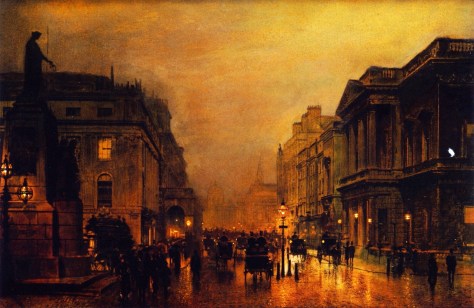
Warwick Park


Light slips quickly away from Warwick Park
The laughter lies like broken forgotten toys
The crows and gulls bob as buoys
And the time is eerie, cold, and dark

There is a heavy gothic air most nights
The trained tamed laughter follows on
Heard from sunset til the night is gone
There is no fear Heights

Left here among the forgotten thoughts
The voices whisper in lies and torts
The columned entrance forebodes time
Watching waiting for freedoms chime
The creatures of the night flee the shadows
And strangely not seen until the light goes

First published in the Screech Owl 2013

Jonathan Beale has 300 plus poems published in Decanto,  Penwood Review,  The Screech Owl, Danse Macabre, Danse Macabre du Jour, Poetic Diversity, and also; Voices of Israel in English, Miracle-E-zine,  Voices of Hellenism Literary Journal, The Journal, Ink Sweat & Tears, Down in the Dirt, & (Drowning: Down in the Dirt July 13 Scar publications), The Poet as Sociopath (Scar publications), The English Chicago Review, Mad Swirl, Poetry Cornwall, Leaves of Ink, Ariadne’s Thread, Bijou Poetry Review, Calvary Cross, Deadsnakes Review, The Bitchin Kitsch, The Dawntreader, I am not a Silent Poet, Pyrokinection, Festival of Language, ‘Don’t Be Afraid: An Anthology to Seamus Heaney’, Ygdrasil, the Four Seasons Anthology and The Seventh Quarry.  He was commended in Decanto’s and Café writers Poetry Competitions 2012.  His first collection for Hammer and Anvil ‘The Destinations of Raxiera’ was Published November 2015.  He studied philosophy at Birkbeck College London and lives in Surrey England.


‘The Ghost of James Dean’ by Roy ‘Oily’ Phillips

James Dean's grave without tombstone (August 1983)

The world was so, so different then in the early 80s. It was still a big adventure for anyone to travel to some remote, odd places and lap up all the feelings at that particular time and place. It’s been over 30 years since that time. And it’s a strange, blurry, even surreal thing — with pictures coming into my head and other things flashing by like, you say, the smell of something, etc. But it really is the mystery of it all that still means the most. I went there, I stayed there, and I’m still here. Memories come back again, be it they are very shadowy … a bit film noir, in fact …

Winslow farm from rear taxi window

Winslow farm from rear taxi window

‘Oily’ is how I sign my cheques and everybody calls me ‘Oily.’ It came from my messing with Triumph motorbikes as a kid, so it was ‘Royly Oily’ and it stuck. In fact, I was born Roy Terence Phillips in Isleworth, London on the 14th of October 1957. I grew up in a very musical environment. My dad was a professional drummer, my mum a singer, and music was everywhere — in all shapes and forms and sounds around the house, all the time. From Elvis, Chuck Berry, Fats Domino, Little Richard … then, of course, into The Beatles, Dylan, David Bowie, Led Zeppelin … then into the whole punk thing of The Clash, Elvis Costello and so on … and so on and on … mostly ‘rebel’ music.

I knew I was a musician from a very early age. Drumming at 5, guitar at 8 and having absorbed thousands of records into my early teens, I had enough ammunition firing from everywhere to create my own music and, indeed, bring ideas very quickly to artists or bands I played with and still do, in fact. I have recorded and played / written music all my life and toured with many great artists — The Clash, especially. My old friend Joe Strummer was a big Dean fan, too.

All the time this was going down, there were also films — which meant just as much to me. I loved Robert Mitchum, Bogart, Robert Ryan, Cagney, etc. But this one chap stood out a million miles away from anyone else I’d ever seen on a screen. I knew instantly, as a very young kid, I wanted to be HIM — James Dean. The images and characters he created are the truest mark of an incredible actor.

James Dean seemed to me to be like a rock musician. Then I found out he was dead and gone before rock music was truly born. It all then started making sense that this guy was the spark of a revolution in all the arts — bringing about a totally new wave of young creativeness not seen before or since.

I knew in my soul that one day I would go visit some strange, far-off place he was from — although, at the time, America might have well been on Mars. Where I grew up, the street you lived on was the world.

I had an uncle who moved to Canada many years ago — to Toronto, in fact, and I planned a trip to visit him and his family in the summer of 1983 — on my own, which I did. After getting there and settling into my month’s break, it suddenly hit me: ‘Ahhhh, Jimmy Dean comes from a state which I could maybe get to from here.’ So I told my aunt and uncle the whole story about my love for this man’s films and they, of course, knew straight away what had to be done. Mind you, I had my red sport’s jacket, Levi 501s and hair brushed back like Dean’s. So it wasn’t really a guess who I wanted to go visit.

I came back one afternoon, from being out with my two cousins in Toronto, to find my aunt had arranged everything — all the relevant bus routes and connections and had even found out the number and rang the Winslow’s farm to find the exact location.

I went on my journey dressed as though I was a stand in from Rebel — not really thinking that much about what, why or where I was headed. We stopped at places with names I’d only heard in songs over three-thousand miles away — like Bowling Green or Napoleon — then suddenly the guy driving the Greyhound bus says, ‘Marion, Indiana’ and I go, ‘Oh my, my. This is very powerful.’ And something in my soul stirred.

I booked into a motel and told the desk clerk I wanted to go see Jimmy Dean’s grave. The clerk kindly got me a taxi service and away I went …

The guy driving was a great fella. I’d basically told him my whole story by the time we pulled up right next to the grave. He said, ‘Do you want me to come get you?’ and I replied, ‘Yes, please. In about five-hours time.’ I got out. He went. Then I noticed there was no headstone.

Roy Phillips (ghost @ James Dean's grave)

I’d seen that stone many times in my many books about Jimmy and there I was ready with my camera and there was nothing but the base. I sat there for what seemed an eternity — probably three hours — when I noticed a car coming in the distance, which finally pulled up behind me. It was a police car and this fella gets out — Deputy Sheriff Ferguson, who slowly walks up to the grave with me sitting there and his first words were — and I’ll never forget it — ‘Damn near thought I’d seen a ghost.’

I am not a religious man, nor do I necessarily believe in any other force surrounding us, but there definitely was and still is a spirit of James Dean in me or my soul or whatever we wish to call it. I do believe a soul of a person can enter someone else — be it for a second or a million years.

Well, Deputy Sheriff Ferguson and I got to talking about Dean. The sheriff was investigating the missing stone — which had been stolen a day or two before I got to Fairmount. For a very brief moment I thought, ‘Shit, maybe this guy thinks I took it.’ You know how it goes with the police around you. But it seems quite funny now to even have such thoughts. Apparently, the stone was stolen weeks before but found hanging in a tree or some such, according to the sheriff, then returned before it was just stolen again. He was a great fella, though, and took some photos of me, and I of him, at Dean’s grave without the stone.

Roy Phillips @ James Dean's grave (August 1983)

Roy Phillips @ James Dean’s grave (August 1983)

Just about this time, another car pulls up and an elderly couple get out — Wilbur and Joan Hoskins from Fairmount — who were coming to see the grave with its missing stone, which was actually in the local papers that very day. They owned the Hoskins shoe shop in Fairmount and spoke to me for about an hour about how they were friends with Jimmy’s parents and, in fact, babysat Jimmy on a few occasions. It’s a while ago now and I can’t remember the wheres or whys of their looking over Jimmy as a babe, but they were there and they said it and that’s that. I got a feeling of real warmth from these people and a great sense of love and caring for not only the boy Dean but for his family as a whole unit. I would love to know if any of Wilbur and Joan’s family is still around in Fairmount?

James Dean's tombstone stolen (3 Aug 1983) Fairmount news

Wilbur and Joan Hoskins

Wilbur and Joan Hoskins


Deputy Sheriff Ferguson and Wilbur Hoskins

Deputy Sheriff Ferguson and Wilbur Hoskins

It was, in fact, Wilbur who just casually said, ‘Have you been to the house yet?’ I replied, ‘No.’ I didn’t even know it was that close by, to be honest, and was just going with whatever would deem to happen. I must admit it was a sort of dream like experience, in a way, as I didn’t really go to find out anything or to meet anyone — let alone talk to anyone who knew the family or Dean himself. It was just a calling of a personal nature.

So next thing I know I am at the driveway to the house I’d seen so many times in books with JD and his flat cap on in winter time or pushing Marcus around in a makeshift cart. We walk up to the house and a guy opens the front door. I didn’t know who he was. So he speaks with Wilbur and Joan in their Hoosier way and then, just in conversation, they tell me this is Marcus Winslow. Then they introduce me as a guy travelling like a billion miles to see Jim’s grave. Wilbur said, ‘We damn near thought we’d seen a ghost at the cemetery.’ With that Marcus looked me up and down and quietly and slowly said, ‘You’d best come in, then.’

I was totally taken over, when I entered, by a sense of me not being me but some stranger who was maybe popping home for a coffee and a sandwich. I know it sounds strange, but that’s how it felt. And I know Marcus felt totally at ease, too. I did have quite a lot of Jimmy’s characteristics — even to the point of walking slightly pigeon-toed! I never would compare myself to him, and no one can, but he affected me in a big way as a kid. And people through my teens and twenties would mention him whenever I was about. So that’s where it all sprang from really.

I think I straightaway showed Marcus my JD tattoo. It simply says JAMES DEAN at the top, with a rebel flag and Rebel Without a Cause underneath. Then I told him my story. We just chatted about Dean as though it was something totally normal like we all chat with our friends and families about things like what we have done or plans of what we’d like to do.

I can remember drinking lots of coffee with Marcus. It sticks in my mind as we only really rarely had coffee at home in England — always an instant brand and certainly not made in a big glass jug, as Marcus made it. This coffee was a vanilla flavour and I was hooked on it.

The kitchen looked very 50s / 60s — with those sliding cupboards in obscured glass where you put your finger in the hole-cup and slide. Some had just regular opening doors, too. The smell of the house was a kind of an oldie-worldly smell in as much as a sort of woody odour — not quite musty, but a hint of that if you get me. It was quite a hot time of year and it’s a different heat to England’s — as our summers can be very intense heat, whereas this felt quite open and fresh — although still very warm, but not sweaty.

Marcus was a very kind man and spoke quite slowly and very kind of monotone. I don’t mean boring, but it was sort of one level of tone apart from when I started going on about my music and the impact of JD upon my musicality. His words were quite few and far between, to be honest. It was more a connection on his part, I think, that someone had come to stop by who felt very familiar to him. I was around the same age then as JD when he died, so it was a real connection. But my story, as opposed to the film world, was the music world.

Marcus smiled a lot and, although he was very young when Dean passed away, he has quite a concrete picture of his personality. In fact, I could feel the love and, indeed, presence of Jimmy most of the time through being with Marcus. We spoke about what-ifs. The films Jimmy could have done interested both of us. Obviously, using classic films we now all love, I often imagined him in a Travis Bickle type role from Taxi Driver say. Marcus spoke about Jimmy’s love for animals and wildlife in general, which is always a good sign. I asked about the winters, especially during the 40s and 50s, in Fairmount. Marcus said they were pretty harsh and bleak. I said I thought they were more so in my country then, but it brings out a real closeness to family – even more so in Fairmount, because they were and still are quite remote and rural there.

I remember sitting in the living room on a very comfortable, single high-backed armchair. I think there is a photo I’ve seen of JD sitting in that chair, maybe with a cat?

Before I knew it, it was dark outside and I got to stay at the farmhouse with Marcus — who I just simply remember as a down-to-earth man, very much in keeping with what a lot of the world sees as an American farm person. And I’m sure Jimmy, himself, was this. It’s the image we all love and that’s at the heart of his greatness. Not only did I get to sleep in that house but in Jimmy’s room.

I guess it’s simply because I knew things about that place — having read many things about Dean as a youngster, plus about Steve McQueen, James Coburn, Paul Newman and many other great actors who all used to visit JD’s grave, for many years, on his birthday or death day. It was a very easygoing thing, like it was meant to be, at that exact time and place for me.

Another thought I did have at that time in the house was that maybe the headstone had disappeared because he has returned. You know how the mind can run riot. I imagined I was James Dean, come home to stay a little while, then go quietly back in time, once again. It all was beautiful, like time-lapse photography.

The Winslows' house (Jimmy's open window at top, far left)

The Winslows’ house (Jimmy’s open window at top, far left)

The stairs, if I remember correctly, had a carpet that ran up the middle of them — with borders of brass on each side, holding the carpet down. There were a few creaks. The house was like on typical rural farms in most countries, built of 90% wood. And the wood breathes and moans quite a lot. I slept in a single bed. I’m not sure if Jimmy would have slept in it. I didn’t even think to ask. But I obviously lay there thinking, ‘Jeez, to think James Dean lived in this house …’ and sort of getting overwhelmed with the whole thing. But, at the same time, just being me imagining I was him — a kind of ‘I’m playing James Dean but I am James Dean — the James Dean that girls at bus stops in England would call James Dean.’ This is all probably sounding a bit bloody odd but — hey, it’s what I felt at that time.

Jimmy’s bedroom (or box room as we Brits would call it) was at what I’d call the side of the house, which in fact is the front door side or porch area — because it sort of faced sideways, to the main road, so you could see just farmland and the road heading back to town from his bedroom window. The gramophone player I saw in his bedroom, where I slept for just that one night, is in a photo with him that, when I see it, takes me back through years and years until it’s like I’m back there. I’ve seen many pics of Jim playing his records and bongos in the room. Anyways, there was his old gramophone — a rather large piece of furniture, really, much like the 40s / 50s grams that we all had in the 50s, even 60s — with a cabinet at the bottom and a few 78s. The speeds on the player were 78, 33, 16 and 45 — 16 is interesting, because it’s a speed for mainly spoken word. So he must have listened to maybe poetry or plays, which were put onto Bakelite 78 discs.

James Dean with his gramophone

After that first night, I stayed in Marion for a few days and in those three short days I’d sit at Dean’s grave, alone — feeling even closer to him in spirit, since I’d met his cousin, slept in Jimmy’s old bedroom in the house I’d only ever seen pictures of, and looked around the barns where Jimmy kept his motorcycles. And I met some great folks and it all will be in my heart always …

Even now it seems a bit like a dream sequence, but it’s all inside me — forever. What was happening at the time was just part of my life. There was no deep mystery or meaning. It was just a trip to say hello to Jimmy Dean. It was as though I was supposed to be there at that time and I was. It’s as simple as that. It’s a situation, a very simple one in its reality. A young man from London, England — who loves films and music — gets James Dean in his soul at a very early age, goes to visit the place JD was from and ends up meeting members of his family, close friends and, on top of all that, the police are looking that very day for his stolen headstone.

Roy Phillips stands at James Dean's grave

RIP JBD   X