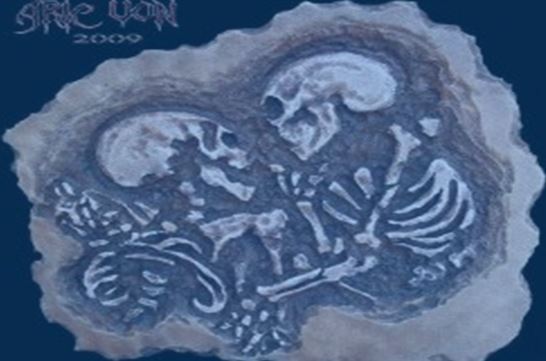
“Of These Spiraled Identities V” by Felino A. Soriano

V

“…for the creator there is no poverty

and no indifferent place”.


Rainer Maria Rilke


when realigning improvisations

or regaining spectrums of what

the prior moments’ caused amid

sufficient understandings


the


intermittent values of self

contain beyond theory and its

languages of unrealized

mentations


border and bend into an

altered confinement of self’s

introverted dialogues and

shadow or silver of its

elongated fabric

totaling hitherto

half of these symptoms’

origami strategies


Felino A. Soriano has authored nearly five dozen collections of poetry, including Extolment in the praising exhalation of jazz (Kind of a Hurricane Press, 2013), the collaborative volume with poet, Heller Levinson and visual artist, Linda Lynch, Hinge Trio (La Alameda Press, 2012) and rhythm:s (Fowlpox Press, 2012). He publishes the online endeavors Counterexample Poetics and Differentia Press . His work finds foundation in philosophical studies and connection to various idioms of jazz music. He lives in California with his wife and family and is the director of supported living and independent living programs providing supports to adults with developmental disabilities. For further information, please visit www.felinoasoriano.info .

An interview with John Waite

jwaite

John Waite began his career in 1975 with the band The Baby’s, followed by his solo career that spawned the timeless hit Missing You (as later recorded alongside songstress Alison Krauss in 2006). He also enjoyed moderate success as the frontman of Bad English. His last studio album Rough & Tumble featured the ballad If You Ever Get Lonely, co-written by Matchbox Twenty’s Kyle Cook. June 11, 2013 saw the release of the iTunes exclusive Live All Access which featured the song live. The track is also being covered by Love and Theft and is currently climbing the country music charts. He can currently be found on tour in select cities.  I was honored to have the chance to sit down and talk with the man behind the music that we all know and love.

Can you tell us a little about yourself as a child? What was it like growing up in Lancaster? When did you first discover the power of music? Can you tell us a little about that?

Lancaster is an historic town. It has a castle and a river runs through it. I was raised in a cottage facing into the countryside. There were fields and a huge park opposite the front door. My family was very musical so music came to me pretty naturally. I joined my brother’s band occasionally to sing R and B or whatever we could think up. Country and Western was huge as a kid as it was songs about cowboys. When your 5 it’s all cowboys and Indians. Big Bill Broonzy came next with the blues then Hank Williams and then the Shadows. All incredibly exotic for the northwest of England in the 50’s. I wanted to be a cross between Popeye and Hank the Cowboy. ( I’m almost there). I discovered the test card on the t.v. had music playing behind it. There was this sort of Magnificent Seven chord change in the middle. Blew my mind! I used to sit there with my brother waiting for it to come round.

 Why do you think music has been such an important entity in society throughout the ages?

I’m not really religious but defiantly spiritual. Music is the closest thing to religion in my life. The only god in this world everyone believes in is money! Frightening but true. Music is free! Always was.

photo (14)

When you first started your career did you ever imagine it would have lasted as long as it has? What advice would you give the musicians of tomorrow?

I never in my wildest teenage dreams imagined that I’d ever get a shot. To make a record , to be taken seriously. To make a living doing that , is off the chart. Hey, it’s been a dream come true. Advice is a bit of a joke really. If you’re really going to do something like become an artist there is no choice. No one is ever going to talk you out of it. It’s a harsh world but the artist has the intangible …the awareness. It’s worth more than anything else.

When you recorded Missing You did you think it would become as well loved as it is?

Getting a number 1 with Missing You was the most surreal experience! That and living in NYC at the same time. I’d been there two years before in a studio apartment with virtually nothing. The neighbors thought it was cool! Great fun! I knew it was good when I co wrote it. I knew it was something serious. One of those in a lifetime is enough. It spoke to everyone on a lot of levels. That’s what really makes for a great piece of music. A lot of people do it. I was one of em! It’s a legacy of something true and real for people. Funnily enough, I’ve written better songs. When you write something that big it overshadows everything else you do for a long time. It’s odd to arrive in a band called The Baby’s where “serious” musicians sneer at you, then prove them all wrong and write a masterpiece. (almost beats being Popeye!)

IMG_2452rt

What are your feelings on life and death and the afterlife?

Life changes everyone but there’s still the essence of the kid you were behind everyone’s eyes. It’s a mean old world and everyone gets hurt. Badly. Spirit is the thing I love most in people. It’s a relatively short time we have here. It’s cool to “walk the walk”. Not just with music (that’s a given) but as a human being. Kindness! Do the right thing! As Dylan once said “morality gets a bad rap”. How you get through this life is up to you but I want to go out with a sense that I was straight with people and did the right thing! My dad used to say “Live and Let Live”. It’s stuck with me.

 What projects are you working on at the moment?

I’m waiting to see what happens with the live album. I could walk away tomorrow!

An Interview with Becket

Becket

Becket is a fascinating character to say the least. He currently assists the iconic authoress Anne Rice, is a former Benedictine monk with a master’s degree in theology, and an author in his own right. His latest offering The Blood Vivicanti features characters and concepts by both Becket and Anne, and is slated to be released as a 6 part series. It was an honor to sit down with him and learn a little more about the man behind the mystique.

Where are you from? What did you love most about growing up there?

I was born and raised in Jacksonville, FL. What I most loved about growing up there was living close to the beach.

Did you have a love of words from an early age?

My love for words began around 11 years old, when I met Sam Rivers (now the bassist for Limp Bizkit). He and I formed a band, and I started writing lyrics. In high school that grew into poetry and short stories. In college I wrote fewer poems and more stories. When I started working for Anne, novel-writing was in full swing.

What was you very first favorite story? What do you consider your favorite story at this point in your life? Why?

The first story I ever read was a book titled: He Remembered to Say Thank You. It was a book for children based on Luke 17:11-19, about ten lepers who were healed, yet only one remembered to be grateful.

What led you to become a Benedictine monk with a master’s degree in theology?

I started studying to be a diocesan priest in 1997. After 3 years, being an introvert and a scholar, I felt that the silence of the monastery was a better fit for my personality.

Once I became a monk, I also wanted to become a priest. To become a priest I had to have a master’s degree in theology.

What did you enjoy most about all of that?

I enjoyed most the routine of disciplined prayer, the silence, the work and the camaraderie of the brotherhood. We were more than men in monastic habits. We were friends and family.

What led you to give that up and become a writer?

I lived in the monastery for five years. At the end of the five years, I was given a choice to make solemn vows, which are as binding as marriage vows. I felt that I wasn’t ready to make that kind of commitment. So I resigned from the monastic life. I emailed Anne about it, jokingly asking her if she had room on her staff for an ex-monk. To my great delight and surprise, she said: Yes!

What was it like when you first went to work with Anne? What was running through your mind when you first landed the job?

Working for Anne Rice was a dream come true. I had been a fan of hers since I was a teenager. Honestly, there was so much happening that I didn’t have time to really think about it: I was working for one of my childhood heroes, I had moved to California, and I was preparing to accompany Anne on a book tour. It was an intense time!

What is she like as a person? What have you learned from working with her?

Anne is one of the most kindhearted people I’ve ever met. She’s also one of the most intellectual. She doesn’t merely read a book: She thinks about what she reads, and she challenges others to think also.

How did The Blood Vivicanti come into being? Can you tell our readers a little about what to expect from this series?

Anne and I developed the Blood Vivicanti through several discussions over the course of several years. This new breed of blood drinker had to be a new cosmology than Anne’s other blood drinkers: It would be set in a whole new world. Our blood drinkers are not made by supernatural occurrences, but by science.

This book is going to be serialized into six parts. Each part will be released once a month over the course of six months. Each part is the size of a short story, and just as satisfying, although it hopefully encourages readers to see what happens in the next issue.

998582_10201182268132780_582145864_n

Did you enjoy working with Anne on the concept and characters?

Anne and I have a lot in common when it comes to the things we like literarily, such as the spooky scenes of Catherine’s ghost in Wuthering Heights. We also like to talk about other worlds and aliens as much as we enjoy talking about blood drinkers. One day we just decided to combine the two. Working with Anne on this project was working with someone who helped shape my adolescence. It was amazing!

Are there any particular characters in this one that hold more meaning for you than others?

Mary Paige is the heroine of the Blood Vivicanti, which is told from her point of view. But the character whom I enjoy being with is Wyn, a genius scientist who has the most knowledge of the Blood Vivicanti.

What do you love most about the act of writing?

Fundamentally a writer has to love telling a good story. What I love about writing a good story is shaping the narrative, tying everything neatly together. Sometimes the process can be as delicate and as beautiful as carving an ice sculpture.

Are there any little known things about yourself that your readers might be surprised to learn?

I also compose music – instrumental music mostly, pianos and cellos and so on. I hope to have a CD released by 2014.

Are you still a deeply religious person? What are your personal feelings on life and death and the beyond?

Having a relationship with God is like having a relationship with another person.  If you don’t talk to the other person, the relationship goes nowhere. If you don’t share intimate things from your heart with the other person, the relationship doesn’t grow. If I am devout, it is my attempts to have an intimate relationship with a power greater than myself.

What would you most like to accomplish before your time here is done?

I hope to live one day at a time as altruistically as I can.  If accomplishments come from that, then I hope people will find my work helpful to their own well-being.

What advice would you offer to those who might be struggling with this world as it is?

I don’t think I’d give advice. I’d rather listen to what they’re struggling about, and share with them my own experience, strength, and hope.

What projects are you working on at the moment?

Soon I’ll be publishing a full book for children. The title is: Key the Steampunk Vampire Girl. It will be released in October.

Anything you wish to say before you go?

Thank you for this interview. (Smiles)


The Blood Vivicanti can be purchased at Amazon.com for 0.99 on ereaders here: Part 1

“The Gunslinger” by David S. Pointer

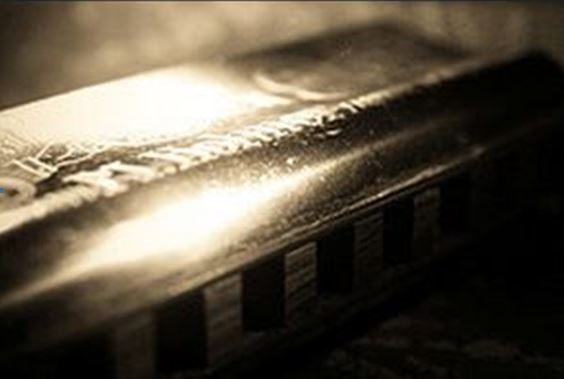
harmonica

The Gunslinger

The antique Hohner Aero Band
Zeppelin Harmonica sits nearby
just mention John Lee Hooker’s
name and the old man has it out
floating up through blues-time-
zones, up where nightclub air is
smoky and dirty and pure energy
ignited by Mississippi Delta jet
fuel coming out, burning precise,
through blow hole Highway 61
a lesser traveled state of mind
from ole Merigold to juke time

Photo 3

David Scott Pointer was the son of a piano playing bank robber who died when David was 3 years old. David later served in the Marine military police. He has written social justice poetry for many years.

“A Poem in the Suggestion of an Emotively Philosophical Sculpture” by Emeniano Acain Somoza, Jr.

A Poem in the Suggestion of an Emotively Philosophical Sculpture

0w-Pieta


In an origami class, the teacher talks
about light & shade, how the sun’s slow
leave-taking lends viability
to art-is-an-ism, why the moon & stars
can only thrive in the cold embrace
of black velvet

Water as universal solvent or no fortress
stands irreducible by rain, dew, moisture:
so take a cloudy afternoon to fold, mold
papers, stone, vision needing air-
strip like a wickerwork, sculpture – poem
silhouetting for a take off

In an afternoon of nonstop downpour, I watch
my notepad consumed by the seething rain,
at the foot of The Pieta


Emeniano Acain Somoza, Jr. is a Communications Officer in the Middle East and author of A Fistful of Moonbeams, his first poetry chapbook published by Kilmog Press in April 2010. Although foremost a poet, he is also a fictionist, an essayist and a playwright. Somoza hails from Siquijor Island in the Philippines. His writing has been widely published in his home country (Philippines Free Press, Philippine Graphics, Ateneo University Press, Cultural Center of the Philippines, etc.) and internationally (Moria Poetry, Troubador 21, Gloom Cupboard, Haggard & Halloo, Buddhist Review, Full Of Crows, Shot Glass Journal, Triggerfish Critical Review, Barnwood International, and elsewhere.). He received a degree in Bachelor of Mass Communication from the University of the City of Manila and masteral units in Creative Writing from the University of the Philippines-Diliman.

“In John We Trust: Cannabalism in a Can, The South Pacific Cargo Cult of John Frum” by John M. Edwards

Illustration by Charlie Sands

Illustration by Charlie Sands

DISPATCH: COCONUTS AND CAMPBELL’S


IN JOHN WE TRUST: CANNABALISM IN A CAN:

THE SOUTH PACIFIC CARGO CULT OF “JOHN FRUM.”


John M. Edwards traces the origins of the wackily hybrid post-apocalyptic South Pacific cargo cult of “John Fromm” (or “John Frum”) from the world’s most useful conversation starter. . . .


—————————————————–


“Where are you from?”

“United States.”

“What is your name?”

“John.”

“Hey, I am John, too!”

Although the polite fisherman was dressed like a mere native, in imported out-of-date Salvation Army garb straight out of “That Seventies Show,” I couldn’t believe that he was neither an AWOL backpacker nor an unemployed Import-Export artist.

For real, he was a local.

“When my mother gave birth to me,” she was divorced from her husband,” John related sadly. “She denied that I was an illegitimate bastard, but the other villagers threw stones at her.” Thus, they were forced out of Vanuatu–“And now we live here,” he added for effect.

“That’s a very sad story,” I replied with mental alertness, hoping for the sake of a formulating magazine pitch for Van Gogh’s Ear that he would say more.

“When I asked who my real father was, she just said ‘John Frum.’”

I had read a brief section on Oceanic cargo cults in my classic used Moon South Pacific Handbook, still pretty much the bible of time travel in Polynesia and Melanesia, but I never expected to actually meet one of its members, albeit one of obvious European descent!

Aitutaki, Cook Islands, was a long way away from Tanna in Vanuatu, where the cult formed after an American serviceman dressed in Navy whites named “John” came during World War II, bearing gifts, mostly canned goods and processed meals.

Including “Spam” (™)!

As the legend goes, when everyone asked “Where Is John From?” the fledgling cult supplied a suitably outlandish surname: Frum.

They all are still awaiting John Frum’s second coming armed with profits and plenty.

Thus, one of the world’s most used conversation starters might have also been the origination of one of the world’s strangest wacko religions: “The John Frum Cargo Cult.”

One of the main beliefs of all cargo cults is that if the proper ceremonies were held, uncounted riches would be lavishly sent from some heavenly place. John Frum represented the spirits of their dead ancestors, and the “European” colonialists who had usurped their wealth, but were still willing to return it. The cargo cult members built modest replicas of airports and planes out of twigs to try to activate shipments of cargo out of thin air.

John Frum devotees are more patriotic “Americans” than your average Joe in Guam, an actual American protectorate, even if most of the islands upon which they live are independent nations tied to the French or Australians, many of them with tattoos on their chests and backs saying “USA”!

Even today, in parts widely stretching from New Guinea to Vanuatu, such products as “John Fromm Soap” can be found, as well as vintage cans of “Campbell’s Soup” and antique bottles of  “Coca-Cola.”

Not to mention, expired “Pringles” and “Milo.”

And wherever John Frum cultists are, especially in the former “New Hebrides,” there are pro-American barefoot GI reinactors with bamboo rifles and Bald Eagle tattoos raising the “Old Glory.”

James Michener’s book Tales of the South Pacific, upon which the famous Rogers and Hammerstein musical is based, is still one of the most popular reads among locals. Probably because not much has changed since World War II. Even so, anthropologists believe the cult today is based upon a much older belief system involving European colonialists who did not work hard like the locals but instead wrote down lists on paper, before magical Christmas Day-like supplies and largesse were landed for everyone.

As I journeyed with John past Cook Islands coral reefs and virgin beaches on deserted islets called “motus,” we pulled up in front of some palms and set about capturing lunch.

John dug a hole in the sand and filled it with corals, then after catching a bunch of glittery fish in his net, he set about lighting the “umu” with some dead palm leaves. With fresh coconut juice dripping like jism down his mouth, John cooked us up a feast fit for a drill sergeant.

I felt a little like a losing contestant on Survivor.

But then John pulled out a bottle of wretched vin de table imported from French Polynesia and said, “Can you open this?” Luckily my handydandy Swiss Army Knife had a rudimentary corkscrew.

But I think it was the “can opener” he was most into.

Lightly pressing John for more info on the cult, I waited until he settled upon with gravitas, “I guess John Frum is our Jesus. We believe in both of them. . . .”

Then John produced out of nowhere some “Kava,” a mildy hallucinogenic herb called “piper methysticum” from the root of the yanggona plant, which when wrapped in a T-shirt and dipped in Fiji-brand bottled water looks like dirty dishwater, and tastes like it too.

Within seconds my tongue went numb, then my entire mouth.

Out of the fire came the South Pacific staples of cooked taro and yams, which I had trouble eating since I couldn’t yet taste them.

Neither could I identify the fish we were eating, except that they were fresh.

But I was definitely enjoying the “Kava Klatch.”

“If we perform our dances, worship magic stones, and drink Kava,” John said, pausing slightly to gulp. “Then John Frum will return to us with more gifts.” Not just cigarettes and chocolates, but also outboard motors and television sets.

Once, the locals practiced polygamy and penis wrapping, but John says the Presbyterians from Scotland put an end to all that.

Not to mention, “cannibalism.”

With a sleepyhead Kava buzz, I wondered vaguely as I slowly rolled over onto my side for maybe a light snooze, what would be the next course?

John just sat there smiling like a vampire, with a skewer of marshmallows igniting in the fire. . .


–John M. Edwards, 2013

Illustration by Andy Warhol

Illustration by Andy Warhol

edwards

John M. Edwards, an award-winning travel writer and Mayflower descendant directly related to William Bradfield, has written for such magazines as CNN Traveler, Salon.com, Islands, and North American Review. He turned down a job as lead bassist for STP (The Stone Temple Pilots) way back when before they were big, plus he helped write “PLUSH” (the opening chords), voted The Best Song of the 20th Century by Rolling Stone Magazine.A former editor at Pocket Books and Emerging Markets Magazine, John is now a freelance photojournalist, writer, editor, and poet. He lives in New York City’s “Hell’s Kitchen.” He is editor-in-chief of the upcoming annual Rotten Vacations. He is now working on a book called EUROPE ON A G-STRING: Sheer Travels Across the Continent.

An interview with Sean Spillane

photo (13)


While Sean Spillane may be best known for his stint in the critically acclaimed band Arlo, he has been continuously representing indie music at it’s best, providing tracks for some of the most interesting soundtracks out there. From Jack Ketchum and Lucky McKee’s The Woman, Brian Keene’s Ghoul, and Chad Crawford Kinkle’s Jug Face he has made memorable songs that cross various genres.

What have you been up to since we spoke last?

Hmmm… Well, I’ve been writing and recording a lot of music for one thing. I’ve also been working on becoming a better engineer in order to mix and master my own music in order to speed up the process of getting my stuff out to the masses. The Jug Face Soundtrack was an all consuming part of my life for a couple months while I mixed and mastered it.

Aside from that, I’m currently rehearsing with a former band I played guitar in called “Midway”. We’re playing a reunion show to help promote the release of a documentary about the LA music scene we used to be a part of called “Kiss or Kill”. The documentary is titled In Heaven There Is No Beer. That show is Aug. 8 at the Satellite in Los Angeles, CA for anyone who wants to come. Then I’ll be playing a solo acoustic/electric show of my new stuff and some songs from The Woman and Jug Face on the afternoon of Aug. 24 at the Thirsty Crow which is also in Los Angeles. Show starts at 2pm.

What was it like to work on Jug Face? Are you excited to see the soundtrack’s release? Do you ever get nervous about how your work will be received by the public?

Jug Face was incredibly fun to work on, because I loved the script and actually heard ideas for the music while I was reading it. Chad Crawford Kinkle wrote it and when I met him up at Sundance, I cornered him and gushed about the script and promised to send him some music ideas I had when I got back to LA. I’ve always enjoyed music with an Americana/bluegrass/country sound, but other than Complicated Woman from The Woman soundtrack, I hadn’t had the chance to really dig in and write with that sound in mind. Anyway, Chad liked what I sent him and we went about exploring ideas for a unique sound for this unique story.

I’m very excited about this release because it really is extremely different than anything I’ve released before. The score was more prominent, than the songs in Jug Face. Basically, I used the songs in the background to add to the reality that we were somewhere in the US where folks say “Howdy!” more than they say “Hi!”. As for the score, I wanted it to exist, but never really draw attention, or rather I wanted the viewer to feel it more than hear it.

How did this one differ most from your previous works?

My approach to it was different in that I wanted to have a specific sound that lived in every part of the score. That sound turned out to be an old electric guitar I have tuned to a 5 string open G minor tuning. The 5 string idea came from reading Keith Richards’s autobiography. Then I gave it this distant, distressed and foreboding sound using reverb and distortion. Once I had that, I just seemed to fit what was onscreen most of the time. Another thing I did was to write specific themes that went with specific main characters and recurred in slightly different arrangements throughout the film.

You have often worked with Moderncine Studio Films. What do you love most about working with them?

Andrew van den Houten is Moderncine and I can honestly say that he is one of my favorite people on the planet. He hires you to work on his films and then lets you do your thing, all the time encouraging you with positive energy and enthusiasm. It’s totally infectious. Then after you’re done, he champions the project with every ounce of his being. He has become a close friend and confidant and no matter where our careers lead, I’m sure we’ll still crack each other up over transcontinental phone calls and give each other encouragement and advice when needed. Not only that, but I’ve made many other close friends by working on Moderncine films, like Andrew Smetek (Sound Designer) and Zach Passero (Editor). Plus there’s Krista, Polly, Alexa, Bob, Jackie, Chelsea, Lucky, Heinrich, Alex, and many more. Great guy, great company!

How do you decide which songs work best with which film or scene?

I’m just running on instinct when it comes to what I try, and then it’s up to the images on the screen and the dialogue to accept it. Other than that, it’s a form of wizardry that I’m still discovering the more I do it.

Where do you draw your inspiration from?

I mostly draw inspiration from my experiences or those of people close to me. Then there’s some research that goes into the approach of each project. It seems, so far, that there are a series of eureka moments when I think of a melody or sound that will fit well with a scene or a character. It’ll just feel right, but I often have to go down some dead ends to get there. The key is to not get discouraged.

Is there any one soundtrack so far that you love more than others or do you love them all equally?

I love them all equally, but I feel like my best is still to come.

Do you think you might ever resume touring?

Only if I was guaranteed to make a ton of money. I have too much fun writing and recording. Plus, it’s much healthier not to tour. Then again, maybe if I got to tour all of Europe or Australia. I’ve done the USA and it was fun but hard. I’d tour Japan again, for sure.

Are there any little things about you that you’d not mind sharing with our readers ? Any quirks to speak of?

I’ve always wanted to be Spiderman.

What do you love most about making music?

Striving to attain perfection (which is impossible) and instead coming up with something better…imperfection.

What was it like to take up music at the age of 5? Do you think it fair to say your early introduction to it awoke your passion to create?

When you’re 5, like everything, your learning curve is so fast. Playing an instrument becomes second nature very quickly. I’d have to say that playing violin at a young age heavily contributed to being creative musically later on. It’s not such a mystery and you know that it’s possible to at least try come up with your own stuff.

What advice would you offer the musicians of tomorrow?

Be yourself, try to do something new and don’t be afraid to fail over and over again. Realize that finding yourself creatively is something that takes time and hard work. If fame is what you want, be an actor.

Do you have a dream project you’d most like to accomplish before you die? Musically and otherwise?

I have to say that every project is a dream project. Each time I sit down to write, in the back of my mind I’m thinking that this could be the best thing I’ve ever done, no matter what it becomes in the end.

What do you think is the most important thing one can learn from this thing called life?

Don’t sweat the small stuff.

What projects are you looking forward to bringing the world next?

I’m still working on a crowd-funded documentary called I Want To Be An Astronaut which is about NASA, the space program and most importantly a young man’s journey to realize his dream of becoming an astronaut.

I’m going to release an EP of songs that I’ve recorded between film projects in September.

Anything else you’d like to say?

Thanks for listening and check out Jug Face in theaters Aug. 9, and watch it now on iTunes. The Jug Face soundtrack comes out Aug. 6 on iTunes!

jugface

An interview with Aric Von

403507_214172988692048_1014796642_n

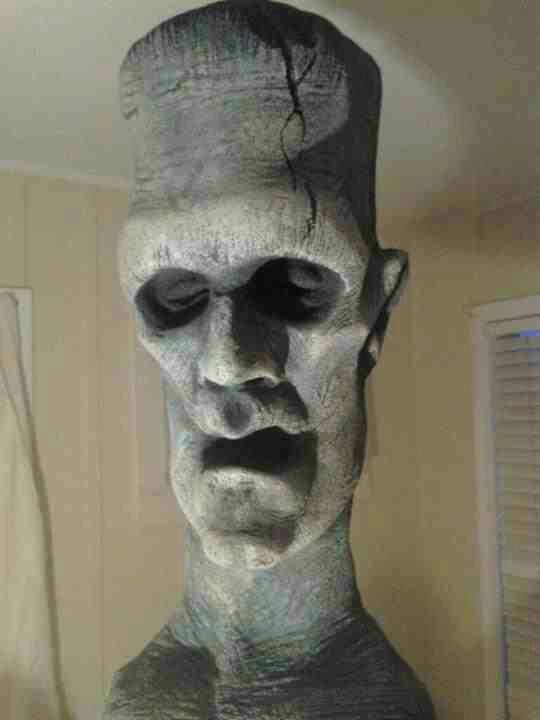
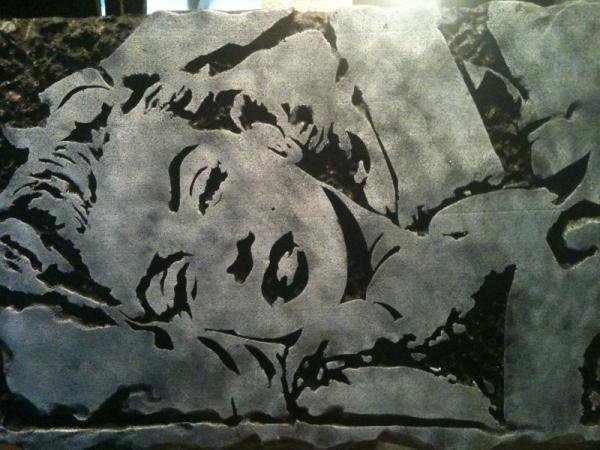
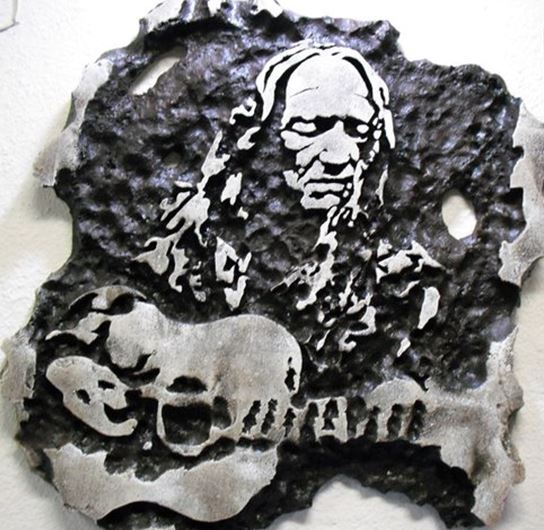
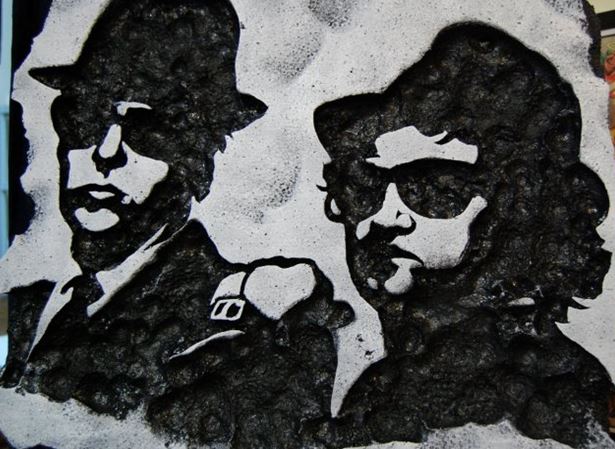
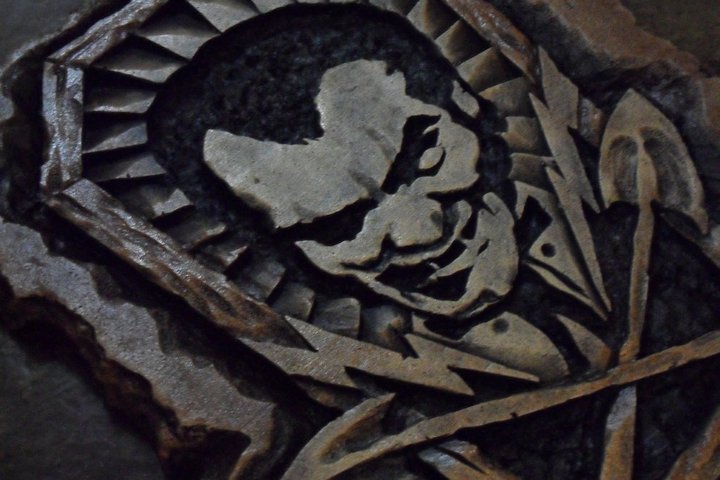
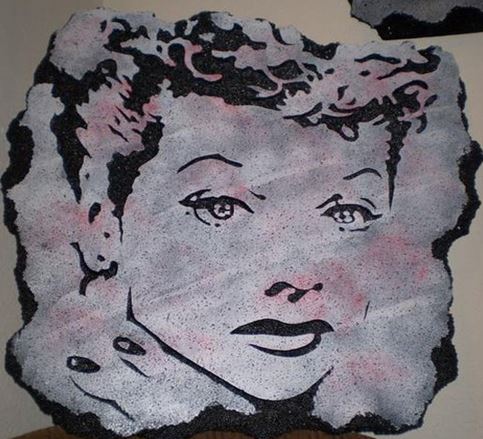
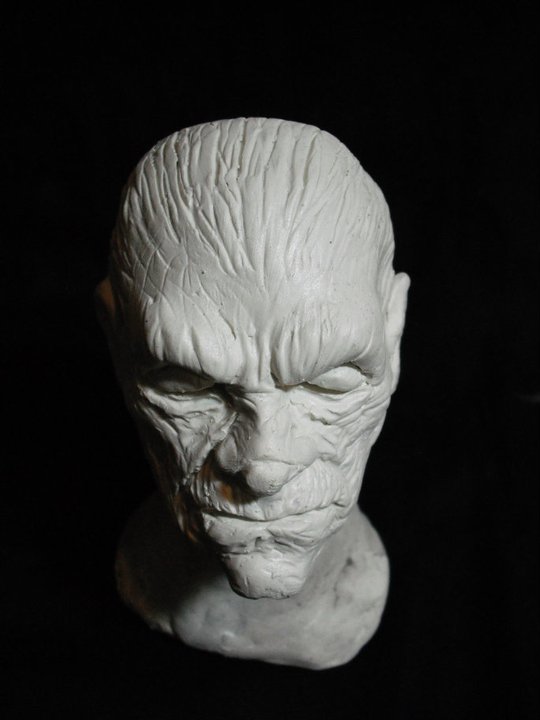
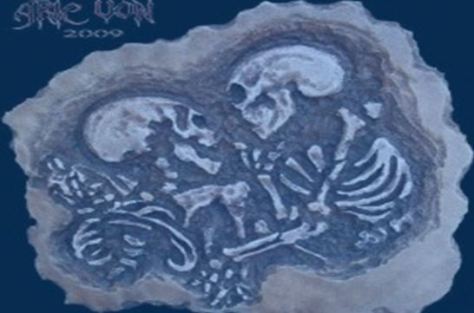
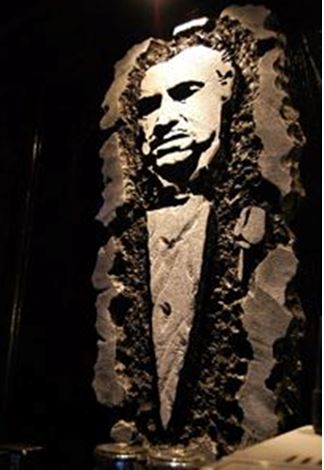
Texas native Aric Von is a man of many talents. With his sculpting and tattoo work Aric has been creating his own unique imagery since the age of 12. He can  currently be found at Ink Attic Tattoo in Fort Worth, TX. When not working there he is usually busy producing works of art for both corporations and individuals. For more information please see: https://www.facebook.com/pages/StyroVisions-by-Aric-Von/150798871696127

 What was it like growing up in Texas? What were you like as a kid?

 Kind of hot and boring. The basics, go down to the creek, watch Star Wars at the cinema every single day of summer vacation. It was boring, but we did o.k. The Richland Hills Bunch, we were pretty good kids, except most of the ones that were supposed to be the over achievers are in prison or dead.

I was real shy. I don’t like crowds, didn’t like flashy lights, loud noises, clowns, and circuses I really didn’t care for none of that. I was pretty frail, thin. I got picked on a lot. I was like the shit magnet, you know if there was a bully within 35 yards he could smell me. But it builds character getting bullied. I’m the antibully now.
avon

You first started sculpting and casting latex masks at the age of 12. What influenced you to try your hand at that at such an early age?

 I was fascinated with drawing in three dimensions. It is what led me to cross the threshold from paper and I started to make things in 3d. Then I became interested in casting, making duplicates. Learning the proper ways of doing that, it was always like a new adventure, kind of like exploring. I’m still very addicted to it.

Well of course we didn’t really have the money to buy Halloween masks, and oddball stuff that you’d find in shops at that time. And my Granddad he wouldn’t go for that. Even if I did make one of those purchases, I would pay for it, getting told how many times I didn’t need it. So basically I learned how to make it and I couldn’t get in trouble for that. So that’s how it happened, I started making the props and Paw-paw couldn’t put together that I was buying all these separate materials and combining them making the projects. So I got away with it.

998700_406922396083772_82427030_n

Who were some of your earliest influences?

 Kevin Yagher, the special effects artist that did some of Robert Englund’s makeup. He’s a really, really cool special effects artist. David Whitley was local special effects artists who passed away, he was a big time inspiration. He was always such a positive person. He saw that I had a talent with the sculptures and instead of doing what a lot of people do, instead of stuffing it down, he really filled me up full of positive energy. I miss David Whitley, he has to be one of my main inspirations.
a.von

What do you enjoy most about sculpting?

 That is hard to explain. There are certain things that are therapy for me while I’m sculpting. The sanding of it, the smoothing it down, being able to look at something and over a little bit of time recreating it out of nothing is pretty cool. Sometimes some of the sculptures I do are new to me as well as to the person who is purchasing them.

a.von2

You became a tattoo artist at the age of 17 I believe? What was the very first thing you put to skin so to speak?

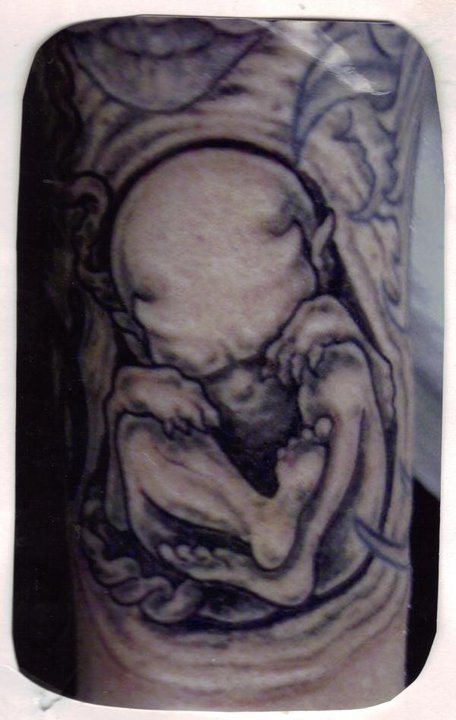
 No not really. I started messing around with the ink thing because of my father at like 14 I believe, with his old, I called it “The Black Box of Death”. I would draw things on his club brothers and he would attempt to tattoo it. I learned everything not to do by example that way. I actually started tattooing at the age of 14, but professionally I got into a shop when I was 18 yrs old at Mild the Wild Tattoos on 28th Street. Me and Mild the Wild Mikey started that up. We had went to school together and were pretty good friends.

Honestly the first freehand or no stencil tattoo I did, I didn’t have any stencil paper, so what’s a guy going to do you know? You just draw, go freehand. But it in the long run it was a specialty. It was skull on my cousin Jerry Ray. I remember back then I could just tell it was going to work out.
154729_172775512740814_1201377_n

What do you think it is that sets the professional tattoo artist aside from the rest?

Since I don’t know the rest,and some of the professionals that I know are fucking bad ass in the industry and are really shitty as people, I’m not really at liberty answer that. Just keep it clean. In being professional aside from the art aspect of it, the artist needs to know about blood born pathogens, cross contamination, what you’re touching, how you’re treating the skin while you are working on it. You got to try to be prepared to have all the answers. If someone asks you a question you don’t want to say, “I don’t know”.
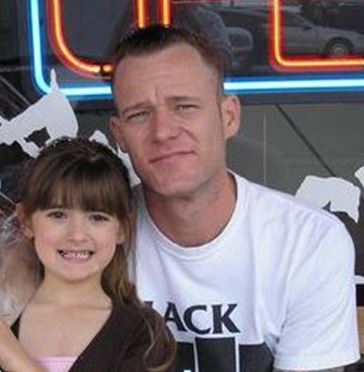
 a.b.von

Do you have a favorite tattoo?

 No, no I don’t. On me?  Actually, my daughter, on my chest, it’s a portrait that Jamie English did, El Watcho. He is a tattoo artist in Fort Worth, TX, he’s a friend. He did Brooke Ann’s portrait when she was lying in the crib and I’m quite fond of that. She checks for it periodically to make sure it’s still there(smiles). Safekeeping you know.
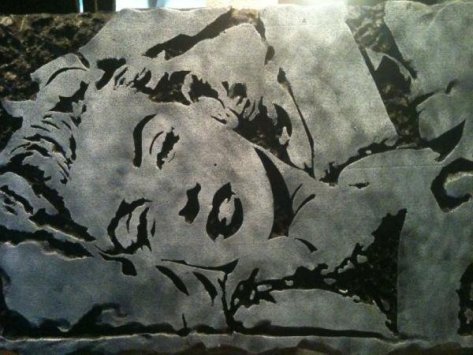
76068_171298426221856_3437821_n

Does your daughter share your artistic talents?

 It seeps from her. I don’t push it. I don’t tell her she has got to do this…If anything I’m a little mad at myself when she has learned by me working when she is around me, which is something I don’t really like to do a lot, but sometimes I have to. In watching she picks it up. She is 10 now and she can do a lot of things I can do. She’ll be able to do anything she wants I really think.

a.von3

As a father what advice would you offer the women of tomorrow in regards to society and self image?

 As far as women go, I’ve never figured them out. I just know that it is the old cliché, we always like what we can’t get or what we can’t have. Don’t be so easy.
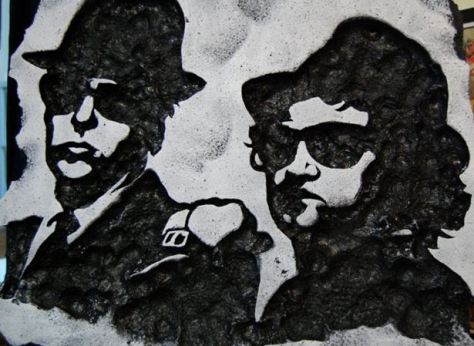
a.von4

What do you love most about being a father?

 I like the fact of knowing that in the back of my little girl’s mind that she has me to lean on, and it’s there. It’s never going to go anywhere. She’ll grow up and she’ll leave me but I’ll never leave her. I like being able to not just say I’m always there, I just like being it. I like her to know. I don’t like to grand stand it for everybody to know. But she’ll tell you that Dad’s always going to be there, for the long haul.
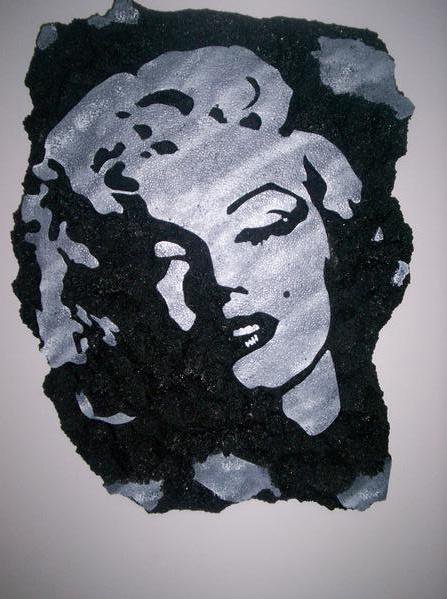
148649_171592586192440_5477082_n

What is your favorite medium to use in your work?

You know I have so many different ones. Sometimes I like the way a pencil feels on a cross grid on a certain type of paper. I’d like to say anything that is clean, but unfortunately that’s a step back, it all leaves a mess. Basically I love it all. I don’t have a favorite. As long as it is cool and workable and has a really good outcome. I’ve no favoritism I think everything is relative.
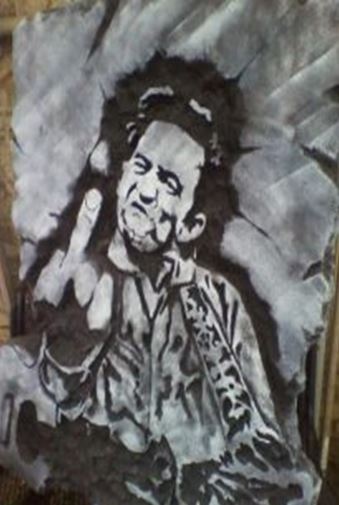
a.von5

Do you have a favorite subject you most like work with?

I’m not one that likes violence, or mean looking people or dark alleys but it is like the world is attracted to that stuff. Ever since I was a young kid I’ve always been attracted to the surreal. Actually I was a scaredy cat so it is kind of strange I’ve always been attracted to the macabre and the dark. I just don’t sit around and draw monsters and demons…much. I like to do human stuff. I don’t have to distort it. I mean look at da Vinci’s Grotesque Series that he did. He just went around town looking at weirdos you know, distorting reality. That is what I’m attracted to. Not necessarily making a Six Flags character, just taking something that is already distorted and adding onto it.
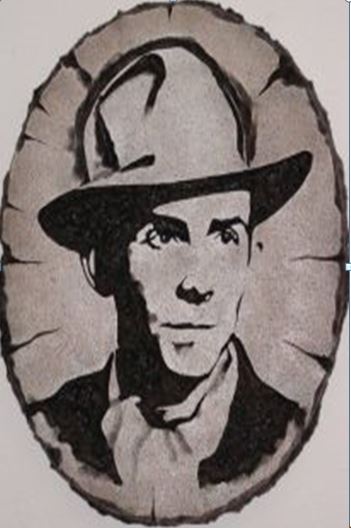
a.von6

You seem to be a bit of a Hank Williams fan. Why do you think that is?

I discovered him through my Grandmother Ravena Anne Cain, who introduced me to his music. I was raised up on Hee-Haw and old school Western Swing so that is where I got my influences there.
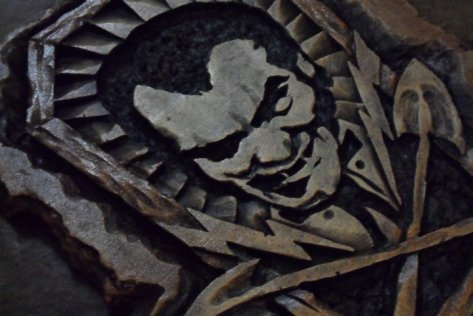
200265_204688202882878_4432543_n

What projects are you currently working on?

 I really don’t have anything major going on. Of course I’ve always got the allotted companies that ask for stuff. No real big projects lately. I’ve been working just doing custom stuff for individuals. Just private art at this point in time.
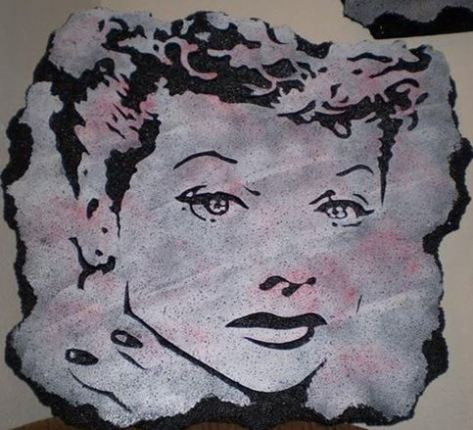
a.von7

Do you have a dream project you’d most like to accomplish before you die?

 Man, I’ve been thinking about it. It’s out there. It is. I think parts of it are probably floating around in someone else’s brain right now. Until we all get together and they need me to visualize it for them we’ll just have to wait…it is all a process. I am kind of like a medium.
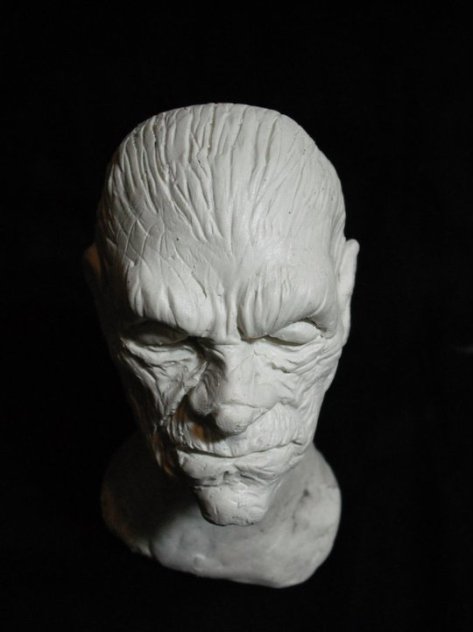
150394_174862409198791_1501460_n

What are your feelings on the afterlife and that sort of thing?

 I know that death hurts. But I also know that death is really, really close to love. Just about the time you know that you really love somebody…they die, I feel. I’m not scared of death but you know I don’t like the pain that I’ve seen my family go through sometimes. I know we’re all going to die. The body wears out, we’re all going to go, but it takes a toll. Especially when you come from a loving family full of support.
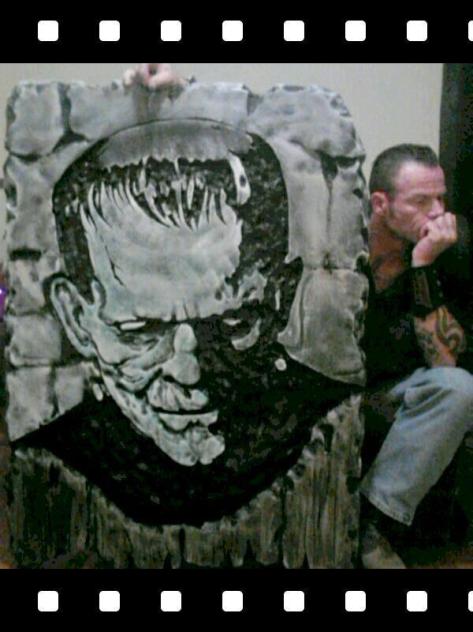
58806_299629223479757_1877092207_n

How do you hope to be remembered when your time comes? If you could pick your last words what would you like them to be?

 Well, as a positive person. Not that I was completely nuts but like there was some not craziness to me, that I was actually serious about something, which is my daughter and my career. That I never turned my back on my ink. You know, it is in my blood to do it and the sculptures too. I love that medium. I try to treat them equally, sometimes it’s hard to do it all.
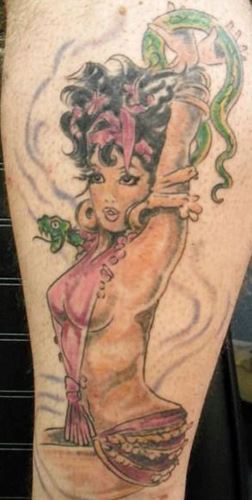
Be careful how bright you shine when you’re young, cause you may spend the rest of your life trying to catch up with yourself.