“Abditum” by Katherine Gethin

11cc9fe6fb001b6e264a2b3115f82bf7--alphonse-mucha-magazine-art

‘Dawn and Dusk’ by Alphonse Mucha (1899)


Abditum


Woman of clouded glass
Bricks and boards can’t keep you out
Standing on the precipice
A wasteland, in white.

Falling along the edge
The jagged mist comes screaming
Inside outside inside
Your skin.

Where are the trees?
Wonder why they flit within the shadows;
What stains these boards
Where I walk a million miles?

The darkness on the stairs to Hell
Never hides the monsters
Never hides our intentions
Never keeps its promises.
She speaks wisdom; Listen well.


Katherine Gethin is a fiction editor and astrophysicist living in San Antonio, Texas. She has owned Evensong Editing since 2010. In addition to her editing, she has also ghostwritten 5 novels and is currently finishing her PhD in astrophysics.

“Slow Bullet” by James Croal Jackson

Vincent van Gogh, Wheat Field with Poppies and a Lark - The Culturium

SLOW BULLET


My father often mourned
the mortality of grass. I never
want to grow accustomed to the mower’s
tornado roar then limping drawl
that crumples summer’s green
into bent xylophone. I wonder
every morning why I’m there, or here,
and never sure where I ever
relinquish my shed skin for dust
blowing out into the wellspring of time.

James Croal Jackson is the author of The Frayed Edge of Memory (Writing Knights Press, 2017). His poetry has appeared in The Bitter Oleander, Rust + Moth, Cosmonauts Avenue, and elsewhere. He has won the William Redding Memorial Poetry Contest and has been a finalist for the Princemere Poetry Prize. Find him in Columbus, Ohio or at jimjakk.com.

“The Madman Whirling Through the Tree” by Sean Lause

20148426415

The Madman Whirling Through the Tree

The madman whirling through the tree
scatters the sun’s proud abacus
to return the moon to love and madness
and feel psychosis in the stars.

His maddened leaves shimmer the darkness.
His branches weave the havoc in his mind.
The bud within the bloom of every fear
irradiates the nerve ends of the stars.

He traces the rain back to angels
until the swirling storm surrenders.
One drop may yet yield a heaven.
He hears the note-less music of the stars.

Now rains hush fires in his roots
as they probe through darkness like moles,
seeking the jewel buried in his heart
that throbs like a gentle star.


Sean Lause is a professor of English at Rhodes State College in Lima, Ohio, USA.  His poems have appeared in The Minnesota Review, The Alaska Quarterly, Another Chicago Magazine, The Beloit Poetry Journal, The Pedestal, Illuminations, European Judaism, Atlanta Review, Sanskrit and Poetry International.  His first book of poems, Bestiary of Souls, was published by FutureCycle Press in 2013.  His favorite poets are Emily Dickinson, Rimbaud, and the Ramones.


An Interview with John Gilmore

jg4

John Gilmore circa 1961

The following interview was conducted in July of 2011 with the late author/artist/actor John Gilmore. It is offered up here today out of love and respect in gratitude for the things I learned from him and will carry with me always.

John Gilmore is more than a former actor; he is also one of the best known writers to deal with the glamour as well as the darker days of Hollywood. He was born in the Charity Ward of L.A. General Hospital, and raised in Hollywood. From his seven year friendship with Marilyn Monroe which spawned Inside Marilyn Monroe, to his rather personal relationship with James Dean which began in 1953 and led to the books The Real James Dean, and Live-Fast, Die Young: Remembering the Short Life of James Dean, he introduces the world to a Hollywood sub-culture few could even imagine. He delves into the darker side with works like, Manson: The Unholy Trail of Charlie and the Family, formerly The Garbage People. He is the author of the classic true crime book, Severed: The True Story of the Black Dahlia, and Laid Bare: A Memoir of Wrecked Lives and the Hollywood Death Trip (wherein he recounts his experiences with Janis Joplin, Hank Williams, Jack Nicholson, Brigitte Bardot, Dennis Hopper, and Jayne Mansfield among others). He is currently working on his “Magnum Opus” novel, set in Hollywood’s 50’s and 60’s, and On the Run with Bonnie and Clyde a creative nonfiction on Bonnie and Clyde, due out in spring of 2012.

What was it like growing up in Hollywood?

As a kid I was facing interchanging phases of L.A. life, of course I’d lived nowhere else, so this was it, especially on the Hollywood side of the fence; movies three times a week, radio and seven daily newspapers; then crime-time L.A., cops, murders, stick-ups, the bleak fog of war hanging over all of it; war-time L.A., with round the clock defense and munitions plants, with nightly black-outs that brought fear and paranoia, the roar of airplanes overhead—were they ours? At the same time we listened to the Lone Ranger, to I Love a Mystery, to Inner Sanctum and Lights Out… Mix all that with swimming or horseback riding, the Clyde Beatty Circus or ice skating or hot dogs on the beach, the amusement piers Venice and Santa Monica, the drive-in movies and drive-in restaurants,–chocolate malts and cheeseburgers and Hollywood High and pretty girls…all that on the surface of the life I led growing up in Hollywood.

What led you to first try your hand at acting?

Wasn’t a ‘try,’ but more of an obligation I didn’t mind. My father, who I didn’t live with, always a frustrated actor and artist, wound up as an influential L.A. police officer, and at one point was shooting police safety movies and guess what,? They had a kid actor on hand—me. I did several of those short films, even some radio shows out of Station of the Stars on Sunset Boulevard, a police public service that also featured many promising movie starlets as well as established actresses like Bonita Granville, Ann Rutherford, Acquanetta the “jungle girl,” Joan Davis, Hillary Brooke, Ann Jefferies, Brenda Marshall and other players I was acquainted with. I did a couple other kid parts on radio, and then worked in a few films.

What was it like to appear in a Gene Autry film? Were you a fan of his work as a child?

Gene Autry was Gene Autry—you took him or not. Before he became a big star in westerns, he was a strong singer—kind of blues and folk, like Jimmie Rogers. What I did in the Autry picture was a small part, then a couple bits at Republic Studios, plus a bit part in a serial. Serials were very big as I grew up. Usually I’d be the kid standing in the dust as the horses galloped past. Later in Hollywood High School, my girlfriend’s father was a cameraman for Gene Autry Productions, right across the street from the high school. My step-grandfather had been a head carpenter at RKO studios, and I was out there a number of times, but Dean Stockwell had been a big kid star, so I was kind of out of luck. I did meet and talk to Dana Andrews and Merle Oberon, and both said, I had to wait a few years because I was caught in that “in-between state” where life, Andrews said, “looks like a bowl of limbo.”

jg6

John Gilmore and Susan Oliver on the set of “The Lineup,” episode “Run to the City.”

What was James Dean like? Is it true you, he and Eartha Kitt used to ride motorcycles across Sunset Boulevard? What was that like?

I’d actually met Marilyn Monroe before I knew Dean, both occurring in 1953. I was advised to go to New York, get in a Broadway play, and then brought back to Hollywood with a studio contract. I had two mentors, Ida Lupino who was doing television, and John Hodiak who I’d met at MGM. My mother, who I did not live with, had been a bit player at MGM, always wanting to be in pictures but never making the grade. She’d been a drinking pal of Jean Harlow. Separately, both Ida Lupino and John Hodiak suggested I head for the Big Apple until I got out of that “in-between state” in the bowl of limbo. It was in New York when I met James Dean, and hung around together, both of us mavericks in the real sense—separated from the mother, Jimmy by his mom’s death when he was a kid, and mine by divorce when I was six months old, then ‘fostered’ to my grandmother in Hollywood. Our troubled pasts made both Dean and myself a little crazy, but withdrawn, intense and knotted into ourselves. We somehow understood one another without all the games, and then in ’54 he went back to Hollywood to star in a movie that would shake the city like an earthquake. Strangely, he was starting at the very top and there’d be no further place to climb to. I got to know Eartha Kitt from the dance studio where Jimmy’d sometimes fooled around, and we’d go to Horn and Hardart’s, drink coffee and eat pie, sometimes in Greenwich Village, a blast back then. I went to San Francisco for a play, then back in Hollywood where I picked up my friendship with Dean. We both had motorcycles and buzzed around, especially a couple times on Pacific Coast Highway. One night Eartha rode on the back of Jimmy’s bike and we all had a laugh. She didn’t ride that much, just a couple times. He was half-way through Rebel Without a Cause, and set to go to Texas on Giant, like immediately upon finishing Rebel, when went back to New York for a television show. I remained in New York through the summer, and late September I learned Jimmy had been killed in a sports car on his way to a race. He’d only spent eighteen months in Hollywood, made just three movies, two hadn’t even been released yet at the time of his death.
jg2

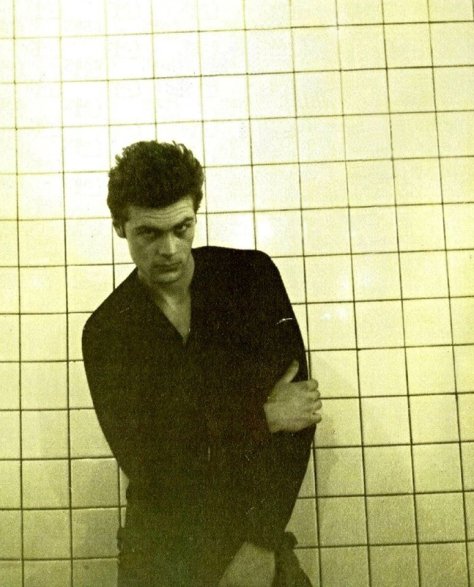
NYC Subway in 1955. Both of the following photos were taken by James Byron Dean.

jg

Do you remember first meeting Marilyn Monroe? What was running through your mind at the time?

I’d met Marilyn earlier, through John Hodiak, which I was still in Hollywood. She lived in the same apartment complex as Hodiak. Meeting her that first time was an experience that affected me deeply—one I’d never forget. She was so beautiful, all in skin-tight white, and except for big dark sunglasses, she looked like an angel. John and I were on the second floor and she was down in the patio. He was kidding her about the party she was having, and introduced us.

Do you consider yourself blessed to have known such truly talented people?

I think of the life I’ve known, like I’ve lived in the glass bubble that’s Hollywood—a kind of reality disconnected from the rest of the world. I’ve never known too many other regular people, by that I mean who were not artists or attached to the artistic or theatrical or motion picture way of life. In my friendship with Marilyn, she was in some ways much like Jimmy Dean, always alone. Marilyn had developed a façade into which she’d hide and simply push this façade through social encounters and work, though she never really got out of these encounters what she believed she was after. She was under contract to Fox, got sick of the ‘dumb blonde,’ roles, so she walked out. She flew off to New York. This is also set back a little in what I’m saying, and she sort of holed up with Actor’s Studio under the guise of Lee Strasberg. I knew his daughter, Susan, who didn’t like her father or her mother, and she befriended Marilyn, both looking to the other for emotional support. Such support never came.
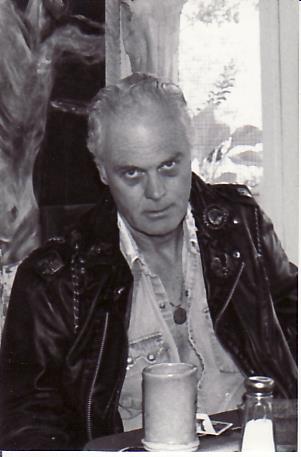
jg7

Truth or Consequences, New Mexico.

Is there any one moment from that time that stands out most in your mind?

There are so many, I wouldn’t know where to begin… Paris and Brigitte Bardot? Then by 1960 Marilyn and I were practically set to star in a movie together, Jerry Wald’s production of The Stripper, based on the William Inge play, A Loss of Roses. I’d had the lead in the Los Angles production. Those times Marilyn and I discussed the project were some of the best moments I’ve had. At any moment being alone with her had been branded into my mind. We never made the movie, due to problems at the studio followed by Marilyn’s overdose with pills, classified as an “apparent suicide.” She’d just turned thirty-six.

What was the best advice any of them ever gave you?

That I should stop chasing the movie star dream and settle to writing. “A writer?” I’d say. “I just scribble, fool with ideas…” Tennessee Williams, Gore Vidal, and William Burroughs advised me to consider writing. I’d met Burroughs in Paris where I knew Francois Sagan, the writer, and met Brigitte Bardot at a party. Something clicked with Brigitte in that brief time that stands out in my mind. Brief, too brief. She too thought I should be a writer. “Vous devriez écrire un livre, cher…” she said.

Do you have any one work that you would consider your favorite? Which of your works holds the most meaning for you personally?

Of the dozen or more books to date, I suppose I’d have I’d have to nominate the Black Dahlia book—Severed, considered critically as an American classic, but I don’t think about those things. I do the work and move on. I was haunted by the young woman, Elizabeth Short, who came to my grandmother’s house when I was eleven years old, trying to find a cousin my grandmother’s sister might have known. Not long after, the young woman became one of the most sensational murder victims in L.A. history. I’ve never forgotten her. I’ve been married three times, divorced three times, spent two years in San Francisco with a ‘substitute Marilyn,’ been all over and now live alone in the Hollywood Hills, the work on-going. It sustains itself as the only time I’m operating on all eight cylinders.
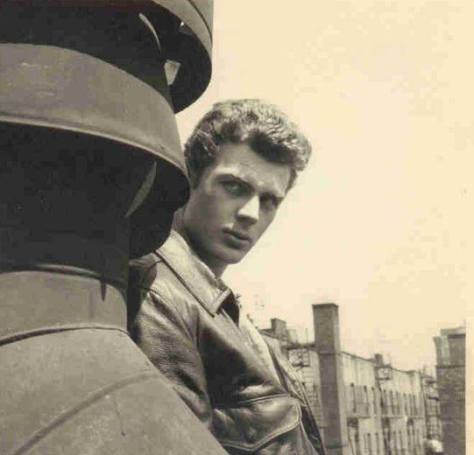
jg5

How do you think Hollywood has changed most since the golden days? How would you most like to see it change next?

Hollywood now, from it was, is only an abstract idea. Everything that was Hollywood is no longer. The motion picture industry as I knew it, as Marilyn, Jimmy Dean, Dana Andrews and Merle Oberon knew it, died along with them, and even Hollywood’s corpse has ceased to exist. The same is now happening with the publishing industry: further erosion and collapse. Hollywood Boulevard, once an enchanting street, is now a dirty gutter.

What was it like to write The Garbage People? What was your first impression of the Manson family?

Writing that book was an education in the decomposing of the human spirit. That period contained, or should I say festered, a social disease that’s now of epidemic proportions.

Were you surprised by the events that unfolded later on?

No. Nothing about the falling-apart skeleton of a culture or the rotting corpse surprises me.

Why do you think people in this day and age are so taken with more violent ideas and are so fascinated by such terrible acts?

The violent ideas and terrible acts are the obvious symptoms of the social disease that threatens us all.
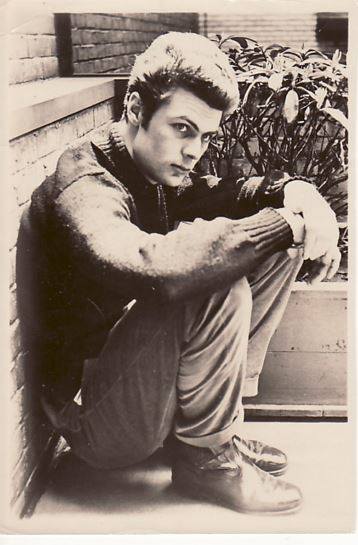
jg3

What do you like to do in your spare time?

Watch old movies, silent films, noir films—all from the classic time when Hollywood was in bloom like a gigantic rose. I also read all the time. I have not watched television in over twenty years. I think of myself as a lifelong student of Ancient Egypt, a fascination with that imperial culture that’s been ongoing since I was seven, Years later, in 1959 I contracted to write a present-day (’59-60) movie to be set in Cairo. The movie was never made but the rights reverted to me. I will still write a novel based on memoirs of that time in Cairo. I’d met a beautiful young Egyptian actress who was to be cast in the movie when they got that far (which they never did), but the actress and I covered much territory. She showed me life in the back streets and alleys of old Cairo, showed me mummies and monuments and how to dance to ancient Egyptian music. We corresponded for close to a year, but she later married a lawyer.

Do you ever miss acting?

Never. Paradoxically I miss the abstract energy that radiates from an active sound stage. I miss the buzz of creating an alternate reality (but I do that as a writer; it’s in my head).

Do you think Hollywood will ever be as glamorous as it once was?

Never number two. I maybe watch five-percent of movies made today. They are trivial and the actors are facially and talent-wise simply as trivial as the movies. “Glamorous” is an obsolete concept. The studio system built long-lasting careers. There are no such players today as Ingrid Bergman and Charles Boyer. There’s no James Dean or Marilyn Monroe, no matter how they argue. The desperation in their mimicking becomes visibly pathetic.

Can you tell us a little about your latest work, On the Run with Bonnie & Clyde? What led you to write that?

Bonnie and Clyde were ambushed the year before I was born. My step-grandfather kept all the newspapers and other items relating to their short lives and the incredible over-kill of their deaths. I tracked Bonnie and Clyde’s travels in New Mexico, Texas, and spent four years in Louisiana. I met three people who knew them. One man had worked with Clyde. Bonnie’s middle name was Elizabeth. She could not bear children, nor could Marilyn Monroe or Elizabeth Short (the Black Dahlia). Bonnie had never killed anyone. She was very small, almost the size of a child (she wore a size 3 shoe). The only criminal charge against her was for transporting a stolen car across a state line. She did not have a gun in her lap—it was a sandwich—when six Texas and Louisiana lawmen in ambush, each firing heavy caliber ammunition, sent twenty-six bullets into Bonnie’s thin body, three shots to her head and face. She’d been so shot up, the embalming fluid they tried pumping into her, leaked out of the holes in her body.

What projects are you looking forward to bringing your readers next?

Two novels and the book on Bonnie and Clyde, within the next two and half years…

When your time comes, how do you hope to be remembered?

As one who refused to compromise.

Anything you’d like to say before you go?

“Nuff sed,” as Barney Google used to say in the funny papers.

jg9

John holding son Carson, whose birth he once told me was the happiest day of his life.

jg8

An Interview with Keith Lansdale


lansdale

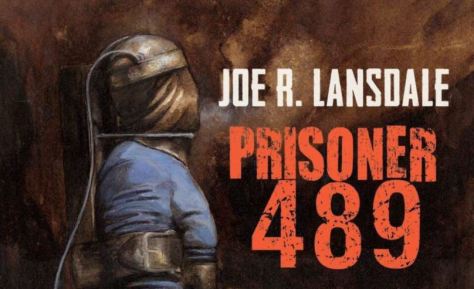
Keith Lansdale is currently working to bring to life an illustrated novel which take place on the same island setting as featured in the short story Prisoner 489 by Joe Lansdale. The novel is tentatively titled A Prisoner of Violence. I recently sat down with Keith to find out a little more about the project.

What was it about the story Prisoner 489 that sparked the idea for this project?

Prisoner 489 is a fun little story about an unstoppable monster terrorizing people stuck on an island designed like Alcatraz if it was in the Bermuda Triangle. The island itself is a bit of a mystery which is why when asked to do a story in the same universe, I knew the island had a lot of potential.

How does it feel to be creating your own work which shares the same setting as one of your father’s stories? Do you feel lucky to be able to do so?

When you have someone who’s as well known as Dad, people are clawing over each other for a chance to work with him. So lots of offers I get are people looking to adapt or expand that well known library of Lansdale. This is actually one of few projects that, while inspired by his universe, is my own creation within that. Oh, of course. I’m humbled every time I get to work on a project with Dad.

Did you look up to him as a child growing up?

Absolutely. And still do.

How has his influence helped you in your own career so far?

It would probably be easier to answer how has it not. He’s a man that knows his stuff and growing up with him meant we had a lot of time to talk about several aspects of storytelling.

What would you say is the most important thing you have learned from him in regards to that?

Growing up I learned a lot about deductive reasoning. This is a mighty effective tool not only to better my day-to-day life, but an important aspect of storytelling.

What do you love most about the act of writing?

It mostly boils down to it’s fun to create something. I love a good puzzle, and lots of times I’m not sure where the story is going to end up until it gets there, but I just keep putting those pieces together until, bam. A complete picture.

Can you tell our readers a little more about A Prisoner of Violence? What can they expect from this one?

It’s not a secret, but I don’t want to give much away. Prisoner of Violence complements the original Prisoner 489 while still being its own beast. I’ve got a couple characters who are fighting to survive that I enjoyed writing. One of which was actually a throw away character who I had no real plans to keep around, but no matter how many times I tried to lead him to his doom, the story leaned a different way.

What are you hoping the reader takes away from this piece of work?

A suspenseful ride with a few laughs. That’s the most anyone could ask, really.

What elements are still in development?

Well, the first draft is written and turned into Dark Regions Press. But that’s about it. We still don’t have an artist or anything decided yet.

What is the most challenging issue you have faced so far in bringing this project into existence?

Just trying to make sure I do the original work proud without stepping on it.

When do you think it will be available to the public?

That I couldn’t guess. It’s still in the early stages and depending on how fast the artist and everyone else works on it, could be this year. Could be next.

Do you ever get nervous about how your work will be received?

Not really. Obviously to be successful I need other people to like the work, but I don’t think about that much at all. I don’t really even like looking at reviews of things I do. Good or bad. I know that if it’s got my name on it, I liked it. Or at least liked it when I touched it last and handed it to the next person. After that, if someone says they didn’t like it, I just think, then it wasn’t for them. But I put the same amount of stock in the good reviews, too.

What do you like to do when you aren’t working?

A perfect day would be pizza and PJs with my girl and a new show to binge watch the hell out of.

Are there any little known things about yourself that your fans might be surprised to learn?

I make a damn fine waffle.


“A Raven Flies Through Moonlight” by Lyn Lifshin

The Raven

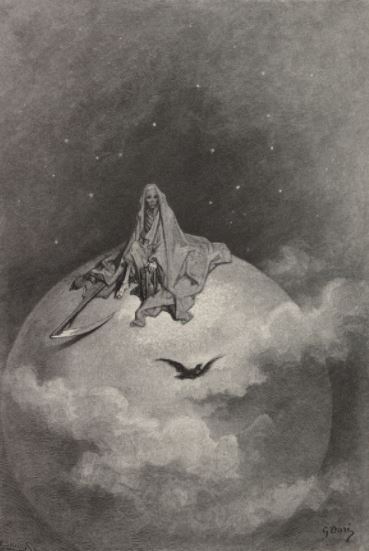
“The Raven” by Gustave Doré

A Raven Flies Through Moonlight

Lately, I dread the sky lightening,
the black nothingness of furniture,
emerging outlines. I want the night
to go on forever, empty as willows
the deer have gone past. Tell me
you don’t have nights any light is
an intrusion, a burglar? Don’t tell
me you haven’t, even in a lover’s
arms, dreaded to leave the stasis
of lying together, listen to the
other’s heart beat, breath. The old
story: we are alive


Lyn Lifshin has published  over 130 books and chapbooks including 3 from Black Sparrow Press: Cold Comfort, Before It’s Light and Another Woman Who Looks Like Me. Before Secretariat: The Red Freak, The Miracle, Lifshin published her prize winning book about the short lived beautiful race horse Ruffian, The Licorice Daughter: My Year With Ruffian and  Barbaro: Beyond Brokenness.  Recent books include Ballroom, All the Poets Who Have Touched Me, Living and Dead. All True, Especially The Lies, Light At the End: The Jesus Poems, Katrina, Mirrors, Persphone, Lost In The Fog, Knife Edge & Absinthe: The Tango Poems .  NYQ books published A Girl Goes into The Woods. Also  just out: For the Roses poems after Joni Mitchell and Hitchcock Hotel from Danse Macabre. Secretariat: The Red Freak, The Miracle.  And Tangled as the Alphabet,– The Istanbul Poems from NightBallet Press Just released as well  Malala,   the dvd of Lyn Lifshin: Not Made of Glass. The Marilyn Poems was just released from Rubber Boots Press. An update to her Gale Research Autobiography is out: Lips, Blues, Blue Lace: On The Outside. Also just out is a dvd of the documentary film about her: Lyn Lifshin: Not Made Of Glass. Just out: Femme Eterna  and Moving Through Stained Glass: the Maple Poems. Forthcoming: Degas Little Dancer and Winter Poems from Kind of a Hurricane press, Paintings and Poems, from Tangerine press (just out)  and The Silk Road from Night Ballet, alivelikealoadedgun from Transcendent Zero Press

“Words Unformed” by Anthony Laird

Bois de Vincennes, (Paris, France) by Eric Ellena

WORDS UNFORMED 

A lingering touch.
I trace the line of life in your palm,
but feel my life,
as my heart beats faster.
How warm the skin,
and the fingertips,
would they brush my skin?
The memory of your kiss
so fresh in my mind
as the taste still holds on my lips.
The words I have yet to say
still unformed in my heart
that is beating faster, faster.
And so other words come
that mean less but buy me time,
as we sit close and I feel you,
touch you,
want your kiss again.
I let your eyes find my soul
and hope you think it beautiful,
and though I hold back a bit,
I am wanting you to want more.
To need more,
as I need more.
And I lean, knowing why,
not disappointed,
filled with words yet unformed,
as again your lips find mine.
And I am haunted by a memory to be,
of when you won’t be there,
holding me.

Venter Anthony Laird

Anthony Laird

“Broken Window Music” by Heath Brougher

brokenglass


Broken Window Music

Similar to fractured light
a jagged crystal sparkle
lives slowly through the air
clear as a bell
its ridges tearing the wind
falling sideways then down
as that broken sound blooms
a pure cacophony early
on Shatterday morning.

Heath Brougher is the poetry editor for Five 2 One Magazine. He recently published his first chapbook, A Curmudgeon Is Born (Yellow Chair Press, 2016). His work has appeared in or is forthcoming in Diverse Voices Quarterly, Chiron Review, SLAB, Main Street Rag, Crack the Spine, Of/With, Lakeview, X-Peri, Blue Mountain Review, strange POE try, eFiction India, and elsewhere.

Image used under permission from CMG Worldwide.


“Shooters Valentine” by D. Louis Morgan

d.jpg

SHOOTERS VALENTINE

If you say you love me
If you say “I do”
Remember me tomorrow
Send your love anew.

Put it in a bottle
Put it in a can
Put it in a box
Stamped Afghanistan

We fought up in the mountains
We fought upon the seas
We fought out in the desert
In the towns and through the streets

If you say you love me
If you say “I Do”
Remember me tomorrow
Send your love anew.

Drop it on a freighter
Stuff it in a pack
Sail it on the water
Mail it to Iraq.

We stood upon the ramparts
We watched our comrades fall
Some, they gave a lot
And others gave it all.

If you say you love me
If you say “I do”
Remember me tomorrow
Send your love anew.

Fire it in a rocket
Ship it overland
Pack it in a crate
To the country where I am.

When a soldier meets his maker
He does it all alone
If you can’t make a shadow
You ain’t goin’ home.

We died up in the mountains
We died upon the seas
We died out in the desert
In the towns and on the streets.

Who sees that train a comin’
The plane upon the ground
Or ships moored and anchored
When the family gathers round?

Flag draped caissons mount
Hills where staid white rows abound.
The mournful calls of the bugle’s sound
Echo ‘cross that hallowed ground.

If you say you love me
If you say “I do”
We live within HIS memory.
HE knows I love you too.
HE knows.
I love you too.

“Jamie, With the Blue Eyes” by Betty J. Sayles

15-cookies-in-his-pocket-p

Jamie, With the Blue Eyes

By

Betty J. Sayles


A small boy trudged wearily along a country road. His golden wheat-colored hair and youthful features looked no different than those of many other small boys his age. His jeans and navy blue pullover were dusty from the gravel road.  At first glance, he looked like any seven-year-old boy—until you looked into his eyes.  Those deep blue eyes mirrored the sadness of his soul and spoke of wisdom far beyond his young years.

The boy’s name was Jamie.  He had been a fun loving boy and he adored his father.  They played catch, went to baseball games and went for walks when the father told his little boy about his plans for them when Jamie was older.  “We’ll add your name to the firm and we’ll become Calder and Calder, Attorney’s at Law.  We’ll be the biggest firm in the state and the best,” he boasted.  Jamie looked at his father with love in his eyes; he wanted, more than anything, to please his father.

In his sixth year, Jamie was struck on the head by a car while he was trying to save a kitten in the car’s path, He recovered and seemed fine, but from that time Jamie noticed a change in his father.  He was sure his father was avoiding him.  One night, Jamie overheard his father talking to his mother.  “Ever since the accident he reads my mind, Jane, and he makes me do things by looking at me with those eyes.  He actually made me let that stray dog go, the one that knocked over our garbage can.  He said they’d kill him at the shelter.  Mrs. Murphy told me he cured her back pain just by laying his hands on it and Dr. Preston said he talked to Jamie in Bridgeport last week.  That’s 60 miles from here and Jamie was home in bed.  That’s crazy.  The boy is not normal. His wife replied quietly, “There was an Italian priest I read about, his name was Padre Pio.  He could perform miracles and was seen in two places at the same time.  They called it astral travel and the church made him a saint.  Jamie is a good boy, Robert, he has only done things to help people.  He has been given a gift and we should be proud of it.”

“He’s a freak, Jane, he’s scary, and I can’t cope with it.  If he comes out of this coma, I’m going to find him a boarding school for troubled kids.”

Jamie’s eyes filled with tears.  His beloved father saw his gifts as a curse and couldn’t stand to be near him.  Jamie didn’t wake up the next morning.  The doctor said he was in a coma and he was moved to a hospital bed.

It was evening when Jamie came to a farmhouse. When he knocked on the door, a sad faced man opened it.  “Hello, sir, my name is Jamie and I wonder if you have any chores I can do for some supper.”

“Why on earth is a small boy out alone with night so near,” wondered the man.  As the question formed in his mind, he looked into a pair of deep blue eyes. “Yes,” he said, “you can feed the chickens, but first come meet my wife Mary and have some supper.”

Jamie saw traces of tears on the woman’s face.  After eating his supper, he said to the man,” There’s a man here who wants to talk to me.”

“There’s only my wife’s father who’s very ill. The doctor doesn’t think he’ll last the night,” said the farmer. Once again, he found himself peering into Jamie’s eyes.  “I’ll take you to him,” he said.


The bed-ridden old man was surprised to see a young boy, but as he looked into his eyes, he felt a calmness he hadn’t felt in a long time.  “Leave us alone for a while, please,” he said to his son-in-law.

Jamie sat in a chair near the bed, put his young hand over the old wrinkled one and said: “You feel alone and scared and want to talk.”

The old man nodded.  “You see they’re afraid of death, too—for me and for themselves.  They take good care of me, but they never stay to talk. They don’t know what to say, and don’t want to hear my fears.  It makes them uncomfortable. You’re not afraid, are you?” he asked the boy.

“No, I’m not afraid”, answered Jamie. “Tell me what you’re afraid of, maybe talking about it will help. I’ll stay with you as long as you need me.”

The old man talked for a long time to the boy.  As the night passed, he became quiet, only rousing to say, “You’ll be with me?”

Jamie answered, “I’ll go with you as far as I can.”


As the clock chimed 2:00 A.M., Jamie looked at the door.  It opened and the farmer and his wife entered the room.  While they looked at the peaceful face of the old man, who had quietly passed away in his sleep, Jamie slipped out of the door and was gone.

Jamie was nearing a farmhouse when two German Shepherds raced toward him, barking loudly.  He stood still, his blue eyes looking at brown eyes. Immediately they stopped barking and followed docilely as he approached the farmer in the yard.

“Good gosh, boy, what did you do to those dogs?  They don’t like strangers.”

“I get along well with animals, sir.  Do have any chores I can do for something to eat?

The farmer wanted to ask the boy who he was and where he came from, but he never got to those questions.  Instead, as he looked into those deep blue eyes he had a vague feeling he had left something unsaid—but couldn’t remember what it was.  “Why, I think we can find something for you to do to earn a meal, son.  Come along.”

“Thank you, my name is Jamie”.

After the boy had completed the light tasks he was given to do, the farmer took him into the house and told his wife Dorrie that Jamie was staying for supper.  The woman had a kind face and fussed over Jamie in a motherly way.  She did things slowly and with obvious pain, because her hands were badly deformed from rheumatism. Jamie offered to help her.  “No, child, a little exercise is good. It keeps these old hands from stiffening up completely”, she said.


They invited Jamie to spend the night, but he thanked them and said he had to be on his way.  As he was saying goodbye to the woman, he took both her crippled hands in his young ones and pressed them lightly.  Then he stepped out into the twilight.

The woman sat at the table with her hands in front of her, tears running down her face.  Her startled husband asked, “What is it, Dorrie, what’s wrong?”

His wife raised her hands for him to see.  They were old hands with age spots and loose, wrinkled skin, but they were perfectly normal hands.


A bearded young man sat on a park bench by the river, staring at the water.  Then his eyes moved to the high bridge a few blocks away.  He was annoyed when a small boy sat down beside him and said, ”I’m Jamie.  The water is warm this time of year. I guess it would be peaceful to sink beneath it letting all your problems float away.”

The young man was startled to hear such words from a child. It was uncanny the way he mentioned the river as a way to end one’s cares.  He turned so he could see the boy’s face. Looking into those blue eyes, he saw his mother standing there broken-hearted beside the river, the terrified face of his young brother and a pretty, young woman struggling to cope with the problems he was leaving her to face alone.  “Oh, Lord, what was I thinking? There has to be a better way than this.”

Jamie said, “Tell me about it.”

The young man talked for a long time.  Finally, exhausted and much calmer, he turned to face the boy, but he had quietly disappeared.


Jamie was desperately tired; he wanted to go home. Maybe things would have changed while he was away. At the sound of his father’s voice, he opened his eyes. He was still in the hospital bed. His father was saying, “I’ve found a school for problem kids that will take the boy if he comes out of the coma.  That will be best for everyone, Jane.”

Jamie looked at the drawn faces of his father and helpless mother and closed his tear filled eyes.

A small boy trudged wearily along a dust country road.  He looked like any other seven-year-old, unless you looked into his sad blue eyes.


Betty J. Sayles has had short stories and poems published in Storyteller, Mature Years, Creative With Words, The Oak, Nomad’s Choir,  Ultimate Writer, Persimmon’s Tree,  Spontaneous Spirits, PKA Advocate, Amulet, Mystical Muse, LOS, CC&D, The Enchanted File Cabinet, Conceit, Shemom, Pink Chameleon, PBW, Down In the Dirt and Stray Branch.