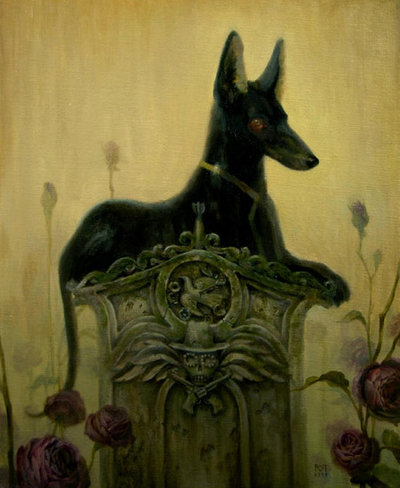
“My Strange Ways” by Paul Tristram

My Strange Ways

My strange ways have led me

in and out of trouble,

ridiculousness and nonsense.

Drunkenness and violence,

insanity and confusion,

homelessness and stark

truth and realization.

I’ve mentally scaled the walls

of prison cells and psychiatric wards

both anorexic and demented.

Yet, I have also climbed mountains

both physical and emotional.

Surfed those rapids of true feelings

and smiled so wide

I almost caused an earthquake

right down in my soul.

I have experienced heartache,

loss and cruelty, betrayal and trickery.

but I have also felt the comfort

of a strangers hand full with mercy,

help, kindness and charity

repeatedly along the crooked way.

I will never take or accept

that safe, middle road,

my Soul’s too big to just plod along.

I’ve tasted the sweetness and bitterness

of both sides of life’s coin

and am a better person for it,

in my strange ways I do belong

and them inside of me…Amen.

© Paul Tristram 2014

Paul Tristram is a Welsh writer who has poems, short stories, sketches and photography published in many publications around the world, he yearns to tattoo porcelain bridesmaids instead of digging empty graves for innocence at midnight, this too may pass, yet.

An Interview with the Late Graham Joyce

This interview was conducted several years back and is one of my personal favorites. It was truly soothing to hear Graham speak of his Grandmother so fondly. Upon hearing of his passing today, I was left if with a lump in my throat and the desire to share with you all the words found within…

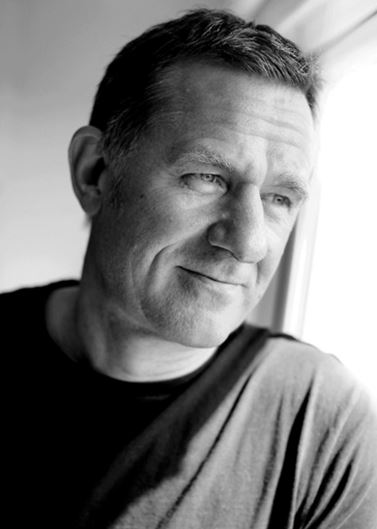
Photo by Charlie James

Photo by Charlie James

Graham Joyce has won several awards for his speculative fiction novels and short stories. His works have been rather hard to put into a genre. He has covered horror, fantasy, and science fiction in a manner that is hard to match, often with strong female characters. He also offers a glimpse at the supernatural and mystical elements in delightful fashion, creating worlds that offer a much needed source of escapism for readers everywhere. Joyce can also be found teaching creative writing at Notthingham Trent University.

What was it like growing up in a small town? Do you find your experiences there encouraged you to dream more than you might have otherwise? Do you have a memory from that time that you hold particularly dear?

The place I grew up is Keresley, a rather unlovely mining village on the western side of  Coventry. It’s a pretty gritty experience growing up in a place like that but a very warm one where you knew everyone and they knew you. Although the village had little to offer, it was on the edge of some wonderful countryside which I spent most of my childhood exploring.  This later became the setting for some of my novels and short stories most notably the Tooth Fairy, Black Dust and the Overself. Probably my favorite memories are of the many days I spent both on my own or with friends roaming the countryside and exploring the woods near my house.  I later discovered that these woods are one of the few remaining parts of the forest of Arden. There is a very special atmosphere in a wood and perhaps this time did influence my creativity as I spent a lot of time lost in my own thoughts and daydreams.

I read that your literary approach was influenced by your own family. And that your Grandmother often received messages in dreams and other such things. What was she like? Do you feel lucky to have grown up around such intuitive people? Did she encourage you to embrace things unseen?

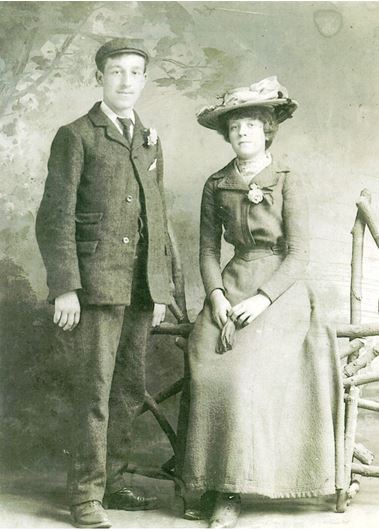
My grandmother was an amazing character who was one of the strongest characters I have ever come across. She was brought up in Kidderminster and by the age of 12 she was working in the carpet factories. Amazingly she managed to survive anthrax which she contracted while working with raw wool, the factory owners paid her to keep quiet about the illness because the factory would have had to have been closed. She was married by the age of 20 and she went on to have 7 children (6 of them girls, all of whom survived and went on to have children of their own. When she died aged 92 we calculated that she was responsible for over 40 people, and that was in 1981!

I’ve no idea about how many there are now! She often had inspirational messages in the form of dreams and I remember when I was growing up that this was accepted in the family as a simple fact of life. I remember she would tell me how to deal with ghosts and have a clear memory of  playing under her kitchen table with a toy car. I looked up and she was staring at me oddly. She said “Graham, if you ever get troubled by a ghost, all you have to do is cuss them out. They don’t like it if you use bad language on them.” She was to become the model for Martha in The Facts of Life and just like the character in the book she regularly experienced premonitions which came to her while she was asleep. All her family took these messages seriously but in a very matter of fact kind of way. They were as much a part of life as corned beef sandwiches and cups of tea. I think that she has been a huge influence in my life and in my writing and I do feel very lucky to have known her.

Graham's Grandparents

Graham’s Grandparents

You often write strong female characters. Did she and the others in your family have a major role in your doing that? What do you think women need to know in order to truly be strong females?

It’s true that I have been surrounded by strong women. As I grew up I spent a lot of my time with my grandmother and also with my five aunts all of whom were very strong-willed and opinionated! Characteristics of all of them appear in the sisters in The Facts of Life. I think that they were strong women because they had to be. They grew up in difficult times, surviving the blitz in Coventry, coping with poverty, childbirth and ill health. There was a very strong ethos in that family that in tough times you just keep going and eventually things will get better and I think on the whole it worked.

What was the best advice your grandmother ever gave you?

I think it has to be the advice about getting rid of ghosts although I’ve never had to use it yet!

Do you think you would be as well equipped to write on the subjects that you do without her influence?

No, she definitely influenced my thoughts about the paranormal and it was her “matter-of-fact”, practical attitude towards it that has formed my views. It has made me want to write novels where the supernatural is present but it doesn’t represent a dangerous enemy. There was another thing that my grandmother used to say to me. “It’s not the dead ones you have to worry about it’s the live ones.” I do subscribe to the notion of another reality but I think living people are the danger, not the dead ones.

What first led you to try your hand at writing?

Even as a schoolboy I wanted to write and my first efforts were detailed reports of Coventry City FC football games. Later I found inspiration from the wonderful rock lyrics on the sleeves of album covers. I think I always would have written even if I hadn’t become a published writer.

What was it like to work as a youth officer for the National Association of Youth Clubs?

A lot of fun. Although I had a teaching qualification I’d had no training in youth work and I was largely governed by what Hemingway said: “The best thing you can give a teenager is a bullshit detector.” I was always saying that you can talk about sex and drugs and rock and roll to young people because they’re immediately interested in those things. In those three issues there are as many moral questions to be addressed as you can find anywhere in the world. So that was my agenda: to find a way through the moral maze. I don’t know if I helped the kids, but I’m clearly still stuck in the maze myself, trying to write myself out.

Do prefer to write novels or short stories?

I love writing short stories but novels are the way I make my living and so are my priority. On the whole I think I am best suited to writing novels because they give me the space to develop themes and ideas and to run with ideas which isn’t always possible in the confines of a short story structure.

Do you enjoy offering readers some much needed escapism in times such as these?

Yes I think we all need a little escapism.

Do you think the publishing world has changed much since you first started working in it?

The mid-list has contracted massively while the publication of celeb books has expanded. These celeb books are really only magazine journalism, but in book covers. Problem is these command huge advances which previously went into supporting new writers and mid-list writers who were not best sellers but who probably had a loyal audience. Sadly some authors who I’ve loved reading for years aren’t getting publishing contracts any longer. The plus side of this is that it has given a break to small and independent presses and there is a lively non-corporate alt fiction vibe to these presses and the decisions they make, which is hugely encouraging. As well as all this there is the growth of e-books and all the implications that will have for the publishing industry.

What is it like to teach at Nottingham Trent University? Do you enjoy nourishing other creative minds?

Yes, I’ve met some wonderful people on the course who have produced some great writing. Sometimes I think that the students are nourishing me. Teaching on the course keeps me fresh and makes me constantly review the craft of writing. The fact that several of the students have gone on to have their work published has been a real source of pleasure for me.

Are there any little known facts about yourself you could share with our readers?

I’m goalkeeper for the England Writers football team and I practice martial arts and kickboxing.  These things I do very badly.

Is there any one subject you’ve yet to cover you’d most like to?

Not one but five hundred, I have more ideas than I have time to write. Life’s too short and it’s picking the right ones that’s the problem.

Who do you consider to be some of the best authors of our time?

Emily Bronte, Charles Dickens, Kazantzakis, George Orwell, William Faulkner, Angela Carter, Graham Greene, Shirley Jackson. I like narrative and insight.

What are you working on at this time?

I’m working on a novel with a working title of Some Kind Of Fairy Tale. It begins with an elderly couple sitting down to Christmas dinner when the doorbell rings. When they answer the door it is their daughter who has been missing for 20 years; she hasn’t aged a day.

If you could choose your last words what would they be? How do you hope to be remembered when your time comes?

My last words would be: Life it was too short. I’d like to be remembered as a good dad.

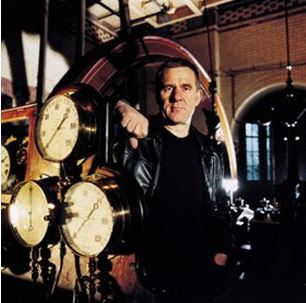
Photo by Rob Scott

Photo by Rob Scott


An Interview with Ephraim Younger

ey

Ephraim Younger is likely best known for his antics around the town of Great Bend, Kansas. His much loved and later deeply despised Ephraim’s Extract won the praise of citizens all around town, until they were faced with the affects of the tonic the morning after. The magic, all healing elixir was banned when the contents were deemed unfit for human consumption and the product was pulled from the shelves. No stranger to crime Ephraim is also the brother of the much feared outlaw Cole Younger.

Ephraim is a biblical name. Were your parents religious? What were their feelings on you and your brother pursing a life of crime?

My parents were very religious. They’d always be saying things like “Goddamn it Ephraim, put that down! Every day since you’ve been born has been my own personal hell. What did I ever do to God to deserve such a stupid child.” You know, religious things like that. My parents supported our criminal choices. Momma always used to say “Rob a bank Ephraim, and then you can go to jail be someone else’s problem.

What was it like growing up in the Younger household?

We were a typical family. Lots of screaming and throwing things. And punches. Punches all the time.

Did you ever get tired of growing up in the shadow of your brother Cole?

I love being in Cole’s shadow. It’s a lot cooler there. I tend to burn in the sun.

Was it an easy decision to turn to a life of crime or was it one of those things that just happen?

It wasn’t a decision. Can a bird choose not to fly? Well, actually I guess it can. It can walk places. One time I saw this bird walk two or three miles with me. Never flew, just walked. So I guess a bird can choose not to fly. What were we talking about again?

If you had your say in the matter what would you rather be doing other than criminal activities?

Sometimes I’ll just enjoy a good think. A couple months back I started thinking about something. For the life of me I can’t remember what. Anyhow a few hours later I came to. Everyone was gone, fire was out. But wow. What a way to spend an afternoon.

Do you think society tends to underestimate the pressures faced when living a life of crime?

Oh absolutely. So many things to remember. Lots of moving parts. Is today a hostage taking day or are we just robbing? Here’s a tip: Mask on first. Learned that the hard way after a few botched robberies…

Exactly how long have you known Eli? Why did you call him Ile when first apprehended by Hoyle? Do you sometimes like to deny all association with Eli or is that something you called him as a kid?

We’ve known each other since we was kids. Some names are harder to pronounce than others. But he knows when I’m talking to him so it all works out.

ey1

Where did you come up with the idea for Ephraim’s Extract? Is there any chance you can tell our readers how it is made?

I was chatting with a Shaman while in prison. He gave some great ideas about medicines and the like. So I took what he had taught me and added some of Ephraim to it. I can’t go into details about the exact recipe. But I can tell you there’s a lot love in my product. And I do love making it.

Did you enjoy working as an apothecary?

Oh sure. I love mixing things. Putting things in bottles. Selling the bottles. uUsing the money to buy more bottles. Something about bottles has always interested me. Lot less to worry about than when robbing a bank. Bottles won’t shoot at you. Although though there’s more counting. When you rob a bank you just say “give me all of your money”. Working as an apothecary you have to make change.

What all did you learn while incarcerated at Leavenworth?

I can make a shiv from just about anything you can imagine. Don’t hand me something nice, because minutes later I will have shiv-ified it.

Was it somewhat upsetting to learn your extract had been replaced by Brown’s? Do you miss the apothecary work? How did it feel to have your work outlawed?

I was very upset. Then enraged. Then back to upset. Then normal for a while. Then someone reminded me of it, and I went right back up to enraged, skipping upset entirely. I do miss apothecary work, but I don’t like being in such close proximity with Honey Shaw. She’s more handsy than you’d imagine…

Being an outlaw ain’t nothing new for me. I’m an outlaw, so my extract should be an outlaw. It’s like when an acorn falls from the tree, but nobody hears it. Right?

Did you ever forgive Eli for the events that occurred during the raid on Cole’s hideout? How has that event affected the relationship you have had with him since childhood?

Elie is not forgiven. Mark my words. Because I can’t, on account of my illiteracy.

Was the mint leaf a nice touch? Did turpentine on your lips help you forget that whole ordeal?

Once you find out you’ve man kissed a man you didn’t intend to man kiss, no amount of leaves, or turpentine, or asking yourself why you enjoyed it so much will ever make you feel better.

What aspirations are you currently leaning towards?

Can you ask that a little less fancy? This whole thing is giving me a headache.

If you could say one thing to citizens of Great Bend what would it be?

My brother’s gonna kill you.

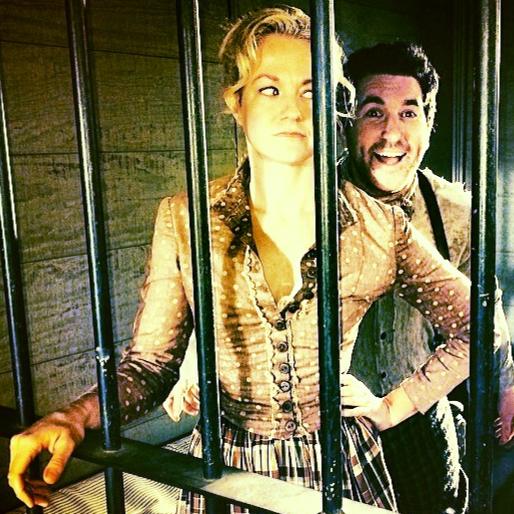
10371361_10152253952111200_2173706364895485771_n


An Interview with Robert Parigi

21454_1383456085212227_2020591828_n

Robert Parigi is best known as the writer and director of award-winning cult horror film Love Object. As a producer, his diverse credits include animation (King of the Hill, Beavis and Butthead), genre series Profiler and Tales from the Crypt, and most recently, Agents of S.H.I.E.L.D. It is my pleasure to bring our readers a more intimate look at the man who has helped entertain the masses.

Where did you grow up? What do you love most about the place you came from?

I loved the bayous, overgrown with Spanish moss. The Southeast Texas State fair, with its atmosphere of exotic danger (which I found out later from my good friend Johnny “Czar of the Bizarre” Meah was quite real; the fix was in and the Fair was notoriously corrupt). I took for granted the great bbq and Tex-Mex food (the only decent bbq I’ve found in L.A. imports its sauce from Austin). And I was fascinated by the statuary and ritual at the Catholic church I attended growing up. One of the first videos I made detailed the inner workings of a local Aeolian Skinner pipe organ.

What were you like as a child? Did you always have an active imagination?

I was a weird kid. I’m still a weird kid; I just look like a grown-up. I made gelatin scars out of the classic Dick Smith Famous Monsters make-up book so I could creep out an air conditioner repair man by lurking while he worked. Once I sneaked into a department store mannequin window. Two old ladies walked past; when only one was looking I would move, but then kept still whenever she convinced her friend to look.

Were you always drawn to things of a darker nature?

Always. One of my earliest memories is seeing House of Frankenstein on TV.

What were some of your favorite television shows early on?

This was before the mainstreaming of genre, before the internet, even before home video, so movies were always more important to me than television. Television was rarely weird enough.

My favorites by far were the classic Universal horrors that showed on Saturday afternoon. And classic Termite Terrace era Looney Tunes, Fleischer Bros. Popeye with their kitchen sink surrealism, old Republic serials like King of the Rocket Men, Flash Gordon, The Purple Monster Strikes. Everything I loved was vintage, so I’ve always felt dislocated from current things.

The CBS Late Night Movie showed great AIP films from the 1970s. Abominable Dr. Phibes, Haunting of Hell House, Frogs, The Devil’s Rain, and others re-ran frequently, along with the original Planet of the Apes films and made-for-TV classics like Trilogy of Terror, Dan Curtis’ Dracula with Jack Palance, Frankenstein: The True Story, , Gargoyles.

I stayed up until 4am once to watch the original Invasion of the Body Snatchers, which became especially creepy the next day as I struggled to stay awake during school.

Which do you think influenced you most to do what you do now?

Anything that was weird or unusual, usually in re-runs of older programs. Twilight Zone, Outer Limits, Addams Family, The Munsters. The Prisoner fascinated me, especially the Rovers that patrolled the Village.  Monty Python’s Flying Circus, Wild Wild West (steam-punk before there was a name for it). I liked the weird monsters in Star Trek (the original series), but was always bored with all the moralizing. Why did Kirk have to destroy the Tiki planet?

A local affiliate celebrated their anniversary by airing the original programming from their first night of broadcast back in the 1950s. I loved the Ernie Kovaks clips, One Step Beyond, and a bizarre first-person POV show called The Continental (later parodied on Saturday Night Live). That really gave me an idea that TV could be far stranger than the shows we see today.

Is it true you used to spend hours on end at the Tyrrell Public Library in Texas? What was that like?

It was the closest thing to the gothic castles I loved in the Universal horror films, and it was air conditioned, so I loved going there during summer vacations. It also has a two or three story spiral staircase. Of course, I had to roll down it once, and made it all the way to the bottom without cracking my skull. And as an older building, formerly a church, it was built of solid masonry. That in itself was fascinating, in a world of flimsy modern buildings.

Do you think with all the modern technology available that people are missing out on the full experience of books and libraries?

Absolutely. Here’s something I noticed recently at a museum, but it applies to libraries as well. I was visiting a new-style museum designed to “engage” kids. When I was a kid, I always hated things that talked down to me. I think most kids feel that way. All the kids visiting this museum-turned-playground were running wild and trashing the joint. The displays were tacky and the interaction was lame. It felt like a soiled Chuck E. Cheese.

I went across the street to the old-style Natural History Museum, all neo-classical galleries, funereal taxidermy diorama, and dinosaur skeletons. Unlike the “fun” museum, this one was dark. It required respect before it would offer up its secrets. It whispered rather than shouted. The kids wandered in awed silence, looking at the great dead things. Far more engaged by mystery, than by banality.I wager they will always remember their visit to this old museum, and instantly forgot the time wasted at the modern one.

I think it is the same with libraries and other brick-and-mortar cultural institutions. In an increasingly materialistic and literal world, these are the last remaining sacred spaces. The last engines we have for generating awe.

A recent article online proposed a new role for libraries in the digital age, since they are supposedly rendered obsolete by the internet. Libraries should become community centers where people would meet, and inventories of tools (like 3D printers) and services (like wireless internet access).

How horrible is this bland vision for our future! There is no space for the individual, since you no longer go to the library for the private activities of reading and research, but to join a group of others in a meeting. There is no value for ideas, only for things that can be used more cheaply than elsewhere. And this article was written by a librarian advocating this approach! How would Charles Forte ever write his books in such a library?

Were you a fan of Tales from the Crypt before you went to work on the series? What was that experience like?

Absolutely. I saved up for all the Russ Cochran reprints of the E.C. Library. Al Feldstein and “Ghastly” Graham Ingles were my favorite artists from the horror titles. Even before that, I was a MAD Magazine fan:  Don Martin, Al Jaffe, SPY vs SPY. Later, I learned that MAD was the only E.C. title that survived the 1950s witch-hunts against horror and crime comics. That must have inspired E.C. impresario/publisher William M. Gaines’ skepticism and distrust of authority, which I absorbed from MAD. E.C. and horror ultimately had its revenge. History, and more importantly art, remember William Gaines and the horror and crime comics. Even third rate pre-code horrors are available in hardcover reprints now, while the only purpose Estes Kefauver and Frederic Wertham serve are as petty villains in the story of horror’s ultimate victory.

Tales from the Crypt was an incredible show, so many amazing actors, directors, and composers to work with. I even got to meet William Gaines over the phone! He had a big, fun, voice that perfectly matched his caricatures in MAD.

Walter Hill was one of our executive producers, and directed several episodes. He’s the only person I’ve met who could quote Goethe’s Faust from memory, and also identify the Tor Johnson mask I had in my office!

When did you first know you wanted to work in film and television?

Famous Monsters of Filmland reprinted some Popular Mechanics diagrams from the 1920s and 1930s illustrating how Willis H. O’Brien did the visual effects for The Lost World and King Kong. The illustrations were so clear, I realized I could make movies, too. I started experimenting with a Super 8mm camera.

Of all the shows you have worked on is there one you enjoyed more than the others or have you loved them all equally? 

I most enjoyed making Love Object, the feature I wrote and directed. The perfect conclusion to that project was receiving the International Critics’ Prize at Gerardmer, which was presented to me by Christopher Lee! I had brought a pair of vampire fangs to joke around with him, but I was too much in awe.

I always love working on horror projects like Tales from the Crypt. And Beavis and Butt-head was exceptionally fun. Mike Judge, John Altschuler, and Dave Krinsky are great talents and very fun to work with. Agents of S.H.I.E.L.D. is great, but my non-disclosure agreement prevents me from saying much.

Every show is a chance to learn. On smaller shows like Dark Skies or Profiler, I first learned to direct on second unit shoots, and learned about visual effects while shooting video effects plates for Freddy’s Nightmares.

How do you think the industry has changed most since you first started your career?

Digital piracy has almost completely destroyed the small-to-medium scale budgets that made unusual movies possible. All my favorite genre films land in this range, with budgets large enough to hire the skilled artisans who provide production value, but small enough to require imagination and unique vision from the film makers. Think of Cronenberg, Carpenter, and Lynch’s movies from the 1980s and 1990s.

Currently, the only business models that make financial sense are poverty-row found footage movies, and gigantic, dumb CGI spectacles. Everything in between is lost.

I’m hoping VOD and streaming services will soon provide a home for odd yet well-made niche movies. But that may just be wishful thinking.

What do you hope your viewers take away from your various works?

I hope I can share some glimpse of the weird. That’s not always possible on work-for-hire producing gigs, but you look for opportunities. It’s why I look forward to directing more films.

On Dark Skies and season 3 of Profiler, I designed the main titles on spec and pitched them to the shows. Dark Skies ‘main titles were inspired by Tribulation 99, an experimental film by Craig Baldwin, and Profiler was a mini-giallo. Profiler, was fun, since I got to shoot the original footage, and KNB (who do the make-up effects for The Walking Dead) made the creepy doll-head that we feature.

It has also been great to work with director William Malone.  We met back on Freddy’s Nightmares, when I noticed how much better were his dailies than ever other director. We’ve been friends ever since, and worked on Tales from the Crypt. His episode for Sleepwalkers was so disturbing, NBC moved it later in the air schedule! This turned out to be a blessing in disguise, as it gave Bill and I time to give his extra time and attention.  We brought on a special composer for his episode (Frank Becker), and Bill and I shot additional inserts with his own cameras and effects lenses. Bill shot an amazing scene with the sets painted in negative colors. We filmed our lead actress, Naomi Watts, walking through the set, then reversed the color values during processing. She appeared in negative image and the set looked normal! All in-camera, with no digital effects.

What was the best advice anyone ever gave you? Who was it?

I’ve been fortunate to work with many great mentors, who have given me great advice on life, the industry, art, and everything in between. But the best advice can’t be printed.

So here’s an example that says a lot about the industry. We were having a meeting to discuss preview screening notes and titles for Tales from the Crypt Presents: Demon Knight. At the end of the meeting, I pitch an idea for the end credit crawl: “Wouldn’t it be cool if we include an end credit like ‘The Crypt Keeper will return in Tales from the Crypt Presents whatever title.’ Just like the end of Buckaroo Banzai!” Joel Silver’s head pivots in my direction like a tank turret, and he blasts “Don’t ever compare my movie to a loser!” I was baffled at first, because I love Buckaroo Banzai. But it didn’t make any money, so in Joel’s eyes it was a loser.

That was an important lesson to learn, and good advice for anyone pitching an idea in Hollywood.  Maybe I should have compared the end credit tease to “Just like the end of a James Bond movie!”

Regardless of Joel’s disregard for Buckaroo Banzai, or my pitch, they did use my idea for the end credits. So it’s not just the idea that counts, it’s how you sell it.

How does your work differ when working on animated series?

The sense of time and detail is completely different. Live-action TV series are fast and furious. Their beauty has the vivid color and strokes of a watercolor, or the quick, expressive line of ink drawings and Chinese calligraphy.

Live-action movies are like oil paintings. The attention to detail is very fine, and the materials are worked slowly for cumulative effect over a much longer period of time.

Animation is even more detail-oriented and even slower. It’s like pouring concrete. You have to plan the foundation perfectly or the whole project is ruined.

Animators are also very like puppeteers. The best animators on Beavis and Butt-head and King of the Hill reminded me of the puppeteers who operated the Crypt-Keeper.

Are there any little known things about you that your fans might be surprised to learn?

I got to see Vincent Price when I was a kid. He was performing one of his college lecture tours, “The Villain Still Pursues Me.” My father taught economics at the university, so he took me to see the show. I got to ask Mr. Price a question from the audience, about playing the Invisible Man in The Invisible Man Returns, and Abbott and Costello Meet Frankenstein, and afterwards he autographed an issue of Famous Monsters which I still have.

Seeing a famous monster in real life was an amazing experience for a kid like me. And Mr. Price also inspired my life-long interest in art.

What would you say is the craziest thing you have ever done?

The craziest thing I’ve ever done was getting into this business! I dropped out of a philosophy doctorate, with no industry connections or training, hopped a plane from New York City to L.A., and started looking for work.

Do you have a dream project you would most like to bring into existence?

Chrome Gothic is my ultimate dream project. It is the reason I came to Hollywood, to someday make this movie. It’s my favorite script of everything I’ve written, and has everything I love in one story: hot rods, mad scientists, mutants, romance, action. Extravagant gore and ornate perversion.

It’s like The Little Mermaid, with organ transplants. And surgery cults. And car crashes.

What projects are you working on at the moment?

I’m shopping a slate of genre films, ranging from artsploitation like Love Object to multiplex creature-features, with several strange detours in between.

Also, I’ve just written two motion comics for one of the “Masters of Horror” directors with his own company. Again, contracts prevent my mentioning names. One is a four-chapter graphic novel, very gory and perverse. The other is a one-chapter mood piece: imagine if Robbe-Grillet had directed a kaiju eiga in the early 1960s.

The art for the 4-chapter work is currently being colored and animated, and should be online in 2015.  We’re looking for an artist for the one-chapter, who can delivery good girl art, architectural detail, monsters, and machinery. Most artists specialize in just one, so I’m thinking about finding multiple artists to draw different elements on the same pages.

And a TV series I created is starting to heat up. I made up a storyline into which I could dump all of my weirdest obsessions, and now with genre shows doing so well, it might happen.

What do you think is the key to a life well lived?

Never give up your passions. In the real world, this means finding a balance between living your passion, and working to provide the material basis for doing so. But it is always important to never lose sight of why you are working: to fulfill your passion.

What are your feelings on death and the afterlife and such?

Even if there is an afterlife, it seems irrelevant. All of the passions and goals and memories that make me what I am are in this world. If anything survives the body, whatever it is will not be “me” in any significant sense, so who cares? All that matters is the here and now.

This makes our time and our decisions that much more important:  all you have is one take. Make it count.

This is also why art is so important.  It is the only way we have to leave behind something meaningful.

An Interview with Vernon Shank

vs1st

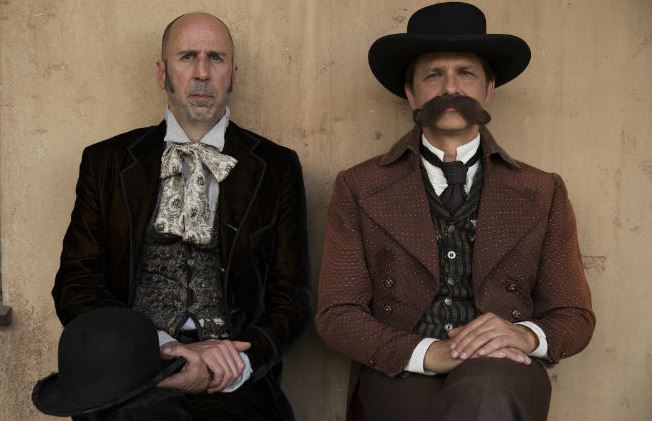
Vernon Shank has long been known as the undertaker of the fine town of Great Bend. Recently he has been promoted to the vastly impressive job of Medical Examiner and has done brief stints as a deputy, starting during the town’s smallpox outbreak. A man of few words he is mysteriously macabre.

Do the Shanks have a long history with the town of Great Bend?

My Grandfather, Ezekial Shank, was thrown out of the Quaker Church in Branson Missouri for what documents say was “inappropriate use of scarecrow”. Ezekial intended to travel to St. Louis to relocate but had a remarkably bad sense of direction and ended up running out of food just outside Great Bend.

Did you have a fascination with the macabre early on or is your current profession one chosen out of necessity?

My father was an inventor and tinkerer and had an interest in taxidermy. In fact, unbeknownst to me he had my mother stuffed when I was young and I learned about it six years later. Boy we had a good laugh. I really thought she just loved sitting in that rocking chair. I enjoy experimenting with cosmetics and I’m very good at building crates. Undertaking seemed like a perfect fit.

What dreams lie within the mind of a man who works with the dead? Do you ever wish for a more distinguished life? Where do you see yourself when you are old?

Oh no, I’m a simple man. I very much enjoy the time I spend with myself in my ‘creating shed’. I like playing with different aspects of cosmetics. I also have a fairly elaborate doll collection and have just started sewing and needle-point. Also, I host a ‘game-night’ on the second Tuesday of every month.

vs5

How did it feel to be promoted from the Undertaker of Great Bend, Kansas to Medical Examiner?

I don’t always adapt to “change” very well so it was a little scary. Plus, I sometimes get a little fuzzy eared when Sheriff Hoyle is talking so I think some important information got lost in translation.

Do you really care much what people think of you due to your line of work?

No. I’ve been teased most of my life. In school, some of the other children called me “poke rat” and “boogie trout” because I didn’t look like everyone else. There was also an incident where I was caught in a barn with an alpaca goat that people really rushed to judgement on. That wasn’t fair but I learned to deal with it. I’ve become immune to some of the mean things people say.

Were you surprised to see Hoyle take a bite of that apple found in Mr. Webb’s stomach?

Nothing that Hoyle does really “surprises” me. Although I was scheduled to go to his house for dinner that week and I cancelled.

What is the strangest thing you have seen over the course of your career working with the dead?

I remember working on old Abner Treman and did a lovely job prepping him for burial. He had a big shock of lovely red hair that he was very proud of and I styled it beautifully. When I woke up the next day it was parted on the opposite side and the comb was in his hand. Brr…

vs3

Did you have anything to do with Hoyle’s shoot out with the Younger’s that nearly killed him on the day you had picked for the Sheriff’s Death Pool?

That’s a beautiful shirt you’re wearing.

How did it feel to have to open a man up with so little medical experience? Did you ever find out what part that was you took out of Hoyle and put in that Mason jar?

I think opening a man up has less to do with ‘learning’ and more to do with the right attitude. And that I have. And I have no idea what that little thing was but I should probably find out because I’m pretty sure it ended up in an omelet. I really need to separate my kitchen from my workspace…

Does it feel rewarding to be one of the few Great Bendians who owns his own business establishment?

Yes, but I’m not thrilled with my location. Right now I’m sharing storage space with Mr. Hovennian’s textile shop and he hogs all the parking with his stupid carriage. He’s a terrible parker.

vs4

You have been accused of moving that watering trough when Jeremiah Dunlop leapt to his death. Do you sometimes have to take measures to drum up business when things get slow?

People made a big stink of that, but they fail to mention that I am on the town’s civic planning committee and I moved the trough to free up maypole space in front of the saloon. I mean, come on. I’m not a monster.

Did losing your mother at the age of six affect your psyche to this day? Did her experience with spiders make you somewhat arachnophobic?

She had a fairly stern expression even before the paralysis from the spider bite but that really took it to a new level. Add that to the facial droop she got after being stuffed and it was pretty spooky. I don’t think it has affected my relationships with women, though.

Were you nervous going into Cole Younger’s hideout dressed as a woman? Was it the first time you had done such a thing? Did help bring you more in touch with your feminine side?

First time? I mean, of course, how would it have happened any other time? I mean, that was like such a strange scenario that would never…could never have even happened before I don’t know what you’re…are you implying…I mean…oh my look at the time I need to get to an appointment thanks so much for talking don’t hesitate to ask any more…bye.

vs

10371361_10152253952111200_2173706364895485771_n

The Paintings of Luke Hillestad

Prudence

Prudence


Grotto

Grotto

Philter

Philter

Abyss

Abyss

Circe

Circe

Severed Wing

Severed Wing

Luke was born in 1982 in Minneapolis.  In 2006 he left his work as a land surveyor and began painting full time, with Rembrandt and Odd Nerdrum books open next to an empty canvas.  He immersed himself in apprenticeship, later studying with Nerdrum, and traveled to museums and studios around the world to learn from the paintings of the old Masters whose tradition he seeks to follow.

Using the palette of the Ancient Greek painter Apelles Luke paints friends and a collection of taxidermied animals, illustrating the primal beauty of humans at their most noble with narratives that center on themes of death, kinship, ritual, and wilderness.

Luke Hillestad is represented by The Rymer Gallery in Nashville, the L’oeil du Prince Gallery in Paris, and Flanders and Rogue Buddha galleries in Minneapolis. His work has also been exhibited in Florida, Chicago, Norway, and Germany.

lukehillestad.com