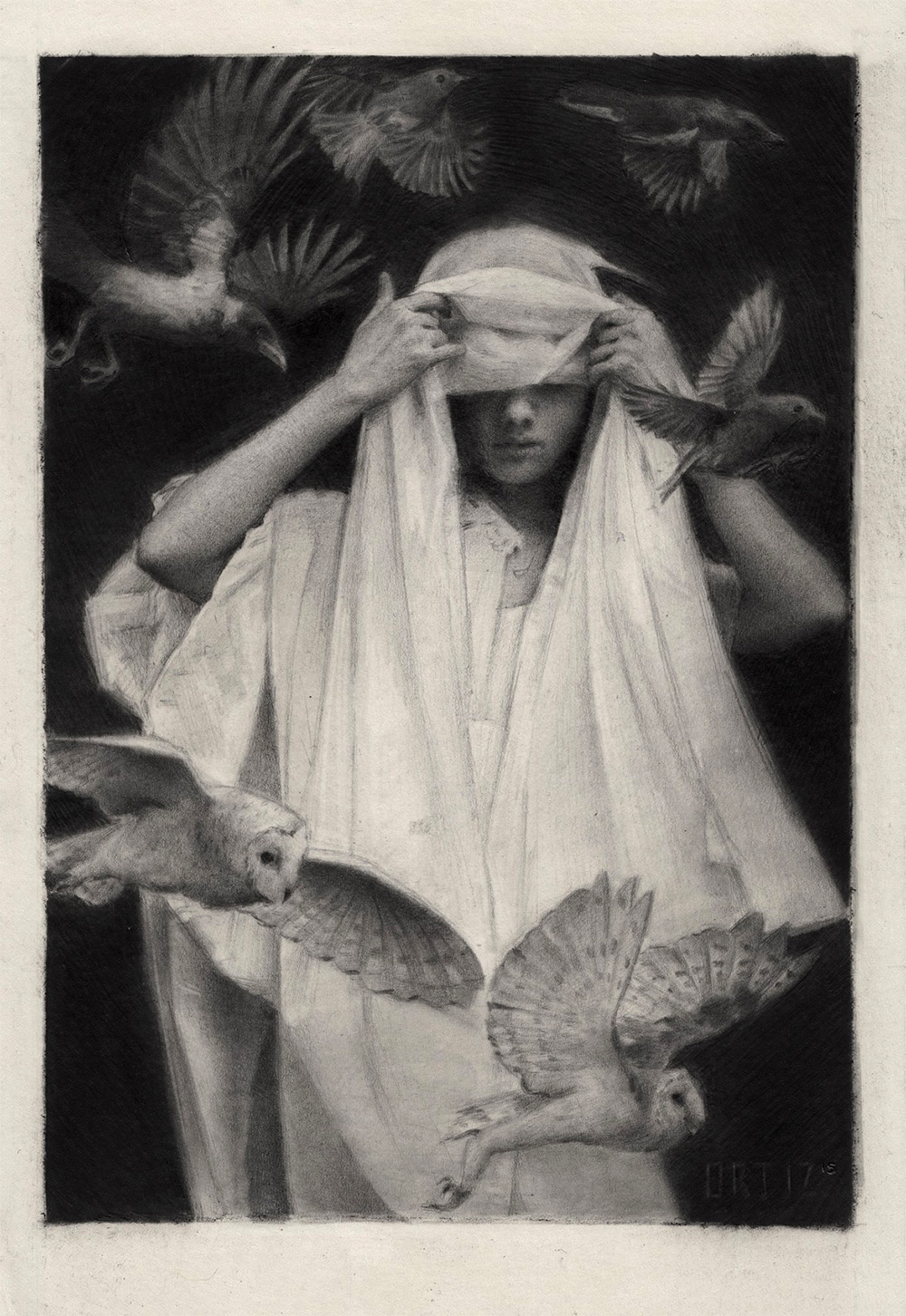
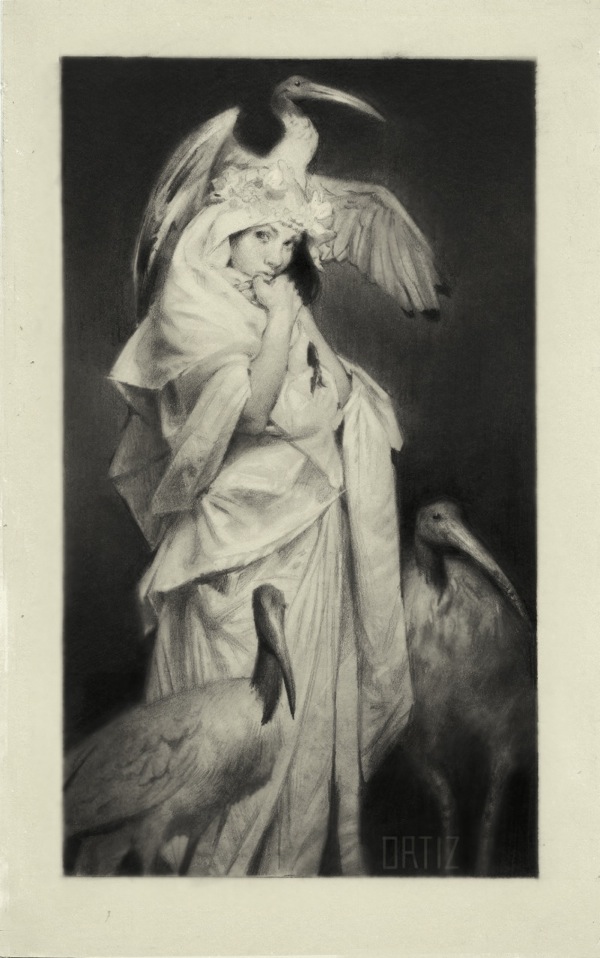
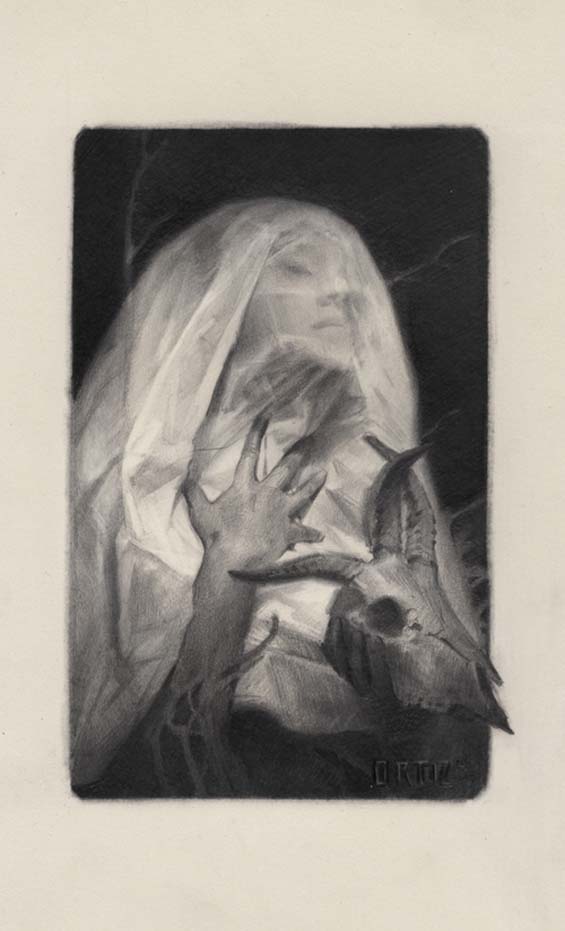



For more information on the works of Karla Ortiz please see Facebook and http://www.karlaortizart.com/.
For more information on the works of Karla Ortiz please see Facebook and http://www.karlaortizart.com/.
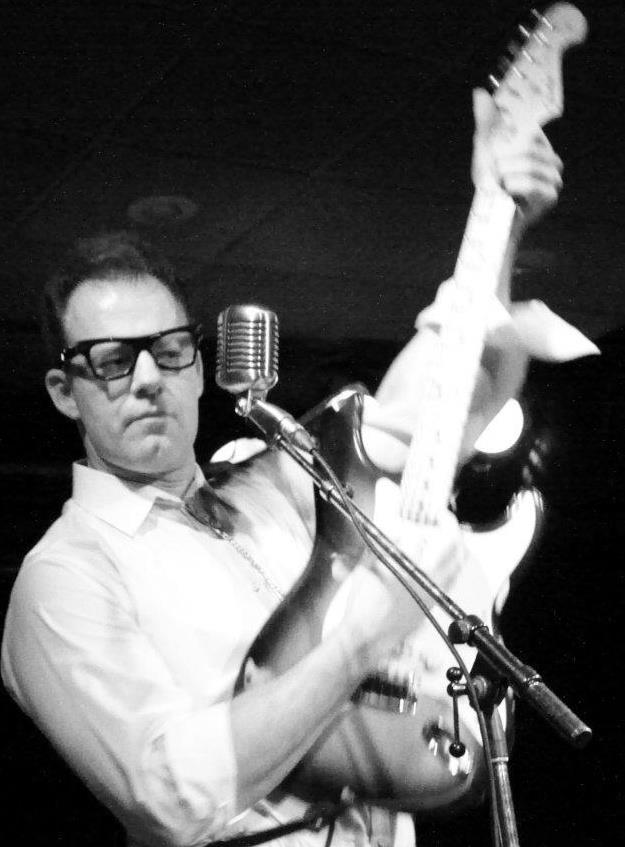
Charles Paul Waters is a James Dean enthusiast best known for his work in the rockabilly act Paul Waters,The Rockabilly Rocket.
Can you tell us a little about what it was like for you when you first discovered James Dean?
It actually happened in two separate events, one being a 1981 film class I had in high school in which we saw East of Eden and Rebel Without a Cause. The other was three years later, after music pursuits had relocated me to the Minneapolis-St. Paul area, and a local college campus theater screened all three of Dean’s films. In 1981 I was ALL about Buddy Holly, guitar playing and trying to get a permanent band going. The 1978 film, The Buddy Holly Story, had literally rescued me from the trenches of alienation, despair and angst by way of music and being drawn into Buddy’s colorful life and legacy. I temporarily lost sight of much that was my own dilemma and daily row with confusion, awkwardness and social ineptitude. When I graduated, just barely at the bottom of my class, then came the free fall into the aforementioned hallmarks of teen angst reality, from which music couldn’t shield me 24/7. Nothing could have prepared me for what seemed so real, yet idealized and colorfully glamorous, as Dean’s Cal Trask and Jim Stark, a few short years later in a Minneapolis theater. It was like a very potent but slow drip IV, a kind of emotional x-ray of Dean himself that made it impossible for me to watch him and be able to separate actor from role. I felt it in my guts in ’84, that to a huge degree, James Dean emotionally lived the identities of Cal, Jim and to lesser extent, Jett Rink.
What about was it about Jimmy that drew you in as it has?
It was many things, chiefly among them at the beginning were his completely natural manner, both quiet and nonchalant, then erupting into volatile. Dean also had, and has to this day, one of the most charismatic and photogenic images in film history, both in his movies and in the endless trail of still photographs that capture his every nuance. The way he moved and spoke onscreen was something comprising both what I already was, especially the awkwardness and pain, and what I yearned to be. He totally spoke for me in ways that I could not. No one has ever captured the outsider, the misfit and the rebel – the teenager – as perfectly as Jimmy did. He remains the yardstick against which all other rebels, both vulnerable and violently defiant, must be measured.
What about him as a person, as you see it, do you admire about him most?
Emotional honesty culled from his own psychological background, particularly viewed through the roles of Cal and Jim. There are also scattered pieces of that same authenticity to himself throughout his TV work and the young Jett Rink. Beyond that I have nothing but awe, respect and sometimes tearful affection for the one-man, creative integrity war Dean waged with old school established Hollywood and the studio system, and for a short time, won. The historic truth of the matter is, Jimmy Dean was an only child, and he came from America’s heartland, a small Indiana farming community, NOT a savvy, sophisticated showbiz family with loads of experience and connections. He cut his teeth theatrically on the Fairmount, Indiana high school stage, stoked his imagination about art, music and the outside world through his early mentor, the Rev. James DeWeerd, and then left the farm on Jonesboro Pike for the bright lights, trials and tribulations of the big city. To think of the guts and tenacity that had to take for him to, first, secretly defy his stilted and emotionally vacant father’s demands that he enroll in pre-law courses and basketball coaching ideas, then continue to pursue his acting dreams despite Winton’s disapproval, is the stuff of legend, yet truth. Dean basically came from “nothing,” as some have tersely called his background, but with his fractured family history, beginning with his mother’s death to cancer when Jimmy was nine, I’ve often wondered if his feelings of alienation and hurt towards his father may have also included a certain tinge of pain at clashing WITH Winton, because his father was all he had left of his immediate family. According to several who knew Dean and witnessed his behavior with his father, Jimmy was curiously NOT explosive and confrontational. Truthfully, he was overly gentle, polite and considerate to Winton, unlike the fictional over-the-top screaming scene in Franco’s 2001 portrayal, which is otherwise brilliant. As Jimmy’s life played itself out, he kept his most intense and painful feelings about his mother’s death and his father to himself,… until the cameras rolled. “Getting even with him,” (Winton) were his words to a friend about the role of Cal in particular, which biographer David Dalton vividly referred to as Dean’s “purest and most incandescent self portrait.”
What do you find most interesting and most overlooked when it comes to Jimmy?
There is a collision of meanings, as well as importance, in what is interesting to me personally versus the view of Dean held by others, and what has been perhaps overlooked about Dean. For myself, as I have touched on previously, it’s the real life of Jimmy and how it fueled his cinematic achievements to an enormous extent. The intense drama of how his reckless, devil-may-care meanderings and eccentricities had him careening desperately close to the final abyss, until that grim specter came to take him away, leaving behind his enduring celluloid reflection, has been documented extensively and is my main interest, as are all things related to the dark side of Hollywood. On the other hand, it has been said by the late composer David Diamond, who knew Jimmy in New York, that the films do not preserve certain aspects of who he was, even physically, which I know will be hard for some to believe. In the years following Dean’s death and the rise of his posthumous legend, Diamond was one of several old associates who lamented, “Hollywood has defaced him (JD) completely…” However, others who knew Dean well, such as William Bast and Jimmy’s Fairmount high school drama teacher, Adeline Nall, said that the Jimmy Dean preserved in East of Eden is the true Dean, physically and emotionally, as he was in life. But it’s been noted also by others, especially Jimmy’s high school pals and other Fairmount residents, that some of his sense of good fun and humor have been either lost or ignored altogether. According to close friend Lew Bracker, whom recently published a brilliant memoir of their friendship in the last 16 months of Jimmy’s life, Dean was intensely interested in forming his own production company, with Bracker at the helm, to produce not only a comedy but also something way ahead of its time by at least twenty years, the anti-western. Many years before the wacky and unprecedented antics of Blazing Saddles, Jimmy already had his finger on the pulse of the future of brilliant American film making.
Why do you think there are so many widely varied stories in regards to his memory?
That’s a good question and one that is central to both his appeal and the multifaceted life that he led. It brings to mind the quote from his pal, Sammy Davis Jr., in the mid 70s documentary James Dean: The First American Teenager. (Paraphrased), “It’s very funny, if you bring together four or five people who knew Jimmy to share memories of him, they all have something to say about it. But it will sound like recollections about four or five different individuals…” This is indicative of not only the dynamically varied personality Dean was, but also the near-militant need he had to keep friends and associates in his life completely separate from one another, with few exceptions. I recall, again, biographer Val Holley’s observation that Jimmy compulsively “compartmentalized” people, sometimes to the extent that individuals living in the same city never brushed shoulders with one another, such was the careful almost paranoid efforts of Dean to keep them unaware of each other. Case in point was Dean’s Actor Studio partner, Christine White, and her query of Holley during an interview for Val’s Dean book. About Jimmy’s girlfriend, Barbara Glenn, Christine asked “wasn’t she the one he had on the west coast?” Amazingly, Glenn and White were both in New York and were frequently around Dean during the same period, circa 1952-early ’54, yet they never knew of each other in Dean’s lifetime. Roy Schatt, the famed New York celebrity photographer who took many of the most famous photos of Dean, believed Jimmy “was never a friend to anybody; he simply used people to obtain or learn something he wanted to know, then he dropped them. He was almost constantly in some kind of ‘character,’ as if trying out a scene or personality on you for effect, to see how convincing he could be,” something Bill Bast also remembered. While legions of fans would be drawn to Dean’s onscreen performances and many would be able to identify with his emotional plight, there was, and is, this undeniable and very wide cross section of fans the world over coming from different backgrounds and drawn to Jimmy for a multitude of reasons. But the one constant seems to be a kinship and bond forged with Dean’s sense of emotional pain, loneliness and the rebel/outsider status. It’s been said that there are nearly as many Jimmy Deans as there are fans; each of us taking what appeals to us and leaving that which does not resonate, such as myself and the fact that his bullfighting and race car obsessions do not interest me. Not that I skip over passages in books when those topics pop up, but they are examples of things I cannot relate to. This, again, is linked to the compelling, kaleidoscopic and rich tapestry of varied stories about Jimmy, coming from all those who encountered him, worked with him, briefly passed through his life or maintained a relationship, intimate or not, for a few short years. Some knew each other but most did not. I believe some of the careful separating of relationships in Dean’s life was rooted in the fear and uncertainty born out of the claim which Rogers Brackett had on Jimmy for helping him with contacts, connections, even personal financing in those early years. And like him or loathe him, Rogers Brackett was clearly Jimmy’s mentor and benefactor, after the Rev. DeWeerd. If someone came to him and offered to help out career-wise or whatever, and did so without expecting some kind of payback, Jimmy was okay with that as long as there was no ulterior motive or agenda. But someone, especially Brackett, mentally filing away every single favor for future compensation was a situation Jimmy bristled against. Many of the stories about Jimmy’s darker side do not sit well with some fans of a more conservative and right wing disposition, especially those regarding Brackett. Others that frequently cause offense and usually outright rejection are Dean’s wild and rude antics and sexual experimentation with John Gilmore; the emotional recruitment by Dean of Hollywood fringe nut, Jack Simmons and, of course, the many tales of Dean’s unflinching recklessness and supposed death wish, the last of which I simply do not believe. In the end, what it comes down to is many fans subconsciously projecting their own morality and sensibilities on to Jimmy, and thereby stripping him of the right to have been, in some ways, a person very different from themselves. It is complicated even further by the friends, lovers, and associates of Dean practically falling over one another in efforts to be the only “reliable” source, and completely discredit each other, as Holley observed with great amusement during his own research. Subsequently, one finds that many fans will aline themselves with those Dean friends and family, whose memories of Jimmy dovetail perfectly with their own moral compass. However, just because a multitude continue to speak out against stories of impetuous daredevilry, rude and crass behavior, drunken carousing and bisexual escapades does not mean that none of it ever happened. By the same token, I despise and loath the sadistic and cruel “sport” of bullfighting with a holy passion and always have. I like to think Jimmy, had he lived, would have quickly outgrown that interest and left it behind, because at heart he seemed to love most animals. But just because I hate everything about bullfighting does not mean the stories of Jimmy’s obsession with it never happened.
Do you think he was often misunderstood by his peers?
At times, yes, it seemed chronic and often to the point Jimmy would do or say things off the wall or outrageous just to get a rise out of people, like arguing about a film he never saw, basically saying it couldn’t be as good as someone insisted. It was a get together at Schatt’s place and a girl was raving about The Heiress. Dean continued to push and taunt and be derogatory about the film until finally admitting he hadn’t even seen it. Schatt was amused and noted Dean seemed to enjoy riling people. Like Jimmy disappearing from dinner at Schatt’s place to secretly haul one of Roy’s living room arm chairs out into the busy New York street, where he proceeded to flop down in it and casually smoke a cigarette. The ensuing ruckus from the street outside Roy’s window sent him, Landau, Bob Heller, Billy Gunn and others rushing downstairs to find traffic backed up, and one large angry guy out of his car about to pound the hell out of Jimmy. They quickly pulled Dean out of the chair, dragged it and him to safety, Jimmy comically dissolving into a loose, flopping rag doll the whole way. “Don’t you sons of bitches ever get bored? I mean, before I pulled that stunt there was a herd of nine to fivers going home to their wives like they do every night, the same old routine. Now, they’re all juiced up about it, so are you guys! Hell, they’ll talk about it for years,” exclaimed a grinning Jimmy, as Schatt and the others all asked variations of the same question, “you crazy son of a bitch, have you lost your mind?” On a more cerebral note, Jimmy’s friend Lew Bracker noted in the 1957 film, The James Dean Story, how Dean was, on a very basic level, a very shy young man who took a while to warm up to people and trust them even a little bit. And, judging by the historical record of other similar stories, there had to be a painful number of occasions wherein someone meeting Jimmy for the first time wouldn’t give him any more than a fleeting window of opportunity to open up. Again, Jimmy couldn’t always grant trust in a new person in his life right off the bat, so it was like he didn’t respond in detail or quickly enough, “so they would just write him off,” as Lew remembered. Probably the most consistent area of misunderstandings between Jimmy and others was during production of the films and involving Dean’s co-stars and bit players. This, along with other revelations are rendered beautifully in Bracker’s recent memoir of his friendship with Dean, Jimmy and Me. There seems to be a consistent pattern through the work done on all Dean’s films where he commits and is signed to do the film, proceeds to immerse himself in it completely, to the point that the cast and crew become a sort of family for him. Many of his co-stars and bit players had the mistaken assumption that Jimmy occasionally being warm, joking and gregarious with them, during the months of filming, meant they had a new close friend in Dean, and that they would remain so. With the exception of Giant co-star, Elizabeth Taylor, whom was able to get closer to Jimmy than any cast member of any film, Dean simply moved on and didn’t look back. Nick Adams, from the Rebel gang, took Jimmy’s exit from his life very personally, having attempted ingratiated himself as Jimmy’s “best pal” during shooting, a feeling I do not believe for a second Dean shared. According to what Bracker has written on the Rebel crowd, Jimmy pretty much washed his hands of Adams in particular after Nick’s possessive and public embarrassment of Natalie. Up until Jimmy’s death, Nick was still trying to find his way back into Dean’s life and good graces. As with others, the result of Jimmy leaving his temporary ‘family’ and not maintaining ‘friendships’ was a lot of hurt feelings, even resentment. After Jimmy died, the shameless publicity antics of Nick Adams and Dennis Hopper, especially, in regard to them riding Jimmy’s posthumous fame for how it could benefit them, can be seen as a glaring act of posthumous exploitation and revenge for how Jimmy walked away from the cast of Rebel and joined his new ‘family’ in the Giant production.

Lovers
You are free, said the stranger.
Before I arrived there.
Costume. I had a costume on though.
I was curious: what his reaction might be?
He closed his other eyes.
I’ll send an ego instead of you.
Getting softer, I feel it, he feels it too. Hardly moves. He chokes himself inside me.
Now I must live with another dead man.
It’s not even hopeless.
Not vicious.
Serves the absence.
Delivers the unnecessary.
(Translated by Gabor G. Gyukics)

KF is a Hungarian poet (linguist, essayist). Her latest bilingual Indonesian-English poetry book is Racun/Poison 2015, Jakarta.


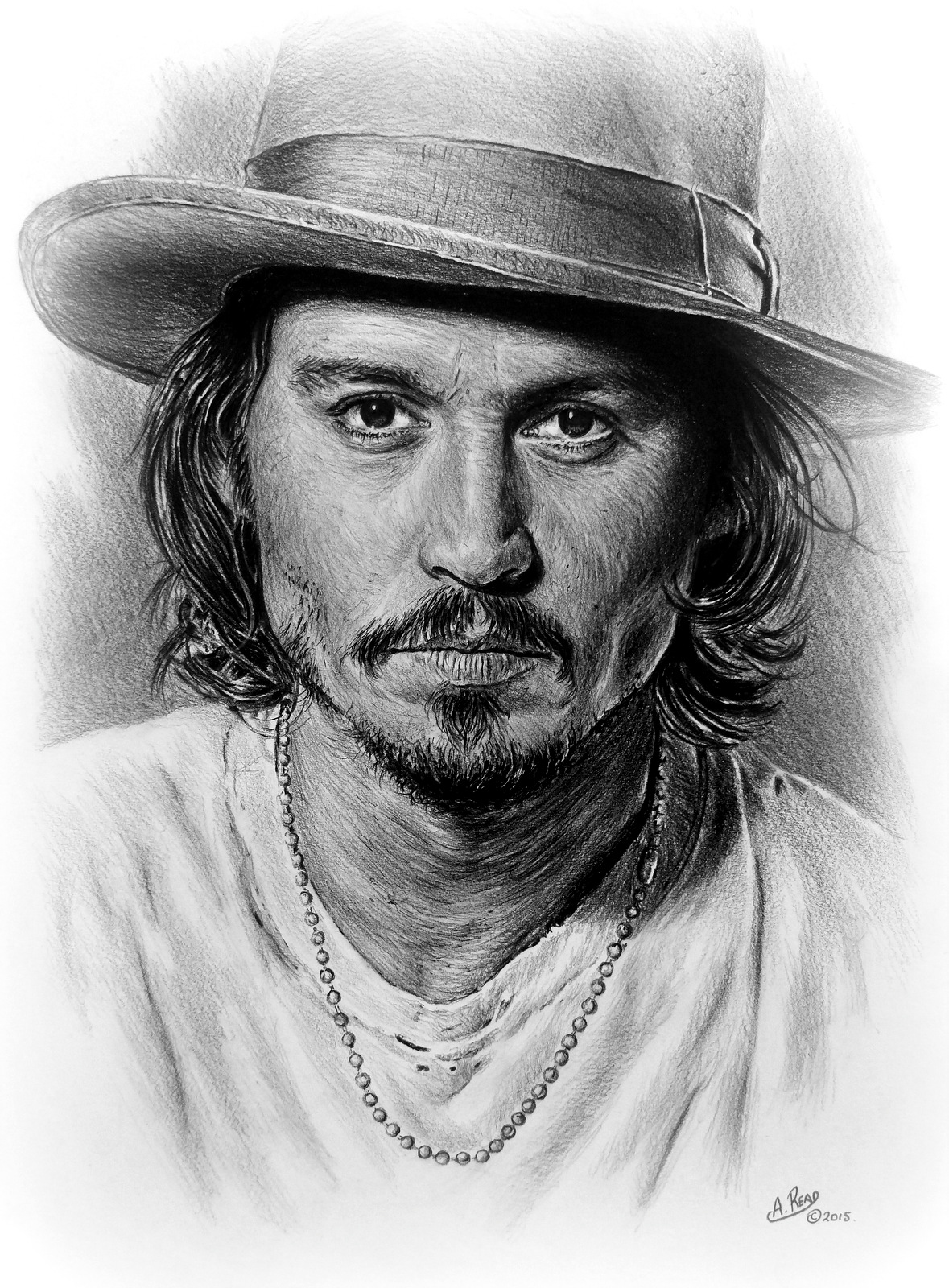
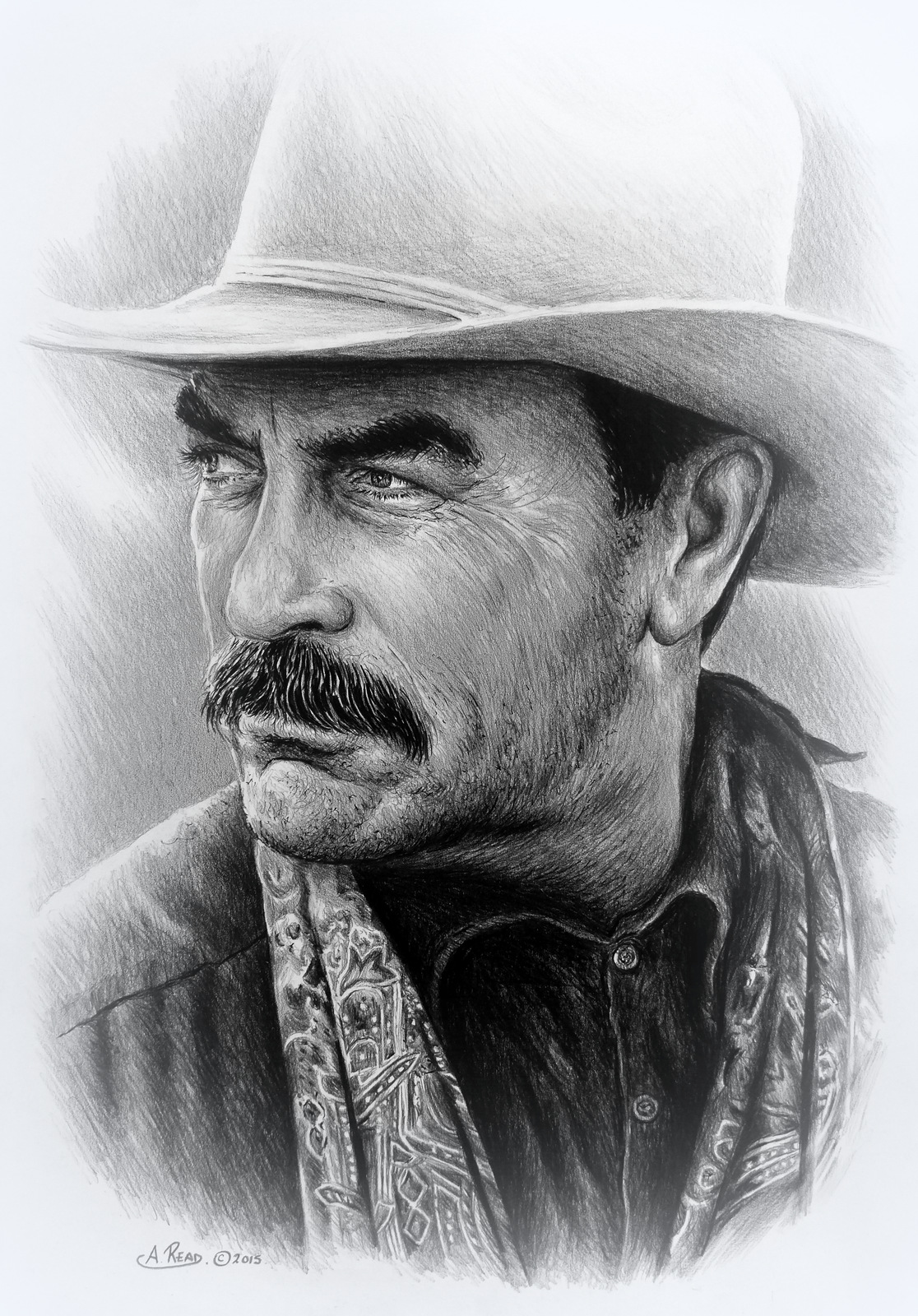
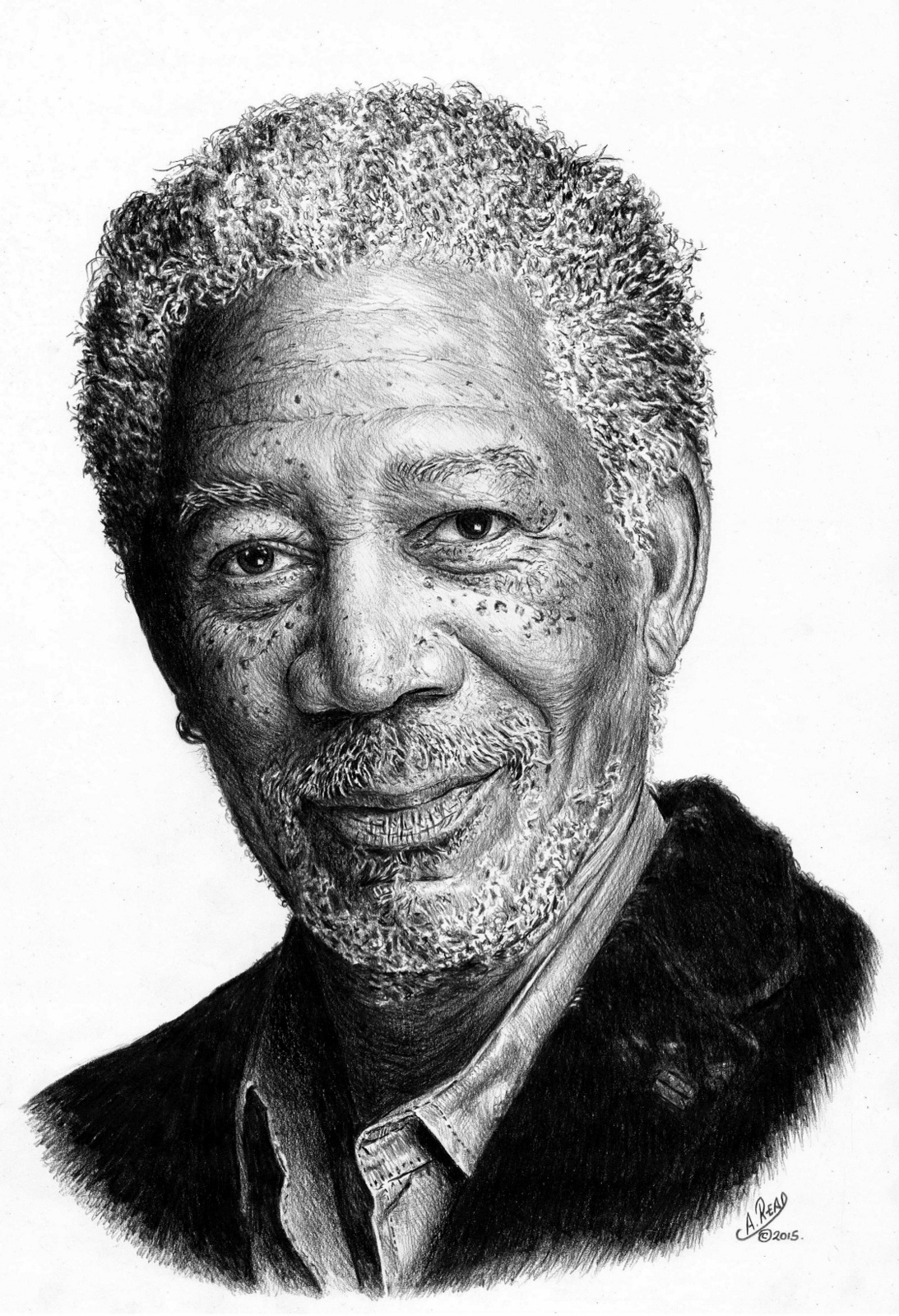


For more information on the works of Andrew Read please see https://www.facebook.com/PORTRAITS-BY-ANDREW-READ-338954837535/.

GOING BACK IN TIME
When I was young
I drove to Salinas
And ran through the bean fields
Pretending I was James Dean in East of Eden
Stopped off in Monterey walking Cannery Row
Imagining myself packing sardines in between
Midnight conversations with Doc and the boys
Driving to Carmel I scribbled a poem on a cocktail napkin
That later became the Title for my first book of poems
But the rents were high and the job pay too low
So in 1964 I took my first full time job in Modesto
Driving on weekends to Stockton’s public square park
To drink with the wino’s
In Crow’s Landing I drank with unemployed Mexicans
At run-down cantinas
In North Beach and the Mission District
I hung out with deadbeats and losers
Street people fighting junkie tremors and cirrhosis of the liver
In the Fillmore I cut my teeth on jazz
Let Billie Holiday patch up my bleeding heart
In the Portrero I saw the last of the factory workers
Growing thinner like their paychecks
Fearing for their jobs
In the Tenderloin I drank with whores and prostitutes
Who opened their pocketbooks as freely as their legs
On Market Street I witnessed panhandlers crouched
Like criminals in open doorways
A short distance from the Jesus freaks
With God’s billboards pointing the way to heaven
At the old Southern Pacific Railway Yard
I saw the last brakeman smoking a cigarette
With eyes vacant as an empty satchel
While on the other side of town
High on top of Nob Hill
Society ladies sat in chauffeured limousines
White poodle dogs nestled between their piano legs
Unaware of the dredges of humanity
Walking third and Howard Street
Drinking cheap port from brown paper bags
Starving cold disheveled as the homeless today
Waiting on god or pneumonia
To walk them to the grave
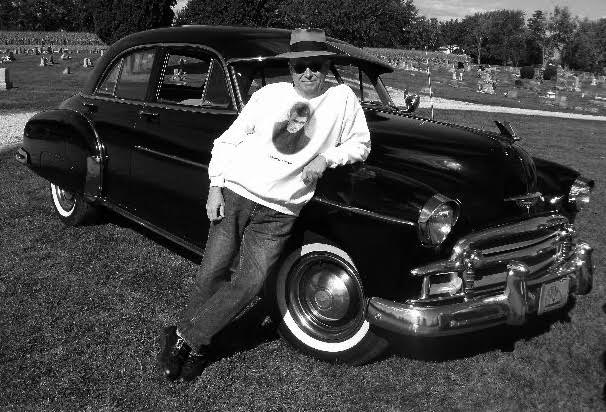
Mark Kinnaman is the current vice president of the James Dean Remembered Fan Club as well as an organizer at Back Creek Friends Church in Fairmount, Indiana, and shipping manager at Daddy-0’s.
Can you tell us a little about yourself? Where are you from? What do you love most about that place?
I was raised outside of Frankton ,Indiana just 18 miles from Fairmount in Madison County. I watched East of Eden on a rainy Sunday afternoon in April of 1969. I never had a movie or an actor affect me like that. I was mesmerized from the very first of prowling thru the streets until the very emotional ending. It still affects me every time that I watch it.
When did you first learn of James Dean and his various works? What did it feel like?
My father told me that James Dean was from Fairmount and the next Sunday, he took me to Fairmount and we saw the school and the cemetery and drove down Main Street. That was all there was back then. There was no Historical Museum or James Dean Gallery and we didn’t know anyone to ask.
What is it about him that drew you in initially?
Sometime later I saw Rebel without a Cause and a year later I saw Giant. Eden is still my favorite. Years later, when I got to know Adeline Nall, Jimmie’s Drama teacher in high school, she told me, “If you want to see how Jimmie was in real life, look at East of Eden, so many of his natural little quirks, nuances, and how he carried himself is right up there on that screen.”
Why do you think he is still so well loved today?
Every person goes thru this awkward phase called adolescence. When someone tries crossing the threshold from childhood to adulthood. they search around for someone to identify with. Their eyes are naturally drawn to the original rebel, our own James Dean. Everybody wants to be cool. It is so important at that age to be looked up to or accepted, and almost everyone feels like an outsider or just doesn’t fit in in some way. No one expressed that feeling better than Jimmie. Rebel without a Cause was so important because it showed teenagers being real teenagers. Not the adult view of what teens were like , but from the teen view of how teens saw each other and themselves. To this day, teens strive for the same ideals, same goals, and some are fortunate to find Jimmie as a source of inspiration and someone that they can identify with.
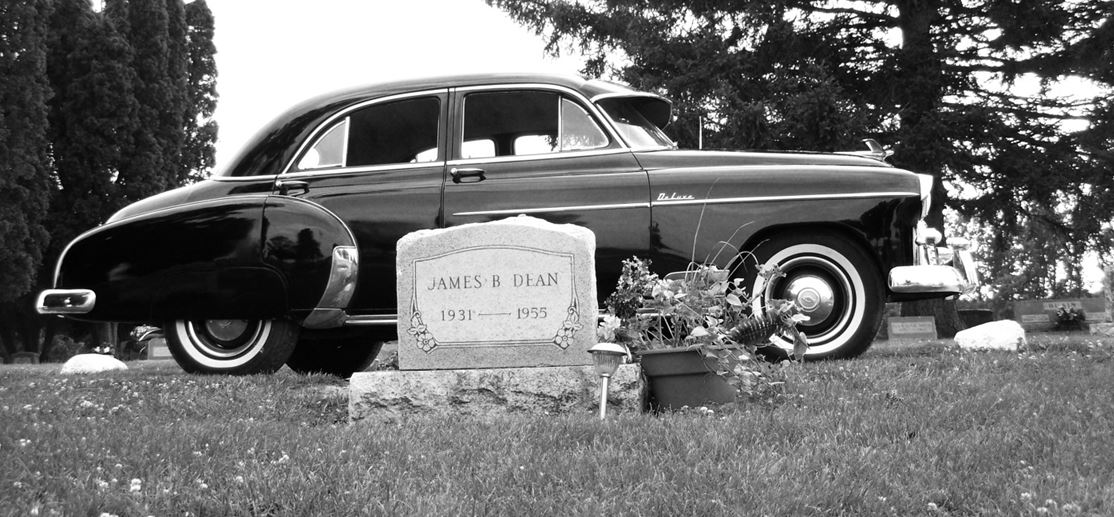
From all you have learned about him, what things do you find most admirable?
In that era 60 years ago, it was all so much more conservative and restricted than today. You conducted yourself and dressed a certain way. He showed that you still could be free and interesting and just be yourself no matter what others thought. That just because others went down that broad highway, it was cool to just go your own way, strike out on your own path, and not care what anyone else thought. You have to do what is good for you. I believe that he was pointing the way to happiness thru being yourself, and doing what made you happy so that you can show happiness to others.
What was it that led you to relocate yourself to Fairmount? Why did you choose to live there? What do you love most about the town?
In July of 1989, I met Dave Loehr & Lenny Prussak at the James Dean Gallery. Although I had met Helen Kirkpatrick from the Historical Museum earlier, I had made friends with these two and had visited with them often thru the years. By the time I made the move to Fairmount in 2001, I had many friends in town, and it was the best move of my life. Every day I am glad that I live here. I may have moved here for Jimmie, but I love the people, the history, the town itself. The main advantage of moving to Fairmount when I did, was the fact that I got to know people who actually knew Jimmie. His friends, family, kids he went to school with, teachers, I got stories and information that the average writer, documentary filmmaker, who breeze into to town for 3 days, and blow out claiming that they know the real James Dean can’t get. Coming from the next county over, I grew up knowing how these small town Hoosiers think & feel about basic things that these people from LA & New York can’t conceive of. Speaking to the old folks around town, they tell me memories and remembrances that they wouldn’t share with “outsiders”.
How did you become vice president of The James Dean Remembered Fan Club? Do you consider it an honor to be working along with so many others to maintain the memory he left behind? Do you ever worry that future generations might forget?
I became Vice President of the James Dean Remembered Fan Club last September when President Pam Crawford & Vice President Sue Lyon stepped down. They had ran the club for many years and wanted a change. Chad Hanna took over as President and I became the current Vice President. It is a lot more work than I anticipated.I am seeing more young people finding out who Jimmie is. He is paraded thru modern pop culture, in songs, references on TV and in movies, even TV commercials. I don’t see our beloved James Dean becoming obscure or even waning in popularity.
Do you have anything further you’d like to say?
If you can, come visit Fairmount and see the real American small town, greet the people, come see what grew this true, one of a kind, phenomenon named James Dean.

Val Holley is author of the books James Dean: The Biography, Mike Connolly and the Manly Art of Hollywood Gossip, and 25th Street Confidential: Drama, Decadence, and Dissipation Along Ogden’s Rowdiest Road.
Can you tell us a little about yourself for those that might not be familiar with you and your work?
I got a bachelor’s degree in journalism, then went to law school–but that was not a match made in heaven. Once, when I was at the library and should have been studying for a Real Property final, instead I was browsing through the Hollywood biographies and found references to James Dean in a Montgomery Clift biography. Immediately I started reading everything about James Dean and determined that there had been no accurate, scholarly biography on him. I decided to step up to the plate and write it myself. I came to feel that writing history was my true calling in life.
Where did you grow up? How did your early environment affect you most in regards to who you are today?
I grew up in Utah as a Mormon. At about the same time I discovered James Dean, I realized that I wasn’t going to love women, and that was incompatible with a Mormon life, so the religion had to go. I am now happily atheist.
When did you first discover James Dean? What do you love about him most?
It took 16 years from the time of my discovery of James Dean (see #1) for my biography of him to be published. I was attracted to who he was on screen: wonderful looks and a nice combination of masculinity and vulnerability. One of my interviewees put it nicely by calling Dean “the brute with the girl’s eyes.”
How would you say he has he affected you most?
James Dean enabled me to realize my calling as biographer and historian. As far as my interests in history and the arts go, he gave me entrée to New York City’s fabulous and fascinating postwar artistic scene, where, as Edmund White recently noted, “the cultural flame [had] passed…from Europe with all the refugees in World War II and burned bright in the ’50s with the Abstract Expressionists and the New York School poets.” Although James Dean was an actor, you saw him immersing himself in a smorgasbord of artistic pursuits at that time.

Did you enjoy with some on the research more than others or did you like working with everyone equally?
At the time, I told friends that writing James Dean was the greatest fun I ever had in my life, although I ended up feeling the same about all my books. The intrigue of stumbling across new information in dusty archival files which no one had touched in decades; making connections between bits of information that were kept on opposite coasts; speaking face-to-face with persons who had known Dean well–and after a hard day’s work, going out on the town in New York or Los Angeles. Some of those I interviewed for James Dean became good friends, such as director James Sheldon, with whom I’m still in touch, or costume designer Miles White. Certain interviewees were such outstanding human beings that making their acquaintance and listening to their perspective changed my life for the better. I’m thinking of writer and critic James T. Maher, singer Jackie Cain, and Adeline Nall.
Who are some of your favorite authors on the subject? Who do you find most credible?
I am the most credible. No Dean biography before mine had footnotes, and most did not even have indexes.
Were there things you learned about him that surprised you?
The purpose of my Dean biography was not to shock or sensationalize but simply to present a true story and accurate chronology, which is more difficult than it sounds. Dean was a human being like all of us, capable of wide ranges of emotion and nobility or depravity.
What is the truth of Jimmy’s Madman Manuscript piece? Did he really open with such a blood curdling scream as is said?
I don’t think it’s possible to know the truth about the Madman screech. Dean’s drama teacher, Adeline Nall, said she would never allow a student to do something that shocking. But she wasn’t in the room–she must have had other duties at the competition as a judge or a monitor–and didn’t see his final performance of the piece, when he could have thrown caution to the wind and inserted something extreme to shake the judges out of their torpor. I found two sources, Vern Sheldon and Carolyn Parks (the winner of the division Dean competed in) but didn’t locate anyone who claimed to have witnessed the scream. It could have been an exaggeration later added by Dean when he was trying to impress interviewers. I covered this incident in greater detail in James Dean: Tribute to a Rebel, a 1991 coffee table book, than I did later in James Dean: The Biography.
Why do you think he was always drawn to things that would give him a chance to test his own limits and develop a healthy sense of competition?
We all want to be somebody. James Dean, like all humans, pursued activities in which he could stand out from the competition. In addition, Dean had a bumper crop of feelings that he apparently felt he had to keep to himself. He had emotional scars from his mother’s early death and his father’s de facto rejection. Risky activities could have been compensation for so many unfulfilled emotional needs.

Artist, storyteller, teacher, husband and father Iain McCaig has worked on films such as Bram Stoker’s Dracula, Interview with the Vampire, Charlotte’s Web, Hook, Terminator 2, Harry Potter and the Goblet of Fire, The Avengers, Guardians of the Galaxy, and the most recent adaptation of Disney’s The Jungle Book, just to name a few. He is best known for designing the characters Padme Amidala and Darth Maul for the Star Wars series. His artwork has appeared in the Art book, Shadowline, which features 28 years of his artwork in the Entertainment Industry (as well as insert Art classes, and a fictional story about his creative process);a cover for an audiobook of The Hobbit, an Alice In Wonderland illustration in the new edition of The Annotated Alice, and an album cover for Jethro Tull’s Broadsword and the Beast. He won the Grand Master Award from Spectrum in 2014, whose previous recipients include Frank Frazetta, James Bama, and Mobeius. Iain wanders the globe teaching people to draw, and he really does believe that anyone can do it. He teaches it as a language, and before he goes, he wants to create a simple drawing program that will teach anyone who wants to learn how to speak in pictures.
What was it like growing up in Canada? Do you think your childhood nourished your creative streak? Did you always have an active imagination?
Actually, I was born in LA, but I grew up in Victoria, Canada, on the tip of Vancouver Island. For those who don’t know, Vancouver Island has nothing to do with the city of Vancouver, other than that fact that both were discovered by Captain George Vancouver, much to the surprise of the native people living there. Victoria is actually the capital of British Columbia, which means it’s got all the modern stuff you’d expect from a capital city. The cool thing is that less than half an hour north of the city and you’re in virgin rainforest, and any other direction you’re on a rocky beach. That juxtaposition was like cosmic radiation to a kid, zapping my imagination a love of contrasts: the things that lurk on the border of what we know and what we don’t. Most of my favorite stories all come from that place; Ray Bradbury’s Something Wicked This Way Comes could have been written for me. There was also plenty of room to exercise my imagination growing up, whether it was playing bare skinned Tarzan in the woods behind my house or making-up stories in the basement on a battered old Remington typewriter. And with two brothers and three sisters, I always had willing collaborators and a captive audience.
Who were some of your very first favorite characters?
Superman was my first hero: he stood for honesty and goodness and compassion, words that aren’t so popular in these dark and cynical times, but still mean a lot to me. By contrast, I also loved selfish and anarchic Peter Pan because he was so unashamedly selfish and anarchic, and the Frankenstein Monster, because how can you not love a terrifying man-made monster who longs to be human?

Do you feel lucky to have been able to encourage imagination in people of all ages through your various works?
I’m always honored when someone claims I had something to do with them becoming an artist. As for luck, yes, we all need that too. There are many talented artists still searching for an audience to support the thing they love. For me, I try to remember that the honor come with a price: to show by example, to endeavor to give back to those who are still struggling, to strive to put an extra drop of blood, sweat and tears in everything you do.
Do you think your training at the Glasgow School of Art has served you well? What was the most important thing you learned there?
Glasgow School of Art pounded life-drawing into my noggin, and the Graphics department a solid sense of design. I still needed to learn a lot of other things when I graduated–principally how to paint–but my colleagues have always been kind enough to enlighten me with their wealth of skills and knowledge.

What do you love most about the art of creation?
Creating anything connects me to the best of me: it is humbling, inspiring, enlightening, and even healing. After a day in the Studio, I often emerge more refreshed and energetic than I went in. Unless I’m battling deadlines, that is. Deadlines have a way of kicking the sap out of you, which is not always a bad thing (especially if you want to sleep afterwards).
How did you come to work in the field of conceptual design?
I think it’s more appropriate to say that the career we call Concept Design sort of grew up around my feet as I sat at a drawing board scribbling storyboards and illustrations. When I started back in 1980, concept design wasn’t even a job description. The first time I was aware of the term was when I watched the Dark Crystal, and saw that Jim Henson had given artist Brian Froud–upon whose work that film was based–a ‘Concept Design’ credit on the opening titles (I know Ralph McQuarrie is officially the father of our profession, though I believe he was called a Production Illustrator on Star Wars, not a concept artist). My own first job as a concept artist was for Producer Ivor Powell (Alien, Blade Runner) who wanted some images for a script he had written. This was back in the 80’s when I was still working as a book and record cover artist. It wasn’t until the early 90’s and joined ILM that my ‘concept design‘ career properly began. And as I say, somewhere along the way those words eventually became the official name for the thing that I did.
What does it take to create a realistic character?
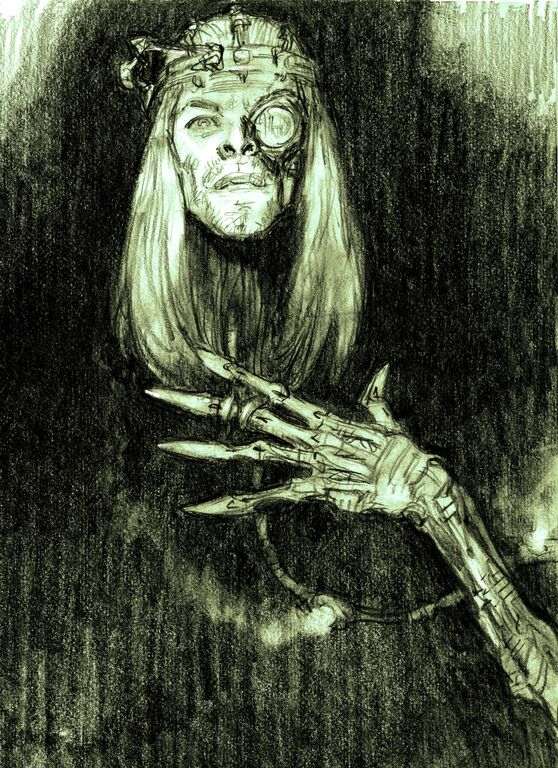
Creating characters is a little like building a Frankenstein Monster: you combine things you know–bits and pieces of people you’ve seen and remembered or dreamed or imagined, all intricately stitched into a new form. But the body just lies there like a lump of clay until you reach inside and infuse it with something true from deep inside YOU. That’s the lightning that zaps your invented characters to life!
Are there any of your own characters you hold more dear than others?
Nah, I love all my invented characters and stories pretty much the same, though each has it’s time in the spotlight, and some come sneaking come back for encores in different disguises. The innocent-but powerful beauty that manifested herself in Padme Amidala, for example, is a regular, but so far no one’s complained to the management.

How does it feel to see something you have created come to life on the screen?
Watching your creations going out into the world is a bit like watching your children grow up: you remember vaguely being responsible for making them, but you watch with wonder and pride as they leave the nest and become their own special thing in the world.
Do you ever wish you had more time for your own personal projects? Do you have a dream project you’d most like to bring into being?
I try to make every project a ‘personal project’ by putting a little bit of me into everything I do. That said, it’s getting harder to find projects that appeal to the sides of me that I want to explore, so I am putting more and more effort into creating my own assignments these days. Currently, I am illustrating my own edition of Mary Shelley’s Frankenstein.

What was the best advice anyone ever gave you? Who was it?
During his blood and gore rugby years, when you sometimes had to carry your unconscious kid off the playing field, my son Inigo always amazed me by getting back in the game as soon as possible. He taught me that you don’t get bandaged up just to sit on the sidelines.
What do you think is key to a life well lived?
I’m a big fan of the notion that you should try to leave something better than you found it, including your life.
Is there anything you’d like to say in closing?
If you’ve ever dreamed of doing something, do it. If you can’t do it, do it anyway.

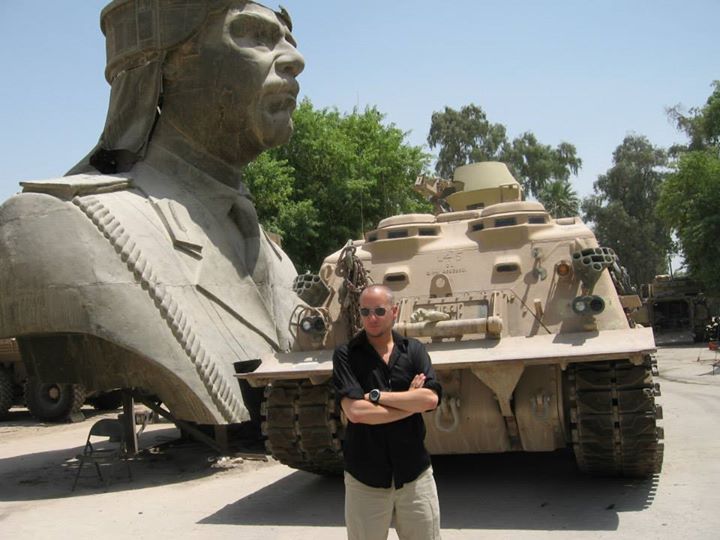
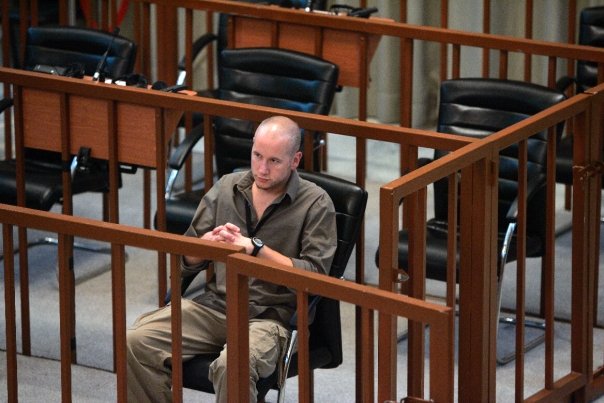
Owner of Whatantics Entertainment, Denn Pietro has worked as a TV field producer and/or director on such projects as ABC Good Morning America, World News Tonight, Nightline, and countless other shows including trials on Court TV/Tru TV trials. He was a director and camera operator for the world record and media feed of Saddam Hussein’s War Crimes Trial in Baghdad in 2006-2007 while working for the U.S. Regime Crimes Liason’s Office in conjunction with the Iraqi High Tribunal.
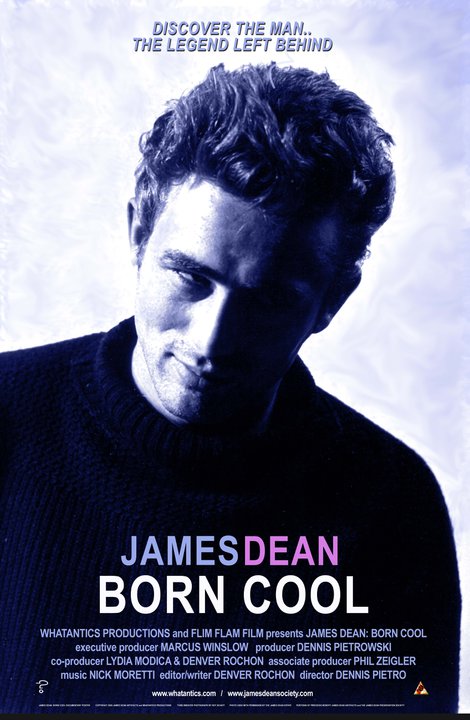
In 2000 Denn Pietro set out to bring the world an intimate look into the world of James Dean with his documentary James Dean: Born Cool. Granted exclusive access to whatever was needed to honor the memory and life of Dean by Executive Producer Marcus Winslow Jr. Pietro managed to create one of the most enduring documentaries to date. It was an honor to be able to bring our readers a deeper look into the project with this interview.
Can you tell us a little about yourself? Where are you from? How do you think your early upbringing influenced you most to be who you are today?
I have a seven year old son named Canyon (I may have an obsession with the Grand Canyon) that I adore and other than that, I sometimes mow my grass and watch Survivor Wednesdays on TV.
I live South of Detroit, Michigan in an area known as “Downriver” which I love, but the rest of the Detroit area likes to make fun of for reasons I don’t think they even know, but mostly because some cheesy radio DJs can’t think up better jokes. It’s a blue collar area with hard working people. I grew up in Inkster which was a predominately black community before moving to Taylor which was predominately, well, the butt of Downriver jokes. It was a happy place where playing army in the woods, jumping dirt hills on our bikes, and playing with our Star Wars action figures kept us sane… when we weren’t watching TV.

Did you develop a love of television and film early on?
I grew up on a dirt road that was kind of rural. Movies and TV were a gateway into an imagination filled with travel, adventure, laughter, love, heroics. I loved shows like Happy Days, Mork & Mindy, Dukes of Hazzard, Three’s Company and Ripley’s Believe It or Not. I cried during E.T., wanted a Gremlin and wished I had found a treasure map and became a Goonie.
When did you first know you wanted to pursue a career in the industry? What advice would you offer others wishing to do the same?
I used to want to be on Saturday Night Live at a time when a friend got an old VHS video camera as a present and wanted to start making movies and he needed actors. Since his options on that rural dirt road were kind of bleak, I was plopped in front of the camera starring in short films inspired by Miami Vice and Night of the Living Dead. They were terrible. I was terrible. I wanted to run the camera and the rare times I was allowed to shoot a quick shot, my friend would look at it and then announce, “Okay, we gotta reshoot that one!”
I think that rejection propelled me to pursue this life.
My advice is, even if you don’t know how to make a film, documentary or TV show… fake it! Look at the best stuff out there and mimic the quality with the intention of having your project look and feel as close to that one as possible. My second advice, because this is the part I fail at, is learn how to sell yourself and be a showman for you and your work like PT Barnum or Robert L. Ripley to help ensure that people see your work.

What do you love most about your particular line of work? What do find most challenging?
I love the challenge of trying to tell a story and having to adapt as a filmmaker to all the hurdles that come up along the way and still, in the end, being able to finish project that you can be mostly proud of. One challenge in particular that comes to mind was trying to do a documentary about Dan Robbins, the creator of Paint-By-Numbers. In talking to him, I discovered that he was embarrassed by his involvement with PBN and felt that, in some ways, it ruined his career and life. I remember him showing a painting with regret and saying this was the last time he truly felt like an artist – it was art he made in high school before his involvement with PBN.
Through the telling of his story, I wanted to not only convince the art world that PBN and Dan were important and deserved to be in the Museum of Modern Art, but to also convince Dan of the same thing. Unfortunately due to his health set-backs, by the time we were ready to start shooting, all of our talks about how great he and PBN was began to resonate and by the time of the interview, his answers were much different. In the end, I convinced him how great he and PBN was, but sadly, I couldn’t tell the story I originally intended.

How did you come to work on the Saddam Hussein War Crimes Trial? What was that experience like?
I did a lot of work for Court TV and I guess I was unique in being a field director and a robotic camera operator for live court trials in the Midwest and East Coast. There was a production company out in the West Coast that also did the same thing for Court TV and the guy who owned that company bid for the government contract and got it. There was a lot of talk about the people brave or dumb enough to go risk their lives covering that trial and I was asked a few times before I finally said yes.
We worked for the Regime Crimes Liaison’s Office, which was part of the Department of Justice, and the RCLO worked with the Iraqi High Tribunal. I was in Baghdad for 15 months and decided to go because, as a writer, I felt I needed to experience war and its affects, but on my terms. I wasn’t brave or strong enough to ever be in the military, though I worked for a couple years filming for the Marine Corps when I was young enough to be a recruit myself.
For me, being in Baghdad was surreal. I lived at the US Embassy and though we had to dodge rockets and mortars, we didn’t live in the same kind of assault the Coalition Forces had to endure. I felt like I was doing my part for the country without having to make a choice to kill someone, though as a director, there were many court participants like some judges, attorneys, and guards that we couldn’t show on TV because they would be killed if known of their participation in the trial. Plus, I would be at risk of going to some sort of Iraqi jail for such an incident, so the trial was on a 30 minute delay just in case somebody walked into camera view, the editor would have time to cut them out before the footage is fed to the world press.
One of the other directors and robo cam operators, Dennis Lynch, just released a book about his experience covering the Saddam Hussein Trial called Shooting Saddam. He has an incredible point of view and sense of humor as he endlessly pursued finding a good cup of coffee over there. I definitely recommend his book!
Is there any one project that you hold more dear than the others? What is it and why?
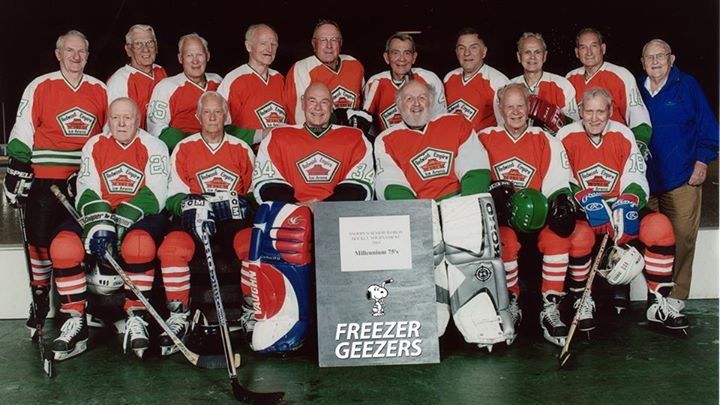
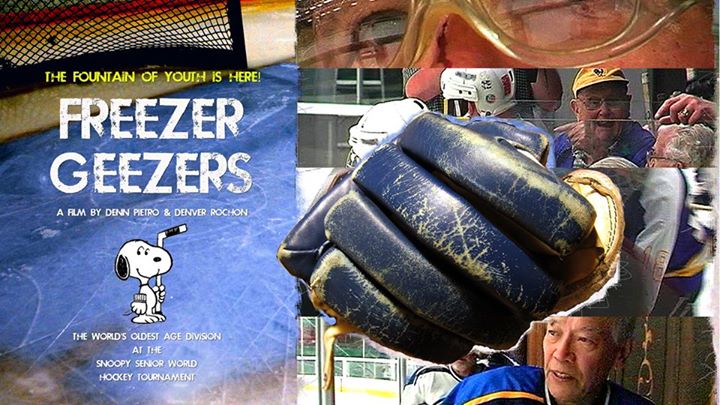
Freezer Geezers. hands down. Not a day goes by that I don’t think about them. Freezer Geezers, my documentary, with Denver Rochon, follows 83 year old coach Ray Tuller and his team – Millenium 75’s – from Springfield, MA, as they challenge three other teams from all around the world competing in the world’s oldest age division, 75 and over at the Snoopy Senior World Hockey Tournament created by beloved Peanuts artist Charles Schulz at the ice rink he built in Santa Rosa, CA.
I don’t fear growing old, they taught me to lighten up, stay active and have fun. Pepe, an 89 year old player, was still walking his dog a couple miles every day rain or shine in Massachusetts and let me tell you, that dog was so big he’d knock you down. In fact, out of the group I was closest to, Pepe, the oldest, who lived the longest.
Whenever I’m feeling tired or sore, I think of them. They’ve had hip replacements, cataracts, triple bypasses and they’re all still playing hockey and most of them are in their eighties! I think in finding this story, I may have discovered the fountain of youth!
When did you first take an interest in James Dean?
I remember vividly sitting on my dad’s lap in a doctor’s office flipping through a People or US magazine and, because I was a huge fan of Fonzie from Happy Days, my dad pointed to this geeky-looking photo of a young James Dean wearing glasses standing in a basketball pose for his team photo for the yearbook. My dad said, “That’s James Dean, he’s Fonzie’s hero!” That was enough for me, if he was cool enough for Fonzie, he must be the coolest guy on the planet! After that, Jimmy became the epitome of cool.
Why do you think he has left such an impact on the world so many years after leaving it?
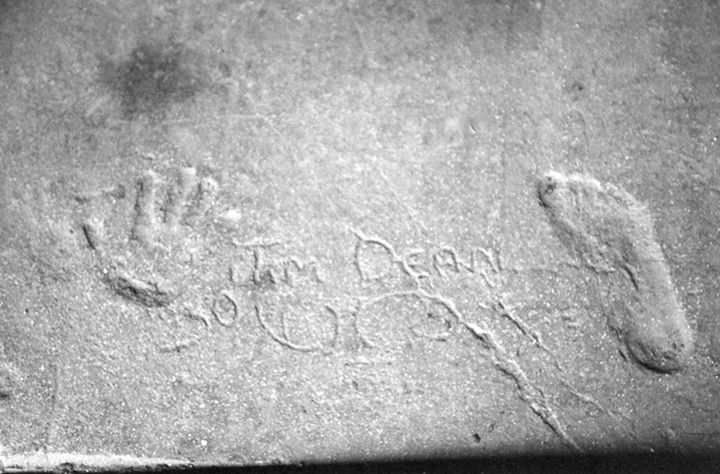
James Dean left an impact because his role in Rebel Without a Cause came out in a defining age where the culture and idea of being a teenager was changing and I think Rebel was a movie that really spoke to the masses without being over the top or preachy. The characters were relatable and ordinary, just good kids putting themselves in bad situations that can happen to any of us.
James Dean was a star on screen. You couldn’t not watch him, he pulled you in and didn’t let go until he was out of a scene which is a testament to his acting. I think pop culture has helped carry on his legacy and I’ll even throw it back to Fonzie in Happy Days. I think having a photo of James Dean in Fonizie’s locker helped solidify Jimmy’s place as a symbol of cool and rebellion because that’s what the Fonzie brought to that generation that was then learning about Jimmy.
Today, James Dean can be many things to many people. In Jimmy, people found a bit of themselves – a loner, a rebel, someone who wanted to fit in or someone wanting to fight. Girls wanted to date him, guys wanted to be him. He came across as vulnerable, temperamental, unpredictable, funny… so many things.
I bet most people who can recognize James Dean haven’t even watched one of his three movies, but they know him as a rebel or as cool because that’s how he lives on today in the images we wear on shirts or the posters on our wall. As long as pop culture still continues to value his image as a prop on television and film, he will never be forgotten.
What do you think his feelings might have been on the subject?
I think Jimmy would laugh off the attention he gets and would want people to remember him for his work on screen. What fascinates me about him is how much he deeply loved and respected acting. Do you remember the jock in school who would draw out plays on a napkin? Well, that’s what Jimmy would do. I loved finding the notes on napkins on display at the James Dean Historical Museum or reading his letters about acting. He seemed to think a lot about such things and was always writing notes on how to be better. He planned to be a director and kept notebooks with notes he picked up shadowing the directors he worked with – Elia Kazan, Nicholas Ray and George Stevens. Sadly, those notebooks were probably thrown out after his death.
What one thing do you admire about him most as an individual?
James Dean was talented. That’s what I admire most. He was so damn good in his three movies and it is such a loss to film that he died far too young which is also what makes his life so remarkable and his legacy so mystifying.
Do you think there is far too much focus on the fame aspect of his life and not enough on who he was as an individual?
Although others sometimes disagree, I think fame is what brings us all to James Dean and I love the fact that people decide to say, “Hey, who is this guy, I’m gonna to check out his movies” or they get so interested in him that buy a poster or wear a shirt. I love that some fans take it a step further and watch a documentary (you know, say… mine!?) about James Dean or visit his hometown in Fairmount, Indiana. Fame is what brings all of his fans together to celebrate his movies and his life.
How did the idea for James Dean: Born Cool come about?
I’ve been a fan of James Dean since I was probably 8 and when I learned his hometown was only four hours away, I was certain I was going to drive and visit Fairmount, IN as soon as I got my license. Sadly, I didn’t make it until I was 24 – the same age James Dean was when he died.
I gathered a pretty eclectic group of friends for a road trip to see a concert at Wabash College and visit James Dean’s hometown which was on the way. We went there and I kind of rushed the visit because I didn’t want my friends to wait around too long as I looked around the James Dean Gallery. After we left, one of my friends finally in the car was reading a brochure that showed where the tombstone was and the Winslow Farm where he grew up. We apparently also missed the other museum in town – the Fairmount Historical Museum.
The next day, we went back to Fairmount and we visited the Historical Museum. I raced through that museum because I didn’t want to hold my friends up from getting home and when I was finished, my three friends were all sitting around talking to the people volunteering at the museum so I just kind of let them know I was done and sat down with them. My friends fell in love with Darlene Campbell and Phil Zeigler! Darlene went to high school with Jimmy and Phil was a fan who fell in love with Fairmount and moved there after he retired. There were so many stories that she had about Jimmy and her and Phil recounted endless stories that the people in town shared with them that also knew Jimmy. Five hours later, we were still there talking and the museum was closing!
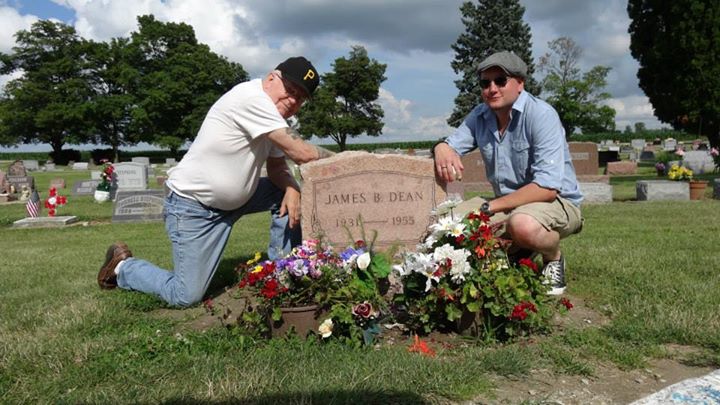
Phil told us how to get to the cemetery so we left and went there and to the farm just down the road. While outside the barn, a car pulls up towards us. It’s a new best friend Phil! He gave us a great tour of the farm and next thing I know, we’re back at Phil’s house for the next three hours before the four hour drive back home forces us to end our visit.
On the way home, when everyone was asleep I kept thinking about all the stories and how great it would be if someone records them and documents them before the people are gone and the stories with them. I kept thinking that until all of a sudden, I sprang up in my seat and thought, “Why not me!?” So the next day I called my favorite Fairmount Ambassador Phil Zeigler and asked him if such as documentary was ever made and if Marcus Winslow and the James Dean estate ever granted full access to their archives. The answers were no but Phil thought I should be the one to do it so he helped me set up a meeting with Marc and the rest is history!
Were you nervous when you first approached Marcus Winslow Jr.? What was it like to work with him and Phil Zeigler up in Fairmount? What are they like as people?
I wasn’t nervous to approach Marc because I thought the worst thing he would say is no and at least I made the meeting a nice road trip with a girl I liked at the time. He was very supportive and said yes to everything that I wanted to do in making the documentary in terms of access.
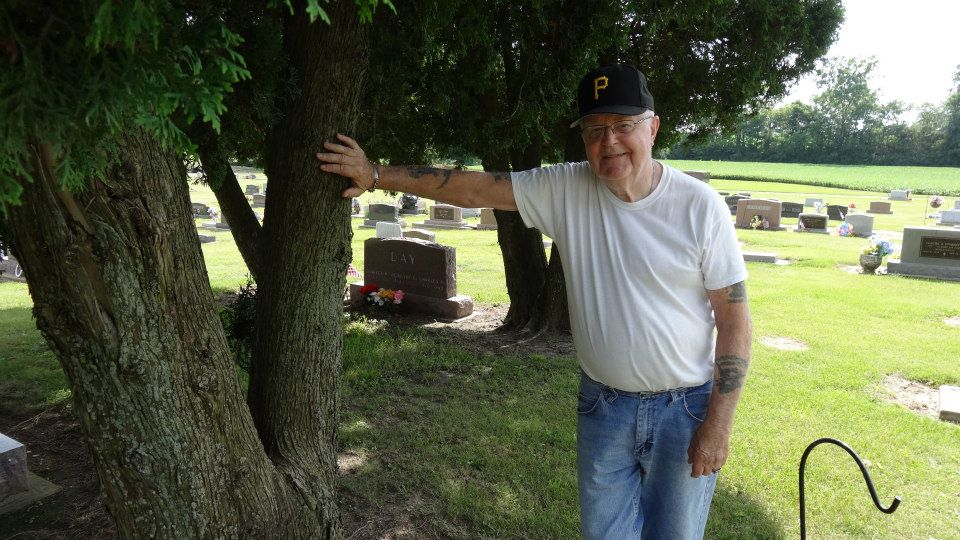
In making Born Cool, Phil allowed me to stay in his extra room in a house that Jimmy’s father lived in late in life which is next door to the Farm. I would look out my window and see the farm and would wake up to the sound of cows “mooing”. It was great. I couldn’t have made the film with Marc or Phil. They were absolutely instrumental in talking to the normally reclusive friends and family into participating in my documentary. There are always people coming in and out of there trying to make a buck of Jimmy and then wasting everyone’s time or angling the story so they wished they hadn’t been a part of those projects. Mine was different because Marc and Phil trusted me for some reason.
Was there anything you were surprised to learn about Jimmy during your filming of the piece?
The thing that surprised me most about James Dean is how funny everyone said he was. Some thought he would’ve become a comedian rather than the serious, brooding star he became.
What was the most challenging issue you faced in bringing that film into existence?
The biggest challenge in making the film was time. I shot almost all of the interviews, but I worked full-time and had to travel four hours and really wasn’t an editor. I had just completed a short film with my friend Denver Rochon and his wife Lydia called Whippersnapper and I thought working with them was so much fun so I asked them to eventually join me on Born Cool as producers and Denver as an editor. Having them with me during the road trips and all-nights while scanning photos at Phil’s was so much fun. The energy really came alive with all of us working together.
Do you have any stories from behind the scenes of the project you might be a liberty to share with our readers?
Phil set me up with an interview with Hugh Caughill, a former teacher of Jimmy. Hugh was in a nursing home and had some memory issues. He thought I had a car similar to another guy from California who was working on a book who, he claims, stole a picture of Jimmy, and believed me to be him. After the interview, Hugh began calling people in town telling them to look out for this shyster in town – which was me! Needless to say, news travels fast in a small town and I probably would’ve had more interviews if it weren’t for mistaken identity. Marc WInslow had to make a number of calls to assure people I wasn’t that person and he supports me.
Do you have a dream project you’d most like to bring the world before your time is up?
My dream project is to direct and sell my script inspired by my documentary Freezer Geezers. I am working on it and would love to make that a reality! I’ve been so fortunate to accomplish and exceed my dreams, this is the last for me to accomplish, but I still have a little time!
What do you think is key to a life well lived?
Do you know what the secret of life is? One thing. Just one thing. You stick to that and everything else don’t mean shit. What’s the one thing? That’s what you gotta figure out.
I couldn’t resist. I love City Slickers and that scene where Jack Palance is telling Billy Crystal what the secret of life is. For me, I’m learning that you just gotta laugh lots.
Is there anything you’d like to say in closing?
I hope people maybe go to whatantics.com and learn a little bit more about the projects because so many talented people helped to make them a reality and I’m a horrible salesman! Thank you again!!
Jim Hayes is best known as a community leader for the www.MainstreetFairmount.org project to preserve the streets of Fairmount, Indiana. He is also a distant cousin of James Dean.
What was it like growing up in Indiana as you did?
I grew up during the 1940’s and 50’s when the country was at its zenith; good jobs were plentiful and the future bright. What kid wouldn’t want to grow up where the four seasons are spring, summer, fall and basketball? In my early years there were trees to climb, woods and fields to explore, western movies on Saturday morning with popcorn, coke and a Hershey bar. Carrying a pocket-knife to school was acceptable and every boy had one. As a teenager it was girls, drive-in movies, cool cars, drag racing and basketball. What’s not to like?
Why did you feel compelled to go into civic work as you have?
I guess the main reasons are Community pride and my interest in the preservation of historic places. Fairmount is unique among all cities and towns in Indiana and possibly the entire country. The thing that makes it unique is the high percentage of the population that has been listed in the Who’s Who in America. An article about Fairmount published in the Indianapolis Star on July 30, 1950, credited Fairmount with populating the Who’s Who at a rate that was 14 times the national average. At that time there were no less than 27 Fairmount natives listed, including best-selling authors, three college presidents, scientists, artists, business people, etc. And, there were 4 more in the pipeline; James Dean was still unknown, Jim Davis, the creator of the Garfield comic strip was 5 or 6, Phil Jones who was to become a CBS national television newsman and his classmate, Bob Sheets, destined to become director of the National Hurricane Center, were about to enter 9th grade.
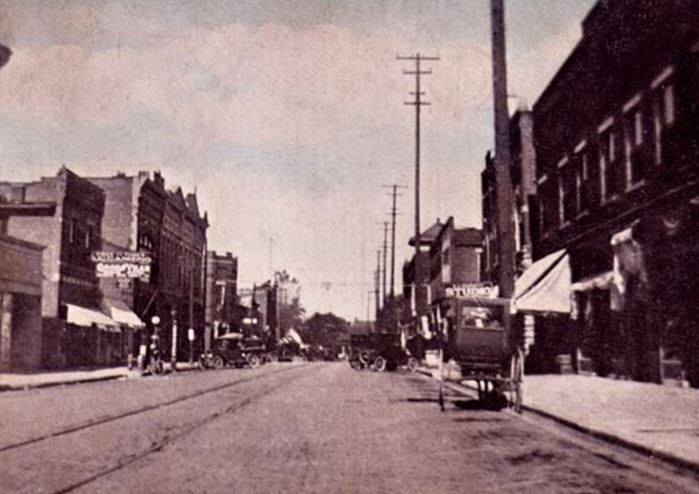
Why do you think it is important to preserve Main Street in Fairmount? How did that project come about?
It’s both a matter of civic pride and the fact that Fairmount is an international destination for the millions of James Dean fans worldwide. Fortunately, there has never been an effort to turn the town into a James Dean theme park because the fans who come here seem to be looking for an authentic experience. They want to experience the town the way Jimmy did. I believe few if any are ever disappointed just based on the numbers of fans that return on an annual basis. Some even move here. I think the preservation movement began in earnest when a group of concerned citizens first established a Main Street organization a few years back.
Can you tell our readers a little about your relation to James Dean?
Jimmy and I shared the same great-great grandparents on his mother’s side (Wilson’s) of the family so we are distant cousins.

Johnny Wilson, center.
Did you know his grandfather Johnny on his mother’s side yourself? What was he like?
Yes. Johnny was a janitor at Evans school, which is the grade school that I attended in Marion; all the kids knew Johnny; He was quiet and seemed a little shy. Jimmy had his grandfather’s looks. My mother worked at the school too so I have several pictures of Johnny with the school staff.
Did your family ever speak much of Jimmy or Mildred, what they were like as people?
Not that I recall other than when Jimmy began to appear on television shows. I think we saw all of them.
What do you personally admire most, from what you know, about the man who was James Dean, all fame aside?
I would have to say his drive and dedication to achieve his dream. But beyond even that, is how he connects in a powerful way with young people from all over the world. It’s beyond understanding.
What are your thoughts on the cultural fascination with him still?
I find it fascinating that after 60 years young people are still obsessed with Jimmy. He cuts through barriers such as generational, racial, language, national, cultural, and religious like a razor and captivates the young. I can only think that he expressed so well the frustrations and confusion that all young people feel that they recognize him as someone who understands them at their deepest levels, and yet it ultimately remains an impossible to articulate mystery. All I know is that he connects with a vast audience in a powerful way. Jimmy’s fans from differing cultures, traditions, language groups and religions seemingly have a unique culture all their own.
 TheOriginalVanGoghsEarAnthology