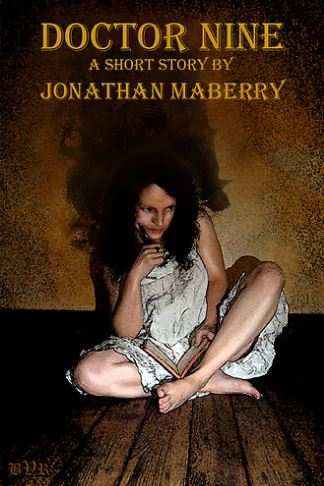
Doctor Nine
They blew into town on a Halloween wind.
The Mulatto drove the big roadster, and the Sage sat beside him, snickering into his yellow beard. Telephone poles whipped by, one after the other, and Zasha made a joke about their looking like crosses waiting for saviors. They all laughed and laughed, except for Doctor Nine who always smiled but never, ever laughed.
The car tore through the veils of shadow that draped like sackcloth between the distant lampposts. The night was in no way larger than the car, though it tried—and failed—to loom around the vehicle. The car was really the darkness of that night; it was far more a part of the night than the shadows. You couldn’t imagine what that car would look like in daylight. It wasn’t that kind of car.
Flocks of shapeless nightbirds flew on before the car and whenever the roadster would stop the birds would wheel and circle beneath the hungry stars. Against the fierce glow of the sneering moon the birds were tatters of feather and bone. Their call was more mocking than plaintive. The birds were always there; as long as Doctor Nine was there, they were there. It was in the manner of things and both the birds and Doctor Nine accepted the arrangement. It suited them all.
The Mulatto never spoke when he drove. He never spoke at all. He could, but he chose not to, and his throat had gone dry and dusty over the years. When he laughed it was the whisper of rat feet over old floorboards. Knuckly hands clutched the wheel and his bare feet pressed gas and brakes and sometimes clawed the carpeted floor. Around his neck he wore a medicine pouch, which he’d taken from a Navajo crystal gazer, and some parts of the crystal gazer were in there, too. He wore jeans and a faded Dead Kennedys t-shirt, a stolen wristwatch, and seven wedding rings, one on almost every finger. He was working on a complete set. Little sparks of light flickered from his hands as he wheeled hand-over-hand around bends in the highway.
Beside him, the Sage ate chicken from a metal bucket. The bucket was smeared with chicken blood, and feathers drifted lazily to the floor. He offered a wing to Zasha, who declined with a wicked smile, but Spike bent forward from the back seat and plucked the wing out of the Sage’s fingers. In the brief exchange their hands were contrasted in a display-counter spill of light from a passing streetlamp: the yellow, faintly reptilian mottling on the Sage’s fingers, the thin webbing which had begun to grow between his thumb and index finger; and the overly-long, startlingly delicate fingers of Spike, dusted now with a haze of brown hairs, nails as long as a fashion model’s though much sharper. The wing vanished into the back and Spike bent forward to eat it. He shot a quick, inquiring glance at Doctor Nine, who nodded permission and looked away out into the night. Spike ate with as little noise as he could manage, the bones crunching softly between his serrated teeth.
Doctor Nine looked dreamily at the passing cars, imagining lives and hearts and souls contained within those fragile metal shells like tins of caviar. In the hum of the car’s engine he could hear the hum of life itself, the palpable field of human energy. As subtle as chi, as definite as arterial pumping. In the whisk of cars passing one another he heard gasps and soft cries, the stuff of nighttime encounters, expected and unexpected.
“Take the next exit,” he said to the Mulatto and the big roadster followed a line of cars angling toward a big city that glowed like embers under a cloud of carbon smutch.
Doctor Nine smiled and smiled, knowing that something wonderful was about to happen.
Bethy sat awake nearly all night watching Millie die. She thought it was quite beautiful. In the way spiders are beautiful. The way a mantis is beautiful when it mates, and feeds. If her sister thought it was something else . . . well, so what? Bethy and Millie had never seen eye-to-eye, not once unless Bethy was lying about it. Bethy was a very good liar. All it took was practice. It was a game they had started playing just a couple of hours after they all got home from camping. Mom and Dad were already asleep in their room, and Bethy had convinced Millie that it would be fun to stay up and pretend that they were still camping, still lost in the big, dark woods.
Millie thought that would be fun, too. Millie was easy to lead, though she truly had a completely different sense of what was fun.
Millie thought Pokémon was fun. Millie liked her Barbies unscarred and her Ken dolls unmelted. Millie liked live puppies. Millie was blind to the sound of blood, the song of blood.
Bethy said that they could pretend that Doctor Nine was going to come and tell them spooky campfire stories. Dad’s big flashlight was their campfire.
Millie, sweet and pretty in her flannel robe with the cornflower pattern, her fuzzy slippers, agreed to the game even though she thought that Doctor Nine was a dumb name for an imaginary friend. Well, to be fair, she truly did think that Doctor Nine was imaginary, and that Bethy had no actual friends.
The clock on the wall was a big black cartoon cat with eyes that moved back and forth and a tail that swished in time. Millie loved that, too. She called it Mr. Whiskers and would tell time according to what the cat said. “Mr. Whiskers says it’s half-past six!”
Mr. Whiskers was counting out the remaining minutes of Millie’s life, and wasn’t that fun, too.
Bethy looked at the clock and saw that nearly an hour had gone by since Millie had drunk her warm milk. Plenty of time for the Vicodin to enter her bloodstream through the lining of her stomach wall. If Millie was going to get sick and throw them up it would have happened already, but . . . nothing, and that was good. It kept this tidy. Getting her to take the pills had been so easy. Once mashed with a hammer from the cellar the powder was easy to dissolve. It was no matter if it made the milk a little lumpy, as Bethy had brought big cookies upstairs as well. Cookies to dunk in the warm milk. Just perfect. Millie had swallowed all of it. Bethy only pretended to drink hers.
Now it was time to watch and learn. Bethy took out her diary and her pen and sat cross-legged on the floor, and watched.
Doctor Nine smiled as the car whisked down the ramp and entered the city. He stretched out with his senses, with perceptions grown old and precise and indefatigable with long, good use. Hearts pumped for him alone, of all the creatures on the window—black streets; minds thought for him, stomachs ached and rumbled with hunger for him, hands groped with lust for him. Eyes searched the shadows for delicious glimpses of him. Tongues tasted waiting lips and flesh ached to be touched. All by him, for him, with him. He knew that; just as he knew that these hearts and minds were few—fewer than in years before, but still there. Still strong and waiting and wanting.
Doctor Nine knew all of this, knew it without the dizzying rush of ego that might taint another creature of less cultured understanding. He licked his lips with a pink tongue-tip.
An SUV came abreast of their car and Doctor Nine turned in his seat to examine it. The Mulatto sensed his desire and shifted lanes occasionally so that Doctor Nine could see each passenger in turn. It was a family car burdened with a roof rack heavy with suitcases and camping tents. Each window of the car was like a picture frame that contained a separate portrait. One showed a wife, a pale creature defined by that label. Just wife. If there had ever been a more definite and individual personality it had either been leeched out of her along with the color of her skin, or she had put it away in some forgotten closet, perhaps with some thought that a life spent in sacrifice and servitude was a life well spent. Doctor Nine fought the urge to yawn.
The driver’s window framed the father. Haggard, bored, distracted, and bitter. A jock-type with a soft jaw and receding hairline. Of no interest at all to Doctor Nine. This one wouldn’t even have fantasies dark enough to be interesting.
The window behind the driver showed the profile of a pretty little girl with pigtails and pink cheeks who was bent over the piss-colored glow of a Game Boy screen, her face screwed up in concentration and her mind distressingly empty.
But then, as the Mulatto slowed the car just a little, Doctor Nine came abreast with the rear window, back where the luggage was usually stored, and there, with her face and hands pressed against the smoked glass, was a pale figure that stirred something old and deep in the Doctor’s heart. She was the same age as the other girl, perhaps nine; but as unlike her twin as two creatures can be, born in same spill of shared blood. Dark unkempt hair and luminous brown eyes, large in the small, pale mask of her face.
Doctor Nine looked at her, totally aware of her. He could feel the intensity of her mind, the sharpness of it, the need of it. Just as he could feel the ache and the pain as she rode through the night surrounded by these meat sacks that pretended to love her and pretended to care for her when in reality they probably feared her.
As they should. He smiled at the thought and tested his senses against the razor sharpness of her need, knowing that she could and would cut, given the chance, given some direction.
Doctor Nine moved his consciousness deeper into the young mind and found that, though young in years, the hunger he encountered was every bit as old as that which coiled and waited within his own soul. Her darkness was too lovely, too profound to be trapped in the cage of meaningless flesh which contained it. Her soul was a screaming thing, locked by circumstance in the fragile shell of the human form. It shrieked for release.
Doctor Nine felt her fear and her need, and measured them against each other. He would not come to her to relieve her fears; nor would he come to satisfy her needs. He might come, however, if her need was strongest of all, stronger than all of the other splintered and badly formed emotions, because to him, need was the only true emotion.
He exerted a fraction more of his will and the little girl lifted her sad eyes toward his window. He made her see him through the dark glass, and as she turned toward him she saw him and she knew him.
From dreams she knew him. From dreams that her parents and her sister would have called nightmares; dreams that, had she been unlucky enough to share them, would have sent them shuddering and screeching into the nearest patch of light. As if light could protect them. He knew—could feel and sense and taste—that this little girl had dreamed of him, that she knew his name as well as she knew her own pain. As well as she knew her own need. Doctor Nine looked into her mind and knew that there were no gods in her dreaming world, just as there were none in her waking hell. When she looked into darkness, whether behind closed eyes or under the bed or into the moonless sky she saw only him. He was always there for her kind. Always.
Doctor Nine smiled at her.
The little girl looked at him for a long time with her owl-brown eyes. When she finally smiled it was a real smile. A smile as hot as blood and as sweet as pain. Her small mouth opened and she spoke a single, silent word, shaping it with her need and her love for him.
“Please.”
The SUV veered suddenly and turned onto a boulevard and headed south toward the smutch and gloom that was clamped down around the heart of this city. It vanished from sight in a moment and the Mulatto rolled to a slow stop at the next corner. Everyone in the car stopped and quietly turned toward Doctor Nine.
Above them the nightbirds wheeled in the sky. Then one by one they peeled off and followed the SUV down the boulevard. Soon only the big roadster was left, alone and waiting.
Without haste Doctor Nine reached forward and touched the Mulatto’s shoulder.
“Follow,” he murmured.
The Mulatto nodded and turned the car around and then turned again to enter the boulevard. Spike and Zasha exchanged a glance.
“Something. . . ?” Zasha asked casually, hiding the interest that brightened her eyes.
Doctor Nine nodded.
“What?” Spike asked. “That car we just passed?”
Another nod.
“Too late, Boss,” muttered the Sage. “We’ll never find it again.”
Zasha jabbed his shoulder with a long fingernail. “Of course we will,” she said, looking to Doctor Nine for approval.
They all looked at Doctor Nine, and he endured their stares mildly. After a long while he said, “We’ve been invited to a coming-out party.”
He smiled at them.
Soon, all of the others laughed.
The night followed them like a pack of dogs.
Bethy wondered how it felt for Millie to die. It was something she tended to think about, even when she was killing a cat, or a dog. Poison sometimes hurt and so she stopped using it. Not because she wanted to spare pain—that was just a silly thought—no, it was because pain was such a distraction. Medicine was so much easier. No pain, just a fuzziness and a sleepy feeling that was warm and a little fluttery, like moth wings in the head. Bethy knew because she had tried the pills herself. First one of them, then two. The most she’d ever taken at once was six.
According to the Internet four was supposed to be fatal. She tried six just to confirm a theory . . . a suspicion, or a hope. The moths had fluttered around in her head for a deliciously long time, during which Bethy had so many strange thoughts. Almost feelings, but not quite. Close enough so that she guessed that anyone else taking the drug would have had true feelings. It gave her perspective on what Millie’s reaction might be.
Millie was probably having such feelings now. And thoughts, too—Millie wasn’t completely incapable, Bethy had to remind herself of that and to be fair to her sister. Millie’s expression kept changing as if she’d had a sudden idea but when she spoke, which was less and less often now, her words were a junk-drawer jumble of nonsense, half-sentences and wrong word choices. Bethy found it interesting and she wished she could read minds. She bet that a mind-reader could make sense of what Millie was trying to say. Mind-readers didn’t need actual language, she was sure of that. Then she wondered if a mind-reader could read an animal’s mind, and if so, could they translate the thoughts into human words? Would an animal’s thoughts change as they died, especially if they realized that they were dying? She hoped she would find out one day.
Maybe she could ask Doctor Nine. She was sure that he was coming tonight. She was sure that she had seen him out there, driving in a big car that was the color of night. When she looked at the window she could see that there were dark birds lined up on the sill and on the power lines across the street. The birds belonged to him, she had no doubts.
“B . . . Bethy. . . ?”
Hearing Millie speak now—very clearly except for a purely understandable hitch—broke Bethy’s reverie.
“Yes?” Bethy asked, utterly fascinated by anything Millie would say at this point. She pulled her diary onto her lap and picked up her pen.
“I don’t feel . . .” Millie lapsed back into silence, her eyelids flittered closed.
Hm. What did that mean? I don’t feel. Feel what? Bethy wondered. Was Millie losing her emotions? Did they die first before the rest of the body?
No, she didn’t think so. She’d read about dying confessions, which was guilt; and about dying people saying nice things to comfort the people sitting around a death bed, which was compassion. Weird, but there it was.
Then she got it. Millie was trying to say that she didn’t feel good. Or maybe that she didn’t feel quite right. How . . . ordinary.
“It’s okay, Mils,” Bethy said. “It’s just the medicine.”
Millie’s eyelids trembled, opened. There was a spark of something there. Confusion? Bethy could recognize emotions even if she didn’t have any. Or, at least she could recognize emotions that she didn’t share. She saw fear there, and though she didn’t understand it she enjoyed seeing it.
“I’m . . . not sick.” With a furrow of her brows, Millie whispered, “Am I?”
“Sick?” Bethy replied with a comforting laugh. “Oh no, honey! You’re not sick.” She patted her hand the way Aunt Annie sometimes did. “No need to worry.”
She saw relief in Millie’s eyes and Bethy took a taste of it.
“Not . . . sick. . . ?”
“No, sweetie . . . you’re just dying,” Bethy said, and wondered if teasing this way was being greedy, and . . . was that okay?
Millie’s eyes snapped wide and she tried to move. Bethy estimated that it took every ounce of her strength to move as much as she did, but all she could manage was a flap of one hand and a slight arch of her body. Then she collapsed back onto the pillows they’d brought down from the bed.
Bethy wrote a quick description of it in her diary.
The clock ticked, Mr. Whiskers’ eyes flicking one way, his tail swishing the other. Bethy counted seconds. She got to one-hundred and sixteen before Millie’s eyes opened again.
“Why?”
Just the one word, and it was clear that it cost her to get it out. Bethy wondered how many words Bethy had left to spend.
“Because, Mils. It’s for me. And for him.”
Millie looked confused. Her lips formed the word ‘who,’ but she could not afford the breath to say it aloud.
“For him. For Doctor Nine.”
There was another flare of expression—mingled confusion and fear. Nice. Again Bethy wished she could read minds, though she was pretty sure she knew what Millie was thinking, how she would be sorting it out. Doctor Nine was the boogeyman. Bethy’s imaginary friend. Something she and everyone else laughed about behind her back. A dream, a nothing.
Even before Bethy had started experimenting with Aunt Annie’s pills she had wanted to kill Millie for that—though strangely, and appropriately, that’s not why she was killing her now. It wasn’t revenge because revenge was soft. Revenge would disappoint Doctor Nine the same way rage would. There was no beauty in a lack of control.
Besides, this was not about punishment . . . it was about rewards.
Bethy thought about that as Millie’s eyes focused and unfocused over and over again. ‘Rewards’ wasn’t exactly the right word either. She chewed her lip and thought about it as her sister died, bit by bit.
There was a sound and then blades of light cut into the room between the half-closed blinds, and Bethy got up, excited, knowing who was outside. She started to run to the window and then in the space of two steps slowed to a walk and then stopped, still yards away. Running was silly. Running to check if he was out there was bad. It wouldn’t show faith, like that Bible story about Moses tapping the rock and then not being allowed into the Promised Land. After everything he did right, he was reminded that everything had to be done right, and so Bethy turned around and sat back down, picked up her diary and pen, and continued making notes until Millie stopped breathing. It took nearly forty minutes, and she would have been lying if she didn’t feel the tug of that window and the image she would see through the blinds. But feeling a thing and becoming its slave were different. Doctor Nine had told her that in her dreams.
When Mr. Whiskers said that it was two-thirty in the morning, Bethy put down her diary, set her pen neatly on top of it, and took a couple of slow breaths just to make sure she was calm. She reached over and touched Millie’s cheek. The skin was still soft but it was already cooling. Bethy sat back, leaning on both palms, and watched for a little while longer. There had been no more words from her sister. No additional emotions had crossed Millie’s face. After that last outburst she had simply gone to sleep, and in sleeping had settled down into a deeper rest. Her body had not visibly changed except that her chest no longer rose and fell. While she watched now, though, Millie seemed to shrink in on herself, to become less solid, and it took Bethy a while before she realized that it was just the blood draining from Millie’s flesh and veins to the lowest possible point in her body. She’d read about that on the Internet, too.
When she had surfed the Net, Millie had read a lot about killing. About the laws of it, the history of it. The art of it. There were so many killers that she felt happy that she would always have new brothers and sisters. Some of them even killed in the name of God, which was a funny thing. She’d have to ask Doctor Nine about that, but she already knew what he would probably say—the essence of it, at least. If God is All then God is killing, too. And really, God kills everything, from microscopic life forms to whole worlds. Maybe that was why so many have worked so hard to make killing a ritual and an art: it was their only way to try and connect with God. Even at nine Bethy understood that. If God made man in His image then man reflects the killing nature of God. To kill is to be godlike. That should be obvious to everyone.
And yet they didn’t call killers ‘gods’ or even ‘godlike.’ They called them monsters.
Bethy got up and walked away from Millie and stood in front of the mirror that hung on the door of their shared wardrobe. She still wasn’t letting herself look out of the window. Instead she looked at the monster in the mirror.
It still looked like her. The her she had always seen.
“Monster . . .” she murmured. Not for the first time she wondered if every one of the godlike monsters she’d read about on the Net had stood in their rooms, just as she now stood, and looked at themselves and announced who and what they were.
She hoped so. It felt like a family thing to do.
Finally Bethy turned away from the mirror and walked past the cooling meat. Millie was gone now; the body was nothing to her. She paused for just a moment, bending to pick up her diary and trying not to feel disappointed. Millie had been her first, but she hadn’t learned as much from her as Bethy had hoped. Maybe next time she would use less of the Vicodin. Or maybe she’d re-visit pain. Perhaps she’d been too hasty in deciding that it had no place in the process.
Doctor Nine would be able to advise. Bethy was sure he would have something interesting to say about that.
Bethy changed into jeans and a t-shirt, put on her sneakers and brushed her hair. She put her diary and a change of clothes into her backpack.
When she was ready she took her pen and tested its point against the ball of her thumb. It seemed sharp enough. She held out her left arm and held the pen tightly in her right fist. She wasn’t afraid of pain and so there was no hesitation at all as she abruptly jammed the point into the soft flesh of her inner forearm. The pen bit deep as she knew it would and blood—so rich that it looked more black than red—welled out of the puncture. Bethy licked the pen clean and put it in her bag and then she walked around the room and dribbled blood here and there. Then she put a Band-Aid over the puncture and put the wrapper in her pocket. Then she picked up a pair of bedroom slippers and used the sole of one to scuff some of the blood, drawing the line in the direction of the window. She left the slipper lying on the floor by the wall, just where the hem of the long sheers would brush against it. She put the other slipper in her backpack. The effect was pretty good.
Satisfied, Bethy finally stood in front of the window. She grasped the cord and pulled the blinds all the way up. The line of nightbirds scattered from the sill, their caws sounding old and rusty as they flew to join their brothers on the power line. The window was already raised a few inches and she raised it the rest of the way and for a moment she looked out and down at the street.
The big black roadster was there, idling quietly, parked across the street in the glow of the sodium vapor lamp. Just as she always knew it would be. There was almost no traffic, not this late. No pedestrians. And just for a moment—for a single jagged second Bethy stared at the roadster and saw that it cast no reflection, that the fall of lamplight did not paint its shadow on the street. Doubt flickered like a candle in her heart.
What if it wasn’t real?
That voice—sounding more like Millie than Bethy—whispered in her ear. What if Doctor Nine wasn’t down there at all? What if Doctor Nine was never down there?
Millie’s voice seemed to chuckle in her mind.
What if. . . .
What if Doctor Nine was not real?
“But I’m a monster,” Bethy said aloud. Millie’s voice laughed, mocking her.
Then the roadster pulled away from the curb . . . very slowly . . . and moved into the center of the boulevard on which they lived. Bethy watched, suddenly terrified. Was Doctor Nine a ghost of her mind? Was he leaving now that she had started to believe that he was only part of whatever made her a monster?
Bethy’s stomach started to churn.
“No!” she said firmly. “No . . . he’s here for me.”
Another car came down the street and Bethy realized that it would have to either veer around the roadster or pass through it. If it was real, the car would veer. If Doctor Nine lived only in her head the oncoming car would just pass through it, reality passing through fantasy.
“No,” she said again. She felt that her feet were riveted to the floor, held fast by nails of doubt driven through her flesh and bone. All she had to do was wait there, to see the car and how it reacted, or didn’t react. Just five more seconds and then she would know whether she was a godlike monster or a mad little girl.
“Doctor Nine . . .” she breathed.
The car was almost there. Moses doubted, he tapped the rock.
The cartoon cat on the wall mocked her with its swishing tail.
“No,” she said once more.
And Bethy turned away from the window before the car reached the roadster. Her decision was made. Without proof either way. She picked up her backpack, slung it over one shoulder, and left the bedroom. Left Millie and the blood and the fiction that she had constructed. She left her room and her parents and her Aunt Annie. She left her life.
She never looked back.
In the end she did not need to look to see if the car veered or drove straight through. She walked quietly down the stairs, placing her feet where she knew there were no squeaks and headed to the front door, flitting out into the night.
To the roadster. And to Doctor Nine, and to the other monsters he had collected along the way.
She knew they would be there.
She had no doubts at all.
(This story originally appeared in KILLERS.)
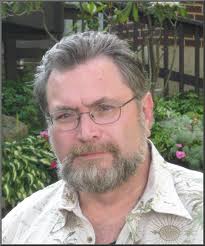
Jonathan Maberry is author of more than 900 articles, sixteen nonfiction books, three novels, numerous short stories, poetry, song lyrics, video scripts, and two plays. For more information please see:
http://www.jonathanmaberry.com/


















 TheOriginalVanGoghsEarAnthology